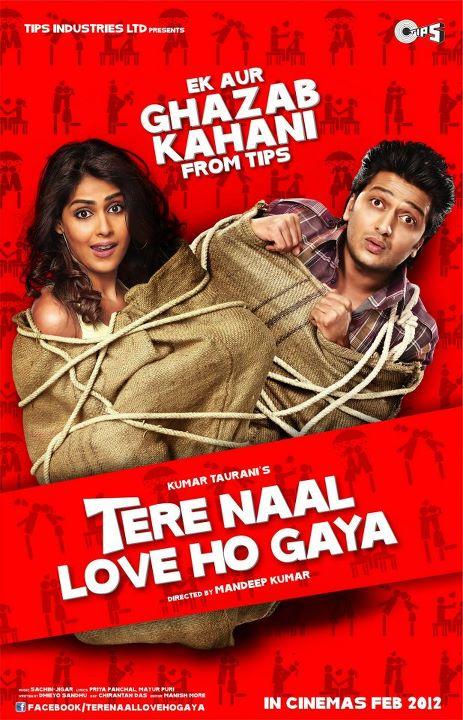
Tere Naal Love Ho Gaya

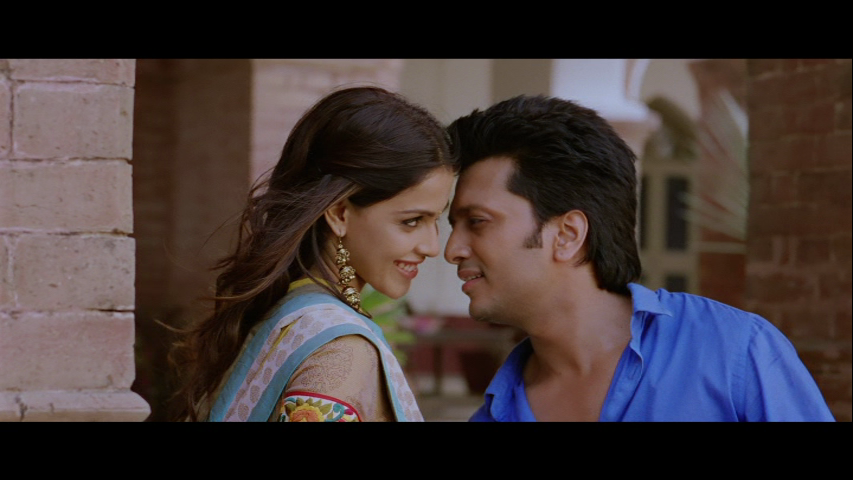
Tere Naal Love Ho Gaya  is the exception that proves the rule. You know – the one that says all real-life couples have absolutely no on-screen chemistry together.  I know there are a few other exceptions out there (although mostly I’m thinking of Hema and Dharmendra films), but they’re few and far between.  But here, Riteish and Genelia share an excellent rapport which makes the film much better than it sounds on paper.  There isn’t anything too different in the way of plot, dialogue or even the characters but the excellent performances of the lead cast make up for a lot, with the end result of a light but entertaining romantic comedy.

Great disclaimer in the opening credits too – always good to see animal safety concerns addressed!

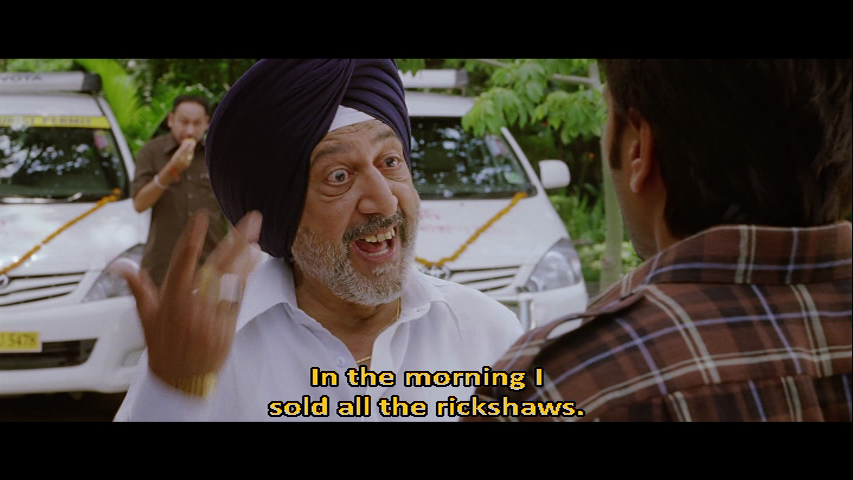
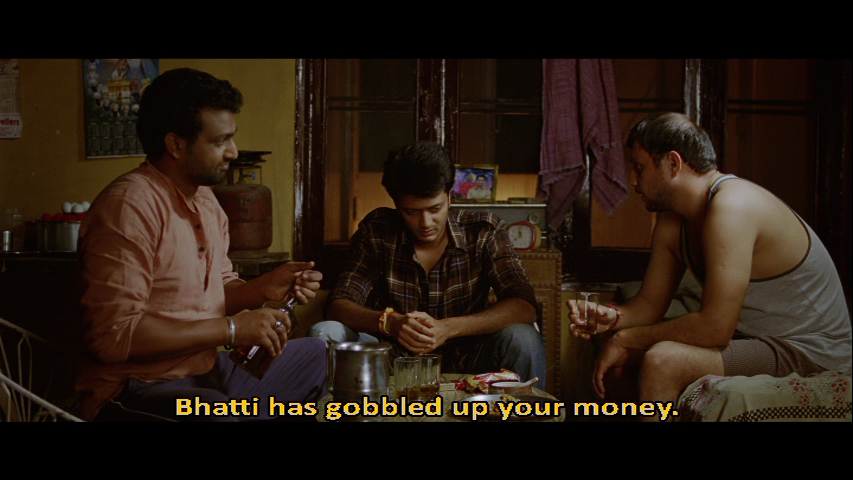
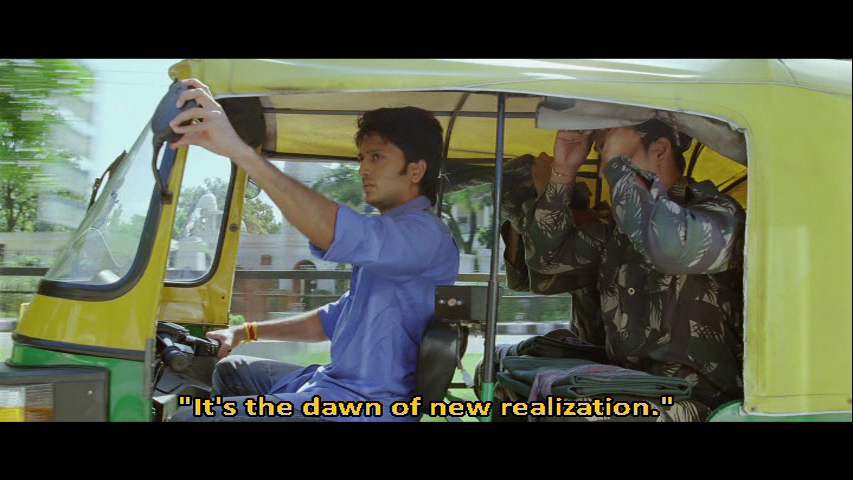
Viren (Riteish Deshmukh) is an auto-rickshaw driver who starts work early every morning in his attempt to save up enough money and realise his dream of running his own fleet of cars.  But he makes two crucial mistakes.  He keeps his savings under the seat of the auto, and he tells his boss Bhatti (Tinnu Anand) about his dream.  So when Viren turns up for work and finds four cars instead of a rank of auto-rickshaws he’s understandably rather upset.  In a weak moment, he drowns his sorrows in alcohol and turns up at Bhatti’s house demanding compensation for his loss just as Bhatti’s daughter Mini (Genelia Deshmukh) is getting engaged.

Mini makes the most of Viren’s drunken appearance and forces Viren to kidnap her at gunpoint in order to escape her rich but brainless suitor Sunny (Kartar Cheema).  Mini is the driving force behind the abduction and much of the comedy in the first half comes from her ruthless manoeuvring of the hapless Viren to escape pursuit and demand a ransom from her father.
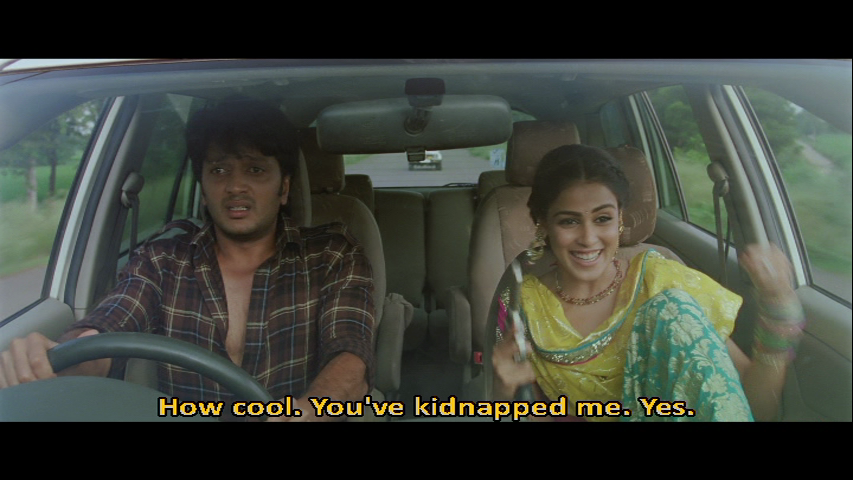
I’m sometimes a bit ambivalent about Genelia. I like her when she’s not in manic, hyperactive pixie-mode and there are times here where she veers dangerously close to that. But for most of the film she plays the ruthlessly selfish but bubbly and personable Mini with charm and vivacity and provides the perfect impetus to drive Viren relentlessly out of his comfort zone.  I ended up liking her character more than I expected, particularly in the second half and I think that overall this is one of her better performances. She gets to pull some great faces and wear some lovely costumes, although my favourites are these pajamas covered in little flip flops.

Viren is totally over whelmed by the phenomena that is Mini and Riteish is excellent as the poor but principled auto driver whose life has been completely turned upside down.  I do really like Riteish.  His presence ensures that I will watch a film, no matter how dire it sounds and he’s always worth watching.  I’m very impressed that he has a second career as an architect but he’s a good actor, especially in comedic roles, and, perhaps rather worryingly, he frequently looks much better than he should in a dress.  As much as I love him though, he’s not really my idea of leading man material so I was very impressed that he did so well with his role here – despite a few fashion faux pas and a tendency to try to imitate SRK in the songs.

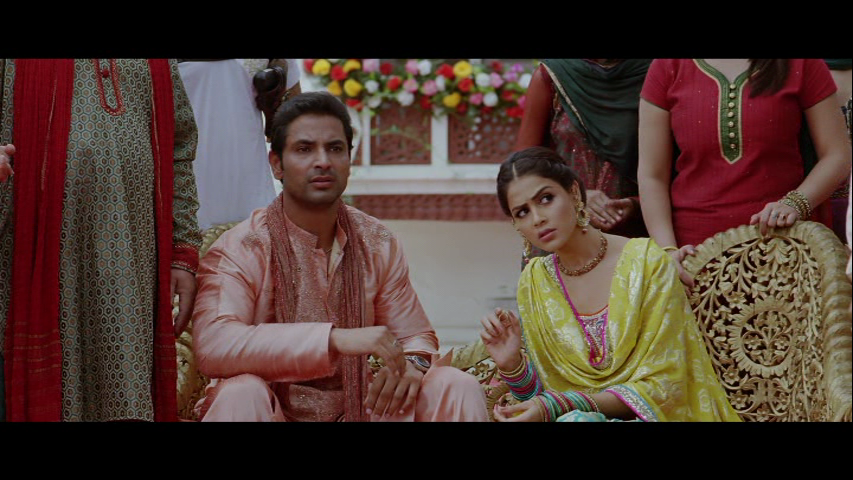
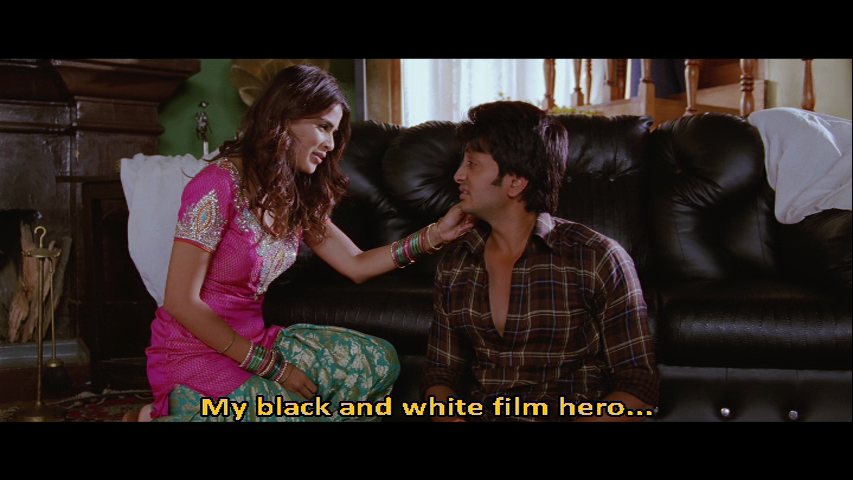
Unsurprisingly Mini and Viren end up falling in love during a rather strange drunken night at a wedding.  While it’s totally predictable that the two get together, the romance isn’t well developed at all and it’s just assumed that being forced together by the circumstances is enough of a reason for a relationship.  However the chemistry between Mini and Viren is convincing enough to give some plausibility to the proceedings and it’s hard to complain when they do look so good together.

The second half of the film moves to Viren’s family home where his father is the notorious kidnapper Chowdhary (Om Puri) – a man so well-known for his criminal proclivities that his mansion is called Agwaha house. But despite this clue he appears to live there quite unmolested by police or other persons of authority and is free to pursue his chosen profession as and when he wishes.  Om Puri is always good value and I liked his curmudgeonly and testy Chowdhary.  His scenes with Genelia are some of my favourites as she gradually wins his affection and as a result he continually increases her ransom price.

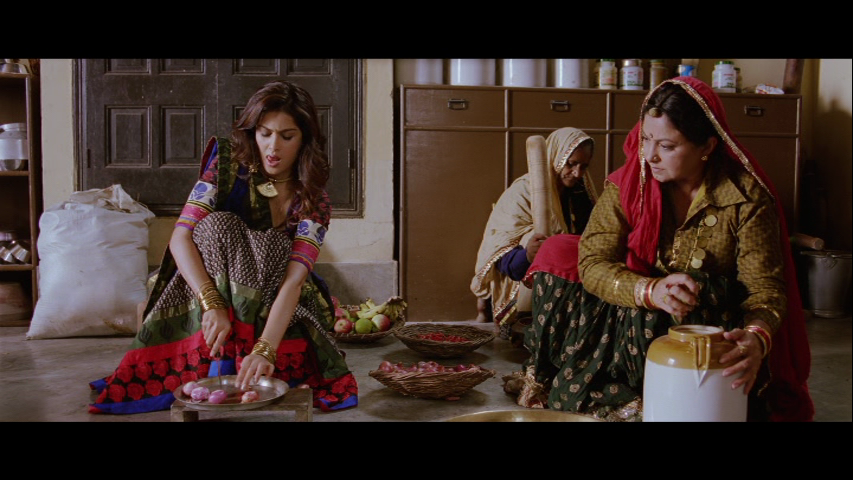
Smita Jayakar is also good as Viren’s mother and the looming presence of the silent Gurmeet Saajan as Viren’s uncle who keeps popping up in the background made me laugh more than it really should.  Viren also has a sister played by Chitrashi Rawat who was better than I expected given the few brief times I’ve seen her since her debut in Chak De India. The rest of the cast are all good in their stereotypical roles but generally they don’t have much to do.
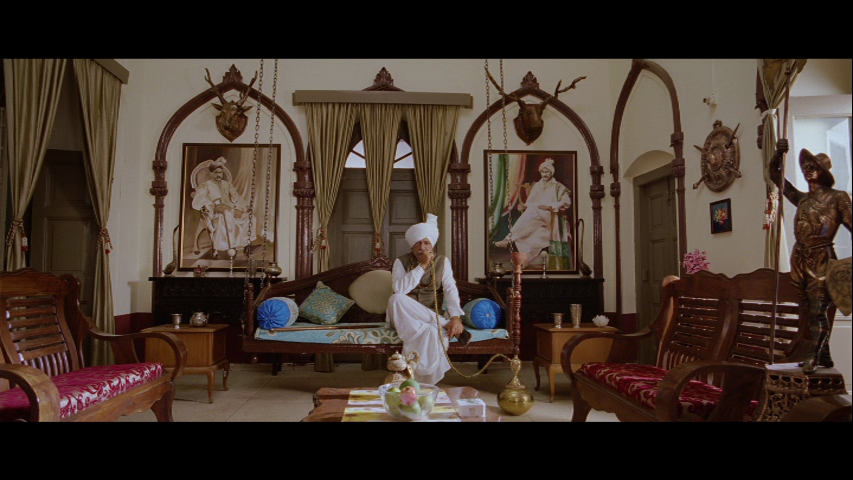
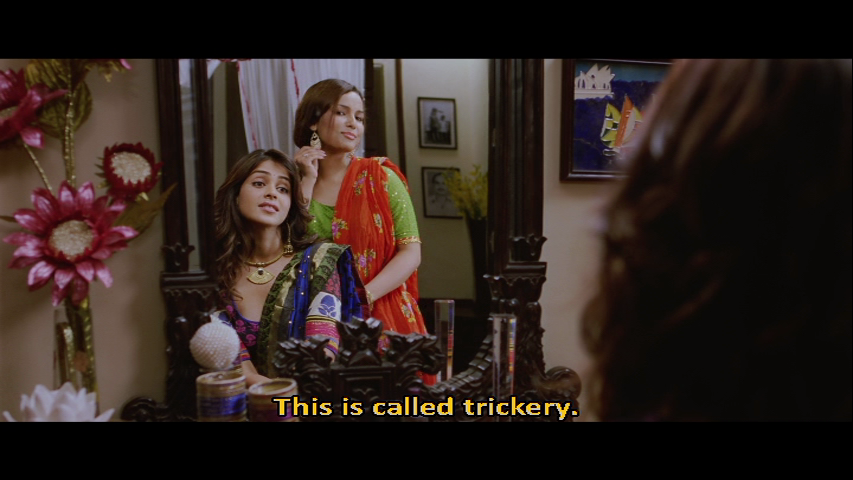
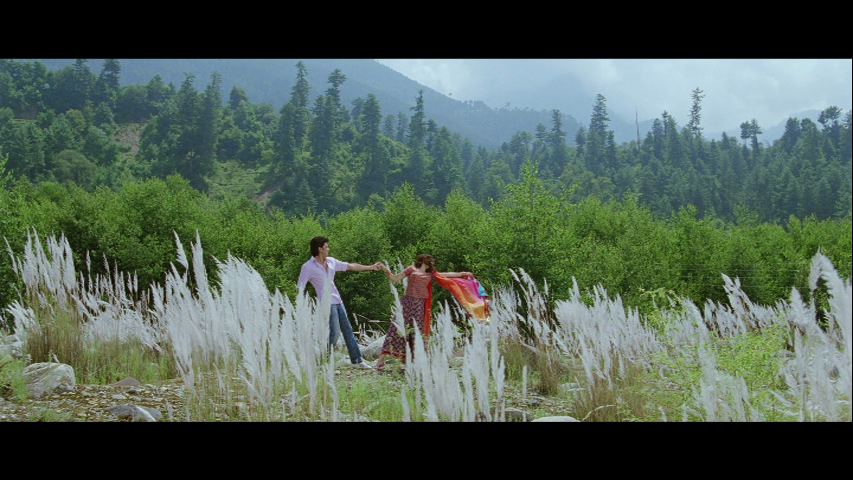
Apart from the excellent performances from Genelia and Riteish there are other good points about the film.  The cinematography is excellent and Chirantan Das makes the countryside look incredibly beautiful. The interior shots around Chowdhary’s house are also well shot and there is good use of light and colour throughout.  The songs by Sachin-Jigar are enjoyable, although the item number suffers from poor choreography and rather too much of Veena Malik but the music is good. The other songs are better pictured although neither Riteish nor Genelia are particularly good dancers but what they lack in technique, they make up for in enthusiasm and since they’re both supposed to be drunk in this song the lack of co-ordination may even be deliberate.

Tere Naal Love Ho Gaya is the debut film by director Mandeep Kumar and writer Abhijeet Sandhu.  It isn’t brilliant, but it does have it’s moments and I found it an enjoyable watch with a very likeable cast.  The whole film has a feel-good flavour and it’s a good lazy afternoon movie for when you don’t want to have to think too much.  Worth watching for the excellent performances by the main leads and Om Puri’s scenes with Genelia.  3 ½ stars.

Sivakasi

Let’s cut to the chase. Watch Sivakasi for the highly enjoyable songs, and you might find a few other little gems along the way. Perarasu (writer/director) has made a movie of two halves that doesn’t quite succeed in being a cohesive entertainment and is a bit too long. But likeable stars, some excellent action scenes, vigorous dances and a commitment to always choosing the silliest solution help the time pass pleasantly enough.

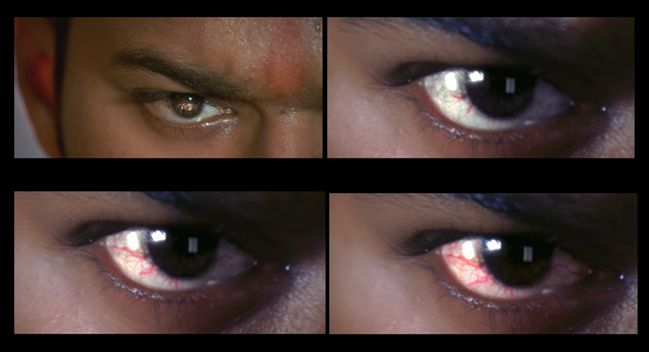
Vijay is the hero, Sivakasi. The police are largely useless against local thugs and he looks after the shop owners and residents of his area. His every gesture is underlined by a sound effect, he wears hideously embellished trousers and his eyes turn red whenever he is enraged.

In case that isn’t enough, a colour effect often emphasises the many (bad) moods of Sivakasi.


Perarasu also introduces himself by way of introducing Sivakasi, which amused me greatly (as did the spelling).

Sivakasi spends a lot of time blow-torching the same piece of perforated metal sheet so I am not sure how successful his business was. I suspect he was on commission at a local glazier as the number of window panes broken in fight scenes was HUGE. The character of Sivakasi is self-righteous and inflexible, and I could understand why he was single and stuck with a comedy gang as his only close friends. Vijay is good as a boyish prankster but once he has to deliver more serious dialogues, he is a bit lightweight and tends to overact in compensation. I can’t help comparing him with the other baby-faced killer in South Indian films and he just doesn’t stack up. But he is brilliant in the physical scenes, whether fights or dancing, and that is where I can more readily understand his star appeal.

Asin is Hema, the rich girl who sees no need to feel bad about being rich. She takes on Sivakasi at his own game. It’s a Tamil film with a big name hero so there was no danger of the story being skewed by her perspective but I enjoyed watching her challenge the hero.

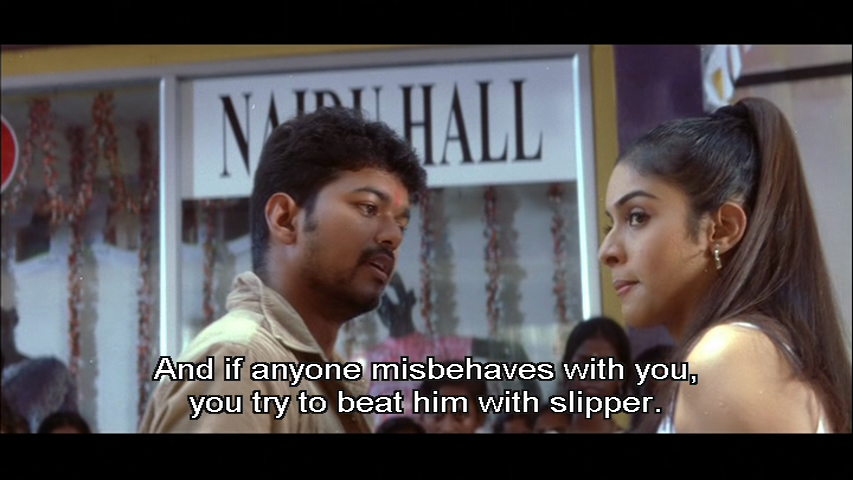
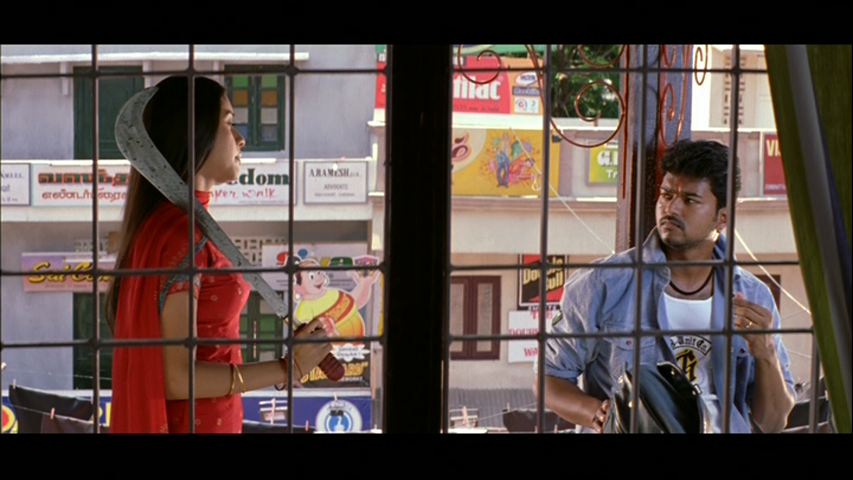
Sivakasi told Hema off for dressing skanky and western and said if she wore a sari men would treat her like the goddess Laxmi rather than trying to cop a feel. So when she arrives in a sari with a gang of sari-clad aunties and hijras, Hema calls his bluff.

Hema is a smart girl with a good heart and a healthy dose of mischief so she is not overwhelmed by the domineering Sivakasi. Asin more or less holds her own in the dancing too, going for maximum energy and not overly concerned with technique. She is a good counter to Vijay in all regards.

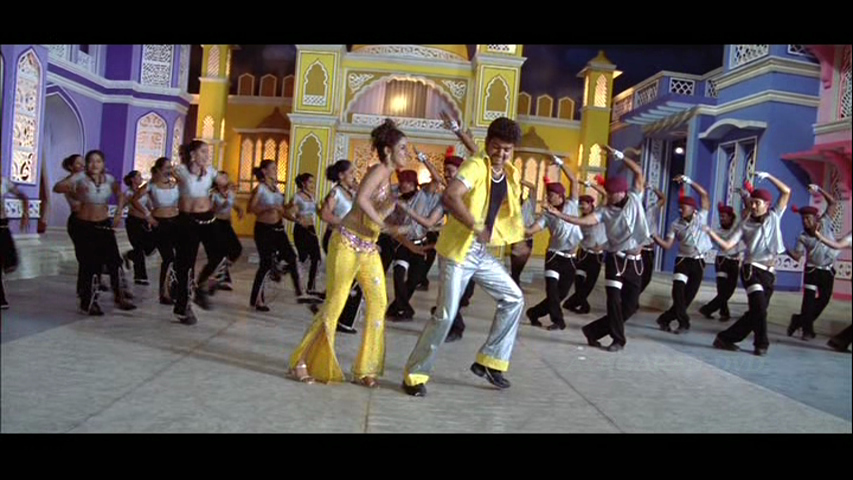
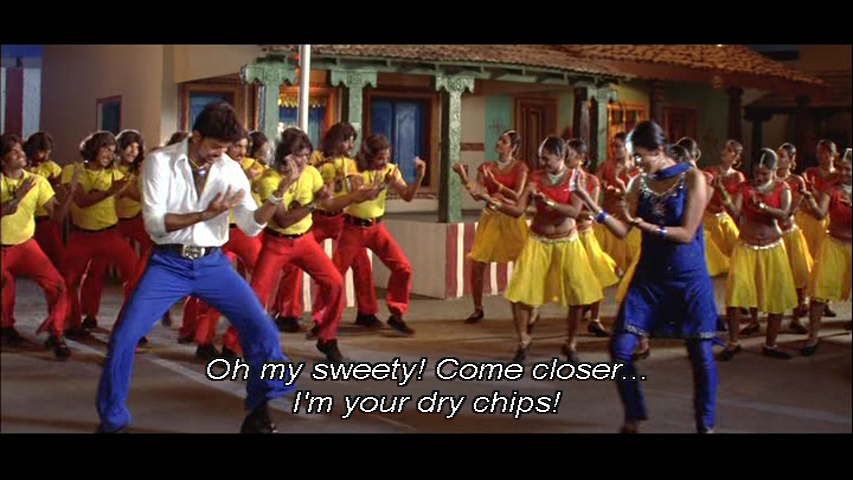
Her romantic song fantasy puts Vijay in a vintage pink suit so perhaps she has a more vengeful streak than was immediately apparent. I don’t like the female vocals at all in that song (Deepavali), but the dancing is fun.

The relationship between Hema and Sivakasi starts as a cartoonish battle of the sexes, with each trying to put the other in their rightful place. It is fun but goes on longer than it needed to. Eventually the two declare their feelings but Sivakasi’s pride and temper keep getting in the way. Finding out he is an orphan, Hema accuses him of not knowing how to be a decent person as orphans can never understand love or affection. He then tells her his tragic backstory. Sivakasi chose his alias based on a horrible incident in his past, but he is really Muthappa, estranged from his well-off family. Hema says she can’t possibly marry someone who would desert his responsibilities over such an issue as it is likely he would do the same to her. She will only accept him if his family come to make an offer, showing that he has mended those fences.

And this is where the story takes a turn into flashback and revenge. Rather than just turning up at home, establishing his identity and setting things to rights, Muthappa embarks on a long and complex series of  manipulations.

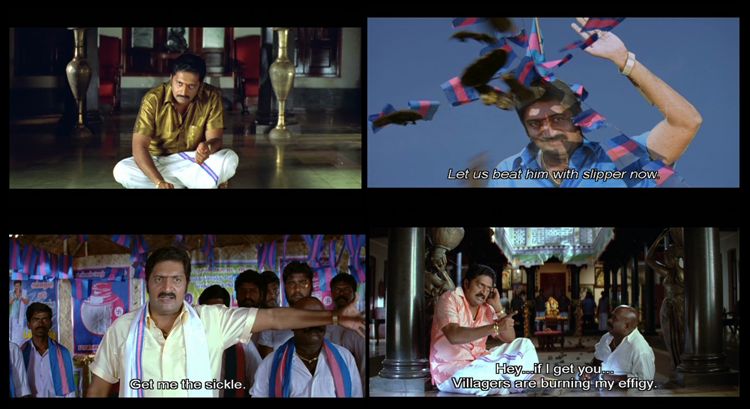
It becomes a bit tedious but there are some highlights. Prakash Raj is in good form as evil older brother Udayappa and sports a pleasing array of colourful shiny shirts. He is a local politician/industrialist/landlord/standover merchant. Some of Muthappa’s shenanigans work quite well. Having found a bunch of vintage film star impersonators to support his sister, Muthappa discovers Udayappa has one-upped him and hired Nayantara (as herself)  for his rally. She ends up lured into a dance-off with Vijay, which is actually one of his more practical schemes.

Muthappa isn’t really that much better a person than Udayappa when you get down to it. He manipulates his sister to ensure her election win – reprehensible behaviour, but it does produce one of my favourite campaign images.

There is a large support cast but they made little impression as the action is all about Sivakasi/Muthappa. No one really goes beyond the stereotype of crying Ma, suffering wife, comedy sidekick, bad guy, poor but honest villager etc, so they could have been played by anyone. Lakshana as Muthappa’s sister had the outline of an interesting character as the wronged woman turned politician, but true to the mass hero style everything was handled by her brother.

Hema and the Chennai gang turn up to see Muthappa, drawing all the storylines into one place. The stakes escalate as there are abundant hostages for the taking and the unscrupulous methods of both sides come to light. But there is nothing that can’t be fixed with an all in brawl or a group hug. There is little substance to any of the characters or the situations, despite all the dramatics. I found the ending neat but unsatisfying and I think that sums up the movie.

The songs (by Srikanth Deva) are what I expected – upbeat, loud, with colourful picturisations and flat-out dancing in exuberant mass filmi style. I must compliment the backing dancers, especially the guys. They are great fun and really enhance the dances with their facial expressions and uninhibited prancing. I particularly like this song, which is Muthappa’s romantic fantasy about Hema and again demonstrates his terrible taste in clothes.

Speaking of clothes, when I saw this film something niggled away at my mind. And then it hit me. I know plots and songs get recycled – but costumes?

Vijay has at least 2 costumes very similar to those worn by Bunny in and as Bunny in the song Bunny – the red & white ensemble and the silver and yellow number. Surely there are enough costume designers to ensure a rich and varied wardrobe for all?

Perarasu also made the dreadful Thirupaachi – I made Heather buy me lunch as compensation for forcing me to watch it – so I had low expectations when I watched Sivakasi and I was pleasantly surprised. Vijay and Asin are likeable and Sivakasi is more light and cartoonish than the usual gloom and nastiness common in Tamil romance films. 3 stars!

Heather says: I first saw the opening song for Sivakasi on a bus in Tamil Nadu with the local health workers singing and dancing along which at least partly contributes to why I like this film.  Then I bought a song DVD featuring Vijay in that awesome pink suit which was enough of a reason for me to sit down and watch the entire film, even if none of his other outfits in the movie come close to matching it.   Sivakasi is a typical mass entertainer to Vijay’s well-tested and regular formula, but since that formula does work well for him it’s worth a watch.  The first half really is all about the comedy and is a bit more hit and miss, although I do like the way Hema takes on Sivakasi’s prejudices and at least attempts to stand up for herself before the inevitable declaration of love.  When the action takes over in the second half the film gets much better and no-one can beat Prakash Raj when he fully embraces the evil villain character.  I also liked Lakshana as Sivakasi’s sister, both for her performance and the rather better than usual way her character is used, and I’m surprised I haven’t seen her in any other films.  I do get a little annoyed by the alternate mild violence towards women followed by the worshipping of mothers in this film, but it’s all so cartoonish that a mild irritation is the most I can feel.  The dancing is excellent even if sometimes the choreography is less so and the Vijay-Asin combination works well considering they don’t actually spend a lot of time together.  Even though every character is painted with very broad strokes it’s still an entertaining film, and definitely better than Thirupaachi (I don’t think I’ll ever be forgiven for that one!). One of Vijay’s better efforts.  3 ½ stars.

Apoorva Ragam

I must have read about Apoorva Ragam before I bought the DVD but I’d no idea about the story when I finally sat down to watch it. And that’s definitely the way to approach this film.  It relies on unexpected twists to deliver a rather different take on college romance and knowing too much about the story beforehand would take away much of its appeal. It’s genuinely surprising and has a heroine who’s prepared to fight back which is always a plus, but there is a little too much sentimentality for me, especially in the final scenes. It’s still an enjoyable film though, and I loved the myriad twists and turns which made the second half of the film much better than the first.

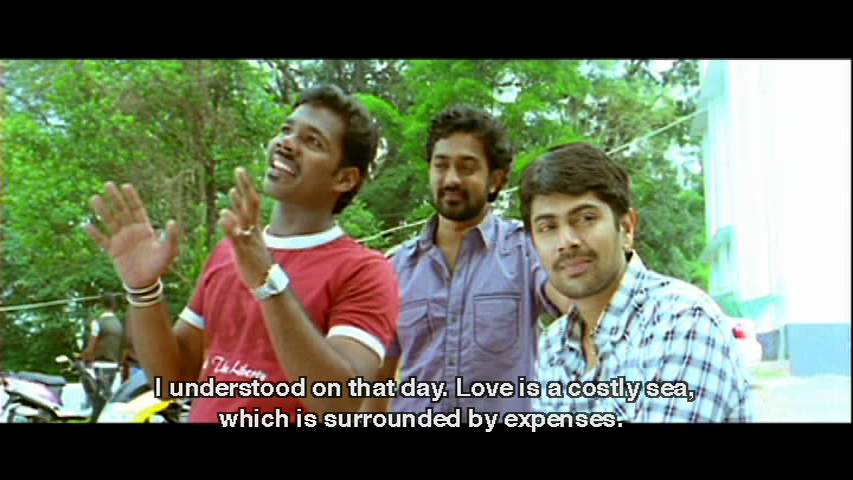
Apologies for the rather blurry screencaps – the DVD plays much better in a DVD player than on my laptop!

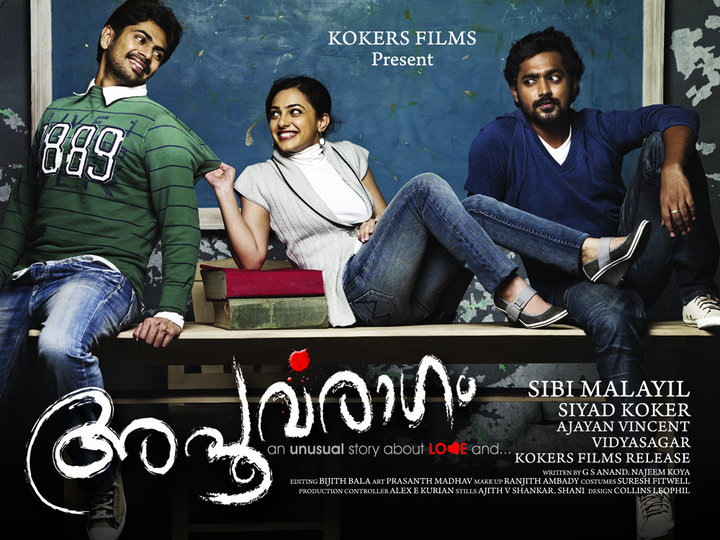
Apoorva Ragam starts just like every other Indian college-based film with a group of guys discussing how to get their friend Roopesh (Nishan) hooked up with the pretty and popular Nancy.  Nancy (Nithya Menon) is bubbly and confident unlike the rather shy and quiet Roopesh but after some plotting by his mates Tommy (Asif Ali) and Feroz (Abhishek Raveendran), Roopesh gets admitted into Nancy’s circle of friends.

A little more contriving and Roopesh finally declares his love to Nancy which unsurprisingly she reciprocates in full.  One inane college song later and the two appear to be a happy couple without a care in the world – so far so very predictable.

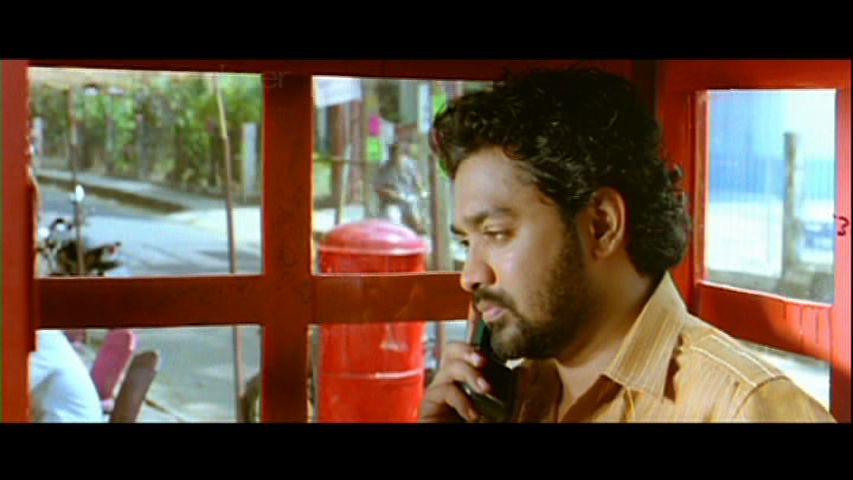
Except that there is a cloud on the horizon as a guy on a motorbike turns up looking for Tommy and Roopesh, and he doesn’t look as if he out to give them career advice either.

In another hint that not all may be as it seems, Tommy calls Nancy’s rich father to tell him that his daughter is in a relationship with some loser guy at college.  Although he trusts his daughter and doesn’t put much faith in the anonymous phone call, Melipaire reacts by setting up Nancy’s marriage to his business partner’s son.  In despair Nancy turns to her friends for their advice and after a little more drama Tommy and Narayanan (Vinay Forrt) suggest that Nancy and Roopesh get married and present her father with a fait accompli.  Nancy doesn’t seem too keen on the idea, but like all good movie heroines, she does what the hero expects her to do and in no time at all the wedding goes ahead.

So far, the film is following an entirely predictable path and not even a particularly impressive one at that. But then Melipaire confronts Roopesh and just when I was expecting the big speech full of undying love and unswerving loyalty, the tables turn completely and the film takes off in a totally different and much more interesting direction.

From here on there is twist after twist and the pace of the film picks up considerably.  There are some very clever ideas and some more bizarre moments – like when Roopesh ends up on the runway as a male model! The three guys, Roopesh, Tommy and Narayanan, all interact well and keep the action snappy and focused for the most part.  There are only two songs and this is the better of the two since it features some excellent uncle dancing from the boys as they bond on a road trip.

But while the story becomes interesting there are almost too many plot twists so that by the time it gets to the final climax scene it’s hard to be surprised by anything.  The constant shock revelations make it hard to connect to the characters and in addition the three leads are more caricatures rather than the well-developed individual personalities the earlier scenes seemed to promise.  There is also no back story to explain why Roopesh, Tommy and Narayanan ended up together and became involved in the elaborate schemes which develop.  Santhosh Jogi’s brief appearance as Sethu, the guy chasing after Tommy and Roopesh, is also confusing as it’s never clear exactly how he knew them or how he knew about their plans.  He seems to be used more to showcase the ruthlessness of the three and their tight camaraderie rather than as a way to further develop their story.

Nithya Menon is excellent as Nancy and is particularly good when she asserts her decisive personality.  She makes the most of her role and apart from a little over acting at the end, delivers the best performance in the film. I always like it when a heroine does the sensible thing and runs when faced with a bad situation and Nancy passes the test with flying colours.  In comparison, Nishan is rather wooden as Roopesh and after his first brilliant scene with Melipaire, he seems to rely on just two facial expressions which both make him look as if he has eaten something disagreeable.  Asif Ali is much better as Tommy but once the action moves away from the college campus he is pretty much sidelined while Vinay Forrt has even less to do as Narayanan.  Nancy’s father also seems to be a bit of a wimpy push-over and his over sentimental speeches with his daughter don’t really fit with the rest of the film.

This is the only film I’ve seen by Sibi Malayil although I have more of his films in the pile to watch.  I’ve read that this was a departure from his normal style of film-making which makes me wonder if the under-development of the characters was more of a deliberate experiment and an attempt to create a more edgy atmosphere.  It doesn’t quite work whatever the reason as there isn’t enough meat in the story to allow for the lack depth in the three guys. I still enjoyed watching Apoorva Ragam but it’s not a film that bears up well to a second viewing since once you know what is going to happen the flaws in the characterisations are very apparent.  As a one-time entertainer though it works well, and it does deliver as advertised – “an unusual story about love and…” 3 ½ stars.