Kandan Karunai

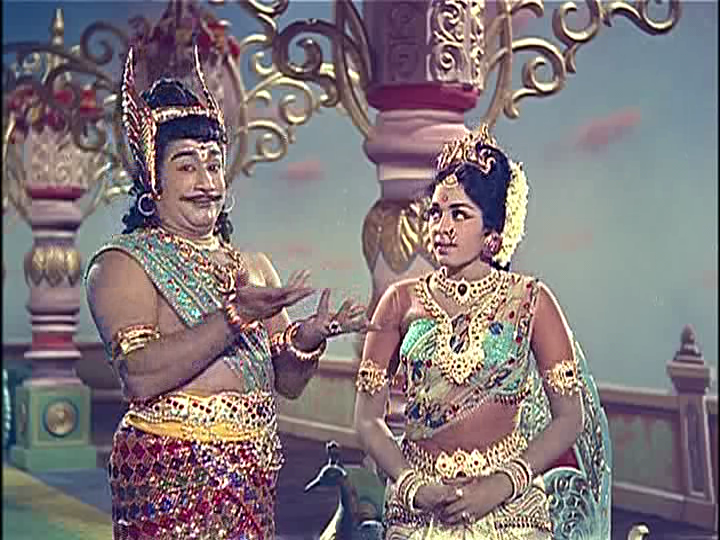
This is one of the few Tamil mythological films by A. P. Nagarajan that I’ve been able to find on DVD with English subtitles, and despite its sometimes pedestrian and almost documentary-like telling of key events in Lord Murugan’s life, it’s still worth a watch mainly due to the great cast and an excellent soundtrack.  The film covers the major incidents which define Lord Murugan and his place in the Hindu pantheon and it gives a good insight into why he is often regarded as the God of Tamils. Despite his more minor role Sivaji Ganesan is the star of the show but Gemini Ganesan, Savitri and various other stars of the time make an appearance, including an incredibly cute 4-year-old Sridevi in her first ever role as the young Murugan.  There are plenty of glittery costumes and even more sparkly jewellery set against some incredibly colourful sets which prove that there are no colours which clash in India. It’s garish but pretty and personally I’d like to see every army adopt the gold boots worn with such aplomb by Sivaji’s Veerabaghu.

The film starts with a devotional song to Lord Murugan by renowned singer and actress K. B. Sundarambal who appears in her characteristic role of Avvaiyyar.  She introduces the story of the demon king Surapadman (Ashokan) who is terrorising the people of heaven but cannot be killed due to a boon he and his people received from Lord Shiva.

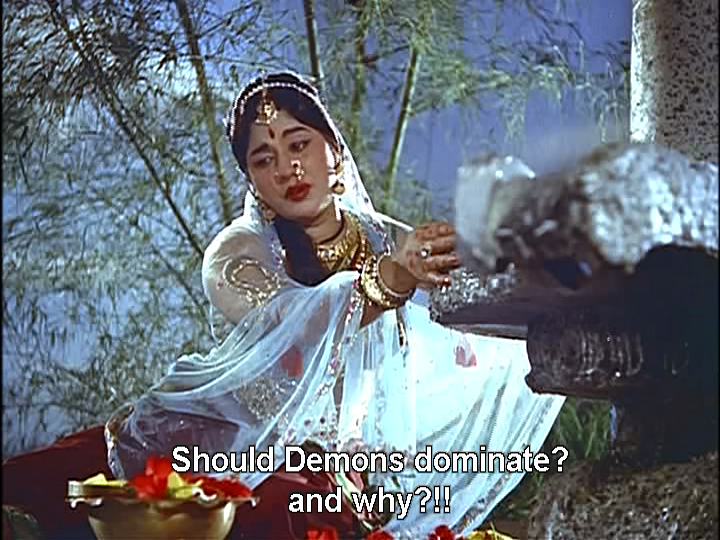
When Surapadman’s sister Ajamugi attempts to kidnap the king of the heavenly people’s wife Indrani (S. Varalakshmi) as a present for her brother, subsequent events force Lord Shiva to become involved. Rather than kill the demons directly he creates a son to deal with Sundarambal but gets rather more than he bargained for with Murugan.
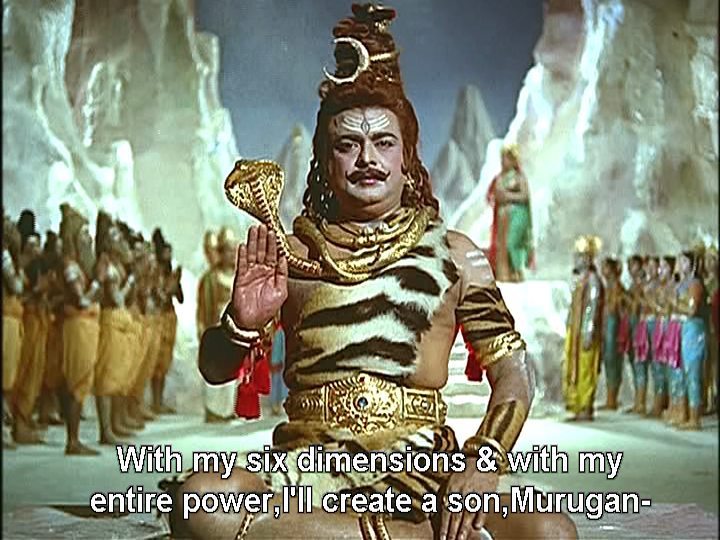
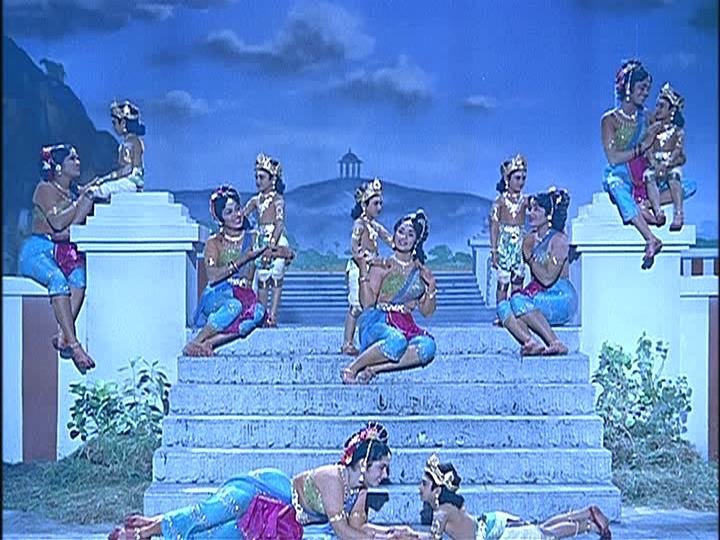
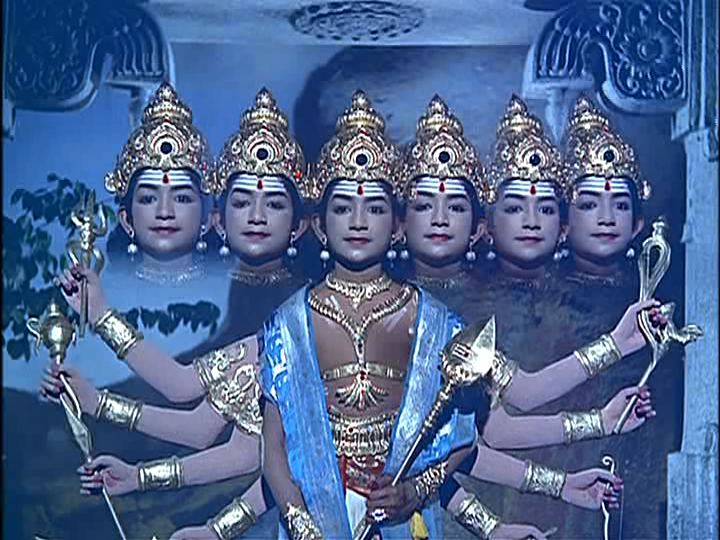
Murugan is clever, even as a child and faced with six divine girls as potential nannies, he rather practically splits into six versions of himself so that they each have a child to look after.  Later his mother Parvati reunites all of the children to create the god with six faces while the divine girls are rewarded by being transformed into stars. These first few stories dealing with the young Murugan are mainly told in song, although when there is dialogue Master Sridhar as the young Murugan holds his own in scenes with the older actors Gemini Ganesan as Shiva and Savitri as Parvati.

The adult Murugan is played by Sivakumar who sadly doesn’t give Murugan much personality at all,  and he plays the role rather passively.  However the ‘good man’ Veerabaghu, who comes to help Murugan in his war against the demons, provides plenty of attitude and Sivaj Ganesan brings the film to life in this role.  He acts first of all as a messenger from Lord Murugan to Surapadman, defying the demon’s arrogance by creating his own throne and servant girls when Surapadman denies him a chair.  He is instrumental in instructing Lord Murugan how to fight the various demons and later he gets to strut around in his wonderful gold boots as the army celebrates Murugan victory.

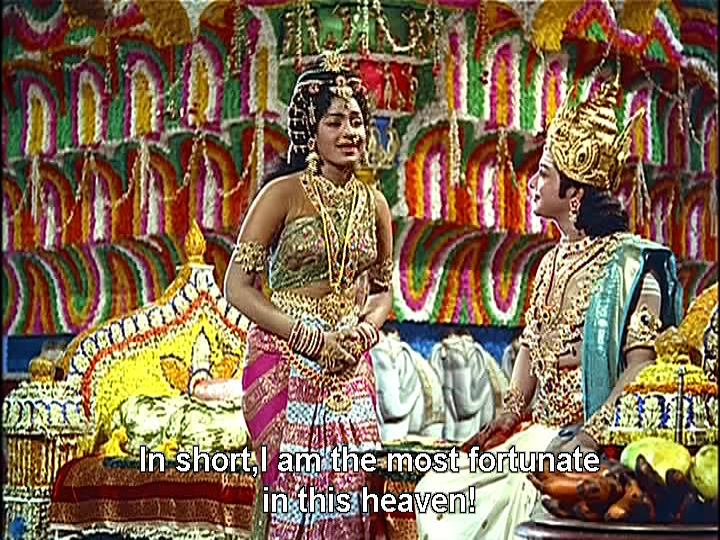
The latter half of the film deals with Murugan’s two marriages.  The first of these is to Indira’s daughter Deivanai (K. R. Vijaya) who manages to stay cool when faced with the riot of colour that accompanies her marriage and subsequent first night with Lord Murugan.
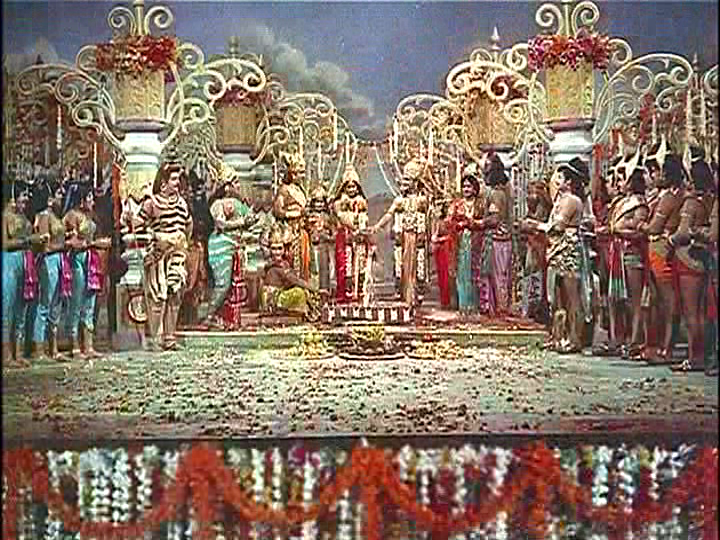
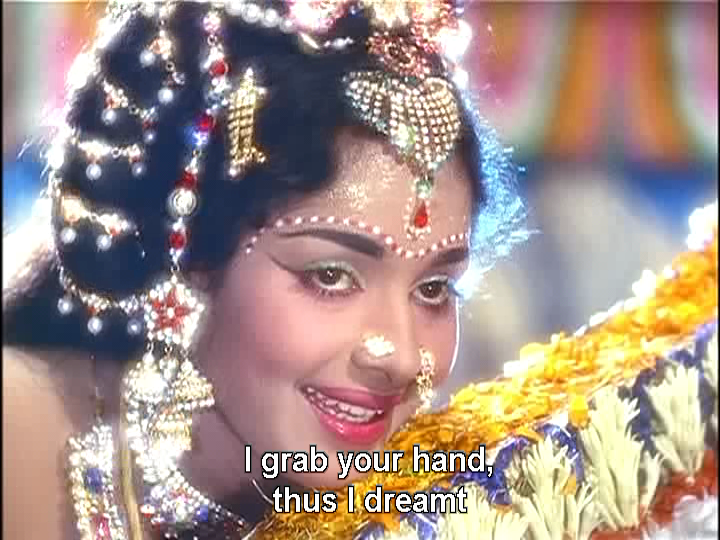
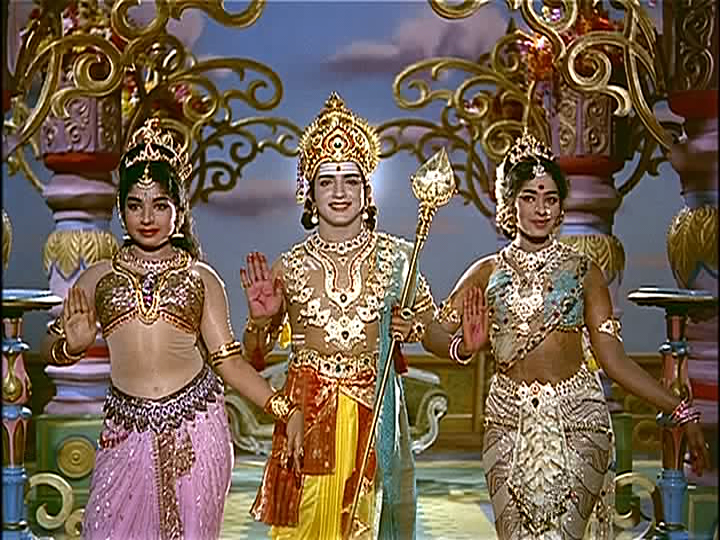
The explanation of marriage and a woman’s place in society sounds incredibly patronising, particularly when Deivanai is told that she has to remain faithful to her husband while Murugan goes off and finds a second wife.  However, since the basic theme of an obedient wife still seems to be expounded as the ideal even in India to-day it probably sounds more reasonable to its intended audience, particularly back in 1967 when the film was made.  Deivanai is still understandably outraged when Murugan comes back with Valli and there are some funny moments as Veerabaghu has to deal with the two angry women, which he does with great charm and lots of sparkle.  K. R. Vijaya looks beautiful but doesn’t have much scope to do anything else as her character is very one-dimensional.  Jayalalitha as Murugan’s second wife Valli has a better role with a little more substance including this lovely introduction.

Valli is the daughter of a tribal chief and her friends include Manorama and Tamil comic actor Nagesh who provide a little relief from all the noble deeds and dramatic pronouncements of the other characters.  Jayalalitha is charming and her Valli is graceful and elegant even in her simple village girl persona which translates well to her rise in station as the consort of Lord Murugan.

The film is very stylish and looks beautiful but lacks the warmth of other Nagarajan films I’ve seen, particularly in the character of the older Lord Murugan.  Perhaps it’s because Murugan has outgrown the mischievousness and arrogance which livened up the early scenes and it’s hard to portray worthiness and knowledge as being anything other than a little dull. Sivakumar is pleasant enough but is eclipsed by Sivaji who has much more presence.  The battle scenes are very stylised and the demons don’t ever look to stand much of a chance against Lord Murugan and his trusty spear, although the internal squabbles in Surapadman’s court are well portrayed.  I really liked the actress who played Ajamugi who got her outrage and vindictive nature across very clearly.

The music by K V Mahadevan won him a National Award and it’s definitely  a highlight of the film with some beautiful vocals by P. Susheela in many of the songs.  This film worked more for me as an explanation of some of the symbolism I’ve seen on my visits to temples in Tamil Nadu, and a synopsis of Lord Murugan’s life, although of course I always enjoy a film with lots of sparkle! Worth watching for the songs, Sivaji and the younger Murugan – 3 stars.
Tholi Prema

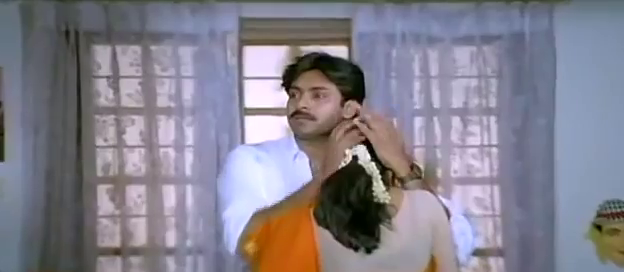
Tholi Prema was strongly recommended by several hardcore Pawan Kalyan fans. If it gets the most enthusiastic film fans in the world hopping with excitement, I knew I had to watch it. It is not quite what I expected from a 90s romance, and mostly it’s a very nice film. Karunakaran let a couple of vaguely sensible ideas creep into all the filminess, and I really enjoyed the way some of the situations play out.

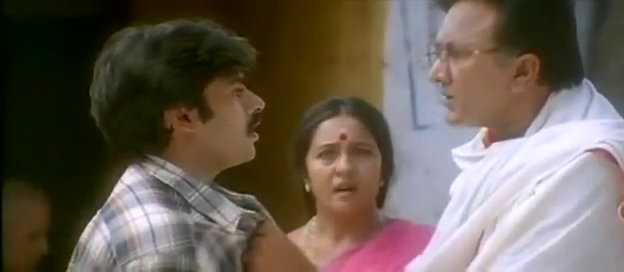
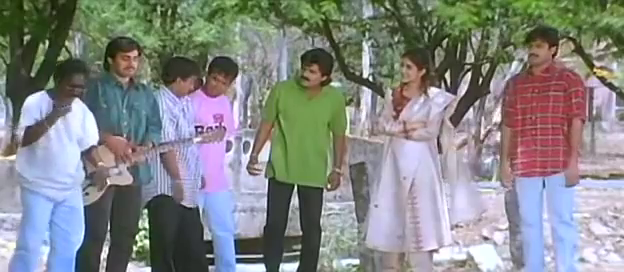
Pawan Kalyan stars as Balu, an underachiever who seems a bit adrift. He doesn’t live up to his parents’ high hopes and lacks motivation in his academic life. Balu and his father clash time and time again, and there is an unsettled and acrimonious atmosphere at his home. This forces him to spend more time with a group of friends that includes Ali and Venu Madhav. Balu has no trouble being assertive and a leader outside of his home, but he has no standing within his family. He is a decent guy, but just hasn’t quite got himself sorted and relies too much on his uncle (Nagesh) to sort things out for him.

Keerthi Reddy is Anu, the girl Balu falls instantly in love with. She is first seen hopping and clapping on the side of the road in the traditional filmi ‘escaped mental patient’ style. I liked her in Arjun and she is good here as the too perfect to be real rich girl but her role is mostly about looking fair and rather vapid. Anu has good intentions that manifest in ditzy ways. She believes ordinary people who do good should be celebrated so chases them around to get their autographs as though they were celebrities, and she also plays Santa for some homeless kids. Nice ideas but the execution makes her look flaky. Anu has big dreams for her career and study, and isn’t looking to marry any time soon. She wants to win a Nobel Prize!

Balu is looking for her because of her beauty and she is looking for him because he saved a child (in a very stupid traffic incident) and she sees him as a hero. There are near misses, a very dramatic incident and far too much advice from the comedy gang. But once Anu and Balu meet, the characters got a bit more interesting.

Balu is the hero so he does his share of beating up wrongdoers and righteous speechifying. But he is also a little vulnerable and I found him quite likeable. He doesn’t throw his weight around all the time, and he is easily disconcerted by quick witted cousin Priya. Pawan Kalyan looks a tad too mature for the undergrad Balu, but he is very convincing in his swings between diffidence and a more energised and confident state. He can work up a good smoulder as well as a very impressive sad puppy face. He has the Mega family eyes after all! But it’s not simply a matter of the hero claiming his ‘reward’ and he does bring a bit more nuance to Balu than I was expecting. The story plays out in both full blown melodrama and some sweetly sensible dialogues.

Priya (Vasuki) tells Balu to get to know Anu before he proposes. Radical, I know! She also points out that stalking a girl is creepy and not a good tactic as it means the girl is unaware she is in a relationship. And the sensible advice and decisions don’t stop there. When Balu writes a message in blood, another favourite of filmi heroes, Anu is as mad as all get out. She can’t understand why anyone would do that, and tells him so. The boys all fluctuate between moping listlessly and having the vapours when they so much as see their intended, so in some respects they are more like the traditional romance heroine.

Having said that, the notion that a girl is obliged to accept a guy who declares love for her is firmly in place. There are several examples of female characters succumbing to the man’s ‘honesty’ or ‘love’ regardless of whether they had ever exchanged three words in person. The biggest disappointment was in the way Priya’s story was resolved. Having seen how disturbed Balu was by his unrequited love, she couldn’t bear to reject someone who would feel the same pain. So she, giver of sensible relationship advice, married a colleague out of pity. It didn’t fit with someone who was determined enough to live away from home to complete her medical studies in a more conducive atmosphere. And while Anu and Balu were a bit more sensible, Balu showed little sign of applying himself to any form of work, study or career plan. The male characters mostly assumed that they could be useless, as the women would look after them. I think the female characters were getting a raw deal in being lumbered with these manchild types, but True Love is supposed to make everything right, isn’t it?

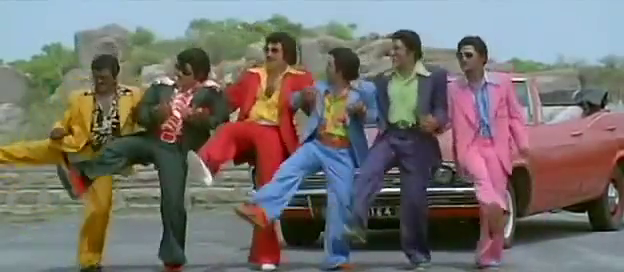
Most of Balu’s songs are picturesque montages of him wandering lost and lovelorn or behaving foolishly under the influence of daydreams. And he does all that very well. His dream sequences are really something! The opening disco sequence was hilarious and very peculiar. And there is a colourful vintage tribute. Deva’s music is pleasant, if heavily derivative at times, and matches the mood of the scenes. I enjoyed the light hearted mood in this song, mostly because he looks as though he snuck into big brother Chiru’s dress-up box to put the outfits together. And also because of the Ricky Martin ‘influence’.

Ali and Venu Madhav seem to be less irritating in films with Pawan Kalyan. I don’t know whether that is because he takes on some of the comedy himself so they are more contained, or that they often play characters with a purpose. I could still do without them, but I didn’t have my usual allergic reaction. The comedy is often broad and relies on slide whistle, poking fun at stereotypes and cheesy visual tricks. Narra Venkateswara Rao is Balu’s dad and he is a very unsympathetic character for most of the film. But he and Balu share a really soppy moment that was quite sweet, and a little unexpected. Nagesh is fun as the uncle and Sangeetha as the patient but passive mother makes up the rest of the major support roles.

I think every single character cries for most of the last 20 minutes. Luckily the resolution was left to Balu and Anu and the ending was quite satisfying (despite my reservations about Balu ever growing up).

I liked Tholi Prema for the way it took a slightly different path through the romance clichés. There are nice scenes between family members and with Anu, Balu and Priya that added real humour and emotion. I like Pawan Kalyan but if you’re not familiar with his films, this might be a good place to start for people who don’t enjoy the action genre. 3 ½ stars!

Takkari Donga

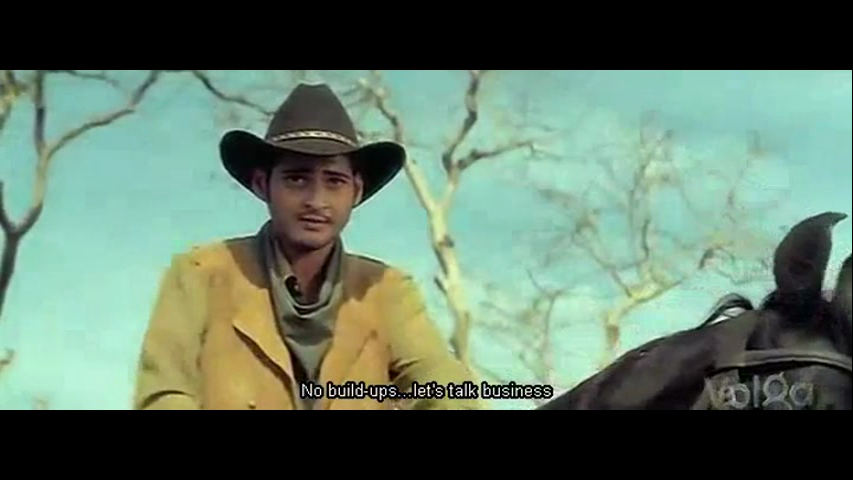
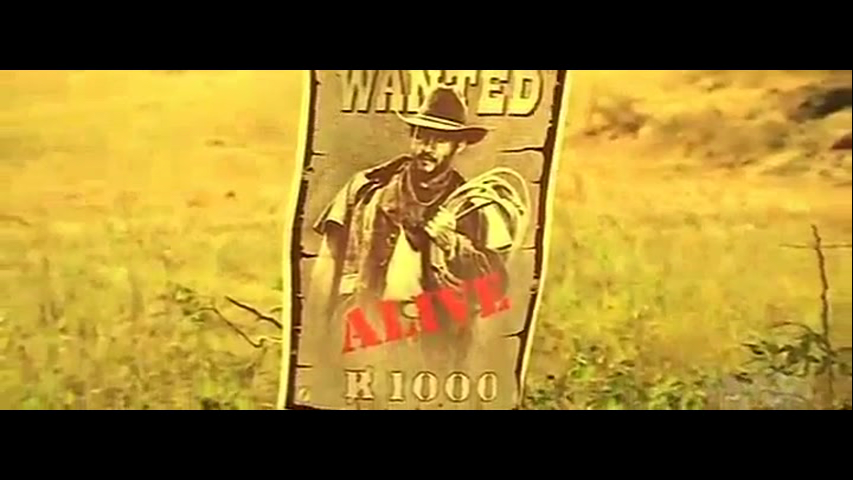
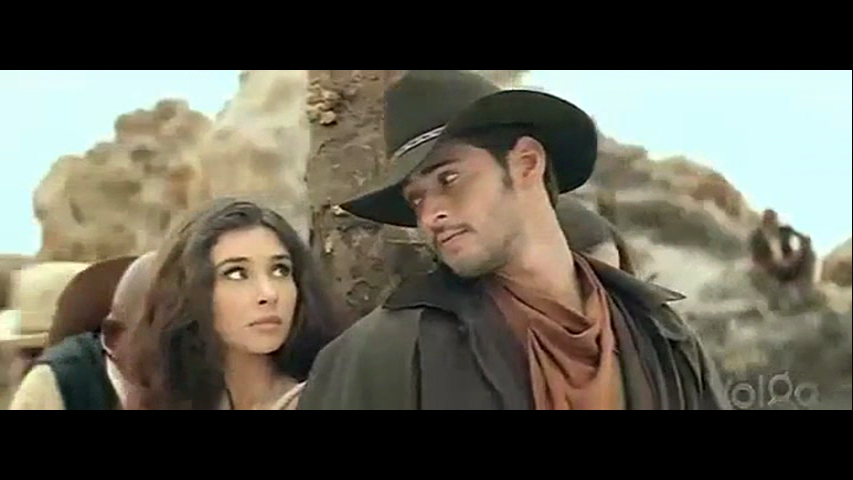
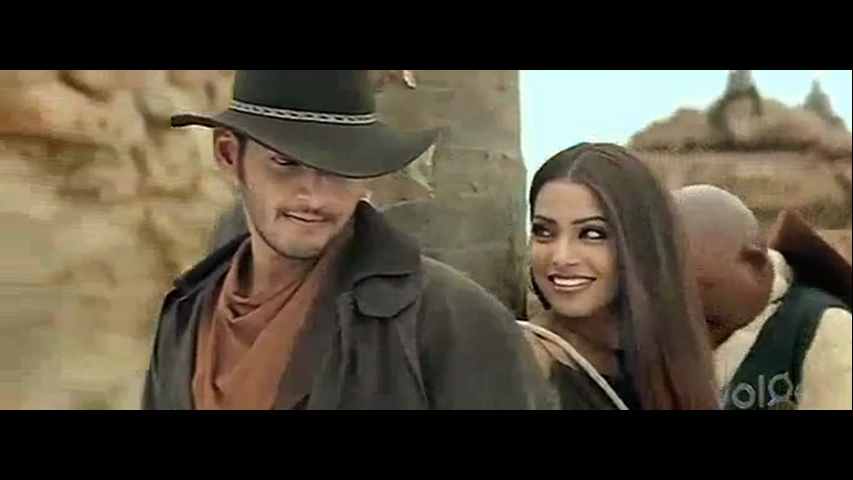
Made back in the day when Mahesh Babu was more baby-faced than baby-faced killer, Takkari Donga is a cowboy treasure quest featuring a map, a secret ‘diamond valley’, plus some bad acting and worse outfits courtesy of Bipasha Basu and Lisa Ray. Oh Mahesh. You’ve come a long way!

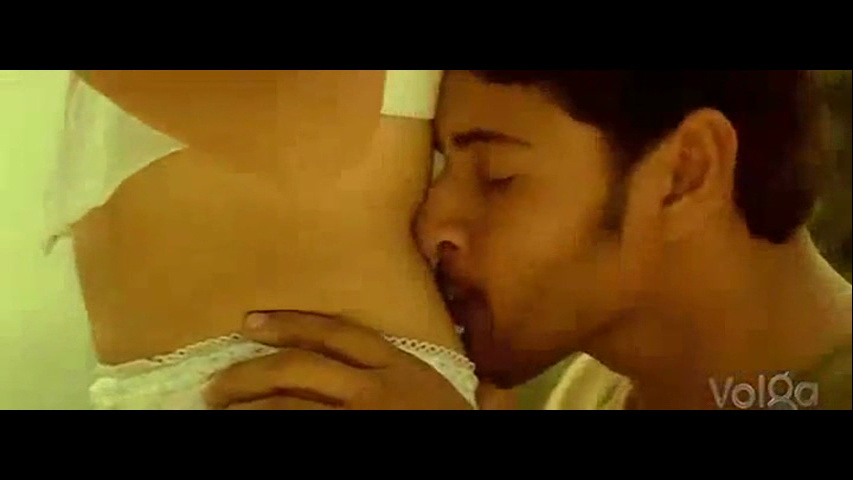
The Mahesh Fan prompted me to watch this film some time ago (“It’s Mahesh! In chaps!!”). As I often do, I ignored her. She sent me the link to watch it with subs on YouTube. Again, I somehow managed to ignore that (“It’s Mahesh! In chaps!! And there’s venom sucking!!!”). Finally she turned up at my house with a DVD made up of all those YouTube clips cobbled together. Resistance was futile. And she was right – it does feature Mahesh in chaps, and there is indeed venom sucking. I don’t think they are the most compelling reasons to watch a film, but I was quite amused by the sheer silliness that has diamonds harvested like fruit and a bit of skanked up boot-scooting. I watched it ages ago with Beth and Amrita and they found it tedious. But I say there is (fools) gold in them thar hills.

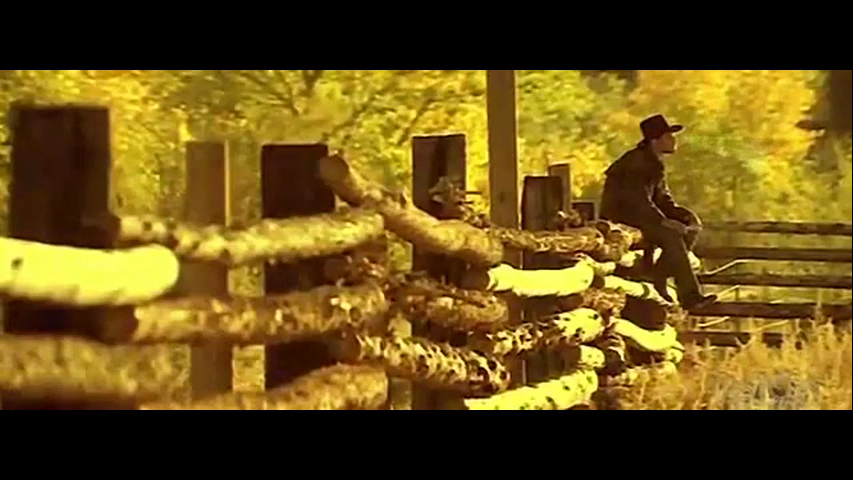
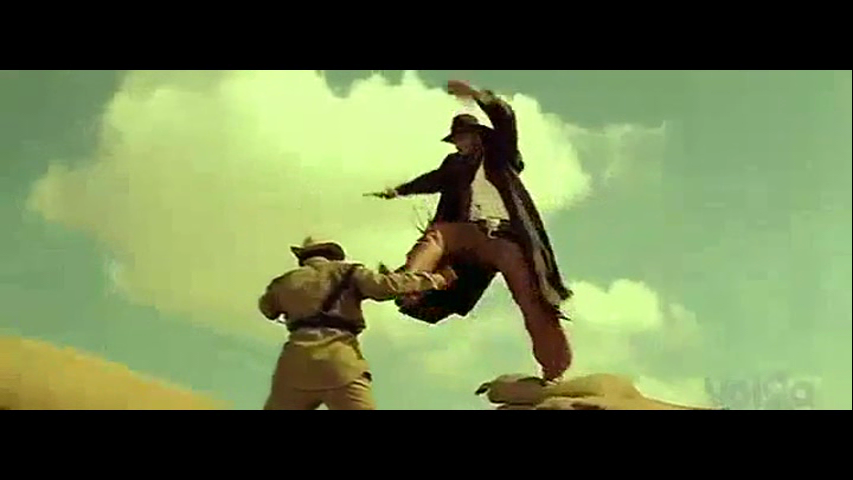
It’s a pastiche, maybe more along the lines of the Trinity series than a purported remake of The Good, The Bad and The Ugly. The music is a good match as Mani Sharma veers from Marlboro Country anthemic to cheesy songs. There is also a fair dollop of ‘sad trombone’, Addams Family finger snaps and samples from other Hollywood soundtracks. The camera work is often lovely and there is good use of aerial shots that help capture the grandeur of stunning scenery. It’s loaded with cowboy film standards – a saloon brawl, pratfalls, gun twirling and enigmatic galloping. There is a rickety bridge, TNT, smart horses and dumb humans. All the clichés, lovingly filmed for our enjoyment. Plus lions.

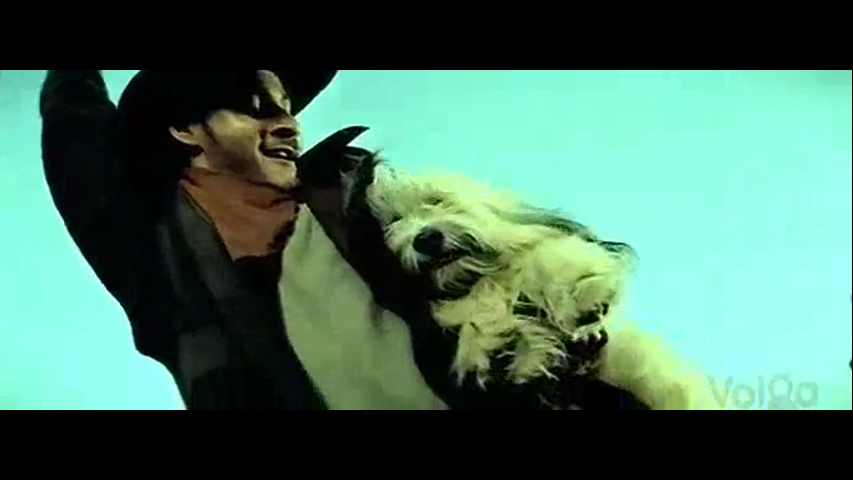
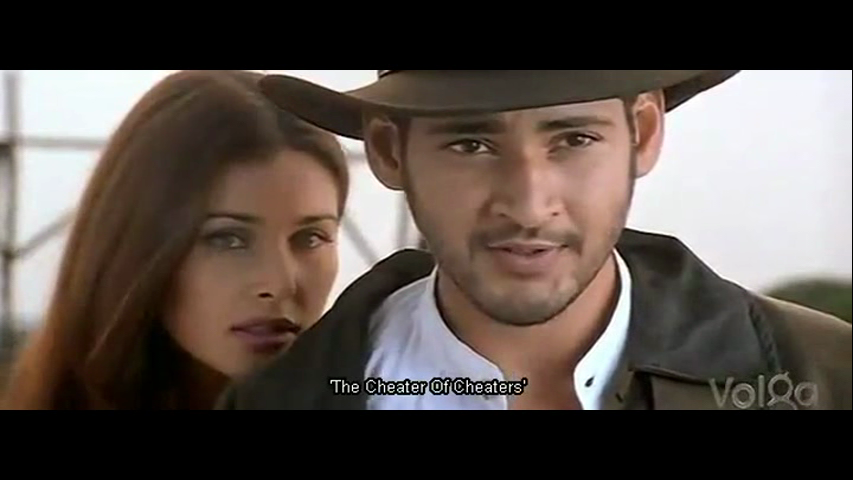
Mahesh Babu is Raja, the titular ‘Tricky Thief’. Raja has a tragic backstory that featured his family, a tiny white puppy and villain of the piece Shaka at his most sadistic. He’s an enigma. I mean, where does a man who is essentially homeless keep that extensive hat collection?


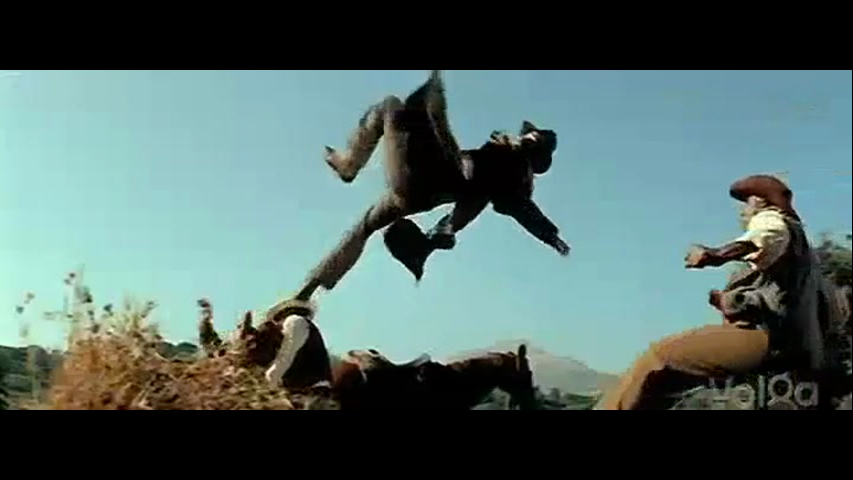
Raja’s bullets pack an extra punch as several opponents are literally blown away with a single bullet, flying out of shot thanks to some enthusiastic wire work. But he also deals with an epic rope bridge confrontation simply scaring the bad guy silly by wobbling the bridge so it’s not all guns and blood spatter. I could empathise with the creepy Dega in that scene. A friend did that to me every single time we crossed a bridge in Nepal and he always found it amusing to see me ricocheting past yaks and backpackers as I fled into the distance.

Of course, the bridge HAS To break eventually but the villain is actually sent to his death by a fluffy white dog. Excellent! And then Mahesh rescues the dog so he is doubly heroic and the music agrees. I do like a good dog assisted comeuppance.

Panasa (Bipasha) makes her entrance pretending to be blind in order to rob Raja who had just robbed a train. Raja pursues her to get his booty (the money – I’m talking about the money). Despite Mahesh making loads of noise and lighting up a cigarette she persists in pretending she has no idea he is there which makes for a nicely gratuitous bath scene. She falls for Raja but to no avail, as he seems immune to her charms as amply signalled by her snug fitting leather pants.

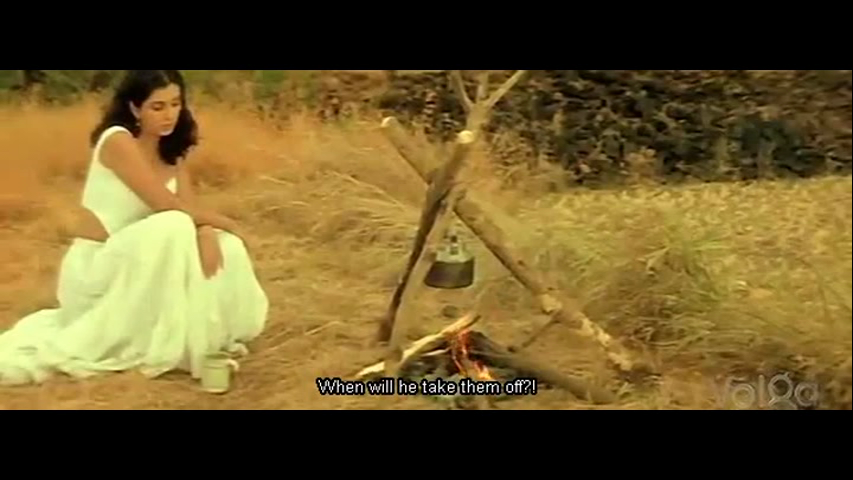
Lisa Ray is Bhuvana, the girl destined to marry a man with exceptional qualities and a significant mole on his thigh. She sets off on a perilous journey to her uncle’s house with Raja as her paid guard, but really she is all about checking him for that mole. Lisa got a gratuitous bath scene as well as the venom sucking scene so I feel the film maker’s objectives were clear.

There is a vague love triangle as Panasa chases Raja who is sort of keen on Bhuvana who hates Raja but we know that won’t last. Panasa is a piece of work, conspiring with her sidekick (Tanikella Bharani with comedy moustache) to get Bhuvana kidnapped by the horrible Dega who likes his women to be unwilling and temporary guests.

The humour is very slapstick, uneven and only intermittently funny. Sometimes things do work well. I liked the way Raja would scoot into frame during the Chukkallo Chandrude song and shoot people to emphasise the beat. And if you ever wanted to see Mahesh weaponise a bra – wish granted.

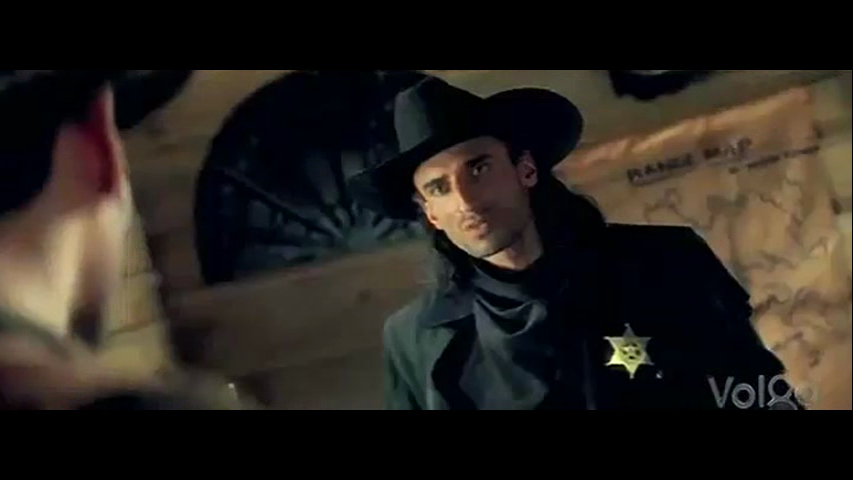
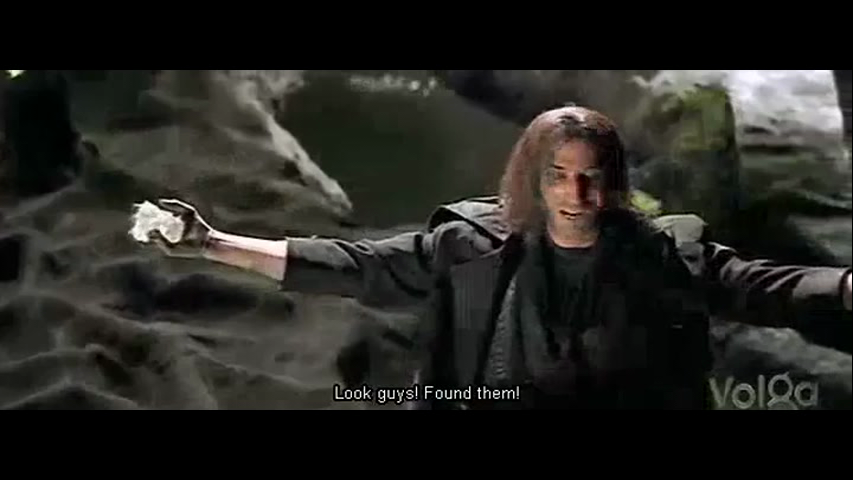
Rahul Dev is the villain Shaka. He is obsessed with finding the map that Veeru (Ashok K Kumar) escaped with. 18 years of looking and time has not mellowed his disposition. I can’t help but think that if he had actually looked for the diamond valley rather than the man with the map he may have got there all by himself. Shaka has an unfortunate tendency to let his victims die before they speak so he is eternally frustrated. He is a sadistic psychopath and appears to own just one outfit. He has a significant scar but I think his nose is just so hypnotic it takes a while for Raja to notice the fateful mark.


But the plot is not really worth discussing in detail. Either you’ll enjoy the story unfolding or you won’t care. It’s set in a non specific time and place using Western tropes including a Texas Rangers Sheriff badge alongside piles of chilli drying in the sun mixed with tacky plasticky photo frames and vile synthetic fabrics. The design team had some fun with the map and subsequent clues and the diamond mine is quite astonishing.

I was quite concerned when I realised there would be lots of horse scenes as frequently the stunts in films are horrifying and it is obvious that some animals would have been severely injured (at best). Takkari Donga relies mostly on the horse chase and equine acting so there was nothing that had me ready to cover my eyes. The fluffy white dog seems to have mysterious powers of teleportation. He generally trots along after the drama waiting for a chance to save Raja so that was also quite stress-free.

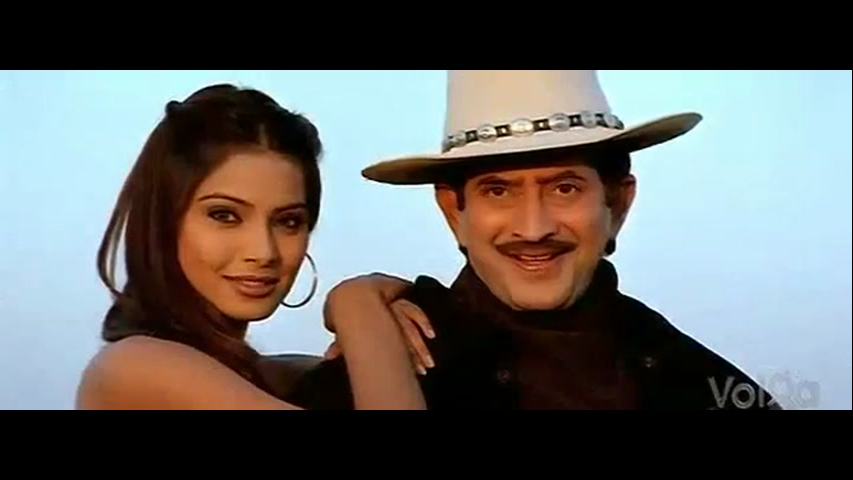
Jayant Paranji did go on to make the excellent Shankar Dada MBBS and Teen Maar, and we all know Mahesh’s star continues to rise so clearly this film was not the career ending move it might have been. The choreography is uninspired despite a credit for Saroj Khan (among others). Make sure you watch right to the end for a special appearance by Superstar Krishna and for the blooper reel. 3 stars just for the so bad it’s good-ness!