Subramaniapuram

Subramaniapuram

I picked up a copy of Subramaniapuram after being intrigued by the costumes, Brothers’ Gibb hairstyles and excessive facial hair I saw in the songs – which I’m worried says a little too much about how I choose which films I watch!

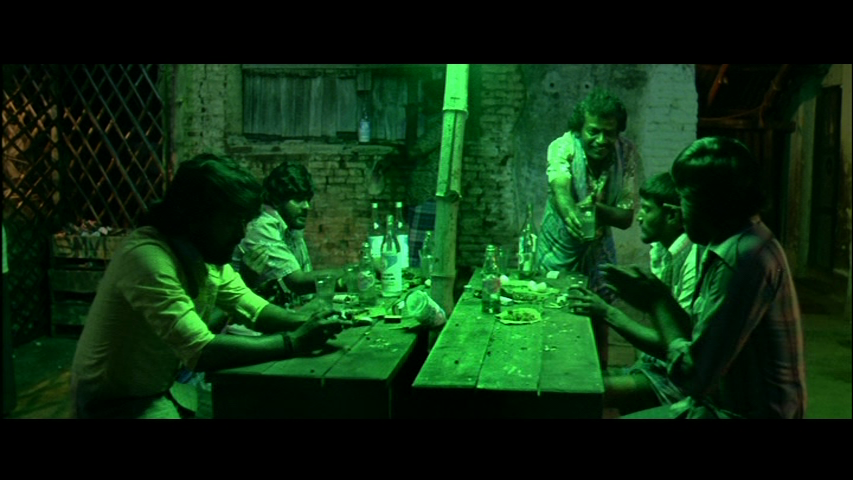
It all makes a little more sense when it turns out that most of the film is a flash-back to 1980, although I’m not sure that large collars and flares ever made much sense.  This is director M. Sasikumar’s first venture, but he worked with Paruthiveeran director Ameer on a few films previously and appears to have been influenced by Ameer’s true-to-life style of film-making.  The realistic approach suits the gritty storyline, although the screenplay does wander in places with the first half being essentially a long set-up for the action in the rest of the film.  However, there is enough suspense to keep the plot interesting and the attention to detail in the sets makes it an intriguing glimpse into India in the early eighties.

SubramaniapuramSubramaniapuram vlcsnap-2013-09-01-21h59m26s70Subramaniapuram


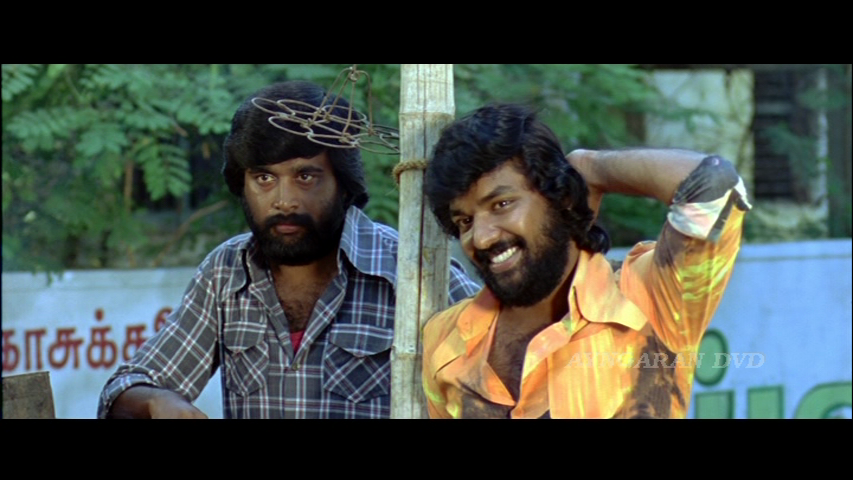
The film starts with a dramatic stabbing outside Madurai prison in 2008.  To explain who has been stabbed and why, we move back to 1980 and a group of friends who spend their days lazing around the area of Subramaniapuram.  Azhagar (Jai), who my subtitles call Alagar and Paraman (M. Sasikumar) act as security for the ex-councillor Somu and his brother Kanugu (Samuthirakani), although it’s a rather informal arrangement and Somu spends most of his time bailing the friends out of jail.  Along with Kasi, (Ganja Karuppu), Dumka and Dopa, the friends prefer to drink and fight, rather than look for any gainful employment, which is a point of contention for Azhagar’s more successful brother and his long-suffering mother.

SubramaniapuramSubramaniapuramSubramaniapuramSubramaniapuram

Some comedy is introduced with the goofy looks Azhagar gives Somu’s daughter Swathi (Thulasi), and the way he cannot keep his attention on anything else whenever she is around.  It’s cute, and Azhagar’s attempts at stalking are met with plenty of encouragement, although naturally Swathi expects her man to eventually change his ways.  Thulasi has a great shy and bashful smile which she uses well and she easily fits into the role of a school girl in the first throes of love. Later on she gets the chance to do a little more with her character and is convincing as she tries to reconcile her family’s expectations with her love for Azhagar.
SubramaniapuramSubramaniapuramSubramaniapuramSubramaniapuram

The first half is slow with considerable time spent on developing the characters of the friends and not much progress with the story.  However, there is a lot going on, but these are mainly background events which gradually combine to give an overall feel for the time and place.  A trip to the cinema at one point for example, illustrates just how much Azhagar values his relationship with Swathi above his friends, which does have implications later on in the story.  It also shows just how easily Azhagar and Paraman erupt into violence for very little provocation and that the Three Musketeers have nothing on Azhagar and his friends when it comes to the ‘all for one and one for all’ concept of fighting.

Essentially Subramanipuram is a story of betrayal.  Kanugu feels betrayed when his political party appoints someone else into the role he has been coveting, and uses the unquestioning loyalty of Azhagar and Paraman to get his revenge.  It’s also a story about the betrayal of Azhagar and Paraman who expect Kanugu to come to their rescue yet again and are spurred into action by Kanugu’s failure to get them out of jail after they remove his rival. There are many other betrayals along the way, which serve to highlight the few characters that do remain completely faithful. It’s an interesting look at how each small act of disloyalty starts another in a chain reaction that doesn’t intensify, but rather just keeps perpetuating in an endless cycle.  Whether it’s about jobs, relationships both professional and personal or friendship, the betrayals come thick and fast throughout the community.

SubramaniapuramSubramaniapuram

After the interval the story moves much faster as Azhagar and Paraman escalate their violence from petty fights to actual murder.  The friends’ initial decision to kill Kanugu’s rival seems naïve, especially when Kanugu is so very obvious about his manipulation.  However, their

subsequent actions quickly demonstrate how violence breeds yet more violence and that having killed once, it’s much easier to kill again.  One of the most realistic scenes of the film does illustrate that it takes a fair amount of determined hacking to chop off someone’s head, so be warned that this isn’t a film for the squeamish (even though most of the aforementioned chopping does take place off-screen).

While Sasikumar does well at directing, he is rather more one-dimensional as Paraman, and even though Paraman has the potential to be an interesting character, he somehow never quite gets there.  Jai has a little more material to work with as Azhagar, and does a great job of expressing every emotion from infatuation to terror and finally despair as the final betrayal hits home.  It’s an impressive performance and enough to make me have a look for some of his other films, where thankfully he appears to have shaved off most of the truly excessive beard.
SubramaniapuramSubramaniapuram

SubramaniapuramSubramaniapuram

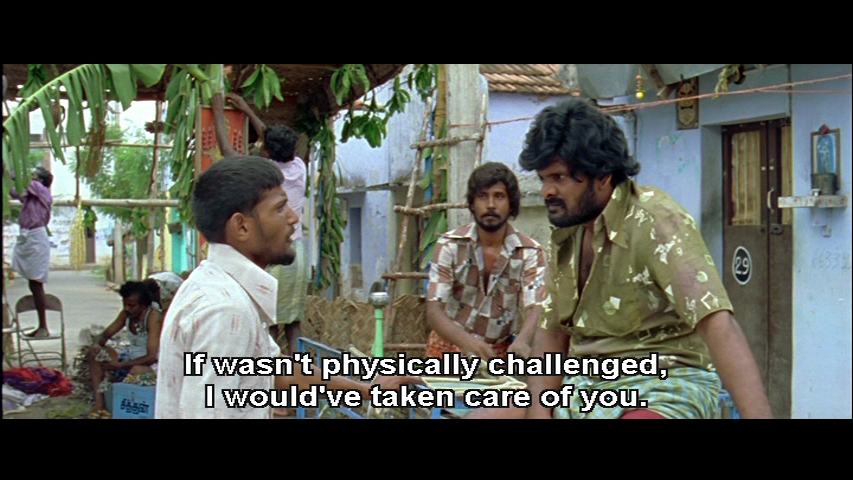
Ganja Karuppu is suitably annoying as the perpetually drunken Kasi, and when he does get the opportunity to do something more than just mug at the camera, he proves that he is a very credible actor when given the chance.  Best of all though is the actor playing the disabled Dumka, who is wonderfully matter-of-fact and keeps the whole film grounded with his pithy observations and practical solutions. The character is well written, but the actor does justice to the role making Dumka memorable even though it’s only a small part.  I haven’t been able to find out anything about him, but I hope he gets the chance to appear in more films in the future.

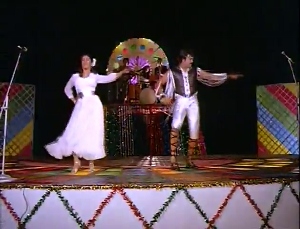
The costumes are also fantastic and all those shirts did conjure up some hideous memories of the late seventies.  I have no idea how accurate this vision of 1980’s Madurai actually is, but it seems to be scarily reminiscent of 1980’s fashion in the UK (excepting the lungi’s of course).  The music by James Vasthanan seems to fit the time period well and this is probably the best song which features plenty of those goofy grins and bashful glances between Azhagar and Thulasi.

Subramaniapuram starts out like any typical Tamil film, veers off into more novel territory with some good ideas, but is a little let down by patchy pacing of the action.  Excellent performances and the dedication to recreating an early eighties feel make the most of the storyline although it’s not a film I’d recommend for the faint-hearted.  Worth a watch though if you like a more realistic style of film and don’t object to the occasional outbreak of gory violence. 3 ½ stars.
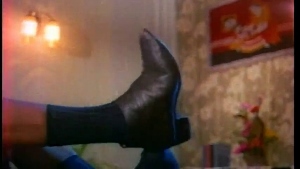
Mega Socks – function and fashion

Mega Socks-14

This year I asked you, dear readers, for input into the theme of one Megabirthday post. You voted for Chiranjeevi’s socks. And you probably have the cheek to think I’m strange.

The Mega Sock is a vexing area of research. Being a fashion chameleon and trend setter, Chiru rarely settled for one standard approach. He changed his socks as often as he changed his moods. I have gathered some examples to illustrate the versatility of his sock choices, a style contribution often overshadowed by the flashier go-go-boot department.

The unified thematic sock

Mega Socks-11

White trousers, white socks, white loafers. A safe choice for the Telugu film hero.

Mega Socks-7

Or matching shirt and socks, also a filmi classic.

The artistic contrast

Mega Socks-8Mega Socks-6

Sometimes the contrasting sock was more than just a fashion statement. I am reminded of Audrey Hepburn’s refusal to wear white socks in a dance scene in Funny Face, claiming it would break the line of her leg and look inelegant. But she capitulated and in the end result, the white socks actually enhanced the dancing as they allowed viewers to see her footwork against the dark background of the set. I like to picture Chiranjeevi quoting that anecdote when directors tried to challenge his footwear choices.
The statement

Mega Socks-4Mega Socks-5

Sometimes a mere bedazzled outfit and flashy shoe is Just Not Enough. Why let the whole outfit down with boring ankles?
The comedic effect sock

Mega Socks-13Mega Socks-10

Well, I hope it was meant to be funny.

The invisible sock

Mega Socks-3

I have long marvelled at Chiranjeevi’s ability to carry off the rather challenging mini-toga and go-go boot combination. And while it may seem there is little left to the imagination, I mean, you’d have to have the right socks. Think about that. The sock could be utilitarian, or a secret splash of extra sparkle designed purely for Chiru’s amusement.

Mega Socks-21Mega Socks-15

And then there is the negative sock. Cross-gartered to the knee, Chiranjeevi proves that the absence of a sock can still make a statement. Especially when paired with silver pedalpushers and a corset.

Leg warmers and gaiters

Not a sock proper, nor a boot, the legwarmer makes occasional appearances through Chiru’s career.

Chiru combines an eye-popping fashion statement with sensible thermal layering.

Mega Socks-1

Is that a legwarmer he is wearing as a glove?

I like the bedazzled gaiter effect with matching gloves. In the absence of the more traditional bedazzled boot, Chiranjeevi still seems to find a way to embellish his foot region.

The Mega Sock Style

And finally, an example of Chiru mixing it up with a Tip Top Look combining several mega sock styles. See which ones you spot (if you aren’t blinded by the gold pants).

Happy Megabirthday!

Edited to add: Totally Filmi has hand dyed the perfect sock yarn to adorn a mega stylish ankle. Go see the results!

Chattaniki Kallu Levu

Chattaniki Kallu Levu poster

Chiranjeevi and Lakshmi star as siblings out for vengeance against the three men who killed their father and older sister and tortured the rest of the family. Durga (Lakshmi) grows up to be a police inspector, while Vijay (Chiru) takes a more DIY approach to justice. It’s not a ground-breaking story but I liked that director S.A. Chandrasekhar kept the focus on social justice and how different laws apply to different people.

Chattaniki Kallu Levu-gravesChattaniki Kallu Levu-oath

After making an entrance swearing vengeance by two graves, Chiranjeevi is quite low key for much of the film as he only has one job. Vijay is pretty much on task for the revenge all through the story, and even his romance with Rekha (Madhavi) ties into that main plot thread. He is extremely self confident and never seems to question whether his is the right path. He often undermines his sister’s career and that seems to be OK with his mother. Vijay has no discernable occupation other than being the hero so I was a bit impatient with his attitude to Durga, but they are both obsessed with getting their own idea of justice.

Chattaniki Kallu Levu-LakshmiChattaniki Kallu Levu-interior design

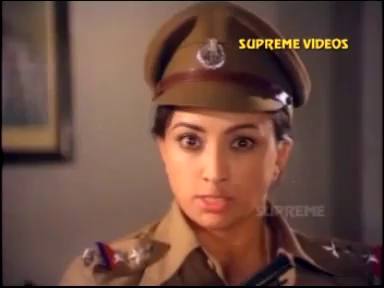
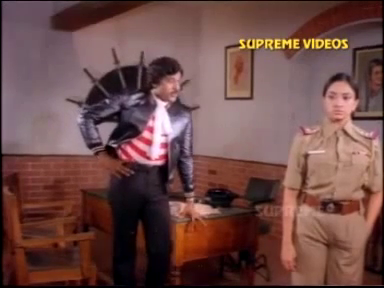
Lakshmi is Durga, a police inspector who demands that the legal system provide justice for her. She is an interesting character as she has a lot of the same traits as Vijay – the confidence, the belief that hers is the only righteous way, and putting her priority (the law) ahead of her sibling. Lakshmi mostly has to scowl and shout, occasionally breaking the routine with a bit of shock horror or a rare smile. It’s not a complex performance but I admired the strength of her character and liked that she didn’t resort to getting shrill or calling her brother for help. She took everyone on and believed she could win.

Chattaniki Kallu Levu-family

The long suffering Ma (Pandari Bai) is often caught between her bolshie children and just seems to want a quiet life after all the death and mayhem.

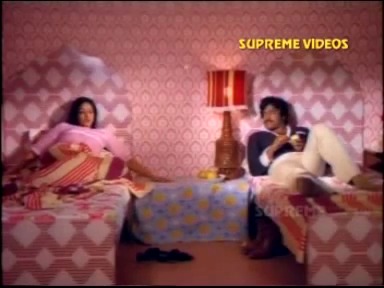
Chattaniki Kallu Levu-Vijay and DurgaChattaniki Kallu Levu-the kids room

Maybe she should have given them separate bedrooms. Or less seizure-inducing décor.

Chattaniki Kallu Levu-Rekha at workChattaniki Kallu Levu-Madhavi off duty

Madhavi is the nightclub dancer Rekha, and being an adventure without subtitles I think I missed the explanation about how she ended up at the cabaret. She lived with her father or maybe uncle, and seemed to have a clear delineation between work and home life.

She certainly didn’t tolerate anyone treating her as a whore and was quick to threaten any disrespect with a chappal. Madhavi and Chiru have nice rapport and I liked that Vijay seemed to accept Rekha without the need to tell her off about her situation or blame her for being a skanky item dancer. Durga doesn’t like Rekha and clearly thinks she is no better than she ought to be. The tension between the two women mostly originates in Durga’s judgemental nature. Rekha seems quite content with her lot, and is happy to abet Vijay as he realises the man who abducted and attacked her is the man with coke bottle glasses who helped kill his father.

Chattaniki Kallu Levu-the killers

There are a few surprises in the plot, mostly in Vijay’s elaborate execution set-ups. He recognises his intended victims by some very odd idiosyncrasies, and uses their weaknesses. I am not sure exactly why John (Hemasundar) the very short sighted guy had pigeons, a dog and – horror of horrors – a scrawny kitten let loose in his apartment before being sent into traffic minus his glasses. I suppose it made a change from generic biffo. Janardhan (Ceylon Manohar) had a revolting habit of flicking cigar ash into his glass and drinking it, so he deserved to die just for that. But Vijay got him so drunk he was easily dealt with. I also liked that his obliging corpse would shuffle around in the bathtub to make sure it was in shot as required. The third killer Javed (Kannada Prabhakar) was a serial rapist and murderous villain, so again no need to feel conflicted over his imminent demise. The thing I found most intriguing was the unresolved conflict between Vijay and Durga. She was unapologetic and disapproving to the end, with no sign of the usual capitulation to the man of the family.

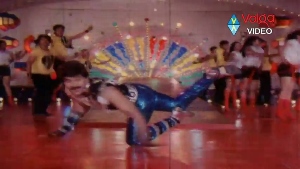
Vijay and Durga get almost equal screen time, but he gets most of the songs. Not saying that is a good thing, but I do like a bit of sequinned revenge disco, especially with disguises. Even with the, er, décor at this classy (?!) establishment.

The title song is set over a montage of contrasts between the rich and poor. And a cat and (dead) rodent. I’m used to seeing lots of chickens or rabbits in Telugu films but this one is more cat centric.

Now can anyone tell me, was 1981 a big year for the zipper in Indian fashion? Madhavi is abducted by one of the baddies and he gleefully has at her multi-zippered playsuit. Chiru sports a very peculiar onesie with feature zippers that is not exactly flattering to the stockier gentleman.

And he wears many very disappointing beige outfits, often with extensive sweat marks that seem to indicate a bit too much synthetic fibre.

The fight scenes are numerous and very energetic. There is a vague martial arts flavour to some of the fight choreography and no prop survived unscathed.

The film also uses a lot of stills montages – particularly for the final courtroom scene. I guess they ran out of Chiru hours and just decided to wing it. It works well enough, and I did find the lawyers posturing highly amusing.

Probably a film for the Chiranjeevi completists, I still found a few things that were unusual or interesting enough that I’ve been thinking about the movie for a while. So many Telugu films locate justice outside of the legal system but the sibling dynamic was an interesting lens through which to view the different perspectives. Chiru, Lakshmi and Madhavi are accomplished and deliver strong characterisations and a range of emotions. It’s not a masterpiece but it’s a good example of Chiranjeevi’s vigilante style hero that became such a trademark. 3 ½ stars!

Chattaniki Kallu Levu-Chiru