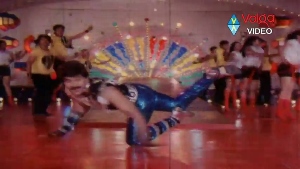
Navarathri

Navarathri-Savitri in Navarathri

Savitri starred in both the 1964 Tamil Navrathri (dir. A.P Nagarajan) and the 1966 Telugu remake (dir. Tatineni Ramarao) and she is lovely as ever. What makes it particularly difficult to choose one over the other film is her leading men – Sivaji Ganesan (1964) and Akkineni Nageswara Rao (1966) – who each bring their own style to the proceedings. So I won’t pick.

That is so pretty with the Golu, the girls dancing and their sarees. The Telugu song is a bit more sparkly so I always pick that one.

Savitri is Nalina (Tamil) or Radha (Telugu). I’m going to just refer to her as Savitri throughout. After that lovely happy song, Savitri is told her father has fixed her marriage. She is already in love, and has no idea that her dad has unwittingly accepted a proposal from her boyfriend. Oh the drama. She runs to see the boy, only to be told he has gone to get married. She runs away, unable to face life as another man’s wife. Her character spends 9 nights wandering. She encounters different characters, all played by the leading man, who represent different aspects of human behaviour and emotion. These are named slightly differently in each film so I will just list them by night.

The film is more of an allegory than a realistic portrayal. Despite having lots of detail presented about who these men are, there is not a lot of depth to all the characters. The actors focus on the key emotion of the episode rather than trying to create nuances. Sivaji Ganesan is charismatic and is always instantly recognisable in this tour de force. ANR is generally better suited to low-key roles, but he also plays the various men as types. It is highly entertaining and stylised.

Night 1. A flamboyant widower interrupts Savitri as she contemplates suicide and drags her back to his house. Both ANR and Sivaji played this character as an eccentric, lonely man. The widower is devoted to his dead wife and little daughter (played by Kutty Padmini in both versions, I think). When compared flounce for flounce, there is little to separate the actors in this episode. I kept thinking of Snagglepuss.

Night 2. Tricked by a brothel madam, Savitri has to fend off a drunkard with a sob story. Savitri is determined, fierce and has a good throwing arm. Sivaji played this role as a wild eyed, plaid pants wearing letch with mood swings. ANR did a gorgeous self-parody as a self-pitying Devdas and for that, he wins my vote.

Night 3. Picked up by the police, Savitri is taken to a mental hospital. Both actors play the doctor as gently considerate and interested in why she was faking madness. I enjoyed ANR’s reactions to Savitri’s odd gesticulations and speeches. Sivaji is more of a generic saint in a white wig. Placed in a ward with several other women exhibiting different manias, Savitri joins in the various set pieces each inmate delivers and their song and dance medley. The Telugu patients (including Suryakantam, Chhaya Devi, Jamuna and Jayalalithaa) are funny and energetic, and I recognised most of the songs they used so I enjoyed their section a lot.  Manorama features in the Tamil film where the dancing and singing is more subdued but still fun. I’m usually averse to using the mentally ill as comedy fodder, but there was something good-natured and kind in this episode that helped me put my qualms aside.

Night 4. Frightened that the police had come for her, Savitri runs again. She meets a lurking gunman, out for revenge against the men who tortured and killed his brother. Savitri tries to persuade him to stop but he is killed by his enemies. It’s his character who has the most obvious demons to fight in this Navarathri. Both ANR and Sivaji play him with swagger and bluster. ANR had a little more vulnerability while Sivaji showed more of the wounded pride and ferocity. Both died spectacularly and both had to deal with interesting makeup and costumes. I guess it depends on whether you prefer a stripy t-shirt or a stripy lungi.

Night 5. Savitri contemplates suicide again. She is saved by a kindly villager and his sister who worry that she had been possessed by an evil spirit. A comedy conman arrives to fleece her poor but honest benefactors and Savitri decides to give him a taste of his own medicine. Nagesh originated the role in the Tamil verison while Relangi played in the Telugu film. I prefer Relangi in almost any role to Nagesh in most things! I think ANR does poor man with heart of gold so very well.  For this section, the Telugu film is the winner for me.

Night 6. Savitri sees an old man crawling along a path and goes to help. A formerly rich man, he is now a leper and shunned by all his family and associates. Savitri doesn’t let her revulsion at his physical state stop her from behaving with compassion and integrity. I really like that at around this stage in the movie, Savitri has stopped just passively absorbing help and is not only thinking about how to sort out her own life but is actively supporting other people. The makeup department were a bit more effective in 1966, and ANR does vulnerability so well. The Telugu film gets my points for this episode.

Night 7. A theatrical company is in need for an actress after theirs elopes. Savitri agrees to help them and the play goes on. I don’t think anyone can beat Sivaji Ganesan in Ye Historical Outfits and he looks like he has a ball in this turn as the rural actor/director. ANR is very good and his dancing has a higher comedy value, but the portentous dialogues flow so nicely in the Tamil film. Savitri is lovely in both films as she matches her leading man step for step.

Night 8. Whoever thought either of these men should wear short shorts should be given a severe talking to. Playing a policeman playing a hunter ANR and Sivaji both opt for a braying laugh, military bluff heartiness and those shorts. I think they used the same footage of the tiger in both films. Savitri masquerades as a man. She is not even slightly convincing, but her expressions are funny and her Telugu characterisation is enjoyably pompous. I think Sivaji’s shorts are both more terrifying (baggy, poor camera angles) and hilarious (baggy, poor camera angles). The Tamil film is a little more dramatic and better paced at this stage so I prefer that.

Night 9. In which we discover that intended groom/disappearing boyfriend Anand or Venu (Telugu) is of course Sivaji or ANR. Savitri has nice rapport with both actors and the reconciliation scenes were both funny and heartfelt by turn.  The wedding goes ahead and all the ‘other men’ turn up (except the dead gunman). Happiness prevails!

This slideshow requires JavaScript.

I slightly prefer the Telugu soundtrack by Chalapathi Rao T as it is a little more filmi and festive but the songs in the Tamil film are quite soulful so it does depend on my mood. I have the Telugu DVD with subtitles but have only seen the Tamil film without (it’s on Youtube). The stories are identical but of course, the dialogues will differ somewhat. Despite having different directors, there are only differences in a few scenes. It’s interesting to see so little of the second director in the remake – when I first saw the films I assumed AP Nagarajan did both.

I have some minor doubts. How did Savitri keep finding new sarees with impeccably tailored blouses? And she seemed to be wandering in circles yet no one could find her. But nothing detracted from enjoying her journey and her realisation that she could go home and be happy.

I really like both films, and have rewatched them a couple of times. Savitri is brilliant as Nalina/Radha and despite the focus being on the men, her performance is varied and her characterisation develops beautifully. Both Sivaji and ANR are in fine form and make the task of playing nine roles seem effortless. Choose your favourite cast, choose on language, choose the songs you like most, choose your own adventure! 4 stars!

Gundello Godari

Gundello Godari

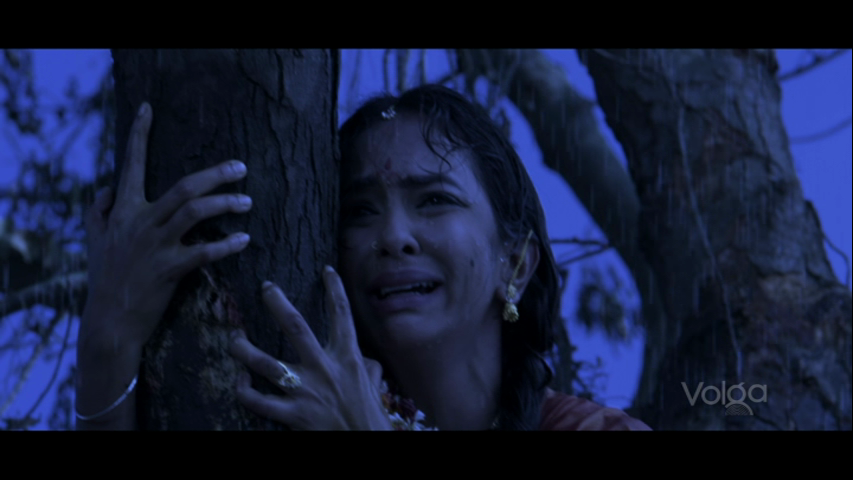
Gundello Godari is a step away from mass masala, going back to basics with a simple love story that evolves in quite a different way from the usual fare.  This is director Kumar Nagendra’s debut film and it’s loosely based on a novel by BVS Rama Rao, set around the real-life devastating floods in 1986.  Initially, newlyweds Malli and Chitra know nothing about each other, but as they battle through the Godavari floodwaters, they gradually learn about their respective troubled pasts.  The screenplay is a little patchy in places and the flood is frequently overly melodramatic, but good performances and beautiful music by Ilaiyaraaja make this a better than average watch.

Gundello GodariGundello GodariGundello GodariGundello Godari

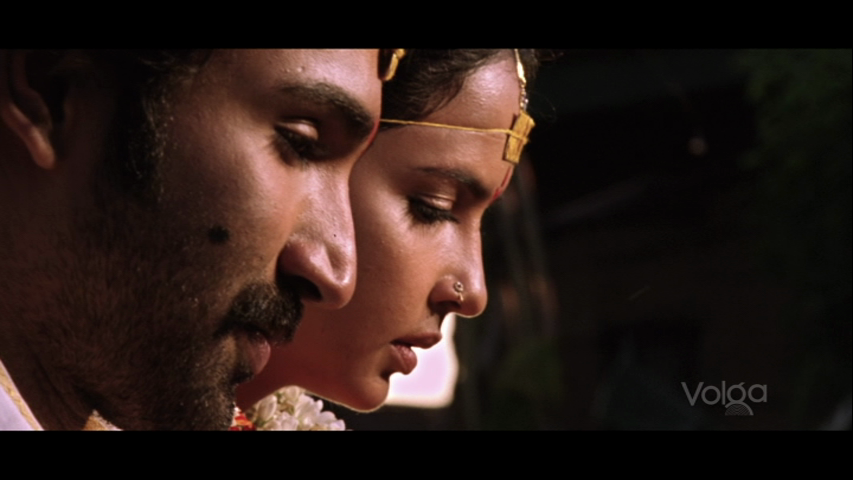
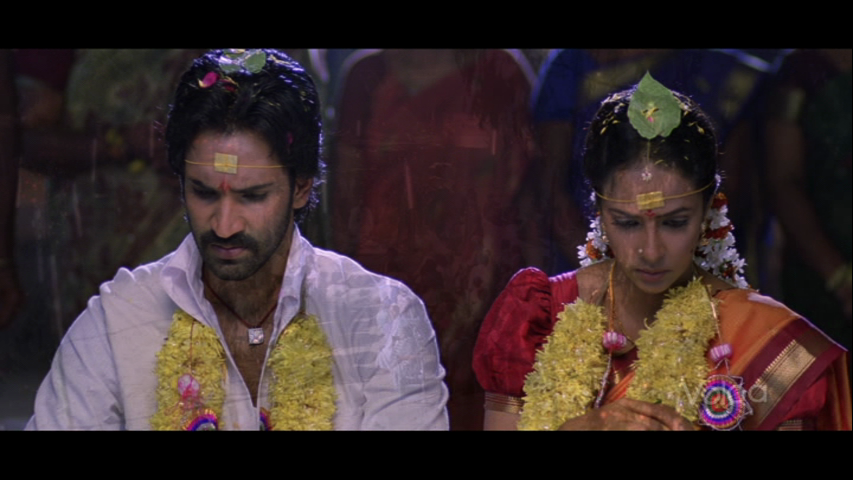
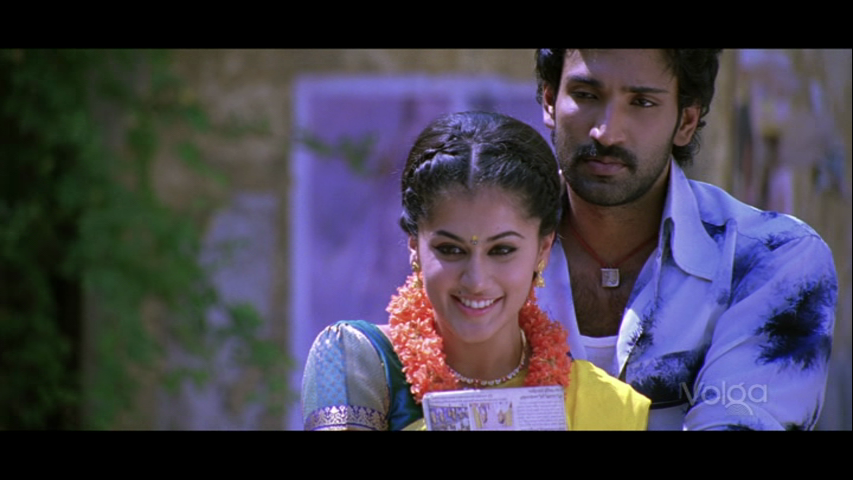
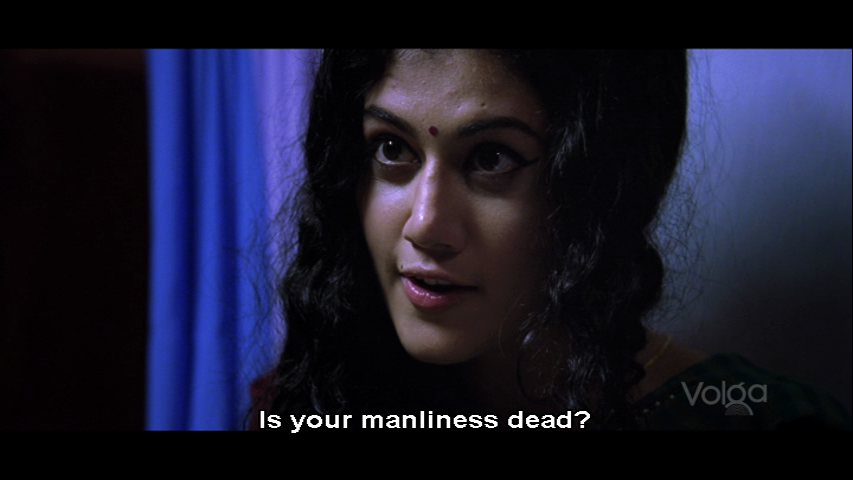
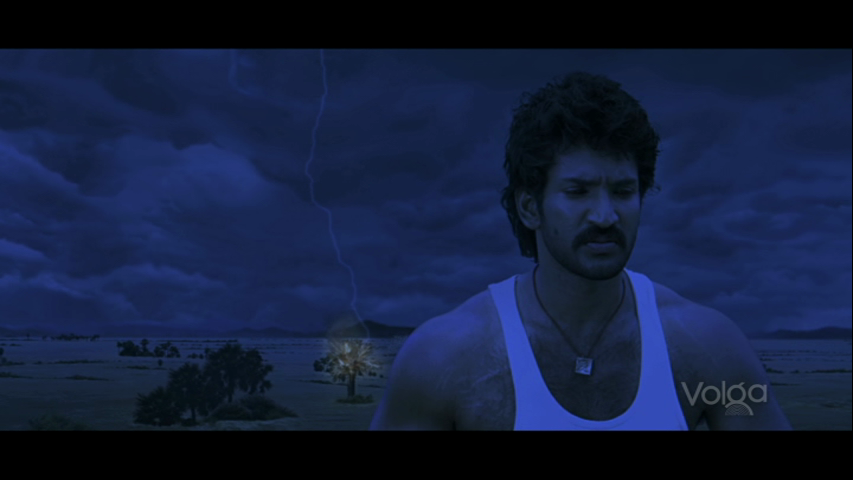
The story opens with the marriage of Malli (Aadhi) and Chitra (Lakshmi Manchu), although they barely acknowledge each other throughout the ceremony.  The first spark of interest occurs when the beautiful Sarala (Taapsee Pannu) gifts the groom with a golden ring, obviously with the intention of making his new bride jealous.  At that point, the sleazy Dhorababu (Ravi Babu) arrives and also has a present for the happy couple, this time a gold chain for the bride.  Lost in their thoughts, Chitra and Malli linger too long and get caught up in the flood waters as the rest of the village evacuates.  However, they end up cast adrift on a thatched roof together, just managing to stay afloat, and in the likelihood that they won’t survive, decide to discuss their past lives and exactly how Sarala and Dhorababu fit into the picture.

Gundello GodariGundello GodariGundello GodariGundello Godari

The initial flood scenes are well integrated between the sets and some good CGI.  There are one or two moments of soggy model villages eroding with a trickle of water, but these are brief, and after all, who doesn’t like to see the traditional model village make an appearance.  The cinematography by M.R.Palanikumaar is excellent, with beautiful shots of the river, wildlife and surrounding countryside particularly during the flashback scenes.  These contrast with the fury of the river in full flood, and also highlight the difference between Malli and Chitra’s earlier lives and their current turmoil.  Predictable perhaps, but when the parallels are drawn this well with good imagery it’s hard to object.

Gundello GodariGundello Godari

The first flashback deals with Malli and his undoing at the hands of his boss’s daughter.  Malli is a hard-working fisherman who has a good circle of friends, looks after his mother like all good boys should, and is saving up to buy his own boat.  He also tends to favour a string vest, but we shouldn’t hold that against him.

Kumar Nagendra captures the hopes and aspirations of a village fisherman perfectly and Aadhi is excellent in the role.  A boat race at a local fair epitomises Malli’s drive and determination to achieve what he wants, although the same fair brings him inadvertently to the attention of Sarala.  Despite her impending marriage, Sarala has no compunction in going after what she wants, and in this case what she wants is Malli!  Although she initially appears child-like as she threatens and cajoles Malli into taking her to the movies on her birthday, events become more sinister as Malli arrested by the local police on a spurious charge of brewing illicit alcohol.  Whether it’s Sarala or her father who is responsible, Malli ends up taking his frustration out on Sarala and gives her exactly what she wants in the process.  Sarala is an interesting and atypical character with her overt sexuality and brazen attempts to drag Malli into her bed.  Taapsee is good in the role, but her expression rarely varies, and although her knowing smirk is suitable a little more variation would have given her character more appeal.  Aadhi on the other hand does a fantastic job of capturing frustration, anger and even some lust in his dealings with Sarala and despite the nature of their relationship, there is plenty of emotion and sparkage between the two characters.

Gundello GodariGundello GodariGundello GodariGundello Godari

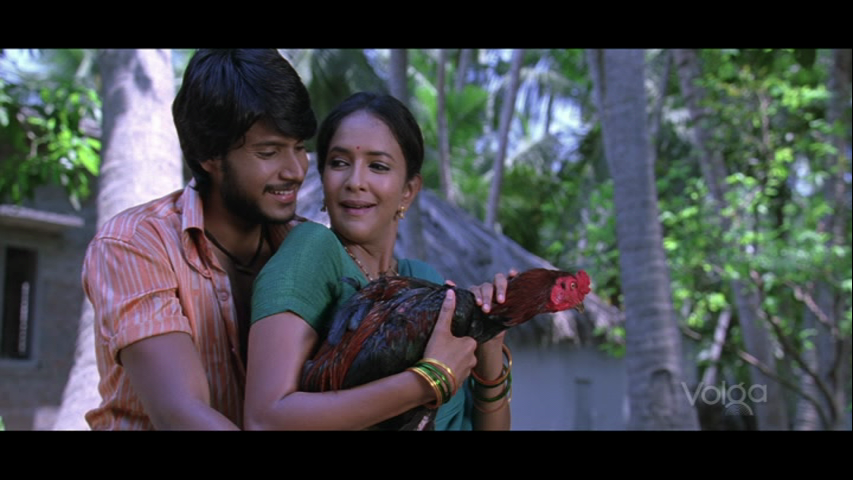
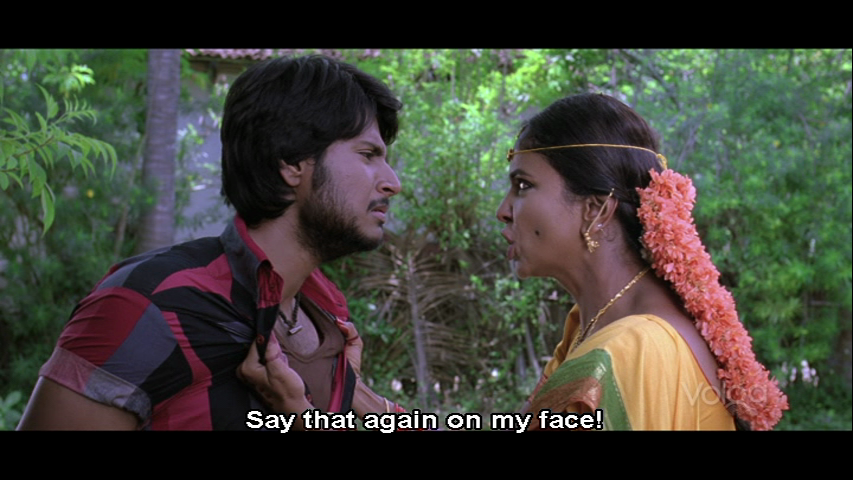
After Malli’s story, Chitra’s explanation of past events is not as well written and her story tends to wander off track.  Chitra was adopted by Suri’s (Sundeep Kishan) parents as a child, but it’s not a happy family. Suri’s father Somaiah is a drunkard and his mother Rathamma works as a prostitute to keep the wolf from the door.  Chitra is in love with the adult Suri, but he’s a man more interested in his chickens, in particular fighting cocks, than in Chitra.  He also pays a little too much attention to the bangle seller Bangari (Suja Varunee) and all together there seems very little reason for Chitra to want to marry Suri.

It’s actually a little creepy since they were brought up together as brother and sister, but since there is minimal chemistry between the two actors this isn’t a major issue.  Sundeep Kishan is restrained but adequate in his role as Suri, and the character doesn’t have a lot of depth for Sundeep to work with.  The explanation for Dhorababu turning up at the wedding is also less convincing, but Lakshmi Manchu is good as the beleaguered Chitra, and her spirited defiance against the various calamities that befall her is heartening.

Gundello GodariGundello GodariGundello GodariGundello Godari

While the flashback sequences provide some explanation of previous events, they do provoke more questions that are never answered.  There is no explanation of what happened to Malli after his interaction with Sarala, and more importantly no mention of whether or not he is working as a fisherman and able to support a wife given his previous dismissal by his erstwhile boss.  The arrangement of the wedding is never discussed and there is no reason given for these two strangers deciding to marry each other. Still, the developing relationship between the two is well handled, even though it is almost swamped at times by the drama of the flood, and both Aadhi and Laksmi Manchu are both very good in their respective roles.

Gundello GodariGundello Godari

Ilaiyaraaja’s music is evocative of the time, although there are two rather oddly placed item numbers which don’t fit as well and don’t have any real place in the narrative.  Mumaith Khan features in one of these, while Suja Varunee does the honours in the second, but both feel as if they are just added in to try and appeal to a more mass audience and aren’t particularly well choreographed.  However, apart from the first song, these are the only two numbers which feature any dancing, since the rest are used to showcase the various relationships of the main characters.

Gundello GodariGundello Godari

Gundello Godari is a brave attempt to take a different look at relationships and approach a love story in a more unusual way.  For the most part it works, although the second half could be tighter condensed to allow for a more detailed development of the relationship between the two main leads.  Worth watching for evocative imagery, good performances from Aadhi and Lakshmi Manchu and a bold characterisation from Taapsee.  3½ stars.

Gundello Godari

Mega Socks – function and fashion

Mega Socks-14

This year I asked you, dear readers, for input into the theme of one Megabirthday post. You voted for Chiranjeevi’s socks. And you probably have the cheek to think I’m strange.

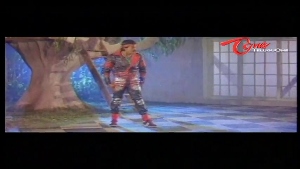
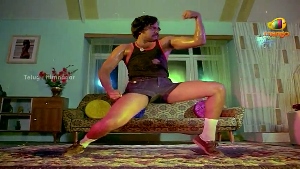
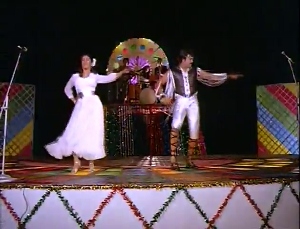
The Mega Sock is a vexing area of research. Being a fashion chameleon and trend setter, Chiru rarely settled for one standard approach. He changed his socks as often as he changed his moods. I have gathered some examples to illustrate the versatility of his sock choices, a style contribution often overshadowed by the flashier go-go-boot department.

The unified thematic sock

Mega Socks-11

White trousers, white socks, white loafers. A safe choice for the Telugu film hero.

Mega Socks-7

Or matching shirt and socks, also a filmi classic.

The artistic contrast

Mega Socks-8Mega Socks-6

Sometimes the contrasting sock was more than just a fashion statement. I am reminded of Audrey Hepburn’s refusal to wear white socks in a dance scene in Funny Face, claiming it would break the line of her leg and look inelegant. But she capitulated and in the end result, the white socks actually enhanced the dancing as they allowed viewers to see her footwork against the dark background of the set. I like to picture Chiranjeevi quoting that anecdote when directors tried to challenge his footwear choices.

The statement

Mega Socks-4Mega Socks-5

Sometimes a mere bedazzled outfit and flashy shoe is Just Not Enough. Why let the whole outfit down with boring ankles?

The comedic effect sock

Mega Socks-13Mega Socks-10

Well, I hope it was meant to be funny.

The invisible sock

Mega Socks-3

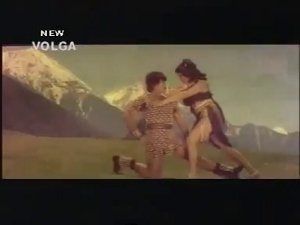
I have long marvelled at Chiranjeevi’s ability to carry off the rather challenging mini-toga and go-go boot combination. And while it may seem there is little left to the imagination, I mean, you’d have to have the right socks. Think about that. The sock could be utilitarian, or a secret splash of extra sparkle designed purely for Chiru’s amusement.

Mega Socks-21Mega Socks-15

And then there is the negative sock. Cross-gartered to the knee, Chiranjeevi proves that the absence of a sock can still make a statement. Especially when paired with silver pedalpushers and a corset.

Leg warmers and gaiters

Not a sock proper, nor a boot, the legwarmer makes occasional appearances through Chiru’s career.

Chiru combines an eye-popping fashion statement with sensible thermal layering.

Mega Socks-1

Is that a legwarmer he is wearing as a glove?

I like the bedazzled gaiter effect with matching gloves. In the absence of the more traditional bedazzled boot, Chiranjeevi still seems to find a way to embellish his foot region.

The Mega Sock Style

And finally, an example of Chiru mixing it up with a Tip Top Look combining several mega sock styles. See which ones you spot (if you aren’t blinded by the gold pants).

Happy Megabirthday!

Edited to add: Totally Filmi has hand dyed the perfect sock yarn to adorn a mega stylish ankle. Go see the results!