Maattrraan

I’m a big fan and I expect a lot from K.V. Anand and his writing team of Subha but sadly Maattrraan fails to deliver despite the presence of two Suriya’s, the hint of a good story and the best efforts of all the cast.  I was expecting the worst when I read about that the plot involved conjoined twins since anything even vaguely medical in Indian cinema is always replete with the totally impossible and that’s exactly the case here.  As if the ridiculous medical themes weren’t enough to deal with, the second half also has plot holes and inconsistencies big enough to swallow a small asteroid while it treads a well-worn path without any real excitement or tension. Just to cap it all off, Maattrraan also has one of the most ridiculous and unsatisfactory endings I’ve ever seen in a Tamil film!

It’s not all bad though.  The first half is generally entertaining and the interaction between the twins is engaging, but when the best chemistry in the whole film is between Suriya and himself then you know things aren’t looking good.

Suriya plays conjoined twins Akilan and Vimalan, who are almost separate, but can’t actually be separated because they only have one heart between them – which is only the start of the questionable medical statements.  Vimalan is intelligent, quiet and studious and completely different from his drinking, smoking and music-loving brother. They tend to overlook the fact that only having one heart means they share the same blood supply so if one twin was blind drunk, the other one would be intoxicated too, but logic never really intrudes on their relationship.  The differences between the two would have worked well for two fifteen years olds but seemed a little out of place in two grown men, especially since Akilan seems to be channeling late seventies Rod Stewart most of the time.

But the relationship between the brothers is the best part of the film and Suriya convincingly plays the part of the conjoined twins making them seem real rather than the product of a special effects team.  The twins are the offspring of Ramachandran (Sachin Khedekar), a genetic scientist who was forced out of Russia by the end of the cold war.  After some financial difficulties he set up the increasingly successful business of Energion, an energy drink for kids which consistently outsells and out performs all its competitors.  Add in a suspected Russian spy who is actually a journalist reporting on the connection between Energion and a health supplement which had serious side effects in a group of young Russian athletes and the scene is set for some dodgy chemistry and dubious genetic manipulation.


The film tries to ramp up into an action thriller, but since we know the villain is the rather mild-mannered Ramachandran along with his faithful side-kick Dinesh (Ravi Prakash) there aren’t many thrills to be had.  The fight scenes, especially one at the end of the first half between the twins and an assortment of thugs in an amusement park, seem to drag on forever. Perhaps it’s the challenge of the conjoined twins but even in the later fights, Peter Hein’s choreography isn’t as effective as usual.

There doesn’t seem to be any real reason for Akilan and Vimalan to be conjoined twins other than a gimmick to grab our attention.  It’s difficult to tell without understanding the dialogue, but there wasn’t enough in their relationship to fully explain why most of the budget had to be spent on creating the duplicate Suriya effect.  Especially since the rest of the film seems to have suffered as a result.  K. V. Anand films usually have great explosions, thrilling chase scenes and innovative fight sequences, but here the best of them are muted and the helicopter crash in particular is a rather damp squib.  Two brothers would have worked just as well, and although I get the nod to the fact that their father was a genetic scientist and the sequences with Akilan missing Vimalan in the second half were good, it wasn’t enough for me to justify the conjoined aspect.

Kajol Agarwal plays the role of Anjali, who starts off interested in Vimalan but then seems to change her allegiance to Akilan without too much distress in the second half.  Rather more believably, Anjali is a Russian interpreter which at least allows her to feature occasionally in the action and Kajol is fine in her role. Since the other female protagonist is the rather stilted and uncomfortable-looking Russian journalist, Kajol is also the better dancer which gives you a clue that the dance sequences aren’t anything too great either.  Even Suriya appears awkward for most of the choreography and the best thing about the songs are Kajol’s beautiful saris and skirts.  One song appears to have been shot in the Fjords in Norway and the scenery is absolutely stunning but also totally overshadows any hint of romance between Suriya and Kajol.

The basic story could have worked well, but it’s buried underneath all the CGI and far too many irrelevant trimmings that work against building excitement or tension as the plot unfolds.  Suriya is excellent and worth watching but that’s not enough to hold Maattrraan together. If you can watch with a willingness to completely suspend disbelief and don’t mind the constant clichés then this is probably a film that you will enjoy.  Otherwise wait for the DVD where judicious use of the FF button will likely make Maattrraan more watchable.

Kanaa Kanden

This was K.V. Anand’s directorial debut in 2005, and like his film Ayan it is based on a novel by Subha (D. Suresh and A.N. Balakrishnan). Since Subha were also scriptwriters for the excellent Ko, I had high hopes for Kanaa Kanden, and it doesn’t disappoint. Sure, there are a few flaws and Vivek’s comedy in particular feels forced and often inappropriate, but the performances from the leads are excellent and the story suspenseful and gripping right to the end. What starts out as a love story with the innocent and idealistic hero struggling to make his mark in the world, suddenly becomes a much darker thriller with unexpected twists and a climax that makes use of science as well as some good old-fashioned biffo.  It’s different, often surprising and even manages to make desalination sexy!

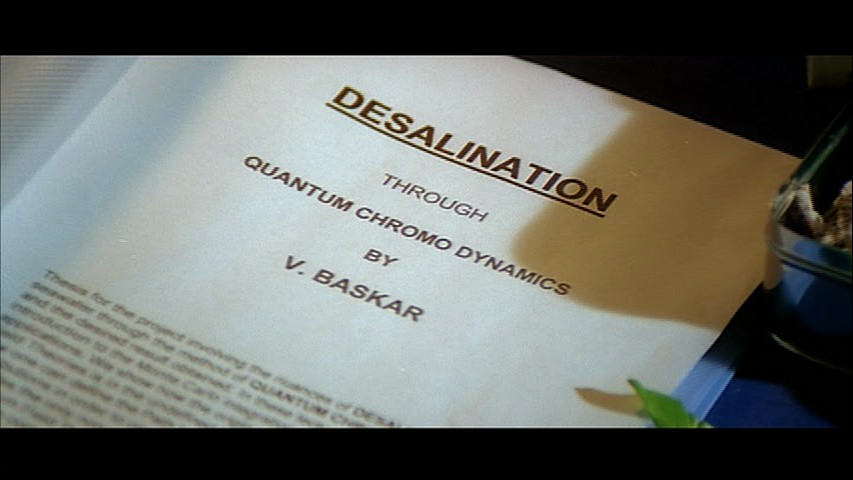
Srikanth is Bhaskar, a rather idealistic PhD student who has found a way to make pure water cheaply from sea-water using the rather improbably titled technique of Quantum Chromo Dynamics. It’s a work of love in many ways as his mother was a water carrier whose labours paid Bhaskar’s way through school and her daily struggles inspired him to find a better way to supply water. He’s also influenced by the water shortages in the city as he sees the people of his neighbourhood queue for the water trucks on a daily basis.

Indeed – what does Quark theory have to do with desalination?! However, it sets the scene for Bhaskar’s rather naïve idea to give his patented technique to the government as a way to provide cheap potable water for everyone, but despite the (eventual) stamp of support from his university he fails to get any government interest in his project. Bhaskar is an everyday guy with a big heart and even bigger ideas, but his innocence seems to work against him in his struggle to realise his dreams. Luckily he has plenty of support from both his glamorous college mentor Vasantha and his new wife Archana (Gopika). Srikanth suits the character of the slightly scruffy scientist and does a great job of blending the characteristics of a typical work obsessed engineer with those of an idealistic dreamer and a guy with a messy bedroom.

The film actually opens with Archana’s wedding, but it’s not Bhaskar who is the groom. Bhaskar has gone back to his village for the wedding of his childhood friend, and if he’s not totally happy about the fact that she is getting married to someone else, he doesn’t give anything away to the bride. But then Archana discovers that her groom is unfaithful and she calls off the wedding, finally leaving with Bhaskar to escape her brother’s anger. Although she moves to Chennai with Bhaskar as his friend, it’s not long before the friendship deepens into romance and the two get married. The romance is sweet and also very uninhibited with Archana just as happy as her husband to initiate kulfi moments (as she calls them).

Both Srikanth and Gopika have some great on-screen chemistry and their relationship is kept realistic with a mix of romance, friendship and just a little conflict. This is the second film I’ve seen with Gopika and she really has a very expressive face. Her reactions are also very natural and she is practical and down to earth opposite to Srikanth’s obsessive scientist.

Bhaskar decides that the only way to get his idea off the ground is to build a prototype factory and let his results speak for themselves. Vasantha has some land which she donates to Bhaskar for his project, but he still has to raise funds for the factory. At this point Archana meets up with an old college friend Madan (Prithviraj) and since he is a business consultant, he offers to help Bhaskar find funding for his project. In what seems to be the answer to Bhaskar and Archana’s prayers, Madan finally offers to lend Bhaskar the money himself, but in reality this is just the start their problems.

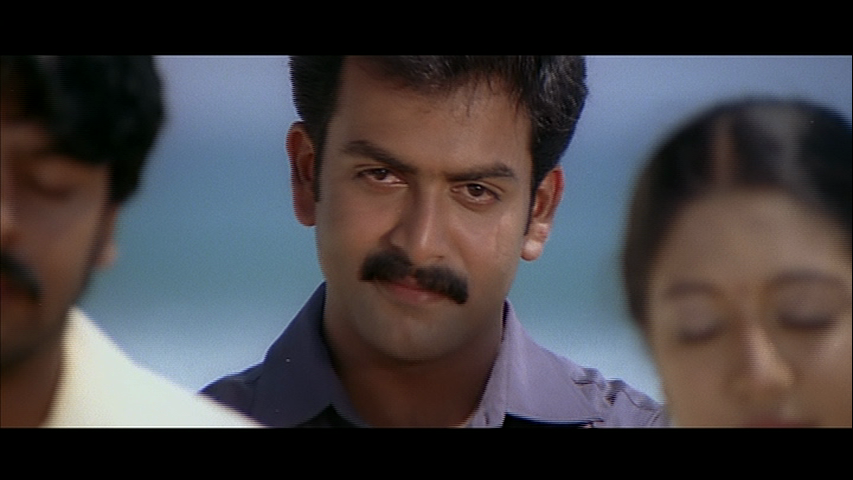
Prithviraj is outstanding in his role as the smooth talking Madan and his ultra-controlled and polished businessman provides a good contrast to the passionate Bhaskar. It’s hard to say much about his character without giving away too much of the story, so I’ll just say that you have to watch to find out why he makes such a good villain and why I ended up loathing Madan.

There are a few plot holes and in particular a decision made by Archana which doesn’t seem to fit into the rest of the story, but the rest is excellent. The only other problem I have with Kanaa Kanden is the comedy track with Vivek which was too long and too obtrusive. Vivek can be funny, and he did have a few one-liners which made me smile, but there was just too much of him in a side-plot which was totally irrelevant to the rest of the story. There are so many clever little touches in the rest of the film that it’s disappointing that K.V. Anand felt the need to include such clichéd comedy. The songs by Vidyasagar are pleasant but fairly forgettable and the item song seems totally unnecessary – particularly since there was very little actual dancing. This one is quite fun though with Bhaskar, Archana and Madan burning up the dance floor and generally looking like they are thoroughly enjoying themselves.

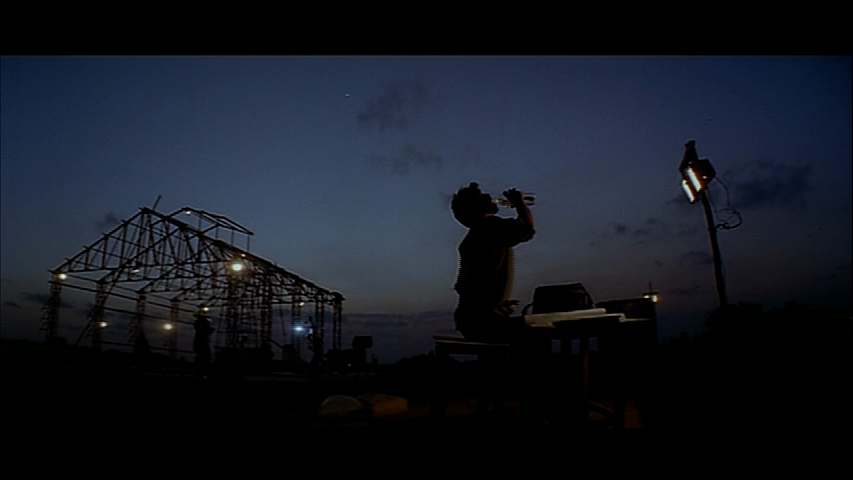
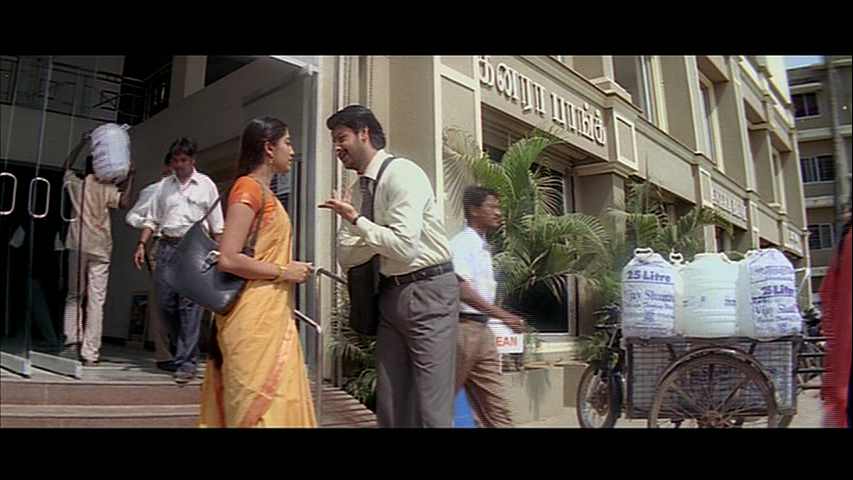
I really liked the theme of water which runs through the film, and the bid to raise awareness of an issue which is a problem in many major cities around the world. To emphasize this central theme, water appeared in some way in many scenes. This was often just in the background, such as the slum children bringing water to the men building the desalination plant, or the bottles of drinking water outside the bank where Bhaskar unsuccessfully applies for a loan. It’s a small touch but one that works very well and shows the amount of detail in the film.

The cinematography by S. Soundar Rajan is excellent and the shots are beautifully framed. There is a fight scene in the forest where the action is all slightly blurred which gives a sense of the confusion and disorientation Bhaskar experiences and is just one of the techniques used to add texture to the film. Worth watching for a more unusual storyline, an earthy and realistic romance and for Prithviraj’s quite detestable villain. 4 stars.

Yaaradi Nee Mohini

This was my very first Dhanush film and the one that made me a fan, despite the fact that for most of the film his character is not very appealing at all. Added to that, the first half contains annoying plot points that seem to recur in Southern Indian films with disturbing regularity and it’s amazing that I enjoyed this film as much as I did! But it’s the performances, particularly by Dhanush and Raghuvaran, along with an excellent soundtrack and a better second half that made this film worth watching. It’s a remake of Selvaraghavan’s Telugu film Aadavari Matalaku Ardhalu Verule which I haven’t seen, but it does seem a lighter romance than Selva’s usual fare.

Back in 2008 when this film was released, I’d never heard of Dhanush and the Tamil films I’d watched were all either Rajinikanth or Kamal Hassan starrers with the odd Vijay or Madhavan film that somehow made their way into my DVD collection. But then I saw this song on the bus heading out to work in the villages around Trichy and I was instantly intrigued. I wanted to know why the guy was wandering around in a total daze following a girl who seemed totally oblivious to his presence and since I loved the song too, I knew I had to find a copy of the film!

Dhanush plays Vasu, a rather miserable layabout who half-heartedly applies for jobs where he doesn’t really ever seem to have a hope of being employed. He has a couple of good friends, Cheenu (Karthik Kumar) and Ganesh (Karunas), who seem willing to put up with his morose disposition, and a long-suffering father (Raghuvaran) with whom he has a difficult relationship. But just when Vasu seems to be going nowhere, he sees Keerthi (Nayanthara) and falls instantly in love – although this does seem to be based solely on her appearance and enjoyment of the rain. Which is where that song comes in. We’re back to the disturbing premise that stalking = love for this part of the film, but as Vasu follows Keerthi he finally becomes motivated and manages to secure a job at the same software company. Keerthi is his boss, and although she isn’t impressed with Vasu, her irritation with him doesn’t deter Vasu’s enthusiasm or belief that she will fall in love with him too.

Despite never having shown any previous signs of genius or diligence, Vasu turns out to be a computer whizz-kid and manages to single-handedly save a project by working all night. The power of love I presume since he also has to teach himself basic programming along the way!  As a result he is sent to Australia with Keerthi and a few others from their team for a short-term contract. I have no idea why Selvaraghavan’s screenplay demanded that the job should be in Australia since these scenes are quite clearly shot in Thailand with Thai extras, even though director Mithran Jawahar has tried to add an Australian flavour with the addition of surfboards and a song on the beach. It’s still not very Aussie though.

The best part about the first half is the developing relationship between Vasu and his father. Raghuvaran is excellent as Vasu’s father although his illness at the time is apparent in his frail appearance, and sadly Yaaradi Nee Mohini was his last film released before his death. He complements Dhanush in their scenes together and their relationship feels very genuine as a result. As Vasu gains maturity through his job he becomes better able to relate to his father and there are some great moments between the two as they explore their new rapport. Dhanush is very believable as the young man gradually discovering his self-worth and makes Vasu’s developing confidence seem very natural.

But after such promising character development, the next few scenes are just awful as Vasu declares his love for Keerthi and is rejected. There is some completely inexcusable dialogue as Vasu threatens Keerthi for insulting his father, and his immature and aggressive behaviour here is disappointing after an hour of watching his character supposedly grow up. Keerthi also seems to act out of character but thankfully the screenplay quickly moves on and things do improve for the rest of the film.

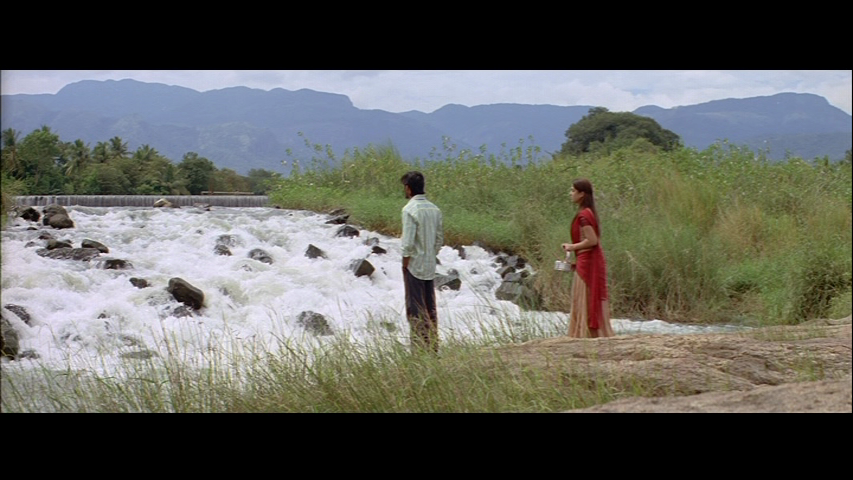
The action moves to a rural village in the second half as Vasu is persuaded to visit his friend Cheenu after Vasu’s father dies suddenly. Cheenu is getting married to his cousin who of course turns out to be Keerthi, and Vasu is forced to confront his unresolved feelings for her as well as deal with Cheenu’s large and very traditional family. The strangeness of village life for a city-bred boy provides some comedy, and Vasu lurches from disaster to disaster as he tries to cope with the lack of sanitation and contend with Cheenu’s tyrannical grandfather (K. Vishwanath) and Keerthi’s eccentric grandmother (Sukumari). Keerthi’s younger sister Pooja also presents a complication as she falls in love with Vasu and stalks him relentlessly. I was waiting for some realisation from Vasu that Pooja’s obsession for him was similar to his own for Keerthi but sadly this never happens. Still, Pooja’s character is very entertaining and Saranya Mohan is excellent in the role. Her attempts to get Vasu to notice her are amusing and I love her fantasy as she imagines them together in this remix of Palakkattu Pakkathile from the Sivaji Ganesan and Padmini starrer Vietnam Veedu
Although Vasu still mopes around miserably for most of the second half, his interactions with the children and Keerthi’s grandmother are charming and the development of his relationship with Keerthi seems natural and sweet. There are some funny moments as Vasu struggles to adapt and since the comedy is integrated into the story it flows well without disrupting the romance. The one fight scene is rather less successful since the only reason for a gang of rowdies threatening Cheenu’s grandfather seems to be just so that Vasu can defeat them single-handedly, and as such it doesn’t add anything to the plot.

While the story is fairly routine, there are a number of reasons why this film appeals to me as much as it does. Firstly the performances are excellent and there is good chemistry between Dhanush and Nayantara as their relationship develops. Dhanush really is impressive and fits well into the role of a rather ordinary young man while still capable of displaying a wide range of emotions without veering into melodrama. His attempts to do the right thing and keep Keerthi at arm’s length are very well portrayed and he gets the facial expressions just right to portray his inner turmoil. Plus he is funny and can dance – that’s pretty much everything I need.

Nayantara has a role with a reasonable amount of depth and she does a good job in making Keerthi more than just an average Tamil heroine, while Karthik Kumar makes Cheenu an interesting and likeable alternative to the hero. All the other cast members are excellent in their roles and I love Sukumari’s grumpy and fractious grandmother and Saranya Mohan’s determined younger sister.

Another plus for the film is the soundtrack by Yuvan Shankar Raja which has some great songs and in general they are well pictured. This is my favourite,  and it’s still one I watch regularly. I love the way the backing dancers are added in to the choreography and I think it’s  just a beautiful song that fits into the development of the romance perfectly.

There are also lots of little touches that keep the film feeling realistic such as the general clutter and disarray in Vasu’s house and the organised chaos of the family house in the village, while a shopping trip to buy sari’s is scarily familiar! These very normal scenes contrast nicely with the really quite wonderful dream landscape where Vasu dances with Keerthi which seems to be the only place where their romance can possibly happen.


Despite the issues I have with the first half of the film, I love the second half and Yaaradi Nee Mohini will always be special as the film that introduced me to Dhanush. It’s not just for Dhanush fans though as all the cast are good and it’s nice to see Nayantara in a role with a bit more substance. I give the first half 2 stars, but the second half 5 which comes to a probably just about right average of 3 ½ stars.