Frozen (2007)

Frozen-title

Shivajee Chandrabushan’s Frozen is a lyrical and often dreamlike film. Shot on location in Ladakh and released in black and white, it’s a story told as much through the stunning visuals as through the slightly clunky screenplay. I’ll state upfront I don’t have much of a view on the political background, and I am sure a homegrown audience would have a deeper understanding that would colour their viewing. I found the film satisfying on face value as a story about family, the effects of change, and the challenge to maintain integrity.

Karma (Danny Denzongpa) is an apricot jam maker, a widower living with his family in their ancestral home near Leh. He knows he has to try and keep up with the times, but that is easier said than done. He bought a machine to speed up his jam production but it doesn’t run reliably. He has mounting debts as his business deteriorates, loans cannot be repaid on time, and the interest is crippling. His daughter Lasya (Gauri) is wilful and an attention seeker, while Chomo (Aungchuk) is her little shadow. The siblings spend their days playing with their dog Singhe, running around in the woods, or going to visit their mother’s memorial, high on a neighbouring hillside. Lasya is growing up and Karma knows he should settle her marriage before all his debts are called in, but he resists taking any action, hoping he can keep providing for her. One day the army arrives on his doorstep to set up a camp. Their peaceful valley is suddenly full of trucks and electric lights, threats of violence by ‘the enemy’, and his land is no longer worth anything.

The pace, and price, of change is evident. The crowd at a festival is dotted with camera wielding tourists in Gore-Tex, hideous denim replaces the traditional woollen clothing, and motorbikes replace ponies. The army officers talk about the enemy and how the valley is no longer safe, but Karma only sees the place he grew up. His land is now covered in barbed wire, the silence broken by constant truck traffic. The officers also complain about how all the food in the market is being bought by ‘them’ to cause shortages, a sad situation for the jam maker who cannot sell his wares.

Danny Denzongpa is just wonderful. He doesn’t have much dialogue and manages to convey so much through Karma’s expressions, his pauses before responding, and his stillness. Karma’s Buddhist philosophy is the foundation of his character. He uses every challenge as a means of practising what he believes in, and his integrity is as substantial and present as the mountains.  When Karma realises loan shark Dawa is proposing to trade Lasya in return for more money, there is a long beat before he meekly nods. Danny shows his revulsion, anger and resignation all in a flicker of expression, with no sign of any 70s masala filminess or his more recent villainous styling.  I’m always happy to see Danny rock up in any film, and I particularly enjoyed this very gently shaded characterisation.

Gauri is pretty and lively, and gives Lasya a case of chronic resting bitch face which suits the character perfectly. She is starting to want more than her life in the remote homestead but it is clear she loves her father and her little brother. The local Romeo, who is actually called Romeo, (Shakeel Khan) takes a fancy to her. While she likes his attention she seems to like the opportunities to explore the world that come along with a boyfriend with a motorbike more than she likes the boy. Lasya is a typical teenager in a not so typical setting. Her energy sometimes manifests as anger, even when she doesn’t really know why. Karma does his best to teach her to guard her mind, to understand how to address her fears.

Little Chomo is the typical baby brother. He follows his big sister and lets her both bully and make a pet of him. Aungchuk doesn’t have to say a lot but he has an expressive face and droll comic timing. He is a loner, only ever hanging out with his sister or silently tagging along after his dad. I wondered about why he seemed to be on the periphery all the time and how he felt about his isolation, and liked the way his story unfolded.

Sita (Anuradha Baral) helps Karma run his house and feed his kids. She is obviously very fond of them and does her best to keep things running. Salim (Sanjay Swaraj) is in the same boat as Karma, with maxed out loans and little prospect of getting back on his feet. Colonel Shyam (Aamir Bashir) and the Rinpoche (Sonam Stobgias Gorky) are different kinds of influences in Karma’s life. The bad side of modernisation is represented by the parasitical loan sharks; sleazy Dawa (Rajendranath Zutshi) and sweary Sharma (Yashpal Sharma).

Karma and Lasya interact with lots of people but I wouldn’t say they were very close with anyone other than Sita. On a rare day out, Lasya explores a fair and it is great fun to see what she sees, and check out the crowds and entertainment, even a glimpse of the cham dancers from Thiksey Gompa. One day I’ll get there myself!

The film sometimes feels a little disjointed as it is more a series of vignettes and images, ranging from realism to more fanciful compositions. That adds to the dreamy nature as scenes shift and the focus moves from character to character. I read somewhere that Shivajee Chandrabhushan is a climber, and he certainly captured the things I love about the mountains. The landscape is both exhilarating and confining, and the vast skies and stark light often have an otherworldly effect. The environmental upheaval mirrors the turmoil in Karma’s life, and the changing seasons are a reminder of how little time he may have to protect his family. The epilogue was a bit tricksy after such a sincere story, and I would have been just as happy for the film to end without the final scene. Having said that, I liked that I was left with questions and possibilities and not just a plot tied up with a bow.

This is a film for a contemplative evening, when you can just immerse yourself in the flow of images and see where it takes you. And a rewarding film for the Danny Denzongpa fans. 4 stars!

The Lunchbox

The Lunchbox

The story of The Lunch Box is charmingly simple – a mistake in the delivery of Ila’s carefully cooked lunch for her husband marks the beginning of a relationship with a curmudgeonly accountant on the cusp of his retirement – yet it opens up the complexities of life in Mumbai and how easy it is to be lonely in a city of millions.  As the story gently unfolds it showcases the famous Mumbai Dabbahwallahs and their phenomenal achievement of delivering thousands of tiffins across the city each day.  Watching the system in action, perhaps the hardest thing to swallow about the film is that a lunchbox repeatedly does go astray, although perhaps there is some redemption in the fact that is consistently it is misdirected to the same person every time. I’m happy to believe such an aberration is possible though, since it does make for an excellent story.

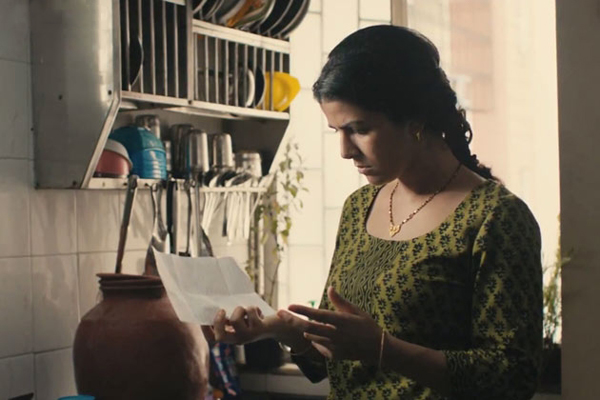
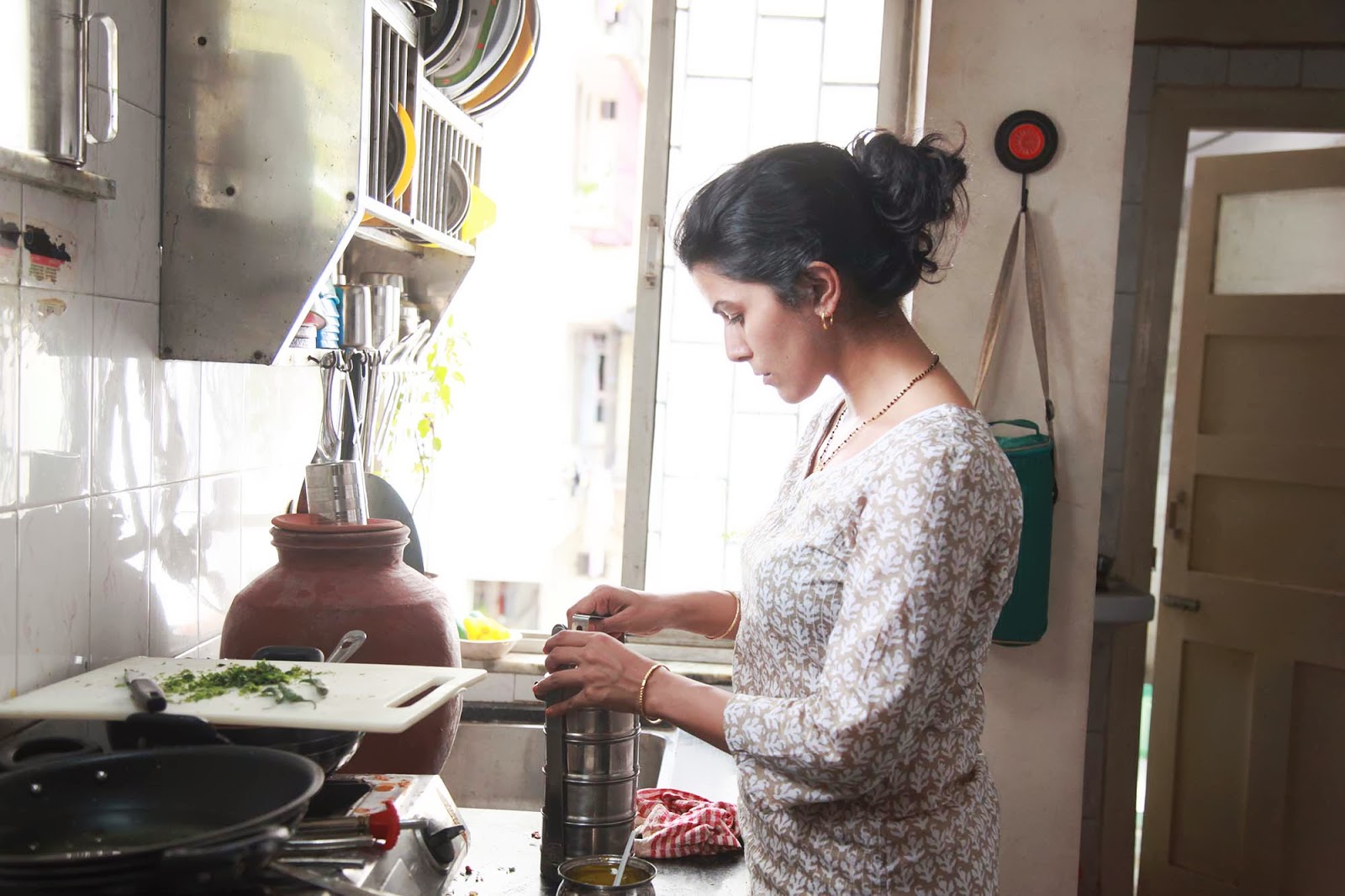
Ila (Nimrat Kaur) is trying to use the old adage that the way to a man’s heart is though his stomach as she struggles to get her workaholic husband (Nakul Vaid) to notice her.  She’s ably assisted in her endeavours by her upstairs neighbour, Mrs Despande (Bharati Achrekar) who supplies spices and recipes along with useful homely advice.  We never see Mrs Despande, but only hear her voice as she shouts down instructions or sends down a basket of supplies, although there is the added bonus of hearing her music – a selection of evergreen Bollywood tunes. As we learn later, her story is also one of isolation, but Mrs Despande seems to have come to terms with her life while her presence seamlessly adds another layer to influence Ila’s own indecision.

The Lunchbox

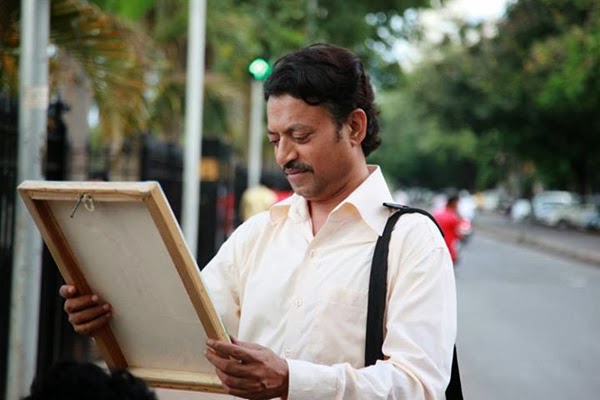
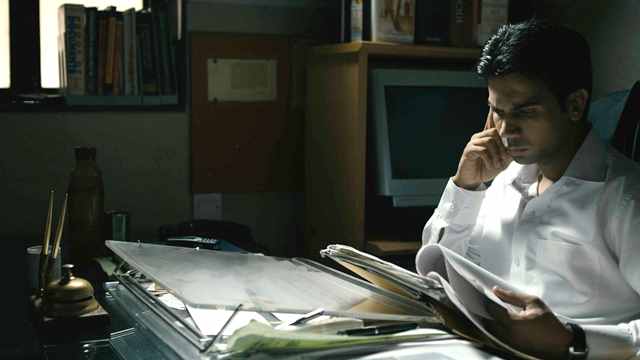
Meanwhile, Saajan Fernandez (Irrfan Khan) is just biding his time until retirement.  However in the lead-up to his departure, he’s been saddled with the younger Shaikh (Nawazuddin Siddiqui), a tiresomely happy replacement for his own efficient and silent procedures. As the story unfolds Saajan’s loneliness and Ila’s relative isolation become apparent, despite various encounters each experiences during the day.  Saajan’s nightly smokes on his balcony while he watches a family enjoy their communal dinner are the perfect example of his solitude, while Isla’s constant round of household chores perfectly show the constraints of her life.

The LunchboxThe Lunchbox

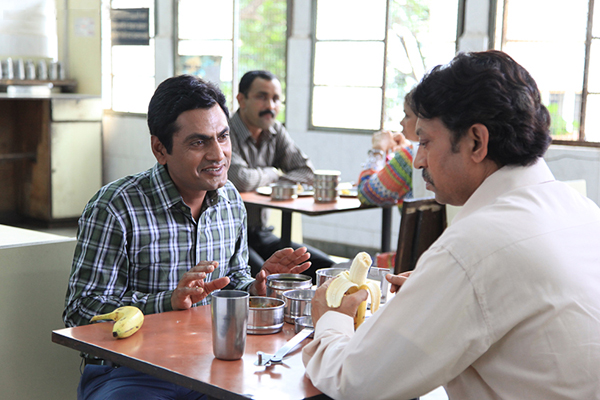
It’s not at all depressing though.  Saajan and Ila exchange notes every day along with the tiffin, and there is plenty of humour in their written exchanges.  The developing relationship between Saajan and the increasingly demanding Shaikh also provides some comedy, but as it turns out there is more to Shaikh’s character than just comedic relief and he has an important role to play.  Needless to say, Saajan’s silence at work is slowly eroded by Ila’s tasty lunches and Shaikh’s puppy-like demeanour as he clamours for attention and follows Saajan around everywhere.   Perhaps more unexpected is Ila’s realisation that she is responsible for her own happiness, beautifully understated in a scene with her mother (Lillete Dubey) after her father’s death, and gradually developed as the story progresses.

The LunchboxThe Lunchbox

It’s the small touches that make the film so enthralling.  Irrfan Khan says more with his contemplative silences and the quirk of an uplifted eyebrow, than many films manage with an entire screenplay. Although the focus is on ordinary people and their ordinary lives. Ritesh Batra captures some extraordinary moments on film.  The claustrophobia of Mumbai’s crowded trains echoes the self-imposed limitations of Ila’s small kitchen while Saajan’s neatly organised desk speaks volumes about his personality.  As their lives open up to more possibilities, so too their physical surroundings become less constrained and both start to interact more with the world around them.

The LunchboxThe Lunchbox

Irrfan Khan and Nimrat Kaur are both fantastic in their respective roles, creating depth and interest in their characters as each slowly develops throughout the film.  They both fit their characters so well that this just wouldn’t have been as compelling viewing without them. However Nawazuddin Siddiqui is just as good, particularly as his story evolves and we learn more about his background, while there is able support from the rest of the cast.  The screenplay, written by début director Ritesh Batra along with Rutvik Oza, is beautiful in its simplicity, with plenty of unexpected turns in the path and a particularly well thought out ending.

The Lunchbox

Overall it’s a very upbeat story and a breath of fresh air in an industry that is too often obsessed with Hollywood action wannabes and South Indian remakes.  The film has featured in many international film festivals, including Cannes, and I saw it here at the Indian Film Festival in Melbourne. That was a packed showing, perhaps due to Suhasini Maniratnam’s recommendation at her Masterclass and the film received a very positive reception.  The Lunchbox is scheduled for a more widespread release in Australia later this year, and I wholeheartedly recommend watching – you won’t be disappointed!

Shahid

Shahid

I didn’t know much about human rights lawyer Shahid Azmi before watching Hansal Mehta’s film, and I’m not entirely sure that I know a lot more about the real man even after watching.  There is a disclaimer at the start, which flashes past very quickly but suggests that the film is a dramatised version of events in the life of the murdered lawyer rather than a strict doco-style exposé.  But whatever the true story, the film is a fascinating look at a man who refused to back down and spent most of his career standing up for people who would otherwise never have had a voice.  Shahid may be a romanticised and somewhat sanitised account, but it still delivers its message and brings the Indian judicial system squarely into the limelight.

Court sceneShahid

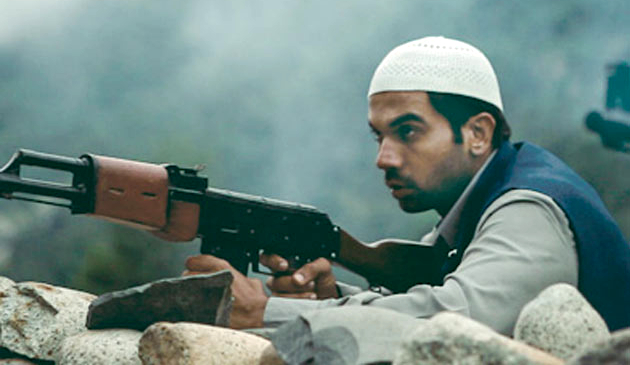
The film starts with the end of Shahid Azmi’s life, at the moment when he is shot by persons unknown in his office.  It then moves immediately back several years to the early 90’s when a young Shahid is caught up in the violence of an attack on his community in Mumbai.  As a result Shahid ends up in a terrorist training camp, although the why and how he got there is never shown and the whole episode is quickly glossed over during the credit sequence.  However Shahid’s revulsion at the violence of the camp is clearly shown although his escape from the over-zealous terrorists is only briefly mentioned.  On his return to his family, Shahid is arrested and eventually tricked into signing a confession which results in time spent in jail.  Interestingly Kay Kay Menon plays one of his mentors in the jail, which seemed odd since I’m more used to seeing him play a more negative role.  However, he’s very effective in the role of War saab who persuades Shahid to make the most of his time in jail and get an education.

Shahid Shahid

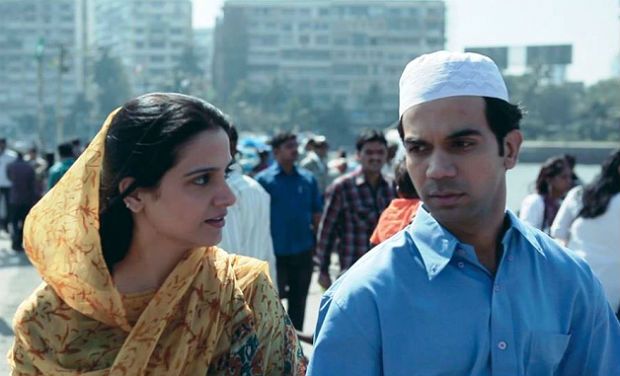
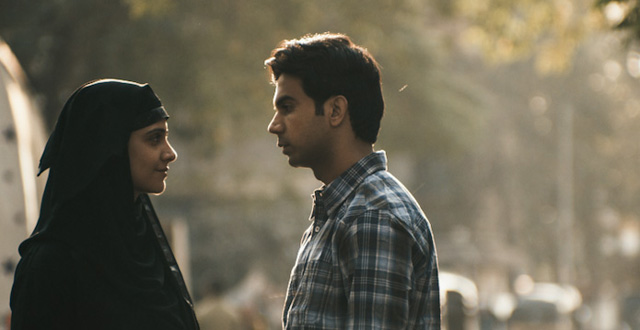
This he does, finally becoming a lawyer and taking on cases for clients like his younger self – people with no money who have been imprisoned on terrorist charges without any real evidence.  It’s compelling viewing, mainly due to an excellent performance by Raj Kumar Yadav who is charismatic and very believable as the passionate young lawyer.  He starts off small and works for a criminal lawyer Maqbool Menon (Tigmanshu Dhulia) which is where he meets Mariam (Prabhleen Sandhu), a client who needs help with a property case.  In the process of fighting her case, Shahid falls in love and this is the only part of the film that feels in any way filmi, as the two walk along the beach and share some classic Bollywood romantic moments together.

Prabhleen Sandhu starts off well, but after her marriage I expected her to show more frustration with Shahid’s absorption with his career but instead she is very passive.  Mariam also doesn’t show much fear or apprehension about the death threats made to her husband, and the couple’s final showdown feels contrived compared to the rest of the film.  This could just be down to the writers, but her performance was stilted in parts, particularly in comparison to the other actors.

ShahidShahid

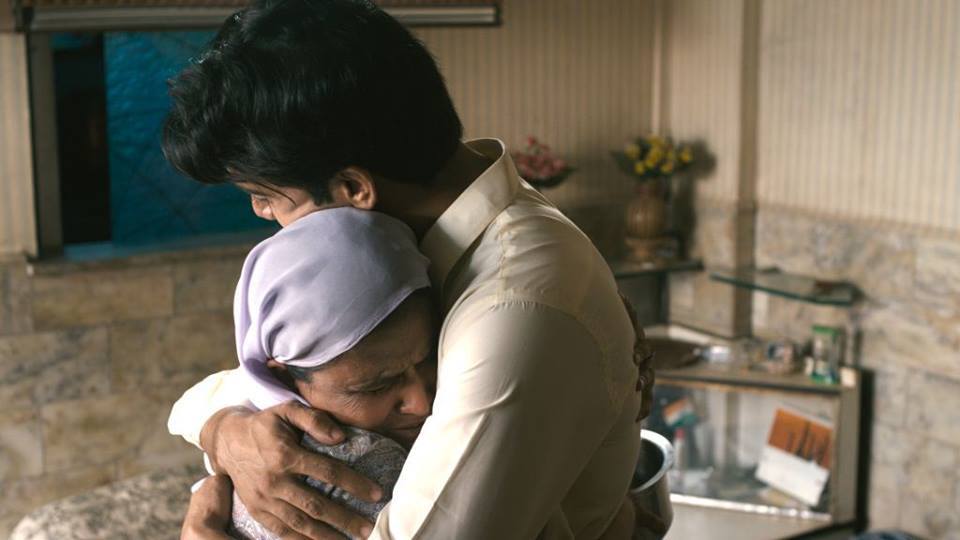
Mariam is divorced with a young son and Shahid is reluctant to tell his more traditionally minded mother about his marriage.  Baljinder Kaur is perfectly cast here as Shahid’s mother and I loved how she managed to keep her family under control, even when they were all grown up.  Mohammed Zeeshan Ayyub is also excellent in the role of Shahid’s brother Arif, and his frustration at always being the one left to look after everyone else is eloquently portrayed. Ayyub is another great actor who seems to have appeared in a number of good roles this past year and has the knack of making even a small role memorable.

Shahid

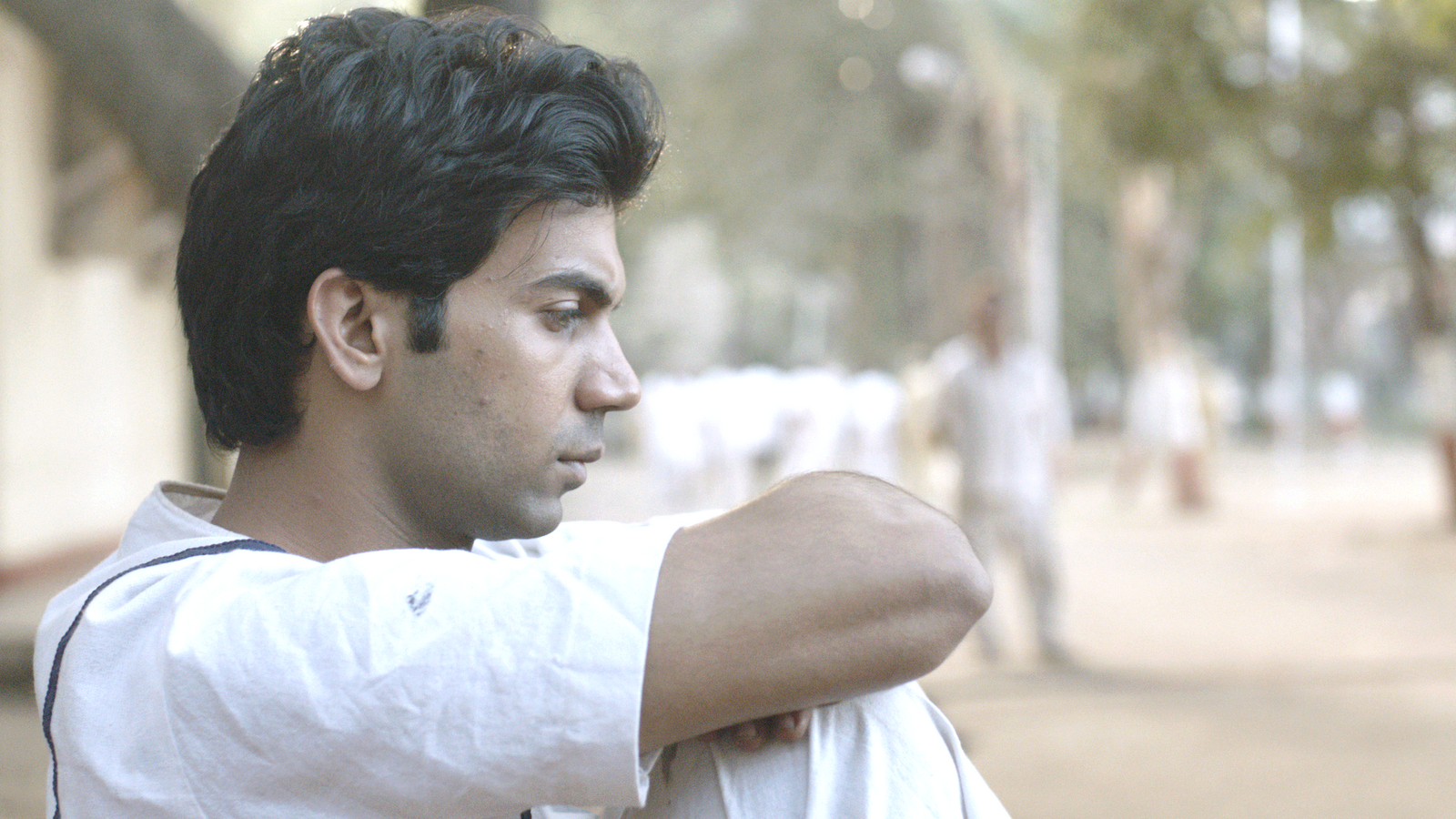
Although Hansal Mehta makes us sympathise with Shahid by showing his early struggles and his family life, the director doesn’t shy away from portraying his weaknesses.  Shahid’s reluctance to tell his family about his new wife is shown as a flaw and he also has a general tendency to ignore problems by burying his head in the sand and hoping they will just go away.  These failings do make him a more human and vulnerable character and contrast well with his more decisive and determined attitude when in court. Raj Kumar Yadav gets under the skin of a crusading human rights activist in the second half of the film and his passionate arguments are stirring and though-provoking.

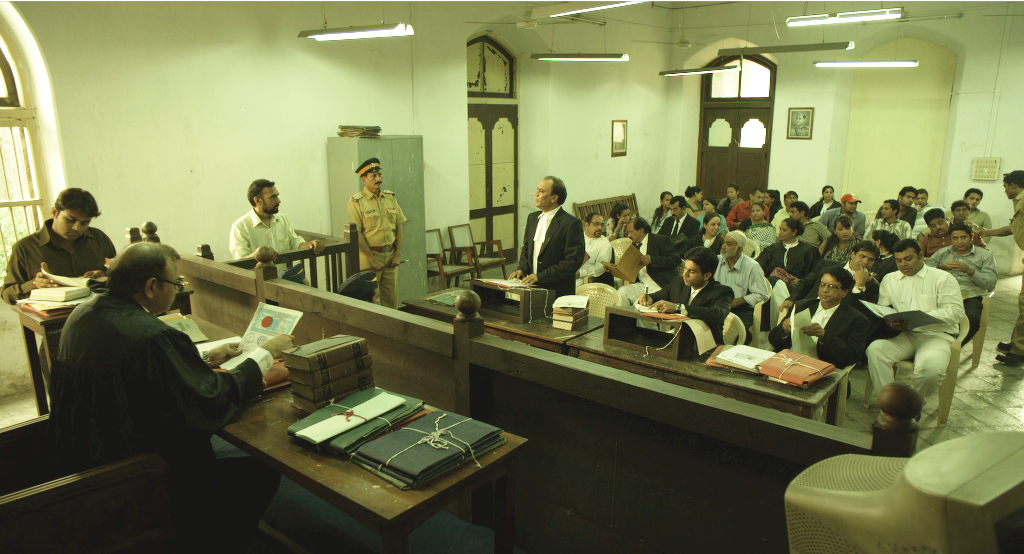
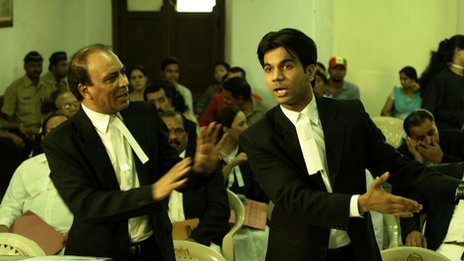
It’s another plus for the film that the court scenes appear realistic, set in dingy surroundings with harried looking judges. A case with a suspected terrorist shows the accused under guard in a metal cage,and only the various legal representatives allowed in the room which I can imagine is exactly how these trials are actually conducted. The verbal battles between Shahid and the various prosecutors, including his old employer Menon are also excellent and keep up the momentum of the film without getting bogged down in Shahid’s oft-repeated mantra “justice delayed is justice denied”.

Shahid

This is a well-made film with sensible and mature treatment of its subject matter.  There are a few stumbles with Shahid’s early life and perhaps a little too much time spent on his developing romance, but on the whole this is a fascinating glimpse into the life of a man who took on the Indian legal system on its own terms and won. I do think it would have benefited from a more documentary style approach and additional information on Shahid Azmi’s cases would have made it seem less of an idealised account.  However it’s still a worthwhile attempt at a serious biopic, and with excellent performances, realistic situations and an intelligent script it’s definitely one I recommend watching.