Loins of Punjab Presents

 I originally sought out Loins of Punjab Presents because I really like Nina Paley’s Sita Sings The Blues  and read that my favourite shadow puppet, otherwise known as Manish Acharya, had made a film. I watched it with a hint of sadness and regret in light of his untimely death. But that didn’t stop me enjoying this lovely mockumentary with a near perfect balance of sweetness and acidity.

The film takes place around a singing competition, ‘Desi Idol’, sponsored by the Loins Of Punjab company. A local news crew is on site shooting a story about the competition. Their presence allows characters to talk directly to the camera, and the captions add some pithy observation. The characters are introduced out in the wild, but then observed at close quarters in the hotel where the competition is based. There is a villain, a hero, romance, drama, tears and laughter. Mostly laughter.

The master of ceremonies is the wonderfully repulsive and Gypsy Kings obsessed Mr Bokade (Jameel Khan). He is horrible yet noble when it counts. He just has no idea, and it is oddly delightful to see his unswerving belief in his own magnetism.

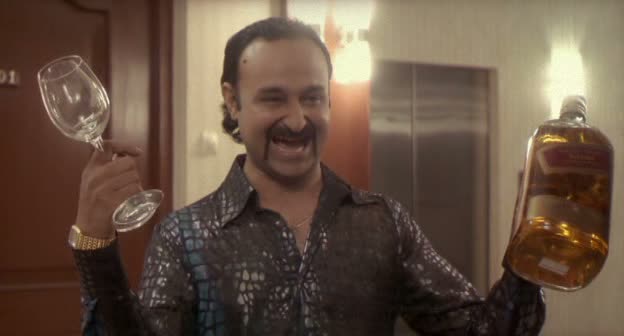
Bokade’s mangled explanation of insiders and outsiders and race relations is pure gold, and somehow it made perfect sense. His bewildered sidekick is the offical representative of the Loin King, the very anxious Mr White (Kunaal Roy Kapur).

Manish Acharya not only directed and co-wrote, he stars. Vikram Tejwani is the nice guy, a sensible businessman whose job has been outsourced to India. He likes to plan ahead, using his time wisely.

He researches film heroes and based on his data believes in the power of Amitabh Bachchan to appeal to all generations and to the judges. Manish Acharya gave Vikram a wry sense of humour that made him really endearing.

Sania Rehman (Seema Rahmani) is a struggling actress who decides that it might be easier to trade on her hitherto neglected Indian heritage and make it big in Bollywood. Her knowledge of Hindi is limited to a few phrases learned by rote and some filmi songs. She bluffs her way through and while her mistakes and vulnerability are usually played up for fun, she is a sympathetic character.
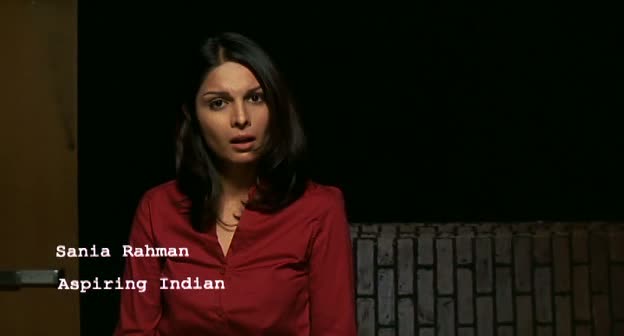
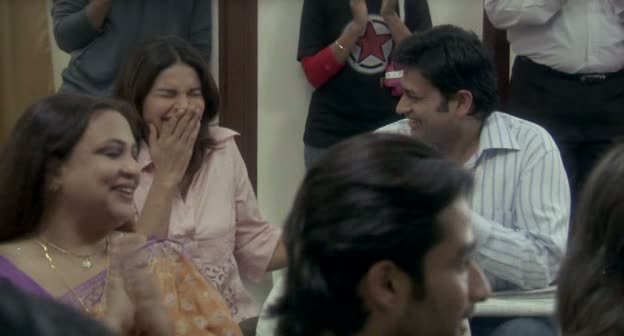
Seema Rahmani managed to play an average actress brilliantly, and subtly show the difference between Sania and Sania acting. It was clever and very funny.

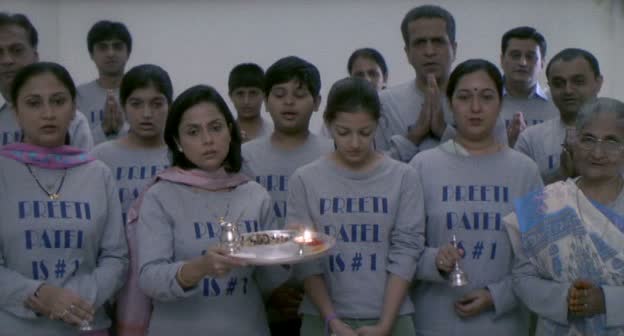
Preeti Patel (Ishitta Sharma) is talented, and overwhelmed by her large family and their expectations. Her parents are ambitious, protective and trot out every old chestnut about ambitious, protective parents.
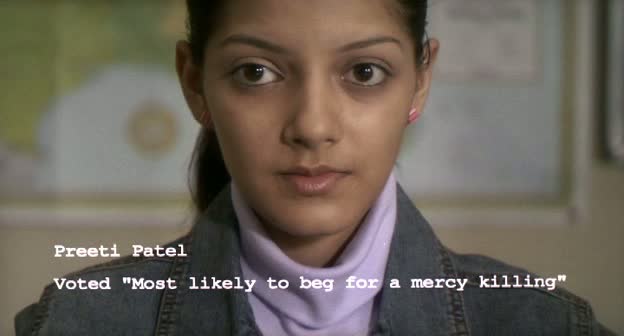


Quiet and mousy when she isn’t singing, as soon as she takes the stage she lights up. Singing is an escape, and Preeti has the talent – does she have the will? Much of her performance relies on reaction and expression rather than dialogue or fireworks.

Josh Cohen (Michael Raimondi) is the white boy who loves India. He is naive, idealistic and frankly a bit of a drip. Not only did he ‘find himself’ in India,  he also found love with Opama Menon (Ayesha Dharker). He invented Joga, a ludicrous combination of jogging and yoga that is probably being sold on a cable TV station as I write this, and the couple are out to sell the big idea and make their fortune.


Opama is fond of Josh but not so happy with the negativity she encounters from other Indians when they see her with him. The singing competition brings out her insecurities as she is thrown into an almost all Indian environment and the judgements fly thick and fast. When Opama tells Josh to choose between Joga and music, their relationship is also in the balance.

Josh also has to face up to some aggro as people question whether a potential Desi Idol should in fact be desi. It shakes his rosy notions of being at one with everyone, but is resolved in an appropriately filmi way.

The wild card is Turbanotorious BDG (Ajay Naidu). He is angry, urban and loud and travels with his African-American partner Otto (Kory Bassett). I read a few reviews that described them as ‘best friends’ but I say, based on the loud and proud demands for a queen sized bed and the public handholding and other incidents, they were more than just friends.

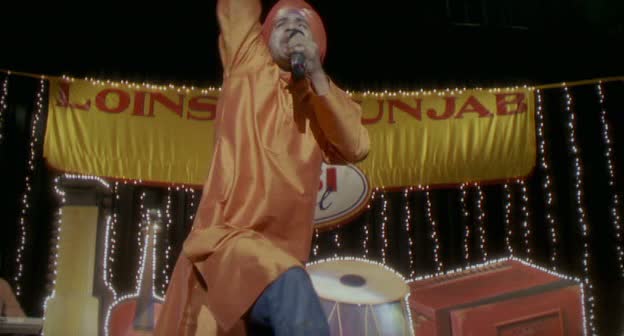
Ajay Naidu played it loud and abrasive mostly, but his relationship with Otto and his family showed another side to the character. His response to being judged on appearance or first impressions is in your face aggression. And his insane energy turned the whole show upside down at a crucial point. Lesson to judges – do not even think about eliminating the Turbanotorious BDG! This clip isn’t in the film as such, but it is animated by Nina Paley so that seems very fitting:

I promised a villain and this film delivers. Shabana Azmi is socialite Rrita Kapoor, the shark amongst the minnows.

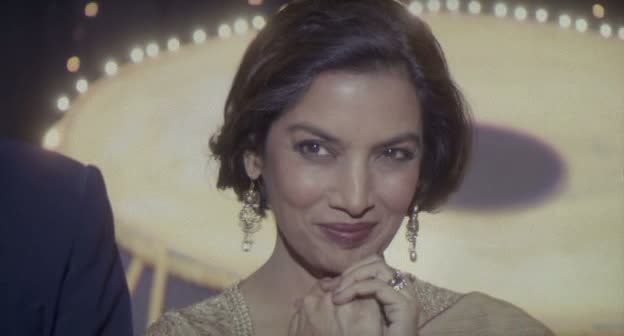
She is determined to get one up on her rival by winning the competition and donating the winnings to charity. Rrita is polite, elegant, and always has a gleam of malice in her eyes. Her murmured hints and compliments derail the opposition and she cuts a swathe to the final showdown. I always like seeing Shabana in her rare masala film appearances, and she seems to be having a lot of fun as the posionous Rrita. But can a villain ever win in a Bollywood inspired film?

The three judges, played by Samrat Chakrabarti, Sanjiv Jhaveri and  Avantika Akerkar are dead ringers for the washed up and wannabes that infest reality TV. And I must give a special mention to Rani Bansal and Dhruv Singh who played the terrible Eurovision style MCs – they nailed the stilted pointless banter.

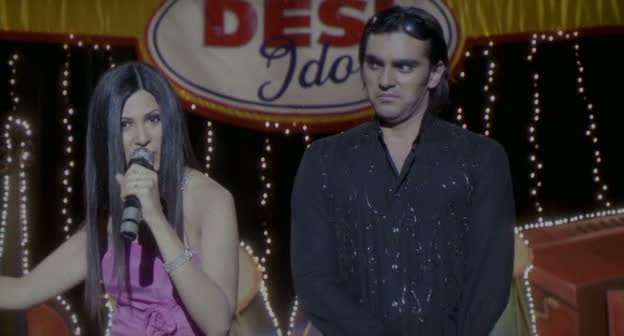
Shaan did a special appearance that got him the very special guest chair. I personally would have preferred a seating arrangment that didn’t include electrical wiring. Alexx O’Nell hammed it up as a hotel manager, but the rest of the supporting cast played it more or less straight and suited the fly-on-the-wall style of film.


The easy option would have been to sketch broad outlines and take a few cheap shots. Anuvab Pal and Manish Acharya gave it more love than that and allowed the actors to flesh out the characters. The laughs are all the sweeter for seeing people overcome their pain or sadness. The same jokes often deliver a rebuke for the human race’s apparently endless capacity for stupidity. When Sania and Vikram start stumbling towards romance, they seem genuinely shy and awkward, not just funny. When Turbanotorious BDG is told he is out of the competition, Ajay Naidu looks straight down the barrel of the camera with silent despair. An unassuming man called Saddam Hussein loses his job in the post 9/11 tide of fear and he and his wife struggle with the unfairness of it all. And there is a running gag with a paranoid elderly white man who thinks he has stumbled into a nest of terrorists. There’s commentary but it doesn’t derail the comedy.

The script plays with a lot of Hindi film tropes including the Angry Young Man. In one of my favourite scenes Vikram challenges Bokade who had disqualified Sania (at Rrita’s behest) because she didn’t really speak Hindi. Inspired by the Big B, Vikram launches into an impassioned plea about the diversity and democracy that is India, and when logic fails he appeals to the emotions. Then he caps it off with a bit of a song and dance before meekly resuming his seat. It is glorious!

And that is what I loved about Loins Of Punjab Presents. It takes filmi cliches and stock characters and translates them into something close to real life. There is a feeling of playful affection for the filmi heritage that really worked for me. There is also a bit of a wink, or maybe it was an eyeroll, that saves it from being too sweet for my palate. I’m a cynic who likes a good laugh and this delivers. If only there had been a proper big retro dance number. 4 stars!

PS – if you’re the kind of person who likes to know what happens to your favourite characters after the film, the end credits will make you very happy.

Kaala Patthar

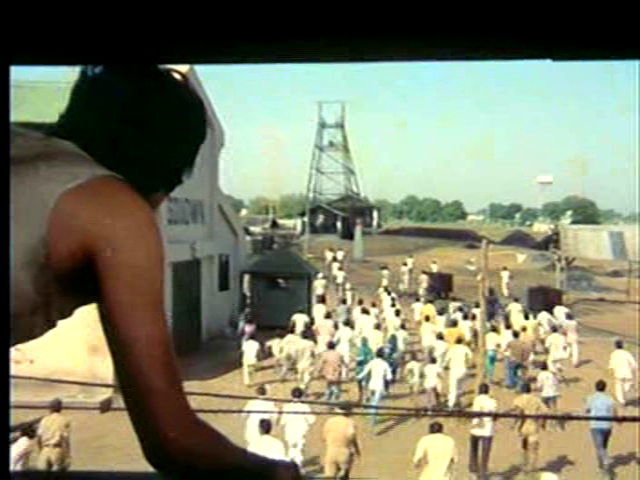
Kaala Patthar is a total masala package that has something for everyone, plus a dollop of social justice. The essential characters are present – heroes, anti-heroes, spirited heroines, eye candy, villains. The main players are outsiders who find themselves caught in the conflict between profit and humanity played out in a privately owned coal mine. There are no surprises in the plot, but some excellent performances give the drama added substance. And director Yash Chopra also provides fights, songs, romance, bromance and dodgy science to complete the masala formula.

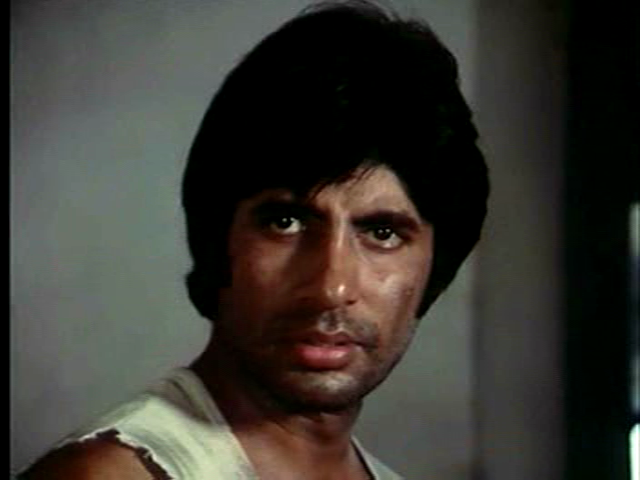
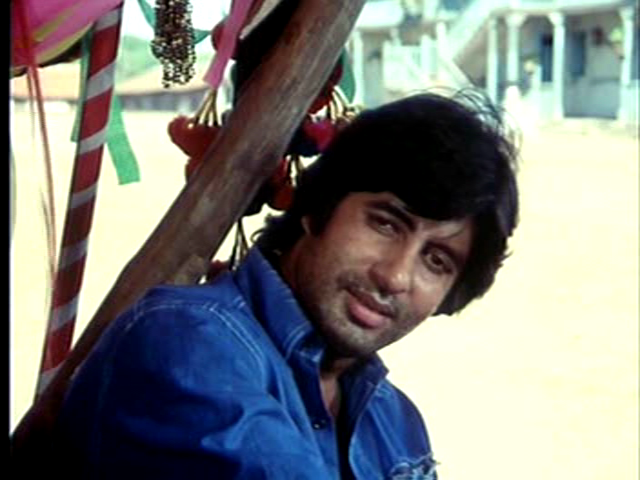
Amitabh is recognisable from the first glimpse of his tall figure and loping stride. Vijay is an enigma, full of smouldering anger and despair as the man trying to escape his past and perhaps make his future a short one. He is educated, and has an uncanny ability to wear white trousers in a coal mine without getting too grubby. The mines were a place to hide as he served his largely self-imposed punishment. A former ship’s captain, he made the wrong decision in a moment of stress and paid the price, although how a private shipping line captain could be court-martialled is never explained. Vijay was with the workers but didn’t consider himself one of them, constantly speaking of their struggle and their lives. He was friendly enough, and is seen to have a smile and a laugh in several scenes, but it is clear this is his own personal purgatory. Time and time again he risks his own safety to prove to himself that he is not a coward. Amitabh’s performance is outstanding, convincing even as he utters the most pompous dialogues. He plays Vijay with compelling restraint and brooding energy.

Sudha (Rakhee), the company doctor, is drawn to the educated, articulate miner and he is attracted to her integrity and dedication. They have strong chemistry in their understated scenes alone together even though at times she looks more like his Ma – but perhaps that’s just the caretaker in her character coming through. And Rakhee does look like a mature woman, not a fluffy girly heroine. Sudha and Vijay appear as adults weighing up a future relationship, not kids chasing each other around a park. Sudha seems to have a greater capacity for forgiveness, or at least the understanding that we need to let ourselves off the hook sometimes.

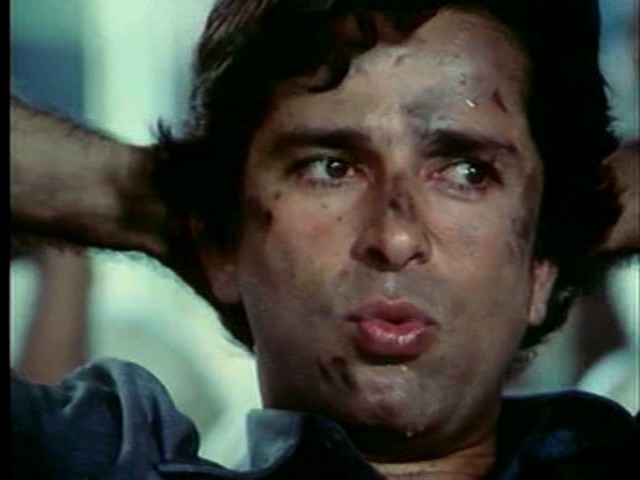
Ravi Malhotra (Shashi Kapoor), the new engineer, is all shiny and action oriented, a stark contrast to the weary and bitter Vijay. Ravi is concerned about the miners but doesn’t seek to be one of the masses, just to manage them in a more humane way. He isn’t all talk – he buys new machinery and makes changes to try and improve worker safety, and forces management to pay a promised bonus. The people rejoice!

I like that the ladies dance neatly in lines and are mostly segregated from Mac Mohan and the rest of the miners who seem to prefer a freestyle approach.

Ravi’s popularity and success irks money hungry boss Puri Dhanraj (Prem Chopra). Ravi is charismatic and the role is a good fit for the charming and articulate Shashi. He has a light but not frivolous energy that helps keep the moralising from bogging the story down.

Anita (Parveen Babi) is supposedly an investigative reporter, but if she ever investigated anything more complex than choosing a lipgloss I will be very surprised. She is very pretty but it’s not always enough. Anita writes an article that is highly critical of the privatised mine, and while this annoys Dhanraj, it pleases Ravi which might be Anita’s priority. Although Anita’s character was interesting, Parveen’s screechy acting in the more dramatic exchanges was painful so I was relieved when she reverted to flouncing around the countryside with Shashi.

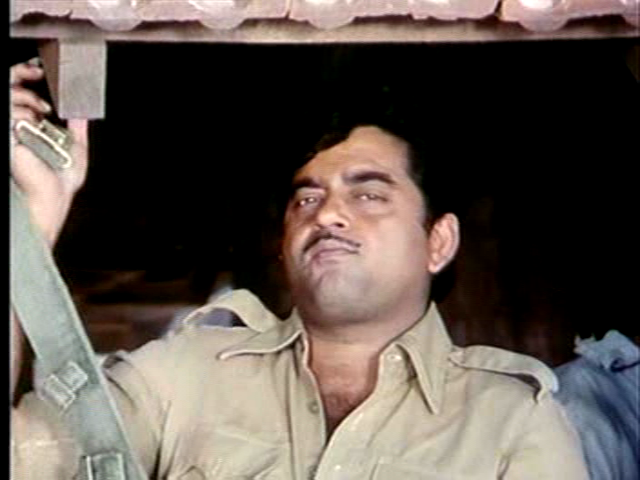
Mangal (Shatrughan Sinha) is an escaped criminal who has taken refuge in the anonymity of the mining camp. I don’t think of Shotgun as a particularly subtle actor and this performance didn’t change that perception, although it is very enjoyable. Mangal swaggers around camp, stirring up trouble and trying to be the top dog. He is bad through and through, until he comes good when it counts. His final scene is totally unbelievable, he overacts wildly, and I don’t think his decision could really have been that helpful, yet it is a perfect masala redemption.

Channo (a radiant Neetu Singh) makes a living selling ornaments and trinkets to the miners and their wives. She is boisterous and bright, and even Vijay responds to her warm personality. She and Mangal have an unconvincing romance and I got the impression that Channo picked him more because he was new blood rather than any real attraction in the first instance. Channo has a couple of significant scenes, and one decision is pivotal. There is a very suspenseful scene where Channo is pursued and almost raped by some ne’er-do-wells from the camp, saved in the nick of time by Mangal. It seemed odd that a girl who knew the area so well would take a lonely path she was clearly a little nervous about, no matter how big her hurry. So while it was dramatic and Neetu was very convincing, it jarred and I wondered if there was a better way for the plot to turn.

Neetu is more than capable of handling the emotional range Channo requires. And her presence means at least one of the female cast can dance!

The supporting actors are excellent. Well, Prem Chopra played the usual Prem Chopra type sleazy villain with no redeeming qualities but he does it so well and he is pretty much the yardstick for that kind of role.  Mac Mohan as card sharp Rana and Parikshat Sahni as Jagga stood out, and it was nice to see Iftekhar in a fleeting appearance. While there is an impressive cast of supporting artists, most of the extras are an anonymous backdrop of the unacknowledged masses. There are some moving scenes of miners waiting in silent vigil outside the house of a dying colleague, or waiting for Vijay as he has treatment. They bide patiently, watching everything and waiting their turn.

The music by Rajesh Roshan is excellent and while there are only a couple of big song and dance moments, the songs are all integrated into the story and do reveal much about the characters and the environment. Shashi’s entrance to Ek Rasta Hai Zindagi perfectly expresses his nature and the different world he is coming from. Ishq aur Mushq has a bittersweet tone that matches Sudha and Vijay’s burgeoning relationship.

Yash Chopra is a talented story teller, and Salim-Javed’s script is excellent especially the dialogues. The mine is a bleak non-glamorous backdrop that allows the people to dominate. It’s a visually dark film, with lots of scenes in the tunnels or at night, so the performances draw the eye rather than fancy sets or costumes.

I have some issues with the decision making in the final scenes (I suspect that in real life, it would not have been a happy ending if people did what they did but you know, filmi physics and all that), and the set construction team relied a little too much on papier mache but these are small quibbles. You can’t beat Kaala Patthar for excellent character focussed vintage masala,  with the bonus of a fabulous cast. 5 stars!

Heather says: Kaala Pathar is vintage Yash Chopra from the days before he got tied up in NRI romance stories and when he was still producing films that were both novel and entertaining. It’s a great story full of action, melodrama and issues of social justice which speeds along to an exciting conclusion. The characters are compelling, and the female actors make up for their limited time onscreen by their impact on the story – softening their male counterpoints enough to allow more insight into their personalities.

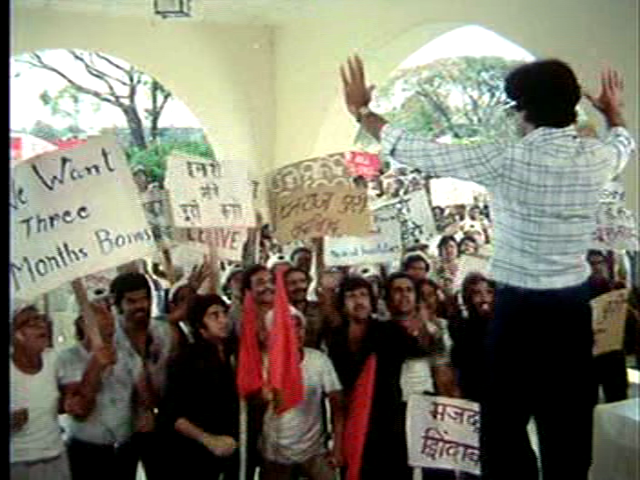
I love the way the two leads Vijay and Ravi are introduced, and that their respective characters can be deduced after just a few moments in their opening scenes. Instantly the coal begrimed Vijay is established as anti-authority with heroic tendencies as he ignores the company line and charges into the mine to rescue some trapped workers. It’s Amitabh in his ‘angry young man persona’ and it’s no surprise to learn later on that he harbours a dark secret or that he believes pain is his destiny.  Ravi on the other hand, is immediately recognisable as a ladies man when he first appears via a song, wearing a jaunty cap and sporting a rather fabulous scarf with a motif of large white daisies. Happy and with a more relaxed attitude to life Ravi is idealistic with more socialist views and really not my view of a ‘typical’ engineer. But then again I’m rather prejudiced since I know so many engineers. Ravi’s drawing which demonstrates exactly why mine shaft number 4 is so dangerous is classic Bollywood engineering at work, and his skills in this area may explain why Ravi is working in such an undesirable job.  Shatrughan Sinha turns in a great performance as the escaped prisoner Mangal and allows yet more melodrama to be added to the story.

The various romances are handled in a subtle and subdued way which works well within the disaster movie format and I appreciate the restraint shown here. Rakhee Gulzar is beautiful as the doctor working under such difficult conditions while Parveen Babi gets a chance to show some teeth as the more feisty Anita, and Neetu Singh gets the best moves.  I even like Prem Chopra’s unrealistic and totally villainous mine owner who has no redeeming features whatsoever. It’s all very Dickensian and melodramatic, but so much fun. The story is generally well paced, although rather long, and I felt that the scenes of the inevitable disaster at the end did drag on a little. The mine walls were also a little shaky and I’m sure everyone could escape more easily, if not as spectacularly, if they’d just push the walls aside. Despite the occasional dodgy effects and rickety sets, the disaster theme is well depicted and I was interested to learn that the mine disaster portrayed here was based on real life events at Chasnala. A must see film for sure – 4 ½ stars.

Koyla

As it seems has been the case with many other people, my path to Bollywood addiction started with Shah Rukh Khan. A late night chance viewing of Dilwale Dulhania Le Jayenge on TV and I was instantly hooked. So I was slowly working my way through his older films (and loving pretty much all of them) when we had a discussion in Hindi class about films that were so bad they were good (you know exactly what I mean here!) and the subject of Rakesh Roshan’s Koyla came up. So of course after hearing the description, this became a must see film, and despite all the violence, gore and trashy OTT characters it’s fun and quite frankly an addictive film to watch. Koyla is certainly not my favourite SRK film, but hidden amongst all the craziness there are some really wonderful moments, particularly in the songs where Madhuri also shines.

But of course the main reason for watching is this:

And a bit of this:

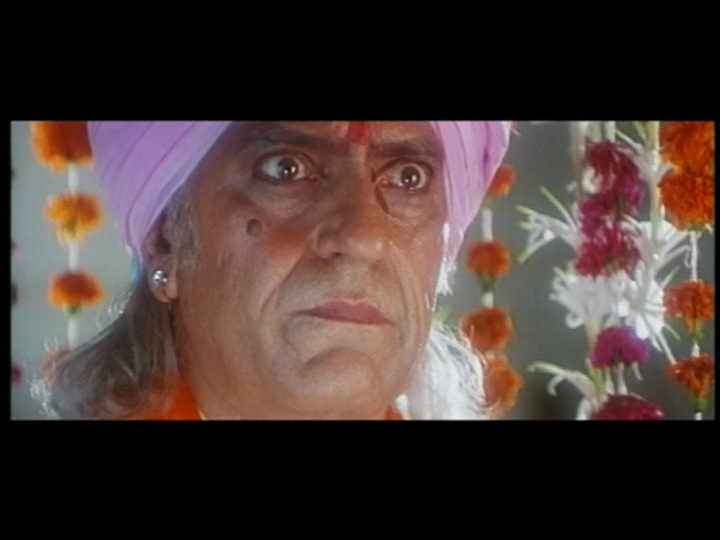
Where to start with such a crazy film? Shah Rukh Khan is Shankar, a mute slave to the incredibly evil and megalomaniacal Rajashahib (Amrish Puri). Shankar is introduced running with the dogs he has trained and the implication is clear that Raja regards him as just another one of his well-trained animals. Leaving aside the fact that Shankar has a truly terrible mullet, as does Raja himself, there is also the very questionable decision to make Shankar wear such immense shoulder pads. It’s hard to believe this film was made in 1997 and not the mid eighties considering some of the fashion choices in this song:

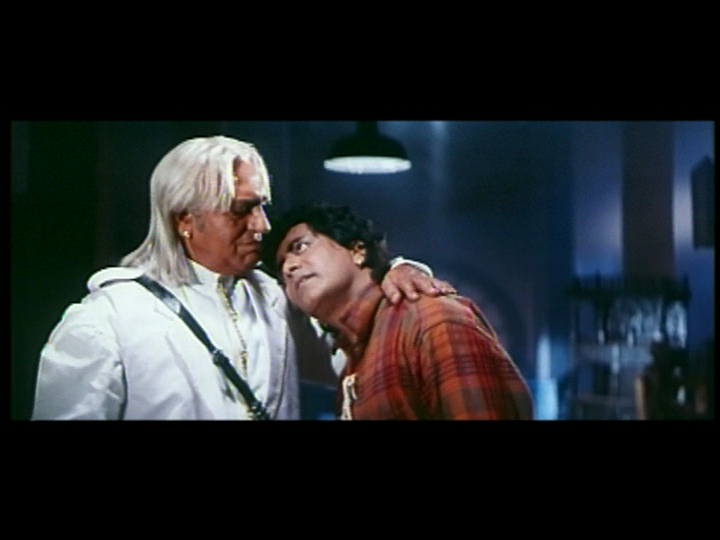
Raja is obviously a bad man with his bad hair and a ’mark of evil’ mole. He also has an even more sadistic and quite insane brother Brijwa who, in trashy bodice ripper novel style, tries to drag off every young woman he encounters.

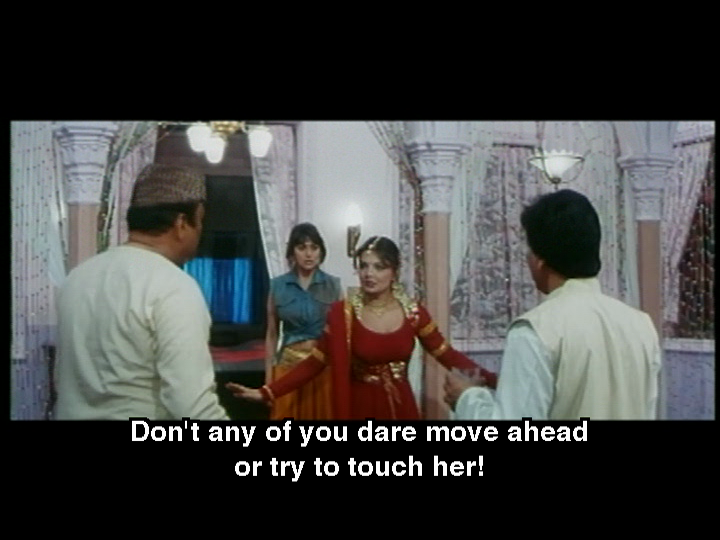
Despite an intimate relationship with his secretary Bindya, Raja is hungry for another young woman, and eventually tricks Gauri (Madhuri Dixit) into marriage. We first see Gauri frolicking around the fields with a gang of children all high after eating cannabis laddoos. Possibly this is supposed to show how innocent she is, but it’s really just very ‘what the?’ instead. She’s easily tricked when Raja sends a photograph of Shankar instead of himself as the potential bridegroom. A sadistic tyrant Raja may be, but at least he is somewhat aware of his own shortcomings as a potential groom. After a sham of a wedding, Gauri tries to escape but she’s a typical wishy-washy heroine and doesn’t manage anything effectual. Although perhaps fainting is understandable when she tears off the grooms veil to show Raja instead of Shankar! Compare and contrast:

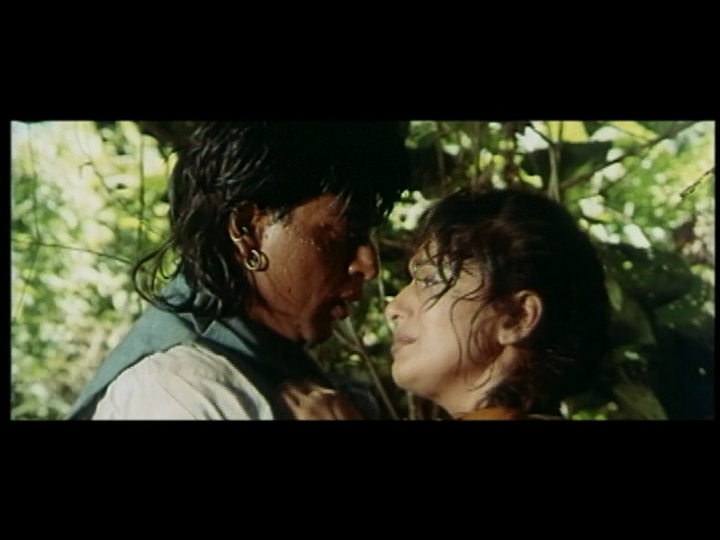
Bindya is displaced in Raja’s affections and ends up as all fallen women do as she is disposed of into the local brothel. This treatment of Raja’s former lover starts to open Shankar’s eyes to the depravity of his owner – it’s taken him 20 years but it’s a start. When he discovers the deception behind Raja and Gauri’s marriage he feels compelled to protect her and when finally Raja kills Gauri’s brother Ashok (Mohnish Behl in a very brief guest appearance) Shankar finally escapes with her into the jungle.

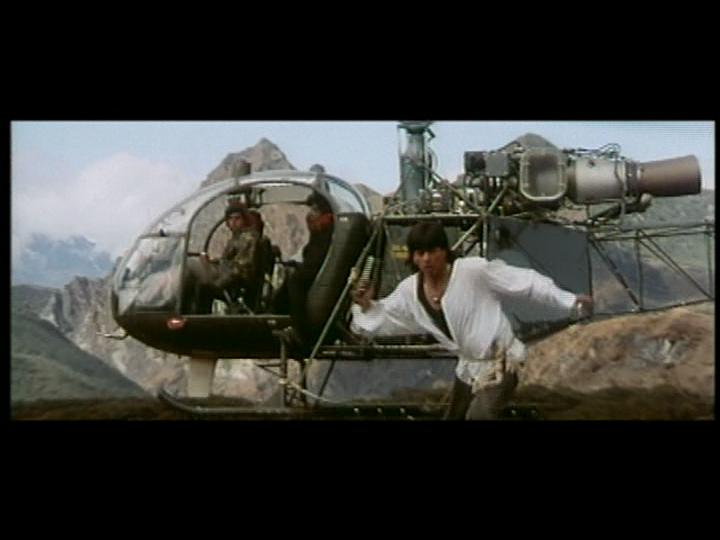
So how do you pursue your wife and slave when they have run off together? By helicopter of course! There is plenty of First Blood style action and Shankar does manage some amazingly intricate traps for a man on the run with no obvious resources. Finally Raja manages to catch up to the fugitives and cuts Shankar’s throat before sending him to his death over a cliff. Amazingly, Shankar just happens to be discovered by a local healer who sews him back up again and restores his voice as a useful side benefit. Gauri meanwhile is destined for the brothel (Raja is not a man of novel ideas), where she finds a protector in Bindya. Because of course, the impure fallen woman has to come good before she is killed in any proper Bollywood film.

There are explosions, plenty of revenge killings and bucket-loads of blood, but finally Shankar does prove that good will always win over evil, especially when good has such an excellent (and frequently used) hero run.

The story has plenty of holes and yet it all makes sense if you just ignore the questions of why and how. There is a flashback to explain exactly how Shankar lost his voice in the first place and why Raja rose to his current level of power. The end ties everything up with the greedy exposed and everyone important and still left alive is redeemed in the end, even Ashok Saraf’s irritating Vedji. This is one of the first films I saw where Johny Lever’s character had a more serious role to play and he pulls it off very well, with only one or two dips into irritating comedy as Vedji’s son and Shankar’s friend. This is probably the best song of the film featuring the two with Shankar’s friend supplying his ‘voice’.

What really does work well in this film is the slowly developing relationship between Shankar and Gauri. There is plenty of chemistry between the two, as there always seems to be with SRK and his leading lady, and they have some very heart-felt scenes particularly when Shankar has no voice and SRK is relying on facial expressions and body language alone. This is one time when SRK’s tendency to overact works very well in his favour and his emotions are excellently expressed. The gradual maturation of Gauri from frightened girl into a woman who helps fight back at the end is well handled. And of course any time Madhuri is dancing she is entrancing. The songs by Rajesh Roshan (lyrics by Indeevar) are the high points of the film and Saroj Khan has done an excellent job with the choreography in each.

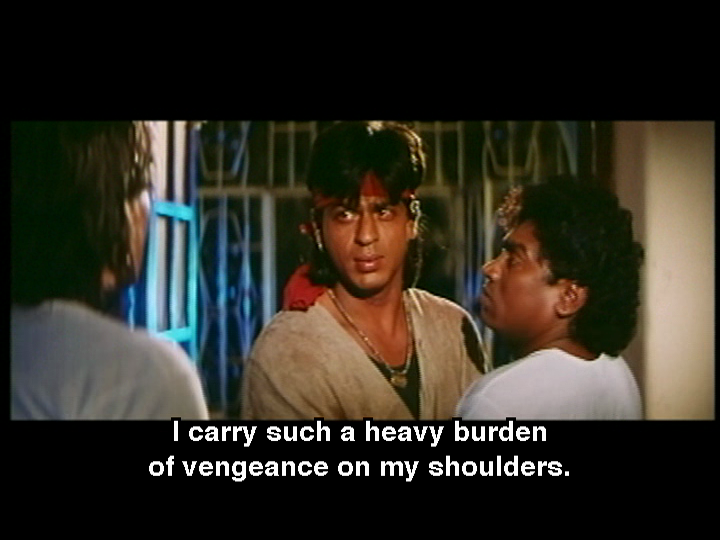
But the rest is just plenty of OTT wonderfulness and a surfeit of blood and gore with a healthy helping of revenge. The violence is too cartoonish to be difficult to watch, although there is a dark undercurrent as much of the violence is directed against women. Thankfully though, all the bad guys get their comeuppance and there is always a good song just when the death count is in danger of getting too extreme. It does have an 18 rating which I presume is as a result of the number of attempted rape scenes and general adult themes throughout, although it’s really not as suggestive as many Hollywood films. The bush surgery is excellent and I did particularly like the casts for Shanka’s broken arm and leg which imploded with no apparent ill effects when he started running. Of course he was back to full health and fighting fit in a very short time like all true heroes should be. And perhaps it’s that heavy vengeance burden that explains those shoulder pads earlier!

Koyla is not a film for the faint hearted and I wouldn’t recommend it as a must see film for everyone. But if you like your BW to have the baddest villain and the most extreme trials for a hero and heroine, then it’s definitely a film you should see. 3 stars.