Sarkar

I held out on watching Sarkar til a couple of years ago. I’m ambivalent about Ram Gopal Varma films. When he is good, he is terrific. But he has wasted some interesting ideas and great actors in projects that seem to be more about RGV than making a film (like RGV ki Aag, and that film all about Mahie Gill’s cleavage). I’m also on the fence about Amitabh Bachchan in this late career phase. He’s made some bad film choices (like Boom!) and not always acted to his ability. But Sarkar combines a focussed and controlled RGV with a complex performance from Amitabh and the result is a dark and gripping film.

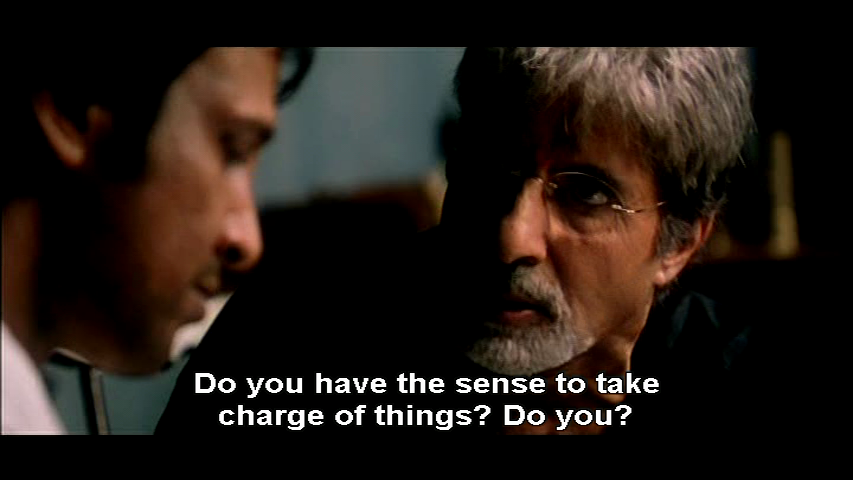
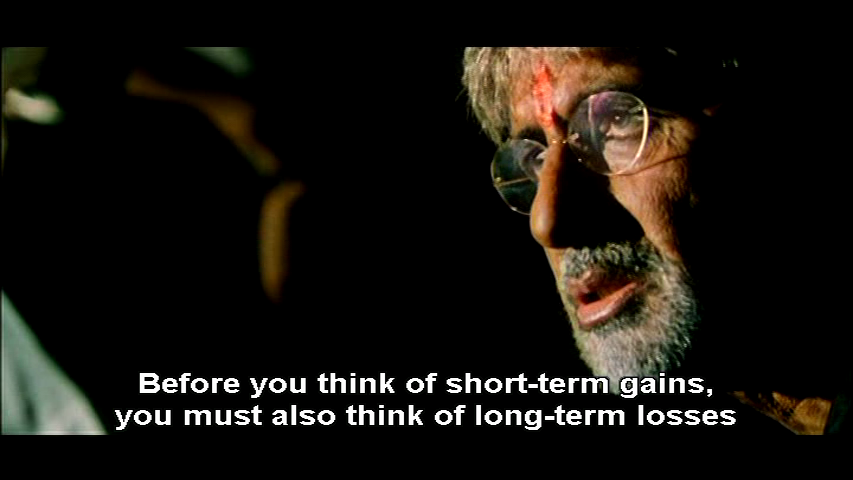
Subhash Nagre (Amitabh) is an old school mafia lord. He believes in family, honour and loyalty. He isn’t painted as really good or sympathetic but he has a certain integrity, an old fashioned set of rules that he adheres to and that he upholds. Nagre is connected to his community and neighbourhood, and thinks of the social cost as well as the profit and loss numbers. His people worship him, gathering outside his mansion to catch a glimpse of their Sarkar. They come to him when the system fails them, and he is their justice. Amitabh looks picture perfect. He creates a focal point in every scene with his stillness and his gaze. I found I was almost hypnotised by him, drawn to watching Subhash’s reactions no matter what else was happening. There is a carefully controlled rage in some scenes that is far more unnerving than any histrionics would have been.
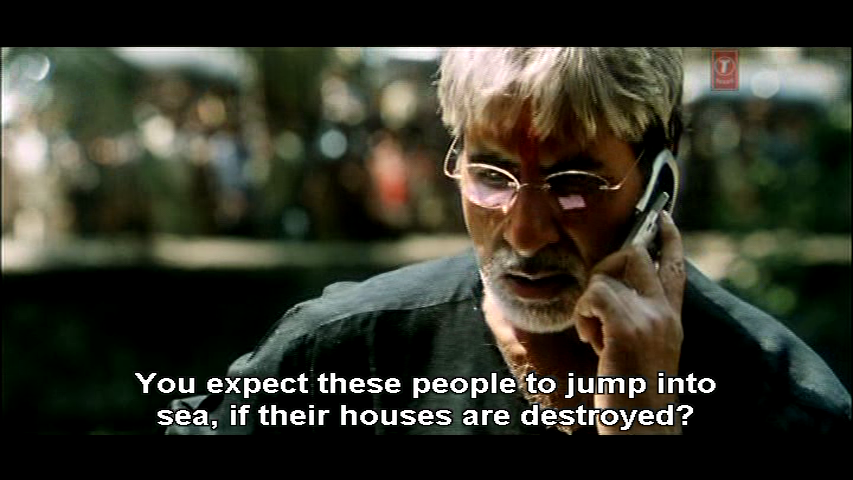
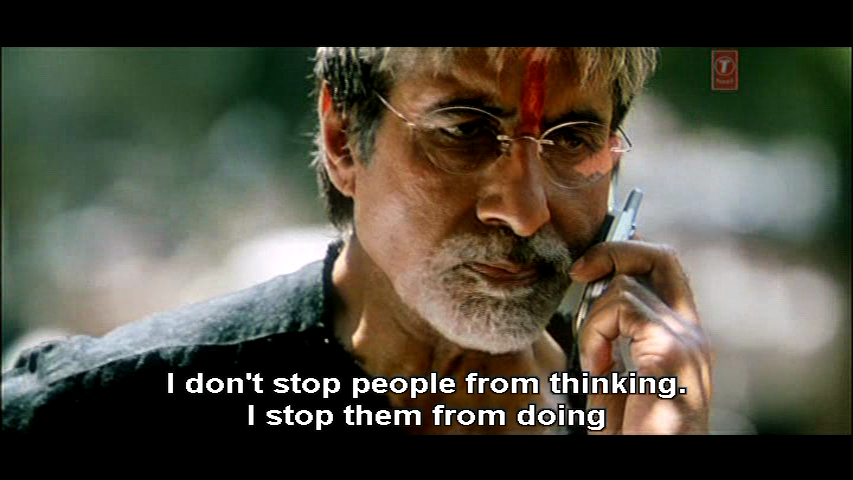
While Subhash acknowledges that he operates outside the law, he says ‘I do what is right for the people’. When people come to him asking for solutions, he accepts their obeisance with little expression. He makes a semblance of not wanting people to touch his feet etc but I wondered what would happen to anyone who dared not to. Some scenes are accompanied by a religious chant(Govinda Govinda featuring Amitabh’s vocals) showing the deification of Sarkar. There are glimpses of the monstrous ego behind the facade, the steely will that does not tolerate opposition or failure, and the carefully checked anger. We also see the family man and affectionate grandfather. Subhash Nagre is a complex man and he is a master strategist. Amitabh shows all of these nuances without being too actorly and I was watching the character, not the performance.

Subhash Nagre is challenged from within and without his family. Rashid (Zakir Hussain) is the new type of criminal. His decisions are all commercial and he has no empathy or reserve. He is not the kind of man Subhash is used to. There is no whitewashing of how Nagre makes his money, but the clashes hinge on honour and intent. He will not budge from his principles. His enemies know that to remove the man they must first destroy his reputation.
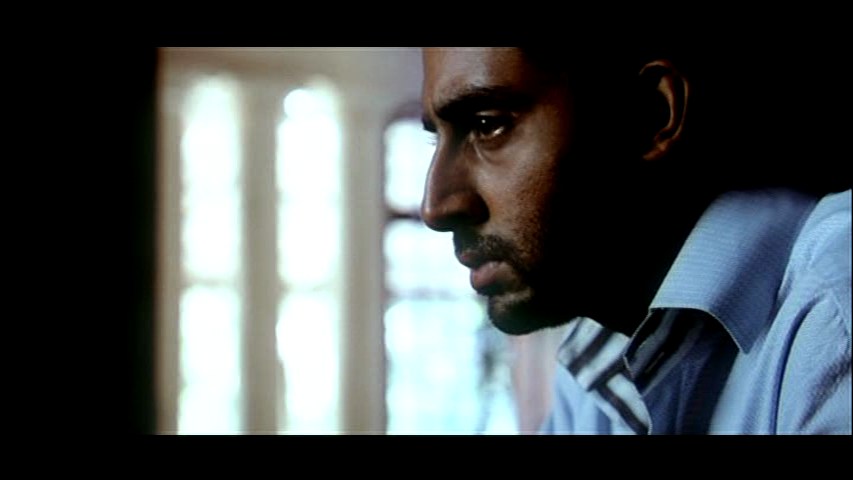
Son Shankar (Abhishek Bachchan) returns from the US. Baby B has a role where doing an impression of his dad is actually appropriate. Initially believing that his father simply helps others, his eyes are opened to the realities of the family business. In a conversation with Pooja (Katrina Kaif) they refer to the Sarkar empire as a parallel government, supporting the people and doing what is right, not just what is legal. Shankar is appalled at how his father is portrayed in the media. He is the golden boy, the one his father wanted to keep clean and safe from the business. The focus and decision making Shankar used in his corporate life are now applied to his family concerns. He is a quick learner and he will do what it takes.
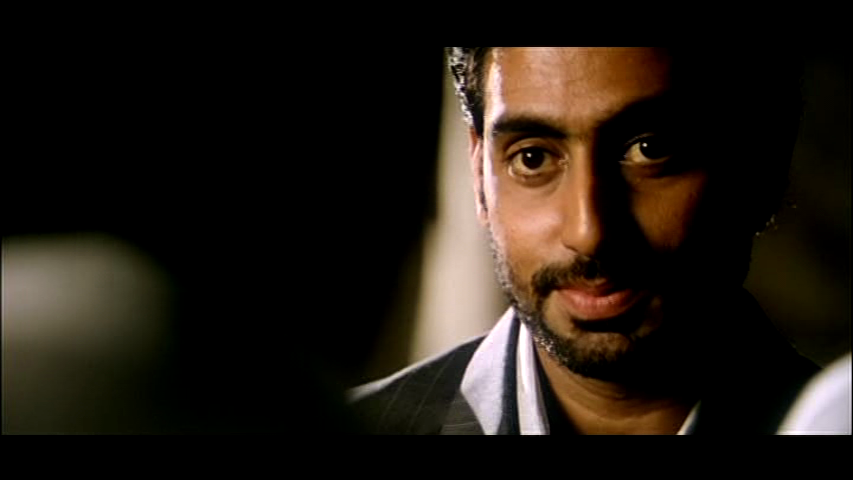
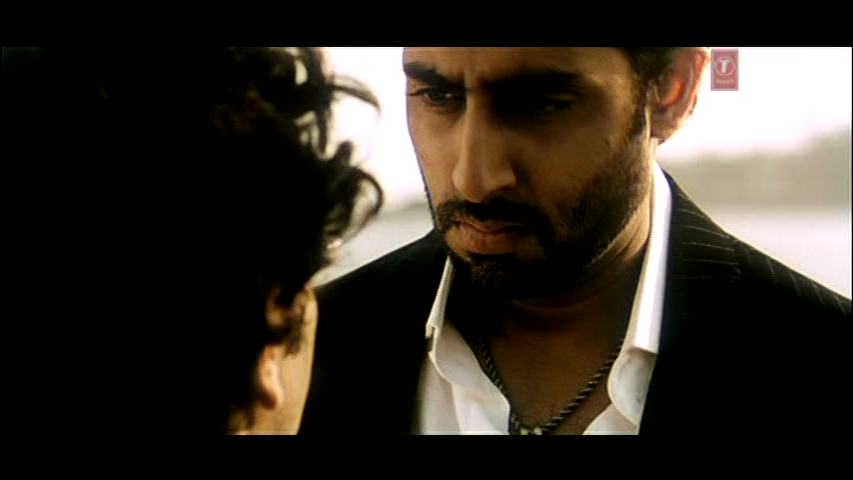
Abhishek is not completely convincing but he does structure his performance well. Initially Shankar is relaxed and engaging and his body language is more open. As he is drawn more into the threats to his dad, he assumes more of Subhash’s mannerisms and strategies. Abhishek’s face becomes less expressive, he speaks more slowly and moves more deliberately. And he is ice cold, like his father.

Vishnu (Kay Kay Menon) is the son most like his father in ambition, but lacking focus and self control. The tension in father-son relationship is well depicted as Vishnu challenges his father’s authority and decision making. The dynamic between Shankar and Vishnu is also fraught as Vishnu desperately wants to be taken seriously, to be the next Sarkar. Quick to flare up or retaliate he has no ‘off’ switch and only intermittent self awareness.
The pain of rejection drives him, and makes him vulnerable to manipulation. Vishnu is co-opted by his father’s enemies, and spirals into confusion, hate, anger and regret. He is an oddly sympathetic character despite committing some of the most heinous acts. I think that is due to the complex and changing emotions Kay Kay invests him with. Kay Kay is expressive and emotional where Amitabh is smouldering control.

The Nagre mansion is a world away from the glaring light and sound of the streets. It is almost timeless, and full of shadows and silhouettes. All around there are men at arms working out and waiting for trouble. The family live in a small pocket of domesticity within the encampment. It’s a bit claustrophobic, but also serene and sometimes beautiful. It is the price Nagre pays as he needs to be safe but accessible to the people who give him his status.
All around Mumbai there are shadowy figures in dark room havings meetings and plotting Subhash’s downfall. The story is well written by Manish Gupta, and gains in intensity as more deceptions unfold. Kota Srinivasa Rao is the repulsive Selvaramani, chortling his way through schemes and double crosses. His idea of honouring a friendship is requesting a quick death for someone. Anupam Kher has a small role as an anti-corruption politician and still manages to try and upstage everyone with a hammy death scene. Raju Mavani as Vishram Bhagat is the everyman type of villain – he seems perfectly reasonable yet he is calculating and meticulous in scheming to dethrone Nagre. Telugu actor Jeeva as Swami is less successful. His mannerisms and dialogue delivery are hammy, and while I believed he was a serious threat his wig didn’t convince me at all.

Supriya Pathak delivers a good performance as the mother watching her son go off the rails and placing her family in deadly jeopardy. Tanisha is likeable as Avantika, the foster daughter who is in love with Shankar. Katrina Kaif is not entirely terrible as Shankar’s American based girlfriend Pooja. But the women in Sarkar are background – providing all the support systems and needs for the menfolk, but not often in the spotlight. These relationships are important, and there is a lot of affection between family members but the men take care of business while the women take care of the men.

The visual design and camerawork throughout Sarkar is excellent and reinforces the drama and emotion. The majority of the film is shot in tight close ups, making the characters the focal point. When things move out into a broader shot, the background detail and bustle of extras and locations gives a strong real world flavour. Amar Mohile’s music is dramatic but not intrusive and the sound effects and orchestration are very effective.

It’s a fairly grim movie. There are lots of unlikeable characters and they do some despicable things. But it is such an accomplished film and just drags me in to that world. Every time I see it Amitabh reminds me yet again of why he is such a legend. Sarkar Raj was a worthy sequel, and builds on Sarkar very well. I’m cautiously looking forward to Department to see if RGV and the Big B can do it again in a different story. 4 stars.
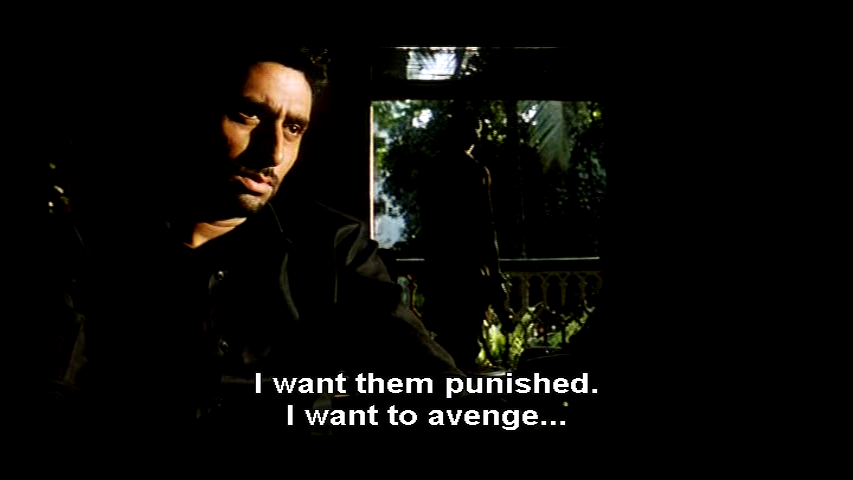
Heather says: This isn’t one of my favourite Amitabh films despite the fact that I think he plays the part of the aging gangster well.  I think the problem is that the story of the film doesn’t engage my interest until near the end and I just don’t care enough about any of the characters to want to know what happens to them. However it does have some good points and the end is almost worth sitting through the preceding hour and a half. I do like how cold and clinical Amitabh appears and that his ruthless Don does have a more compassionate side. However that’s not enough to make me like him and since he’s not a malicious criminal either I don’t find him very interesting to watch.  His son Vishnu is more engaging and Kay Kay Menon’s performance is good enough to make me feel at least some aversion for his sleazy character, but Abishek as Shankar is incredibly wooden and quite tedious throughout. The most enjoyable scenes in the film for me are those with Selvar Mani and Virendra Swami, partly because Kota Srinivaso Rao and Jeeva both put in a very good performances and because those two characters do have some personality. The rest of the cast are all fine, and in fact many of the support actors draw my attention much more than the main leads. However I have no idea why Katrina Kaif bothered to turn up as she may as well not have been there for all the impact her character had on the story. I thought her role was fairly pointless and much better reasons could have been used for Shankar’s initial reluctance to help his father.

There are a lot of meaningful pauses and significant looks throughout the film which make it even slower. I was distracted looking at the set dressing (which was excellent!) and when there was dialogue found that I was concentrating on understanding the Hindi and trying not to look at the subtitles, rather than watching the action. The film itself is well shot and the general idea of the story is interesting, but the characters are so lacking in any type of appeal that it never really connects.  It’s not even that I found them dislikeable, they were just rather dull.  I give Sarkar 3 stars, mainly for the ending and a convincing if uninspiring performance from Amitabh.
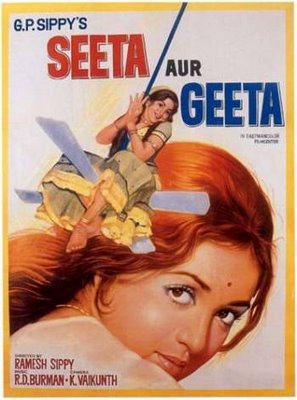
Seeta aur Geeta

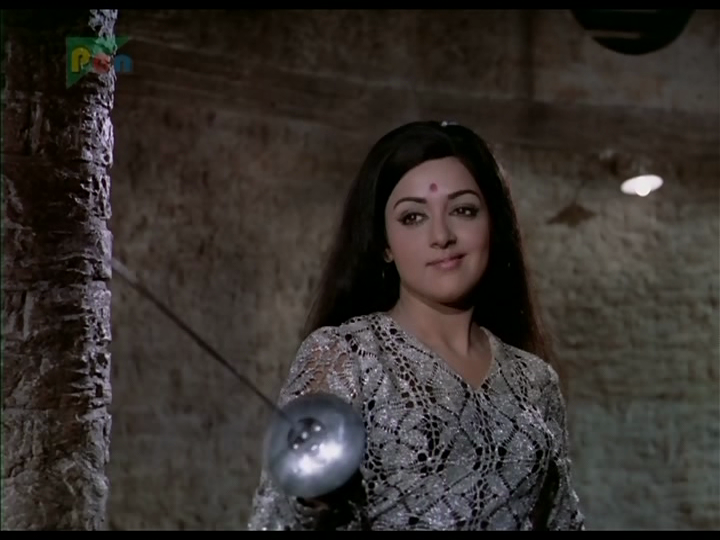
Seeta Aur Geeta is a classic dual role movie so common in Bollywood, but for a change it’s the heroine who has the double part to play and Hema Malini excels as both characters in this tale of separated sisters. This is my favourite film with her as she flawlessly provides drama, action and comedy and looks totally stunning throughout. It’s a pleasant change to have a heroine-centric film and although Dharmendra keeps trying to sneak a piece of the action, Hema always gets the last word. You go girl!

The film opens by explaining how the twin sisters get separated at birth and brought up by different families. But there are no mystical songs, lockets or other identifying objects needed because the two just happen to be identical, which means of course that there will be confusion between the two when they grow up.

First of all we meet Seeta and her family. Her parents are dead and Seeta is living with her Aunt Kaushalya, Uncle Badrinath and their two children. Also living in the house is Kaushalya’s brother Ranjeet (Roopesh Kumar) and Seeta’s grandmother.

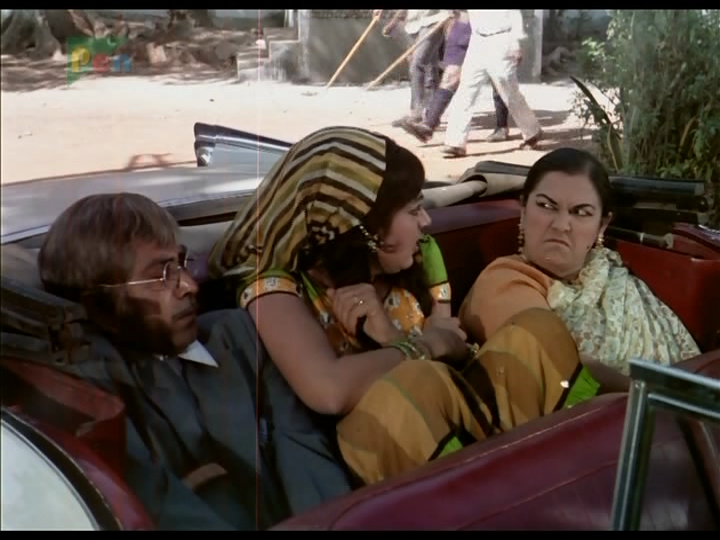
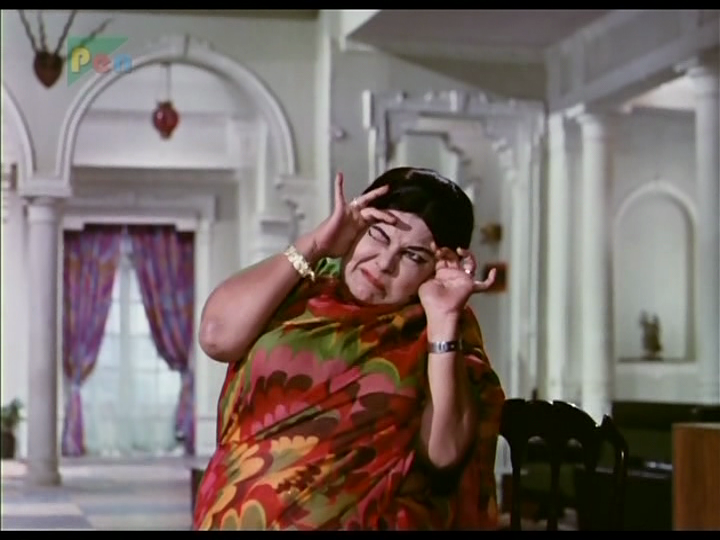
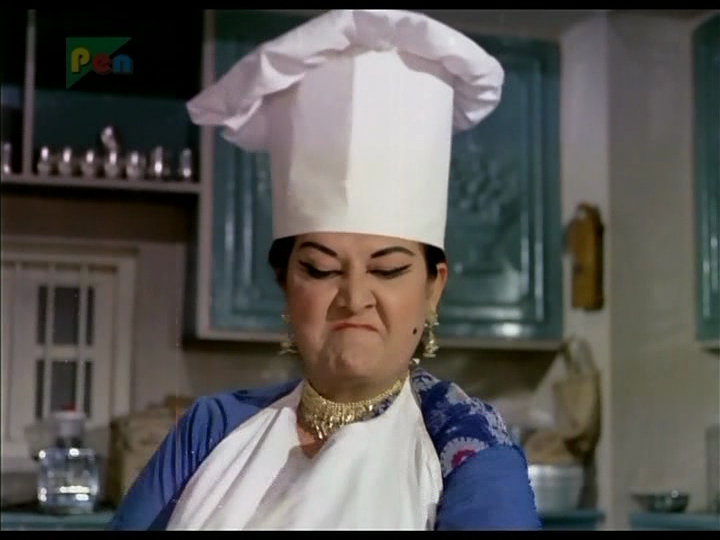
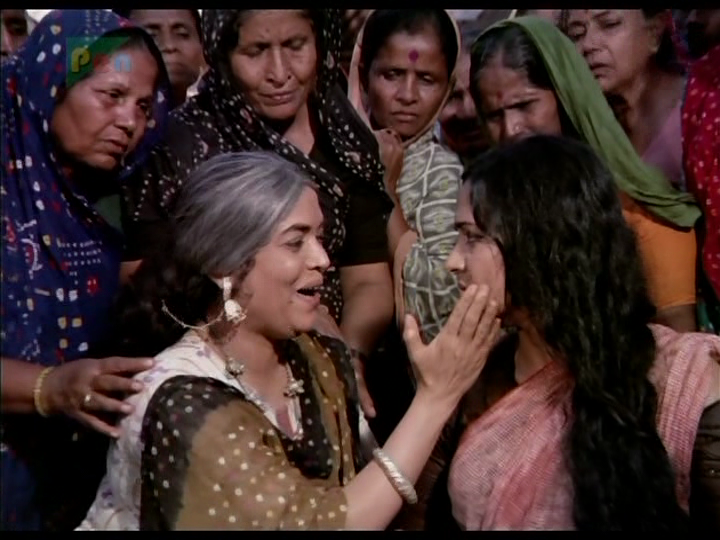
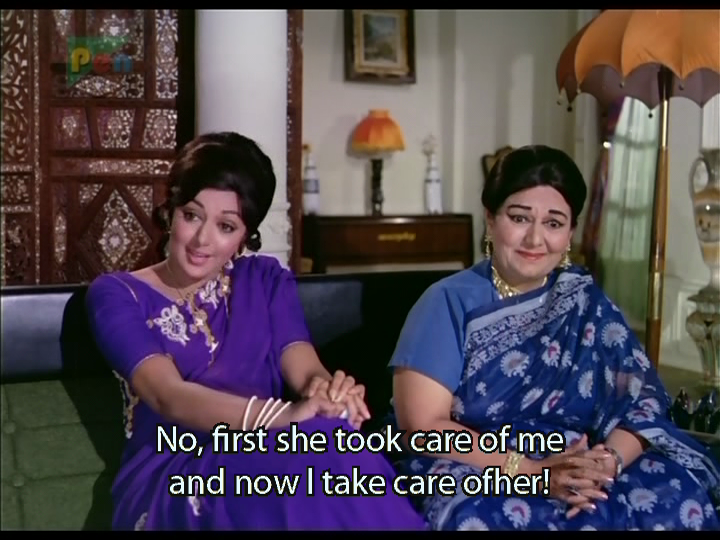
Kaushalya and her daughter Sheila treat Seeta as a slave and she is constantly abused and overworked. Seeta is the weak-as-water type of heroine I usually want to slap and tell to pull herself together, but since her rather pathetic and hopeless character is the whole point of this part of the film, I can live with it. Anyway, the focus at this point is much more on Kaushalya who is the best wicked aunt ever. Manorama is outstanding in her role as Kaushalya and has the best selection of grimaces I have seen outside of a gurning competition. Here is just a selection of some of her expressions which she uses to excellent effect.

Honey Irani appears in front of the camera in one of her first roles as an actress playing the mean and spoilt mommy’s girl Sheila. I love the way she stands and screams as an iron burns her sari rather than just lifting out a hand to move it away. She really does seem to believe she is the delicate flower her mother calls her and she wonderfully nasty towards her cousin. Ranjeet is appropriately sleazy and obviously the villain once he turns up in a selection of increasingly bad shirts and terrible scarves.

After Seeta’s trials and troubles have been established we are introduced to Geeta. What a difference! Seeta is introduced in a scene where she is scrubbing the floor and her evil aunt is yelling at her. Geeta is introduced by a song – upbeat, full of life and fun, it’s an apt description of Geeta and her outlook despite her humble status.

Geeta lives with her mother and works as a street performer with Raka (Dharmendra) and Jhumroo (Master Ravi). She’s loud, vivacious, a bit of a crook and nothing at all like her twin sister. There is much made of the differences between the two: Geeta’s fiery nature and her loving relationship with her mother for example, compared to Seeta’s meek obedience and her constant craving for her lost parents. It all sets the scene for the inevitable switch between the two sisters.

After further abuse and inappropriate attentions from the slimy Ranjeet, Seeta finally escapes from the house and Kaushalya reports her as missing to the police. However Geeta happens to be at the local police station where she is ‘recognised’ as the missing Seeta and picked up by her ‘aunt’ and ‘uncle’.

On the way home Geeta decides she doesn’t want anything to do with the crazy fat lady and escapes, ending up hiding in a car with Dr Ravi (Sanjeev Kumar) in a coincidence that is only ever possible in Bollywood. Dr Ravi has already met Seeta as a possible marriage candidate and at the time wasn’t impressed at the way Kaushalya presented her niece, but he finds the new ‘Seeta’ intriguing and the two end up falling in love.

Since she feels sorry for the grandmother, Geeta ends up back in the mansion living with Seeta’s family, but she doesn’t appreciate the idea of being their servant and certainly won’t put up with any abuse. It’s a shock for everyone in the family when their previously docile slave lashes out and forces everyone else to work instead. Geeta is hilarious as she pretends to be Seeta and turns the tables on Kaushalya and Ranjeet. There is so much to laugh at, but also plenty of drama and a good balance between the two. It all works so well because of the excellent performance by Hema Malini as the two different sisters. Geeta is a strong and determined character and Hema conveys this resolution with body language and expression just as much as by the dialogue. Seeta is quieter and more submissive, keeping her eyes downcast and her voice softer, but in her own way is just as determined to get what she wants once she breaks free of her restrictive family. It’s hard to believe that no-one seems to question the identity of the two sisters, especially since Hema makes them two very different people but no-one ever seems to consider the possibility and that allows the chaos to continue.

While Geeta is busy reforming Seeta’s family, Seeta is found by Raka who naturally thinks she is Geeta and takes her back to Geeta’s foster mother Leela (Radhika Rani).  Seeta blossoms with the love of her new ‘mother’ while Leela is amazed to have a daughter who can cook, sew and volunteers to visit the temple.

Despite her abysmal attempts at street performing, Raka falls in love with Seeta while for no real apparent reason, Seeta falls in love with him. Although to be fair he is probably the first person she has met who is as self-absorbed about his orphan status as she is, and their shared misery does create a bond. Their wedding is set, as is Geeta’s to Dr Ravi but of course the path of true love never runs that smoothly and there is still the confusion between the two sisters to sort out. Although Raka tries to save the day, in the end it’s Geeta with a little help from her sister who proves that anything a Bollywood hero can do, a heroine can do even better. It’s all totally crazy, over the top and Hema seems to have an excellent time beating up all the bad guys in the fight scenes.

The cast here are all excellent and they are perfectly cast to fit well into their roles. Sanjeev Kumar is effortlessly charming and debonair as Dr Ravi. His assertion that he wants a good Hindustani girl as his ideal wife did make me groan, but despite his initial statement he doesn’t seem to mind when Geeta dresses in more Western style clothes and he positively encourages her to go roller-skating (which may actually be something that good Hindustani girls do considering the number of times it happens in films). I’m often quite ambivalent when it comes to Dharmendra, but since he is rather overshadowed by Hema Malini and his over acting goes almost totally unnoticed beside the caricature of Kaushalya, I really enjoyed his performance. Both Pratima Devi as the long-suffering grandmother and Satyendra Kapoor as Kaushalya’s hen-pecked husband provide excellent support, as do the various other members of the cast. But it’s  Hema and Manorama who are the two essential elements to the film and their scenes together still make me laugh every time.

The music is by R. D. Burman and his songs are lovely and well-integrated into the story.  Asha Bhosle and Lata Mangeshkar provide beautiful vocals for Hema while Kishore Kumar and Manna Dey provide the male voices for Sanjeev Kumar and Dharmendra. The songs are all pictured on Geeta rather than Seeta which is perhaps a shame, although there is one solo song with Dharmendra which works well. I love this famous song with Geeta pretending to be drunk to dissuade Dr Ravi from marrying her. It’s funny but very sad too and while Hema is excellent, Sanjeev Kumar provides excellent backing for her drama.

Javed Akhtar, Satish Bhatnagar and Salim Khan have done a great job adapting the ‘Prince and the Pauper’ storyline to suit a Bollywood audience and the dialogue is well written and very funny. Director Ramesh Sippy keeps everything moving along and despite knowing the switch is going to happen he still builds plenty of suspense into the story.  This is a total Bollywood classic for me – great performances, good songs and excellent comedy, all delivered with such style by Hema Malini. I absolutely love this film and I’ve lost count of the number of times I’ve watched it. A full 5 stars!

Temple says:

I like Seeta aur Geeta, but I don’t love it. I first saw it several years ago and I really liked it at the time. I’ve watched it a couple of times since, and each time I enjoyed it a little less and fast forwarded a little more. I can’t quite warm to Hema Malini, Sanjeev Kumar is not my idea of hero material and I lack the Dharmendra Swoon gene. So it all comes down to the story and the characters.

I really like the way the story plays with the masala tradition of twins separated at birth, and there are lots of fun moments as Geeta impersonates Seeta. But it does drag on a bit once the twin swapping starts, and Seeta is such a wet dishrag that I get restless whenever she is at centre stage. Geeta is more lively but as with so many filmi heroines, she can only get a husband when she pretends to be something else – in this case, a demure young lass like her sister. So that detracts from the ‘you go girl’ mood as it turns into ‘you go girl and put on a nice sari and a long-sleeved high-necked blouse’. I also found the roller skate scene stupid and not in a good way – Geeta was a tightrope walker and acrobat and all of a sudden she can’t work out how to balance or control her body? Yes she was on wheels, but it was just a lazy way of asserting the hero’s superiority when there was no real need. Kickarse girls can only kick so much before decorum demands they are put in their place. And then to have Sanjeev Kumar as the vision of young love…oh dear. The romances didn’t grab me in the slightest as neither couple seemed to be well suited or even mildly interesting. There wasn’t really enough of a threat or menace to keep the dramatic tension either, as most of the ‘bad’ characters were more slapstick than villainous.

Overall, I like this enough to say see it as a good timepass. It’s colourful, the music is pleasant although I don’t think it’s great, the mood is generally upbeat (apart from all the attempted rapes and beatings). But it’s not a film that rewards repeated views and there are many other masala favourites I would rather see again. 3 stars.

Reshma aur Shera

Reshma Aur Shera is one of my favourite films in any language. I don’t often like romantic tragedies as all too often I feel I’ve wasted my time watching people I don’t care for as they do idiotic things that could have been avoided if they weren’t so one dimensional or stupid. But each time I watch Reshma Aur Shera, despite knowing what is going to happen next, I fall in love with it all over again.

The love story is simple but engaging and Waheeda Rehman and Sunil Dutt light up the screen with their chemistry and brilliant acting. The tragedy comes from the spectre of death in a tribal feud set against the hope for change. Producer, director and star Sunil Dutt and writer Ali Raza created a full context for the lovers and that sense of place and family, the depth of the characters,  makes their predicament feel more immediate and of consequence. It also makes the film entertaining beyond just the romance, and it isn’t all gloom and despair. There is joy, fun and beauty too.

Reshma (Waheeda Rehman) is the daughter of Chaudhury of Pochina and Shera (Sunil Dutt) is the eldest son of his enemy, the Chaudhury Sagat Singh. These families have been picking each other off for years.
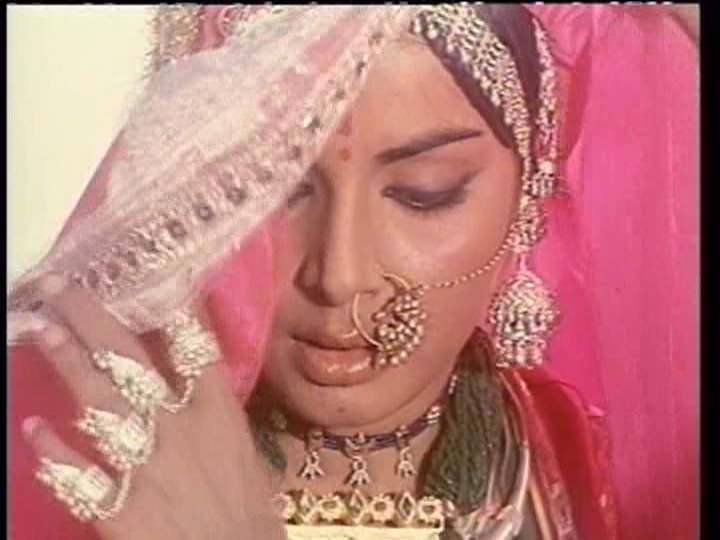
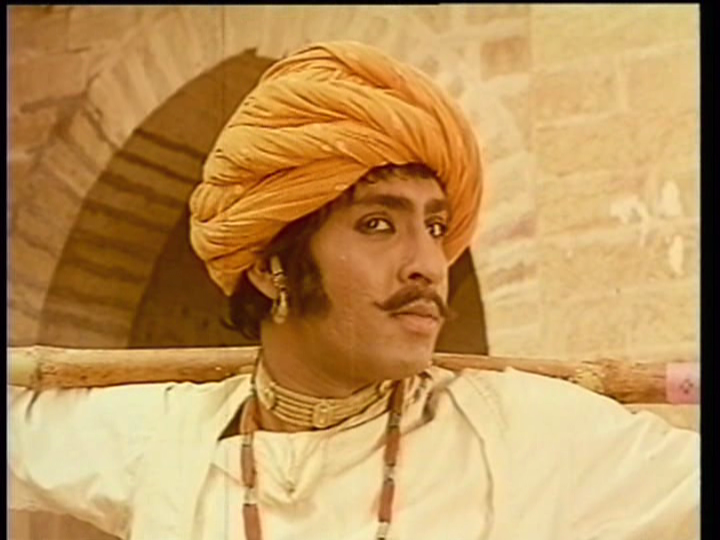
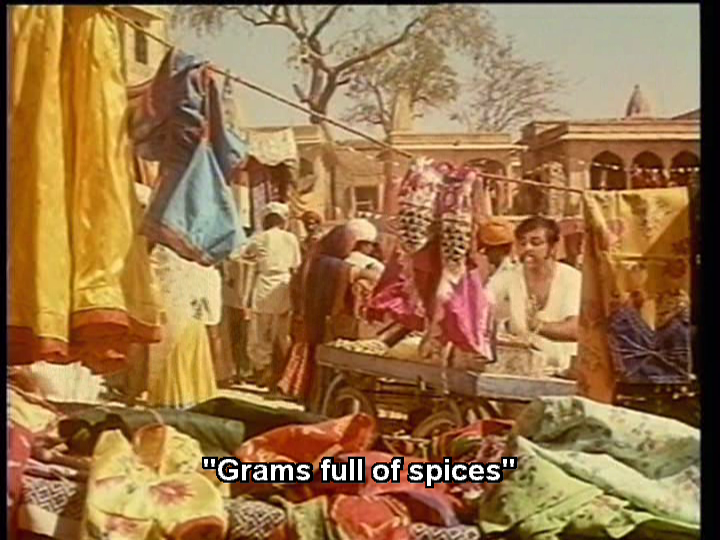
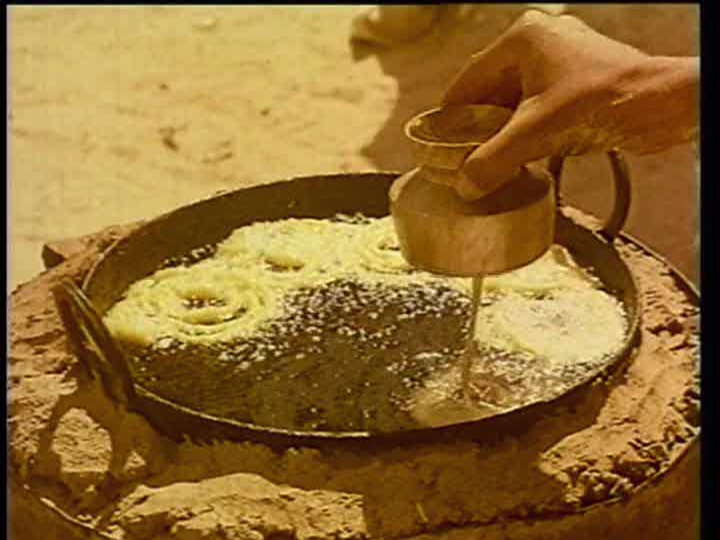
They meet at a fair in Jaisalmer, at the Durga Puja (she is also the presiding deity of the story). Shera fancies Reshma on sight and, like a good girl, Reshma coyly avoids him. The fair is wonderful looking, and I had moments of feeling I was watching a documentary rather than a set. There is so much to see with Reshma as she darts around enjoying the amusements, the snacks and the shopping.


The ecstatic music of a qawwali brings them face to face again, and in this heightened state a deeper emotional connection forms. I love this picturisation as it takes the viewer deep into the scene, with the vocals conveying the intoxication and pain of love. And it features a very young Sanjay Dutt (who developed his unique sense of rhythm early on it appears).

Once they discover each other’s identity, Reshma asks Shera to sacrifice her at the altar – a blood sacrifice not a marital altar. She wants to protect her brother Gopal (an outrageously handsome Ranjeet), and offers her life in place of his. Shera had already rescued Gopal from his own brothers earlier that day, proving himself honourable if unpopular with his kin and further impressing Reshma. Shera is determined their love will succeed and Reshma wants to believe.  They meet in the temple before leaving for home, and decide that they can have each other and bring about an end to the feud if they are careful.

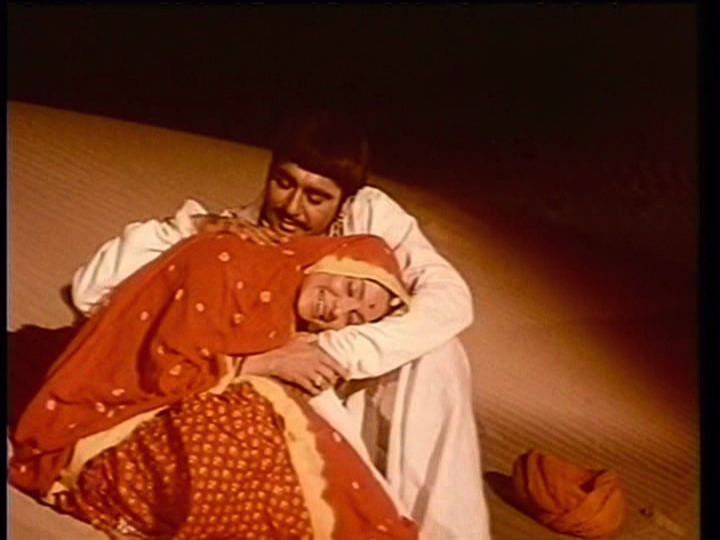
Back in their villages life goes on, except that Shera and Reshma sneak into the desert to meet at night. Despite the stalker-ish beginning to the romance, it is a passionate mutual attraction and they both have a share in conversations about their future.

Family and friends are an important part of who Reshma and Shera are and why they do what they do. And the supporting cast is so impressive – Vinod Khanna as Shera’s nasty brother Vijay, Amrish Puri as an elder in Shera’s village, Jagant and Sulochana Latkar as Shera’s parents, the dashing Sudhir as the qawwali singer, Padma Khanna as an uninhibited nautch girl, Ranjeet as Gopal, Rakhee in a small but high impact role as Gopal’s wife, just to name a few.

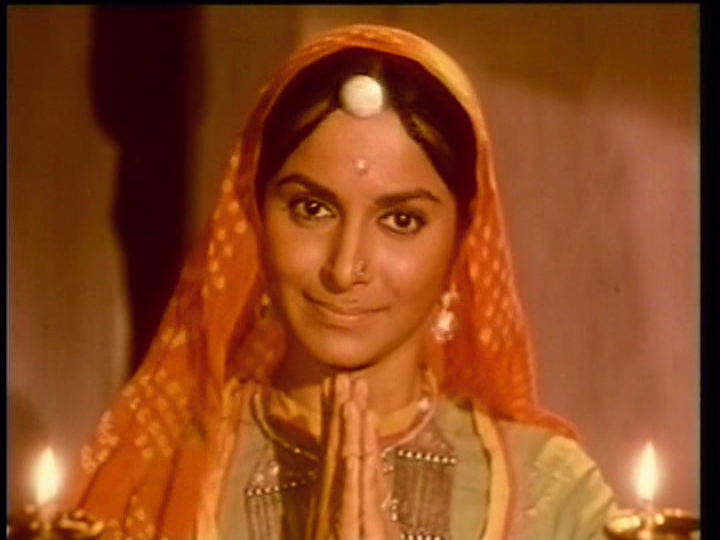
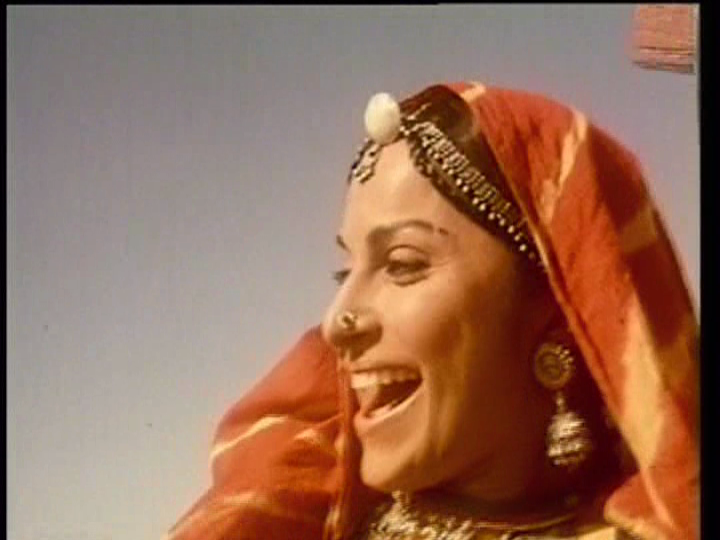
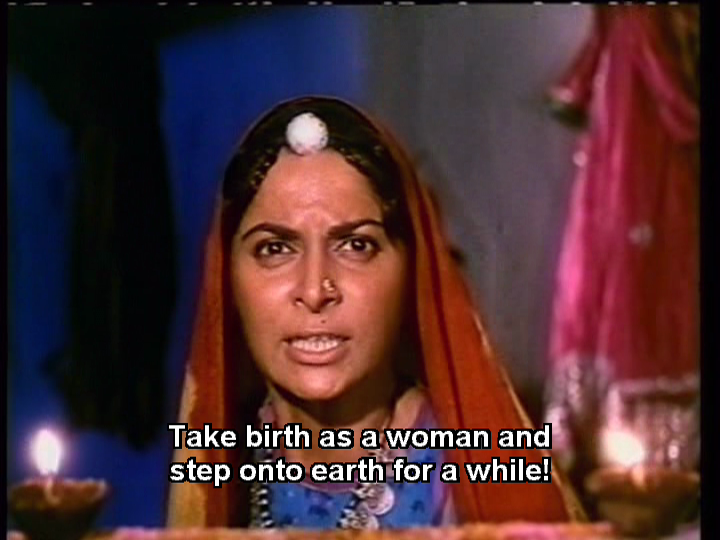
Waheeda Rehman is simply amazing. Reshma evolves from a pretty young thing, giddy with excitement, to a more sombre young woman passionately in love with an enemy.  She realises she should send Shera away for good, but cannot sever their bond. Finally running out of options, Reshma challenges Durga to prove herself by taking on life as a woman on earth and see how that feels. Waheeda is just magnificent as she demands help in return for all the sacrifices to the goddess. And Durga does give her an answer.

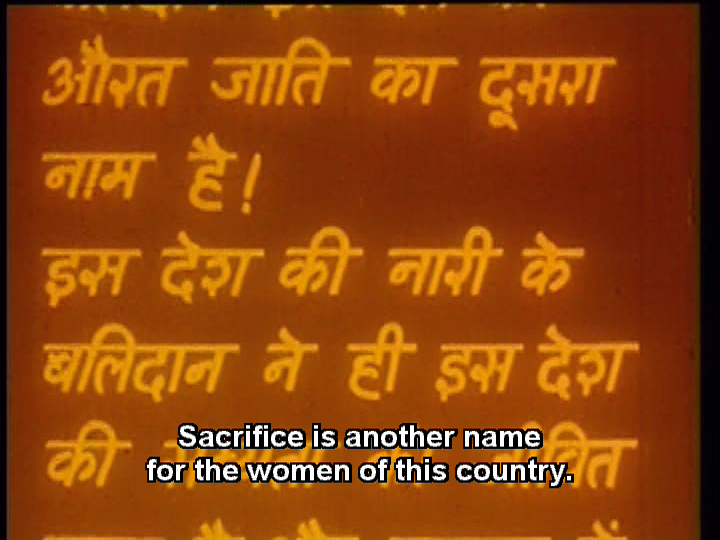
Despite a ponderous voiceover at the start of the film extolling the Indian woman’s virtue of sacrifice, Reshma is not a passive sacrificial offering but rather uses herself as a means of creating change. When she makes up her mind, she does it to save Shera and stop the feud from claiming everyone she loves. She is determined and forceful, a far cry from the blushing girl she was at the start. It’s a challenging role and she delivers a beautiful characterisation.

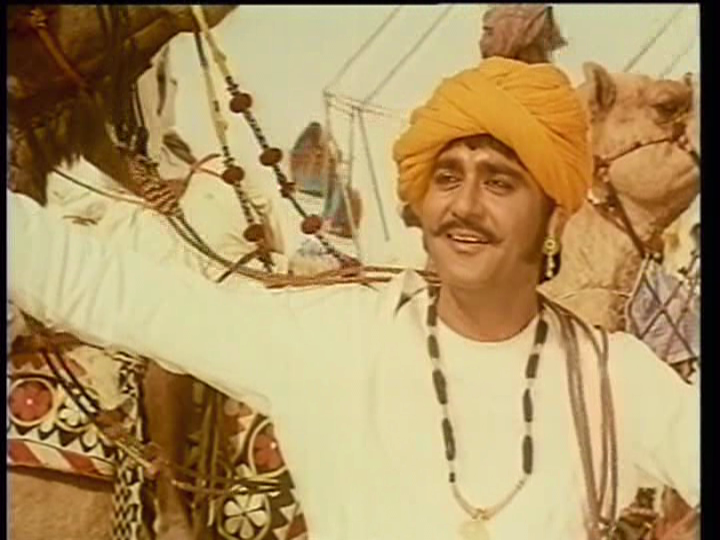
While I initially thought Sunil Dutt looked a little too mature to be Shera, he has a certain appeal and even plays some unexpectedly goofy and sweet moments. He transforms from a lad about the fair to a future leader challenging his own father. His internal conflict is evident – the Rajput sense of honour and the man who wants a happy and peaceful future with the love of his life. Shera seems to benefit from the close relationship he has with his mother and his respect for Reshma, being prepared to think outside the heroic norms. But where Reshma suffers loss after loss and creates a solution of sorts, Shera reverts to type becoming as vengeful and bloodthirsty as his father and brothers.

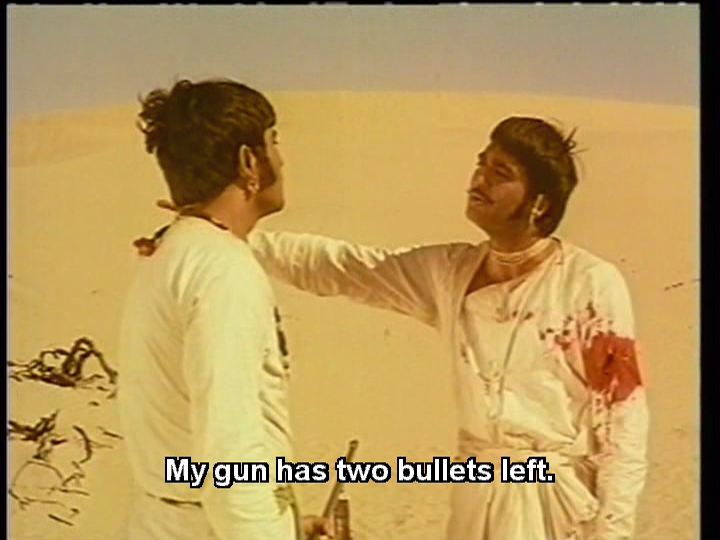
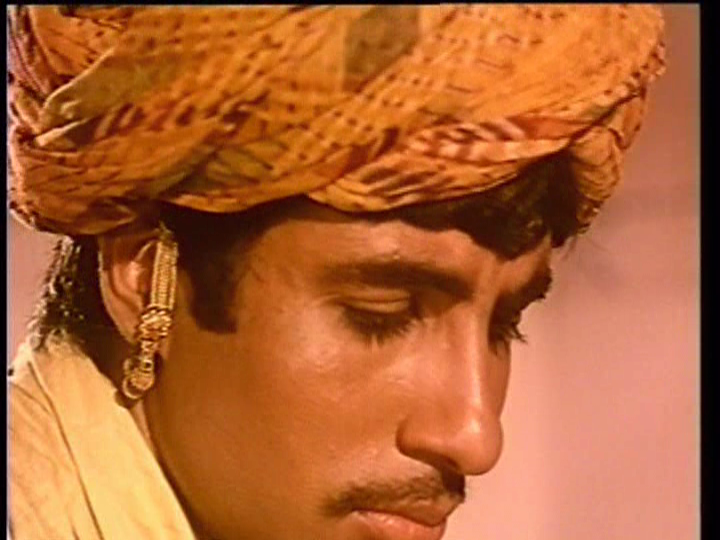
Chotu (Amitabh) is a mute and is neglected by brothers Vijay and Jagat unless they need his sharpshooting skills. He worships Shera who treats him kindly and seems to be his only friend. Amitabh’s performance is beautiful, quite restrained and very moving. Chotu is a sad and confused young man, following his father’s path. He is ultimately responsible for killing Reshma’s father and brother, and that sets the final train of events in motion. While Sagat Singh takes the boys to a brothel as reward, Shera swears vengeance on whoever the killer was.

Their mother (Sulochana Latkar) emerges as a powerful force. Initially she wants Shera to follow his father’s order and kill Gopal, putting her sons above all else. But once things implode, she takes matters into her own hands to save what is left of her family. She takes Chotu to Reshma’s village and offers him as a sacrifice. The confrontation in Reshma’s home is gut-wrenching. Chotu is traumatised and disgusted at himself, and Rakhee as Gopal’s widow faces a life in ruins. He wants to die, can’t bear the pain of betraying Shera and knows he is doomed. This sequence is the one that gives me a lump in my throat every time. I can identify with the motivations of all the characters, and it seems impossible to reconcile their needs.

Creative versus destructive energies underlies much of the character interactions and is often divided on gender lines.  Not that the women are all about popping out babies and nurturing – I mean that their energy seems more focussed on preserving their homes, and on renewal and regeneration. They might destroy something or someone, even themselves, to achieve it but they have a positive goal rather than just aiming for obliteration of an enemy.  The action in the film may generally follow the men but the women are making choices that drive the story. It’s also a film rich in symbolism and visual themes. The motifs of fire and circles reinforce the cycles of destruction and rebirth.

The cinematography is beautiful, and S Ramachandra captures the harsh light, the muted earth tones and the vibrant fabrics of Rajasthan. The costumes and jewellery are stunning, and the buildings look real and lived in, with glimpses of details in kitchens and bedrooms. Plus – lovely music by Jai Dev, choreography by Gopi Krishna (assisted by one Miss Saroj Khan), and playback singers Asha, Lata, Manna Dey.

My DVD is missing about 20 minutes of the complete film so there are a couple of large gaps, one of which probably shows the killing of Reshma’s family. It’s so frustrating but the story is still clear and you can fill in the gaps.

The first time I watched Reshma aur Shera I was stunned. I immediately wanted to watch it again but as with any decision about true love versus a passing fancy, I decided to give it some time. Love it is. It is such a captivating film, and a beautiful work of art. I cannot recommend it highly enough. 5 stars!

Katherine at Totally Filmi is coordinating a month long celebration of women in Indian cinema. Links will be collated at Delicious so keep an eye on that page for lots of other articles and blog posts to be added throughout March.