Jab Tak Hai Jaan

Jab Tak Haai Jaan is a slow, deliberate romance with lush visuals, improbable events and attractive people that persist in their beliefs long after a period of reflection and reconsideration is warranted. A typical Yash Raj film in many respects, with the notion that love is all you need, it sheds some of the YRF dated coyness when exploring a modern romantic relationship. Maybe it’s affection for the Yash Raj heyday or sadness for the recent passing of Yash Chopra, but despite some issues with the story, I found the style appealing and almost timeless.

Shah Rukh Khan is Samar Anand, an introverted bomb disposal expert who chases after death. Katrina Kaif is his first love, Meera, a rich girl caught between being dutiful and being happy. Anushka Sharma is Akira, the ambitious young journalist who stumbles across Samar and decides his story must be told. Samar’s early romance is revealed via a diary Akira finds. I really liked the way the plot was constructed initially but when the love stories intersect Aditya Chopra unleashes all the daft medical and action plot twists he could fit on what was left of the post-it note he wrote the screenplay on. But until that all started to unravel, I was caught up in wondering how it would be resolved and who would get the happily ever after ending.

In some respects Shah Rukh was more convincing as 28 year old livewire Samar than Katrina was as his 21 year old girlfriend. That is less evident in stills so I ascribe that more to his energy and performance than just makeup and styling. Samar was too good to be true as he navigated life in London and juggled multiple menial jobs, being everyone’s friend. But the floppy-haired puppy enthusiasm was punctuated with some sarcasm and smoulder that gave him more bite. Shah Rukh’s dancing in Ishq Shava exposed his weakness in current dance styles. I thought it could have been choreographed and shot better to support the illusion of his youth.

The 38 year old Samar in 2012 was a different man, and I could see why a bright young girl like Akira would be attracted to him. He was worlds away from her usual flighty boyfriends and had an intensity that matched her own drive. The stubble, rougher haircut and a more determined physicality made soldier Samar a more daunting and attractive presence. He portrayed the transition of a man in love from the first flush of hope to the cold anger of a passion denied. The romantic scenes between Meera and Samar are quite frank and acknowledge the physical relationship without being sleazy. There were many opportunities for Shah Rukh to overact and he took very few of them. Samar is a perfectly unreal hero but Shah Rukh puts the heart in his character.

Katrina was disappointing after some good performances in recent films, and lacked warmth and expression. I could understand Meera’s character but rarely felt much for her. Meera and Samar were very convincing as the newly in love who imagine they are too cute for words but are actually a bit sickening to everyone around them. They lived in a bubble of romantic fantasy. Katrina as the 10 years older Meera was more effective as her reserved demeanour and greater fabric to skin ratio gave her more substance. Her decision making was still flaky and for someone who is supposed to have such a strong religious affiliation her lying to Samar was questionable. I was raised a Catholic so the idea of giving up something to show God you meant business is quite familiar. While I don’t share the belief I could recognise it as something people I know do as a matter of course. Only not to such a filmi extreme.

Anushka was let down by some truly stupid behaviour by her character but leaving that aside, her acting was excellent. Her warmth and rapport with SRK was lovely. They had some nice scenes talking about love and what it meant to them, and a believable affection developed between Akira and Samar. She spends time following Samar about on his work – defusing bombs! as if! – and of course she falls for him. Akira was a modern city girl with a career on her mind and not a chiffon sari in sight. I did wish she would wear more appropriate clothes in some scenes as she seemed to live in micro-shorts regardless of climate or custom. Mind you, Anushka has the legs for it. As the ‘other woman’ corner of the triangle, Anushka gave Akira a real sense of possibility, of being a viable alternative to the past love in Samar’s life. She spoke up for what she wanted in life and love.

The final section of the film is loaded with so much improbable melodrama and outright WTFery that the love story is swamped. I don’t want to get too spoilery but can anyone imagine a scenario in which a suspected bomb is found in London and a brown skinned man muttering about Semtex and fuses is allowed to casually wander in and assist the police? The drama could have been heightened without all the silliness and sidetracks.

The supporting cast occupy so little of the story that if you don’t take to the Big 3, there is little respite. Rishi and Neetu play small but important roles, and Akira has a fun fanclub of soldiers in the Bomb Disposal Squad. Anupam Kher is mercifully restrained as Meera’s dad.

The scenery in Ladakh and Kashmir is superb and one of the reasons I would recommend a big screen viewing of this film. London is presented as a beautiful and slightly magical city, the perfect backdrop for a fairytale love. There are nods to YRF classics that enhance the vintage filmi mood and it’s all a bit dreamlike.

Musically this is a bit disappointing but I think that is more to do with the placement and the picturisations than the actual songs by AR Rahman. Saans is reprised several times (happy as I am to gaze at SRK in a wet t shirt, or less) and Heer was a non-event. There is little dancing, and what there is lacks good choreography (or suitable dancers). I just don’t think a ra-ra skirt or a silly hat compensates for not doing the steps justice.

I must be getting nostalgic in my old age. Despite all the faults I found much to sink into and enjoy in Jab Tak Hai Jaan. See it for a charismatic and committed performance from Shah Rukh, the bright and beautiful Anushka and the lavish visuals. Do stay for the tribute to Yash Chopra over the closing credits.

Heather says: I’m a Shahrukh fan, so of course I was going to enjoy Jab Tak Hai Jaan no matter how ridiculous the plot, but what surprised me was just how much I absolutely loved it! Sure, there were problems with the story, mainly due to the dodgy medicine and bomb defusing Temple mentioned, but Yash Chopra really did have a gift for displaying human emotions and portraying love as a grand and enduring passion without forgetting that love can also be small, petty and selfish. The classic Yash Chopra motifs are here; a love triangle of sorts, separation and sacrifice and that’s what makes it come together so well for me.  Of course it helps that Shahrukh was back on form with effortless transitions between the happy and jovial Samar during his relationship with Meera and the more silent, reflective and stoic soldier when he meets Akira. The little flashbacks to his previous character with the occasional joke work perfectly and his chemistry with Anushka was great.  Not so with Katrina who was stiff and wooden despite the promise of the earlier scenes.  I don’t think either her styling or the character helped, but she just wasn’t convincing as Meera and she’s another actress I’ve added to my ‘must not be allowed to cry in a film’ list!  Anushka on the other hand was scintillating and looked incredibly beautiful. Her life and energy was infectious and her part of the story (apart from some dodgy Discovery Channel moments) worked very well.

As Temple says, the film looks magnificent is worth watching for the scenes in Ladakh and Kashmir alone. But more than that, there are solid performances and a return to classic Bollywood romance that can’t help but enchant. Sadly it is the end of an era, but with Jab Tak Hai Jaan, Yash Chopra has proved that he really was the ‘King of Romance”.
Tere Naal Love Ho Gaya

Tere Naal Love Ho Gaya  is the exception that proves the rule. You know – the one that says all real-life couples have absolutely no on-screen chemistry together.  I know there are a few other exceptions out there (although mostly I’m thinking of Hema and Dharmendra films), but they’re few and far between.  But here, Riteish and Genelia share an excellent rapport which makes the film much better than it sounds on paper.  There isn’t anything too different in the way of plot, dialogue or even the characters but the excellent performances of the lead cast make up for a lot, with the end result of a light but entertaining romantic comedy.

Great disclaimer in the opening credits too – always good to see animal safety concerns addressed!

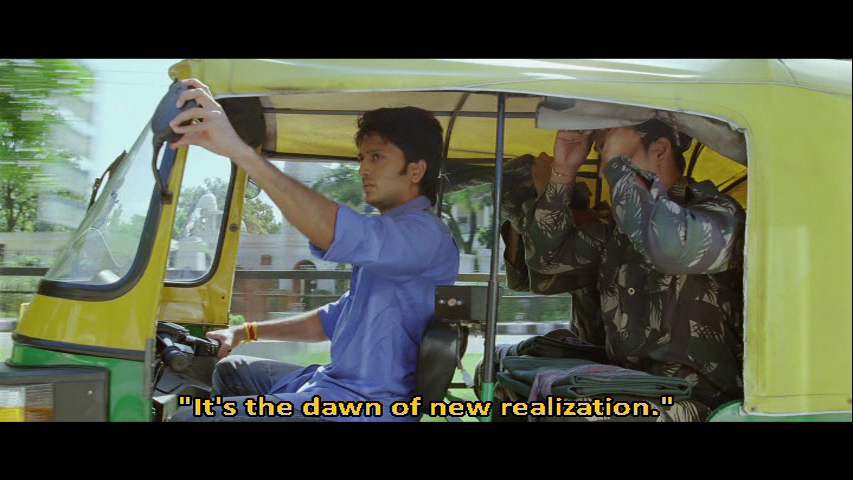
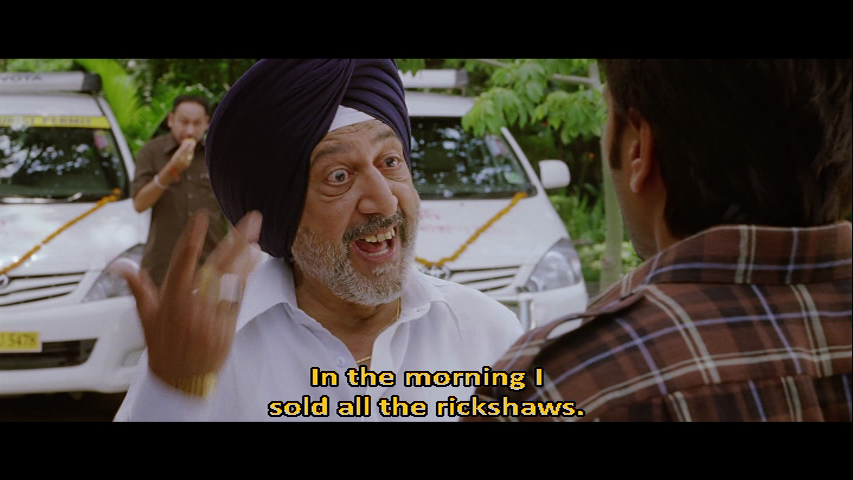
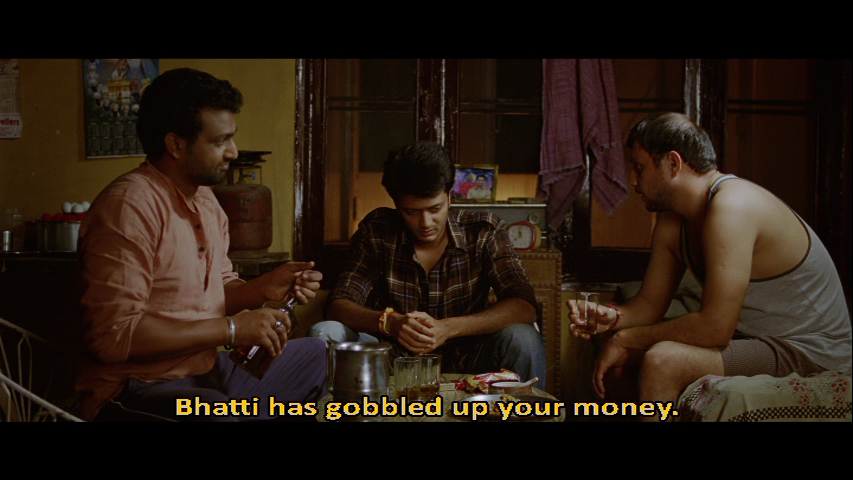
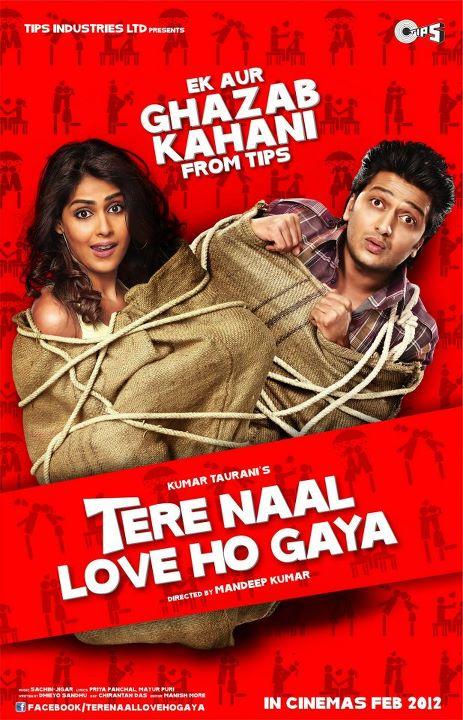
Viren (Riteish Deshmukh) is an auto-rickshaw driver who starts work early every morning in his attempt to save up enough money and realise his dream of running his own fleet of cars.  But he makes two crucial mistakes.  He keeps his savings under the seat of the auto, and he tells his boss Bhatti (Tinnu Anand) about his dream.  So when Viren turns up for work and finds four cars instead of a rank of auto-rickshaws he’s understandably rather upset.  In a weak moment, he drowns his sorrows in alcohol and turns up at Bhatti’s house demanding compensation for his loss just as Bhatti’s daughter Mini (Genelia Deshmukh) is getting engaged.

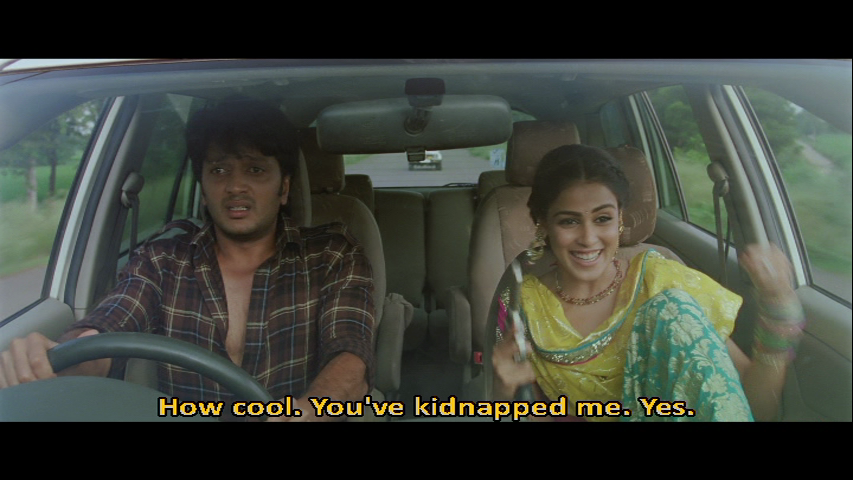
Mini makes the most of Viren’s drunken appearance and forces Viren to kidnap her at gunpoint in order to escape her rich but brainless suitor Sunny (Kartar Cheema).  Mini is the driving force behind the abduction and much of the comedy in the first half comes from her ruthless manoeuvring of the hapless Viren to escape pursuit and demand a ransom from her father.

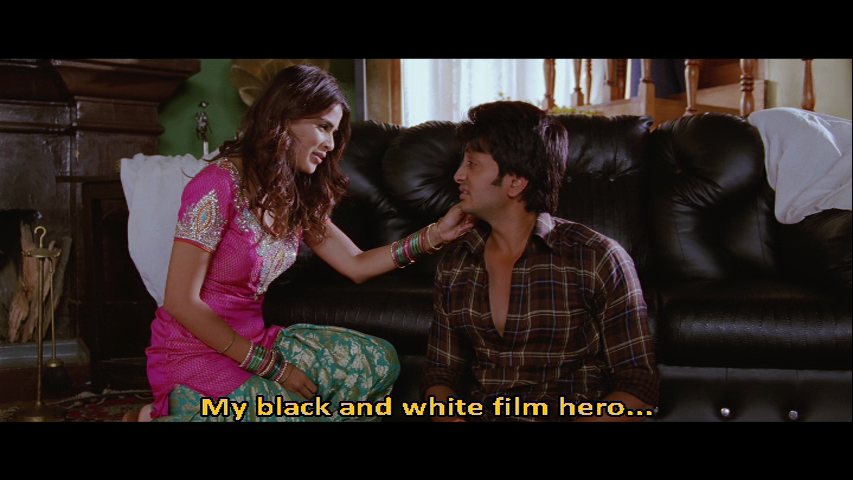
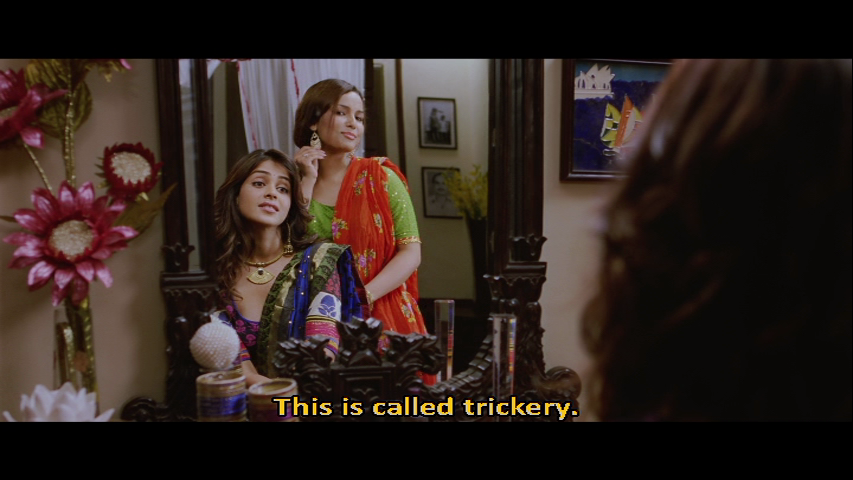
I’m sometimes a bit ambivalent about Genelia. I like her when she’s not in manic, hyperactive pixie-mode and there are times here where she veers dangerously close to that. But for most of the film she plays the ruthlessly selfish but bubbly and personable Mini with charm and vivacity and provides the perfect impetus to drive Viren relentlessly out of his comfort zone.  I ended up liking her character more than I expected, particularly in the second half and I think that overall this is one of her better performances. She gets to pull some great faces and wear some lovely costumes, although my favourites are these pajamas covered in little flip flops.

Viren is totally over whelmed by the phenomena that is Mini and Riteish is excellent as the poor but principled auto driver whose life has been completely turned upside down.  I do really like Riteish.  His presence ensures that I will watch a film, no matter how dire it sounds and he’s always worth watching.  I’m very impressed that he has a second career as an architect but he’s a good actor, especially in comedic roles, and, perhaps rather worryingly, he frequently looks much better than he should in a dress.  As much as I love him though, he’s not really my idea of leading man material so I was very impressed that he did so well with his role here – despite a few fashion faux pas and a tendency to try to imitate SRK in the songs.

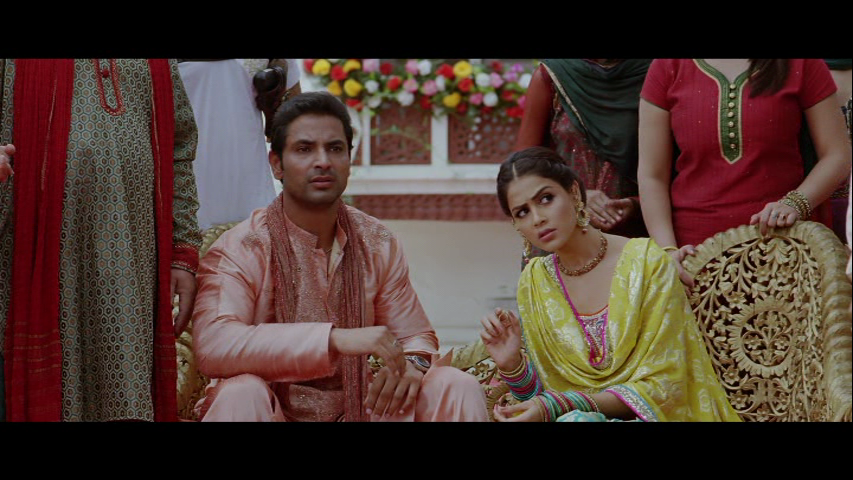
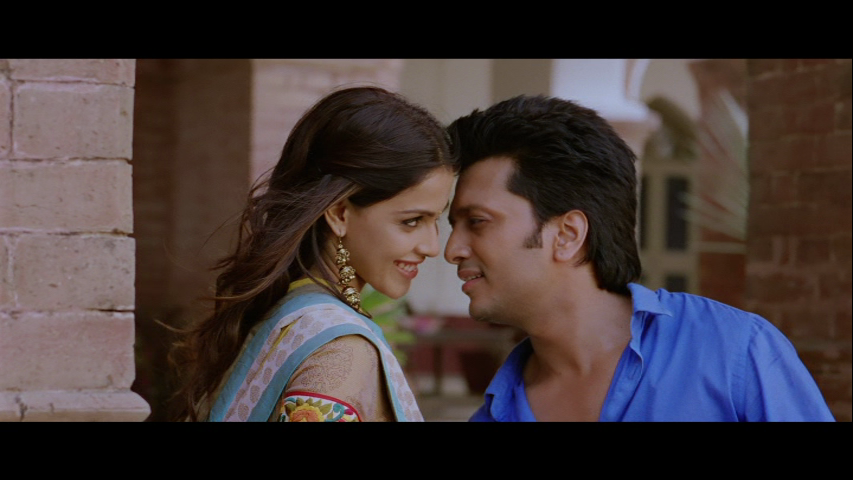
Unsurprisingly Mini and Viren end up falling in love during a rather strange drunken night at a wedding.  While it’s totally predictable that the two get together, the romance isn’t well developed at all and it’s just assumed that being forced together by the circumstances is enough of a reason for a relationship.  However the chemistry between Mini and Viren is convincing enough to give some plausibility to the proceedings and it’s hard to complain when they do look so good together.

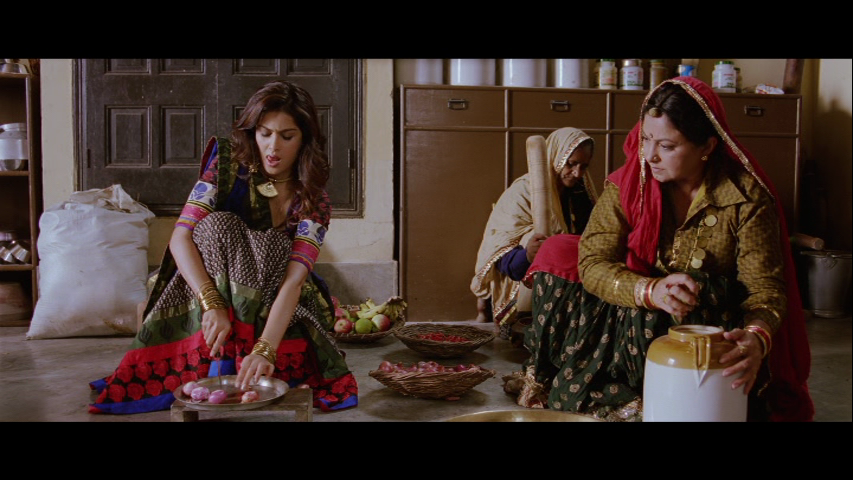
The second half of the film moves to Viren’s family home where his father is the notorious kidnapper Chowdhary (Om Puri) – a man so well-known for his criminal proclivities that his mansion is called Agwaha house. But despite this clue he appears to live there quite unmolested by police or other persons of authority and is free to pursue his chosen profession as and when he wishes.  Om Puri is always good value and I liked his curmudgeonly and testy Chowdhary.  His scenes with Genelia are some of my favourites as she gradually wins his affection and as a result he continually increases her ransom price.

Smita Jayakar is also good as Viren’s mother and the looming presence of the silent Gurmeet Saajan as Viren’s uncle who keeps popping up in the background made me laugh more than it really should.  Viren also has a sister played by Chitrashi Rawat who was better than I expected given the few brief times I’ve seen her since her debut in Chak De India. The rest of the cast are all good in their stereotypical roles but generally they don’t have much to do.

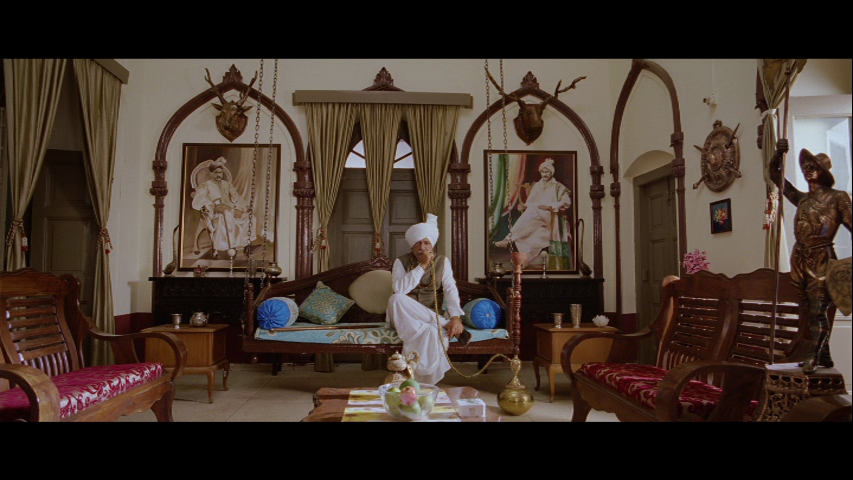
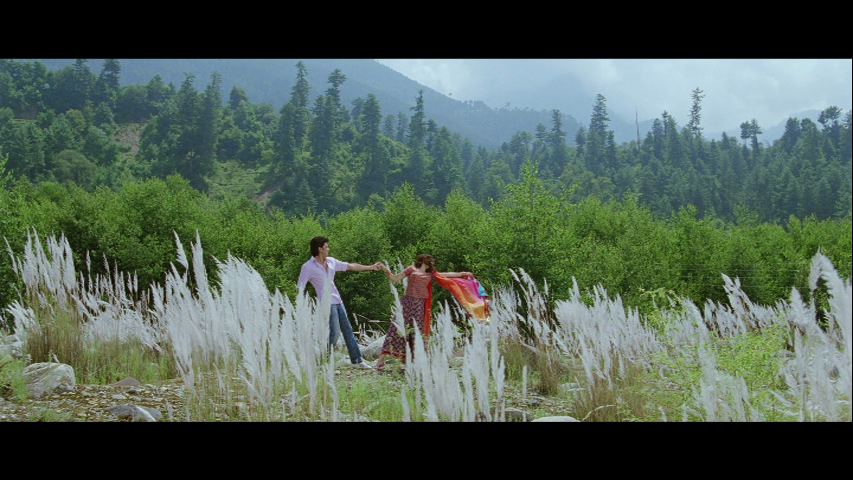
Apart from the excellent performances from Genelia and Riteish there are other good points about the film.  The cinematography is excellent and Chirantan Das makes the countryside look incredibly beautiful. The interior shots around Chowdhary’s house are also well shot and there is good use of light and colour throughout.  The songs by Sachin-Jigar are enjoyable, although the item number suffers from poor choreography and rather too much of Veena Malik but the music is good. The other songs are better pictured although neither Riteish nor Genelia are particularly good dancers but what they lack in technique, they make up for in enthusiasm and since they’re both supposed to be drunk in this song the lack of co-ordination may even be deliberate.

Tere Naal Love Ho Gaya is the debut film by director Mandeep Kumar and writer Abhijeet Sandhu.  It isn’t brilliant, but it does have it’s moments and I found it an enjoyable watch with a very likeable cast.  The whole film has a feel-good flavour and it’s a good lazy afternoon movie for when you don’t want to have to think too much.  Worth watching for the excellent performances by the main leads and Om Puri’s scenes with Genelia.  3 ½ stars.

English Vinglish

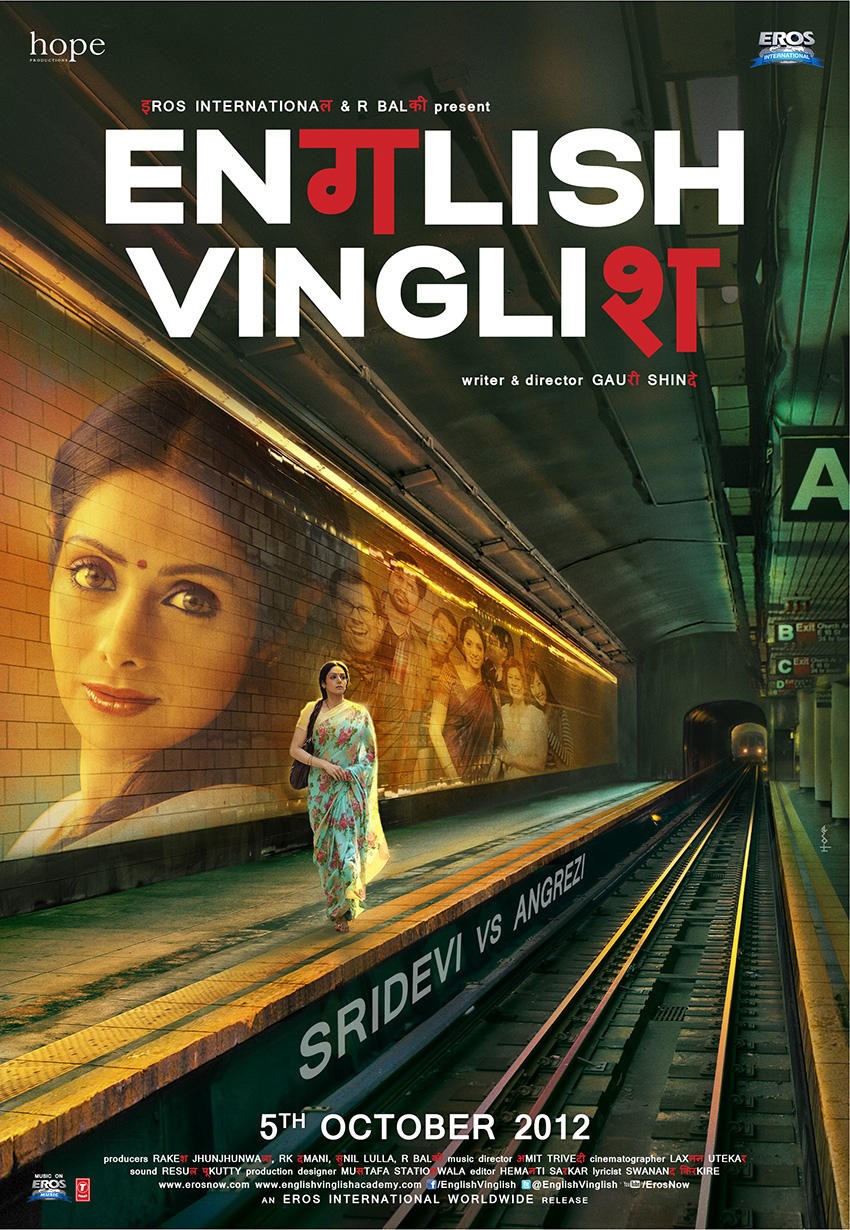
Finally Sridevi returns to films! A low key and female centric family drama, English Vinglish allows ample opportunity to show off her great range and perfect timing. Gauri Shinde has written a nice story with a whiff of “Shirley Valentine” about it, and directs with assurance.

Shashi (Sridevi) is a wife and mother, taken for granted by her family – husband Satish (Adil Hussain), bitchy teenage daughter Sapna (a very convincing Navika Kotia) and son Sagar (the endearingly cheeky Shivansh Kotia). She is a good cook and keeps a lovely home as well as running a business making and selling ladoos, barely having a moment to herself. Shashi is accomplished and loving, but that is what is expected of her so she gets no credit for that. The family mock her for her lack of polish and poor English. The cheap shots are also a way of father and daughter bonding and excluding Shashi. Shashi is gracious and rarely retaliates, instead letting her beautifully expressive eyes show the pain.

When Shashi’s New York based niece Meera is about to be married, Shashi is sent ahead of her family to help with the preparations. Nervous at leaving her kids and husband, she is forced to go where she can be useful. Again, her feelings are ignored for the sake of convenience.

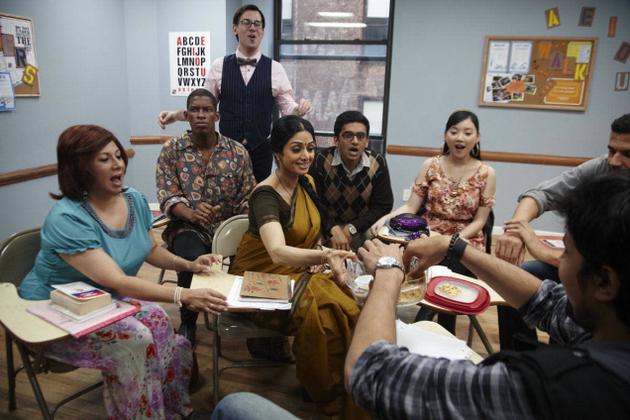
Shashi stays with her sister and niece Radha (the sparky Priya Anand) and spends her days missing her family at home. Daunted by America and feeling left out, Shashi secretly enrols in a dodgy “Learn English in 4 Weeks” class.


This is where the film detours into “Mind Your Language” territory. Taught by David (played by one of the worst actors I have ever seen, and I am including Mimoh in that list) and along with her fellow students, Shashi begins to come out of her shell. One of the students keen to get her right out of her shell is the dishy French chef, Laurent (Mehdi Nebbou). The tentative stirrings of romance between Laurent and Shashi are very well played even if his lines are cheesy.

The rest of the class start off as a collection of broad stereotypes, but the actors develop their characters really nicely. Sumeet Vyas, Rajeev Ravindranathan and Maria Romano are particularly good fun. I also liked the way food played a role in communication and relationships.

The story isn’t really about learning English as a road to happiness, but it is about getting your mojo back and gaining the respect of your loved ones. There is a theme of English language undermining Hindi and excluding people in their own country, but really she could have taken a pottery class or something else.


Much as I cheered when Shashi managed to navigate her way into the city or order a coffee, and I loved seeing her grow in self esteem and happiness, I have a slight problem with the character. She was so passive aggressive, even considering of her lack of confidence. Why make Radha cover for her so she could sneak to class? Why not just ask her sister to keep it quiet as a surprise for the family or at least not ask Radha to be an accomplice. Telling Laurent about her family in Hindi seemed at least partly a lie by omission rather than purely an outpouring of the heart given their level of conversational skills. Her final speech was two-thirds guilt-trip inducing perfect filmi Ma (and the opposite of the real situation) and finally one-third honesty about what she believed was needed for happiness. It made me like her less than I wanted to and I felt heavily manipulated at times as she is clearly meant to be the morally good person in the frame.


Shashi lost me at times, but Sridevi never did. Her performance was beautifully nuanced. As her self-confidence grew, Shashi’s expressions became less guarded and her eyes lit up. When Sridevi smiled she was radiant. I really wanted Shashi to be happy, despite my reservations. I think this was more about Sridevi than Shashi though – I am so happy to see her working in films again.

The music by Amit Trivedi mostly ranges from bland to twee. I’ve never been a big fan of his and the tweedly emo guitar thing is not my style. The songs are mostly in the background or used in montages of Shashi looking sad. It was all appropriate to the tone of the film but I won’t be listening to the soundtrack anytime soon.

Whether it was Gauri Shinde or former co-star Sridevi who won him over, Amitabh Bachchan makes a fun appearance. He plays a rambunctious man of the world and gave Shashi some much needed confidence and sensible advice. Priya Anand is a standout. I liked her sassy style in her debut (Leader) and she was very natural as the lively college student Radha. Adil Hussain is also excellent as the thoughtless Satish, and the children are perfect for their roles. Maybe too perfect – that girl is a right little cow. The random extras at the wedding were energetic and got into the dances.

The visual design is excellent. Shashi’s house in Pune looked lived in and real, even if her saris were a bit too fabulous. I drooled over some of her outfits; all of them in fact, except the dark pink one (I don’t like pink) and the mauve (it was a bit too shiny). The NRIs lived in a very American suburban house with Indian touches in the decor. It was a nice representation of their life abroad and the connection to home.

I saw this with four friends and at least three of them cried several times during the movie and we all laughed a lot. It’s a film I would have loved to see with my mother and then go out with her for coffee. It’s a well crafted film, with a good story and some fine performances. Despite some issues, I highly recommend it. Welcome back Sridevi!