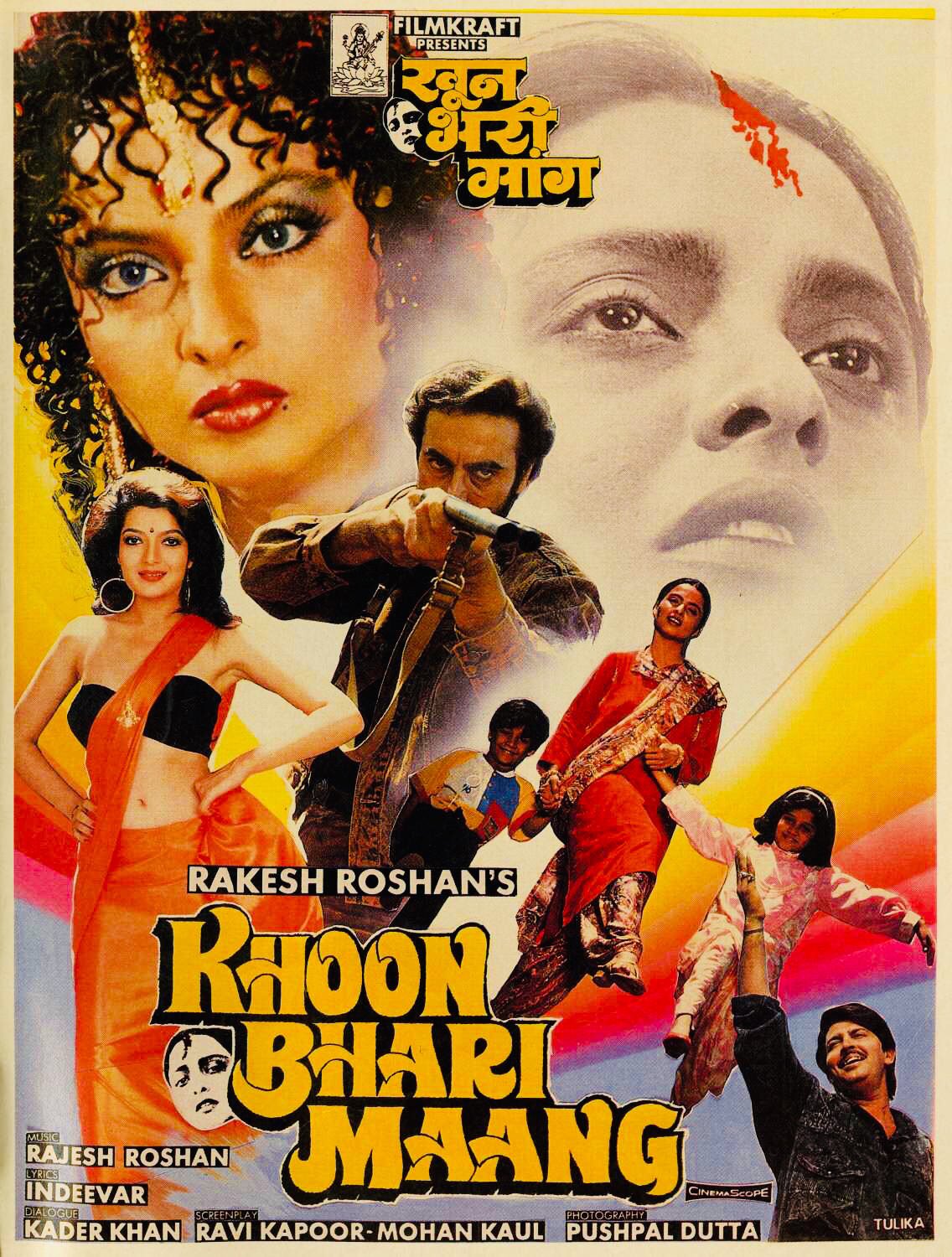
Khoon Bhari Maang

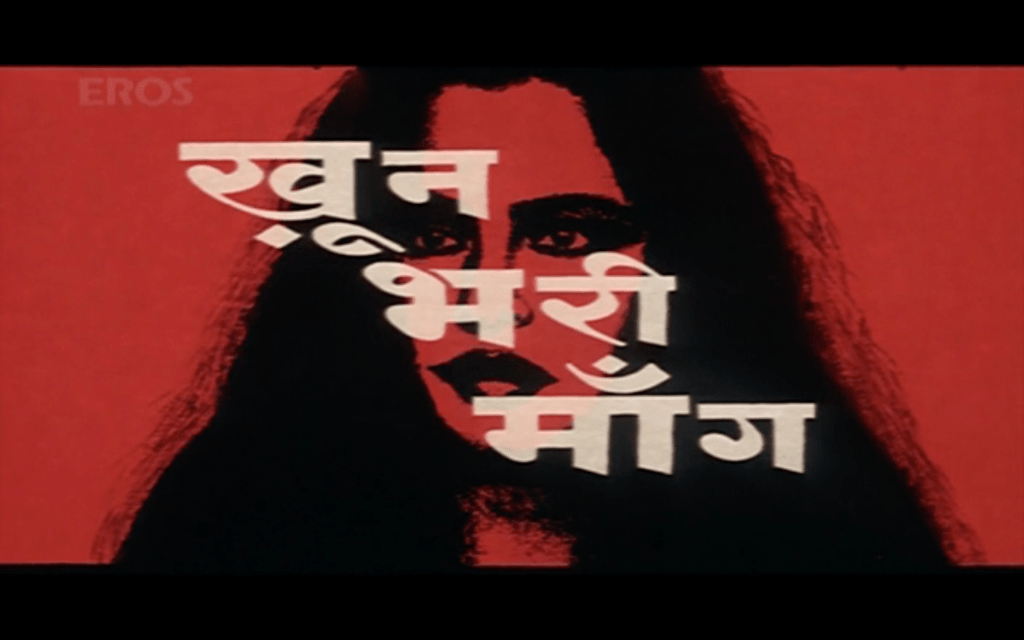
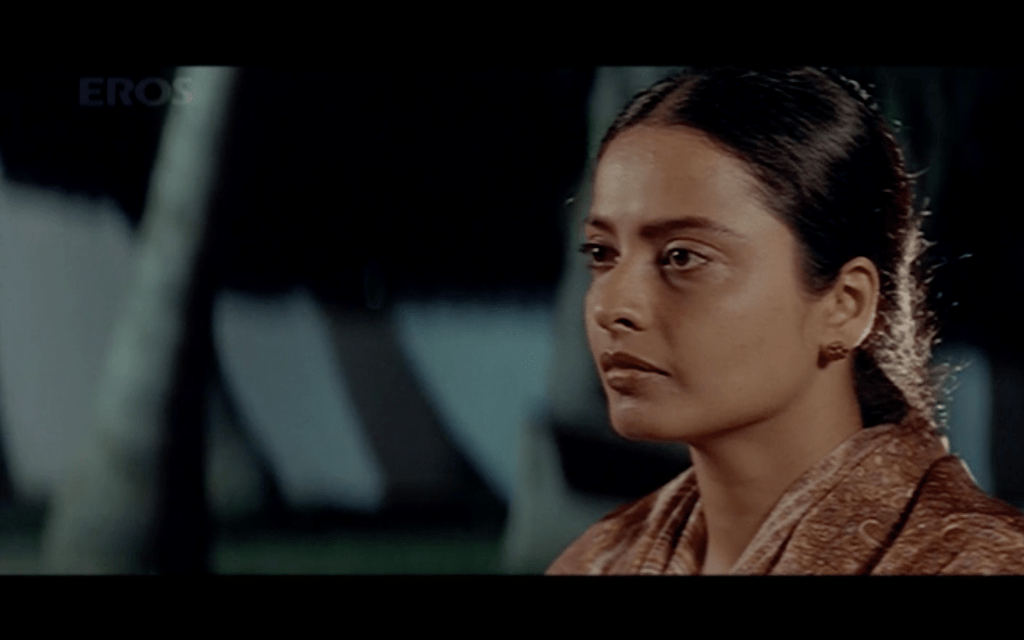
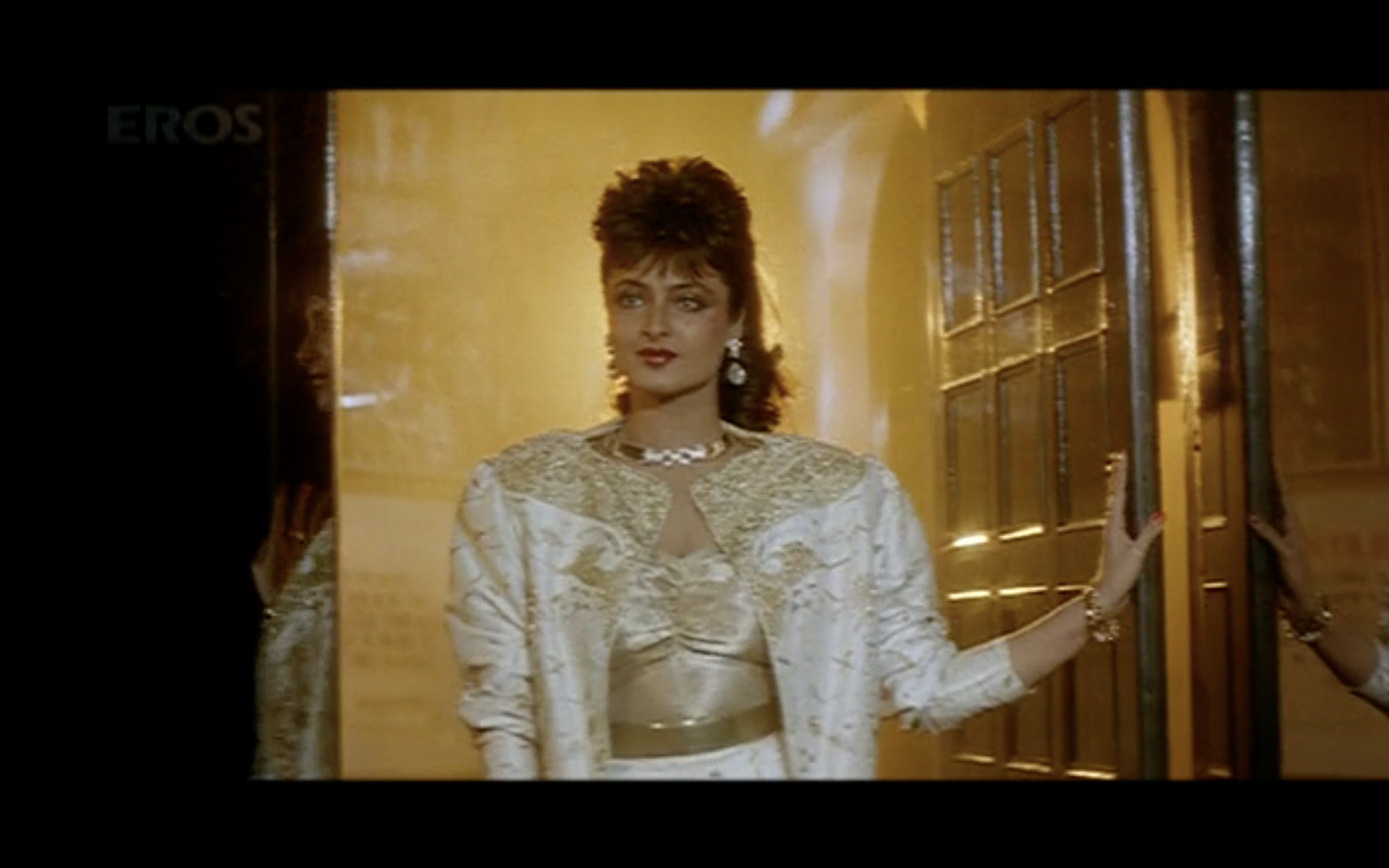
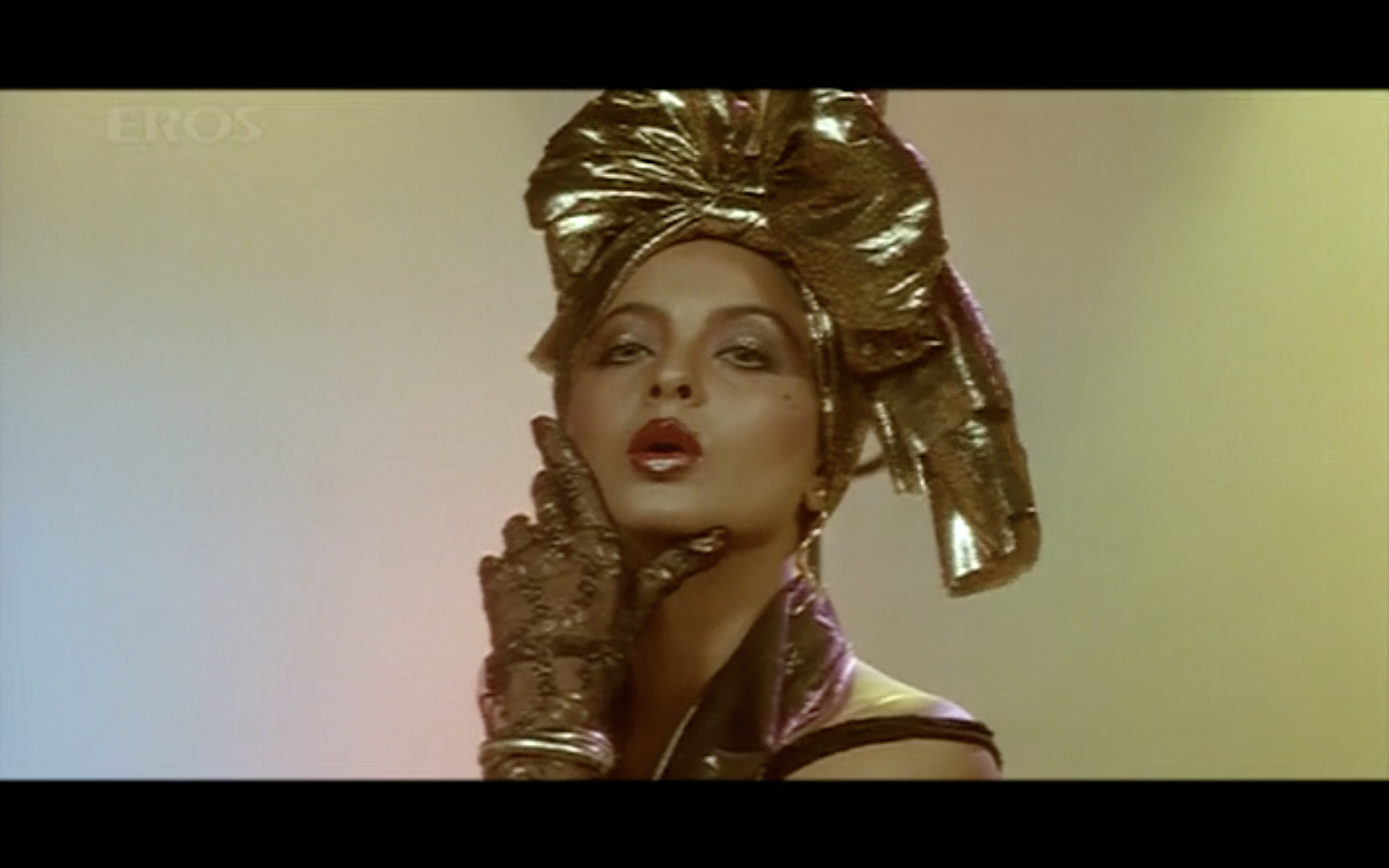
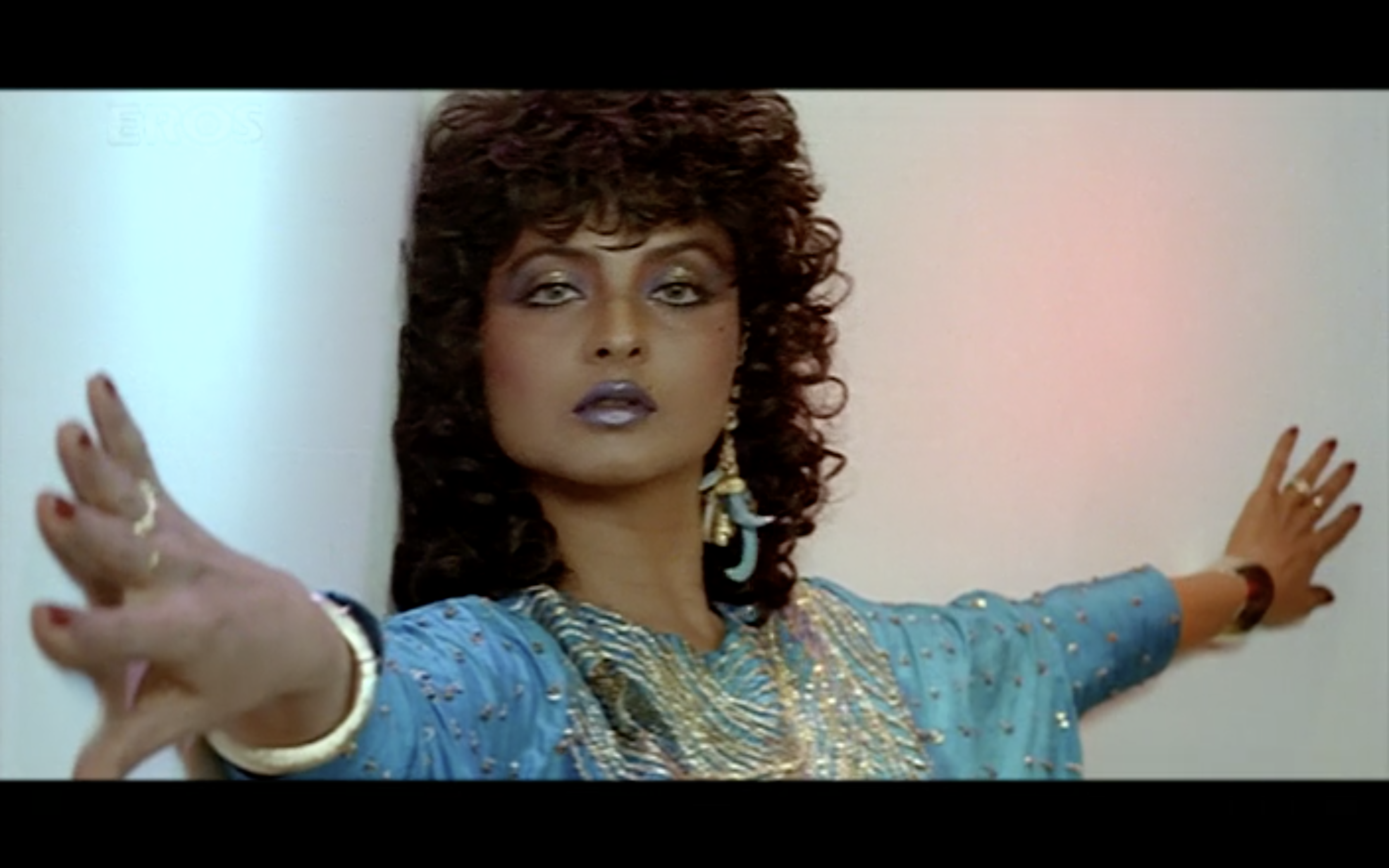
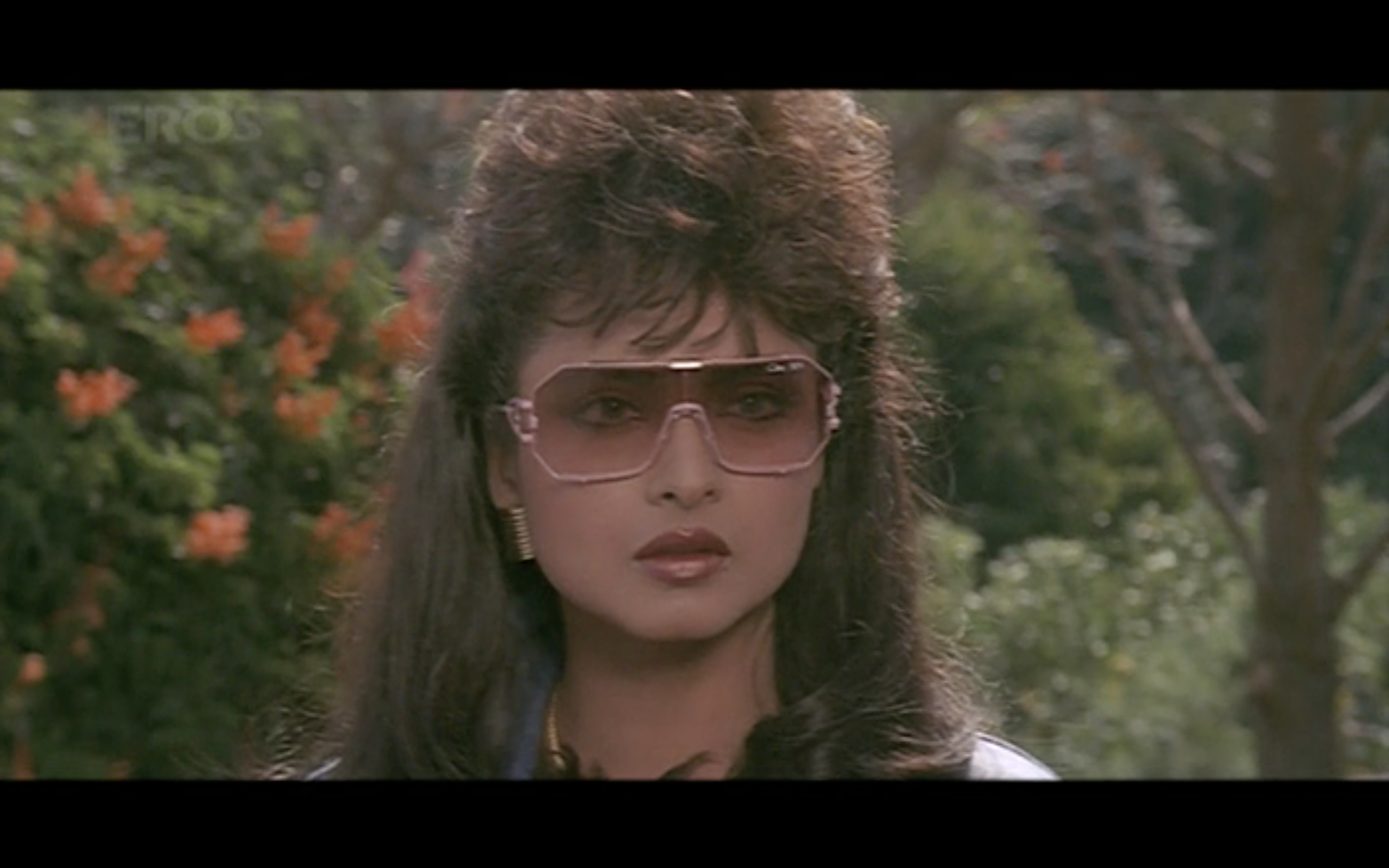
Ah the Eighties. When hair was big, shoulder pads were bigger and glitter eyeshadow was essential. Khoon Bhari Maang is a quintessential eighties movie that I love, despite its addiction to gore and systematic overuse of Khader Khan. I can’t say that it’s a good movie, or even that it falls into the ‘so-bad-it’s-good’ category we all know and love, but somehow once I start watching I’m hooked by Rekha’s transformation and quest for revenge.  It’s over the top, trashy and melodramatic, but for a nostalgic wallow in the swamp that was eighties drama, you can’t go past Khoon Bhari Maang!
The film is based on an Australian miniseries from 1983 called Return to Eden. I’ve never seen the show, but Wikipedia makes sound like Australia does Dallas, so it may be worth tracking down online too.

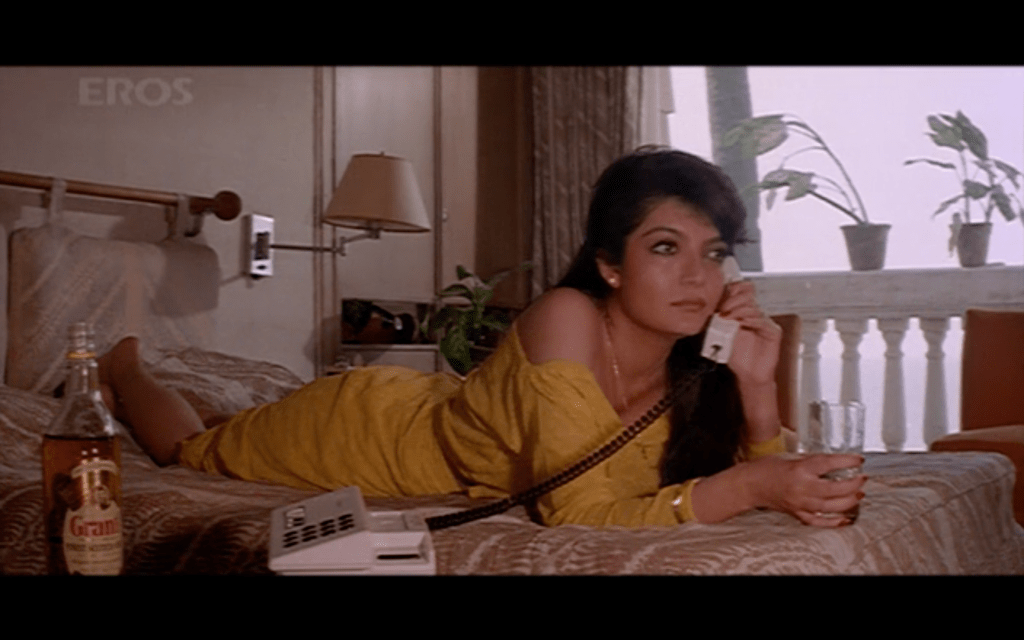
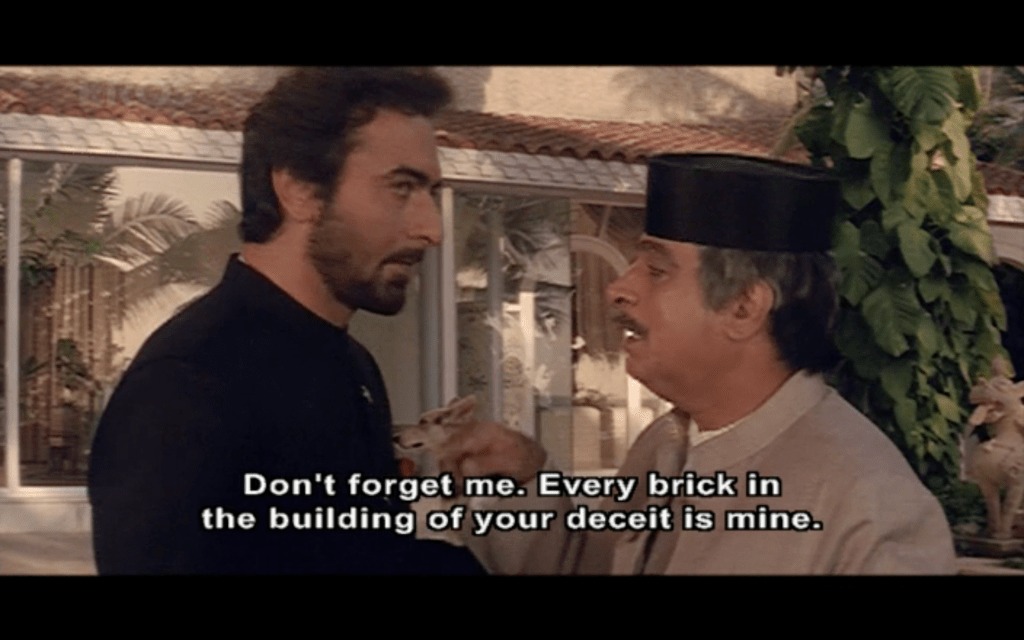
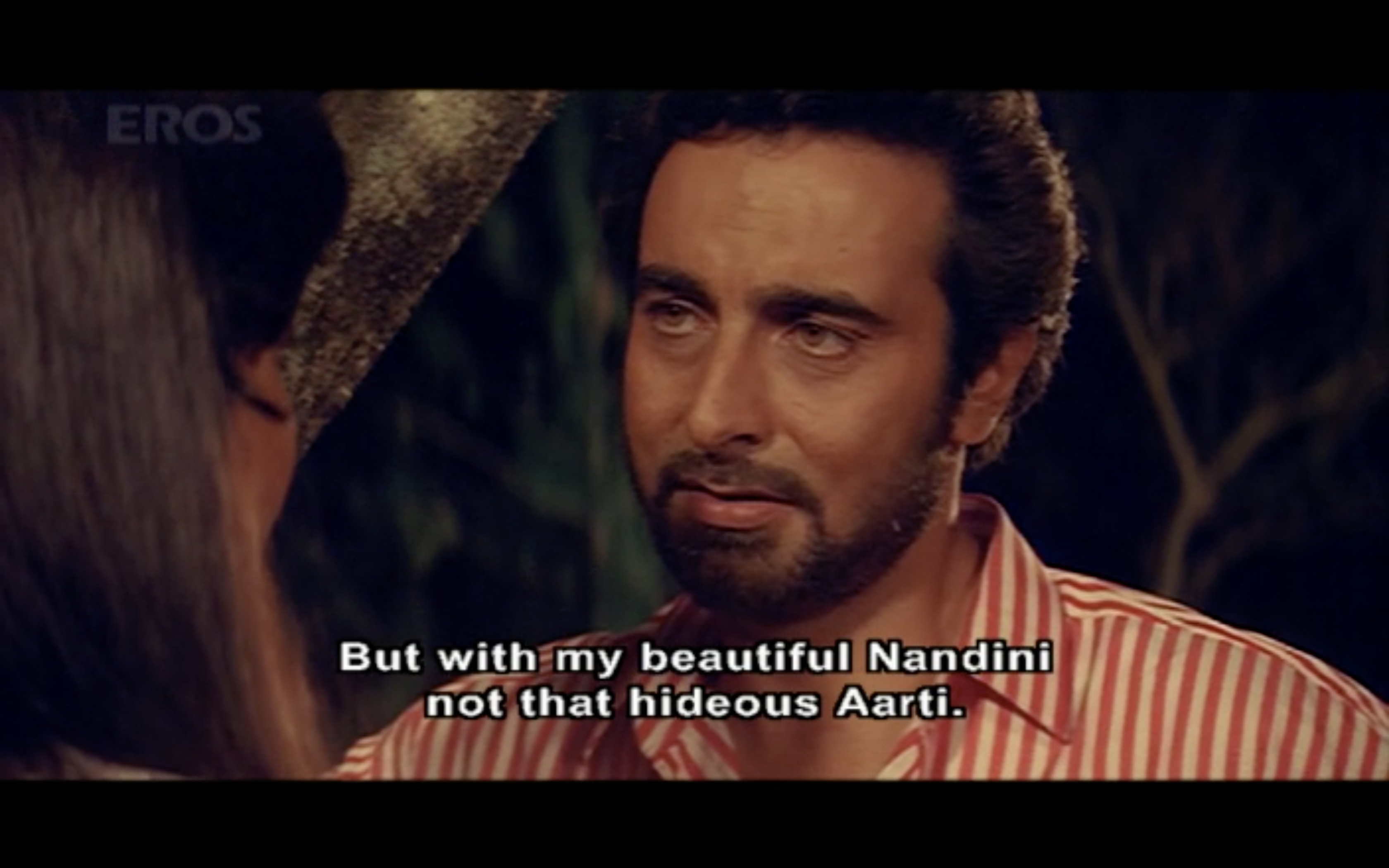
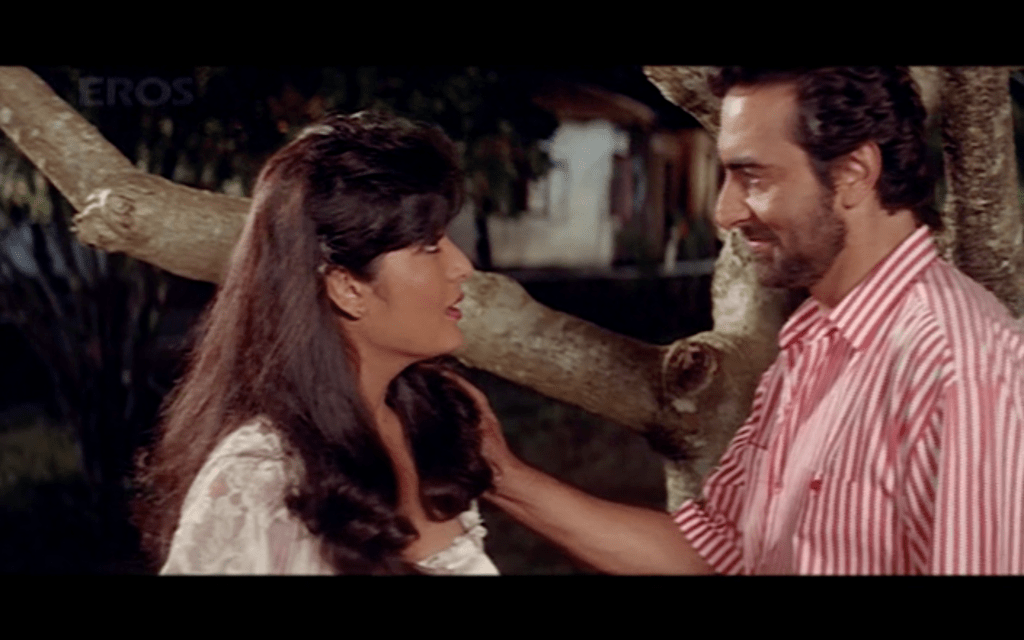
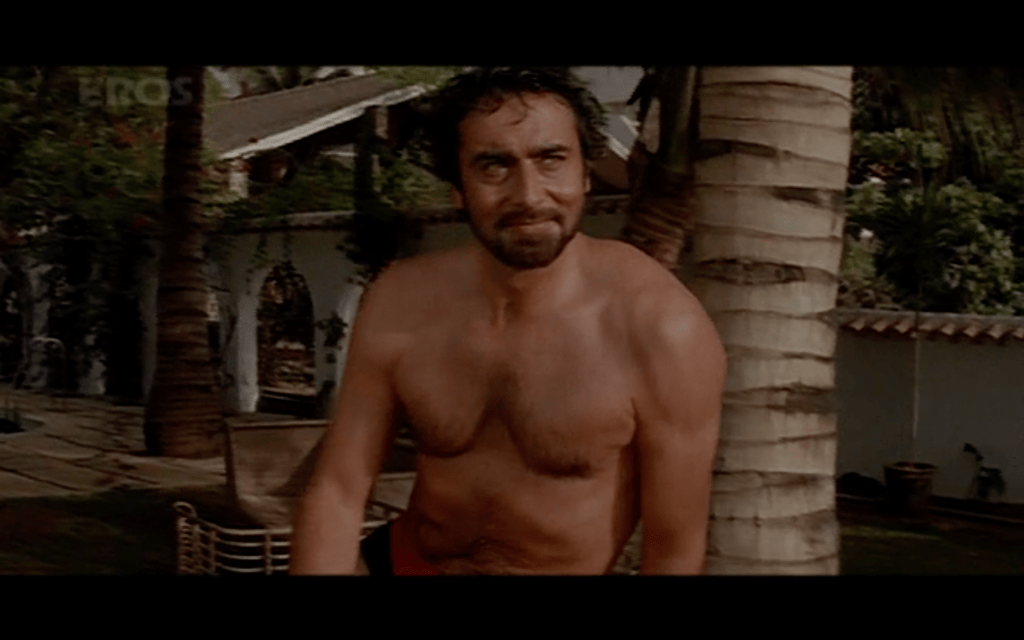
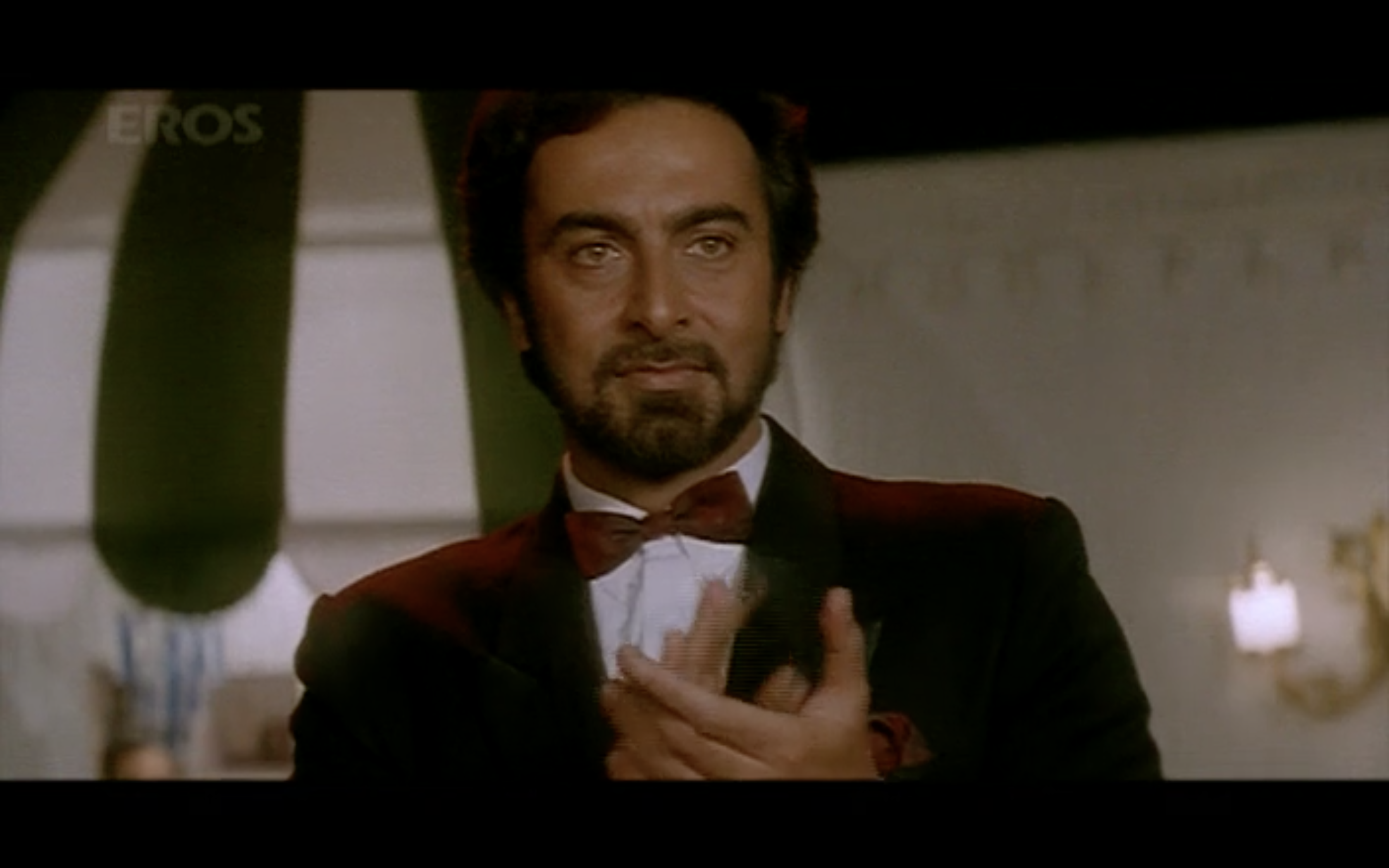
The story starts with Aarti (Rekha), a young widow with 2 young children, who is also the heir to her father’s huge business empire. In the first 5 minutes her father (Saeed Jaffrey) is murdered by his close friend Hiralal (Kader Khan) who then wastes no time in introducing Aarti to his wastrel nephew Sanjay (Kabir Bedi). Sanjay has a penchant for removing his shirt and a plan to marry Aarti to gain control of her millions, despite carrying on an affair with Aarti’s best friend Nandini (Sonu Walia).
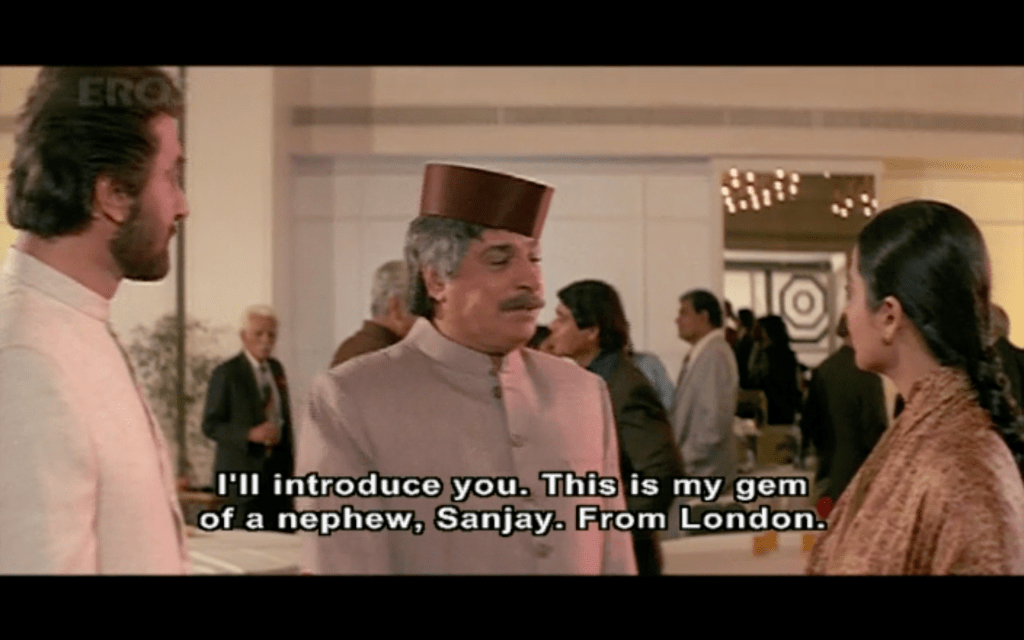
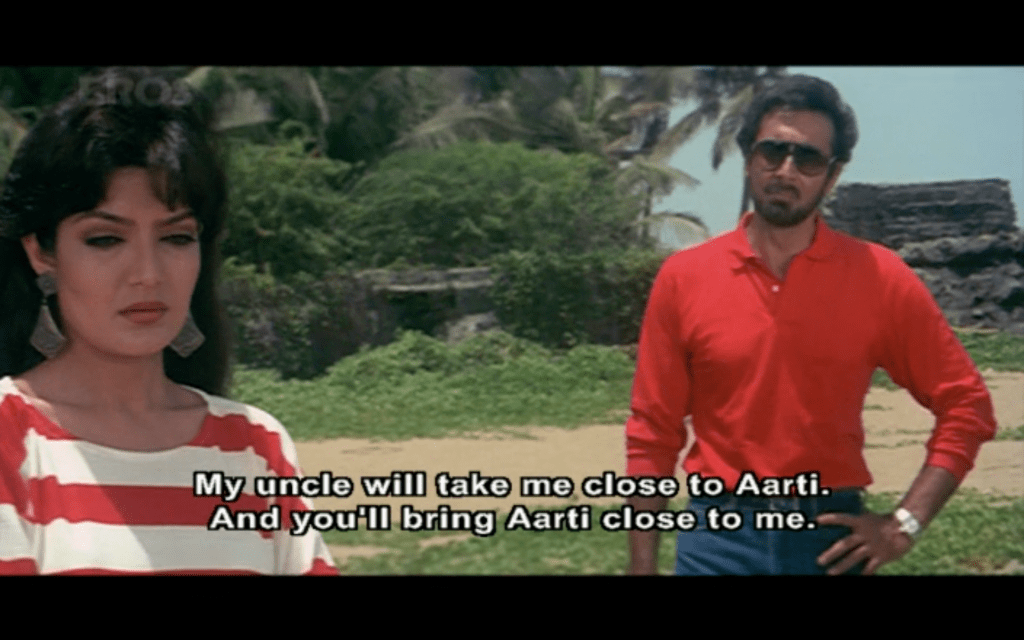
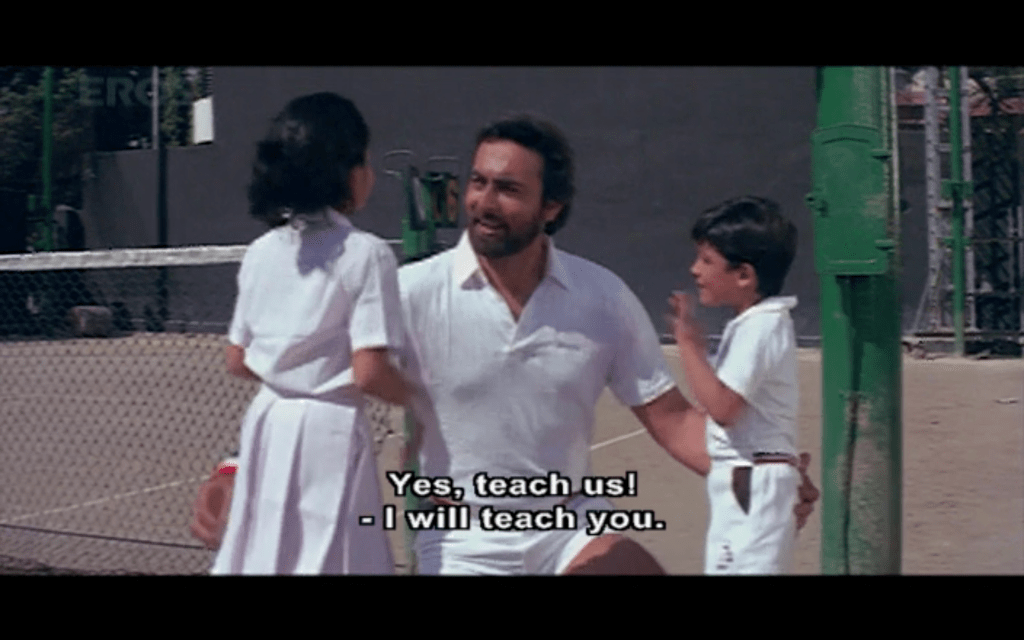
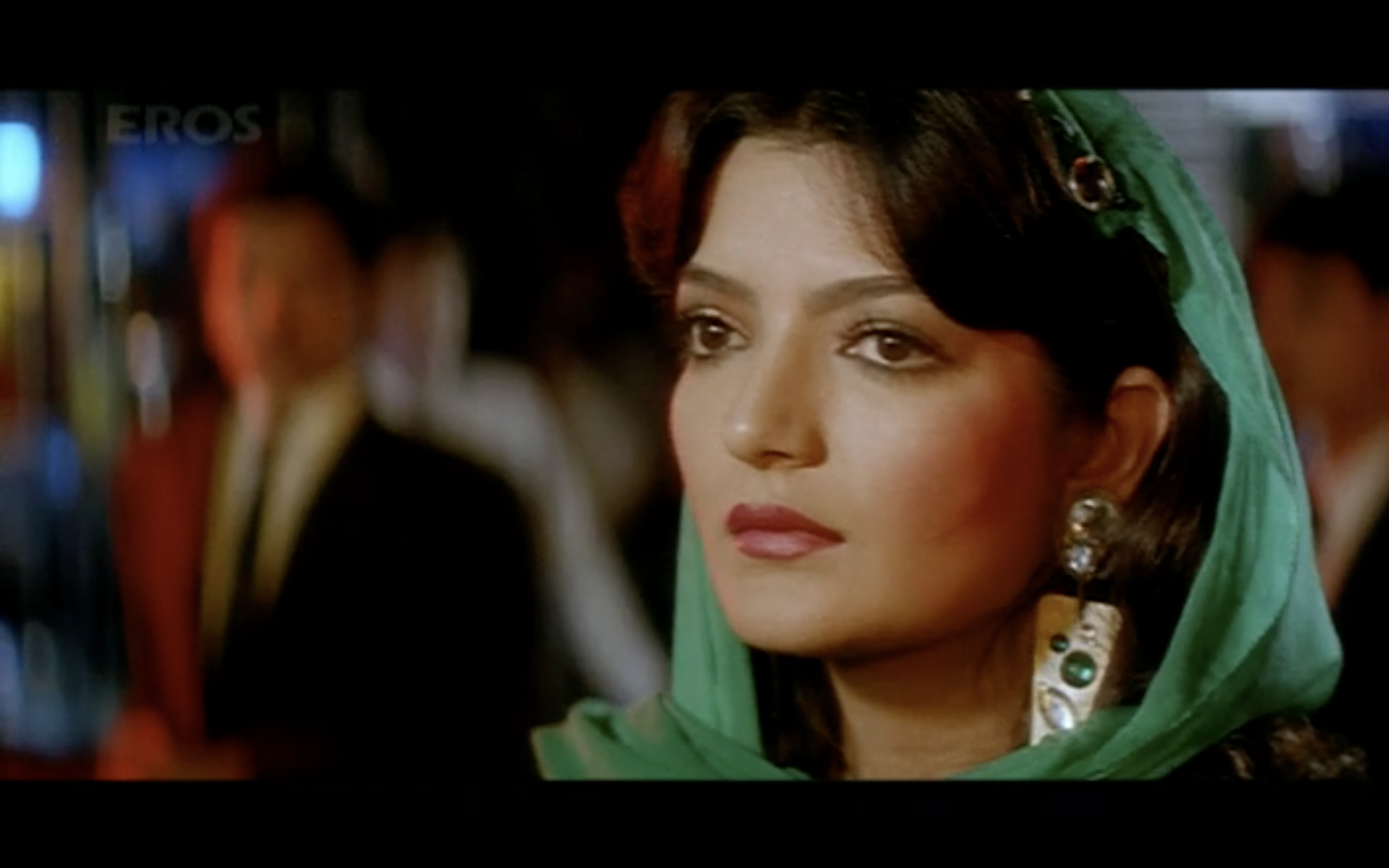
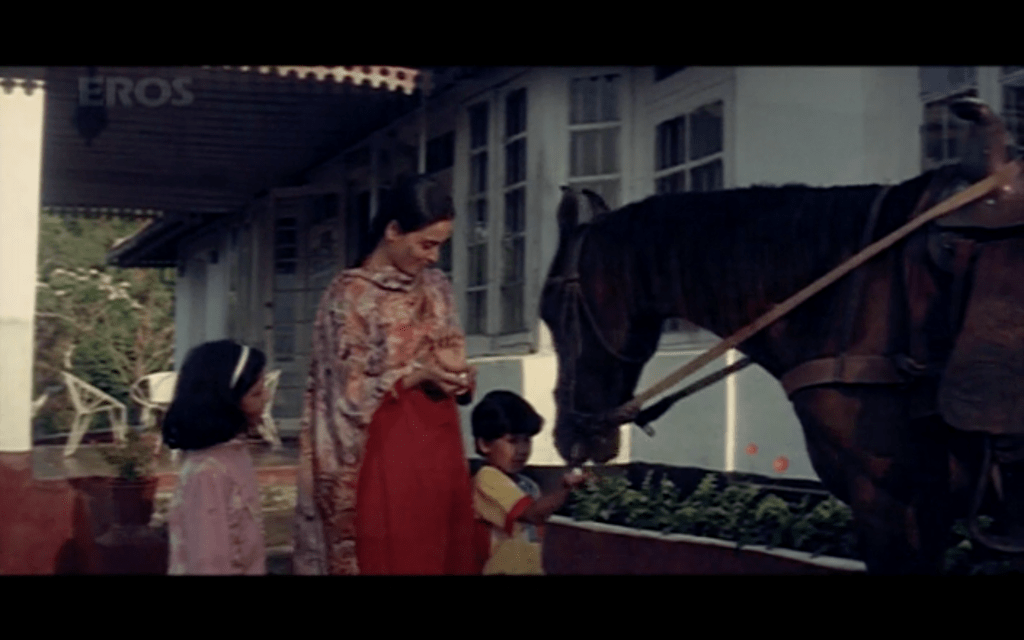
Aarti’s husband Vikram (Rakesh Roshan) was killed in a car accident some years before and she lives for her children, so Sanjay befriends Kavita (Baby Shweta) and Bobby (Master Gaurav) as the way to Aarti’s heart. There are a few flashbacks to happier times with Aarti and her husband where Rakesh Rohan looks incredibly uncomfortable on the other side of the camera, as he frolics with a frumpily dressed Rekha. And for the first part of the movie, Rekha does look rather dreary. She’s still Rekha, but has dark shadows under her eyes, a large mole on her face and rather protuberant teeth. Sanjay describes her as ugly, but she just looks exhausted and in need of a brighter wardrobe, especially when compared to the dazzling Nandini.

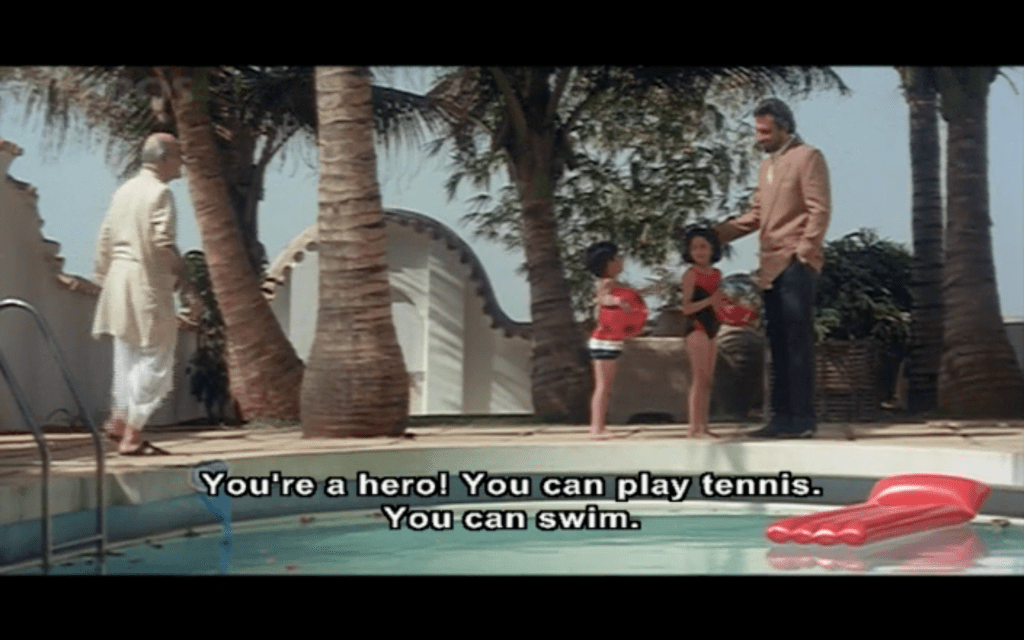
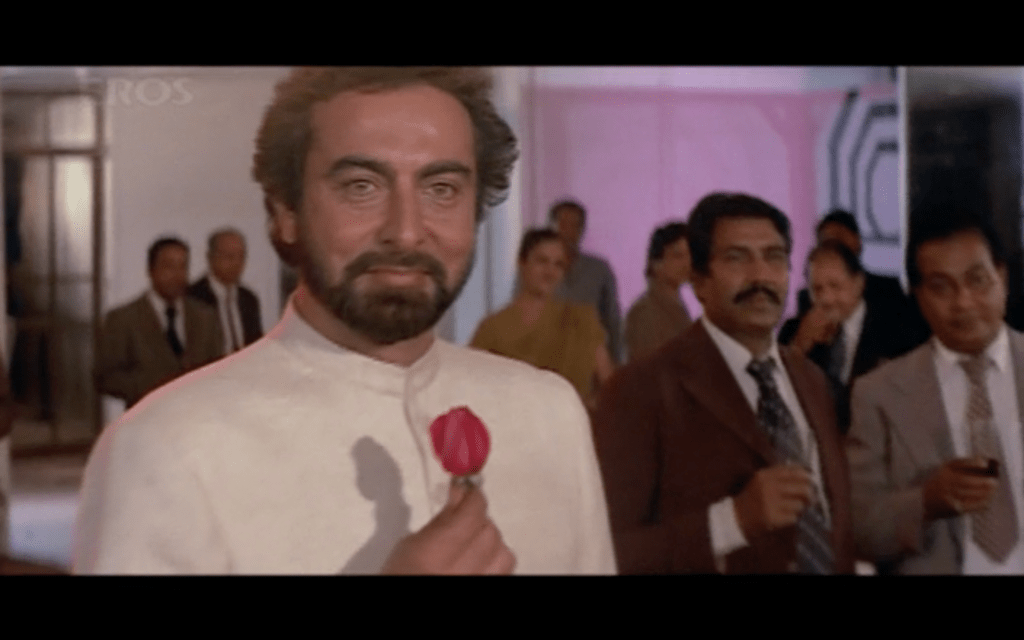
Nandini is a model who is drawn into Sanjay’s machinations because of her love for a man who can look good in swimming trunks and very short shorts. It has to be noted that Kabir Bedi does look rather fine, and he makes the most of scenes at the pool and every other possible opportunity to remove his shirt. However, rather than his sleek chat up lines and body flaunting, it’s his attentions to her children that convinces Aarti she should marry Sanjay and provide them with a father figure. With the bonus of someone she trusts to run the business.  
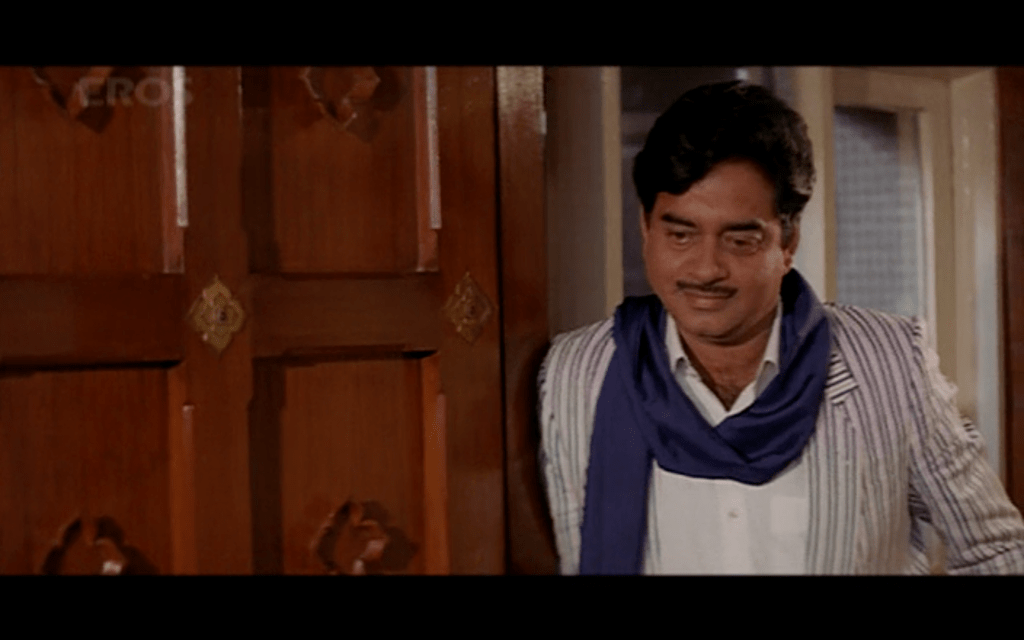
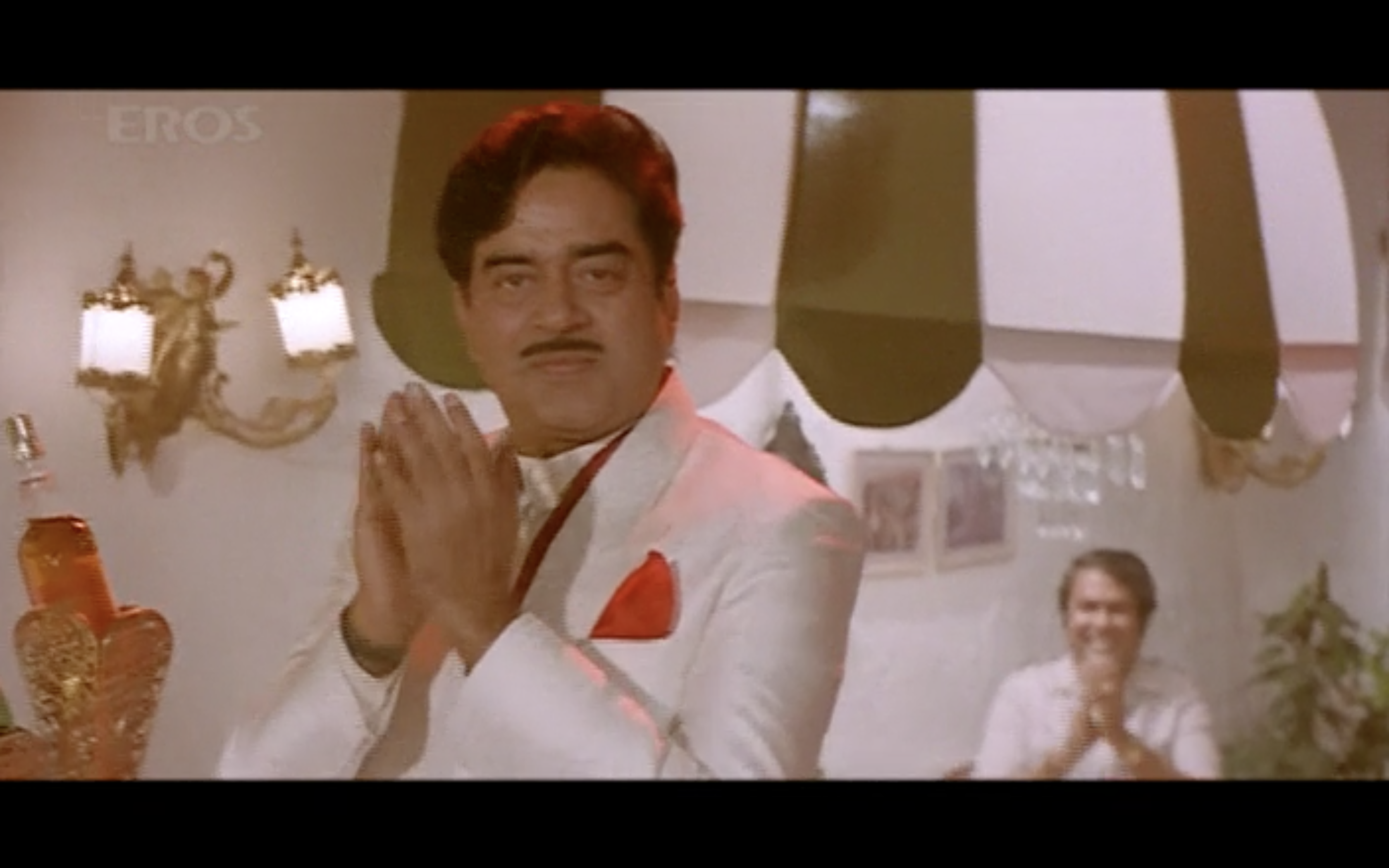
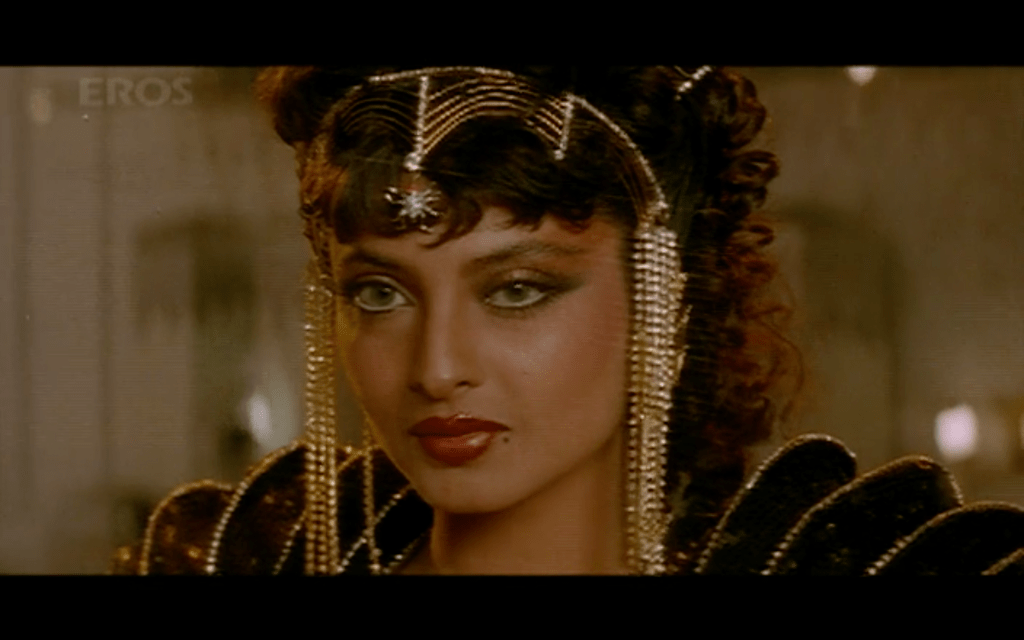
It doesn’t take long after the wedding (actually the next day), for Sanjay to rid himself of his troublesome wife by throwing her to the jaws of a waiting crocodile. Queue screams, lots of fake blood and Sanjay threatening Nandini to keep schtum about her part in his devious plan. But Aarti escapes! After being rescued by an old man (Paidi Jairaj) she sells the jewellery she was wearing at the time of her attempted murder and heads off to the US for some needlessly graphic plastic surgery. The now apparently unrecognisable Aarti returns home as model Jyoti and is immediately picked up by Nandini’s photographer J.D. (Shatrughan Sinha). Naturally this doesn’t go down well with Nandini, and the rivalry between the two models culminates in a wonderfully crazy dance-off where attitude and sheer sass seem to be the criteria needed to win. After destroying Nandini’s professional career, with her new glamourous looks and the support of JD, Jyoti sets out for her next goal: revenge on her murderous husband.
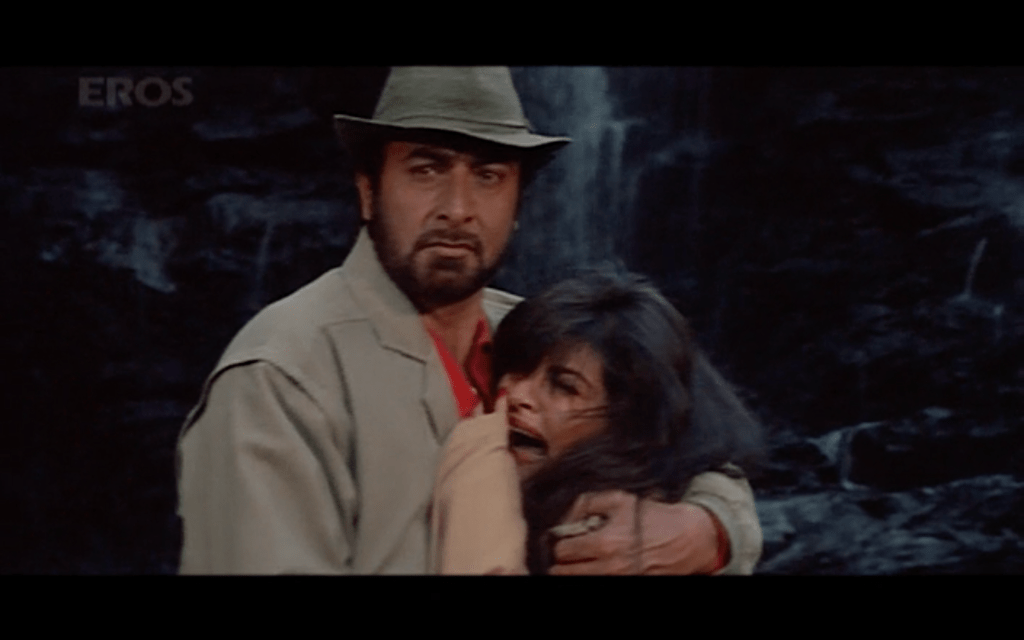
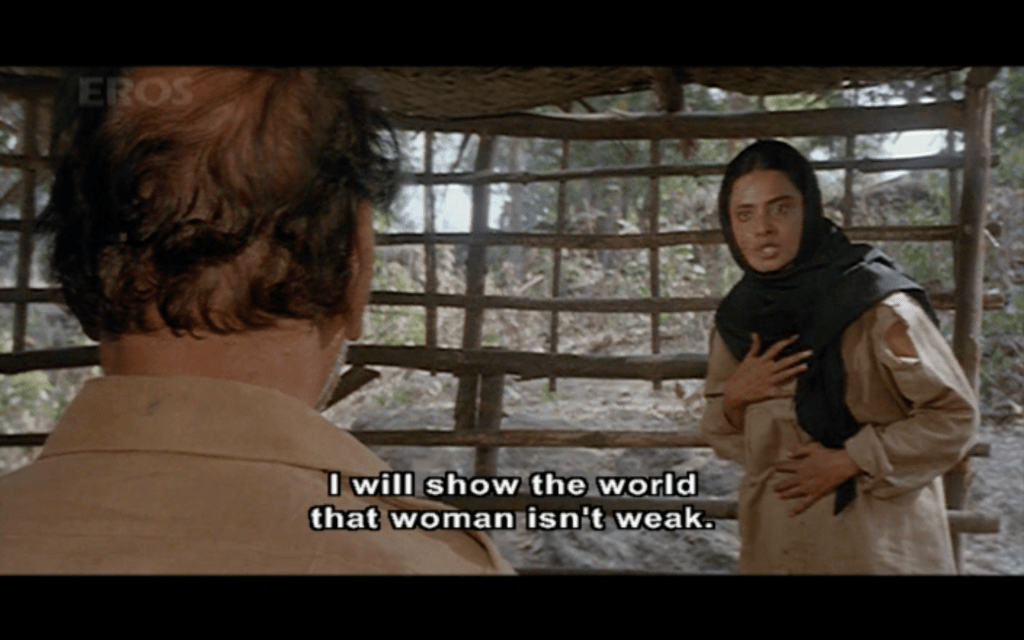
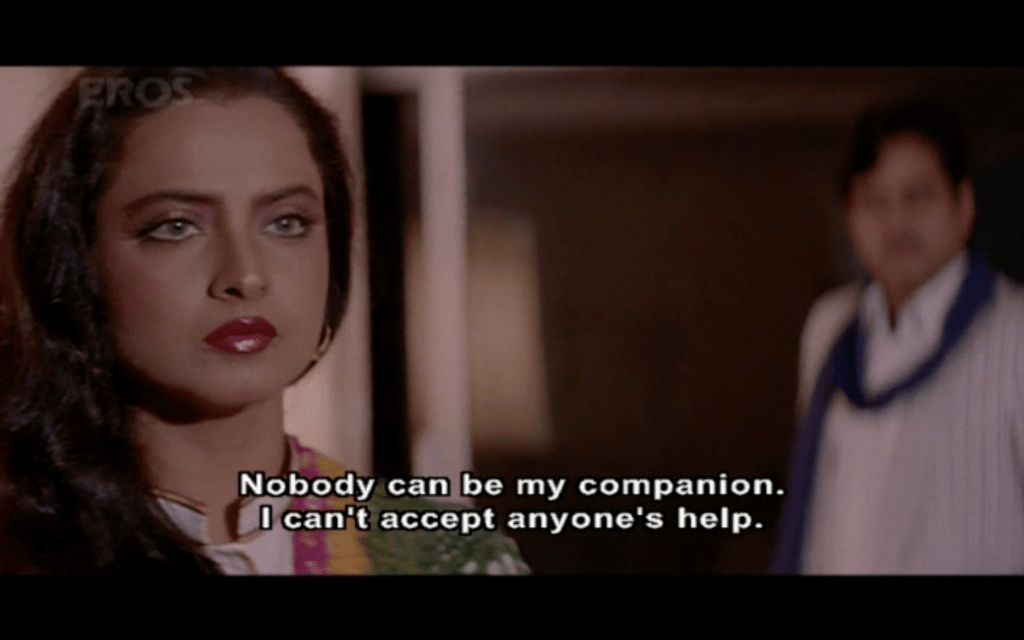
The story builds slowly during the first half, but this is more than made up for by the drama and total fashion insanity of the second half. That’s not to say that there isn’t plenty of craziness in the first half, but it’s off set by the annoying presence of Khader Khan and Rekha’s irritatingly meek Aarti. Once Rekha transforms into Jyoti, everything gets bigger, bolder and much more dramatic – and that’s just the fashion! Jyoti is determined to get her revenge and she sets out to destroy Sanjay with the sort of bloody single-mindedness usually reserved for male heroes in Bollywood. I love that Rekha is given the opportunity to have her revenge without relying on anyone else, and that revenge is just as satisfyingly gruesome as could be expected. Despite all its faults, the saving grace of the film is that Aarti is quite capable of rescuing herself, saving her family and getting her revenge, all without any male assistance or even advice. You go girl!
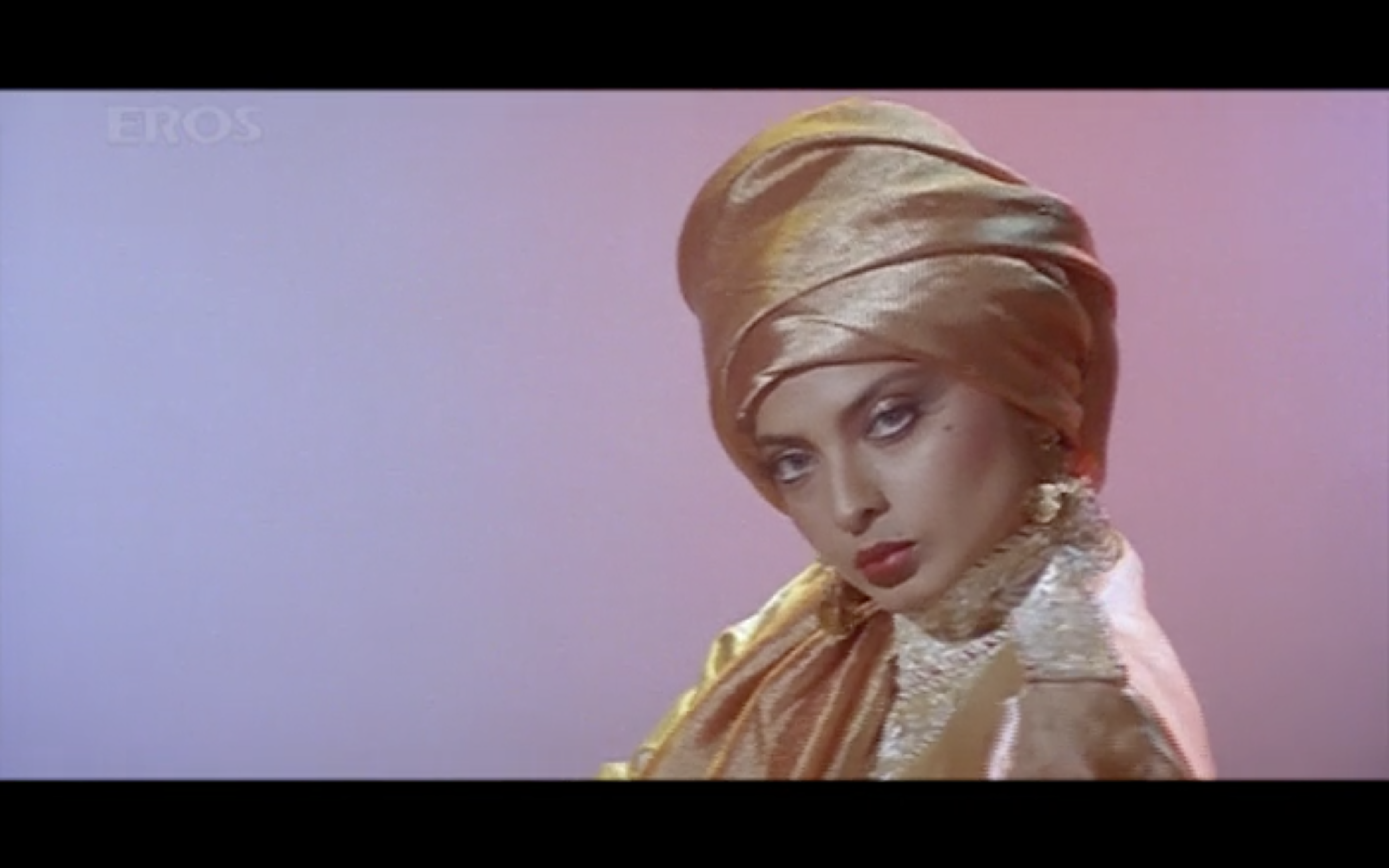
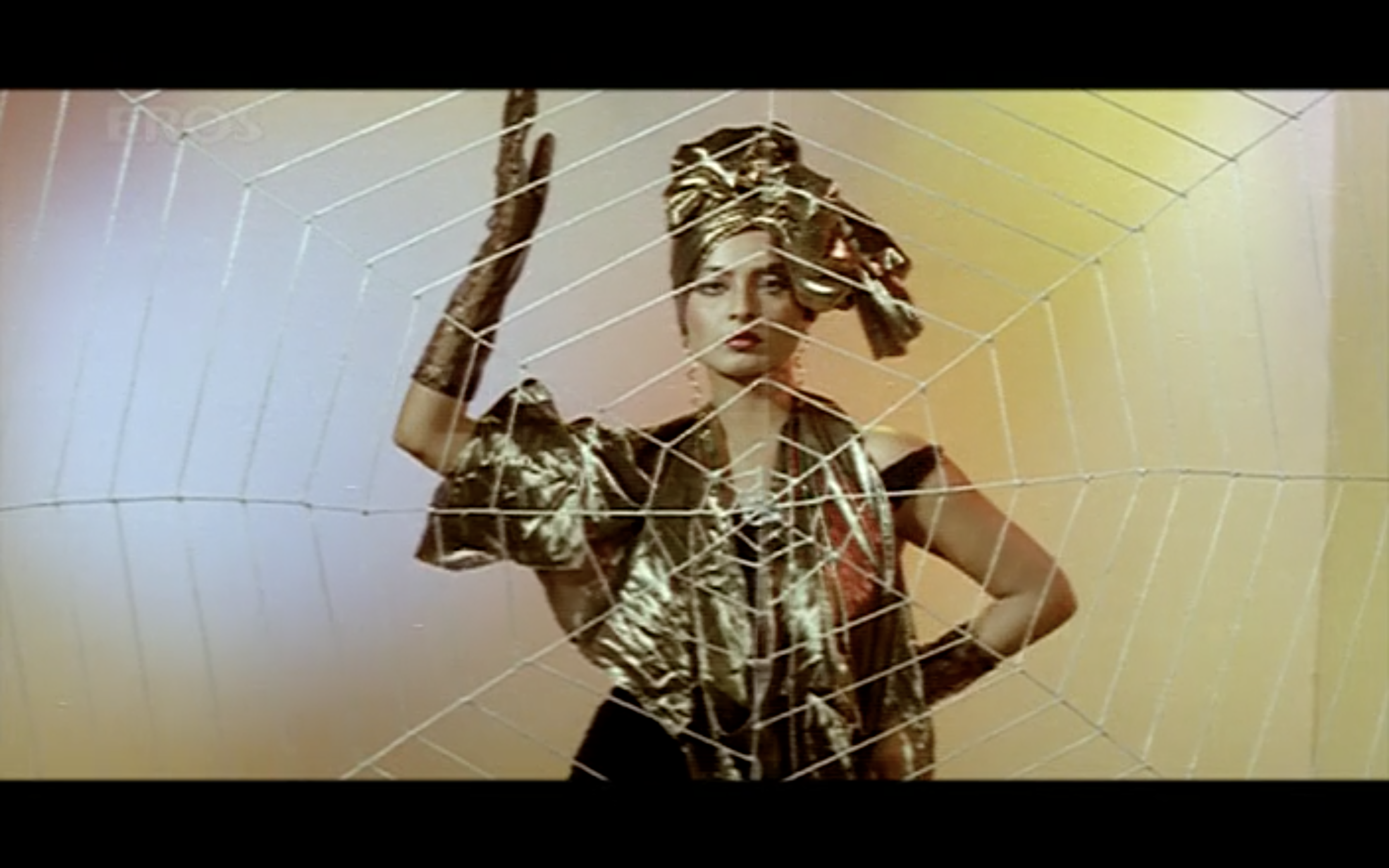
Rekha is awesome throughout. She nails the meek and mild-mannered Aarti, but is so much better as the stunning model out for revenge. Her Jyoti is stardom personified with attitude that simply sizzles off the screen with a sneer sharp enough to draw blood. Rekha takes ownership of all the ridiculous outfits and outlandish hairstyles too, so that when she ends up in black leather and wielding a whip, it seems less an erotic fantasy and more a practical outfit for revenge – easier to get blood off leather I imagine.  Kabir Bedi is excellent too in this negative role where he hams it up as a seductive suitor who quickly shows his true colours once the knot is tied. It’s a great performance and who can complain if he spends most of his time by the pool in various stages of undress. I do draw the line though at the needless appropriation of Vangelis Chariots of Fire theme into a tacky song visualising a romp in the pool between Kabir Bedi and Sonu Walia. But for the rest, Kabir is nicely wicked and appropriately charming as he woos Aarti and then Jyoti. Poor Sonu Walia doesn’t have anything like as good a time as her Nandini is a bit of a wet blanket who falls over herself to do whatever Sanjay wants.
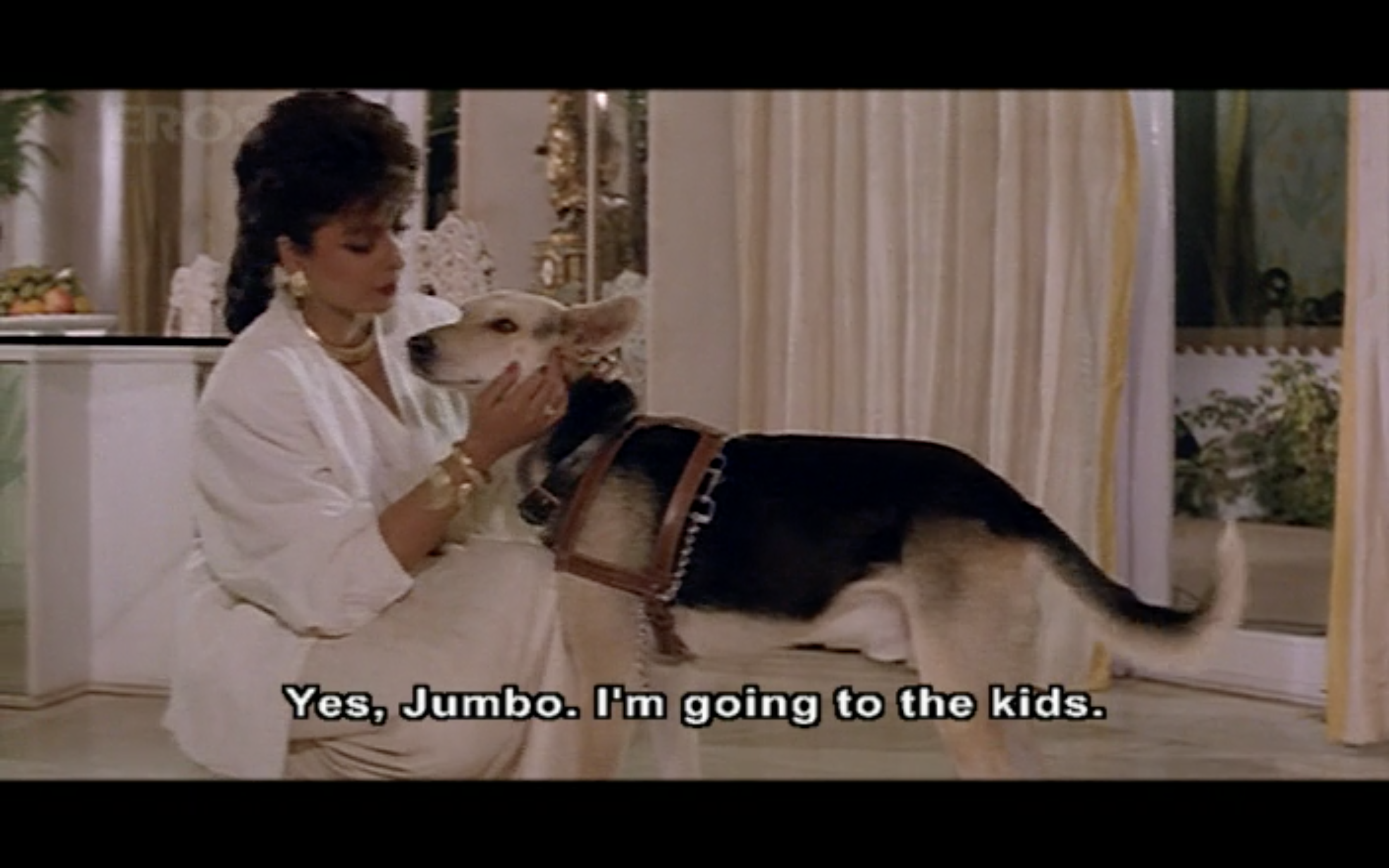
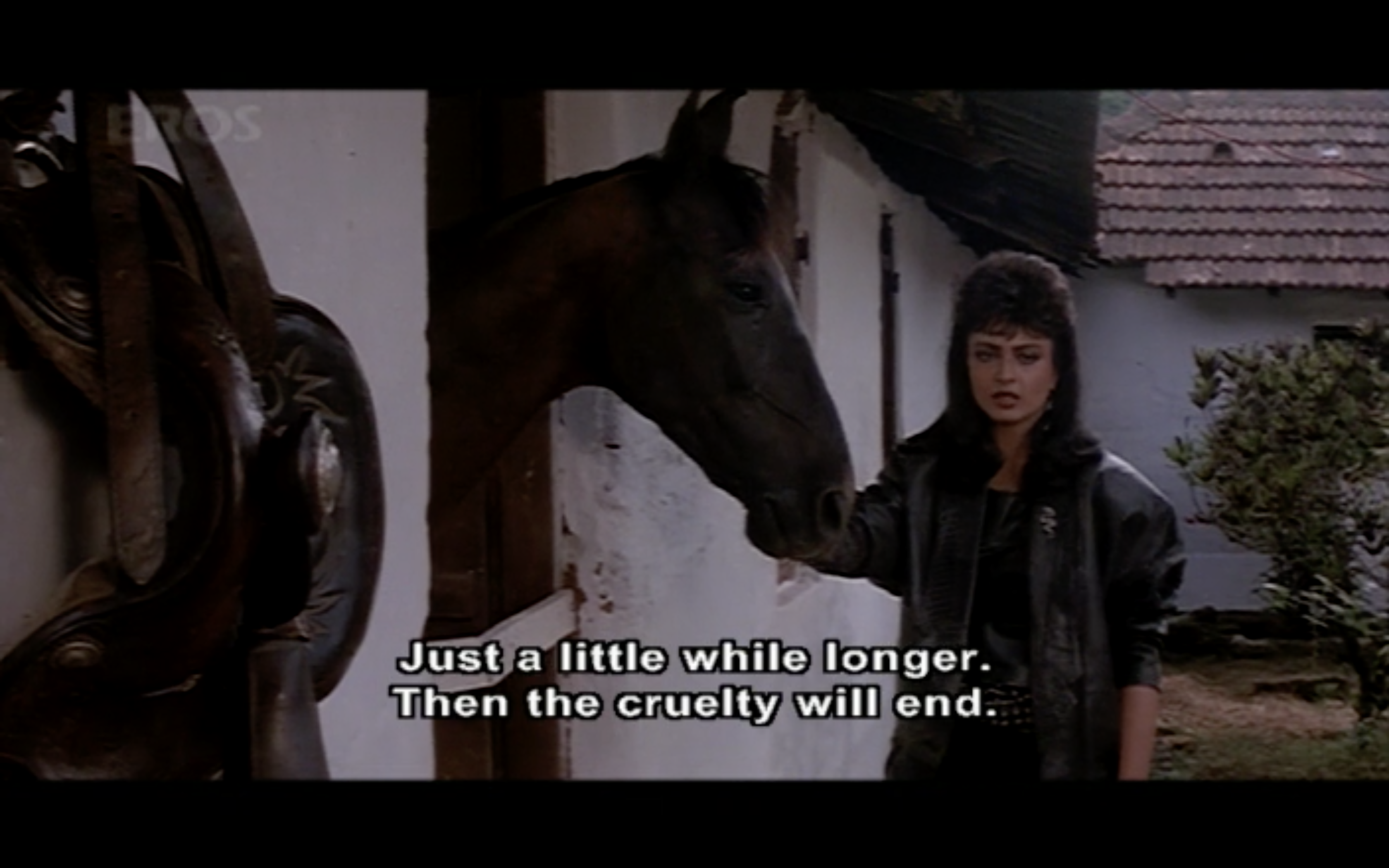
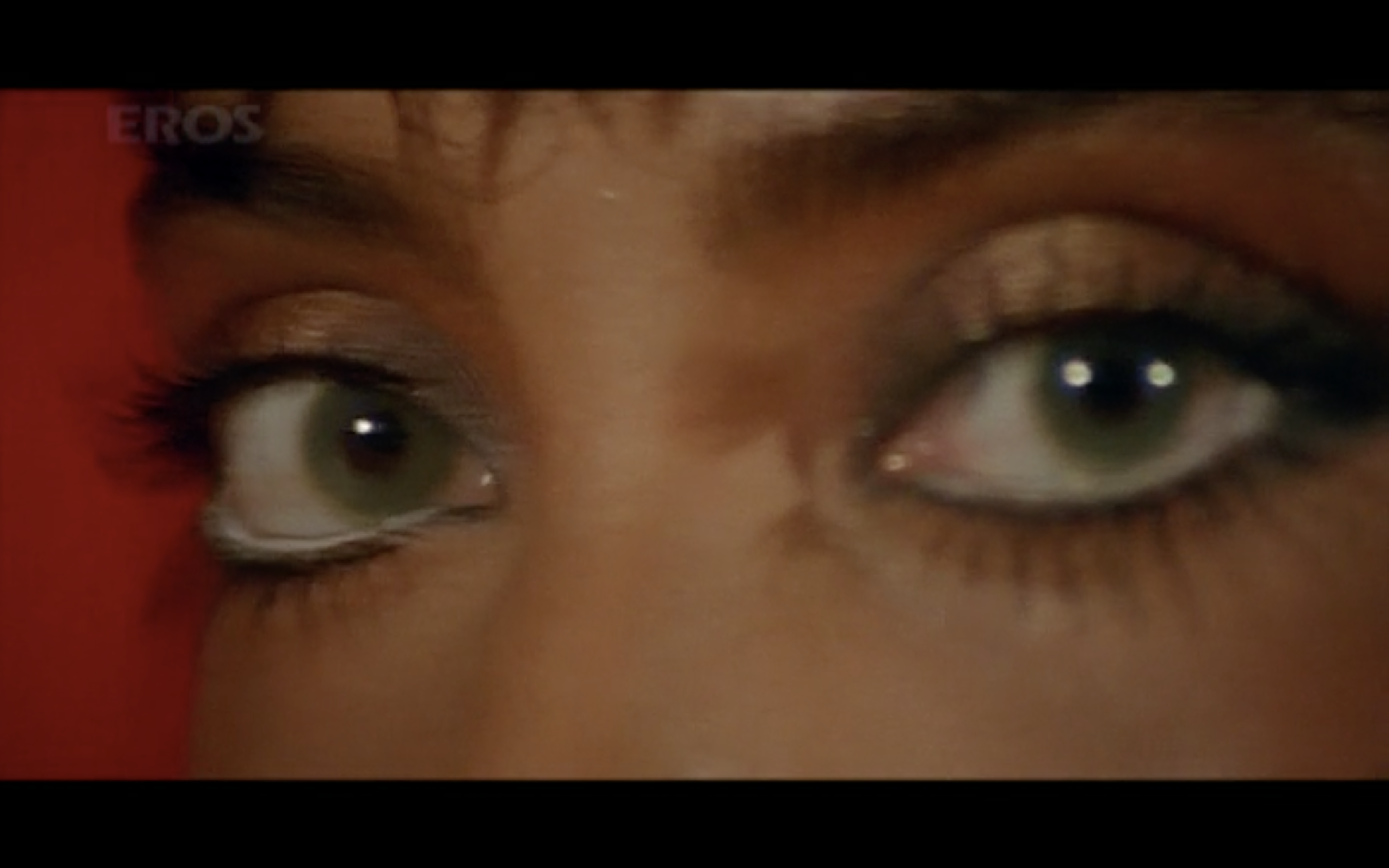
One of the best parts of the film for me is right near the end when Jyoti removes her green contact lenses. A move that makes her INSTANTLY RECOGNISABLE!!! Who knew just changing the colour of your eyes could have such an effect? Also worth looking out for are Aarti’s heroic dog Jumbo and smart horse Raja, who know what is going on well before any of the human characters, and the various servants and supporters of Aarti who add more drama to the proceedings whenever possible.

Khoon Bhari Maang is not a good film, but Rekha makes it worth watching for her crazy outfits, huge eighties hairstyles and bloodthirsty quest for revenge. I know most people skip straight to the second half, but I like the slow build-up through the first half and the gradual monsterisation of Kabir Bedi as his true colours start to show through. For fans of 80’s Bollywood, big hair, crocodiles and revenge, this is surely as good as it gets. 4 stars.
AK vs AK (2020)

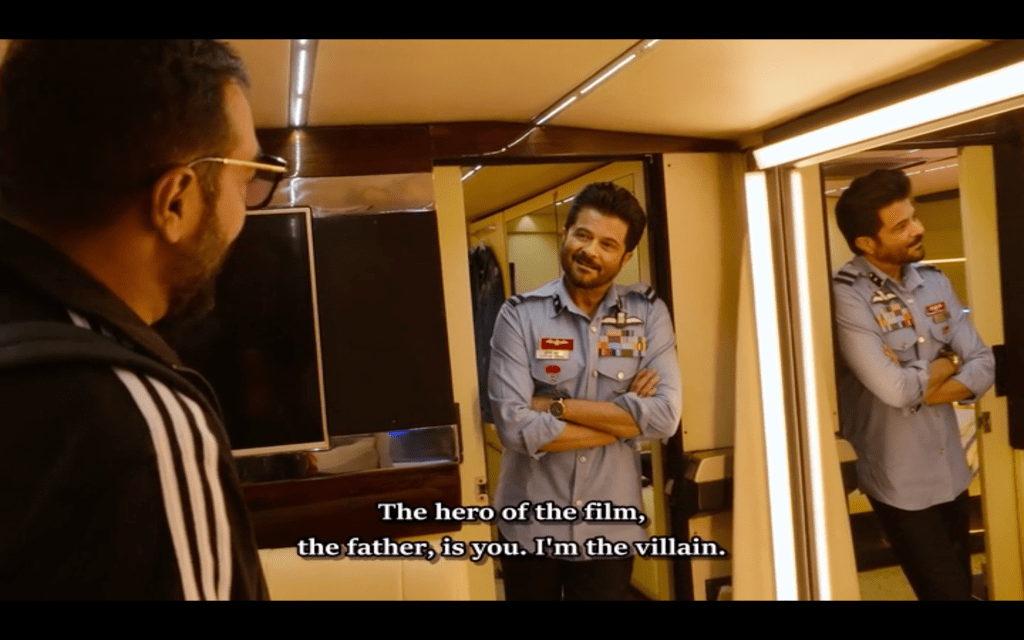
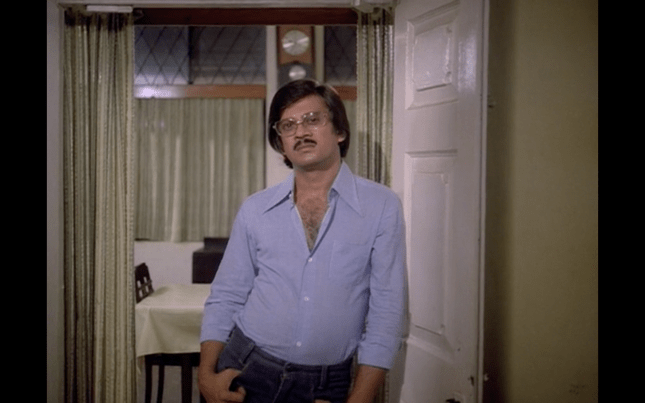
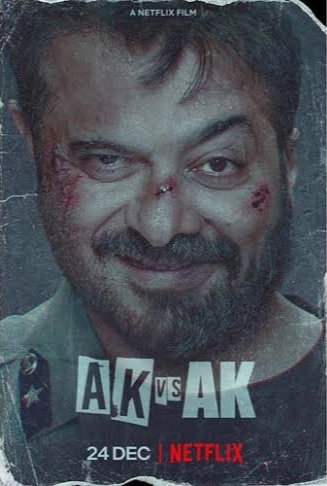
The premise of Vikramaditya Motwane’s latest film AK vs AK is immediately intriguing; a film director (Anurag Kashyap) kidnaps the daughter of a film star (Anil Kapoor) and then records the ensuing frantic search against the clock as a thrilling hostage drama. While I had a concern that the film would try too hard to be ‘clever’ and ‘edgy’, and not being a huge fan of Anurag Kashyap, I didn’t jump onto to Netflix straight away. But the story and the trailer were enough to pique my interest.  What I wasn’t expecting was just how funny the film turned out to be, or that it would be quite so entertaining – although it does occasionally almost fall into the trap of trying to be just a little too self-aware. The two AK’s play extreme caricatures of themselves (or at least of their public personas), and the film is peppered with references to their real (and reel) lives in a modern take on a meta film that retains a distinctive Bollywood flavour.

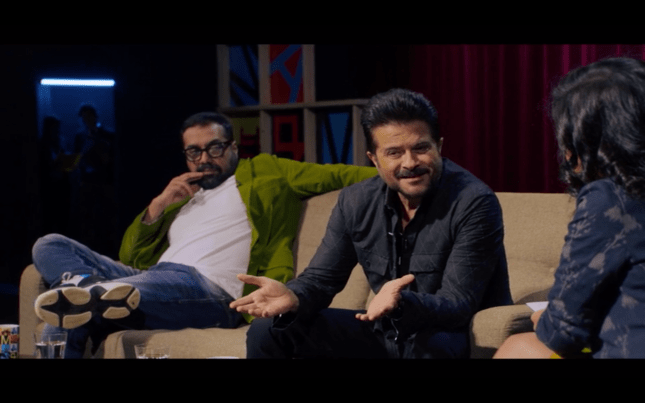
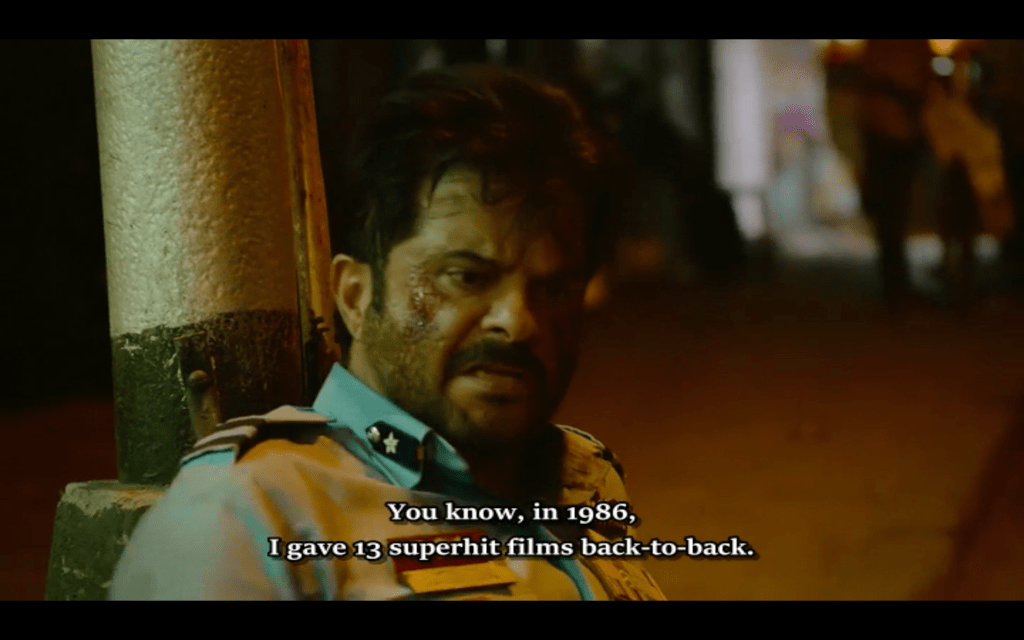
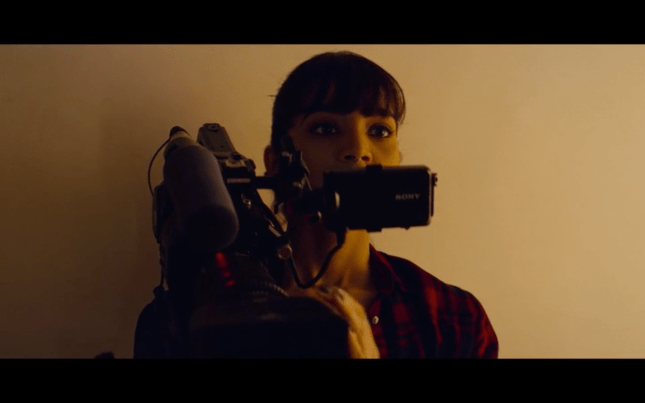
The film starts by introducing Yogita (Yogita Bihani) as a film school student who is recording Anurag for a school project. She follows him with a camera when he is interviewed, along with Anil Kapoor, by Sucharita Tyagi in front of a live audience. Anil is talking about his glory days in numerous hit films while Anurag adds digs about Anil’s recent lack of success. The sniping continues until an audience member asks which is more important, the actor or the director and in the ensuing argument, Anurag throws a glass of water over Anil. It’s brilliantly funny and the various references by each to their respective careers sets the rivalry between the two up beautifully.

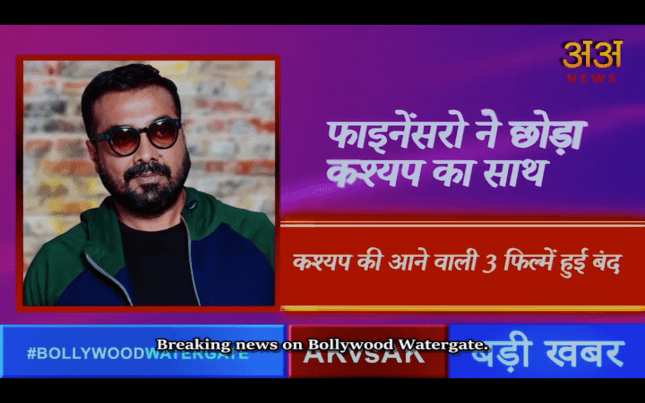
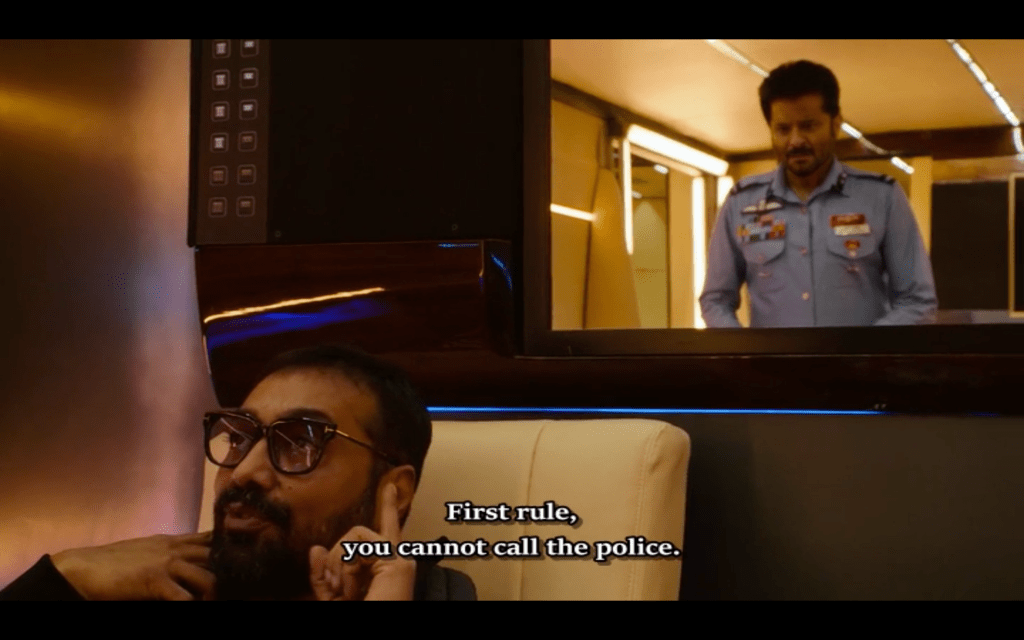
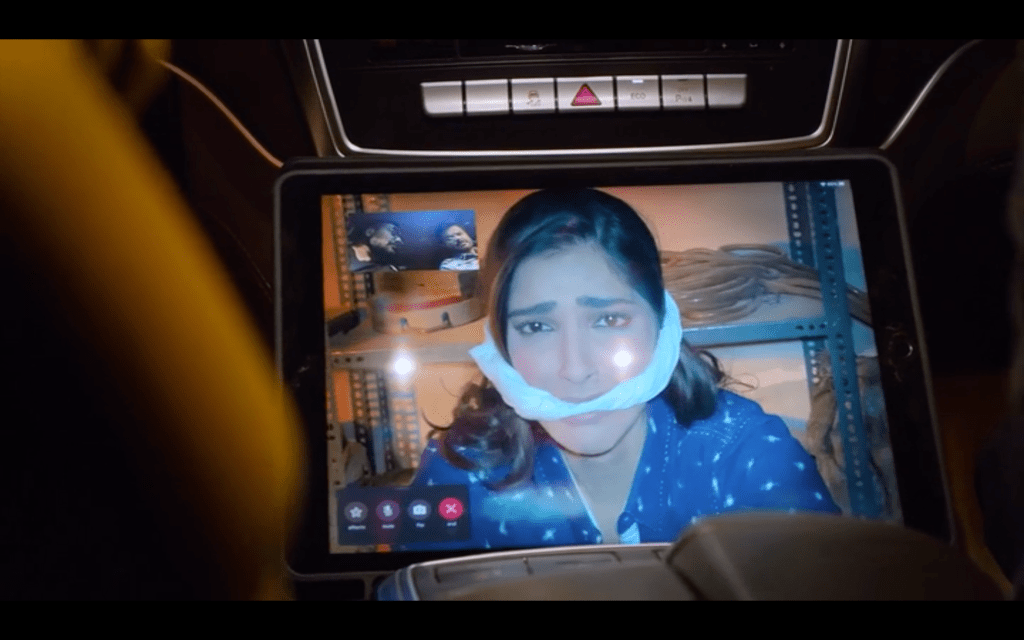
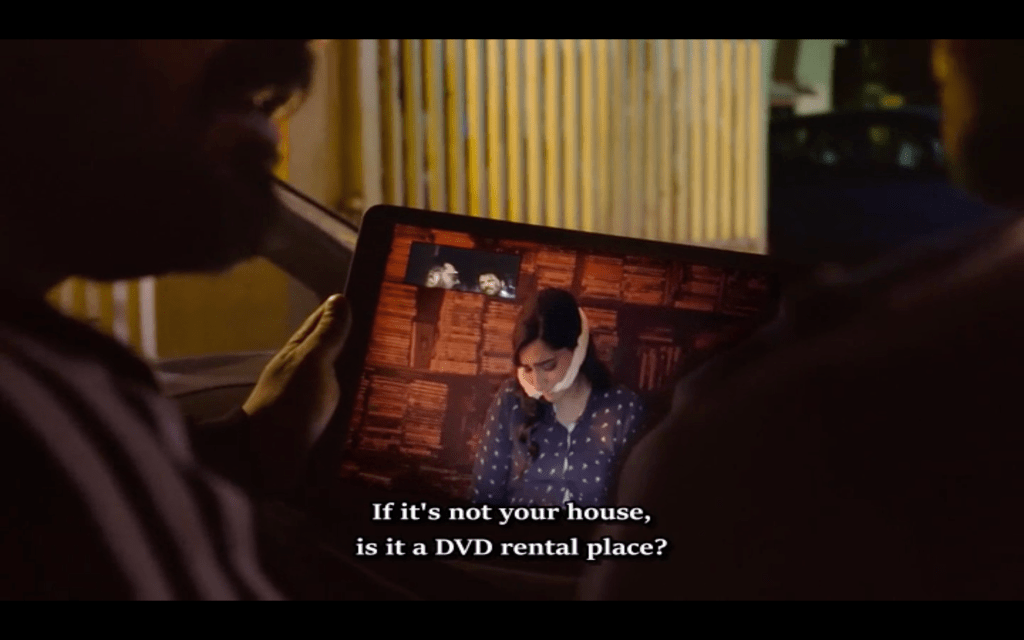
As the media splash pictures of the contretemps across the front pages, Anurag is beset by problems, with actors withdrawing from his upcoming film (Nawazuddin Siddiqui in a voice cameo) and backers pulling out. But just when the situation seems dire, Yogita comes up with a plan. Next, Anurag goes onto the set of Anil’s latest film where the actor is finishing early to go home and celebrate his birthday. After forcing his way in to speak to Anil, Anurag manages to convince the star that he has kidnaped his daughter Sonam Kapoor, and that Anil has until sunrise to find her. There are just 3 rules: no police, no outsiders and the camera has to remain on. The hunt is on, and as Anil becomes ever more frantic in his attempts to find his daughter, Yogita keeps the camera keeps rolling while Anurag keeps fanning the flames.

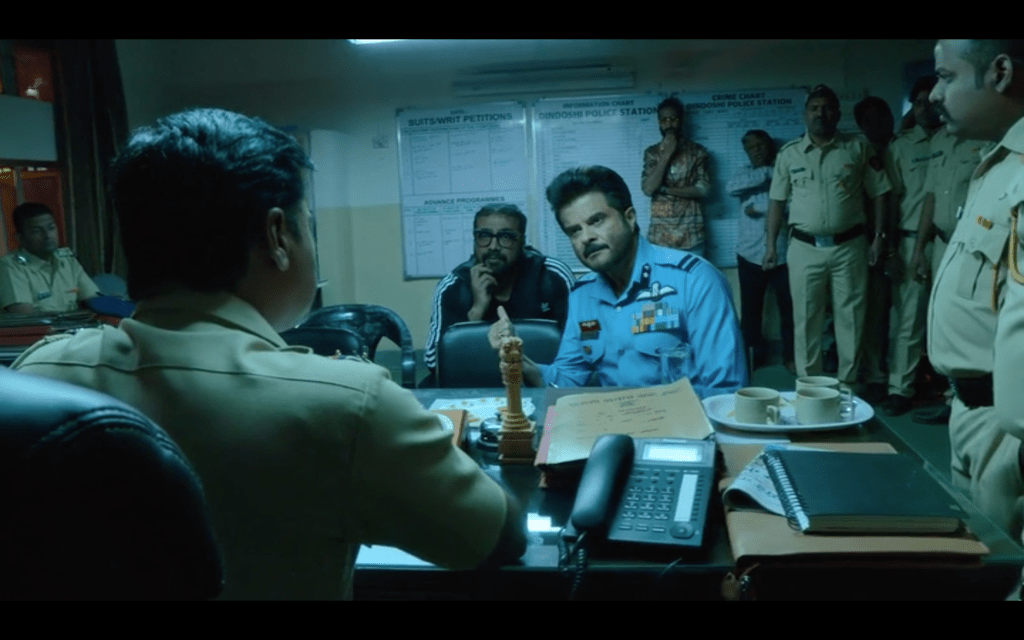
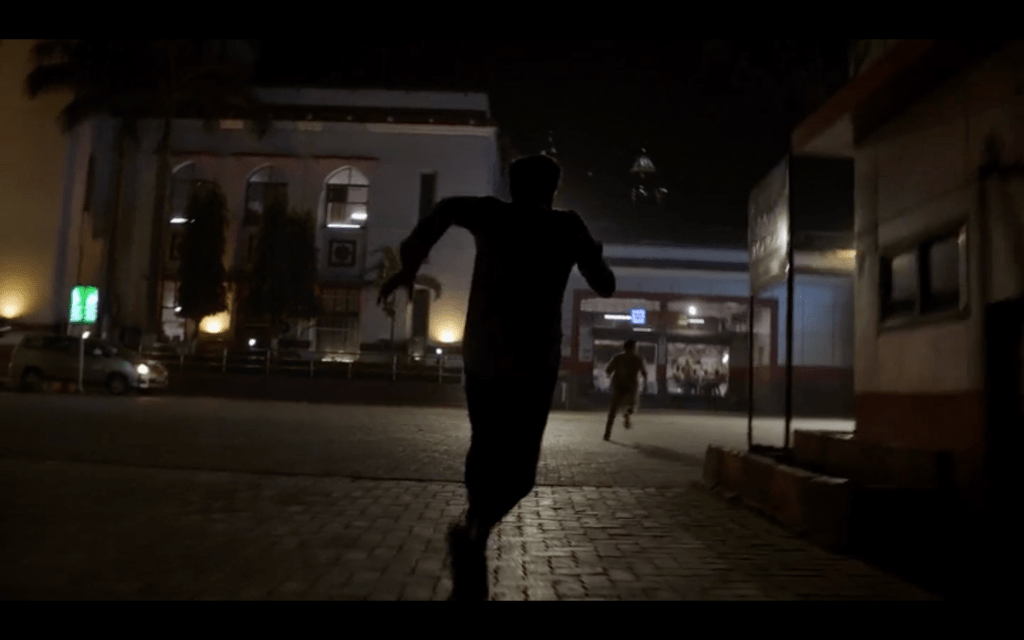
It definitely helps to have some idea about the two AK’s and to know something about their respective careers, families and the stories about each. At times the insults cut very close to the bone, but the film plays on this, aiming for the biggest shocks and the nastiest rumours. There are some brilliant moments; such as a scene in a police station where Anurag convinces everyone that Anil is just acting and an extended chase sequence where Yogita is struggling to keep up and the bouncing camera adds to the improvised feel of the film. But at the same time there are some scenes that drag on a little too long and Anurag’s overacting starts to become a tad annoying.

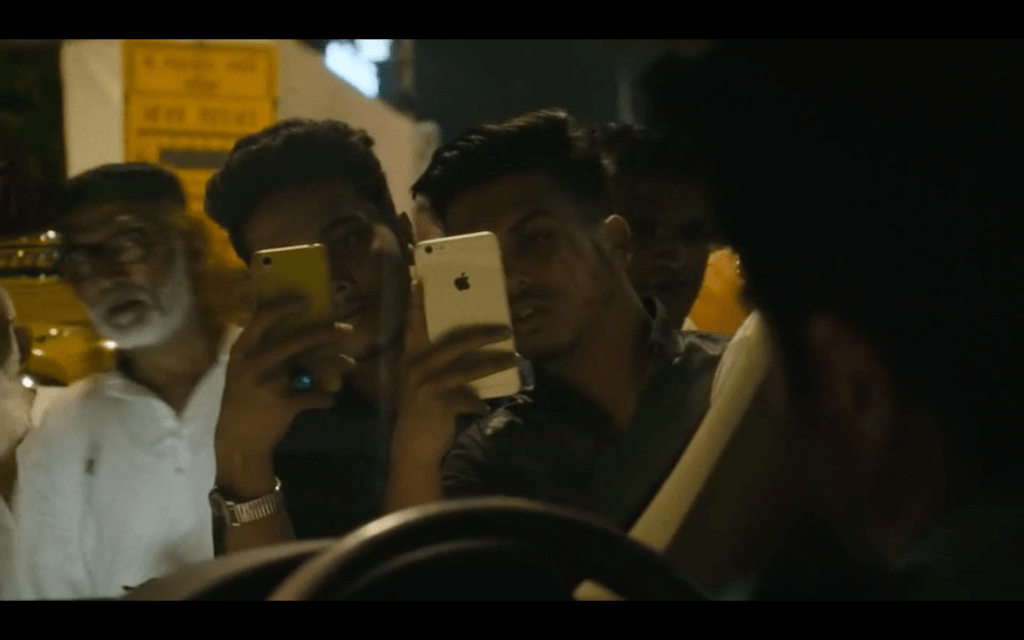
What I really loved in the film was Anil Kapoor and his ability to act, overact and be completely convincing as he changed from frantic father to consummate performer at the drop of a hat. The perils of stardom are shown everywhere as Anil is pressed into posing for selfies by almost every person he meets. Throughout it all there is no question at all that Anil Kapoor is a star. Even when he’s running through the streets, dashing along platforms and accosting taxi drivers, he is never put out by the attention he receives or the demands for selfies. He just smiles, poses and then resumes his search. That struck me as perhaps being the most true-to-life part of the entire film – this endless affirmation of stardom that becomes so all pervasive that it’s not even noticeable any more.

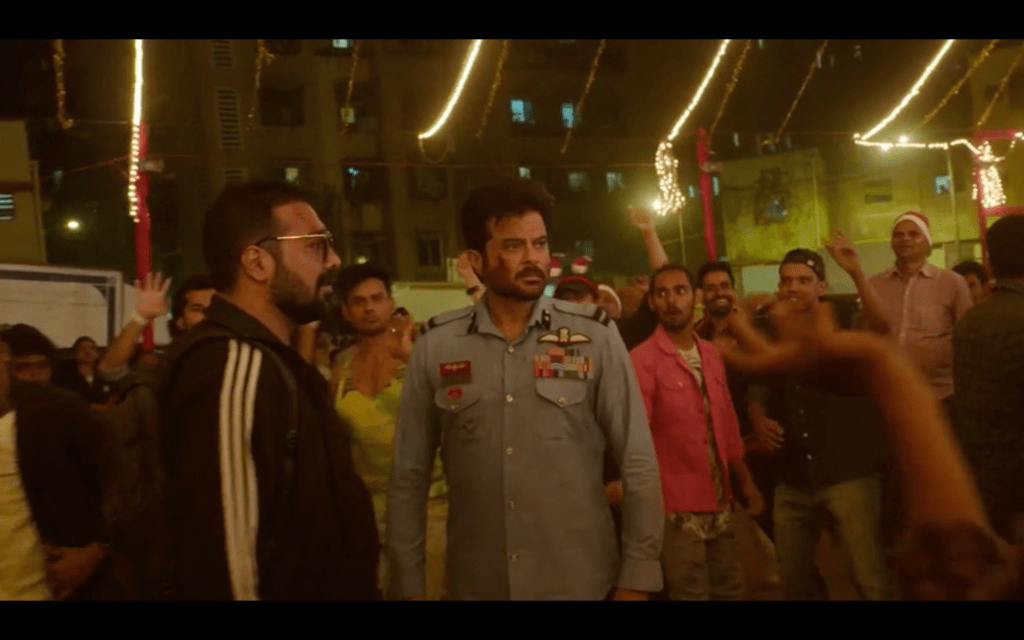
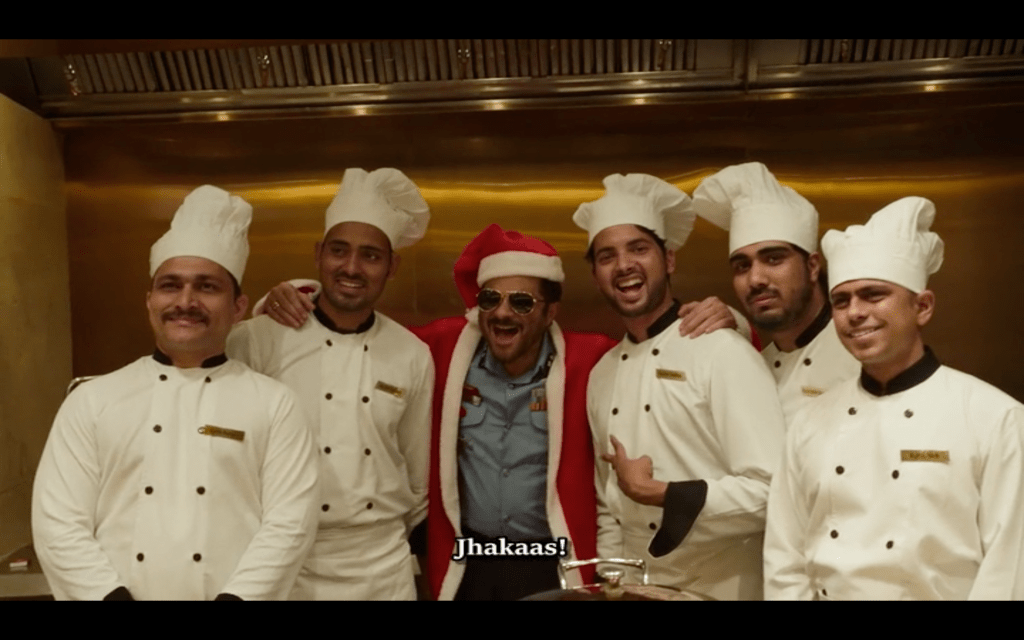
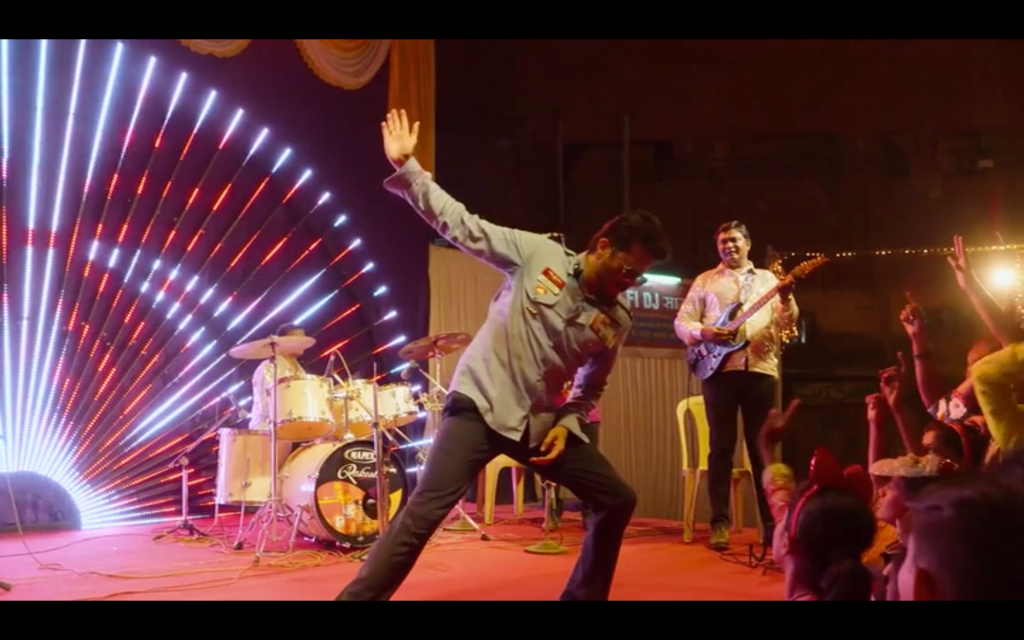
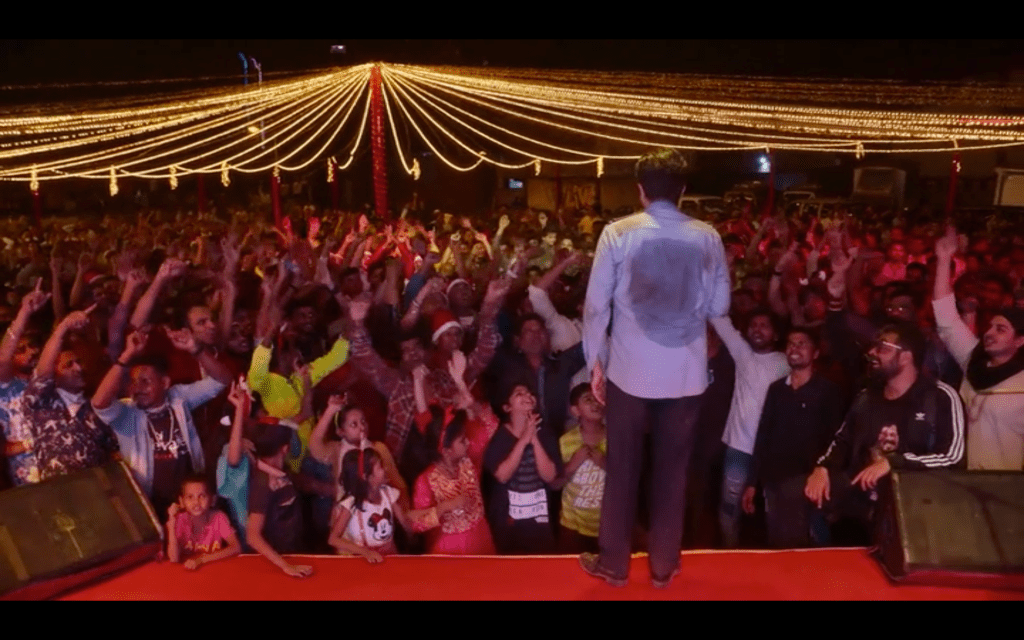
As part of the chase, Anil ends up at a Christmas party where the revellers won’t help him until he performs for them in a brilliant ad hoc dance performance. What makes it even better is Anurag clapping and cheering at the very edge of the crowd. Despite all his digs about Anil’s slide into obscurity, he seems happy to be watching the crowd’s reaction to their hero, or, is he just enjoying the delay to Anil’s hunt for his daughter? The manic look on Anurag’s face tends to suggest it’s much more likely to be the latter. There is ambiguity everywhere, a few unexpected twists and plenty of self-aware backslapping which somehow all works better than it should.

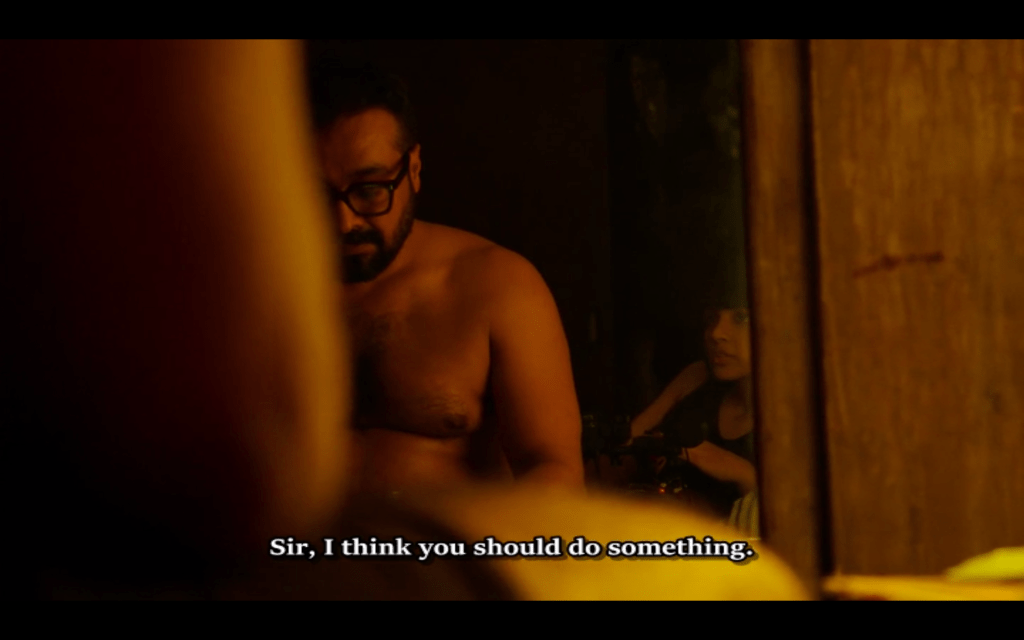
I enjoyed this film much more than I expected. The opening scenes are fantastic and create expectation for a perhaps more nuanced film, but once Sonam is kidnapped and the chase is on, we’re back into more familiar action territory. There is a lull in the middle before the film picks up again, but overall this is in turns funny, shocking, surprising but mostly just entertaining. Be warned though – there is a lot of swearing in this film. It was fun to see Anurag’s DVD library which I remember him talking about at a Q and A session here in Melbourne, and great to see such big Bollywood names such as Boney Kapoor taking part in the action. Other things to look out for are the preponderance of shots featuring images of the actors in mirrors and the glimpses of Jogita and her camera that can be seen reflected in windows, Anurag’s tablet and the car windows. All very meta.

So if you’re looking for something a little out of the ordinary, that’s still very much entrenched in the world of Bollywood, find AK vs AK online, sit back and enjoy the mayhem. 3 ½ stars.

Gehrayee

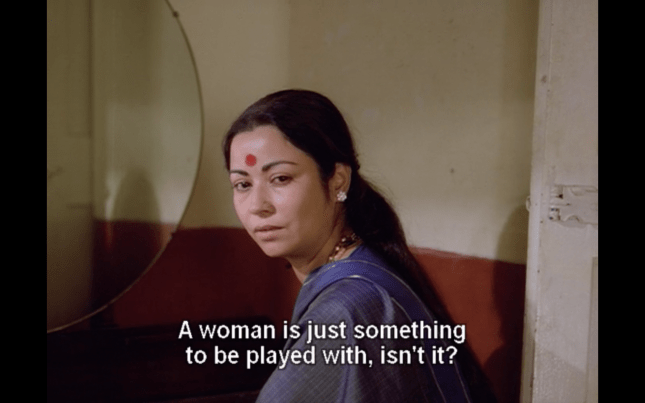
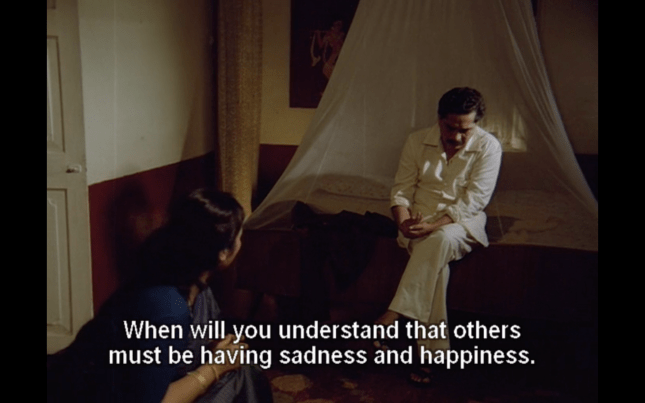
This 1980 supernatural suspense film follows the fortunes of a family after they sell an ancestral plantation to a soap factory. Aside from the supernatural elements, the story touches on the themes of gender inequality, the issue of caste and even environmentalism with an insightfulness that is surprising in a Bollywood film of the era. Although there are influences from Western films such as The Exorcist, Gehrayee is firmly grounded in Indian culture with references to traditional practices, god-men and sacred rites. Starring a very young Padmini Kolhapure, Anant Nag and Rita Bhaduri, Gehrayee is a rather different Bollywood ‘horror’ film that has plenty of relevance even today.

The film starts with Chennabassapa (Sriram Lagoo) visiting his family plantation in a small village. The plantation is looked after by Basava (Suhas Bhalekar) who lives on the farm with his daughter Chenni (Rita Bhaduri). During his visit, Chennabassapa announces that he has sold the plantation to a soap factory as he needs money to build a new house in Bangalore. He offers Basava a job in the factory, or work in a bank in Bangalore, but Basava is devastated by the announcement and doesn’t take Chennabassapa up on any of his offers. Instead, he bewails the destruction of the forest and what he calls the rape of the land in the name of money. 
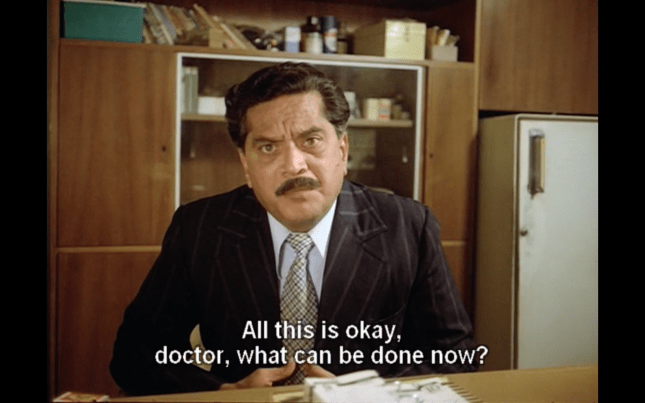
On his return to Bangalore, Chennabassapa continues to demonstrate his total lack of empathy when retrenching workers from one of his factories. Despite other members of his team pointing out that it’s not about the monetary compensation, Chennabassapa ignores the humanitarian aspects and continues to concentrate only on profit, although he does pay off his workers in line with government regulations. It’s not that he is mean and only focused on profit, but he sees his workers as just another commodity and not worth any further consideration once he has no further use for them. Chennabassapa is a man of science and rationality, convinced of his own superiority and sure that he is always right, but by the end of the film, this is shown to be a bad thing, and not something to be proud of at all!
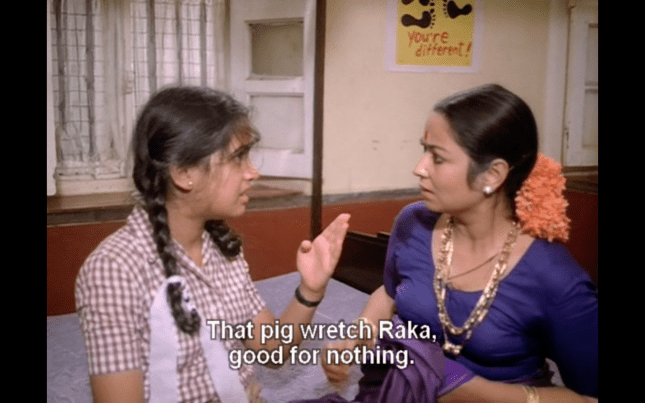
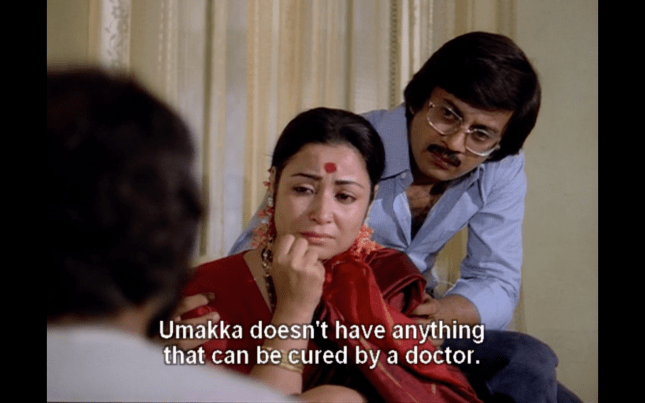
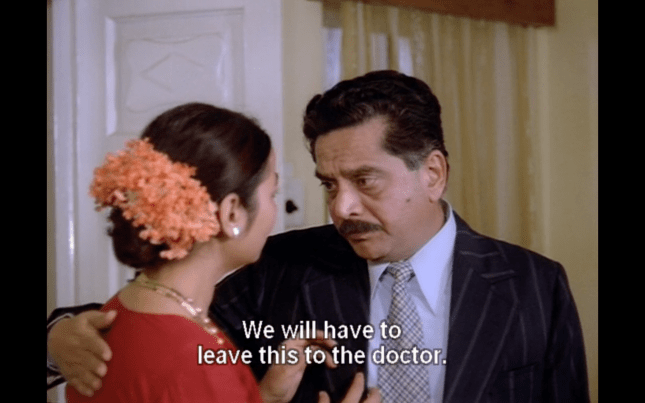
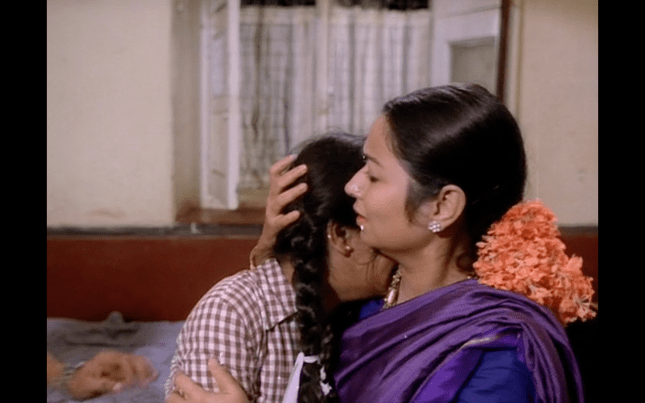
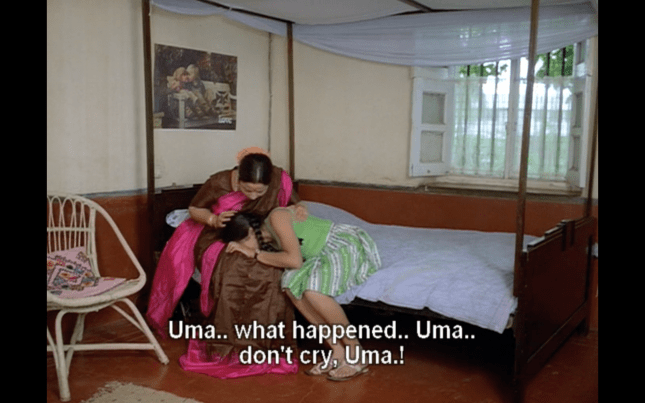
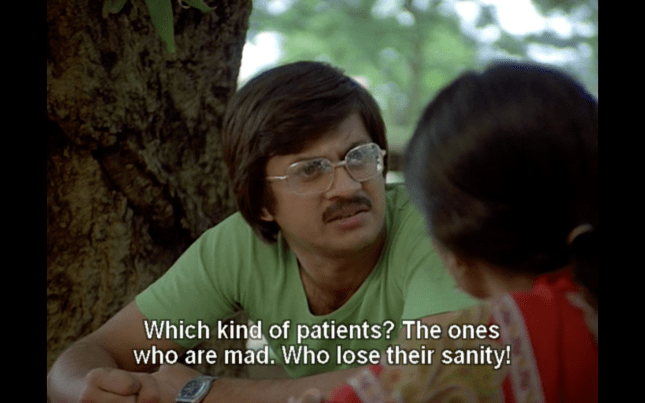
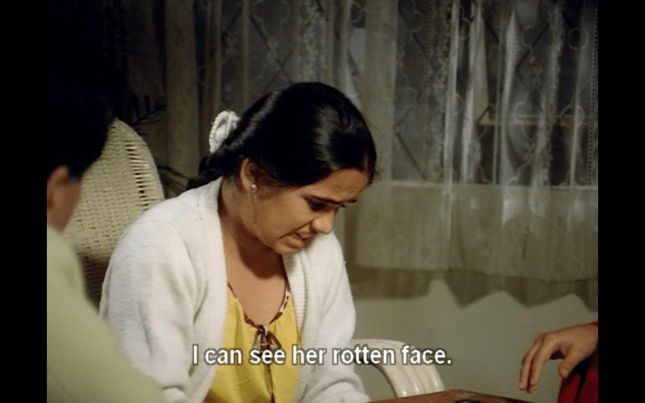
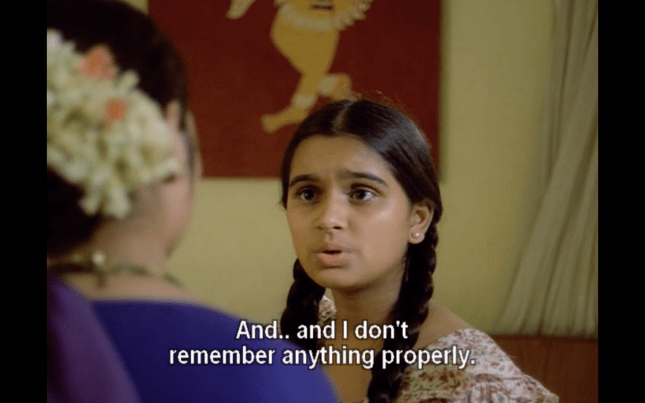
Shortly after Chennabassapa’s return from his village, his daughter Uma (Padmini Kolhapure) starts to behave very oddly, waking up screaming and speaking about events from Chennabassapa’s past in an odd voice. Unlike Chennabassapa, his wife Saroja (Indrani Mukherjee) is very superstitious and although she is accepting of the decision to take Uma to see a doctor, she also looks for other remedies and more traditional cures to help her daughter. As part of her treatment Uma undergoes shock therapy, which Chennabassapa’s son Nandu (Anant Nag) vehemently argues against. He is convinced that this will have a detrimental effect on his young sister and instead takes her out for rides on his motorcycle and trips to parks to help try and recover her senses. However, this seems to backfire as Uma then shockingly tries to seduce Nandu in front of their parents, and she continues to reveal indiscretions from Chennabassapa’s past.

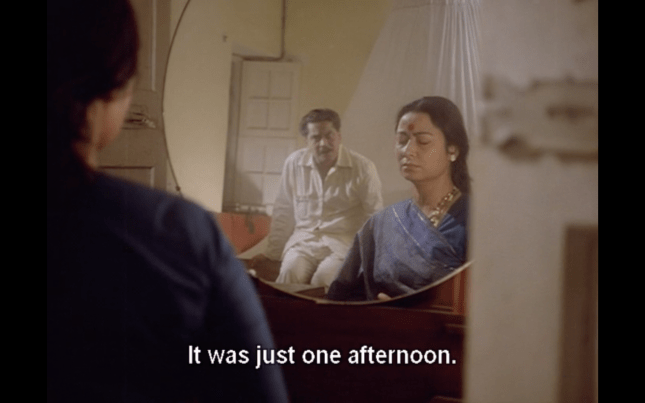
One of these revelations is that Chennabassapa seduced Basava’s wife who then suicided by jumping into a well. Saroja takes Chennabassapa to task, telling him that like all men his sexual conquest meant nothing to him but was a major event for the woman that resulted in a death. It’s a small part of the plot, but it makes a big impact as, in a few words, Saroja rips apart her husband’s complacency and points out the inherent hypocrisy of their society. I wish the film had gone further into this and perhaps even brought it into the climax, but it’s still an excellent piece of writing and kudos to scriptwriters Vijay Tendulkar, Vikas Desai and Aruna Raje for including such a frank conversation in the film.

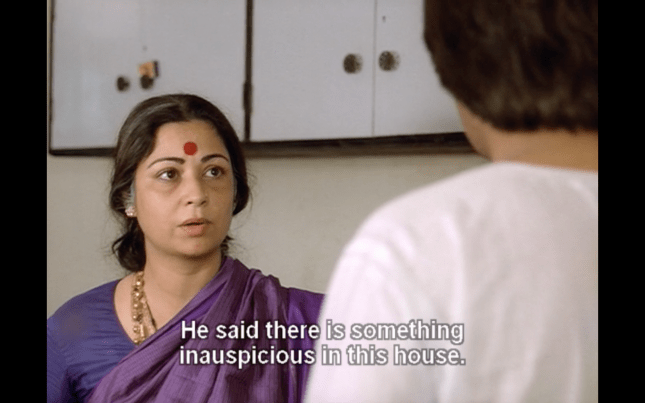
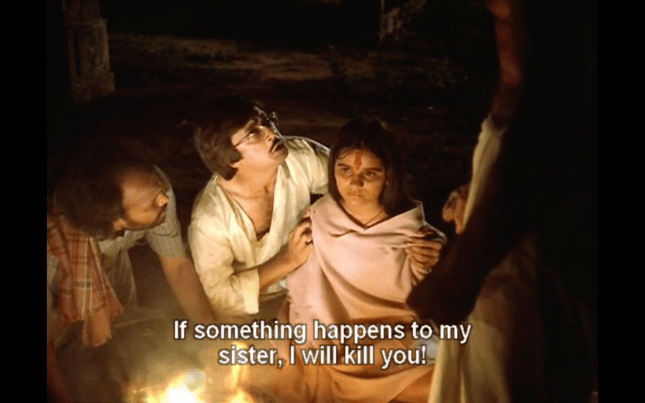
Meanwhile, as Uma appears to be getting worse, the family servant Rama (Ramakrishna) tries to help by suggesting a tantric lime placed under Uma’s bed. Apparently this will rot if she is possessed but will otherwise stay fresh. However the next morning the lemon is missing and shortly after Rama is sacked after the family’s food rots in the pan. At the same time, Saroja starts to look for other solutions and tries a succession of god-men who try to exorcise the evil spirit from Uma. One of these (a youthful Amrish Puri) kidnaps Uma to use in a demonic ritual of his own, but luckily Nandu and Rama are able to rescue her in time. As Uma becomes weaker and weaker the family becomes ever more desperate to finds a solution before time runs out. But perhaps the most shocking revelations occur at the climax of the film, when Nandu tries to find out why his family have been targeted and ends up raising Basava’s ghost to try and get to the bottom of Uma’s illness.

While there isn’t ever anything particularly frightening that happens in Gehrayee, some of the scenes of possession and the final climax are definitely quite creepy. Padmini Kolhapure is exceptionally good in her portrayal of a young girl possessed by a demonic spirit, and even if there are no horrific special effects, her expressions and body language perfectly express the two sides to her personality. Anant Nag is also excellent as Nandu, slowly starting to experience his own mental issues and managing to convey both his despair and his internal confusion as his beloved sister becomes a stranger. Sriram Lagoo and Indrani Mukherjee are also excellent and make the most of their conflicting views to keep the story moving along. The conflict between science and superstition is nicely equitable with both having their successes and missteps although in the end the supernatural problem requires a supernatural solution.

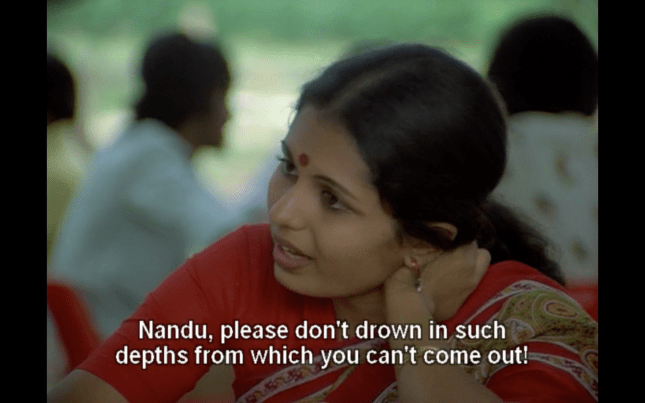
 The background music from Laxmikant Pyarelal also adds to the suspense with odd noises and other-worldly screeches along with the more usual musical build-up. The contrast between Chennabassapa’s belief in science and medicine compared to his wife’s more spiritual approach to the problem works well and adds to the general uneasiness of the film. Nandu seems torn between the two belief systems which ultimately contributes to his own mental deterioration while Chennabassapa’s attitude also highlights the divide between rich and poor, and the harsh struggle to exist for those who live in small rural villages. Basava’s lament for the plight of the land echoes throughout the film, contrasting the lush parks in the city with the barrenness of the village once the factory has taken over the land. One of Uma’s breakdowns also occurs in a park where she is surrounded by trees, where it seems as if nature is taking its revenge on her family.

Although the story is about demonic possession, ultimately it’s the evils of society that end up as the focus of the film, and therein lies the real horror. Vikas Desai and Aruna Raje keep the outcome uncertain right to the very end and the juxtaposition of events that can be explained with those that cannot bring a feeling of unease that persists throughout. It’s very well done to keep the audience unbalanced and waiting for something awful to happen, right up until the climax. More of a social commentary that just happens to have a supernatural element, Gehrayee is a film ahead of its time and one that deserves a wider audience. 3½ stars.