Pournami

I’ve become quite fond of Prabhas. Not in a ‘he’s so hot‘ fangirly way. But he is likeable on screen and his presence in a film does seem to promise a commitment to entertainment.  Pournami is colourful, visually pleasing, sentimental and rather silly. Just what I have come to expect from Prabhas in fact!

The film opens in 1953 and centres on a family with a long affiliation to a local temple. Many years back there had been a drought that threatened the livelihood of all in the surrounds. One woman had the strength and stamina to dance for Lord Shiva and was rewarded with rain. From that date, her family repeated this ritual every 12 years and her female descendants were trained to dance.
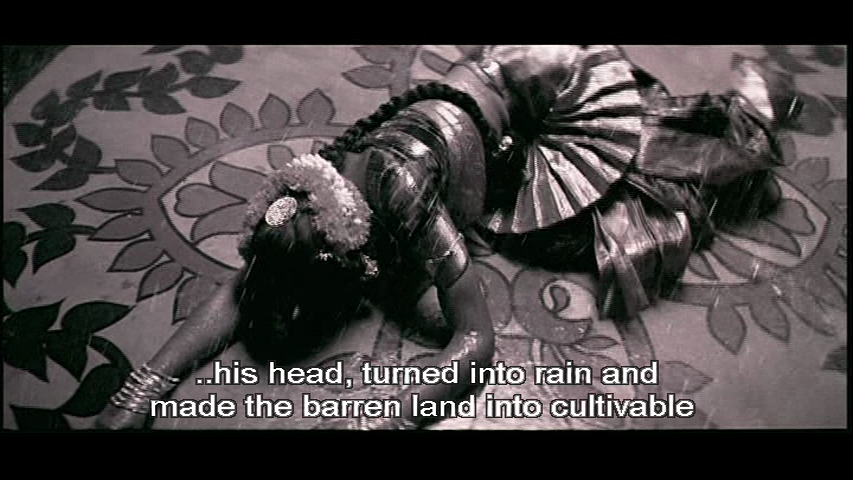
So it was a bit of a surprise to me that it all came as a surprise to the girls in the 1953 family that the eldest daughter, Pournami, was going to have to perform the ritual in 10 years time. Surely it might have rated a mention during dance lessons? Continuing the journey through time, we emerge in the 60s or thereabouts. Pournami has gone missing before the ritual must be performed. Her sister Chandrakala always wanted to dance but was overlooked. Chandrakala is now played by Charmme and she is reasonably convincing in the dance sequences. She is a Cinderella type figure – persecuted by her horrible stepmother, teased by local bullies and overlooked by many.

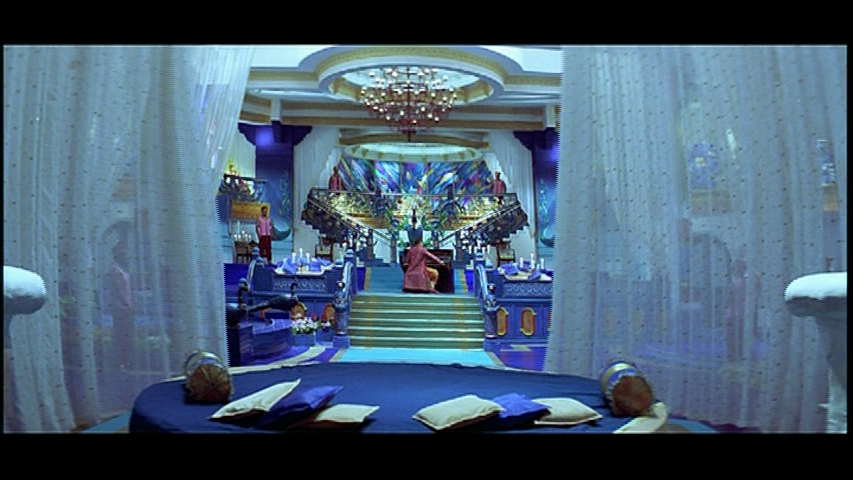
But where is the drama? Hello evil landlord! I do not in any way approve of evil landlords intent on deflowering young ladies who should be saving their strength to dance for Shiva. However, Rahul Dev has an excellent palace, a resident orchestra and generally believes himself to be a god or at least the equal of one. It is all highly entertaining. Pournami did a runner to avoid being kidnapped by Rahul Dev and he is now intent on claiming her sister.
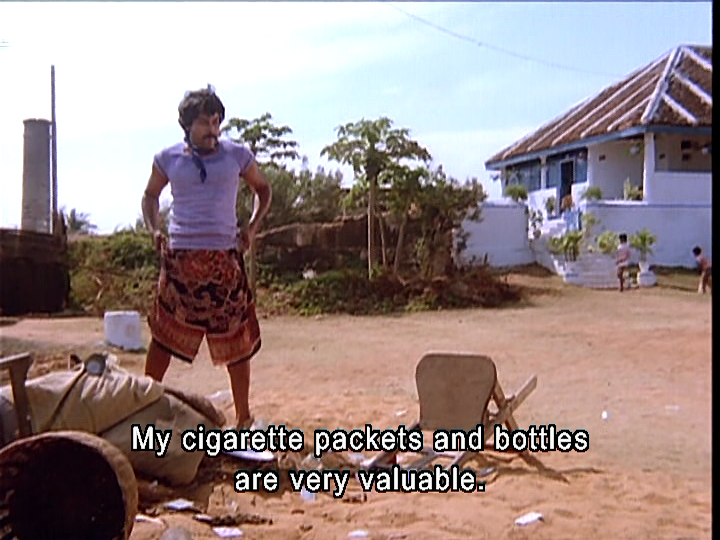
But where’s the hero? Hello Prabhas in eye-catching plaid pants and rock n roll rebel attitude. Adding to the fun, we learn he is an ‘English Dance’ teacher, Sivakesava. Hmm…is that a Significant Name? Sivakesava rents room with Charmme’s family and opens his dance school.

In between dance classes and dodging the local nymphomaniac, he encourages Charmme to dance, sometimes with quite amazing results. He seems to have mysterious powers over Chandrakala – little things like making her teeth glow in the dark and resisting her attack snake. But he uses his powers for good, and for fixing fuses, so we need not be alarmed on her behalf. I was amused by his gramophone – it’s just not rock n roll as I know it!

All the threads seem to be drawing together, but why? Who is Sivakesava and why is he intent on protecting the upcoming ritual? An extended flashback reveals that he met and fell in love with Pournami (played by Trisha) after she fled the village. She had joined a troupe of travelling performers, and her amazing dance talent, or perhaps her skimpy outfit, caught his eye. Pournami continues to practice her classical dance in her spare time. In a very pretty scene under the full moon, she gives ample evidence that the odds of pleasing Lord Shiva will be improved if she doesn’t dance for him.

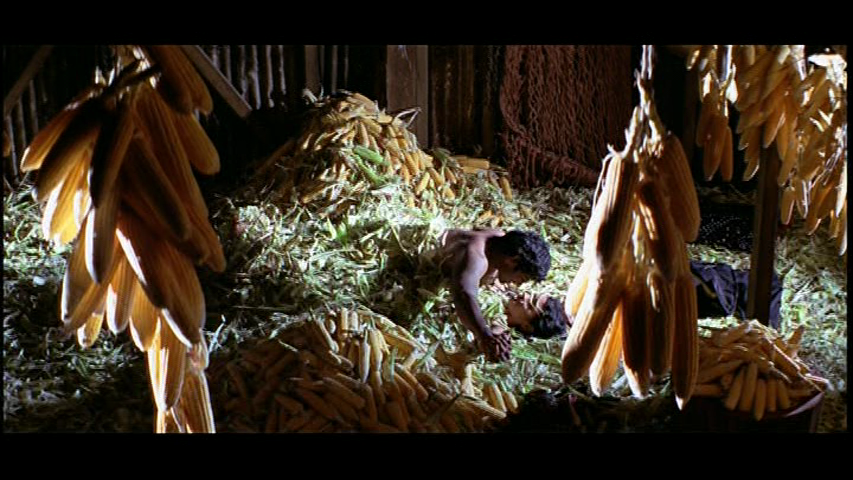
It turns out that Sivakesava was from a family who had a blood feud with the other big family in the region. He was sworn to avenge his brother and then would no doubt be hunted down in turn. Pournami became a victim in this feud, sacrificing herself to save her husband on their wedding night. The wedding night scene may mean I never look at corn in quite the same way ever again. Yes, that was corn with a c.

His past life continues to pursue him, never giving him a clear path to his heart’s desire or letting him subside into anonymity.

Chandrakala is abducted by Rahul Dev and he shows why he needs that piano and keeps an orchestra on standby. There is nothing funny about kidnap and rape in reality, but when the villain is improvising a melody to the tempo of Charmme’s footsteps it is very entertaining and adds to the cartoonish effect, as does his balletic fighting style. Naturally Kesava comes to her rescue again, and his actions cement her feelings for him.
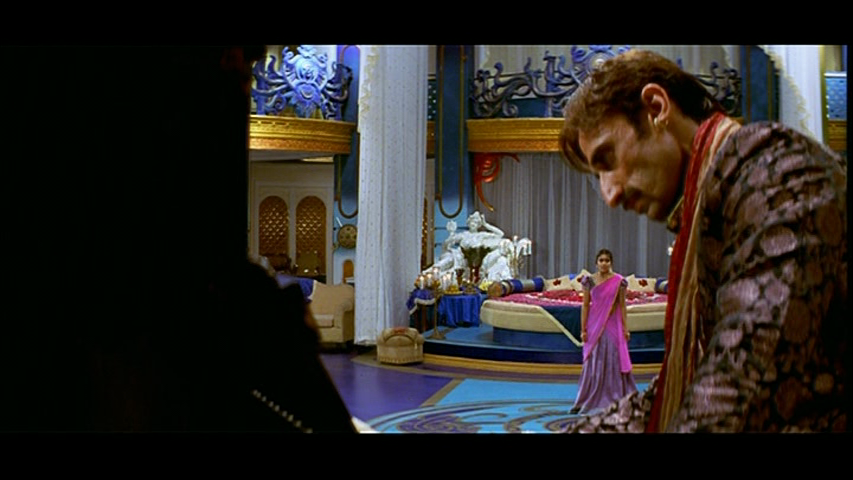
Thus the other crucial episode unfolds – Kesava feels compelled to tell Chandrakala about his past with Pournami and why people from his old life, particularly his fiancée Mallika (Sindhu Tolani with a terrible hairdo), are still pursuing him. Chandrakala takes up the challenge to dance at the festival, motivated by love of her sister, of her father and for Kesava.

The finale at the temple is visually stunning and yet daft in equal measures. Which really sums up the whole film so it is perfect.

Although Pournami’s name and presence infuse the film, Trisha is overshadowed by Charmme and Prabhas. This is mostly due to the structure of the film – her story is told in isolation from the present time drama and we aren’t so involved in her relationships with anyone other than Sivakesava. In a film about dancers, Prabhu Deva gave Trisha some beautiful picturisations but her dancing was not as strong as Charmme’s and that aspect didn’t convince me. She looked lovely and her acting was as convincing as the role allowed. When Pournami appears to take over during the final dance it is shown as a way for everyone, including her spirit, to find closure. Trisha uses her very expressive face to communicate her sorrow and joy at this final encounter with her loved ones.

Charmme irritated me in the first half of the film, but I think she was meant to be a troubled teenager who was a bit bratty so I suppose that was a win. Her portrayal of a growing love for Sivakesava was done well, and I could see her puzzlement and annoyance turning to appreciation of the man who supported and protected her. She was a little tougher than your average filmi heroine, and her demonstrated snake wrangling skills make her more than a match for the average thug. Although the hero had to step in and help her finish the ritual, his help would have been for nothing if she hadn’t had the fortitude to keep going and stay focussed. Finally, she saves Kesava’s life and through that act wins the right to his future as his past finally lets go. I felt a bit sad for Chandrakala at the end as once again she will be the understudy for her sister, only this time in life.

Despite the story being ostensibly about the girls, this is a Prabhas film. He is at the centre of all the action and subplots, and once he arrives in town he is on screen for most of the film. He is convincing as both the kick arse hero and the misty eyed lover, and seems to have fun in the retro dance sequences. His relationship with both the heroines was played well, and there is a marked difference in his interaction with each of them. It’s a typically fun Prabhas performance. And his costumes… They make a statement all on their own.

The supporting cast were fine, with Rahul Dev, Brahmaji and Mukesh Rushi the standouts. Sunil is sweetly funny as Pournami’s brotherly friend and Ajay is reliable as a local thug. The soundtrack by Devi Sri Prasad is enjoyable and suits the story. Of course the songs are a visual delight as I expect from a Prabhu Deva film. The sets, the costumes, the locations are all beautiful and add a fairytale quality.

The film has a happy ever after ending, with signs of the new generation ready to maintain this lovely tradition. With any luck they’ll have a new landlord before the next festival!
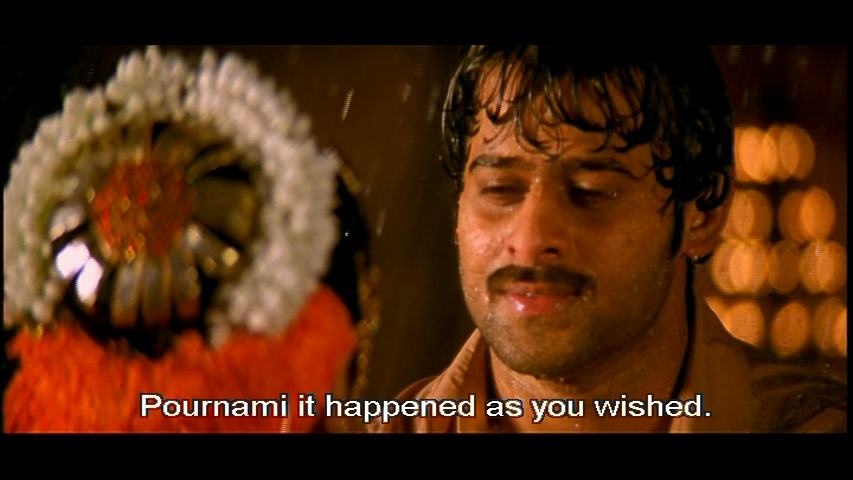
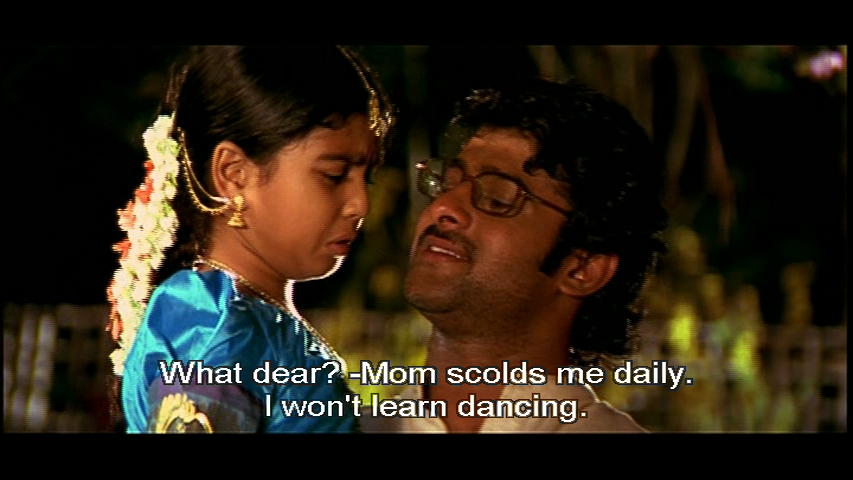
See Pournami if you like the stars, plaid pants, excellent set design, pretty song picturisations and a dollop of overacting. I give this 3 and ½ stars.

Paruthiveeran

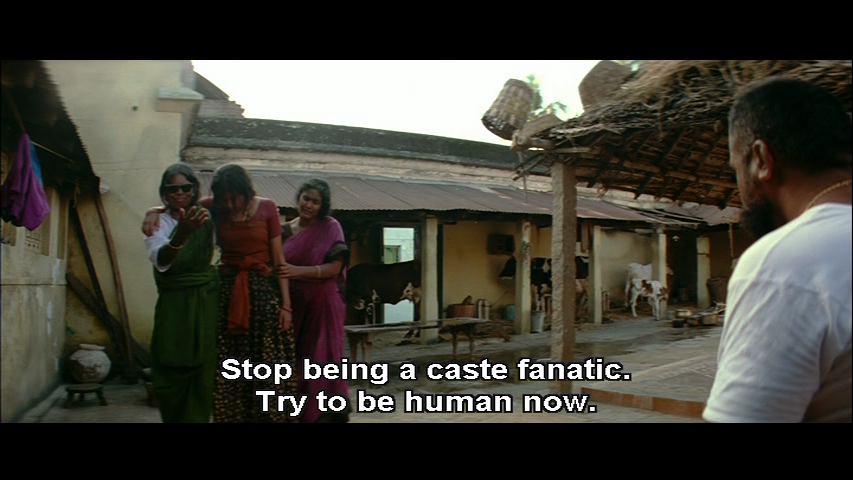
The film opens at a temple festival, full of colour and music. The camera draws the eye in through a range of points of view, creating the feeling of being part of the milling crowds. It’s all very colourful and entertaining, and then the knives come out. We’re in a place divided by caste and old grudges, where the police are the law but not the authority.

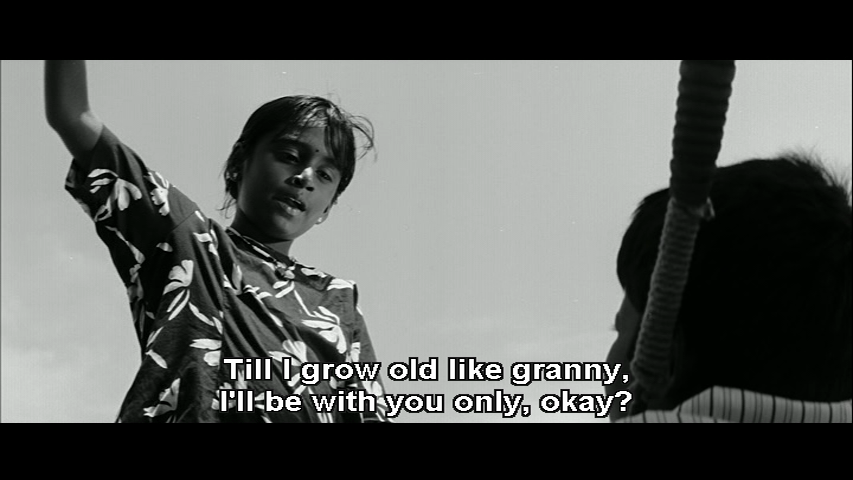
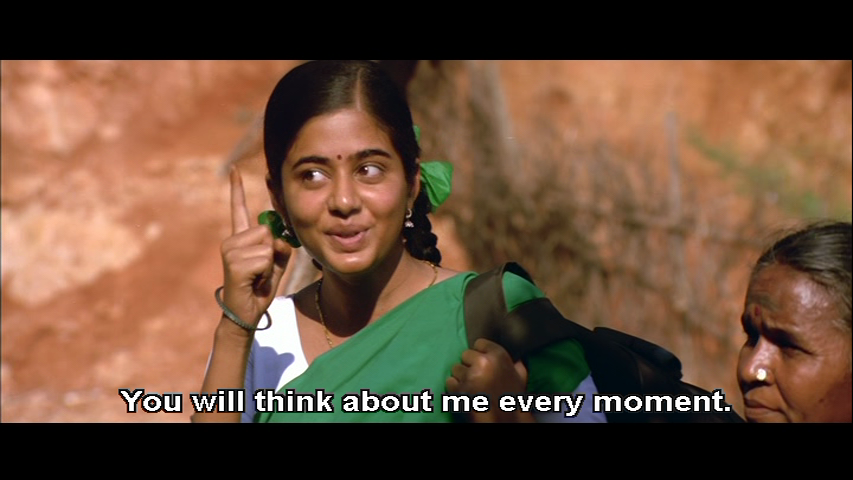
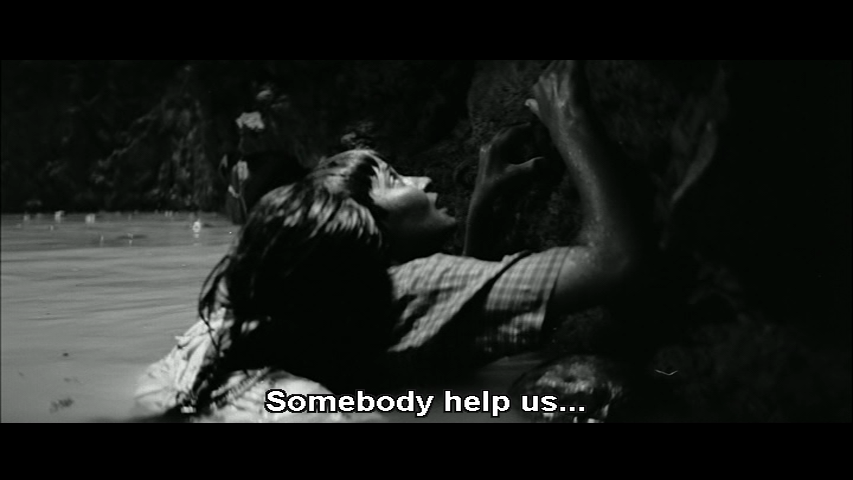
In a black and white flashback, a young girl is pushed into a well. Her cousin, Paruthiveeran, helps to keep her alive, and an obsessive love is born. The children become friends and promise to be together always, even after they grow up.  Soon Muthalagu tells anyone who will listen and everyone else as well, that she will marry Paruthiveeran and only him.

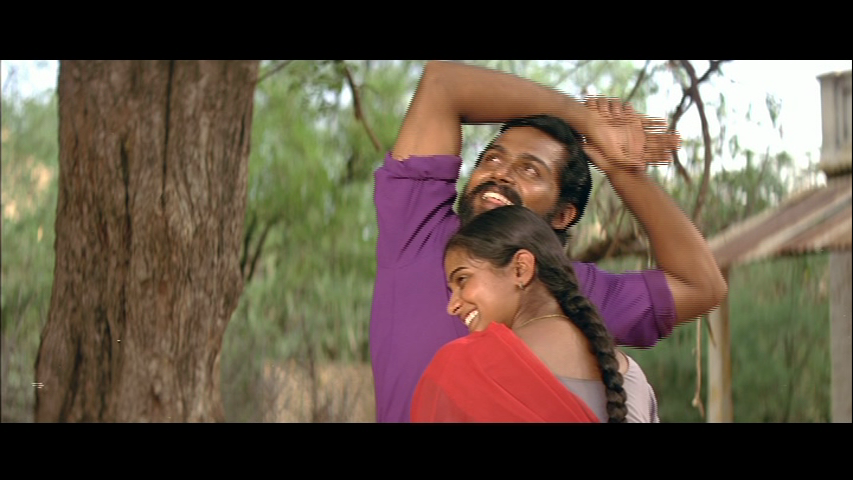
Back in the present day Paruthiveeran, or Veeran, played by Karthi (knife wielding ne’er do well from the opening sequence) and Muthalagu (Priyamani) are still in the village. What will happen to a strong willed girl who refuses all other offers and stands up to her father? Why would she want Veeran who is a drunken womaniser, not interested in her and not particularly attractive? Priyamani and Karthi make the melodrama more compelling than it might seem.

There are lots of spoilers ahead so if you really don’t want to know, please stop now.

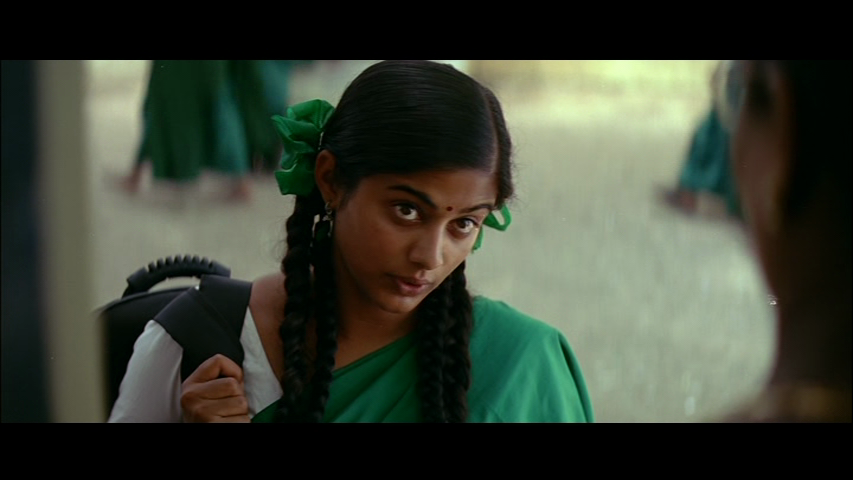
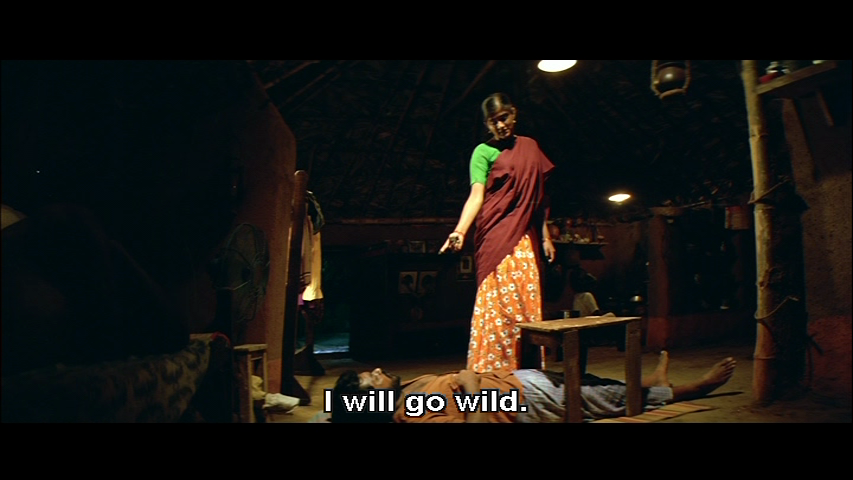
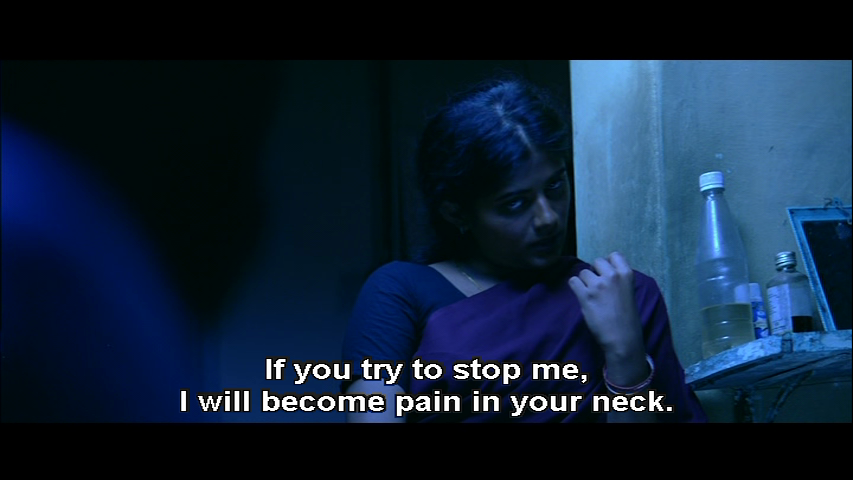
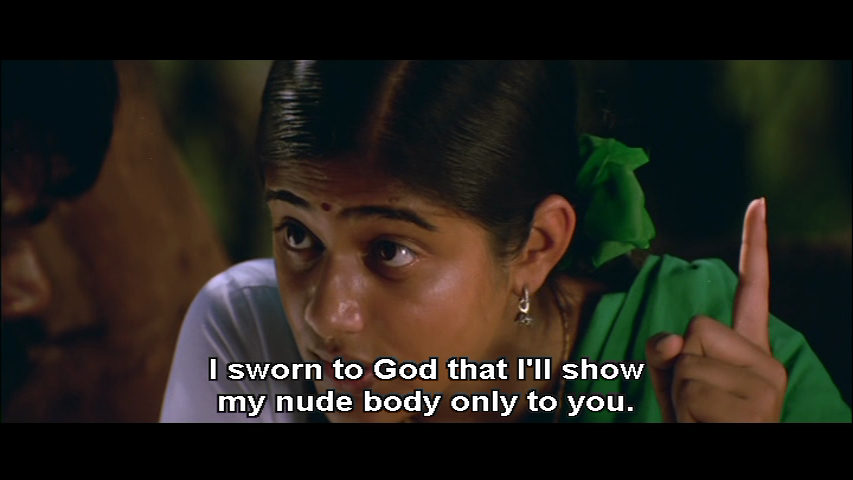
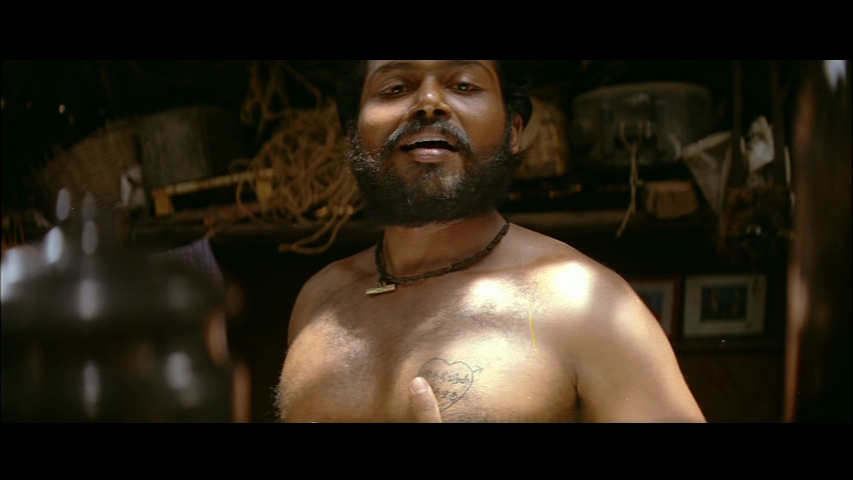
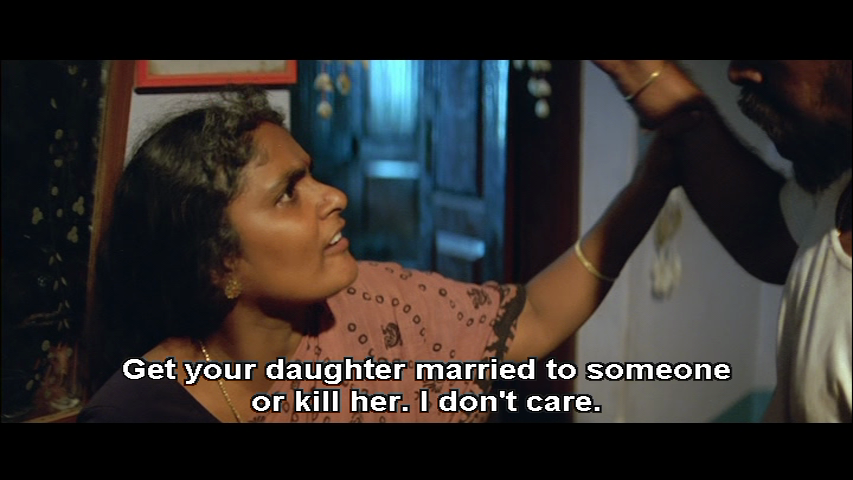
Muthalagu is an interesting character, and not your usual romantic girly heroine. Priyamani’s performance is totally convincing, even as I was rolling my eyes at some of her character’s choices. Muthalagu is complex yet single minded and while I couldn’t see myself ever obsessing over Karthi, I could believe that she was.  She is beaten and verbally abused by both of her parents but will not flinch, and even threatens her father in return. Her teachers and others keep asking why she wants to throw herself away on a man who is usually in jail, why she would deliberately fail 4 years of school so she can postpone being married off. She takes poison rather than marry another man. She drugs Paruthiveeran, ties him to his bed and tattoos her name on his chest.

This is not a shrinking violet, but nor is she a crazed caricature. She knows everyone is talking about her, but she never tries to hide her feelings or make any pretence. She believes Paruthiveeran is her fate, they are meant to be together and she will not break her promise to him or to god. There is no swaying her, not even his protests can persuade her.

It’s not a glamorous role – most of the time Priyamani is in plaits with the scrubbed face no makeup look. She doesn’t try to make crying look pretty; she lets the anger and frustration burn through. Her body language and facial expressions really capture a mix of arrogance and uncertainty. When Muthalagu smiles, she is a radiant young girl in love. Priyamani has been praised to the skies for this role and bagged a number of awards, and I can see why.

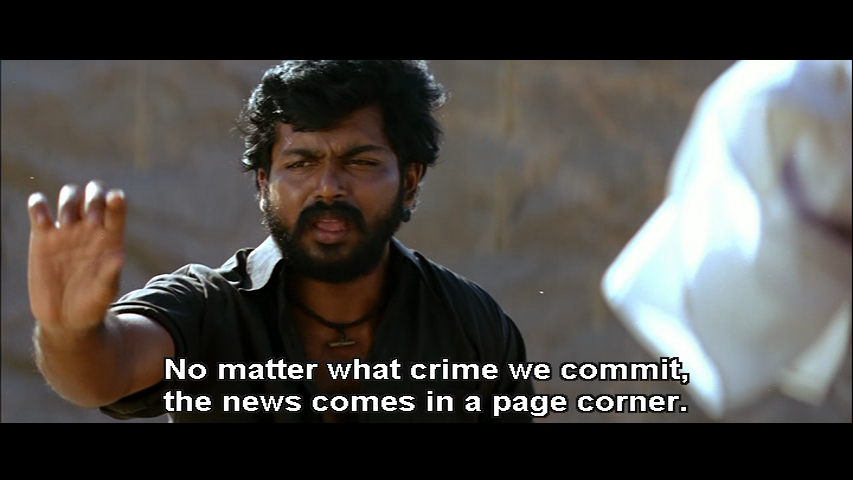
Karthi did his best in his debut to give his character some depth.  Veeran is a bully and a bit of an idiot, his only ambitions seem to be to upset local dimwit Douglas and to commit a big enough crime to go to Madras prison.

He spends a lot of the film hanging around with his equally useless uncle Sevvalai (Saravanan), getting into fights, avoiding Muthalagu and shagging an assortment of women (some paid, some volunteers). He basically steals a prostitute from some local men (he gives her back when he is done), and is asked to share one of his girls with them one day – a throwaway line that will have repercussions. He rejects and humiliates Muthalagu time and time again, and he is as frustrated by her obsession as she is by his resistance.I did enjoy his visible transformation to the semi-domesticated boyfriend; once again, ruler straight side parted hair seems to be the Good Boy indicator. But how good can he possibly be? Well, he does get that tattoo amended to have both their names enclosed in a heart so I suppose that is a commitment.

Once the two admit their now mutual feelings, the film starts to go off the rails a bit in search of more dramatic tension.  The family feud gains intensity, caste violence takes the stage and some of the characters seem to go out of focus. There is another flashback sequence that explains the origin of the family enmity, but I didn’t think such detail was all that necessary.

The film builds to a finale that is both highly melodramatic and somehow shockingly real. Deciding to make a break from the village and start a life together, Paruthiveeran hides Muthalagu in his shack and leaves to protect his uncle. Unfortunately, that sleazy guy from the prostitute episode sees her and decides it is time to claim his dues. After a horrible gang rape sequence that is disturbingly matter of fact, Veeran comes back to find her dying. I don’t think this is a case of a ‘bad girl’ being marked for death – Muthalagu died because of Veeran’s actions and who he was, and she didn’t seem to be subject to a directorial judgement by Ameer Sultan. The death scene was well written, and not at all sickly sweet. Muthalagu’s parting words to Veeran are a demand for some kind of explanation as to how she could have waited her whole life, and ended like this. And I was asking the same thing. Veeran decides he must cover up the dishonour to his love, and perhaps also use her death to have one last shot at her father.  What he did startled me and while it made a sort of sense, the ick factor was high. Karthi did reasonably well with the extremely emotional scenes, but it was in the quieter sorrowful moments that he really convinced. It was quite unnecessary that we got an eyeful of Karthi’s butt in the final scenes but whoever pre-ripped his clothes was very determined. I am sparing you the sight.

The support cast are very good – they look and sound the part and this isn’t a glossy view of country life. I wasn’t so taken with the little girl who played young Muthalagu. Her voice was a monotone buzz that grated, but her expressions were fun and she managed to be precociously flirty and still a child. Saravanan as Sevvalai is good but doesn’t get much to do apart from support Karthi. The grandmother and mother (Sujatha) in Muthulagu’s family are intense and their performances are high on energy but not overly histrionic. I really felt the tension in her family, and it made the typical family disapproval scenes much more compelling.

Yuvan Shankar Raj’s soundtrack is excellent. Some tracks sound as though they are sung by traditional singers rather than studio artists, and I think that works really well in building the sense of place. The rural setting is very picturesque and appealing, and the cinematography captures both the energetic village life and the open countryside.

The flashbacks took up too long, and the ending is what I have come to think of as typically ‘everyone dies or lives unhappily ever after Tamil romance’. I’m never very happy about the depiction of rape in films, but I think this was given some weight and treated as an assault, not a justly deserved punishment. It was not made to be the girls fault, despite what her rapists may have said, and I appreciated the writing that made the scene compelling. Priyamani is the reason I picked up the DVD in the first instance, and her performance is remarkable. I don’t imagine I will feel the need to watch it again anytime soon, but I did like seeing great acting, a strong female character and some interesting relationships on screen. I give it 3 and 1/2 stars.

Aaradhana (1987)


Film romances are often full of stupid people doing stupid things, trying my patience to the point that I hope one or all of them will hurry up and die so the movie can end. Thankfully this is not the case with Aaradhana which I found intelligent and lyrical. It is hard to avoid spoilers, although I have tried, so be warned…

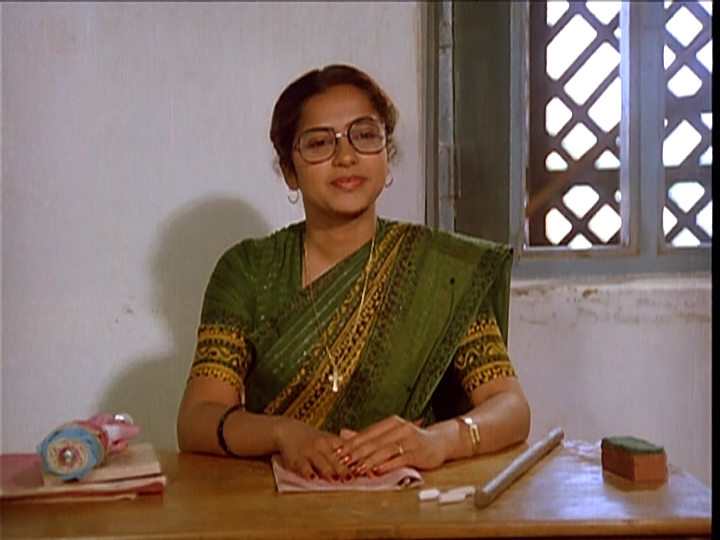
The basic story is simple enough. Puliraju (Chiranjeevi) is a no-good drunk who falls for Jenny, (Suhasini) a Christian schoolteacher. Jenny’s family rely on her for financial support and her father Danial plans for her to marry wealthy cousin Lawrance (Dr Rajasekhar). Gangamma (Radhika) believes she has been engaged to Raju since childhood and is determined to marry him.

It could have been a farce but for excellent writing and beautiful performances, ably steered by writer-director Bharathi Raja and dialogue writer Jandhyala. There are consequences to every choice and these characters know what they want, see the obstacles and understand what the results will be, both for themselves and for others. This thoughtful writing adds a note of tragedy to balance the sweetness of the love story. The cast are uniformly good and make the most of the material, with Chiranjeevi, Suhasini and Radhika outstanding. I am a Chiru fan, but I really was seeing Raju on screen most of the time, not the Megastar. I will add, there is not a shred of lycra nor a metallic go-go boot in sight – his performance succeeds purely on acting ability. And those eyes.

The film opens with a slow pan around a seaside village before Puliraju chases a man through the market and lops his arm off as punishment for teasing a girl. He is a destructive force of misguided and alcohol-fuelled energy; childishly impulsive and self centred, full of aggression yet backs away from emotional confrontations. His name is a sign of the character’s dual nature – is he a beast or a prince? His mother and the villagers see only his worst side.

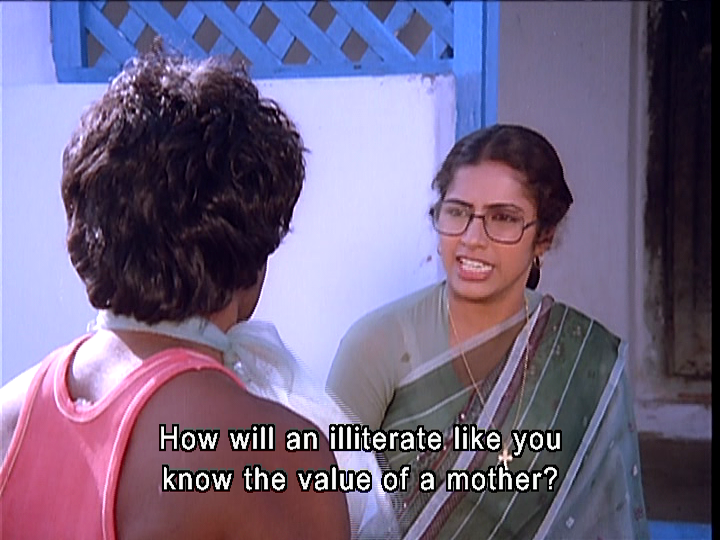
Jenny is worlds away from the likes of Raju. After a confrontation where she slaps him and he backs down, Jenny talks to Raju’s mother and reassures her that he has a good heart under the crude exterior.

Raju overhears this and is touched by Jenny’s faith in him which, along with his attraction to her, compels him to try to become a better man. Jenny isn’t afraid of Raju, and her values demand that she tries to see the best in him. She acquiesces to his plea for lessons and over the time spent together, an attraction and warmth develops. His childish streak is allowed to manifest as a sense of fun and silly stunts to impress Teacher Jenny, and his fearsome reputation diminishes.

I found it unusual to see a hero make himself so vulnerable to a woman, and to be in the position of mutely hoping she picks him. Raju knows he isn’t the right man for Jenny in so many ways, but he loves her and feels helpless. He changes his hairstyle (with varying degrees of success but a ruler straight side part always seems to indicate Good Boy), learns to read, swaps his colourful lungis for pants and generally cuts back on his drinking and hell-raising.

More significant, he learns about empathy and demonstrates his affectionate side. He hits a few bumps in the road, but he never fully relapses into the aggressive brute Puliraju. This change is more than superficial grooming to appeal to Jenny, and later scenes with Gangamma show the extent of his self-awareness. Chiranjeevi subtly alters his posture, facial expressions and diction to show the changes in Raju.

Gangamma is Raju’s cousin and fiancée since childhood. Raju initially rejects her just because he doesn’t want a wife, and later Jenny is the unwitting obstacle between them.

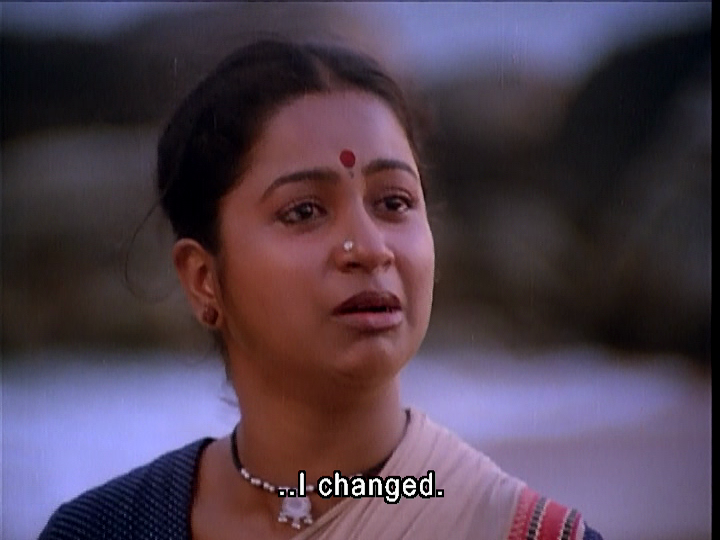
Gangamma tries to see off her rival but once she realises Raju will never return her love, she reassesses. Rather than force the marriage, she colludes with him to avoid the unwanted wedding. She would rather nothing than a one-sided marriage to him and asks for a place in his household, but not as his wife. Radhika was stunning. Gangamma was a cheeky and sly girl to start with and her expressions transformed completely by the end of the film to a saddened but spirited woman

Lawrance is nice, wealthy, likes Jenny and is ready to marry. Lawrance and Raju are often shot in mirror poses or facing opposite directions and as heavy handed as it may sound, it does add to the tension as Lawrance seems to have no idea he has a rival for Jenny’s love.

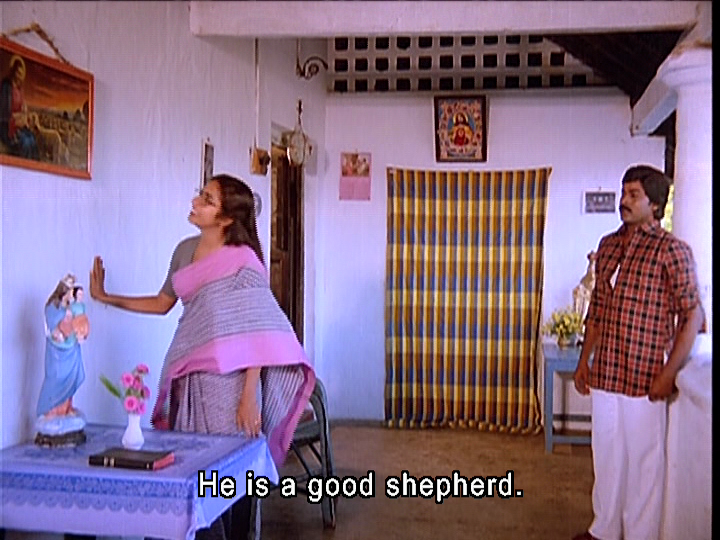
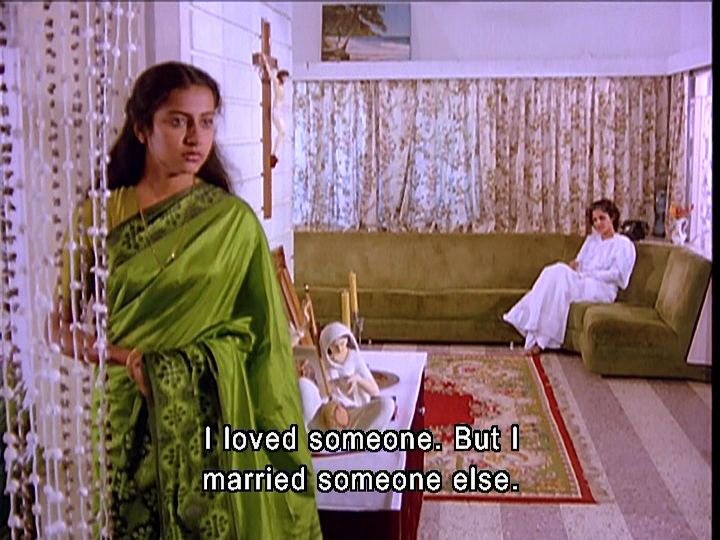
Religion doesn’t appear to be a strong division in this fishing village which possesses an unusually large church. Religious imagery abounds through the film and serves to illuminate the character’s qualities rather than promote any one practice or belief. When Raju gives his teacher a seashell, he proudly announces it is special, the same shell Lord Shiva touched. He calls Jenny a goddess; not just out of love but because he sees her as beautiful, educated and an inspiration.

The Christian iconography in Jenny’s home resonates with Raju and her explanations seem aimed straight at his heart. I wondered whether the poor lost goat was really necessary in so many scenes, but seeing Chiru in tears on the railway platform with that goat, I melted too.

Lawrance’s aunt (Anuradha Vasudev)  is the catalyst for some most interesting conversations. She challenges Jenny to make a decision about following her sense of duty or her heart and she is frank and explicit on this subject. This is not a film where women are completely passive. Jenny is expected to make a decision, tell the men what she has chosen, and live her life accordingly in full knowledge of the consequences.

Everyone seems to know what is going on (except maybe Lawrance) and there is no protective bubble of invisibility around the lovers. Jenny is assaulted by a villager who assumes he can have her as she spends so much time with Raju that she surely can’t be virtuous. I found that scene fascinating as it wasn’t a drunken leery groping type of assault but a calculated move by a man who thought he had the situation and the woman under control. It was very well written and felt horribly real. Gangamma also has to bear the brunt of village gossip as unsuccessful Romeos turn to slander and threats. They all know Raju isn’t the tough Puli anymore and some seek to take advantage of his rehabilitation.

When Jenny and family leave to stay with Lawrance, Raju sees them off.  After publicly exhorting Raju to come and visit, Danial privately and tearfully begs at Raju’s feet that he never come near them again lest it jeopardise his family’s prospects. The tragedy is not in witless people acting selfishly, but in likeable, practical people trying to do what they think is right and being aware of the pain they cause.

The opening titles introduce the ocean as a key player in the story, and the sound of the sea is a constant rhythm. The landscape and ocean are filmed with as much care as the actors. The music by Illayaraja is lovely, and the theme from ‘Are Emaindi’ is used to superb effect. The reprise at the end of the film is wonderful, and the changed lyrics help create the mood of anguish. I wish I could find clips with subtitles for the songs as they add so much meaning.

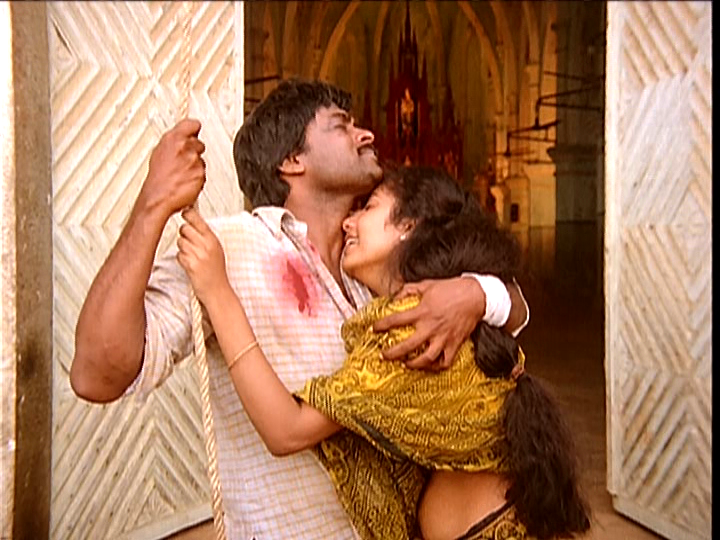
There are some flaws in the film but they didn’t really diminish the experience. I found some of the edits really clumsy and I wonder if maybe there were scenes missing from the DVD – it certainly felt like there was a lead up to a missing song in one section and a couple of scenes jumped quite suddenly. The climax is over the top; it relies on divine intervention, suffers from geographic inconsistencies as the village seems to change size, and Chiru is quite the ham in his cross village marathon. The actors had all given so much to make these characters come alive that I really cared what happened. And let’s be honest – I’ve seen much more unbelievable stuff than this (SRK in Kal Ho Naa Ho staggers to mind!). I didn’t need the voiceover at the end either; I’d already made up my version of ever after.

I admit to some tears, and Chiranjeevi’s Raju broke my heart. I give Aaradhana 4 and ½ stars (and three handkerchiefs).