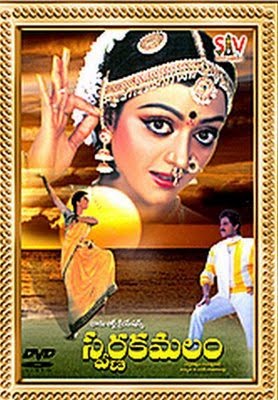
Swarnakamalam

Swarnakamalam has been highly recommended by several readers and other friends, and I saw Bhanupriya’s dances in the film on Minai’s excellent blog. I really like Venkatesh and Bhanupriya. They are appealing, both are good actors, and I always enjoy seeing them on screen. K. Vishwanath wrote and directed, and while this contains several themes in common with his earlier Sagara Sangamam, this is a far less satisfying film. There is some great dancing and a nice domestic setting that helps build the sense of who these people are. But I don’t wholeheartedly like the lead characters and I have issues with several points in the story. My DVD is mostly subtitled but occasionally I guess the subtitle team nipped out for a coffee or something and a few chapters were left untouched. Happily these were mostly scenes involving Tinku the annoying child sidekick, but perhaps there was something essential that I did miss.

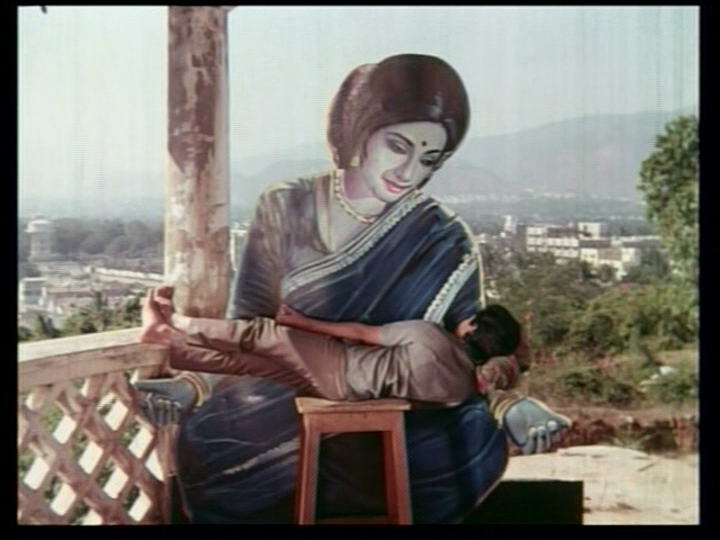
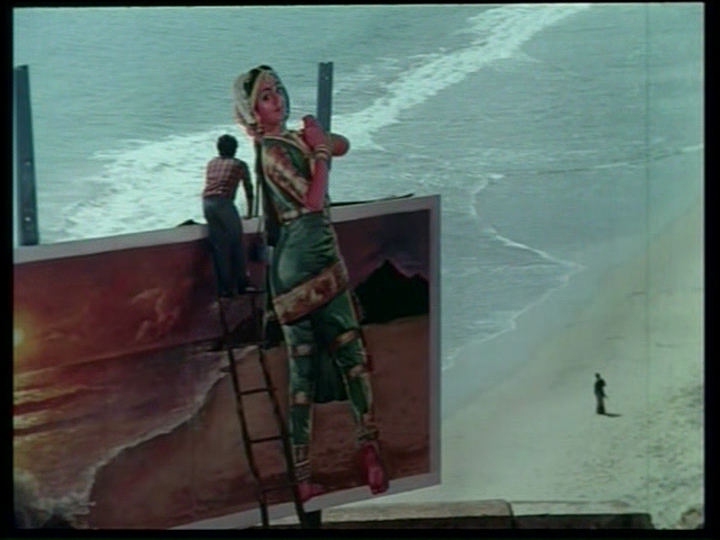
Venkatesh is Chandrasekhar. He is introduced as an artist who paints cinema hoardings and billboards. He has a sidekick, annoying young Tinku, and seems to get by from day to day. He cons his way into renting a room from a pious couple, and initially his character seems to be a bit shady. But as time goes by he seems to have contacts all over town, knows everyone, and can facilitate pension and passport applications. Venkatesh is a really likeable actor. He always seems to be acting with his co-stars rather than acting for the camera, and I love watching him in ensemble scenes as he never seems to switch off when he is in the background. Although I did find myself thinking ‘Oh it’s a good thing his back-hair is distracting me from the too short shorts’. See if you agree!
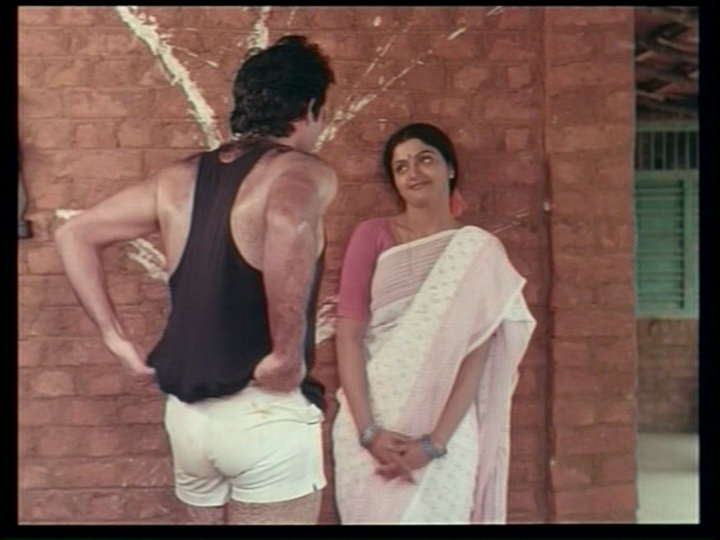
It’s a shame Chandrasekhar is quite unappealing once the superficial charm is taken out of the equation. He is controlling and a bit of a bully. He always knows best, and pushes people to do what he wants.

He also seems to be quite obsessed with Meenakshi and paints multiple hoardings with her image, and has loads of photos of her strewn about his studio which is a bit creepy. From his rooftop terrace he can see into his neighbours compound.
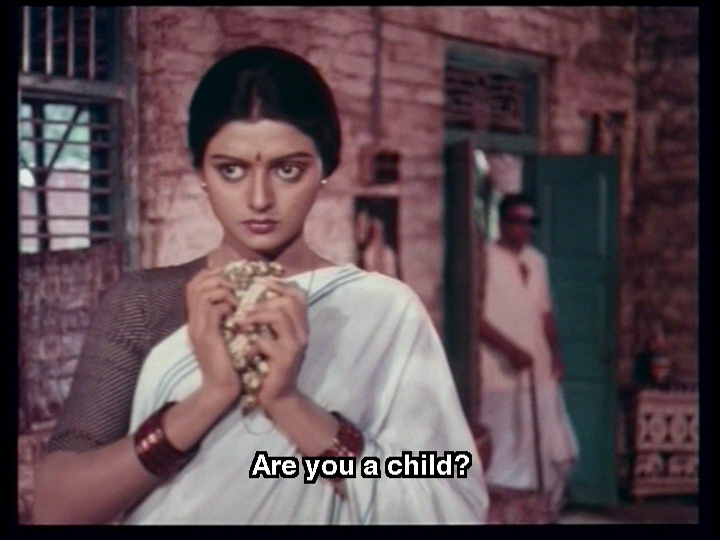
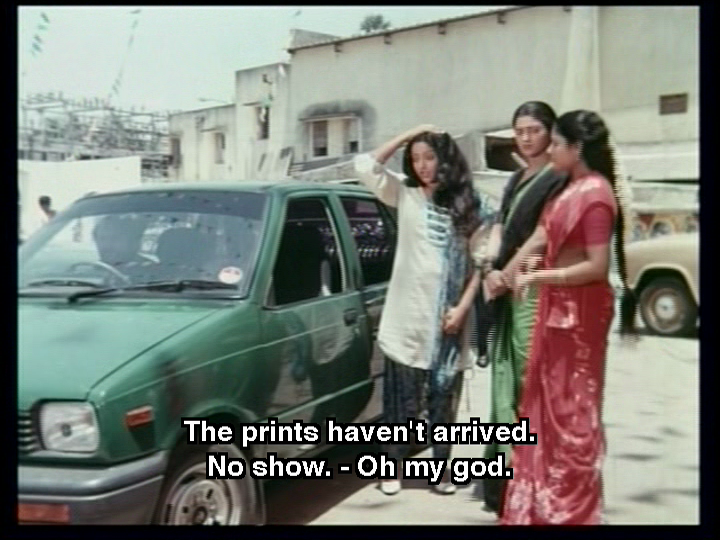
Bhanupriya is Meenakshi, the girl next door. She is the daughter of a celebrated dance guru, and lives in genteel poverty. She doesn’t see the point of dance as it doesn’t put food on the table. Her sister Savitri (Devilalitha) works tirelessly making and selling snacks, and singing with their father. Meenakshi just wants to escape the artistic life and get a job that pays for life’s necessities and a few luxuries. Of course, everyone around her seems to know better. Even allowing for the pressure, Meenakshi is a brat, and seems like a very young teenaged girl. She is sly, sneaks off to the movies and other outings,  and tries to get out of dancing by staging various misfortunes but never speaks to her father about her reservations. Once her father passes away, Meenakshi gets a job and seems to be set to stand on her own feet and live the life she wants. She is strong enough to confront Chandrasekhar about his actions but not strong enough to stop him from interfering.

Bhanupriya is beautiful, and I loved the songs that featured her excellent dancing. But there was something about Meenakshi that I just couldn’t like as much as I wanted to and I blame that on the writing for her character. This is one of my favourite songs. I enjoy the way Bhanupriya is initially cranky about having to practice but seems to enjoy dancing more as the audience builds.

The supporting cast are mostly members of the household or compound. There is a pleasantly disorganised informality in the way characters wander in and past each other’s houses and share chores. I loved the set dressing that included little details like the knick knacks in the house.

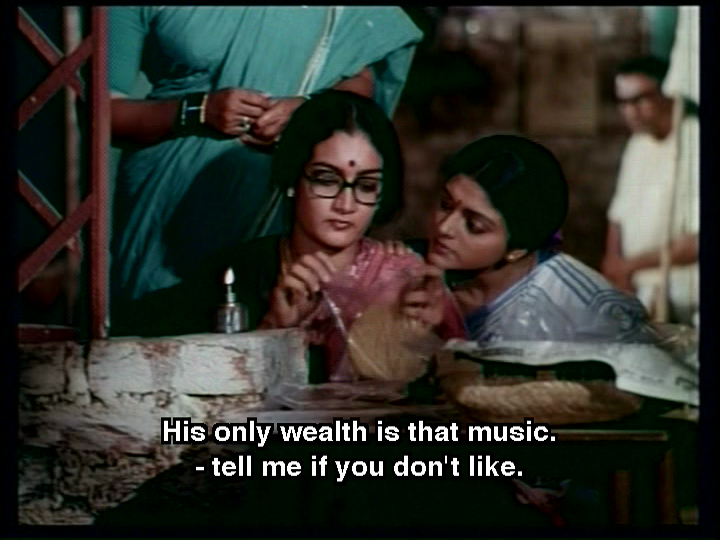
Savitri and the landlord’s son have a nice romantic sideplot that made me happy as theirs seemed like a genuine partnership founded on mutual affection and respect and they were nice people. There is a comedy sideplot involving Sri Laxmi and her unfortunate husband, and it was tolerable if not hilarious. Tinku, the annoying child sidekick, does have some nice scenes where he is copying Meenakshi’s dance, and becomes very focussed and joyful. The uplifting power of music and dance permeates the film.

Director K Viswanath is known for his message films. But the message in Swarnakamalam seems to get a bit scrambled. Initially we are presented with the ideal of classical art, pure and beautiful. Bureaucrats are criticised for not paying pensions to senior artists and giving them their due respect. But then the message seems to be that art cannot be forced, it must come from the heart and be allowed to adapt lest it stagnate, so there is approval for Meenakshi’s rejection of her artistic heritage. Then Chandrasekhar decides that Meenakshi is born to be a classical dancer despite her own views and badgers her into performing, has her fired from a job she enjoys as it is supposedly beneath a great dancer and generally insists she be his perfect artist according to the ideals of culture and tradition.
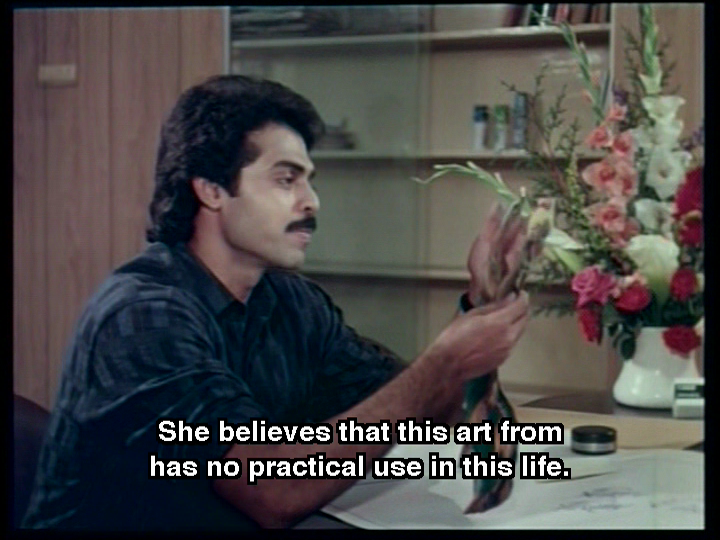
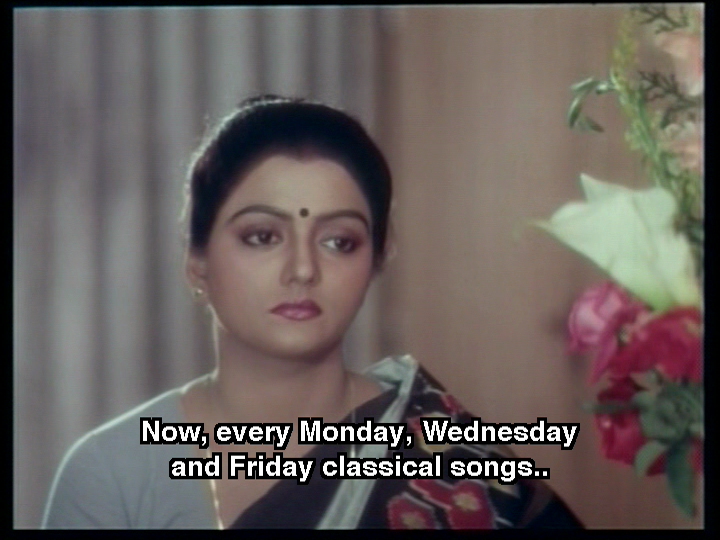
Meenakshi wants to dance when and as she feels like it, not as her whole life or for her living. She is railroaded into becoming a cultural performer in a fancy hotel and then Chandrasekhar sets her up with a wealthy American dancer and patron who wants Meenakshi to tour the US.  After a very emotional scene where she learns to value her father’s legacy and embraces the dance, admitting that dancing with love and commitment would make her happy and fulfilled, she is forced to choose between Chandrasekhar and success.

Chandrasekhar wrote Meenakshi a letter to read at the airport as she was about to set off on tour. He writes that no one else but him would ever tolerate Meenakshi’s lying and misbehaviour, no one else but him would force her to be a great dancer and every time her anklets chimed that was his voice, the voice of a man who loved her. I found it really manipulative in forcing a choice that didn’t have to be a choice. Why shouldn’t she have love and artistic success?

So the whole great art as its own reward idea seemed to go out the window, as did the independence of the artist. The message seems to be it’s OK to stalk someone, then bully them into a career they don’t want, until they realise they do want it, then you pull the rug out from under them. Venkatesh and Bhanupriya did have a lovely rapport on screen, but my liking for their performances is just for their acting,  and not the characters behaviours.
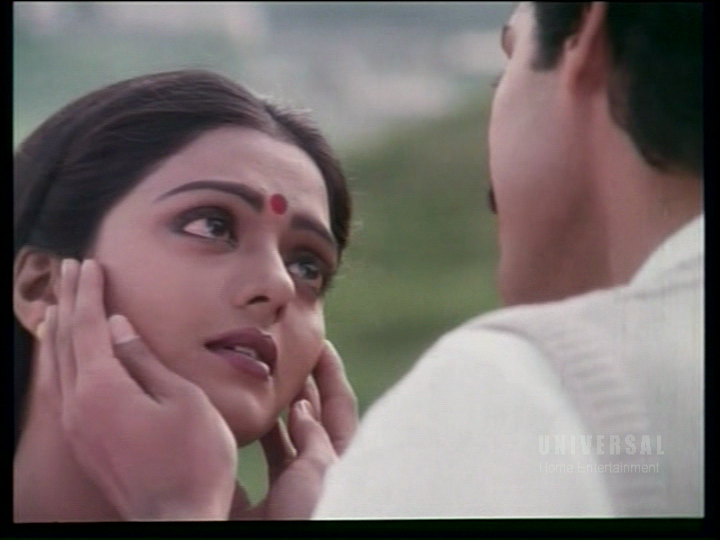
On a purely visual level, Swarnakamalam is gorgeous. The songs are delightful, and allow Bhanupriya to show off her skills and a range of beautiful classical dance costumes, and Venkatesh shows off his strolling and knitwear modelling in some beautiful locations.
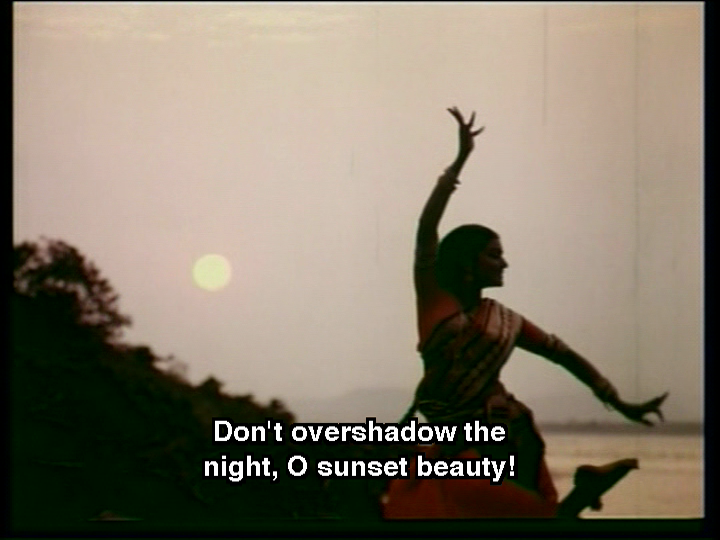
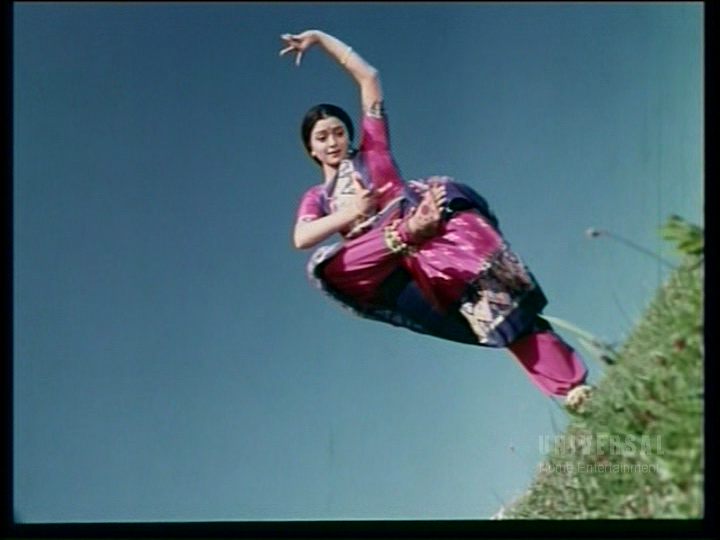
The framing of the dance scenes is meticulous and Lok Singh made the most of the scenery and the beautiful lines of Bhanupriya’s dancing. The music by Illayaraja is perfect for the context and the subtitles for the songs did offer some additional insights as well as being lovely.

Watch it for excellent performances and beautiful dancing, sadly not matched by the story or characters. I just can’t warm to the film, but I love the songs. 3 stars.

Heather says: This is a beautifully pictured film which focuses on the art of Indian Classical dance and to a lesser extent Carnatic music. I love the two sisters, Meenakshi and Savitri, and their very genuine interaction. It makes it very natural that the only person Meenakshi conveys her discontent to is her sister. Savitri’s placid nature means that she is happier and more settled, but she accepts Meenakshi’s view and does her best to help her attain her dreams after their father dies. This relationship and that of the two girls with their father makes a very solid foundation to the film. Enter Venkatesh as Chandrasekar – the interfering neighbour. If I was Meenakshi, I don’t think I would have had as much patience with Chandrasekhar’s meddling in my life. Although it’s clear that he has her best interests at heart he is determined to make her conform to his view of her. The film tries to point out that you have to have passion and belief in order to truly excel, and I’m not sure that Meenakshi really does have what it takes. She enjoys dancing for herself but doesn’t enjoy performing so it does seem cruel that everyone keeps forcing her, when all she wants is a normal life. I also agree with Temple that it was very stalker-ish for Chandrasekhar to paint her picture everywhere. I found that really creepy, especially considering that he was essentially also watching her all the time.  Savitri’s relationship seems much more genuine and is more enjoyable to watch develop. Top marks as well for showing the landlord’s son playing the violin properly. It makes me cringe every time I see someone massacring a violin on screen and this is a lovely change. Even if he isn’t actually playing the notes that we heard!

Despite my quibbles with Chandrasekhar’s character, I thinkthatVenkatesh was excellent in this role. He was passionate and devoted and really looked the part. Due to dodgy subtitles I didn’t get a clear idea of his relationship to Tinku but it was effective to have the comedy mainly between Chandrasekhar and Tinku rather than the usual obtrusive and subsequently unfunny ‘comedy track’. The humour between the couple with the wife devoted to blessing everyone was also funny and well integrated into the movie.

The standout of the film though is the dancing, and Bhanupriya was fantastic in these scenes. It was interesting to have real life dance guru Sharon Loven in the film, although her character didn’t really make much sense in the context of the rest of the story. The whole trip to America idea felt tacked on as a reason for Chandrasekhar and Meenakshi to finally admit what they felt for each other. I have 2 copies of this film and since they both had patchy subtitles and wouldn’t play right to the end I was quite frustrated by the time Meenakshi left for the airport. I watched the climax online with no subtitles and would love to know what was written in that last letter since Meenakshi’s decision at the end might make more sense to me. I was hoping she would leave and make a life for herself in America where she would finally be able to choose to do what she wanted to do. Still, the film looks beautiful and both the dancing and the music are excellent. Worth watching for those alone. 3 ½ stars.
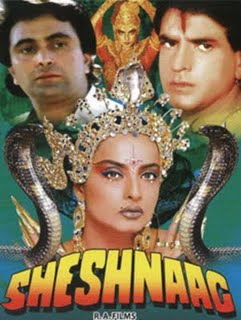
Sheshnaag

Sheshnaag is an excellent masala snakefest starring Jeetendra and Rekha, with a starry supporting cast and the added delight of Danny Denzongpa as the EVIL Aghoori. The Laxmikant Pyarelal soundtrack is mostly snake dance related, which means lots of snaky dancing! And I think director KR Reddy captured a vintage feel with Sheshnaag which doesn’t seem like a film released in 1990.

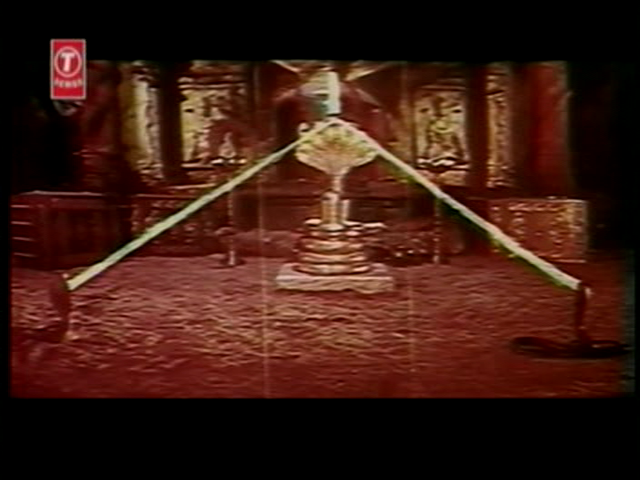
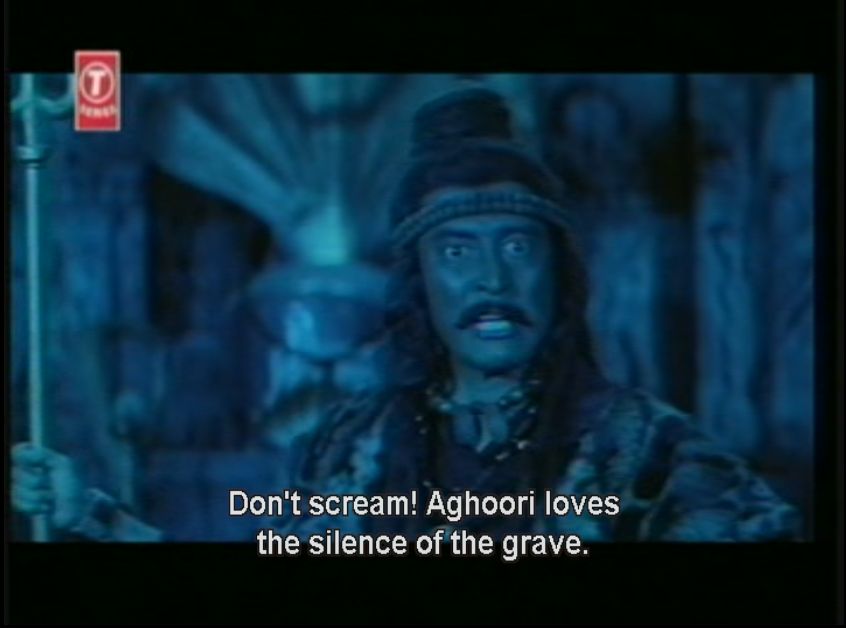
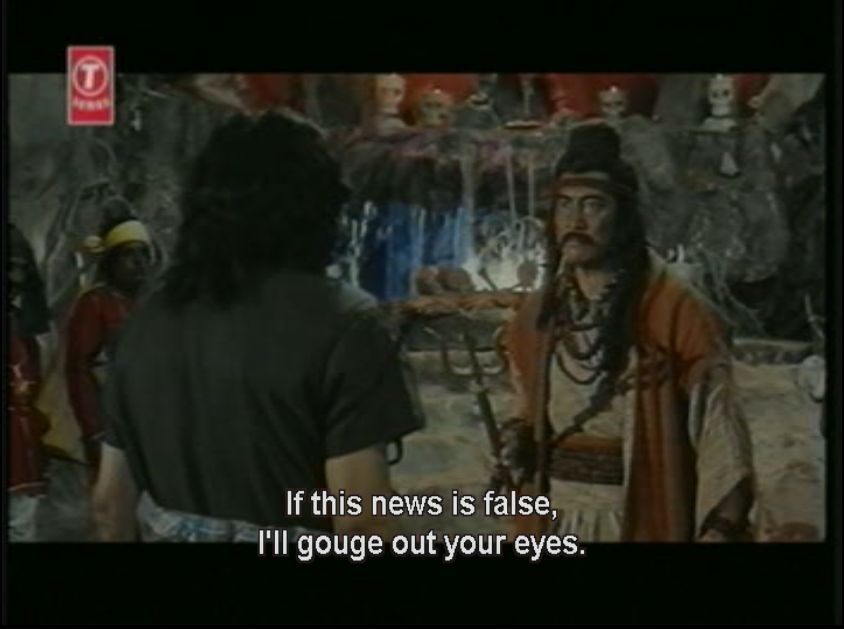
Allow Aghoori to describe his origins as a creation of the devil and show you around his cave:


My DVD has the worst picture quality but the most marvellous subtitles. Aghoori is hunting a nagin couple, Pritam and Banu, who unlock a treasure trove every lunar eclipse using amazing special effects.

They give the wealth to the needy and hold the key to immortality. Aghoori is obsessed with power and filled with venom, determined to become more powerful than the gods.

Identifying the snakes in this film is very easy as they are a) not shy and b) one of them is Jeetendra (ref The Jeetendra Effect).

While this epic battle between good and bad is being waged, there is evil afoot in the human domain. Champa (Rekha) is left to look after her mentally backward brother Bhola (Rishi Kapoor) and her horrible husband (Anupam Kher) after her father dies. Bhola is protective of all animals including snakes and he can charm any animal by playing his flute. He falls afoul of Aghoori’s henchman when he saves the female snake Banu (Madhavi), thus winning her gratitude. Champa’s husband wagers her mangalsutra and then her person in a game of cards – he is really vile. After calling on Krishna to help her escape a rape attempt, she runs away and leaps from a cliff to escape her pursuers. Just as I was bemoaning an appalling under-utilisation of Rekha, Banu uses her powers to transform into a replica of Champa and come to Bhola’s aid to repay her debt. They move into a nicely decorated mansion with excellent snaky decor and are set for the good life.


Jeetendra joins the household as a servant so he can be close to his wife and help look after Bhola. The rest of the story is then a crazy race to see if Aghoori will take over the world.

I really disliked Rishi’s acting, character and storyline in this. Bhola’s under-developed intelligence would have been challenging for any actor, but Rishi just opted for flattening his hair and mugging for the camera.
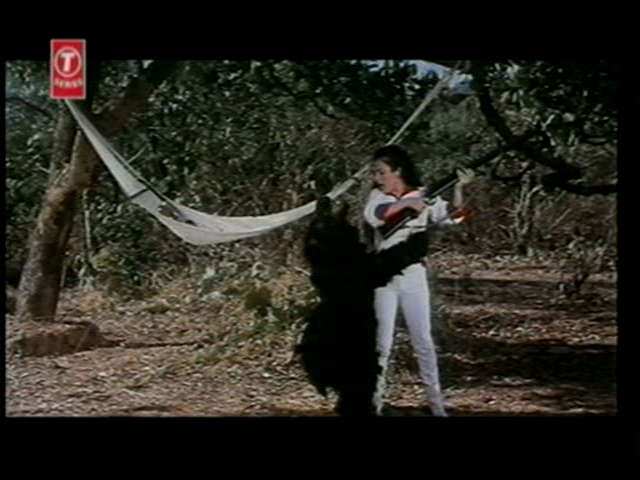
There is a romance track for him, as Kamini (Mandakini – not a snake despite those eyes and some questionable outfits) is driven into his arms by a startling bear attack. She’s a hunting, shooting type of gal from a family of animal hide dealers but clearly life had not prepared her for finding a small person in a bear suit humping her leg.

It doesn’t seem to be a good match, and Bhola’s utter stupidity doesn’t help matters. If you knew someone wanted to hunt game, would you call more of your animal friends to stand in front of the armed lunatics? Honestly. It’s a revolting episode and apart from all the fake blood pouring from animals, I think Rishi stepped on a pigeon for real. Bhola wins Kamini over with his gormless vapidity, and takes from her intended, a creepy gun toting cousin.  He swaggers around, confident that his sister will always protect him. When Jeetendra decides to make Bhola a warrior to protect everyone…well I’m sure you can imagine. Beth queried whether headbutting clay pots was a documented snake fighting technique. I suspect the technique was chosen as Bhola’s head was solid wood.

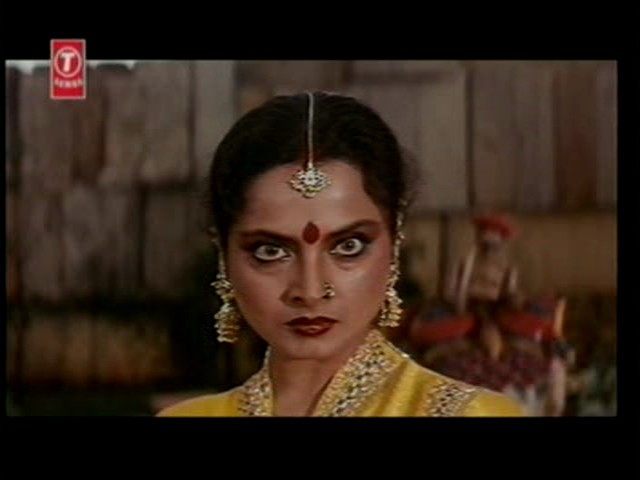
Rekha is a powerful actor and being a vengeful snake allowed her to unleash her forceful side. I question whether it was really worth jeopardising your immortality and powers just to save a backward fool. On the plus side she gets some awesome outfits. I preferred Madhavi’s dancing, but Rekha does handle the venom spitting (her venom strips paint) with aplomb and has mastered The Look.


Banu/Champa’s resolve and certainty drives much of the action and she takes responsibility for her family in both her human and snake roles. When Bhola drags her human husband back and expects Champa to accept him, she is unrelenting and cold despite the combined anger of the men.

I mentioned Bhola was annoying? Even allowing for times and morality having changed, how could anyone demand someone they love take back into their household a man who brutalised and humiliated them? It’s all wrong, and not helped by the bad acting. Rishi was lucky he had Anupam Kher in the same cast as it makes Bhola look marginally better. Anyway. Back to the snakes.


Rekha’s scenes with Jeetendra are sometimes quite touching as Banu/Champa is aware of the consequences of committing to helping the idiot human, and knows they are in danger from Aghoori too. They also get some more of those special effects. When (WHY?) she decides to sacrifice herself to save Bhola I was quite upset. WHY REKHA WHY???

Jeetendra is there. He really doesn’t have all that much to do apart from dancing, flying, biffo, biting, duelling and housework. He is not the dominant snake in the marriage and I think it’s safe to say that Madhavi/Rekha wears the lurex pants in the relationship. I swear he’d never seen a broom until this film, and he seems to torment Bhola more than he does anything else in that household. Jeetendra got some excellent snake powers including an array of coloured lighting effects and a unique fighting style.


His first fight with Aghoori is hilarious, and he also has a nice line in venom spitting (his is flammable).  His dancing…He is not good at partnering the ladies in their dancing. Luckily they seem to manage to navigate around him. He also did an interpretative vengeful Snake Dance which was memorable.

Madhavi had a much smaller presence in the film than Rekha, but her dancing is lovely and she had some fabulous snaky accessories.

She and Jeetendra employed a fighting style that involved jabbing the victim with their fingers rather than biting so I think maybe they had venomous manicures.  The outfits for all the snakes really are worth a look.


Danny Denzongpa owns the film. He is insanely evil and in cackling good form as Aghoori. I loved this performance and I cheered extra loud when Aghoori sent Bhola flying with a few well placed kicks. Not everything an evil person does is necessarily bad!

And what happens? I really can’t say. But I do give the film 3 1/2 stars!

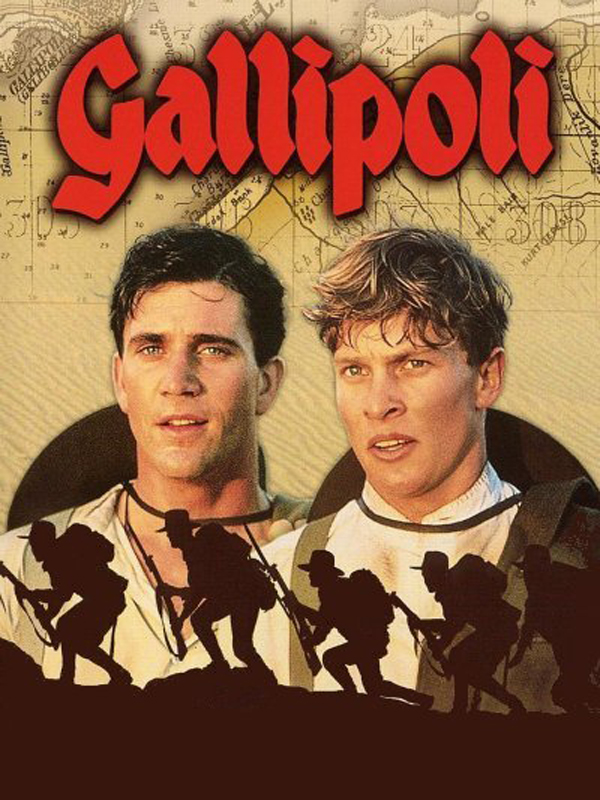
Gallipoli (1981)

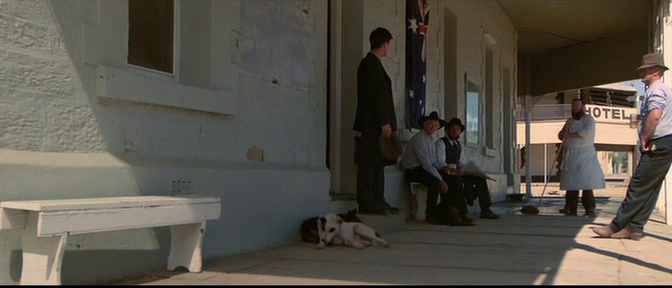
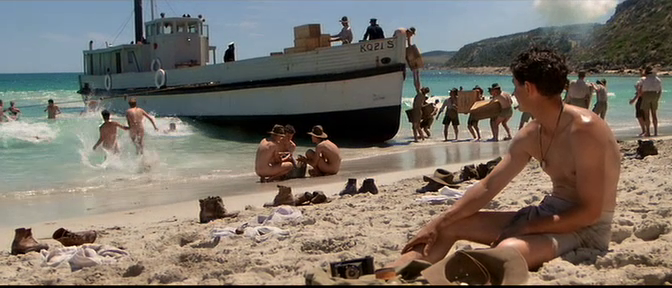
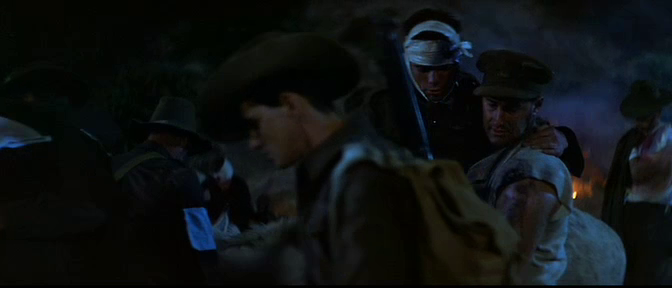
Gallipoli is an iconic film that encapsulates a lot of things Australians like to believe about ourselves. The notions of mateship, larrikinism and of course the ANZAC legend are intrinsic to the idealised version of ‘Australian’, but you don’t need to know about WWI to appreciate the film. The history of European occupation here is short and often brutal, and Gallipoli also raises questions about national identity and our tie to England.  The use by Britain of Australian and New Zealand troops in the front lines and as cannon fodder is part of the legend, and the tension between loyalty and resentment is always present in the film.

Running is a constant theme through the movie, and Peter Weir made a really unusual decision to use a piece of music that resolutely does not fit the era. Oxygene by Jean Michel Jarre became a hit here after the film was released. While the electronic sound was at first startling, it helps boost the sense of urgency and propulsion in those scenes. It’s not a war film as such, although if you saw the dreadfully cheesed up trailer for the US market you might think so.

Peter Weir tells a story about friendship, and loss of trust in the powers that be.

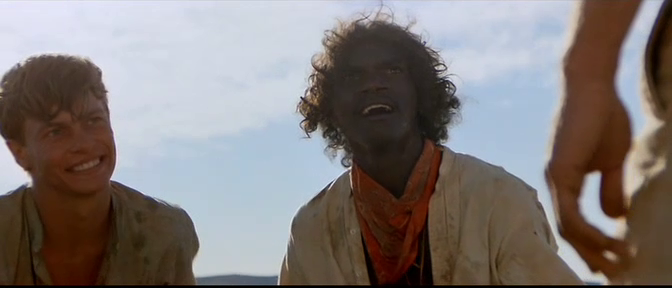
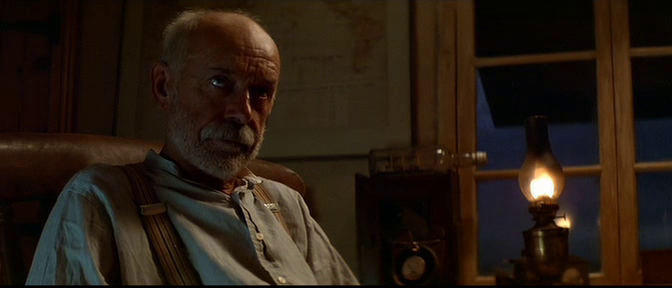
Archy (Mark Lee) is a golden boy; blond, blue eyed, athletic, a capable stockman, a good kid. He is idealistic, naïf and likeable. He just wants to join up and defend his country. Archy struck me as a Boy’s Own type of hero, always doing the right thing and looking out for his mates. The film opens with him training for an upcoming sprint race, and talking to his Uncle Jack (Bill Kerr). Their dialogue gives me a lump in the throat every time, because I know how this story ends.

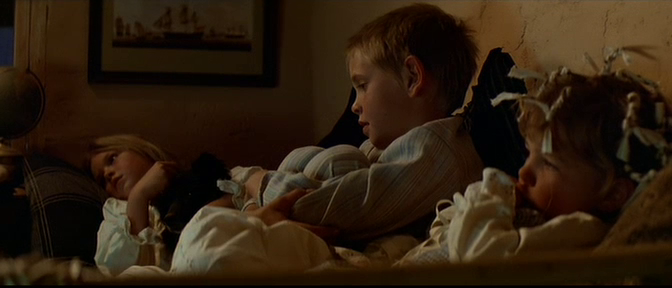
There is a lovely scene of Uncle Jack reading to the spellbound younger kids and he is reading the bit from Kipling’s Jungle Book when Mowgli has to leave his pack and start life as a young man. And that’s what Archy thinks is his duty – leave home and be a man. Mark Lee gives Archy an angelic face and a sense of quiet determination. When he makes one decision that will reduce his personal safety, he looks to be hiding his fear as well as happiness and these subtleties really make the character.

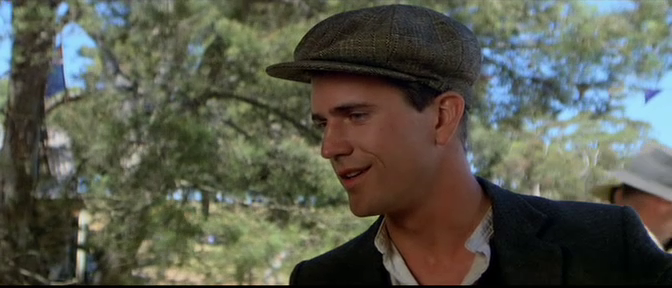
Frank (Mel Gibson) is a more cynical character. Initially refusing to join up and fight for something he doesn’t believe in, he decides there may be more opportunities for a returned serviceman after the war. Frank is the more modern character in some respects. He doesn’t buy all the rhetoric, nor does he trust the people in charge. He is a charmer and a chancer, and as different from Archy as you could imagine. Being Irish, he sees the war as England’s war and doesn’t feel the patriotic fervour that leads young men in these country towns to sign up en masse. It’s so sad to see how many men and boys from one region are listed as war dead on country memorials. Mel Gibson has become a bad joke in recent years, and clearly has demons of his own to deal with. It’s refreshing to see him back when he was just a nice looking guy who could really act. His is the strongest performance in the cast as he shows the most change in his personality and is the instigator for many memorable moments.

Archy and Frank are amateur sprinters and they meet in competition. They bond through what I will say is a typically male enterprise – taking a shortcut without really knowing the directions.


There is another myth I think a lot of Australians like to believe about ourselves, which is that we are at one with the land and can survive in the great outdoors. The reality is, of course, that if you drop most of us in the outback we’d be goners.

The boys cross paths again at a training exercise where they are supposed to pretend to kill each other, and Archy manages to get Frank transferred into the Light Horse. They have great chemistry and their friendship is really fun.

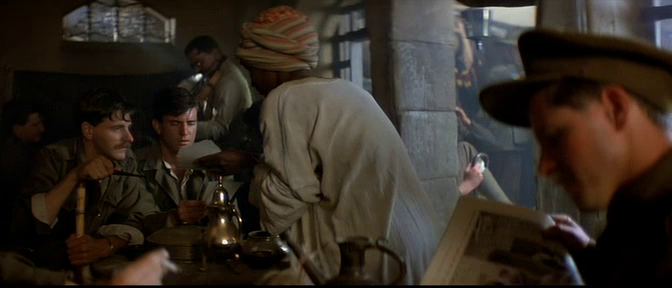
The ensemble of backing actors is fantastic. Many are better known for work on stage and TV, but Australia has such a small performing arts sector that actors do tend to work in multiple media. Robert Grubb, David Argue, and Tim McKenzie as Frank’s mates, and Bill Hunter as Major Barton are brilliant and get some of the best lines.

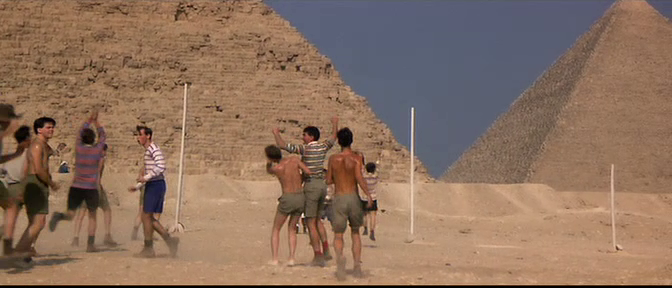
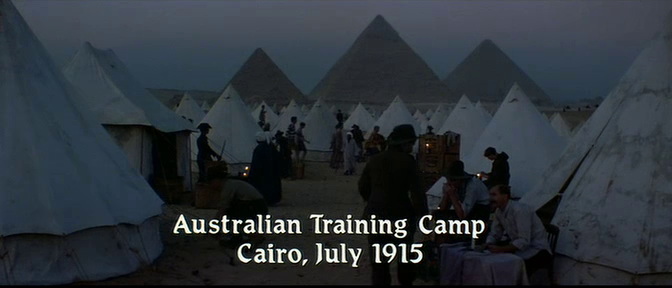
There is a scene where the troops were playing Aussie Rules near the Pyramids – it’s so Aussie! I loved it.

The boys also represent a gamut of views, with reasons for signing up ranging from patriotism to racism to hoping the girls fancy a man in uniform. They are the average blokes and their stories are shown in glimpses, not always articulated, but not neglected.

The cinematography by Russell Boyd is just sublime. A lot of the location shoot took place in South Australia, which also doubles for some of the Egyptian coast, and it is beautiful.


John Seale was among the crew who captured both the wide expanses of the outback and small intimate moments and made it all look beautiful. So much is told through imagery and juxtaposition of scenes that no words are required.

When I first saw Gallipoli, it was Archy that I felt for. He was just so … nice. When I’ve had occasion to watch it again, I relate more to Frank. He is imperfect, a bit full of himself, but he tries so hard to do the right thing when it matters. I think Frank is the modern viewpoint, questioning why he should be involved in someone else’s problems. While the characters are representations of the central argument, each of them is distinct and believable.

The brilliant screenplay by David Williamson contains the sweetness of bromance, comedy and also some bite. He doesn’t let the sentiment gloss over the less appealing behaviours that can spring from a sense of moral superiority or entitlement. Witty one-liners undercut the tension of the war and there are constant reminders that war is not an abstract concept, it is people fighting for their lives. He allows even the most unpleasant character to have some humanity so I can relate to all of them, like them or not. There are a couple of historical inaccuracies but as I am not a war historian, I don’t think it matters in terms of how the story plays out.

So back to my original thought. If you haven’t seen much or any Australian cinema, this might be a great place to start. I do love this film, and the themes really resonate for me. Leaving aside the ANZAC  connection, I would still say see it as Gallipoli has an engaging story and a witty and moving screenplay. It’s also a ‘Who’s Who’ of Australian film making. But mostly – it’s a great story beautifully rendered. 4 stars!