Namak Halaal (1982)

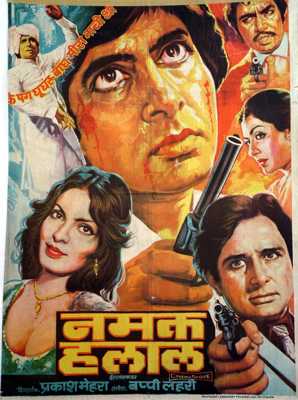
There is no shortage of plot in Prakash Mehra’s Namak Halaal and yet, when you boil it down, not a lot really happens. It is by no means a great film, but I am inordinately fond of the excesses of masala story telling and I have a sneaking affection for this one. Released in 1982, it has a very 70s masala feel right down to the casting and music, with a touch of cartoon action and comedy. Amitabh Bachchan and Shashi Kapoor star, supported by Waheeda Rehman, Smita Patil, Om Prakash and Parveen Babi.

Savitri (Waheeda Rehman) and Bhim Singh (Suresh Oberoi) are devoted to their employer, Sanyal (Kamal Kapoor). When Sanyal is killed by enemy Girdhar in an ambush, a dying Bhim Singh makes his wife promise to look after Sanyal’s son Raja even if it means losing their own boy, Arjun. It is a veeeeeery long deathbed speech with lots of detail. Savitri takes Arjun to his grandfather (Om Prakash) and the old man blames her for his son’s death. She cannot prove her innocence so leaves and agrees to stay out of Arjun’s life. Savitri is honest and a competent businesswoman and manages the hotel empire while Raja is educated abroad.

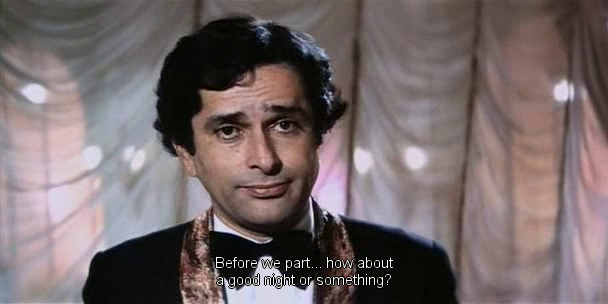
The adult Raja is played by Shashi Kapoor. Looking a bit old and tired for the playboy role, Shashi nevertheless makes a stylish entry via a downhill ski race assassination attempt.

The beanie is not a good look, especially compared with Bob Christo’s splendid headgear.

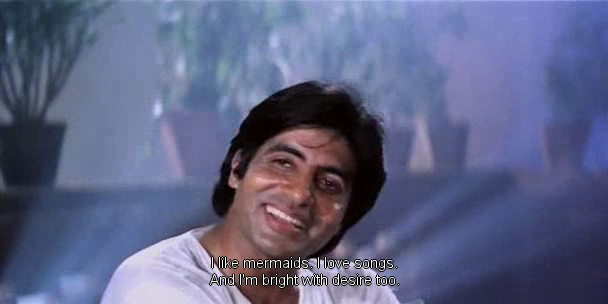
Meanwhile Arjun has been raised poor but honest in Lakhanpur. His grandfather despairs of Arjun being able to stand on his own feet once the old man passes on, so decides to send him to the city to make a man of him. Prakash Mehra posits a correlation between libido and intelligence that I found quite amusing – hopefully it was meant to be a joke! Arjun is simple but not stupid, and quickly takes the measure of those around him. Amitabh’s performance is the element that holds everything together. He gives as much nuance and conviction to the silliest dialogues as he does to the most dramatic moments. His physical comedy is a treat and even when scenes drag on far too long (e.g. a fly induced slapstick fight) he keeps me watching.

Mumbai being the vast metropolis it is, of course the same dozen or so people see each other everywhere. Thank heavens there are no actual bells that sound for every cosmic coincidence in the film or I would have been deafened. Arjun is helped by his friend Bhairon and via the classic Pag Ghungroo (mixing comedy, dancing and lyrics that give the club audience a dressing down), scores a job interview at a fancy hotel owned by Raja and managed by Girdhar’s son Ranjit (Ranjeet) who is out to kill Raja on daddy’s instructions.
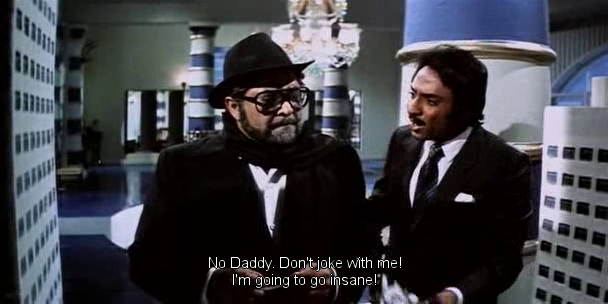
Ranjit took very little persuasion to go to the dark side, but his outfits were very subdued, one of my few real disappointments in this film.

Raja has become convinced that Savitri is trying to kill him to inherit the family fortune. His bitterness is evident in cryptic dialogues and he tries to offend her at every turn. In contrast, Arjun is a happy, simple fellow whose life is good. Arjun is a loyal employee and quickly tumbles to the danger his boss is in.
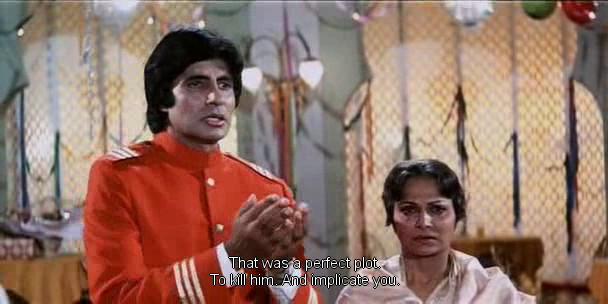
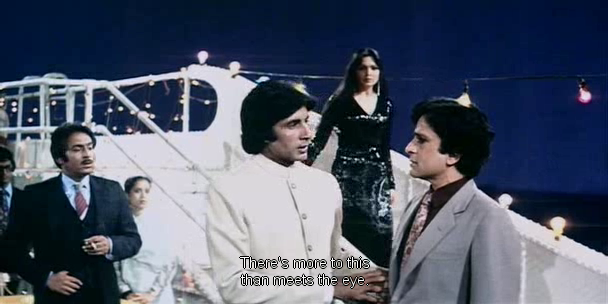
Actually if you don’t already know what Namak Halaal means, you will by the end of the film it is said so often! He takes it upon himself to protect Raja.

Waheeda is elegant as ever, and she gives Savitri both backbone and presence. Savitri speaks up for herself and refuses to accept blame when she is not in the wrong, but is pragmatic about her ability to change anyone’s mind. It was odd seeing her as Shashi’s Ma when they are around the same age but she was far more convincing as Savitri than he was as Raja! The filmi principle that you can’t grow up to be a complete person without being raised by your birth mother is quite strange to me. I was really pleased to see Arjun stick up for Savitri when Raja dismissed her as not a ‘real’ mother.
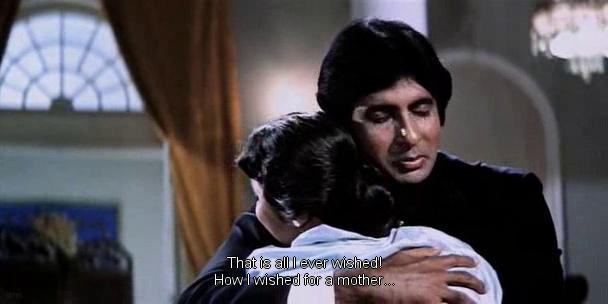
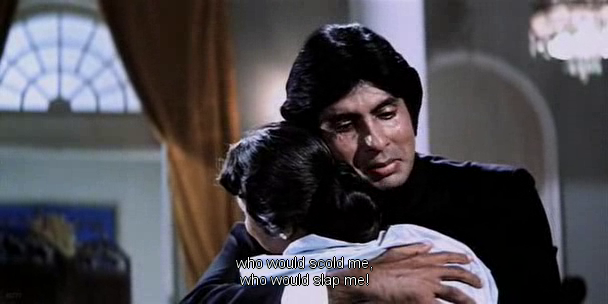
Of course as soon as he finds out his mother is alive and who she is, his life is perfect and she insta-loves him back, but whatever. I did giggle a bit at his definition of maternal love.  Eventually even the very obtuse Raja forgives the blameless Savitri albeit for the flimsiest of reasons.

Poonam (Smita Patil) can’t resist Arjun and he is certainly smitten with her. She works at the hotel and lives alone with her blind brother, and I think feeling supported and having a laugh were probably the things missing in her life. Smita Patil is a good match for Amitabh and their characters are the most likeable in the film. They have issues, but after an initial jump to conclusions they talk things through and it seems so nice and sensible. Maybe that is just in comparison to everyone else. They share one of my all time favourite rain songs. I like the way their relationship plays out, Amitabh is so gleefully naughty, and the backdrop is like a mini-golf course version of Bombay. It’s just a delight. And Smita must have been in that rain for a while as the colour bleeding from her sari border is quite noticeable at some points.
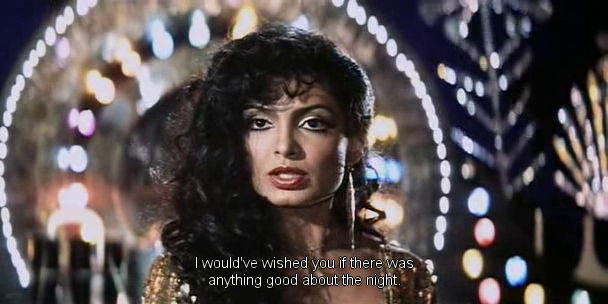
Parveen Babi is terrible as Nisha, the femme fatale caught under the thumb of Girdhar. She has such a lovely face, but only one expression. The sparkly costumes display her figure to good effect but her dancing is awful. She has one of the best ever disco cabaret stages in Jawani Janeman and her sole contribution is to block the view of the sets.

As she is supposed to be a seductress it might have been nice if it looked like she had a pulse. But she and Shashi are well matched as both are at less than their best.

Om Prakash is his usual grandfatherly type here, and he does some not very funny comedy when he tries to surprise Arjun. It did result in the fun drunking song Thoda Si Jo Pee Lee but still, overall I could have done with less of Daddu and his woe-is-me-ing. The support cast includes Kamal Kapoor, Satyendra Kapoor, Suresh Oberoi, Viju Khote, Chandrashekhar, and Ram P Sethi all doing what they do. Tun Tun makes a brief but unforgettable appearance as a party guest.

Bappi Lahiri provided the music with Kishore Kumar in excellent singing form for Amitabh and Asha Bhosle adding fun and flirty vocals. It’s a fun soundtrack that works best in conjunction with the picturisations.

Beth kindly listed many of the insane goings on, so if you feel the need to do more research before jumping in do take a look at her review. Otherwise, just take the plunge! I can almost guarantee that you won’t have seen anything quite like this. 3 ½ stars!

Baton Baton Mein

Made in 1979, I found Basu Chatterjee’s Baton Baton Mein more interesting as a portrait of generational change than as a somewhat dated romantic comedy.

Apologies – the DVD and my laptop are refusing to communicate so there are no screencaps forthcoming. I will over compensate with video clips. Anyway, seeing the polyester in motion really lets you know it’s the 70s!

Nancy (Tina Munim) lives with her widowed mother Rosie (Pearl Padamsee) and little brother Sabhi (Ranjit Choudhary). She catches the train to her office job each morning, commuting from Bandra with Uncle Tom (David Abraham). Nancy is a modern girl, wearing immaculate 70s fashions and makeup. One morning, Uncle Tom notices an equally stylish young man noticing Nancy. Tony Braganza (Amol Palekar) is a caricaturist at a city advertising agency. Tony and Uncle Tom pass notes back and forth to Nancy’s embarrassment and the delight of fellow commuters. Tom decides they should all be introduced and they hop off the train at Churchgate and chat over cool drinks.

Nancy lives mostly in her own head. She spends her time listening to western music and reading in her room. She has been disappointed in love before, having been jilted by a co-worker. I am not sure I really bought that prior relationship as it seemed fairly one sided and may have been exaggerated in her imagination. But Nancy is determined she will hold out for the right kind of man, which she says is no man at all. She is caught between being her mother’s little girl and being a more independent young woman. Tina Munim is very pretty and often that seems to be all that she needed. She does try to show the tension between the judgemental and childish side of Nancy and the warmer and more spontaneous young woman she could be, so I warmed to her character over time. Her rapport with Amol Palekar is nice and in the scenes where Nancy is less reserved, Tina lights up with her beautiful smile.

Tony is a bit weak, self-centred and unwilling to commit or work too hard at anything it seems. He is plausible and charming, much like a used car salesman, and breezes by on a smile and a compliment. His mother is domineering and thinks her son is both too good for anyone and not good enough by half and that undermines Tony’s ability to get motivated. Amol Palekar hits a perfect mix of average guy and dude who has tickets on himself. He can’t believe Nancy would fail to fall for him but at the same time he won’t take their relationship beyond seeing each other at her family home. Tony’s brash confidence sparks some fun moments, especially when Philomena Aunty (Leela Mishra) has him in her sights. But he is all mouth and trousers, and when it comes to making a commitment he is found wanting. If Tony wants Nancy he has to grow up a bit and say so, but he shies away from marriage. Will he ever grow up? Not if his Ma can help it. Tony’s dad (Arvind Deshpande) is the quiet henpecked type, but offers his son some advice when he most needs it. Please enjoy Tony moping around in his PJs to Kishore Kumar’s lovely vocal.

The romance didn’t really interest me that much, but the family tensions and arguments rang true. The younger generation were trying to be more independent while still respecting their elders’ wishes and traditions, and struggled to articulate what they wanted. Rosie wanted Nancy to get married, Tom thought Nancy at 19 or so was already leaving her run a bit late, Tony’s parents had an eye to social status in their future daughter-in-law and Nancy’s aunt Philomena was just scandalised by everything. Rosie was a blabbermouth, vulgar but kind, and Mrs Braganza (Piloo J Wadia) wasn’t impressed with her son’s duplicity or her potential in-laws. Snobbery and social rules caused all manner of drama, some very funny and some quite moving. It was deftly done, and the good natured feel of the film carried through even in the confrontational scenes. The ladies in particular carry off their characters with great humour and excellent comic timing.

Both Nancy and Sabhi belittle Rosie in many ways. They find their Ma embarrassing and vulgar and often tell her not to make a fool of herself. It isn’t motivated by spite, but it shows the change from Rosie’s homemaker generation to the younger educated ones who have different aspirations and challenges. And Nancy and Sabhi are teenagers after all. But when the chips are down, family rallies for family and they have that rock to rest upon. Basu Chatterjee shows the negative aspects of his characters but doesn’t judge them harshly. It adds a welcome tang of realism in what is otherwise a very sweet film.

Sabhi is one of my favourite characters. He is such a boy; grumpy, self absorbed and so very dramatic. He observes the goings on and can’t see why people make such a big deal of things. He adds sarcastic commentary, sometimes via his violin, and the odd theatrical tantrum. His gig at a local hotel provides an excuse for this parade of 70s style and terrible dancing (to the tune of ‘When Johnny Comes Marching Home Again’).

Often when a girl is introduced as a Christian in modern Hindi films it is code for ‘slut’, which I find quite peculiar. Or alternatively a Christian girl might be portrayed as so sheltered that she is virtually a nun. Again – bizarre to me. I enjoyed this depiction of Bombay Christians as middle class people with lives in which religion was one of many factors.

The sets created a strong sense of how people lived. Rosie was a widow but kept her own neat, comfortable home. No one seemed to pity her or think she was just waiting to join her husband in the hereafter. The Braganzas were a bit more affluent, but not really posh. The issue of money came up when it was revealed that Nancy was currently earning more than Tony, but he had greater earning potential down the track so that was dealt with. People were pragmatic without being greedy or grasping. It was all very relatable.

The supporting actors are well cast although I couldn’t see the point of a couple of characters. Asrani makes a very small appearance. Uday Chandra plays poor Henry, a boy who pines after Nancy for the whole film. Tun Tun appears in an imagined sequence and is her usual over the top self. They don’t add much but neither do they detract from the story.

The soundtrack is perfectly in keeping with the styles of music the characters listen to, which means lots of western influenced easy listening sounds and nothing terribly exciting.  I don’t know how Rajesh Roshan got the idea of using ‘Polly Wolly Doodle’ as the basis for Uthe Sabke Kadam, but it left me giggling and singing along, almost as tunelessly as Rosie.

Baton Baton Mein is a sweet slice of life romantic comedy that gives a nice sense of Bombay back in the day. See it for the charming performances, the glimpse of 70s public transport, and as a pleasant and engaging comedy. 3 ½  stars!

Muta Mestri

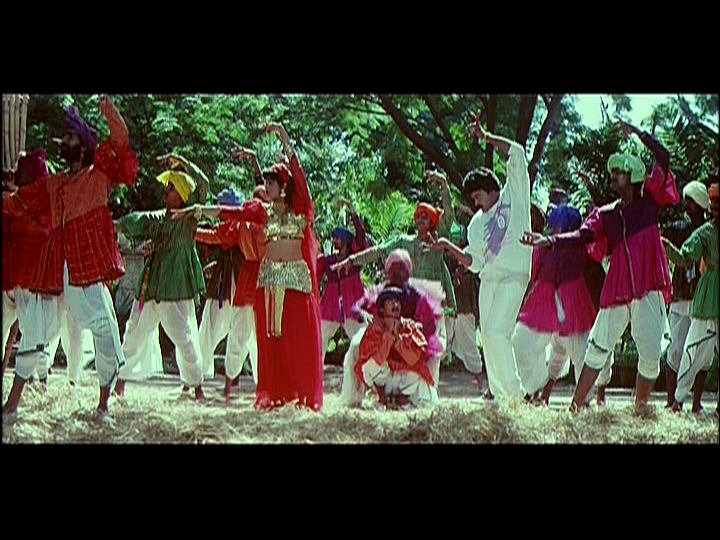
Muta Mestri is a masala film with a message, featuring Chiru with director A Kodandarami Reddy, and dialogues by the Paruchuri brothers. Overall the blend of ideas and drama and action is balanced. The action is full throttle, the dancing energetic, the ladies outfits are frequently hideous and the message is generally one I can get on board with. What works, works well but there are some heavy handed moments and a few assumptions around values that left me cold.

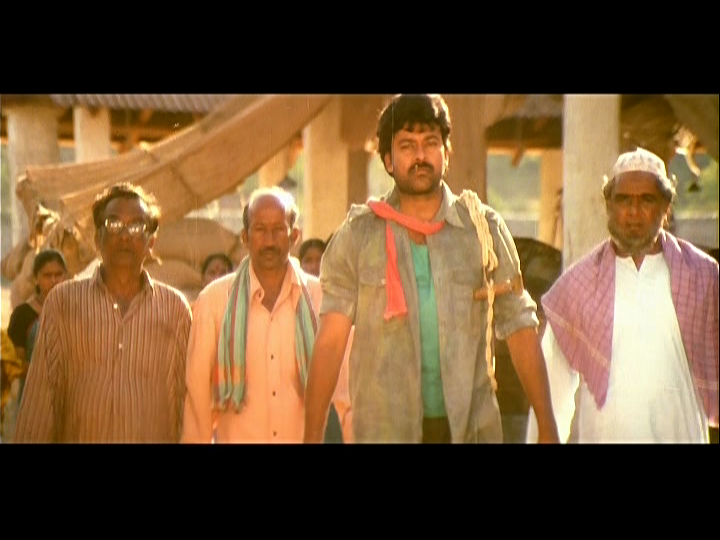
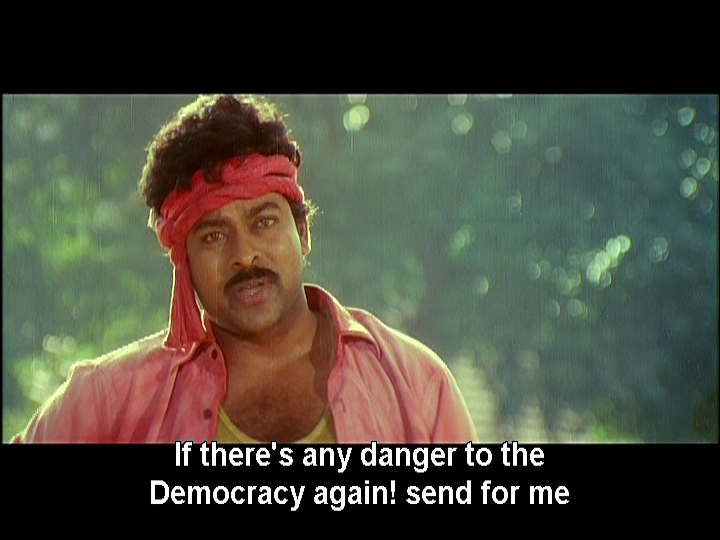
Chiranjeevi is the very patriotic Subhash Chandra Bose, the ‘Labour Contractor’ at a local market. He gets an excellent introduction when Sukkamma bets Brahmi a nudie run that the porters can’t unload waiting trucks in less than 10 minutes.

Whenever Bose arrives by bike, he just lets the bike careen off into the distance. It oozes confidence and a dash of silliness which is perfect for this role. Oh and she loses the bet.

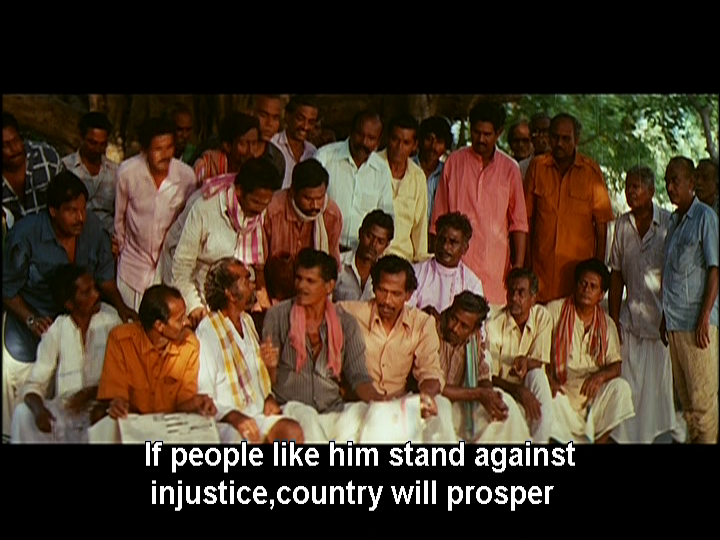
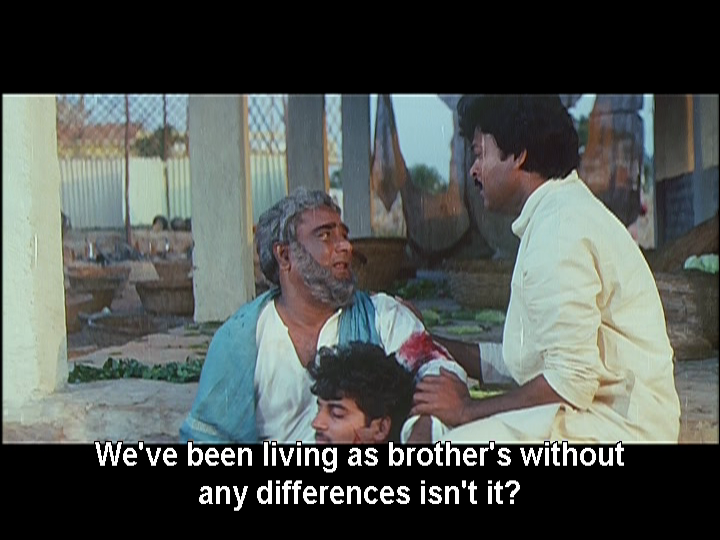
The market is a harmonious community of men, women, Hindus and Muslims all working together. There are some statements to the effect of unity equalling strength.

Allu Ramalingaiah plays a teacher who educates the children about Independence, Gandhian principles and the like and regulars Brahmi and Ali lurk in the support cast too. It’s the India that should be, according to the vision of this film. Kasim is one of the more prominent support characters and he and his son are well liked. They celebrate their Hindu friends’ festivals and the Hindus respect and understand Muslim religious practice. Indeed, knowledge of prayer times sparks a crucial plot development towards the end of the film. Diversity is shown as beneficial, not just something to be tolerated.

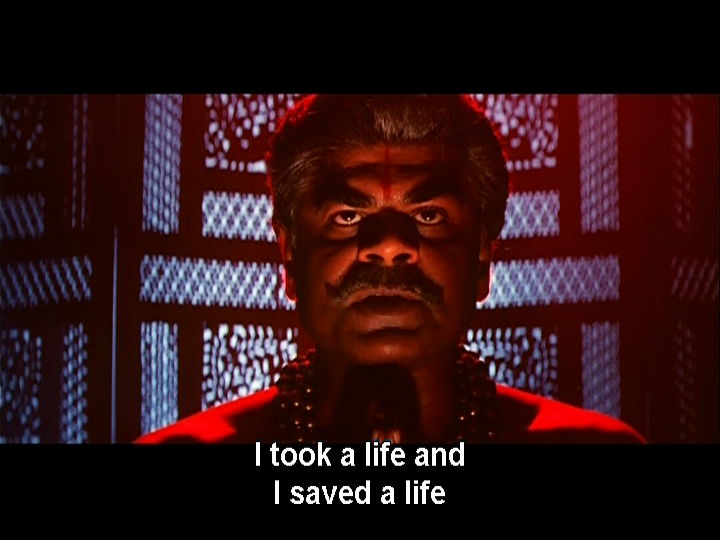
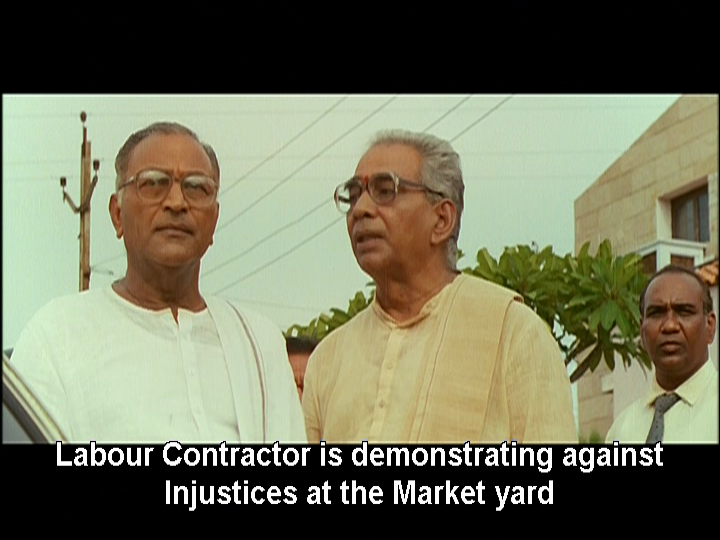
Atma (Sharat Saxena) is the villain of the piece. He is more of an ascetic style of villain, believing he has a relationship with god that allows him room to negotiate indulgence for bad deeds. He wants to use the land the market is on for a new development. The market folks turn to Bose for help and he stages a non-violent protest outside Atma’s house.

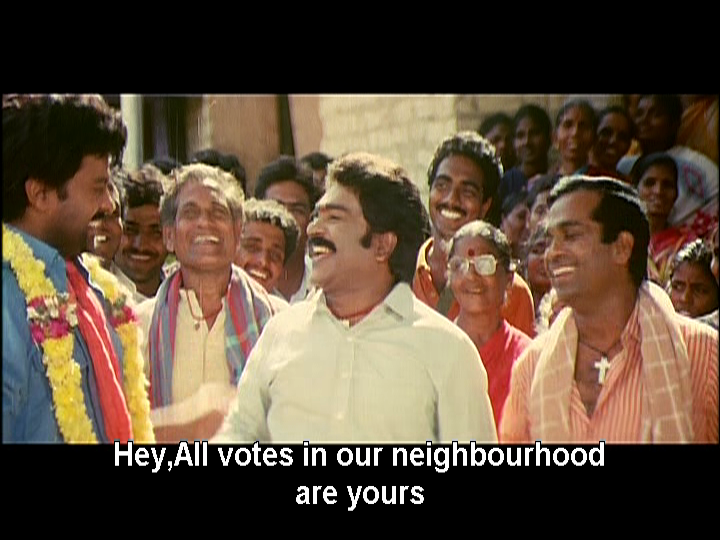
Bose allies with MLA Sundaraiah and the CM (Gummadi) and eventually moves into politics – a position that Atma wanted for his son Dilip. Dilip is the kind of baddie who pulls up outside a school and plays loud crappy music to drown out the pure sweet sound of innocent school children singing the national anthem. And adding insult to injury, he then dances badly in the street. Obviously Bose wil deal with him severely.

Bose brings a direct and action oriented approach to politics. There is a great sequence of Bose being wheeled from one photo op to another with the emphasis on being seen to feed orphans or plant trees rather than actually doing it. Bose reprimands his advisors and starts making his own decisions based on what he sees as right. He upsets the applecart and the CM loves him for it, as do the people. This is a major theme in the story and there are recurring examples. The film also makes a point about the quality of people in politics, and the shift from people who wanted to change the world to those who just want to profit from it. People have a responsibility to try and fix things, not just leave them for someone else to clean up. For all the idealism Bose spouts, it’s a deeply cynical film.

Atma realises that the only way to hurt Bose is to attack his loved ones and discredit him. Bose realises that he can’t sort out Atma while he is part of the government. It is a similar idea to the cop/vigilante issue raised in other films. Justice is located outside of the legal system and good men can do illegal things as long as they are doing them for the ‘right’ reasons.

The action scenes are energetic and impressive, and Chiru is in excellent form. The fights are fast and athletic, and suit his character’s style. Actually, Bose has multiple fight styles and uses them to entertain people watching him belting the daylights out of the baddies. I liked Bose’s interactions with the other guys at the market and Chiru has a gleam in his eye when he gets into the rousing speeches. His dancing is excellent, and especially when he has the opportunity to go for it.  A lot of the comedy is Bose bumbling his way through the intricacies of political life, and the hassles of being a chick magnet so it isn’t too intrusive even if it is very silly. Chiranjeevi looks great in simple working attire, although he does veer into acid wash denim territory which is less pleasing. The song costumes are an outlet for the frustrated wardrobe team. I keep saying this, but Chiranjeevi is such an accomplished actor. He finds opportunities to give his character more depth and complexity than a mass film may require, making the overall result more engaging and credible.

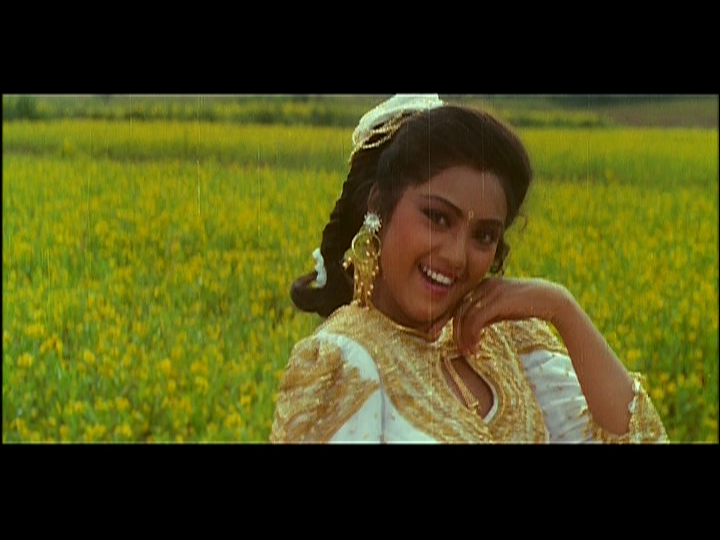
There are some things I took issue with. Bose’s sister Jhansi gets home late from college and because he sees the neighbours watching, Bose slaps her. There is a tearful repentance that follows, and the upshot is that avoiding reputational damage is the responsibility of women. That scene will come back to haunt Bose in a major way but it left a bad taste in my mouth, especially when Jhansi basically apologised for making him feel the need to hit her. Grrrr. At the same time, Bujamma (Meena) is very forward in chasing Bose and there is no penalty for that. So his sister has to be perfect and virginal but he will marry who he chooses and think no less of her for trying to get her hands on him before the wedding. Sigh.

All of the females in the film are given short shrift. Bujamma is, as Bose repeatedly tells her, loud, crass and stinks of fried food from her snack stall. She keeps trying to transform herself to be more like what he wants but cannot change her nature. Some of it is quite funny, as in a challenge to stay silent for 24 hours, but some of the dialogues are just plain mean. Meena is pretty and lively enough as Bujamma although her performance is a bit grating. Kalpana (Roja) is Bose’s secretary, and as Bujamma sees her the main rival for Bose. Roja doesn’t get much to do apart from stand around and look decorative although she is afflicted with ‘comedy’. Brahmi decides to help Bujamma keep Bose and Kalpana apart by telling Kalpana that after six…she’d better watch out.

Despite that excellent piece of advice, it’s a stupid and unnecessary diversion as Kalpana keeps fantasising about Bose’s possible sexual advances and fainting all over the place.  Although it did lead to this song:

She seems to think that was a nightmare. Ahem. (Note – if you want the film on DVD, the Moser Baer DVD doesn’t include that song but the EVP one does.) Koti’s music is not particularly memorable but the picturisations and costumes made an impression. If that isn’t enough costume WTFery for you, please be my guest:


Despite an escape plan that uses a detailed model, Bose catches up and Atma and Dilip are dealt with in excellent and elaborate style.

If ‘cross-country arse-kicking’ was an Olympic event, Bose would have taken gold (and possibly also silver and bronze). Justice is done, at least for some.

It’s an entertaining enough film, but not quite enough to make me want to watch it too often. There is some substance lurking under the cheese, but I have issues with the treatment of Jhansi in a film that was otherwise very positive about equality and community. See it for Chiru’s dancing, the outfits and the come-uppances. 3 ½ stars.