The Lunchbox

The Lunchbox

The story of The Lunch Box is charmingly simple – a mistake in the delivery of Ila’s carefully cooked lunch for her husband marks the beginning of a relationship with a curmudgeonly accountant on the cusp of his retirement – yet it opens up the complexities of life in Mumbai and how easy it is to be lonely in a city of millions.  As the story gently unfolds it showcases the famous Mumbai Dabbahwallahs and their phenomenal achievement of delivering thousands of tiffins across the city each day.  Watching the system in action, perhaps the hardest thing to swallow about the film is that a lunchbox repeatedly does go astray, although perhaps there is some redemption in the fact that is consistently it is misdirected to the same person every time. I’m happy to believe such an aberration is possible though, since it does make for an excellent story.

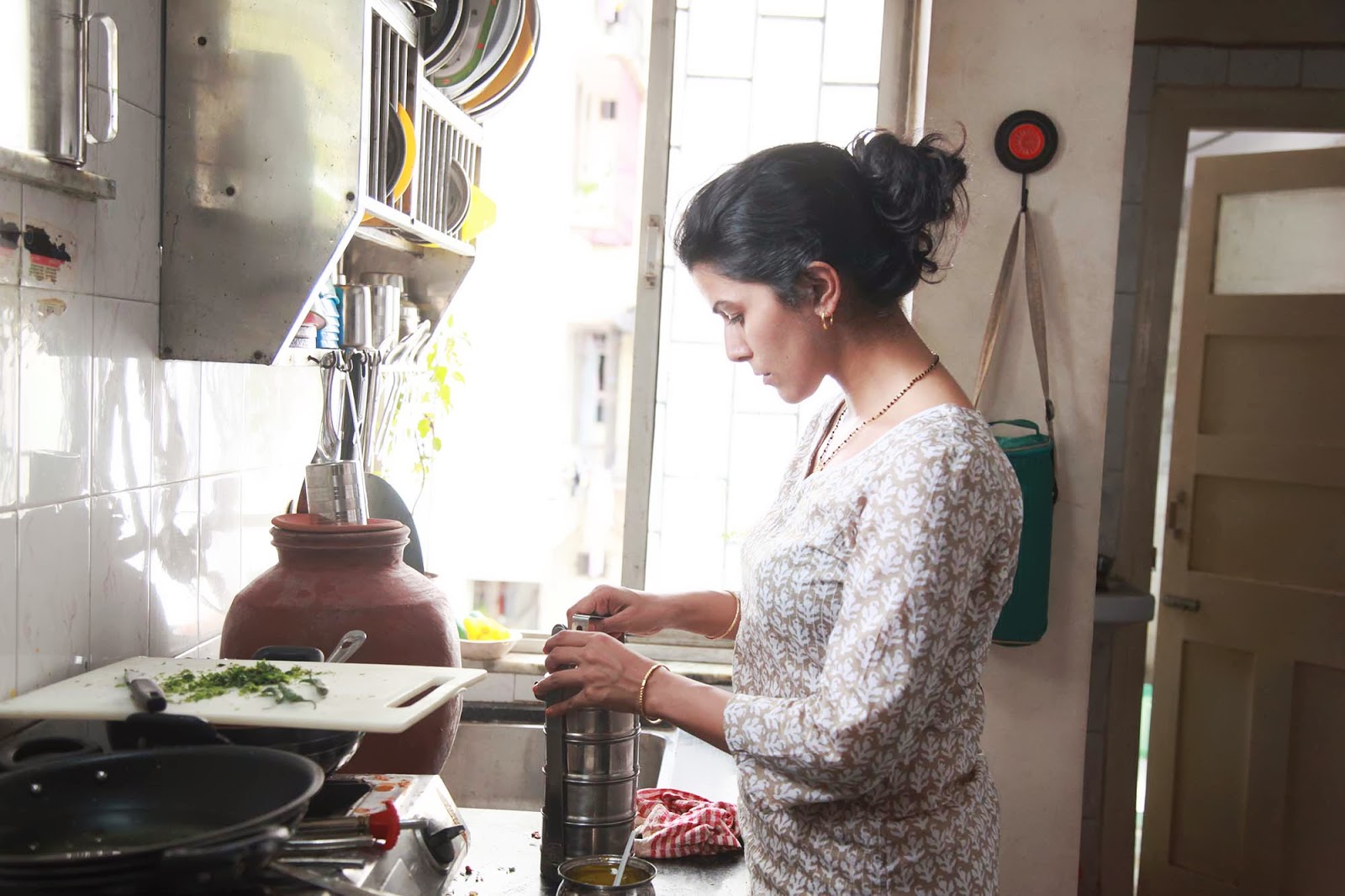
Ila (Nimrat Kaur) is trying to use the old adage that the way to a man’s heart is though his stomach as she struggles to get her workaholic husband (Nakul Vaid) to notice her.  She’s ably assisted in her endeavours by her upstairs neighbour, Mrs Despande (Bharati Achrekar) who supplies spices and recipes along with useful homely advice.  We never see Mrs Despande, but only hear her voice as she shouts down instructions or sends down a basket of supplies, although there is the added bonus of hearing her music – a selection of evergreen Bollywood tunes. As we learn later, her story is also one of isolation, but Mrs Despande seems to have come to terms with her life while her presence seamlessly adds another layer to influence Ila’s own indecision.
The Lunchbox

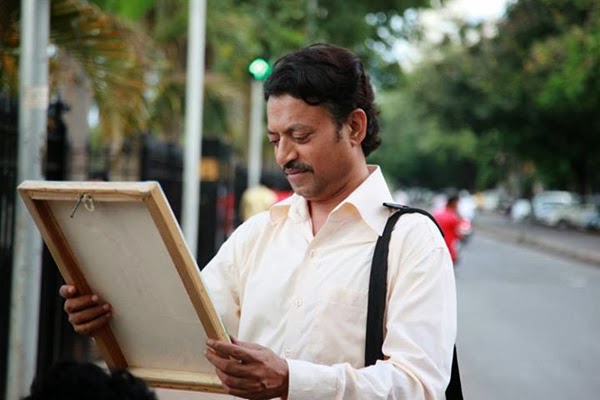
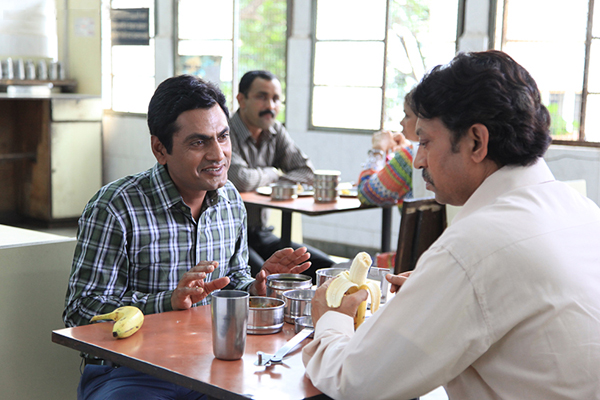
Meanwhile, Saajan Fernandez (Irrfan Khan) is just biding his time until retirement.  However in the lead-up to his departure, he’s been saddled with the younger Shaikh (Nawazuddin Siddiqui), a tiresomely happy replacement for his own efficient and silent procedures. As the story unfolds Saajan’s loneliness and Ila’s relative isolation become apparent, despite various encounters each experiences during the day.  Saajan’s nightly smokes on his balcony while he watches a family enjoy their communal dinner are the perfect example of his solitude, while Isla’s constant round of household chores perfectly show the constraints of her life.

The LunchboxThe Lunchbox

It’s not at all depressing though.  Saajan and Ila exchange notes every day along with the tiffin, and there is plenty of humour in their written exchanges.  The developing relationship between Saajan and the increasingly demanding Shaikh also provides some comedy, but as it turns out there is more to Shaikh’s character than just comedic relief and he has an important role to play.  Needless to say, Saajan’s silence at work is slowly eroded by Ila’s tasty lunches and Shaikh’s puppy-like demeanour as he clamours for attention and follows Saajan around everywhere.   Perhaps more unexpected is Ila’s realisation that she is responsible for her own happiness, beautifully understated in a scene with her mother (Lillete Dubey) after her father’s death, and gradually developed as the story progresses.

The LunchboxThe Lunchbox

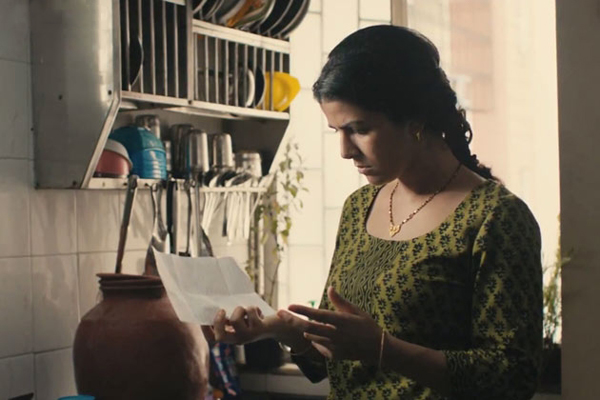
It’s the small touches that make the film so enthralling.  Irrfan Khan says more with his contemplative silences and the quirk of an uplifted eyebrow, than many films manage with an entire screenplay. Although the focus is on ordinary people and their ordinary lives. Ritesh Batra captures some extraordinary moments on film.  The claustrophobia of Mumbai’s crowded trains echoes the self-imposed limitations of Ila’s small kitchen while Saajan’s neatly organised desk speaks volumes about his personality.  As their lives open up to more possibilities, so too their physical surroundings become less constrained and both start to interact more with the world around them.
The LunchboxThe Lunchbox

Irrfan Khan and Nimrat Kaur are both fantastic in their respective roles, creating depth and interest in their characters as each slowly develops throughout the film.  They both fit their characters so well that this just wouldn’t have been as compelling viewing without them. However Nawazuddin Siddiqui is just as good, particularly as his story evolves and we learn more about his background, while there is able support from the rest of the cast.  The screenplay, written by début director Ritesh Batra along with Rutvik Oza, is beautiful in its simplicity, with plenty of unexpected turns in the path and a particularly well thought out ending.
The Lunchbox

Overall it’s a very upbeat story and a breath of fresh air in an industry that is too often obsessed with Hollywood action wannabes and South Indian remakes.  The film has featured in many international film festivals, including Cannes, and I saw it here at the Indian Film Festival in Melbourne. That was a packed showing, perhaps due to Suhasini Maniratnam’s recommendation at her Masterclass and the film received a very positive reception.  The Lunchbox is scheduled for a more widespread release in Australia later this year, and I wholeheartedly recommend watching – you won’t be disappointed!

Kochadaiiyaan

Kochadaiiyaan Taking Superstar Rajni and turning him into an animated action hero is certainly novel and Soundarya deserves praise for breaching the boundaries of Tamil cinema and attempting something as different as motion capture animation. With Deepika Padukone as the heroine and experienced actors such as Jackie Shroff and Nasser in supporting roles, the potential is certainly there for something amazing but despite all the innovation and obvious hard work, Kochadaiiyaan doesn’t quite deliver.  K.S. Ravikumar’s story isn’t the problem. It’s a swashbuckling period adventure with enough substance to fill a couple of hours comfortably with a few credible twists in the tale.  The dialogue also seems fine, even when subtitled, and the characters are reasonably convincing within the storyline.  It’s more basic than that – the real issue here is that animation is just not as good as the real thing. Kochadaiiyaan The film tells the story of Rana (Rajinikanth), who left the kingdom of Kottaipatinam as a child and ended up as the army commander of rival nation Kalingpuri.  A flashback in the second half explains Rana’s background as the son of legendary warrior Kochadaiiyaan (also Rajinikanth) who was himself betrayed by the King of Kottaipatinam.  In between there are battles, betrayals, social justice as Rana frees slaves, and of course some romance with Princess Vadhana (Deepika Padukone).  Rana is a rather more subdued character for Rajnikanth, despite his heroic looks and charismatic style with Princess Vadhana and the swash and buckling only really starts to take off when Kochadaiiyaan appears in the second half.  Maybe it’s a case of getting more used to the style, but the film is livelier after the interval, and Kochadaiiyaan appears more splendidly heroic than his son. Kochadaiiyaan I have to admit I’m not a fan of this ‘almost life-like’ animation.  I found Polar Express creepy and much prefer my motion capture as a dash of CGI in films such as Lord Of The Rings and Transformers, or as complete fantasy like Shrek and Despicable Me.  While motion capture gives characters a relatively life-like appearance, it’s not real enough to be able to convey emotion convincingly and the lack of facial expression is disturbing, as nothing looks quite ‘right’.  It’s hard to generate any empathy with the characters despite the attempts at laughter and tears, especially when some of the smiles look more like grimaces.  It also doesn’t help that the animation here is variable, with some characters, such as the young Rana and his brother Sena appearing almost unfinished with strangely elongated limbs and disjointed necks, while the horses and elephants appear very clunky when in motion. Kochadaiiyaan Another casualty of the animation process is the dancing, which ends up appearing jerky and awkward much of the time.   It also looks a little odd to have large numbers of dancers completely in sync in the background – rather than looking impressive it just looks strange and almost sinister.   However, on the plus side, the costumes by Neeta Lulla are stunning with amazing attention to detail, which likely would not have been possible in real life.  That also applies to most of the action scenes which just wouldn’t have been possible with real actors and animals.  Peter Hein is credited as the action co-ordinator but his talent with co-ordinating fight scenes doesn’t translate well to animation.  The  scenery is generally spectacular though with  plenty of grand palaces and surreal gardens, although there are a few times when the background just looks  rather bland and unfinished.  I hadn’t heard the film soundtrack before watching the film, but the music by A.R.Rahman, is  one of the highlights and suits the rather grandiose and somewhat sweeping scale of the story.

Kochadaiiyaan

I would have preferred Kochadaiiyaan if the CGI had been limited to the background, enhancing the fight  scenes and sprucing up the scenery, while the actors played their roles instead of  using motion capture animations.  Although the downside would be that quite a number of the scenes would have to be less extravagant, it could have made for a more engaging film. However, setting aside the animation issues  I still did mostly enjoy the film, mainly due to the tale of Kochadaiiyaan and the music. The end of the film leaves a sequel likely and I hope that does happen, although the animation  issues do need to be addressed in any follow-up film.  Kochadaiiyaan is probably best watched by Rajinikanth fans but if you can cope with the animation it may be worth a watch, even if only to see the first complete motion capture Indian animation film.

Manam (2014)

Manam

Manam is a beautiful film and a breath of fresh air in an industry usually dominated by beat-‘em-up heroes and the same old innuendo masquerading as comedy.  Featuring three generations of the Akkineni family and Nageswara Rao’s final screen appearance, it could very easily have tipped into trite sentimentality, but Vikram Kumar’s screenplay keeps the film on track with an novel storyline, sweet romances and genuinely funny comedy.  I have to admit that I almost didn’t buy a ticket when I read that Manam was being advertised as a comedy, since without subtitles most of the humour tends to pass me by (even with subtitles in some cases!) but Manam would have been a watchable and entertaining film even without subs.  As it was, being able to understand the jokes and laugh at the same time as the rest of the audience was excellent.  Long may this trend for subtitled Telugu films continue in Melbourne!

Manam Manam

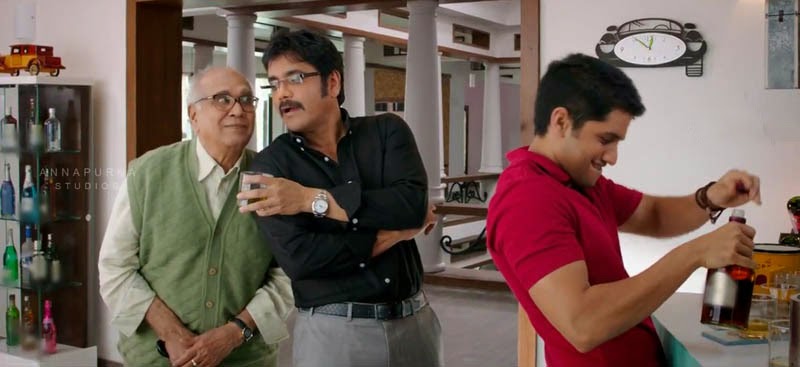
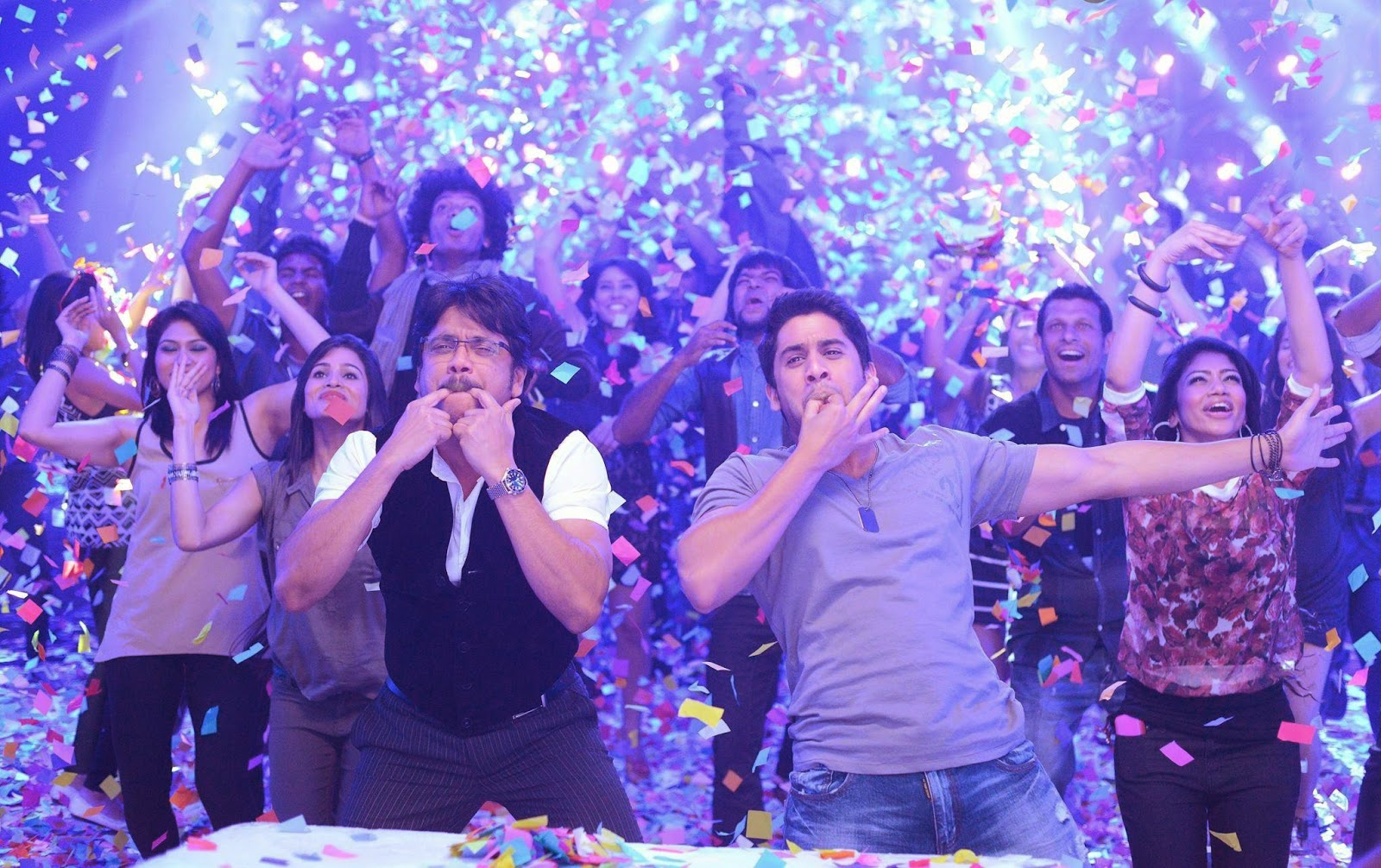
The film starts in the 1980’s with the unhappy marriage of Radha (Naga Chaitanya) and Krishna (Samantha) who bicker and fight even on the occasion of their son’s sixth birthday.  The very next day they are both killed in a car accident, leaving the young Bittu an orphan and his wish to see them happy together unfulfilled.  This doesn’t seem to have held Bittu back however, as the film moves to the present day, and the now grownup Nageshwar Rao (Nagarjuna) is in Mumbai to receive the Businessman of the Year award.  However, on the flight back to Hyderabad, Nageshwar is seated beside a young man who is the image of his late father, and this begins his crusade to bring his ‘parents’ back together again.  Nagarjuna is absolutely perfect here and his child-like wonder at discovering ‘his father’ is brilliantly portrayed.  The scene is well written too, with the just the right amount of comedy to keep it from cloying sentimentality and Vikram Kumar even manages to make the suggestion of such an occurrence seem perfectly plausible.

Samantha and ChaitanyaManamNageshwar reasons that if his father has been reborn, then his mother must be around somewhere too, and to this end he scours the streets of Hyderabad until he tracks down Priya (Samantha) who is the image of his mother and, luckily for Nageshwar and his plans, she immediately feels a connection.  Again Nagarjuna’s determined search is neatly summarised in just a few shots and the obvious unlikely coincidences feel much less contrived than expected.  It help that both Nageshwar and Priya are very likeable characters and Nagarjuna and Samantha ensure their interactions are full of genuine warmth and respect.

ManamNagarjuna

Having found his re-incarnated father and mother, Nageshwar has to find a way to re-ignite their romance.  In the midst of his attempts to bring about true love, Nageshwar finds love himself when Anjali (Shriya) commandeers his car to carry a sick man to hospital.  As it turns out, the older man is Chaitanya (Akkineni Nageswara Rao) who has seen his parents Seetharamudu and Ramalakshmi  reborn as Nageshwar and Anjali.  It’s then his turn to explain the past and try to reunite the lost lovers.

Manam

ANR is the absolute star of the show, and seems to take great delight in playing the octogenarian matchmaker.  He is mesmerising every time he appears, and his facial expressions and reactions to every other character are superb.  For his part, Nagarjuna is quietly competent as Nageshwar Rao with a subtle but effective performance, and his romance with Ramalakshmi in the second half is an absolute delight to watch.  There seems to be something in Temple’s theory that Shriya Saran’s irritation factor is related to the length of her hair, as here she has long hair and is actually pretty good.  Shriya looks beautiful and displays an engaging personality as a 1920’s traditional villager, and she is just as stunning as the cool and efficient Dr Anjali.  I vote Shriya always has long hair in her movies!

Manam

Nagarjuna and Shriya also share good chemistry together, which is sadly conspicuously absent in the romance between Samantha and Chaitanya, although to be fair the script really doesn’t ever let them develop much sparkage except in the way of confrontation.  Despite the lack of passion with Chaitanya, Samantha shines as Priya / Krishna.  She sparkles in her songs, and is full of bubbly enthusiasm as she meets Nageshwara, but her pain at her perceived husband’s betrayal is obvious as is her contempt of Chaitanya’s Nagarjuna.  Chaitanya is also better than usual, although that may be because his role mainly requires him to play a drunk and obnoxious college student which he seems to fit well.  The usual suspects pop up as various mothers, fathers, cousins etc, but do watch out for the brief cameo appearance of Amitabh Bachchan which garnered plenty of cheers from the audience.

Manam

It’s not all perfect though – the inclusion of Ali as a dance teacher is unnecessary and M.S. Narayana’s role is too obvious and crude to fit with the rest of the characterisation.  However Brahmi is good as Nagashwara’s assistant and without any misogynistic humour, he manages a restrained performance that proves he can act perfectly well when required.

Manam benefits from a sweet and  simple telling of a relatively convoluted story.  There are no exciting car chases, no big fight scenes and no cliff-hangers (even though the last few minutes attempt to raise the dramatic tension), but overall it’s an entertaining and watchable film.  All praise must go to Akkineni Nageswara Rao and Nagarjuna for their exemplary performances, but the younger generation hold their own, with even Chaitanya showing that he learnt something from the rest of his family while on set.  Definitely recommended viewing and a last performance to savour from one of the legends of Telugu cinema.