CityLights (2014)

CityLights

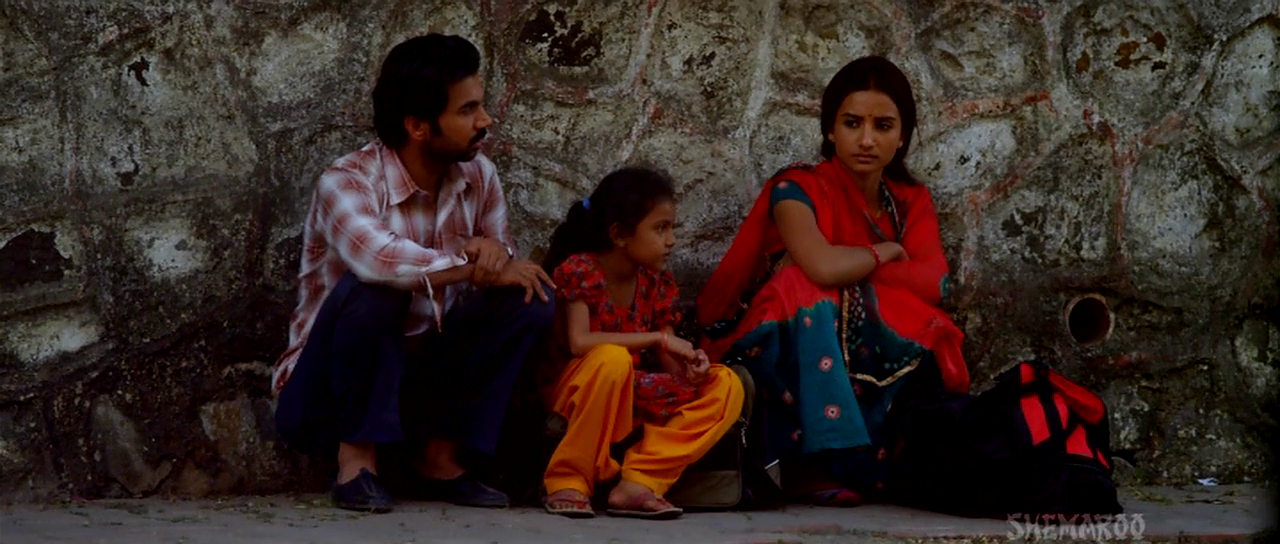
In his reworking of Sean Ellis’s award winning social drama Metro Manila, Hansal Mehta moves the story from the slum areas of Manila to the seedy streets of Mumbai. It’s a tale of grinding, remorseless poverty and the desperation such hardship brings, but there are some lighter moments too and the film morphs into a crime drama about half way through. City Lights is perhaps not quite as effective as the original in telling the story of a young naïve family and their move from the country to the city in search of a better life, but what the story has lost in adaptation is more than made up by the strong performances from the lead actors Rajkummar Rao, Patralekha and Manav Kaul.

City LightsCityLightsCityLightsCityLights

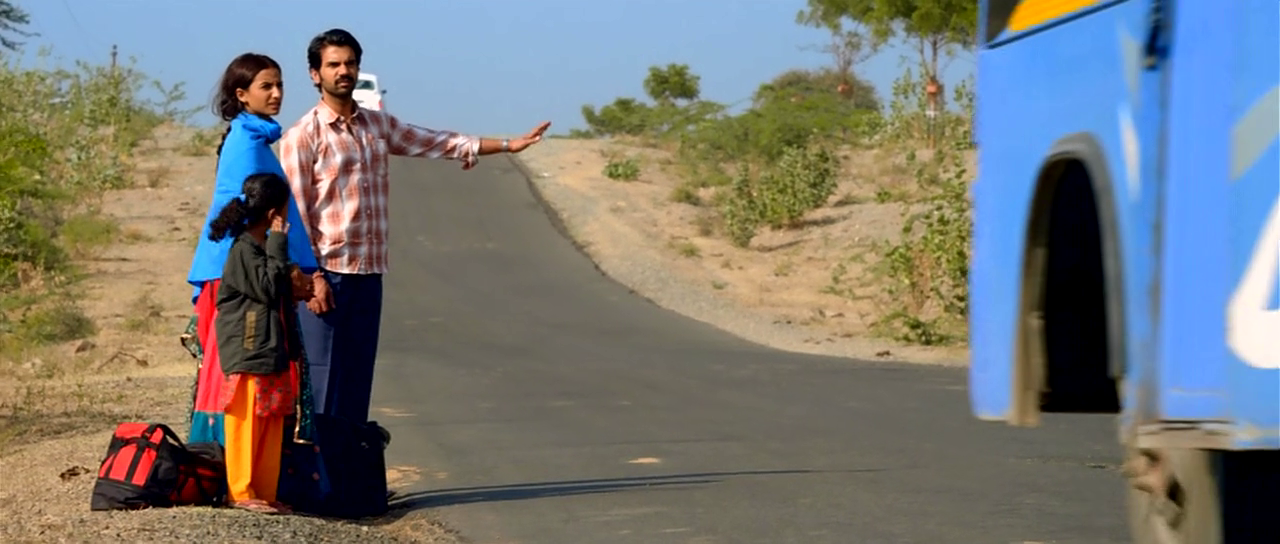
The story opens in Rajasthan where Deepak Singh (Rajkummar Rao) has a clothing shop in a small town that he is forced to close when he cannot afford to pay off his debts.  Since there appears to be no hope for any work in his village, he sets off for Mumbai with his wife Rakhi (Patralekha) and small daughter Mahi. Rakhi is reluctant to move, once in the city she seems less naïve than Deepak so perhaps she is well aware of the difficulties of trying to live in Mumbai, but ultimately she has no say in the decision. These first few scenes are full of light and laughter, and in just a few brief moments Hansal Mehta paints a picture of a happy family where there is a lot of love and hope that better days will come.

Deepak plans to meet a friend from his army days in Mumbai, but when Omkar fails to turn up at the railway station the family has to find their way in the big city alone. After being swindled out of what meagre funds they have, a chance meeting with a bar dancer leads them to a temporary refuge in a half constructed building.  While Deepak spends his days trying to find any kind of a job anywhere, Rakhi manages to get employment as a dancer in a bar. However this is not work she finds easy to reconcile with her conscience and she continually struggles with the leers of the men and their attempts to get more from her than she is willing to give. Deepak too is not happy about his wife’s job either, but the family is in such desperate straits that he has no other option but to let Rakhi work. Both actors do a fantastic job here of getting the depth of their emotions across using facial expressions with excellent body language and minimal dialogue.

Although their situation seems unlikely to improve, the couple never give up hope, even if it’s a very compliant and resigned kind of hope. There are no impassioned speeches or battles against authority here, but rather calm acceptance of their place in society and the belief if they just keep trying then eventually God will provide a solution for them. It’s frustrating viewing at times when Deepak is unable to push himself forward when looking for work and Rakhi cannot put aside her inhibitions to make more money when she is dancing, but they are simple everyday people and Hansal Mehta portrays them just the way they are. No more, and no less.

Their blind faith appears to work and things start to look up when Deepak gets a job as the driver for a security firm. The money seems good, and Deepak’s new partner Vishnu (Manav Kaul) even offers the family a place to stay. However Deepak comes to realise that his new partner had an ulterior motive for recommending him, and it is Deepak’s innocence and naiveté that got him the job rather than his previous army experience. Vishnu has a plan which needs the co-operation of his partner, and he’s been waiting for an innocent like Deepak to manipulate into following his commands. Deepak is reluctant, but when Rakhi loses her job in the bar it seems as if he has no other option but to go ahead with Vishnu’s plan if he wants to make sure his family survives.

Rajkummar Rao and Patralekha both suit the role of poor immigrants to the city. They both look skinny and malnourished with beaten down postures and downcast eyes, and both achieve that calm acceptance that extreme poverty seems to bring. It’s only with each other that they seem able to look straight ahead and even then Rakhi rarely looks her husband in the eyes. Both exude innocence effortlessly, even in the rather ham-handed treatment of their love scenes, and Rajkummar Rao in particular never puts a foot wrong. Manav Kaul is also excellent in a role that gives him plenty of opportunity to develop his character. He’s the man who knows the ways of the city, and is patently more sophisticated and knowledgeable than his partner from the country. He has a wife and a mistress, but despite his city veneer he also deeply resents the people whose money he delivers every day and despises his own circumstances. In his way, Vishnu is just as desperate and defined by his poverty, even if it’s not as extreme as that experienced by Deepak and Rakhi, and Manav Kaul does an excellent job with the characterisation.

The film does have a couple of songs which are either used over montages of the couple’s life in the city, or to highlight certain moments in their lives. The problem is that the music and lyrics are overly dramatic, particularly in scenes where the actors have already displayed plenty of genuine emotion and the music ends up detracting from rather than enhancing their performances.  The track below which plays over Rakhi’s dancing and Deepak’s drinking in a bar does work better, but most of the other songs are too loud and intrusive to suit the action. The film is also very dark at times; to the point where it is difficult to see what is happening let alone the actors expressions, while the final climax seems rushed and too contrived compared to the rest of the story.

These small issues aside, the film is an insightful look at the dark side of Mumbai and the realities of living in unrelenting poverty as Hansal Mehta successfully translates Sean Ellis’s story from the Philippines to Indian soil. Rajkummar Rao is definitely the standout as he once again completely immerses himself in his character and delivers an amazingly realistic and believable performance as he did in Shahid. Manav Kaul and newcomer Patralekha are also impressive in a film that raises questions about morality, ethics and poverty even if it does turn a tad Bollywood at the end. 3½ stars.


Vedalam (2015)

Vedalam

Vedalam opens with a woeful assassination attempt in Milan where a team of supposedly crack soldiers are trying to rid the world of top Tamil crime boss Ratna Bhai (Rahul Dev) and end up failing miserably. It’s not a good start, and what makes it so terrible is a mixture of the ridiculousness of the scenario, bad dubbing, bad acting and a nonsensical dénouement. Thankfully though, with the exception of a few comedy scenes, the rest of Vedalam is miles better than the opening few minutes would suggest and Ajith scores another hit – mainly due to the force of his personality and considerable charisma on-screen. Siva adds special effects, a good story and plenty of action to make Vedalam an entertaining watch despite the dodgy start.

As an antidote to the opening scene, the film immediately moves to Kolkata and Rajendran as local gangster Kolkata Kaali. Rajendran is one of my favourite actors and I love that he’s moving more into comedy alongside his usual gangster roles. He is very funny here as he menaces and then befriends new arrival to the city Ganesh (Ajith Kumar) and his sister Thamizh (Lakshmi Menon). Thamizh is applying to study in a prestigious art college in the city and Ganesh appears as the perfect older brother – supportive and encouraging in every way, while maintaining an unruffled and happily smiling exterior no matter what the circumstances.  While Thamizh gets accepted into the art college, Ganesh manages to get a job driving a taxi, despite not speaking a word of Bengali or knowing anything about the city – sounds like your typical taxi driver really!

Siva adds more humour with Soori as the manager of the taxi company, but his brand of comedy only works part of the time and it reaches a nadir when the tired out trope of philandering husband is rolled out yet again. Shruti Haasan also shows up in a comedy role as an unscrupulous lawyer, Swetha, who ends up with a grudge against Ganesh. None of her intense overacting in her initial scenes is funny and her wardrobe choices are equally atrocious, but her character does have a few redeeming moments later on in the film. In one of those typical film coincidences, Swetha’s brother Arjun (Ashwin Kakumanu) falls in love with Thamizh which adds romance into the film and gives Ganesh the opportunity to deliver a good ‘big brother’ speech about women’s safety. It’s a shame that such a good message about how stalking ≠ love and men should respect women is immediately followed by a song featuring Shruti and backing dancers in skimpy outfits and terrible choreography, but at least the speech did get a cheer in Melbourne.

Just before the break Ganesh reveals his true persona, first in an excellent fight scene and then in a genuinely frightening exchange with Swetha that sets up a flashback sequence in the second half. All of the smiling and the ‘always cheery’ disposition starts to grate by then, so the switch to bad-ass fighter Ganesh (aka Vedalam) comes as a welcome change. No-one does the switch from happy smile to scary psychotic grimace as well as Ajith – it really is disturbing and Siva uses the transformation sparingly but to very good effect throughout the film.

The reason for Ganesh’s outburst of violence goes back to the gangster seen in the opening scene. Ratna Bhai and his two brothers Abhinay (Kabir Duhan Singh) and Aniket (Aniket Chouhan) control the skin trade out of India amongst various other criminal activities and Ganesh has come up against them in the past. The flash-back sequence is well done, generating an emotional reason for Ganesh to seek revenge but without becoming overly sentimental or clichéd. The villains do what villains in these films usually do, while there is really never any doubt that Ganesh will defeat them all in the end. However the lead up to the final fight scene is very well written with a few good surprises to build the suspense. The last fight is also brilliantly done and the film is worth watching for this last sequence alone.

Anirudh’s music is good and fits the screenplay well, with Aaluma Doluma standing out as the best track.  The background score is occasionally distractingly loud, but I like the theme and it suits the schizophrenic nature of Ajith’s character. Mostly the songs are well pictured too apart from the previously mentioned ‘Don’t You Mess With Me’, which really deserved better and isn’t helped by the skanky choreography. Technically the film is slick and well-edited with good effects and novel fight choreography. There isn’t too much blood and gore either, although it’s always surprising how quickly the bad guys run out of bullets and resort to fist fights when they really should know better!

Vedalam is Ajith’s film all the way and he does a superb job as a dangerous and scary man while still conveying kindness and sympathy in the scenes with Thamizh. The support cast are all just that – support for Ajith, but Lakshmi Menon is good as his oblivious sister while Sudha and Thambi Ramaiah make an impression in their small roles in the flashback sequence.  Vedalam isn’t a perfect film, the comedy isn’t great and the villains are standard caricatures with predictable habits, but Ajith is very watchable and the story works well with some unexpected twists, especially at the end.  Worth watching for Ajith and the excellent final fight scene – plus Rajendran of course!

Thiruda Thiruda

thiruda thiruda poster

Thiruda Thiruda is a 1993 action film from Mani Ratnam that follows the exploits of two thieves when they inadvertently become involved in a major bank robbery. It’s a real ‘action’ film as almost every scene involves either a fight or a chase of some kind (using nearly every single kind of transport you can imagine), and the heroes are always on the move. At almost 3 hours, the film is rather long, but there is so much happening on screen that it’s an entertaining if not completely edge-of-your-seat watch. However the real reason to watch the film is the excellent music from A.R. Rahman which mixes opera, disco and electronic music with more traditional themes to give one of his best and most interesting movie soundtracks.

The film starts with the printing of new bank notes, destined to be sent all over India in specialised containers that require a computer card to gain access. For added security the containers also require a password, but since this is printed on the computer card, there may not be quite the level of protection the Finance Department think they’ve achieved. The card looks more like a plastic credit card than the key to a sophisticated locking system, but maybe it looked like modern technology back in 1993 and does mean it’s easily transferred between the various thieves. The card is also amazingly impervious to damage and works even after prolonged submersion in water – that does also apply to the truck carrying the money and the container full of money too though so perhaps it’s the water that has the special properties!

Criminal mastermind T. T. Vikram (Salim Ghouse) has various lackeys in India who steal the money for him, but his chief accomplice Ashok (Ajay Ratnam) is quickly apprehended and arrested by CBI chief Laxminarayana (S. P. Balasubramaniam), prompting a rather juvenile temper tantrum from the boss. However after an unpromising start, Salim Ghouse settles into the role of evil mastermind and enjoys himself immensely as he executes people who displease him after he heads to India to find his money. I like that his gang mange to arrange themselves artistically before starting to menace their targets and even the initial robbery is carried off with precise timing and a pleasing display of acrobatic moves on a moving train.

Before his arrest, Ashok manages to send the vital computer card and a cryptic message to singer Chandralekha (Anu Agarwal) who skips out before the CBI manage to arrest her too. Meanwhile petty crooks Kathir (Anand) and Azhagu(Prashanth) are on the run from the police after looting a safe belonging to one of the rich men in their village. During the robbery they stop Rasathi (Heera Rajagopal) from committing suicide, but rather than being grateful she decides to go with them to reclaim her share of the jewellery they have stolen.  Kathir and Azhagu don’t want to be burdened with a village girl so they unsuccessfully try to dump Rasathi, until they learn that she is escaping from an unwanted marriage with her uncle and become sympathetic to her plight.

The unlikely trio cross paths with Chandralekha and get drawn into the race to find the money while trying to stay one step ahead of the law and simultaneously avoid T.T. Vikram and his merry band of thugs. Things move along quickly with a little romance and some attempt at comedy, but mainly there are chase sequences (many, many chase sequences), as Kathir, Azhagu and Rasathi escape from the police, Rasathi’s uncle and his henchmen, the CBI and Vikram and his gang, although not all at the same time. Mostly these are well choreographed with bicycles, motorbikes, cars, horses, buses, trucks, trains and even elephants being used at some point or another, while the art of disguise and misdirection are also used to good effect.

The action sequences ensure that the film keeps moving along at a fast pace, which may be why the various characters are relatively under developed and the script somewhat lacking at times. Kathir and Azhagu should have had an easy camaraderie given that they are two thieves who have been working together since childhood, but here their relationship is clunky. This is particularly noticeable when a love triangle develops between the two thieves and Rasathi and there is little rapport or emotion during their scenes together. It may be the fault of the subtitles but the dialogue between the two is also awkward and fails to deliver the idea of two great buddies out to con the world together.

Heera Rajagopal is much better as Rasathi and even manages a bonding session with the sophisticated Chandralekha which gives Anu Agarwal the chance to make her character more sympathetic than she first appears. Despite her overdone entry scene, I really liked Heera and her portrayal of Rasathi. Every time I felt she was in danger of becoming a typical heroine, moping around and waiting for someone else to save the day, she actually got up and did something about her situation instead. Anu’s Chandraleka was also a much stronger character than anticipated and although the two female leads have less to do than the men, they give the film some much needed shading and depth. S.P Balasubramaniam is in fine form as the CBI officer chasing after the thieves, and fares better than the leads as far as characterisation goes. He has more of a back story and shows good rapport with his co-workers while showing off his excellent interviewing skills. His Laxminarayanan is one of the more interesting characters along with Malaysia Vasudevan as the police inspector, while Ajay Ratnam, Madan Bob and the rest all provide good solid support throughout.

The music really is the stand out performer in Thiruda Thiruda and A.R. Rahman changes from full chorus and orchestral score for the big production numbers to the evocative and very effective a capella song Rasathi, and pretty much everything in between. The mixture of Western and Indian music works well here and it’s probably my favourite Rahman soundtrack just because it is so varied. The accompanying cinematography from P.C. Sreeram is also excellent and the staging of the songs ensures each fits fluidly into the storyline. This is probably my favourite though – a lovely song, beautifully sung by Shahul Hameed with simple but powerful picturisation.

While there are a many Indian films that feature bank robberies, I haven’t seen many that follow this style of heist caper more typical of Hollywood films. It doesn’t work as well as it should due to the lack of rapport between the two male leads, but the various chase sequences are fun to watch and the storyline does have a few reasonable plot twists. For a film that does have so much action, there isn’t much suspense but the characters are likeable, the songs enjoyable and overall the film does entertain. Worth watching for the songs, Heera Rajagopal and S.P Balasubramaniam. 3 ½ stars.

Thiruda Thiruda