Boss Engira Baskaran

Tamil comedy is not my usual choice of film. I think comedy is the hardest genre to understand in a foreign language and often doesn’t translate well unless it’s purely physical. Even then, cultural differences often mean that what is funny to the writer just leaves me baffled. But Boss Engira Baskaran was recommended to me by my local Tamil DVD store as an entertaining film and I have to say – it’s actually pretty funny!

Arya plays Baskaran, commonly known to his friends and associates as Boss. He’s a happy go lucky guy who has never managed to pass his final school exams and has no gainful employment. Although he goes back each year to re-sit along with a group of other regular ‘failures’, he would have passed years ago if he only put as much energy into actual learning as he does into his attempts at cheating. His best friend, Nallathambi (Santhanam) runs a barbers salon which he acquired as a result of his rather unconventional marriage. Baskaran spends most of his time hanging out with his friend at the salon and generally making a nuisance of himself. In the course of his latest attempt to pass his final English exam he meets Chandrika who coincidentally is the sister of the girl his sensible veterinary brother Saravanam is trying to marry.

Despite the way in which Baskaran meets Chandrika and his subsequent idiotic antics, Chandrika seems fine with the idea of marriage. Perhaps she sees something in Baskaran that I don’t but he doesn’t seem like much of a catch for a well educated girl with a good job and excellent matrimonial prospects. It could be that this is part of the comedy that I just don’t get, but for whatever reason she encourages him in his quest to win her hand.

To get the girl Baskaran has to try and persuade her father that he would be an acceptable husband, despite the fact that her father obviously despises him. His sister in law and the rest of his family point out that as he is unemployed and has no qualifications he has no chance of getting her father to approve.  He leaves home determined that within 6 months he will have enough money to organise his sister’s wedding, an endeavour which he feels will demonstrate to his potential father in law that he is a responsible person who can support his daughter.

Baskaran hits of the idea to run a tutoring college for students who are re-sitting their school exams. After all, it’s a topic he feels he knows a lot about. To start the business he borrows money from the local loan shark Velpandi – Rajendaran in bad guy persona. Needless to say things don’t exactly go to plan with the college and Baskaran runs around trying various ploys to make his project a success. 

The film slows considerably in the second half and although there are some amusing moments, I don’t find most of the scenes in the school funny. The pace picks up again towards the end, although the final scenes fail to match the comedy in the rest of the film. The ending feels tacked on more as an afterthought to tie up all the loose ends. Jiiva has a special guest appearance as Chandrika’s fiancée and its possible that I may have found this funnier if I’d seen M Rajesh’s previous film Siva Manasula Shakthi and had an idea about the previous relationship between the two actors – but then again maybe not.

Most of the comedy is based on the dialogue with the best lines reserved for Nallathambi.  Santhanam does an excellent job in the delivery of these as far as I can tell and he steals the show when he appears. There were quite a few references to old films and older film songs which I’m sure were all very significant.  I think I felt much the same as a Bollywood virgin must have when watching Om Shanti Om! However, it was still funny even if I only caught a few of these – such as the salon being called Thala and Thalapathy, and the appearance of Rajnikanth’s Annamalai at a significant point in the story. I appreciate that unlike many recent Hindi films, or the often relatively unfunny comedy track, none of the humour is based on bodily functions or toilet humour. M Rajesh wrote as well as directed the film and deserves praise for his funny script and screenplay.

Arya is surprisingly good as Baskaran. Having seen him in more serious roles in Varudu and Madrasipattinam I wasn’t sure how he would deal with a much more light-hearted character but he manages to impress.  His facial expressions are more animated than I remember from previous films, his comedic timing is mostly good, and overall he strikes the right balance between ineptitude and stupidity for his character. Nayantara on the other hand is a bit of a disappointment. I expected more from her after her performance in Yarada Nee Mohini, but she seems very lifeless and there is no chemistry between her and Arya. Some of this may be due to the rather one-dimensional characterisation of Chandrika who just seems to be there as the love interest and nothing else.

While Saravanam mainly plays the straight man to his brother there is still a lot of comedy in his role and Panchu Subbu is believable as the respectable vetinarian. Vijayalakshmi looks beautiful in her role as his wife Nandhini and brings a touch of grace and dignity to the film. I must look out for her in more films as she had such a lovely presence on screen.  Chitra Lakshmanan as the father of Nandhini and Chandrika is a little too over the top, but his character is in keeping with the more typical Tamil comedy style for the father of the bride and he does well enough with this role. 

What works best is the first half of the film and the interactions between Bhaskaran, his brother and his friend.  A better end would have helped, but I was impressed at just how well the comedy did translate to a non Tamil speaker. A film worth watching as a funnier than usual comedy with an excellent performance by Santhanam and a totally different side to Arya. 3 ½ stars.

Happy

So what do you select to watch next when your eyes have just been opened to the world of Telugu cinema by MAGADHEERA? I decided to stick with the Chiranjeevi extended family and, after seeing a few clips of Allu Arjun dancing on Youtube, picked Happy as my first foray into his films. Now if you’re like me and have watched a lot of song clips and then subsequently the film you will understand why I didn’t have high hopes for Happy. Allu Arjun looks great and is an amazing dancer, so I have to confess I was fairly sure that he wouldn’t be able to act – after all, no-one is perfect. Boy was I wrong!

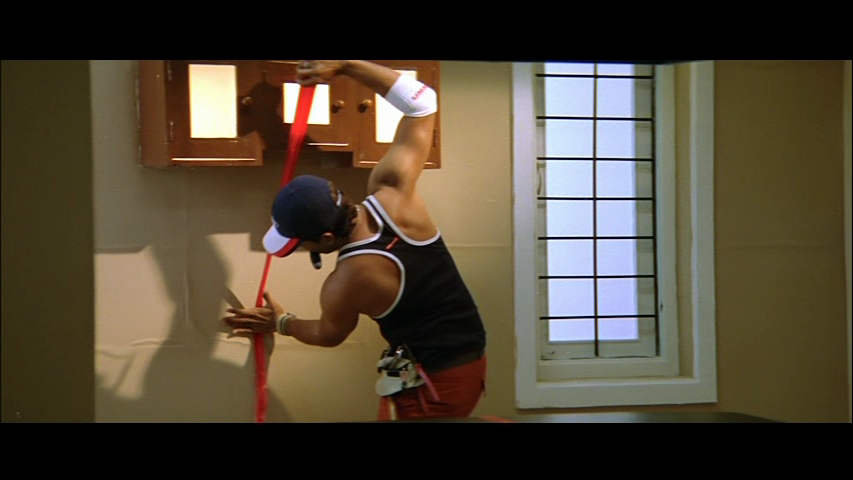
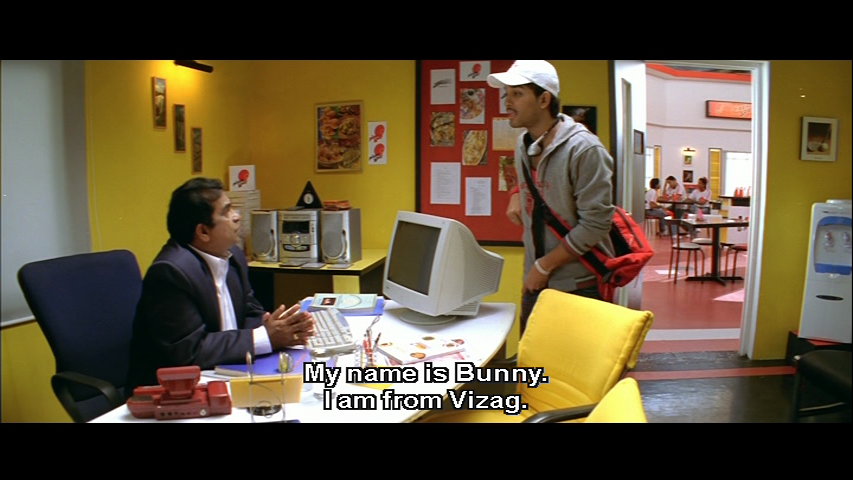
Happy stars Allu Arjun as Bunny, a happy-go-lucky orphan from Vizag, who comes to Hyderabad to study. He lands a job and digs at a pizza restaurant when he singlehandedly defeats a gang of students intent on causing trouble. This was early in my current Telugu film watching obsession, but I was still able to recognise Brahmi as the pizza joint manager, and was starting to realise that he has a contract to appear in every single Telugu film ever released. The restaurant also features a DJ, music system and a drum kit, making it possibly the first cross over night club/restaurant in Hyderabad. These do all come in useful however when Bunny announces that he can only fight to music. This ploy also gives us Venu Madhav in a brief comedic cameo role. (note the Chiru T-shirt!)

I think this first song was really commissioned by the Hyderabad tourist agency as it showcases the highlights of the city. It works for me and I would visit if they could assure me that I would get to see Bunny dancing at all the local sightseeing spots just like in this clip.

Bunny’s nemesis is the quiet and dedicated medical student Madhu, played by Genelia in a much less shrill role than usual. This is the film where I realised that Genelia is a very good actress when she doesn’t have to jump around squealing excitedly. I really wish directors would use this quieter and yet much more expressive side to Genelia more. Madhu’s father is a caste leader with political ambitions and holds the view that as women have no place in the workforce, there is no need for his daughter to study. Faced with this opposition, Madhu keeps her head down and tries to be as inconspicuous as possible in the hope that her father will continue to ignore both her and her marriage arrangements until she has finished her degree.

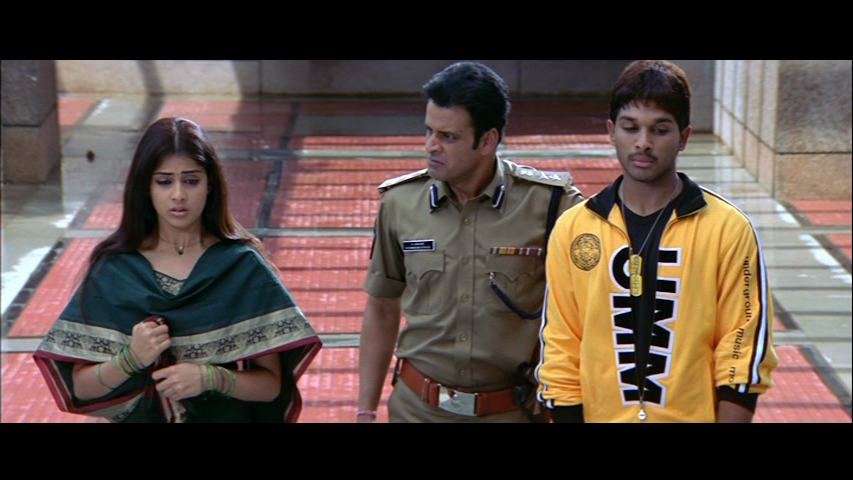
Bunny and Madhu clash from their very first meeting, and a series of misunderstandings makes sure that they each think the worst of each other.   When Madhu’s father decides that her studying is bringing her into too much contact with others outside her caste, he arranges her marriage to DCP Arvind  – Manoj Bajpay in a rather more comedic role than usual. In a dramatic meeting Madhu accuses Bunny of ruining her life, so he decides to try to prevent her marriage. Yes, it does all sound very familiar, but the twist here is that Arvind supports Bunny’s plan and the two erstwhile enemies end up married and sharing a flat together.

Despite their marriage, Bunny and Madhu are still sworn enemies and they draw a line down the middle of the apartment to demarcate each other’s territory. They continue to harass and annoy each other and Bunny delights in stepping over the line both literally and figuratively to annoy Madhu. This part of the film will be very familiar to anyone who has a younger sibling as the pranks the two play on each other are very juvenile and reminded me of living with my brother. It is also extremely funny and the two actors are excellent at keeping the sparks flying without ever becoming too ridiculous.

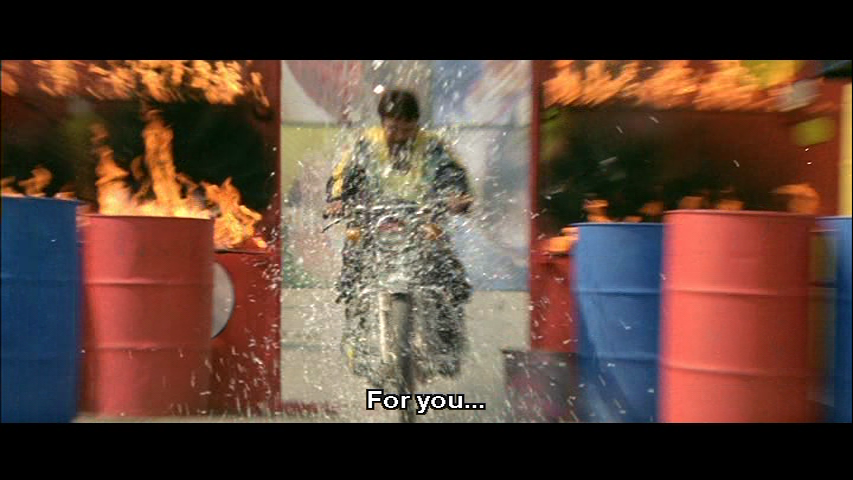
 Over time the inevitable happens and Bunny falls in love with Madhu. In typical filmi–style devotion he will do absolutely anything for her except to tell her his feelings. Due to his apparently amazing bike skills, Bunny gets a job as a stuntman in the movies and manages to juggle his pizza delivery with leaping over cars and through explosions in order to have money to pay for Madhu’s studies. He slowly acquires more bandages and bruises as the stunts get more and more dangerous although the bike seems to come through everything unscathed. Just when it looks as if the film is building up to a final romantic and ‘happy’ conclusion there is a real chance of pace. My theory is that the director Karunakaran realised that he has only a day left to film but plenty of money left in the fight and make-up budgets. So instead of the expected fluffiness, there is almost a full movie’s worth of drama, action and fisticuffs in the last few minutes of the film, along with buckets and buckets of blood. It was a little unexpected after all the comedy and romance of the preceding two and a half hours, but it certainly makes the end memorable.

After watching a number of his  interviews I am quite sure that a lot of this character is Bunny’s real extrovert persona. His performance seems totally natural and spontaneous throughout the film and he excels at conveying his character as much through his posture and mannerisms as through the dialogue and actions. I didn’t even find the coloured contact lenses as distracting as usual and, being an optometrist, contact lenses are often the first thing I notice. Despite the masking quality of coloured plastic, Allu Arjun can deliver every emotion using his eyes. It seems to be another family trait as the entire clan appear to have the most expressive eyes in the industry. The fight scenes are reasonably well choreographed, although they don’t have the slickness of Bunny’s more recent films. But where Allu Arjun really rules is on the dancing stage. He really is an amazing dancer and although there are only a couple of dance tracks in this film, he is totally mesmerising.   The music by Yuvan Shankar Raja is catchy and overall works well for the young characters and the happy feel of the film.

Genelia was a revelation to me in this. Previously I’d seen her in a couple of Hindi films and one other Telugu film, where she was generally hyperactive with piercing dialogue delivery. Here she has great chemistry with Allu Arjun in their scenes together and deliveres an excellent performance as the struggling student. She makes the most of her emotional family scenes and is believable as the daughter trying to live up to her father’s expectations while vowing to fulfil her mother’s dreams. Really a good decision by Karunakaran to allow her to be more subtle and showcase her acting talent in this way. Manoj Bajpay indulges in the most scenery chewing I have seen from him, but as always carries his role off with flair. The other support actors all do well enough and a couple of Bunny’s friends make an impression with their roles.

Happy is still one of my favourite films and I re-watch it if I need a pick me up after a bad day. It has comedy, action, drama, great dancing and fantastic performances from the leads. It doesn’t try to be anything other than a masala entertainer and as such it works very well. It would be a five-star movie if it wasn’t for that ending which is just a bit too over the top and ridiculous, even for me.  4 ½ stars.

Udaan

Udaan was the first Indian film in seven years to be selected for the ‘Un Certain Regard’ section at the Cannes Film Festival, and also won the Best Audience Award and Best Music Score at the Giffoni Film Festival. Sadly the film didn’t have a cinematic release in Australia, which is unfortunate as I think it is the best Hindi film I have seen so far this year. Overall Udaan is a simple story brilliantly told with some fantastic performances by the young and inexperienced leads.

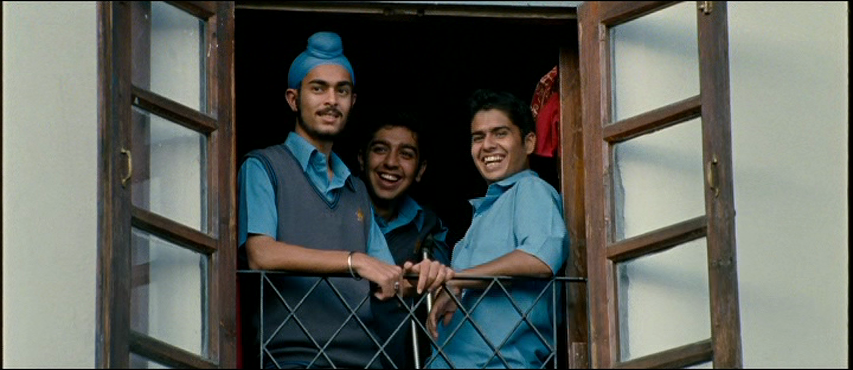
Rohan is a seventeen year old who has been at boarding school in Shimla for 8 years. In that time he has not been home, nor has his father or any of his family visited him. His friends are his surrogate family and they follow the ‘all for one and one for all’ motto. Their various escapades, including a late night trip out to see am adult movie, result in their expulsion from the school and Rohan has to finally return home to Jamshedpur. His father barely acknowledges his arrival at the train station, not speaking a word, and leaves Rohan to drag his trunk across the platform and up the stairs into their flat  by himself. 

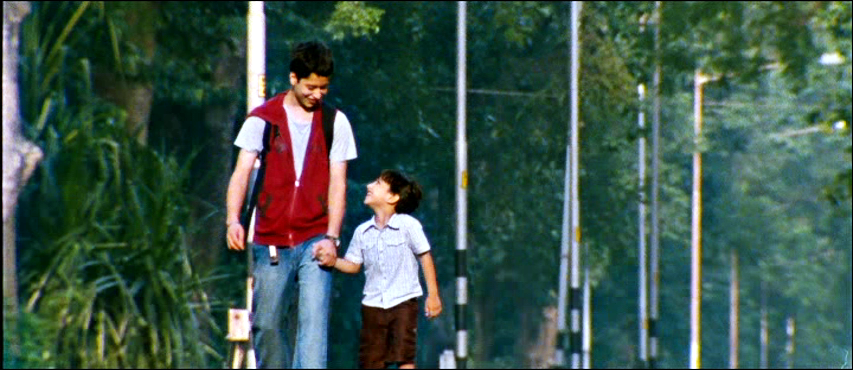
Once home, Rohan finds that while he was at school his father had married again and he has a six-year-old step-brother Arjun. The relationship between them is off to a bad start as neither knows of the others existence, and as the bigger and older brother, Rohan totally pushes Arjun aside. 

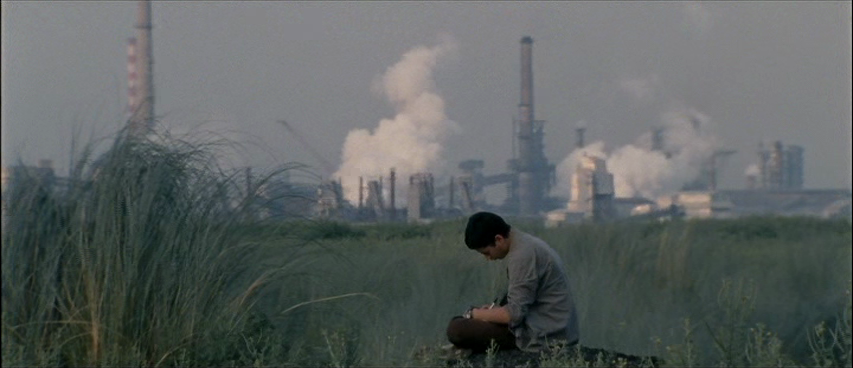
Rohan’s relationship with his father, never a happy one, deteriorates further as Bhairav Singh decrees that Rohan will work in his factory in the morning and attend engineering college in the afternoon.  Rohan wants to be a writer, and throughout the film we hear his poems and stories. When he is looking after his step-brother in hospital, everyone crowds around to hear his stories, so we believe that he really would be able to make it as a writer despite his young age.  Engineering however is not his calling and he struggles continually. He tries to be the son his father wanted and perseveres with his studies, but he is only seventeen and the lure of his writing is too strong to be ignored.  He skips school to sit in the fields and write, so inevitably fails his courses.  

His father is an authoritarian bully, an alcoholic, and is determined that his son will follow in his footsteps and take over the foundry.  He is continually disappointed by Rohan’s seeming failures and physically and verbally abuses him.  He also forces Rohan to run and train with him daily, trying to mould him into the man he wants him to become.  His treatment of his younger son is equally appalling and results in the two step-brothers finding some common ground. Bhairav has a younger brother, Jimmy who has a happy but childless marriage, and he becomes an ally for Rohan in his attempts to get his father to accept his writing.  But Jimmy has issues of his own with his brother and cannot stand up to him when it comes to the two boys.  Rohan rebels by stealing his father’s car and heading off to the bars in Jamshedpur where he goes drinking with some new friends. Rohan has to decide if he will stay, become an engineer and end up like his father, or leave to try to realise his ambition.  As his step-brothers fate also seems to lie in his hands, this is not an easy decision to make.

For me, the film works so well because Rohan’s dilemma is very realistically portrayed.  Like most of us, he wants his father to approve of him and he tries very hard to win this approval.  He can remember how much his mother loved him, and is desperate for some feeling from his father. Rohan’s rebellions seem very typical of a teenager, and his reaction to his step-brother rings true.  The issues of alcoholism and abuse are dealt with in a very matter of fact way.  There is no attempt by director Vikramaditya Motwane to either sensationalise or underplay the brutality and cruelty in the relationships between Rohan, Arjun and their father. The harsh reality of the story is allowed to speak for itself and it is to the director’s credit that the film is such a moving and poignant story.  

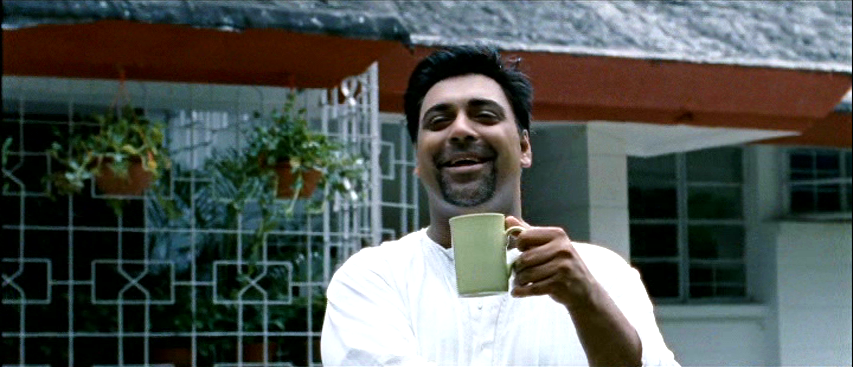
The performances by Rajat Barmecha as Rohan and Aayan Boradia as Arjun are extraordinary.  Both are flawless in their roles and we really feel the developing relationship between them.  For such young and inexperienced actors they have given truly excellent performances. The experienced actors also can be credited with some very good acting. Ronit Roy is fantastic as Rohan’s father, Bhairav Singh.  He keeps his expressions grim when dealing with his sons and while at work, but is animated, smiling and laughing with his friends. His alcoholism is always hidden from the rest of the world and he keeps his treatment of his sons an equally well guarded secret. Ronit Roy manages to convey so much of his character through these basic themes and with minimal changes in his expressions. Ram Kapoor also does a great job with his role as Jimmy.  He manages to make his character affable and ineffectual with some nicely underplayed acting.

The film has plenty of symbolism, which gives it a very European feel. The school as Shimla is set in the forest, and the transition on the train to the industrial sights of Jamshedpur makes a sharp contrast.  Shots of Rohan’s father are often framed by the barbed wire fence surrounding their home, and his scenes are often dark and heavy in feeling.  My favourite of these moments is probably Rohan’s T-shirt which states Love Happiness, but when he sits down it folds to read Lose Happiness. An excellent find by the wardrobe department!  The music by Amit Trevedi won an award at the Giffoni Film Festival and is beautiful and haunting.  Although often part of the background, a number of the songs also serve to move the film forward and are very well placed to do this. The last song is just perfect and a lovely memorable end to the film. 

There is nothing to find fault with in Udaan.  The screenplay by Vikramaditya Motwane and Anurag Kashyap is excellent, and the dialogue, going by my basic Hindi and the subtitles, seems appropriate for the story.  A sad film, but one which touches the heart and I totally loved it. 5 stars.  Heather