Venghai

Venghai is the latest offering from writer and director Hari and although it follows a fairly predictable path it’s still a reasonably entertaining film.

The story is set in a small town somewhere in Tamil Nadu, but presumably not too far from Trichy since the action moves there for some time. Veera Pandi is a well respected figure in the area and feels it’s his responsibility to look after the wellbeing of the local people. He is aided in this by the members of his family, including his son Selvam (Dhanush) who tries to follow in his father’s footsteps. All seems well until the arrival of a new MLA in the form of Rajalingham (Prakash Raj) who sees his position purely as a way to make money. He is corrupt, greedy for power and wealth, and wastes no time in his bid to take control of the area. Veera Pandi tries to keep Rajalingham in check but he can see the way things are going and in an attempt to stop his son becoming involved in the inevitable battle, sends Selvam off to Trichy.

Although he should be safe enough working for his uncle, Selvam soon becomes involved in another stand-off between local gangsters in Trichy who also seem to have some connection back to Rajalingam. Once in Trichy, Selvam sees Radhika (Tamannaah), and exhibits amazing powers of memory and facial recognition as he realises she is a girl he used to know many years ago in school. As may be expected, Selvam falls in love with Radhika even although she wants nothing to do with him and spends most of her time trying to get rid of him. However, after a few song and dance routines in exotic locations, and watching him throughly beat the gangsters at her college, she starts to change her mind and reciprocate his feelings. There is more to her change of heart than first appears though, and it turns out that Radhika has her own private agenda involving Veera Pandi and needs Selvam to help achieve her goal. In the end Selvam has to deal with Radhika and the local thugs before he can attempt to put an end to Rajalingam’s plans to eliminate his father.
The story is a predictable hero against bad guys with added in love interest, which does have one advantage of making it easier to follow the story without subtitles. It works as an entertainer because of the excellent performances by the lead actors. Prakash Raj is fantastic as the corrupt politician and makes the most of his bad guy persona. He swaggers around, generally looking angry as he schemes his way to more power. I think it may be to make sure that we know he’s the villain, but Rajalingham sports a really unusual moustache with rounded ends. I apologize for the quality but this is the only picture I could find. I think you will agree that it makes quite a statement and is pretty spectacular. A couple of his henchmen have mo’s which match so I’m taking it as a method of recognition for the bad guys rather than a fashion statement, but it could very well be both.

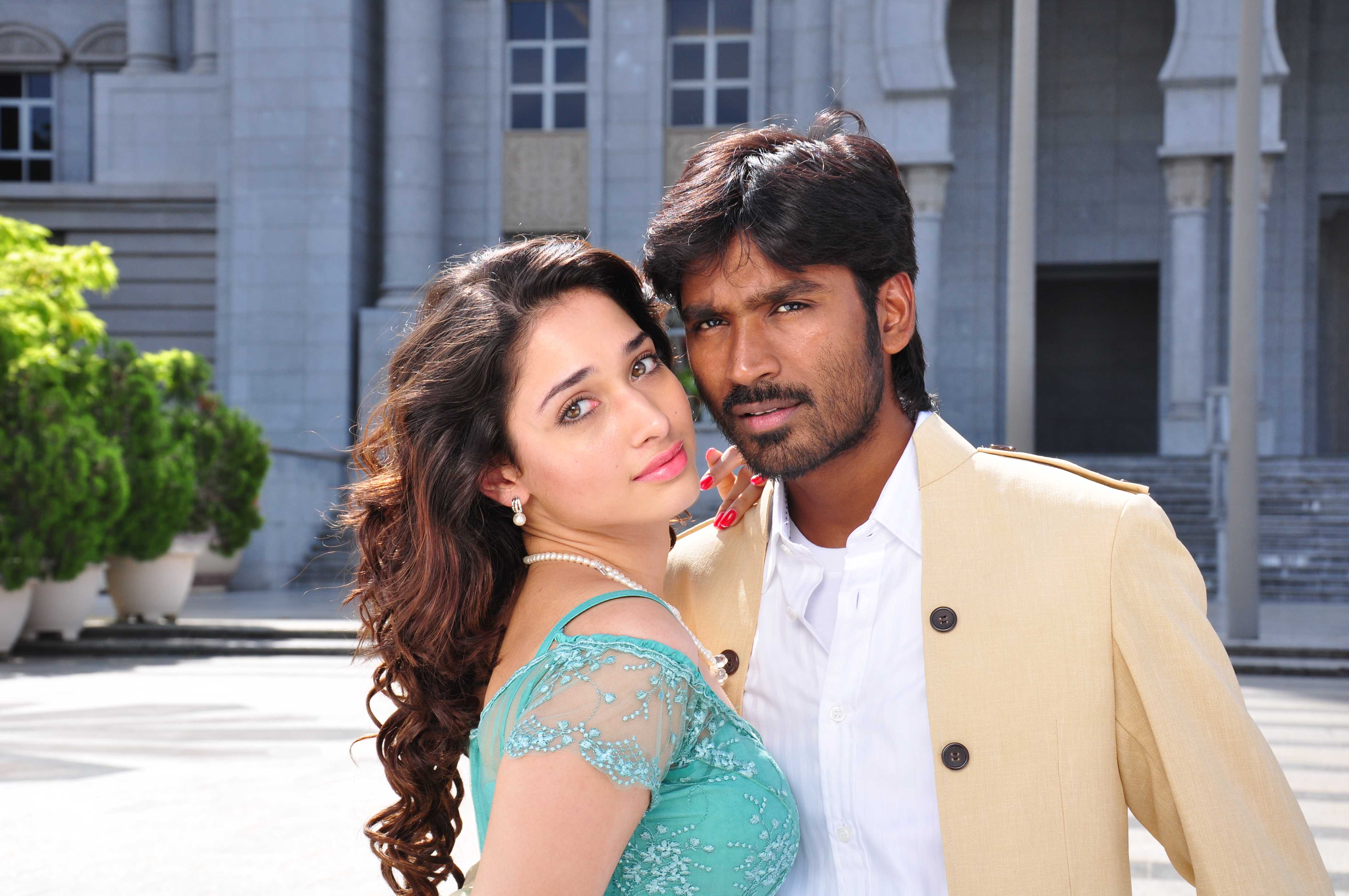
Dhanush does a good job as the son trying to follow his father’s wishes but drawn into the fight despite his best efforts. He is excellent in the scenes with his father and although I have no idea what they are saying, the emotion comes through very well. Raj Kiran is also good as Veera Pandi and the two have some effective father-son moments. Less successful is the romance between Selvam and Radhika. Tamannaah’s performance is very flat in the first half and she really only comes to life in the songs. This makes the contrast much more obvious, as when the action switches back to the romance she loses all of the vivacity which makes her so attractive when dancing. In addition, there is no chemistry between the lead pair at all. Some of this is possibly due to Radhika’s initial reluctance to recognise Selvam, but it never gets any better and it’s hard to understand why Selvam would want to continue the relationship once her true motives are revealed. Tamannaah is better in the second half when there is more for her character to get her teeth into, but it is still a very lifeless performance from an actress who has been much better in a number of other films.

I really liked the sound track by Devi Sri Prasad when I first heard it, and the songs are generally well pictured, although the person responsible for Tamannaah’s outfits has a lot to answer for. The general brief seems to have been to make sure her navel is exposed at all times! Despite some of these questionable wardrobe choices Tamannaah does look beautiful and the songs are definitely the best parts of her performance. I do think it was a little strange to go to Malaysia and then stick to a few shots of buildings and bridges as the location isn’t terribly obvious and could really have been anywhere. However the best parts of this film for me are the locations in Trichy. I work near Trichy for a few weeks every year and really love the city. So when I see the Rock Fort Temple, main bus station and St Joseph’s college it’s as exciting as seeing my home town up on screen. Judging by the reaction there were a few people from Trichy in the crowd as well!

The fight scenes are generally well choreographed and although it’s rather unbelievable to see Selvam singlehandedly take out an entire gang of thugs, at least he does it with the help of machetes, posts, sticks and any other weapon that comes to hand. There is a probably unnecessary comedy track which features Ganja Karuppa as Selvam’s friend in Trichy. As usual I missed most of the comedy as it was in the dialogue, but the two actors play well off each other and the physical comedy was reasonably funny although it really doesn’t add anything to the story.

Although the film follows a very well used storyline, the journey to get to the inevitable showdown at the end is reasonably entertaining, thanks mainly to Prakash Raj  and his gang of merry men. Not a bad film but definitely could have been better.
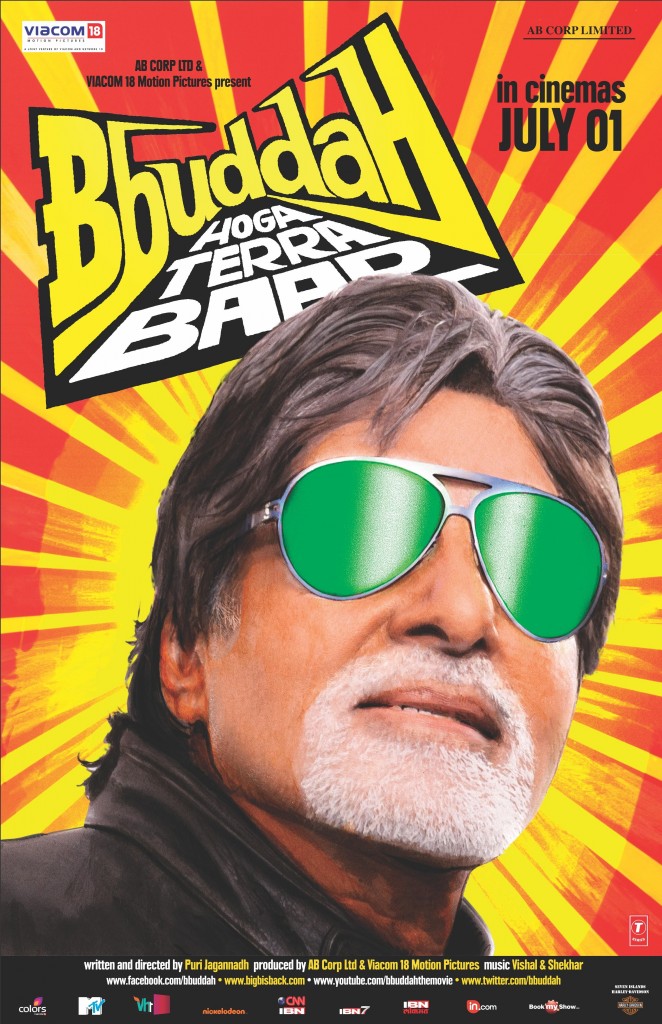
Bbuddah Hoga Terra Baap

This is it! This is what I’ve been waiting for in Hindi cinema. Finally, a film that resembles the Bollywood masala movies I love from yesteryear. Sure it lacks a few songs and the story isn’t all it could be, but the action is right back where the angry young man started in a fun film that delivers plenty of masala goodness.

The story revolves around Vijju, a retired hit man who has come back from Paris ostensibly for one last job. The contract is to kill ACP Karan (Sonu Sood) who has vowed to eliminate the gangsters in his area of Mumbai. This has severely put a crimp in the daily dealings of Kabir Bhai (Prakash Raj)  who is determined to eliminate Karan before Karan eliminates him. Added in is a romance between Karan and his old school friend Tanya, whose best friend Amrita just happens to be the daughter of one of Vijju’s old flames. We also get Hema Malini as Vijju’s estranged wife and a great performance from Subbaraju as one of Kabir Bhai’s henchmen.

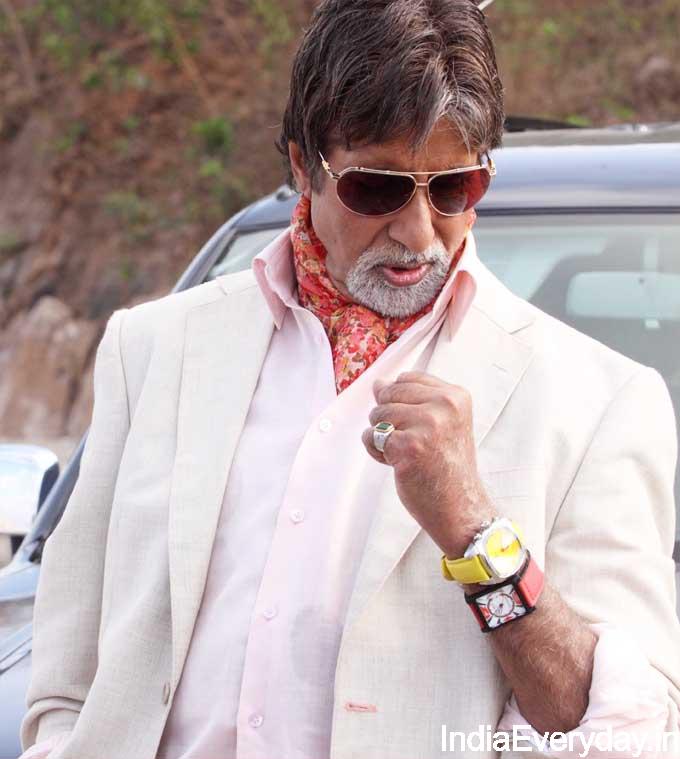
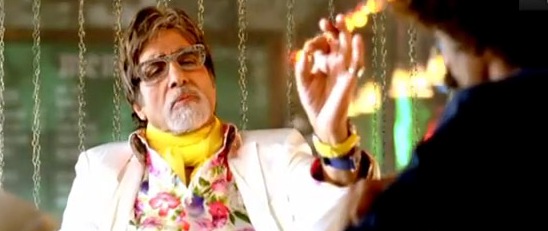
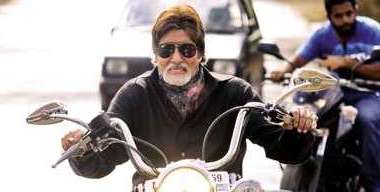
Bbuddah Hoga Terra Baap is a tribute to Amitabh, by Amitabh. He is very much the hero, complete with swaggering walk and hero dismount from a motorbike. The only thing missing is the patented Southern Style Hero Run, and we can cut him a bit of slack on that. There are some great fight scenes, and while Amitabh does look a little stiff, Vijay has done a good job in making the fight sequences look credible. The ‘angry young man’ attitude is there in spades and the whole film hinges on Amitabh’s ability to command our attention. This he does with ease, even when sharing the screen with Sonu Sood in a very tight police uniform! And it’s not just because of his stylish scarves, nifty jackets and very cool specs and shades (although I must admit these don’t really say Paris to me – much more Hyderabad filmi style), Amitabh still has the commanding presence that made him a star in the seventies. These are my favourite of his many pairs of glasses – very cool!

Sonu Sood is more understated than usual in his role as the police officer, but he comes into his own in the action scenes and when he is interrogating his prisoners. I really do prefer him in negative roles and every time he slips into a more ‘bad’ persona he is much better. His romance with Tanya isn’t very convincing at all, although this may be because Sonal Chauhan is very wooden in her role. She does improve in the second half, but by that stage it’s really too late for me to have any interest in her character. Charmy though is excellent as Amrita and has some great comedy. She makes the most of her role and is impressive in her scenes with Amitabh. Another very good performance from Charmy, and I really hope we get to see her in some meatier heroine roles as she is such a good actress.  Although Hema Malini only has a small role in the film she makes an impact and is as good as ever. It would have been nice to have a little more of her Sita Malhotra and a little less of Kamini and her histrionics but you can’t have everything.

Perhaps now that Prakash Raj seems to have a contract to appear in every single Telugu and Tamil film made, he’s now reaching out to include Bollywood in that list – this can only be a good thing. He is in fine form here as the chief gangster and brilliant in the final scenes. It’s also great to see Makarand Despande and his wild head of hair make another effective appearance as one of the gangsters.

It’s not a totally great film though and there are some flaws. The pacing is uneven in the first half and there are times when the set-up begins to drag. Raveena Tandon overplays her role as Kamini and although there are some funny moments, it’s all too cringe-worthy to make her the femme fatale she tries to be. It’s a shame as it is great to see her back on screen again. There is also a lack of songs and very little dancing. However, the one song we do get is a fun remix of old Amitabh hits and features a cast of backpacker back-up dancers. Go Meera Go!

Puri Jagannath is probably most well known for his brilliant film Pokiri with Mahesh Babu, but he has made many other hit Telugu films and his style of film making is very clear here.  Given that I’m mainly watching Telugu and Tamil films these days I think that plays a large part in my enjoyment of Bbuddha Hoga Terra Baap. The fight scenes and the final shoot-out are also very southern in style but work well within the story and are very well done. The writing does include a number of references back to old Amitabh films but I although I recognised some of this I wasn’t always sure exactly which film it referenced. It does pull the focus of the film back to Amitabh and the film works best when considered as a tribute to his films of the seventies. One for Amitabh fans and anyone who enjoys their movies with more masala than logic.

The angry young man is back – just make sure that you don’t call him old!

Temple says: I don’t think this is anywhere close to being a great masala movie. It plays as a great tribute to Amitabh, and I did enjoy a lot of it on that level. But. If you aren’t familiar with the Big B in his heyday, I don’t know that a lot of the dialogues and visuals will work as well, or the one big musical number Go Meera Go which is a pallid remix of old hits. There is really no story for the first half, it is Amitabh reprising some of his best known moments. It’s all filmed beautifully, and with the flair and pace I expect from Puri Jagganadh, but there is a clear separation of the plot happening for supporting characters, and Viju being a showcase role with little connection. This changes in the second half when all of a sudden Viju has a past and an emotional life and it’s all supposed to be terribly sympathetic. By then it was too late to change Mr Bachchan into the aging hit man with family concerns so it fell flat for me. I also had flashbacks to the hideous emotional manipulation and melodrama of Baghban as soon as I saw Hema Malini.  Occasionally Amitabh also seemed to be channelling sleazy Sam from Kabhi Alvida Na Kehna so that didn’t help either.

I cannot imagine better casting (apart from the obvious) to play Son of the B than Sonu Sood. He plays it pretty straight but seemed a bit too uptight in some scenes. It may have been the very snug fit of his uniform that caused this effect! Raveena Tandon was terrible. Her orgasmic whimpering every time she spoke to or about  Viju and hammy acting were among the few false notes in the supporting ensemble work. I cheered (all by myself, in a near silent cinema) for Prakash Raj and Subbaraju as I knew they ‘got’ the style and would add the level of commitment to badness I love in Telugu films. I didn’t like the girls’ roles at all, and I seem to have managed to almost forget them already. They were just fodder for (often sleazy) jokes, and made too many stupid decisions. I like Charmme but this role was a disappointment for me.

See it just to see Amitabh Bachchan strut his stuff, even though he does get some hideous denim in which to strut. And he did a lovely job singing the beautifully simple and melodious Hal e Dil. I think the Go Meera Go song sums it all up for me though. Once I saw that I just wanted to go back to the originals, not the lightweight remake.

Pithamagan

Pithamagan is not a film for the faint hearted. Like other Bala films, it deals with society’s poorest and most disadvantaged – in this case, he delves into the world of cremators, petty con artists and drug pedlars.  And yet it’s very watchable, with excellent performances from Vikram, Suriya and the rest of the cast making Pithamagan much more than just another film about the miseries of being poor and outcast.

The focus of the film is the relationship between Chittan, an orphaned cremator and Sakthi who is a small time criminal. Chittan is born in a graveyard and brought up there by the cremator who seems to do his best for the child. However Chittan grows up to be unable to deal with society; he cannot communicate in words, and is unable to understand the basic tenets of normal behaviour.

After his guardian dies, Chittan ventures into the local town where he creates mayhem before being rescued by Golmathi, a local cannabis dealer. He ends up following Golmathi home, and since she has a kind heart and feels sorry for another orphan like herself, she helps him to find a job. This turns out to be at a cannabis farm and when it is raided by police, Chittan ends up in jail. There he meets Sakthi who also feels sorry for Chittan and tries to help him cope with life inside prison. Sakthi is a petty crook who runs street tricks and confidence games which seems to have given him a performers approach to life. He has a sunny disposition and a positive outlook despite his circumstances and occasional rather interesting dress sense.

After Sakthi is released from jail he works with Golmathi to secure Chittan’s release, and along with Manju, a student who was once victim to Sakthi’s confidence tricks, the friends then spend most of their time together. They work on improving Chittan’s appearance and behaviour, and try to get him away from the drug trade with mixed results.  However, the local drug baron has other ideas and the final conclusion is as bloody and gruesome as you might expect.

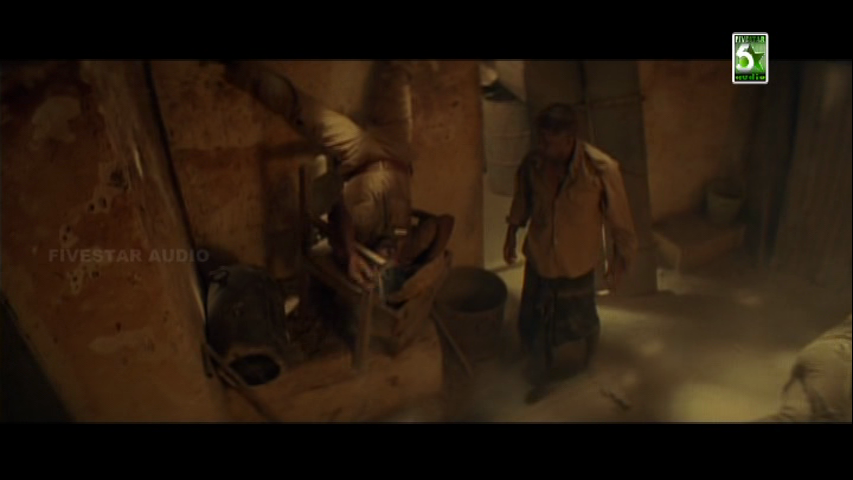
While the story itself is rather predictable, overall the film works well and this is down to the chemistry between Vikram and Suriya. Vikram seems to be able to take any disability and make it instantly realistic. I really believed that he was blind in Kasi and here he is totally convincing as the mentally disturbed Chittan. His facial expressions are just perfect and he really does appear to be totally wild and uncontrolled. It’s hard to define exactly what Chittan’s problem is, but as a scientist (and brain researcher!) I’m immediately intrigued and want to analyse the cause of his condition.  Is he simply a wild child – raised without the benefit of society and therefore unable to function within its rules? Or is it more organic and he has a functional neural developmental problem? I tend to favour the latter as the cremator who took him in was able to speak and obviously had some idea of how to interact with the townspeople. So the total inability of Chittan to communicate and relate seems to be something more than just growing up with little social contact. It also doesn’t explain why he was able to fight so well, but obviously that was essential to the plot and we can’t ask for too much realism I guess. I love that he left the policeman upside down in the shot below – the fight scenes really were good in this.

I also find it interesting that in so many of Vikram’s films, his character is somewhat crazed, and he is completely convincing each time! But as good as Vikram’s performance here is, I think that Suriya manages to equal it. This is the first film where I have really ‘got’ Suriya’s appeal. I’ve seen him in a number of films and while I thought he was good as the cop, or the good guy, or even as the bad guy, I’ve never felt that he’s been anything more than that . But Suriya is absolutely fantastic in this film. He is funny and charming, and breathes life into the story. Most of the comedy comes from Sakthi and his various cons, and without this balance Pithamagan would have been very grim indeed. Suriya’s character has plenty of flaws but at heart he is kind and his relationship with Chittan allows this side of his character to flourish.

Sakthi’s friendship with Chittan is cleverly developed throughout the story and makes it credible that the two would end up as constant companions. Chittan seems initially perplexed by Sakthi’s benevolence towards him but soon realises the benefit of a friend. And later, Chittan’s obvious jealousy when Manju is spending time with Sakthi is both childlike and logical since Sakthi has become the centre of his world.

Sangitha is perfect as Golmathi with her paan-stained lips and philosophical approach to life. Her character is another orphan and her initial pity for Chittan seems similar to how she would feel for a stray dog. But as a drug dealer and someone who is shunned by the local community (unless they want her product), she is able to empathise with his alienation and is the first person to start opening up his world. Golmathi’s emotions and reactions are all plain to see on her face which helps make her character much more sympathetic.

On the other hand, the first time I watched this film I really didn’t like Laila’s character and felt that she over played the schoolgirl. But on re-watching, I think she was supposed to be a fun character with a sense of adventure and an awareness of the possibilities of life which was intriguing to Sakthi. However I think Manju is a much less believable character than the others, and her presence is often more irritating than anything else. Initially her father seemed to be quite strict, even taking her to the jail to beg for Sakti’s forgiveness for her actions, which in itself seemed a really strange thing to do. But then later on in the story, her family seem to let her do whatever she wants, despite knowing that the man she is involved with is a convicted criminal. They do turn up to support Manju in the end, by which time it seems to be too late and is perhaps just a way to make a contrast to the other characters  whose only family is each other. Manju’s presence also provides another dynamic to the relationship between the two men since she becomes a barrier between them. But my biggest issue with her character is her inability to articulate what had happened to Sakthi, and this is a major flaw in the story for me. While I’m quite sure that in real life people become too distressed to be able to communicate, here it just didn’t seem to suit her personality, even allowing for her youth. It was also just a bit too over the top and filmi for a story that relies so much on gritty realism – at least for most of the film.

There is one other odd note, which is the protracted interlude with Simran. This completely changes the nature of the film and lasts just a bit too long. In fact it reminded me of the Hindi film Shakti, where Shah Rukh Khan turns up for an item song and ends up taking over a large part of the final scenes. While the song here is fantastic, and I love it, it stops the flow of the story and the subsequent scenes initially feel out of place as the pace abruptly changes again. But here it is anyway, since both Simran and Suriya are brilliant and it’s very funny.

I think Pithamagan is an excellent film despite a few flaws with the pacing. The friendships are successfully portrayed and the action is fast and well choreographed. Vikram’s grunting and animal noises are interesting and effective, and so much better than his singing which is absolutely brilliant in its tonelessness. I wonder just how hard Vikram had to work to make it sound that bad! The music by Ilayaraja is quite beautiful but not particularly memorable, especially since it’s often used as a backdrop for more of the story. Overall though it’s the performances that make this film worth watching and I would recommend it for Vikram and Suriya who are both outstanding. 4 stars.