Lucia (2013)

Lucia

Kannada film Lucia premiered at the London Indian Film Festival last year and went on to win the Audience Best Film award.   Watching the film it’s easy to understand why it created such a stir with a story that keeps you intrigued and guessing right up to the last frame.  Writer/director Pawan Kumar has made an intelligent non-linear film, where the boundaries between reality and dreams blur and nothing is really as it seems.  Even more surprising is the fact that the film was crowd-funded and made on a tight budget – hard to believe when every scene drips quality and attention to detail.

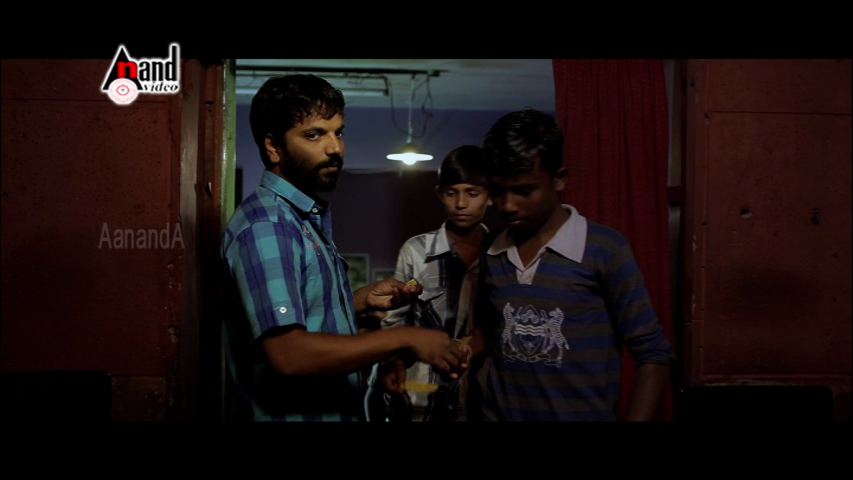
The film charts the story of Nikki (Sathish Neenasam), a torch shiner, or what I would call an usher, in a small run-down cinema.  The owner Shankranna (Achyuth Kumar) mostly treats Nikki as a son, getting involved in his search for a bride while Nikki similarly feels an obligation to look after Shankranna. When we first meet Nikki he is suffering from insomnia, perhaps not surprising as he lives with 4 rather large guys in a small single room.  The cinematography here is excellent, conveying a sense of claustrophobia, sweltering heat and the difficulties of living in such close proximity just with a few brief moments and a shot of a washing line!

LuciaLuciaLuciaLucia


One night, on one of his restless meanders, Nikki meets up with two men who introduce him to Lucia.  Lucia isn’t a person, but rather is the name of a sleeping tablet which has the added bonus of causing lucid dreams.  Soon Nikki is falling asleep anywhere and everywhere, and just as we follow his life while he is awake, we also follow his lucid dreaming.

LuciaLuciaLuciaLucia


Needless to say, in his dreams, Nikki isn’t a torch shiner in a run-down movie theatre, but instead he’s a film hero with a successful career.  Just as often happens in the world of dreams, various people from Nikki’s waking life also show up in his dream world.  Shankranna is his manager for instance, while his room-mates are cameramen and assistants and his real-life fiancée is his girlfriend.  But in this alternate reality Nikki is being chased by some men for money, although it’s not exactly clear who is behind the extortion attempts or why they are after Nikki.  This echoes his waking world, where Shankranna is being threatened by some gangsters who believe he owes them money.

The two stories, waking and dream-world are kept separate and distinguishable as one is filmed in colour, and the other in black and white.  Torch shiner Nikki is an uneducated guy who lives a simple life, but from his interactions with the people around him he seems like a ‘nice guy’. The other Nikki is a star and expects all the privileges that go along with his status, like his own private home theatre and being able to rent an entire bar for a night out.  Pawan’s Kumar’s script and Sathish Neenasam’s acting make the two personalities seem quite different at the outset, although both obviously different sides of the same person, but as the story develops the two Nikki’s become more and more similar.  Star Nikki is clean shaven but adopts a scruffy beard for an item number which makes him look more like torch shiner Nikki, while torch shiner Nikiki shaves off his beard and starts to look like star Nikki to try and impress his fiancée.

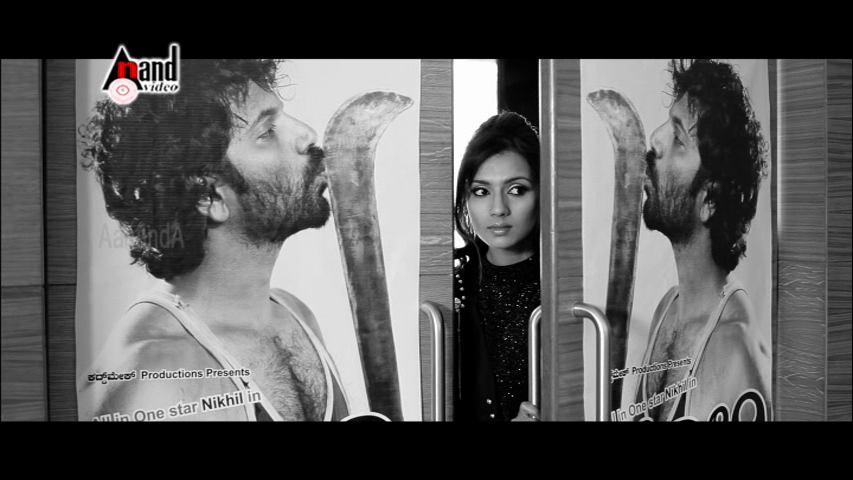
vlcsnap-2014-04-14-18h16m49s162LuciaLuciaLucia


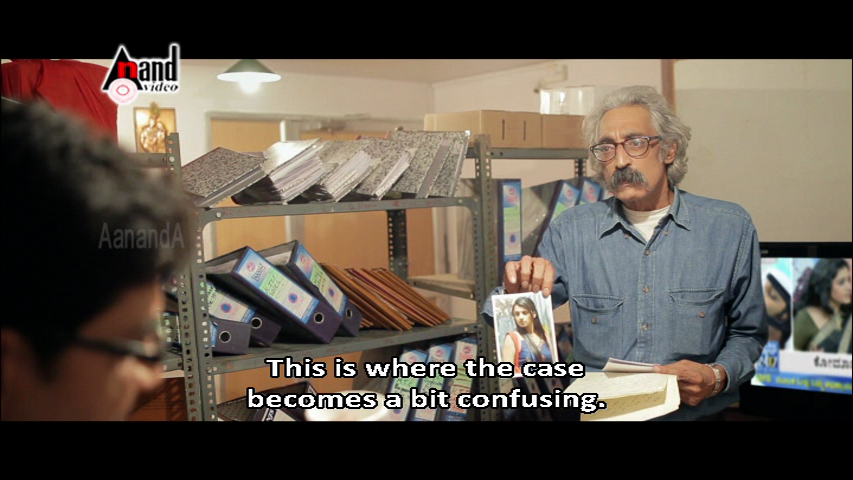
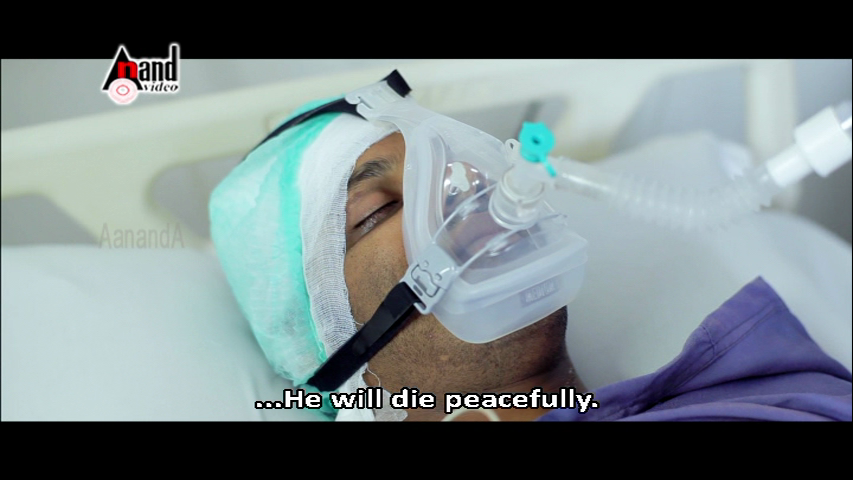
The linking thread is a murder investigation being run by the local Kannada police and a special investigator (Sanjay), who has come from Mumbai.  Concurrent to the two stories, this third narrative shows Nikki lying in hospital in a coma.  There is no information about how he ended up on life support but there are clues along the way with the various violent threats and the way the police investigation focuses on the drug Lucia.  I was impressed to see a more realistic than usual approach to medicine, even spotting the chief investigator using functional MRI scans as part of his research, although much of the diagnoses belong firmly in the realm of science fiction.  However it all fits with the rest of the story and the theme of drug addiction suits the more outlandish sequences.

LuciaLuciaLuciaLucia


One of the reasons the film is so compelling is the way the two worlds blend together while still being completely separate. The same people appear in each although they have different roles.  However the people who support Nikki in one are also supportive in the other, and the bad guys are always the bad guys. There is also the intrigue of wanting to know how Nikki ends up in hospital and who was responsible as the murder investigation slowly builds up clues into a possible solution.  The screenplay is excellent and balances the different tracks perfectly to ensure that there is always something new added to the overall picture but enough mystery to keep up the suspense.

LuciaLuciaLuciaLuciaLuciaLucia


I also can’t praise cinematographer Siddhartha Nuni enough for his amazing camera work and clever framing.  There are some great effects too as the camera slides from one world to another or when the worlds meet through a mirror.  The film looks stunning and there are no signs of the low budget on the technical side.  Another plus is the clever integration of Poornachandra Tejaswi’s excellent songs into the film.  These vary from being part of star Nikki’s filming to standard road trip songs, and yet they all add another dimension to the story.  In fact it’s hard to find any fault with Lucia.  The performances are all spot on and Sathish in particular is very impressive in his portrayal of the two Nikki’s.  His arrogance and selfishness as the star are perfectly balanced by his humility and kindness as the ordinary man.

It’s not just the storyline of the film that’s enthralling.  There are many nuances and issues raised with the theme of drug addictions and references to the loss of self with stardom.  The difficulties of a small single screen cinema are also raised against the backdrop of crime and extortion in the industry.  There is so much going on at many different levels that I seem to see more and more in each scene every time I watch the film, which makes the fifth watch just as captivating as the first.  Lucia is a rare gem of originality and sheer brilliance in an industry that more often relies on stock storylines and formulaic plots.  There is quality in every frame, every performance and every line, making this a film that really shouldn’t be missed. 5 stars.


 

Race Gurram (2014)

Race Gurram

Race Gurram was very nearly a non-starter in Melbourne, but at the 11th hour the distributors managed to find a venue and the race was on!  Better still, there were English subtitles – even for the songs – a first for Telugu cinema here in Melbourne, but hopefully not the last.  So, with a small but luxurious cinema, subtitles and the promise of Allu Arjun for just over 2 ½ hours, was the experience worth all the effort to get the film onscreen? Definitely!  Race Gurram is a mass entertainer that doesn’t break away from standard masala fare, but still manages to leave you laughing at the end.  That’s thanks mainly to strong performances from Bunny and Brahmi, while the usual suspects who make up the rest of the cast are a bit more hit and miss.

Apart from Allu Arjun’s introduction with a herd of horses and a few brief dialogues between our hero and the main villain, I’m not entirely sure why the film is called Race Gurram.  It has nothing whatsoever to do with the race track, and instead is a tale of acrimony between two brothers, Ram (Shaam) and Lakshman (Allu Arjun).

Race GurramRace Gurram


Ram is the elder and more sensible brother. He’s an ACP and is the standard morally upright policeman that Telugu films like to use as a sacrificial lamb.  Lakshman prefers to be called Lucky, because apparently it sounds ‘cooler’, which is probably enough of a clue to his feckless and irresponsible character.  The interactions between the two brothers are one of the strengths of the film and Shaam and Bunny make their exchanges seem natural and realistic.  Their arguments are just petty and immature enough to ring true, and when the situation escalates after a few more personal jibes, Lucky’s response is also in keeping with his personality. The way their relationship develops later in the film is also well handled, even if Lucky’s revelations before the interval do seem a little forced.   The tables are turned when Lucky finds out that someone else is targeting his brother and while it’s OK for Lucky to humiliate and fight with his brother, it’s not on if someone else tries to do the same.  It’s typical boy logic, but at least it gets Lucky on to the right side in the war against goon turned politician Shiva Reddy (Ravi Kishan).

Race Gurram

Shruti Haasan appears as Spandana, Lucky’s love interest, and at first seems to have an interesting role as a devotee of yoga who only shows her emotions on the inside.  But once she hooks up with Lucky, her usefulness to the plot seems to evaporate as her ability to emote increases, and she’s relegated to mainly appearing in the songs.  At least Shruti gets to actually dance rather than just pose and gyrate like Debi Dutta in the unimpressive opening number, and she does look great even if she doesn’t get to say much in the second half.

Another disappointment is Shiva Reddy and the whole plot against Ram and Lucky.  Although there are some good moments, overall Shiva Reddy is too much of a caricature villain to be properly offensive, and his machinations to become a minister are laughably inept. Ravi Krishnan never seems to get his teeth into the role, and mostly plays it for laughs with plenty of grimacing and sneering rather than any real maliciousness.  The knock-on effect is that the fight sequences don’t work as well as they should against such an ineffectual hoodlum and even throwing Mukesh Rishi in as Shiva Reddy’s somewhat nastier father doesn’t improve the situation. However, the usual suspects including Kota Srinivasa Rao, Posani Krishna Murali, Sayaji Shinde and even Prakash Raj as Spandana’s father all add enough to the mix to keep the action moving along well.

The second half introduces Brahmi as Kill-Bill Pandey, a name which does infer the usual dire slap-stick that Brahmi often relies on for comedy.  But such is not the case – Kill-Bill Pandey has great lines and an actual proper role in the story. And he’s really funny!  Seriously! Bunny and Brahmi work well together too, as Lucky comes to realise just what he has done by releasing Kill-Bill Pandey as head of a special police force on the unsuspecting Hyderabad public.  It makes for a much better ending than expected and has to be one of the best performances I’ve seen from Brahmi in recent times.

Race Gurram

I was expecting great things from the songs despite the fact that the soundtrack didn’t sound too special on first listen, and overall I wasn’t disappointed.  Apart from the first number which appeared out of nowhere without any particular point and had very little actual dancing by Bunny, the choreography was excellent.  Placement was generally odd and mostly there was no effort to place the songs within the storyline, but who really cares when it’s Bunny dancing? The stylish star looked, well, stylish, and as always his dancing was superb, particularly with Shruti Hassan in the larger group routines. Bunny always looks to be having such a good time when he’s dancing and his energy is incredibly infectious, so no matter how ridiculous the sudden appearance of Spandana and Lucky in the snow-covered fjords of Norway seemed, it was impossible not to enjoy the show.

Race GurramRace Gurram

Race Gurram does suffer from a rather rambling screenplay, and at times the film gets bogged down with irrelevant odds and ends that taper off into nothing.  Apart from the feuding brothers, the family moments are a tad cloying and overdone, and a heavier hand with the editing wouldn’t have gone amiss.  However, Bunny and Brahmi together make for a surprisingly entertaining finale that was certainly well appreciated by the Melbourne crowd.   Well worth a watch for their combined antics

Race Gurram

Kabhi Khushi Kabhie Gham (2001)

Kabhi Khushi Kabhi Gham

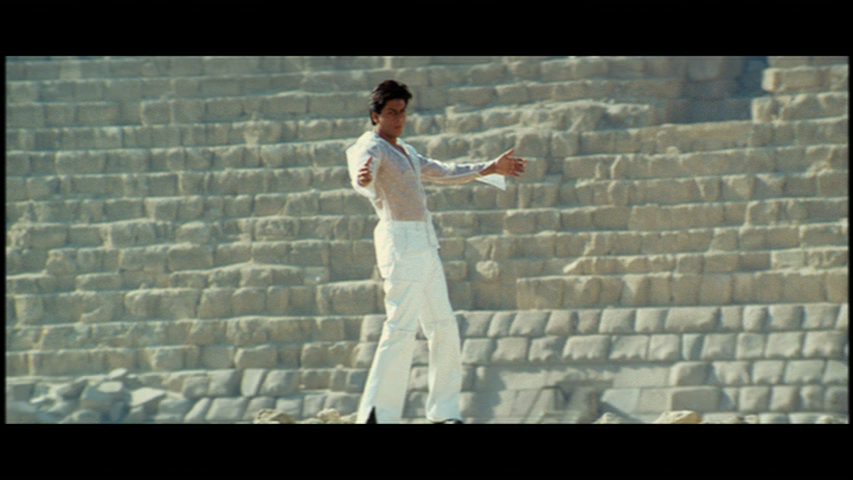
K3G is an indulgence that I only allow myself to luxuriate in occasionally.  While I love the first half of this film, despite all its flaws and typical Karan Johar extravagances, I just wish that the second half came anywhere close to the emotional appeal of the opening melodrama.  Considering the stellar cast it’s particularly disappointing that the whole doesn’t live up to the promise of its parts, but at 3 ½ hours maybe only watching the first half isn’t such an issue.  It also contains my all-time favourite Shah Rukh song with plenty of shots featuring SRK in those lacy see-through shirts, which is probably enough of an explanation for my love of this film, but K3G also brings back memories of learning Hindi and actually starting to understand dialogue without subtitles.  Special for a few reasons then, but this song is still the best part of the film.

For those who haven’t seen K3G, it’s a fairly routine story of your basic multimillionaire family and the ups and downs of their domestic relationships.  The Raichand’s live in a large ostentatious stately home which seems as far removed from India as it is possible to get despite the fact that it’s supposed to be relatively close to a lively market in Chandni Chowk.  It’s the kind of family where running late means having to hop on the helicopter to get home in time for Diwali celebrations, but despite all the lavishness of their lifestyle, it’s a family where there is a lot of love.  This is emphasised in the opening credits as Nandini Raichand (Jaya Bachchan) plays with her young adopted son, but it’s also obvious in the interactions between Rahul (naturally this can only be Shah Rukh Khan) and his father Yashvardhan Raichand (Amitabh Bachchan) as well as in the later scenes with his mother and younger brother Rohan (Kavish Majmudar).

Kabhi Khushi Kabhi GhamKabhi Khushi Kabhi GhamKabhi Khushi Kabhi GhamKabhi Khushi Kabhi Gham


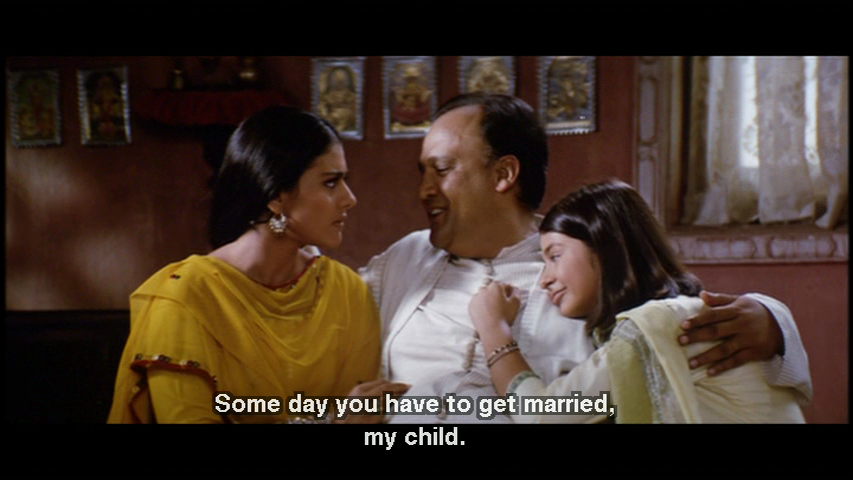
Problems arise when Yash decides that Rahul will marry Naina (Rani Mukerjee) who seems ideal for the position of rich man’s wife entrusted with carrying on the family traditions.  However Rahul has other ideas as he has fallen in love with Anjali Sharma (Kajol), the daughter of a local shopkeeper in Chandni Chowk. Just to keep things in the family, Anjali is the niece of Rohan’s nurse Daijan (Farida Jalal) and has a younger sister Pooja who is roughly the same age as Rohan.  This helps later on in the story, although initially it just seems another way of emphasising the gap between the two families.

Kabhi Khushi Kabhi GhamKabhi Khushi Kabhi GhamKabhi Khushi Kabhi GhamKabhi Khushi Kabhi Gham


The first half of the film sparkles with the romance between SRK and Kajol while the various family relationships add depth and interest to the story.  The two grandmothers, Achala Sachdev and Sushma Seth, ensure a typical Indian family feel despite the Anglicised mansion, while the glaring discrepancies between the Raichand’s home and the (somewhat sanitised) streets of Chandni Chowk are used to good effect.

Kajol is lively and boisterous as Anjali, while SRK is more retrained and less dramatically emotional which helps keep things under control.  There is a smattering of comedy in the romance too, which both SRK and Kajol handle effortlessly, and the appearance of Johnny Lever in comedy uncle mode is thankfully kept to a minimum and doesn’t disrupt the story.  The other characters all fit in too – the young Rohan is petulant and spoilt, just as a rich kid should be, while Anjali’s younger sister Pooja (Malvika Raaj) is bratty and approaching obnoxious at times, which does actually tie in reasonably well with her later persona.

Kabhi Khushi Kabhi GhamKabhi Khushi Kabhi GhamKabhi Khushi Kabhi GhamKabhi Khushi Kabhi Gham


Naturally Rahul chooses love over duty and ends up cast out of the bosom of his family, although he does have Anjali and her sister Pooja as compensation.  Of course, this is a Karan Johar film, so it’s no surprise when we reconnect with Anjali and Rahul ten years later to find that they are living in a large and opulent home somewhere in London, despite the fact that Rahul left with nothing – pretty impressive work!

Kabhi Khushi Kabhi GhamKabhi Khushi Kabhi Gham


But things start to fall to pieces once Kareena Kapoor enters the picture.  This was the first time I’d seen her in a film and it was also the last for a very long time – based solely on this dreadful performance. Hrithik Roshan as the grown up Rohan is also sufficiently unimpressive, seemingly unable to decide between the role of hot and macho student running amok in ridiculously expensive cars, or emotional wreck searching for his brother.  The two completely derail the romance and it’s hard to come up with any reason why Pooja has to dress like a call girl and act like a complete airhead.  The film also dives deep into overindulgent farce as Anjali complains about her son becoming too English (hmm, could this be because they’re living in England and he’s attending an English school?) while Rohan decides that staying with his brother while pretending to be someone else would be a good way to reconcile his father and brother.  Because that would definitely work.

If you can ignore all the self-indulgent weeping from Rohan and the insufferable unpleasantness of Pooja, the rest of the film is endurable, although unbelievably long and drawn out with a ridiculously contrived ending.  Karan Johar goes overboard trying to tug on his target NRI audience’s heartstrings with a rendition of the Indian National Anthem which seems totally out of place, and there are far too many references to ‘loving your parents’.  Even apparently when they don’t love you and repeatedly tell you so.  There are a few moments where the easy flow of the first half is almost recovered, but overall the second half is disappointing at best, particularly after such a good beginning.

Thankfully though there is still SRK, who is as charismatic as always, and the Shah Rukh and Kajol jodi works even while the story around them falls to pieces. If only the whole Kareena Kapoor and Hrithik Roshan storyline had been cut, this would have been a much more enjoyable film, although still not perfect.  Still, I do recommend watching right up until the interval – after that it’s at your own risk!   4 stars for the first half, but only 1 for the second.