Avane Srimannarayana

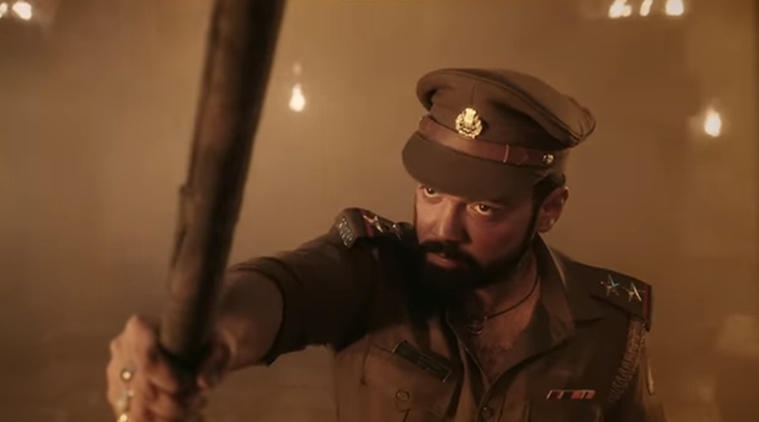
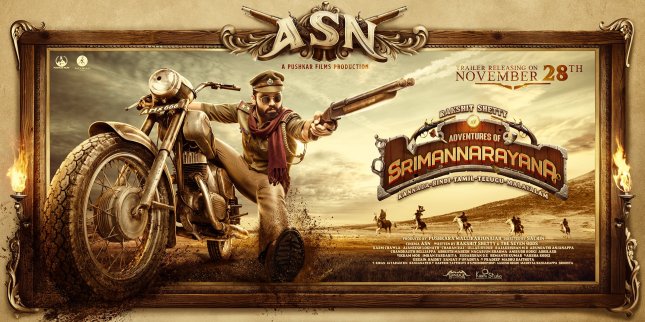
Welcome to the wild, wild West! Sachin Ravi’s Avane Srimannarayana is basically an old-fashioned Western featuring bad guys fighting the good guys over the spoils of a robbery that took place 15 years ago. Although over-long and a little slow in places, this is still a rollicking good adventure that has plenty of action and comedy with just a touch of romance. Written by a team of people including Rakshit Shetty who also stars in the film, Avane Srimannarayana references a slew of other films from Sholay to spaghetti westerns like A Fistful of Dollars and almost every gangster movie ever written. Think Quentin Tarantino meets Indiana Jones and Gabbar Singh in a small town in Karnataka, and that’s the general flavour of Avane Srimannarayana.

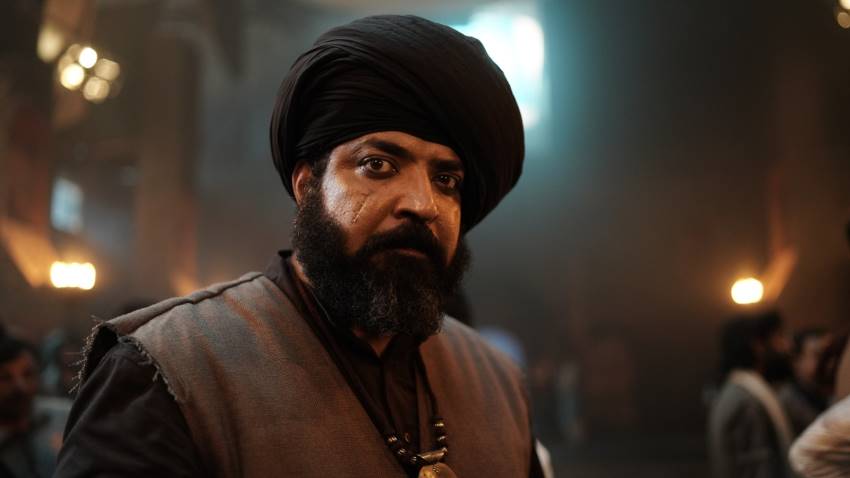
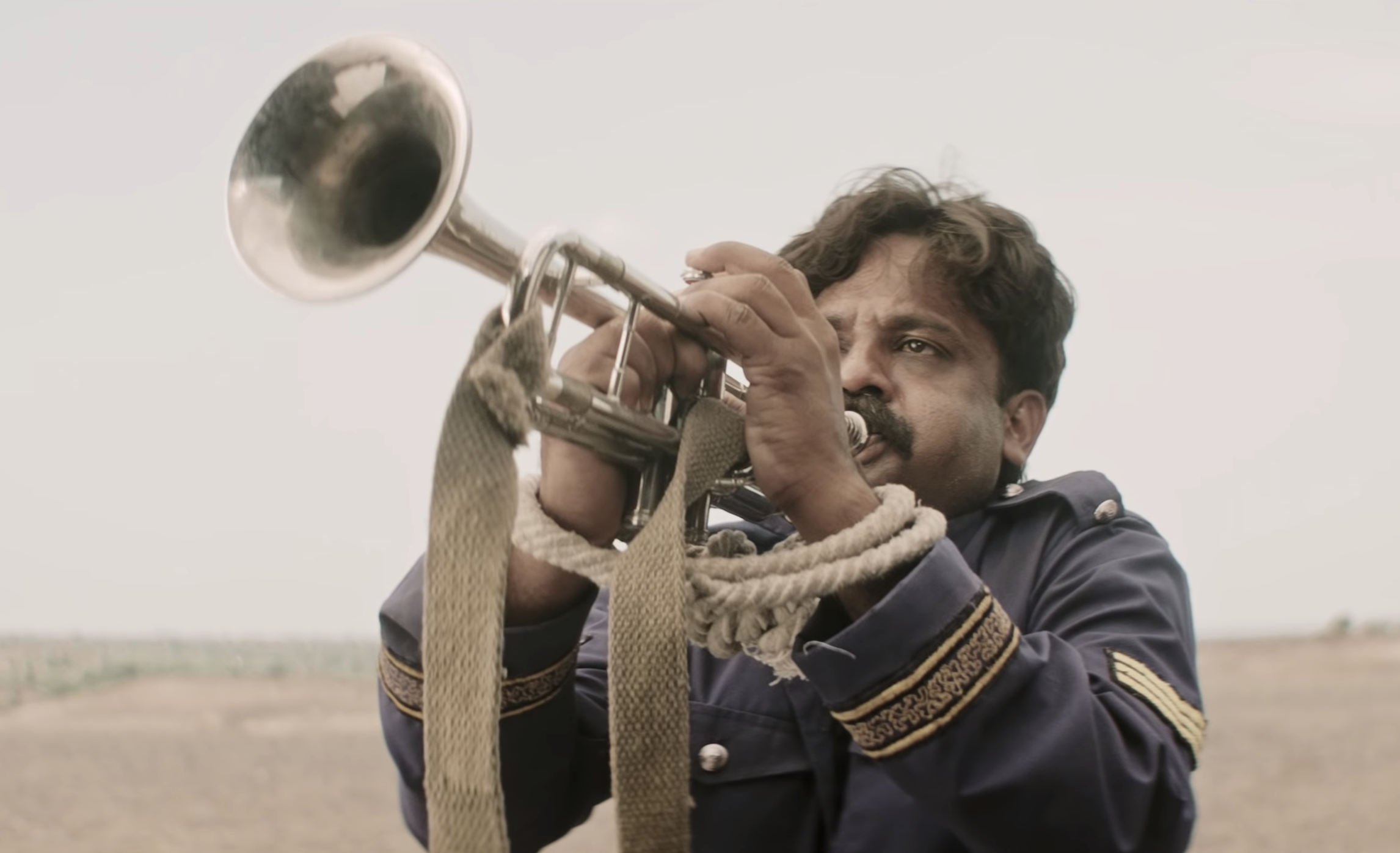
The film starts with a gangster clan led by Rama Rama (Madhusudhan Rao) confronting a theatre troupe who have stolen a treasure the Abhiras want for themselves. Unluckily, Rama Rama kills everyone apart from the Bandmaster (Gopalkrishna Deshapande) before discovering that the treasure is missing. With the Bandmaster traumatised and unaware of what has happened to the gold, the only clue is a garbled message from one of the actors just before he died. But before Rama Rama can fulfil his vow of killing all the actors’ family members and recovering the treasure, he too dies, leaving behind his legitimate son Jayarama (Balaji Manohar) and illegitimate son Tukaram (Pramod Shetty) to fight over the succession. It’s a forgone conclusion though and the brutal and vicious Jayarama takes over the Abhiras and the search for the treasure, while his exiled brother Tukaram starts a political party with a view to one day ousting his brother and regaining his rightful place. 
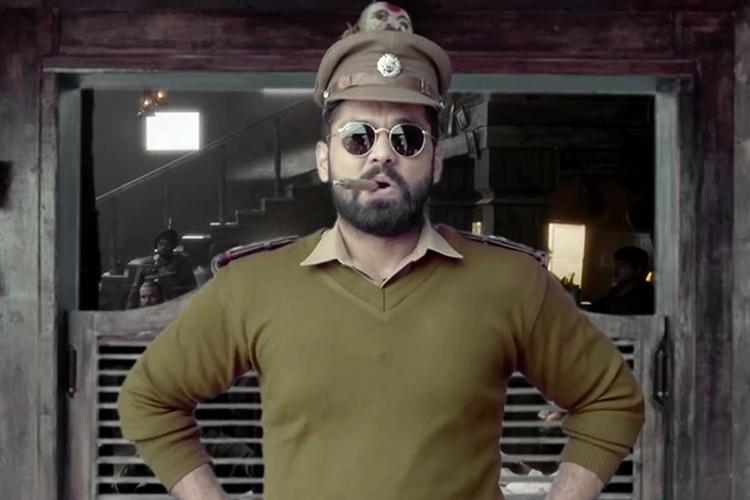
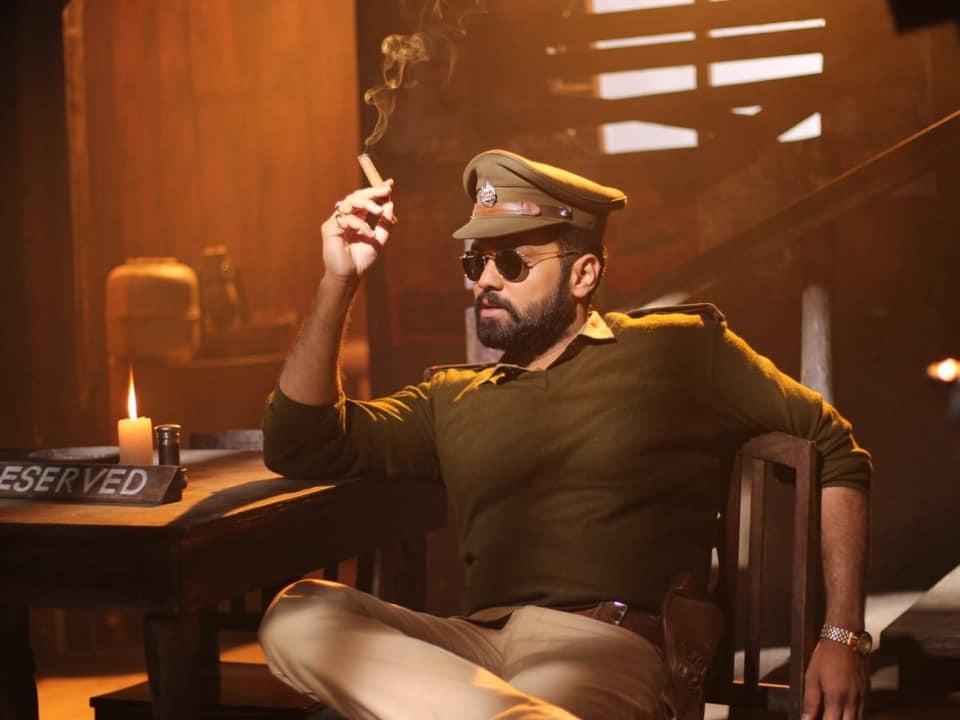
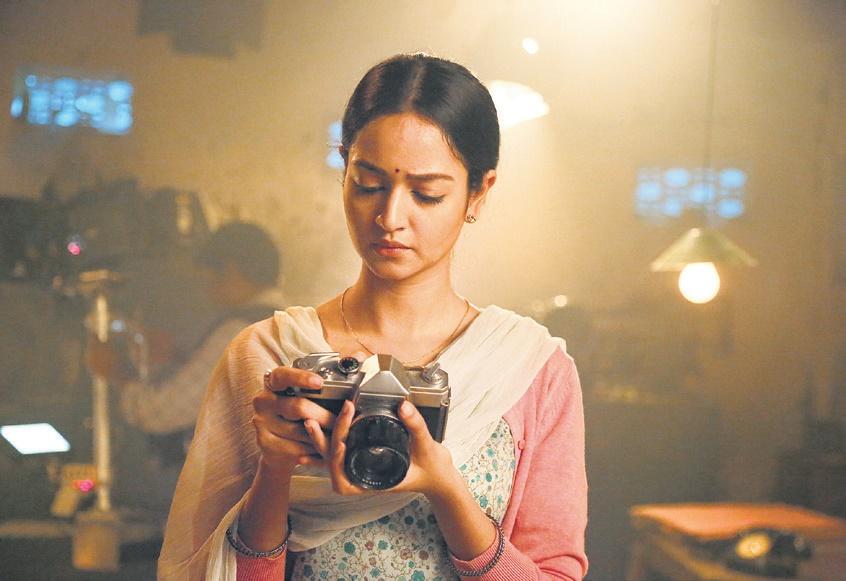
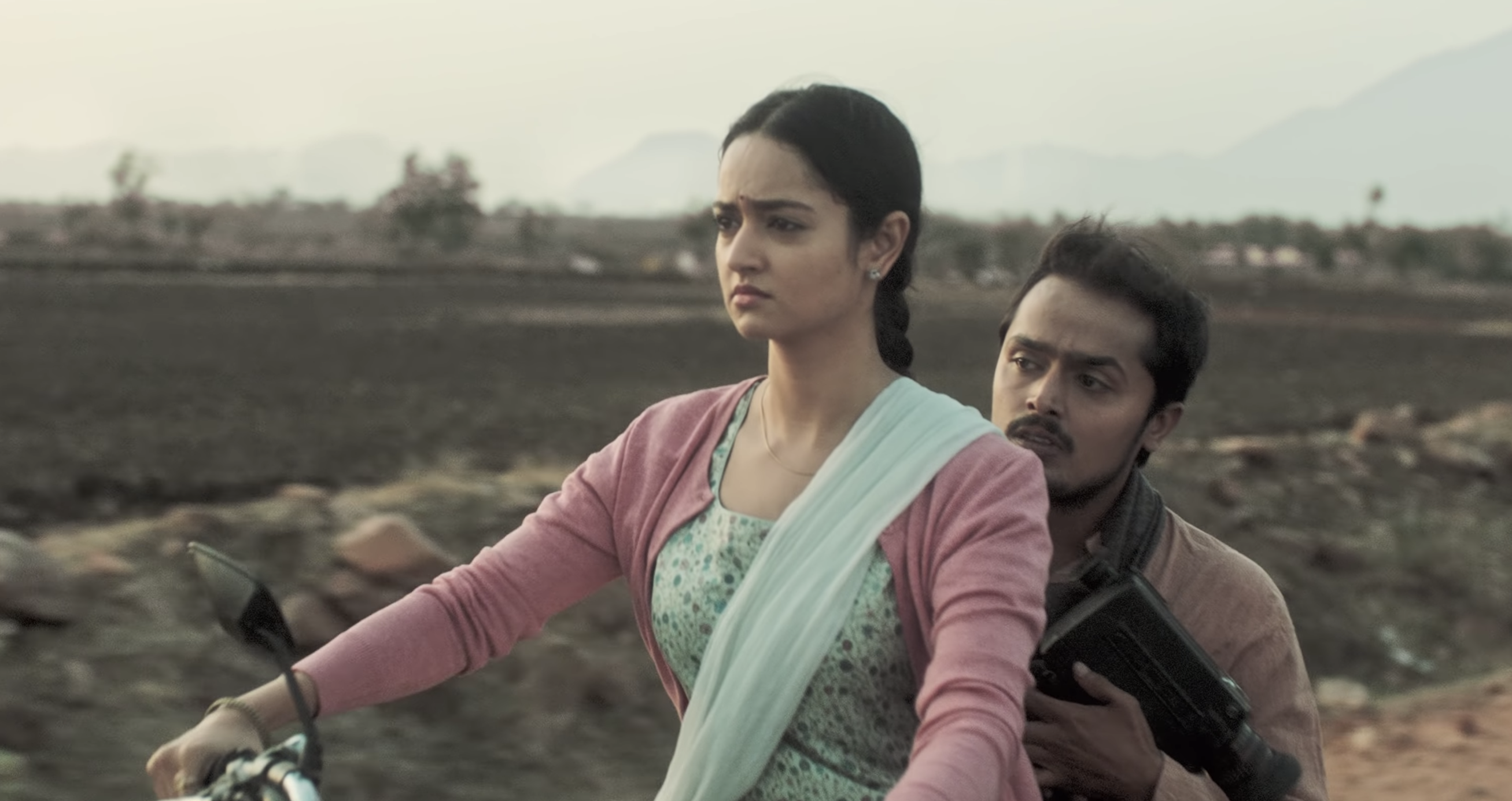
15 years later the search for the treasure is still unsuccessful, and Tukaram is still trying to outwit Jayarama. But now Inspector Narayana (Rakshit Shetty) and his capable Constable Achyuthanna (Achyuth Kumar) are drawn into the search for the lost treasure while trying to keep the peace between the townsfolk, Tukaram and the Abhiras under the leadership of Jayarama. Narayana also has to battle his own personal nemesis, reporter Lakshmi (Shanvi Srivastava) who always seems to be in the right place to catch Narayana failing in his duty. But is Narayana searching for the treasure to stop Jayarama’s plans to dispose of him? Or is it to appease Tukaram who is also out for Narayana’s blood? Or does he want the treasure to give to the townsfolk, or even the theatre troupe who are stuck in Amaravati, hiding from the Abhiras? Or, as seems more likely, is Narayana simply hunting for the treasure to keep for himself, provided he can outwit everyone else? 
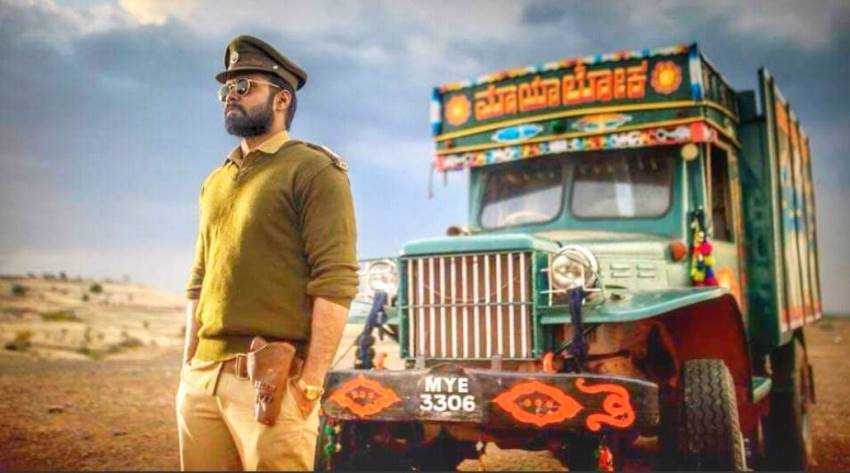
Rakshit Shetty plays it ultra-cool as Narayana, always just one step away from being too clever and having all his various schemes fall apart at the last minute. He is ably assisted by Achyuth Kumar and the two provide some excellent physical comedy that is a mix of situational and slapstick, but works much better than sounds. The action sequences too are often just edging towards farce, but still edgy and exciting with some well thought-out stunts and special effects. However, at times the action team seem to get carried away by their own cleverness and there is just a little too much going on in some sequences which dulls the overall effect. The character of Narayana is also kept rather too ambiguous, particularly towards the end where it would have helped the story if he had been either a bit more heroic or a bit less self-absorbed. As the villains, Balaji Manohar and Pramod Shetty have more clearly defined characters, one being a typical violent gangster and the other a conniving politician, which, although more predictable, works in their favour during the long and rambling story. As Achyuthanna, Achyuth Kumar also has a more linear character arc and he does full justice to his role with an excellent performance that acts as a perfect balance to Rakshit Shetty’s more volatile Narayana.

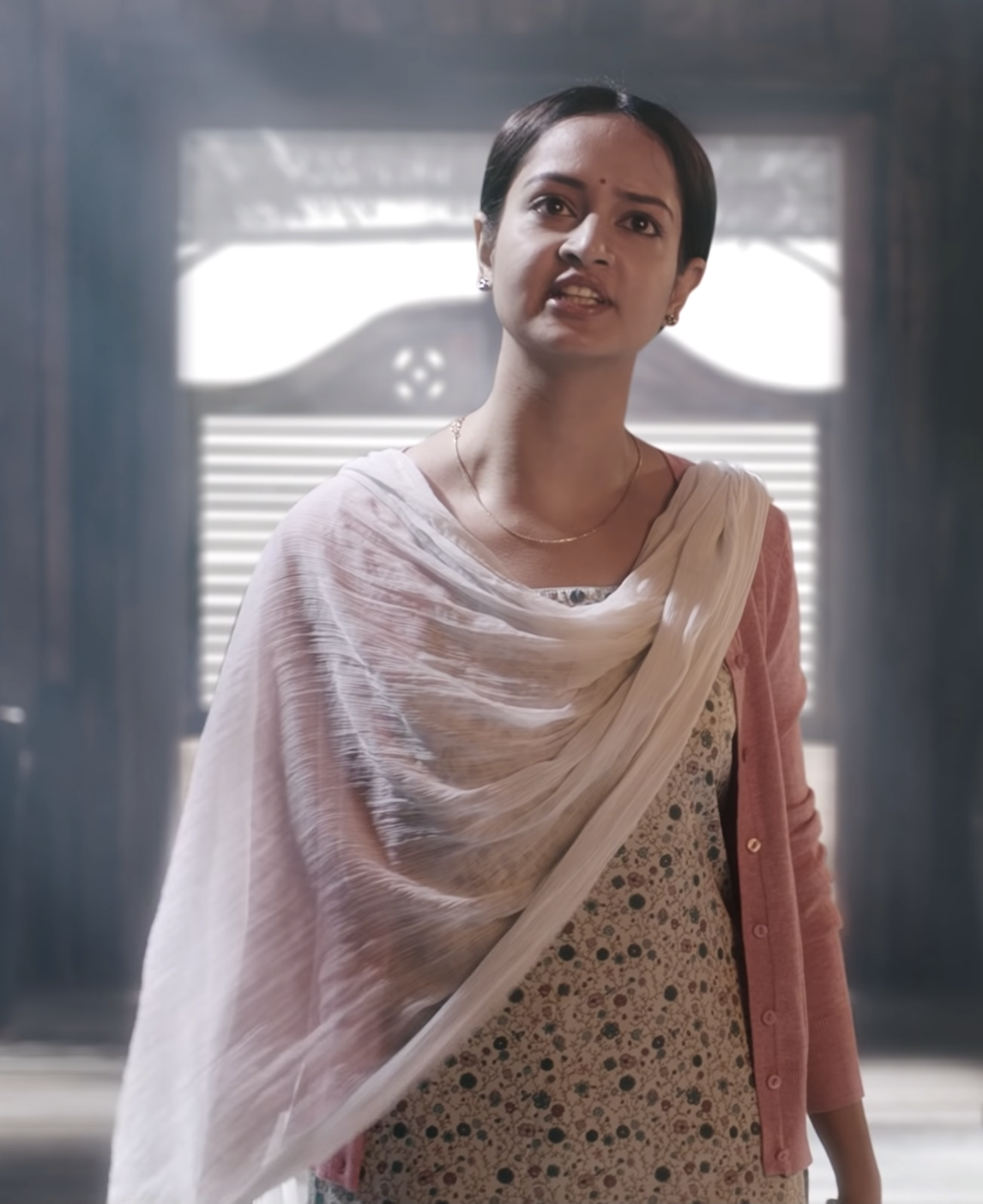
More surprisingly, Shanvi Srivastava has a novel role and doesn’t follow the usual path of first hating and then falling in love with the hero of the story. Instead she has a major part to play in the search for the treasure and her machinations turn out to have serious consequences for Narayana’s own chances of success. While it’s disappointing that Lakshmi is the only main female character, it is good to see that she’s not simply a love interest but rather a fully fleshed out additional player in the search for the treasure. Although there is just a whiff of romance at the end, it feels more of a natural development and is so brief that it hardly counts as romance at all.

There are only a few songs and for the most part they are rather underwhelming. I feel that there wasn’t enough musical arrangement – given the lavishness of the sets and the intricacies of the plot, the songs feel rather bare-bones and almost an afterthought. B. Ajaneesh Loknath’s background score is more effective, although again I would have preferred more orchestration to match the grandeur of the visuals. I do like the dance moves though in Hands Up and the overall commitment to the Western Genre throughout.

The film could have done with more editing and there are a number of scenes that don’t add much to the overall story. Some of the action sequences too are overlong, resulting in a rather more bloated screenplay than seems necessary. At just under 3 hours  for the international print (just over for the Indian release) the film is a long watch and it does drag at a few points in the second half. However, it is incredibly well made, with excellent attention to detail and the fictional world of Amaravati is richly portrayed. The entire cast turn in perfect performances and the story is engaging with some good and unexpected twists. There is so much that is good here and despite a few flaws Avane Srimannarayana is well worth watching as part of the new and exciting genre of films coming from Kannada cinema. One to watch in the cinema to fully appreciate the sets and visual spectacle of the film, but make sure you have a comfy seat and the large bucket of popcorn.

Oh Baby (2019)

Oh Baby is a remake of Korean film Miss Granny, and although I haven’t seen the original, it appears that director Nandini Reddy has stuck fairly closely to the original story. The film is a fantasy rom-com where an acerbic older lady is changed to her 24-year old self and given a second chance to make her dreams come true. Both Samantha as the younger Baby and Lakshmi as the elder version are excellent and thanks to their performances and the rest of the lead cast this is an entertaining and light-hearted watch.

Baby (Lakshmi) is basically a typical grandmother. She organises everyone in the family, spoiling her grandson Rocky (Teja Sajja), mothering her son Nani (Rao Ramesh) and terrorising her daughter-in-law Madhavi (Pragathi). Not content with ruling the roost at home, she also runs a café in the same college where her son teaches physiotherapy and routinely trades words with her long-time friends Chanti (Rajendra Prasad) and Sulochana (Urvashi). While she adores her son, Baby has a soft spot for Rocky since he is an aspiring musician and Baby once wanted to be a singer too, but had to put her career on hold when she was widowed shortly after giving birth to her son. When Madhavi is hospitalised with stress after dealing with her mother-in-law one time too many, Baby is berated by her granddaughter Divya (Aneesha Dama) who telle her that she is the reason behind Madhavi’s collapse resulting in Baby deciding to leave the family home. But first she has to have her picture taken just in case it’s needed for her obituary and check in on Rocky’s first real gig, during which experience she is magically restored to her youth as the now 24-year old Swathi (Samantha).

Swathi finds lodgings with her old friend Chanti and his prickly daughter Anasuya (Sunayan) who has never liked Baby. Through various coincidences Swathi hooks up with her grandson Rocky’s band and is given the opportunity to finally fulfil her dreams of becoming a singer when the group are given a wild-card entry into a music competition. In the meantime, Nani mourns the loss of his mother, while Chanti, initially distressed at losing his friend, works out what has happened and is keen to support Swathi (much to the horror of Sulchana and Anasuya). There is also a romance of sorts as Vikram (Naga Shourya), the producer of the music show, is also entranced by Swathi and her rather unusual approach to life. But unfortunately Swathi’s new-found youth is not permanent and the situation with her family requires resolution, so it seems as if Baby will have to sacrifice her dreams for the sake of her family once more.

The comedy hinges on the rejuvenated Baby acting as if she is still a cranky old lady, and this is where the movie really excels. Lakshmi is superb at setting up the character of Baby in the opening scenes. She is deliciously insulting and knows just what to say to most get under her victim’s skin, while at the same time appearing to be solicitous and concerned. It’s a masterful performance, brilliantly funny and a side-splittingly accurate portrayal of everybody’s worst nightmare of an ageing relative. When she becomes the youthful Swathi, Samantha takes over and delivers a simply superb performance, perfectly encompassing an old woman stuck in a young woman’s body. Her movements, her walk, and her absolute delight in having normal bowel movements again are spot-on, best encompassed in the title song where Baby re-invents herself as Swathi.

Also integral to the comedy is Chanti as Baby’s long-time suitor, first desperately leading the search for her and then clandestinely trying to support Swathi in her quest for stardom. Rajendra Prasad is terrific here and shows off his impeccable comedy timing while providing the necessary support for Samantha and Lakshmi. Although his romantic overtures are frequently OTT, they are integral to his character and Rajendra ensures that he is always funny despite being rather over-enthusiastic.

Where the film is less successful is in the emotional aspects. Although Ramesh Rao is believable in his role as Baby’s son, the rest of the family are broadly drawn and Madhavi’s illness in particular is quickly brushed over.  Rocky’s blind self-ambition tends to strike a slightly sour note too since he continually compares Swathi to his grandmother, but doesn’t seem too upset that Baby has apparently vanished. Nani teached geriatric physioteherapy which is also used to point out that old people deserve a better deal in society, but again this goes nowhere and has little impact. As too the background story of Sulchana which could have been better used in the screenplay.

The romantic angle also doesn’t fit well, mainly because it’s not clear if this is supposed to be serious or played more for the comedy aspect. As a result, the romance feels disconnected to the rest of the story and ends up as a mild distraction that splutters into nothing at the finale. Another issue is the music which is surprisingly disappointing for a film all about a wannabe singer. Apart from the title song, most of Mickey J. Meyer’s songs, although pleasing enough, are just not up to the challenge of delivering the kind of memorable hits needed for this kind of movie.

However, the film works best when Samantha or Laksmi are front and centre, and thankfully this is the case for almost every scene. It’s fantastic that in to-day’s mostly male-centric Telugu cinema, this is a film that is focused almost entirely on its female leads and works entirely because of that focus. Samantha is simply luminous, she looks gorgeous as Swathi and yet still remains hilariously funny, delivering her one-liners naturally with faultless timing. I always like Samantha and she was the main reason for watching the film, but I was surprised at just how good she was, almost entirely carrying the film with only Lakshmi occasionally outdoing her performance.

Although not everything in the film works, Oh Baby is definitely worth watching to catch Samantha acting as an old lady, and to see Lakshmi light up the screen once more. It’s funny when either of the two are onscreen and with Rajendra Prasad and Rao Ramesh providing able support, the film is better than average. For me this was a great film for the holiday season and a good all-round family entertainer. 3 ½ stars.

Hellaro

Despite winning the National Award for Best Feature Film, I hadn’t heard much about this film until it was recommended to me by a friend living in the UK. Luckily Hellaro was also released here in Melbourne, and I was able to watch this Guajarati film on the big screen last week. And what a treat! Hellaro is a beautiful film, steeped in the vibrant colours of Kutch with an amazing soundtrack and excellent performances from all the cast. The story is simple, but powerfully compelling and overall, it’s an absolute joy to experience at the theatre.

The end titles advise that the film is based on folklore and both the telling and the subject matter fit into that style of story. Hellaro is a tale about female oppression and the struggle to overcome patriarchy as the women of a small village in Kutch try to escape their controlling and violent menfolk. The women are kept virtual prisoners by the men, and rarely leave their homes except to collect water from a small lake close to the village. Singing and dancing are banned, along with sewing and anything that might bring joy to the women’s dull and barren existence. New bride Manjhri (Shraddha Dangar) enters into this misery with her soldier husband Arjan (Aarjav Trivedi), who has been allowed home from the border for his wedding. On his wedding night he explains the rules of the village to the educated and city-bred Manjhri and advises her to cut her own wings and horns as it will hurt more if he has to do it himself.

Being educated and from a more liberal family, Manjhri raises questions about the village customs. The only chance she gets to speak to the other women is during their daily trek to the lake, but even then the women are conservative and hesitant to step out of their restrictive roles. On the way to fetch water one morning the women find a man dying in the desert and after initially avoiding any contact, they finally revive him with the water they are carrying home. Manjhri takes the lead in this rescue as many of the women are frightened and want to leave the man to his fate, well aware of the consequences if their husbands find out they have helped a male stranger. Manjhri’s compassion is quickly rewarded as the man they have rescued is a dholak called Mulji (Jayesh More), who is persuaded to play his drum for them, giving the women a chance to escape their day to day reality and experience freedom.

In the village the women hide in their houses as the man dance garba with swords, twirling their moustaches and ironically praying to a female goddess for rain. In the desert the women dance garba to the beats of Mulji’s drum in a brief moment of happiness and release from their suffocating lives in the village. The mix of music and colour is intoxicating and yet violence is never far away with the ever-present threat that the men will find out exactly what the women are doing.

Although the story follows a linear path, there are layers within the basic tale and adding in caste politics and the fate of widows in rural India adds more depth and texture to the plot. In Hellaro, writer/director Abhishek Shah and co-writer Prateek Gupta have taken a simple idea and crafted a vibrant screenplay that’s enhanced by Saumya Joshi’s dialogues. Small details build on each other, crafting a detailed picture of a world that really could be any time or anywhere, adding to the fairy-tale atmosphere of the film. The women are superstitious and some believe that their ‘sin’ of dancing may be the cause of various mishaps around the village, while others are fully aware that the men are the source of all their troubles. Throughout the film, the characters are mostly painted as either black or white, but each of the women have defining traits that round out their characterisations to some extent. While they are still mostly brief sketches, each of the actors shows personality and ensures each character is seen as an individual.

The men are less well defined and are mostly seen as brutal and violent although a couple are shown in a little more depth. Bhaglo (Maulik Nayak) travels routinely between the village and the city and as a result is rather more cosmopolitan in his views. He entertains some of the villagers by re-telling the stories of the movies he has seen, although the men are more interested in the bedroom scene from Bobby than hearing about Basanti dance in Sholay. Bhaglo’s open-mindedness and awareness of the women’s situation is well contrasted with Arjan’s more traditional view, despite both men having travelled outside the boundaries of the village.

As the dholi, Jayesh More has few dialogues, but he is pivotal to the story and is excellent in the climax sequences. Shraddha Dangar is fantastic in the role of Manjhri, but all the women are superb and I wish I knew more about them to be able to differentiate individual performances. Mehul Surti provides the wonderful music while choreographers Sameer and Arsh Tanna spin magic with their brilliant garba routines. Cinematographer Tribhuvan Babu Sadineni captures the harshness of the desert, but also its beauty, along with the fantastic colours of the women’s clothing and the details of the house interiors. The film looks amazing in every frame and it’s this mix of music, colour and performances that make Hellaro such a memorable experience.

The only downside is that this a rather simplistic view of patriarchy with mostly very binary characters. The few who do show more complexity are still mostly good; that is progressive, understanding, empathetic and believers in equality with little or no negative traits. Those who are bad show few redeeming qualities, but in reality most people are rarely quite so black and white and societal divisions are not as clear or as clean as they are in Hellaro. What does feel more contemporary though is the banding together of the women over a common source of happiness, along with the determined but passive way in which they fight back. Their taking a stand feels realistic and plausible, while the overall joy of dance that is so integral to the film is perhaps the one thing that will unite both men and women.

Hellaro really is a beautiful film in terms of the framing of the shots, the music, costumes and choreography. Although the subject matter is often ugly, the exuberance the women show while dancing and the wonderful imagery ensure that this is a film that will stay with me for a long time. Highly recommended, especially if you can find it in the cinema.