Thirakkatha


Ranjith’s Thirakkatha is supposedly inspired by the relationship between Srividya and Kamal Haasan. I have zero interest in the love lives of celebrities but this is also a thoughtful look at the film industry, it’s a reasonably sane romantic drama except when it isn’t, and Priyamani steals the show.

Warning, spoilers ahead! There are some things that struck me so hard I don’t want to omit them.

Young gun director Akbar Ahmed (Prithviraj) is awarded for his first film hitting 100 days. He is given a trophy by industry legend Ajayachandran (Anoop Menon). Ajay’s internal monologue is all about himself and how he fought the odds to become a star. Certainly judging by some of the chatter amongst other guests, he is not universally loved. Akki is inspired to make his next film on the story of Ajay and his ex-wife, the star actress Malavika (Priyamani). She hasn’t been seen in years and nobody really knows much about her, despite all the gossip. Akki obtains diaries and letters written by director Aby Kurivilla (Ranjith himself) from his son Appu (Vineeth Kumar), and starts to piece their story together from both the private and public sources. The film unfolds through a series of flashbacks, interspersed with Akki telling the story as he knows it to his crew. When it seems that a story is all they have, they locate Malavika. Now terminally ill and alone, her life is a far cry from Ajay’s success and acclaim. What happened, and why?

Anoop Menon had to battle with some unflattering wigs and 80s attire that did an excellent job of obscuring his alleged charms, but Ajay’s determination is loud and clear. His break came playing a villain opposite Malavika and some producer’s nondescript son. He fell for Malavika at first sight, his heightened emotions helping him deliver a convincing performance. Whether shyly flirting with Malavika or pushing his career agenda, he didn’t back down when reminded of what people saw as his place. Ajay is obsessed with success and Malu was a lucky charm for his films. After a secret registry office wedding, Malu fell pregnant and planned to stop acting and be a mum. Ajay had been in a string of flops and was relying on Malu’s box office pull for their next movie to rescue his career. He told her she was ruining his life in favour of an unborn child and persuaded her to have an abortion, triggering events that ended their marriage. When Ajayachandran finds out about the movie, he tries to divert Akki to making a film with him rather than about him. Even Ajay’s wife thinks he’s a selfish bastard. Ajayachandran’s father was a makeup artist and people are snide about his lowly beginnings even now he is a legend. He became a big hero, but sometimes petty villain seems more his calling. Anoop Menon is most convincing as the selfish Ajay with his ambition and inferiority complex driving him. He benefits from a kind of halo effect in scenes with Priyamani, but seems lacking in the emotionally complex moments.

Malavika is a reluctant star, with a pushy ex-star stage mum (Mallika Sukumaran) and a loyal, almost silent assistant, Valarmathi (Surabhi). She’d rather get a job after graduating, but her mum hit Malu with a guilt trip of how she had to dance on film to raise her family and now the alcoholic dad is gone there is no money. Malavika is an assertive girl with everyone but her mother. I like the way she firmly shooed Ajayachandran away when she needed a moment between scenes. The flashbacks show all the drama behind the scenes as well as the vintage acting and dance styles of the early 80s.

Priyamani is just gorgeous, deftly showing Malavika’s star quality (the camera loves her), and her more pragmatic everyday personality. She berated Ajay for learning to kiss from watching local films, cheerfully telling him classic French films were the best reference. I loved Malu’s confidence in herself and her growing understanding of her power in the film industry. She has a drink with a producer but when he makes a pass she is comfortable and articulate turning him down. She doesn’t want to change who she is and she won’t be pressured or made to feel ashamed. Priyamani’s performance kept me invested in the story through even the most melodramatic plot contortions.

Major spoiler(s) – highlight to read:

Malu is told that during the abortion they found a growth that had to be removed. Later on her doctor friend Vasanthi tells her that Ajay lied – He requested that her tubes be tied so she won’t fall pregnant. It turns out this is not exactly true but that did nothing to quell my outrage. Firstly, bullying her into an abortion when she clearly wanted the child – BAD. Not telling Malu about the medical situation and not getting her consent or allowing her to have any part of the decision – BAD. Persuading the doctor to keep a cancer diagnosis from Malu so she would make another film instead of perhaps getting treatment that may have saved her life – BAD. Ajay believing that he was right because he wanted her to be happy and she would be happy when he was happy and he would be happy when he was a big star – BAD. Akki bringing Malavika to his place to recuperate although she didn’t know him at all, which is a nice gesture but once again there was no consultation with the actual patient, so therefore – BAD. The doctor who let Akki take a terminally ill stranger away just because – BAD. Everyone including Malavika apparently forgiving Ajay because he felt so sorry (for himself) – WTAF?!?

/rant

Ranjith is disparaging of some practices in his industry, calling out examples and mocking the results. Akki is very much the guy who got there because of his passion for film making. He’ll sign with a producer but he won’t let them dictate what he does. The line between life and story fodder is also explored through Akki as he grows closer to Malavika and has to decide how and if he will use her story for his career.

Prithviraj is low key and generally likeable as Akki. He is hampered a bit by the narrative structure that uses his character as an agent of voiceover, and from being in the modern day part of the story which is for me the least interesting. He works with a small group of trusted friends, running a restaurant with them in between films. Akki is prone to the unilateral decision, and most of his friends are followers. I was sometimes annoyed despite his good intentions just because he was so self-righteous. Akki and his capable girlfriend Devayani (Samvrutha Sunil) have a no fuss relationship and make a nice couple. As Malu and Ajay’s romance is explored, they realise maybe they need to think about theirs.

The songs (by Sharreth) fit better in the flashback. Onnodu is a random and quite uncoordinated song between prologue and titles, perhaps just there for the Prithviraj fans.

There is so much that I liked, but the flaws are equally striking. Some of the discussions about film making felt out of synch, but I liked the extra layer about interpretation and storytelling. Ranjith handled the multiple timeline structure more deftly in Paleri Manikyam, but the 80s flashback section is a highlight. 3 ½ stars! (BIG deduction for the medical ethics)

Ninnu Kori

Ninnu Kori had the potential to be good. I like the concept, and it is rare to see a first love is not the only love story. Unfortunately Shiva Nirvana squandered a great cast on a badly written screenplay full of paternalistic BS.

Uma (Nani) meets Pallavi (Nivetha Thomas) when she suddenly decides he must teach her to dance. The moment he touches her, he falls in love. Pallavi takes longer to succumb, and their developing friendship and ensuing romance is among the few highlights. Uma rents the upstairs room at Pallavi’s family home, carrying on a clandestine romance under the eagle eye of her dad (Murali Sharma). Uma seems to have no family, is a PhD student with no job lined up, and he doesn’t seem inclined to try too hard. Pallavi begs him to marry her as while she will elope and upset her parents, she won’t disgrace the whole family by running away after they fix a match. He overhears her father interfering in another family’s elopement issue and the speech about what fathers know their daughters need hits home. Pallavi’s marriage is arranged in Vizag while Uma is studying in Delhi. She calls him in a last ditch attempt, but he talks over her about his own news. So Pallavi marries Arun (Aadhi Pinisetty) who seems nice despite a penchant for Disney songs. They move to the US and life is good. Until Uma turns up determined to “save” Pallavi from what he believes must be a loveless marriage.

The film sounds promising as it acknowledges that it is fine to have a past, and it is OK to move on from an unsuccessful relationship. Sadly almost every time someone made a good or thoughtful point, they then pretty much did the opposite of what they said. When Uma says not to interfere between Arun and Pallavi, the next scene is of Uma and others engineering a confrontation between the spouses.

According to Kona Venkat’s screenplay, under NO circumstances should you ask a woman what is important to her. Men must only ever discuss this with another man, preferably one with his own agenda or, even better, no idea at all. Rather than tell Pallavi the truth, Arun shared an admittedly touching scene with Uma where Uma was forced to realise he was the equivalent of a cocaine fuelled suicidal ex wannabe girlfriend. Several men in the audience applauded while I wondered why Arun couldn’t be honest with his wife but could spill his guts to the guy trying to replace him.

Shiva Nirvana takes all the cheap shots, and none of them necessary. Pallavi’s best friend Kavita had to be a fat chick and the butt of some mean one-liners. Addiction and mental illness were treated flippantly as a now you see it now you don’t excuse for Uma’s shenanigans. A black actor was cast as a knife wielding mugger while most of the other American extras were white.

At the end of the film Uma grandly states he has learned his lesson and will marry first, fall in love after. I have no issue with arranged marriages, but I take exception to the man who behaved like a dick being applauded for deciding to bestow himself upon some poor woman. He constantly put himself first, blamed everyone else if he didn’t get what he wanted, and took advantage of Arun and Pallavi’s kindness. What a catch. What a hero.

Nani is the Simon the Likeable of Telugu cinema and I blame him for making me stay beyond half time. In the first stage of Uma’s love for Pallavi, Nani plays him as a genuine, nice, boy next door type. He is playful and affectionate, and wants to get his degree and a job before marrying Pallavi. Once she marries Arun, Uma becomes an alcoholic which Nani demonstrates by sporting a beard and drinking so hard he almost bites the top off a hipflask. When Uma goes to stay with Arun and Pallavi he is all spite and manipulative snark. His snide remarks got lots of laughs but despite good comedic timing I wanted to kick him. Pallavi tells him she is happy, but Uma knows better. He couldn’t move on, how can she?

Pallavi starts out as a bit daft but eventually, perhaps in spite of the screenplay, Nivetha Thomas develops her character into a lovely young woman. Her grief at their break up and her anger at Uma’s selfishness are portrayed with restraint and judgement. When Pallavi thinks Arun has cheated, Nivetha made the melodrama feel grounded in Pallavi’s previous experience. She had some strong dialogue, and Pallavi was willing and able to articulate her feelings, but the men only listen to themselves. Pallavi was hurt to think that Uma was wallowing in pain because he assumed she was miserable while I was upset that he never listened to her.

Aadhi Pinisetty has a quiet energy that plays off Nani’s more extrovert childish antics. At first I thought Arun was a bit wet, but Aadhi shows the reaction and immediate squashing down of his feelings. He and Nivetha have a different chemistry, convincing as a settled couple. And because husbands are heroes, he also got to beat someone up. I was very distracted by his unfortunate 70s blow wave though. I’m going to blame the director because he bollocksed up so many other things he may as well cop the hair crimes too.

Tanikella Bharani is understated in a small role as Uma’s professor and mentor, in as much as a mentor calls on an ex to sort out his most brilliant student’s life. Balireddy Pruthviraj is Lovababu, Pallavi’s (comedy) uncle. I can’t really fault any of the support actors, except for the usual “any white person will do, especially one in a bikini” extras.

Gopi Sunder’s soundtrack is adequate without being memorable. The background score is hamfisted with crashing percussion to indicate drama, and strings and synths denoting romance. The visual language is clunky, and things that probably sounded cool look amateurish in execution (e.g. Uma splashing water on his face cutting to a crashing wave).  There are vague attempts to paper over some plot holes and some very awkward exposition. The pace is uneven, wallowing in Uma’s angst while speeding past pivotal moments.

The film is a mansplainer’s delight and Uma, who behaves appallingly, is constantly rewarded for being an arse. I was disappointed by Ninnu Kori, and don’t recommend it because of the stupidity and toxic messages disguised as respect for tradition and the power of love.

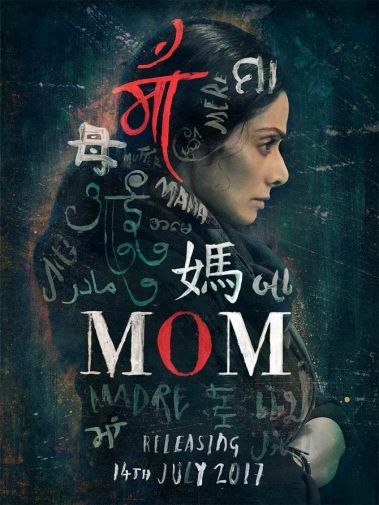
Mom (2017)

Mom

Mom starts out with an interesting take on the step-mother/daughter relationship but takes a turn midway to end as a standard revenge film with a haphazard second half and an overly mawkish finale. Thankfully Sridevi is outstanding as the mother hell-bent on revenge, and Sajal Ali, Nawazuddin Siddiqui and the rest of the cast are all excellent, making Mom better than average, despite the film’s flaws.

The first half of the film explores the tension between Devki Sabarwal (Sridevi) and her step-daughter Arya (Sajal Ali). Arya is the daughter of Anand (Adnan Siddique) and his first wife, and she bitterly resents Devki for taking her father away from her and her memories of her dead mother. Although Devki and Anand have been married long enough to have a child of their own, Arya still isn’t reconciled to her step-mother and the resulting acrimony affects every moment the family spends together. Adding to the tension is the fact that Devki is a teacher and Arya is a student in her class which allows Arya to continue the teacher/student formality even when they are at home by always addressing her step-mother as ‘madam’. The difficulties of dealing with a moody and resentful teenager are compounded by Arya’s animosity towards her stepmother, while Anand is caught in the middle trying to keep the peace. Generally Anand is a passive character who drifts along seemingly not too bothered by his daughter’s rudeness which I presume is to allow Devki the space to take centre stage later in the film. However, the relationship between Devki and her step-daughter is handled well with the family dynamic appearing authentic and the dialogues realistic, and perhaps it’s not too far a stretch that Anand avoids the situation at home rather than getting too involved.

Everything changes one night when 18-year-old Arya goes to a Valentine’s Day party at a farmhouse and doesn’t return home. She is abducted by four men in a black four-wheel drive, and Ravi Udyawar brilliantly builds and maintains the tension as he switches between a frantic Devki desperately trying to contact Arya by phone and horrifically effective overhead shots of the vehicle slowly cruising along deserted roads. The soundtrack adds to the sense of menace and there is a chilling, heart-stopping moment as the car stops and the men change who is driving. It’s horrifying because we know what is happening but all the more effective as nothing is ever shown of the violence until Arya is dumped at the side of the road.

Reading about the film and watching the trailer I was worried that Mom might go down the route of so many films about rape but Ravi Udyawar gets this part of the film totally right and sensitively handles an assault which is too often inappropriately sensationalised or set up to blame the victim. The anguish and despair felt by Devki is also well portrayed, as is Arya’s reaction, while for a change the police are rather more sympathetic although the process of gathering evidence does seem fatally flawed.

When the courts offer little in the way of justice, Anand puts his faith in an appeal and a more rigorous series of tests, while Devki has a more practical approach to her daughter’s rapists gaining their freedom. Anand’s reaction here does seem rather less plausible, but to some extent does fit with his earlier ‘ostrich in the sand’ approach to his daughter. Devki is aided by a private detective, Daya Shankar Kapoor aka DK (Nawazuddin Siddiqui) who is sympathetic to her mission. But with detective Mathew Francis (Akshaye Khanna) suspicious of Devki and Arya still as distant as ever, it seems that Devki has set herself an impossible task when she sets out to seek revenge.

Devki is shown as a strong character right from the beginning. She promptly and efficiently deals with an unpleasant incident in her classroom and appears determined to break down the barriers between herself and Arya, despite her step-daughter’s frosty attitude and carefully maintained distance. Sridevi looks radiant too while the scenes between her and Adnan Siddiqui have a genuine warmth and easy affection that speak of a good relationship. After the assault, her reaction to her daughter’s injuries is wonderfully histrionic but perfectly apt for the situation while her trepidation and uncertainty come across clearly as she embarks on her revenge. However, the screenplay doesn’t help here as DK insists that they meet in secret and the pair then proceed to arrange rendezvous in conspicuous public places where they speak to each other without seeming to take any precautions at all. Even the association with DK seems rather unlikely given their first meeting, but Nawazuddin Siddiqui runs with it regardless and manages to give his character plenty of appeal despite his slightly disreputable appearance. His DK is a more sympathetic character than first appears and he is excellent at conveying his own horror and understanding of the situation to Devki. The dialogue between the two tries to give some rationale for Devki’s actions and there is plenty of symbolism included during their meetings, but it’s really the performances from the two actors that allow any suspension of disbelief and make it even vaguely possible that Devki could act as she does.

Akshaye Khanna does the best he can with the role of the police officer assigned to Arya’s case but his character has little to do and doesn’t seem to know which side he should be on either. Mathew Francis seems to be a capable enough office but his investigations are only shown briefly and he never seems to be a serious threat to Devki’s plans. I also have some issues with the portrayal of transgenders and the completely evil nature of Abhimanyu Singh as one of the perpetrators which seems too over the top in a film that already has plenty of extreme emotion.

Anay Goswamy’s cinematography is excellent and the music from A.R.Rahman evocative and perfectly suited to each mood of the film. Where the film falls down is in the predictable nature of the second half and its failure to address the topical issue of violence against women except by suggesting the usual vigilante payback as the way to go. Naturally it makes for a more exciting film this way, but it would have been more satisfying to see more of the family’s reaction, more of Arya’s own story and her father’s struggle for justice. Better too, if Ravi Udyawar had stuck to the fractured relationships and the impact of assault, rather than following the well-trodden path of failed justice and pay-back. Even the scenes of revenge (as clichéd as they are) are glossed over swiftly and the police investigation relegated to a few brief dialogues with a bizarre about-face by Detective Mathew Francis appearing out of the blue, just in time for the film climax. Sridevi is always worth watching, but her co-stars here are all equally good, even though Girish Kohli’s screenplay limits their contribution to the story. Worth watching for the excellent performances, technically good presentation and well executed first half, just don’t expect anything more than a typical masala ending.