Bangalore Days

Bangalore Days

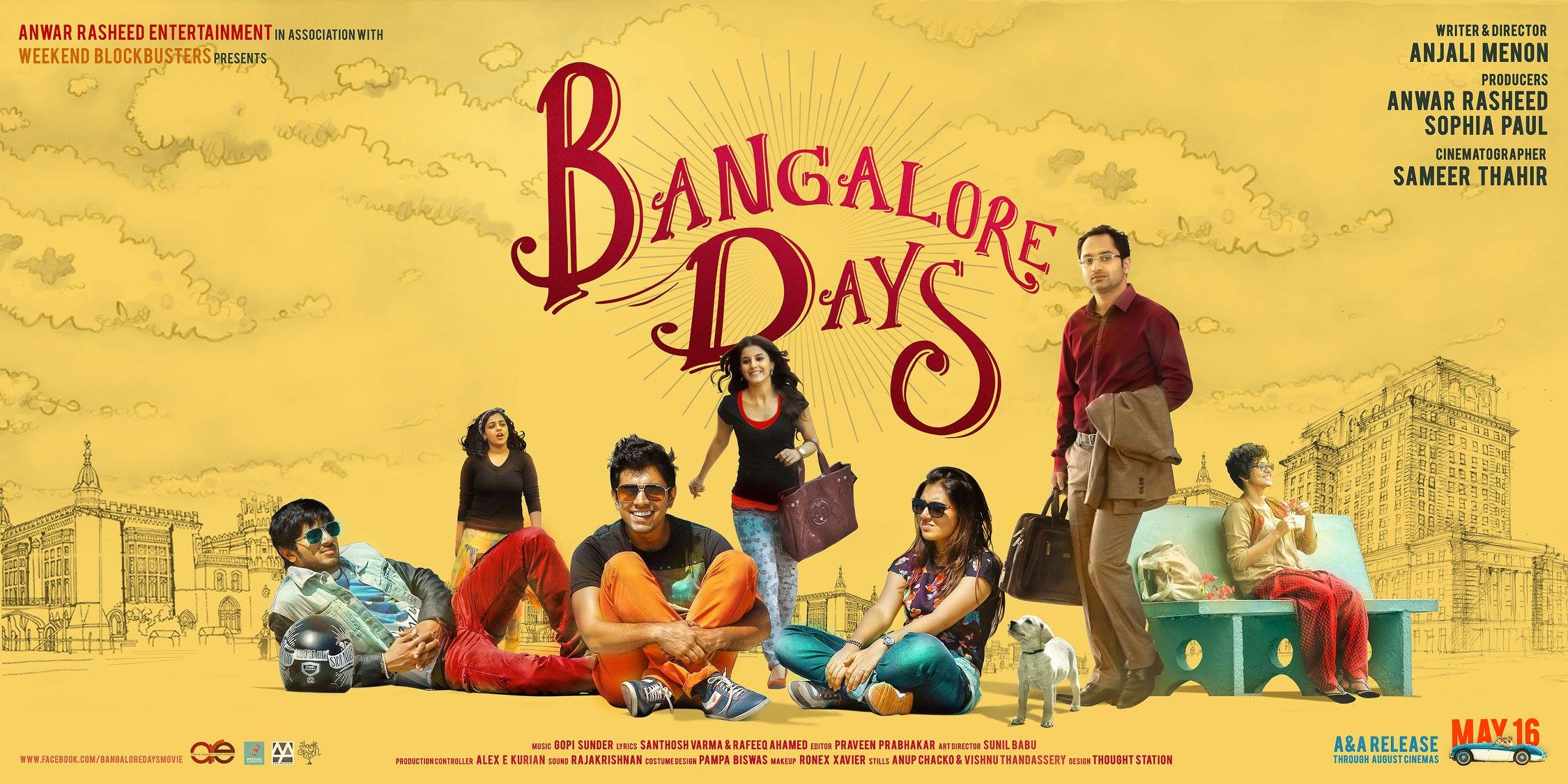
Bangalore Days is a gem of a film, written and directed by Anjali Menon, who was also responsible for the excellent Ustad Hotel. The film follows the lives of three cousins after they each move to Bangalore for different reasons and despite the almost three hour run time, it’s a completely absorbing watch. The young actors are the highlight, but the plot for each is perfectly developed and fits neatly into the overall story, so that there is a ‘fly on the wall’ feeling of watching real lives unfold. Even the slightly clichéd drama that forms the final climax is compelling, although the ending is never really in any doubt. Beautifully developed characterisations, a clever storyline and gorgeous cinematography all add up to make Bangalore Days a must watch film.

The three cousins, Krishnan PP aka Kuttan (Nivin Pauly), Divya (Nazriya Nazim and Arjun (Dulquer Salmaan) have been friends since they were children when they spent their summers together in the family’s ancestral home. Divya is a good student who has dreams of completing an MBA while Kuttan achieves his desire of escaping rural Kerala when he lands a job as a software engineer in Bangalore. Meanwhile Arjun seems content to drift, working at night as a graffiti artist and using his mechanical skills to work on motorbikes. As the film unfolds, more of Arjun’s past comes to light, including his unhappy childhood following his parents’ divorce. All of this has made him something of a rebel and disinclined to settle in any one spot or profession.

Divya’s parents decide to get her married quickly to counteract an inauspicious horoscope, firmly ending her dreams of study although the prospect of moving to Bangalore after the marriage is an enticing incentive. But things don’t appear too favourable when the prospective groom Das (Farhadh Faasil), reveals he was in a previous serious relationship and isn’t sure if he is over it. Divya’s main reason for going ahead seems to be the family dog’s acceptance of Das, and to be fair, I can completely understand her reasoning. Surely anyone who is a dog-lover cannot be a bad person? Throughout the film Anjali Menon small touches like this to successfully develop the characters and illustrate small traits that become important later. It’s simply done, but very effective and adds to the realistic feel of the characters.

The songs by Gopi Sundar are another highlight and this one sums up the different personalities and the relationship between the cousins perfectly.

Needless to say when Divya moves to Bangalore  with her new husband the situation does not improve and it’s not long before she is bored and resentful. Luckily Arjun has also moved to Bangalore to complete the confluence of cousins and is working for a Motocross bike team. With her husband’s indifference as motivation, Divya spends her days and nights out with Arjun and Kuttan, further increasing the distance between her and Das.

At the same time Kuttan has found what may be the love of his life in the form of air hostess Meenakshi (Isha Talwar). Although it’s completely baffling as to why she would be interested in the conservative Kuttan, she quickly takes him in hand, giving him a total make-over in the process. As to be expected, it doesn’t end well, but there is some lovely comedy and genuine warmth in the relationship which allows Kuttan to explore his less conservative side. Arjun is also in love, first of all with the voice of RJ Sarah (Paravathy Menon) and her positivity, but this quickly develops further once he sees her in person. There is a lovely moment where, after Sarah accuses Arjun of following her, which to be accurate is exactly what he has been doing, he eventually responds that rather than following, he would like to walk with her. It’s very sweet and the relationship between Arjun and Sarah develops into a full scale romance with plenty of sparkage between the characters.

What makes the film work so well is the excellent casting and the outstanding performances from all the actors. Nazriya Nazim is perfect in her role and even more impressive here than she was in Raja Rani. Her reactions and emotions are perfectly nuanced and her easy camaraderie with her cousins is well portrayed. Farhadh Faasil is also excellent as her distant husband with an unresolved past and his emotional delivery as his character gradually thaws is superb. Perhaps because the two actors are partners in real life, the depiction of their marriage is also very well done and the relationship is completely believable throughout.

Even better though is Dulquer Salmaan who gets his portrayal of a rather bitter but still compassionate man spot on. His relationship with his cousins is perfectly casual with plenty of chemistry that really makes them seem like a family. His expressions and body language speak more than the dialogue when he is with Sarah and he makes Arjun a more sympathetic character than I expected given his opening montage.  Dulquer’s character is well written but his performance takes it to the next level and I think this is the best I have seen him so far. Nivin Pauly has a more difficult job since Kuttan is self-restrained, almost staid and nowhere near as exciting as Arjun. However he still does a fantastic job with the character, particularly in the interactions with his father (Vijayaraghavan) and mother (Kalpana), both of whom are also excellent and perfectly cast. There are many levels to his character and to his relationship with both his cousins and the rest of his family that I don’t think I fully appreciated on my first watch, but become more apparent on repeated viewing. Kuttan’s character provides most of the comedy, but his serious nature is a perfect foil to the more impulsive Divya and rebelliousness of Arjun.

Although the film focuses on relationships, family, community and the three love stories, there is plenty more happening in the background. The film interposes the traditional values of rural India with the reality of modern city life, starting with the idea that community is lost in the city. However the complexities of this idea are further developed as Divya makes her own community wherever she goes, while Das carries his loneliness around with him as a shield. All the characters are looking for their own form of escape, some more literally than others, and all have personal challenges to overcome before reaching their goal. Anjali Menon develops the narrative through the different personalities and their attitudes, allowing the characters themselves to become the story and relegating the action to second place for much of the film.  It works beautifully well and it’s refreshing to have a film about marriage and relationships that is ultimately so optimistic and hopeful. Bangalore Days is an easy film to enjoy and I thoroughly recommend it as a modern tale of relationships. 4 ½ stars.
Kill Dil (2014)

Kill Dil

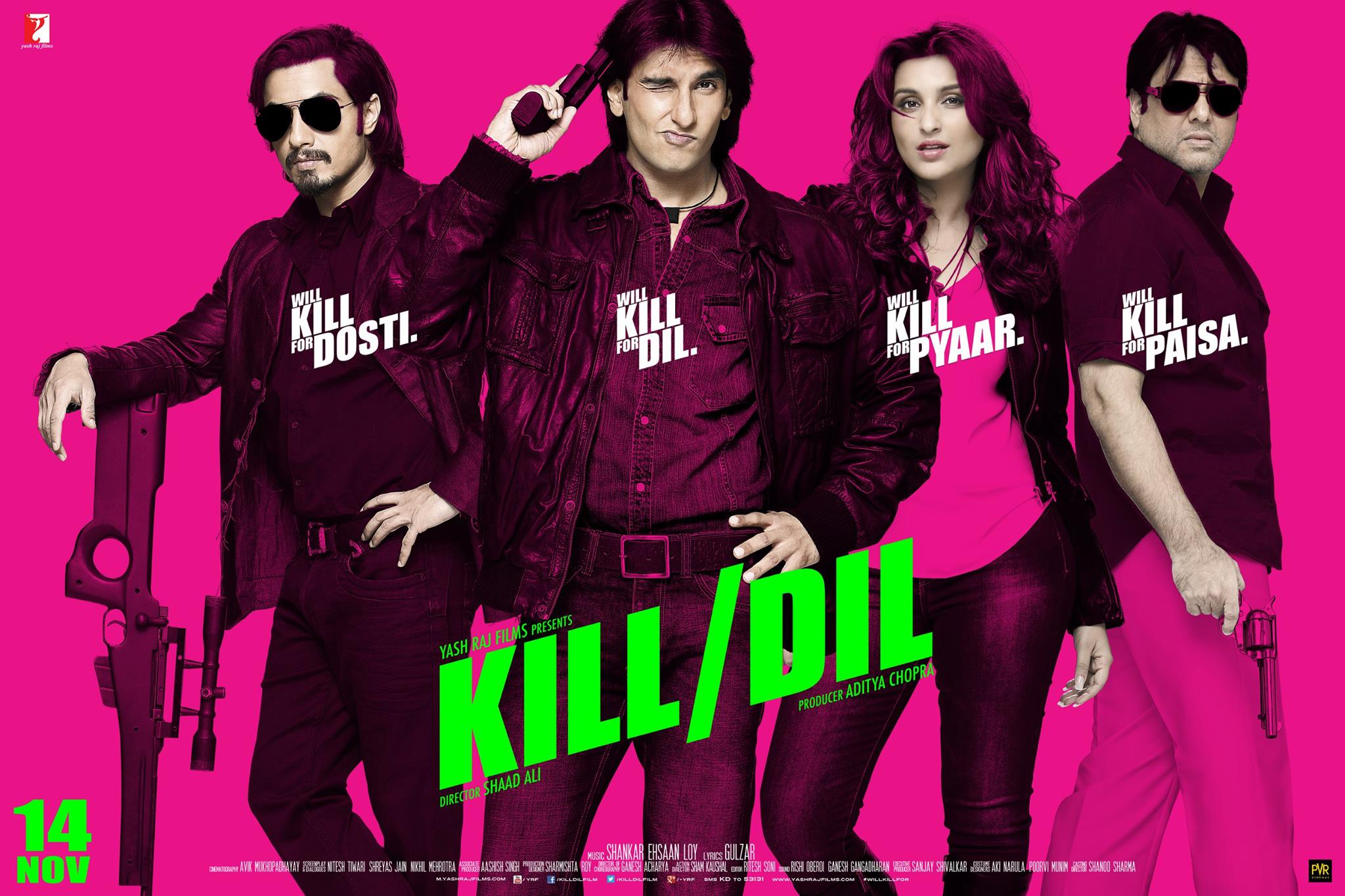
I had high hopes for Kill Dil. I like Ranveer Singh and Ali Zafar. I enjoyed Shaad Ali’s previous films, even the fairly nonsensical Jhoom Barabar Jhoom, and hey – Govinda! So, surely all these elements would be great together? Well, not so much. Kill Dil isn’t terrible, but it just isn’t as good as it should have been, mainly due to the shallow and poorly developed story. I don’t have a problem with the 70’s style masala plot, or with the Urban-Western style of Kill Dil, but I do prefer to have some plausibility in a romance and at least a smidgeon of logical possibility in the storyline. Both are conspicuously absent here. At least Ranveer, Ali Zafar and Govinda are all very watchable, while Shankar-Ehsaan-Loy’s exuberant songs are a definite plus, so even if the sum isn’t as great as all of its parts, Kill Dil is still worth a look  if you just sit back, leave logic at home and watch the spectacle.

The story starts with shades of Gunday as Bhaiyaji (Govinda) finds two babies in the rubbish and decides to raise the kids himself, despite the fact that he’s a gangster who kills people for a living. Somehow the orphans manage to survive, although they learn how to shoot a gun almost before they can walk and both drop out of school to work for Bhaiyaji as assassins for hire. Tutu (Ali Zafar) is apparently the elder, although how Bhaiyaji worked that out is anyone’s guess. He’s the quiet, less flamboyant and more brooding one who seems a little more aware of the risks but still seems content in his work. Dev (Ranveer Singh) is more exuberant, and with his bouffy hair and leather bomber jacket he’s actually a bit of a dork. The two brothers live together, work together and party together, but still have a lack of worldliness when it comes to anything outside of murder.

While out clubbing one night, Dev saves the life of Disha (Parineeti Chopra), a millionaire who gave up her degree in medicine to help rehabilitate criminals. Um – what? Disha is portrayed as the quintessential  rich party girl and the idea that she works as some kind of social worker is ludicrous. Yet it becomes even more ridiculous when Dev falls in love with Disha and is inspired to give up his life of crime for love.

The question is will his life of crime, and specifically Bhaiyaji, be willing to give up Dev?

Although the film starts off with both Dev and Tutu having roughly equal amounts of screen-time, as the story unfolds, Dev takes centre stage. Ranveer Singh is excellent and veers between annoyingly hyperactive, sweetly naïve and ultra-cool, often during the same dialogue. Although his transformation from gangster Dev to insurance salesman Dev is by the numbers, Ranveer is charming and charismatic throughout, even as his look becomes ever more conservative. He is brilliantly energetic in the songs, despite some truly dreadful styling, and if the song placements are often abrupt and odd, there are at least plenty of them, which keeps the amusement level relatively high.

Ali Zafar’s Tutu is the stoic friend who warns Dev about the possible consequences of Disha discovering his past and who is left to try and pacify Bhaiyaji when Dev is off romancing. Unfortunately, he’s not particularly successful at either task. However the relationship between Dev and Tutu is well portrayed and Ali Zafar and Ranveer Singh do have good chemistry together, even if it doesn’t get close to the Shashitabh ideal of bromance. Parineeti Chopra on the other hand has one of the most pointless and nonsensical characterisations I’ve seen, which is not helped by a complete lack of chemistry in her romance with Dev. She’s portrayed as a shallow character and is not just an unbelievable persona, but her style of behaviour makes her character essentially unattractive. Ultimately Disha seems an unlikely partner for Dev in every possible way and apart from this one fantasy song (which is still more about the styling and Ranveer’s increasingly unfortunate coiffure), the romance is fairly limp and ineffectual. It’s frustrating, since Parineeti looks fantastic and seems as if she is capable of so much more, if only she’d been given a chance!

As an occasional relief to all the posturing, Govinda is refreshingly straightforward as Bhaiyaji. He doesn’t do anything particularly gangsterish, apart from hand over pictures of the next victim to Dev and Tutu, but he does growl and look appropriately menacing when required. Even better, he does get to break out his dance moves and proves that he hasn’t lost any of his old mojo. However not even Govinda can breathe some fire into the flimsy story by the end, and Bhaiyaji’s response to Dev’s defection is disappointingly weak.

Kill Dil then is a bit of a disappointment. While the cast all try as hard as they can to look cool, and do look as if they had a great time during filming, they are let down by poor character development and the unreasonable story. However despite feeling frustrated by the character of Disha and annoyed by the paucity of scenes involving Govinda, I still did (mostly) enjoy the film. Ali Zafar and Ranveer Singh are very cool dudes here, and I liked their partnership. The songs are also improved by the colourful choreography and Ranveer Singh’s energy and joie de vivre is contagious. Perhaps one more for the fans, although it is worth a look for even just the brief glimpse of Govinda back in top form.

Jalsa

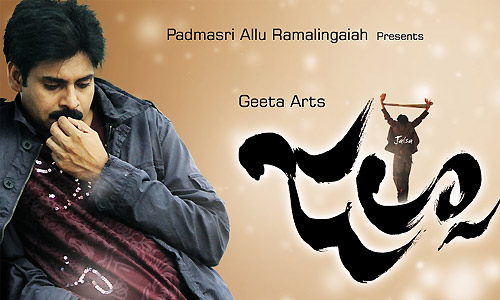
Jalsa-posterTrivikram’s Jalsa wanders all over the place with an uneven blend of romance and action packed drama. I had to check that it really was made in 2008 as the plot, and treatment of female characters, is very retro and not in a charming vintage way. Pawan Kalyan gives a good performance but unfortunately he can’t save the script and some glaring plotholes. Like the hero, Ileana D’Cruz rides out some stupid plot turns and inconsistencies in her character to hit the right notes in the more thought out scenes.

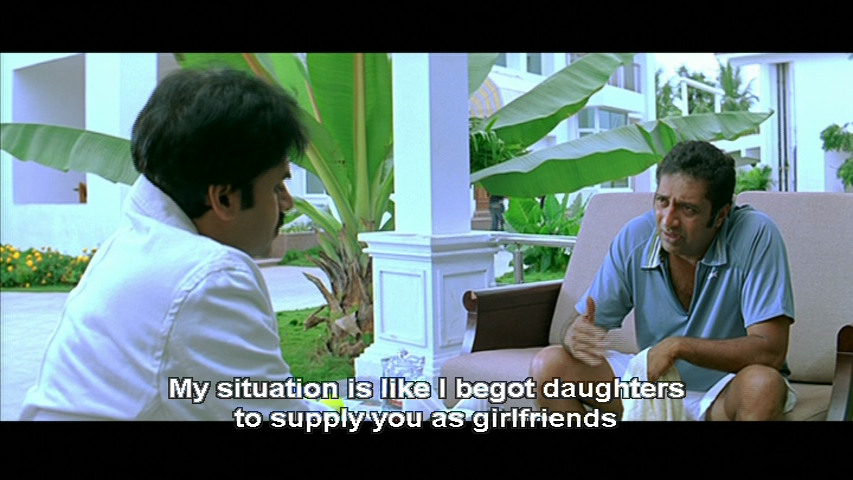
Jalsa-Prakash Raj

Sanjay Sahu (Pawan Kalyan) goes to ask his girlfriend’s (Kamalinee Mukerjee – don’t blink or you might miss her) father (Prakash Raj) for permission to marry Indu. He refuses and she is married off (to Kamal Kamaraju). Sanju goes back to his longest standing relationship, the one with the bottle. But then he meets Bhagi (Ileana) who falls for him on sight and eventually he returns her feelings. The story jumps forward and Bhagi finds out that Sanju had previously wanted to marry her sister. Naturally she is disturbed by the news, and flashes back to a history of getting her sisters hand-me-downs. Her dad assigns Pranav (Brahmi) to keep Bhagi safe from Sanju so you know this is serious. Unfortunately Pranav’s presence spurs Sanju on to some childish behaviour and the movie gets bogged down in comedy uncle shenanigans.

The first half sets up the romantic angle and then everything takes a sharp left turn as Sanju’s secret past as a naxalite is revealed. He is presented as the ‘good’ kind of terrorist who doesn’t want innocents to die. But still, he embraces violence so…. I think I find the rebel Sanju more interesting than the drunkard but I can’t say I wholeheartedly like either aspect of his character. The flashback also reveals his prior connection to Prakash Raj’s character as well as the villain Damodhar Reddy (Mukesh Rishi).

Bhagi is introduced as she plays an energetic game of squash at the gym, then races her friend Jo (Parvati Melton) to the car. They are confronted by a creep chases the terrified girls into the path of a very drunk saviour, none other than Sanju. I’m not convinced that moments after avoiding a threatened gang rape their thoughts would have turned to romance and bickering over who gets the guy. Bhagi starts out characterised as innocent and a bit dumb, but Ileana bounces daft lines back and forth with her friend Seenu (Sunil) as Bhagi tries to deal with her one-sided attraction to Sanju. Later as Bhagi becomes more assertive and playful Ileana has more fun as she plays off Pawan Kalyan, and also shows more range and depth. I quite liked Bhagi but I got the feeling the role was written piecemeal to suit particular scenes rather than conceived as a character in her own right.

Sanju is the guy who beats up all the guys who tease girls at college. It is nice that the hero defends people against bullies but I am tired of seeing women only allowed to be safe if the biggest bully lets them. He also goes on a rant about how aggravating it is that he can’t slap his future wife to control her for fear of the law and women’s groups. It was done for dramatic and ‘comedic’ purposes and it just doesn’t mesh with the thoughtful side of Sanju. He was a smart guy who chose to become a naxalite through tragic family circumstances but then seems to just forget all about it once he got into college. It really made no sense. And why does he always wander around with his belt undone? Despite my issues with the writing and the rape jokes, Pawan Kalyan is very funny in some of Sanju’s drunk monologues, with a deft balance of verbal and non-verbal comedy beats. The fight scenes are choreographed to his strengths, whether a precision martial arts style or a scrappy street brawl, and he gives them an elegance and energy that is totally missing from the lacklustre songs. I did like it when he punched a car and all the doors flew off. His choreo seems to be limited to ‘shuffle-shuffle-jiggle-wave your hands around’ but I suppose it helps him avoid direct comparisons with You Know Who.

There is a drawn out ‘comedy’ sequence where Sanju tells Brahmi’s character that he plans to drug and rape Bhagi. Then says he is only joking because it is no fun to rape an unconscious woman when you could have one running around and screaming. This kind of ‘joke’ is rife in 80 and 90s films, but at least I can pass that off as The Bad Old Days. Sanju’s plan to win Bhagi back seems to be to ruin any other chance for her until she caves in. And her sister insists Bhagi accept all this as it is Sanju’s way of expressing his love, and if a boy does that it is OK and you have to let him because he is a boy. Jalsa was made in 2008 by a smart director with a hero who is by all accounts quite intelligent so I cannot find it in me to make the same excuses for how this plays out.

One of the things I do really like is Mahesh’s laconic narration. His slightly lazy drawl hits the right notes of comedy, empathy, and sarcasm as he reveals more about Sanju than is evident in the drama.

Prakash Raj gets some nice bromantic moments with Pawan Kalyan but his character makes so many poor decisions that I lost all patience with him. Mukesh Rishi plays his usual imposing villain. He thinks nothing of killing an out of town Don on the way back to jail from his rejected bail hearing. Tanikella Bharani is creepy sidekick Bulli Reddy, his fixer. There is a tedious running gag between Sunil’s Bunk Seenu and Dharmavarapu Subramanyam’s greedy psychiatrist that I would have solved with a diagnosis of One Tight Slap, three times a day until the course is finished. Brahmi does his shtick, but is never more than mildly amusing. If you are looking for miracles to attribute to the Powerstar, he does seem to detoxify Ali who gives a fairly restrained character based performance. I generally enjoy Ali’s appearances in Pawan Kalyan’s films but typically loathe him in everything else so this is a mysterious but good thing.

Telugu Movie Science has long been on the cutting edge of creativity and the laws of physics are tested in Jalsa’s action scenes. As usual the showdowns involve an orderly lineup of hairy rowdies patiently taking turns to be beaten up. But no one can deny that disputes settled the old fashioned way – a swordfight – tend to have a definite outcome.

I can see why Powerstar fans, the most passionate movie fans EVER, often enthusiastically recommend this film. Pawan Kalyan is given ample scope to show his acting depth as well as his comedic and action chops and he really does shine in some scenes. It is just a pity that the story doesn’t really hold up and the direction seems more focussed on set pieces and not enough on bringing a balance to all the disparate elements. 3 stars.