R…Rajkumar (2013)

R...Rajkumar

Prabhu Dheva (where did the extra ‘h’ come from?), the dance guru, directing Shahid Kapoor, one of the few Hindi actors who can dance – surely that has to be a good thing?

R...Rajkumar

Well… the premise is there, but in delivery R…Rajkumar is not as good as expected.  While the dancing is excellent (and it is fantastic to see a director make full use of Shahid’s talents in that respect), there are a few too many distasteful misogynistic moments to make this film anything other than just OK.  Shahid makes a reasonable attempt at masala served southern style, and his goofy shirts, dreadful hair and love struck Romeo are entertaining if somewhat reminiscent of Siddharth in Nuvvostanante Nenoddantana.  Although Shahid does his best, the story is standard fare, and adheres strictly to the usual Telugu formula complete with cartoonish fight scenes and ineffectual heroine.  It’s such a shame when all the ingredients are there to make a much better film, if only a little more thought had gone into the screenplay.

R...RajkumarR...Rajkumar

Romeo Rajkumar turns up in a small town where two rival gangs are battling for control of the opium trade, managing to arrive just at the right time to save Chanda (Sonakshi Sinha) from a stray bullet. Simultaneously he falls deeply in love with her after just one brief glance – so deeply in fact, that the mere sight of his ‘lollipop’ (gah!) is enough to halt him in his tracks.   And I do mean completely stop – no matter what – even when taking part in an assassination or when driving the getaway car after another attack on a rival gang. Much hilarious comedy ensues. Well, to be fair, it is funny the first time or two, but it just gets repeated a few too many times.

Rajkumar signs up with Shivraj (Sonu Sood) and soon becomes one of his top men in the fight against rival gang boss Parmar (Ashish Vidyarthi) becoming good friends with Qamar Ali (Mukul Dev) in the process.  The first half is full of outrageous shirts, bad hair and some amazing dance moves from Shahid along with a brief appearance from Prabhu Deva himself.

R...Rajkumar

But while Shahid is blowing kisses and generally making an idiot of himself, there are darker scenes such as an apparent rape in the police station which is treated as an everyday occurrence and not worthy of further mention.  Further threats of violence and rape against the heroine are also treated as comedy and while some of the lewd dialogue is funny, most is offensive rather than comical.

R...RajkumarR...Rajkumar

Sonakshi Sinha starts off as a feisty village girl with great attitude as she beats up a gang of louts who dare to wolf-whistle at her and her friends. She berates Rajkumar for his unwanted attentions repeatedly, until she manages to overcome her aversion to eighties hair and loud shirts and decides that maybe Rajkumar isn’t so bad after all. But that’s the end of any personality for Chanda, who rapidly becomes vapid and useless, totally unable to defend herself against her uncle and his plans for her marriage, and completely helpless in the face of Shivraj’s attempts to seduce her. It’s a role Sonaskshi Sinha has done many times in the past but she has less conviction in her character here, and it shows.  There is no energy in her performance and zero chemistry with her co-star which makes me wonder why Prabhu Deva didn’t pick someone like Trisha or even Charme Kaur (who turns up in a song) who surely would have brought more oomph to the role.

R...RajkumarR...Rajkumar

Equally disappointing is Sonu Sood who is less menacing and more buffoonish than expected as a gang boss.  Ashish Vidyarthi is even more of a caricature as his rival, while Asrani is actually rather restrained in his role as spiritual advisor to Shivraj.  It’s bitter sweet to see Srihari appear here as the über villain Ajit Taaka, in one of his last appearances.  Generally he’s fine in spite of a rather unconvincing storyline and one rather bizarre scene where he appears gyrating with some bikini clad women on top of a hotel in (supposedly) Hong Kong. Best to just ignore and move along – when did masala ever have to make sense?

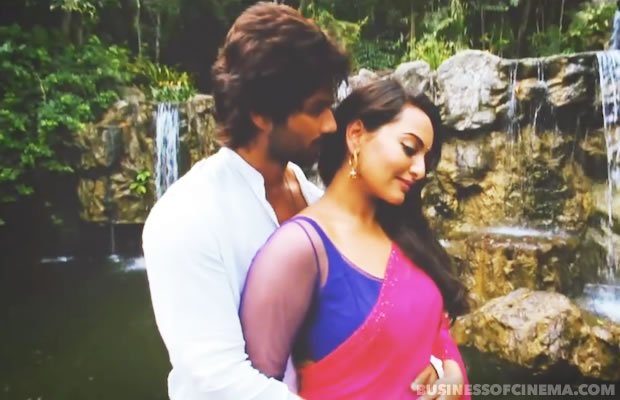
What does work well in the film are the songs by Pritam.  Prabhu Deva does an excellent job with the choreography, as for example here in Saree Ke Fall Sa where he uses the backing dancers and a few basic props to good effect.  The only exception is the last item song with Ragini Dwivedi and Scarlett Wilson which is shambolic with much less of a southern feel.

While the film initially feels like a series of short comedy sketches, everything slows down in the second half and becomes a little more serious with more fight scenes and fewer songs.  The inevitable final showdown is good, although I don’t think Shahid is quite as convincing in ‘back-from-the-edge-of-death’ recoveries as, for example, Shahrukh in Chennai Express, which does make the last fight scene funnier than I think it was meant to be. The film could definitely do with fewer rape references, and a more socially responsible hero would have made for less uncomfortable viewing.  Still, Shahid puts in a good performance and seeing him dance up a storm southern style, makes R…Rajkumar worth a watch, even if it doesn’t quite reach the heights I expected.

R...Rajkumar

Chithiram Pesuthadi

ChithiramPesuthadi

Chithiram Pesuthadi is the first Tamil film I’ve seen that thanks a roller skating stadium in the opening credits.  So – possibly not one of director Mysskin’s typically dark stories based on crime and murder then?

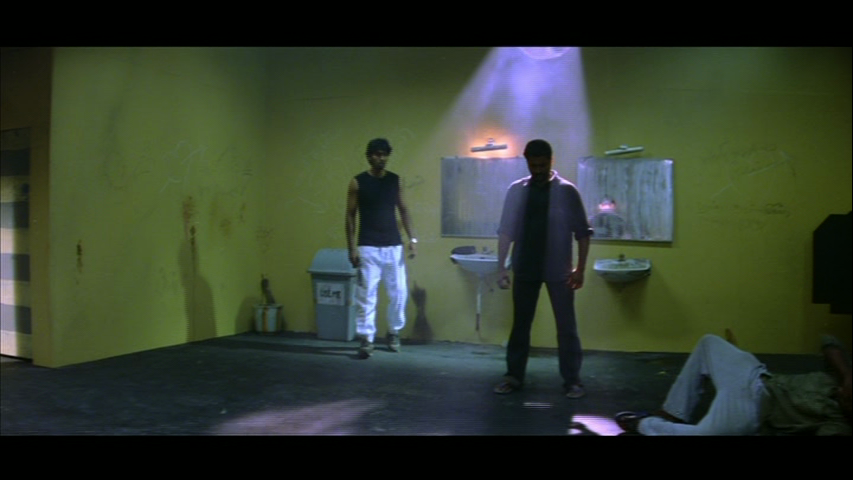
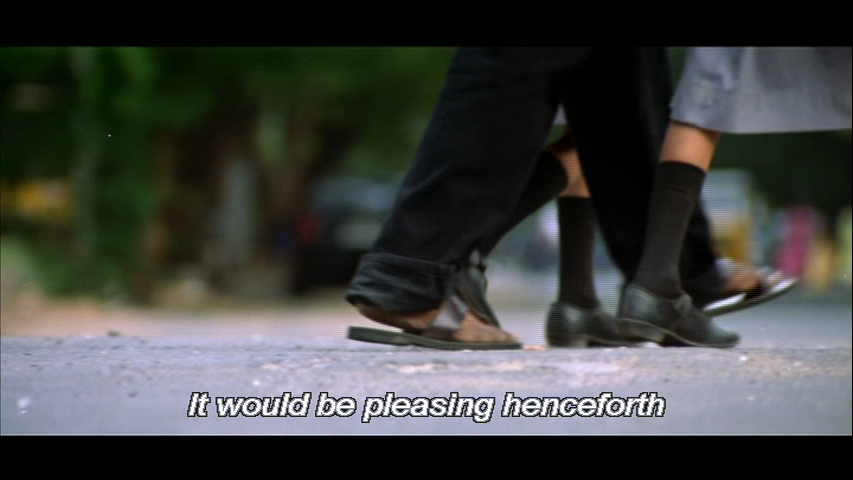
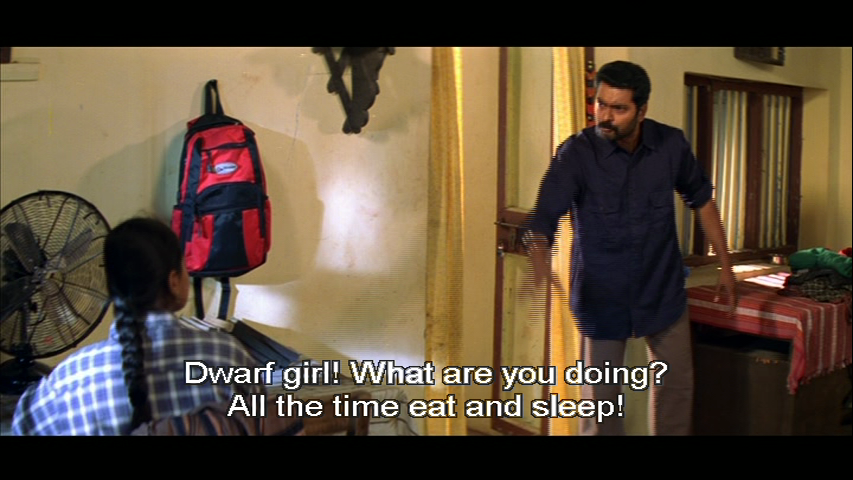
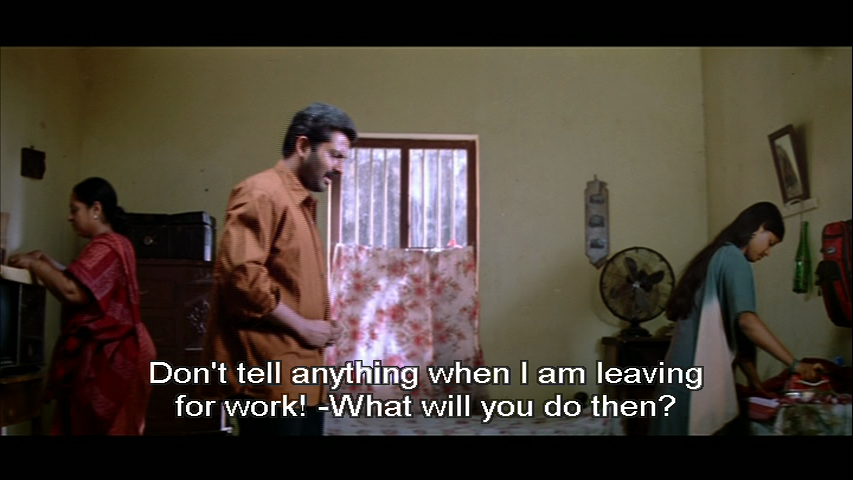
Well, no.  Chithiram Pesuthadi is billed as a love story, but even in this first film from Mysskin there are plenty of fights, numerous gangsters and an underworld theme added into the plot.  The features that I’ve come to expect from Mysskin’s film are also present, although less frequently here than in his subsequent films, but his trademark low angle shots of feet and a few odd camera angles from above still appear.  Despite the underworld theme, in many ways this is typical love story where a boy from the wrong side of the tracks falls in love with a middle class girl and there are numerous obstacles to overcome. However there are enough fresh features to keep the story interesting, while Narain and Bhavana share good chemistry together, which makes the love story a little more believable than usual.

Chithiram PesuthadiChithiram Pesuthadi

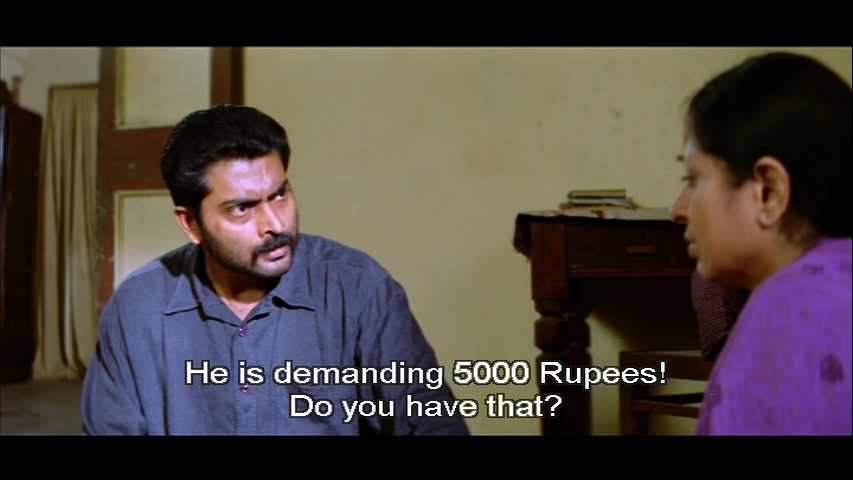
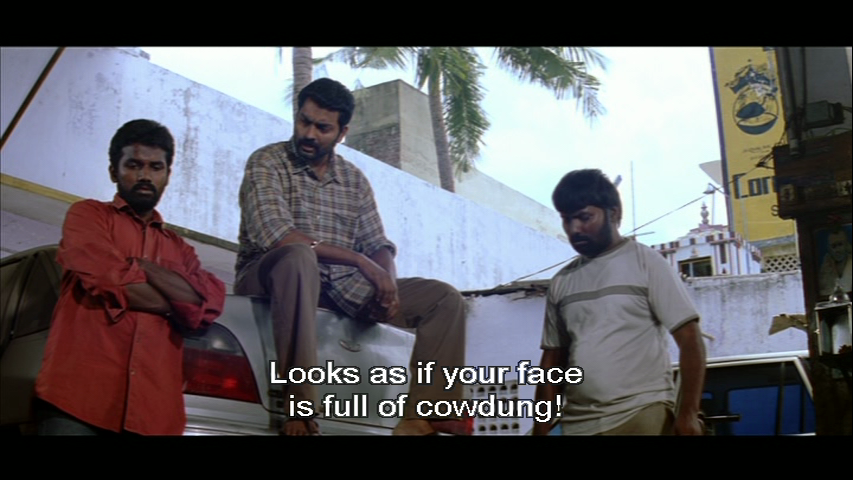
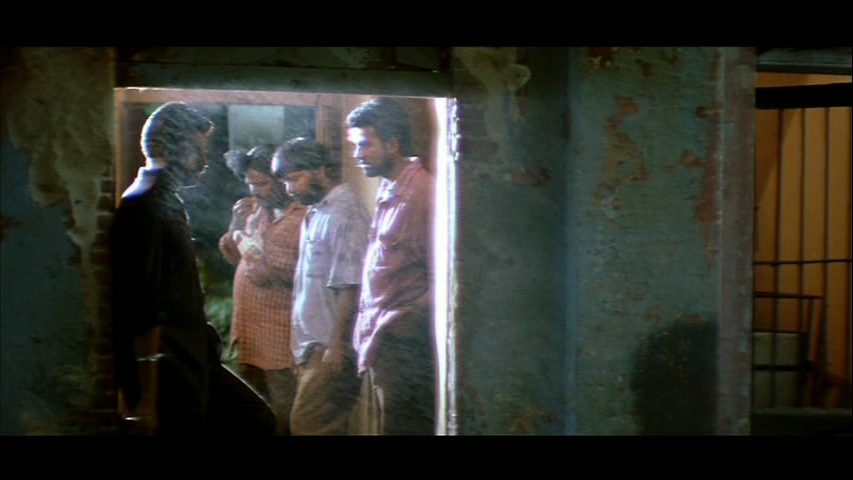
Thiru (Narain) is an angry man. He’s angry about the bribes he has to try and pay to get a job, he’s angry at his mother because he feels she prevented him from completing his education (which would have helped him get a job) and he’s angry at his sister because she needs money to finish her education (which means he has to get a job).  This rage makes him an excellent an somewhat ruthless fighter, and when he inadvertently rescues local don Annachi’s son from a beating, he ends up recruited as a general enforcer and thug on call.  The job with Annachi (Kadhal Dhandapani) allows him to vent his rage on a variety of hapless victims, although this doesn’t seem to improve his general disposition.  However there is more to Thiru than his frequent flashes of temper suggest.  He has his own code of conduct which he tries to adhere to, he has three loyal friends who respect him and despite his tantrums at home Thiru is trying his best to support his mother and sister.

Chithiram PesuthadiChithiram PesuthadiChithiram PesuthadiChithiram Pesuthadi

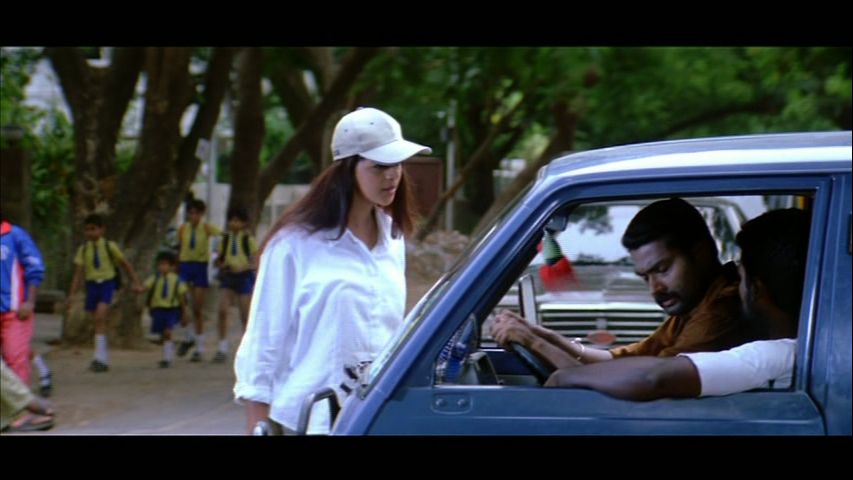
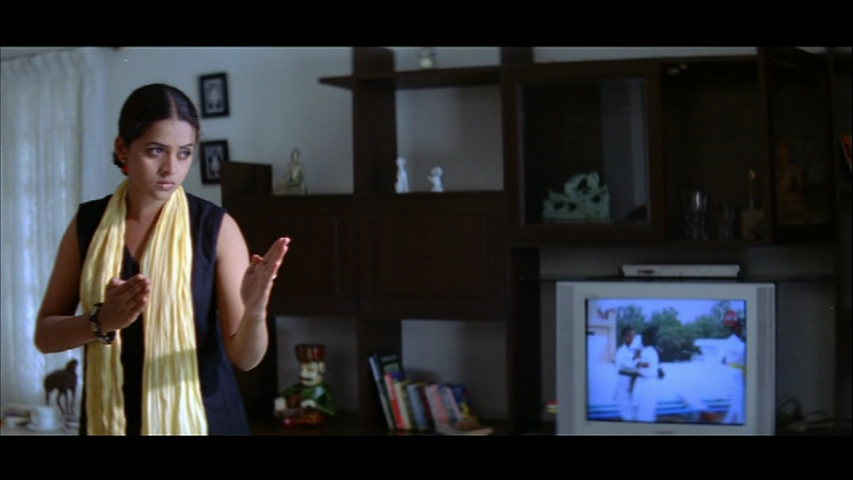
Inevitably, Thiru clashes with a girl who is equally angry, although Charu (Bhavana) doesn’t seem to have any real reason for all her aggression.  She lives with her father and works alongside her uncle in an organisation which promotes the health and welfare of orphans. Charu is a crusader and is ready to leap to the defence of anyone she feels might need her support, whether they want it or not. This leads to several clashes between her and Thiru, whom she sees as a nasty vicious thug.

Chithiram PesuthadiChithiram Pesuthadi

Thiru on the other hand doesn’t seem to think much about her at all, until finally one day he starts to see her in a different light.  Either that or he develops severe indigestion – it’s hard to decide from his expression but I’m pretty sure he falls in love.  Either way, we end up with this amazing song which, although it’s the ‘falling in love’ song in the film, it doesn’t seem to have anything much to do with love and romance.  Unless of course, I’ve missed some kind of symbolic significance in the way Narain is dressed as a Roman carrying a goat – or the many other bizarre situations in this song!

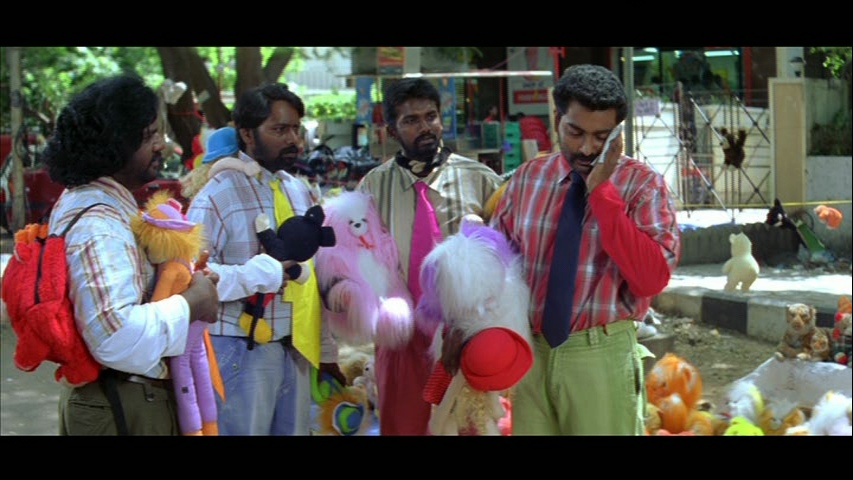
Naturally Charu also changes her mind about Thiru and without even a sniff of parental opposition the two end up setting a date for the wedding.  Of course Thiru’s decision to give up his life of crime and sell stuffed toys by the side of the road instead may have helped win over Charu’s father. But only, I suspect, if he didn’t actually see Thiru and his friends in these shirts.

Chithiram PesuthadiChithiram Pesuthadi

Charu and Thiru appear set for a life of wedded bliss when suddenly Mysskin appears to remember that this is a Tamil film and various tragedies beset the lovers.  But here again, Mysskin diverges from the traditional path and allows both of his characters to behave badly.  Both are selfish and unpleasant, although of the two, Thiru does get painted in a slightly kinder light.

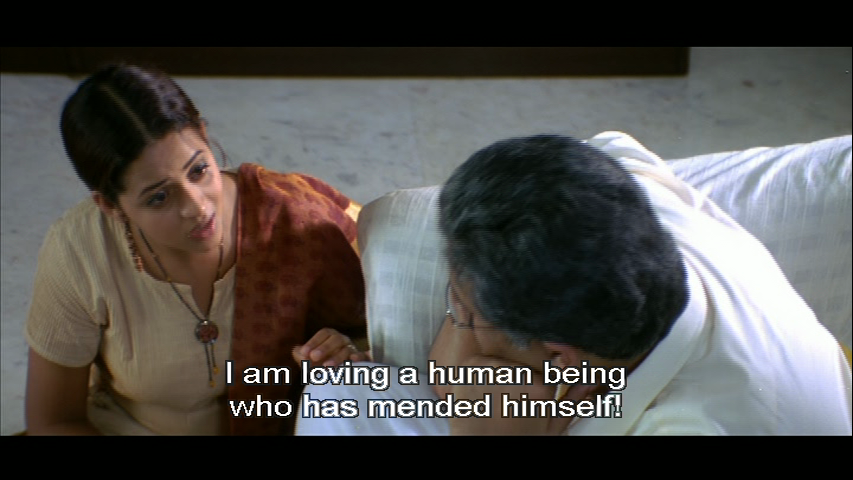
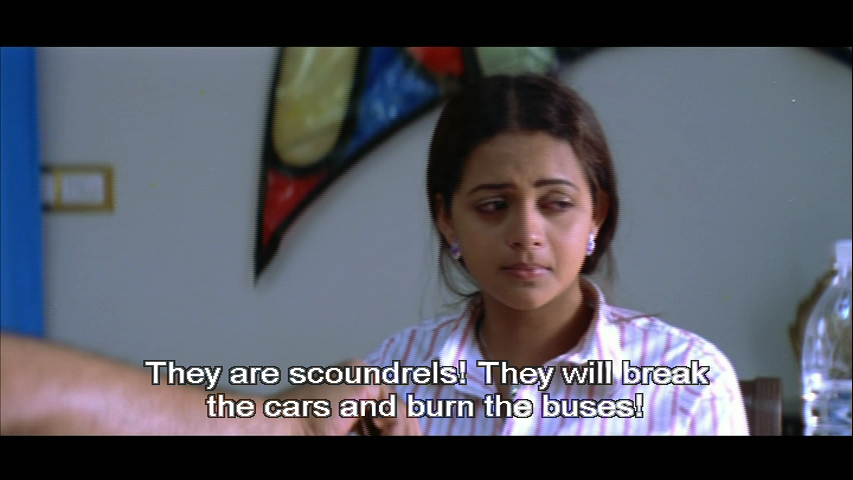
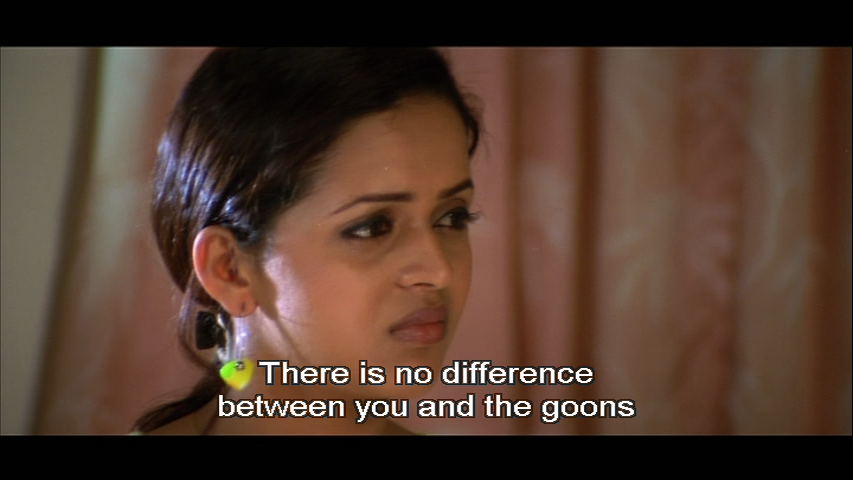
Charu is abrasive, obnoxiously rude to her father and dangerously confrontational throughout.  When her relationship falters, she blames everyone but herself which showcases the immaturity of her character perfectly.  Bhavana does an excellent job and even manages to create sympathy for her character’s challenging persona.  Most importantly she cries convincingly and looks generally unglamorous and suitably ‘girl-next-door’ for the role. I found it quite impressive that she made me care about what happens to Charu (even if only superficially), as I really didn’t like the character at all.

Chithiram PesuthadiChithiram Pesuthadi

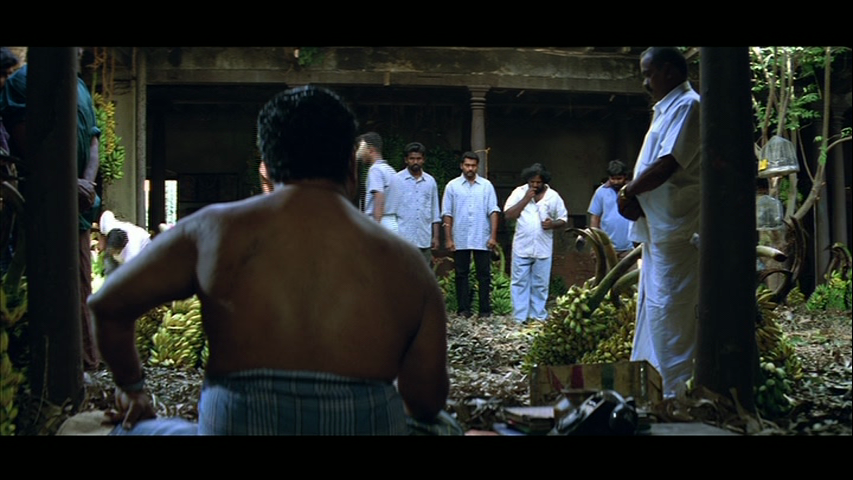
Narain also puts in a good performance, although he’s helped by the fact that his character is a little more sympathetic. Thiru is a man of contradictions and occasionally Narain splits his personality a little too much so that angry Thiru becomes too much of a caricature.  However his Thiru is likeable despite the angry outbursts and casual violence. Thiru’s loyal friends are equally impressive, with each developing a distinct personality through the use of just a few little quirks in their limited time onscreen.  I love how one of them is always eating – no matter how serious the situation or how inappropriate, he always has some food in his hands.  There are plenty of similar little touches that make the characters feel more real, including the way Annachi rules his area from his banana yard, discussing deals and deaths in between the more mundane day to day activity of selling fruit.

Chithiram PesuthadiChithiram Pesuthadi

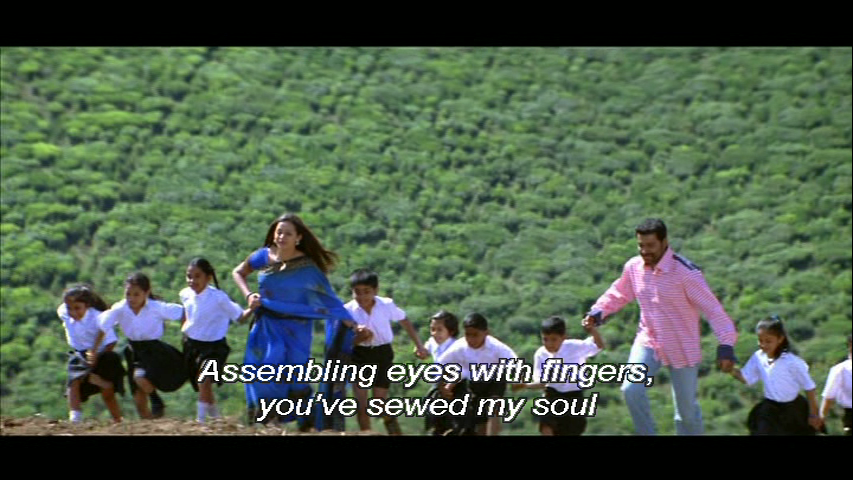
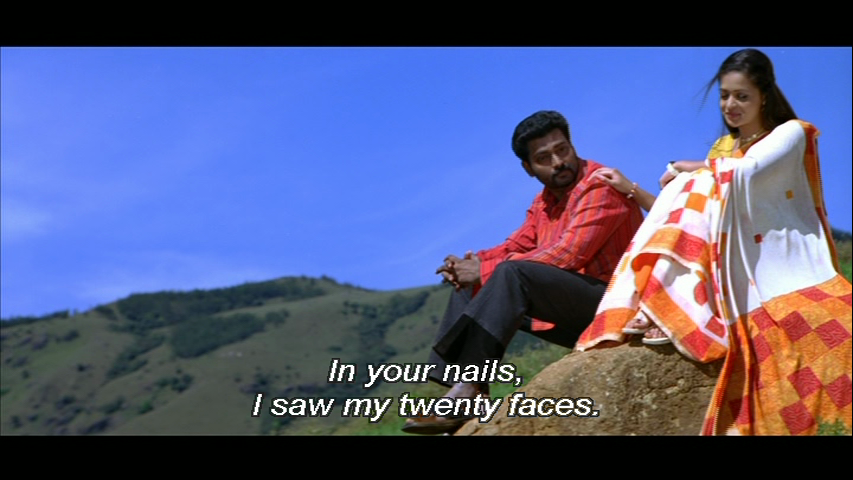
While the story develops smoothly, the songs seem to be added rather haphazardly and don’t always add to the film.  There are also some very bizarre translations –  I have no idea what assembling eyes with fingers is all about, but it does sound interesting.

Chithiram PesuthadiChithiram Pesuthadi

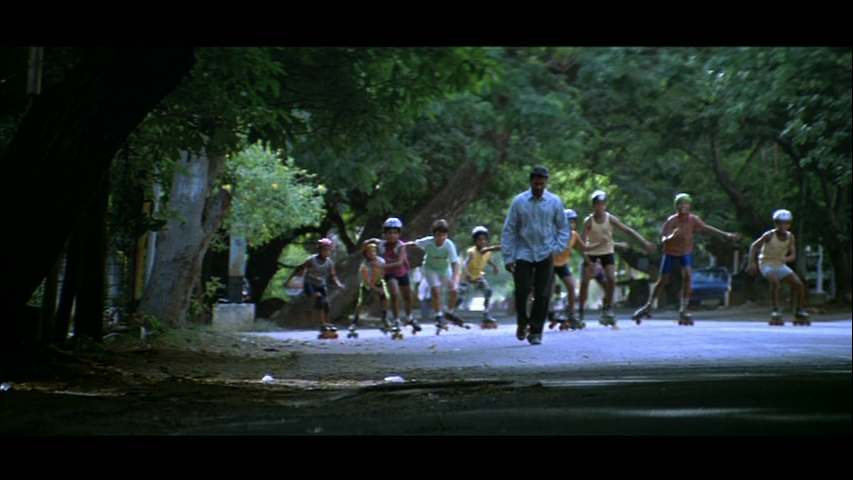
And of course the roller skaters!

Chithiram Pesuthadi

There is a better than usual item number with Malavika, but again it wasn’t really necessary, and most of the songs appear to be used more because songs are expected rather than as a way to further develop the story.

Overall Chithiram Pesuthadi is an impressive début by Mysskin and illustrates why he has gone on to become such a successful director.  He has the ability to spin a good yarn and keep the plot interesting, even with unlikeable protagonists and relatively dark themes.   Good performances, a new twist on an old story and some clever character development combine to make Chithiram Pesuthadi well worth a watch, and definitely a cut above most other first films. 4 stars.

Library Wars (Toshokan Senso)

library-wars-2013-poster

A law was passed in 1988 allowing all objectionable books to be collected and burned. The Media Betterment Committee was formed to remove from circulation all books that contained banned subjects, or books that could be blamed for crimes committed by people who had read them. Librarians were the last line of defence against this censorship. Sounds a bit dull, doesn’t it? Only the Media Betterment Committee has an armed force at the ready to go and retrieve banned books. It is not often that you hear a line like “Libraries are dens of iniquity. You must pay for your sins.”

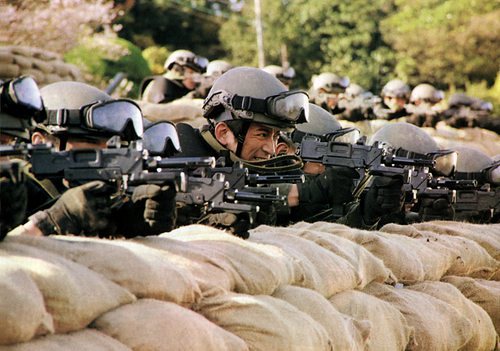
Sato Shinsuke’s film isn’t all about censorship or government corruption and hypocrisy in a dystopian alternate history. It’s also an action packed romantic comedy. The MBC initiate a mission to retrieve secret documents that would reveal the illegitimacy of the law that empowers them. The Library Defence Force protects the high security library facilities and safeguards the collections. The documents have been bequeathed to them, and they know that getting them back to the library will be near impossible. Both teams are armed to the hilt, but only one side shoots to kill. One character says something along the lines of “If a government burns books, next they’ll burn people”.

library-wars-Dojo

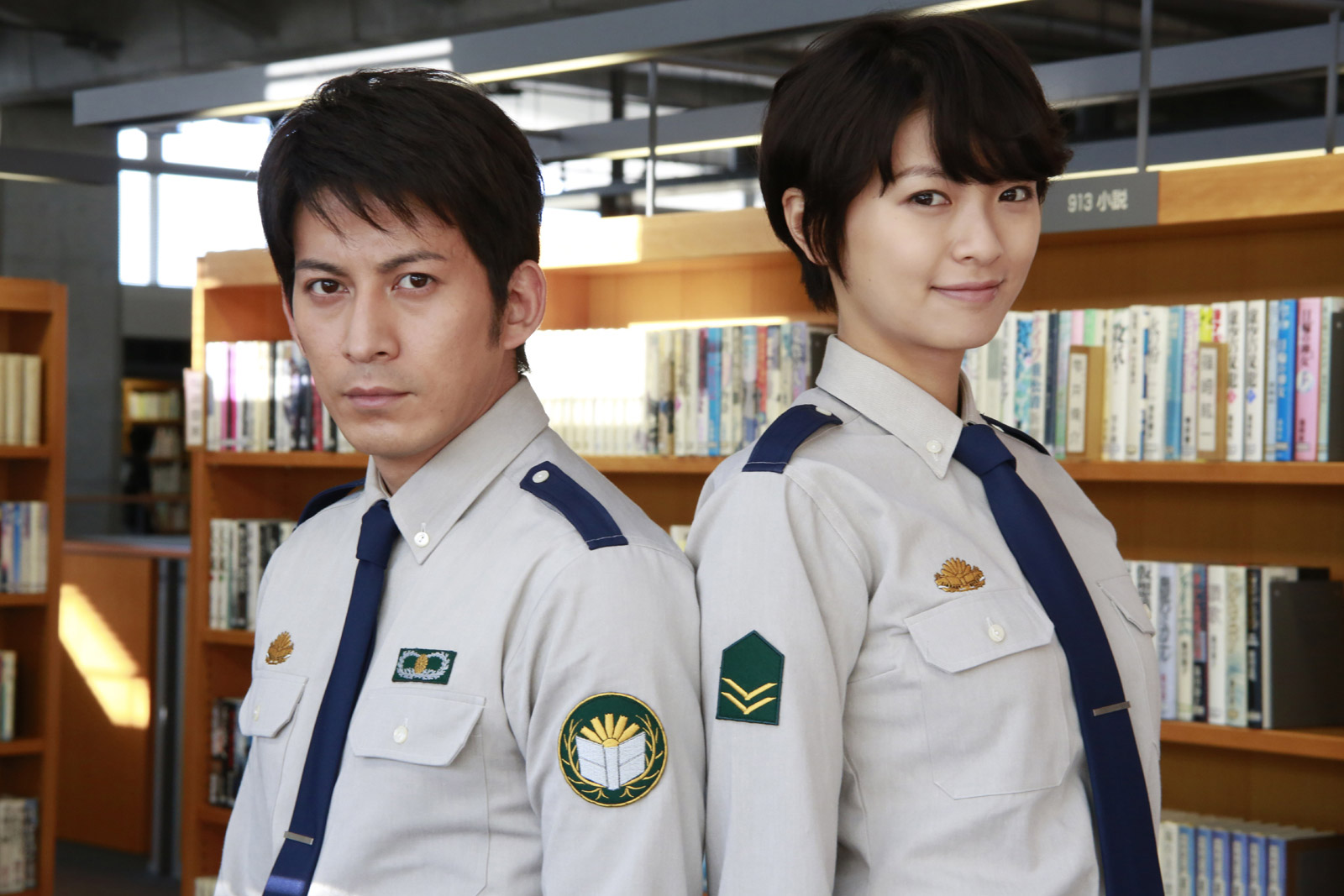
Instructor Dojo (Okada Junichi) is intense, a consummate professional, and not very tall. Okada is excellent in a fairly stoic role. His fight scenes are crunchingly physical and despite being the butt of many short jokes, Dojo is the alpha male in this crew. He is in charge of new recruits, putting them through a punishing training regime and conducting classes on the history and laws that frame the conflict with the MBC. He also seems to have an intense dislike of Kasahara Iku (Eikura Nana), the first female in the elite Task Force. Okada has a nice touch with the comedy scenes and his squirming reaction as Dojo hears himself described by Kasahara at her selection interview is hilarious. He gives the cynical Dojo a weary vulnerability at times along with his obsessive drive to defend the books.

Library_Wars-Eikura Nana

Eikura Nana is the enthusiastic but klutzy Kasahara. She was inspired by a Library Defense officer who came to her aid during an MBC book raid. She never saw his face but he changed her life.

library-wars-Kasahara and her mystery hero

She joined the force to try and find that ideal man and to be just like him (guess which him!). At first I was a little irritated by the scenes that repeatedly highlighted her incompetence and inability to keep up with the guys. But it emerged that brilliant technical skills might not be the only qualification for the job. Knowing what was right and putting yourself on the line to do it was as powerful in some instances. Eikura is charming and portrayed her character as impulsive and warm, with a sturdy resilience that kept her from giving up.

library-wars-Tezuka and Kasahara

Her sparring with Dojo and fellow recruit Tezuka was sometimes harsh, and I was a bit put off by the institutionalised bullying and the macho BS. But Dojo challenged Tezuka to be honest about why he was picking on Kasahara. He also reproached himself for not being strong enough to trust her, and for impeding her career because of his own weakness. Kasahara became a more valued individual and earned her place on merit. It’s still a man’s world but she made her own place in it.

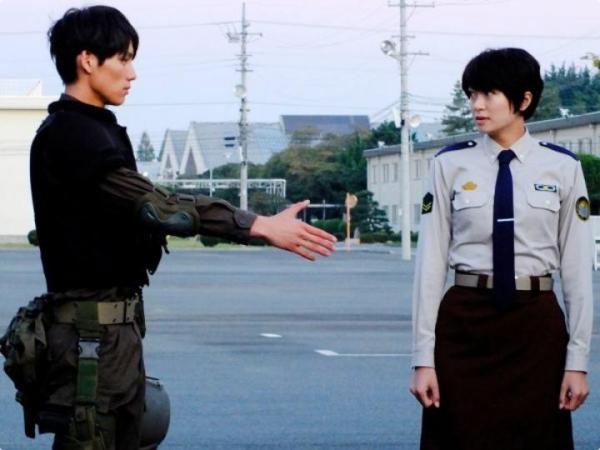
Library-wars-2013-Dojo and Kasaharalibrary-wars-Okada and Eikura

Despite all the action and violence, this is often a very funny film. Characters play it pretty straight and lines like “The commander’s leg is transmitting” had the cinema audience in stitches, as did the librarians shushing each other while they gossiped. Okada and Eikura have a nice dynamic. Dojo and Kasahara’s relationship starts as just a student and (demanding and surly) teacher but develops and becomes more personal as they understand more about what drives each other. She brings out his vulnerability (which freaks him out) and he makes her realise that the LDF is no game and she needs to focus. When Kasahara says to Dojo that her ambition is to be as good as him he is touched.  Then she pauses and adds, “Or better”. Their reactions and the pace of their dialogue bring a lot of the heart and the humour into the story.

Tezuka (Fukushi Sota) and Shibasaki (Kuriyama Chiaki) are Kasahara’s rival and best friend respectively. They provide the outlet for less formal commentary and venting, and allow Kasahara’s comedic bumbling to the fore. Both actors do well with quite one dimensional roles and make the most of their big scenes. Tanaka Kei is lots of fun as Dojo’s sidekick Komaki. He respects his boss but has zero reverence and his ribbing and knowing expressions are a hoot, leaving Dojo exasperated and with nowhere to go.

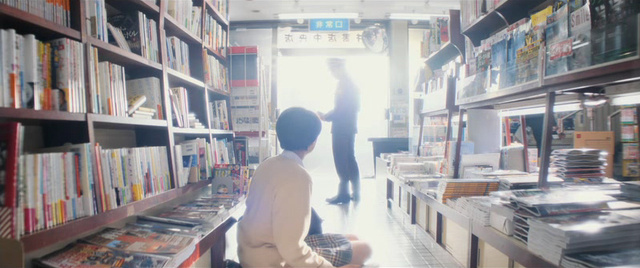
library-wars-extreme-censorship

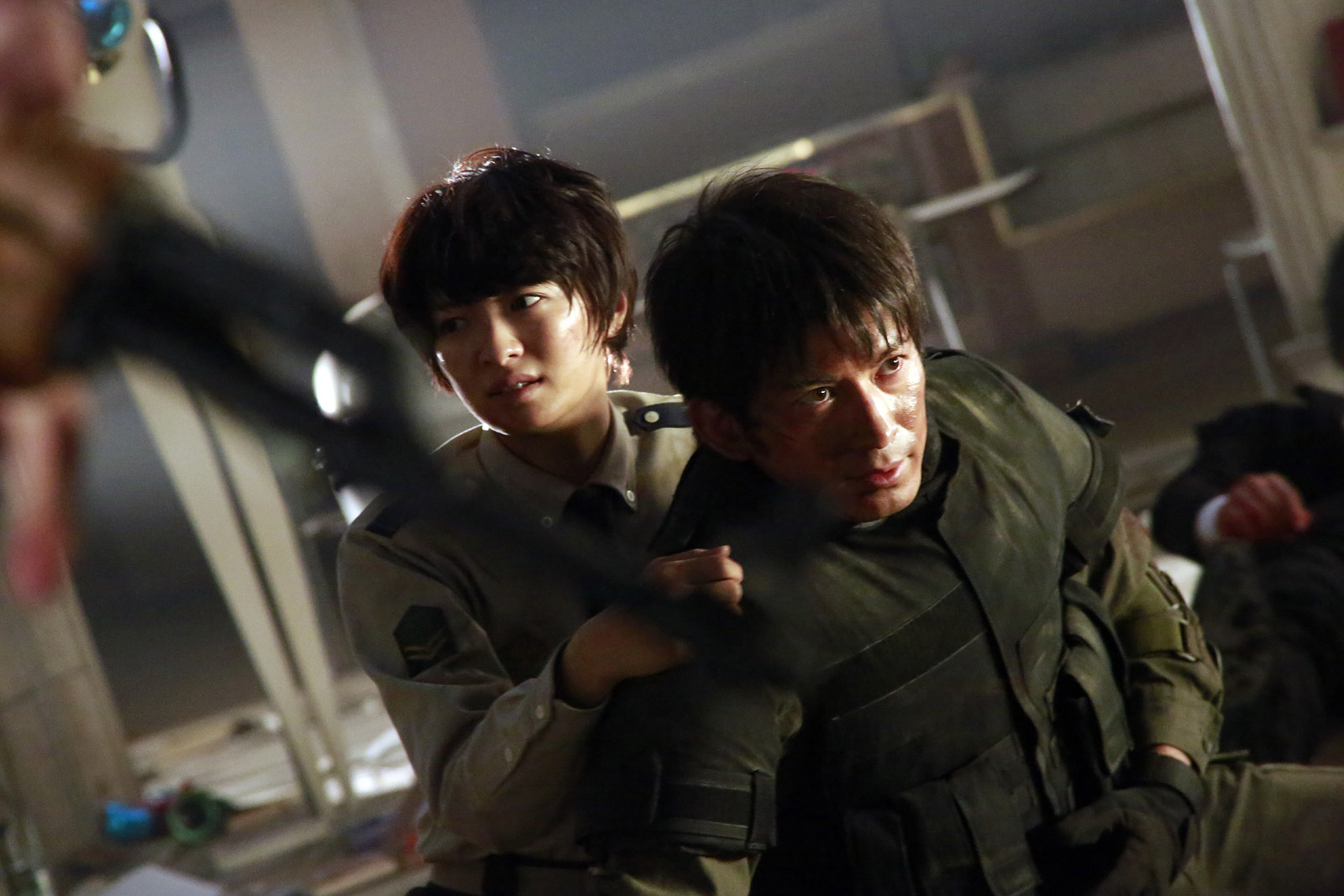
The combat scenes are full on, from the hand to hand fighting to the massive scale gun battles. This is a military style conflict and essentially the MBC and LDF are at war. The LDF are to defend only, and the tension in their ranks as they wait, knowing what is coming, is palpable. Kawazu Taro’s cinematography is excellent at drawing us into this bureaucratic and dangerous world,  and the film makes the most of both technology and skilled actors and stunt performers for the action sequences.

I read reviews criticising Library Wars for not being enough of a message film, but I think the censorship and public apathy theme is strongly presented and integrated into the storyline of Dojo and Kasahara’s relationship. The romantic elements were more about idealistic love than actual entanglements but the growing closeness of several key characters makes it easier to invest in the conflict. The film ends on a positive but open note, perhaps signalling future adaptations of the remaining novels in the series.

I found the subject and the characters engaging. The cast are good , especially the leads Okada and Eikura, and the warmth and laughs were a nice foil for the mayhem and destruction. Worth a watch, especially if, like me, you remember reading Fahrenheit 451 in primary school and thinking that was a fantasy.