La Cité Des Enfants Perdues

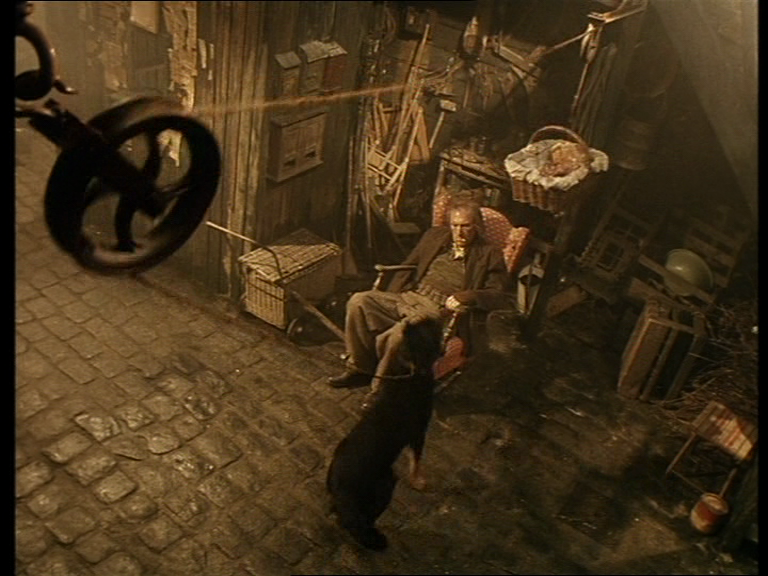
When I am asked to name my favourite film (a very difficult decision) I usually choose this – The City of Lost Children. It doesn’t seem to matter how many times I see it, I still get lost in the amazingly detailed world that directors Jeunet and Caro created. It is a film I have seen many times and will no doubt watch very many more and I still love it.

It tells the story of One, a carnival strongman who looks after his petit frère Denree in a very Victorian styled port city.

Denree is stolen by the Cyclops, men who put out their own eye to use an electronic version,  and sold to the evil Krank. He is a mad scientist who lives in a fantastical rig in the ocean, along with his dwarf wife, 6 narcoleptic clones and Uncle Irvin, a talking brain in a fish tank. Krank has grown prematurely old because he cannot dream and uses his scientific genius to extract the dreams from the children he steals.


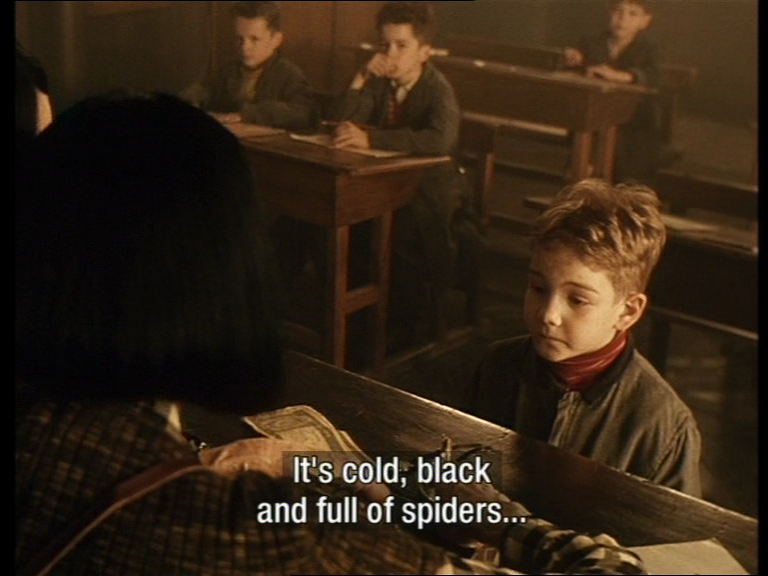
He thinks that these will help stop his ageing, although I would have thought the constant nightmares the children produce would have accelerated the process instead. One sets out to find Denree and along the way is helped by Miette, an orphan who heads a group of child pickpockets and thieves. These thieves in turn are under the rule of the Fagin-like Octopus who appropriates their takings each day and threatens hideous punishments for underachievers – a dark hole full of spiders is certainly my worst nightmare!
Added in to the story are an alcoholic failed side show owner, whose flea circus is used to deliver mind altering drugs and a diver who lives under the sea in the port, salvaging everything that falls into its murky depths.

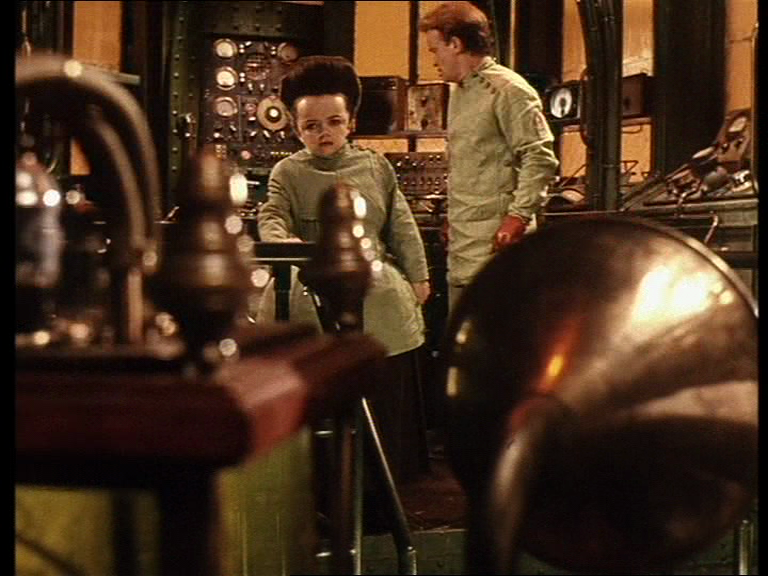
The best part of the film is undoubtedly the visuals (which is why I’ve gone a little crazy on the number of screencaps here!). The harbour city is full of bridges, stairs and swirling fog and emphasizes the Dickensian feel given by the costumes and carnival barkers. This is further alluded to by the Octopus, conjoined twins played by Geneviève Brunet and Odile Mallet, and their team of child thieves. The more futuristic laboratory evokes the writing of Jules Verne in the device used by Krank to extract the dreams and the cranky migraine prone brain in a tank.



The meeting place of the Cyclops on seems to be designed to look like one of the circles from Hell with a roaring fire and steeply pitched seating at the sides. Along with the bombastic rhetoric of their leader Gabriel Marie (Serge Merlin) it’s very apocalyptic, until they head out around town with a very quaint wagon to pick up the children.  I am intrigued by the Cyclops and their relationship to the old ‘seer’ belief that you can see more clearly by removing your own natural vision. In this case rather than an inner eye they use an artificial eye but sadly the philosophy behind their decision isn’t ever explained or explored in any detail. The device seems to use some kind of sonar and their vision is turned a wonderful green as a result of using this manufactured eye. In reality they are quite pitiable and when it comes down to it, not a very effective fighting force due to the limitations of their mechanical enhancements.


I love the many and varied characters that populate this world. Ron Perlman is perfect as One, the rather simple strongman who speaks in very short declarative sentences. I am very impressed by his accent as he really doesn’t sound American at all, although his rather limited script probably does help. One is a rather tragic figure too. His description of how he was a sailor on whaling ships until he heard the whales singing and subsequently lost his job because his harpoon would always miss is very poignant. He is very protective of his younger brother, even though Denree is an orphan he has adopted, and he takes the same care of Miette despite the fact that she seems much better equipped to take care of him.

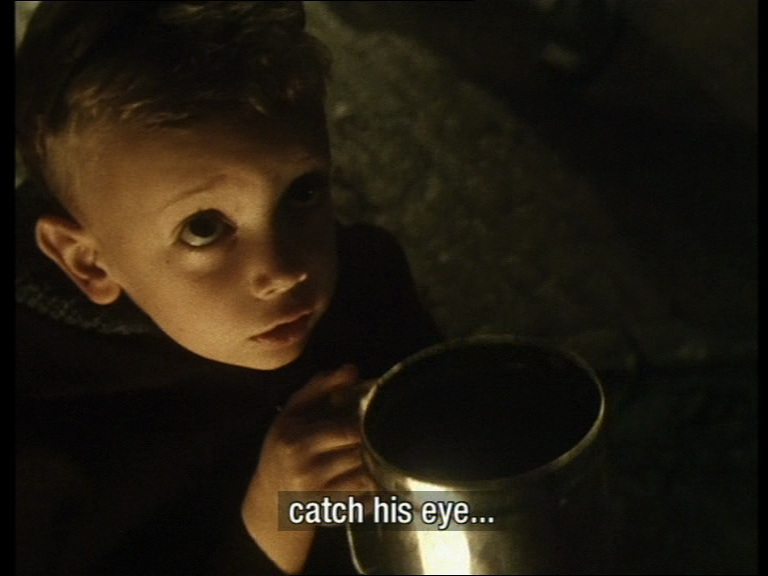
Judith Vittet is very good as Miette, the streetwise kid much older than her years. Her competence and quickness of thought is such a contrast to One’s more lumbering presence and it creates an appealing dynamic.  Miette appears to become attracted to the silent strength of One, and it is to Jeunet and Caro’s credit that their relationship never becomes tawdry or sexualised, but remains innocent and sweet throughout the film.

Perhaps the most challenging role in the film is that of the diver and the clones, all played by Dominique Pinon. He has an amazingly mobile and rubbery face and manages to give each clone their own personality as they try to placate Krank, do all the work around the laboratory and argue over who is the ‘original’. As the diver he is wonderfully obscure and insane. This is beautifully illustrated by the way that when he first salvages Miette from the water he merely adds a label to her listing the date and place of her discovery rather than trying to see if he can revive her.

Mirelle Mossé is excellent as the diminutive Mademoiselle Bismuth and Jean Louis Trintignant is wickedly barbed as the voice of Uncle Irvin. He gets some of the best lines and often appears as the voice of reason just to add even more to the unreality of the story. Daniel Emilfork is alternately petulant, childish, terrifying and domineering in an excellent portrayal of the mad genius created by the missing scientist. He makes him a most unattractive character and it’s impossible to feel any sympathy for him and his plight as he really is just evil.

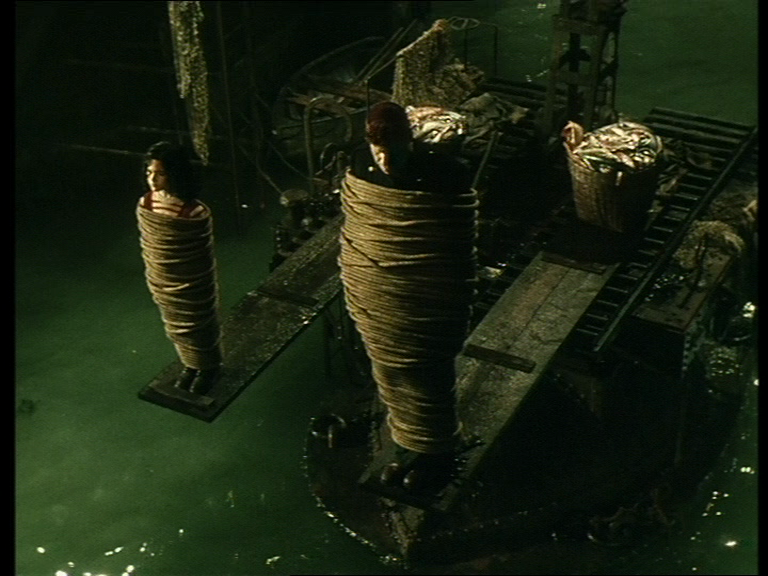
Another feature I love about the film is the intricate methods the characters use to attain their ends. For example, the way the Cyclops use to get rid of Miette and One is to tie them up and put them on the end of a plank over the sea. The plank is anchored at one end by a basket of fish which attracts seagulls, ensuring that the weight of the baskets gradually diminishes and the pair will eventually topple into the sea. Tossing them straight in would have had the same ultimate effect, but wouldn’t have allowed the Cylops to bet on the outcome. Similarly when Miette and her band of thieves are trying to break into a business they uses a complicated method involving cheese and a magnet attached to the tail of a mouse, when the magnet alone would have worked equally well. There are many more of these elaborate devices throughout which add a surreal feel, as if we’re watching an alternate universe where the usual laws of the natural world don’t apply.


The machinations of the Octopus and her partner in crime the Peeler are equally labyrinthine and the idea of using performing fleas to induce mind control over their victims is just another twisted thread in the tale. It’s all just wonderfully bizarre. Geneviève Brunet and Odile Mallet really do appear to be twins and the way they manage to make their hands work as four instead of just two is fascinating.

The costumes suit the rest of the film visuals and are designed by Jean Paul Gautier. The excellent cinematography is by Darius Khondji and Jean Rabasse is the art director who translated Jeunet and Carot’s vision to the screen so beautifully. The music by Badalamenti is haunting, evocative and fits the surreal nature of the film perfectly. I really can’t fault anything in this film. I’ve read other reviews where people have complained that the plot is lacking, or that the film develops very slowly, but I think the story is well developed and that it moves quickly enough that it has taken me numerous viewings to see every detail. And I’m sure there are things I have yet to spot. It’s not for everyone, but if your taste runs to the surreal or bizarre then it’s definitely one to watch. 5 stars.
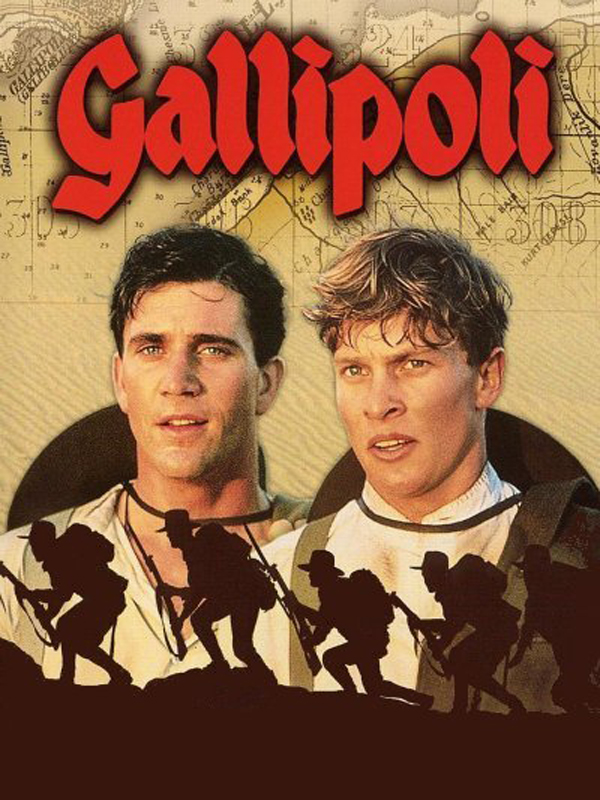

Gallipoli (1981)

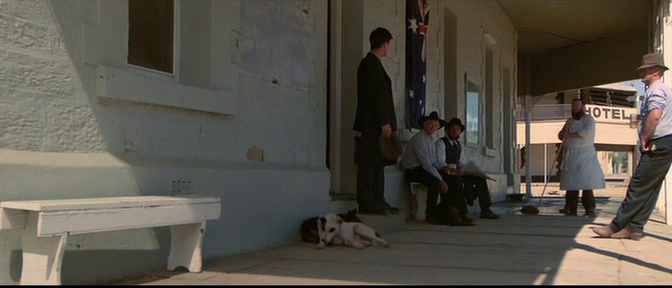
Gallipoli is an iconic film that encapsulates a lot of things Australians like to believe about ourselves. The notions of mateship, larrikinism and of course the ANZAC legend are intrinsic to the idealised version of ‘Australian’, but you don’t need to know about WWI to appreciate the film. The history of European occupation here is short and often brutal, and Gallipoli also raises questions about national identity and our tie to England.  The use by Britain of Australian and New Zealand troops in the front lines and as cannon fodder is part of the legend, and the tension between loyalty and resentment is always present in the film.

Running is a constant theme through the movie, and Peter Weir made a really unusual decision to use a piece of music that resolutely does not fit the era. Oxygene by Jean Michel Jarre became a hit here after the film was released. While the electronic sound was at first startling, it helps boost the sense of urgency and propulsion in those scenes. It’s not a war film as such, although if you saw the dreadfully cheesed up trailer for the US market you might think so.

Peter Weir tells a story about friendship, and loss of trust in the powers that be.

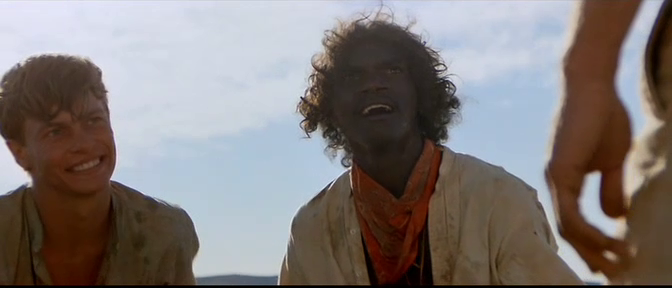
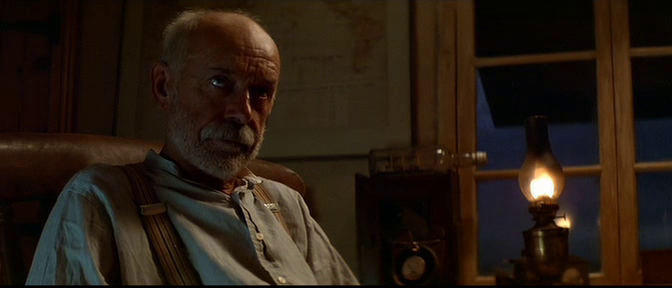
Archy (Mark Lee) is a golden boy; blond, blue eyed, athletic, a capable stockman, a good kid. He is idealistic, naïf and likeable. He just wants to join up and defend his country. Archy struck me as a Boy’s Own type of hero, always doing the right thing and looking out for his mates. The film opens with him training for an upcoming sprint race, and talking to his Uncle Jack (Bill Kerr). Their dialogue gives me a lump in the throat every time, because I know how this story ends.

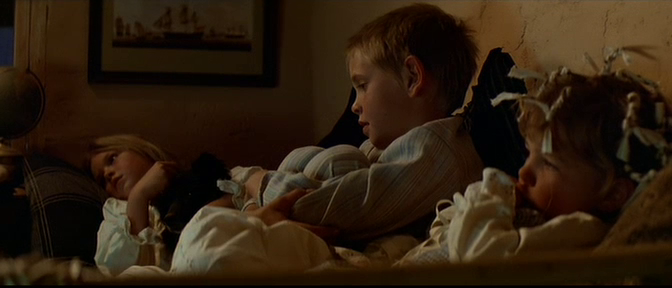
There is a lovely scene of Uncle Jack reading to the spellbound younger kids and he is reading the bit from Kipling’s Jungle Book when Mowgli has to leave his pack and start life as a young man. And that’s what Archy thinks is his duty – leave home and be a man. Mark Lee gives Archy an angelic face and a sense of quiet determination. When he makes one decision that will reduce his personal safety, he looks to be hiding his fear as well as happiness and these subtleties really make the character.

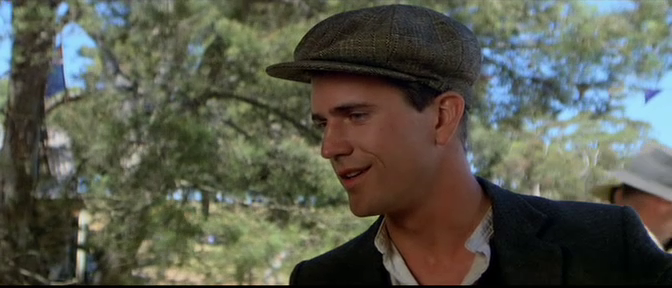
Frank (Mel Gibson) is a more cynical character. Initially refusing to join up and fight for something he doesn’t believe in, he decides there may be more opportunities for a returned serviceman after the war. Frank is the more modern character in some respects. He doesn’t buy all the rhetoric, nor does he trust the people in charge. He is a charmer and a chancer, and as different from Archy as you could imagine. Being Irish, he sees the war as England’s war and doesn’t feel the patriotic fervour that leads young men in these country towns to sign up en masse. It’s so sad to see how many men and boys from one region are listed as war dead on country memorials. Mel Gibson has become a bad joke in recent years, and clearly has demons of his own to deal with. It’s refreshing to see him back when he was just a nice looking guy who could really act. His is the strongest performance in the cast as he shows the most change in his personality and is the instigator for many memorable moments.

Archy and Frank are amateur sprinters and they meet in competition. They bond through what I will say is a typically male enterprise – taking a shortcut without really knowing the directions.


There is another myth I think a lot of Australians like to believe about ourselves, which is that we are at one with the land and can survive in the great outdoors. The reality is, of course, that if you drop most of us in the outback we’d be goners.

The boys cross paths again at a training exercise where they are supposed to pretend to kill each other, and Archy manages to get Frank transferred into the Light Horse. They have great chemistry and their friendship is really fun.

The ensemble of backing actors is fantastic. Many are better known for work on stage and TV, but Australia has such a small performing arts sector that actors do tend to work in multiple media. Robert Grubb, David Argue, and Tim McKenzie as Frank’s mates, and Bill Hunter as Major Barton are brilliant and get some of the best lines.

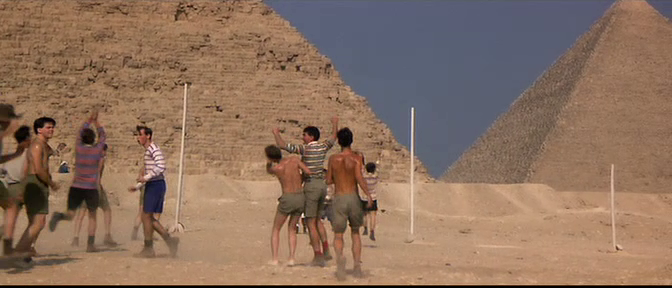
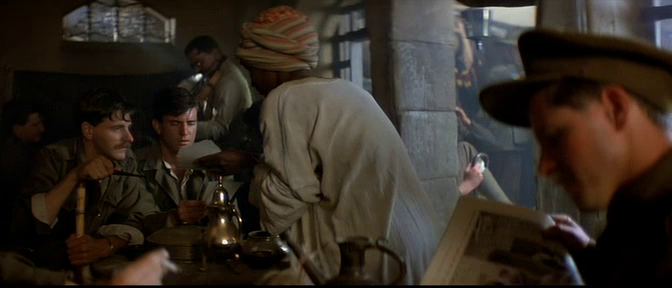
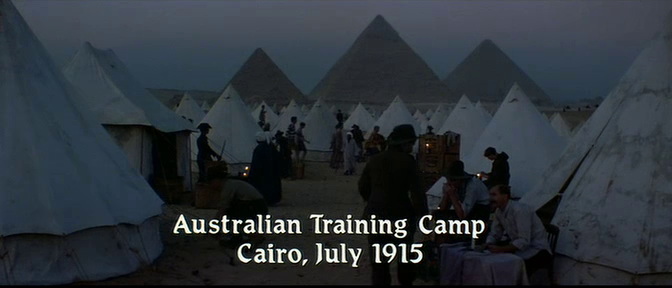
There is a scene where the troops were playing Aussie Rules near the Pyramids – it’s so Aussie! I loved it.

The boys also represent a gamut of views, with reasons for signing up ranging from patriotism to racism to hoping the girls fancy a man in uniform. They are the average blokes and their stories are shown in glimpses, not always articulated, but not neglected.

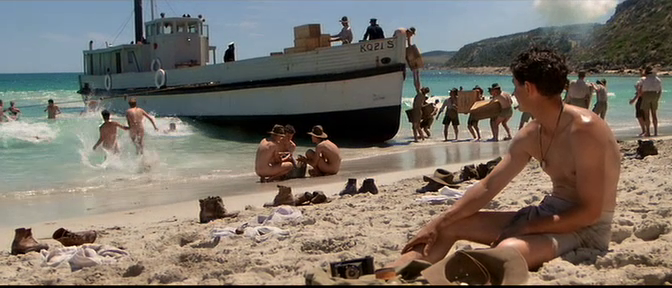
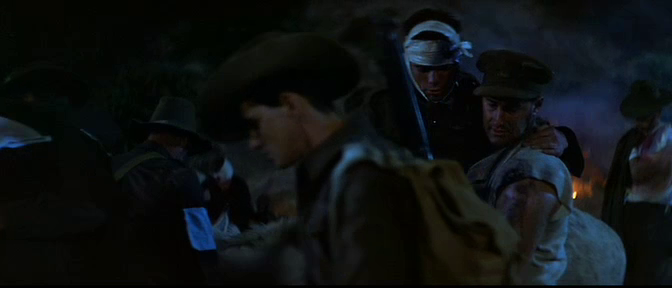
The cinematography by Russell Boyd is just sublime. A lot of the location shoot took place in South Australia, which also doubles for some of the Egyptian coast, and it is beautiful.


John Seale was among the crew who captured both the wide expanses of the outback and small intimate moments and made it all look beautiful. So much is told through imagery and juxtaposition of scenes that no words are required.

When I first saw Gallipoli, it was Archy that I felt for. He was just so … nice. When I’ve had occasion to watch it again, I relate more to Frank. He is imperfect, a bit full of himself, but he tries so hard to do the right thing when it matters. I think Frank is the modern viewpoint, questioning why he should be involved in someone else’s problems. While the characters are representations of the central argument, each of them is distinct and believable.

The brilliant screenplay by David Williamson contains the sweetness of bromance, comedy and also some bite. He doesn’t let the sentiment gloss over the less appealing behaviours that can spring from a sense of moral superiority or entitlement. Witty one-liners undercut the tension of the war and there are constant reminders that war is not an abstract concept, it is people fighting for their lives. He allows even the most unpleasant character to have some humanity so I can relate to all of them, like them or not. There are a couple of historical inaccuracies but as I am not a war historian, I don’t think it matters in terms of how the story plays out.

So back to my original thought. If you haven’t seen much or any Australian cinema, this might be a great place to start. I do love this film, and the themes really resonate for me. Leaving aside the ANZAC  connection, I would still say see it as Gallipoli has an engaging story and a witty and moving screenplay. It’s also a ‘Who’s Who’ of Australian film making. But mostly – it’s a great story beautifully rendered. 4 stars!

Sweta Naagu

Sweta Naagu was initially mentioned in a comment (thanks mm) and the idea of a film featuring a specially trained white snake was intriguing. Sadly though, it’s a fairly average snake movie that suffers from a surfeit of ideas which all muddle together to make a rather dull film. There are however a few good snakey moments and a rather memorable snake dance so it is worth adding in to the Nag Panchami Film Fesssstival.

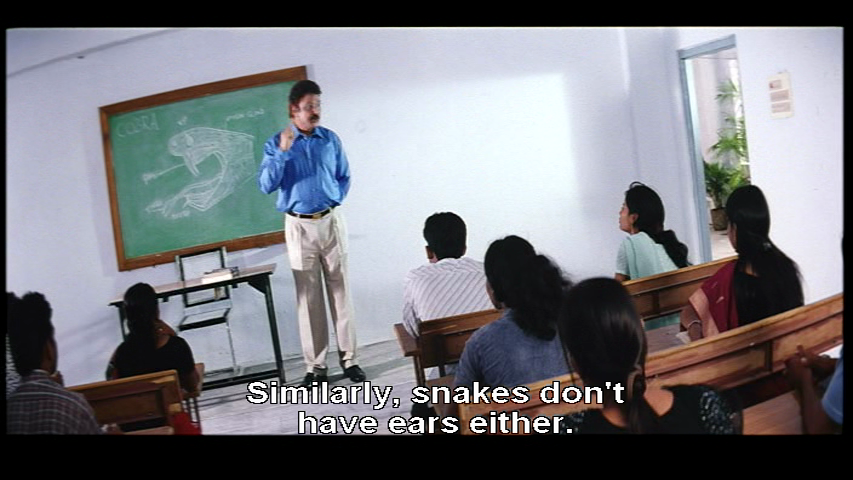
The film starts with Madhumati (Soundarya) handing in her thesis on snakes to her professor. I have to say she wouldn’t get very far with her thesis at my university – where are the three bound copies with the title on the side – hm? At any rate Dr Parthasarathi seems very impressed by her work as she has investigated snakes as, well, snakes, rather than as mystical powerful beings.

Madhumati is very much the scientist, pouring scorn on her mother as she celebrates the Nagachaturthi festival and is dismissive of her mother’s ideals and beliefs. So naturally Madhumati is appalled when she sees a TV interview with Dr Parthasarathi, where he discusses his belief in the divinity of snakes. Shocked, she confronts him and demands an explanation. The best he can come up with though is a ‘personal versus professional opinion’ argument which is really rather weak. He does become more decisive later on, but the initial impression isn’t one of a confident and scholarly ophiologist. Instead he comes across as patronising and smug, and to add to his general ineptness, he can’t draw snakes!

Madhumati says that she will believe in the divinity of snakes only if she has hard evidence. So her professor tells her about the sacred texts called the Nagashastras which contain all the evidence she wants, although how he knows this is rather questionable since these Nagashastras are hidden somewhere in the Kollimalai forests and no-one who went looking has ever returned. Madhumati is on a quest though, and determines that she will be the one to find the Nagashastras and maybe get a better grade in her thesis as a result.

Once in the forest Madhumati is immediately and rather fortuitously captured by the tribe that have the Nagashastras in their keeping. They are snake worshippers and have a chief who believes in the power of animal print fabric.

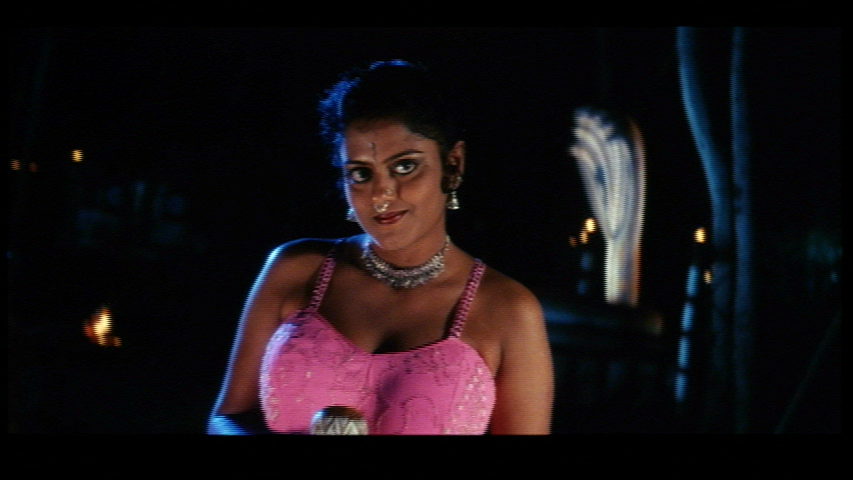
The sacred texts are guarded by a snake which for some reason seems to approve of Madhumati despite her attempts to get her hands on the texts and her often stated belief that snakes are just reptiles. The guardian snake appears to Madhumati in human form to warn her that it is in her best interests to leave as soon as possible. We know from jenni’s excellent guide as soon as Madhumati opens the door that Vaasukhi is a snake since she has the required less clothing and oodles of eye make-up. However, just in case we were a bit slow to catch on (like Madhumati) the hair is a bit of a give away.

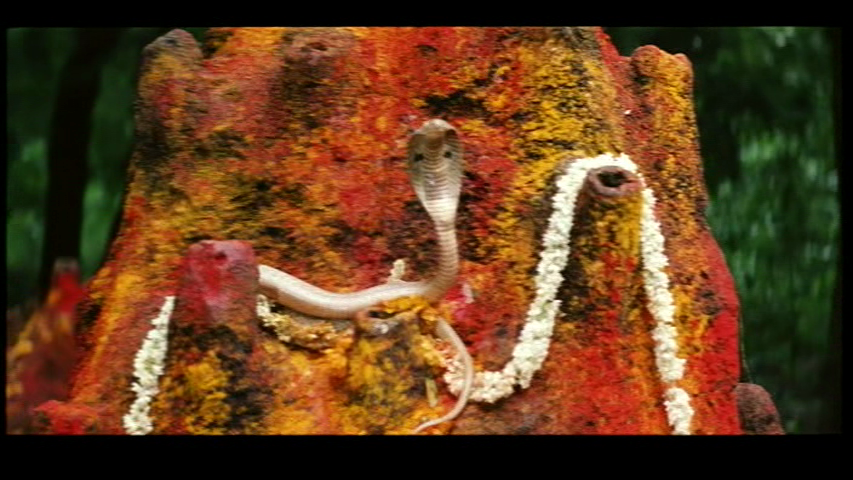
With this sign of favour from the local goddess, Madhumati is able to stay and continue her attempts to steal the Nagashastras. As a bit of a diversion, there is a strange tradition in the village that for any man to marry a woman he has to be able to beat her in a wrestling match. This gives us the only fight scenes in the film which are between local girl Chevandi and her suitors. Chief among these is Singam who finally does succumb to her kicks and body slams, recovering in time to be able to get married. This involves a ceremony at the Nagashetram where we first get to see the white snake as it blesses the happy couple.

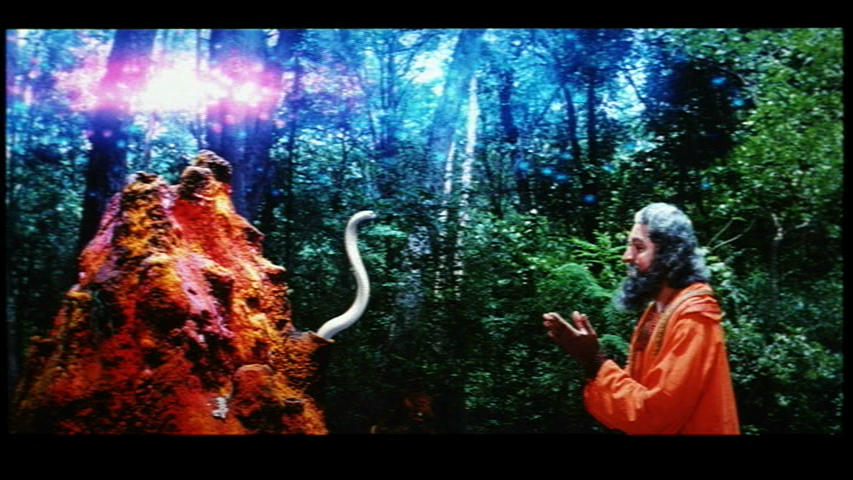
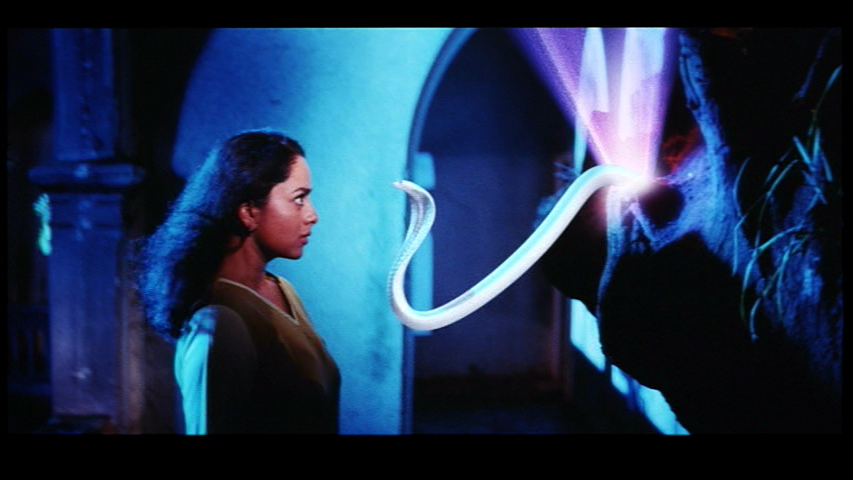
After the party a swami shows up and determines to prove to Madhumati that her belief in practicality and facts is misplaced despite her total rejection of him. He brings the white snake to him with his powers and Madhumati is suitably impressed. However as she steps out of his sacred circle, the snake suddenly turns and spits blue venom at her, which sets a small tree on fire. This rather disturbs her, although it seems to be more the personal attack that she is shocked by rather than incendiary venom. We learn by flashback that in a previous life, Madhumati killed a snake and the white snake now wants revenge. The swami gives her a sacred thread to protect her from utter calamity, which sounds rather useful until, as events unfold, we realise that perhaps his idea of utter calamity isn’t quite the same as Madhumati’s.

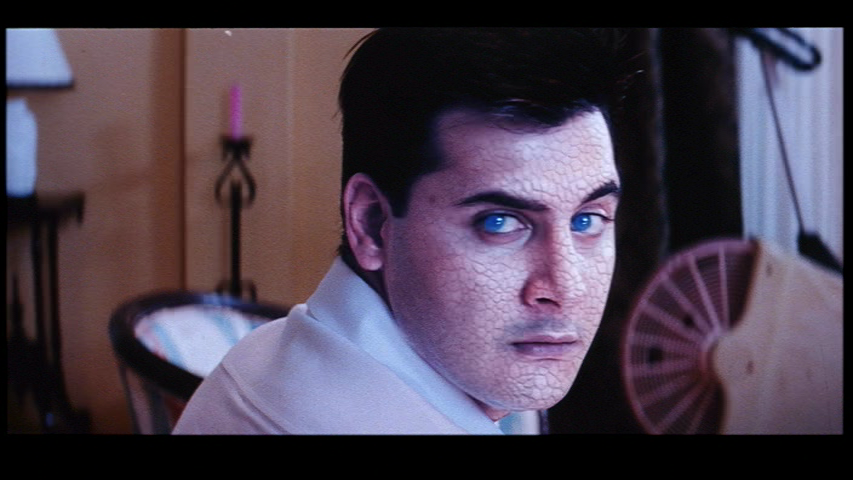
After trying to set her on fire, the snake next tries to woo Madhumati and turns up in a dream sequence/snake dance ‘item number’ as a Freddie Mercury clone in tight white singlet and red track-pants before changing into gold lame and black pleather. We know he is the snake as he has blue contact lenses and iridescent clothing as, but he’s just not very snake-like otherwise. The backing dancers however show great dedication to the art of the snake dance and are actually pretty good if not totally co-ordinated.

Before the dream sequence can lead to anything untoward, Madhumati is called back to the city. Here, the snake starts to truly plot revenge, appearing to her in the guise of her fiancée and popping up in unlikely places around the house. Since this leads to Madhumati crying and yelling ‘snake!’ every few minutes her family eventually take her to see a psychiatrist. His useful diagnosis is that she will be fine if she gets married and has something else to think about. Can it get any more ridiculous? Yes – at this point the white snake gate crashes the engagement and ends up killing Madhumati’s pet dog, while Pravin’s family disown him for allying himself with a woman who doesn’t believe in the divinity of snakes. As a final stroke of genius, the professor organises a conference where Madhumati can tell the world about her experiences and reveal the true nature of snakes – as spelt out below.

Snake are however vindictive, vengeful and able to impersonate anyone, so the white snake is able to totally derail the conference. There is then no other option but for Madhumati and her family to head back to the forest and find the helpful swami to solve the problem once and for all.

There are just too many ideas in here and as a result the plot gets messy and confusing. Writer Lalla Devi seems to want to add in as many snake film clichés as possible and it just doesn’t work. If the film had stuck to either a single reason for snake revenge or a science vs. divinity plot it might have made more sense, but the combination just doesn’t have a clear path to follow.

Soundarya is the best thing about the film, and she really works hard to make her character as convincing as possible. Abbas plays the role of Soundarya’s fiancée Pravin and is good when he actually has something to do. But his character has only a very small role and he tends to be overshadowed by Soundarya when they are on screen together. Jaya Prakash is fine as the village chief and seems to enjoy his role while Sarath Babu does what he can with the rather stupid professor.

There are some good lines in the film about science and divinity but they get obscured by the muddle of a plot. Also annoying and totally unnecessary is a comedy track involving the family cook and a thief who stole the cook’s money. This does at least provide a reason for Madhumati to have an escort to the forest but otherwise is just distracting. There is also a comedy scene with Brahmi during the snake conference which again doesn’t add anything to the plot and could very easily have been skipped. The side story with the romance between Chevandi and Singam is one which does work relatively well, but gets cut short, again to accommodate yet more unfunny comedy. The romance between Madhumati and Pravin is also skipped over very quickly and more detail of their relationship would have helped to explain why he was willing to defy his family over her. If only they’d concentrated more on the human relationships of the main characters and less on the comedy side-kicks this would have been a much more engaging film.

The effects generally work and the final face off between the white snake and the village snake goddess is a reasonable conclusion, although it’s still just a bit dull. The white snake is unusual though and it’s a nice change to have a snake seeking revenge as a man. Sweta Naagu gets 2 ½ stars, mainly for Soundarya and the white cobra.