Aidu Onda Aidu (Five times one is five) is a Kannada film by the director V K Prakash. Known mainly for his Malayalam films this is his first venture into the Kannada language and is being shown in Australia and New Zealand as part of the Indian Film Festival . The film is based on extracts from 18 Natakangal, a collection of plays by award winning Malayalam author and playwright Jayaprakash Kuloor. There are four short stories in the narrative linked together by the fifth tale of a director trying to make the stories into a film. While the individual stories are all very well told and beautifully shot, the linking narrative is less compelling and as a result the film doesn’t quite make a complete whole.
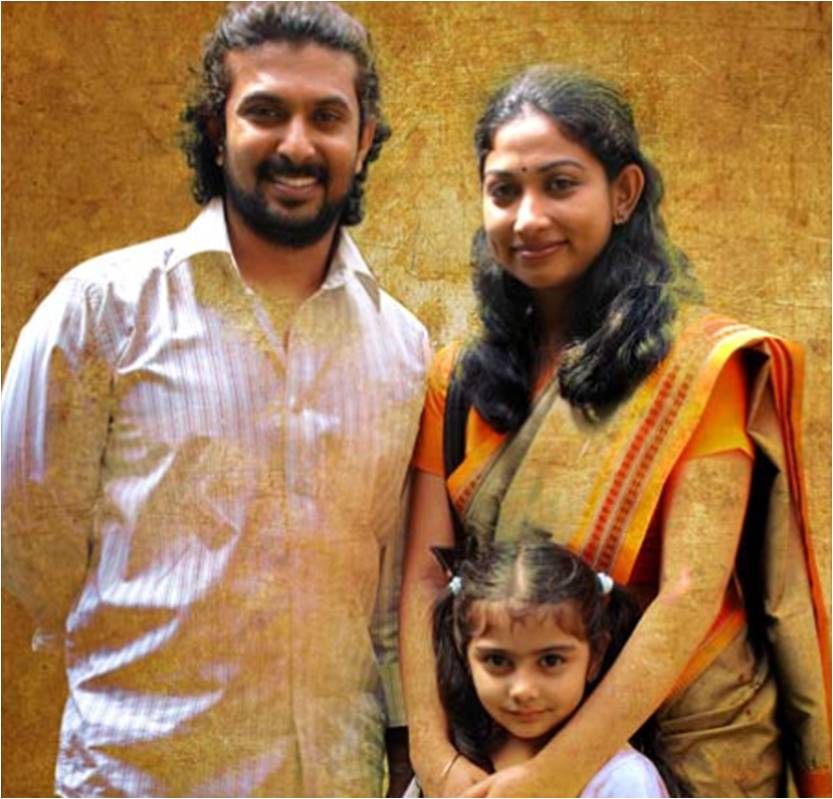
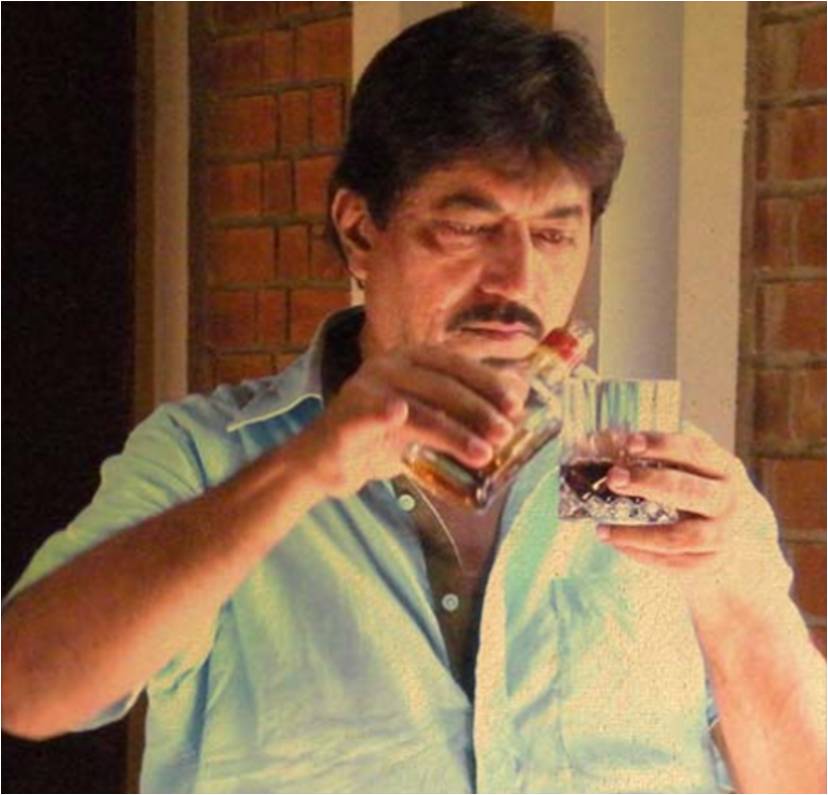
The film starts with the story of Kantha who is trying to make the film of his dreams. He takes a year’s unpaid leave of absence from his job and seems to be relying on his unrestrained enthusiasm and the support of his wife. I think that the actor playing the role of his boss is actually Jayaprakash Kuloor himself, but I’m not familiar with most of these actors so please excuse me if I’m wrong here. As Kantha tries to sell his story he runs into every possible difficulty with the various producers he meets. People like his story, but it needs more action, more gimmicks, more everything and of course this starts to take a toll on his enthusiasm. In the course of his struggles we see the four stories he is trying to film.
All the tales revolve around the relationships between a husband and wife and although each explores different facets of the marital relationship, at their core they involve communication and the consequences of misconception.
The first story is a charming tale of a new bride and groom which has plenty of humour. This is told with a very light touch and the two actors appear fresh and natural in their roles. This song is one of my favourites in the film as Gowri is making yet more payasa for her husband Lokesh.
The next story is a simple tale about the effect of a mirror on a poor couple who have never seen their reflections before. While it’s perhaps hard to believe in their naivety, the story is more of a parable about the effects of jealousy on a relationship. Again the story is told with plenty of light comedy and the song by the pedlar who gives them the mirror is excellent.
The third story is quite different, although it still has at its core the relationship of a husband and wife. This time the tale is much more realistic with less humour and as a result breaks into the almost magical atmosphere created by the other two. The final story goes back into more of a fairy tale like tone and focuses on the rekindling of a relationship during the rainy season. This allows the film to end on an optimistic note, albeit a somewhat soggy one.
These four stories within the main narrative succeed in different ways and the use of a number of directors of photography and editors helps to give each a distinctive feel. The songs in particular are nicely integrated into each and work very well. There is a lot of comedy in the stories although this is very gentle and grows out of the various relationships depicted. I have to admit I don’t know many of the actors here but I was impressed with the performances and thought they all fit their resprective roles well.
The linking story is kept brief and somewhat pedestrian which is perhaps why it doesn’t grab my attention in the same way as the other four tales. There is little exploration of why the director feels compelled to tell these stories and there seems to be a few wasted opportunities to further explore his own relationship with his wife. This is frustrating, particularly when compared to the other short stories which are beautifully complete in themselves and yet allow for a wider interpretation of the relationships portrayed. Kantha is shown as having an early love of cinema and is childishly enthusiastic, but that doesn’t explain why he goes about his film in the way he does. His wife has the potential to be an interesting character as she is prepared to stand by her husband and help him realise his dream despite the hardships incurred, but her motivation is never really fully explored. More development of both these characters would have made their story much more compelling and provided a firmer foundation for the other four tales.
While overall the film is funny and charming, the different stories are quite disparate giving a slightly disjointed feel. A more detailed linking narrative would have made this a much more cohesive film as there is so much else which is excellent. The short stories themselves all are rather fanciful and this is another factor which separates them from the main theme which is very much set in the real world. Its still a film I would recommend watching for the music, good song picturisation and impressive performances from the large cast. This film was a good start to the festival for me . 3 1/2 stars.
Whatever you do, don’t confuse this classic Manmohan Desai masala treat with this.
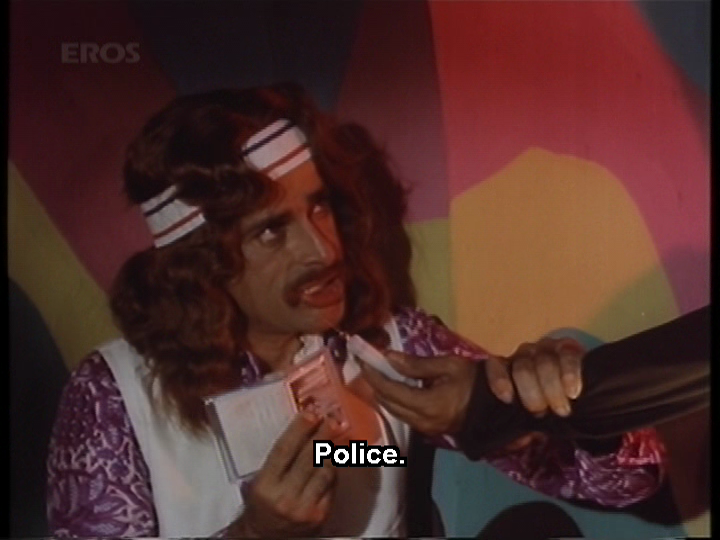
(General Beverage Warning: We advise persons of a nervous disposition not to watch the clip and also warn anyone holding a beverage to put it down as we do not wish to be responsible for any damage to electronic devices.)
Suhaag opens on a dark and stormy night, as Durga (Nirupa Roy) gives birth to twin boys. Denied legitimacy by their father Vikram (Amjad Khan), Durga is forced onto the streets but not before vowing her sons will take revenge. In desperation Durga follows Jaggi (Kader Khan), the first man she meets straight to a brothel where he sells her to the madam. We don’t know why anyone would want a crying, knuckle-biting nahiiin-ing prostitute but they seem to. Her first client is an undercover (really!) police officer who bungles the arrest, allowing Jaggi to escape with one of the babies. So now we have a villainous father, virtuous mother and twins separated at birth!
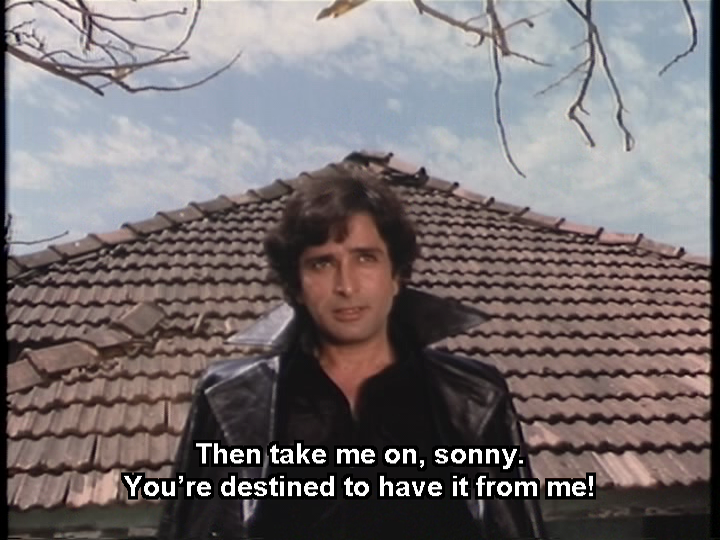
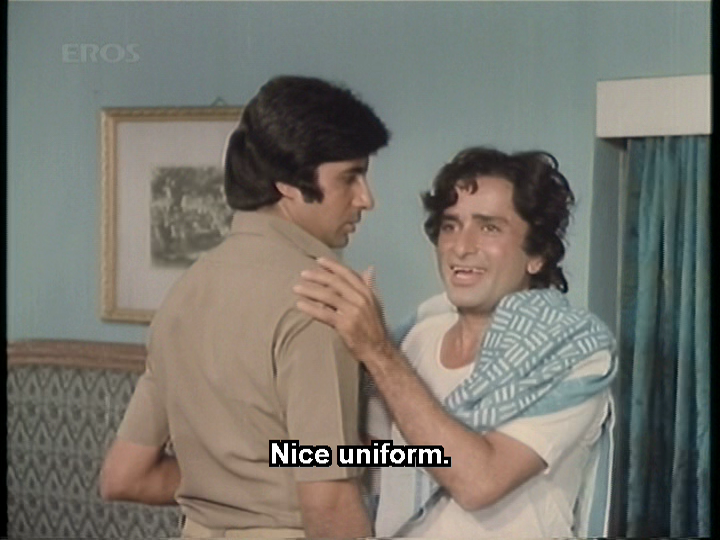
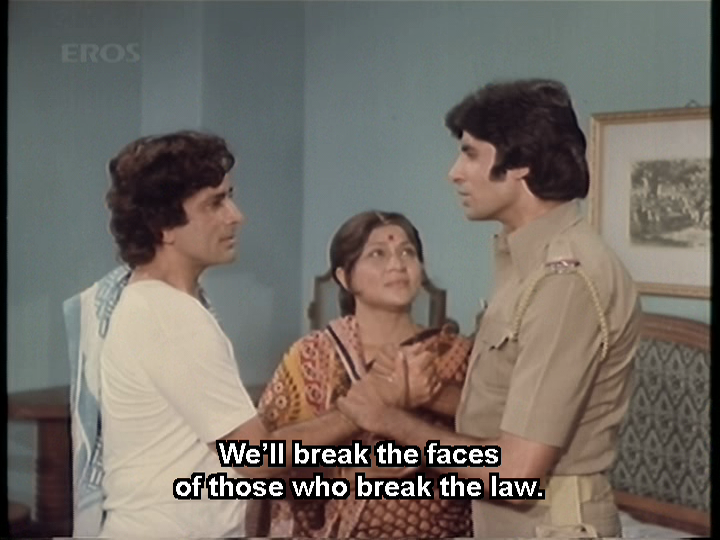
Years go by, depicted in a neat montage. Amit was sold by Jaggi to a begging gang run by (according to the subtitles) Pascal (Jeevan) before becoming the chappal obsessed Amitabh. Kishan grows up with the support of his mother and the helpful Inspector Khan. After many years, the brothers clash in a fight sequence with lots of banter and silly choreography. Jennifer Kapoor had fun playing dress-ups with her husband as Shashi models an excellent superfly pleather suit as well as his police uniform. Amitabh wears his neck scarves and white flares with customary panache.
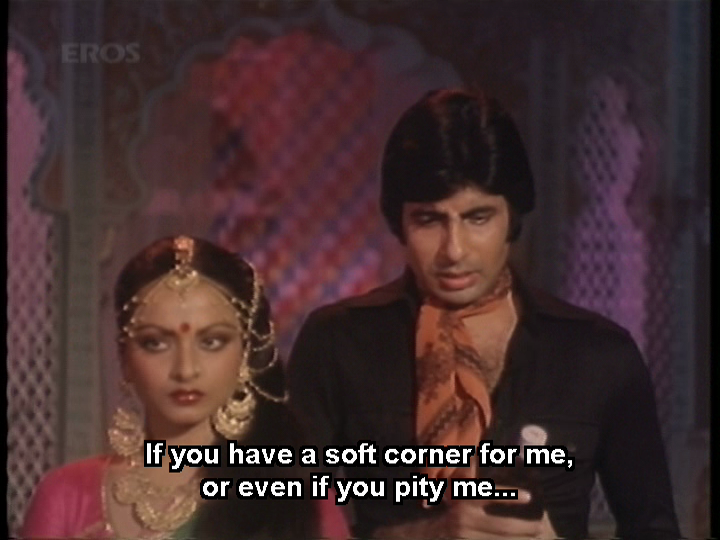
We learn that Kishan is a ranking police officer, while Amit is a hard drinking petty crim with a good heart but weak resolve. Amit is in love with Basanti (Rekha) and spends a lot of time disrupting her workplace – the local brothel. These two really do have some chemistry. Check out the expressions in this song as he reminds her she can’t dance forever so she may as well pick him.
In a raid to track down cop killers, Kishan invades Basanti’s brothel, and rescues Amit into the bargain. The men quickly become friends. Kishan is cranky and intolerant, used to giving the orders, and likes having another guy around to absorb some of his mother’s fussing. Amit is drawn to the warmth of a family and home, and sees what he might have had if not for his orphan’s fate. Durga does lots of pining over her lost son as she stuffs food into Amit and Kishan. There was no significant song, birthmark or locket to help identify the lost boy, so there was ample opportunity for the Coincidence Department to run amok before the truth came out.
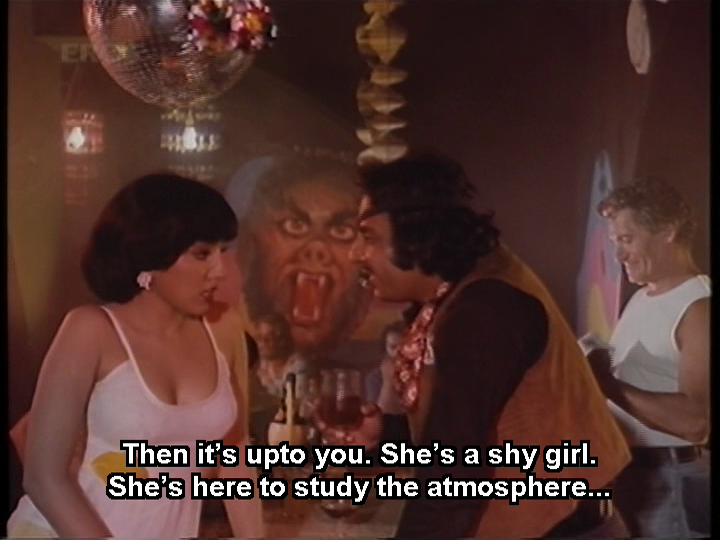
Kishan goes undercover to a disco run by Gopal (Ranjeet in an eyepatch!) and there meets Annu (Parveen Babi). He takes his policing very seriously, even when Boney M’s Daddy Cool kicks in.
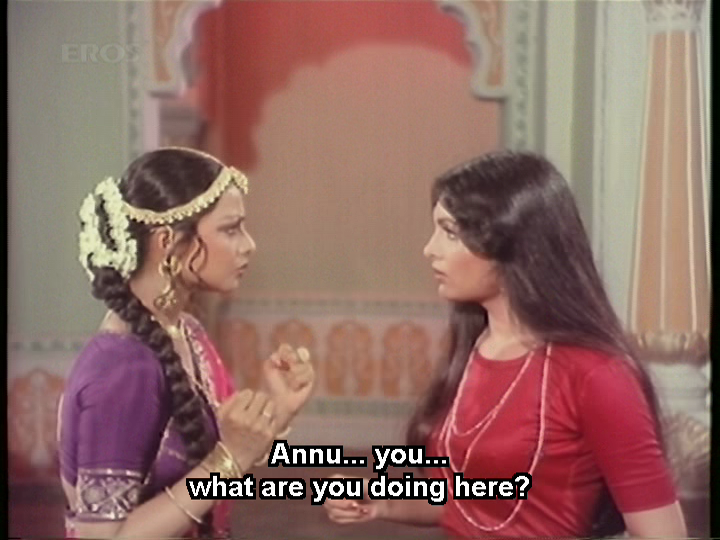
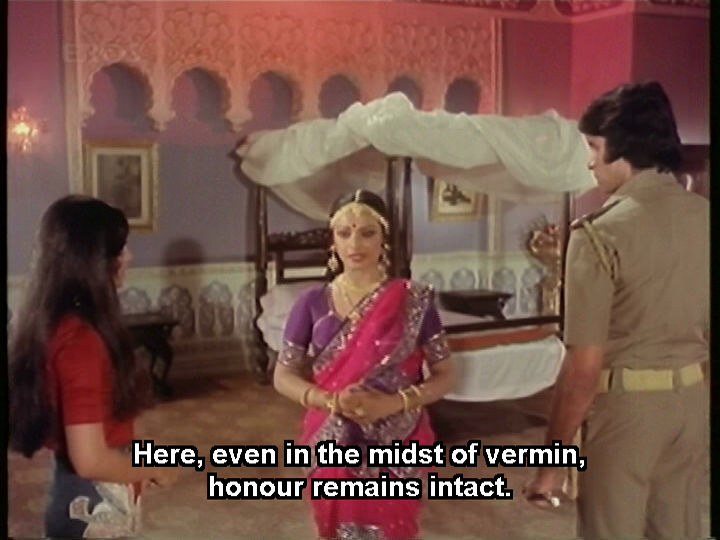
Many masala laced incidents ensure that Annu and Kishan are headed for marriage. Amit acts as go between and Amitabh gets to show his comic flair in these scenes as he tries to please Kishan and his adopted Ma. It wouldn’t be complete masala without another set of separated siblings – and guess who Annu’s sister is? Basanti!
The heroines are minor characters, but do have some important scenes. Parveen is the lightweight – she doesn’t do much other than fall for Shashi and play a fun but unconvincing drunk scene. Rekha’s Basanti is shown as a more complex woman and one who could be the perfect life partner for Amit. When he needs to clean up his act and stop drinking, he relies on her to help him through the first night of sobriety.
She isn’t a plaything for men despite her occupation and has her own very good reasons for working in the brothel. Nirupa Roy as Durga is a frustrating character. On the one hand she is strong enough to be a single mother and raise a successful son, and imposes her will on the impulsive Amit. But she is so spineless and wishy-washy when it comes to Vikram, it just beggars belief.
The film plays with many masala conventions (read this excellent post by Beth at Beth Loves Bollywood). Amitabh and Rekha appear as Annu’s Punjabi brother-in-law and sister and no one recognises them, Amit directs dialogue at the audience, Shashi flashes a smile at the camera after meeting Annu. There are lots of teasing references to family in the dialogue – Amit calling Durga Ma, Vikram calling to threaten the zealous policeman and identifying himself to Kishan as ‘tumhara baap’, and a whole lot of bromance. Vikram has a very ornate lair replete with design features like a dragon wall decoration and a stuffed tiger – although it suffers from some serious design flaws including being above ground and having abundant natural light which isn’t really lair-like. He has a kind of ticket booth in the middle of the lair, and retires behind the smoked glass to deliver his edicts. Who thought that one up? And there’s even some extremely dubious Bollywood Medicine.
Things accelerate once Vikram decides to eliminate the pesky policeman Kishan , and hires Amit to kill him. Jaggi is back on the scene, and it turns out Gopal is his son so we have the whole gamut of family drama. There is a pivotal incident at the Navratri celebration which results in Kishan suffering chandelier related blindness, and demanding Amit avenge him.
Kishan refuses to give up despite his injury, although we did wonder how helpful Amit’s hand signals would be to a blind man:
All the tangled threads start to draw into one gigantic ball of string as the film nears its end. Why Durga would be so complaisant about taking Vikram back into her life is beyond us, but that is truly not the strangest thing that happens. Amit and Kishan discover their relationship, and Durga cries. We learn how Gopal lost his eye, Annu and Basanti are reunited, helicopters, explosions, Vikram reveals his true colours before repenting, Durga cries, Pascal schemes, and Amit and Kishan kick some villainous butt. And don’t forget the dubious medical procedures. Did we mention Durga cries?
There is a pleasing symmetry in the love stories of Amit and Basanti, who might represent the better versions of Vikram and Durga if things had been different, and of Kishan and Annu who are every filmi Ma’s aspiration. The ending of the film resolves most of the loose ends and there is a sense that some justice has been served even if there are questions as to how and why and WTF?
The soundtrack is vintage Laxmikant Pyarelal and their lush big band sound is perfect for both the rollercoaster plot twists and the more intimate moments. The songs are excellent and serve to further the story so are an integral part of the film, and the stars all seemed to have a great time performing them. The set design and costumes reflect a big budget and minimal restraint, which is very pleasing to see!
Temple says: The first time I watched Suhaag I was mildly annoyed by what seemed to be excessive coincidences. Once I thought about it further I have come around to thinking those coincidences help give the film a satisfying internal logic and structure as things link together. As I wrote that I pictured a helix…Good heavens! It may be Masala DNA! It does actually make sense to me that if you live and work in one area all your life then you do know everyone or at least cross paths with the same people over and over. Coincidences in this film arise from people and what they know rather than lockets and birthmarks, and I enjoyed seeing the minor characters having their own stories going on throughout the film. Most of the characters behave in ways that are consistent with their earlier actions and so they have a whiff of credibility, albeit in bizarre circumstances. Even Durga behaved consistently, although I do think she was stupid about a few things. If I have a disappointment it is that Parveen’s character was dull but there was so much going on, I don’t think there was room for more complexity. I liked the Amit/Basanti relationship as the writers gave Rekha a lot more to work with than they might have, Amitabh was in his element and they got a couple of great songs into the bargain. Rafi’s voice was perfect for Amit’s mix of sentiment and cheek. I am a fan of Shashi Kapoor and his pairing with Amitabh (aka the Shashitabh) is a delight. It’s strange to think that this frothy entertainment released in the same year as the much darker and also amazing Kaala Patthar. The heroes get some snappy dialogue (Amit and his chappals is just classic), and the humour is actually funny. That’s reason enough to praise Manmohan Desai! I have to admit that I didn’t think twice about the ‘only in Bollywood’ medicine, or villains escaping a blazing warehouse in a boat…on dry land… so perhaps my masala consumption has had a lasting effect. Nevertheless, I have watched this film so many times and I always enjoy it and never fast forward. I give Suhaag 5 stars!
Heather says: Suhaag isn’t one of my favourite Shashitabh films, nor do I think it’s one of Manmohan Desai’s best. This is despite the fact that it has every single Masala plot point possible, which really should ensure a great film. Perhaps it’s the sheer number of co-incidences which litter the story at every turn, or that occasionally it feels as if the actors have played these roles so often that I’ve seen it all before. But it just doesn’t work as well for me as many of Manmohan Desai’s other excellent films. My biggest problem with Suhaag however is the very dodgy medicine when Kishan is blinded. Now normally I can just brush this off and treat the absurdness of typical Bollywood medicine with the disregard it deserves, but I just can’t in this case. It really annoys me! My subtitles call Kishan’s problem cortical blindness, which should mean that the part of the brain that sees is not working. In which case an eye transplant, even if that were possible, would do no good whatsoever. Temple has told me that her copy calls it corneal blindness which is just as ridiculous for a whole heap of different reasons. Even with careful listening I can’t work out what the doctor says but since his other pronouncements which follow are also totally anatomically and physiologically incorrect it doesn’t really make any difference. I’m not sure why this particular Bollywood medicine irritates me so much but it really does taint the whole film for me, no matter how many times I’ve watched and tried to ignore it.
Despite the problems I have with the second half of the film, there is still plenty that I do like. The costumes are fab and I love the interactions between Amit and Basanti. For me Rekha is the standout in Suhaag with spot on characterisation. She is as dazzling as ever, and the film comes alive whenever she is on screen. Shashi and Amitabh are always watchable together and make the most of their partnership particularly in the comedy scenes. The inclusion of more than one bad guy and so many threads to the story ensures plenty of Masala mayhem and I do enjoy the first half of this film. I just skip the rest. 3 ½ stars from me.









 Cinema Chaat