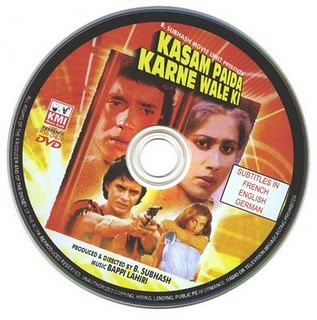
Kasam Paida Karne Wale Ki

I was meant to review another film this week, but I misplaced the DVD before I completely finished my post and it all just got too hard. As a result, you’ll have to wait for a sensible review. And it might be a very long wait. Looking for a substitute film, I decided I wanted something I wouldn’t feel obliged to think hard about, something with some sparkle and a lot of dancing. But I watched this instead.

The super groovy psychedelic titles seemed quite promising! Also, Amrish Puri.

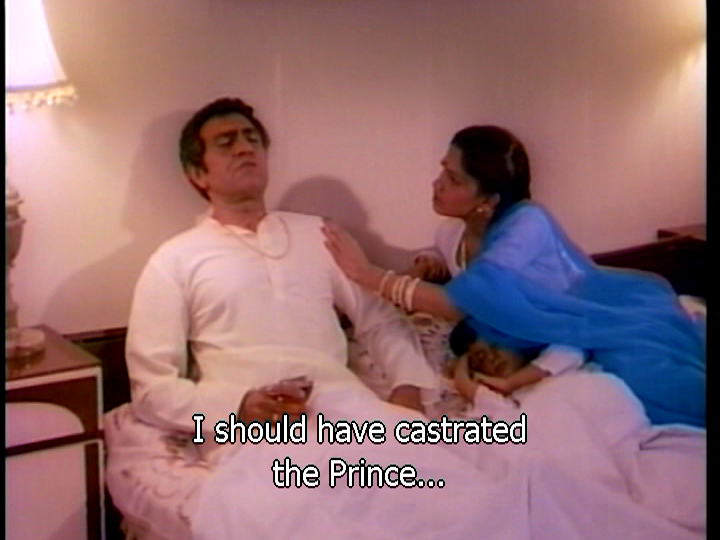
The story opens with a child, the orphaned Prince Satish, being bullied by his uncle. The kid is the heir to an estate held in trust until he turns 20, but guess who has other plans? Evil Uncle Amrish Puri in some jaunty neckwear! I have to say the water torture was mild in comparison to any day at the pool for me and my brothers so I didn’t have immediate sympathy for the young fellow. Then the use of snakes as training aids turned the tide.
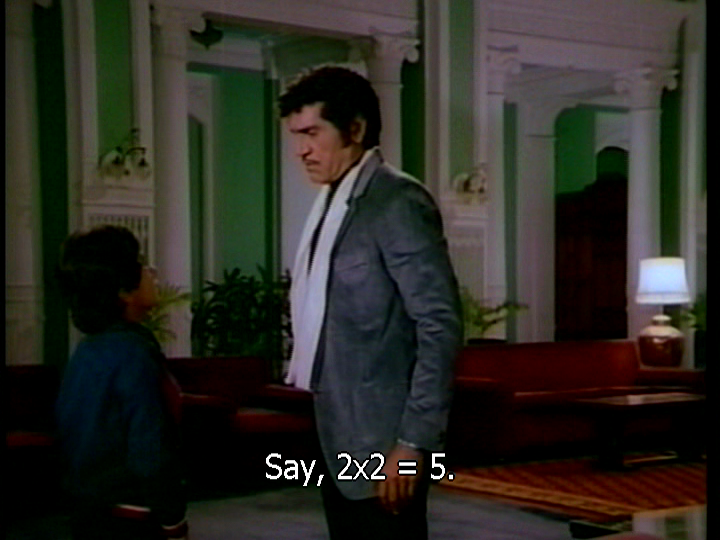
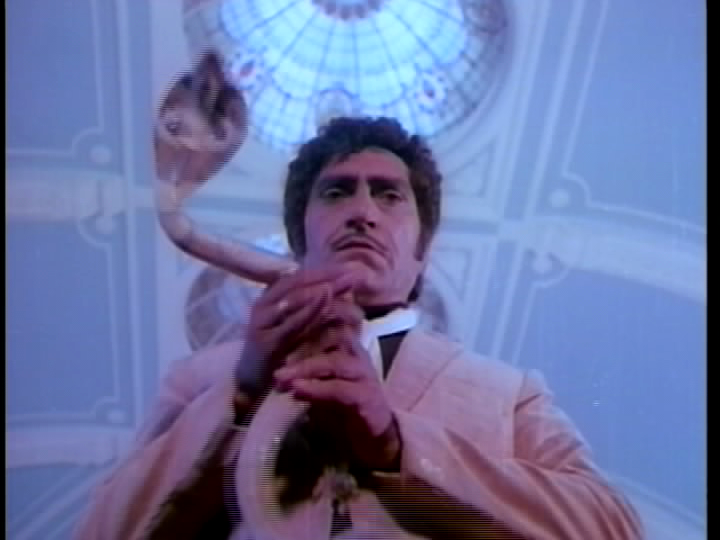
Satish is reduced to a snivelling wreck under all this duress, and is not improved by turning into Mithun Chakraborty. Years have gone by but still Uday Bhan Singh is terrorising his nephew. I really would have expected more efficient villainy from Amrish, but then the whole film would have been mercifully brief. Still, Satish is widely regarded as a drunken, insane rapist by the time he is in his teens.

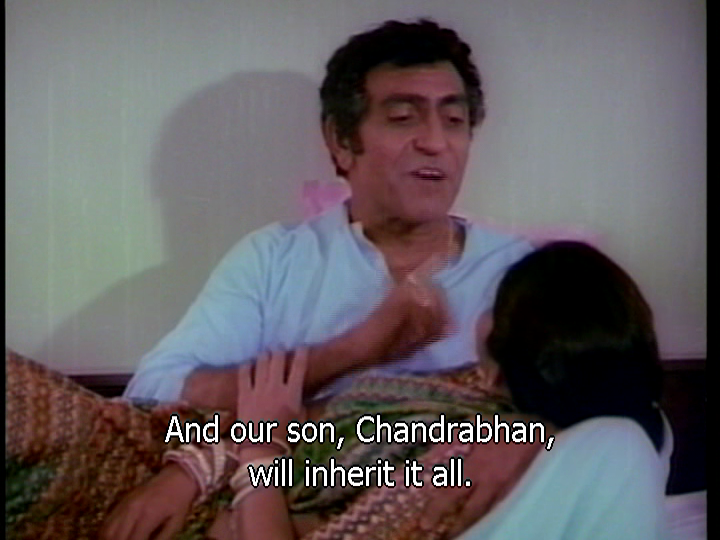
I found the Uday Bhan family conferences of evil quite amusing:
Knowing that no good girl is likely to marry her Prince, his faithful maid tees up a wedding with the first likely orphan they meet. Sadly, the orphaned Aarti (Smita Patil) is a thief and intends to steal away before the wedding is consummated and take all the cash and jewels she can carry. This is not such a bad thing considering the helpful advice Satish receives about women:
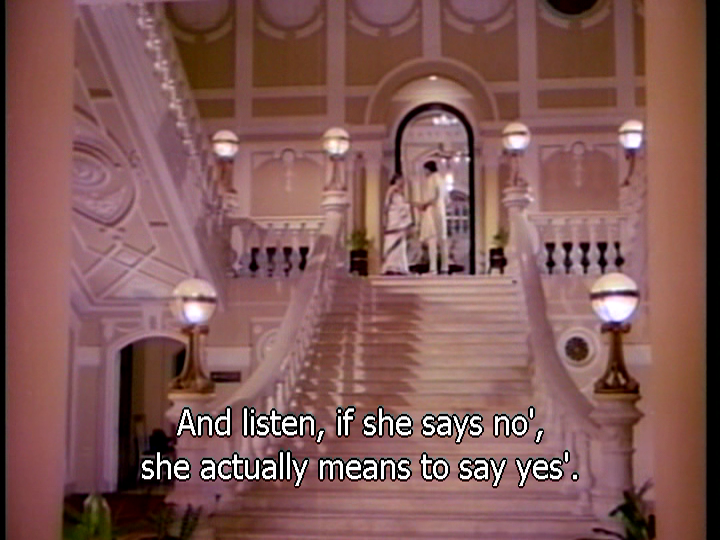
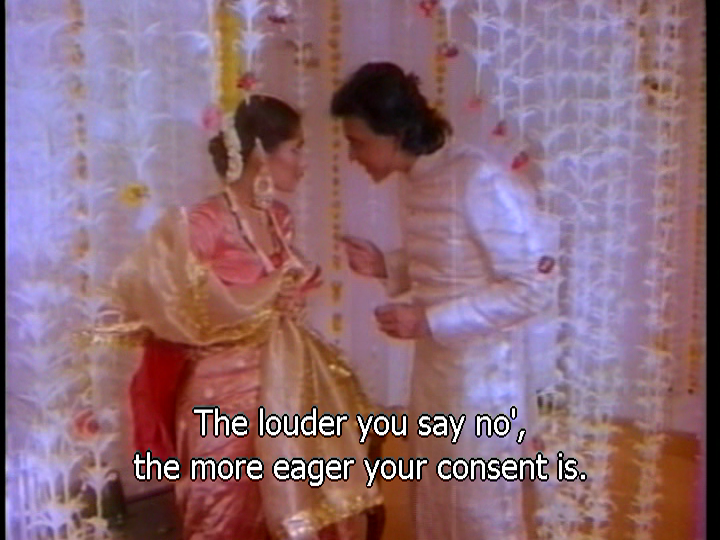
WTF?

It’s obvious that we are supposed to believe Satish is such a halfwit that he has no idea his wife really might not want him pouncing on her, but it’s just so badly acted and written that I felt a bit queasy. She….well , I suggest you fast forward past the ‘rape or is it romance?’ montage, bypass blossoming True Love,  continue past the revelations and betrayal and rejoin the film when Satish is long dead (Amrish Puri has knife skills), leaving Aarti with a son who looks eerily as though he will soon be played by Mithun.  Although, you would then miss an excellent attempt by Smita to use her own Eyeballs of Hate (TM PPCC) against Amrish Puri – go girl!
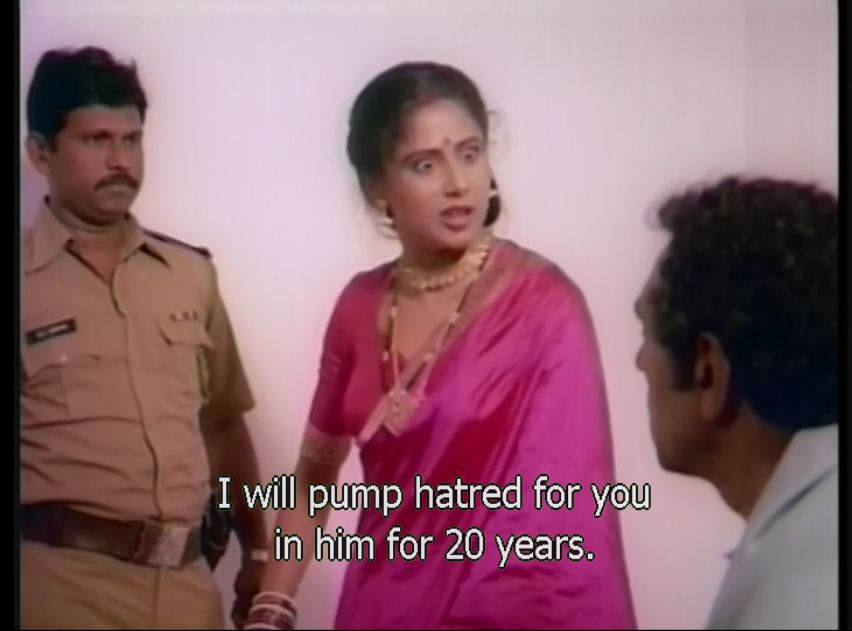
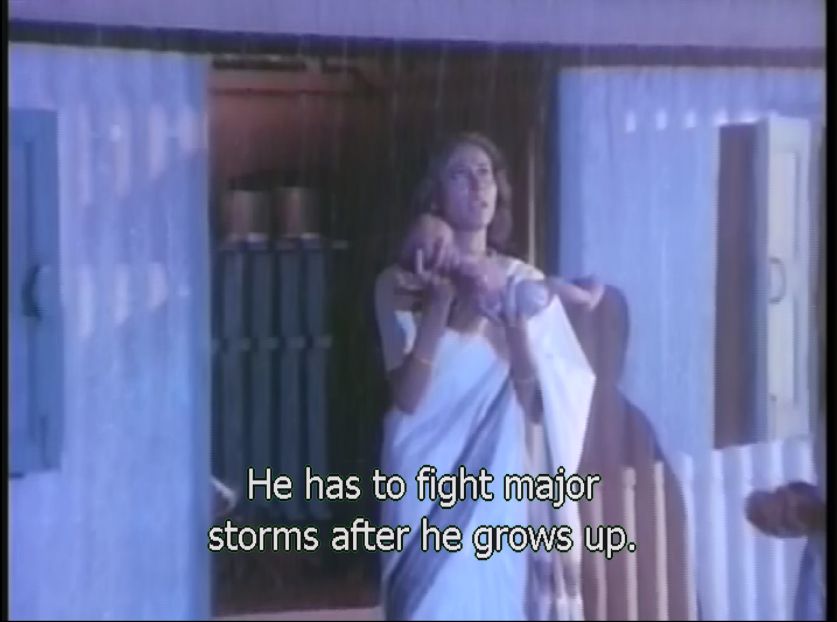
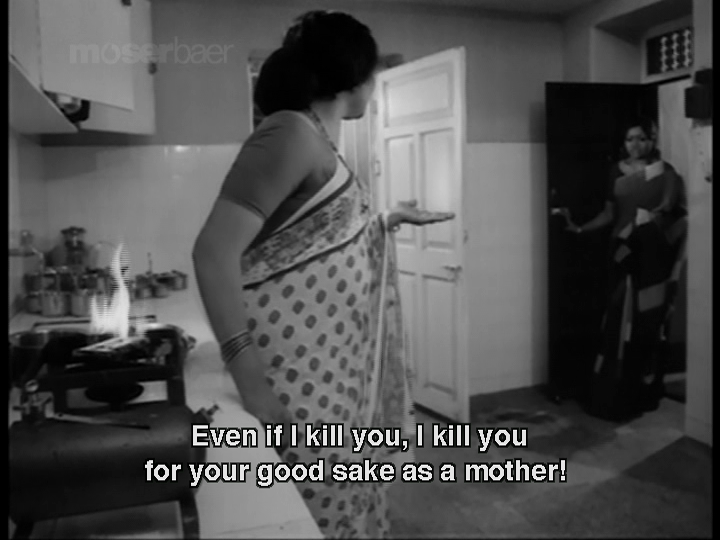
Aarti is not a soft mother figure – she is a tigress. She tells Avinash that if he ever loses a fight, he won’t be able to call her Ma. She really is a vengeful woman. Aarti is struggling financially so Avinash takes a job as a drummer (it is never really explained) to start earning. It is a bizarre career move but it is lucky in one way as it means lots of dodgy songs.

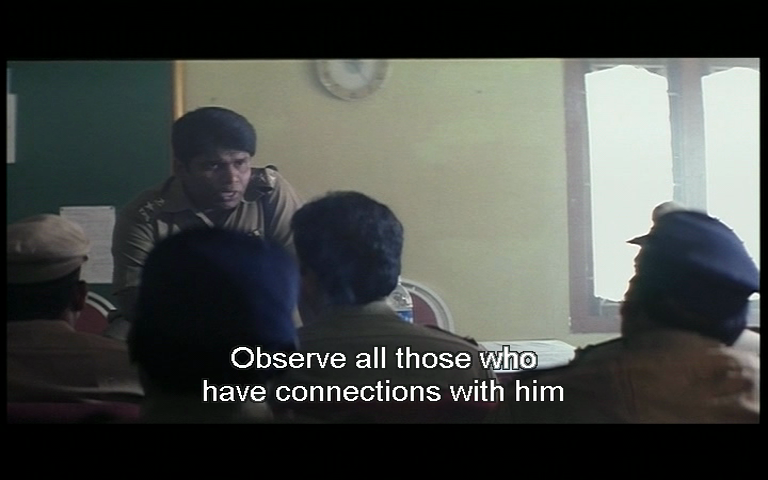
It’s at this point my DVD seemed to be possessed. You might remember that it took multiple DVDs and wily tactics when Heather and I watched Surakksha and it really seems that the universe is determined to protect me from Mithun. I eventually got to see the rest but couldn’t screencap, and the picture quality was woeful. However – the disco part of the revenge psychodrama kicks in from here so you can have some lurid songs to keep up the pictorial content.

Naina (Salma Agha) is your part time Disco Diva and full time student. She and Avinash bond after he saves her from a gang of drunken would-be rapists. Perhaps he is repaying the universe for his father’s misdeed? I doubt it’s anything that meaningful.

Mithun’s dancing highlights just how talented Michael Jackson was!

Avinash and Naina fall in love, of course, perhaps because they both have hideous fashion sense and share a love of white pants. Aarti hasn’t raised her son to be a loverboy and opposes the match until such time as Avinash settles the score with evil uncle Amrish, although she hasn’t told him about his family yet. But the past can never remain buried, and the truth comes out and then of course vengeance is sworn.

I’ve mentioned before that I like it when screeds of argy-bargy can be condensed into a song, and apart from the threats this also has scary outfits. I get the impression that there were different people directing sections of the extras who were supposed to be party guests. Some are having a toe tapping good time while others maintain the traditional glaze of boredom. And what better way to alert Uday Bhan Singh of his imminent doom than this?

After a court scene full of shouting, staring and more swearing of vengeance, Uday Bhan and his horrible son, Chandra Bhan get horribly drunk and sing. Then junior rapes a local girl as his father shoots the girl’s brother. It’s perfectly obvious they are vile people, and I don’t think all this was needed. I do feel B Subhash thought he was making a much more worthy film than this turned out to be, but struggled to interpret the story into an original film format and fell back on badly used clichés.

By this time, my DVD had only sparse subtitles and Naina’s name changed to Neena. She has been hanging around, adoring Avinash from afar, and goes undercover to get the information he needs (whatever that is) to crush the enemy. I‘m not recommending the sailor suit for potential Bond girls among you – it’s a hard look to carry off. She also has a ridiculously flat clutch purse that somehow contains a gun and a tape recorder and some kind of truth drug.

Chandra Bhan is a stupid as he is horrible, and falls for her tricks. The women then get together to map out the final revenge. All of a sudden Aarti seems to like her prospective daughter in law!

The evil Singhs get their come-uppance starting in a neat replay of the fake rape stunt that ruined Satish’s name. The film is effectively over now despite all attempts to add more drama, but it drags on for another 30 minutes and two more songs and a few explosions.  The final scenes are are most notable for the wardrobe, the Michael Jackson inspiration, the crappy effects and a chance to take one last look at some of the fab sets. Salma Agha is supposed to turn into a kickarse heroine but looks disoriented and more concerned about her lipgloss most of the time. Smita Patil gives this film a lot more than it deserves, and maintains her rage right til the end.

There was lots of significant symbolism, more injustices that had to be avenged, recurring motifs, but I stopped caring as soon as Mithun tried to ‘Thriller’ Chandra Bhan into madness. I can understand why the undead backing dancers were a bit messy, but really the choreography is terrible!

See this film if you really have to see every Mithun film ever made, have a penchant for horrible 70s/80s fashion, can tolerate Bappi Lahiri’s misuse of Billy Jean, or want to see Amrish Puri in a bowtie. Can I even give this a star rating? I don’t want to mislead anyone into seeing this film because it really is dire, and not So Bad It’s Good; it’s just Bad. And not in a Michael Jackson Bad way. There are too many men in tight white pants. Maybe 2 stars –for Smita Patil, Amrish Puri, and their duelling Eyeballs of Hate.

Athu Oru Kanakalam

Athu Oru Kanakalam has all the right ingredients to be a good film, but despite an acclaimed director, an interesting storyline and impressive performances from the cast it doesn’t all come together as it should. The film begins by exploring the issues of class and the pressure of social expectation which is interesting and engaging, but then it loses direction after the interval and the end is basically a disappointment.

Srinivasan (Dhanush), nicknamed Cheenu, is the only child of middle class parents and spends his days lazing around with his friends after finishing his degree. He is lazy, spoilt and petulant seemingly as a result of his mother’s indulgence. His father Ganeshan (Delhi Ganesh) is a strict disciplinarian with a tendency to violent outbursts as he berates Cheenu for his apathy and lack of enthusiasm with job hunting. Cheenu insists that he is nothing like his father and is obviously afraid of him, but as we see when he is out with his friends, he has exactly the same violent temper and tendency to strike out when he is angry. Cheenu’s mother is sidelined throughout the film and rarely gets a chance to speak. Mostly she is helpless and unwilling to intervene between father and son.

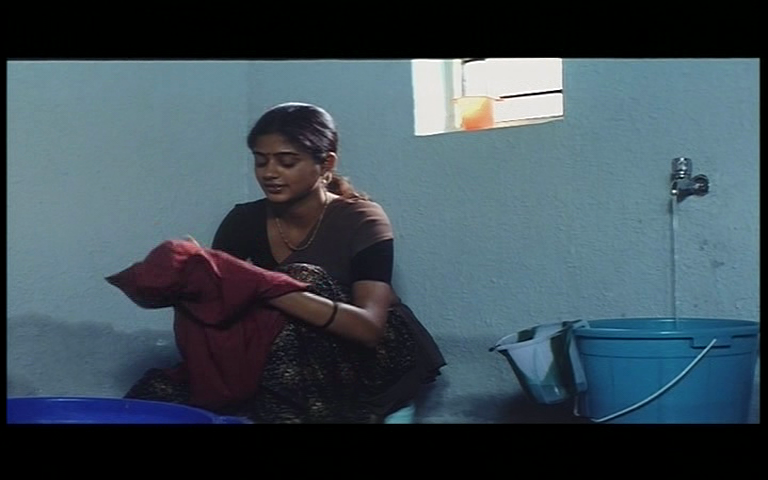
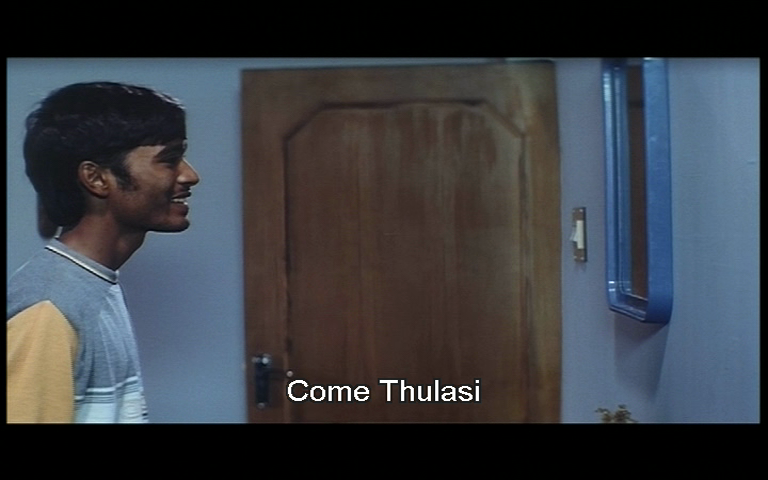
When his parents go away for a few weeks, the family maid Satya (Kalai Rani) is unwell and sends her daughter Thulasi (Priyamani) in her stead. Cheenu and Thulasi were friends as children and while Thulasi is obviously still attracted to Cheenu, he initially doesn’t recognise her. Although younger, Thulasi is more mature than Cheenu. She is also very aware of her social status and despite her attraction to him acts like any proper young servant girl should. On the other hand, he behaves like any typical young man when faced with a pretty girl, and his gauche reactions seem very natural.

In the space of the few days they have, they end up falling in love and into a committed relationship –this is the dream period of the film title. Balu Mahendra shows their romance developing in a song and doesn’t spend much time on it. It’s obvious they are in love and Cheenu is determined to marry Thulasi, we don’t need to know any more about it than that. This is a lovely song, and I’m sorry I can’t find a better quality version.

Cheenu tells his friends a little about his romance, but doesn’t introduce them to Thulasi and actually hides her in the bathroom when one of his friends visits. He seems ashamed of his relationship with a girl from a lower class. It’s hard to decide if this is also partly because he is trying to hide the relationship from his father as Cheenu is very well aware that he will not approve. The difficulties of an inter-class relationship are well explored and developed despite the initial romance not being given the same treatment, and the pair’s behaviour is realistic in this context. The development of Cheenu’s character here is convincing and Dhanush is believable as the young man realising that he will have to change his ways and actually get a job if he wants to marry against his family’s wishes. Priyamani is exuberant in her role as Cheenu’s lover and the change in her outlook as she realises the obstacles they have to face appears genuine and natural.

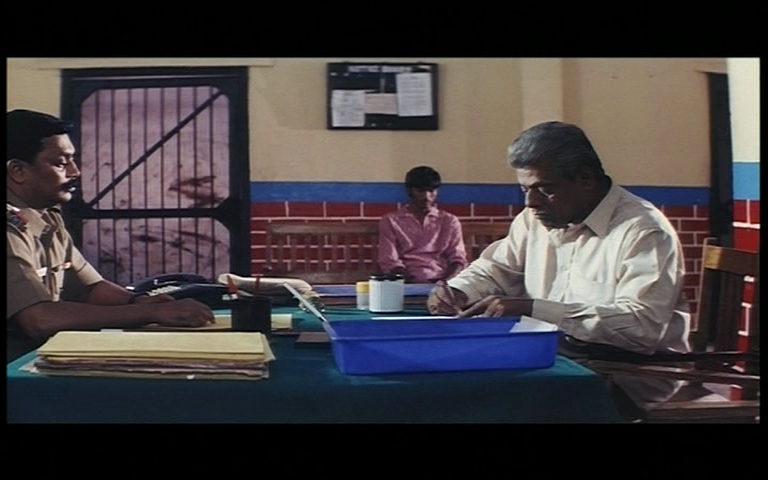
When Cheenu’s father does discover the relationship his reaction is predictable and dramatic, and Cheenu responds in kind. He vows to marry Thulasi despite the opposition from their respective families and the disapproval of his friends. It looks as if the romance may be the making of Cheenu but before he can follow through with his plans, he ends up in jail after a night out drinking with his friends.

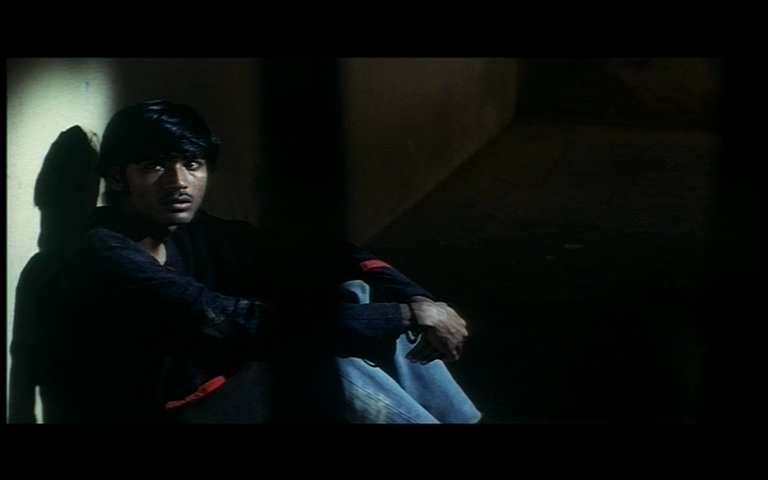
When Ganeshan decides to teach his son a lesson and leave him in jail overnight his plans go badly wrong as Cheenu kills another prisoner and consequently receives a prison sentence for murder. I like the fact that although the prison term is obviously a plot point to keep the lovers separated, there is a strong emphasis on the consequence of violent behaviour. Despite the death being an accident, Cheenu has to acknowledge the result of his action and although unapologetic, he accepts that he has to pay for his mistake.

From such a promising beginning, the second half of the film loses the realism that kept the story interesting. The director starts to rely on prison clichés with brutal film guards, sympathetic fellow prisoners and a fairly ridiculous fight scene. Naturally there is an opportunity for Cheenu to escape just when he has found out that Thulasi is in dire straits and he absolutely has to go to her. Another problem is that Thulasi’s role is greatly reduced and she only appears on screen to cry and plead with various policemen and prison guards. Priyamani is wasted in these scenes and although she does her best there is very little she can do to make her character less of a caricature. The end is particularly disappointing as the film seems to be building up to a dramatic conclusion that never actually happens.

Despite the issues I have with the second half of the film, there are some good points. Dhanush does an excellent job of conveying the fear and trepidation of a young naïve man sent to prison. Cheenu’s interactions with the other prisoners are an interesting contrast to his relationship with his father and despite the clichés the prison scenes never descend into farce. There are quite a few jokes referring to the skinniness of Dhanush throughout the film, and most of the humour has a light touch. It is also good to see intelligent police officers who don’t search aimlessly for an escaped prisoner but actually investigate and have a reasonable plan to capture Cheenu.

The music by Ilayaraja is beautiful and haunting but is used mainly as a way to show some of the story: the childhood friendship between Thulasi and Cheenu, their romance and Cheenu’s relationship with his mother. One exception is the first song which is a bizarre item number with nothing to do with the story. It is purely an excuse for a skin show from Tejashree with some rather lewd lyrics (even in subtitles) and the film would have been improved by its absence.

I was disappointed in this film. While it kept my interest and was perfectly watchable, mainly due to the lead actors performances, it should have been so much better. I enjoyed seeing two of my favourite actors together and they did have an onscreen chemistry which helped make the romance more believable. While the film succeeds in the most part to be realistic it would have benefitted from a tighter second half and a more exciting climax – but perhaps that wouldn’t have been as true to life. Then again, it may just be that I’m not used to a Tamil drama actually having a (nearly) happy ending!  3 ½ stars

Maro Charithra (1978)

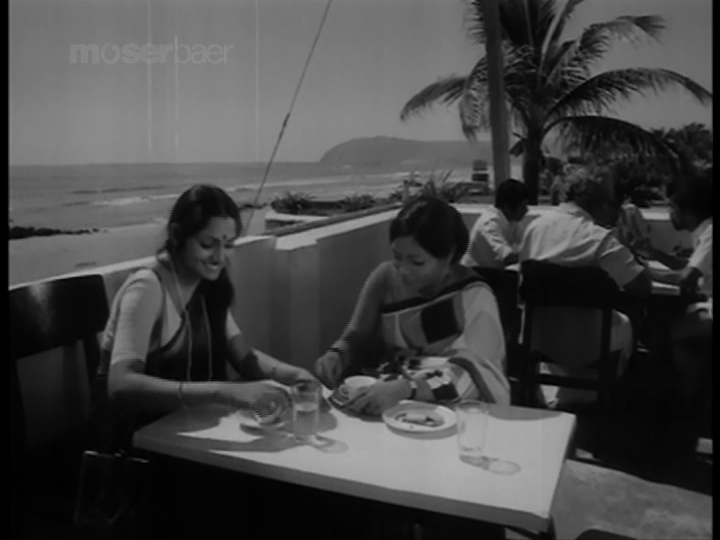
This classic film can be briefly described as bi-lingual Romeo and Juliet set on the beaches of Vizag. From the engaging lead pair of Kamal Haasan and Saritha, the strong supporting actors, to the bold black and white cinematography, catchy soundtrack and fab 70s fashions, this K Balachander film is stunning.  But be warned – Romeo and Juliet never lived happily ever after and this film stays true to its inspiration.

I haven’t identified all the actors in the cast as the information isn’t on my DVD and online sources don’t seem to match actor with character so please let me know who I’ve missed out.

Kamal Haasan is Balu, a Tamil Brahmin lad who moves in next door to Telugu speaking Swapna played by the lovely Saritha.

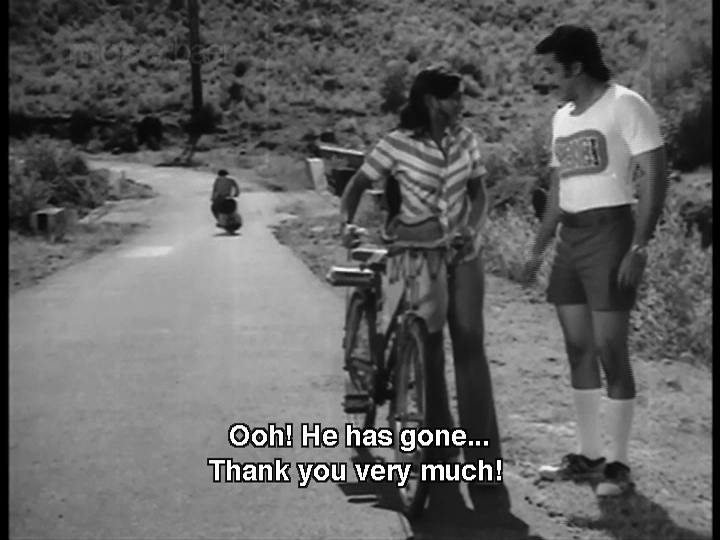
They feel an instant attraction, but cannot communicate easily through speech so improvise a language of percussion, mime, light switch flicking and of course dance! I don’t know whether I was happy or disheartened to see the one and only Learn Telugu in 30 Days text book. Surely things have changed since 1977? If not in romance, then at least in school books?

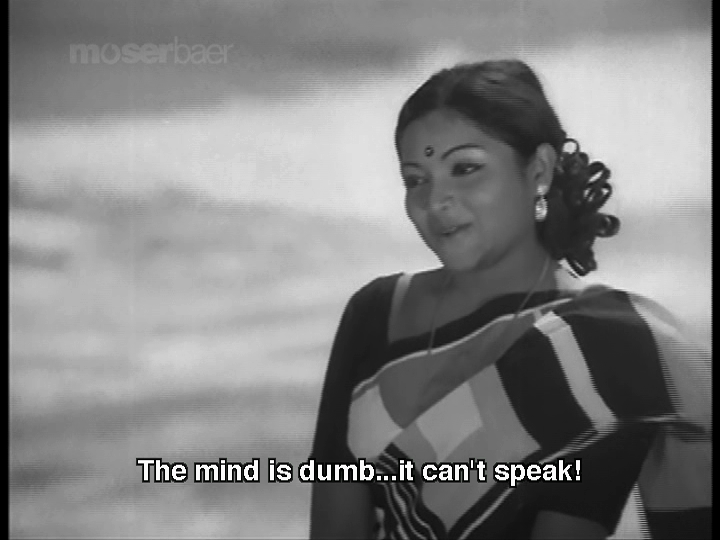
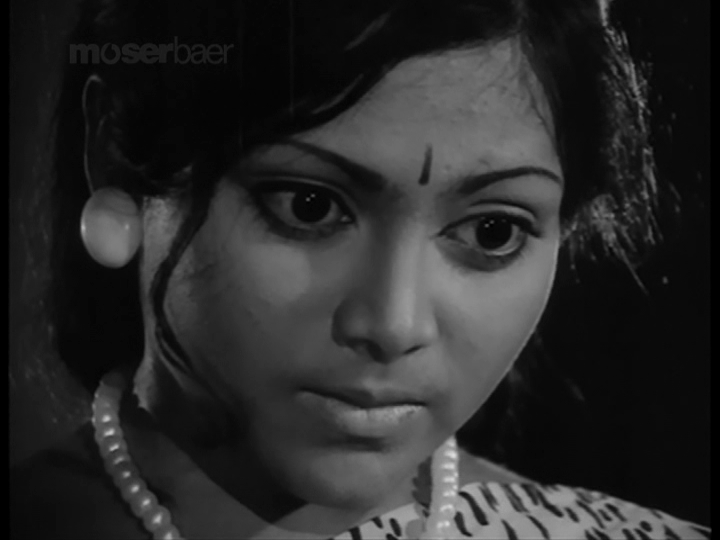
Saritha is beautiful, headstrong and a minx. I’m glad this was filmed in B&W as I suspect what looks striking in monochrome might have been horrifying in colour! Swapna is a modern girl, quick to deal with unwanted attention from the creep in the bookshop and proud of her academic achievements. She and her father read (badly subtitled) Shakespeare to each other; indeed, Romeo and Juliet are mentioned. Saritha has an earthy physicality and she lights up when Swapna is happily in love. Her character keeps unfolding which is impressive in a fairly simple story.

Kamal Haasan is his usual cocky self and at times bears a distracting resemblance to Siddharth. Balu is a self centred layabout, happily sponging off his family and using his charm to keep his mother on his side. His high waisted flares are enough of a disincentive for me, not to mention the shorts, but Swapna is made of sterner stuff. Balu’s reactions are always hasty, and usually about him and what he wants.

Once his temper cools he is quite rational, but he never seems to learn this about himself and so his character development is not particularly strong. He totally loses himself in the classical dance sequences which reflect the inner turmoil of his character, and they are beautiful to watch as well as adding some emotional depth to Balu.

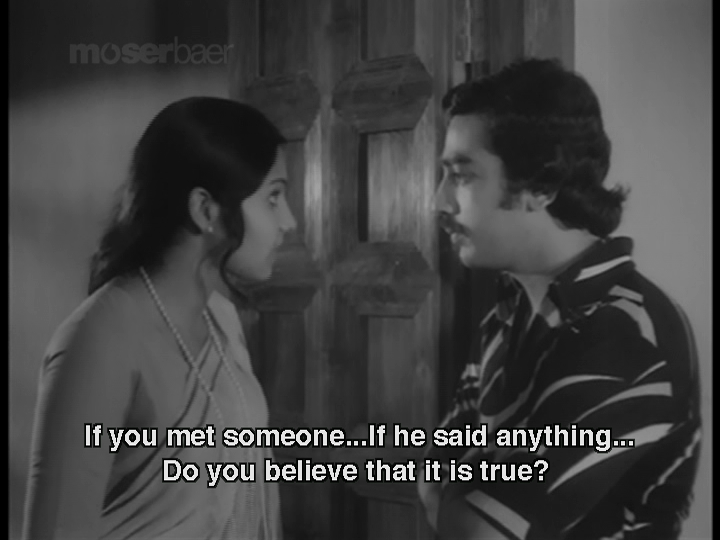
Nothing can remain secret for long, and Balu and Swapna don’t try very hard to be discreet, as the rocks and trees covered in their graffiti shows. She is pursued by the sleazy bookshop guy who happens to have a penchant for secret photography. He shows some very candid photos to Swapna’s parents with predictable results. As befits Romeo and Juliet, their families disapprove and seek to pressure the youngsters into marrying within their caste. The young lovers undertake to separate for a year to prove that they aren’t just infatuated. Once they are forced apart, the film becomes a lot more interesting as the story expands beyond the fresh faced puppy love and the supporting characters show some surprising qualities.

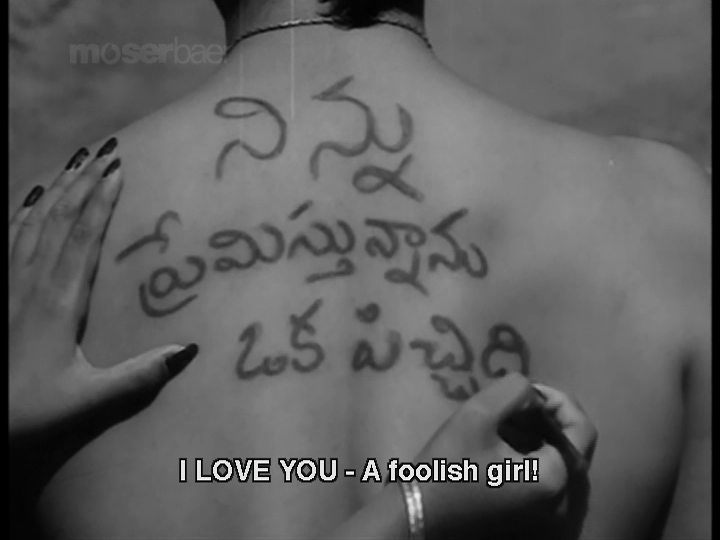
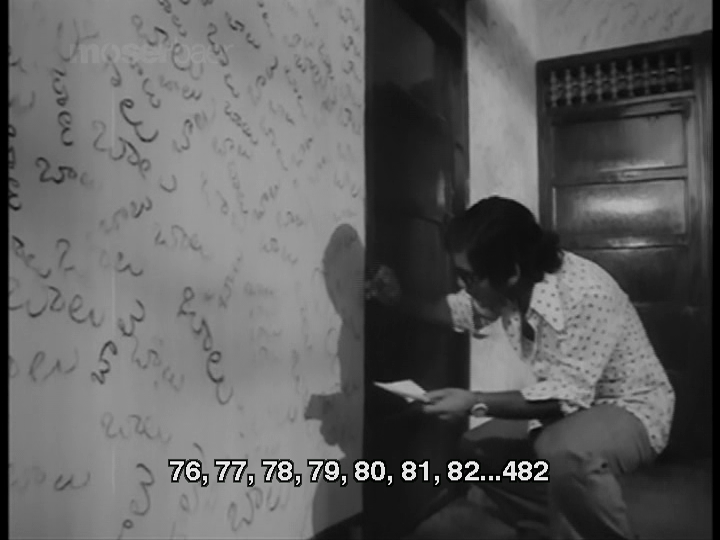
Swapna alternates between plaintive and defiant but never loses her resolve. Her behaviour at times frightens her parents who can’t understand her obsession let alone her bizarre actions. She drinks the ashes of a photo of Balu mixed in her coffee, she scrawls his name thousands of times on the walls. Her parents try to entice her away from Balu by dragging rich cousin Pattabhi into the household, but she plays him for a sucker and never wavers.

Balu is sent to Hyderabad to work for Hari Babu. Hari Babu takes Balu to a party at Reddy’s, a dissolute character with a band of freeloading friends which includes Balu’s neighbour in the lodging house, Papa. Her first scene includes a fairly detailed conversation about the effects of caffeine on the digestive tract and a flash of belly so it’s obvious from the get go she isn’t a shy girl. She wears trousers, goes to Reddy’s boozy parties and smokes. Papa pursues Balu and falls in love with him. When she realises that he is lost to her, she initially begs for him to sleep with her just once and after being rejected again, schemes for revenge. Considering all this, her character is surprisingly sympathetic and is even admired (with reservations) by her drinking buddies.

Also in the background of Reddy’s set is his sister Sandhya (Madhavi). A widow and an accomplished dancer, not quite a Mrs Robinson figure, she is a sympathetic presence for Balu. She helps him learn proper Telugu and to channel his energy, hormones and emotions into some beautiful dance sequences. She is drawn to his sadness and passion, and their common interests make a closer relationship seem inevitable.

After a misunderstanding over Swapna’s relationship with Pattabhi, Balu turns to Sandhya. Their affair is shown as a very matter of fact thing – they weren’t a couple and now they are, and a wedding is on the cards. No one seems terribly shocked by this relationship, except Papa who wants Balu for herself. Sandhya is shown as a resourceful woman who got on with life after her husband died, and isn’t needy or pathetic.

Sandhya discovers Balu’s unsent letters to Swapna, and takes herself to Vizag. She sees immediately that Swapna had never betrayed Balu and was waiting for him to return.  Instead of just  going home and getting on with her own wedding, she reassures Swapna that Balu has been faithful and will come back to her.  Sandhya’s anger in the scene where she sends Balu away with a flea in his ear and a ticket for the train is so moving. I felt that she identified with the girl who was going to lose her love, and partly hated Balu for cheating her on an emotional level. Contrast that with Balu’s immediate descent into self pity and woe, and I really had to cheer for the strong female characters that dominate the action.

Papa, Sandhya and Pattabhi are all swept aside by Balu and Swapna’s True Love. It’s a raw deal for Sandhya who seems a decent person, and sure to make her life that bit more difficult in the aftermath. There is a level of arrogance to the argument that love means never having to deal with the consequences for anyone other than your soulmate.

After giving signs of a happy future finally, the universe then aligns every possible obstacle and circumstance to prevent the marriage. As expected in a Romeo and Juliet inspired tale, the lovers come to a brutal, senseless, tragic end. The sleazy bookshop guy seizes his chance, and Swapna is brutalised in a sickening yet brilliantly edited sequence at the same time that Balu is attacked by paid rowdies. I really was on the edge of my seat through the final twenty minutes or so, hoping that the youngsters might make it even while knowing that a happy ending was never on the cards.

The film opens with disembodied voices talking over scenes of the places Balu and Swapna spent time together, almost like ghosts who couldn’t let go of their lives. It’s a scene that haunted me after the end titles had run. I have to give this 4 and 1/2 stars – for the stunning visuals, the charismatic lovers and the sheer skill of a film maker who could keep me watching even when I knew I didn’t want to.

Here’s a bonus clip for you – The dancing starts about 1 minute in: