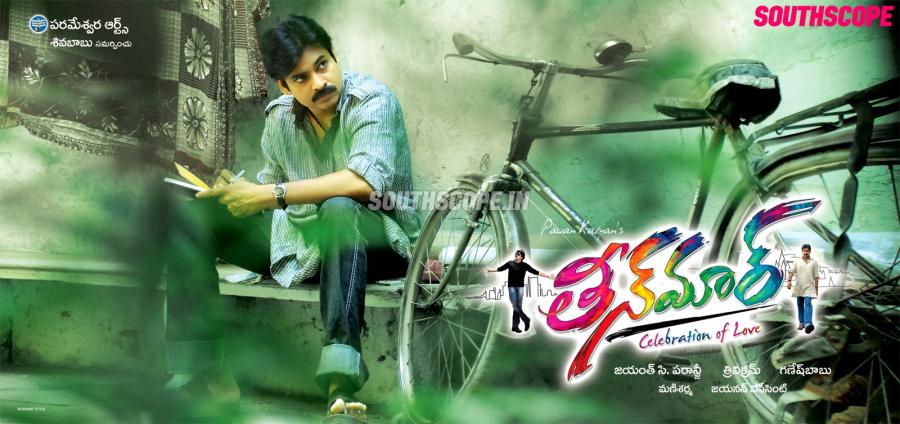
Theen Maar

Theenmaar is a fairly faithful remake of the Hindi film Love Aaj Kal, with a few minor changes and thankfully a lot more Southern style action and drama.

We do think that Pawan Kalyan has the most enthusiastic fans we have ever encountered. There was a good turnout at India Talkies, especially considering this was the second night showing, and more ladies and families than we usually see. In many of the Cape Town location scenes, bikini clad extras strutted around to no audience reaction at all. But let PK appear in shot and the roof almost came off! And we must add – it was the guys making the most noise!

Pawan Kalyan is Michael, a chef working in Cape Town while he waits for an opportunity to be a stockbroker in New York. Trisha is Meera, a fine arts graduate who specialises in restoration work (or something). Michael is selfish, impulsive, charming but ultimately high on talk and low on commitment. His dialogues are hilarious and he actually used the vintage line ‘Coffee, tea …or me?’ which had us in fits of laughter. It was followed up by a kiss so clearly the old material hasn’t lost any of its magic…or maybe it’s all in the delivery? And he does speak Italian (not so well, but it was actual dialogue in actual Italian delivered with great gusto).
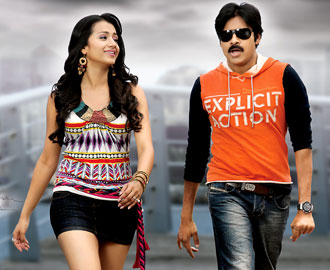
Trisha plays Meera as vain and princessy, accepting compliments on her beauty with a smile and an ‘I know!’ Their relationship is shown in a series of montages deteriorating from the happy honeymoon phase to him being bored and her being restless and the performances develop more subtlety as the characters situations change.  Meera loves Michael but goes back to India to pursue her career dreams. They both try to move on from this relationship, but really don’t, and the question of will they or won’t they get back together is the story.

Paresh Rawal introduces the flashback story of his friend Arjun (Pawan Kalyan) and his love, played by Kriti Karbandha. The Varanasi locations and slightly faded colour palette are simply stunning. Arjun is a student activist, albeit one who never seems to do any study, a man of few words and deep feelings. Arjun and his nerdy mates follow Kriti around Varanasi and these are some of the funniest scenes.
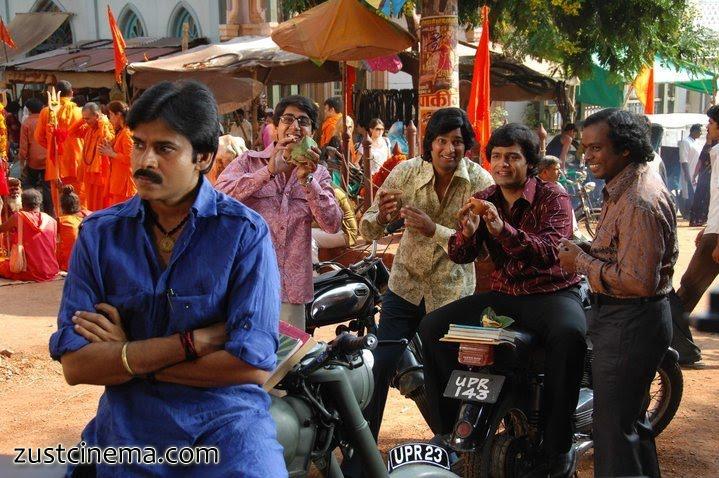
Pawan Kalyan’s expressions flicker from nervous to smouldering to determined and back again as he wordlessly conveys his feelings and confusion. There is a fabulous vintage style song with Arjun and his mates skipping around and dancing like madmen and it is just brilliantly done. Kriti didn’t have a lot to do except stand around and stare at Arjun and is a bit low energy in many of her scenes. She does come to life in her dances and those scenes are where she looks her most appealing. Her family don’t approve of Arjun and his determination and resilience are a total contrast to Michael’s floundering and apathy. His body language is completely different to Michael – Arjun stands up straight, shoulders back, head up and looks people in the eye where Michael’s gaze is always shifting or angled and he rarely stands still or takes a stand.
One of the side effects of Filmi True Love is that all other partners end up as Romance Roadkill. Australian Misha or maybe Michelle (played by someone maybe called Jahna) and Sonu Sood as Meera’s new man are adequate in their roles, but they aren’t given a lot to do. Sonu makes more of an impression, mostly because he gets more dialogue and also has a confronting scene with Trisha. We did find it interesting that although the relationship between Meera and Michael was clearly physical, it was only the white girlfriend who was overtly shown as having a sexual relationship. It is obvious she is a pale (pun intended) substitute for Meera, although she did spark a truly funny Dirty Harry impression by Michael.

The remaining support cast were their usual selves. Tanikella Bharani was Michael’s Skype savvy dad, Paresh Rawal was avuncular and natty in golf knits, Mukesh Rishi was imposing and mean as the olden days father. The actors who play Arjun’s friends are really expressive and fun, and have a fab collection of Seventies polyester body shirts and flares. The male backing dancers were great and looked the part – if they were random street dancing IT guys, they looked like IT guys. There were too many skinny white girls in the club dances. Considering we were supposed to be in Cape Town, there was little diversity in the ethnic makeup of the extras so it was a bit odd. Another very strange thing – no Brahmi. We really can’t recall the last Brahmi-less film we have seen. Ali however did turn up in a fairly restrained (for him anyway) cameo.

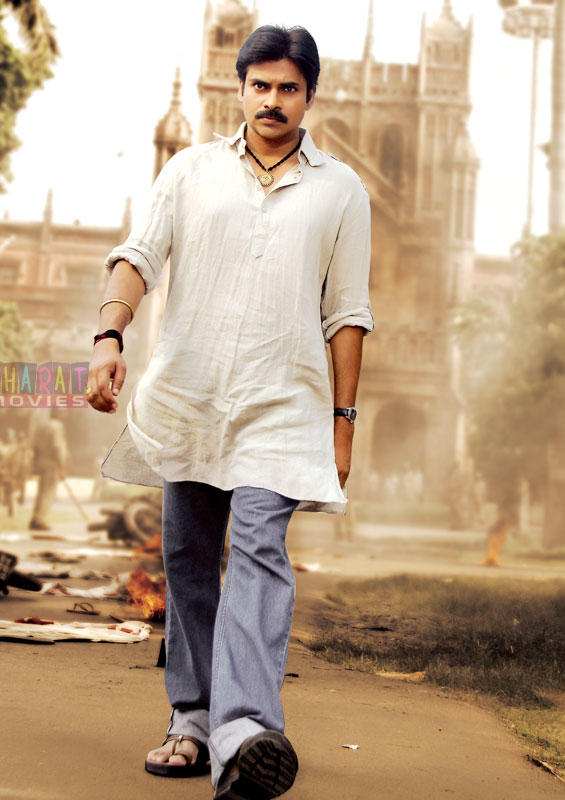
Mani Sharma’s music is well matched to its place in the story.  We particularly liked a gorgeous temple song dedicated to Shiva that used perfect retro Bollywood choreography. The club numbers were fun, and Pawan Kalyan went all out to entertain. The costumes were occasionally puzzling – we have no idea who was styling Meera’s return to India wardrobe but apparently going home means wearing lots of patchwork and garish harem pants. A big hurrah for whoever designed Arjun’s look. We loved Pawan Kalyan in the simple kurta and jeans.

Imtiaz Ali’s story is a great basis, and Trivikram did really well in translating it into the Southern film style.  We missed a lot of the dialogue based jokes, but judging by the audience reaction, they were very funny indeed. The action scenes are way more energetic than in the Hindi original. We aren’t sure about the climax fight that seemed to have been designed solely to allow a motorbike blow up but heroes must be heroes. Jayant Paranji kept the story ticking along for the most. There is a draggy section towards the end, but as usual the final scenes seem to happen at breakneck speed.

Theenmaar is a really entertaining film that has something to say but doesn’t beat you over the head with a message. We can’t wait for the DVD!

Pournami

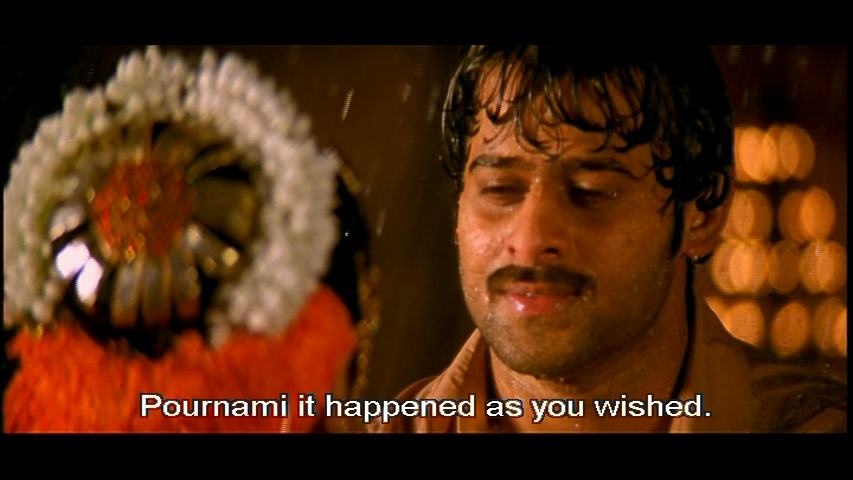
I’ve become quite fond of Prabhas. Not in a ‘he’s so hot‘ fangirly way. But he is likeable on screen and his presence in a film does seem to promise a commitment to entertainment.  Pournami is colourful, visually pleasing, sentimental and rather silly. Just what I have come to expect from Prabhas in fact!

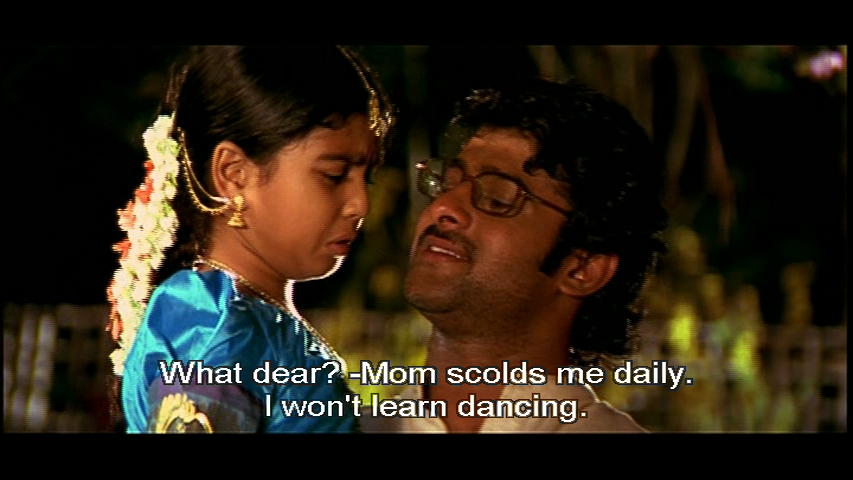
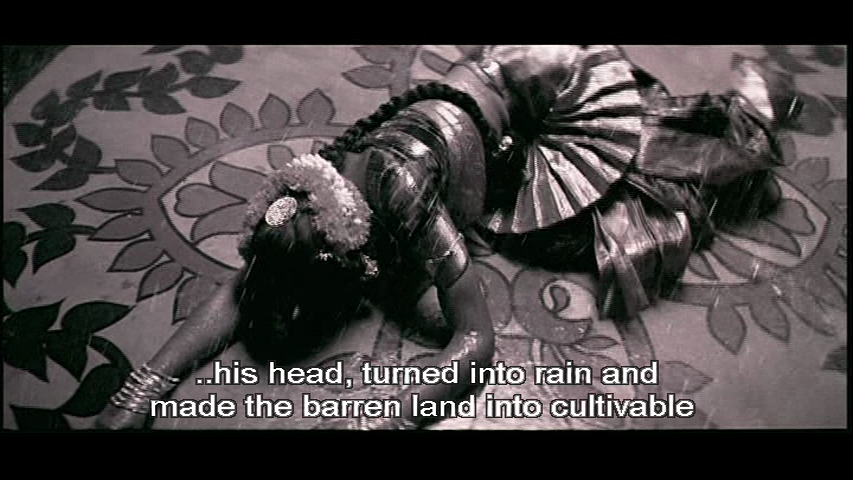
The film opens in 1953 and centres on a family with a long affiliation to a local temple. Many years back there had been a drought that threatened the livelihood of all in the surrounds. One woman had the strength and stamina to dance for Lord Shiva and was rewarded with rain. From that date, her family repeated this ritual every 12 years and her female descendants were trained to dance.

So it was a bit of a surprise to me that it all came as a surprise to the girls in the 1953 family that the eldest daughter, Pournami, was going to have to perform the ritual in 10 years time. Surely it might have rated a mention during dance lessons? Continuing the journey through time, we emerge in the 60s or thereabouts. Pournami has gone missing before the ritual must be performed. Her sister Chandrakala always wanted to dance but was overlooked. Chandrakala is now played by Charmme and she is reasonably convincing in the dance sequences. She is a Cinderella type figure – persecuted by her horrible stepmother, teased by local bullies and overlooked by many.

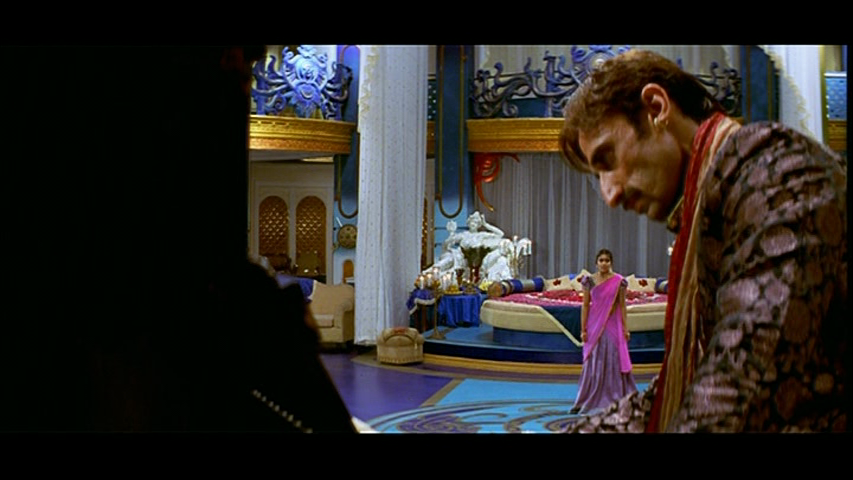
But where is the drama? Hello evil landlord! I do not in any way approve of evil landlords intent on deflowering young ladies who should be saving their strength to dance for Shiva. However, Rahul Dev has an excellent palace, a resident orchestra and generally believes himself to be a god or at least the equal of one. It is all highly entertaining. Pournami did a runner to avoid being kidnapped by Rahul Dev and he is now intent on claiming her sister.

But where’s the hero? Hello Prabhas in eye-catching plaid pants and rock n roll rebel attitude. Adding to the fun, we learn he is an ‘English Dance’ teacher, Sivakesava. Hmm…is that a Significant Name? Sivakesava rents room with Charmme’s family and opens his dance school.

In between dance classes and dodging the local nymphomaniac, he encourages Charmme to dance, sometimes with quite amazing results. He seems to have mysterious powers over Chandrakala – little things like making her teeth glow in the dark and resisting her attack snake. But he uses his powers for good, and for fixing fuses, so we need not be alarmed on her behalf. I was amused by his gramophone – it’s just not rock n roll as I know it!

All the threads seem to be drawing together, but why? Who is Sivakesava and why is he intent on protecting the upcoming ritual? An extended flashback reveals that he met and fell in love with Pournami (played by Trisha) after she fled the village. She had joined a troupe of travelling performers, and her amazing dance talent, or perhaps her skimpy outfit, caught his eye. Pournami continues to practice her classical dance in her spare time. In a very pretty scene under the full moon, she gives ample evidence that the odds of pleasing Lord Shiva will be improved if she doesn’t dance for him.

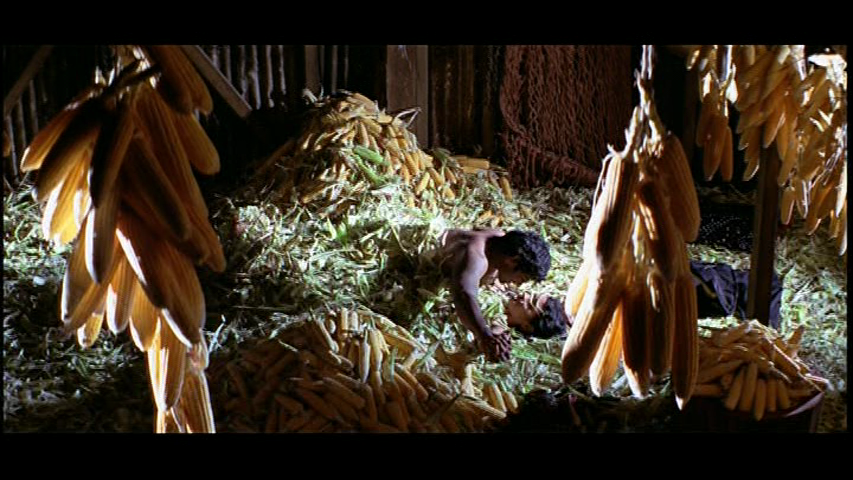
It turns out that Sivakesava was from a family who had a blood feud with the other big family in the region. He was sworn to avenge his brother and then would no doubt be hunted down in turn. Pournami became a victim in this feud, sacrificing herself to save her husband on their wedding night. The wedding night scene may mean I never look at corn in quite the same way ever again. Yes, that was corn with a c.

His past life continues to pursue him, never giving him a clear path to his heart’s desire or letting him subside into anonymity.

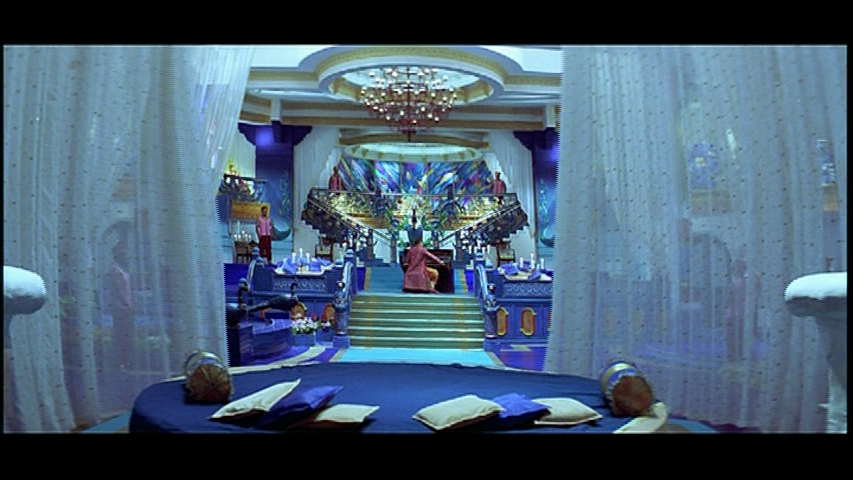
Chandrakala is abducted by Rahul Dev and he shows why he needs that piano and keeps an orchestra on standby. There is nothing funny about kidnap and rape in reality, but when the villain is improvising a melody to the tempo of Charmme’s footsteps it is very entertaining and adds to the cartoonish effect, as does his balletic fighting style. Naturally Kesava comes to her rescue again, and his actions cement her feelings for him.

Thus the other crucial episode unfolds – Kesava feels compelled to tell Chandrakala about his past with Pournami and why people from his old life, particularly his fiancée Mallika (Sindhu Tolani with a terrible hairdo), are still pursuing him. Chandrakala takes up the challenge to dance at the festival, motivated by love of her sister, of her father and for Kesava.

The finale at the temple is visually stunning and yet daft in equal measures. Which really sums up the whole film so it is perfect.

https://www.youtube.com/watch?v=9qV-11UracQ

Although Pournami’s name and presence infuse the film, Trisha is overshadowed by Charmme and Prabhas. This is mostly due to the structure of the film – her story is told in isolation from the present time drama and we aren’t so involved in her relationships with anyone other than Sivakesava. In a film about dancers, Prabhu Deva gave Trisha some beautiful picturisations but her dancing was not as strong as Charmme’s and that aspect didn’t convince me. She looked lovely and her acting was as convincing as the role allowed. When Pournami appears to take over during the final dance it is shown as a way for everyone, including her spirit, to find closure. Trisha uses her very expressive face to communicate her sorrow and joy at this final encounter with her loved ones.

Charmme irritated me in the first half of the film, but I think she was meant to be a troubled teenager who was a bit bratty so I suppose that was a win. Her portrayal of a growing love for Sivakesava was done well, and I could see her puzzlement and annoyance turning to appreciation of the man who supported and protected her. She was a little tougher than your average filmi heroine, and her demonstrated snake wrangling skills make her more than a match for the average thug. Although the hero had to step in and help her finish the ritual, his help would have been for nothing if she hadn’t had the fortitude to keep going and stay focussed. Finally, she saves Kesava’s life and through that act wins the right to his future as his past finally lets go. I felt a bit sad for Chandrakala at the end as once again she will be the understudy for her sister, only this time in life.

Despite the story being ostensibly about the girls, this is a Prabhas film. He is at the centre of all the action and subplots, and once he arrives in town he is on screen for most of the film. He is convincing as both the kick arse hero and the misty eyed lover, and seems to have fun in the retro dance sequences. His relationship with both the heroines was played well, and there is a marked difference in his interaction with each of them. It’s a typically fun Prabhas performance. And his costumes… They make a statement all on their own.

The supporting cast were fine, with Rahul Dev, Brahmaji and Mukesh Rushi the standouts. Sunil is sweetly funny as Pournami’s brotherly friend and Ajay is reliable as a local thug. The soundtrack by Devi Sri Prasad is enjoyable and suits the story. Of course the songs are a visual delight as I expect from a Prabhu Deva film. The sets, the costumes, the locations are all beautiful and add a fairytale quality.

The film has a happy ever after ending, with signs of the new generation ready to maintain this lovely tradition. With any luck they’ll have a new landlord before the next festival!

See Pournami if you like the stars, plaid pants, excellent set design, pretty song picturisations and a dollop of overacting. I give this 3 and ½ stars.

Aayutha Ezhuthu

A little bit of research informs us that Aayutha Ezhuthu was supposed to be a call to the youth of the nation to take up politics and generally to encourage political awareness. We really don’t know if this was true, since this film seems to show that life in politics is apt to be short, violent and fraught with danger. In addition, the wily politician who sets up the main characters seems to be thriving through his various corrupt dealings, so perhaps the film serves more to show what the problems are within the system. Aayutha Ezhuthu uses the converging storylines of three characters to set the scene and their subsequent interactions form the rest of the story. As the story unfolds the film becomes more of a straight ‘good guys’ vs. ‘bad guys’ although it’s not totally clear who exactly are the ‘good guys’ here.

The film opens with three main characters following their own storylines in traffic on a bridge. The same scene is shown from the viewpoint of each of these three and, after each vignette, we are shown that same character’s life in the few months prior.

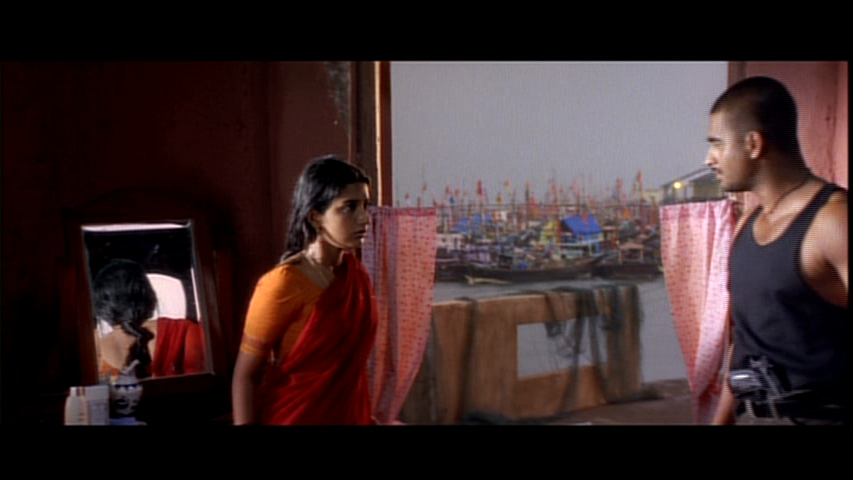
First we meet Inba, played by Madhavan in an uncharacteristically brutal role for him.  He is a thug, who works for his brother mainly ensuring a local politicians campaign runs smoothly. Inba beats his wife and almost casually chooses violence over any other form of social interaction. Inba’s current employer, Selvanayagam the local politician played by Bharathiraja, is the spider in the centre of the web.  He employs Inba to police his rallies, and is in direct conflict with the second character in the drama, Michael.  Through their involvement with each other, the third, Arjun is drawn into the fray.

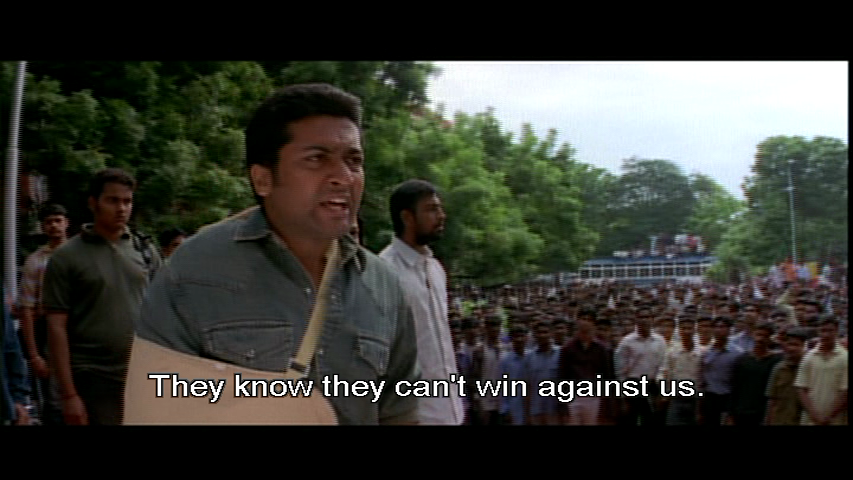
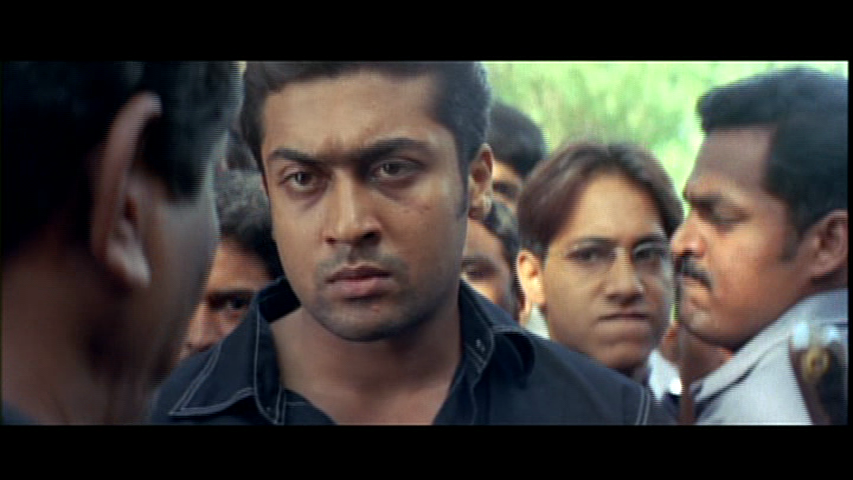
Suriya plays Michael Vasanth, a student, apparently a mathematical genius and also a political activist.  Not for him the more normal student methods of agitation such as demonstrations or debates, he prefers to be more direct in his approach and encourages retaliatory action.  This brings him into direct conflict with Selvanayagam and thus ultimately with Inba.  Suriya also seems out of place in his role.  He is muscular and obviously powerful, which doesn’t fit the image of a serious scholarship winning student.  His solution to problems faced by local villagers seems to be almost as confrontational as Inba’s violent tactics.  He appears belligerent and selfish as we see him brush off his mother’s concerns and treat his girlfriend badly. Although it is quite conceivable that students will use such extreme tactics, as has frequently been seen in many countries of the world, this approach just felt wrong with these characters. Perhaps this was partly an issue with the subtitles which may not have conveyed the dialogues accurately, but Michael came across as a very unpleasant character and his political aspirations felt more self-serving and less for the public good than perhaps was intended.

The final character in the drama is Arjun, played by Siddharth.  A playboy who has just finished his studies and plans to head to the US, Sid at least seems to fit the role he has been given.  His approach to life seems much more in keeping with his character and his pursuit of Meera, while typically filmi does feel much more genuine than Michael’s relationship.  By a series of coincidences all three are on the same bridge at the same time.  Inba uses this opportunity to get rid of Michael by shooting him, which sends him falling into the river past Arjun’s shocked gaze.

The storylines all converge at this point, and the aftermath of the confrontation is played out to its bloody and somewhat inevitable conclusion given the arrogance and brutality of the main characters.

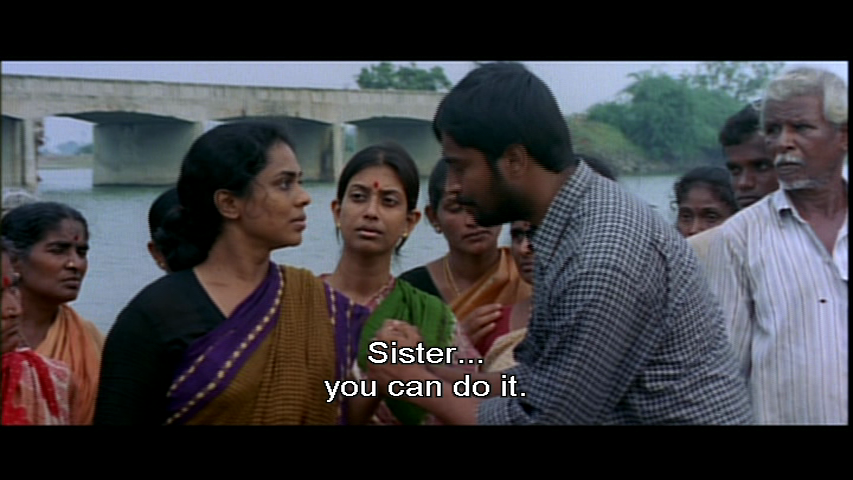
What are much more interesting about this film are the female characters.  Although she is regularly abused by Inba, his wife Sasi is a very strong personality who is determined to wean him away from his brother’s influence and stop his forays into crime. Their relationship is very realistically portrayed by Meera Jasmine who is fantastic as the battered wife. Despite her family’s objections to her husband, Sasi enlists them to help get Inba a job, so she obviously has great powers of persuasion.  Madhavan’s scenes with her are the best in the film and she was very compelling in her performance. Trisha in her role as Meera is less of a driving character, but she is part of the reason why Arjun changes his playboy ways as he slowly falls in love with her.  She is convincing and effective in the initial scenes, but towards the end of the film she appears to be sidelined. Esha Deol plays Geetha, who is involved with Michael.  There is a lot of potential in their relationship as he doesn’t want to get married and asks Geetha to move in with him instead.  This opportunity to look at the issues surrounding marriage and commitment is squandered as the theme is never really developed further.  Geetha lies to her parents and to Michael’s mother and never really becomes anything other than the woman in Michael’s life.

However these three women, as well as the various female characters that stand for election in the story, seem to be at least an attempt to show women as other than just the pretty wife, girlfriend or daughter.  There is more meat to their roles here, although it’s not sustained and ultimately only Sasi makes a lasting impact.

Because of the belligerence behind Michael’s actions it’s hard to see him as one of the good guys.  The virtual worship of him by the other students contributes to the impression of arrogance and he imposes his will on everyone around him without any seeming thought to the consequence.  Despite his thuggish ways, Inba appears as the more sympathetic character as he is genuinely trying to change his ways, but cannot get out of the cycle of violence he has lived with all his life.  The supporting characters all seem to have their own agendas as well, keeping the whole feel of the film as one of corruption and deceit.  The only genuine people seem to be the villagers caught up in the struggle for their village. While the film tries to be a statement on youth and politics, the end result seems to disregard Michael’s supposed motivation and political ambition and highlight the futility of anything other than corruption and violence as a means to achieve and hold on to power.  The secondary plot line of Inba’s attempts to escape his violent lifestyle is much better handled. While Meera Jasmine is the standout performance, both Trisha and Esha Deol ultimately aren’t given enough screen time to be effective.  A special mention for Sriman who played the character of Dilli, and was excellent in his role as Inba’s conscience.

Heather says: I really didn’t like this film.  For me it may have worked better if the casting of Madhavan and Suriya had been the other way round.  I found that Suriya didn’t fit the image of a student at all. He is too old and not convincing, while Madhavan in his role switches between mayhem and maniacally happy.  This didn’t seem to fit either the characters lifestyle or generally bleak prospects.  As a man recently released from prison, with a pregnant wife and no real job aspirations other than working for his brother, the ‘crazy happy’ was difficult to swallow.  Some of this was to show the reason why his wife stayed with him, and indeed some of these scenes were much less overdone.  This may have been a directorial decision as Abhishek Bachchan appears very similar in his characterisation of Beera in Raavan. I stuck with the film mainly because of the relationship between Inba and Sasi which was very well portrayed. Siddarth’s character was also quite watchable, and overall the story was interesting, but I was very tempted to fast forward every time Suriya was on screen. I have liked him in the other films I have seen him in and was horrified by him in this.  I really wanted his character to die as quickly as possible, just so that I did have to suffer through his flexing and belligerence.  I wish I had liked this film more but thought it was a potentially good story that for me was ruined by bad choices in the cast and poor directorial decisions. 2 1/2 stars from me.

Temple says:  This is another film that, like Leader, is well made but not likeable. I have issues with the character of Michael and his immunity from consequences. Everyone around him is made to pay for his activism but he escapes with a few flesh wounds. Surya was unappealing as he seemed to show only the arrogance of Michael and gave me nothing to respect in that character. Unlike Heather, I really liked Madhavan’s performance in this. I thought he really made sense of Inba and Sasi’s relationship, and showed the complexity of his character. He was boyishly impulsive, and casually brutal in turns. He showed the pressure Inba felt to be a man’s man and ignore his wife unless they were behind closed doors. Their relationship was compelling as Meera Jasmine showed the gamut of attraction and repulsion depending on which side of her husband’s nature was dominating.  I didn’t get the impression he was ‘crazy happy’, he was just a thoughtless guy who wanted what he wanted, and was happy so long as things ran his way. I thought the whole cast, with the exception of Surya, did a good job and made the most of their roles. I did have to laugh (a lot) at the idea of Esha Deol teaching French though! So, while I don’t like the inherent message that corruption is OK as long as you say you mean well, I do think this film was compelling and well made. The only disappointment was the lack of follow through on what seemed to be interesting roles for women. 4 stars from me.