Takkari Donga

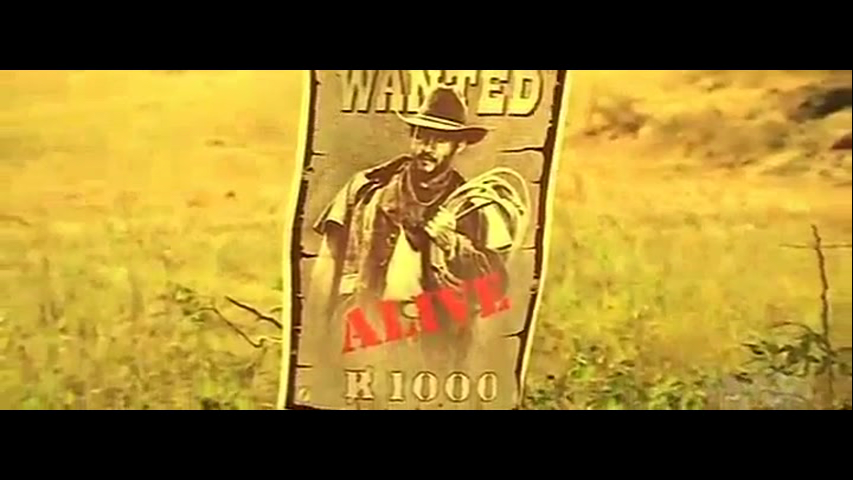
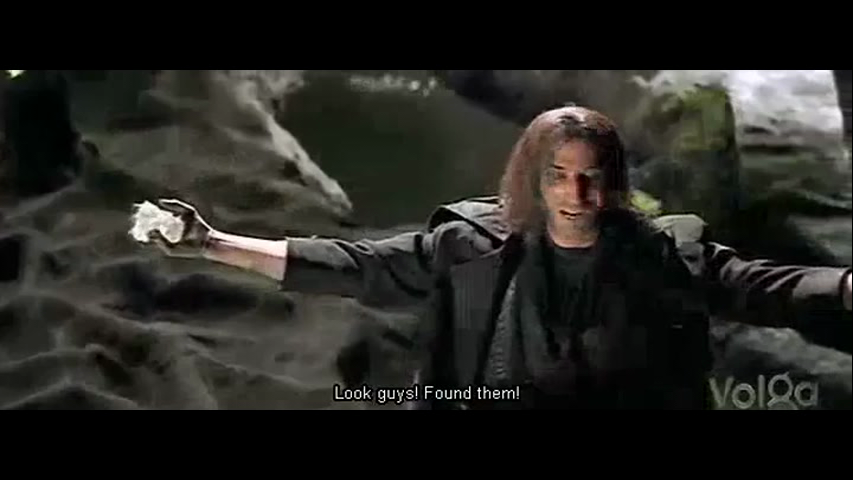
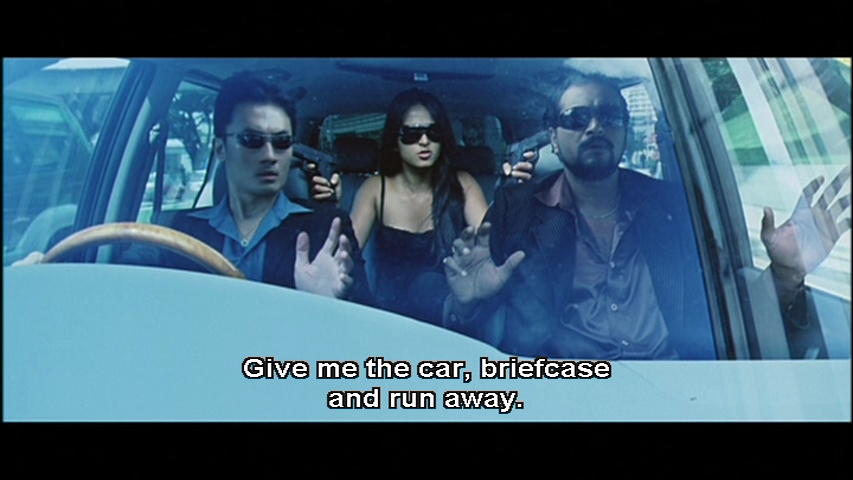
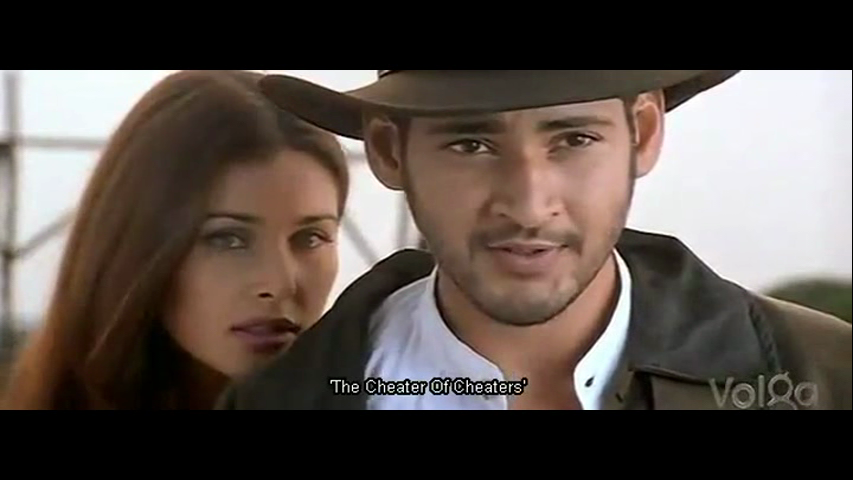
Made back in the day when Mahesh Babu was more baby-faced than baby-faced killer, Takkari Donga is a cowboy treasure quest featuring a map, a secret ‘diamond valley’, plus some bad acting and worse outfits courtesy of Bipasha Basu and Lisa Ray. Oh Mahesh. You’ve come a long way!

The Mahesh Fan prompted me to watch this film some time ago (“It’s Mahesh! In chaps!!”). As I often do, I ignored her. She sent me the link to watch it with subs on YouTube. Again, I somehow managed to ignore that (“It’s Mahesh! In chaps!! And there’s venom sucking!!!”). Finally she turned up at my house with a DVD made up of all those YouTube clips cobbled together. Resistance was futile. And she was right – it does feature Mahesh in chaps, and there is indeed venom sucking. I don’t think they are the most compelling reasons to watch a film, but I was quite amused by the sheer silliness that has diamonds harvested like fruit and a bit of skanked up boot-scooting. I watched it ages ago with Beth and Amrita and they found it tedious. But I say there is (fools) gold in them thar hills.

It’s a pastiche, maybe more along the lines of the Trinity series than a purported remake of The Good, The Bad and The Ugly. The music is a good match as Mani Sharma veers from Marlboro Country anthemic to cheesy songs. There is also a fair dollop of ‘sad trombone’, Addams Family finger snaps and samples from other Hollywood soundtracks. The camera work is often lovely and there is good use of aerial shots that help capture the grandeur of stunning scenery. It’s loaded with cowboy film standards – a saloon brawl, pratfalls, gun twirling and enigmatic galloping. There is a rickety bridge, TNT, smart horses and dumb humans. All the clichés, lovingly filmed for our enjoyment. Plus lions.
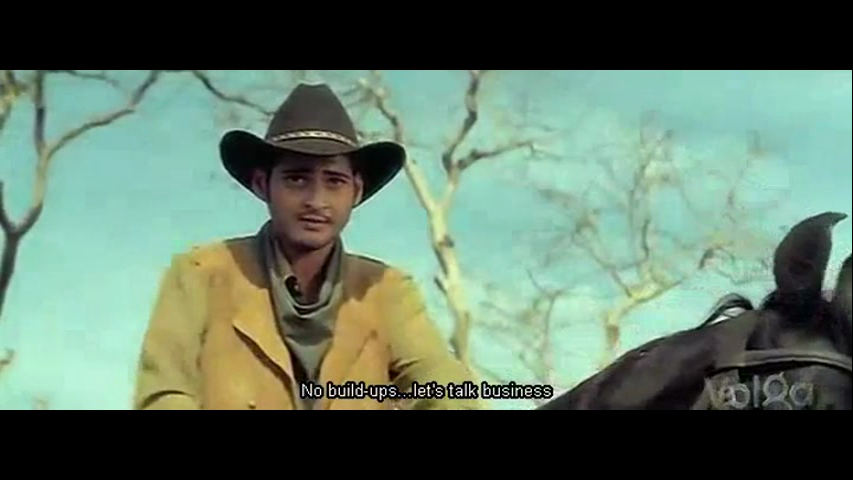
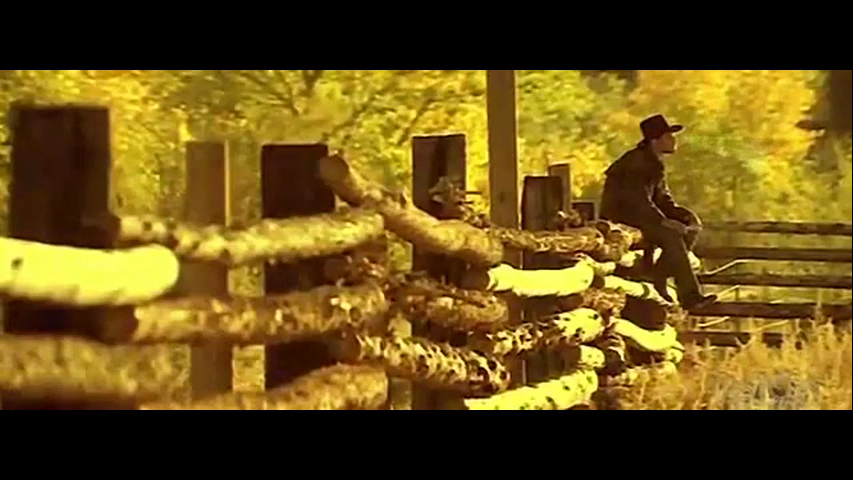
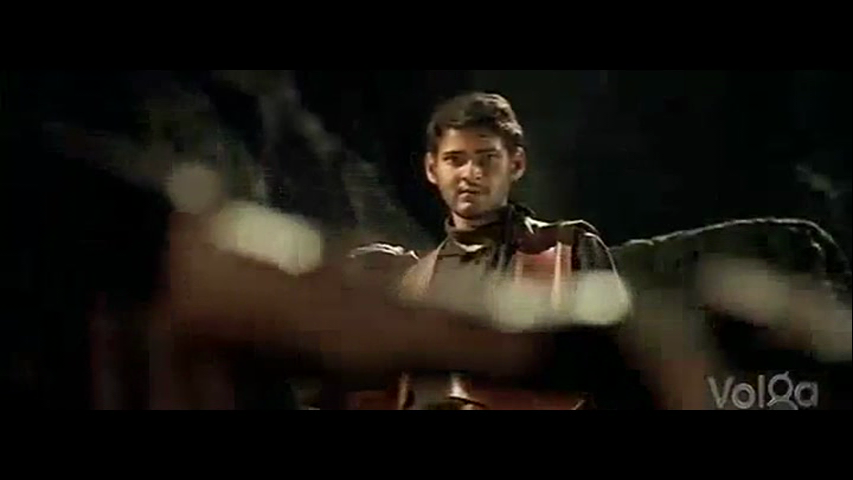
Mahesh Babu is Raja, the titular ‘Tricky Thief’. Raja has a tragic backstory that featured his family, a tiny white puppy and villain of the piece Shaka at his most sadistic. He’s an enigma. I mean, where does a man who is essentially homeless keep that extensive hat collection?
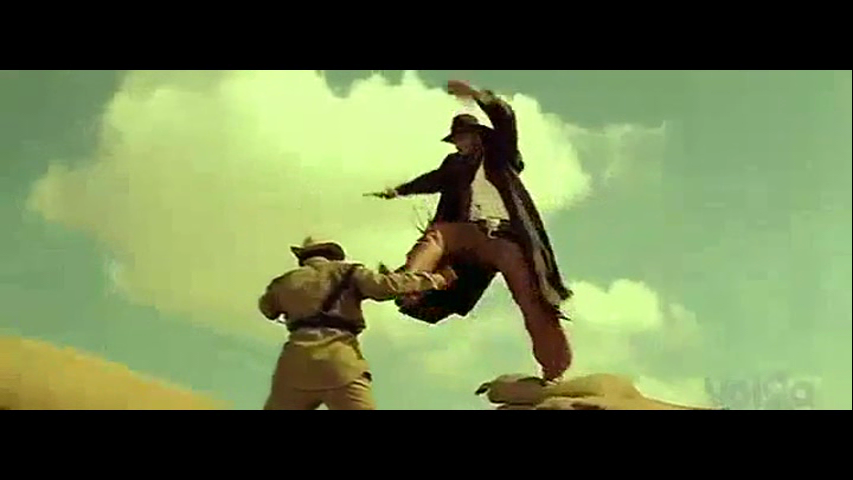
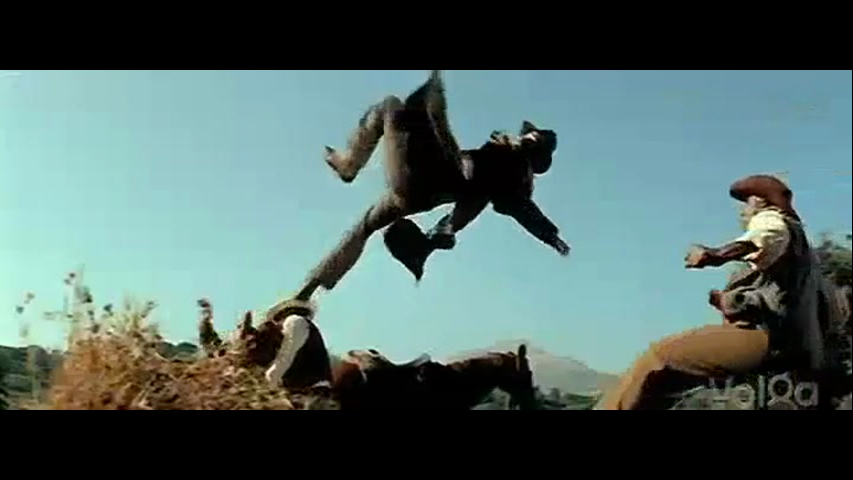


Raja’s bullets pack an extra punch as several opponents are literally blown away with a single bullet, flying out of shot thanks to some enthusiastic wire work. But he also deals with an epic rope bridge confrontation simply scaring the bad guy silly by wobbling the bridge so it’s not all guns and blood spatter. I could empathise with the creepy Dega in that scene. A friend did that to me every single time we crossed a bridge in Nepal and he always found it amusing to see me ricocheting past yaks and backpackers as I fled into the distance.

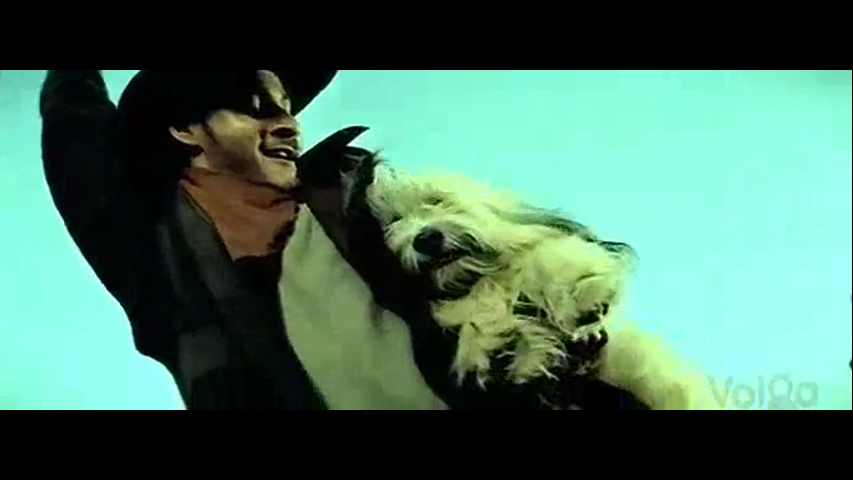
Of course, the bridge HAS To break eventually but the villain is actually sent to his death by a fluffy white dog. Excellent! And then Mahesh rescues the dog so he is doubly heroic and the music agrees. I do like a good dog assisted comeuppance.

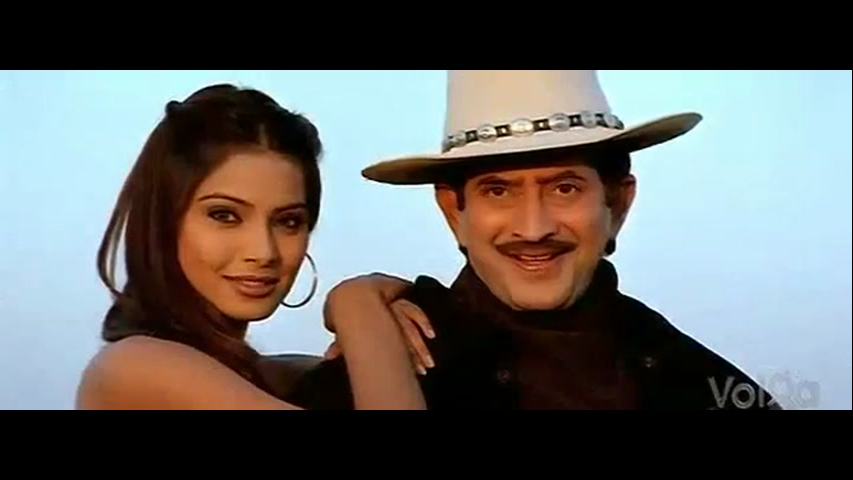
Panasa (Bipasha) makes her entrance pretending to be blind in order to rob Raja who had just robbed a train. Raja pursues her to get his booty (the money – I’m talking about the money). Despite Mahesh making loads of noise and lighting up a cigarette she persists in pretending she has no idea he is there which makes for a nicely gratuitous bath scene. She falls for Raja but to no avail, as he seems immune to her charms as amply signalled by her snug fitting leather pants.
Lisa Ray is Bhuvana, the girl destined to marry a man with exceptional qualities and a significant mole on his thigh. She sets off on a perilous journey to her uncle’s house with Raja as her paid guard, but really she is all about checking him for that mole. Lisa got a gratuitous bath scene as well as the venom sucking scene so I feel the film maker’s objectives were clear.
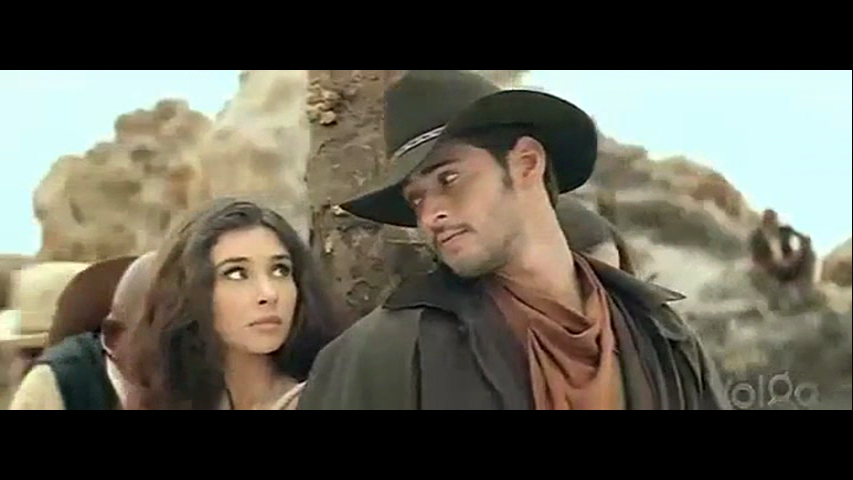
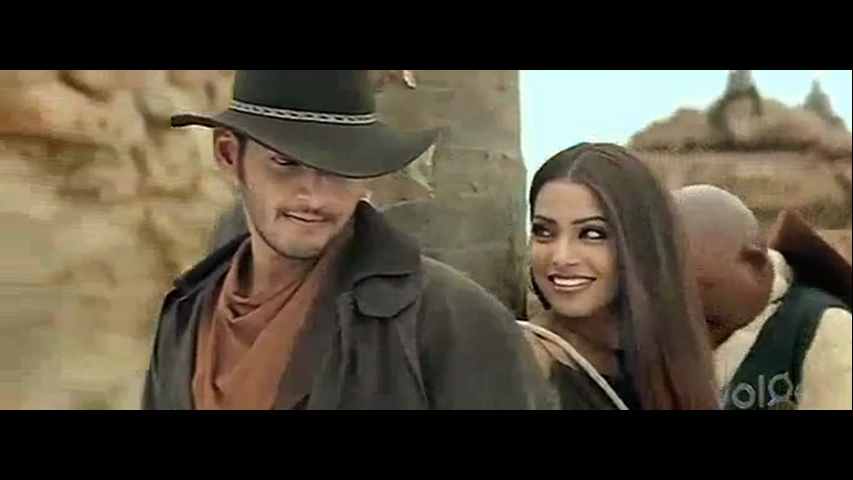
There is a vague love triangle as Panasa chases Raja who is sort of keen on Bhuvana who hates Raja but we know that won’t last. Panasa is a piece of work, conspiring with her sidekick (Tanikella Bharani with comedy moustache) to get Bhuvana kidnapped by the horrible Dega who likes his women to be unwilling and temporary guests.

The humour is very slapstick, uneven and only intermittently funny. Sometimes things do work well. I liked the way Raja would scoot into frame during the Chukkallo Chandrude song and shoot people to emphasise the beat. And if you ever wanted to see Mahesh weaponise a bra – wish granted.
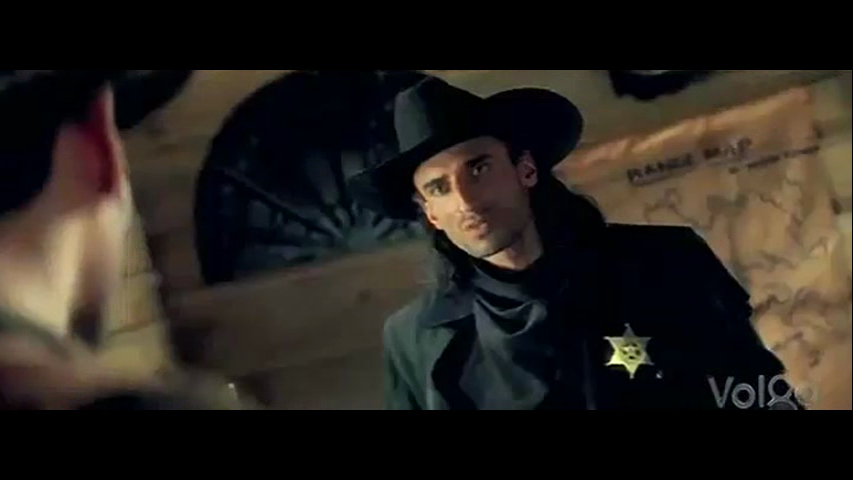
Rahul Dev is the villain Shaka. He is obsessed with finding the map that Veeru (Ashok K Kumar) escaped with. 18 years of looking and time has not mellowed his disposition. I can’t help but think that if he had actually looked for the diamond valley rather than the man with the map he may have got there all by himself. Shaka has an unfortunate tendency to let his victims die before they speak so he is eternally frustrated. He is a sadistic psychopath and appears to own just one outfit. He has a significant scar but I think his nose is just so hypnotic it takes a while for Raja to notice the fateful mark.


But the plot is not really worth discussing in detail. Either you’ll enjoy the story unfolding or you won’t care. It’s set in a non specific time and place using Western tropes including a Texas Rangers Sheriff badge alongside piles of chilli drying in the sun mixed with tacky plasticky photo frames and vile synthetic fabrics. The design team had some fun with the map and subsequent clues and the diamond mine is quite astonishing.

I was quite concerned when I realised there would be lots of horse scenes as frequently the stunts in films are horrifying and it is obvious that some animals would have been severely injured (at best). Takkari Donga relies mostly on the horse chase and equine acting so there was nothing that had me ready to cover my eyes. The fluffy white dog seems to have mysterious powers of teleportation. He generally trots along after the drama waiting for a chance to save Raja so that was also quite stress-free.

Jayant Paranji did go on to make the excellent Shankar Dada MBBS and Teen Maar, and we all know Mahesh’s star continues to rise so clearly this film was not the career ending move it might have been. The choreography is uninspired despite a credit for Saroj Khan (among others). Make sure you watch right to the end for a special appearance by Superstar Krishna and for the blooper reel. 3 stars just for the so bad it’s good-ness!
Billa (2009)

Billa is a remake of Billa (Tamil) which is a remake of an earlier Rajnikanth film of the same name which is a remake of the Amitabh Bachchan classic Don (Salim-Javed are credited for the original story). I’ve seen all of them, plus the more recent Hindi Don starring Shah Rukh, so I didn’t expect the unexpected and largely this is faithful to those predecessors. Meher Ramesh adheres to Telugu film conventions requiring happy endings and righteous heroes so there are a few changes. I enjoyed the total disregard of inconvenient logic and budgetary challenges. It is a modern, slick film with a dash of B movie and the spirit of making do for the sake of entertainment.

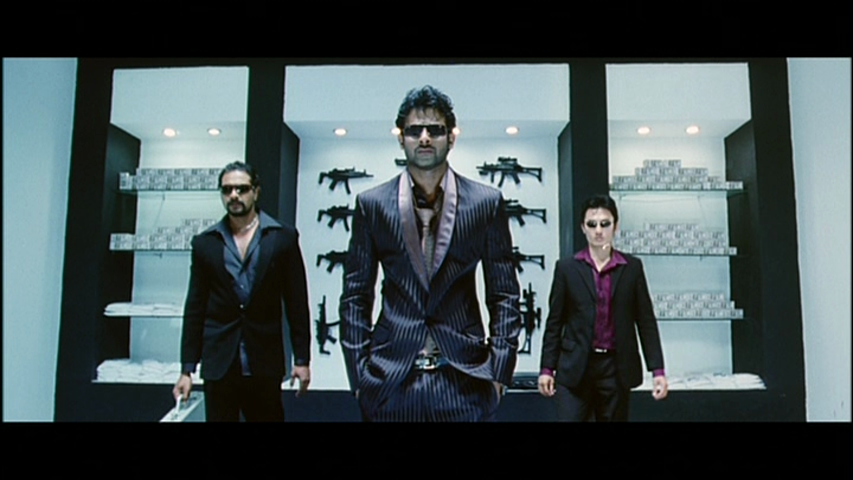
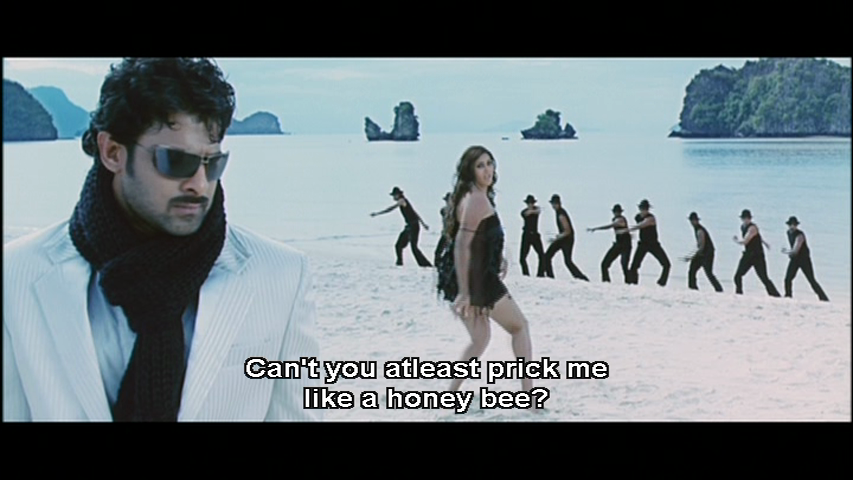
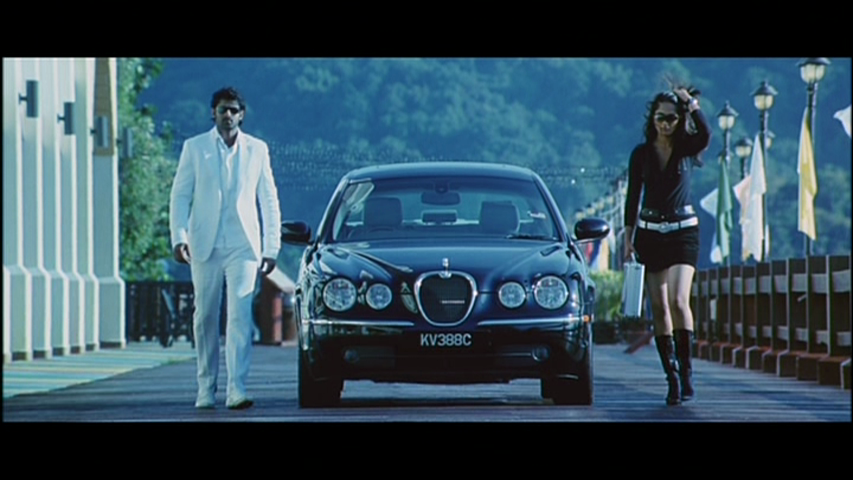
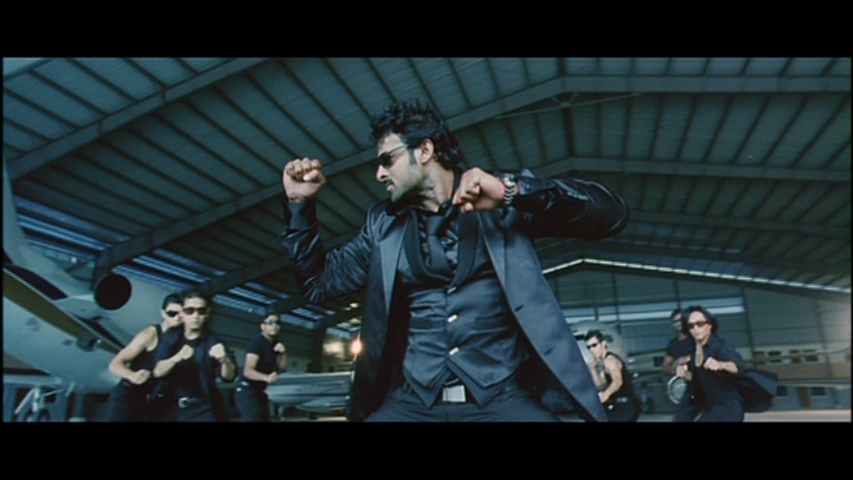
Prabhas plays the title role of Billa – a gangster with a puzzling penchant for black satin and three piece suits. In the tropics. No wonder he was always so irritable. The chafing must have been a nightmare.

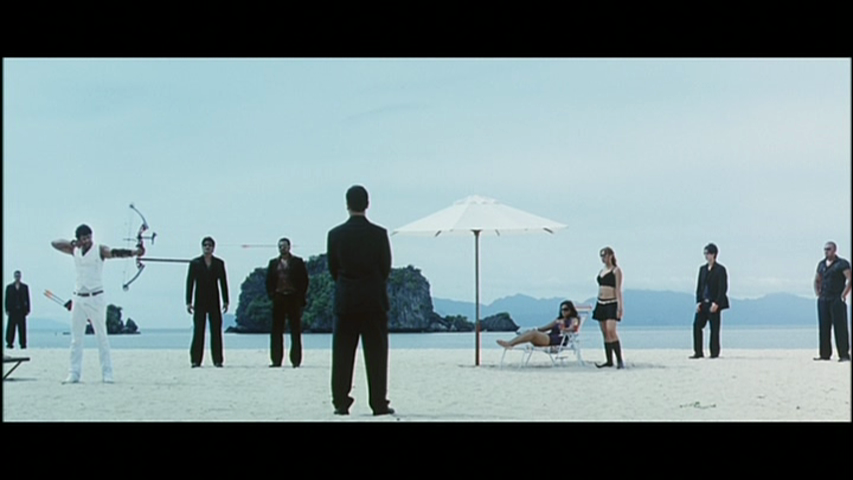
Billa works for ‘Devil’ and seems to be a model employee. He is out to eliminate the competition and stay ahead of the law while selling arms, drugs and who knows what else to villains all over South-East Asia. He lives a luxurious lifestyle on his private island where he continues to overdress for the beach.

He is a cranky intolerant man, and Prabhas does well to be so unlikeable and dour. I did like Billa’s catchphrase ‘Trust no one. Kill anyone. Be only one”. It was a bit reminiscent of Highlander.

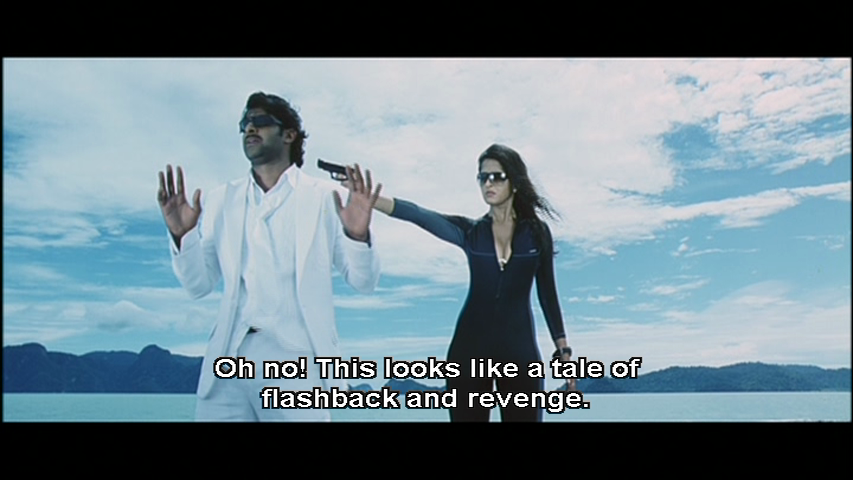
The English dialogues were often very funny though I am not sure the level of cliché was intended.  The subtitle team made their mark too.


Prabhas also plays Ranga – a naive thief and layabout who has a heart of gold. Ranga is Billa’s duplicate and when Billa is out of circulation, the police use Ranga to infiltrate the gang. This role is a better fit for Prabhas as his likeable goofy side is given more rein and he is more expressive.

Ranga is sympathetic without being overly complex. Prabhas gets an opportunity to play up the confusion as Ranga impersonates Billa but his characterisations are so broad that there is no ambiguity at all.

Ranga has a far more colourful inner life than Billa, so that allowed for some variation in the song treatments.

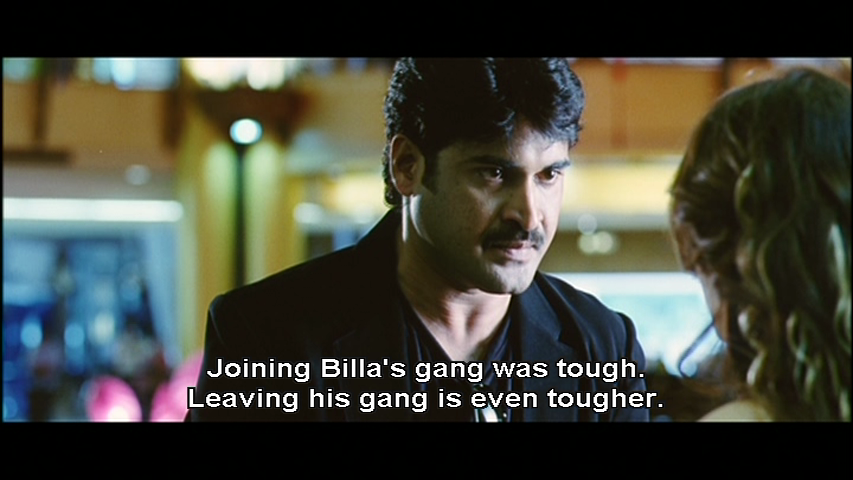
Subbaraju makes an all too short appearance as Vikram, the gang member who tries to leave Billa for love.

Once I realised he was marked for death I was a bit sad. But I cheered up when Hansika (his love interest) was hit by a truck. Seriously – casting Hansika for the role requiring a seductive dance? What were they thinking? Her costumes don’t help; a floor length evening dress (for clubbing, of course) is replaced with cut-off denim shorts and an oversized jumper. It was all quite daft and compared to Helen … well. Say no more.

Vikram’s sister Maya (Anushka) goes undercover to avenge her brother and his flattened fiancée.

Anushka is not exactly wasted in this role but despite being a strong personality, Maya is not all that integral to the action. The swimming pool has a more important role as it is the means of getting the heroines into their skimpiest outfits. Maya vies with Lisa (Namitha) for Billa’s attention and there is more chemistry, albeit toxic, between the ladies than there is with the hero.

I liked that Lisa was allowed to fight to get rid of her competition, and surprised to see that her repertoire included a fencing bout.

The action scenes by Stun Siva (what a great name!) are a blend of impressive fight choreography and some quite lame stunts. I could see the inspiration for a few scenes was directly lifted from Farhan Akhtar’s Don (2006) but it felt as though they got to the location, realised they didn’t have the budget or know-how and just went for it anyway. Prabhas seemed much more at home in the high adrenalin action scenes than with the dialogues he was given as Billa. The action scenes are sometimes quite creative.

Every good hero/anti-hero needs a good villain and Kelly Dorjee’s character Rashid is flamboyant and slightly unhinged. Krishnamraju (Prabhas’ uncle) is the dedicated policeman after Billa, and gives a nicely balanced performance. Adithya is a cop under suspicion of collaborating with the baddies and is effective and understated. Rehman is Dharmendra, the Interpol agent in charge of hunting down Billa. The supporting gang members are a mixed bag, including Supreet as Ranjith, Billa’s 2IC. Ali has a significant role that is not a comedy distraction. He is a good character actor so I wish he would do more roles that contribute to the story instead of distracting from it.

The music by Mani Sharma is disappointing despite being closely linked to the drama. It was all quite uninspired and only the performers and costumes made any of the picturisations very memorable. Anushka isn’t a very enthusiastic or accomplished dancer so I found the work-arounds in this clip quite amusing.

The costume designers had a fine time and the look developed for Billa and gang was quite consistent and fitted the overall visual flavour.

Namitha and Anushka seemed to have clothes designed by a 20 year old boy with raging hormones but they wore it all well. I have to say that if I am to be afflicted with half naked skanks swanning around, it is nice to see more curvy and natural shapes than a stick insect with implants. But was it necessary? What do you think. To be fair, there was a lot of shirtless Prabhas on display so there was almost equal opportunity for eye candy regardless of your interest.


Quite apart from the endless parade of shiny suits, I lost count of the montages of sour-faced Billa flexing and/or staring enigmatically.

I found Billa very entertaining. I pretty much knew where the story was going, but I liked the spirited and fast paced dash through all the shenanigans. Prabhas is in good form, the support cast do well with their material and the film looks great. It was a fun timepass and watching it again recently, I enjoyed it all over again. 3 ½ stars!

Heather says: Faran Aktar’s  Don is one of my favourite Hindi films which may be one of the reasons why I couldn’t appreciate this Telugu version. The opening scenes where Billa does his stuff as the king-pin of the drug organisation were painful to watch as the actors indulged in some of the most stilted acting and dialogue delivery that I’ve ever seen. Billa’s English phrases, in particular his ‘Can, can’ were dreadful and made him sound like a total idiot, while it was hard to watch Prabhas impersonate a chunk of wood when he’s normally a much better actor. It wasn’t just the terrible direction in this section that didn’t work for me, since the stunts and effects were just as bad. It appeared as if Meher Ramesh thought that a film about gangsters needed plenty of fast cars, helicopters and motorbikes, which I agree is not a bad idea, but then couldn’t work out how to use them in the story. So we ended up with completely implausible situations which seemed contrived just so that another over the top stunt could be stuck into the screenplay. And for goodness sake, if Billa was trying to escape in a Ferrari there is no way that anyone would have been able to keep up!  Plus it’s not exactly the best car for an unobtrusive getaway, but I guess that really wasn’t the point. Thank heavens for Subbaraju who did help me get through the first few scenes, along with Hansika as a comedy side-plot, since I couldn’t do anything but laugh at her character.
The film picked up immensely once Prabhas was allowed to exert his natural charm as Ranga, and despite the continuing forays into pointless special effects it was much more entertaining. I enjoyed Ali’s role for a change, and Anuskha and the other supporting actors were all good enough to keep their characters interesting. I just wish Billa had been less of an escapee from a Goth fashion parade (clichéd model personality included) and more of a vicious but possibly more interesting killer. 2 ½ stars.

Bhookailas


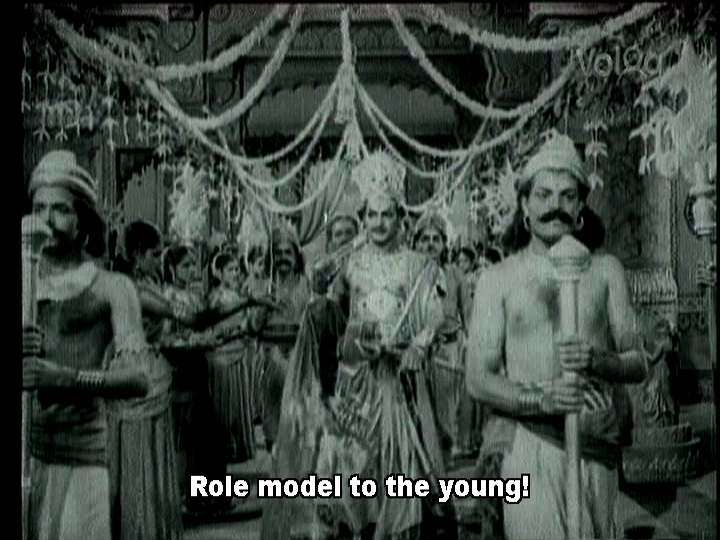
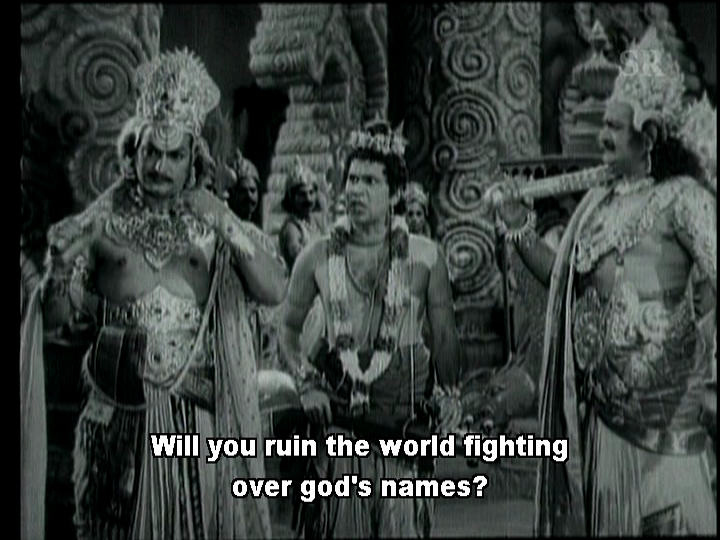
Bhookailas is replete with all the necessary elements for fine entertainment; great actors, beautiful music, lots of excellent dancing, fabulous sets and most important, a good story. It’s not just a fluffy fairytale or fantasy though as there is some philosophy underneath the gilding. But more than anything, it is a great entertainment and a pleasure to watch. (The Volga DVD has good subtitles and the picture quality is fine on screen although poor in screencaps.)


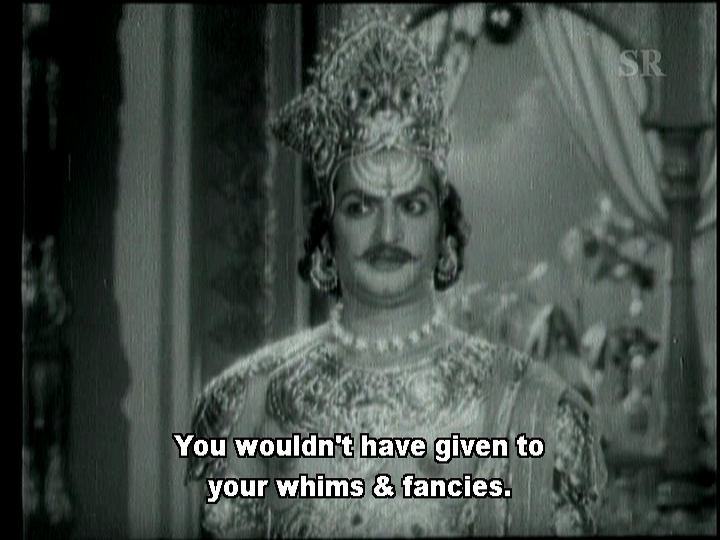
Ravana (NTR) has conquered the human world and is at a loose end. Being a magnanimous ruler, he asks his brother demons what they want as a reward for this victory. His generals suggest a sleeping festival (excellent!), peace and justice for all, and finally that he declare war on heaven as the gods are worthy opponents for demons, not like frail humans. In order to avert this war which Ravana will likely win, the sage Narada (ANR) starts conniving and scheming to keep Ravana from invading.


Ravana is brave, intelligent, principled but very impulsive and has little self control. NTR is in his element as the larger than life Ravana. He creates a sympathetic character but one whose flaws are all too evident. The character spans broad comedy, doe eyed romance and the aggressive assurance of unchallenged leadership. Ravana is easily manipulated by Narada, Vishnu, Parvathi, his own mother and Ganesh among others.

His lack of insight and self awareness brings him undone when he has the potential to rival the gods should he focus his will. So he is like lots of men we all know- asked to bring back one specific item from the shops, and coming back with either nothing or something completely random.


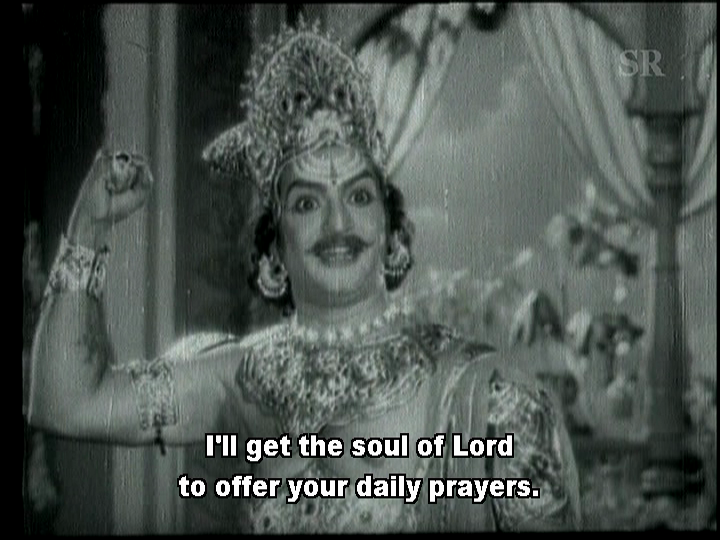
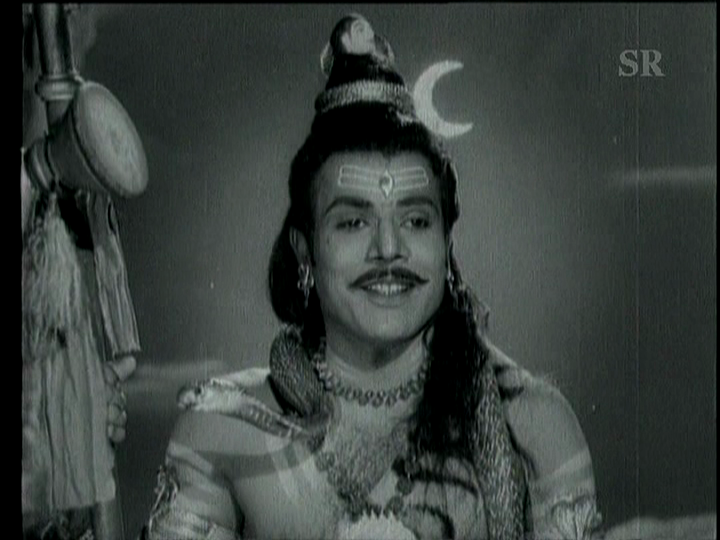
Ravana’s mother Kaikasi (Hemalatha) is a devotee of Shiva. When her prayers are disrupted to stop her gaining Shiva’s benediction, she charges Ravana with making Shiva answer her prayer. He is a total mummy’s boy. He takes it one step further and promises to bring back Shiva’s atmalingam, his soul, for her to pray to. When he decides to beseech Shiva through rigorous penance, not even Helen can distract him.

But he loses this focus and falls under an illusion that sends him off on a tangent. Ravana’s quest to win back that blessing from Shiva takes many detours thanks to Narada.


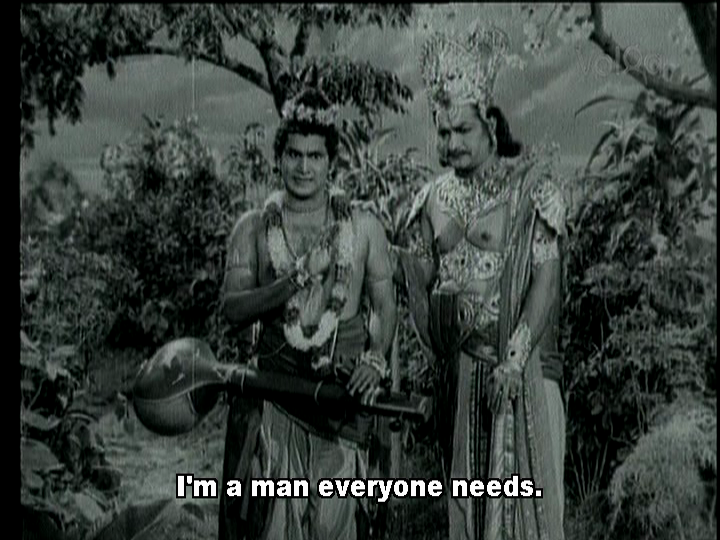
Narada (ANR) is intent on maintaining the status quo. He plays on the susceptible Ravan and the change resistant gods. He puts the wind up heaven with dire predictions about what will happen should Ravana succeed. He stirs up Ravana’s impulsive and suspicious nature to manipulate him. ANR’s performance is lots of fun with a supercilious eyebrow here, a self serving whinge there, and a whole lot of economy with the truth. He sabotages Ravana’s request for a boon from Shiva, using illusion to persuade Ravana to ask for Parvathi as his reward. But the plan doesn’t play out exactly as Narada hoped, and he scrambles from drama to catastrophe and back again with only his wit and sophistry to help him navigate between the gods and demons. The gadfly tactic manoeuvres the protagonists, sets up conflict and also provides some of the more comedic moments.


Shiva’s alert and active snake companion was a highlight. The snake is quite interested in the proceedings. I was picturing the person responsible for snake directing and the bag of tricks they must have employed. Occasionally the snake would have a snooze and seemed to be waiting for someone to do something entertaining. Nagabhushanam portrays Shiva in a more paternal style, taking an indulgent approach to his devotees most of the time.

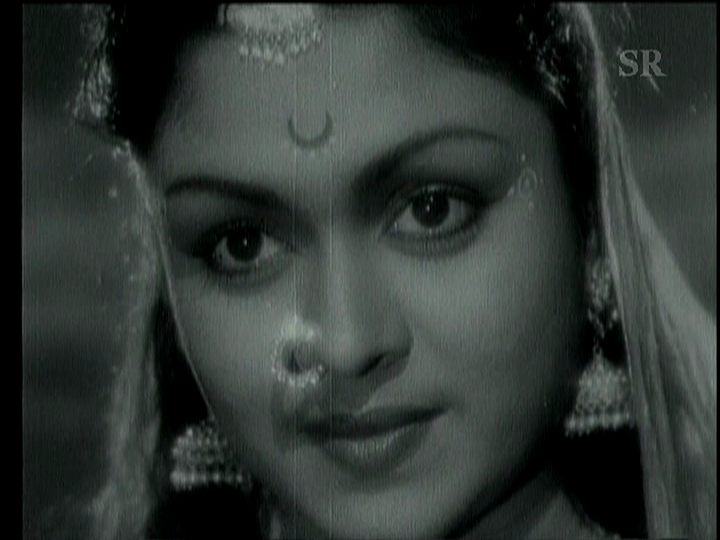
Parvathi (B Saroja Devi) is beautiful and stately and her role requires little more than that. Parvathi is used as a pawn in the game Narada is playing with Ravana, and despite her power she finds herself being carted around from pillar to post. But finally after prompting from the ever helpful sage, she uses her own power of illusion to break free. Apparently Ravana couldn’t see her inner beauty.

Mandodari (Jamuna) is Mayasura’s daughter, and persuades herself to fall for Ravana. Jamuna is lovely but she looks a little too mature and knowing to be totally convincing as the young and inexperienced princess. Her handmaidens joke about how Ravana will be a bucktoothed crosseyed hunchback and then tease her when they see she has feelings. Mandodari is very privileged and enjoys the finest things in her father’s lavishly decorated aquatic themed underwater kingdom.

But she has a hard time of it when she gets the husband she wants and discovers he was under the impression he had married the goddess Parvathi. Mandodari is another unwitting player in Narada’s plan to keep the three kingdoms in their proper place.

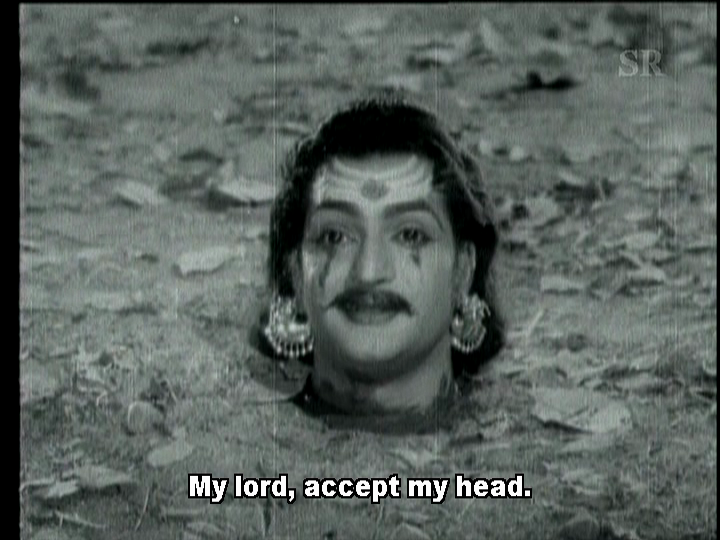
After all the trickery and deceit, Ravana offers penance in very dramatic style, cutting off his own head. It makes the acts of contrition my school priests used to dish out look pathetic. Ravana wins forgiveness but fails to triumph thanks to his inability to stay on task. Again. He neglects an instruction, disregards a warning and jeopardises the very thing he had struggled for.

His flaws were his undoing and they were all things he could control or learn to manage. Luckily his failure created something very special for the human world, so the film ends on a cheery note.


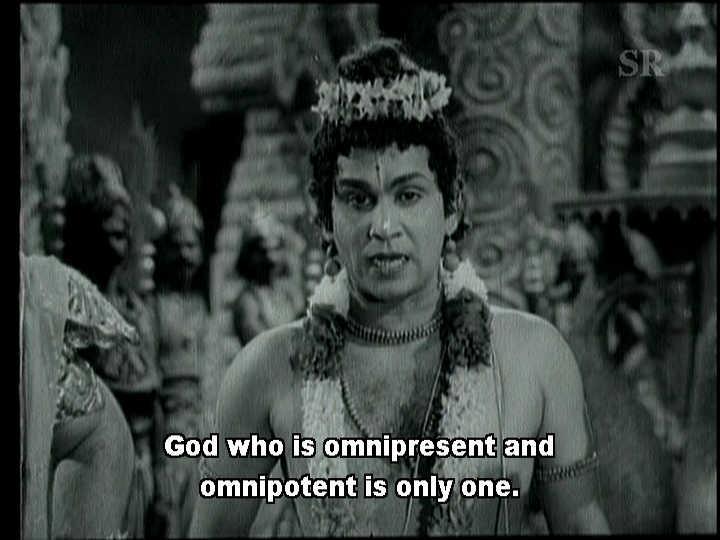
The animosity between would-be in-laws Ravana and Mayasura (an ebullient S.V Ranga Rao) is due to their worship of different gods – Shiva and Vishnu. There are some very pointed references to this, including Narada rebuking them for not realising that god is one and omnipotent. I wondered if this speech was in response to current day issues or purely part of the story. It seemed to be directed straight down the barrel of the camera which made me think it was at least partly commentary aimed at the audience.
The songs are particularly enjoyable, even more so with the bonus of excellent dancers. The songs are directly linked to the story so expand on things or underline issues. In Mayasura’s palace Kamala Laxman performs a very elegant dance depicting Vishnu’s avatars, while Gopi Krishna dances in a more wild and entranced style in devotion to Shiva.

The visual effects are simple, and the use is restrained, so they also enhance the atmosphere of a world outside of human reality.
As with many of the devotional, religious and mythological films from the 50s and 60s that I’ve seen, you don’t need to know anything about the main characters as a preqrequisite to enjoy the story. Bhookailas is beautifully self-contained, and K. Shankar has structured it to make the story accessible and entertaining. Watch this for the rattling good story, the wonderful actors and the visual riches. 5 stars!

Heather says: I found Bhookailas to be an interesting film as it shows Ravana from a totally different point of view. NTR’s demon king is depicted more in his ‘devoted follower of Shiva’ character rather than the more traditional ‘Ravana as the embodiment of all evil’ and for most of the film he is heroic and really quite dashing. It’s quite a change as I think this is the first film I have seen where Ravana hasn’t been just the villain that everyone is supposed to hate and it does make for a fascinating story.

NTR is excellent in his role and his depiction of Ravana’s all-conquering and all-powerful king is very believable. His devotion to Shiva is well shown but even better is his colossal arrogance which NTR hits just right, and when Ravana loses his temper there is a real edge which brings out his demonic nature clearly. However, Although I really liked NTR here, the standout performance for me was ANR. He is brilliant in his depiction of the sage Narada, and I think that this is probably the best characterisation of the trouble making sage I have seen. Narada’s frequent nods, winks and knowing looks are very well done, and he excels in causing trouble for trouble’s sake. ANR hits the character perfectly and his mannerisms and facial expressions make his scenes very enjoyable to watch.  The interactions between Narada and Ravana are also very well written, and both actors work very well together to bring their characters to life.

As Temple has mentioned, there is very little scope for any of the female roles here, and Hemalatha as Kaikasi probably has the role with the most substance. I enjoyed her performance and her exasperation at her impetuous son was excellently done. I wasn’t very impressed with Jamuna’s Mandodari and all her simpering, but I did love the underwater palace where she lived. Seeing Helen pop up in a song was a lovely surprise, and I was suitably impressed that Ravana was able to ignore her wonderful dancing as he meditated. Great music, fantastic performances and a thoroughly entertaining story make Bhookailas very well worth watching and I thoroughly recommend it. 4 stars.