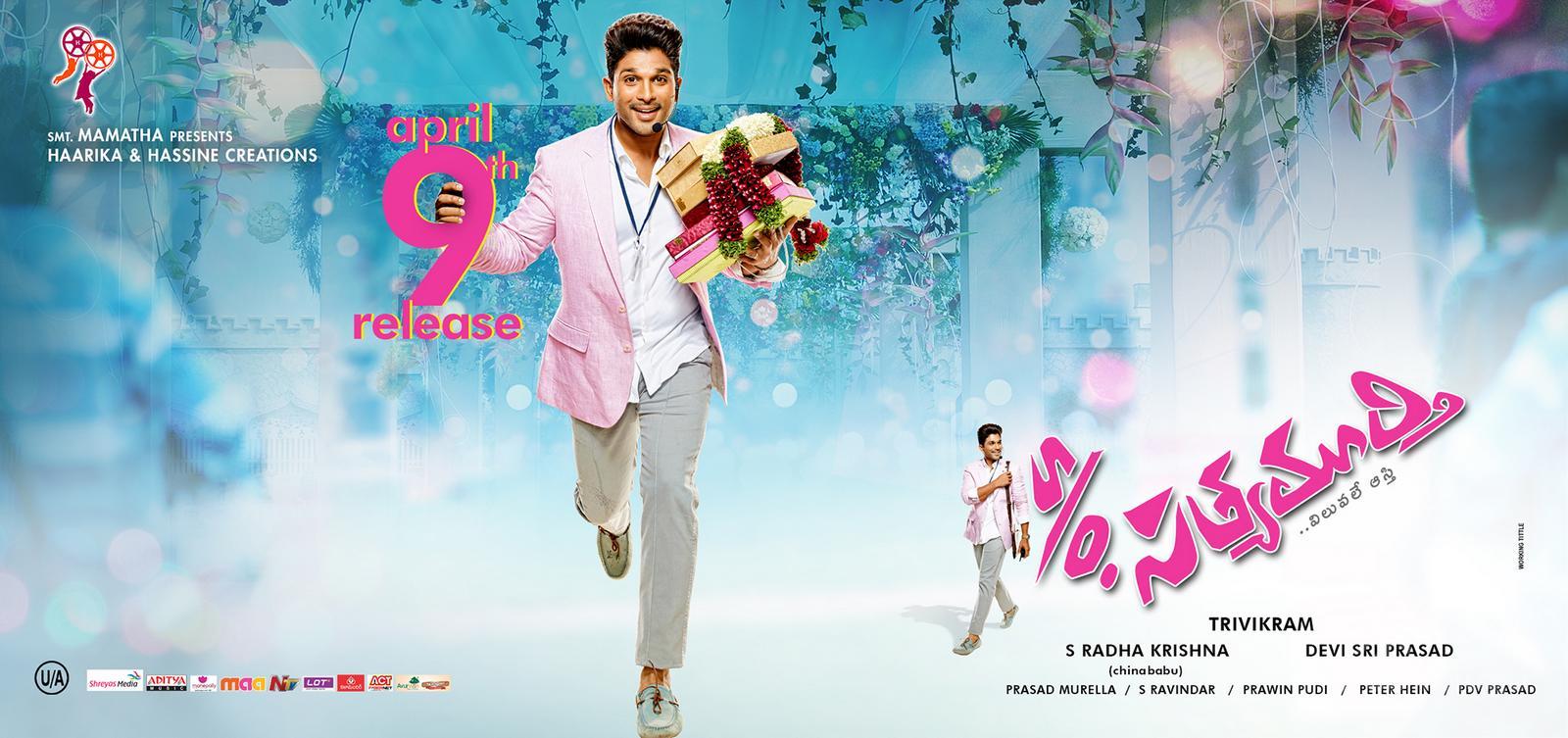
Son of Satyamurthy

Son of Satyamurthy

After their previous success with Julayi, Allu Arjun and Trivikram are back together again with Son of Satyamurthy. The film features appearances from Ali, Brahmi and most of the Telugu film industry stalwarts, but despite the plethora of comedy uncles, it strives for a more serious tone and is a more traditional family drama. Bunny puts in a restrained performance compared to his earlier films, and it appears that Trivikram has concentrated on character development rather than glitzy glamour and full-on action of most Telugu cinema. The storyline has plenty of potential and I loved the inclusion of villains who are not wholly evil but have the capacity for reformation, but there are a few misses. The film is undermined by the inclusion of a few unnecessary characters that reduce the overall impact and at times the sheer number of protagonists threatens to drown the main storyline. However the central theme of a young man determined to stick to his father’s principles stands strong and Bunny does a fantastic job in a more serious role than usual.

S/o Satyamurthy

Prakash Raj is Satyamurthy; a rich man who is happy to lend money to all and sundry without judgement or seemingly any expectation of repayment. He has strong principles and his values have been absorbed by his family even if they don’t always agree with his open-handed policies. And perhaps they had a point, since Satyamurthy’s sudden death reveals a large amount of debt. The family lose their affluent lifestyle and downsize their house, possessions and expectations when Satyamurthy’s son, Viraj Anand (Allu Arjun), refuses to default on the loans and insists on doing the right thing – as his father would have wanted.

In an odd addition, Vennela Kishore plays Viraj’s older brother who is incapacitated by his father’s death, but as his character is played mainly for laughs (which are never very funny and don’t add anything to the story), there doesn’t seem to be any real need for his inclusion. Similarly, Ali appears as Parandhamayya, some sort of assistant to Viraj in his new job, who is another character who could have been omitted without losing too much from the story. I rarely find Ali’s brand of comedy funny but here he is less slapstick than usual and generally rather muted, so while I can’t see much point to his character at least he is tolerable and occasionally amusing.

Although businessman Sambasiva Rao (Rajendra Prasad) blackballs Viraj, a friend helps by giving Viraj a job as a wedding event manager. Viraj is dumped by his own fiancée when loss of his fortune makes him less desirable as a husband, and naturally his first event is the marriage of his ex, Pallavi (Adah Sharma). This makes Viraj deal with his loss of wealth and prestige fairly early on in the film and also reinforces the contrast between his own morals and those of Pallavi’s rich but dishonest father (Rao Ramesh). In classic filmi style, Viraj manages to reconcile the various family members and in the course of events falls in love with one of the wedding guests. M.S. Narayana appears in his final film appearance here, and it is bitter-sweet to see him in one of his classic drunken uncle roles, especially when his role fits well into the storyline.

Bunny’s Viraj is a sensible and responsible young man and he does a great job of making his character principled without becoming preachy or overly moralistic. The only misstep is his tendency to invoke stories of Hindu Gods that sounds a little odd coming from someone who hadn’t previously demonstrated any evidence of a virtuous attitude. It would have made more sense to me if he’d quoted his father instead, but perhaps that is due to my lack of Telugu and reliance on the subtitles which may not have been too accurate – going by the atrocious spelling as a general guide to overall quality!

Subbalakshmi, aka Sameera (Samantha) is the wedding guest that Viraj takes a fancy to, and to her credit she immediately realises that Viraj is a keeper. In a move away from standard filmi heroines, Sameera is introduced holding a drink and a cigarette, and for some reason she is also a diabetic, although there didn’t seem to be any particular point to this other than as a brief comedy scene. I generally like Trivikram’s approach to his heroines, but he seems to lose interest once he moves on to the action and sadly Samantha disappears for much of the second half. However she is excellent in her role and has great onscreen chemistry with Arjun.  The couple look good together in the songs too, which pepper the first half and allow Bunny to demonstrate why he truly is the ‘stylish star’. There is some annoying hair discontinuity, but since the worst bouffy hair only appears in the songs it’s actually no bad thing that Bunny’s hair length is shorter for the rest of the film.

Rajendra Prasad and Upendra are the other standout performers and they both help bring the film to life. Much of the comedy is between Rajendra and Bunny, and is much funnier than the specific comedy threads with Brahmi and Ali. The two bounce lines off each other to good effect and are really much better than any of the assorted comedy uncles who fall flat in comparison. Upendra appears as the villain of the piece, and is as vicious and violent as required (per Telugu standard bad guy guidelines) but shows a different side when dealing with his wife and sister. He’s an interesting character and Upendra is excellent in the role, switching from demonic goggle-eyed evil one moment to concerned husband the next, but with so much else going on his role isn’t developed as much as I would like. Sneha is also very good as his sweet and serene wife, but Nithya Menen seems a little wasted in her role as a rival for Viraj’s affections. That’s a shame too as her character starts off well with an interesting plan of attack but it’s lost in the hodge-podge of action and Brahmi comedy that makes up the rest of the film.

There is a lot going on in Son of Satyamurthy and it does evoke films of yesteryear with the convoluted storyline, sheer number of characters and focus on honour, values and moral principles. The songs from Devi Sri Prasad aren’t too memorable, but they are well choreographed and smoothly flow into the storyline. Bunny dances better than ever and also looks amazing with Peter Hein’s fight choreography. Interestingly the fights aren’t as brutal and violent as usual (there is a hose as a weapon for instance), but the wirework and acrobatics are outstanding and very effective. I really enjoyed Son of Satyamurthy and although it would have benefitted from fewer characters and less formulaic comedy it’s an entertaining story with some excellent performances. Well worth seeing on the big screen to really appreciate Bunny’s dancing if you can.
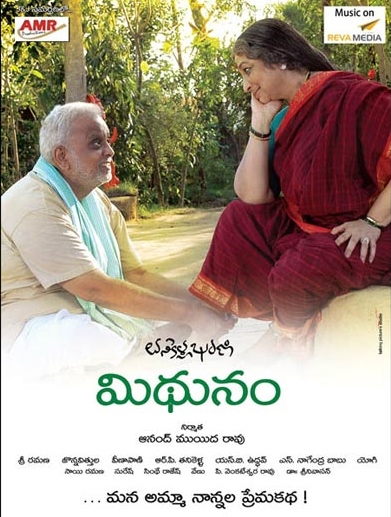
Midhunam (2012)

Midhunam Poster Over the past few years of watching Telugu films I’ve seen Tanikella Bharani on-screen in many roles, but most usually as the sensible father or responsible authority figure providing support to the hero or heroine. He appears as such a natural actor and fits those roles so well that I was surprised to find out that he is also an accomplished writer, dramatist, poet and now film director. In Midhunam, Tanikella Bharani has adapted a short story by Sri Ramana, writing the screenplay and dialogue and also directing the film. It’s a lovely little story about an elderly couple living alone in the country that focuses on relationships and shows that love doesn’t fade with the passing of time. It’s rather unusual in that there are only two actors for the whole two hours, and the film concentrates on their day to day activities and interactions without any momentous dramas or major events. It’s beautifully done, and is well worth a watch for a well-drawn picture of a happy marriage and a glimpse of rural life.

Appadaasu (S.P Balasubrahmanyam) and his wife Buchchi (Lakshmi) live by themselves on a small farm in the country. They have five grown up children who have moved to the USA but who keep in contact with their parents by phone. The couple seem to prefer their solitude and isolation, with Appadaasu shouting at a persistent caller who keeps knocking on his door, and yelling at his son down the phone when he calls unexpectedly. Buchchi on the other hand does seem to miss her children, but doesn’t have any wish to move away from her home despite the hard work it takes to keep everything maintained. She keeps a mobile phone hidden in one of her pots in the kitchen to talk to her children without her husband’s interference, although this seems more to be a way of outfoxing her husband rather than actually something that is completely necessary.

The couple squabble incessantly about literally everything, but their arguments seem to be more as a result of knowing each other too well and being very comfortable with each other rather than from any genuine acrimony. They are like small children, pushing at each other until they get a reaction, but not taking any of it too seriously. It feels comfortable and natural, just like any married couple after a number of years together. There is also a lot of laughter as they play tricks on each other and each tries to get the upper hand. Buchchi seems to be the more sensible one but she strands her husband on a top shelf by removing the ladder so that she can make coconut chutney in peace, and teases him later on by dressing a scarecrow in his clothes. Their love for each other shines through all of the bickering and teasing, and is the central thread around which everything else is woven.

Appadaasu is a man who takes his food seriously and much of the film is either about growing food, the preparation of food or eating.

The couple harvest everything they need from their farm, and they have impressive crops which do look very appetising. In fact the major focus on food might be one of the reasons why I enjoyed this film so much! At one point one of the sons proposes that the family come home for a wedding, and Buchchi immediately starts cooking enough food to feed an army. This is accompanied a song which celebrates pickles amongst many other traditional foods and is just mouthwatering!

There is an old radio on the wall and the programs and old songs are incorporated into the film, adding to the story. Both Appadaasu and Buchchi have conversations with their cow Savithri, who is almost a third member of their family and serves as a sounding board for some of Appadaasi’s ideas.  In between all the cooking and eating, Appadaasu expounds his philosophy that retirement from his teaching job doesn’t mean that he doesn’t work. He makes sandals, cleans cotton, throws pots and does a myriad of other tasks that emphasise his practical nature and willingness to do whatever he feels his wife wants. Actually asking and doing what his wife really wants naturally isn’t an option, and Buchchi makes sure that Appadaasu knows when he’s missed the point completely.

S.P.  Balasubrahmanyam is perfect in the role of Appadaasu. He’s cheeky and mischievous but also appears suitably serious when necessary. His expressions are wonderful and he fits the part of a cantankerous but loving husband perfectly. Lakshmi is also well cast as Buchchi and is the ideal partner for S.P. Balasubrahmanyam. The two have great chemistry together and the rhythm of their dialogue sounds as if they really have been together for years. That’s down to some good writing too, but the body language, delivery and tone from both actors ensures that they do appear to have grown old together and are very familiar with each other as a result. The use of older songs helps set the mood of the story, as does the beautiful location and wonderful farmhouse. I’ve just spent a week staying at a farmhouse near Tanjore, and much of the décor was just the same as my own recent experience. The film feels authentic due to this and many other small touches which is part of why it works so well. The cinematography by Rajendra Prasad Tanikella (a relative?) is also outstanding with beautiful use of light during the night scenes and great shots of the farm and surrounds.

This is a sweet film that simply follows the ups and downs of life for an older couple and shows how a marriage might be after more than 50 years together. It’s charming and yet meaningful with the contrast between Appadaasu and Buchchi’s life and the imagined lives of their children overseas just one of the ideas explored. There is jealousy, anger, forgiveness, tenderness, love and sacrifice, all mixing together to add colour and life to the description of a successful partnership and just what that partnership really means. A beautiful film that deserves a wide audience. 4 stars.

47 Rojulu

47 Rojulu poster

K Balachander’s 1981 film 47 Rojulu is a study of domestic abuse, and I found it uncomfortable to watch. It’s melodramatic yet has a ring of realism, largely due to Jayaprada’s characterisation of Vaishali, and the often quite graphic violence. Chiranjeevi stars opposite in a negative role, and he doesn’t hold anything back.

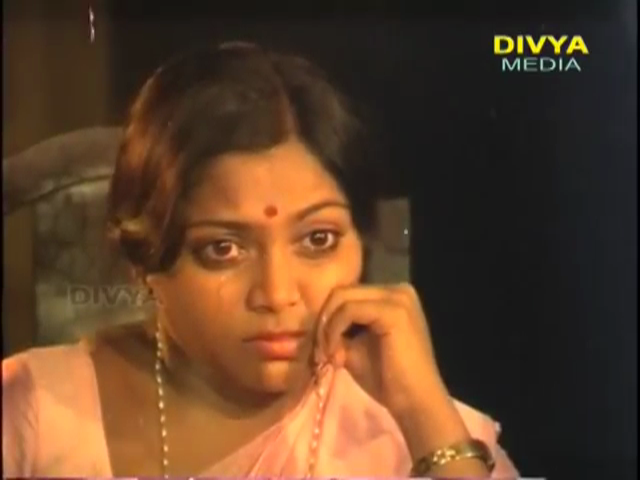
47-Rojulu-Saritha

The story is told in flashback, through the device of a visiting actress (Saritha) who comes to talk to Vaishali as preparation for a film. I have only seen this in an unsubtitled print, and it is a dialogue heavy film, so at first I was a little confused by the flashback structure. However, the emotional tone and pitch of the drama comes through loud and clear and I had no trouble in following the main story.

Vaishali (Jayaprada) and her brother are coming home from seeing Shankarabharanam (I think) at the cinema when she sees a wedding taking place. Kumar (Chiranjeevi) is discussing marriage with his parents and next thing you know, he is getting married to Vaishali. All looks fine until after the ceremony when he gets the wedding photographer to give him the film, and exposes all the rolls. Why wouldn’t he want pictures of his wedding day? He seems quite keen on the wedding night and wasn’t forced into the marriage (apart from some gentle parental coercion). Also a little odd, he tests to see if she can speak English. Soon after the wedding they move to France.

At first things seem fine. Kumar shows off the house in the countryside outside Paris, and introduces his naïve bride to heating, sliding doors, supermarkets and televised sports. They live in a cosy modern flat on the ground floor, and a woman called Lucy lives upstairs.

Then one day Kumar is chatting to someone in French and introduces Vaishali as his sister. Hmmmm. Of course she has no idea as she speaks only Telugu. It is clearly a lie when he says Lucy (Anne Patricia) is just a friend. There is an awkward dinner, with Lucy completely unaware Vaishali is married to Kumar and with Vaishali confused by who this woman is and why she acts so familiar with her husband. Lucy seems happily oblivious although she does realise Vaishali isn’t comfortable around her. And then one day Vaishali, overwhelmed by her unease and distrust, searches Lucy’s apartment and finds a wedding photo – of Kumar and Lucy.

If Vaishali asks any questions about their domestic situation, Kumar puts her down so she will feel ignorant and shut up. He cuts her off from any other Indian people in the area, and he is her only source of information. She loses her confidence, she feels stupid and disgraced, and she has no one other than Kumar. When she does a runner to Paris by herself, Kumar drags her home and burns her hand on a hotplate as punishment. It’s quite sad that Lucy tries to comfort her ill ‘sister-in-law’ when she is unwittingly part of the problem. Jayaprada does a great job of showing the changing emotions and moods of the abused wife. She really likes Kumar and her marriage when he is in a good mood, and Vaishali seems to excuse his early outbursts by blaming herself or thinks it is just because he is tired or stressed. Her growing realisation that she is in trouble and that her marriage is a sham is sad to watch.

Kumar does spend quite a lot of time with Vaishali (he doesn’t have a job as such) and seems affectionate and caring. They do the tourist thing around Paris, enjoying the sights and making fun of some fashionable locals. How he thinks he can keep hiding the truth is beyond me.  Kumar justifies and rationalises – he sees no reason why he can’t have it all, and no compunction about hurting either of the women.  He has an impulsive warmth which can be appealing, but that can swiftly turn to rage and brutality. His behaviour escalates from verbal nagging and bullying to physically attacking Vaishali.

In one sickening scene of what is essentially marital rape, he withholds her letter from home to coerce her into having sex. And when Vaishali falls pregnant he starts to really lose the plot as he sees his perfect life crumble. He seems to insist on a termination and certainly there is no baby later in the film, although how and if it was her choice isn’t revealed as far as I can tell. Chiranjeevi gives a strong and complex characterisation of a loathsome man. I certainly didn’t find the Chiru Mega appeal made the situation any more palatable, but his layered performance allowed me to empathise more with Vaishali’s disillusionment as she came to terms with the deception.

Some isolated and precarious locations seem intended to convey fear or dread, and I was certainly yelling at Vaishali to be careful, especially in one rooftop scene. Kumar abandons her in a forest at one stage, and tears the mangalsutra from her neck before leaving her in a park on another occasion. He uses her isolation and the unfamiliar surroundings to reinforce her caged existence. He also takes her to see a show of an ‘adult’ nature (to the Pink Panther theme music – how saucy) to prove his point that love and sex were different in France, but she is utterly repulsed by the spectacle. The cosy apartment that she loved on first sight becomes a prison.

The drama is almost claustrophobic as it all takes place in Vaishali and Kumar’s tiny world, so the support cast is small. Sarath Babu arrives late in the piece as Telugu speaking Dr Shankar, who becomes aware of Vaishali’s predicament. Ramaprabha is a petty thief who is hated by the wardrobe department and who gets Shankar involved in the situation. The plot manipulations required to get them into position don’t really stack up, but I was relieved to see Sarath Babu regardless. There is something very salt of the earth and reliable about him in these secondary good dude roles. And I was happy  that once Ramaprabha’s character understood Vaishali’s situation, she reached out to help. Anne Patricia is not the best actress ever, but I felt sympathy for Lucy and was glad to see how her storyline played out.

Some things didn’t quite fit with the realism of the initial set up. Who travels with an electric hotplate or element just on the chance they will want to burn their spare wife? The songs added nothing to the narrative development so I would have left them out, or kept them as background. And the final chase was dramatic but didn’t make much sense, logistically speaking.

47-Rojulu-not interested

Lest this all sound too grim, back in the present day Saritha asks about the doctor, sparking an outburst from Vaishali. It seems she feels marriage is not essential for a good life.  Hear, hear!

This is a difficult film for me to watch as I find the subject repugnant and to be honest, I prefer a Chiru I can cheer for. I do appreciate the nuanced and sympathetic but not sentimental portrayal of women and relationships. 4 stars!