Madras (2014)

Madras

Pa Ranjith’s second film is a gritty and realistic drama that starts well but gets a little lost in the second half when the focus of the story moves more towards a fairly awful romance. However, thankfully the character interactions and underlying political story have enough momentum to bring the story back into focus well before the end. Although Karthi is good in his role as a short-tempered, football loving bloke from a housing project, it’s Kalaiarasan Harikrishnan as his best friend who impresses the most from the generally excellent cast. The notable exception is Catherine Tresa who seems painfully miscast as Karthi’s love interest, and she appears awkward and uncomfortable for most of the film. Madras does drag a little in the second half as a result, but overall the portrayal of life in a housing project in Northern Chennai is convincing, while the political shenanigans add enough complexity and interest to make the film well worth a watch.

MadrasMadras

The story follows the rivalry and competition between two local political parties in Royapuram, a district in northern Chennai. While the politicians have managed to split most of the area amicably between the two factions, there is one wall in the middle of the district which remains in bitter contention. After some initial wrangling, for most of the film the wall features a painting of the deceased leader of one party (Jayabalan), but while his son Kannan (Nandakumar) and followers are determined to keep this image on the wall, Maari (Vinod) and his party want to claim the wall for their own propaganda. Caught in the middle are the people who actually live in the shadow of the wall and for whom the two political leaders talk the talk but don’t actually deliver very much in the way of benefits. This is simply highlighted in the way the women meet every morning to get water from a pump, and in the various fractious meetings between the rival young men of the area and party leader Maari.

The gang in Madras

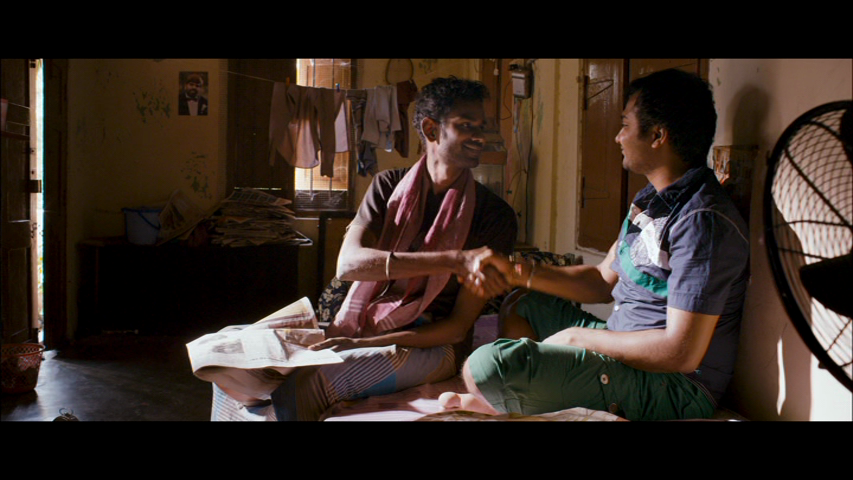
Anbu (Kalaiarasan Harikrishnan) is the up and coming political activist in Maari’s party, and one of the driving forces behind the campaign to retake the wall. His relationship with his wife Mary (Ritwika) is one of the best I’ve seen onscreen in Tamil cinema and their stolen moments of intimacy have just the right amount of tenderness and humour. Both Kalaiarasan and Ritwika are brilliant in their roles here and I just wish the film had focused more on them and their relationship. Excellent performances from both made it very easy to completely believe in their characters, along with some very good writing and character development. The couple lives in a small apartment with their young son, and despite Anbu’s political drive and aggression, he is still a man who obviously loves his family and wants to do his best for both them and his local area. His best friend is Kaali (Karthi), an IT worker with a very short fuse to his temper, which spills over into violence with little provocation. While Anbu tries to negotiate his way to solutions, Kaali frequently disrupts his careful dialogues, and seems to think of little beyond the moment.

Madras

Kaali is however a staunch and stalwart friend, so it seems natural that Anbu doesn’t give up on their friendship but rather tries to mitigate Kaali’s outspokenness and intervene when he flashes into violence. The relationship between the two is complex and Ranjith is to be commended on writing such a convincing portrayal of two angry young men with such different agendas but who still have plenty of common ground.

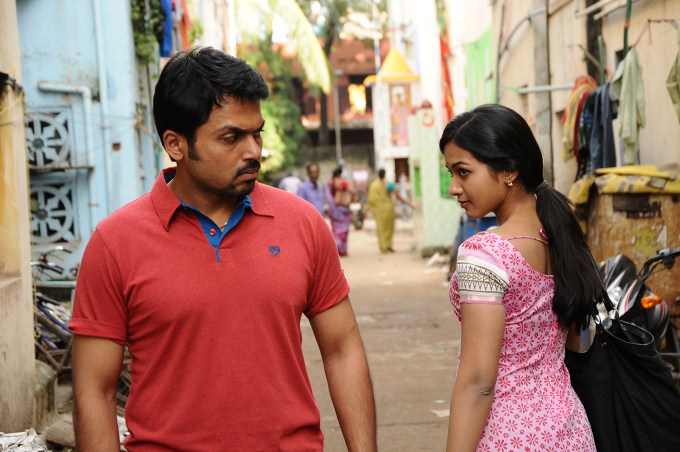
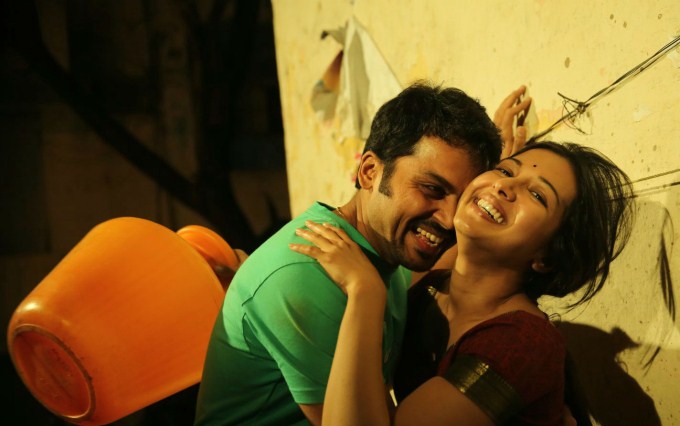
Kaali is also looking out for a wife and believes he has found his ideal in Kalaiarasi (Catherine Tresa), the arrogant and opinionated daughter of yet another local politician. I found Catherine Tresa annoying and wooden in Iddarammayilatho and she does nothing here to change my opinion. The character of Kalaiarasi is interesting and has potential, but I’m not convinced by Tresa’s portrayal here at all.  She appears to be obviously ‘acting’ all the time and never manages to develop any rapport with her co-actors.  Perhaps her inclusion was Ranjith’s attempt to make his film more commercially appealing, but her performance definitely doesn’t work for me, and neither does the romance.
Madras

The rest of the story does however work well and despite the fairly obvious plot the first-rate characterisations are enough to keep it believable and interesting.  The various other support actors are effective with Rama as Kaali’s mother having some of the funniest dialogue, while Hari as local eccentric Johnny is cleverly used to further the storyline.  Anbu and Kaali’s friends are also convincing in their roles while the various enforcers used by the two political parties are much more realistic (and therefore believable) than the rent-a-thug gangsters usually used in such roles.

The cinematography by G. Murali is also excellent, with the chase sequences through the narrow streets a major highlight, but everything is perfectly framed to ensure the wall looms over everything and everyone in the area. Although there are a few songs they are used sparingly without long disruptive dance sequences, while the film does include some excellent dancing with the addition of a local area dance troupe who cycle through some of the important scenes and indulge in spontaneous dancing whenever possible. I approve!

Madras Karthik and CAtherine

The escalation of such a small issue as the slogan on a wall into an all-encompassing problem, along with the back-stabbing, petty rivalries and jealousies is well handled and makes Madras a more complex tale than it first seems. It’s the very ordinariness of the characters that ensures the film feels very realistic, while keeping obvious heroics out of the equation gives the film greater impact. Essentially Pa Ranjith has taken an old story and dressed it up into something new, with clever characterisations and good use of locations ending up with a film that’s a cut above the usual political thriller. Madras is definitely well worth a watch for impressive performances and a relatively realistic look at one of my favourite cities.

Pizza

Pizza-Poster

Billed as a supernatural suspense thriller, Pizza is an assured debut by director Karthik Subbaraj. At a relatively taut 2 hours or so, it certainly manages to pack in the suspense and a few twists and turns. I’m going to try and avoid spoilers and will not divulge much of the plot.

Anu is an aspiring novelist and Michael works in a pizza joint. They live in an outbuilding, relying on bribes to keep the security guards turning a blind eye.  She falls pregnant, and eventually he overcomes his fear of the responsibility enough to propose. While Anu wants a proper wedding, he says they will do that when they can afford it but for now, they should just marry for their own sakes. They dress up in their nice clothes and exchange vows in their yard. So far, so good. On a late night delivery, Michael is waiting for change when the lights go out and he hears noises upstairs in the house. He goes up and sees his customer bleeding from multiple wounds, but no sign of her attacker. Michael runs, trying frantically to find a way out of the house but there are bars on all the windows and the door has been deadlocked. Oh, and the house is full of dolls. And then he hears music from upstairs.

And to find out more about the plot you’ll need to watch the movie. If you haven’t seen the film and don’t want to know what happens, may I suggest you avoid reading the painfully detailed plot synopsis on Wiki. I saw it recently when I was checking cast details and wow – way to ruin a suspense film, Wiki-dude.

Pizza-filmi heritage

Subbaraj isn’t shy about using filmi cliché to misdirect or tease the audience, and I’d guess he has watched his fair share of horror and paranormal movies. A lot of the film is set during the night time and between the deep shadows and the rapid changes of point of view and edits, there is often a sense of unease and of being watched or followed. In contrast, the domestic scenes between Michael and Anu are airy and colourful, with a gentle and usually flattering light. I found one extended sequence quite poorly constructed, as though the director was making things up as they went. That became an extremely clever approach once I watched to the point that more was revealed, but it is a risky move as you may lose people when you’re deliberately being obvious before they know why. And there are a few things that really did not work for me. Michael’s boss asks him to deliver a file to his home ahead of an audit. While there, Michael sees a girl who seems to be possessed. She has the clichéd demonic multi-tonal voice effect with the screechy violins of evil and wheezes so heavily I really wanted to pass her an asthma inhaler. It was oddly heavy handed and overdone when some other hints and clues were done deftly.

Michel and Anu have that rare thing in Indian cinema – a sexual relationship out of wedlock where no one really judges. When Anu falls pregnant Michael’s first reaction is to think of how difficult it will be to raise a child and he encourages her to have an abortion. But when he tells his friends they all say pretty much the same things – there is never a good time to have kids, and he loves Anu, so why is he hesitating to marry her. Anu’s reaction was to leave a note saying she would no longer do his laundry (as after all, she wasn’t his wife) and coolly set herself up in the yard with a book and some snacks while he ran around the house panicking in case she had left him.

Vijay Sethupathi is generally good as Michael but I felt he overacted or his timing was off in some of the spooky scenes. I do appreciate the challenge of acting with things that may not be there until post production, so it didn’t worry me unduly. But in terms of acting I thought the scenes between Michael and his colleagues or Anu were more engaging. Remya Nambeesan gives Anu a down to earth style that includes a pragmatic approach to relationships and planning for her future. They have the easy rapport of an established couple but can still spike into anxiety and insecurity when the status quo is threatened.

While I liked a lot about their relationship and thought they suited each other well, I didn’t particularly like either character. But I don’t think any of the characters in Pizza are very likeable and it doesn’t matter. They’re interesting, they all have strong connections to other people in the story, and the world of Pizza does feel real. The supporting cast is relatively small and all of the characters play a significant role in Michael’s story. His colleagues Raghavan (Karunakaran) and Srinath (Jayakumar) are also Michael’s only apparent friends, and the ones he confides in about everything going on in his life. Bobby Simha and Pooja Ramachandran are strangers to Michael but have a huge impact on the story.

This is more of an indie style film but there is a vague attempt at incorporating songs. I find the soundtrack bland and dominated by ballads. Ballads are bad enough, but in films they usually signal a boring montage (rather than the more acceptable energetic dancing) and that is what is delivered here.

I was mildly diverted by Anu and Michael cavorting in the rain under a huge plastic sheet but more because I wondered why they didn’t just stay in their perfectly dry house and pash without the risk of suffocation. But, whatever.

Pizza is a film that is better on looking back than it was on first view, but it doesn’t stand up well to repeated watching due to the reliance on suspense. See it if you are interested in an urban Indian supernatural story or just like pacey thrillers with enough to keep you guessing. The cast definitely add to the charm of the everyday scenes and Karthik Subbaraj knows how to play his audience. 4 stars!

Soodhu Kavvum (2013)

Soodhu Kavvum

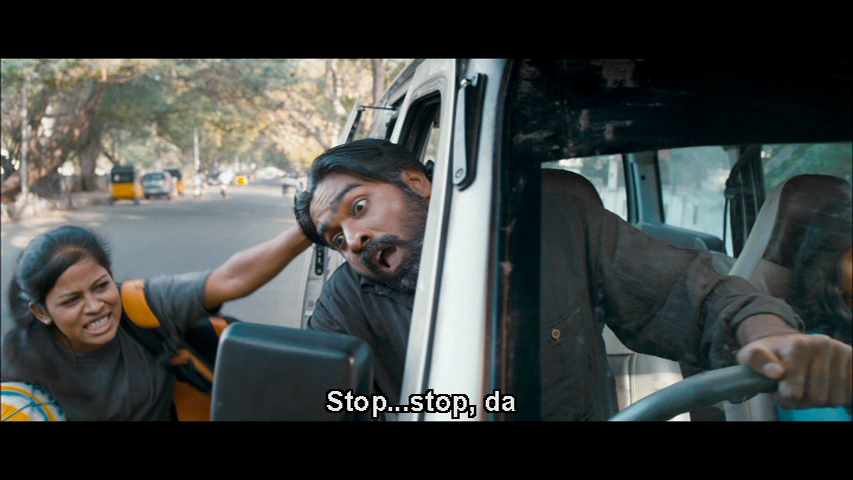
I love this film!  Nalan Kumarasmy’s début calls to mind shades of  Lock, Stock and Two Smoking Barrels or Shallow Grave, and manages to pack in plenty of comedy, action and general all round craziness in a run time of just over 2 hours.  The film centres on a kidnapping caper but there are so many different ideas tossed in, and the plot development initially seems so haphazard that perhaps the most astonishing thing is how well everything does make perfect sense at the end.  Soodhu Kavvum is essentially a dark comedy where a number of seemingly unrelated people and random happenings are thrown together into what turns out to be a funny and intelligently written storyline. Not all of Kumarasamy’s unconventional ideas hit the mark, but with inspired performances from a great cast, Soodhu Kavvum is one of my favourite films from last year and a definite must watch.

The story follows the exploits of Das (Vijay Sethupathi), his imaginary girlfriend Shalu (Sanshita Shetty) and three friends who become involved in the kidnapping caper.  There is also an ‘honest politician’, his lazy son and a psychotic police officer who never speaks, along with many other slightly off-the-wall characters who each have their own reason to be in the mix.  Each character has a number of strengths and flaws that makes them more interesting to watch, but also to some extent explains their various motivations and why they react as they do to each new crisis. Everyone is introduced in a way to showcase their personality and then slowly Kumarasamy draws all the threads together to make a coherent whole.  It’s cleverly done to keep interest in the main protagonists even when all of them seem quite typically normal, everyday people and none are particularly likeable.

Soodhu KavvumSoodhu KavvumSoodhu KavvumSoodhu Kavvum

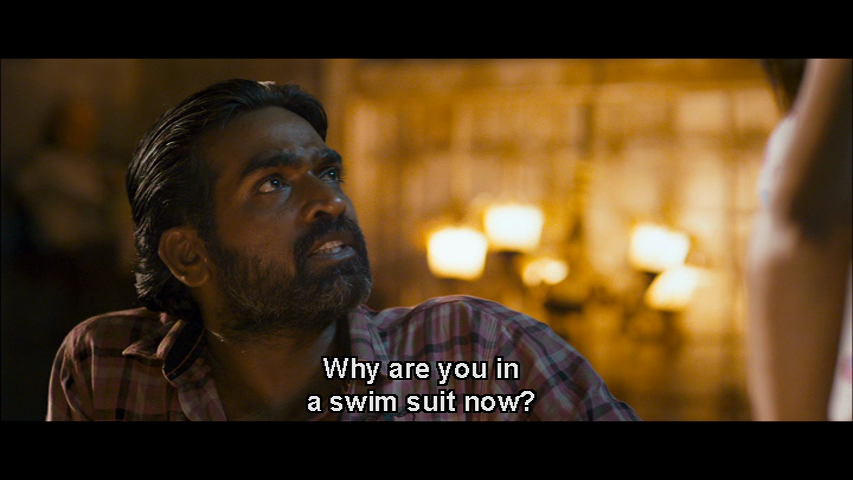
Vijay Sethupathi is the absolute star of the show here and is completely unrecognisable as Das, a more middle-aged and careful character than I’ve seen him play before.  Das is considered and thoughtful, almost gentle despite his criminal tendencies although he still appears quite manic when required.  Vijay really does appear much older here, it’s his mannerisms and stance rather than just make-up, and he perfectly blends a rational approach to his criminal activities with just a hint of mania as he argues with his non-existent girlfriend – or is she? That’s one of the delights of Soodhu Kavvum – just as you think you have a handle on what is happening and where the story is going, Nalan Kumarasamy sends it off in a completely different direction and introduces new characters seemingly out of nowhere. Except if you were paying attention (or watch it again!), they are there in the background all along.

Soodhu KavvumSoodhu KavvumSoodhu KavvumSoodhum Kavvum


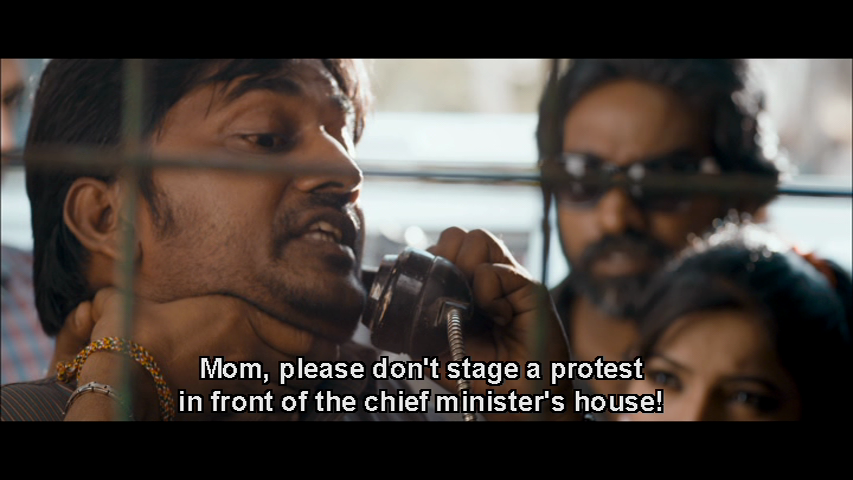
Das has developed a strict set of rules for his ‘kednapping’ business but a lack of manpower has caused him to rethink his tactic.  After a chance meeting with three friends in a bar, he offers them the opportunity to join his kidnapping team.  The three friends have their own problems; each is out of work and looking for a way to earn some easy cash.  Pagalavan (Bobby Simha) has moved to Chennai to stay with his friend Kesavan (Ashok Selvan) when he ran into a spot of bother in his native Trichy.  This involved building a temple to actress Nayanthara and the reactions of first Kesavan and then his friend Sekhar to this news speak volumes for their respective characters.  Sekhar (Ramesh Thilak) is an out of work hotel car park attendant who gets up early and gets ready for work every day, but then sits and drinks his way through a bottle of whiskey.   There is a quick blink and you’ll miss him appearance of fellow director Karthik Subbaraj in the scenes that describe how Sekhar lost his job which is pretty cool. Bobby Simha is also excellent and completely unrecognisable from his recent appearance in Jigarthanda, although his performance here is just as impressive.

Soodhu KavvumSoodhu KavvumSoodhu KavvumSoodhu Kavvum

Everything goes pear-shaped when Das accepts a commission to kidnap Arumai Pragasam (Karunakaran), the son of inconveniently honest politician Gnanodayam (M.S. Bhaskar). For all of his lauded refusal to take bribes and capitulate to corruption, Gnanodayam is a very grey character as he entraps industrialists hoping to bribe him in the usual fashion, and is also abusive to his wife and son.  Karunakaran is superb in his role as the lazy and dishonest son, and his laconic delivery of his lines is excellent. Just look too at his excellent ‘uncle-dancing’ skills in this song where he celebrates the joys of money.

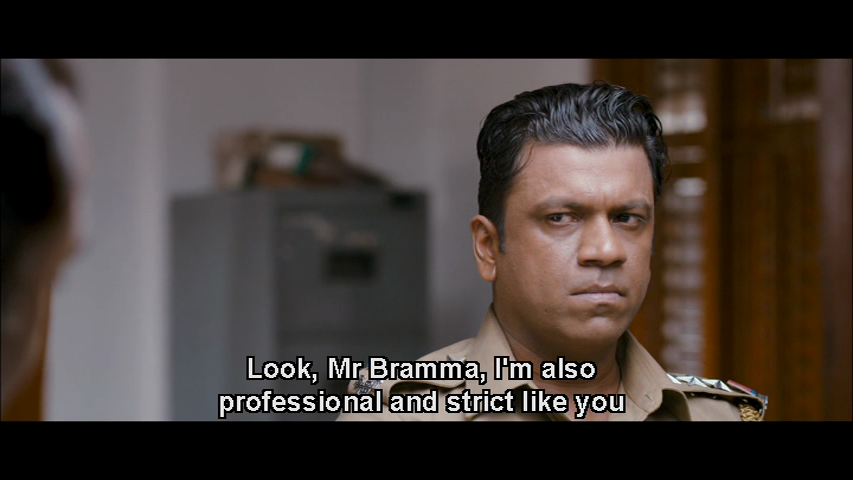
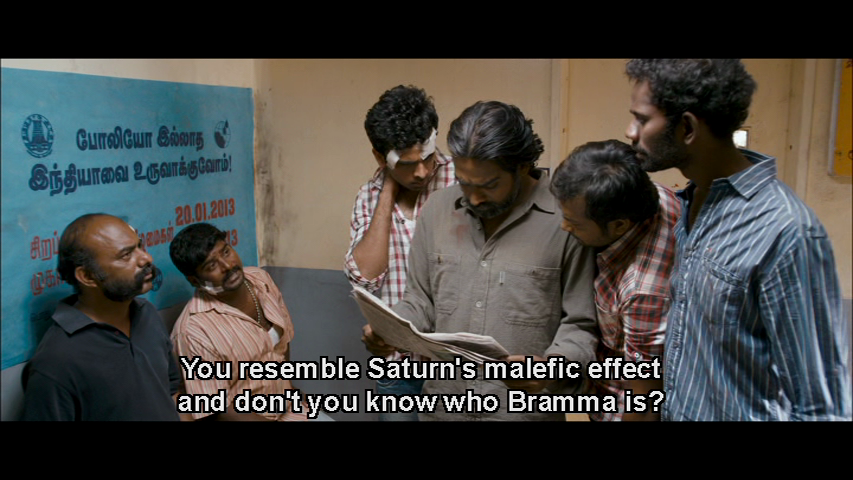
Yog Japee turns up in the second half as slightly unhinged police officer K. Bramma. There is an excellent montage of fights to show how he drags information out of the Chennai underworld as he tries to track down the kidnappers. Rather than the usual biffo in more conventional films, this is fast, mean and ugly and fits perfectly into Bramma’s persona. Truly he is the malefic effect of Saturn personified!

Soodhu KavvumSoodhu KavvumSoodhu KavvumSoodhu Kavvum

Soodhu Kavvum does have a few moments that don’t succeed, and the sheer number of twists means that it doesn’t work quite as well on a second viewing – although I did get almost as much enjoyment out of spotting the different characters in the background before they appeared in the main narrative. What I do love about this film is that the story is just as important as any individual character, and almost every moment is spent moving the narrative forward.  Each character has a role to play and at that point, they are the most important person in the scene.  I really like that there is no over-blown romance, no idealistically perfect hero and no mass fight scenes. It’s just a good story, well told with excellent actors delivering great performances.  4½ stars.