Nenu Naa Rakshasi

Did I like the film? Well, I wasn’t bored often (except for the comedy), I had plenty to think about, there are some good performances and the  first half is gripping. Puri Jagannadh has tried to frame an introspective psychological study in a mass thriller story, and ultimately fails, although he did set some interesting ideas in play. The issue of suicide is raised but left for us to make our own judgements for the most part. I appreciated the ambiguity that allowed for some viewer reflection instead of being hit over the head with one single message for the whole film. I disliked the final scenes which looked like they had been tacked on to change the overall tone of the story, but the pre-ending ending was lame too. So yes, yes I did like the film overall though there are clearly massive flaws and I am struggling to articulate why they didn’t quite outweigh the positives.

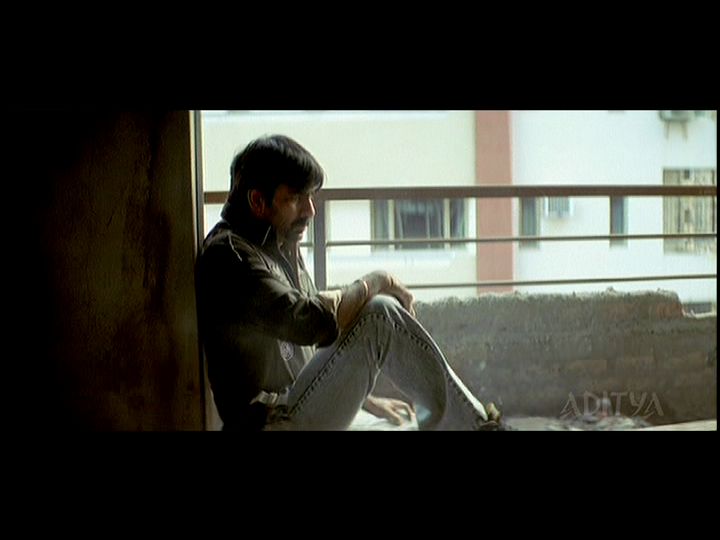
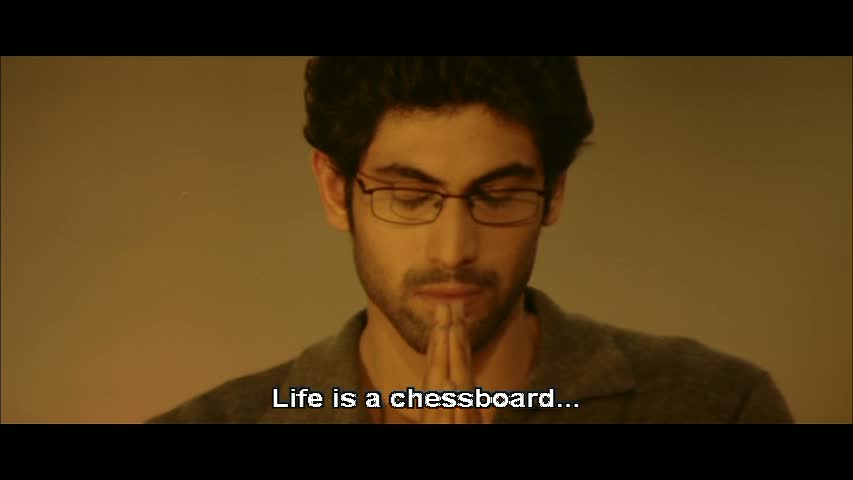
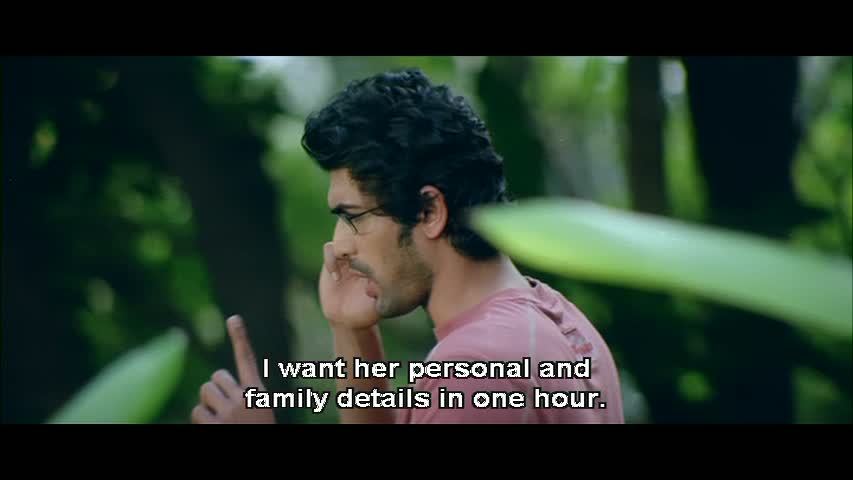
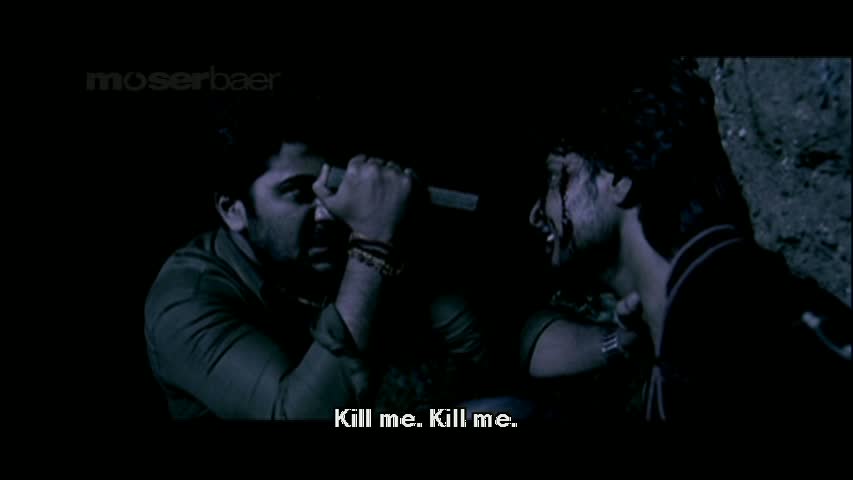
Abhi (Rana) is a hitman motivated by hospital bills for his mother. He is kind of geeky, a loner, and not at all a flawless killing machine. His story is told in an exposition to camera, giving his reasons for becoming a killer and his view of life and love. He isn’t ice cold homicidal perfection and I found this characterisation appealing.  He stresses when the police wander into a cafe, runs into trouble instead of away, acts impulsively when he could have waited for a better opportunity, that sort of thing. When the vengeance and coincidence kicks in, Abhi loses some of that humanity, increases in heroic unstoppability and becomes less believable. He sees Meenakshi (Ileana) and falls for her instantly, sparking some half-arsed stalking (in between kills) and an ‘MTV clip directed by John Woo’ fantasy.

She isn’t too bright if she can’t spot Rana following her in a crowd. Jeez!

Puri Jagannadh shows what Meenakshi does (she records video of people committing suicide and uploads it to Youtube) but doesn’t fully reveal why she does this until very late in the film (there are clear hints early). That was a miscalculation as I didn’t really connect with Meenakshi. In the psychological drama aspect this lack of character depth unbalanced the whole thing for me.

Superintendent Vikram (Subbaraju) and his young daughter move in across the hall from Abhi. I was quite alarmed by her being allowed to wander unsupervised into a stranger’s apartment, but whatever. They provide some emotional engagement for Abhi and some tension as the men become friendly, which is a bad idea for a hitman. Vikram is hunting the Youtube suicide film person as well as investigating the spate of shootings. Subbaraju plays it straight and gives a strong and energetic performance as the righteous cop and loving father. His investigations, together with a rowdy swearing revenge against Abhi, fuel the thriller aspect of the story.

Abhimanyu Singh is the batshit crazy villain who is just too insane and dysfunctional to be believed. He seemed to kill more of his own men than he did his intended victims and his twitchy and fey mannerisms were just hammy. He was so nuts he wasn’t really menacing and so it was all a bit underwhelming for me.

The first half is pretty punchy and l really enjoyed it. The second half loses that energy. For Abhi there is hope for a better tomorrow and he is looking for something to hold on to. Meenakshi on the other hand has disengaged from the world and withdrawn emotionally. They both understand the fragility of life but it motivates them in opposite directions. The Abhi/Meenakshi storyline in Venice detours into a meandering romance and the dramatic stuff happens mostly in India so it’s very uneven. By the time they reach the pretend Easter Island sculptures, the plot has been lost.

Rana is expressive but understated most of the time, and that suited Abhi’s character. His attraction to Meenakshi and his frustration with her is evident. His scenes with the kid next door are nice and the lighter moments are fun, plus his parade of silly walks in the Michael Jackson rip-off  inspired Padithnammo shows that he is prepared to make a goose of himself for our entertainment.

The actual dancing was restricted to a drunk song in Venice and in the club number with Mumaith. It’s not his strength but he isn’t completely unwatchably terrible and I would say he falls firmly into the ‘actors who try to dance’ category. He did look self conscious in a handful of scenes. Rana was very impressive in the action sequences as he is so imposing, and the fight choreography and filming was excellent. The hero entrance scene was great, and had all the visual trademarks I expect from Puri Jagannadh. Abhi supplemented his sharpshooting with some very handy knife and martial artsy skills apparently acquired during the interval so that was time well spent. The ladies in the audience all squealed when Rana said ‘I love you! Something something full package!’ I think they liked his package.

Ileana is beautiful, and certainly gave it her best in a couple of key scenes. She was far more impressive than in the recent Shakti. She plays Meenakshi as perfectly pleasant but distant for most of the film so there isn’t a lot to say about her performance. This is a spoiler–Meenakshi films someone who decides he wants to live after all, and asks her to help him get to a hospital. She refuses saying she is just there to video not to change the course of events and walks away, which was quite powerful. Later on it is revealed that she did indeed call for an ambulance so her actions were at odds with her stated beliefs and this is a problem with the character as I don’t think that was really explored or challenged. Her backstory when it eventually showed up was so clichéd and undermined what was a fairly original idea for a heroine. I also have a problem with her ninja scarf disguise which disguised nothing. Firstly, it left most of her face uncovered and secondly, how do we all recognise Ileana instantly? The hips.

Mumaith Khan appears on and off throughout the film, and really her only contribution was to make me think ‘Is she gonna?’ When she eventually danced, it was a standard club number but still fun (also notable for the silly hat team having their way with Rana). Her facial expressions are so much more lively and spontaneous when she dances than when she acts. Mind you, she was stuck in the comedy side plot with Ali and a plus sized lady of colour so she may well have been having suicidal thoughts of her own. I was.

It’s a very stylish film, lovely to look at but the team often use tricky angles and edits just because they can. There is good attention to detail in the wardrobe and set design, and the editing is excellent in the action scenes. The music is formulaic and more effective as a background score than in the songs. There is not one healthy romantic relationship in the film, and that may be deliberate but it seemed to be more an excuse for bad comedy or dubious behaviours in the name of love. Oh for a better script and more balanced direction!

I want to get this on DVD so I can see what I missed in the dialogues and to enjoy the beautifully executed action scenes. But I think I’ll stop before the end, and concentrate on the more successful crime drama aspect.

Shock

Ravi Teja has a dedicated fan following and I’ve read good things about his films so I decided it was about time I watched one of his movies. I bought this film on my last trip to Chennai on the recommendation of a friend, and since the blurb on the DVD suggested it would be more of a thriller than the typical mass masala fare it sounded more to my taste than some of the comedic roles he has played. And I did enjoy it, well mostly, at least up until the last 30 minutes anyway.

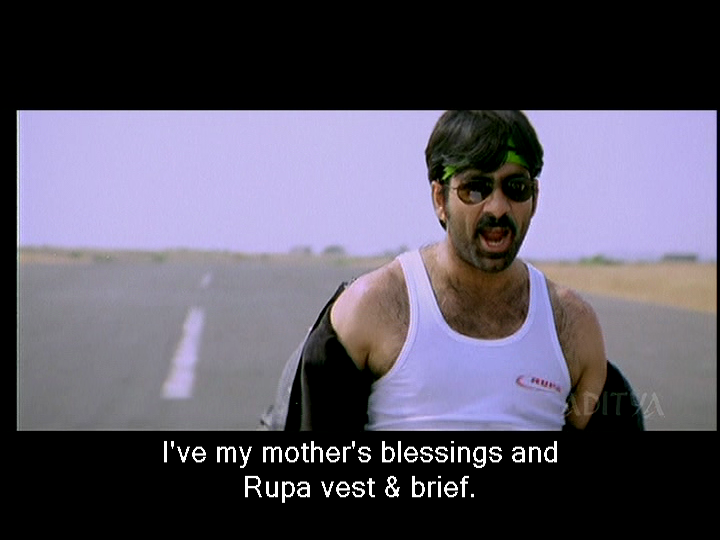
Ravi Teja plays an advertising agent Sekhar, although a look at his pitch for Rupa underwear suggests that perhaps it’s not his true calling.

He’s happily married to another advertising agent in his office, Madhurima (Jyothika). She has to take a back seat to her more ebullient husband who is clearly the office favourite. Brahmi makes a brief and understated appearance as Sekhar’s boss but for a change there isn’t much comedy in his role. There is some humour in these scenes but it mainly arises from situations with Sekhar and his wife and generally is well placed and actually quite funny.

The relationship between Sekhar and Madhurima is convincingly portrayed and they seem to have a strong and loving partnership. I could do with less of Ravi Teja’s back hair on view to demonstrate this, but other than that I think writer/director Harish Shankar is accurate in his portrayal of a working couple.They live in a block of flats where the lift never functions and there are constant disruptions from the neighbours and their children. When Madhurima becomes pregnant, they decide to relocate and quickly find a recently vacated house. However just as they move in, two men burst through the door and shoot Sekhar. He wakes up handcuffed to the bed in hospital and is immediately interrogated about his terrorist connections. He learns he has been mistaken for a Maoist by two encounter specialist police officers, Nagesh and Divaker. Although the pair realise their mistake almost immediately, they decide not to take responsibility for what has happened and instead salt Sekhar’s house with evidence to make sure that their error is not discovered.

In the meantime Madhurima protests Sekhar’s arrest and manages to hire a lawyer. By the time of the trial however, the lawyer has been paid off by the two cops and has convinced Sekhar to plead guilty, telling him he will get a short sentence and that will be the end of it. Of course this is not the case and Sekhar is sentenced to 8 years in jail. Madhurima immediately vows to get him released and is aided by Geeta, a journalist interested in the case.

There are various moments of drama in the prison: Sekhar is fortuitously sharing a cell with an inmate Tilak who has certain rights and privileges with the guards but he is also menaced by the self styled boss of the jail, Syed. This is all conveyed without recourse to cliché, or over the top drama and serves to give an idea of Sekhar’s true character as well as set up subsequent events in the jail. Madhu’s struggles are also convincingly portrayed. Geeta doesn’t take over the defence or engage in unrealistic methods to help Madhurima find justice, but instead advises her of which organisations to contact. This is all very plausible and fills out the background of the story well.

But just when you think this is going to be a battle played out in the courts and among informers in the back streets, there is more drama as Madhurima is threatened and Sekhar escapes from jail. Up until this point the film is very good; a slightly different story, well paced and told with good performances from the cast. But from here the film starts to rely on violence and bloodshed and the storyline becomes more predictable and clichéd as Sekhar plans his revenge. There are some unpleasant torture scenes and the realism that was built up so very well in the first half of the film is lost as Sekhar suddenly becomes able to fight his way out of any situation. However there is still a very ‘Hollywood’ feel to the action, and the slickness of the production carries through right to the rather unsatisfactory end. There seems to be an obsession in the Telugu film industry with making sure there is a happy ending (of sorts at any rate), and in this case I would have preferred to see something more in the way of consequences for everyone’s actions.

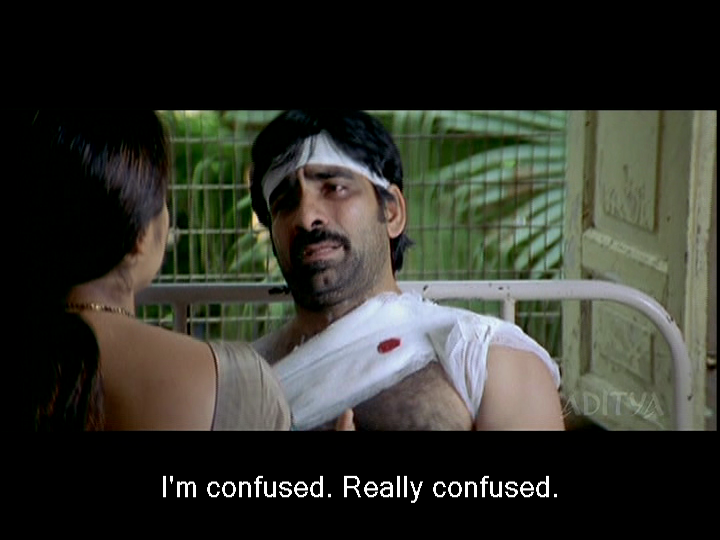
Despite the collapse of the plot in the second half, the film sets up the basic story well and the leads are all excellent in their roles. Sekhar’s confusion and distress at the situation he finds himself in is well portrayed by Ravi Teja. I was very impressed by the vulnerability he was able to convey as the injured and baffled victim in hospital and then as the somewhat shell-shocked and stunned prisoner in jail. He was even reasonably convincing in the action roles up until he had to take on a number of much more muscled and bigger extras. I know he is the hero but there is a limit to what I can believe!

Jyothika has a much more developed role than is usual for the heroine in Telugu films and I really thought she was excellent as Madhurima. Her relationship with her husband is very realistically drawn and the romance is sweet without being cloying. Her distress at her husband’s situation is perfectly depicted as is the change in her character as she first breaks down and then becomes a driven and determined woman out to get justice for her husband. The only scenes which didn’t fit were when the story of the couple’s initial meeting was shown as a flashback scene later in the film. This felt misplaced and disrupted the story just when it really needed to be tighter. Although it does mean we get another good song from Ajay-Atul. Although this is out of place in the film it is nicely pictured – I cannot explain the gloves in the opening shots though!

Apart from the two main leads there are a number of the usual suspects in the film who all play their roles with their usual competence. Kota Srinivasa Rao is a perfect fit as the corrupt lawyer and both Subbaraju and Ravi Kale were fine as the deceitful cops. Raghu Babu shows up in a familiar role as a nasty warden in the jail along with Raja Ravindra as the useful Tilak. It’s a little surprising that the small role of Geeta is played by Tabu and it does seem a waste to have such a good actress only on screen for a few short scenes. But it’s always a pleasure to watch her even if it is only in a few scenes. There is some attempt at comedy in the second half with the CBI officer Surendra Kumar (Nagendra Babu) and his incompetent assistant Bapanna (Ram Jagan) but this falls very flat and thankfully the Harish Shankar seems to have realised it wasn’t appropriate fairly quickly.


I would have found it this a much more interesting and appealing story if the film had dealt more with Madhurima’s fight for justice and Sekhar’s struggles in jail rather than going for the straight hero driven revenge drama. But then again that probably wouldn’t have been as popular at the box office. As it is, the second half of the film is a disappointment after the excellent build-up in the first half, and the attempt at a happy ending particularly jarring. I am favourably impressed with Ravi Teja though and Jyothika was fantastic. For those two excellent performances, and a good first half, this film gets 3 stars.

Leader and Prasthanam


Politics, corruption and family dysfunction provide a fertile ground for film-makers and while they are not top of the list for us to view, there have been some interesting films made on these topics. There has been a lot of talk about both Leader and Prasthanam taking an innovative approach to these themes but we found each conventional in both their story and structure. Both make reference to land and mineral rights disputes, but the films aren’t really about the issues as much as they are about relationships and power. Because of the parallels and contrasts we decided to discuss them together. For the sake of simplicity, as well as being in keeping with the films’ focus, we are also concentrating on the main story and will skim over the subplots.

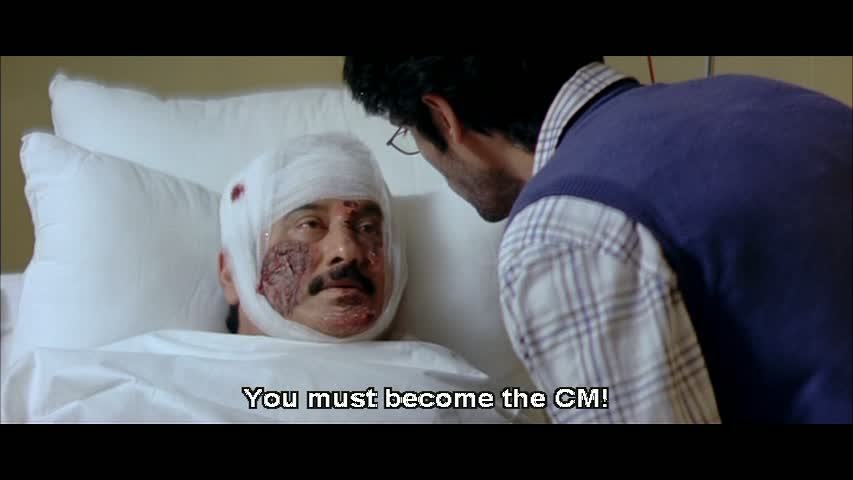
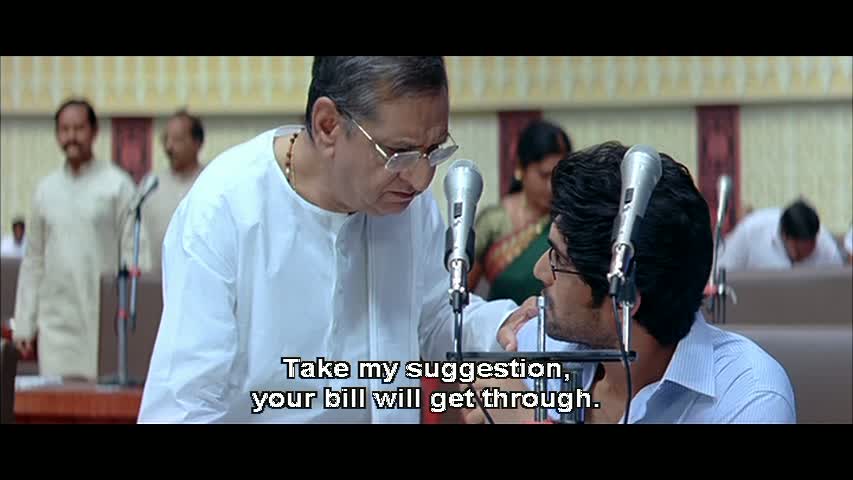
Leader is the debut film for actor Rana Daggubati, and is written and directed by Sekhar Kammula. That’s some seriously good pedigree and the production values reflect this. The story has more in common with Frank Capra’s Mr Smith Goes to Washington than any gritty political thriller but where Jimmy Stewart oozed heart, there is a hard manipulative core to Arjun Prasad (Rana Dagubbati). Arjun has money and is reckoned a man among men (CEO of a Fortune 500 company, Harvard graduate, tall, fine head of hair, looks good with or without a shirt, you know the deal). Despite his aim of rehabilitating the tarnished image of his murdered father through eliminating corruption and caste discrimination, Arjun immediately takes to his father’s methods.

He genuinely seems to believe the ends justify his means. Personal relationships are bought and sold and, while he does care for the people he is using, he will sacrifice anyone for his greater goal. Things come to a head after some emotional incidents, and despite some soul searching Arjun fails to change his strategy and continues to use any means at his disposal.  After a picturesque montage of Rana’s excellent enigmatic walking, he sets forth to rally the masses and triumph over his rivals. Characters appear along Arjun’s journey, some ready to give him wise advice and some there to set obstacles in his path.

But he is a hero in a fable where everything seems to be in shades of grey. The tacit support for bribery and corruption as legitimate techniques is hard to swallow, as well as the disregard for anything that might get in the way of making history take a kindly view of the dead CM. Arjun’s treatment of two women who have feelings for him is cruel, and reminds us that the heart of this story is ice cold.

Rana’s performance was difficult to assess. In some scenes he appeared quite deadpan and almost wooden but we believe that was due to the character keeping his cards close to his chest and not wanting to give any clues to his opponents. He is physically imposing and looked the part of the young man on the up and up. Some highly emotional scenes were underplayed and very moving. In scenes that required him to be lighter, more open, and even flirtatious, he was quite appealing so we think it was a combination of his inexperience and the director’s choices that made some episodes appear a bit awkward.

There is nothing more to say about the plot – it succumbed to all the clichés and ended exactly as you might expect. But it is an interesting attempt to look expectations of justice and idealism, and transpose that into a political fantasy. The supporting cast were uniformly good, particularly Harsha Vardan as the secretary Ali and Richa Gangopadhyay as the love interest Archana. Priya Anand’s character Rathna was really short changed with some silly dialogues and behaviour but she made a strong impression in her time on screen and certainly injected a lot of energy into her scenes.

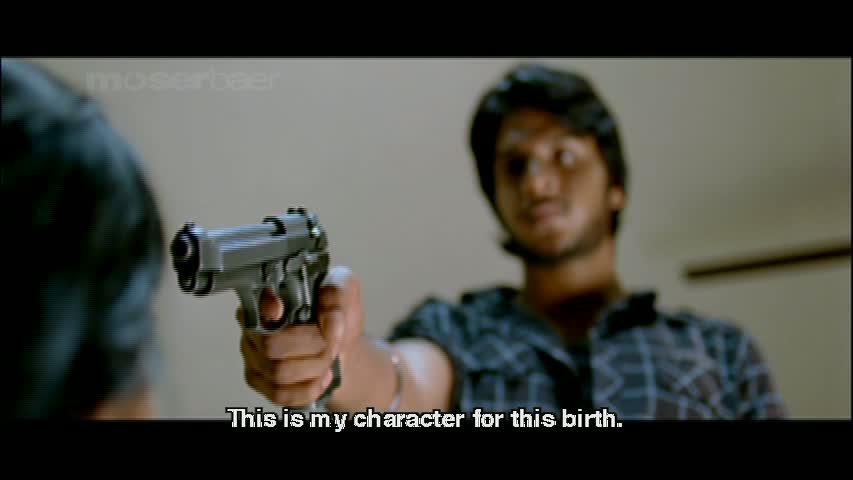
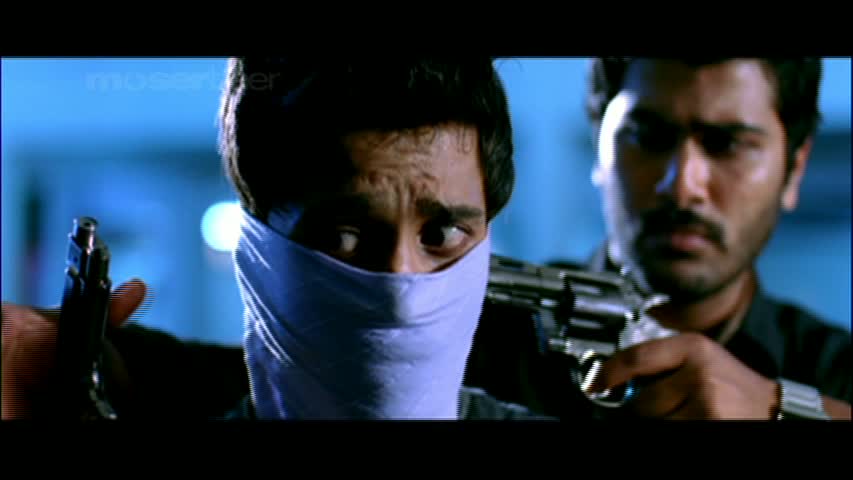
Prasthanam starts in an independent art house style before the much more conventional end. What begins as a dissection of a bitter dysfunctional family and the play of personal agendas in the public arena devolves into a gore fest with some badly placed songs.  Sharwanand plays Mitra, the ‘good’ son of an assassinated father, who seems to be the anointed one in his family’s dynasty. After his father’s murder, Mitra’s mother is married off to Loknatham (Sai Kumar) her husband’s adopted brother. The family relocates to the city but remain involved in politics and factionalism.

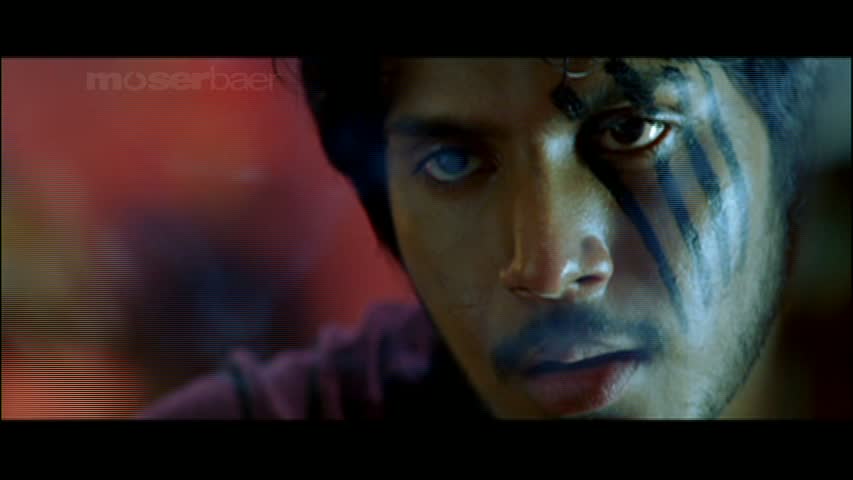
What really brought the story to life was the dazzling performance by Sundeep Kishan as jealous psycho step-brother Chinna – a substance abuser with a violent streak and a penchant for face paint. His character is a human train wreck: monstrous yet compellingly watchable as he ricochets from self pity to rage to scheming.

We differ in our opinion on Sharwanand’s acting but do agree he was one of the weaker elements of the film. The brothers are, on the face of it, totally dissimilar but both are driven by their notion of family and status. As the film progresses, the calculating intelligence and loyalty of Mitra is challenged over and over by the animal aggression of Chinna until the bloody and confronting climax. Mitra discovers that his brother and step-father are far more alike than he suspected and nobody wins as he ultimately takes up the same tactics as his family.

Visually the style of Deva Katta’s Prasthanam is both darkly real and annoyingly gimmicky with a reliance on clever angles and effects like blood spattering the camera lens. The songs in the first half are well integrated into the story and maintain a consistent style with the rest of the film.

It seems that someone panicked after watching the first half as there are several songs wedged at random into the second part of the film. Not only do they fail to match the narrative at all, but the placement of the picturisations is jarringly inept which contrasts with the more considered style of the earlier songs. [Thanks to the wonders of Twitter, we have just been told that songs were added for the DVD that were not in the theatrical release of the film. That still doesn’t explain the random placement, but it does help explain to us why reviews didn’t mention such a glaring flaw. Thanks for the explanation!]

Despite the much messier and grittier environment Prasthanam is as much a fiction as Leader is – but as Dolce and Namak pointed out, this family saga is inspired by Cain and Abel.

There is some attempt to inject humour, which is both misplaced and clumsy: one comedic sidekick character declares he will have to go commit a couple of rapes to get more respect, and has this remark met with sarcastic mirth. It was disappointing considering the intelligence behind the writing in general, and wedging the obligatory not so funny comedy track into a film with serious pretensions seemed odd.

As with Leader, the female characters provide an excuse for much of the action without having significant roles in the film. Both films rely on coincidence at crucial points, and the strain on our credulity diminished the impact of some key scenes.

Both leading men play outsiders. Arjun Prasad is the affluent, privileged, NRI son of a corrupt man, and we see Hyderabad and India through his eyes —mostly from boardrooms, restaurants and resorts. He does a lot of brooding and walking, often seeing without being seen as he floats through the ‘real world’. He says he is going to wake up the apathetic youth, and seems to be a symbol of the young cashed up generation in that respect.

Mitra is an unwitting outsider in his own family, but he is intimately involved in the workings of the political games. His world view is far more grounded in a village mentality and his vision of India is much less about air con and fancy cars and more about family and cash flow. This world view shatters when he discovers the truth about his father and step-father.

The soundtracks are forgettable, and apart from the really bad picturisations in Prasthanam, the songs had little impact. The lyrics in both films were quite significant in terms of the story but it just seemed to be a bit overstated at times.  And as for the naff English lyrics in the final ‘Leader’ song … Neither film really required much in the way of dancing and, while Sharwanand gave it a go, Rana stuck to his enigmatic walking.

Ultimately both films fall back into the familiar heroic narrative arc, one tragic and one triumphant. Both are fairly satisfying stories and generally well made films, but neither really departs from the predictable path.

Temple says: I found both films quite watchable and engaging, but both have flaws that prevent me from saying I totally enjoyed them. I don’t think they are really attempting anything different in either film as it’s the same old story of corruption and tangled family loyalties, just with modern urban backdrops.

Leader is the more successful film for me, as it is has an internal logic and the characters behave in a way that is consistent with their prior behaviour. As my friend Jenni The Mahesh Fan often says, the Dr Phil test for predicting future behaviour is based on past behaviour. So while Arjun Prasad is not a likeable person, the character acts in a way that accords with his previous behaviours. Even when he temporarily leaves politics, he manipulates that hiatus to eliminate an issue that couldn’t be resolved by legal means. So unlike Heather, I never thought he had ‘gone good’. I believed he was just manipulating the situation again which seemed in keeping with his actions to date. The film has a more cohesive story and builds to a cliched yet satisfactory conclusion. I don’t like the film, as I find its inherent message quite repugnant, but it does work as a piece of drama and once again Sekhar Kammula has told his story in an engaging and slightly offbeat way. Apart from some dodgy green screen effects, the visuals are really effective. I give Leader 4 stars for being a well made, quality film, but I hate the values it seems to promote.

Prasthanam was more entertaining on some levels, and yet a lot less satisfying overall. As the film moved away from the conflict between the brothers and became more about Mitra and Loknatham the wheels started to fall off. Sharwanand just didn’t make Mitra believable and his performance was weakest of the whole cast. He was fine in the lighter or more conversational scenes, but anything requiring extreme emotion fell flat. It didn’t help that many of the veteran actors around him were chewing the scenery for all they were worth, or that he was acting opposite Sundeep Kishan who just owned the screen whenever Chinna was around. There is something curiously immobile about Sharwanand’s face, and in all the scenes where I wasn’t hooked by his lack of emoting I found myself wondering  if he had already started to hit the Botox. The final scenes between Mitra and Loknath were just so tear-sodden and emotional and didn’t ring true for me. I thought the very last moments of Sai Kumar surrounded by a multitude of  his mirrored reflection was so much more real and powerful than all the snivelling as it showed what he really believed in. It’s very engaging to a point, but then the climax of the film just doesn’t work for me and the really silly handling of the songs threw the dramatic second half off kilter. I give Prasthanam 3 stars.

The women in both films are basically irrelevant to the plot. They are only there as mothers or potential wives and even when it seemed they would play a bigger role, it just didn’t eventuate. The actresses in these roles were all good, but the roles were on the margins of the heroic tales being told.  So while it was disappointing to see this happen yet again, it did at least allow for most of the focus to be on the core story.

Heather says: I enjoyed both these films, and despite a few irritating features which detract a little from the final overall impression, Leader and Prasthanam are very well worth watching.  I think that both are genuine attempts to step outside of the usual Masala fare, and within their limits are interesting stories, told well and with sincerity.

Leader for me was made by Rana’s performance, particularly considering this is his first film. However I really didn’t like his character at all!  Arjun is just as corrupt and manipulative as the other politicians around him.  Although I did sympathise initially as he possibly started with good intentions (I’m not convinced though), this very quickly changed as he began lying to everyone. After the interval where I suspect we were supposed to get behind Arjun and his campaign for the popular vote, I just found his deceitful attitude too much.  His attitude to the women in his life is another point against him, and I really didn’t want him to get the girl in the end.  But I think that to generate that response required some good acting which Rana delivered – as did the rest of the cast who are all excellent.  The lack of depth in the female characters stories was disappointing, and I don’t think a journalist could have been side-lined so easily – but this was fictional after all! Despite not liking the character and finding the whole story just too improbable, I still enjoyed the film.  Leader gets 3 ½ stars from me

Prasthanam for me was a more enjoyable story.  I do like a good villain, and Sundeep excelled in this role.  Sharwanand really appears wooden in comparison, and although I am not as critical of his acting as Temple, he doesn’t do his character justice here.  The biggest problem I have with Prasthanam is the strange song picturisations and their placement in the second half.  They just aren’t necessary and detract from the pace and mood of the film.  I liked the soundtrack on first hearing and found it a disappointment to see the songs on screen.  The female roles, although still small, seem to be better realised in this film but the struggle between the two brothers and the machinations of Sai Kumar’s character are the definite highlights.  The escalation of violence towards the end becomes improbable, and the conclusion is somewhat weak,  but despite these flaws the film kept my attention throughout.  Again all the supporting cast were very good, and I really liked the cinematography in the opening scenes.  Without the songs and the comedy track this could have been an excellent film.  As it is, I think it’s still very good and gets 4 stars from me.