Roshagadu

roshagadu

Roshagadu – why did no one tell me about you?

KSR Doss takes Chiru, Madhavi and Silk Smitha on a wild jaunt, and I was positively delighted to tag along. Any film that includes speedboat chases, ninjas, karate, and a hot pink sequinned cowboy suit has a good chance at winning me over. Add some feisty women, amazing and hilarious action, Chiru in a double role, and I could not ask for more. Well, except for decent print quality and some subtitles.

Sikander (Chiranjeevi) is a smooth criminal with an aversion to shirts. He seems to be taking advantage of the silliness of the two local crimelords, playing Tyagu (Thyagaaraju) and Bhayankar (Kannada Prabhakar) off each other and emerging triumphant with the loot. In his spare time Sikander frolics on the beach with a bevy of lovely ladies in retro bathers and sensible hats.

I like the bit where he rolls one of them into the water so he can sunbathe in her spot. A charmer, but not a gentleman.  But did I mention he has a lair! Concealed in a temple and only accessible via a secret and overly complicated thingie! The lock mechanism appears to rely on angle of the sun or time of day, although I have no idea why and it does rather limit the usefulness of the construction. Sikander also has a secret red book hidden in a secret (but unlocked) cupboard.

Main villain Bhayankar is prone to over-elaboration and has an addiction to the double cross that is almost endearing.  Amongst his assets, he has a gang of bikers whose jackets helpfully spell out KILL. Sikander pops out of Bhayankar’s car boot mid-execution, says hi and then takes both the money and the box. He has such swag! And Bhayankar has nothing to counter him with.

Tyagu is more bumbling than Bhayankar, although his style is far more flamboyant. I became quite fond of Tyagu’s henchman in the stripey top as he looked faintly embarrassed at the ridiculous shenanigans around him, and his outfit helped me identify which gang I was looking at.

Meanwhile on a train, Miss Neelima (Silk Smitha), a club dancer gets caught up in a smuggling racket when the contraband is hidden in her makeup case. The police find the diamonds but Sikander finds the police AND the diamonds. Neelima knows he is a fake, so now she knows she once had the diamonds, she wants them, and she knows who has them. However she does show appalling judgement by doing a Faux-gyptian club number with a toga clad man who is not Chiranjeevi. Silk is funny and fiery as Neelima and I really enjoyed seeing her in a more substantial role. She tackles the action scenes with energy and grit, and while Neelima uses her charms she is not just in the story for her looks.

Sikander and all the baddies disguise themselves to attend a wedding so they can steal the jewels. The others don’t know that Sikander has formed an alliance with Neelima. She impersonates the bride and after all the double double crosses go down, she whips off her mask, wig, and saree, and the game is afoot! There is a fun sequence of keepings off with the case full of bridal bling before Sikander finally scarpers with the haul.

After a bit of mutual keyhole peeping, a skanky dance ensues (and apologies, I can only find the Hindi version of some songs online). I like that while her dress seemed vaguely improvised and towellish, she had matching suede wedges. Very organised. I couldn’t quite work out why Neelima tipped Bhayankar off about the secret book and let him in to the swanky apartment. Sikander escapes and hands off The Book to a bloke on the roadside. The respite is brief as he is shot and his car crashes, eventually plunging into the sea, rendering him Completely Dead.

Srikanth (Chiru with a different hairdo) looks just like Sikander but spends his time dancing cutesy duets with Madhavi. She is from a rich family while he and his little sister seem to be a lot less well off. Madhavi’s character doesn’t get much screen time but she is quite interesting. She seemed quite forthright with her father when he took exception to Srikanth, and she doesn’t waste a lot of time on crying or pouting. She is ready to do what needs to be done from supporting Srikanth in his goals to kicking a few of her own.

Srikanth’s sister is set upon by sleazebags who decide rape is as good a way as any to while away a rainy afternoon. She puts up a very good fight and as her bro was out looking for her anyway, Srikanth is soon on the spot. He drives a tractor through the door and then repeatedly throws the rapists through each of the remaining walls. How did this building ever stand? Srikanth is seen by Tyagu’s men (bless that stripey man for gang identification). Bhayankar’s man saw him too so everyone thinks they have a chance at getting back at Sikander.

Neelima and Srikanth end up in Bhayankar’s lair. They put the pieces together – he is missing a significant mole so cannot be Sikander, and she is actually a police officer! Then they escape by pushing some cardboard boxes out of the way. I don’t think anyone in this film nailed the functional specs for their respective lairs. Bhayankar recaptures Srikanth easily enough and kidnaps his sister too. They tie Srikanth to the hood of a jeep and make him watch as they run over his sister. He escapes and swears vengeance.

He starts boot camp under Madhavi’s loving gaze and learns karate, perfects some Jedi mind trick to shoot things without looking at them, does motorcycle tricks, horse riding, stuff. Srikanth really embraced Sikander’s style. And sets his plan in motion by performing at the night club wearing a hot pink sparkly cowboy outfit (the video should start at the beginning of the song. Have your sunglasses ready to protect against the glare!).

And just when you think that might not work, a Ninja suited goon in the audience jumps up and runs away…But why no sign of Srikanth in pursuit?

Of course. He stopped to change into appropriate duelling attire.

Tyagu and Bhayankar join forces to get rid of pesky Srikanth. They kidnap Madhavi who had the secret red book. But Srikanth and Neelima are both in hot pursuit as the police largely stand back and let the vigilantes take care of justice. Silk is all kinds of awesome as Neelima goes to rescue Madhavi, and the ladies win their freedom. Doss throws EVERYTHING into the mix, starting with the duel and then adds a dollop of vehicular vengeance and a bit of “karate”.

The trove is revealed and baddies rejoice in their pick of the bling – but then a shot rings out. After an excellent fight with lots of polystyrene props being smashed, Bhayankar and Srikanth run off to the finale. They narrowly miss the ladies who have come to rescue Srikanth. They don’t seem too fussed and take the opportunity to beat everyone to a pulp. You go girls! But that’s not all. Let me just say the Karma Bus made an appearance. And it’s a good thing Srikanth was wearing sensible leather trousers.

This is a fun film that has little substance but a lot to enjoy. B movies often had the best heroines and I really liked Madhavi and Silk and their characters, with everything staying on the right side of improbable. Chiranjeevi is in his element as both the suave thief and the righteous hero. 3 ½ stars!

Roshagadu-Come get me ladies

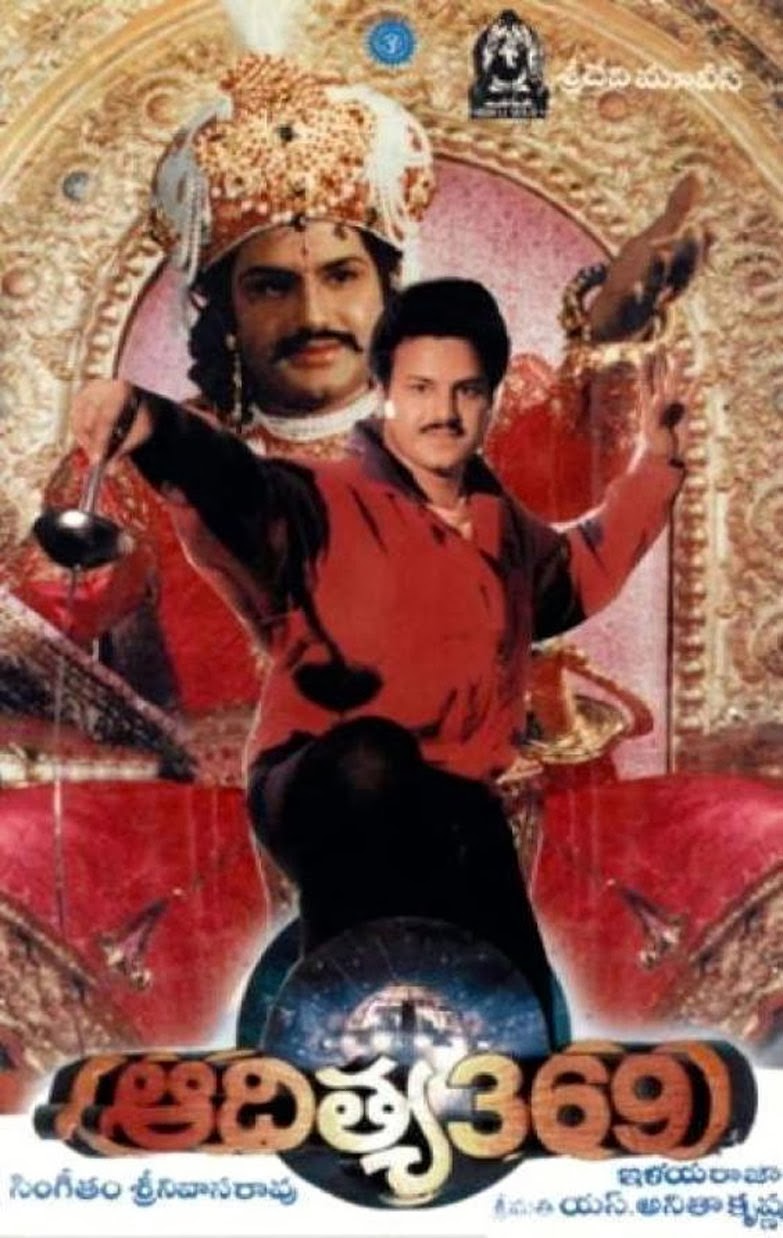
Aditya 369

Aditya 369-Poster

When I heard Singeetham Srinivasa Rao’s Aditya 369 described as ‘historical science fiction’ I was immediately curious.  It is less about science or history and more about the outfits and derring-do, but that isn’t necessarily a bad thing. The film is on Youtube without subtitles and there is a diverting but not very helpful plot summary on Wiki should you wish to swot before taking the journey. But no one in the film prepares, so please do not feel obliged.

Aditya 369-time machine

The plot goes something like this. Professor Ramdas (Tinnu Anand) is an eccentric inventor, but apparently does well enough for himself that he can support a large house and workshop and keep his daughter Hema (Mohini) in stylish polyester outfits. His life’s work is a time machine called Aditya 369. The professor takes a low key approach to security and intellectual property, allowing just about anyone to come and have a look at the machine.

Aditya 369-Amrish Puri

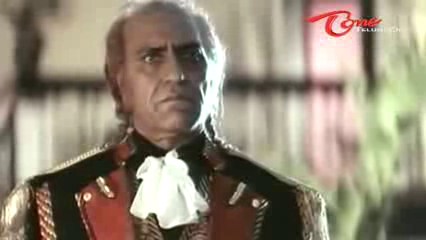
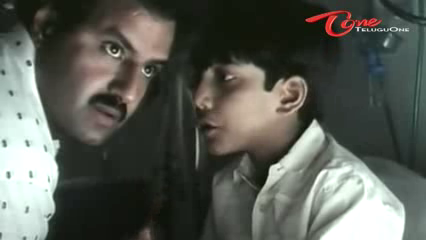
Raja Verma (Amrish Puri) is a crook with a particular interest in historical regalia and diamonds. He arranges to steal a golfball sized diamond from the local museum and replace it with a fake. Now, if you call one guard with obsessive rule observance a diligent approach to security, then this museum was world class. Young Kishore (Master Tarun) is accidentally locked in,  witnesses the theft and has to be rescued when he tries to outrun the thieves.

Aditya 369-Balakrishna and Master Tarun

He confides in his saviour Krishna Kumar (Balakrishna) who decides to investigate.  Kishore decides to take his fellow plucky orphans on a spin in the time machine, is rescued by Krishna,  and Krishna and Hema are sent back to the past where they rescue Silk Smitha and meet Sri Krishna Deva Rayalu (also Balakrishna) and learn about the Golfball Diamond.

You know how in lots of time travel fiction the first rule is don’t change anything and don’t use modern stuff and cause ruptures in the fabric of time? When I saw the two emergency suitcases stashed in the time machine I assumed historically appropriate costumes. Well, at least the inhabitants of 1526 got an eyeful of fine 80s fashions. And listened to a boombox.

I disliked Krishna once he had landed back in time. In the presence of poets and scholars he had only ever read about, he couldn’t help but stick his oar in and go for a bit of one-upmanship. It was really tiresome and just made no sense. The dialogue seemed to go along the lines of “As you know Jim, I have an electric shaver” “Wow! Please, unknown man who says he is from another time but based on those clothes may be a nutter, tell us what to do”.

Following that sojourn in the glorious past, the crew is catapulted into the future where they nearly die from radiation before being given their own shiny space suits. To be fair to Krishna and his lax approach to historical contamination, the future people didn’t seem to have any qualms about revealing significant details that characters would not yet have experienced. But while I could understand the future people knowing their history,  I expected a bit more curiosity from the people in that past. The final scenes bring hero, villain, professor and know-all child into conflict as things almost literally spin out of control as Krishna has to rescue his friends and save the world.

Balakrishna offers his usual high energy performance. He could never be accused of slacking off, except maybe in the dances where he often relies on a slow disco strut interspersed with vigorous flailing. Krishna doesn’t have any hidden depths so what you see is what you get. The character tried my patience and I found myself looking at the sets and backgrounds rather than caring about what was happening to the people. There were a couple of sickening stunts involving horses so that further tarnished the heroics.

Aditya 369-Mohini

Mohini is adequate as Hema given that for most of the film she is just part of Krishna’s baggage.

Aditya 369-walk like an Egyptian

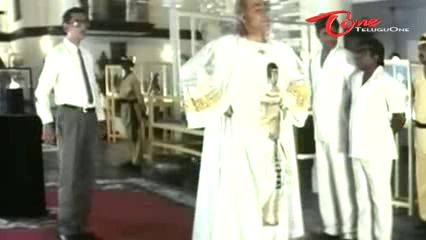
Amrish Puri does his usual villain thing with flair. Raja Verma is a bit obsessed with things that are original and authentic which may explain his Faux-gyptian style robe.  The diamond was supposed to link all the times together but that part of the plot seemed like an afterthought.

There are comedy uncles but no one else gets much of a look in with Balakrishna in a double role so that is another positive for the film. Suthivelu plays a hapless policeman who gets dragged along on the time travels, and Brahmi makes a small appearance as a scientist.

Aditya 369-henchmen

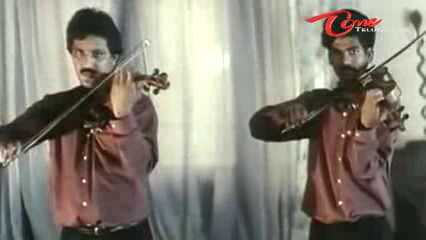
I really enjoyed Raja Verma’s gang of purple shirted thugs who carried guns in violin cases, and then played violins as background music in an interrogation scene. I think that is the first time I’ve heard the violence/violins pun in an Indian film. Tinnu Anand seems to have his own personal wind machine in all his scenes, maybe to stop him overheating from overacting.  Annapurna is Krishna’s mum although she doesn’t get to do much apart from marvel at his awesomeness.

Illayaraja’s background score is lovely. The theme over the opening credits is lush and a little eery. The songs are melodic although mostly a bit random. I did like the dance off between Silk Smitha and Mohini to settle the matter of Krishna’s honour. Well, I did until of course Krishna decided he could play all the instruments AND do the dancing.

The production design has a retro charm that sometimes made me nostalgic for TV series like Lost in Space. Terminator 2 was released in the same year and the difference in technical capability is enormous.

The “ye olden days” segment was what I would expect from any Telugu film, but the futuristic episode was more remarkable for the efforts of the wardrobe department to really feature antennas and silver lame.

Apart from that, as noted earlier, the costumes were mostly 80s mainstream fashion – lots of high-waisted denim, synthetic fabrics and big hair. And the women didn’t fare much better.

There are more things in heaven and earth than are dreamt of in your philosophy and Telugu films are a great place to find them. See this for the curiosity value of the Telugu mass hero formula applied to a different genre and for the low tech effects that have their own appeal. 3 stars!

Challenge (1984)

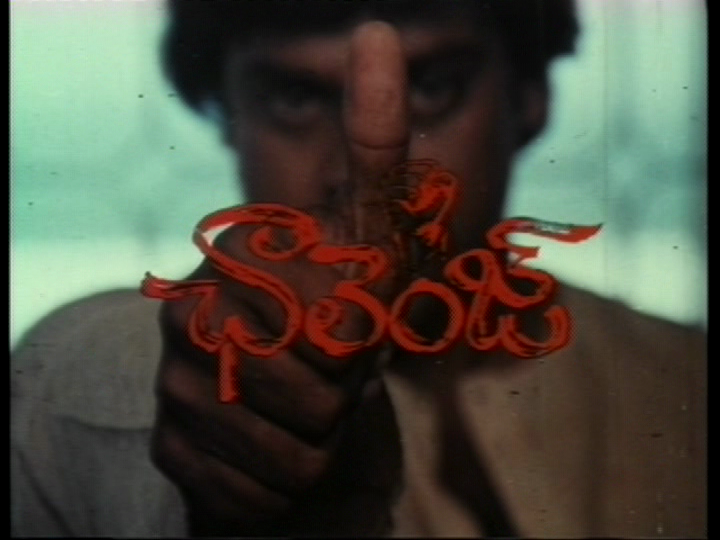
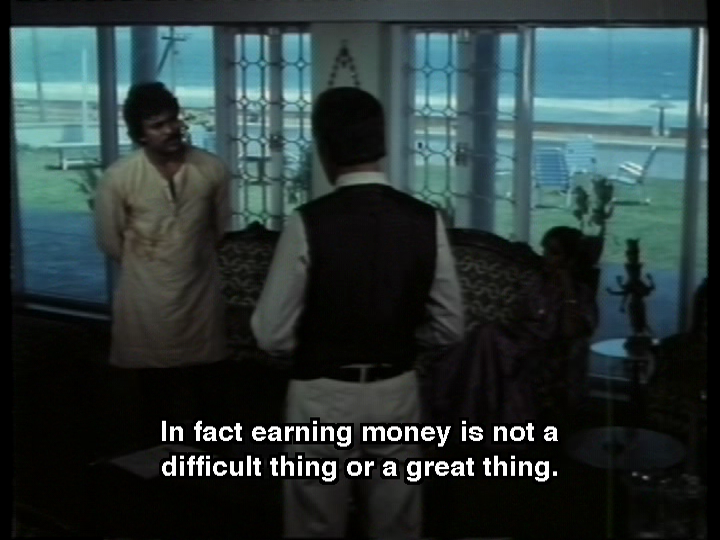
Although the title conjures images of martial arts films and to me sounds as if it should be about a physical fight, Challenge begins rather conventionally with a dying mother whose son is desperate to get her medicine. However it quickly evolves into a more social drama as Chiranjeevi’s ambitious young entrepreneur Gandhi bets rich industrialist Ram Mohan Rao that he will make 50 lakh in 5 years despite his unemployed status. With Rao Gopal Rao, Vijayashanti and Suhasini Maniratnam along for his journey from rags to riches the film touches on poverty and unemployment, workers’ rights and even industrial espionage as Gandhi rises to his Challenge.

The opening scenes introduce Gandhi as a smart but penniless man who isn’t the type to back down or give up easily.  After his mother dies, he uses his intelligence to wheedle money for her funeral from Ram Mohan Rao’s daughter; but for all of his brain power Gandhi isn’t very canny and is easily swindled out of his windfall by the hospital mortuary attendant (Sai Kumar).

Although this introduces Mohan Rao and his ‘money can buy anything’ approach to life as well as his beautiful and more compassionate daughter Harika (Vijayashanti), both the money and Gandhi’s speech to the attendant become important towards the end of the film. I haven’t been able to read Yandamoori Virendranath’s original story but the screenplay uses a number of such incidents where apparently trivial events are used to illustrate different facets of Gandhi’s character and their importance to the plot only becomes apparent later on. It’s all very cleverly done, and I did have to go back and re-watch some of these early scenes to pick up on all the details, although perhaps I was just a little distracted by Chiranjeevi’s dancing!

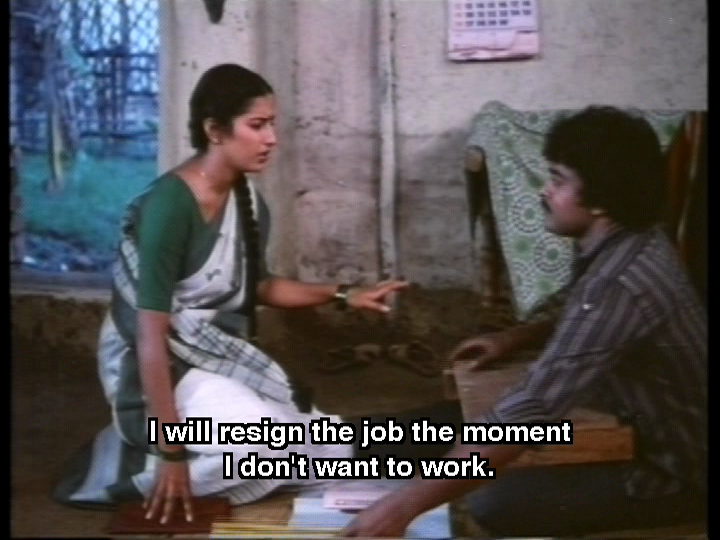
Gandhi is a graduate with a first class degree and somehow feels that this means the government owes him a job. In fact he’s quite belligerent about his lack of employment but is rather taken aback when Lakshmi (Suhasini Maniratnam), a girl he has rescued from the river, takes him to task about his attitude.  It turns out that Lakshmi is a graduate herself, but rather than complaining about the lack of opportunity is working in a number of different jobs to maintain her independence. Her basic belief is that it’s more important to earn a living than worry about the status of the job and since she has such a practical and pragmatic attitude also sees no problem with offering space in her house to Gandhi. Although Gandhi is initially shocked by the suggestion that he should move in with a single girl, Lakshmi solves the problem by telling him not to think like a woman which quickly stops his objections. This song is another daydream and I do like how Suhasini gets to dance on Chiru’s back!

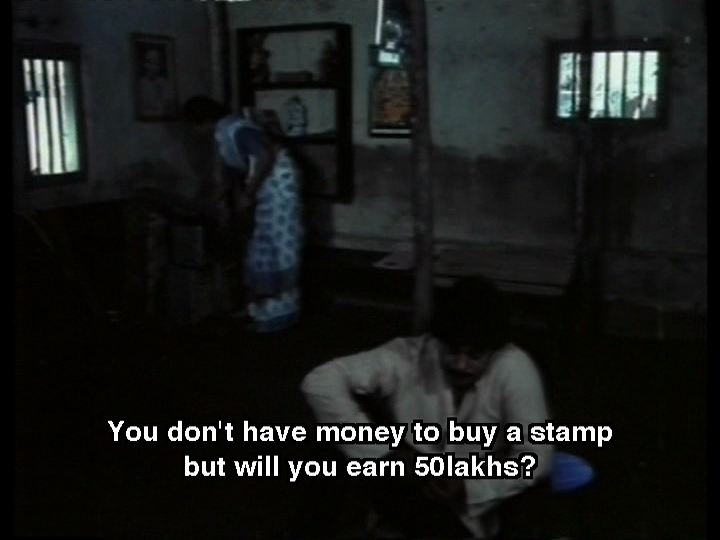
Gandhi ends up applying for a job with Ram Mohan Rao but at the interview is humiliated by the company owner, who is furious that Gandhi sent in his application without a stamp. However Gandhi is just as angry about the trickery used in the job advert and goads Ram Mohan Rao to such an extent that he challenges Gandhi to prove that money is not important. Gandhi vows that he will earn 50 lakh in 5 years and such is his belief that Gandhi will lose, Ram Mohan Rao promises the hand of his daughter Harika in marriage if Gandhi succeeds.

Game on then!

Gandhi makes the important distinction that he will make the money legally, although not necessarily honestly and with a coin he has been given by a beggar woman, he begins his rise to riches. However, as he becomes wealthier his attitude changes and he becomes more and more fixated on the money until nothing else, including his relationship with Lakshmi, seems to matter. Indeed it’s not even the money, but rather beating Ram Mohan Rao which becomes the driving force behind Gandhi’s various plans. This then is the real challenge –can Gandhi stay true to the ideas and principles he had as a poor man or will the power of wealth corrupt his values?

Lakshmi isn’t the only woman having some issues with Gandhi’s wager. Harika is initially appalled at her father’s pronouncement but as she meets with Gandhi, she gradually falls in love with him (who can blame her!) and she actively starts to help his cause. Since Ram Mohan Rao’s first action was to rip up the contract and set his goons after Gandhi, Harika has plenty of work to do in foiling her father’s plans to ruin Gandhi’s various business ventures. While Gandhi seems determined to win the bet and therefore marry Harika, he is still living with Lakshmi – although the two seem to have a strictly platonic relationship. To add more confusion, Lakshmi’s brother Hanumantha Rao (Gollapudi) and his wife Priyamvada (Silk Smitha) move in with Gandhi and Lakshmi. Hanumantha is secretly working for Ram Mohan Rao, while Priyamvada has designs of her own on Gandhi which seem to involve a rather short red toga and a rendezvous in the desert!

Chiranjeevi is riveting as Gandhi and his portrayal of the drive and determination with which Gandhi meets his various challenges feels authentic. Chiru made me believe in every aspect of Gandhi’s moral and physical struggle and I think this is one of his best performances.  A. Kodandarami Reddy has done a great job of developing such a complex story and has put a lot of detail into the characters of Gandhi and Laxshmi to make me feel every moment of their struggles. It’s a good story too and although there are a few points that require a little suspension of disbelief, the basic theme echoes stories of personal achievement that do occur in real life. The other lead actors are all excellent.  Suhasini is perfect as the strong-minded Lakshmi and she makes the most of her well written dialogues. Rao Gopal Rao is suitably villainous as Ram Mohan Rao and although Gollapudi is fairly irritating when he tries to be funny, he doesn’t appear often enough to make it a problem. I surprised myself and recognised a young  Rajendra Prasad, who has a small but important role as one of the graduates Gandhi employs as he builds his empire. Vijayashanti looks incredibly beautiful but her character is more than just the glamour element and she too has a strong role to play.

The songs by Ilayaraja are another highpoint. Generally they represent fantasies by the various women in Gandhi’s life and the upbeat music and dancing make a good contrast with the more grim reality of the story. Vijayashanti gets the best costumes and also probably the best line in the film – Mind it! Again it’s a shame that the film isn’t in better condition but at least Challenge is available with subtitles even if they appear at times to be rather literal.

I loved this film and it’s a great way to celebrate Megabirthday! Watch for what really is an outstanding performance from Chiranjeevi and his co-stars in a cracking good story. 4 ½ stars.