Junglee

Junglee is quite simply my favourite Shammi Kapoor film. It was a big hit when first released in 1961, and featured not only Shammi but also Saira Banu in her debut performance. In fact she netted a Best Actress Filmfare award for her role in the film. Junglee features some great performances, an engaging story, beautiful scenery, fantastic songs and even a snippet of Helen – just perfect!

The film opens with Chandra Shekhar (Shammi) returning home after 3 years overseas in a wonderfully decorated plane. Via a voice over and a series of scowls and grimaces from Shekhar and his mother, we learn that the family disapproves of laughter and believes that it is something only indulged in by the lower classes.
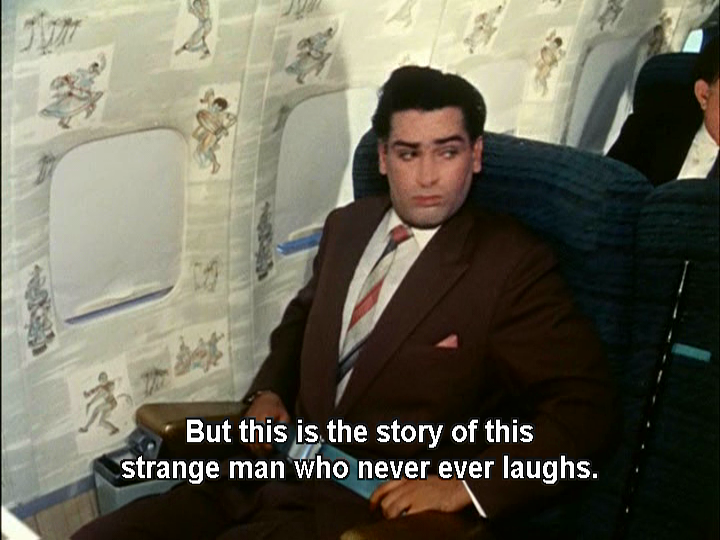
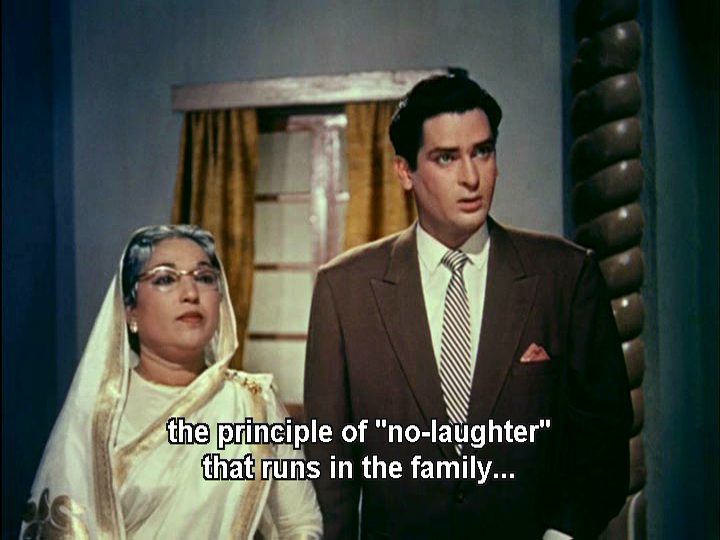
While Shekhar and his mother seem to firmly believe in these sober and unsmiling principles, Shekhar’s  sister Mala (Shashikala) has somehow managed to escape the family  affliction. She is in love with Jeevan, the son of the family’s business manager and is quite the rebel. She smuggles her lover into the house, successfully hiding him from both her mother and Shekhar, although she doesn’t seem quite as adept at smuggling herself out.

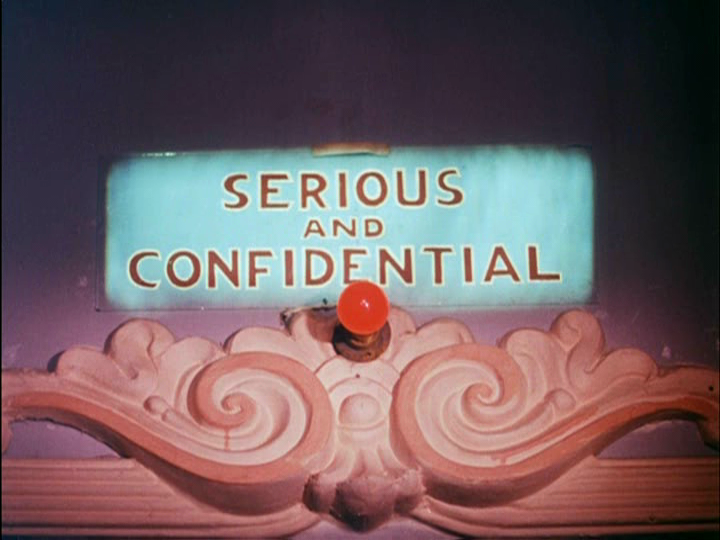
In due course, Mala and Jeevan’s secret affair is discovered, quite appropriately in secret and confidential discussions. We can tell this as there is a helpful sign with accompanying illuminated red light to let us know that there is a top-secret meeting going on and  for extra top-secret authenticity, the room is red-lit .
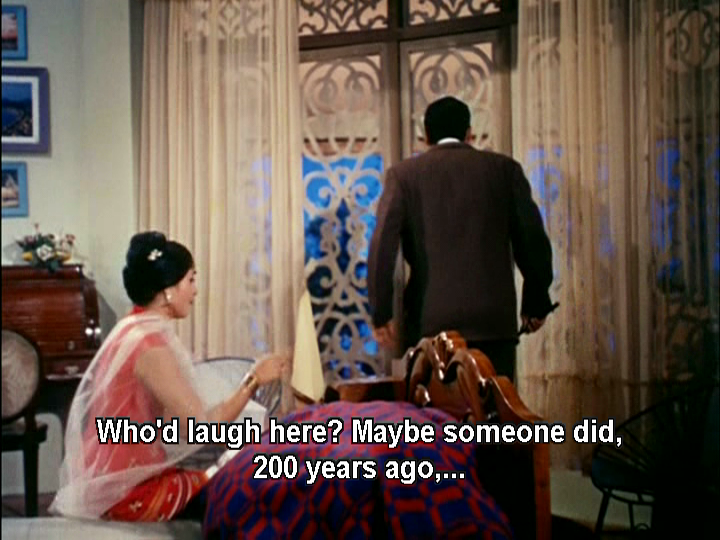
Luckily for his father and Jeevan, his identity  is not disclosed and to resolve the problem Shekhar is ordered by his mother to take Mala with him to Kashmir on his business trip. Shekhar has his own romantic issues to deal with as  his mother has arranged his marriage to a Princess. However she is not aware that the royal family are impoverished and are banking on the marriage to ease their monetary woes, waiting only for Shekhar’s return to Bombayto go ahead and tie the knot.

Needless to say Shekahr’s cantankerous disposition is not improved at all by his relocation and he just becomes grumpy in the snow instead of grumpy in the city. He meets the charming Rajkumari (Saira Banu) who delights in tormenting Shekhar just because she can.

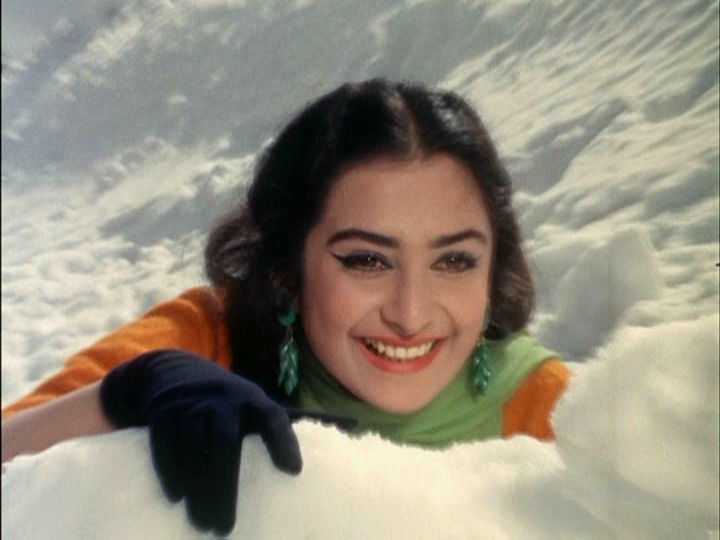
Rajkumari’s father is the local doctor who soon diagnoses Mala’s sudden ‘illness’ as pregnancy. Knowing what Shekhar’s likely reaction will be, Rajkumari hatches a plot to lure him away until after the baby is born. However Shekhar discovers the deception and the two end up marooned in a cottage as a violent snow storm isolates then for an undisclosed amount of time. Long enough however for Shekhar to fall in love with Rajkumari and inspired by the transformed snowy landscape and his own evolution he bursts out with an exuberant Yahoo!

This is probably the most famous song from this film and deservedly so – Shammi’s high spirited cavorting around in the snow is brilliant and it’s a song always guaranteed to make me smile even after the worst day at work. There is so much energy and enthusiasm, and it’s a great contrast to the previous scenes where the two are stuck in close proximity in a small cabin.
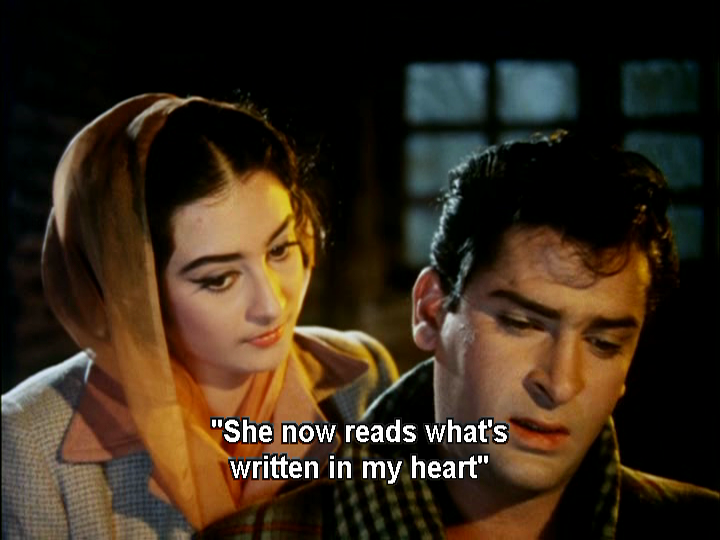
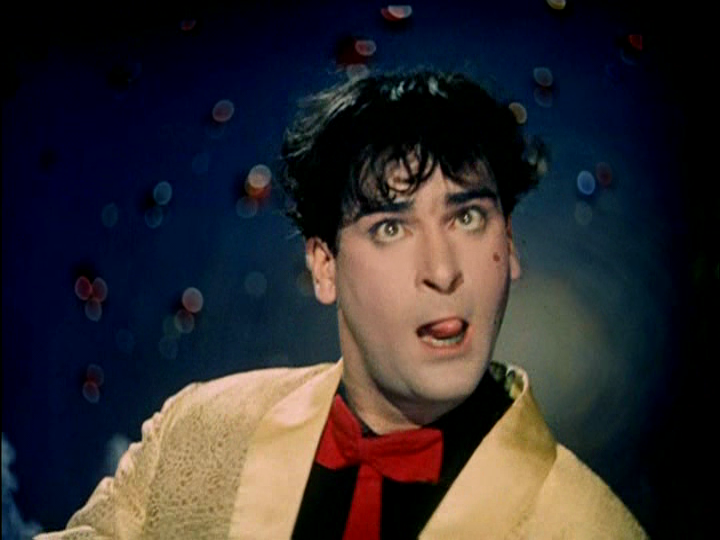
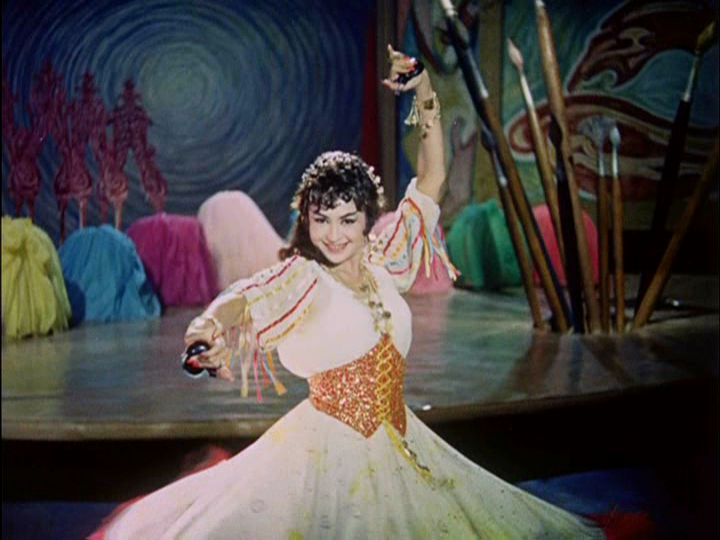
Now that Shekhar is in love he wants to marry his Rajkumari and heads back to Mumbai with his sister. But he still has to get rid of the other Rajkumari, the Princess he is betrothed to and there is also the dilemma of Mala’s baby to resolve. And Shekhar has to win his mother’s approval of his new happy personality which is probably the biggest challenge of all. He falls back on the favourite Bollywood excuse of insanity, which gives Shammi the chance to ham it up and make full use of his range of facial expressions. A visit to the princess and her family gives us a wonderful dance with Helen complete with giant-sized artist palette backdrop.
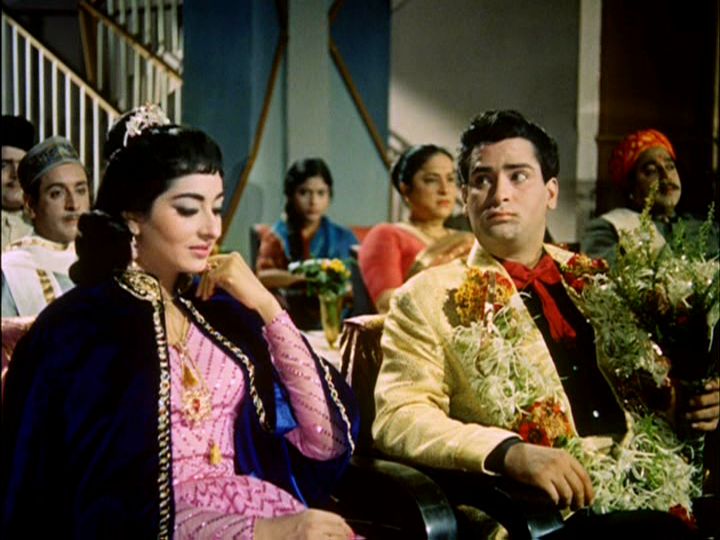
 

There is plenty more drama as Rajkumari and her father arrive with Mala’s baby and the brother of the ‘real’ princess gets more and more desperate before a suitably heroic ending. It’s not all about Shammi’s antics pretending to be crazy though as there are a number of beautifully romantic scenes as well. This is my favourite song from the film and I find Shammi totally adorable in this.

I love the many faces of Shammi in this. His mad twitches and grimaces are limited to when he is pretending to be crazy and in the rest of the film he is much more restrained.

The character of Rajkumari is also well developed and shows a gradual transition from her initial childish persona to a young women determined to do what is right. Saira Banu displays charming innocence and naivety and it’s clear to see that she was only 17 when she made this film.

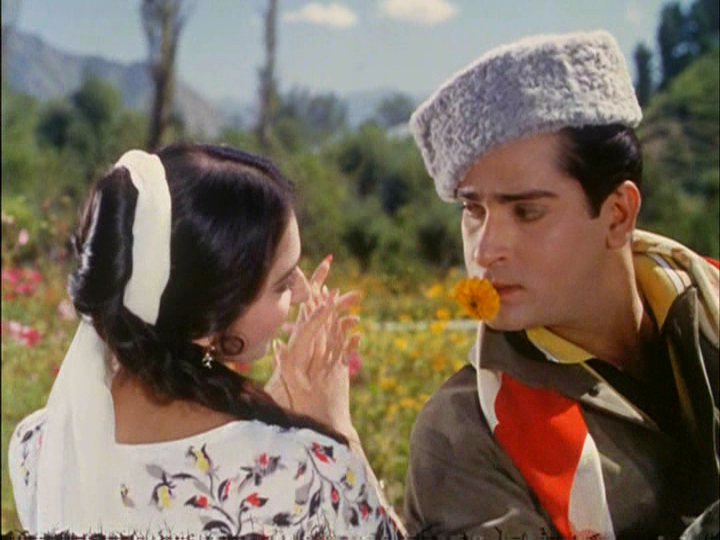
Junglee has some of the most romantic scenes I have seen with Shammi and he is at his absolute best in these. He can be guilty of some scenery chewing at times, but here he is restrained and convincing as a man in his first throes of love. His eyes are very expressive and he does have some excellent chemistry with Saira Banu. The song Din Sara Guzara is another gem which is beautifully pictured. In fact, all of the songs are excellent and both Lata Mangeshkar and Mohammad Rafi do excellent justice to the music by Jaikishan and Shankar. The beautiful Ja Ja Ja Mere Bachpan is wonderful as well, and it really is worth checking both of these songs out.

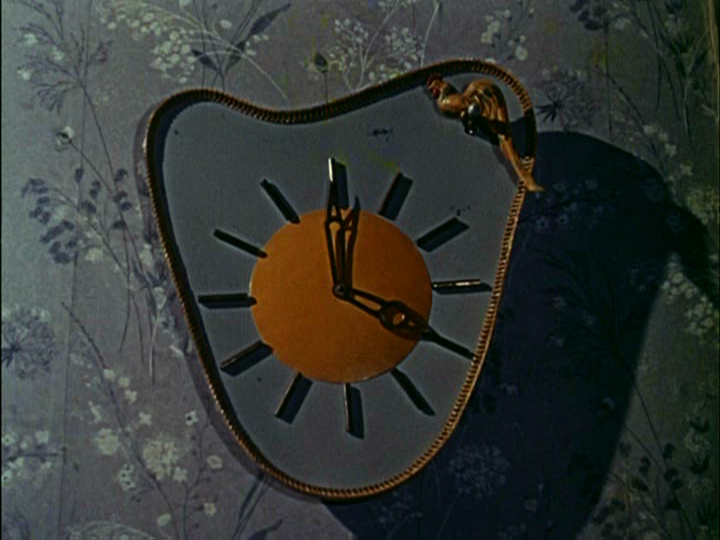
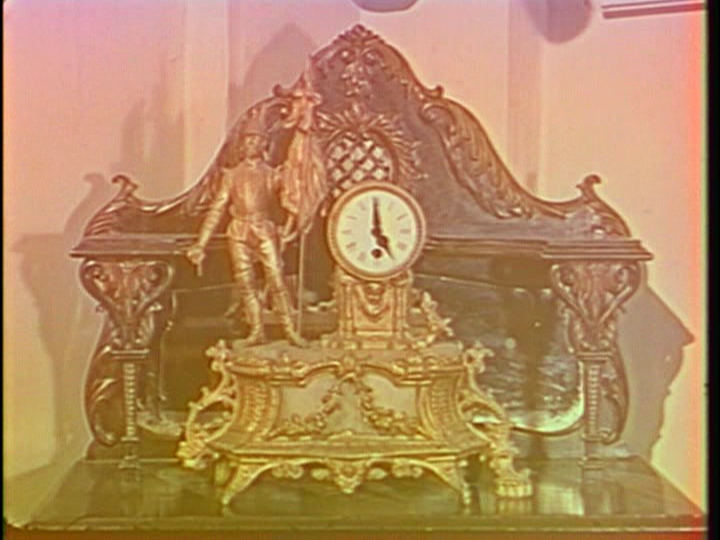
 Although the story starts with a rather ridiculous premise, Lalita Pawar makes the character of the inflexible family matriarch strong enough to keep the idea of a woman bound by her duty to her late husband credible.  While the ‘no laughter’ idea may not be very realistic, it is easy to believe in Shekhar as a man bound to rigid work principles who is uncompromising and ill-tempered. The mood lightens considerably when we get to Kashmir – not the least because of N. V. Srinivas excellent cinematography. The hills and flowers are beautifully shot and the songs make the most of the scenery.  There are also some wonderful sixties décor on the sets. I particularly like the clocks and it’s a shame that my copy of this film has suffered from colour degradation with aging.
The support actors are all good in their roles too. Anoop Kumar provides some light relief as Jeevan and although Mala and her lover are only a peripheral part of the story, they both make an impact when they need to. While I do end up feeling a little sorry for the rejected princess, her brother and father aren’t quite evil enough to be convincing villains and I think they appear more pitiful and desperate.

Junglee is at heart a love story and as such it works really well. Excellent performances and fabulous songs plus Shammi at his best make this a 5 star film for me.
Chori Chori (1956)

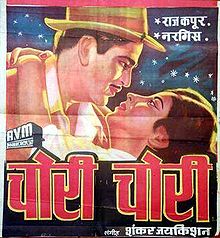
I grew up watching RKO and MGM musicals, and have always loved that kind of film with snappy dialogue, lush soundtracks, stylised visuals and excellent casting. I am a bit resistant to the remake in general – I tend to think that if a film was great first time around, why mess with it. So I was surprised by how much I like Chori Chori. It is ‘inspired’ by the 1934 Frank Capra film ‘It Happened One Night’ starring Clark Gable and Claudette Colbert, and has the legendary jodi of Nargis and Raj Kapoor at the fore, directed by Anant Thakur. Chori Chori seems to me to be the perfect balance between slick Hollywood and heart on sleeve Bollywood.

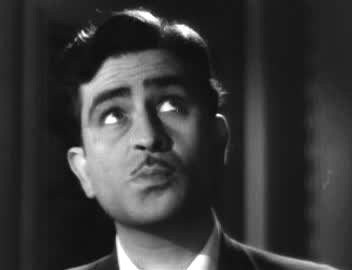
One of my great friends often says ‘Raj Kapoor was sleazy…and not in a good way’ which never fails to crack me up and is the thing that pops into my head when I see him.  I didn’t ‘get’ Raj Kapoor til I saw this film and drew the connection to the Gable style of Hollywood hero that used equal measures of smarm and strong-arm to win the day. I’m still not a huge fan, but I can at least glimpse what it was that makes him such a significant figure in the Hindi film industry.

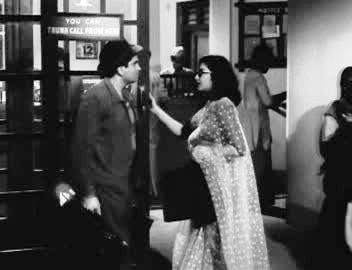
Nargis is Kammo – spoilt daughter of the super wealthy Ghirdarilal (Gope). She is determined to marry the dashing pilot Suman (Pran!) but her father is sure Suman is only after the dollars not his daughter. She jumps ship and swims to shore, determined to make her way to Bangalore and Suman’s arms. I have to say she showed some moxy in pawning a diamond ring to fund her travels, but the white net sari she bought with the proceeds struck me as wildly impractical for a long bus trip.

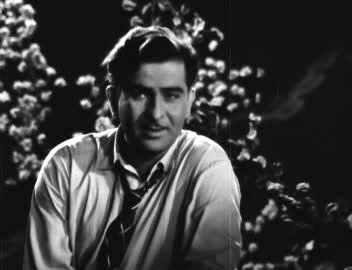
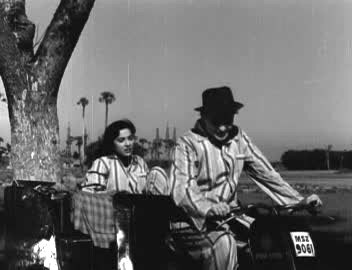
Also bound for Bangalore is struggling journalist Sagar (Raj Kapoor). The two loathe each other on sight and of course we know that can only mean true love is round the corner. Sagar is reluctantly drawn into helping Kammo, caught by his chivalrous nature, curiosity and later by his attraction to her. He wears a western suit and hat, slightly the worse for age, and his look could have been lifted straight from Hollywood Central Casting. He represents the heroic battler, trying to make a decent living while keeping his morals intact. He cuts a deal with Kammo – he will help her get to Bangalore and Suman, and he will reap a financial reward when he sells his story.

Ghirdarilal places adverts offering a reward for anyone who returns Kammo to him. Thus there is ample opportunity for a host of minor characters (including Johnny Walker) to join the treasure hunt, and a catalyst for throwing the sparky leads together.

As they travel incognito, scenes cut away to Suman who is shown to be a gold-digger with an eye for dancers. This is not bad for the viewer as we get to enjoy a very nice classically inspired dance, but we already know which man Kammo should marry.

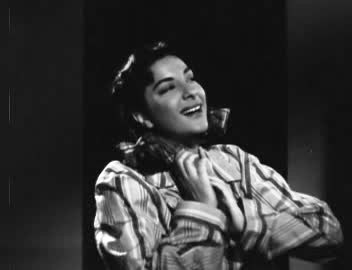
Kammo and Sagar miss their bus, and continue to travel together under the pretence of being married. Raj is only carrying a small valise and yet I lost count of how many pairs of stripy pyjamas he seemed to have packed. Mind you, Nargis seems to amass a decent collection of saris along the way so it’s probably only fair that Sagar has an extensive range of sleepwear. The pyjamas were quite significant in ‘It Happened One Night’, but rather than share a single pair of pjs this couple get matching his n hers. Lots of them. Perhaps the wardrobe team had the day off when someone came up with Kammo’s alluring night attire.

They encounter suspicion and adversity and their own growing feelings. Sagar wanted the story and maybe the money, and Kammo wanted Suman – neither of them wants to acknowledge what is changing between them. They offer each other small kindnesses – the loan of the ubiquitous pyjamas, a blanket thrown towards a sleeping Raj – and lots of snark. The dialogue by Agha Jani Kashmiri is sharp and delivered with perfect timing. These two really are a match for each other and the chemistry is sizzling.

It’s all quite predictable down to the last twist and turn but it is still compelling. Nargis is stunning in her portrayal of the feisty Kammo. She isn’t afraid to articulate her feelings for Sagar, whether in song or dialogue, and challenges his reticence. In one scene, heartbroken Kammo walks through a storm and Nargis exudes grief so profound it outshines all the environmental theatrics. It is a bit irritating, although perfectly in tune with the era, after such an independent start Kammo appears to realise she should never have defied her father or left her home, although that may be her own idea of a necessary penance.

Kammo’s relationship with her father was perplexing. Kammo was spoilt rotten and certainly lacked for nothing in the material sense. He locked her up to stop her marrying Suman and really did not believe that anyone would marry ‘baby’ for anything other than his money. He was devastated when she disappeared but trusted Kammo to tell him as much as she wanted to on her tearful return. So I kind of blame Ghirdarilal for making Kammo susceptible to Suman’s flattery as she was seeking approval she didn’t get at home. But he also made her the kind of brat that needed a reality check. Oh these filmi parents!

Raj Kapoor seems content to mostly allow his leading lady to dominate, and is fairly low key. Until the puppet song which I think was designed to allow him to release all the repressed over-acting. He spouts a lot of philosophy about the joys of the simple life, which seems to impress Nargis. I’d have more faith in that if Sagar had ever lived anything other than a simple life and so could make a valid comparison, but I’m a cynical viewer not a filmi heroine.

A disquieting note throughout is the equation drawn between marital status and the individuals’ threshold level for physical violence. One scene has a landlord test whether Sagar and Kammo are married by smacking Sagar around. The fact that he doesn’t flinch is accepted as proof he must be married to her! Slaps fly in this film, and while they are generally shown as a symptom of passion, it’s still a bit disconcerting and causes me to remind myself this is the 50s. For those wondering, Nargis lands some excellent shots, which I enjoyed, but on the downside the women in Chori Chori are generally portrayed as the aggressors in domestic violence.

The music is used to perfection in this film. Each song acts to illuminate the innermost thoughts of the characters singing or those observing the performance. Shankar-Jaikishan have the perfect big band sound for the romantic duets, and the orchestration is lush as befits this story. The songs show a range of musical influences and are very well integrated into the narrative. And who doesn’t swoon just a bit on seeing Asha Bhosle, Lata Mangeshkar, Manna Dey and Mohammad Rafi all on a soundtrack?

The classic visual devices from ‘It Happened One Night’ appear throughout Chori Chori – particularly the wall Sagar creates in their shared rooms by draping a blanket over a rope, those stripy pyjamas, and the cramped bus trip. It’s a fairly faithful remake, adapted to suit its audience’s sensibilities, and the changes don’t weaken the story.

Raj and Nargis are stunning and deliver beautifully nuanced performances. With the frisson of their legendary affair in mind, the romance on screen seemed that much more compelling as I wondered what was acting and what was revelation. The film has style, beautiful cinematography, lovely songs and strong performances. I give it 4 stars! Temple