
I’ve been a Shahid Kapoor fan for quite some time and have always been convinced that he’s a good actor who just needs a better film to really show his acting chops. And Kaminey is that better film. Shahid excels here as an actor rather than just a pretty face with some nifty dance moves. While Jab We Met was a great performance from Shahid as a romantic hero, here he steps out of that more traditional chocolate box role to deliver an excellent performance as a darker action character. Kaminey takes much of its influence from directors such as Quentin Tarantino and Guy Ritchie, but for all that it has its own unique flavour with a number of plot points that are distinctly Indian.
The story revolves around two brothers, Charlie and Guddu, both played by Shahid Kapoor. Although they are identical twins, the two hate each other and haven’t seen or spoken to each other in years.

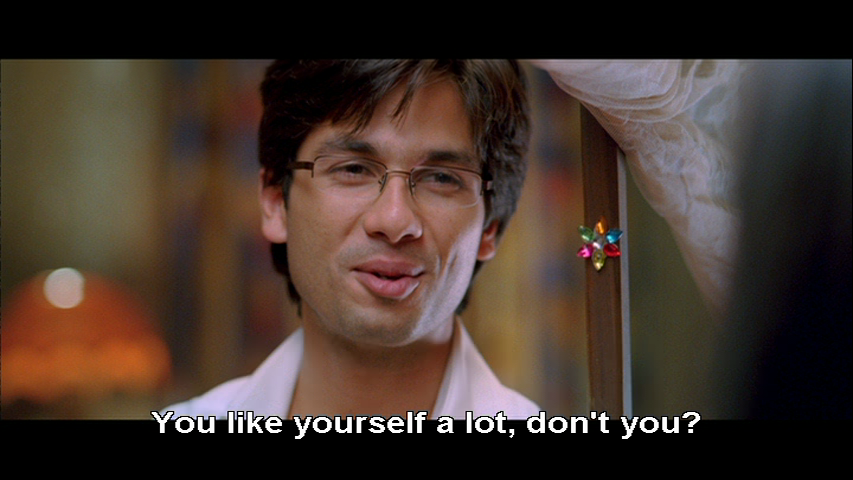
Charlie

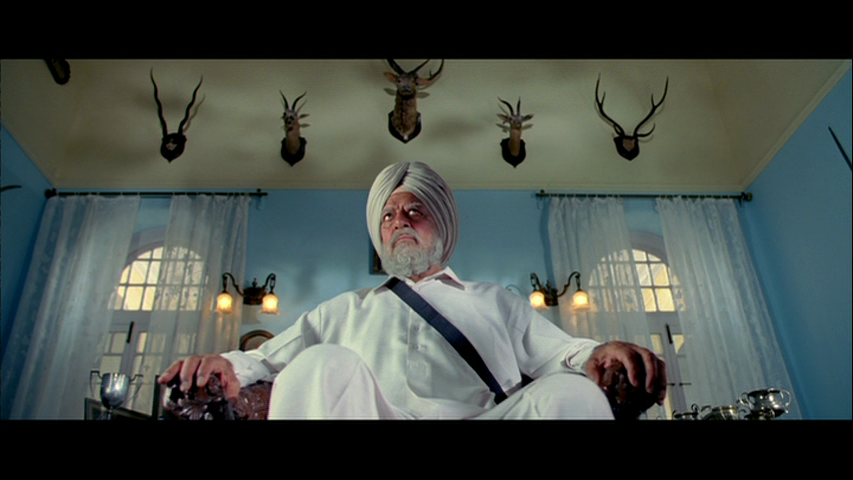
Guddu
Charlie provides the narration for the film and after a brief introduction about his philosophy on life as trains rush past, we see him running through a station. This sets the tone for the rest of the film: fast-paced and headlong with very few stops for breath along the way. Although the film does follow a fairly linear story path, there is plenty of misdirection and a number of twists and turns which keeps the final outcome in doubt until the very end.
Charlie works as a petty criminal in the world of fixing horse races and is what my family would call a ‘chancer’. His ambition in life is to be a bookie although just at present he is working for a trio of completely crazy Bengali brothers (Rajatabha Dutta and Deb Mukherjee). The youngest brother is Charlie’s best friend and the two have a very close relationship, although Mikhail (Chandan Roy Sanyal) also acts as a source of random mayhem pretty much every time he appears on screen.


Guddu, the other twin, is a softer and sweeter character who works for an NGO promoting AIDS awareness when he’s not studying. I listened (and sang along) to the sound track before the film released and never picked that this was a song about AIDS, but the picturisation makes it quite clear. It’s a great song and one of the more novel introductions of a character I’ve seen. Plus I love that everyone ends up wearing gigantic red mesh condoms at the end.
In one of those little ironies that litter the film, Guddu hasn’t followed his own advice and his girlfriend Sweety (Priyanka Chopra) is pregnant. The revelation is excellently scripted and is used to reveal a lot about both characters. Guddu doesn’t approve of abortion but as marriage doesn’t fall into his life plan he really doesn’t have a solution, other than letting Sweety deal with the situation as best she can. Sweety though is quick to point out that her brother is the notorious gangster Sunil ‘Chopper’ Bhope and that if Guddu wants a life of any sort he’d better figure something out – and fast!


So with his life plan in tatters and his future looking grim, Guddu sees no other option but marriage which totally delights Sweety. The romance is rather glossed over and from subsequent conversations it’s hard to understand exactly why the couple stick together, but the cut song Pehli Baar Mohabbat describes their relationship beautifully. I can see why the song wasn’t used though as the slow pace doesn’t suit the rest of the film. Instead Raat Ke Dhai Baje captures the different attitudes Guddu and Sweety have towards the marriage and keeps the mood more upbeat.
Meanwhile, through a series of chances Charlie has got his hands on a large quantity of drugs and plans to sell them to realise his dream. The original owners of the drugs and their various minions are, of course, keen to get their hands on the drugs and once they know who has them, they’re keen to get their hands on Charlie as well.
So we have the two brothers each being pursued by different sets of gangsters for different reasons. Being twins it’s not long before the two get confused and end up being dragged into each other’s problems, although it’s nowhere near as straightforward as that makes it sound.


What I really like about this film is the clever script and the way the story keeps evolving. It’s also the best role I’ve seen Shahid play and he’s totally convincing as the twin brothers. Guddu and Charlie look different as well as having quite distinctive personalities and each has the added bonus of a different speech defect. Guddu has a stutter while Charlie pronounces s as f which makes for some funny and memorable lines from both. At first I really didn’t think the speech impediments were going to add much to the plot and were going to be played for cheap laughs, but instead the humour is much sharper and the way they speak also helps define the characters more clearly.


Charlie is tough and used to dealing with the underworld. He can fight, think fast on his feet and is decisive and determined. Guddu is much softer (he even looks less muscled), he doesn’t like to fight and avoids conflict where possible. Guddu does come across as more selfish and self-absorbed than his brother but I think this is mainly because Charlie’s relationship with Mikhail allows more of his open and sociable side to be seen. Charlie appears to be the more dominant twin, but later events show that Guddu is equally determined and quite capable of standing up for himself when it’s something he cares about. Both brothers have been affected by their poor relationship with each other and this adds more shade to their characterisations.
It’s not just the two brothers who have well drawn characters. Sweety has plenty of personality and Priyanka is excellent here as the feisty girl who is willing to fight Guddu’s battles for him. She has shed her more usual glamour and is almost unrecognisable in her cheap cotton outfits. Although her role isn’t all that big, she breathes life into Sweety and makes her much more than just the pregnant girlfriend. I really like her character here despite her rather impulsive decisions.

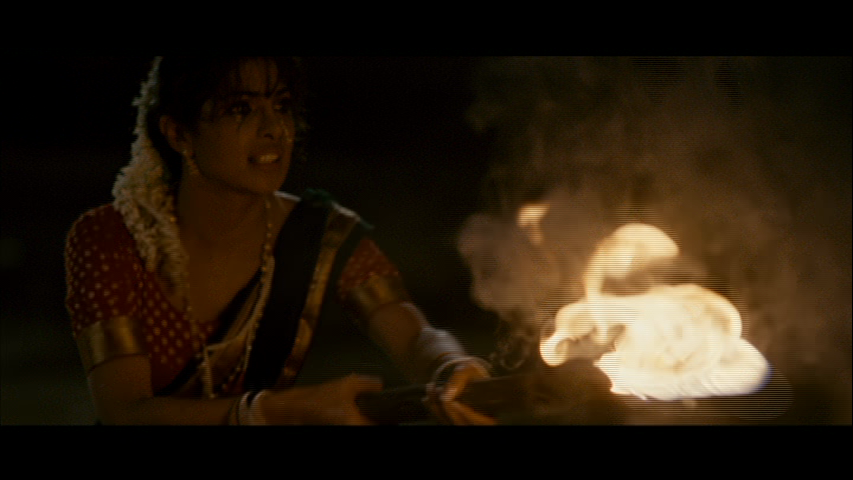
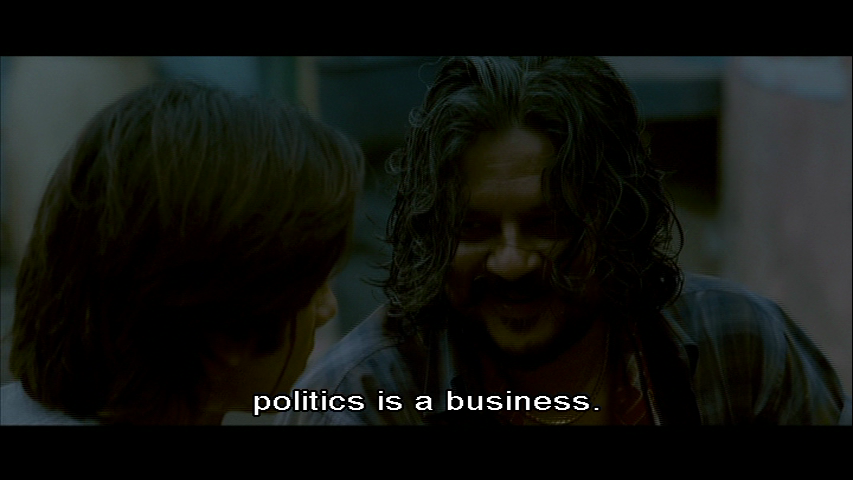
The two main villains are more than just the usual requisite thugs and have plenty of personality. Even their underlings have some back-story and while this is mostly a good thing, at times it does become a little too unwieldy and starts to crowd into the main plot. Amole Gupte almost steals the show as ‘Chopper’ Bhope as he fits his larger than life role of the gangster turned politician perfectly. Tashi (Tenzing Nima), the gangster looking for Charlie, is more sophisticated but while less overtly menacing his callous treatment of his allies makes him just as frightening. The various other gang members and police, corrupt and otherwise, are all just as well drawn and fit into the story development well.

Perhaps the only downside to the story is that there is very little opportunity for Shahid to dance, but his performance more than makes up for that omission. The music (written by Vishal Bhardwaj with lyrics by Gulzar) is generally of high quality and as expected from a director with Vishal’s background, the songs are well integrated into the story without disrupting the narrative flow. In fact most of the time they carry the film forward and further develop the characters. Dhan Te Dhan for example does a great job of capturing the frenzy and manic energy of Mikhail along with Charlie’s exuberance of realising he may actually achieve his dream.
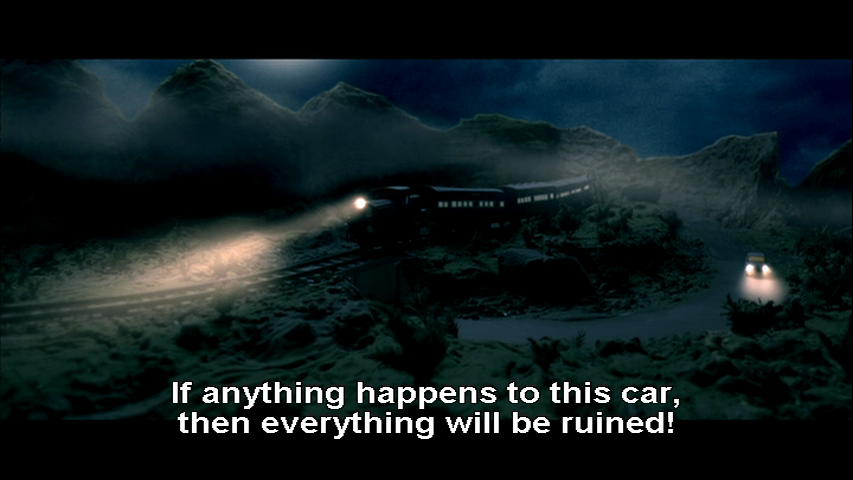
There is one issue with the film which I noticed much more watching on DVD rather than in the cinema. Although Tassaduq Hussain gets a very edgy feel with his camera work, the whole film is very dark and there are times when it’s hard to see the action clearly. It’s not helped by the fact that many of the outdoor scenes are filmed in what appears to be torrential rain which adds to the rather gloomy feel the low light levels induce. It also makes it very hard to screen-cap! And while I love the film climax, I don’t really like the final ending of the film which seems a little too pat with everything neatly tied up with a big shiny bow to finish. Maybe it’s my exposure to Tamil films but I don’t need everything to be happy ever after to make a good ending.
Vishal Bhardwaj is a good story teller who gets the most out of his actors and with Kaminey I think he succeeds in both those aspects very well. It’s fun and full of fast-paced dialogue and action plus fantastic performances from the whole cast. An entertaining watch that’s a different take on the double role plot device for Bollywood. 4 ½ stars.
Temple says
Shahid does a great job in a complex dual role. When the brothers are together even subtle details like a tautness to facial muscles, posture, degree of neckline plunge or the angle of his head are enough to tell you which twin you’re looking at. Sweety is an interesting character, and that complexity was in the writing as well as derived from Priyanka’s strong performance. Sweety is a manipulative, aggressive and entitled young woman who physically defends Guddu from attack and takes over decision making in a crisis. In short, she is like many a filmi hero. As she and her brother face off it clicked for me that she had been raised almost as his younger brother, and he was a role model for her when it came to manipulating and deceiving people. I appreciated Priyanka toning down the glam (except her too perfect manicure), and giving Sweety a harder edge. For a while I suspected Sweety of deliberately getting pregnant, and even wondered if Guddu was really the father. But I did believe she and Guddu were genuinely fond of each despite the lies. They were well aware of each other’s flaws and talked about the things that upset them so I think it was a fairly mature relationship and I wasn’t surprised they stuck together. Even in Raat Ke Dhai Baje there are glimpses of how their relationship works – he resists all change while she jumps into planning and implementation, but he lights up at her smile and enthusiasm.
The direction is accomplished and all of the music worked perfectly. I liked the way vintage filmi songs were used too. There was a lot of effort given to establishing the world Kaminey is set in, especially the contrast between the shadowy Charlie and the clean cut Guddu. There are lots of opposites and tensions, and the visual language really enhances the scripted drama. Charlie’s dream sequences were annoying on a re-watch but they do explain his character. Things run at a cracking pace, and kept me wondering how it would all tie together. The ending felt not entirely necessary, but it did show off an excellent hat and allow for one final lisp joke. I like Kaminey a lot but it doesn’t have quite the same impact on a repeat viewing when the suspense is diminished. But the strength of the script is evident in complex characters and some sharp dialogues. See it for excellent performances by Shahid and Priyanka, and for a stylish modern take on cops & gangsters. 4 stars!








 Cinema Chaat