Godavari

Sekhar Kammula has become one of my favourite directors, always entertaining me with interesting observations and a satisfying story. In Godavari he deposits his characters and their relationship issues on a boat, adding a philosophical dog, a sideplot or two and some beautiful scenery to leaven the mix. I’m not totally convinced by all of the elements but I do really like this film.

This song sets up the main characters, and acts as the now familiar promotion clip for Andhra Pradesh.

Kamalinee Mukherjee is Seetha, a would-be fashion designer. She has nightmares about losing her independence and her close relationship with her parents after she marries. I liked Seetha’s spirit, and I really felt for her coming off a rejection from a groom her parents pressured her into accepting. That had to sting. Seetha is vain and bratty at times but she is funny, insecure and compassionate as well, and admits fault when she is wrong.

Sumanth is Sriram, an unassuming guy who wants to get into politics and make the world better. He reveals a manipulative side as he cons his way into appointments with party officials. Perhaps he is a precursor to Arjun Prasad from Leader? He isn’t as effective in his personal life however. Ram is inarticulate when he should speak up, and doesn’t really see things for how they are – he is lost in a vision of how it should be.

Raji (Neetu Chandra) is spoilt, silly, self centred and yet not totally unlikeable. Raji judges a relationship by the trappings of Valentines’ cards, fancy coffee shops and all the showy things, things that just never occur to Ram, and she uses this as an excuse to push him away. Her parents know Ram wants to marry her but refuse as his simply isn’t the best offer and they are quite honest with him about this. Perhaps they know their daughter better.

Ravi (Kamal Kamaraju) is a cashed up bully, making the most of his status in the IPS. He seems to have some notions of manners and decency underneath all the arrogance, but has done a marvellous job of burying his better side. I can’t say I liked him at all, but I did end up thinking he could be a good match for Raji if he got over himself a little.

All the characters are flawed, but not in a dramatically damaged way. They’re just a bunch of people who have good and bad points, and for the most part are quite unremarkable. I found them easy to relate to, even the unpleasant ones, as they were well rounded and I could imagine them having lives outside of the film setting.

The boat setting appealed to me for a number of reasons. Not only did it provide a great device for containing the characters and their interactions, it looked great. It had all sorts of strange little additions,extensions and even a tower of sorts. I thought it looked delightfully like something out of a Miyazaki film. Whoever did the set dressing did a fantastic job too. All the powers were invoked to keep the boat safe and sound.

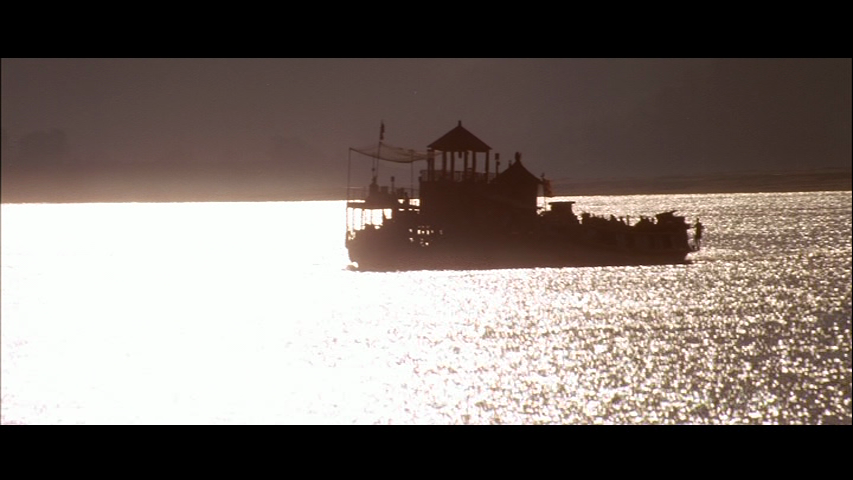
The boat trip also allowed the supporting characters to have things to do other than hang around Ram and Seetha.There was a nice sense of energy as the ever reliable Tanikella Bharani (the captain) and others bustled around. I enjoyed their presence all the more as they contributed to the background life and colour of the film. Seetha’s parents and sister had their own stuff going on at home, and there was a real lived-in feel to their domestic scenes as well. The nominal villains Raji and Ravi had their own issues to deal with, and even in their smaller roles showed some growth.

It wouldn’t be a boat story without stowaways. Chinna is a poor kid who pursues a mystery man (OK, it was Ravi) who does him out of the balloons he sells.  Koti, a dog, decides for his own reasons to get out of town. When Koti sees Chinna pay his bribe, he has a flashback to Daana Veera Suura Karna and swears fealty to his new master. They team up and give us their points of view but also provide the catalyst for people to reveal their own character – are they charitable, curious, mean or oblivious to the boy and dog?

While I liked the idea of Koti and the voiceover (by Sekhar Kammula, and what a world weary creature with a 3am whiskey voice he sounded), I did not like the CGI dog. The real dog had ample charm and verve and I don’t see the animation was necessary. I kept hoping it wasn’t because the real dog became, er, unavailable after a boating mishap. For those of you who demand pirates, there was a fairly silly episode involving a fugitive and a night ambush but it only served to show that Ram is reliable and Ravi isn’t so I will move on.

There is no surprise in the romantic pairing of our waterborne humans as their journey to Bhadrachalam follows that of Ram and Sita. Our Ram and Seetha are attracted to each other but there are obstacles, both real and imagined. I really enjoyed their conversations and the way both Sumanth and Kamalini showed the growing intimacy and comfort they felt in each other’s company as well as the pressure of the potential relationship.

They did daft things, sure, but there was no sense of them being stupid or unpleasant people. Kammula uses a lot of voiceover monologues, and both actors did a good job of mirroring the inner voice with their expressions, ranging from funny to heartfelt. Sometimes I find a voiceover can leave me at a distance, but in this case it worked well enough and suited the introspective nature of the characters.

I don’t like the background score at all. It is too cheesy, and seemed to try too hard to be whimsical. But the actual songs are more attuned to the mood of the scenes, and subtitled, so I could at least appreciate a fraction of Veturi’s lyrics as well as K.M Radha Krishnan’s melodies and the beautiful scenery. There is little dancing in the film, and it wouldn’t have been appropriate to much of the story; but if I have a criticism of Sekhar Kammula it is his over use of the montage. Then I saw Sumanth dance and I thought well, yeah, montages have their place— but there has to be a limit.

The lyrics draw attention to the beauty of the river and the power of unseen forces in our lives. The river is a metaphor for the forces in life that nudge us hither and thither, and the power of chance meeting and parting. But this Ram and Seetha also show that you can fight the current when you want to and make your own way.

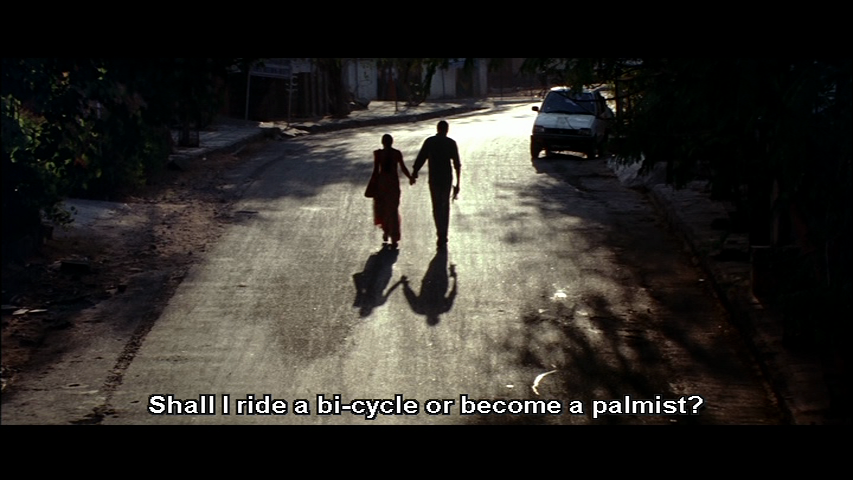
Finally, I give Godavari 3 and ½ stars. For those who think 3 and ½ is just plucked from the air , it goes like this – Points on for the convincing performances, points off for the animated animals, points back on for the real dog, more points on for a parrot asserting her independence, some points off for too many montages, and finally points on for the film being so pretty. Watch it for the beautiful balance of observational style with a fresh twist on the filmi clichés.

Heather says: I really like the way that instead of road movies, the Telugu film industry has river films which surely do a great job for the tourist industry. The river looks beautiful here and the Godavari boat is fantastic. I love the way it’s at least 3 boats joined together, one of which has fantastic wooden panels and just to add a little more space it’s also towing a raft behind. It looks like a great way to travel from Rajamunday to Bhadrachalam, although I suspect in reality it would be rather wet and cold. I do appreciate the way that in time-honoured fashion everyone jumped underneath big blue plastic tarpaulins when the rain started. I remember those well from travelling on the top of buses in India and Nepal!

The story of the romance between Ram and Seetha, both rejected by their prospective partners, is different enough from the usual to be interesting and I like the way that Ram had to deal with being in such close proximity to Raji and her fiancé Ravi for the duration of the boat trip. Kamalinee Mukherjee’s Seetha is beautiful and chirpy and I really liked her character from the beginning. Even her obsession with her beauty is funny rather than irritating and I feel that she stayed true to her independent nature throughout the story. Although Ram is initially a very pedestrian character with his idealistic ways and mooning over Raji, he becomes more likeable in his interactions with Seetha and the young balloon seller Chinna. Ram and Seetha’s gradual attraction as they argue is realistically handled and I think both Sumanth and Kamalinee Mukherjee are well cast in their roles here. The cook Pullamma is a great character and her indignation when she thinks Ram has given her brother money because he feels sorry for him is one of my favourite scenes. I like the way Sekhar Kammula’s points out that poor people have pride and dignity very well, particularly since there is so much emphasis in the story about altruistic behaviour being the ideal to aim for.

As well as another reason to dislike Ravi (and I’m not sure we needed quite so many), Chinna’s character adds some funny comedy. The CGI talking dog is strange and I agree with Temple that it wasn’t necessary. The talking dog idea was fine and the voice-overs were quite funny and used well but I think this could all have been done with the real dog,  rather than introducing the CGI. But it wasn’t too much of a distraction and the story of Chinna and Koti is well written into the main story.  The characters of Raji and Ravi are also more than just part of the backstory and I appreciate the way that all of the supporting cast are used to further develop the romance between Seetha and Ram, either by helping them or by adding more obstacles to their path.

There are a few things that confuse me. I’m not sure why the fortune-teller decides to jump into the river. I can’t work out if he’s just chasing his parrot or if his declaration to Rama is more significant. The fight scene also seems totally unnecessary and the whole storyline of Veeraiah didn’t add anything other than a chance for Ram to be a hero.

There is so much to enjoy in this film. the boat setting, the lead actors, the story and the support characters are all excellent. I love the songs as well, especially Tippalu Tappalu in the rain, and the shots of the river are beautiful. Godavari is a really entertaining film and I give it 4 stars.

Leader and Prasthanam


Politics, corruption and family dysfunction provide a fertile ground for film-makers and while they are not top of the list for us to view, there have been some interesting films made on these topics. There has been a lot of talk about both Leader and Prasthanam taking an innovative approach to these themes but we found each conventional in both their story and structure. Both make reference to land and mineral rights disputes, but the films aren’t really about the issues as much as they are about relationships and power. Because of the parallels and contrasts we decided to discuss them together. For the sake of simplicity, as well as being in keeping with the films’ focus, we are also concentrating on the main story and will skim over the subplots.

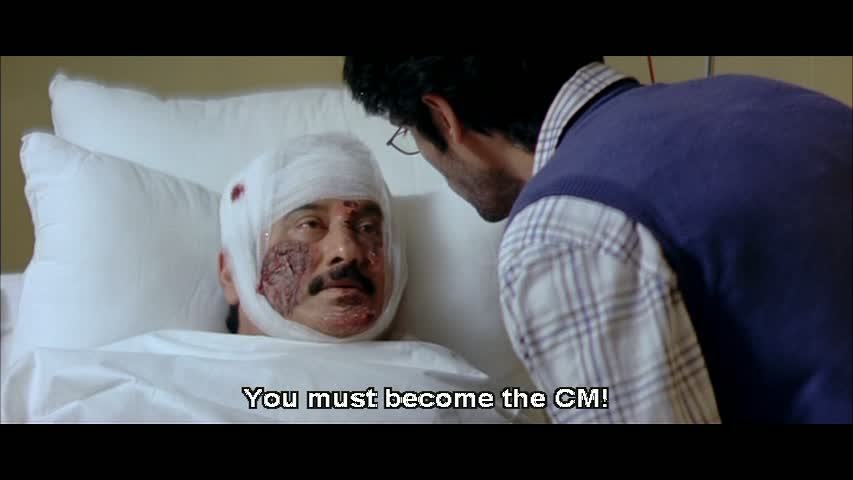
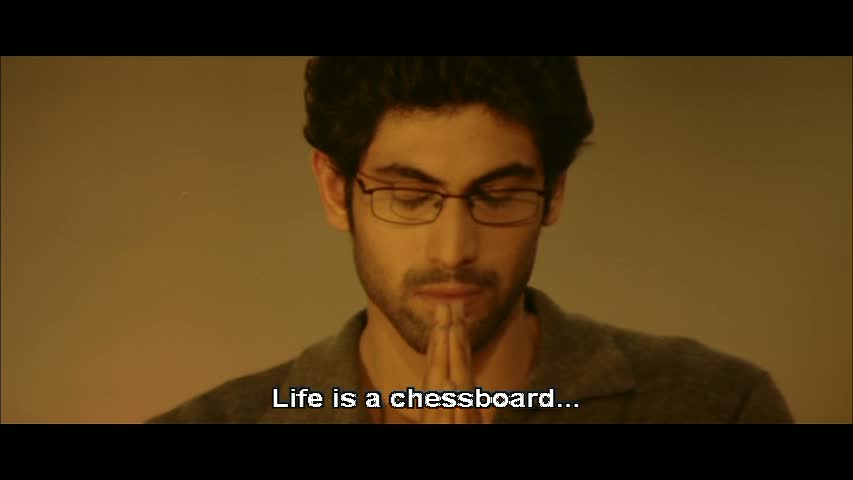
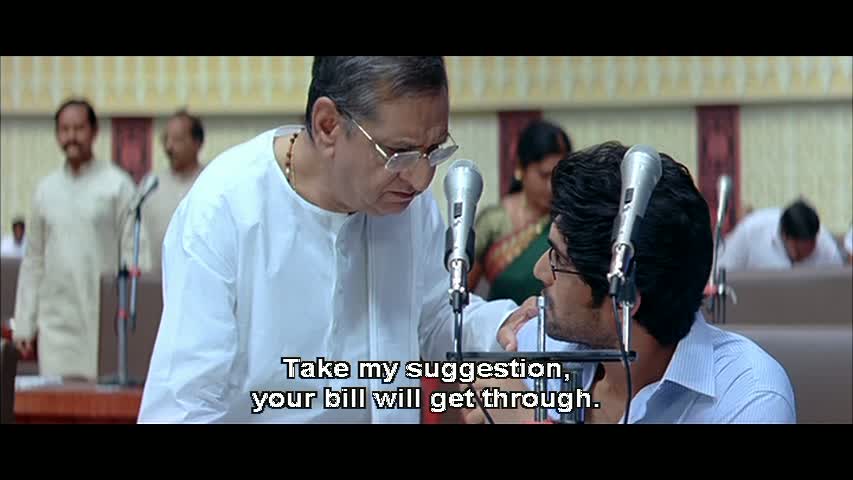
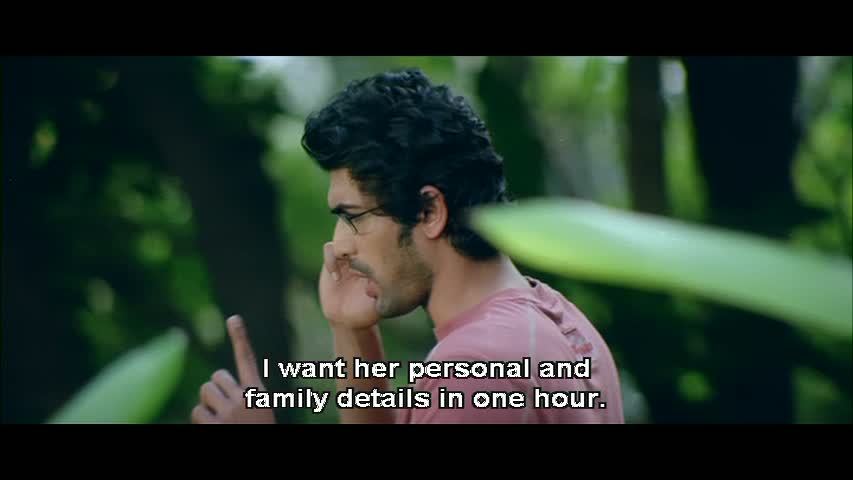
Leader is the debut film for actor Rana Daggubati, and is written and directed by Sekhar Kammula. That’s some seriously good pedigree and the production values reflect this. The story has more in common with Frank Capra’s Mr Smith Goes to Washington than any gritty political thriller but where Jimmy Stewart oozed heart, there is a hard manipulative core to Arjun Prasad (Rana Dagubbati). Arjun has money and is reckoned a man among men (CEO of a Fortune 500 company, Harvard graduate, tall, fine head of hair, looks good with or without a shirt, you know the deal). Despite his aim of rehabilitating the tarnished image of his murdered father through eliminating corruption and caste discrimination, Arjun immediately takes to his father’s methods.

He genuinely seems to believe the ends justify his means. Personal relationships are bought and sold and, while he does care for the people he is using, he will sacrifice anyone for his greater goal. Things come to a head after some emotional incidents, and despite some soul searching Arjun fails to change his strategy and continues to use any means at his disposal.  After a picturesque montage of Rana’s excellent enigmatic walking, he sets forth to rally the masses and triumph over his rivals. Characters appear along Arjun’s journey, some ready to give him wise advice and some there to set obstacles in his path.

But he is a hero in a fable where everything seems to be in shades of grey. The tacit support for bribery and corruption as legitimate techniques is hard to swallow, as well as the disregard for anything that might get in the way of making history take a kindly view of the dead CM. Arjun’s treatment of two women who have feelings for him is cruel, and reminds us that the heart of this story is ice cold.

Rana’s performance was difficult to assess. In some scenes he appeared quite deadpan and almost wooden but we believe that was due to the character keeping his cards close to his chest and not wanting to give any clues to his opponents. He is physically imposing and looked the part of the young man on the up and up. Some highly emotional scenes were underplayed and very moving. In scenes that required him to be lighter, more open, and even flirtatious, he was quite appealing so we think it was a combination of his inexperience and the director’s choices that made some episodes appear a bit awkward.

There is nothing more to say about the plot – it succumbed to all the clichés and ended exactly as you might expect. But it is an interesting attempt to look expectations of justice and idealism, and transpose that into a political fantasy. The supporting cast were uniformly good, particularly Harsha Vardan as the secretary Ali and Richa Gangopadhyay as the love interest Archana. Priya Anand’s character Rathna was really short changed with some silly dialogues and behaviour but she made a strong impression in her time on screen and certainly injected a lot of energy into her scenes.

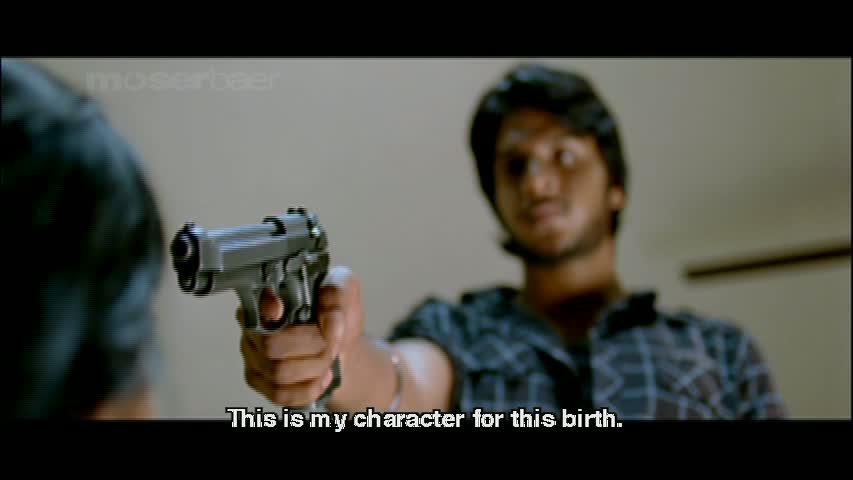
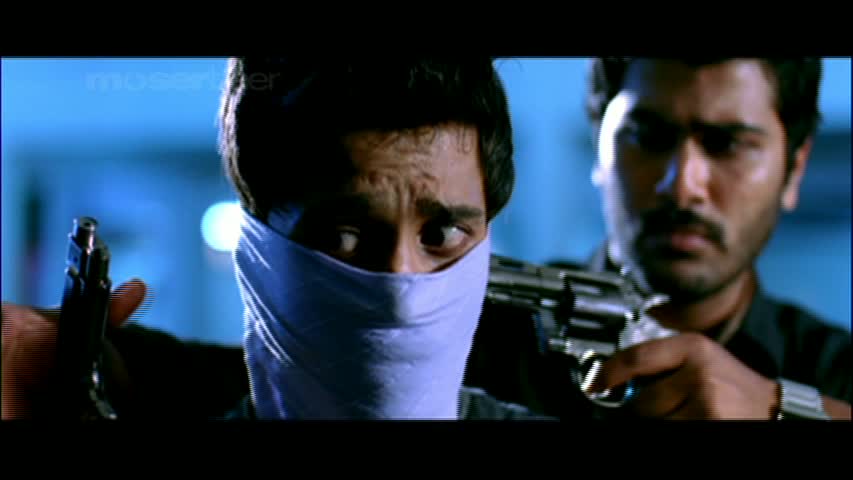
Prasthanam starts in an independent art house style before the much more conventional end. What begins as a dissection of a bitter dysfunctional family and the play of personal agendas in the public arena devolves into a gore fest with some badly placed songs.  Sharwanand plays Mitra, the ‘good’ son of an assassinated father, who seems to be the anointed one in his family’s dynasty. After his father’s murder, Mitra’s mother is married off to Loknatham (Sai Kumar) her husband’s adopted brother. The family relocates to the city but remain involved in politics and factionalism.

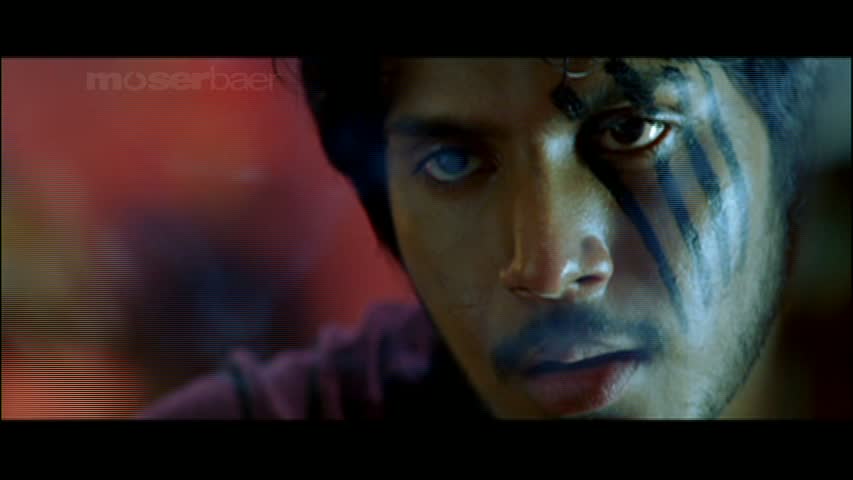
What really brought the story to life was the dazzling performance by Sundeep Kishan as jealous psycho step-brother Chinna – a substance abuser with a violent streak and a penchant for face paint. His character is a human train wreck: monstrous yet compellingly watchable as he ricochets from self pity to rage to scheming.

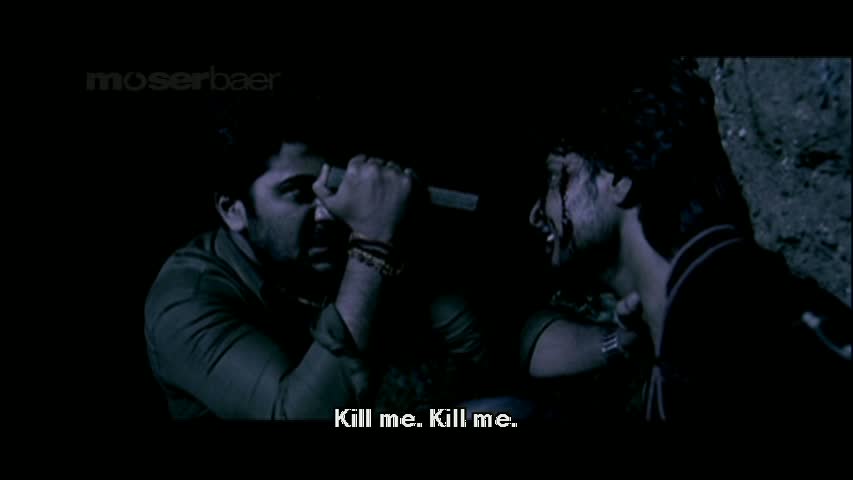
We differ in our opinion on Sharwanand’s acting but do agree he was one of the weaker elements of the film. The brothers are, on the face of it, totally dissimilar but both are driven by their notion of family and status. As the film progresses, the calculating intelligence and loyalty of Mitra is challenged over and over by the animal aggression of Chinna until the bloody and confronting climax. Mitra discovers that his brother and step-father are far more alike than he suspected and nobody wins as he ultimately takes up the same tactics as his family.

Visually the style of Deva Katta’s Prasthanam is both darkly real and annoyingly gimmicky with a reliance on clever angles and effects like blood spattering the camera lens. The songs in the first half are well integrated into the story and maintain a consistent style with the rest of the film.

https://www.youtube.com/watch?v=0HzX2ZacezI

It seems that someone panicked after watching the first half as there are several songs wedged at random into the second part of the film. Not only do they fail to match the narrative at all, but the placement of the picturisations is jarringly inept which contrasts with the more considered style of the earlier songs. [Thanks to the wonders of Twitter, we have just been told that songs were added for the DVD that were not in the theatrical release of the film. That still doesn’t explain the random placement, but it does help explain to us why reviews didn’t mention such a glaring flaw. Thanks for the explanation!]

Despite the much messier and grittier environment Prasthanam is as much a fiction as Leader is – but as Dolce and Namak pointed out, this family saga is inspired by Cain and Abel.

There is some attempt to inject humour, which is both misplaced and clumsy: one comedic sidekick character declares he will have to go commit a couple of rapes to get more respect, and has this remark met with sarcastic mirth. It was disappointing considering the intelligence behind the writing in general, and wedging the obligatory not so funny comedy track into a film with serious pretensions seemed odd.

As with Leader, the female characters provide an excuse for much of the action without having significant roles in the film. Both films rely on coincidence at crucial points, and the strain on our credulity diminished the impact of some key scenes.

Both leading men play outsiders. Arjun Prasad is the affluent, privileged, NRI son of a corrupt man, and we see Hyderabad and India through his eyes —mostly from boardrooms, restaurants and resorts. He does a lot of brooding and walking, often seeing without being seen as he floats through the ‘real world’. He says he is going to wake up the apathetic youth, and seems to be a symbol of the young cashed up generation in that respect.

https://www.youtube.com/watch?v=MHbdmPZ0xqY

Mitra is an unwitting outsider in his own family, but he is intimately involved in the workings of the political games. His world view is far more grounded in a village mentality and his vision of India is much less about air con and fancy cars and more about family and cash flow. This world view shatters when he discovers the truth about his father and step-father.

The soundtracks are forgettable, and apart from the really bad picturisations in Prasthanam, the songs had little impact. The lyrics in both films were quite significant in terms of the story but it just seemed to be a bit overstated at times.  And as for the naff English lyrics in the final ‘Leader’ song … Neither film really required much in the way of dancing and, while Sharwanand gave it a go, Rana stuck to his enigmatic walking.

Ultimately both films fall back into the familiar heroic narrative arc, one tragic and one triumphant. Both are fairly satisfying stories and generally well made films, but neither really departs from the predictable path.

Temple says: I found both films quite watchable and engaging, but both have flaws that prevent me from saying I totally enjoyed them. I don’t think they are really attempting anything different in either film as it’s the same old story of corruption and tangled family loyalties, just with modern urban backdrops.

Leader is the more successful film for me, as it is has an internal logic and the characters behave in a way that is consistent with their prior behaviour. As my friend Jenni The Mahesh Fan often says, the Dr Phil test for predicting future behaviour is based on past behaviour. So while Arjun Prasad is not a likeable person, the character acts in a way that accords with his previous behaviours. Even when he temporarily leaves politics, he manipulates that hiatus to eliminate an issue that couldn’t be resolved by legal means. So unlike Heather, I never thought he had ‘gone good’. I believed he was just manipulating the situation again which seemed in keeping with his actions to date. The film has a more cohesive story and builds to a cliched yet satisfactory conclusion. I don’t like the film, as I find its inherent message quite repugnant, but it does work as a piece of drama and once again Sekhar Kammula has told his story in an engaging and slightly offbeat way. Apart from some dodgy green screen effects, the visuals are really effective. I give Leader 4 stars for being a well made, quality film, but I hate the values it seems to promote.

Prasthanam was more entertaining on some levels, and yet a lot less satisfying overall. As the film moved away from the conflict between the brothers and became more about Mitra and Loknatham the wheels started to fall off. Sharwanand just didn’t make Mitra believable and his performance was weakest of the whole cast. He was fine in the lighter or more conversational scenes, but anything requiring extreme emotion fell flat. It didn’t help that many of the veteran actors around him were chewing the scenery for all they were worth, or that he was acting opposite Sundeep Kishan who just owned the screen whenever Chinna was around. There is something curiously immobile about Sharwanand’s face, and in all the scenes where I wasn’t hooked by his lack of emoting I found myself wondering  if he had already started to hit the Botox. The final scenes between Mitra and Loknath were just so tear-sodden and emotional and didn’t ring true for me. I thought the very last moments of Sai Kumar surrounded by a multitude of  his mirrored reflection was so much more real and powerful than all the snivelling as it showed what he really believed in. It’s very engaging to a point, but then the climax of the film just doesn’t work for me and the really silly handling of the songs threw the dramatic second half off kilter. I give Prasthanam 3 stars.

The women in both films are basically irrelevant to the plot. They are only there as mothers or potential wives and even when it seemed they would play a bigger role, it just didn’t eventuate. The actresses in these roles were all good, but the roles were on the margins of the heroic tales being told.  So while it was disappointing to see this happen yet again, it did at least allow for most of the focus to be on the core story.

Heather says: I enjoyed both these films, and despite a few irritating features which detract a little from the final overall impression, Leader and Prasthanam are very well worth watching.  I think that both are genuine attempts to step outside of the usual Masala fare, and within their limits are interesting stories, told well and with sincerity.

Leader for me was made by Rana’s performance, particularly considering this is his first film. However I really didn’t like his character at all!  Arjun is just as corrupt and manipulative as the other politicians around him.  Although I did sympathise initially as he possibly started with good intentions (I’m not convinced though), this very quickly changed as he began lying to everyone. After the interval where I suspect we were supposed to get behind Arjun and his campaign for the popular vote, I just found his deceitful attitude too much.  His attitude to the women in his life is another point against him, and I really didn’t want him to get the girl in the end.  But I think that to generate that response required some good acting which Rana delivered – as did the rest of the cast who are all excellent.  The lack of depth in the female characters stories was disappointing, and I don’t think a journalist could have been side-lined so easily – but this was fictional after all! Despite not liking the character and finding the whole story just too improbable, I still enjoyed the film.  Leader gets 3 ½ stars from me

Prasthanam for me was a more enjoyable story.  I do like a good villain, and Sundeep excelled in this role.  Sharwanand really appears wooden in comparison, and although I am not as critical of his acting as Temple, he doesn’t do his character justice here.  The biggest problem I have with Prasthanam is the strange song picturisations and their placement in the second half.  They just aren’t necessary and detract from the pace and mood of the film.  I liked the soundtrack on first hearing and found it a disappointment to see the songs on screen.  The female roles, although still small, seem to be better realised in this film but the struggle between the two brothers and the machinations of Sai Kumar’s character are the definite highlights.  The escalation of violence towards the end becomes improbable, and the conclusion is somewhat weak,  but despite these flaws the film kept my attention throughout.  Again all the supporting cast were very good, and I really liked the cinematography in the opening scenes.  Without the songs and the comedy track this could have been an excellent film.  As it is, I think it’s still very good and gets 4 stars from me.