Puriyaatha Puthir (2017)

Puriyaatha Puthir

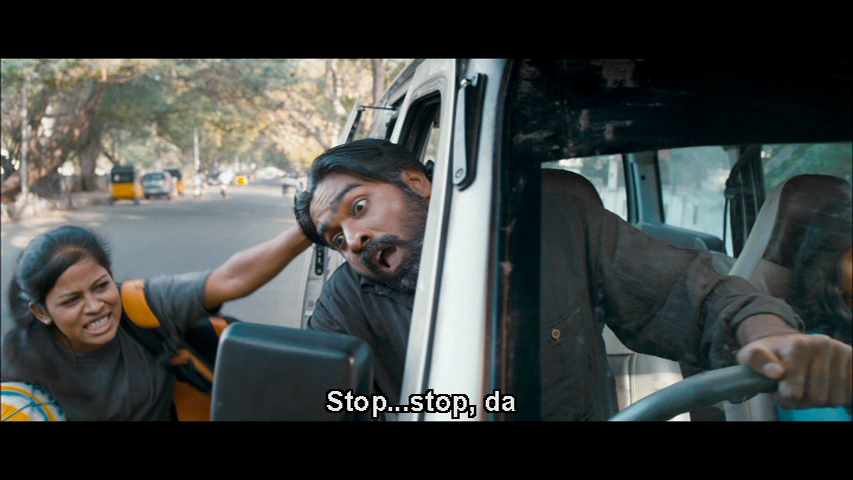
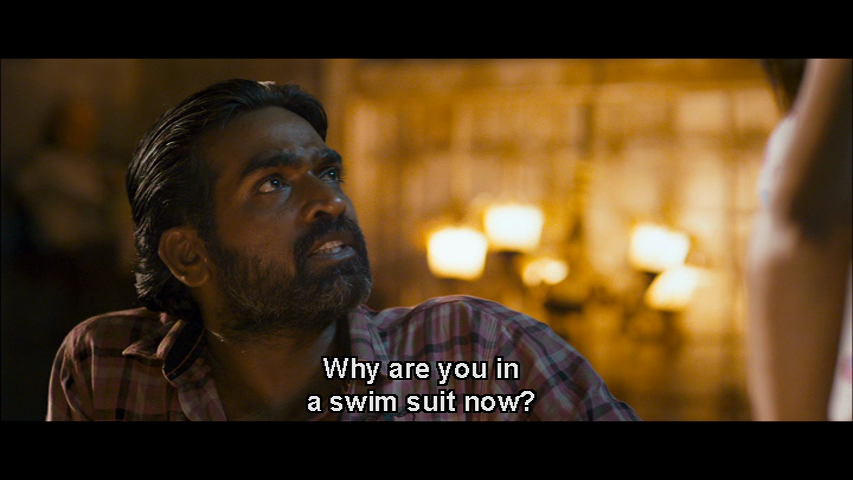
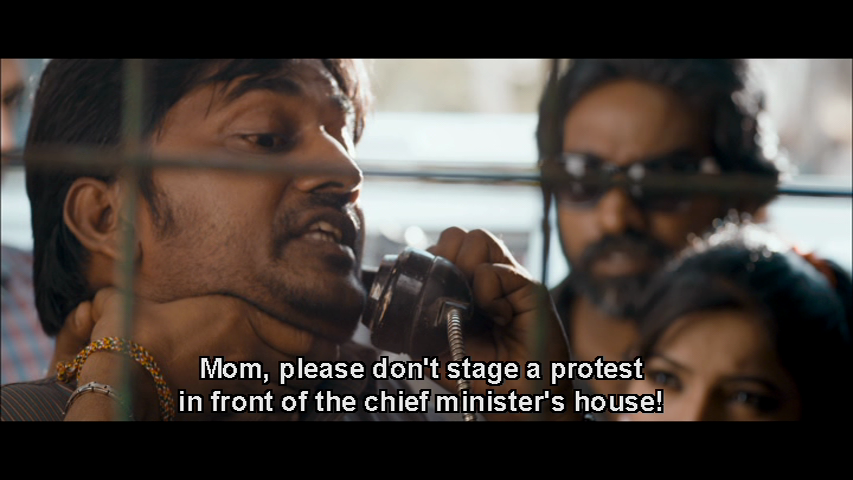
Ranjit Jeyakodi tries to sell an important message in Puriyaatha Puthir, but despite a decent performance from Vijay Sethupathi and good camerawork from Dinesh Krishnan, he doesn’t quite pull it off. There are some creepy moments in this thriller, but they don’t compensate for the abundance of plot holes and the slow start that drains much of the excitement well before the interval. This one falls into the ‘could have been better’ box for me, mainly due to the unevenness of the screenplay and unrealistic reactions from the lead characters as the drama unfolds.

Kathir (Vijay Sethupathi) is a musician who also runs a musical shop. He first notices Meera (Gayathrie) on a bus and becomes interested when she turns up in his music store as a customer. Meera is also a musician who works as a violin teacher in a local school, and she has a surprisingly large number of students in her classes. Who knew playing the violin was so popular! The best thing about Meera’s character is that she does actually know how to hold and play a violin, and that is a significant improvement over most actors who seem fairly clueless when handed a musical instrument to play. Although to be fair, Vijay Sethupathi also knows his way around a guitar when he gets to show off his skills later in the film. However, otherwise Gayathrie makes hard work of Meera’s character and generally appears stiff and awkward with little chemistry with her co-star during their romantic interludes.

This may be partly because the romance develops very slowly despite Meera initially asking Kathir to deliver her new violin directly to her apartment and seemingly making the first moves. When they go out together she seems skittish and shy, and doesn’t want to invite him up to her apartment at the end of the night. This leaves her alone at the entrance to her block of flats and cinematographer Dinesh Krishnan makes the most of the shadows and empty spaces to build tension and a feeling of suspense as Meera makes her way up to her apartment.  There is a good sense of menace in these scenes and Meera’s sense of panic feels very real as she suspects someone is following her home.

Although it’s Meera who appears to have a stalker, it’s Kathir who starts to get videos of Meera taken without her knowledge or consent. He’s enraged by shots of her changing in a store changing room, and bursts in to the store like a bull in a china shop, throws around wild accusations and never actually seems to explain to the shop assistants exactly why he is so distraught. I don’t think it was a subtitle issue either, as nothing Kathir said seemed to be any sort of explanation for his wild behaviour, but it’s no wonder that he doesn’t get very far in finding out the source of the videos.

At the same time, Kathir’s friends start to have problems too. An early scene shows Vinod and DJ (Arjunan) explaining to Kathir that nothing is really a crime unless you get caught! Unfortunately for both, that’s exactly what happens. Vinod works for a music TV station, but is a serial womaniser and is having an affair with his boss’s wife. He gets caught on video and ends up losing his job as a result. VJ also is exposed as a drug user on video and is subsequently arrested by the police. Whoever the stalker is, they are well-informed and always manage to be in the right place at the right time. It’s no surprise that Kathir starts to feel that he is under siege.

Although the film as a whole doesn’t quite hit the mark, there are some excellent ideas adrift in the choppy waters of the story. At one point Kathir does the sensible thing and goes to report Meera’s video stalker to the police. However, once there he realises that the police aren’t interested in discovering who is behind the videos at all – they just want to see the images of Kathir’s girlfriend in various states of undress. They appear to be no different from the stalker, in fact seem much worse given that they should be investigating the crime, and Kathir realises he can’t get any help from official sources. Who do you turn to when the people supposed to deal with crime are more interested in perpetuating the assault themselves? A scene where Kathir ends up standing exposed in the rain is also well staged as is the creepy discovery that the messages are coming from the phone of a girl who suicided a few years previously, but unfortunately in between there are too many plot holes that weaken the tension.

Ramesh Thilak appears in a rather bizarre role that doesn’t make any sense. I think he was supposed to be a significant red herring, but instead just seems out-of-place and an unfortunate add-on to the plot. The video’s too become less feasible, while Meera seems either too unconcerned and overly compliant with Kathir’s demands, or bizarrely happy to head back to her apartment alone at night. It takes Kathir finding a diary (sigh) to finally work out what is going, and by that stage I’d really lost interest in the proceedings.

Puriyaatha Puthir was filmed in 2013/2014, back when Vijay had just completed such diverse films as Soodhu Kavvum and Pannaiyarum Padminiyum, and was starting to make a name for himself. Here he carries the film on his shoulders, and it’s only though his intense belief in the story that a number of unlikely scenarios and appear even vaguely plausible. Part of the problem may be that when this film was written there was less media attention and community awareness about the topic of cyber-harassment. Making Kathir appear angry and his reactions so intense probably made sense to get the outrage and sense of violation from the videos across to the audience. Nowadays we are all more familiar with the crime and here Kathir’s confusion and anger seem to be initially misdirected, although blaming the victim for the crime is sadly still something that occurs even now. Vijay Sethupathi is definitely watchable and his anger and despair are well expressed, along with his frustration, but it’s not enough to keep the tension and suspense the film needs to be effective.

The issue of cyber-crime has been addressed in a few films recently, and as a crime with serious consequences it’s a worthwhile topic too, but the treatment needs to be much tighter than Ranjit Jeyakodi achieves here. There are some good moments but the slow romance, flashback sequence and character reactions are at odds with developing suspense. Worth watching for Vijay Sethupathi and some good tunes from Sam C.S, but that’s about it.

 

Kaakka Muttai

Kaakka Muttai

Kaakka Muttai is a little gem of a film that premièred at the 2014 Toronto International Film Festival and subsequently screened at a number of Film Festivals around the world before winning two National Awards earlier this year. It tells the story of two young brothers and their quest to raise money to buy a pizza when a new shop opens up in their area. However this isn’t as easy as it sounds. The two boys live in a slum area and finding enough money for their day-to-day necessities is difficult, never mind Rs. 299 for something as exotic as a pizza. As they set about achieving their goal, the story touches on poverty, corruption in politics, globalisation and the daily cons run by locals in the area, but mainly it’s the story of two young boys and their quest to buy their very own pizza.

We never find out the real names of the two brothers in the film as they refer to themselves as Periya Kaakka Muttai (big crow’s egg) and Chinna Kaakka Muttai (little crow’s egg) after their habit of eating crows eggs when they can find them. Chinna KM (Ramesh) tempts the crows down from a tree with rice secreted away from under his mother’s watchful eye, allowing Periya KM (Vignesh) to climb up and find the eggs. Their nest robbing is one of the early scenes and the charm of the two brothers is captured by Periya KM’s response when he finds 3 eggs in the crow’s nest – he divides them up as one egg for each of the brothers and one left for the crow – such equality!

The two brothers live in the slums with their mother (Iyshwarya Rajesh) and their grandmother (Shanthi Mani) while their father (Nivas Adithan) is in jail. They live in a small one room shack which is clean, tidy and incredibly well organised despite the surrounding squalor on the streets. Much of the family’s money goes to a lawyer, who is supposed to be working to free their father, but there seems to be no progress in securing his release. There is never any mention of the father’s crime or how long he has been in prison which deliberately keeps the audience in the world of the children who also have no idea what their father has done and don’t seem to care.

This technique of showing their world through the eyes of Periya KM and Chinna KM is one of the charms of the film. Life is simple for the brothers. They look for the crows’ eggs on a waste piece of land where their friends play cricket, spending the rest of their day collecting coal along the railway lines and selling it to supplement their mother’s meagre income.  Like all children they ask their mother for things well outside what she can afford; a TV and a mobile phone seem impossible when she cannot even afford to send the boys to school but the brothers happy go lucky approach to life seems to serve them well. However one day the developers move in and the land where the crow makes its nest and the children play is cleared to make way for a new pizza restaurant. Despite being forced out the children are ecstatic when the new pizzeria is completed and movie star Simbu comes to open the restaurant and eats the first slice of pizza. Watching him enjoy the novel dish is enough to convince the brothers that this is something they need to try for themselves and they begin the arduous task of raising the necessary money to buy their own pizza.

They are aided in their venture by a friend from the railroad tracks. Pazharasam (Joe Malloori) or Fruitjuice as the subtitles decide to translate his name, works on the railways but is happy to talk to the two boys and helps them find coal to sell. It’s obvious to the audience that the coal he leads them to is not free for the taking, but Periya KM and Chinna KM don’t seem to realise that this isn’t just a pile of forgotten coal and are deliriously happy that they have found the means to raise enough money to finally buy pizza. However they are quickly brought back down to earth when the restaurant security immediately calls them slum kids and refuses to let them in to buy their pizza even though they have sufficient funds. Just having the money isn’t enough and Periya KM and Chinna KM have a new goal – to raise enough money to buy new clothes that will allow them to entry to the pizzeria and their dream of pizza.

Vignesh and Ramesh are perfectly cast as the two young brothers and have plenty of impish charm and infectious energy as they roam around their area. There are plenty of note-worthy moments and small vignettes that give the whole film a feel good factor that is normally missing in films about slum dwellers. Watching the brothers wash clothes (Chinna KM wets the bed every night) allows Manikandan to juxtapose the younger brother throwing up wet clothes for his older brother to catch and hang up with a moment where the elder is distracted by watching a plane go past in the sky. His younger brother hits him in the face with the next item and the laughter chases away that brief moment of dreaming by Periya KM. There is another where Chinna M finds a toy watch in the scrap yard where they sell their coal and then takes it to a watch maker to make it work – the mix of Chinna KM’s delight in something so small as the watchmakers magnifier and his innocence as he tries to understand why his watch doesn’t work makes for beautiful cinema.

And Manikandan keeps them coming – there is the grandmother trying to make pizza for the boys when she discovers how desperately they want it, the boys attempting to sell their dog to raise money and their friendship with a richer kid who they speak to across the barrier of a metal fence. The physical barrier is nowhere near as daunting as the social divide which keeps Periya KM and Chinna KM firmly in their place but their determination is inspiring. Iyshwarya Rajesh too puts in an incredible performance as the boys’ mother and perfectly balances pride, ethics and desperation as she tries to cope without her husband and bring up her boys as best as she can. Later scenes of her interactions with the local politician and with the police are perfectly done to give her grace and dignity in trying situations and the conversations between her and the grandmother are beautifully natural. In fact all the performances are excellent with each member of the cast seemingly perfectly in their roles. Other stand-outs are Ramesh Thilak and Yogi Babu as the two local conmen trying to make a quick buck out of the brothers misfortune and Babu Anthony as the pizza shop owner, while Joe Malloori and Shanthi Mani are simply brilliant.

Manikandan makes an impressive début with Kaakka Muttai, not just writing and directing the film but also responsible for the cinematography. At any rate he makes the slums look much better than expected, giving them an almost magical appearance as seen through the eyes of the two brothers, although there is plenty of grim reality there too. However our eyes tend to slide past the garbage and debris, maybe because no-one else seems to notice it either. Manikandan seems to be an expert in multi-tasking and perhaps it’s his control over so many aspects of the film that explains why Kaakka Muttai is so completely satisfying too. The story shows the negative aspects of poverty but also illustrates that there is beauty everywhere, even in the slums, and that people are people, no matter where they come from.  I totally loved this film and particularly the two KM’s who remind me so much of the children I work with in India every year. I love their optimism and resourcefulness, and most of all their wonderful smiles and endless joy. Sure, this is a sugar coated view of the slums and there is little of the expected violence and absolute despair, but as a look at poverty through the eyes of two young boys it’s a winner all the way. Don’t miss it! 5 stars

Kaakka Muttai

Soodhu Kavvum (2013)

Soodhu Kavvum

I love this film!  Nalan Kumarasmy’s début calls to mind shades of  Lock, Stock and Two Smoking Barrels or Shallow Grave, and manages to pack in plenty of comedy, action and general all round craziness in a run time of just over 2 hours.  The film centres on a kidnapping caper but there are so many different ideas tossed in, and the plot development initially seems so haphazard that perhaps the most astonishing thing is how well everything does make perfect sense at the end.  Soodhu Kavvum is essentially a dark comedy where a number of seemingly unrelated people and random happenings are thrown together into what turns out to be a funny and intelligently written storyline. Not all of Kumarasamy’s unconventional ideas hit the mark, but with inspired performances from a great cast, Soodhu Kavvum is one of my favourite films from last year and a definite must watch.

The story follows the exploits of Das (Vijay Sethupathi), his imaginary girlfriend Shalu (Sanshita Shetty) and three friends who become involved in the kidnapping caper.  There is also an ‘honest politician’, his lazy son and a psychotic police officer who never speaks, along with many other slightly off-the-wall characters who each have their own reason to be in the mix.  Each character has a number of strengths and flaws that makes them more interesting to watch, but also to some extent explains their various motivations and why they react as they do to each new crisis. Everyone is introduced in a way to showcase their personality and then slowly Kumarasamy draws all the threads together to make a coherent whole.  It’s cleverly done to keep interest in the main protagonists even when all of them seem quite typically normal, everyday people and none are particularly likeable.

Soodhu KavvumSoodhu KavvumSoodhu KavvumSoodhu Kavvum

Vijay Sethupathi is the absolute star of the show here and is completely unrecognisable as Das, a more middle-aged and careful character than I’ve seen him play before.  Das is considered and thoughtful, almost gentle despite his criminal tendencies although he still appears quite manic when required.  Vijay really does appear much older here, it’s his mannerisms and stance rather than just make-up, and he perfectly blends a rational approach to his criminal activities with just a hint of mania as he argues with his non-existent girlfriend – or is she? That’s one of the delights of Soodhu Kavvum – just as you think you have a handle on what is happening and where the story is going, Nalan Kumarasamy sends it off in a completely different direction and introduces new characters seemingly out of nowhere. Except if you were paying attention (or watch it again!), they are there in the background all along.

Soodhu KavvumSoodhu KavvumSoodhu KavvumSoodhum Kavvum


Das has developed a strict set of rules for his ‘kednapping’ business but a lack of manpower has caused him to rethink his tactic.  After a chance meeting with three friends in a bar, he offers them the opportunity to join his kidnapping team.  The three friends have their own problems; each is out of work and looking for a way to earn some easy cash.  Pagalavan (Bobby Simha) has moved to Chennai to stay with his friend Kesavan (Ashok Selvan) when he ran into a spot of bother in his native Trichy.  This involved building a temple to actress Nayanthara and the reactions of first Kesavan and then his friend Sekhar to this news speak volumes for their respective characters.  Sekhar (Ramesh Thilak) is an out of work hotel car park attendant who gets up early and gets ready for work every day, but then sits and drinks his way through a bottle of whiskey.   There is a quick blink and you’ll miss him appearance of fellow director Karthik Subbaraj in the scenes that describe how Sekhar lost his job which is pretty cool. Bobby Simha is also excellent and completely unrecognisable from his recent appearance in Jigarthanda, although his performance here is just as impressive.

Soodhu KavvumSoodhu KavvumSoodhu KavvumSoodhu Kavvum

Everything goes pear-shaped when Das accepts a commission to kidnap Arumai Pragasam (Karunakaran), the son of inconveniently honest politician Gnanodayam (M.S. Bhaskar). For all of his lauded refusal to take bribes and capitulate to corruption, Gnanodayam is a very grey character as he entraps industrialists hoping to bribe him in the usual fashion, and is also abusive to his wife and son.  Karunakaran is superb in his role as the lazy and dishonest son, and his laconic delivery of his lines is excellent. Just look too at his excellent ‘uncle-dancing’ skills in this song where he celebrates the joys of money.

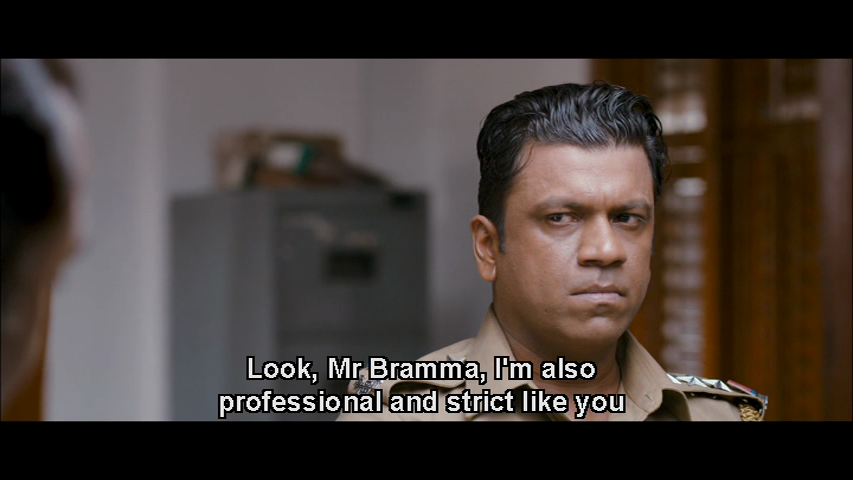
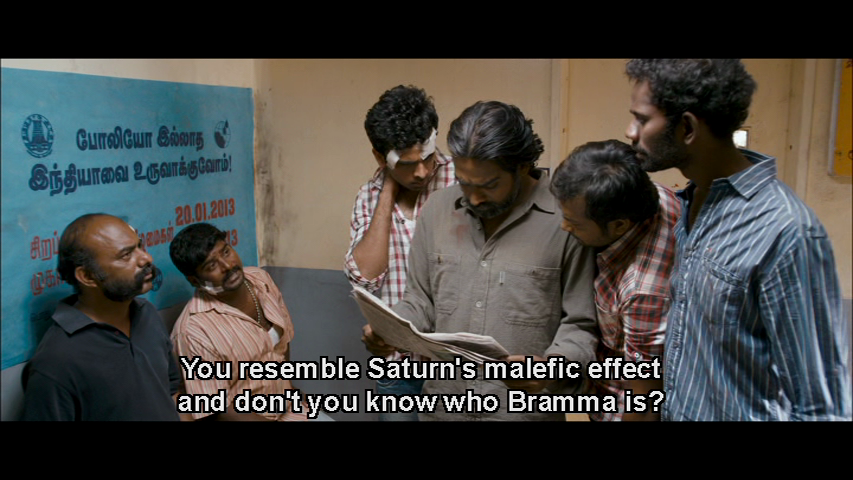
Yog Japee turns up in the second half as slightly unhinged police officer K. Bramma. There is an excellent montage of fights to show how he drags information out of the Chennai underworld as he tries to track down the kidnappers. Rather than the usual biffo in more conventional films, this is fast, mean and ugly and fits perfectly into Bramma’s persona. Truly he is the malefic effect of Saturn personified!

Soodhu KavvumSoodhu KavvumSoodhu KavvumSoodhu Kavvum

Soodhu Kavvum does have a few moments that don’t succeed, and the sheer number of twists means that it doesn’t work quite as well on a second viewing – although I did get almost as much enjoyment out of spotting the different characters in the background before they appeared in the main narrative. What I do love about this film is that the story is just as important as any individual character, and almost every moment is spent moving the narrative forward.  Each character has a role to play and at that point, they are the most important person in the scene.  I really like that there is no over-blown romance, no idealistically perfect hero and no mass fight scenes. It’s just a good story, well told with excellent actors delivering great performances.  4½ stars.