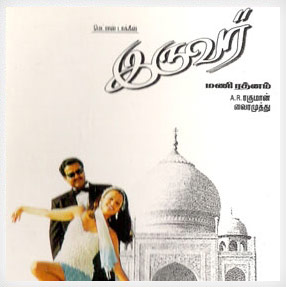
Iruvar (1997)

Iruvar

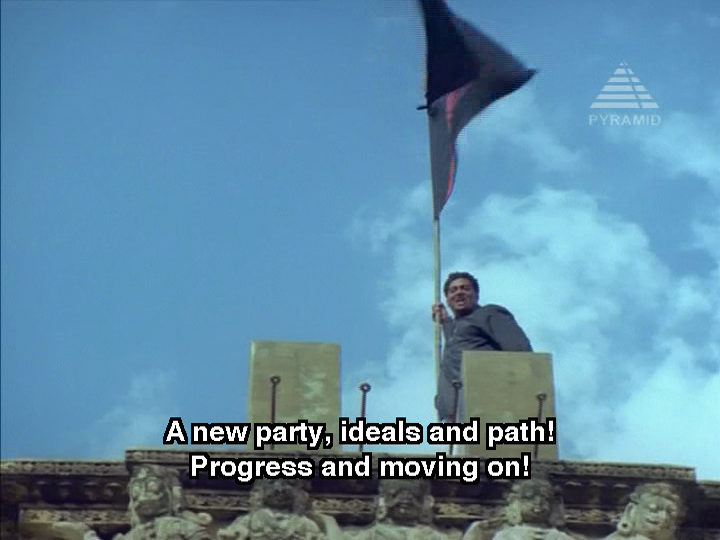
Mani Ratnam’s Iruvar is essentially a story about friendship but it manages to encompass cinema, politics and plenty of associated drama along the way.  From their first meeting in the film industry, through their membership in the same political party until Anandan and Tamilchelvam end up as rivals for the position of chief minister, the friendship between the two endures the many challenges they face.   Despite the disclaimer at the start that the film is a work of fiction, even a cursory glance at the biography of Tamil film legend M. G. Ramachandran shows many parallels between his life and that of the character Anandan (Mohanlal).  It’s also apparent that MGR’s real life political rival, M. Karunanidhi is the character Tamilchelvam, portrayed by Prakash Raj, while other counterparts from the same era are also featured in the film. Although I don’t know enough about the lives of M.G. Ramachandran and M. Karunanidhi to comment on how accurately the two characters do resemble their real life counterparts, not knowing the true events isn’t a hindrance to enjoying the film.  It’s an exceptionally well told story and features not only brilliant performances from the two leads Mohanlal and Prakash Raj but also features an excellent début from Aishwarya Rai.
IruvarIruvar

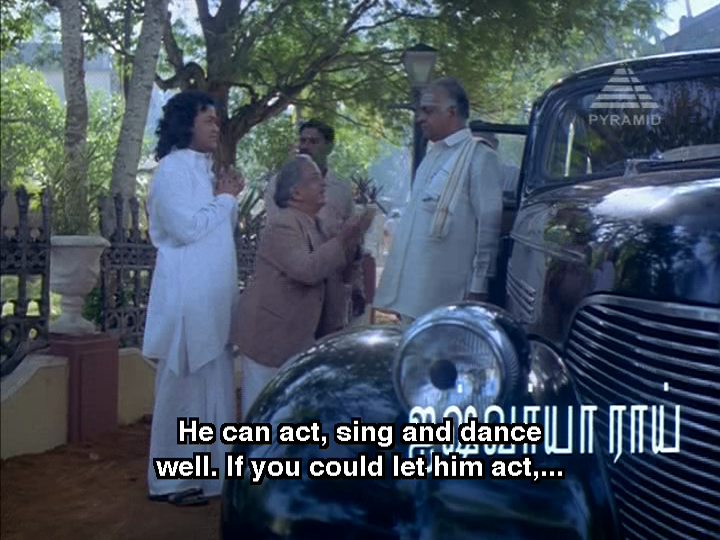
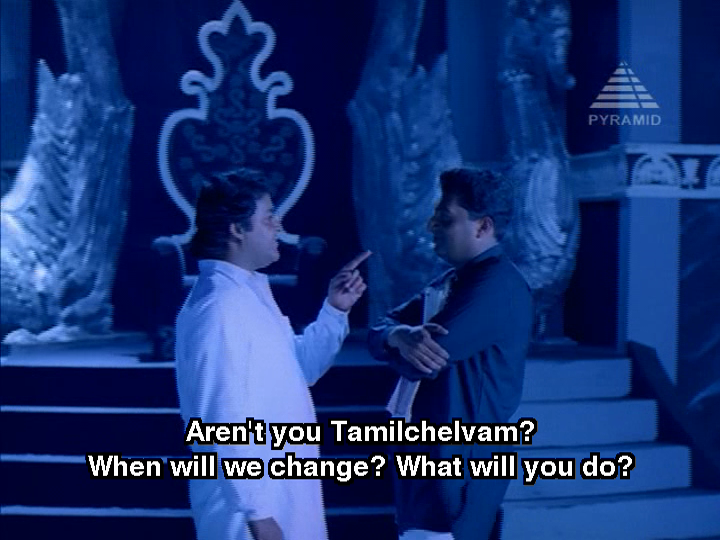
The film opens with the young Anandan (Mohanlal) looking for acting work and finally achieving his dream of becoming a film hero assisted by his friend Tamilchelvam (Prakash Raj).  The initial meeting of the two men typifies their characters.  Anandan doesn’t always seem to understand or agree with everything the poet Tamilchelvam says but he is impressed by the man’s obvious sincerity and self-belief, and asks Tamilchelvam to write his dialogues for him.  Anandan is a simplistic man who just wants a good paying job so that he can look after his mother, while Tamilchelvam is more idealistic and wants to use his words to change the world.
IruvarIruvarIruvarIruvar

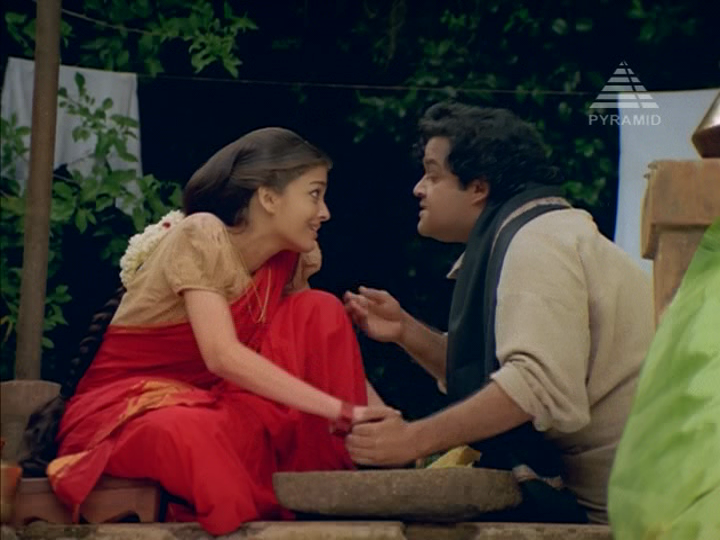
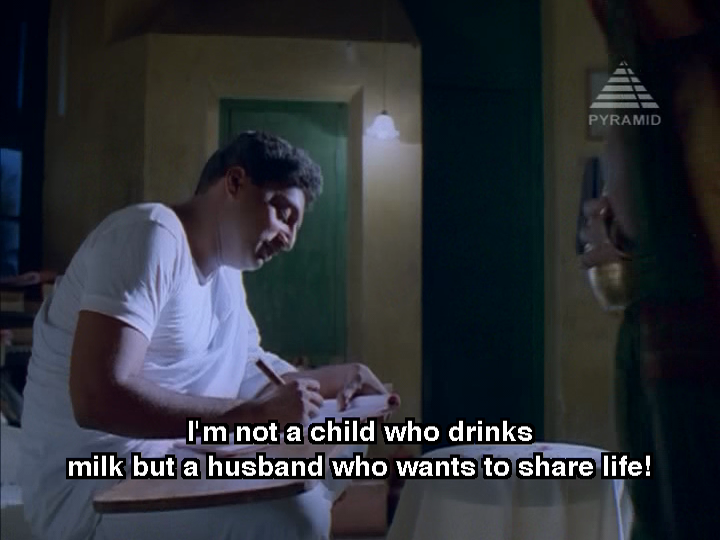
As Anandan’s star is rising in the film industry, Tamilchelvam continues to work as a screenwriter although he also becomes active in a Dravidian social party led by Velu Annachi (Nasser).  At the same time the two friends get married although Anandan is tricked by his mother into tying the knot with a local girl Pushpa (Aishwarya Rai) while Tamilchelvam marries Maragatham (Revathy), a girl approved for him by his political leader.  Despite their inauspicious beginnings, Anandan rapidly falls in love with Pushpa’s lively innocence and charm, although he leaves her with his mother when he goes back to work.  Tamilchelvam on the other hand spouts speeches about equality in marriage on his wedding night while Maragatham is more traditional and superstitious which doesn’t bode well for their future together.
IruvarIruvar

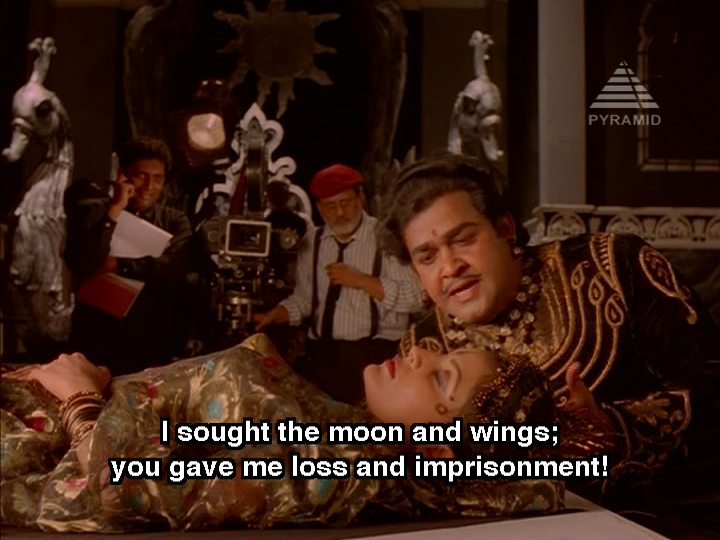
This song intersperses a romantic film song featuring Madhoo in a guest appearance with scenes from Anandan’s marriage presumably suggesting that the real-life relationship was as idyllic as the fairy-tale filmi romance.

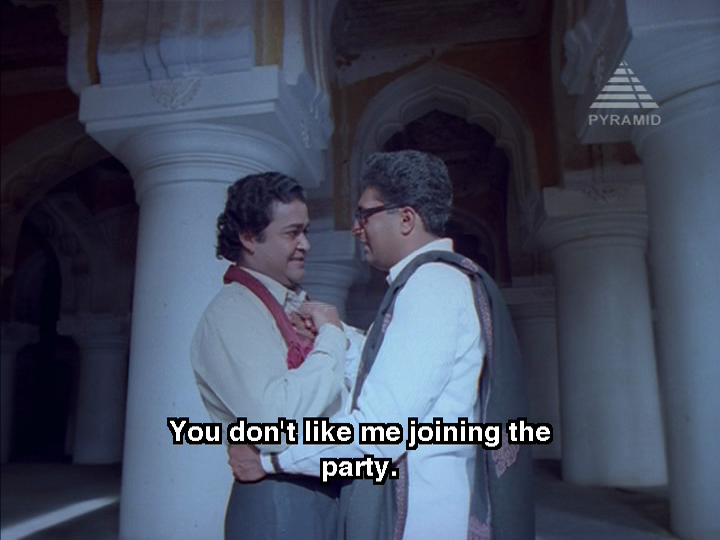
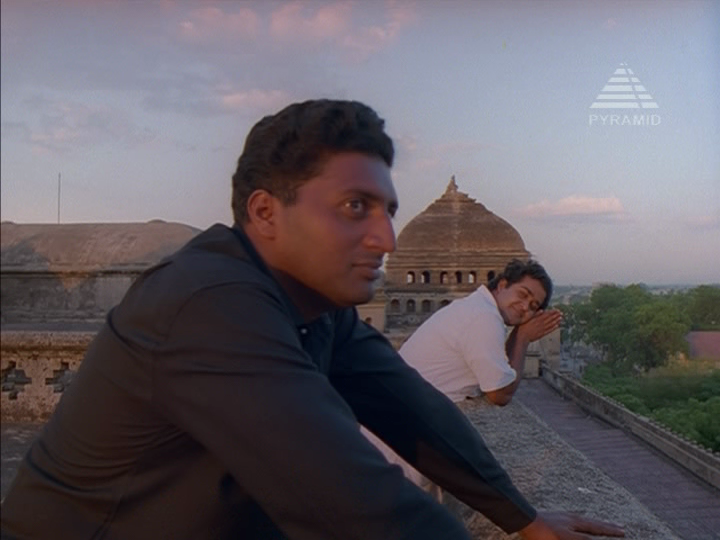
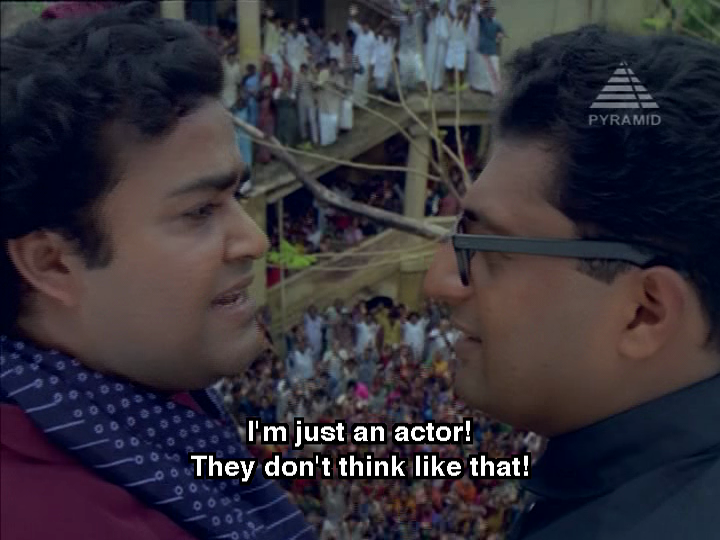
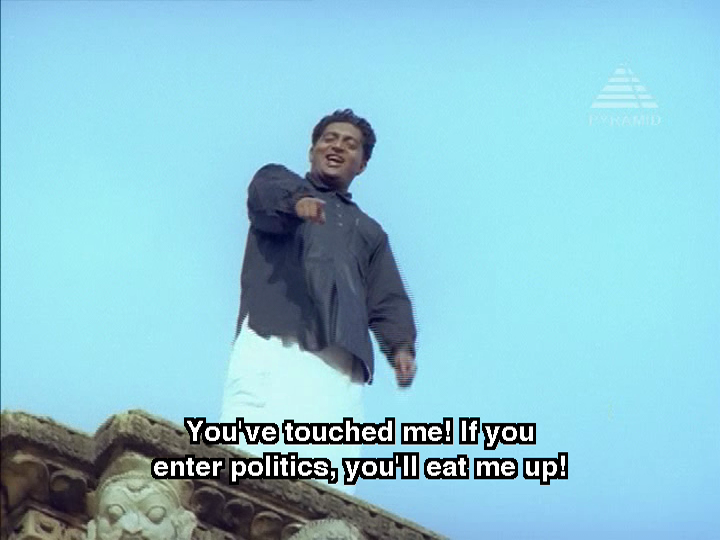
As their careers progress, Anandan becomes a star, able to draw crowds although he doesn’t appreciate his popularity until it is forcibly shown to him by Tamilchelvam.  This is demonstrated in an excellent scene where Tamilchelvam takes Anandan up onto the roof to show him the hundreds of people waiting for a chance to catch a glimpse of the film star.  Anandan’s slow recognition of his fame is perfectly played by Mohanlal, but once he has recognised the fact, he knows how to work his popularity and make the most of it.  Anandan also joins Tamilchelvam’s political party, although he is looked on with suspicion by the other party members who feel that Anandan is using the party to further his film career, while Anandan feels that his film fame is being exploited by the party to pull in more voters.
IruvarIruvarIruvarIruvar

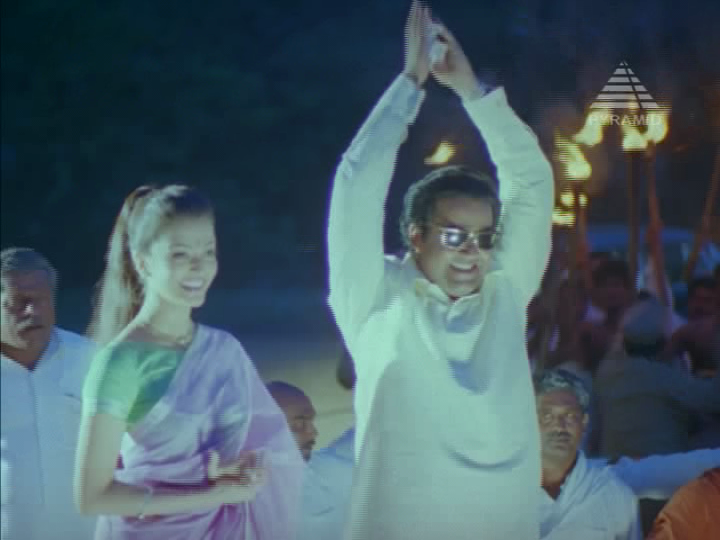
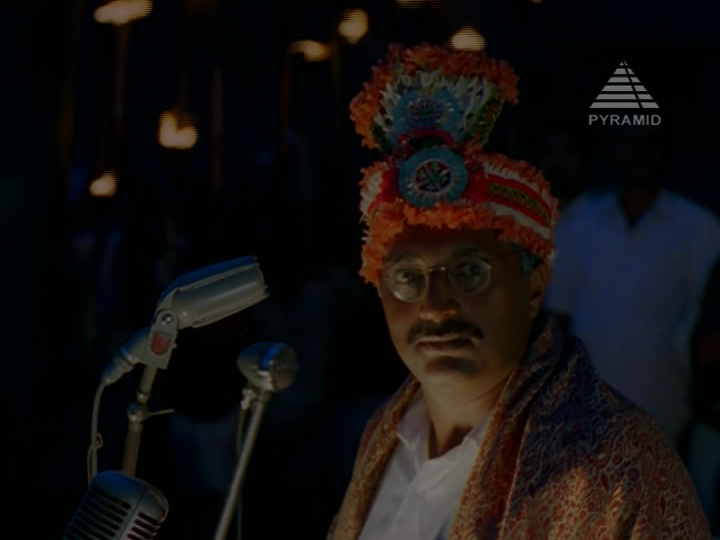
The contrasts between the two men are expertly illustrated in their interactions with each other and with the other characters.  The more idealistic and driven Tamilchelvam prints pamphlets and makes long inspiring speeches at political rallies while Anandan just declares that he wants everyone to be happy.  After Anandan’s first wife dies he marries his co-star Ramani (Gautami) almost by chance.  Ramani turns up on Anandan’s doorstep in distress, fleeing from her abusive uncle manager (Ravi) and since Anandan doesn’t seem to have much else happening that week he decides to marry Ramani to keep her out of her uncle’s clutches.  In contrast, Tamilchelvam sees Senthamarai (Tabu) at a political demonstration and arranges for her to come to Chennai to be his mistress.  Tamilchelvam is proactive and driven, and plans his life to realise his ambitions while Anandan is more reactive and laid-back, seeming to fall into his success by chance, although helped by his natural charm and talent.
IruvarIruvar

Aishwarya Rai has a double role and appears again as Kalpana, a new actress who works with Anandan despite his initial reservations, due to her resemblance to his first wife.  It’s an impressive performance from Aishwarya who is feisty and assured in complete contrast to her role as Pushpa.  She also looks gorgeous and the songs featuring her and Mohanlal are some of the highpoints in the film.  Kalpana is apparently based on Jayalitha, although seemingly only on her acting career,since the character doesn’t have any political aspirations in the film, and has an early and off-screen exit.

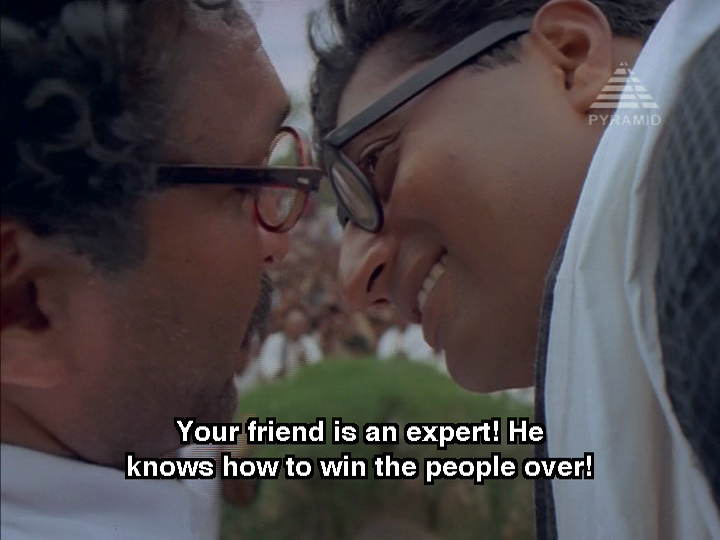
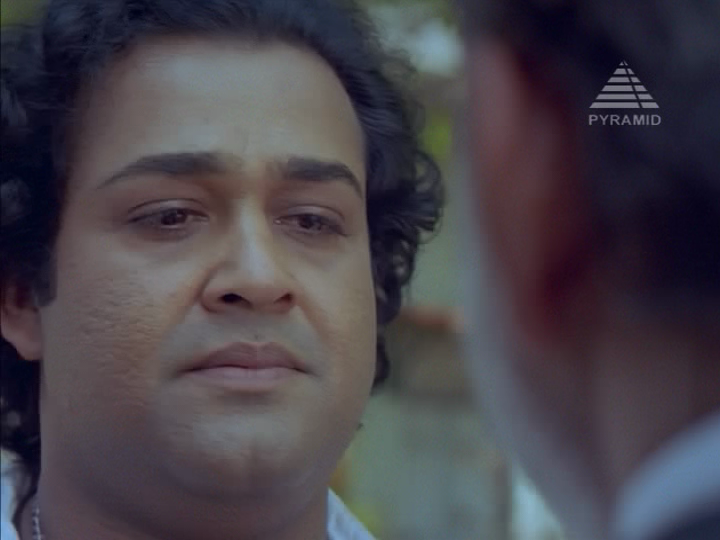
Iruvar seems to deal lightly with Anandan, using Tamilchelvan more as a contrast with the actor, although both men are treated fairly without any particular bias for one side over the other.  It’s a very human look at politics and the realities of power as these men, with their great ideals and desires to change the fate of the common man, still end up with similar policies to the previous party. Despite their eventual opposition in the political arena, Anandan and Tamilchelvan seem to be able to maintain their respect for each other, even as they battle to keep power.  Their relationship is complex and often threatened by the actions and opinions of others but both characters keep true to their basic personality, which ensures the friendship appears realistic. Mohanlal is superb as Anandan using his facial expressions to wring every possible emotion out of every scene.  He is often understated and conveys his emotions very simply but with great effect.  Prakash Raj is just as good as Tamilchelvam and his evolution from passionate young activist to elder statesman is perfectly portrayed.  The two combine together to make every moment they are on screen absolute gold. Santosh Sivan’s excellent cinematography also helps the film stand out with good use of camera angles to capture the large party rally’s contrasted with the more intimate scenes.
IruvarIruvar

I read that there was opposition to the film’s release (as might be expected given the reputations of both MGR and Karunanidhi) and certainly Iruvar has suffered at the hands of the censors.  A number of apparently stirring political speeches are muted partway through by loud music, and judging by the sudden jumps in the screenplay, a few seem to have been cut altogether.  But the relationship between the two men still comes across clearly and Mani Ratnam has drawn every possible nuance of their association in exquisite detail.  The censorship is interesting given that at one point Anandan makes a film which apparently portrays Tamilchelvam’s party in a negative light.  Tamilchelvam’s response is one that I’m sure all film-makers and reasoning adults would like to hear from more governments, particularly considering the recent issues surrounding Vishwaroopam.

Iruvar

The music and songs by A.R. Rahman are of a high quality and vary in style to illustrate the different cinematic eras encompassed by the film, although the time frame is never explicitly stated.  These range from the jazzy and more upbeat songs pictured on Kalpana to the more traditional and classically driven song Narumugayie.  Farah Khan was the choreographer which is probably another reason why the songs all work so well with all the dancers in sync.  This is probably one of my favourites as Aishwarya sparkles on the screen while Anandan and Ramani watch in the cinema. Anandan’s face as he realises Kalpana’s resemblance to his dead wife is a study in shock, horror and sheer disbelief while his wife is totally oblivious to his reaction.

Iruvar is a fascinating story about two very influential men, made even more absorbing by its basis on real people.  Although the censorship cuts do make some of the underlying details more difficult to follow, especially for those (like myself) who don’t know the true story, that doesn’t detract from the compelling nature of the relationship between these two giants of Tamil film and political history. Entertainment and education all in one – perfect! 4 ½ stars.

Cameraman Gangatho Rambabu

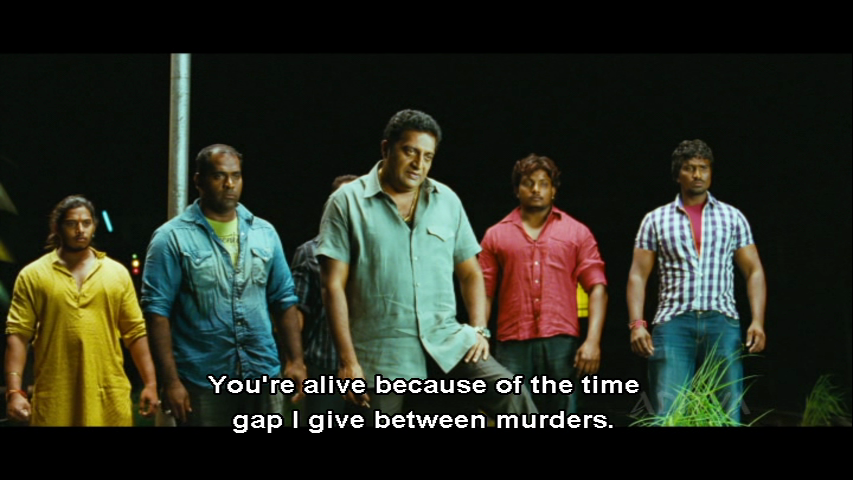
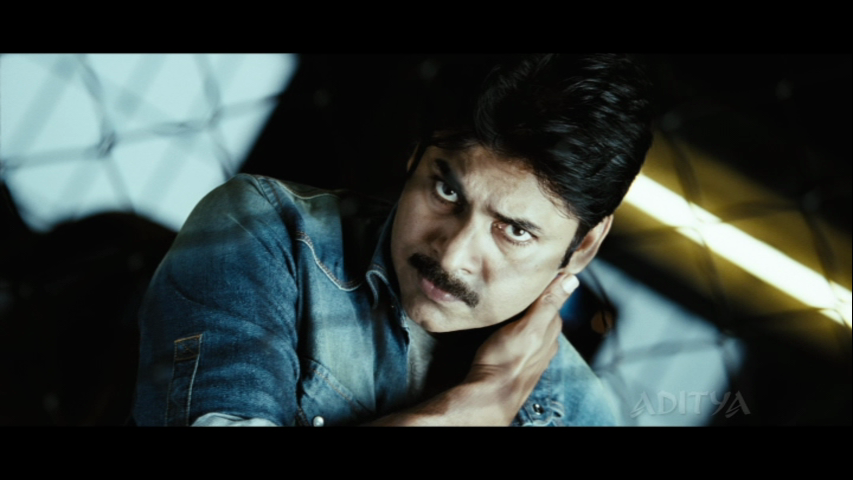
CGRCameraman Gangatho Rambabu sees Puri Jagannadh teaming up again with Powerstar Pawan Kalyan for a tale about one man’s crusade against corrupt politicians with a little help from sidekick Cameraman Ganga.  I first saw CGR in the cinema without subtitles, but since the audience seemed to be appreciative of the dialogue I thought it might improve the film if I could understand what was being said.  And to some extent the DVD subtitles do help, although they also serve to highlight the silliness of the female lead character and a general condescension towards women throughout the story which is less enjoyable.  CGR is a straightforward good guy vs. bad guys story which relies on the Power Star’s presence to keep the action ticking along, but there are a few good fight scenes and some well written interactions between Pawan Kalyan and Prakash Raj in their respective roles which make it worth a watch.

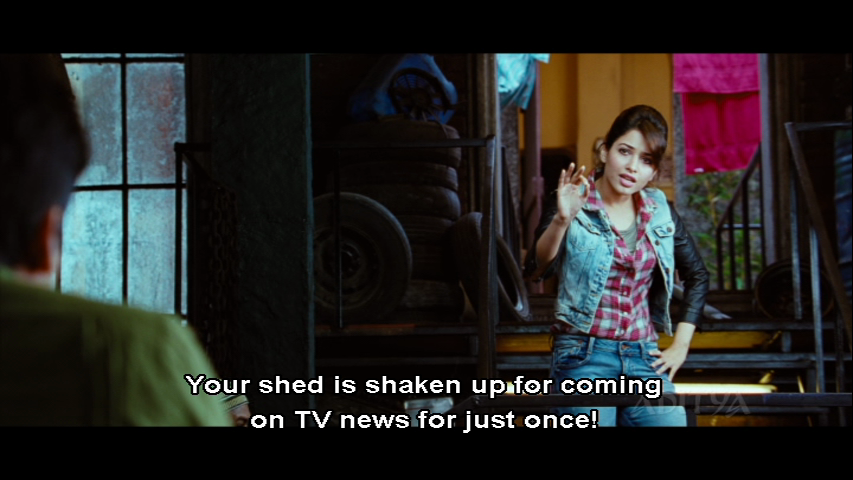
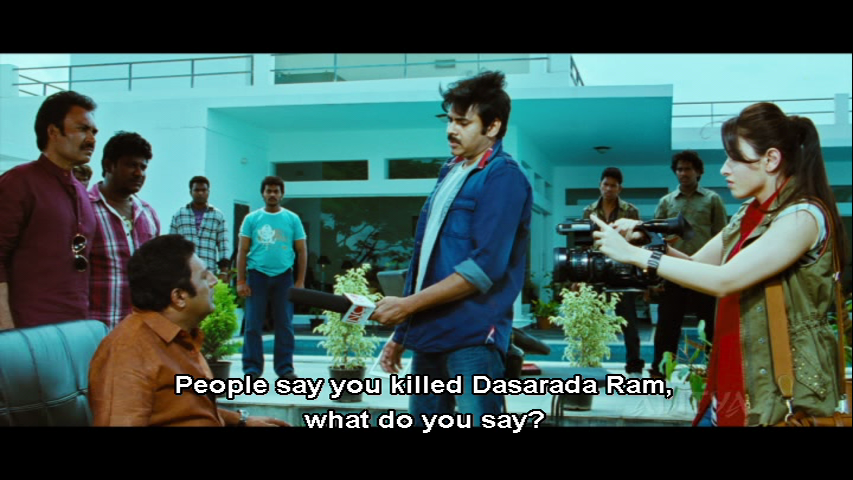
CGRCGRCGRCGRRambabu (Pawan Kalyan) is a mechanic who has superhero tendencies to fight crime, a large mural of Che Guevara on his apartment wall and an idealistic view of a utopian world which he tries to make reality.  To that end he races off to beat wrongdoers into submission whenever he hears of injustice or petty crime on the news and provides assistance to widows, orphaned children and marginalised members of society whether they want it or not. Rambabu’s determination to break up a fight between two rival student groups leads him to feature on the news himself and brings him to the attention of cameraman Ganga (Tamannah).  After a brief meeting, Ganga decides that Rambabu would be perfect as a journalist and despite a conspicuous lack of any training, her station head agrees wholeheartedly giving Rambabu carte blanche to do whatever he wants as a reporter on the news channel.

CGRCGRCGRCGR

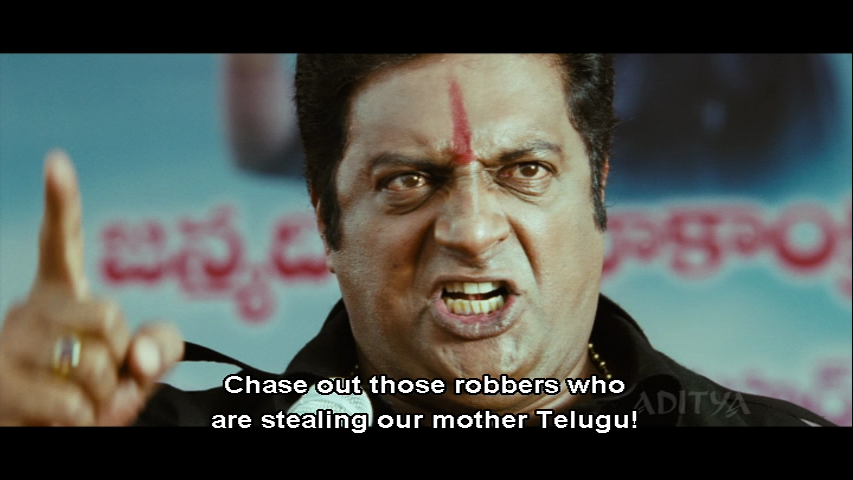
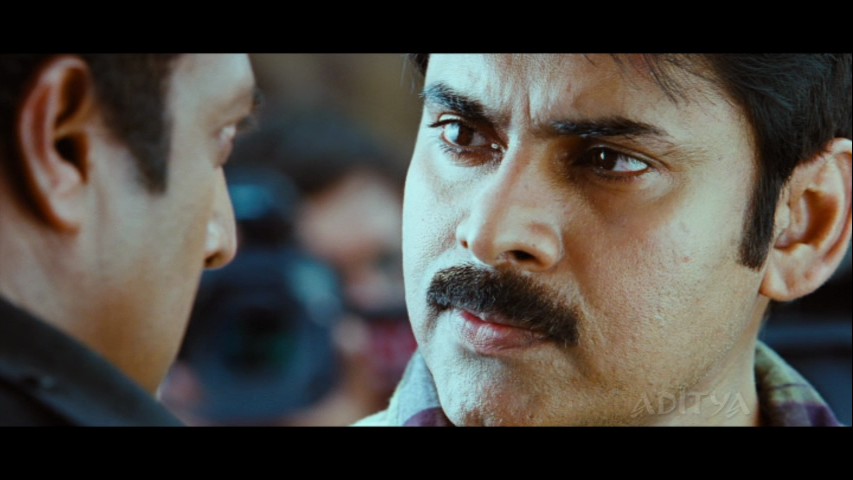
Inevitably this brings him into conflict with politician Jawahar Naidu (Kota Srinivasa Rao) who is prepared to do anything to win back the role of Chief Minister from the incumbent Chandrasekhara Reddy (Nasser).  This looks promising, but since both politicians are one-dimensional caricatures of absolute black and white they end up as rather ineffective characters.  Jawahar Naidu is evil with no redeeming features, prepared to murder, lie and cheat his way back into power while Chandrasekhara Reddy is painted as the perfect CM who is kind, compassionate and honest although at one stage he does confess to an ambition to hang onto his top spot.  Added in to the mix is Jawahar’s equally amoral son Rana (Prakash Raj) who takes over his father’s manifesto when Jawahar suffers paralysis and has to withdraw from active campaigning.  The real battle is the one that develops between Rana and Rambabu and the scenes between these two are generally the best in the film.  Prakash Raj is excellent as he sneers and schemes his way to political success and Pawan Kaylan is zealous and righteous in appropriate amounts as he counters Rana’s various plots.

CGRCGRCGRCGR

Tanikella Bharani also puts in an impressive performance as Jawahar’s brother-in-law and right hand man. He is obsequious and just a little bit creepy as he fawns over Jawahar while making sure that self-preservation is still his number one policy. I also have to mention the excellent décor in Jawahar’s house which was beautiful and made a welcome contrast to his bombastic, over-emotional and over-acted speeches.

CGRCGR

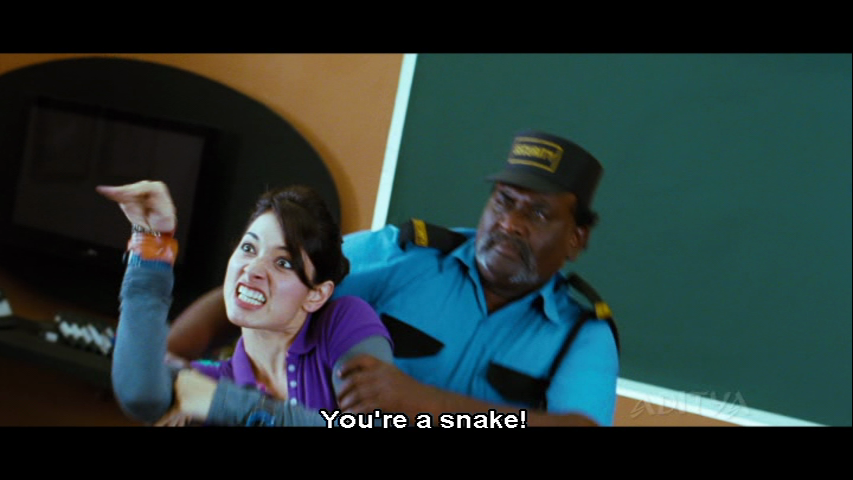
What don’t work as well are the interactions between Rambabu and his various work colleagues including Cameraman Ganga.  Although Ganga has equal billing on the title, in reality the character is only peripherally involved with the action of the story, and her main role is in a rather clunky romance with Rambabu.  Ganga is bratty and immature and her hearty attempts to appear as a “woman in a male dominated career” are unimpressive and implausible.  Her reaction to her rival Smitha (Gabriela Bertante) is also rather too ingenuous although I like Ganga’s accusation that Smitha is a snake.  Smitha does show a number of snaky characteristics but sadly that’s as far as any possible naga connection goes.

CGRvlcsnap-2013-05-28-07h09m45s220

 Smitha is the owner of a rival TV station who snaps Rambabu up when Jawahar forces him out of the news channel. Although I liked the overall idea of Smitha’s character and was hoping for a sharp, slightly unethical businesswoman to add another layer to the plot, the execution failed miserably and Smitha’s character was wasted as basically another love interest.

Ali appears as the head of social interest at the TV channel and there are some inane attempts at comedy which fall very flat.  Later comedy scenes with Brahmi are better, although the placement of some of these seems odd as they break into the action and slow down the film momentum just when it begins to take off in the second half.   The music by Mani Sharma is also nothing special but isn’t helped by lacklustre choreography.  Scarlett Wilson appears in a forgettable item number while the other songs are mainly pictured on Tamannah and Pawan Kalyan.  However this one featuring Gabriela is a little more interesting, since she does get to wear a large hat which seems to fit rather well with the giant mushrooms in the background and I think does help reinforce the snake connection.

The opening titles over news reels of various marches, speeches and events suggests that CGR will be a political thriller, but instead it’s a standard mass movie which doesn’t manage to break out of the usual mould.  There are some good ideas in here but the film needed better editing as it’s too long with too many irrelevant side issues which detract from the main story.  The inability of corrupt politicians Jawahar and Rana to make effective comebacks when questioned by Rambabu feels very contrived since surely politicians should be excellent wordsmiths – or at the very least have PR people who can write their speeches and stop them from speaking out of turn, while Nasser’s Chandrasekhara Reddy is improbably perfect .  The characterisation of Ganga is also irritating and Tamannah is capable of much better than this overacted and disappointing performance from her.

Cameraman Gangatho Rambabu works as a mass masala film, not as a political message movie despite Rambabu socialistic tendencies,  and as such the performances by Pawan Kalyan and Prakash Raj ensure that it’s entertaining enough for a one-time watch. It just could have been so much better. 3 stars.

CGR

Gouravam

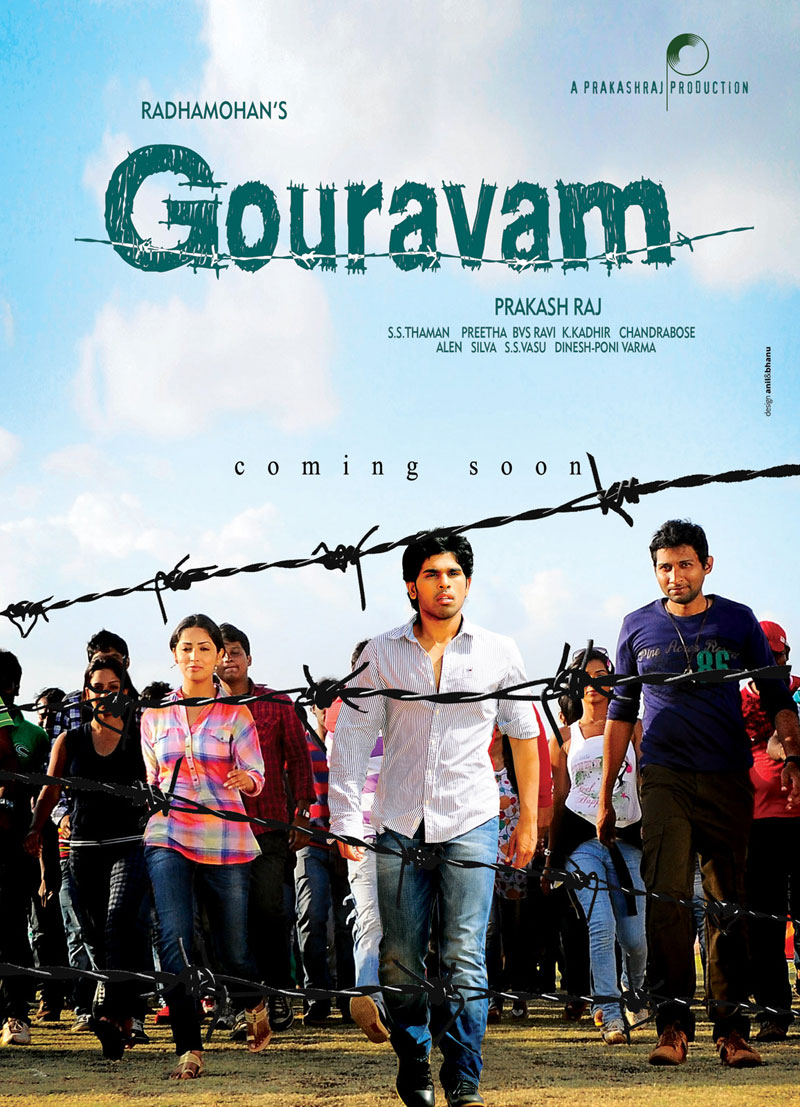
Gouravam-poster

Radha Mohan’s Gouravam is a thoughtful film. Revolving around the mysterious disappearance of the hero’s friend, it is unfortunately undermined by some clumsy plotting and suspension of logic by key characters at pivotal times. But it is visually lovely and a different kind of heroic journey than I expect from mainstream Telugu cinema so I found the time passed pleasantly enough.

Rich city boy Arjun is sent to rural SM Palli by his dad, ostensibly to inspect a factory or something. His college friend Shankar lives in that region, but Arjun finds out that Shankar eloped with the landlord’s daughter some 6 months ago and hasn’t been seen since. Arjun soon realises that the rural idyll isn’t that idyllic once you scratch the surface. He goes back to SM Palli to find Shankar. No one will tell him what happened, but with help of his friend Venky (Sricharan) and lovely young lawyer with a social conscience Yamini (Yami Gautam) Arjun keeps digging. Rather than being a conventional lone vigilante hero, Arjun draws on social media and his friendship networks by the busload as he mobilises The Youth. Prakash Raj is Pasupathy, the landlord whose daughter allegedly eloped with Shankar. His brothers (played by Harish and Brahmaji) are a looming menace, trying to send the young outsider back to Hyderabad. The Establishment vs The Youth plays out as you might expect but there are some twists. How Arjun deals with this is surprising for a Telugu film as he does not dismember anyone. He uses the courts, the media, public attention and even the usually useless police.

There are red herrings and characters who turn up to highlight significant moments. A young boy, possibly autistic, is a constant presence as he draws everything he sees. The plot is partly a mystery and unfortunately there are some miscalculations. It was blindingly obvious that there was a witness and there were other early indicators of who could shed some light. The pace was a bit slow with respect to the dramatic development, but the leisurely tempo did work well with the rural setting. I’ll skip over most of the plot to avoid spoilers but overall the incidents mostly made sense, just the way things unfurled was a bit iffy.

It is a very pretty film to look at. Arjun and The Youth stay in a very colourful and neat tent city in the countryside, the village is picturesque, houses are beautiful and seem lived in. Things are keenly observed by the camera if not the characters, so I found I was often more engaged in just looking at details.

gouravam-yami-and-sirish

As the latest Mega Boy to take to the screen, Sirish has chosen an unconventional story. However his hero intro is pure formula. Arjun runs, swims, prays, pouts, kicks the bejesus out of his trainer and – ladies take note – he cooks. What a paragon. The comparisons with his older brother Bunny are unavoidable but naming the character Arjun and filming in what excitable people on Twitter tell me is his brother’s weekender house probably indicates Sirish couldn’t care less. In terms of his acting, he is much more effective in the dialogue driven scenes than when he is required to emote silently. He also looks a little awkward and posed when he has to do nothing in a scene.

gouravam-Yami Gautam

The story would have been more balanced if Arjun was more integrated into an ensemble. Yamini and Venky were pushed aside to accommodate the herocentric approach.  It would have been nice to see more of them, even the little romantic thread with Venky trying to woo Yamini, to give them more substance. Venky dropped everything to go with Arjun, Yamini devoted time and effort to helping and not just because she fancied Arjun. I was pleased to see Yami Gautam playing a quietly assertive young woman with none of the airheaded silliness so common to the Indian filmi heroine.

Gouravam-Prakash Raj and brothers

The supporting cast outside of the The Youth are more successful in blending their performances and they do create some really intense scenes. Prakash Raj has little screen time but huge impact. Pavitra Lokesh who played his wife and Lakshmi Priyaa Chandramouli as his daughter in law were good but that household was all about the menfolk. Harish and Brahmaji were villainous and menacing, and over powered Sirish in most of their scenes together. LB Sriram was effective as Shankar’s bewildered and frail father and Nasser did his usual thing.

True to the more realistic style, there were only a couple of songs (by SS Thaman). I enjoyed the picturisation for Chetinundhi Mannu Thesi most as it used the countryside beautifully and I liked the pleasantly random looking backing dancers. Especially the three dudes who popped up out of the lake for a chorus. No one really dances much in Gouravam and Sirish looks like he is concentrating but not struggling so that might be a good sign. I hope he has the Mega Dance Gene.

I opted to see the Telugu version of Gouravam for a couple of reasons. Of all the languages I don’t speak, Telugu is a little easier for me to pick out the random words I know so an unsubtitled film is a challenge but not unappealing. Prakash Raj took the very commercial and audience friendly step of making the film available online on a pay per view basis where there was no distribution agreement in place. Hurrah! The Tamil version was on in cinemas here but the hit and miss distribution by the local Telugu film guys means I’m never really sure of seeing any new Telugu films unless they star a top hero. And frankly, since ticket prices for Telugu films are now up over $AUD23 I want to be reasonably assured of getting my money’s worth! So shelling out a fiver and watching Gouravam from the comfort of my living room was a good deal, and I think it’s a great way to expand the audience for less mass oriented films.