Pokiri

Pokiri is my favourite Mahesh Babu film, along with Athadu. I’ve seen the Tamil remake Pokkiri, and endured Wanted in Hindi (for completeness) and neither of them holds a candle to the original. Puri Jagannadh combines a strong story with striking visuals to make a gory, suspenseful action masterpiece. The story is set in the murky world of cashed up property developers, corrupt cops and parasitic crooks (the ‘land mafia’). Justice seems to reside outside of the legal system, but it isn’t immediately clear where.

We first see Pandu (Mahesh Babu) when he lures a gang out of their own territory and beats them to a pulp after kindly offering to leave a door in the shed open so they could run away if they got scared. He celebrates with a dance in which he beats people up. He then hooks up with the gang who he has just beaten up, including Subbaraju, employed by off shore crimelord Ali Bhai. Jyothirana as Mona shows an interest in Pandu that is not purely professional, and I can see why she might have been disappointed in his answer.
Pandu has all the typical hero attributes – the vestigial mullet hairdo, he’s invincible, he just has to break into dance and everyone around him joins in, he never gets lost or stuck in traffic and he is never stuck for a one liner. Despite his refusal to injure women and children, he will kill without remorse and his intensity in explaining how bad he is seems to indicate perverse pride in his achievements. Pandu is an anti-hero and there is no pretence made that he is really a good guy although of course he has a back story that explains much once it is revealed. Mahesh’s performance is totally committed to the crushing action scenes, and he is expressive in the emotional moments. Pandu is a baby faced killer with few if any scruples, although he seems to have caring friends (including Ajay) and occasional flashes of levity.
But I really had to question if someone who solved all their problems with such brutality would be any easier to deal with if he was motivated by love rather than anger. Dead is dead after all. But it’s Mahesh, so Pandu was never going to be left painted as a complete villain for the whole film.

Pandu is attracted to Shruthi and knows they are all wrong for each other. Oh God, what to do?

Ileana is Shruthi; young, pretty and pouty. Her storyline justifies wearing midriff-baring lycra as she is an aerobics instructor, and the sole breadwinner in her family. She still has the very flexible working hours and extensive wardrobe a film heroine needs. Slimy S.I Pasupathi (Ashish Vidyarthi in a creepy performance) hits on her and her mother, and pays rowdies to stage a fake rape to ruin her and prevent her marrying.

When Pandu finds out he pursues the perpetrators and none of them walk away from the encounter. But Shruthi isn’t grateful or smitten as a result – she is more fearful of her own lack of judgement in pursuing Pandu.
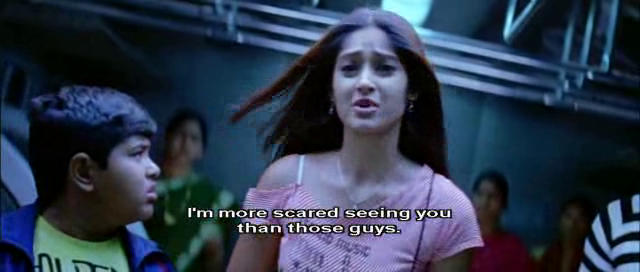
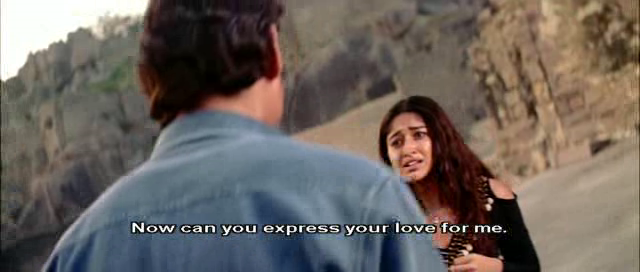
She struggles with her attraction to Pandu and her revulsion at what he does, especially following a squelchingly bloody fight set at Golconda. Ileana is given dialogue that illustrates Shruthi’s strength of character and should show this inner conflict but almost everything emerges as either a simper (I love him!) or a teary whine (he’s so mean!) and she missed the mark. Perhaps it was a question of maturity – she played Shruthi as a girl rather than a young woman which I think this needed.

The songs by Mani Sharma are highly enjoyable and so are the picturisations, possibly not always for the intended reasons. Who needs a comedy sideplot when you have those lanky pale legs in a lunghi?
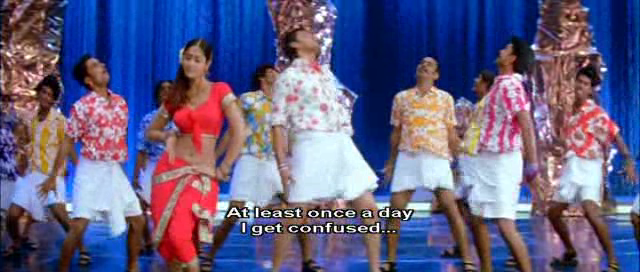
The romantic duets look less successful as I don’t think there is sufficient chemistry between the couple, or enough actual dancing in their songs together. But I love the backing guys in this.

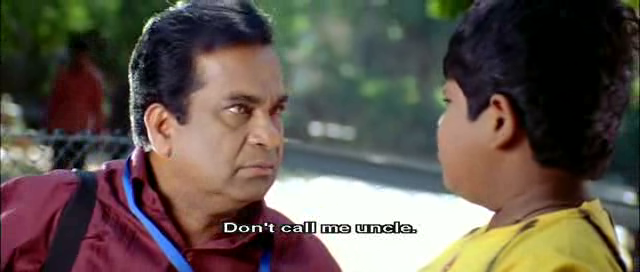
Brahmi is the neighbour who dresses 30 years too young and keeps cracking on to Shruthi. Mercifully he is mostly quarantined in a sideplot with Ali and Venu Madhav so they torture each other and I ignore it. It’s not really that bad as comedy sideplots go, but I fast forward in their scenes. I would like to suggest that comedy uncle types from all film industries should held in a secure facility on a remote island. There should be a strict ‘one in, one out’ policy that would keep their screen presence manageable. Sunil would be free to roam as he pleases because I find him funny.
Prakash Raj is the shadowy don, Ali Bhai. He is menacing from a distance, but seems less calculating and more self obsessed when he joins the mainstream of the drama. He has some fancy shirts and nasty habits that sometimes tip Ali into caricature.

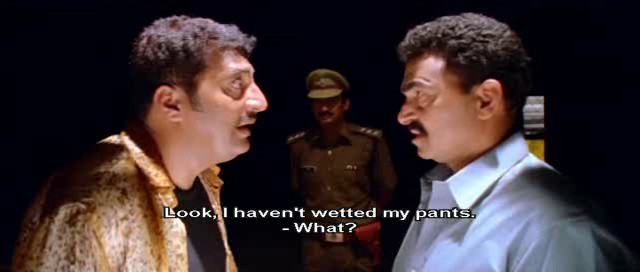
Ultimately it is Ali Bhai who drives the final showdown. He humiliates and kidnaps the daughter of the ACP to have a bargaining chip. Once again the police are shown as powerless – forced to lie about an arrest to prevent political interference – and working outside the law to deal with this criminal.

Rape is a common threat against the women in Pokiri. It is treated as something serious, although in a very filmi way.  But then Puri Jagannadh shows a rapist’s father demanding to know why his son’s reputation is being ruined. The fact that his son filmed himself raping the girl doesn’t seem to worry him as much as seeing the footage on the TV news. There is also criticism of the tabloid media who glorify and collude with criminals for the sake of sensation and ratings yet demand law and order. Mona sells the rape film to the press and Pandu asks if she is a woman to be able do that to another woman. No such question to the guys in the gang – maybe we aren’t meant to expect morals from them. And of course, that old Telugu film chestnut; if a good person kills a bad person, was it really a crime? Behind all the blood splatter and gunfire there were some interesting notions floating around but they were never going to get in the way of the action.
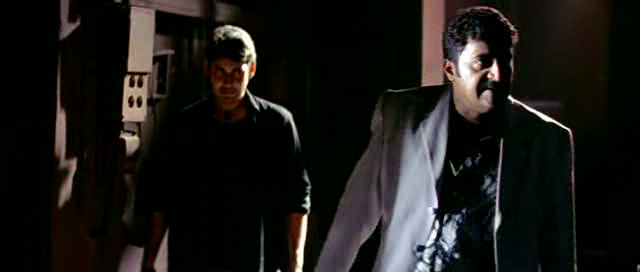
The climax is brilliant. A slight twist is revealed – when will senior policemen learn not to tell their kids about top secret operations? All the bad guys converge on Binny Mills and Pandu wreaks havoc. There are dismemberments, impalements and all manner of gore, in a beautifully choreographed and filmed sequence that takes full advantage of the location and film technologies. I think there’s a bit too much slo-mo glass smashing, but I can forgive the excited over-use of new technology toys. Vijayan created some iconic set pieces in the fights and they really are stunning.

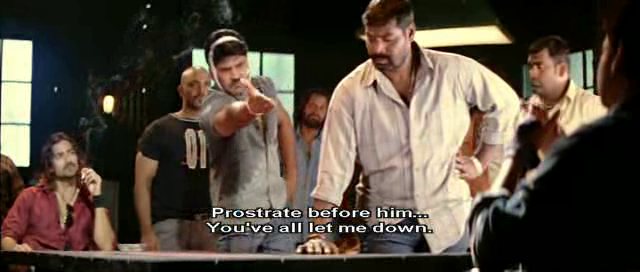
The support cast are there largely to contribute to the body count although Sudha as Shruti’s mother and Master Bharath as her little brother have some key scenes. Ajay and Subbaraju make the most of their roles and both exude menace and a dark comedic edge. Nasser has a small but crucial part in the drama. I liked Sayaji Shinde, the ACP, in his more restrained scenes. Mumaith Khan turns up too for the obligatory item number.

I think this is Puri Jagannadh at his best. He has the strong visual sense and a knack for picking up interesting concepts, which in Pokiri is meshed with an engaging story and some good performances. If you don’t mind your action bloody and unapologetic, this is for you. 4 ½ stars – a small deduction for Ileana’s snivelling.
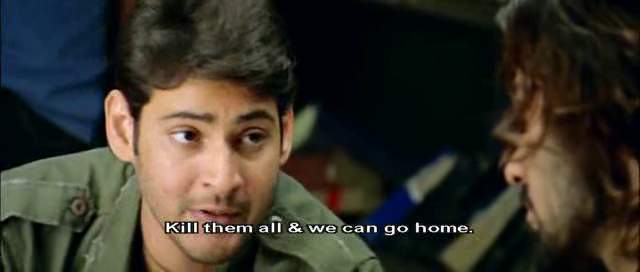
Heather says: This was my first Mahesh Babu film, and what an introduction! I think Pokiri has one of the best hero entrance scenes when, after plenty of running feet and leg shots, there is that wonderful moment when Mahesh finally bursts onto the screen surrounded by flying vegetables and chillies. Brilliant! It’s definitely one of Mahesh’s best films where his acting and the action element all come together perfectly to create the total package. I saw the Tamil version Pokkiri with Vijay first and although I think that’s also great, the original Telugu film is definitely much better.

I like the way Pandu transitions from the total action hero and baby faced killer (who is not a nice guy at all), to the devastated son later in the film. There seem to be more shades of grey in the character of Pandu than in some of Mahesh’s other roles and it makes him much more interesting – especially as the film progresses and we learn more of the back story. He does still have an astonishing ability to be able to defeat an average of 20 opponents all by himself which seems to be pretty much obligatory for any Mahesh character. And there’s nothing wrong with that at all!  Pokiri does have some excellent action and fight scenes, and some of the methods used to dispose of various villains are very clever indeed. Full marks to Vijayan for some smart action segments and memorable fight choreography. It’s not just Mahesh who excels in Pokiri though. I’m a big fan of Ajay and his presence in any film always makes it just that little bit better. He’s great here as Pandu’s friend and as usual has some wonderful expressions, particularly as Pandu and Shruthi clash.

I like Ileana here too, as she is convincing as the girl who falls in love with the bad guy despite all her reservations.  Her acting in the scenes where her family is threatened is good and although her reaction to the thugs who burst in on her is a little too weepy for me it does come across as right for her character. I enjoyed the interactions between Pandu and Shruthi although there wasn’t too much chemistry between the lead pair. I put this down to the fact that it would be hard to be very romantic with a guy who spends most of his time systematically slaughtering his way through the various gangs in Hyderabad and Shruthi’s revulsion for Pandu’s lifestyle tends to comes across more clearly than anything else. However they do look good together in the songs and the romance works well enough. The various villains are all excellent although Prakash Raj is perhaps a little too much of a caricature in his role as Ali Bhai. Ashish Vidyarthi deserves special mention for being particularly disturbing as the corrupt cop, and Sayaji Shinde was also good as the police commissioner.

The only downside to the film is the terrible comedy track, although it’s actually better here than in the Tamil version with Vadivelu. While I don’t mind Brahmi’s amorous landlord persona, the scenes with the beggars played by Ali and Venu Madhan are incredibly annoying and just slow down the action. Get rid of that and this would be as close to perfect as it gets. As it is it’s still a fantastic watch for all-out Mahesh action – 4 stars.

Sri Anjaneyam

Sri Anjaneyam is one of those films that I find it hard to make up my mind about. There are a lot of things I enjoy; it has great special effects, an interesting storyline and excellent performances by Nitin and Arjun. But I really don’t like Charmy’s character in this at all, and I find the whole romance sub-plot unnecessary and irritating. Re-watching it for this review, I found that it’s perhaps growing on me and on balance there is more to like than not. But I still wish Krishna Vamshi had left the romance out.

The opening credits have some beautiful pictures which show scenes from Lord Hanuman’s part in the Ramayana.

The film starts, as many Telugu films do, with Prakash Raj. He’s a civil engineer who has come to the drought strickenvillage of Ramapuramto build a dam which should solve the area’s water woes. But he meets with opposition from a local with political aspirations who organises protests and a legal challenge to stop the project. Brahmam is annoyed that he hasn’t got control of the project himself, and thinks that the dam will allow the villagers to become wealthy and independent from him. I love the model below which comes complete with water and gates to change the flow – no wonder Prakash Raj looks happy.

Finally Brahmam sends his brother (who goes by the rather unlikely name of Tarzan), to kill the engineer and his wife. Tarzan isn’t aware that the couple have a son and as a result he is overlooked by the thugs. Alone on a rainy night, the young boy is led to the local temple by a helpful monkey, and takes refuge there. The priest and the villagers take it on themselves to look after him and he grows up devoted to Lord Anjaneya, leading to the villagers calling him Anji.

He’s very devout and grateful to the people of the village, spending his time between helping the priest in the temple, running errands for the villagers and worshiping his ‘boss’ Lord Anjaneya. The story has an almost fairy tale effect in these scenes as the colours are bright and initially Anji’s character is quite simplistic as a spiritual man who is lives to serve to his God.

Anji is a target for the local trouble makers, but he has a stalwart defender in the form of his childhood friend Pardhu. She’s not afraid of a fight and threatens anyone who tries to hurt Anji. When he saves her from a snake bite, she falls in love with him and puts a lot of effort into her campaign to ensure he marries her. Her attempts are probably why Anji looks horrified every time he sees her and runs quickly in the opposite direction. This whole side plot with Pardhu is the part that I don’t like. I think her character is supposed to be feisty and independent but she comes across as an over powering bully and her attempts to attract Anji are quite repulsive. She has a song during which she rolls around very unattractively in mud and while there are a few good moments they are few and far between. I usually like Charmy and I think she is a good actress, so I find it disappointing that her character here is so annoying and has some really terrible lines.

Meanwhile, Brahmam is still scheming and conspires with an evil magician to get rid of his political rival. He discovers a potential source of wealth underneath the local temple and immediately starts planning a way to get rid of the priest and demolish the temple.  However, he has reckoned without Anji, who has supreme confidence that Lord Anjaneya is already on the case and will once again sort out Lord Rama’s problems. His confidence is well placed as Lord Anjaneya does turn up although his aid is more to point Anji in the right direction to fulfil his fathers dream.

There are some really good special effects in this film and a few that don’t work quite so well. But they do make the appearance of Lord Anjaneya quite spectacular, and there is one particularly good sequence when he takes over a statue to fight off the local thugs.

The film develops slowly in the first half, but the pace picks up when Lord Anjaneya (Arjun) arrives. Arjun excels in his role and walks as if he had a tail, scratches perpetually and absentmindedly, and adds in some authentic shrieks and noises as he advises Anji.  He also has the ability to pass on some of his super strength, both of body and mind, which enables Anji to fight Brahmam’s men successfully. The rapport between Anji and his mentor is the best part of the film and the two actors work together very well to bring their relationship to life. Lord Anjaneya is very mischievous and there are some lovely comedic moments amongst the more serious and spiritual advice.

Nitin looks young and innocent as Anji which fits with the character’s spiritual side very well. I could also appreciate his horrified looks every time he ran into Pardhu as I felt much the same. As his character grew in the film Nitin showed an increase in Anji’s confidence while still maintaining his simplicity and this worked very well. Anji was charming and also goofy and funny enough to be a very watchable character.

The various actors who played Brahmam, the evil magician and assorted thugs were all good in their roles. The demon summoned by the magician was one of the special effects that didn’t really work, but the magician himself was quite evil enough to compensate. Interestingly Tarzan was shown to have a conscience and told his brother that all his bad deeds were the reason behind his miserable life. I thought this was a different approach, and helped to explain the conversion of the rowdies at the end of the film.

The story is one of good versus evil both spiritually with the evil magician and his demon against Lord Anjaneya and physically with Brahmam and his thugs against the priest and Anji. But there is also a coming of age part to the story as Anji decides to take on his father’s dam project. I must admit that there seemed to be plenty of water in the village and it was really quite green so a dam didn’t seem to be terribly necessary, but perhaps they’d just had a really good rainfall that year. Other plus points to the film are the wonderful colours and cinematography which, along with the special effects, make it a beautiful film to watch. The music by Mani Sharma is based on chants and this blends in very well to the film. The more modern duets don’t work quite as well but this one is very pretty.

The film is worth watching for the excellent performance by Arjun and his interaction with Nitin. And if like me you don’t like the romance, it’s easy to fast forward past those sections. Generally an enjoyable watch, but could have been better. 3 ½ stars

Temple says: This is a muddle of a film that ends up being an unsatisfying venture. Anji (Nitin) is a holy innocent – a simple man who finds his happiness and strength in his faith, and views his life as a blessing given by god. He has a childlike naivete but also the adamant strength that an uncomplicated resolve can bestow. Pardhu (Charme) didn’t strike me as a real bully. I felt she was also quite childlike, getting by on bluster and clearly being allowed to indulge in her histrionics by people like the smitten local rowdy rather than having any real force to exert. Certainly when a bit of dishoom would have been useful she was firmly on the sidelines.

The acting style was quite cartoonish and upbeat, the visual effects were mostly aimed at younger viewers and this had a family friendly feel initially. It reminded me a little of Krishna Vamsi’s earlier ‘Murari’ but with a more overt devotional aspect.

So I am mystified by the decision to add a highly sexualised and out of place relationship (I can’t call it a romance) track. Pardhu was a bit freaked out by her reaction to Anji sucking snake venom from her chest, and he was horrified by her and her girl germs. These two childlike characters were then placed in songs where Charme had to thrust her scantily clad groin into a stream of pouring milk, roll in mud and so forth. I’m very pleased I’m not one of the parents who had to answer the question ‘Mummy what is that lady doing? And where are her pants?’. When Pardhu suddenly started obsessing about Anji, her relatives said they would help her to tie him to a tree, take his pants and leave her to rape him. This advice horrified her.  It made no sense in terms of their characters and really didn’t work in the overall tone of the film.

The costume designers worked hard for the songs and certainly put the F back in Fugly. It was disappointing again as the rest of the film was quite beautiful, and the cinematography made the most of the lovely temple and village scenery. The other major let down was Nitin. He needed more spontaneity in his expressions rather than stop-think-react-pull a face as it all felt a bit tired, and like I was watching the 17th take of some shots. The story itself needed work – the dramatic aspect of the dam scheme and the murders kept getting sidelined and then would come back then fade out again.

I agree with Heather that Arjun is very good as Sri Anjaneyam and he gave the scenes with Nitin some much needed energy. He showed his confusion at learning to act human, and brought mischief and compassion to his character. Charme did all she could with a ridiculous role.  Prakash Raj was seen all too briefly, but made a great impression with his excellent use of props and his commitment to dying a memorable death.

I can’t recommend the film as there are too many things I didn’t enjoy. You know it’s bad when I have so many things to complain about I can’t even be bothered mentioning the dreaded Comic Side Plot. 2 ½ stars.

Indra

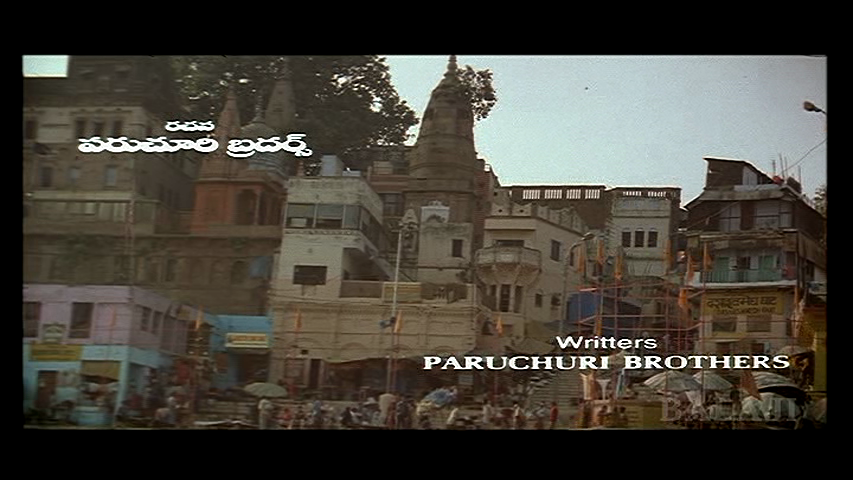
Indra is a really entertaining vehicle for Chiranjeevi, combining action, melodrama and music in a visual feast. I say entertaining despite a huge bodycount and an impressive gore budget. The violence is so over the top and cartoonishly bloody, the baddies are so one dimensionally bad, that I couldn’t take it seriously.I also had to laugh at this little moment in the opening credits. Really Paruchuri Brothers, you call yourselves ‘writters’?

This is a film of many incidents and little introspection so I won’t delve into the plot too much or there will be too many spoilers. The action kicks off in 1975 with scenes of murder and betrayal. Young Indrasena Reddy assumes the leadership of his clan after God knows how many of his male relatives are killed. The boy shows signs of some kind of power:

Then we land in Varanasi in 2002. Sankaranarayana (Chiranjeevi) is a taxi driver, classical vocalist, philanthropist and deliverer-of-justice. His family mean everything to him, and Sankar does all he can to support their education and happiness. When his niece Nandhini says she needs inspiration to sing, he comes up with this little beauty:

What a guy! Isn’t Varanasi beautiful too? And I loved him ‘singing’ in front of SPB in another scene. [Edited to note: It seems Eros only want us to see the Hindi dubbed versions of the songs and I can’t find Telugu clips online anymore so apologies for that but the picturisations are really lovely.]

It’s clear there is a connection between the two episodes, but the first part of the film is all about the peaceful family man. Well–he is a man of peace, until he isn’t. Chiranjeevi is all hero and there is no doubt this is his film. The action scenes are action packed, the dancing is high energy and the speeches are compelling. This is not a film that demands subtlety but Chiru adds a bit more emotion and credibility than I expected. And he does it in plaid, in sequins or in a lunghi. So versatile! I don’t understand why people keep asking me why I love him – surely it’s obvious.

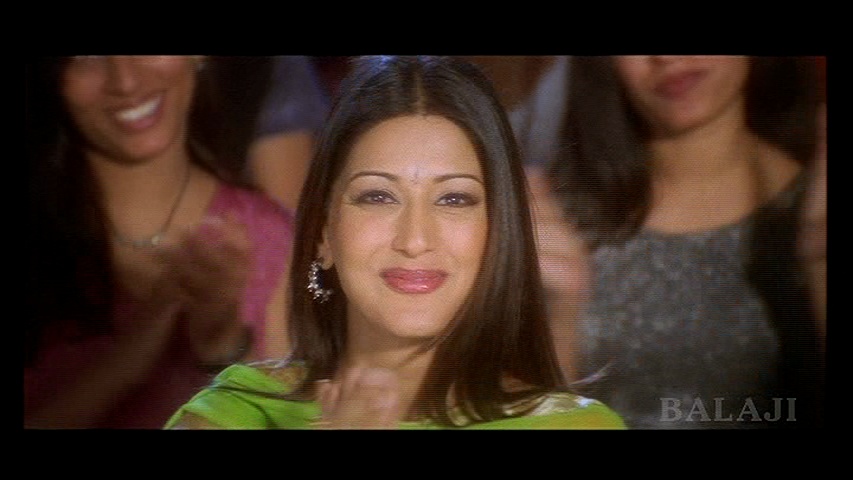
Sonali Bendre is the smitten Pallavi who pursues Sankar and schemes her way into his household (and incidentally, out of an unwanted marriage). Her machinations are highly amusing as is Sankar’s discomfort at her flirting and they have good comic chemistry. Sonali’s overacting is excellent, and her fake filmi gestures are spot on for this role. She also gets the full support of the wardrobe team, although I have my doubts about the footwear. Is she wearing yellow fluffy slippers?

I wish I could say the Comedy Side Plot was funny but it wears thin very quickly and Brahmi and gang overstay their welcome. Sunil does a more successful spot as a hapless brother-in-law and is on screen just enough.

The drama takes place on an intimate scale as well as in an epic feud saga.  Pradeep (Sankar’s nephew) is in love with Mumtaz, a Muslim, and their relationship is discovered. Later in the film Nandhini has her own troubles. I was perplexed by the suicidal tendencies of these young women but luckily they were not alone. Sankar never turns his back on his family and goes to bat for them, making a few message statements along the way.

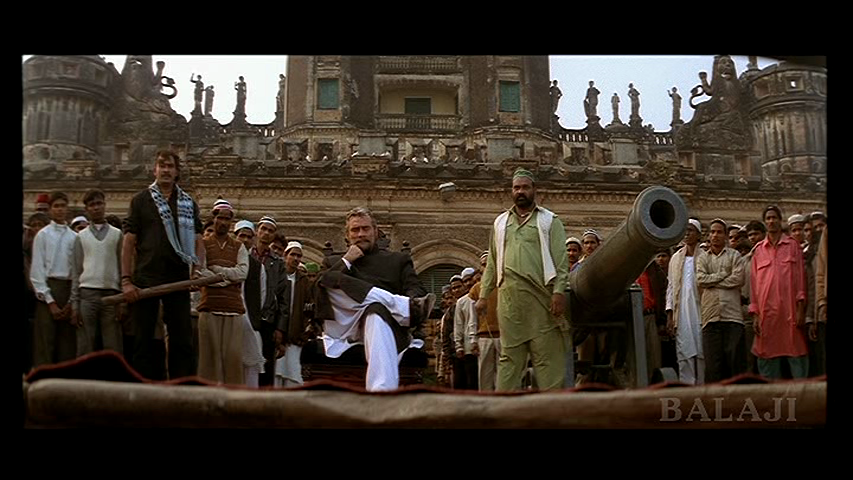
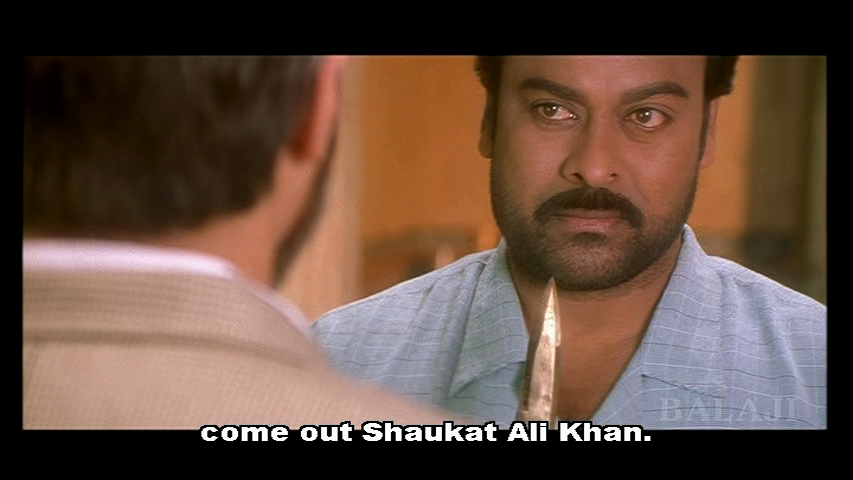
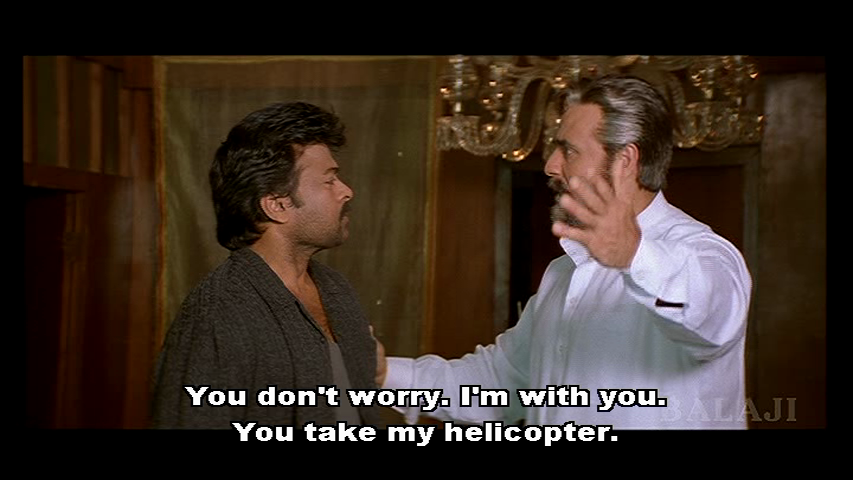
He also impresses Mumtaz’s father, the rich and powerful Shaukat Ali Khan (Puneet Issar). This comes in very handy when Chiru finds himself in need of a helicopter.

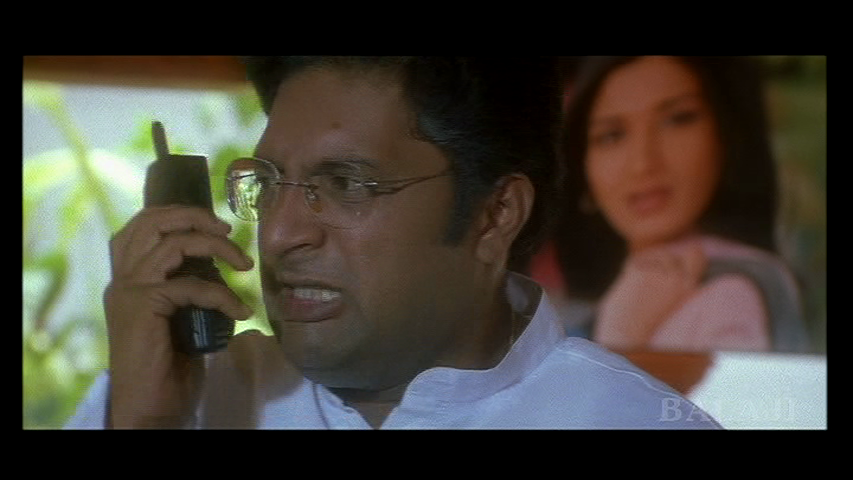
Prakash Raj comes to destroy the man he believes has ruined his daughter Pallavi, only to recognise Sankaranarayana as Indrasena. If you like your Prakash Dad frothing at the mouth screaming ‘shoot them all’ then this is for you. If you like your Prakash Raj and his Gaze of Blossoming Bromance, this is for you.

Sankar makes Nandhini’s wedding a condition before he is free to marry Pallavi (when Prakash feels the love, he really feels the love and his decision making process is as rushed as when he is feeling the hate) so plans proceed quick smart.

The wedding draws all the players out into the open. As soon as Mukesh Rishi dipped his toes in the Ganges, I knew bad things would happen. Tanikella Bharani is loyal Valmiki, apparently mute and certainly devoted to Indrasena. When things get ugly, he is the means of laying out the shared history of the characters. We also get an excellent montage of Chiru and heavy machinery as he displays his instant engineering skills.

Snehalatha Reddy (Aarti Agarwal) is the other heroine, and she is not averse to throwing her weight around. While I found her unpleasantly abrasive in some scenes I enjoyed her performance immensely. She was filmed as many heroes are –the first shot a chunky shoe emerging from one of a convoy of cars, the framing of her walk, how she sits–and she has her own irritating and ominous theme music. Snehalatha has her own priorities and her interactions with the men are on the same level.

Snehalatha has set her sights on Indra. But given her family history of betrayal her motives are suspect. Or are they? Her character is more developed than Pallavi and she certainly makes the stronger impression despite arriving later in the story. The chronology of the film doesn’t hold up too well under scrutiny, but there is an excellent 90s style dance number. It’s perfectly vintage right down to the costumes and locations (I choose to believe the dated look is an intentional statement).

A hero as upright, generous and moral as Indra requires a weak, nasty and unlikable baddie as an opposing force. Veer Shankar Reddy (Mukesh Rishi) is that man. His villainy is more about excessive violence, obsession with supposed family honour coupled with total disregard for his wife and child, and finger pointing with a lot of “Rrrrrrrrrrey!” Mukesh Rishi has an excellent range of furious and outraged expressions, as does Chiru, and their confrontations are memorable.

There is a big spoiler after this picture so scroll past the next paragraph quickly if you wish and rejoin me after the following set of pictures.

There is a nasty incident in which Veer Shankar Reddy murders his young son rather than be indebted to Indra. This is ridiculous rather than real violence against a child but it shows how low the writers felt they had to go to make him bad enough. He is a liar and cheat, and sees no need to keep his word. This does put him at some advantage against his honour bound adversary but the final result is never in any doubt. Even the land he claimed seems to be against him at the end.

Indra is kind of predictable but still kept me glued to the screen, so Chinni Krishna and B. Gopal should be congratulated on getting the basics right. All the ingredients work, and the visuals in Varanasi are beautiful. The songs by Mani Sharma are great and flow well in the story, and Lawrence and the other choreographers work to their stars’ strengths so the picturisations are just brilliant. There is an inconclusive ending with the two women vying for Indra, but we can all make up our own resolution to that. And I think Pallavi gave a pretty clear clue as to what she might propose.

Chiru is awesome as the great hero, and Indra really is for the people! Well, for my kind of people anyway. I give Indra 4 stars (points off for unfunny funnymen and poor spelling).

Heather says: Indra is a film for the megastar made on a mega-scale with a mega storyline! There really is a lot happening in this film and it seems as if the writers were determined to embody every trait of the divine Indra in the character of Indrasena Reddy. The basic story of warring families is expanded to include a number of romances, star-crossed lovers, vengeful wives, the building of a reservoir ( the ‘bringing of water’ ), street cons in Varanasi and even some politics! I do like young Indra with his self-important declarations, and the fact that throughout the story many of the women are very strong and decisive characters. Everybody has at least one impressive declarative sentence in this film.  Initially I was concerned that Indrasena’s family are so very, very good while Veer Shankar Reddy’s family are so very, very bad, but then Indra starts hacking and slashing with the rest of them and it all becomes a bit too cartoon-like to be taken seriously. The whole side plot of Puneet Issar as Shaukhat Ali Khan, although I’m sure designed to show Indra’s compassion, courage and forgiveness, really seems to be just so that Chriu would have a helicopter to borrow – and that is absolutely fine with me!

Chiranjeevi is as fantastic as always and is the reason the film works so well. His dancing is amazing and Lawrence’s choreography is immediately recognisable. I was very impressed by Chiru’s moves as the dancing is very fast and physical and he pulls it off with nary a stumble.

I also really like Aarti Agarwal as Snehalatha Reddy, the sister who fell in love with the enemy. I think her portrayal is well done considering her limited screen time and she comes across as a very strong character. Sonali Bendre on the other hand, although adequate in her role, doesn’t impress me as much, although a lot of that could be that I don’t really believe in her character. I can understand that she would fall in love with Indra (after all – who wouldn’t!) but her subsequent actions seem out of place, and I would have thought that the daughter of a politician should be a little more aware of the consequences of her actions. Indra’s treatment of her is also a problem for me. On one hand he is very avuncular and treats her  appropriately as  his niece’s friend as he resists her advances, but then later on he involves her in his deception back in the village which I was  more uncomfortable with.

I missed a lot of the final fight scene between Chiru and the brothers as John and I were trying to decide which climbing area it was filmed at. We’re pretty sure it’s just south of Bengaluru (Bangalore) but perhaps someone could let me know exactly where? I did get a bit distracted by the lines on some of those great granite boulders!

Overall a very entertaining film as long as you don’t think too closely about some elements of the plot. I don’t think it would have worked at all without the star power of Chiru, but I still give it 4 stars – 3 ½ of those for Chiranjeevi and ½ for inspiring my husband to come back to India with me on my next trip to track down those climbing areas!