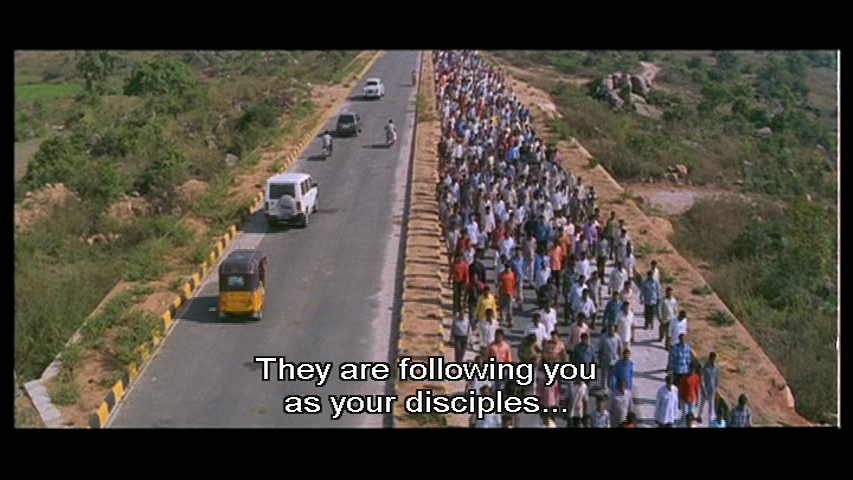
Ko

Ko opens with an eye catching photo montage and theme music that incorporates thrashy guitars and angelic choirs. I immediately expected something a bit stylish, modern, urban with a splash of heroics and that’s what I got.

Unravelling the plot was integral to my enjoyment of Ko so I won’t discuss what happens in detail. The story focuses on two groups – journalists and politicians – and an upcoming election. The journalists are young and shiny, full of ideals. The politicians are…politicians.

Jiiva is Ashwin, a newspaper photographer. His camera is never far from hand and he is an acute observer. Spotting a bank robbery getaway in progress, he does what any ambitious journalist would do – gets their pictures. That he does it from his motorbike just makes it clear that he is the hero. I think Jiiva conveys the right blend of boyish appeal and serious drama, and he is just so likeable. He can do cutesy flirting and silly dance moves, and be blokey enough to walk into a dodgy bar and track down a witness. He delivers the action scenes with loads of energy and while Peter Hein has set the fights at the outer bounds of ordinary guy capability they are still true to the character.  Ashwin has a knack for seeing what is going on in the background or on the periphery of the action. This makes him valuable as a photo-journalist and really annoying to those he targets. His first reaction to any event is to get a photo and record what is happening.

Ashwin’s observations and photos often have a touch of sarcasm or dark humour about them. But although he jokes, he is passionate about justice and dragging the truth out into the light of day.
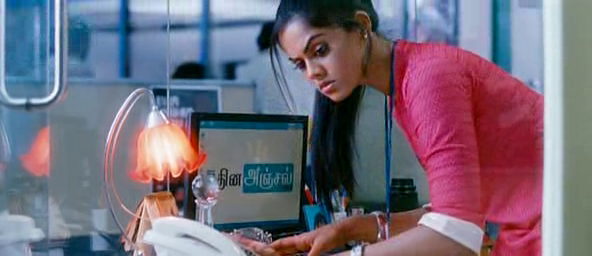
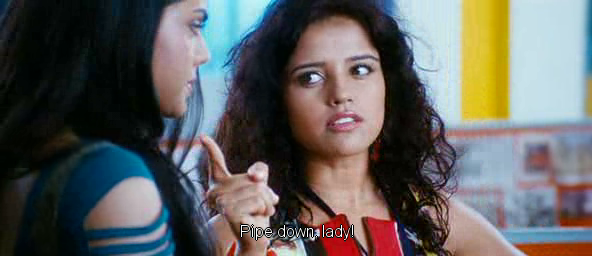
Karthika Nair is Renuka, recently transferred to Chennai. She is an established journalist but finding herself in a new city and a new team, she is a little lost at times. Her relationship with Ashwin starts off on rocky ground due to a case of mistaken identity but soon looks like love is in the air. She and livewire movie reviewer Saro (Piaa Bajpai) become good friends despite Saro having feelings for Ashwin. While this is primarily Ashwin’s story, the girls were strong and relatable characters. I liked seeing young ladies who could be friends, rivals and colleagues without being overly silly or unpleasant.
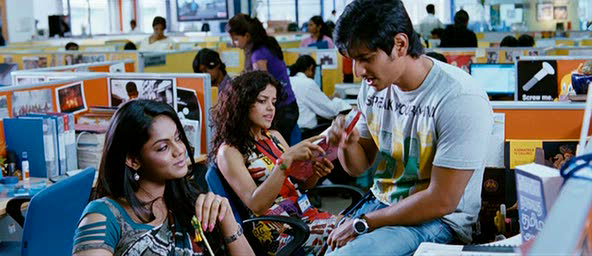
Work was the main thing all three had in common, and the work remained in focus throughout. Despite some of the less believable incidents, that work/life balance gave them a bit of credibility. Piaa Bajpai is OTT at times, but she needs to be to act as the counterpoint to the more reserved Renuka in the mild love triangle that develops.
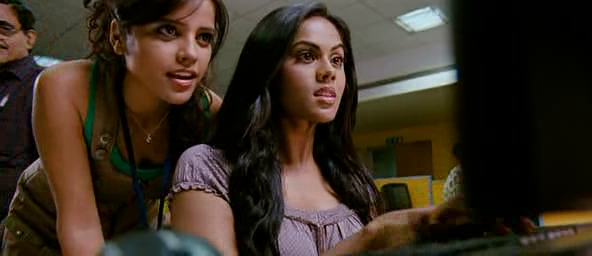
I liked both performances although I think a real life Saro as a friend would have me investing in ear plugs. Karthika had more complexity to work with and I think she did well in imbuing Renuka with a maturity that I rarely see in film heroines.
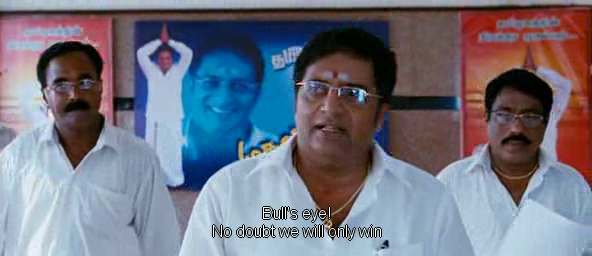
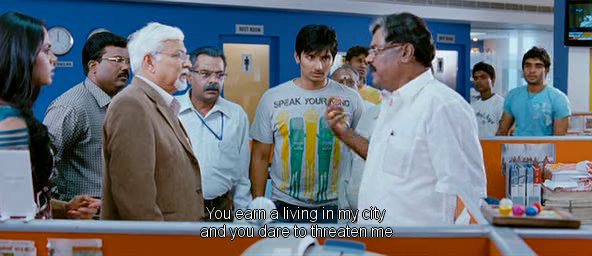
The politicians are represented by Prakash Raj as the statesman Yogi, and Kota Srinivasa Rao as the uncouth Alavandhan – very different men on the surface but not fundamentally different when it comes to the goal of winning office. They both do what they do so well but neither delivers a standout performance.

Tying the two groups together is Vasanthan (Ajmal Ameer) – a young idealistic politician. He and his colleagues are trying to contest elections but are struggling to create a media profile and can’t compete with the bribery and standover tactics of major parties. He is educated, ambitious and a natural leader. Ajmal Ameer played Vasanthan with sincerity and conviction.
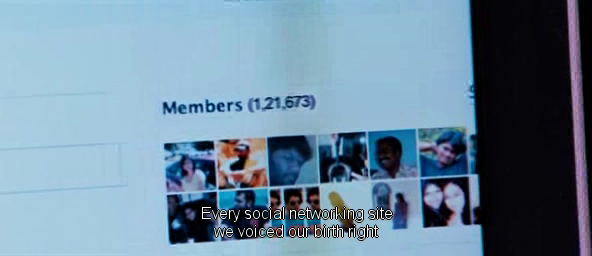
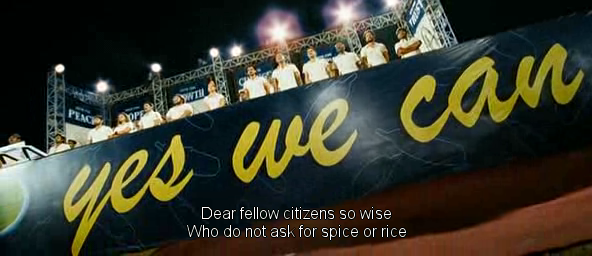
Events bring him into the media spotlight and eventually the young Siragugal team are on the brink of success. Then a catastrophe – a bomb blast at their rally – changes the game. The story gets murkier the more Ashwin and Renu dig.

The story starts off running in several different directions before things start to link back together. The plot branches are tied in by characters identifying patterns or spotting inconsistencies in someone’s story so there are a few ‘A-Ha!’ moments. Ashwin, ever keen eyed, spots a familiar face in photos from different crime scenes and that ties a Naxalite band to a local identity. Renu follows up on another clue and Ashwin is under scrutiny. It’s really well done, and kept me thinking about what could happen next.  The resolution is a bit predictable, but I was interested enough in what was happening that I didn’t really care.

This is pretty indicative of the visual style and editing. Ignore the crappy rapping and do a bit of star spotting as almost everyone in Tamil film makes an appearance:

The songs by Harris Jayraj are not unpleasant but I never really remember them without seeing the film. There’s the usual selection; the club song, the falling in love duets, the colourful ethnic costumes in the snow song, the college friendship song. The lyrics are often quite pertinent to the story so I was happy to have them subtitled on my DVD. Well, they’re not always that helpful…
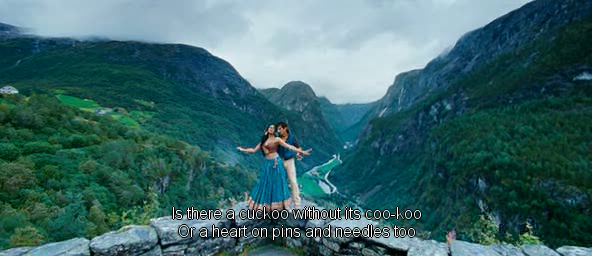
Songs are used well in the first half but are a little out of place later in the film as events got more serious. I found the transition to Venpaniye a bit jarring as it is a lovey dovey duet in an ice palace just after a traumatic event. Jiiva is equal to the limited choreography and his facial expressions are often priceless. I got the impression he was having a blast doing some of the more comedic scenes and the dances. Karthika does more posing than dancing but her wardrobe often makes up for any lack of energy on her side. And the locations are sometimes breathtaking.

It’s not an issue film as such, but it does touch on many social and political ideas and problems as the plot develops. Considering some of the themes, there is a lot of product placement in Ko. There is at least a semblance of building it into the plot so while I politely jeered each new brand’s arrival, it didn’t bother me unduly. KV Anand (director and co-writer) glances at the interdependency of some media and politicians, the role of the police, celebrities in politics, freedom of the press, availability of adequate medical care and education among other things. The perspectives are offered from the various characters points of view so there is more discussion than lecturing. The commentary is often laced with humour and an acknowledgement that truth is not an absolute.

If you like the idea of a modern, urban thriller with some classic masala elements and young and likeable stars, this is well worth a look. 4 stars!
Heather says: I really enjoyed this film.  Yes, the plot does have a few too many twists and turns towards the end and some of the action is rather improbable, but the story moves along at a cracking pace and the lead actors all put in excellent performances. I got this DVD based on K. V. Anand’s previous films which I also enjoyed, and thought the reference to Ayan here as a film only worth 1/2 star was very funny. I would love to know if this was an actual comment that he received about the film!

One of the best parts of the film for me is the number of strong female roles. Not only the characters of Renuka and Saro, but also the fact that there are females characters standing for election, involved in the Naxalite terrorist group and generally well represented among the various minor roles throughout. I like the characters of Renuka and Saro and both actresses brought great individuality to their roles while still keeping them believable as friends. Jiiva is excellent and his journalist, while often taking suicidal chances in his quest for a picture, brings together the right blend of charm, action and determination to make Ashwin a compelling character. Like any good journalist, I think he has all the right characteristics to be able to schmooze his way into any situation. It’s the first time I’ve seen Ajmal Ameer and I must look out for his previous Malayalam films as I think he is just as good as Jiiva in his role here. While there are one or two moments in the film that don’t work for me as they seem too unlikely in such an otherwise plausible film, there are many others which work so perfectly that I don’t mind suspending disbelief from time to time. Ko has a well written screenplay and very likeable actors which make it a film worth watching. 4 stars from me.

Dookudu

Another Adventure Without Subtitles! Dookudu is the much awaited release for ‘Prince’ Mahesh Babu and we knew it would be huge. We arrived early for the 8.30pm show, which gave us the opportunity to watch the staff deal with the problem of getting the first show crowd out through the 700 or so people crowding into the small foyer. Once people emerged, the waiting audience clapped and cheered them like they were rockstars, and it was a very festive atmosphere. As one lady said  – why come to the cinema unless you’re going to have a good time?

It was about 10pm before the film finally started, not that anyone was complaining. There was plenty of cheering, accompanied by the sounds of tearing newspaper, as everyone got ready for Mahesh’s appearance.  There was discussion about whether there might be the odd flash of elbow (Yes there was, and even a glimpse of princely tummy) and just how many shirts can Mahesh Babu wear and still manage to fight? (There is apparently no limit to what Mahesh can do, or how many shirts he can wear.)

The film starts with politician Shankar Narayan (Prakash Raj) who is so well loved by the people that we know he’s heading for a gruesome end. Sure enough he’s attacked and left for dead by his rivals who include Kota Srinivasa Rao, Sayaji Shinde and various other Telugu film baddies. Somehow Shankar survives, in a coma and hidden in a secret location, and he finally comes round some years later to a changed world. His son Ajay (Mahesh) is a policeman rather than a politician as his father had planned, a number of his friends and colleagues are dead and the family have moved out of their old house. However the doctor instructs Ajay not to shock or distress his father in any way, for example by telling him the truth, as this will be bad.

Mahesh is introduced in full throttle action hero style, complete with title song. He takes on a room full of bad guys with nothing but his comic timing, guns and a whole lot of biffo.  Ajay is a super cop – invincible and fearless. He is also quite prepared to play outside the legal system if that is what it takes. After one such scene we did have a quick discussion about the omnipresent singlet under all the layers of shirts, and whether it was actually bulletproof. Whatever the reason, the bad guys consistently fail in their efforts to eliminate our hero, while he has no such issues dealing with them. Mahesh can convincingly portray a furious rage in a very low key acting style, and he is also more than capable of bantering dialogue with the comedy uncles. It’s a role tailor made for him, and while he wears his police uniform a little on the baggy side the character is a perfect fit.

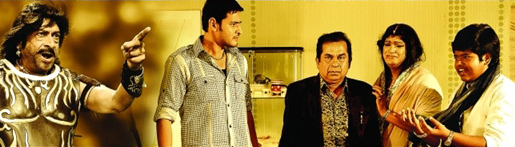
Ajay does a deal with Brahmi who’s taken over their house and in the process convinces him that he’s taking part in a reality TV show which forms a large part of the comedy in the film. Ajay pretends to be a politician and keeps his life as a policeman secret from his father, while all the time plotting revenge on his fathers attackers. It’s no wonder Ajay is always on a short fuse – he must be exhausted from all the pretending. And the killing.

Ajay finds out through another investigation that mafia boss Nayak (Sonu Sood) was involved in the assault on Shankar. It looks at first as if Sonu is about to reprise his role in Ek Niranjan as the stylish and psychotic villain, but sadly his wardrobe fails to deliver. Despite the nice cravats and the random and occasional application of grey to his hair and moustache, Nayak is a subdued and fully clothed villain who just loves his little brother a bit too much.  We enjoyed the Sheila ki Jawani dance break and we think Sonu did too, but it was shortlived. Most of the posturing is left to his faithful sidekicks played by Ajay and Subbaraju. That’s fine with us since they’re both Cinema Chaat favourites and we did enjoy watching the satin shirted Subbaraju try to mime to his boss that Mahesh was really an undercover policeman. Oh for a pen when you need one…

Along the way, Ajay takes his gang of trusty colleagues to Turkey, apparently just so he can say ‘Operation Istanbul’ as there is no other discernible reason for the location. He meets Prashanthi (Samantha), a fashion designer and, unknown to him, daughter of his clownish boss (Nasser). While Ajay and Prashanthi have the usual confusions before falling in love there is no substance to Samantha’s role and she’s soon side lined. There is little chemistry between Samantha and Mahesh, maybe because they spend hardly any time together on screen. Samantha looks beautiful, and wears whatever the costume department have dreamed up. That seems to be her sole purpose in the film as she doesn’t actually do anything.

There was more comedy with M S Narayana and one very funny skit where he took off a number of films including Magadheera and Robot. A little comedy can go a long way, but here it was integrated into the main story and with Mahesh adding to the comedy dialogue there were parts that were very funny, even to us non-Telugu speakers. The rest of the audience were roaring with laughter throughout the speeches. Master Bharath put in an appearance too. Was he necessary? Probably not. And yes there were some unfortunate stereotypes masquerading as comedy, but for the most it was entertaining.

The supporting cast was very strong, if largely underutilised. Shafi, Tanikella Bharani and Sudha had little to do, and Satya Krishnan was given maybe one line of dialogue. It’s a big budget film when you can hire some of the best and then not do anything with them!

The action sequences are excellent, and it’s hard to go wrong with a good impaling. Sreenu Vaitla has come up with several ways of illustrating the ‘eye for an eye’ concept, all of them extremely gory. The camera work and special effects were great and added impact on top of the already impressive stunts. We enjoyed the flashes of lightning when Ajay was beating Nayak to a pulp, and the changes of tempo in the film speed that underpinned the dramatic tension.

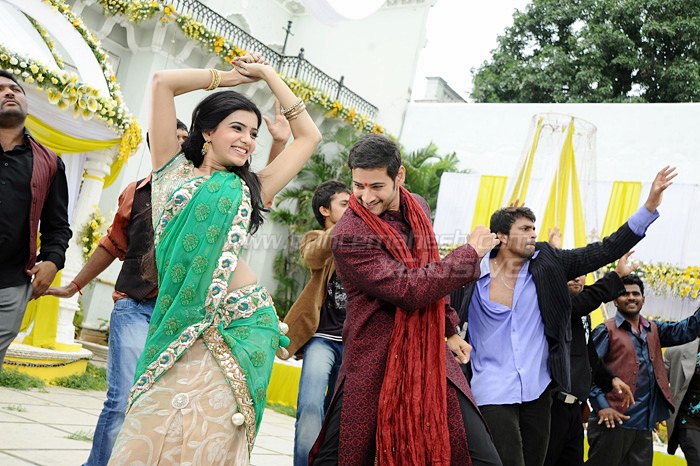
The song picturisations were less successful, and the songs by S.S Thaman are not so memorable on their own. Mahesh can dance reasonably well so it was disappointing not to see more use being made of his skills, and we wondered who decided it was a good idea to give him Abhishek Bachchan’s choreography. Chulbuli Chulbuli was spectacular with plenty of feathers and some enthusiastic backing dancers, although clearly ‘inspired’ by Kilimanjaro. The nightclub song lacked a good item girl but made very good use of the male backing dancers, grinning madly in satin pants and ruffles,  and had a giant guitar shaped light-up floor so that was pleasing. We must also congratulate the set designer for the impressive selection of chandeliers and lamps, especially the chandelier in the hospital ward.

Dookudu has a charismatic hero in a strong if silly storyline, and it is a technically excellent film in the mass entertainment style. It might not be the greatest film ever made, but it was  really fun to watch, especially with the awesome Melbourne audience.

Aa Naluguru

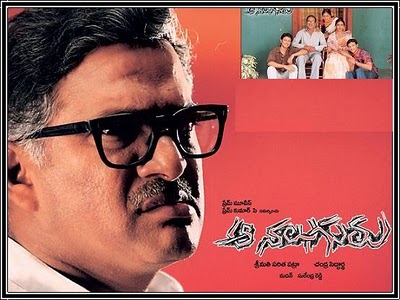
Aa Naluguru is a quirky little film about the rather unbelievably good Raghu Ramaiah and his rather unbelievably bad family. According to my subtitles, the four people of the title are those four people in your life that you must look after so that they will be inclined to carry your coffin after you die – quite a sensible idea really. However as the film unfolds it seems that it may also refer to the four members of Raghu Ramaiah’s family who make his life so difficult, or maybe even to his four friends and co-workers who also have a large influence on him. The film is a little slow to start and perhaps overly moralistic, but succeeds for me mainly due to fantastic performances by Rajendra Prasad and Kota Srinivasa Rao.

Raghu Ramaiah is an editor who is a great philanthropist, giving half of his earnings to his wife and children and the other half to the poor.  He is very idealistic and believes that nothing is as important as love and compassion which means that he is constantly fighting against the corruption, greed and intolerance he sees every day in his community. His best friend Subrahmanyam (Subhalekha Sudhakar) has no such problems. He pays bribes and seems content to ignore the injustices he sees around him. Raghu Ramaiah’s other friend is the miserly money-lender Kotaiah who is happy to tell everyone that his only interest is money, and is a man so mean that he rations absolutely everything at home.

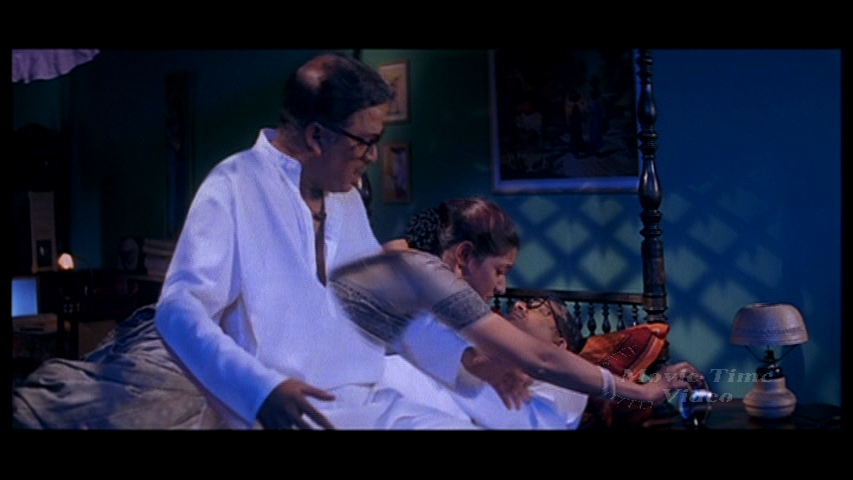
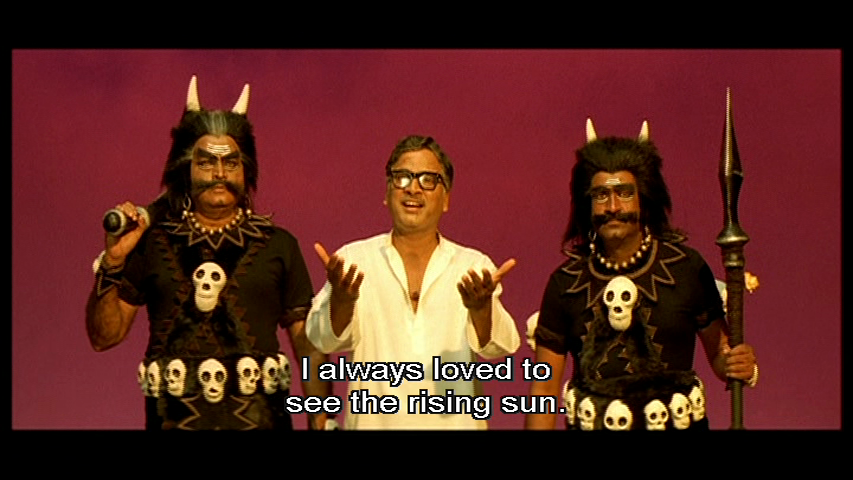
We meet Raghu Ramaiah at the end of his life, when two demons pop up in his bedroom to take his soul to hell.  This was just a little unexpected – firstly because I hadn’t expected a mythological aspect to the story but secondly why take his soul to hell when he had led such an exemplary life – or then again had he? Raghu Ramaiah turns out to be a little vain at any rate as he wants to be able to watch the mourners at his funeral. He successfully pleads with the demons to be able to stay longer on Earth, but this turns out to be a mistake since no-one seems to mourn him at all. As the demons ridicule him for this lack of affection from his family and friends he shows them scenes from the last few months of his life which explain the reaction to his death.

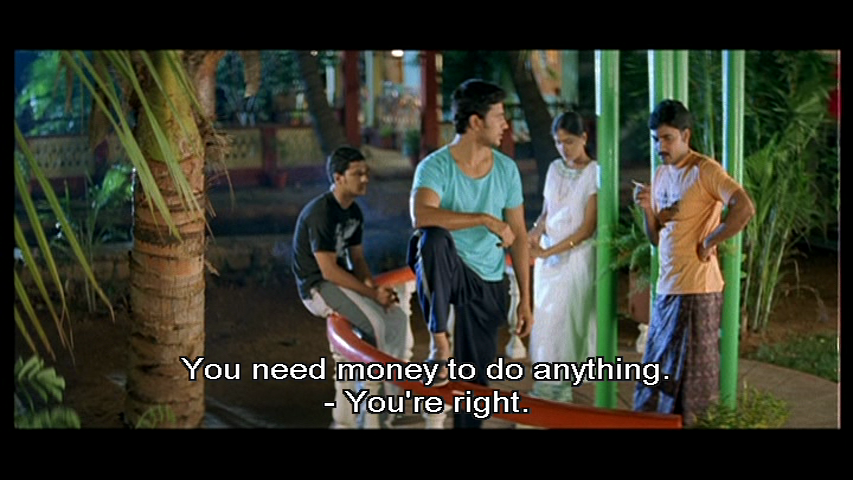
His children are all only concerned with money as they think this is what they need to achieve their selfish wants and desires. The eldest son Shekar (Raja) wants to become an SI in the police, but although he has passed all the necessary exams he finds that he can only get the job by paying a bribe.  Chinna, the younger son, wants to bribe a University to accept him into an Engineering course since he hasn’t got good enough grades to be accepted on his own merits.  Indra and her husband want to leave and start a new life overseas as he has no job, and doesn’t seem to be particularly worried about getting one.

They all keep pressing their father for money while he insists that they should be able to get by on their own merits, and in particular not pay bribes just because everyone else does.  However Raghu Ramaiah’s ideals are not accepted by his family and finally his son-in-law decides to capitalise on his father in law’s good name and start a finance company to cheat people.  This is the last straw, and Raghu Ramaiah finally breaks down at this threat to his reputation.  He borrows money from his friends and uses this to pay his children what they feel they are owed. After he dies, his sons and his son-in-law run away to avoid having to pay back the money their father has borrowed.

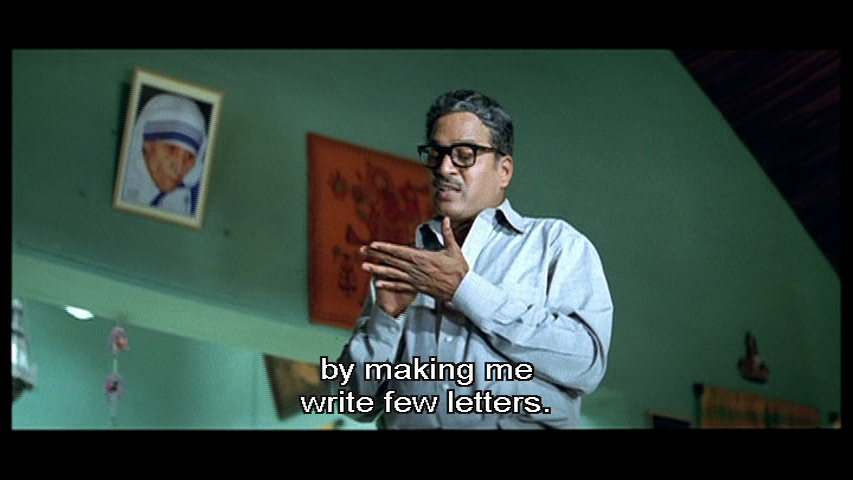
Note the prominent placement of Mother Theresa’s picture seen here over Raghu Ramaiah’s shoulder.

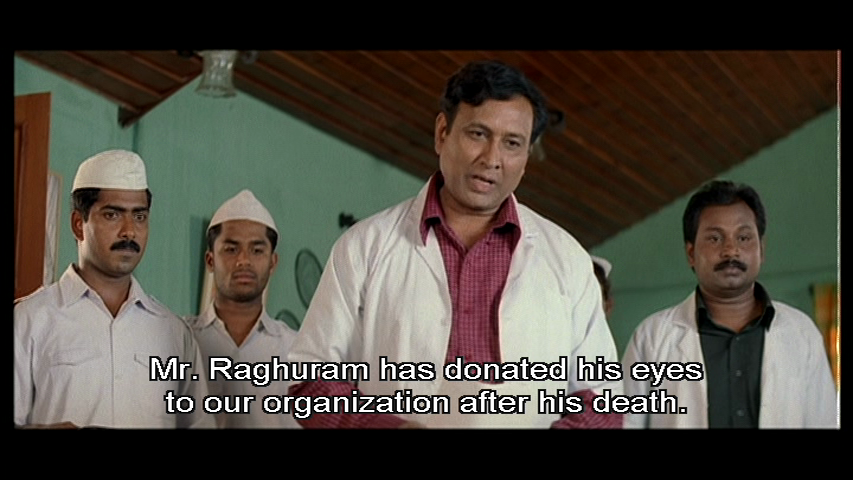
There is a great moment when medics come to collect Raghu Ramaiah’s eyes which he has donated, although this also brings to light the true circumstances of his death. But a story that involves eye donation is always a plus for me.

The rest of the film deals with the funeral and I have to say that no matter how many times I watch this film, the final scenes always make me cry. The simple outpouring of emotion at the funeral is very well done, and the grief in the loss of a man seen as a great humanitarian is very heartfelt.

There are a few problems with the story, written by Madan and the director Chandra Sidhartha. Raghu Ramaiah seems to be a very idealistic representation of a compassionate man and the story initially is very simplistic and moves slowly. It’s understandable that his family is frustrated with his overly charitable nature, although their demands for money and general lack of respect also seem unrealistic. Perhaps the director found this necessary to get his point across, but I think the same points could have been made more subtly. I don’t believe that anyone could be so overly benevolent to the detriment of their own family or adhere so rigidly to such morals. However while these flaws could have made Raghu Ramaiah very one-dimensional, Rajendra Prasad rounds out his character with a really fantastic performance. The interactions with his family are very well portrayed with a mixture of frustration, love and anger giving a more naturally human feel to the character despite the rather stilted language. Of course that could be the fault of the subtitles. Still, without the presence of Rajendra Prasad I don’t feel that this film would have had the same impact at all. Kota Srinivasa Rao is excellent as the miserly Kotaiah and the interaction between these two characters is the best part of the film. Aamani was good in her portrayal of the wife stuck in the middle, trying to keep everyone happy and failing, and it was interesting to see Raja in a more negative role.

While there aren’t very many songs in this film, the slow and sad version of the title song is used frequently as a background theme. But this fast version at Indra’s wedding does have some dancing at least.

Despite the problems I have with the story and the somewhat idealistic characterisations, the performances more than make up for these shortcomings for me. This is a film I’ve watched a number of times and still love the ending.  A film made by the performances and emotional final scenes and as such gets 3 1/2 stars from me.

Temple says:

I hate this film. I can’t decide if it is an amateurish attempt or a deliberately manipulative effort that insults the intelligence of the audience. I do need to discuss the plot as it is the supposed ‘twist’ that particularly annoys me, along with some poor writing.

I will leave a gap.

.

.

Now if you want to avoid the spoiler, keep scrolling until you see the next puppy.

Raghu Ramaiah committed suicide. He did this with no real sense of crisis apart from his customary self pity, and just after borrowing loads of money from various friends and associates. His death effectively dropped his family and friends in a hole as the loans were a bit shady and his wife had no means of repaying them. The grown up children were presented as selfish caricatures, constantly shocked by their father’s decisions (they were also slow learners – I mean, he NEVER didn’t put charity first). Surely he wouldn’t have expected them to look after his widow properly. He abandoned his philosophy and his vows to his wife in what was portrayed as a fit of pique. Now, this is a shocking action for a holier-than-thou too-good-to-be-true philanthropist so I was expecting some unfolding of his character or past that would illuminate his choice. None was forthcoming. He sat on his cloud, hoping to see how much he was missed and trying to hide the truth from his demon companions. This vanity and selfishness might also have made for interesting character development but was brushed aside. Chandra Sidhartha decided to make this man a role model and have everyone awash with tears at his funeral. So is the take out from this, kill yourself if people disagree with you and then they’ll all be sorry? None of it held together for me as there was insufficient motivation for him to drink poison and no satisfactory exploration of the repercussions, followed by a glorification of a very flawed and slightly unpleasant character. The sickly sentimental ‘boo-hoo we’re not worthy of such a great man’ ending was infuriating.

.

.

.

OK so now I have that rant out of my system. Rajendra Prasad did give a good performance. I was really hoping that a movie featuring the actors who are usually in supporting roles would be good as it is lovely to see them take the spotlight for a change. The scenes between Rajendra Prasad and Kota Srinivasa Rao are effective, and Rohit and Aamani were good in their supporting roles. I give this 1 star, only because some of the actors tried really hard.