7 Aum Arivu

After reading all about the buzz with 7 Aum Arivu, this was the film I was most looking forward to watch this Diwali. Especially since we had the promise of English subtitles for the first time for a Tamil film in a mainstream cinema release here in Melbourne. However there was so much hype in the build-up to its release that it was almost inevitable that it would fail to meet my high expectations. Despite an interesting concept and a generally good cast, the film pacing is slow with too many gaping plot holes to be anything more than just an OK watch. But there are some good points along the way and finally seeing a Tamil film in the cinema (with subtitles) is a definite plus. This is the first time I’ve seen Surya on the big screen and he certainly makes a good impression. The action scenes are well shot and I’m always happy to see a heroine who is capable of more than hand wringing, sobbing and looking helpless. I just wish they had spent more time on the actual plot and less on the set-up which takes up most of the film.

The film starts with an almost documentary style depiction of the life of Bodhidharma – the 5th century Tamilian monk who reputedly was the founder of the Shaolin temple in China. The documentary feel comes mainly from the interview style used and the lecturing voice-over as 150 years is neatly compressed into 20 minutes. The entire story is treated as factual although a quick internet search shows there appear to be a number of different versions around and no clear agreement on Bodhidharma’s lineage. But that really doesn’t matter here as the point is to illustrate Dharma’s expertise in war craft, medicine and hypnotic techniques, which these opening scenes do very well. Surya is perfect as the Pallava prince who journeys to China to become the ‘blue-eyed barbarian’. Yes, I did notice the blue contact lenses. Much is also made of the fact that people in China know exactly who Bodhidharma was while the Indians interviewed had never heard of him. This lack of knowledge of Tamilian heritage and history by people in India is pointed out a few times throughout the film and does become a tad wearing after a while.

Once the story of Bodhidharma has been established, we are transported back to the present day where an assassin has, rather improbably, been sent from the Chinese government to deal with a troublesome scientist and to initiate something called Project Red. The assassin Dong Lee (Johnny Tri Nguyen) is the top student of Kung Fu from the Shaolin temple and apparently an expert in all forms but seems to prefer the use of hypnosis where possible.

The scientist in question is Subha Srinivasan (Shruti Hassan), a researcher in the field of genetics whose work involves manipulating genes to resurrect DNA encoded attributes such as the fighting techniques and medical prowess displayed by Damo. Subha has tracked down the descendent of Damo who is most likely to be suitable for a little gene manipulation and he just happens to be the circus performer and general layabout Aravind (Surya). While Aravind thinks he has managed to trick Subha into meeting him to further their relationship, in fact she has been stalking him for over a year and has a scary collection of his discards including a tooth brush to show for it. It makes a change for the hero to be the victim of some determined stalking and I liked this deviation from the norm. Strangely Aravind is not as upset by the stalking as he is by the realisation that Subha doesn’t love him but just wants to get at his genes. Although from my SI filmi education so far I thought that stalking was supposed to prove true love but maybe I’ve just got it all wrong?
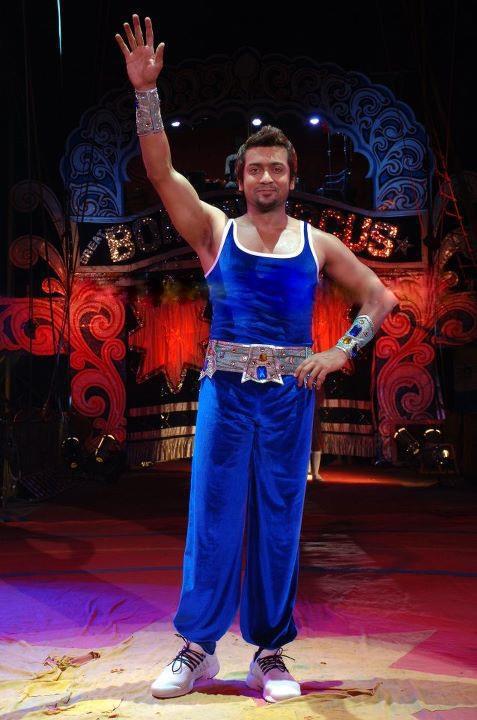
Not only has Subha been collecting Aravind’s DNA, but has compounded her dishonesty by stealing  a book from the local museum to further her research. It’s no surprise then to discover that her project doesn’t get past the local ethics committee although their reasons for rejecting her are more based on her youth and lack of kow-towing to their authority rather than her actual unethical approach to research. I found a lot of the science very funny since I do actually work as a medical researcher, often alongside geneticists, so have more than a passing knowledge about the subject. So while a lot of the science is very dodgy and eventually becomes implausible, it does have some basis in fact and it’s a relief not to have too much dumbing down of the subject matter. However the most unrealistic part of the film for me is Shuba’s apparently unlimited source of funds for her research – now that really was unbelievable!

Having learnt that Subha was only interested in him as a human lab rat, Aravind is devastated and mopes around theatrically (well he is a circus performer) until he finds out about the threat from Project Red. Dong Lee is also trying to assassinate Subha and decides Aravind needs to be removed too in order to guarantee the success of his mission. In between saving Subha and trying to save the world, Aravind barely has time for Subha to genetically transform him into Bodhidharma.

The first section of the film detailing Bodhidharma’s exploits in China is definitely the best part of the film. There is very little dialogue and Surya makes the most of his very expressive eyes to convey the various trials Bodhidharma has to undergo. While copious amounts of research appear to have gone into the making of the film, in this section it has paid off and it makes for a strong opening. Sadly though this isn’t maintained. The story has a lot of potential as it mixes science fiction with a disaster movie theme and a dash of Indian masala romance but it doesn’t quite gel. The plot rambles over the first half and it takes far too long to find out exactly what Project Red is and why Subha is a threat to the Chinese. The romance doesn’t work very well as a plot point and there is very little chemistry between the two leads. However I think this is intentional as Subha tries to keep her distance from someone she essentially sees as a walking experiment but there was a lot of time spent developing this non-relationship which slowed the story. There also doesn’t seem to have been any need to make Aravind a circus performer other than to make Surya learn a few new tricks since the whole circus background is totally abandoned in the second half.

Shruti Hassan is fine as the researcher and committed geneticist. She has plenty of passion and is able to convey the obsession necessary for Subha’s research although this does make her lack of enthusiasm in her romance with Aravind more obvious. She is particularly good in the confrontation scenes – those with the research committee and also with Dong Lee. Her character is strong, decisive and capable all of which she handles with ease.

Johnny Tri Ngyugen has excellent presence as the villain and exudes chilly menace. However there is a little too much reliance on his super hypnosis and not enough good old fashioned kick-ass kung fu for my liking , and this  slows down the action sequences. In one scene, where he hypnotises a large number of innocent bystanders and sends them after Aravind and Subha like destructo-robots, he keeps attacking for much longer than any respectable villain should allow before realising that the technique isn’t working and a change of tactics is in order. Perhaps it’s my over exposure to Southern Indian cinema but Peter Hein is an excellent action choreographer and I wanted to see more actual fighting between Dong Lee and Aravind. The few fights they had were worth waiting for though and I did enjoy the final sequence despite the overtones of Crouching Tiger, Hidden Dragon.

The soundtrack by Harris Jayaraj is great and I do love the songs, but while they are generally well pictured they don’t fit easily into the narrative and only serve to further disrupt the story. The exception to this is the first song ‘ Oh Ringa Ring’ which is fun and a good introduction to the character of Aravind. The songs are however the only time Aravind and Subha have any chemistry together so perhaps that’s one reason for leaving them in.

The screenplay by director A. R. Murugadoss is the main problem with 7 Aum Arivu as the film takes so long to get going once it moves to the modern era, and then is full of plot holes and unlikely scenarios. The last few minutes are dedicated to moralising about history and having pride and belief in your ancestry referring back to the lack of knowledge in India about the life of Bodhidharma. It seems very ‘Hollywood’, which seems to feel the need to deliver a sermon along with a happy ending, and didn’t seem to fit into a film which ends up being more masala than perhaps is intended. It’s still worth watching for the opening scenes and good performances from the leads, but just don’t expect too much from the actual story.
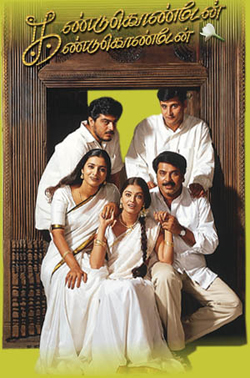
Kandukondain Kandukondain

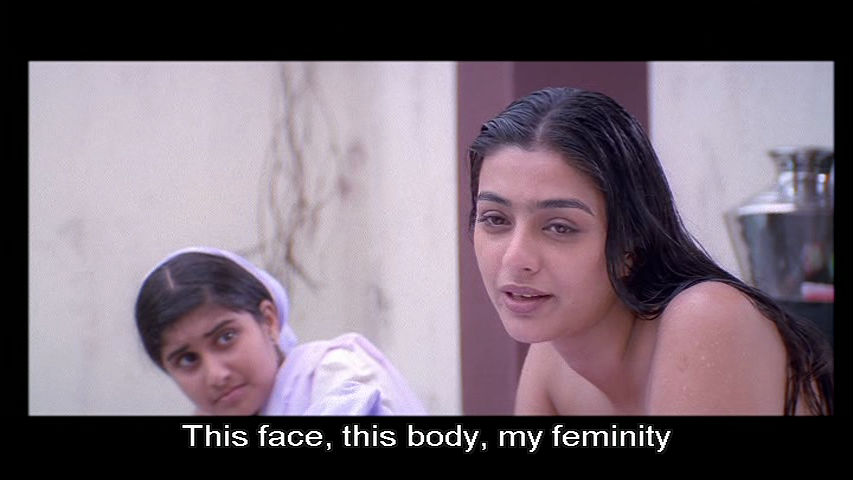
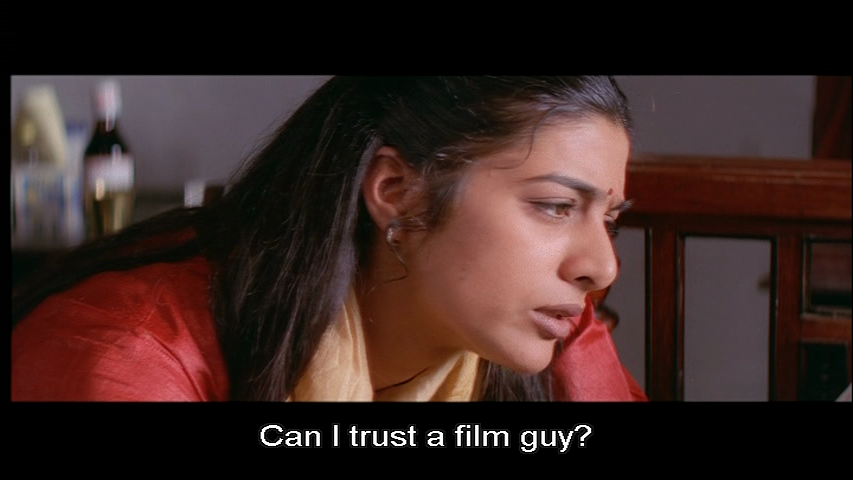
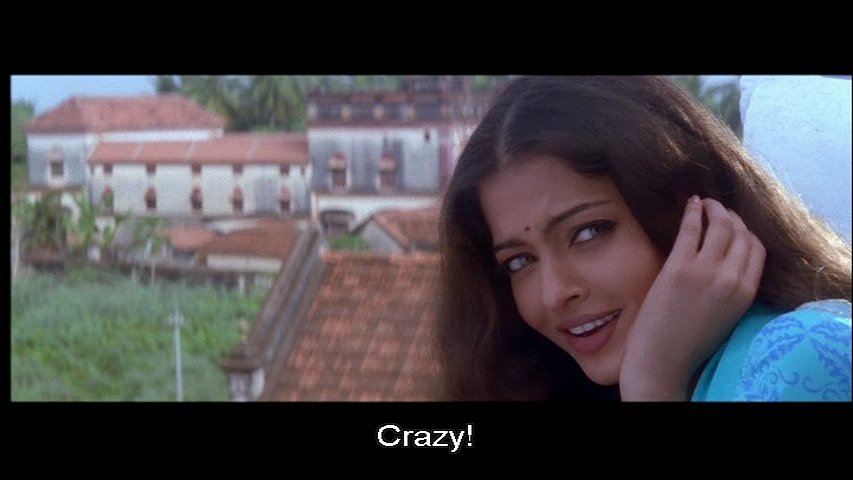
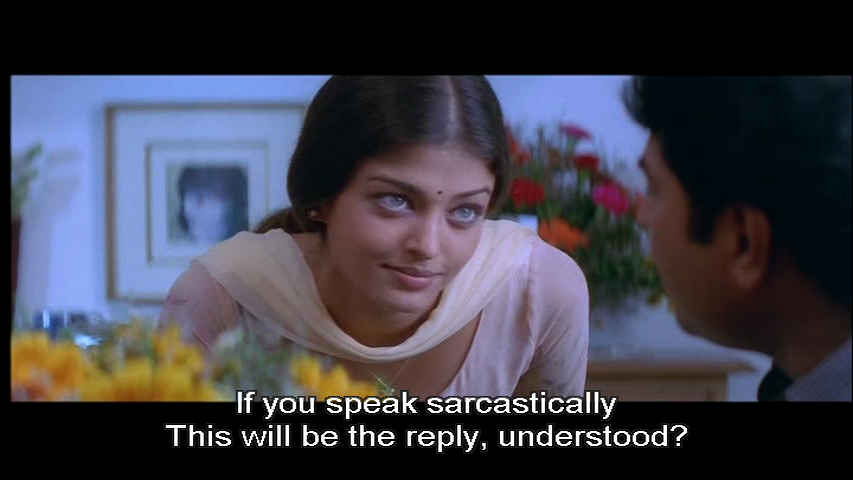
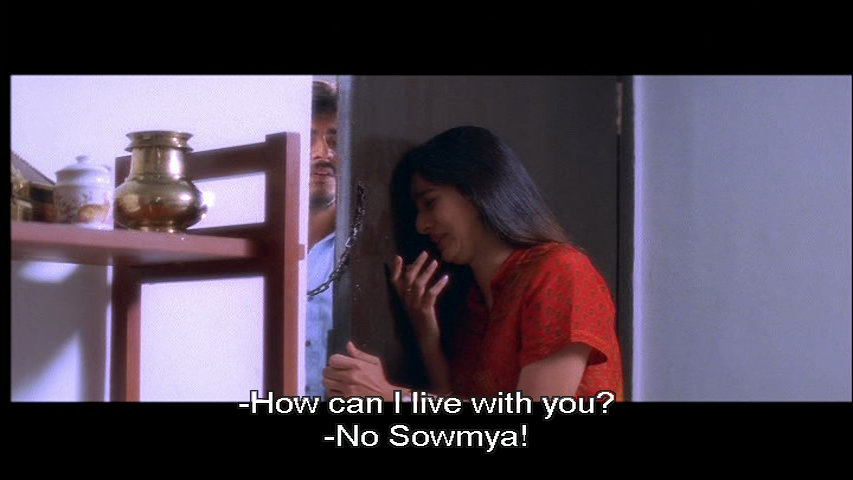
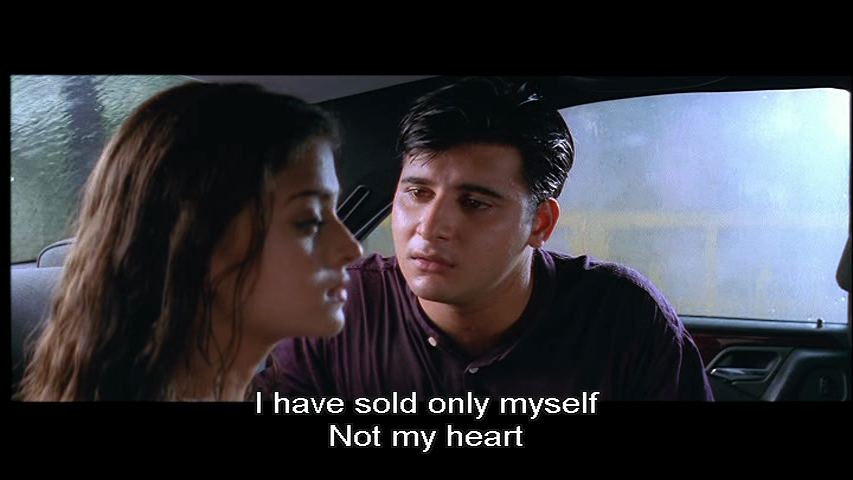
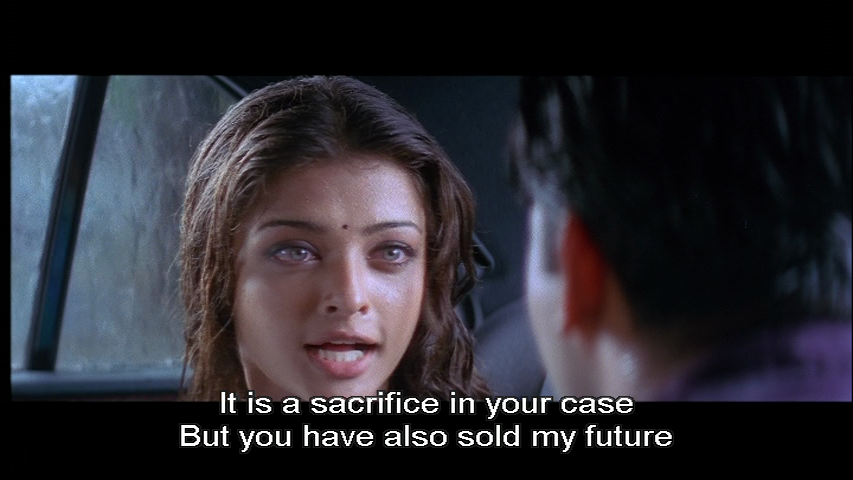
Kandukondain Kandukondain is an adaptation of Jane Austen’s Sense and Sensibility and one of the first Tamil films I saw. It’s still one of my favourites, largely due to the good performances and the strong screenplay. Tabu and Aishwarya Rai play the sisters – sensible, thoughtful Sowmya, and the mercurial Meenakshi. Rajiv Menon retains some of the novel’s ambiguity about whose way is ultimately better, and he and dialogue writer Sujatha focus on the characters and how they develop.

The heroines’ characters required little adaptation. Regency heroines and filmi ones tend to spend a lot of time waiting for the right man or angling for a suitable husband so it probably wasn’t much of a challenge. The suitably ladylike occupations of music and teaching are retained which happily allows for more songs than one might expect from Jane Austen. The female characters in the film are memorable, distinct and very appealing. And I do like the image of big burly film directors reading Austen or Georgette Heyer for their inspiration!

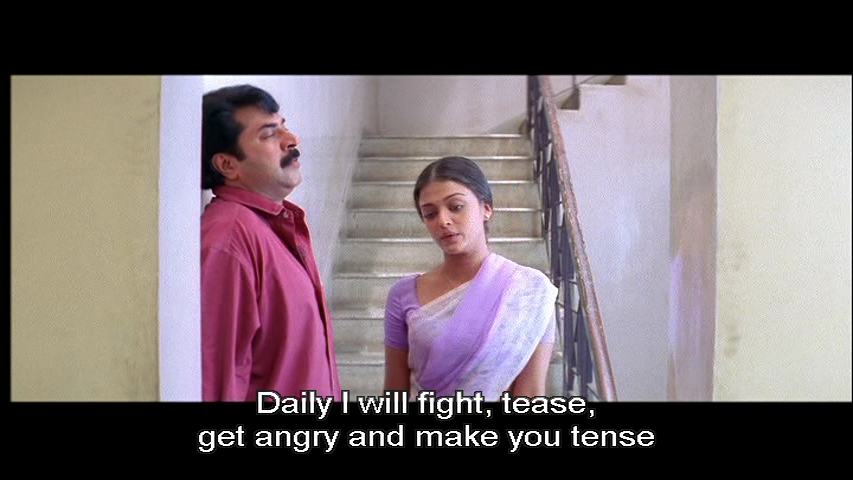
Tabu has a lovely gravity that makes Sowmya very sympathetic. There are small things that make her seem so real – in scenes talking to her ailing grandfather Tabu’s face was sweet and serene, but the sudden slight tension in her throat gave away her real feelings. Tabu’s performance was wonderful, and I totally believed it when Sowmya decided to open her heart to a persistent suitor only to find that she may have been mistaken.

True Love rarely runs smoothly and there are obstacles, real and imagined, that try Sowmya’s patience and resilience, challenging her apparent acceptance of her lot in life. Her confusion and disappointment over Manohar was palpable.

Sowmya thinks that her bad luck has relegated her to a life of service and domesticity in the family home. Her journey towards accepting that she has a right to her own love and happiness is one of the elements of the novel that I enjoyed. She avoids being a stereotypical Regency novel spinster – she is intelligent, personable and has a sense of fun. Sowmya also has a decent job and shows determination in pursuing a career and financial independence.

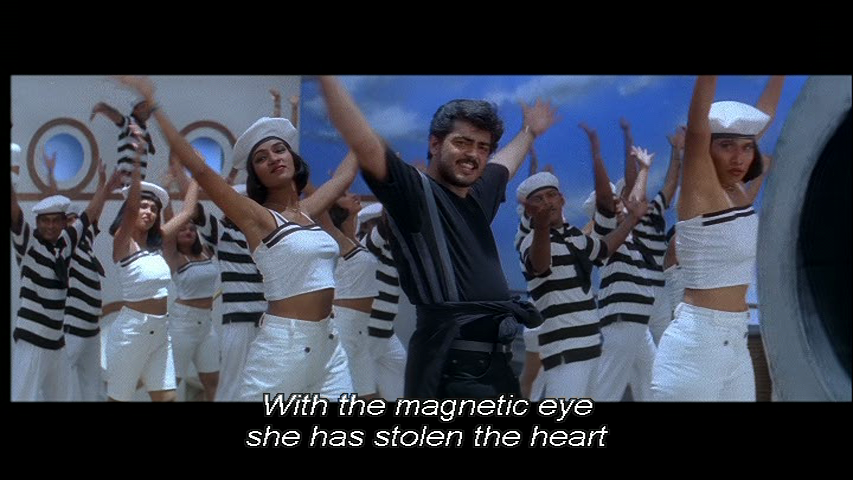
This is one of the films that made me decide Aishwarya is a capable actor but needs a director who can coach her. She has a lively spark that suited this version of Marianne Dashwood, and Meenu’s feisty streak was always in evidence. The opening song shows off Meenakshi’s extrovert nature, features some excellent dancers and lets Aish show off her animal impressions including a valiant attempt at tiger face.

Aish and Tabu had great rapport and details like the way they leaned in to speak to each other, or would catch each others hand as they talked were really charming. But Meenakshi wasn’t all sweetness.

When she was angry she let fly, and Aish was excellent in those high energy dramatic scenes. Meenu confronted her mother over a family secret, and threw Bala’s love back in his face with no compunction. But she wasn’t malicious so much as impulsive and emotional, and I think the script and the performance combined to show this clearly.

Meenu grows to realise that love encompasses respect and friendship, not just passionate attraction to a dream hero. She doesn’t exactly become her sensible sister but she decides what she needs from her life partner and chooses to look beyond the obvious. When Srikanth makes an offer he thinks she won’t refuse, things become crystal clear to Meenu. She sets about getting her way with all the vigour she had previously put into avoiding Bala.

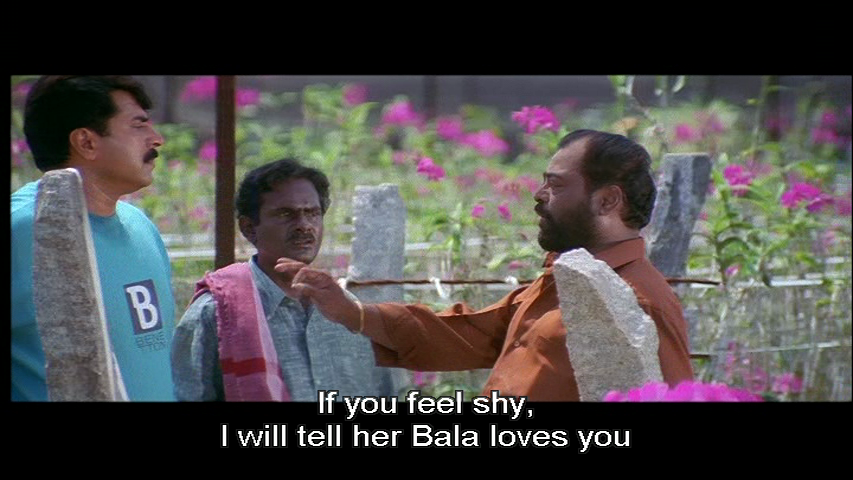
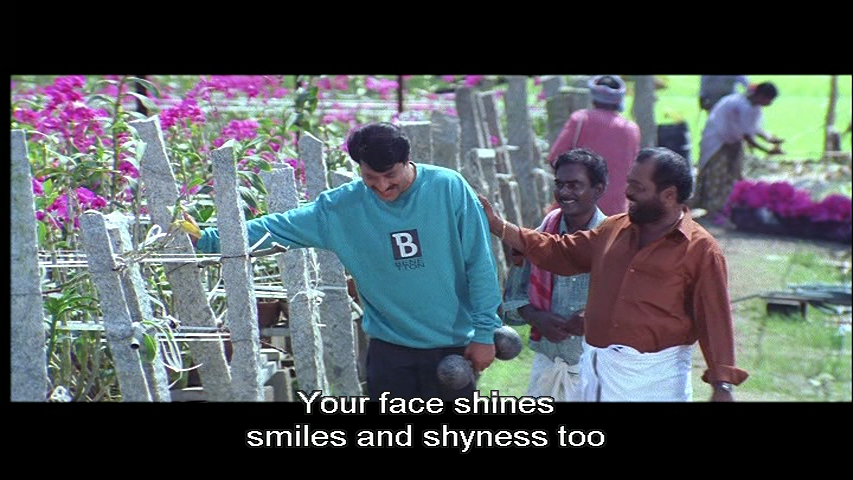
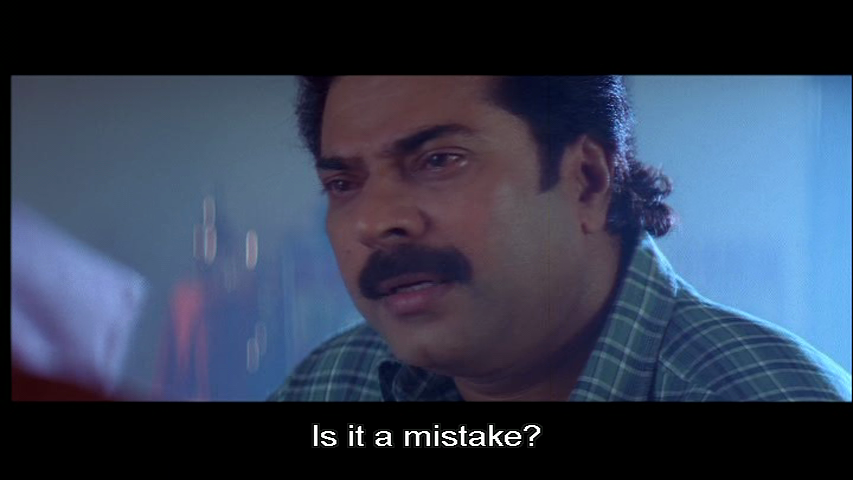
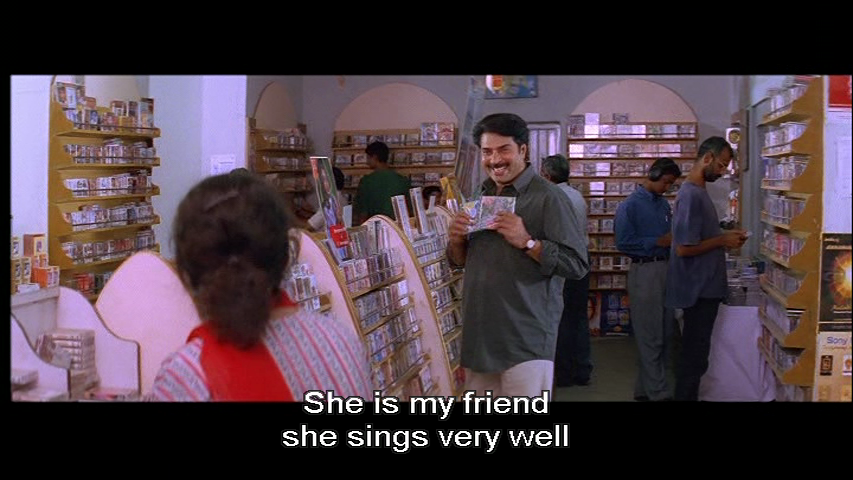
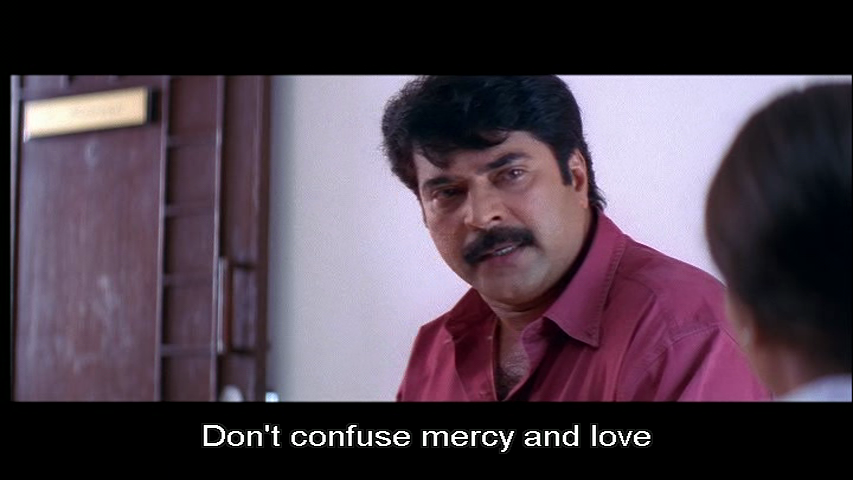
Mammootty is excellent as the embittered drunk with a loosely fitted prosthetic leg, Bala (based on Colonel Brandon). Living with his war injuries and a sense of disillusionment he seems intent on pissing his life away. He is drawn to Meenakshi’s beauty but I think it is her fiery temper and cheeky disrespect that really captures him. Mammootty transforms from angry man to shy boy and then seems to regain his love of life and enjoyment of people, resuming a full and happy life with no booze and less anger.

Unlike Colonel Brandon, he has loyal sidekick Sivagnanam (the excellent Manivannan) to provide strategic advice and moral support. The ‘talk to the hand’ scene was sweet and very funny. Bala had the maturity and patience to deal with Meenu, and the intelligence to realise that she would come round or not but he couldn’t force it.

He helps the family from decency, not to buy Meenu’s favour. His thoughtfulness and generosity made Bala a hero. And of course he does save her life.

When it looks like Bala might see his dreams come true, Mammootty shows the underlying vulnerability gradually give way to joy. It’s such a well judged performance and he supports Aish beautifully.

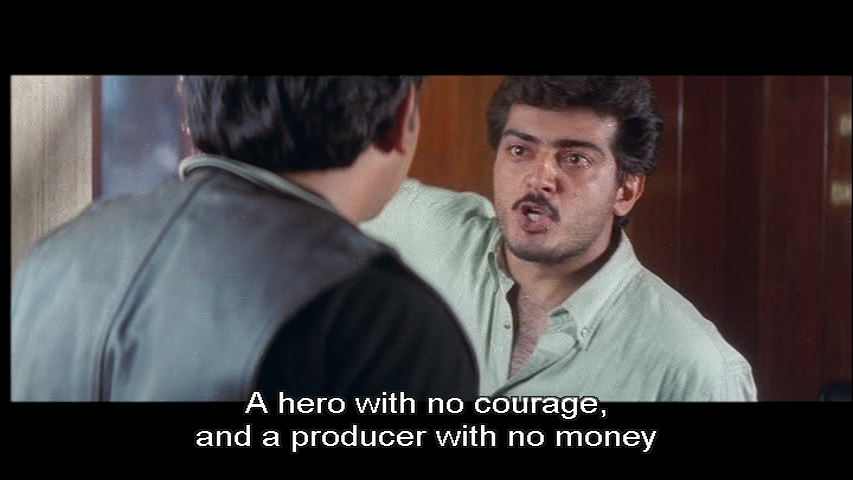
Ajith is hampered by the least successful storyline. In the novel Edward Ferrars is gentry with strong principles and a secret engagement he is unable to break, torn by his love for Elinor and his duty. Making Manohar an ambitious film director didn’t carry the same limitations and so he came across as more selfish and whiny than noble.

Manohar made the decision to leave Sowmya until he had made his first film. There was no need to make such a choice and it was silly. I struggled to see him as the right man for smart sensible Sowmya. The supposed ‘other woman’, the top actress and action hero Nandini Verma (Pooja Batra) was lots of fun but again her occupation and personality didn’t match the dynamic from the novel and it fizzled. Instead of being worried about being forced to marry an unsuitable woman and lose the one he loved, Manohar often looked quite content with his situation.

Well, until the day he decided he was finally ready to claim Sowmya. Ajith was adequate in the role but the lack of credible tension in his story left me unconvinced.

Srikanth (Abbas) was perfect for the film’s Mr Willoughby. I don’t think he is at all attractive but his entrepreneurial character and silly floppy hair fit the style of the society man on the make. And talk about making an entrance…

The wet shirt scene was completely unnecessary and did him no favours in the inevitable comparison. Srikanth was self centred, self satisfied and avoided responsibility. His relationship with Meenu was based on his surface appeal and her dreamy silly notions and very pretty face.  Srikanth was devoid of substance and sense, and seemed genuinely shocked when things fell apart.

The supporting cast are all very good. Shamili as little sister Kamala, Srividya as the mother who wanted the best for her girls and Manivannan as Bala’s friend were all great. Rajiv Menon and dialogue writer Sujatha gave the support actors lots to do which helped reinforce the domestic feel. Bala’s mother (I think) is obsessed with weddings, and long suffering Sivagnanam even gets the family cats married to keep her quiet. Thankfully the comedy is centred on necessary characters and incidents.

The soundtrack is lovely but the song picturisations are a mixed bag. Some look amazing and others are like something from a high school rock eisteddfod. Some have a bit of both!

Cinematographer Ravi K Chandran made the most of the lovely rural locations, and also captured the more enclosed and subdued lighting of the city. He certainly made his leading ladies look stunning.

It’s a beautiful film, with a quality AR Rahman soundtrack and some excellent performances. And it’s one of the more successful adaptations of a novel I know well and am very fond of.  4 stars!

Heather says: I’m generally not a fan of adaptations of Jane Austin. I fell in love with her books as a child, in fact Sense and Sensibility was the first I read, and so far nothing on either the big or small screen has lived up to my expectations. Kandukondain Kandukondain is no exception, although I do think it is one of the best adaptations I have seen.  Despite that, I failed to connect with the characters and although the whole film looks beautiful and has some lovely songs in the soundtrack, it’s not a film I really enjoyed.

Kandukondain Kandukondain is shot to make the best use of scenery and to accentuate colour in the landscapes as might be expected from someone with Rajiv Menon’s background.  The indoor scenes look just as good and I like the way the colour and light of the first half gives way to duller lighting when they move to Chennai and the family have to fend for themselves. In fact this is the best part of the film for me as I enjoyed Sowmya’s search for work which felt very realistic. Meenakshi’s singing and her career problems were also well depicted and I loved the way that Mahalakshmi was also secretly working. At this point I was able to forget any Jane Austin links and the characters started to come alive. But then the film went back to the respective love stories and I lost interest  again. I didn’t feel that the original characters from the book were well adapted into modern-day romances. While I thought the lives of the sisters were modernised and well written into an Indian setting, the men, (with the exception of Major Bala) seemed to be poor copies of the Jane Austin characters and I didn’t like them at all. Ajith was fine as the film director but like Temple I had problems with his decision not to marry until he had made his first film. Or rather not so much the reluctance to marry until he was established, which did have some legitimacy, but rather the long separation without any contact which just seemed ridiculous. Abbas looked too much like Tony Hadley from Spandau Ballet for me to be able to see him without grinning. Especially when he donned a cloak in one of the songs! His character isn’t supposed to be likeable but I couldn’t even find him charming here, and Meenakshi’s devotion to him was only based on his ability to recite poetry. Again this follows the book to some extent but there is so much more to the whole romance than that and for me it wasn’t well brought out in the film. Aishwarya was absolutely stunning as Meenakshi, but I thought there was too much beauty and not enough depth in her portrayal. However I think this is more the fault of the character she played rather than a problem with her performance, which was actually quite natural and one of her best. Despite the changes in the story, I wasn’t able to forget that Meenakshi was basically Marianne from the book and in that context she wasn’t my mental view of that character. Although Sowmya was a more individual character and I thought that Tabu gave a good performance, I couldn’t connect with her at all. By the end I really didn’t care if she managed to get married or not despite having originally felt some sympathy for her. I wanted her to get on with her life on her own terms and not be so reliant on a rather weak man. But then, that’s often a problem with both film and regency romance heroines. The one character that I really enjoyed watching was Major Bala. Mammootty was fantastic and I did empathise with his situation and his attempts to win Meenakshi. His performance was the definite stand out and his interactions with his friend Sivagnanam were some of my favourite moments in the film.

There is nothing really wrong with Kandukondain Kandukondain and I’m sure I would have enjoyed it more if I’d been able to just forget about Sense and Sensibility. But I would much rather read the original book again rather than watch the film.   It still gets 3 stars from me but they are nearly all for Mammootty and a beautiful soundtrack.


Naan Mahaan Alla

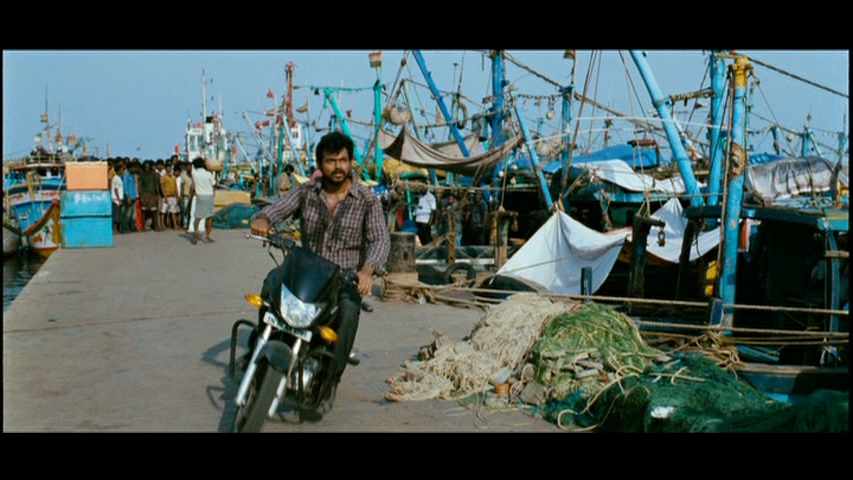
Naan Mahaan Alla is the fourth film release for Karthik Sivakumar (aka Karthi) and the second for writer director Susindran. The film starts off as a romance but ends up as more of a crime thriller, with Karthi’s character the main connecting factor.  As such, it’s very much a film of two halves and I find it disjointed as a result. However there are some good moments as Karthi puts in a strong performance and Kajal is entertaining while she is around.  I like that the film is set and filmed in downtown Chennai, as it means there are locations that I recognise from my trips to the city. It makes parts of the film feel more realistic, and considering it’s supposed to be based on a true incident is probably  Susindran’s intention.

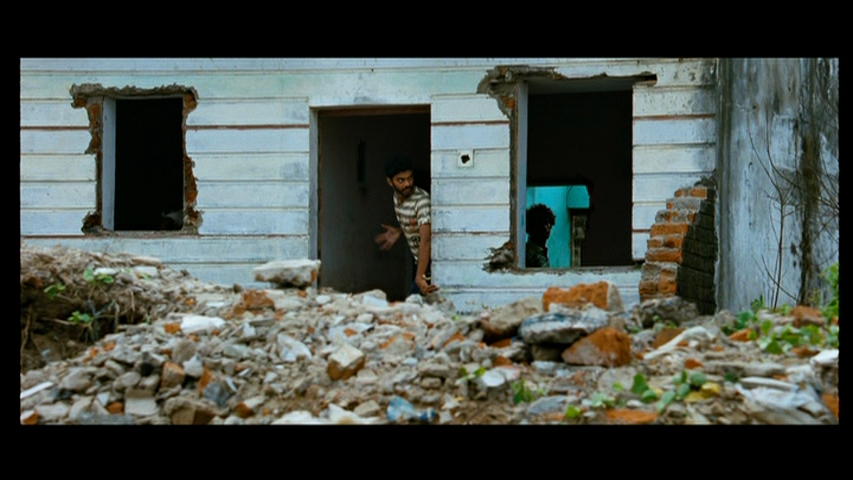
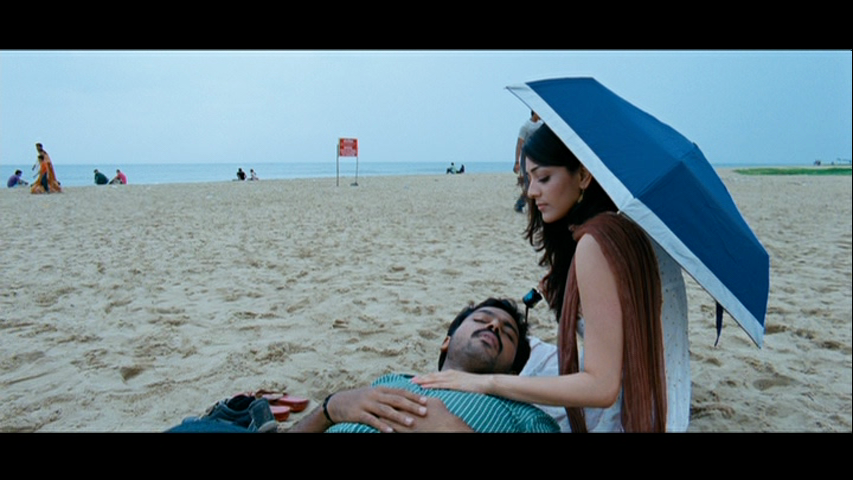
It starts with an attack and implied gang rape of a girl by a group of pot-smoking, drunken college students who seem to routinely indulge in these vices. The attack occurs by the beach and the use of buildings apparently damaged by the tsunami for this adds to the bleakness and harshness of the scene .

Up to this point it looks as if the film will be a gritty crime drama, but after this short but brutal introduction, the film switches gears completely and concentrates on the romance between Jeeva (Karthi) and Priya (Kajal Agarawal).  The two meet at the wedding of a mutual friend and Jeeva is immediately enamoured with Priya.

Priya is  intrigued by Jeeva’s practical and down to earth manner and the two quickly progress to a relationship. There are complications though. Priya’s father is a lawyer and isn’t impressed by his potential future son in law, despite agreeing that if Jeeva gets a job he will reconsider their possible marriage in 6 months time.  In a rather unlikely scenario he goes so far as to call in crime boss Kutty Natesan to ‘persuade’ Jeeva to look elsewhere. This technique fails when Jeeva and Natesan end up becoming friends, which is just as unlikely but does give Jeeva a much needed ally in the second half of the film.

The romance between Jeeva and Priya is sweet and more realistically depicted than usual for a filmi love story. Kajal and Karthi have good chemistry with each other and their relationship is convincing in its simplicity. There is perhaps a little too much time spent establishing that Jeeva is a nice guy, blowing kisses at babies and buying chocolate for sick kids, but Karthi does a good job with his guy-next-door role. Kajal is lovely, looks the part and never has to dance which, along with a generally good wardrobe selection, makes her look more elegant.  I really like her here and it’s a shame that she doesn’t have more to do, although I do appreciate that Susindran didn’t just add in a heroine to make her another victim later on in the film.

Having set up the relationship between Jeeva and Priya, post interval the story switches back to the gang of youths from the opening sequence and basically ignores the romance for the rest of the film. Interestingly Susindran reportedly found a few of the actors he cast as the students when they were standing on a street in Chennai, although Vinod Kishan has played the role of a murderer before as  the young Suriya in Bala’s Nandha. Despite, or perhaps as a result of their collective lack of experience, the guys playing the murdering students really were effective in their roles as ruthless, callous killers and Susindran’s selection process seems to have worked. There is another first time actor, as the role of Natesan is played by cinematographer Arulhdass who also does a great job in front of the camera.  However despite good performances by all involved, the story starts to lose its way in the second half as there are a number of inconsistencies and gaping holes in the plot.

Jeeva’s father is a taxi driver and gets involved in a peripheral way with the gang’s abduction and murder of yet another girl and her partner.

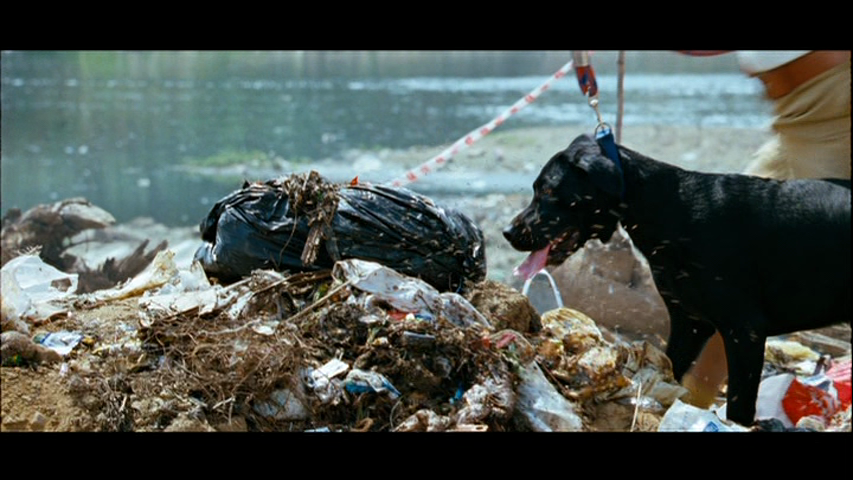
The gang dismember the bodies and throw them into the local tip in various separate bags. The guys don’t seem to be at all disturbed by chopping up two bodies, one of whom is supposedly a friend (unlike similar scenes in the 1994 film Shallow Grave which has my favourite realistic body disposal scene) and are also not concerned about betrayal by each other. Perhaps a bit more depth to the characters of the students here would have helped to make the story more convincing but as it is they appear only as disposable and interchangeable as all villains seem to be. Despite all their efforts, it’s not long before the police discover various body parts, although there is no mention of why the investigating officers decide to look so closely at the tip.  It looks as if they use a local dump to film the search and discovery scenes here and it’s so vivid with the flies and piles of rubbish that I could almost smell it.

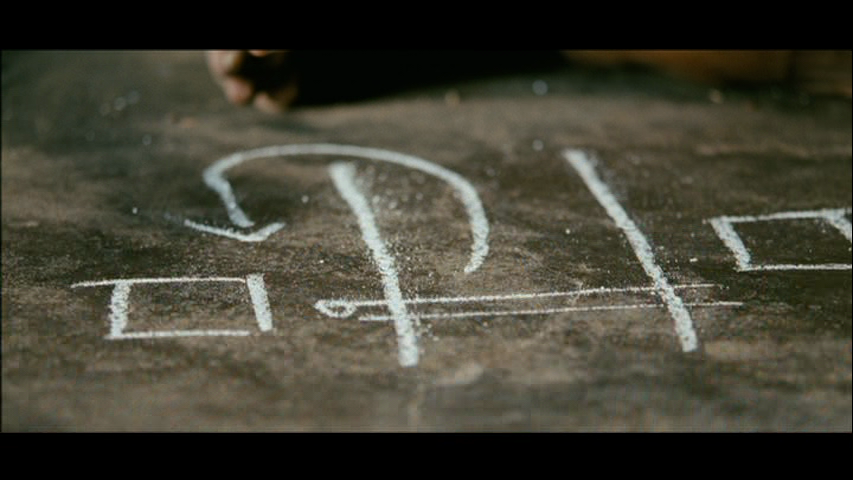
The gang decide that Jeeva’s father may be able to identify them so take the rather drastic step of organising his murder. Unlike their previous crimes, for this one they need the Dhana’s uncle, a plan drawn in chalk on the floor and a cyanide painted shard of glass.  It all seems excessive and the set up for the murder takes up a lot of the second half. The issue of Jeeva’s father recognising them seems too contrived as the gang appear more self-centred and focused on entertaining themselves rather than concerned. Besides, if Dhana just cut his hair I’m pretty sure he would be much less memorable.

The plan (which apparently could only have been thought of by one of 4 master criminals in all of Chennai), does work and a devastated Jeeva takes it on himself to discover the identity of his father’s killers. Karthi is just as good here in the action sequences as he was in the earlier romantic scenes even though he’s now in a different film and seems to be playing a changed character.

It seems as if Susindran couldn’t decide if he wanted to make an action thriller or a romance. Rather than combining the two together he splits the film into two distinct stories with very different approaches which means that neither is particularly satisfying. I think that the romance in the first half works better than the action of the second as the interactions between Jeeva, Priya, their families and friends are well depicted. Of course that could also just be because I prefer a romantic storyline, but while the action starts off well it just becomes too fanciful to maintain the suspense. It’s hard to believe that by himself Jeeva could take on a gang of youths who’ve managed to eliminate some of the top rowdy’s in Chennai, and for me his final actions don’t fit at all with the characterisation developed earlier in the film.

Despite the issues I have with the story, there are a number of good points to the film and a number of very well shot scenes. For a change there isn’t an irritating comedy track, and the performances by all the actors are consistently good. Jayaprakash as Jeeva’s father Pragasam does appear to be an older version of his son with similar views and approach to life, and the relationship between the two is well portrayed. There are only 3 songs in the film but the music by Yuvan Shankar Raja is beautiful. More would have been good, although the background score is also excellent.

The idea of trying to make a film around the crime statistics from any major city in the world to-day is a good one but the depiction of the characters and the development of their part of the plot doesn’t live up to the promise of the initial opening scenes. Susindran tries a different approach and while his picturisation of the seedier side of Chennai falters, Madhi’s cinematography does reveal a more realistic take on the city. Worth a watch at least once for Karthi and Kajal, and skip the second half if you want to avoid the violence and unlikely storyline. 3 ½ stars

Temple says: Considering all the rape and murder going on, I found this film surprisingly tedious. I think the problem was Karthi’s character or performance as to me it was more like a succession of performances than a rounded character with depth or variation. Jeeva started out a smart mouthed manipulator and charmer who could talk his way in and out of trouble, before suddenly becoming a total innocent who believed everything he was told and had none of the insight he had earlier demonstrated, then he was a breathless and gushing fan of an admitted killer, the next incarnation was a serious young man who had learned the value of money through just a small taste of having to shop and pay bills, and finally he became the invincible and implacable hero. None of these segments felt connected with the others, and I was completely disengaged from his character after a while. I’m not sure whether it was the performance or the writing that missed the mark – I think both, although I have liked Karthi in other films. The first half is all about the romance and Kajal is quite effective as the likeable but kind of stupid heroine. Priya is indecisive and eager to please so never knows or voices what she really wants – a flaw Jeeva points out several times as he also tells her what to do.  Kajal and Karthi have nice chemistry, but as Priya disappears for the second portion of the film, there is no point getting too attached to the lovey-dovey pair.

The crime and revenge plot is also patchy. The gang is initially shown as a bunch of drug fuelled opportunists under the leadership of a psycho.  Somehow despite their poor impulse control they manage to cobble together and execute a ridiculously complex plan to eliminate Jeeva’s dad.  The finale is too long, too improbable and as I couldn’t relate to Jeeva it lacked emotional intensity.

The performances are mostly fine, it’s a technically well made film, but it’s a bit hollow for me. 2 stars.