Vishwaroopam (2013)

Viswaroopam

I left Hyderabad the day Vishwaroopam opened and of course it was then banned while I was in Tamil Nadu, so I didn’t get to watch the film until its DVD release.  But it was definitely well worth the wait! Vishwaroopam is a slick and well-made spy thriller which features excellent performances from the entire cast.  The only downside comes in the last 20 minutes or so when everything is tied up a little too conveniently for my liking, and unusually for a Tamil film not everyone dies!  The last few scenes set everything up for Vishwaroopam II, and perhaps there will be some bigger fireworks and a more impressive ending for the ultimate finale.  The plot revolves around the ‘war on terror’ and in style and delivery is reminiscent of various Hollywood spy thrillers, combining overlapping story lines and interweaving time frames to ensure the film stays gripping right to (almost) the very last minute.

The film opens with Nirupama (Pooja Kumar) explaining how she has an arranged marriage with Vishwanath (Kamal Haasan), a middle aged classical dance teacher, which enabled her to come to America and obtain her PhD in nuclear oncology (this I couldn’t believe – 3 years and she’s finished already?!).  Despite her marriage, Nirupama is attracted to her boss, Deepak (Samrat Chakrabarti) so she hires a private detective to stalk her husband in the hope that the detective will uncover a reason for her to divorce.  Of course she does – this is New York after all.  Somehow in the process of chasing after this mild mannered dance teacher, the detective stumbles onto a terrorist cell, which leads to the terrorists tracking down Nirupama and her husband.

Now, I ask you, does this look like a man who can counter terrorists?

VishwaroopamVishwaroopam


Especially considering he’s just demonstrated this:

Well, you’d better believe it.  Vishwanath, or as he later reveals his real name Wisam Ahmad Kashmiri manages to take out the terrorists in a piece of action that’s so good we get to see it twice. It really is worth it though!

VishwaroopamVishwaroopam


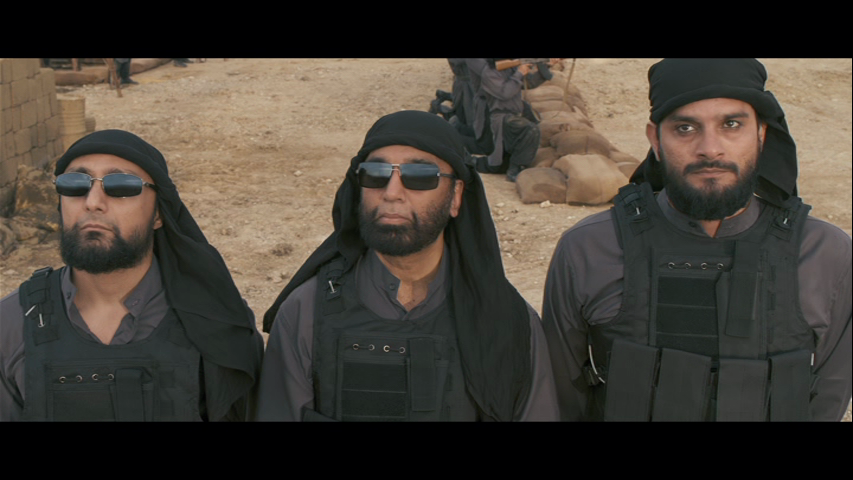
After the Kathak teacher shows us just why it doesn’t pay to mess with a dance master, the story is off and running as Wisam takes us on a flashback into his past in Afghanistan.  Here we see a completely different character since Wisam is a jihadist, living with, and training Al-Qaeda terrorists along with Omar (Rahul Bose) and his sidekick Salim (Jaideep Ahlawat).  Wisam is as different as it’s possible to be from Vishwanath and yet Kamal Haasan makes it easy for us to believe in the transition by ensuring both characters show the same amount of passion for their beliefs.

VishwaroopamVishwaroopamVishwaroopamVishwaroopam


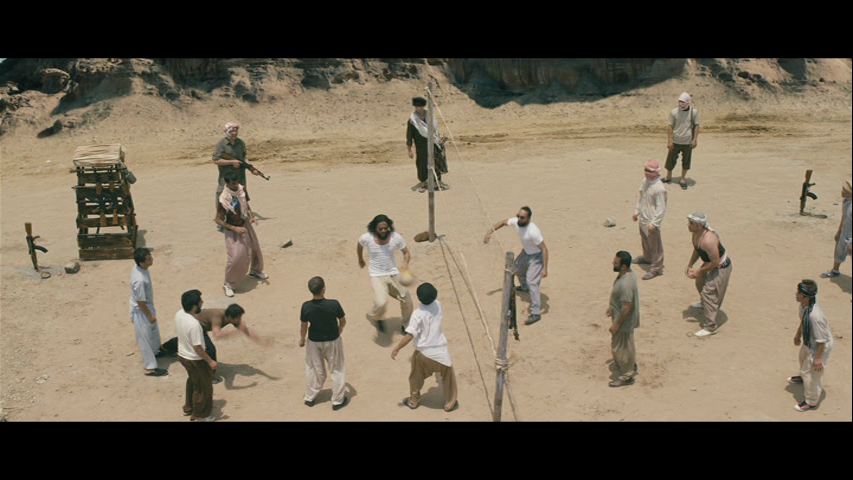
Rahul Bose is also excellent as a more fanatical jihadist and the interactions between the two men are a wonderful mixture of camaraderie and suspicion.   There is plenty of symbolism too, which is occasionally a little heavy handed as the point is made in a number of different ways that in every conflict the ones who really suffer are the children.  There are some well thought out glimpses of life in a mujahedeen training camp as the scenes move between day to day life, terrorist activity and attacks by the Allied Forces.  Writer/director Kamal Haasan doesn’t pull any punches here and the depiction of the attacks and the killing of prisoners are reasonably graphic and quite gruesome in parts.  But then again, it’s nothing we haven’t all seen on news reports over the last few years.  From that alone the film does appear to be very realistic.  Cinematographer Sanu Varughese does a fantastic job in capturing the vibe of New York along with some spectacular scenery in Afghanistan, interlaced with claustrophobic shots of the terrorists in their hideouts and caves.

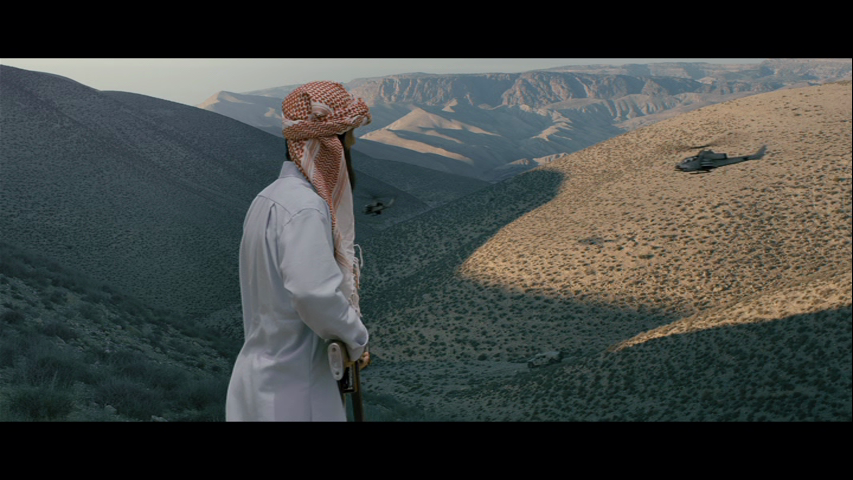
VishwaroopamVishwaroopamHelicopter AfghanistanHelicopter New York


The first half is full of action as the film moves from the training camps in Afghanistan back to the present day and Omar’s current plans to blow up a dirty bomb in New York.  Best of all for me, Omar now has a glass eye, and there are some excellent shots where it’s very obvious that both eyes aren’t looking in the same direction.  I admire that level of dedication to the character! Occasionally Rahul Bose almost topples into caricature with Omar’s limping shuffle and virtually incoherent whisper due to his physical ailments, but he still manages to keep an aura of menace in most scenes.

Glass eye Vishwaroopam


After all the bomb blasts, rocket launchers and gunfire it’s inevitable that when the action moves back to New York there has to be some explanation and investigation which slows things down a little.  However the tense momentum of the first half isn’t sustained in the much shorter second half of the film.  In addition to the slower pace, the answers seem to be found just a little too readily and the explanations are just a little too glib.  Still, these are minor points and overall the story is complex and absorbing.  It’s a spy thriller so of course no-one is quite as they seem, except perhaps poor Nirupama who is caught up in her work to the exclusion of everything else and in typical research scientist mode doesn’t see what seems to have been right under her nose all the time.  Andrea Jeremiah, Jaideep Ahlawat and Shekhar Kapur are also good in their supporting roles.

VishwaroopamVishwaroopam


As a spy thriller Vishwaroopam fulfils everything expected – there’s a convoluted story featuring plenty of twists, great action spanning fight scenes, car chases and plenty of explosions, and even a hint of romance.  The star of the show is definitely Kamal Haasan who is brilliant as his character morphs from one persona to the next, but Rahul Bose is close behind in the acting stakes, and Pooja Kumar does an excellent job with her portrayal of Nirupama.   Overall it’s an enthralling watch and bodes well for part II. 4 ½ stars.

Nayakan (1987)

Nayakan

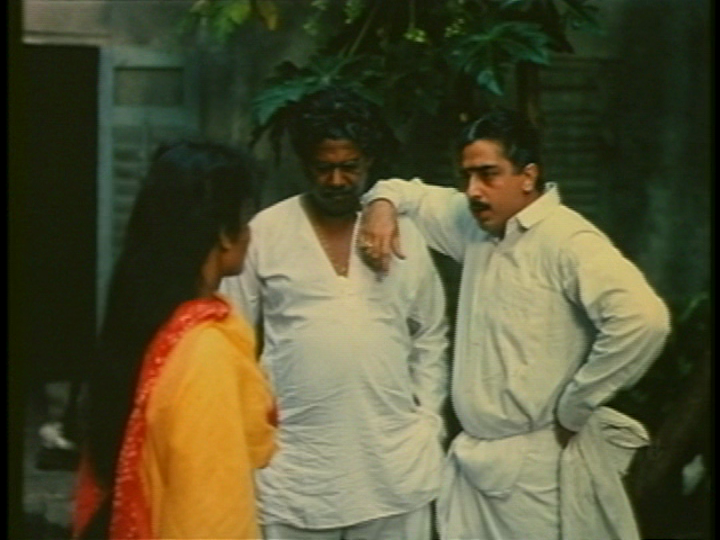
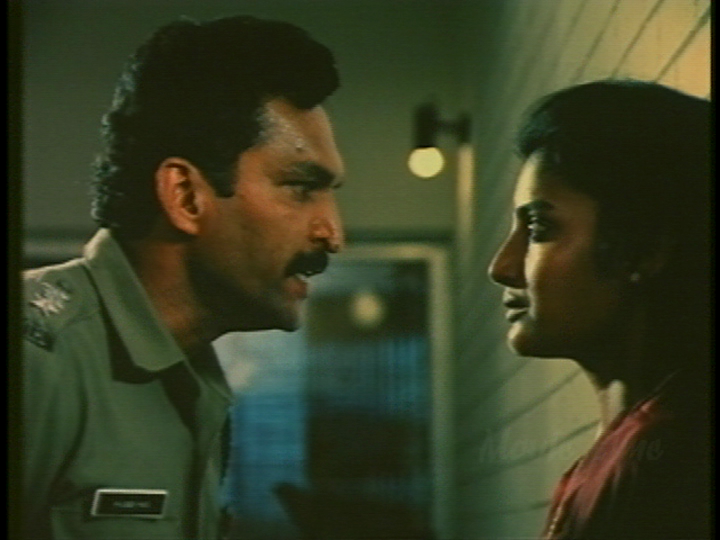
This film has been on my ‘must see’ list for a while but it proved very difficult to track down a copy.  Even then I ended up with a Telugu dub without subtitles, and when I did manage to download subs they were somewhat selective in the translation, declining to translate any of the Hindi, and a bit hit and miss with the rest. However they did at least provide translations of Ilaiyaraaja’s wonderful songs which are definitely high points of the film.  Nayakan is one of Mani Ratnam’s earlier films, and is the movie that brought him to the attention of the cinematic world outside the Southern film industry.  It’s based on the story of Varadarajan Mudaliar, aka Vardhabhai, one of the notorious gangsters who controlled the underworld in Mumbai during the 70’s and 80’s.  There are also shades of Coppola’s The Godfather, but essentially Nayakan is a very Indian story, full of emotion and seeped in the violence and grime of the slums of the city.  Kamal Hassan won a National Award for his performance as did P.C. Sriram for cinematography and Thotta Tharani for best art direction, all of which were very justly earned.  The film also features Saranya Ponvannan in her screen début and a generally notable cast including Nasser, Janagaraj, Delhi Ganesh and Tinnu Anand.  But above all this is Kamal Haasan’s film and he is riveting in a stand-out performance which sees him grow from a young man to an ageing don in the slums of Mumbai.

NayakanNayakan


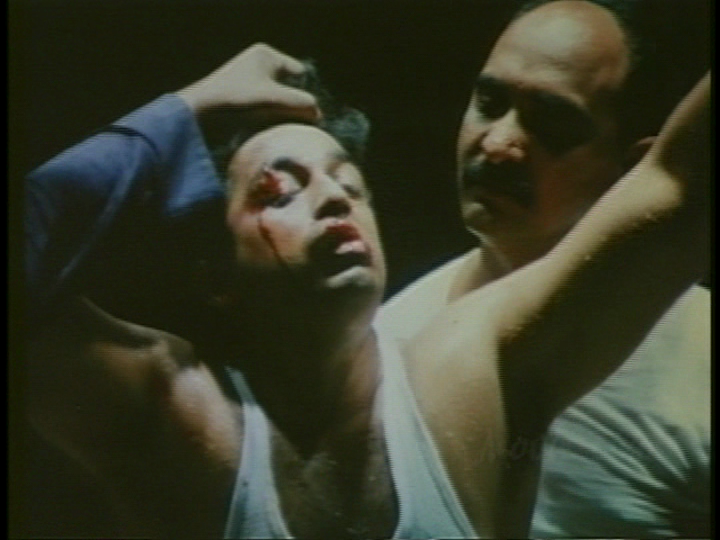
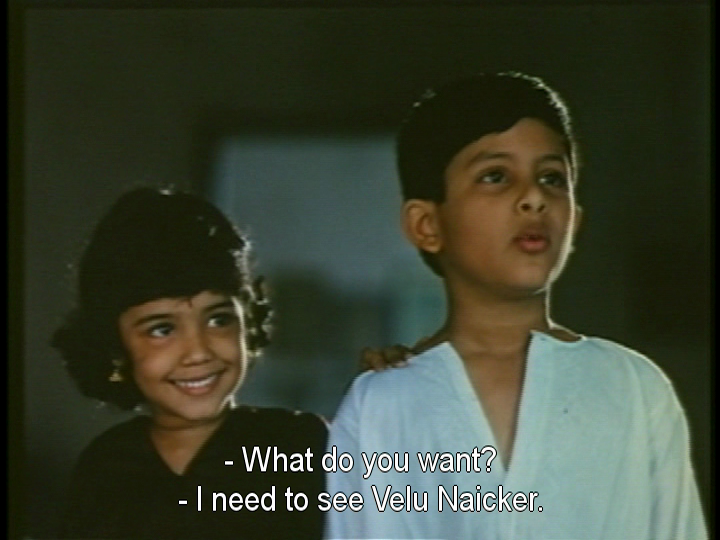
The film starts with the young Velu Nayakar being used by the police to track down and kill his father, a prominent anti-government unionist. It’s a brutal introduction and it’s certainly apt as the film doesn’t shy away from showing the violence associated with the underworld.  The poignant refrain of Thenpaandi Cheemayile comes from the beating the young child suffers, and the song is reprised throughout the film to underscore the importance of pivotal scenes in Velu Nayakar’s life.  This clip shows two of the versions and, although they both occur much later in the film it’s not really the song rather than the images I wanted to include.  However it is worth noting the cinematography and the way P.C. Sriram uses light so effectively in these two snippets.  The song is sung by Ilaiyaraaja and Kamal Haasan himself.

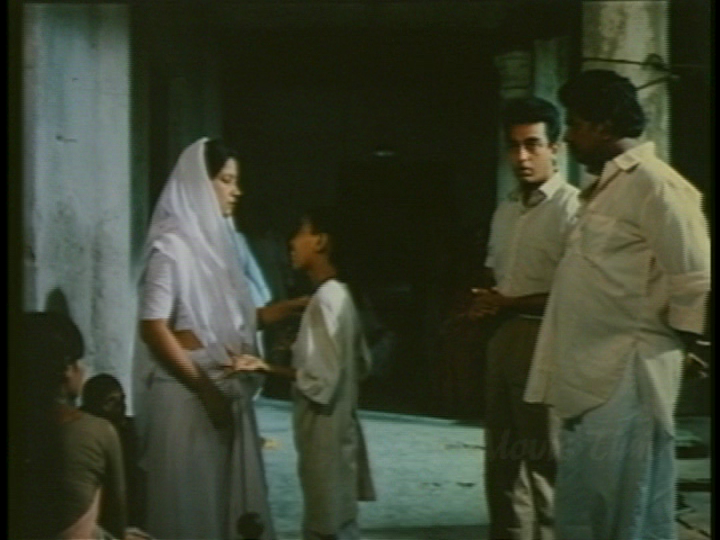
Velu arrives in Mumbai and is adopted by a small time smuggler who instils in Velu the concept that any slightly less than legal act isn’t wrong if it helps someone.  Over time Velu starts to stand up for the rights of the Tamil people who live in the slums, but it is the murder of his adopted father by a police officer that tips the balance and sets him against the law as he takes his revenge.  However even this act is tempered when Velu comes to understand that the dead police officer has a mentally retarded son and he gives Kelkar’s widow money to ensure that both she and her son will survive.

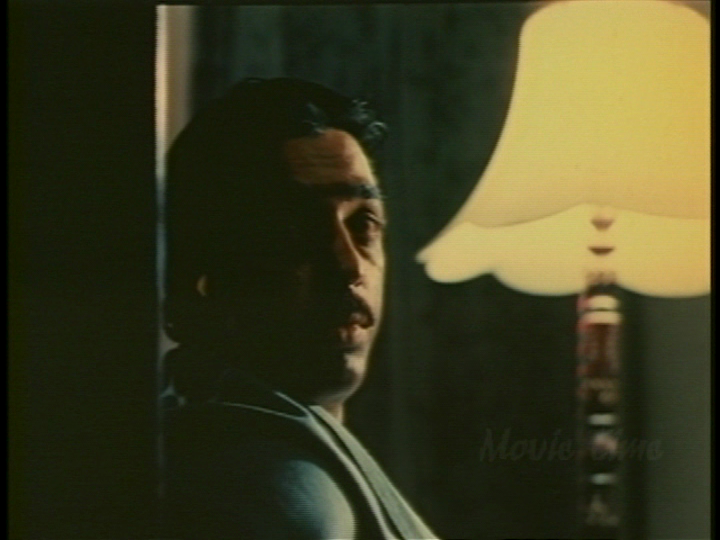
NayakanNayakanNayakanNayakan


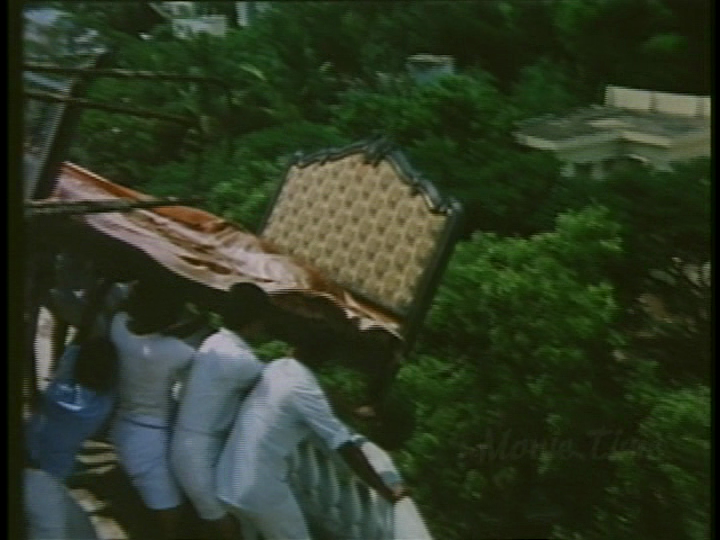
This dichotomy occurs throughout the film where Velu is shown as a very human character who smuggles and murders but also helps out when members of his community are arrested or when a child is seriously ill.  He’s a man who makes mistakes and pays dearly for them, but he’s also someone who is trying to make life just a little better for the people around him.  One such instance is when the slum is about to be bulldozed to make way for a factory.  Velu organises a gang of the locals and goes to the developer’s house, tearing it apart to drive home the point that these are people’s homes which are being destroyed, not just a piece of land. It also looks like a lot of fun as the gang rips apart furnishings and throws furniture from the roof!

NayakanNayakan


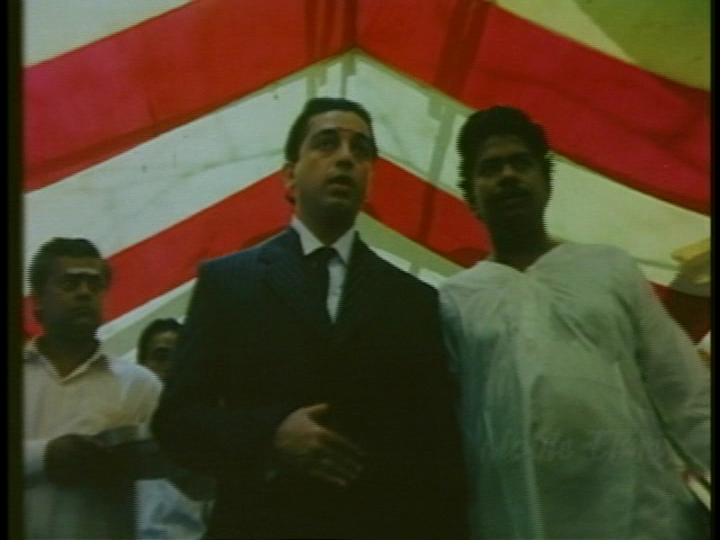
Velu isn’t a don who drives around in the cavalcades of vehicles more commonly seen in Southern Indian films, but instead he has a fleet of ambulances and lives in a house which is easily accessible for the people of the slum, making Velu Nayakan a more realistic and believable character.  There are a few odd moments however, such as an item-style dance number on a boat, and an instance where Velu does appear to be channelling the Godfather given his choice of natty pin-striped suit.  

NayakanNayakan


More commonly however the dim lighting and traditional dress suit the more modest and unassuming Velu, who seems more embarrassed than anything by the adulation he receives.

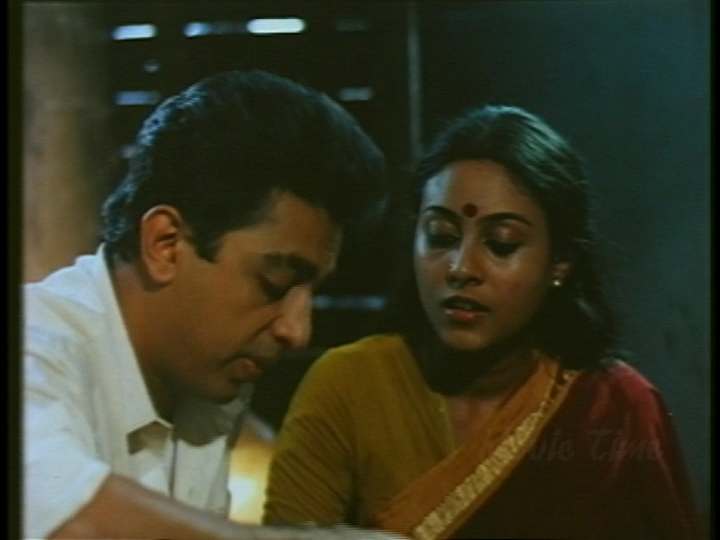
Mani Ratnam’s screenplay is most effective in describing the relationships between Velu and the other characters, in particular those of his immediate family.  His first meeting with Neela (Saranya Ponvannan), who becomes his wife, is beautifully acted and filmed as the two meet in a brothel.  Velu and his friend Selvam (Janagaraj) end up at the brothel after smuggling success and while Selvam appears to have been there before, Velu looks a little more uncomfortable and out of place.  He does manage to enjoy this great song though before heading upstairs for some more intimate amusement.

When Velu gets upstairs, Neela is waiting in the room and almost the first thing she does is ask if she can leave early to study for her exams.  Velu’s reaction is as awkward and confused as would be expected and Kamal Haasan shows this in his indecision as to whether he should lie on the bed or sit on the chair as she studies.  Even his hesitancy the next morning, when he’s not sure if he should wake Neela or not, nicely illustrates Velu’s more compassionate side and this is brought out again when the couple do eventually marry.  Saranya is dignified as Neela, despite starting out in a brothel and she brings a very warm and sympathetic presence into the harsh reality of the slums.

NayakanNayakanNayakanNayakan


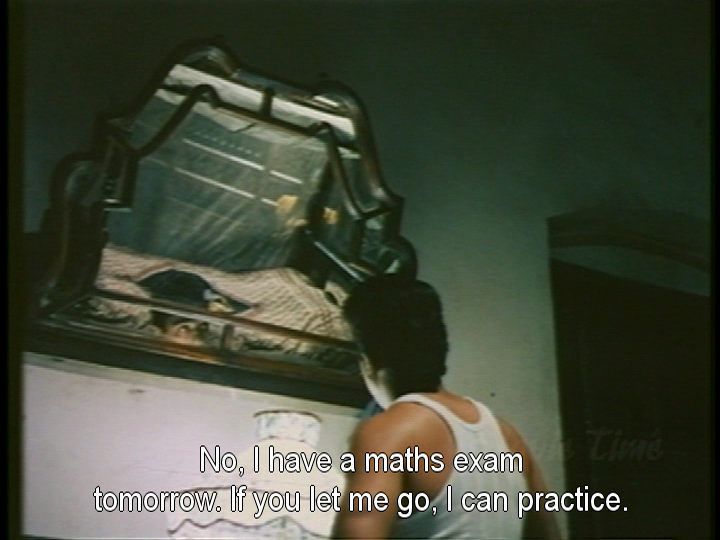
P.C. Sriram makes good use of the set here as initially Velu stands in the light while the mirror shows a shadowy figure through the curtains of the bed in the darkness of the room beyond. It’s very effective and throughout the film there is a similar use of light and shadow with many shots framed by pillars, doorways or other architectural features.

NayakanNayakanNayakanNayakan


The best scenes in the film are those between Velu’s son Surya (Nizhalgal Ravi) and daughter Charumati (Karthika).  Surya hero worships his father just as much as do the local people in the slum, and he wants nothing more than to be like him. He stands in for his father when a member of the community comes to Velu for help and he sees nothing wrong with the life of a gangster.  However Charu has a very different opinion and eventually she leaves her father after some very emotive scenes where Charu repudiates her father’s lifestyle.  She feels that his style of life is entirely wrong no matter how many people he helps, and Velu is helpless in the face of her rejection.  Kamal Haasan and Karthika are absolutely brilliant together in these scenes and also later on when Charu turns up later married to Velu’s new nemesis, the new Assistant Commissioner (Nasser).  Charu refuses to allow her father to see his grandson in another tear jerker moment, although the most poignant scene in the film between Velu and his grandson is reserved for the end.

NayakanNayakan


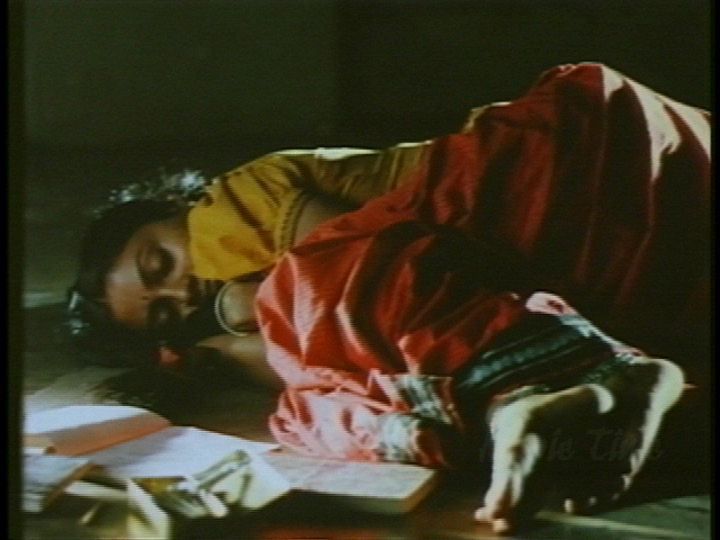
There are many small moments and clever touches in the film which make it so enthralling.  From the joy seen at the Holi celebrations to the despair when Neela dies and her sari unravels in Velu’s hands, each scene is full of little details which add to the drama.  Kamal Haasan provides much of the emotion and driving force in the film, but all the actors are excellent even in the minor roles. Tinnu Anand deserves special mention for his small but important role as Ajith Kelkar, the grown up mentally retarded son of the police officer, and Nasser is very effective in his short time on screen towards the end of the film.

Beautifully haunting music, gritty realistic scenes and an outstanding performance by Kamal Haasan make this a film well worth hunting down, and it really deserves to be restored and released with English subtitles.  Nayakan is an absolute classic from Mani Ratnam, and it’s one I thoroughly recommend. A full 5 stars.

Anbe Sivam

Anbe Sivam is a film that many people recommended to me and since it stars two of my favourite actors, it was one I quickly moved up the ‘to be watched’ pile. The film has as its basis the themes of politics and religion, but it doesn’t take itself too seriously and there is plenty of comedy along with all the drama.  The viewer is taken on as much of a journey as the two protagonists and although the film details their endeavours to make their way to Chennai it’s not just the physical travel which is explored. The film was directed by Sundar C while Kamal Hassan wrote the screenplay and even sang on a couple of the songs. Anbe Sivam has a more unusual storyline for a Tamil film, and although there are one or two clichéd characters and a few unlikely coincidences, overall it’s an entertaining watch. Kamal Hassan and Madhavan make a great team and both give excellent performances.

The film starts in Bhubaneswar airport in Orissa where Anbarasu (Madhavan) and Nallasivam (Kamal Hassan) are stranded due to the rains. Anbarasu works as a film maker in the world of advertising and since he despises the part of his name which refers to love, he prefers a shortened from of his name A. Aras. Initially Aras mistakes the bespectacled and physically handicapped Sivam for a terrorist wielding a pipe bomb, when in fact Sivam is armed with nothing more deadly than a cucumber.

A.Aras is as much of an idiot as his name sounds. He’s arrogant, quick to make judgments and quite convinced that he is always right. Sivam is a man afflicted with a paralysed right arm, one leg shorter than the other and an abundance of facial scars following an accident. He also has thick glasses and a facial tic which impressively Kamal Hasan manages to keep going throughout the whole movie. However, after his confrontation with the authorities Sivam explains to Aras that most terrorists don’t look like him at all, but instead are more likely to look handsome like Aras.

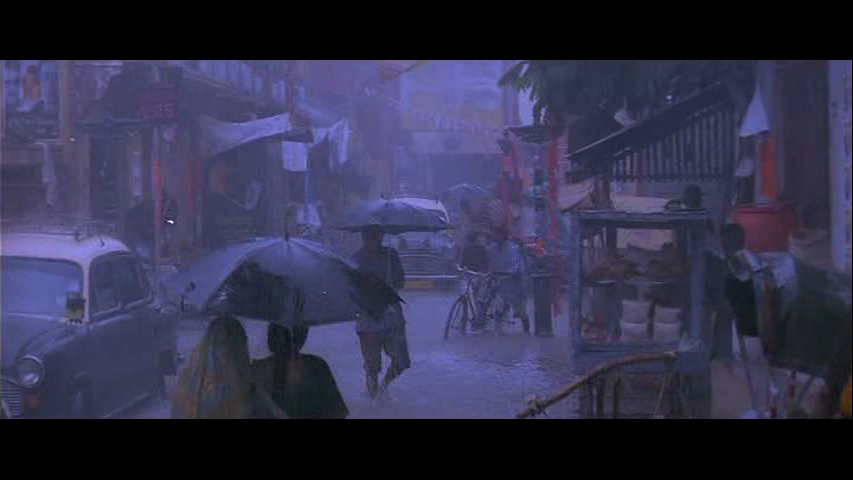
After all flights are cancelled Aras ends up unwillingly sharing a room with Sivam. Although Aras sneaks out early the next morning he still doesn’t manage to evade his unwelcome travelling partner as Sivam catches up to him in a flooded train station. Again Sivam comes to the rescue of the more impetuous Aras and aids him in his onward journey to Chennai. There are some beautiful shots throughout the film and the scenes here of the rain drenched streets and the countryside from the bus are excellent.

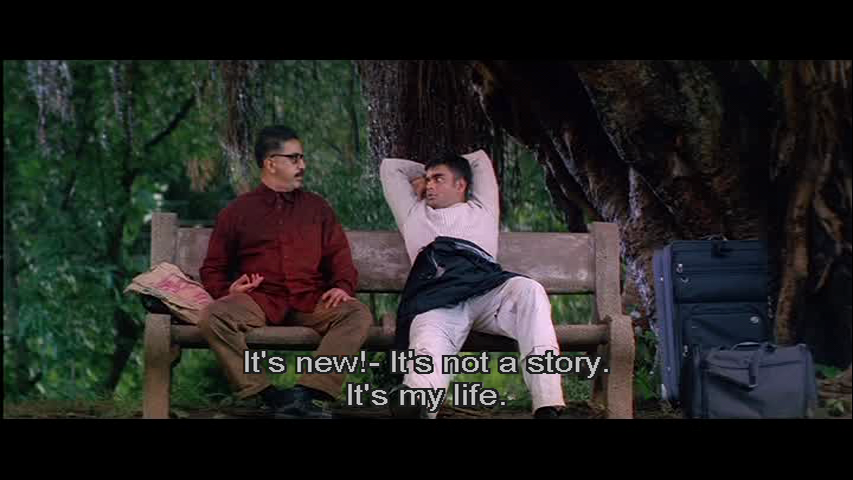
The duo end up taking a bus and a train on their quest to get to Chennai and along the way Sivam is unfailingly cheerful, chatty and full of unsolicited advice which drives the more reserved Aras crazy. Aras distrusts  Sivam and is rude and even callous in his continual attempts to get rid of Sivam, but his efforts backfire every time. This leads to a lot of comedy which, although often quite slapstick, is well-integrated into the story and is really quite funny. The conflict between the two allows discussion of their opposing views on almost every topic but most commonly Sivam’s communist beliefs. The dangers and benefits of globalisation and multi-national companies are touched on while the clash between Aras’s belief in capitalism and Sivam’s in socialism is an ongoing theme.

As they wait for the train back to Chennai, there is a long flashback which explains some of Sivam’s beliefs and how he came by his disabilities. An unscarred and healthy Sivam organises and takes part in street plays as a way to spread his message of equality and rights for workers. The main person ridiculed in these street plays is the rich and outwardly religious industrialist Kandaswamy Padayachi who is in conflict with Sivam as he refuses to give his workers adequate pay. Sivam meets his daughter Balasaraswathi and after some initial conflict the two end up falling in love. She persuades Sivam to paint a picture in her father’s factory as the fee for his art work will help fund further communist activity. His painting cleverly includes a large amount of communist imagery and I was intrigued to learn that both this scene and the painting itself were influenced by Diego Rivera’s mural at the Rockefeller Centre. Dolce and Namak’s excellent review notes a number of links between Dali’s work and the imagery depicted throughout the film too.

This part of the film is however the least satisfying and goes on a bit too long. Kiran Rathod is rather unsatisfactory as the rich daughter although I can’t decide exactly why, but she never engages any sympathy for her character. The love story seems very trite and there is no chemistry between the two actors here at all.Nasser as Kandasamy Padayachi is a typical evil factory owner although the duality of his evil deeds while continually offering prayers to Shiva was an interesting trait. There is a rather odd fight scene with Sivam using an umbrella as a weapon which doesn’t quite fit with the rest of the story although it is well choreographed. An earlier scene where the theatre group’s performance is broken up by the police is much more realistic and convincing, and this later confrontation seems unnecessary and more contrived. However the flashback does give insight into why Sivam looks at the world with his glass half full attitude despite his disabilities.

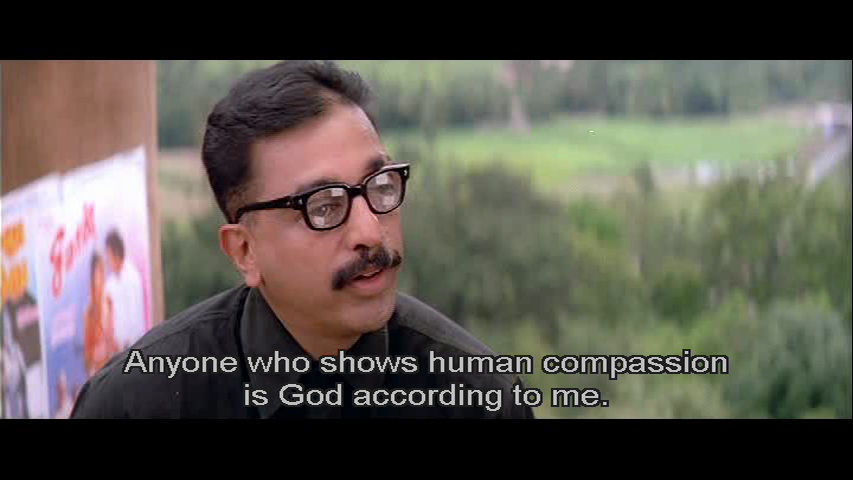
As the rest of their journey unfolds, Aras gradually becomes more compassionate, eventually becoming involved in the struggle to save a young boy’s life following a train accident. Sivam explains his belief that anyone who shows compassion and love to their fellow-man is themselves a god turning the more usual statement ‘God is Love’ neatly around. The last scenes are particularly powerful and moving and Sivam’s unfailing goodness does give the impression that he may indeed be a god. Albeit a flawed and very human one.

What really makes this such a good film are the performances from Kamal Hassan and Madhavan. Kamal Hassan plays Sivam with humility and warmth as a basically good man, but one who is not above playing tricks on his travelling partner. He’s also expressive and vehement in his role as an activist but rather more obtuse when it comes to personal emotions. The change in his character as a result of his injuries is very well depicted and despite his many irritating habits, Sivam is a very sympathetic character. Madhavan does well to hold his own against such a performance from Kamal Hassan. He has a great sense of comedic timing and his scenes with Kamal Hassan are compelling. Sivam is the person you really don’t want to sit beside you on the bus and Madhavan’s increasing frustration and anger is understandable and totally believable. His gradual change as he is exposed to the realities of life in rural India is also convincing and well portrayed. Perhaps the only odd note is his sudden desire to adopt Sivam as his older brother as this seems a rather sudden jump from just wanting him at his wedding. The coincidence that both men love the same woman is also a little unbelievable but for the purposes of the story I’m willing to ignore it. Uma Riyaz Khan appears in a small but very effective role as Mehrunnisa, a member of the theatre troupe and Santhana Bharathi is also well utilised as Padayachi’s enforcer. Both characters have more involvement with the story than first appears and I really enjoyed their contributions. The music by Vidyasagar doesn’t stand out particularly but it does fit well into the film and the songs seem to flow very naturally out of the dialogue. The title song, which appears as a recurring theme, is the most effective and haunting. This clip is fairly graphic and does reveal quite a bit of the story around Sivam’s injuries so skip it if you don’t like blood or don’t want to know more about what happens.

Anbe Sivam is a film I’ve now seen three times and I get more out of it on each viewing. Everything seems to have a second meaning, and that duality is reflected in the fact that the main characters are all known by two different names. It’s a fascinating film and it raises some interesting questions about love and the nature of God. I add my recommendation to all those people who advised me to watch it. 4 stars.