Library Wars (Toshokan Senso)

library-wars-2013-poster

A law was passed in 1988 allowing all objectionable books to be collected and burned. The Media Betterment Committee was formed to remove from circulation all books that contained banned subjects, or books that could be blamed for crimes committed by people who had read them. Librarians were the last line of defence against this censorship. Sounds a bit dull, doesn’t it? Only the Media Betterment Committee has an armed force at the ready to go and retrieve banned books. It is not often that you hear a line like “Libraries are dens of iniquity. You must pay for your sins.”

Sato Shinsuke’s film isn’t all about censorship or government corruption and hypocrisy in a dystopian alternate history. It’s also an action packed romantic comedy. The MBC initiate a mission to retrieve secret documents that would reveal the illegitimacy of the law that empowers them. The Library Defence Force protects the high security library facilities and safeguards the collections. The documents have been bequeathed to them, and they know that getting them back to the library will be near impossible. Both teams are armed to the hilt, but only one side shoots to kill. One character says something along the lines of “If a government burns books, next they’ll burn people”.

library-wars-Dojo

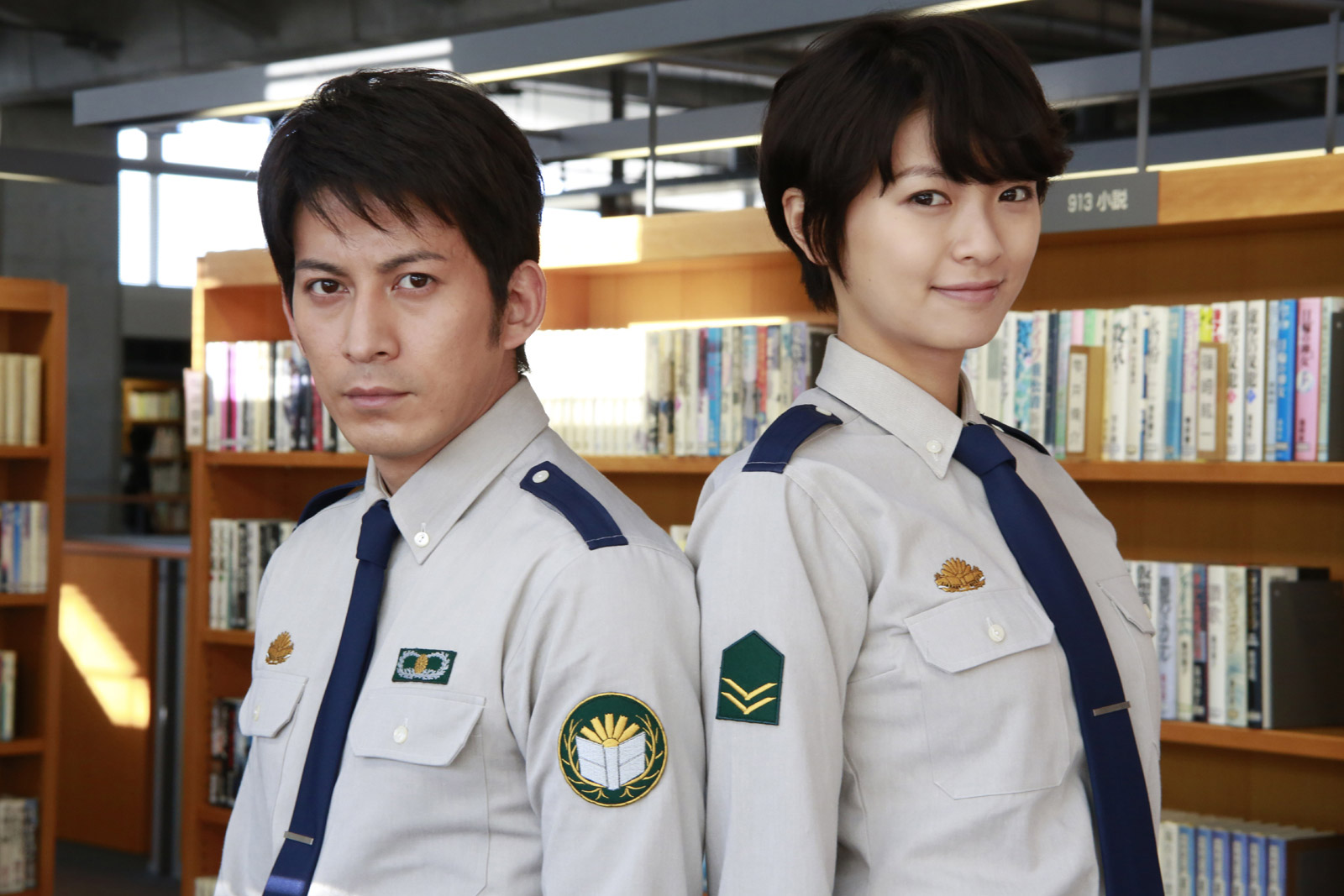
Instructor Dojo (Okada Junichi) is intense, a consummate professional, and not very tall. Okada is excellent in a fairly stoic role. His fight scenes are crunchingly physical and despite being the butt of many short jokes, Dojo is the alpha male in this crew. He is in charge of new recruits, putting them through a punishing training regime and conducting classes on the history and laws that frame the conflict with the MBC. He also seems to have an intense dislike of Kasahara Iku (Eikura Nana), the first female in the elite Task Force. Okada has a nice touch with the comedy scenes and his squirming reaction as Dojo hears himself described by Kasahara at her selection interview is hilarious. He gives the cynical Dojo a weary vulnerability at times along with his obsessive drive to defend the books.

Library_Wars-Eikura Nana

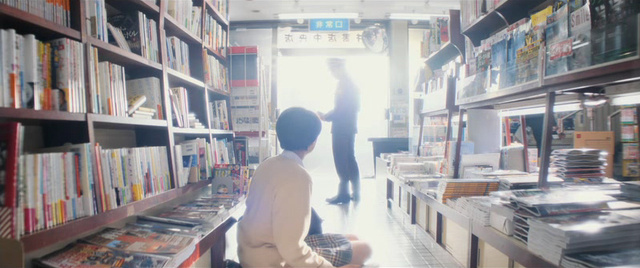
Eikura Nana is the enthusiastic but klutzy Kasahara. She was inspired by a Library Defense officer who came to her aid during an MBC book raid. She never saw his face but he changed her life.
library-wars-Kasahara and her mystery hero

She joined the force to try and find that ideal man and to be just like him (guess which him!). At first I was a little irritated by the scenes that repeatedly highlighted her incompetence and inability to keep up with the guys. But it emerged that brilliant technical skills might not be the only qualification for the job. Knowing what was right and putting yourself on the line to do it was as powerful in some instances. Eikura is charming and portrayed her character as impulsive and warm, with a sturdy resilience that kept her from giving up.
library-wars-Tezuka and Kasahara

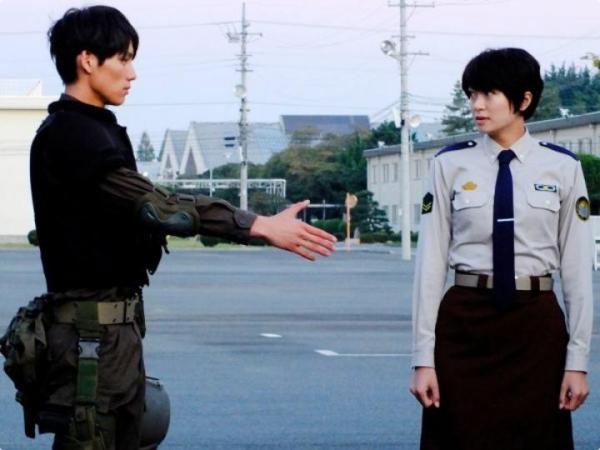
Her sparring with Dojo and fellow recruit Tezuka was sometimes harsh, and I was a bit put off by the institutionalised bullying and the macho BS. But Dojo challenged Tezuka to be honest about why he was picking on Kasahara. He also reproached himself for not being strong enough to trust her, and for impeding her career because of his own weakness. Kasahara became a more valued individual and earned her place on merit. It’s still a man’s world but she made her own place in it.
Library-wars-2013-Dojo and Kasaharalibrary-wars-Okada and Eikura

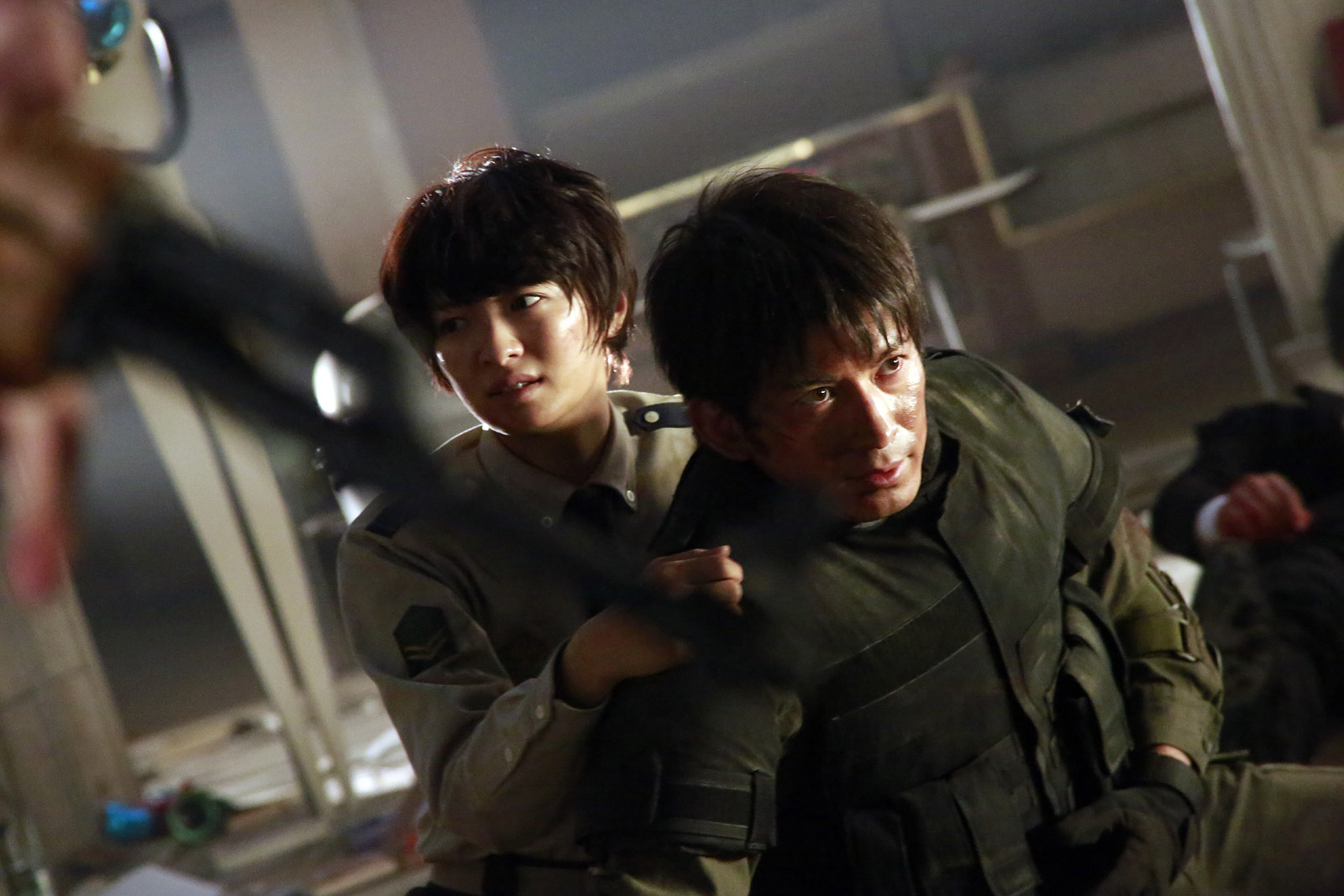
Despite all the action and violence, this is often a very funny film. Characters play it pretty straight and lines like “The commander’s leg is transmitting” had the cinema audience in stitches, as did the librarians shushing each other while they gossiped. Okada and Eikura have a nice dynamic. Dojo and Kasahara’s relationship starts as just a student and (demanding and surly) teacher but develops and becomes more personal as they understand more about what drives each other. She brings out his vulnerability (which freaks him out) and he makes her realise that the LDF is no game and she needs to focus. When Kasahara says to Dojo that her ambition is to be as good as him he is touched.  Then she pauses and adds, “Or better”. Their reactions and the pace of their dialogue bring a lot of the heart and the humour into the story.

Tezuka (Fukushi Sota) and Shibasaki (Kuriyama Chiaki) are Kasahara’s rival and best friend respectively. They provide the outlet for less formal commentary and venting, and allow Kasahara’s comedic bumbling to the fore. Both actors do well with quite one dimensional roles and make the most of their big scenes. Tanaka Kei is lots of fun as Dojo’s sidekick Komaki. He respects his boss but has zero reverence and his ribbing and knowing expressions are a hoot, leaving Dojo exasperated and with nowhere to go.

library-wars-extreme-censorship

The combat scenes are full on, from the hand to hand fighting to the massive scale gun battles. This is a military style conflict and essentially the MBC and LDF are at war. The LDF are to defend only, and the tension in their ranks as they wait, knowing what is coming, is palpable. Kawazu Taro’s cinematography is excellent at drawing us into this bureaucratic and dangerous world,  and the film makes the most of both technology and skilled actors and stunt performers for the action sequences.

I read reviews criticising Library Wars for not being enough of a message film, but I think the censorship and public apathy theme is strongly presented and integrated into the storyline of Dojo and Kasahara’s relationship. The romantic elements were more about idealistic love than actual entanglements but the growing closeness of several key characters makes it easier to invest in the conflict. The film ends on a positive but open note, perhaps signalling future adaptations of the remaining novels in the series.

I found the subject and the characters engaging. The cast are good , especially the leads Okada and Eikura, and the warmth and laughs were a nice foil for the mayhem and destruction. Worth a watch, especially if, like me, you remember reading Fahrenheit 451 in primary school and thinking that was a fantasy.
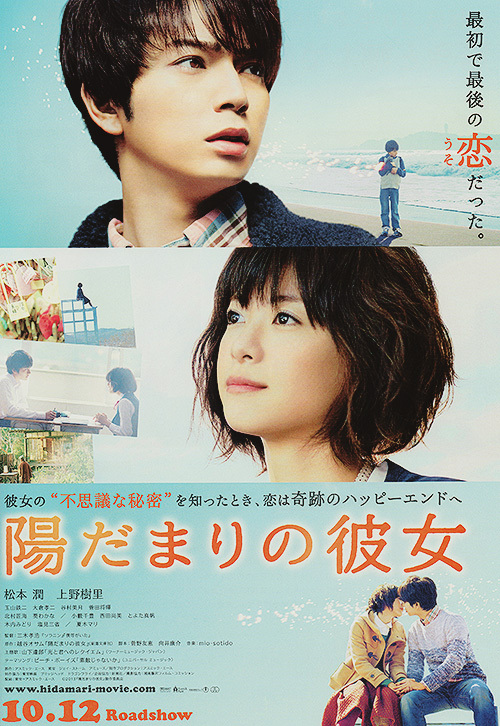

Girl in the Sunny Place (Hidamari no Kanojo)

Girl in the Sunny Place - poster

I knew little about Takahiro Miki’s Girl in the Sunny Place (Hidamari no Kanojo) other than it is a love story with a hint of mystery and the lead actor is one of the dudes from Arashi. I wasn’t expecting much more than a timepass but this is one of my favourite films this year. I’m not going to include any major spoilers but there is a lot to like apart from the plot.

Okuda Kosuke is a junior marketer for RailAD, selling advertising placements in railway stations. At a client presentation he meets his childhood friend, Watarai Mao. She remembers him too and it isn’t long before love blooms again. They are happy together but there is a cloud hanging over the couple. Mao was found wandering naked down the road when she was about thirteen, and has never spoken of her past. Her foster parents are worried that she may have health or psychological problems later in life, and are not sure Kosuke will still accept their girl if things go bad. Kosuke is deeply in love and no obstacle seems big enough to derail his happiness. But when it looks like Mao is getting sick, he starts to ask questions. Things all lead back to their childhood on pretty Enoshima. Is the answer on the island? And who is the old lady who lives up on the hill?

Girl in the Sunny Place - Mao and Kosuke at home

I guessed correctly, and it was a guess, at Mao’s secret past almost immediately. It didn’t detract from the story at all. Clever direction ensures that scenes work beautifully whether you’re wondering “Does she do that because of (the reason)?” or if you’re just thinking she is a bit quirky, or if you don’t notice at all. Once the answer is revealed, the signs and clues planted throughout the film all come together and make sense. The story is really about relationships and how, long after we forget the details, emotional memories can remain. Triggered by a song, an old memento, a glimpse of an old friend, feelings can come flooding back even if we don’t know precisely why. There is also a hint of the supernatural and an otherworldly atmosphere in the island scenes that I found very appealing. The ending is satisfying and moving, but not too neat or predictable.

Girl in the Sunny Place - the cardigan

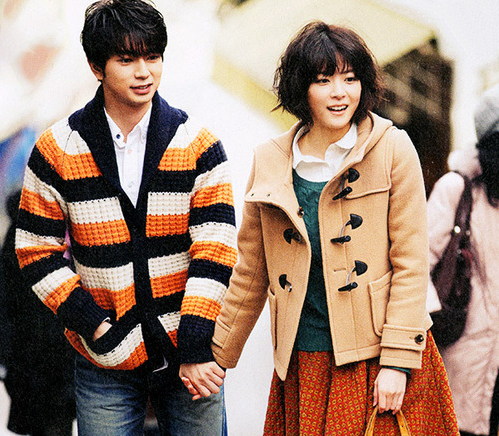
Matsumoto Jun gives a very appealing and natural characterisation. Kosuke starts off as awkward and apologetic; his charm is derived more from nerdy earnestness than his boyband good looks. His happiness in love is endearing and funny as he can’t hide his infectious smile. Growing more assured as the relationship deepens, he opens up to Mao but she is hiding something from him.

Girl in the Sunny Place - Mao and Kosuke

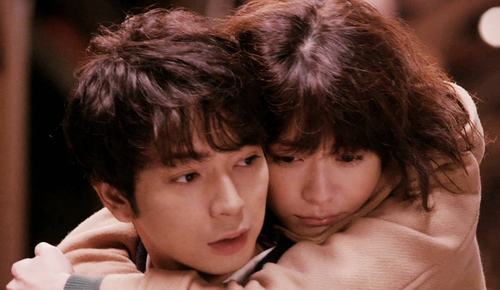
As Kosuke’s anxiety and concern grows, Matsumoto shows the sadness and fear in a well calibrated performance. The romance is shown rather than talked about so the chemistry and emotional range of the actors is paramount. I really wasn’t expecting subtlety and exquisite timing from someone who generally works at the cheesier end of the entertainment spectrum. He was afflicted with some hideous knitwear, but even that seemed kind of sweet since it was Kosuke wearing it.

Girl in the Sunny Place - Watarai Mao is smitten

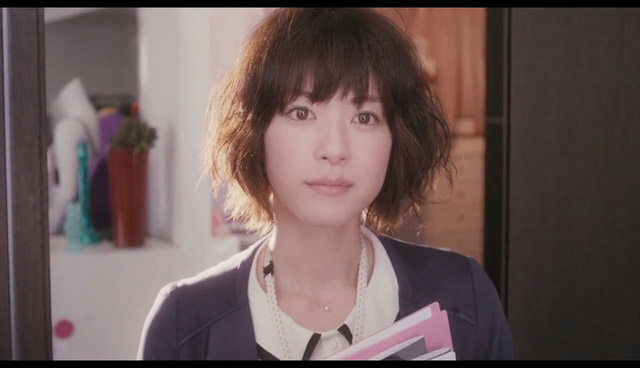
Ueno Juri looks like a live action anime orphan, with huge eyes and slightly retro clothes hanging off her tiny frame. And like many a film orphan she is resilient, cheerful and a tad offbeat. Her energy and unaffected warmth is a lovely foil for Kosuke’s reserve, and she never overdoes the whimsy. The scene when she and Kosuke meet again is almost silent and feels both romantic and gently playful. They both have such beautiful eyes! Kosuke used to protect and teach Mao and now she helps him. She fixes an error in his budget proposal and works with him on a submission. And she made the first move. The ladies in the festival audience gasped and giggled when Mao called Kosuke by his first name! Ueno Juri is convincing both as the lively independent young woman and the one who doesn’t want to admit what she is afraid of. Her rapport with Matsumoto is charming and I could completely believe in the strength of their bond.

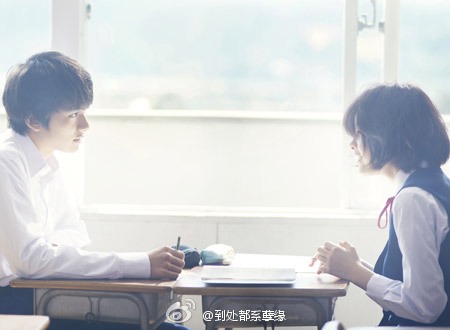
Girl in the Sunny Place - Mao and Kosuke at school

The supporting cast are all excellent. The minor characters add pathos, humour, exposition and drama to the story and director Takahiro Miki balances everything to perfection. I particularly liked Tamayama Tetsuji as the cool Johnny Depp styled Shindo, Mao’s colleague who harboured a crush on her. Kitamura Takumi as young Kosuke and Aoi Wakana as little Mao were also very good, and matched the adult actors closely in appearance and mannerisms.

This is one of the prettiest films I’ve seen in a while. The set interiors are detailed and look lived in by the characters. The lighting is atmospheric and the exterior scenes on Enoshima are gorgeous. The Beach Boys song “Wouldn’t It Be Nice” underpins some key moments and voices the yearning of young love. Silence and ambient sounds are also used to excellent effect, placing the actors to the fore but enhancing the sense of place. The dialogue is heartfelt but not predictable. Rather than saying “I love you” over and over, characters show their intimacy in small things like cleaning their teeth at the same time, or talking about their goldfish, or just snuggling up to talk about stuff.

Apart from the romance there is also a thread of endings and beginnings, of things turning full circle only to open in a new loop. It may sound sappy but I found Hidamari no Kanojo really moving and totally beautiful. Yet another DVD release I’ll be waiting for!

The 17th Japanese Film Festival is running in Melbourne until 8 December – details here:

http://japanesefilmfestival.net/location/melbourne/