Athu Oru Kanakalam

Athu Oru Kanakalam has all the right ingredients to be a good film, but despite an acclaimed director, an interesting storyline and impressive performances from the cast it doesn’t all come together as it should. The film begins by exploring the issues of class and the pressure of social expectation which is interesting and engaging, but then it loses direction after the interval and the end is basically a disappointment.

Srinivasan (Dhanush), nicknamed Cheenu, is the only child of middle class parents and spends his days lazing around with his friends after finishing his degree. He is lazy, spoilt and petulant seemingly as a result of his mother’s indulgence. His father Ganeshan (Delhi Ganesh) is a strict disciplinarian with a tendency to violent outbursts as he berates Cheenu for his apathy and lack of enthusiasm with job hunting. Cheenu insists that he is nothing like his father and is obviously afraid of him, but as we see when he is out with his friends, he has exactly the same violent temper and tendency to strike out when he is angry. Cheenu’s mother is sidelined throughout the film and rarely gets a chance to speak. Mostly she is helpless and unwilling to intervene between father and son.
When his parents go away for a few weeks, the family maid Satya (Kalai Rani) is unwell and sends her daughter Thulasi (Priyamani) in her stead. Cheenu and Thulasi were friends as children and while Thulasi is obviously still attracted to Cheenu, he initially doesn’t recognise her. Although younger, Thulasi is more mature than Cheenu. She is also very aware of her social status and despite her attraction to him acts like any proper young servant girl should. On the other hand, he behaves like any typical young man when faced with a pretty girl, and his gauche reactions seem very natural.
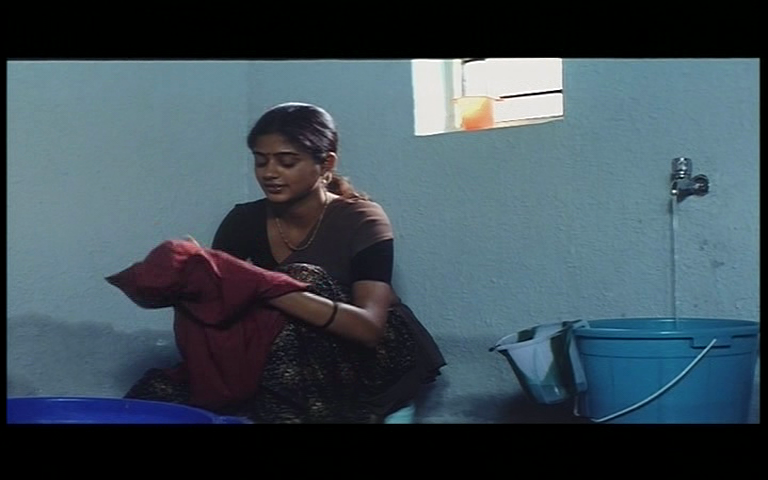
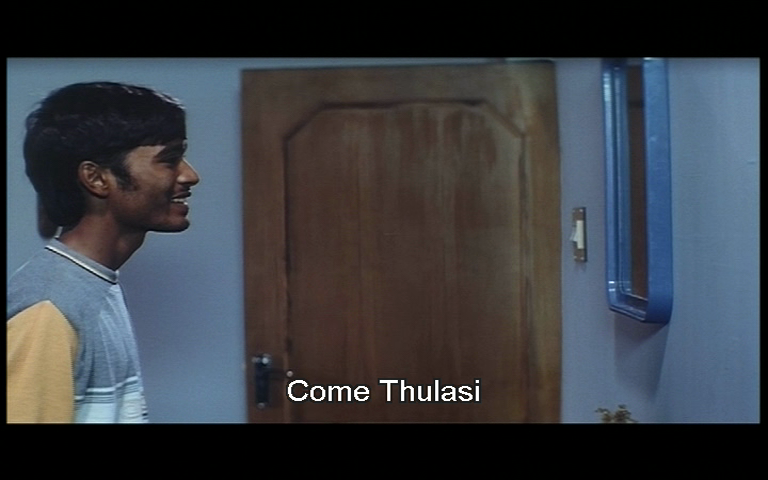
In the space of the few days they have, they end up falling in love and into a committed relationship –this is the dream period of the film title. Balu Mahendra shows their romance developing in a song and doesn’t spend much time on it. It’s obvious they are in love and Cheenu is determined to marry Thulasi, we don’t need to know any more about it than that. This is a lovely song, and I’m sorry I can’t find a better quality version.

Cheenu tells his friends a little about his romance, but doesn’t introduce them to Thulasi and actually hides her in the bathroom when one of his friends visits. He seems ashamed of his relationship with a girl from a lower class. It’s hard to decide if this is also partly because he is trying to hide the relationship from his father as Cheenu is very well aware that he will not approve. The difficulties of an inter-class relationship are well explored and developed despite the initial romance not being given the same treatment, and the pair’s behaviour is realistic in this context. The development of Cheenu’s character here is convincing and Dhanush is believable as the young man realising that he will have to change his ways and actually get a job if he wants to marry against his family’s wishes. Priyamani is exuberant in her role as Cheenu’s lover and the change in her outlook as she realises the obstacles they have to face appears genuine and natural.

When Cheenu’s father does discover the relationship his reaction is predictable and dramatic, and Cheenu responds in kind. He vows to marry Thulasi despite the opposition from their respective families and the disapproval of his friends. It looks as if the romance may be the making of Cheenu but before he can follow through with his plans, he ends up in jail after a night out drinking with his friends.

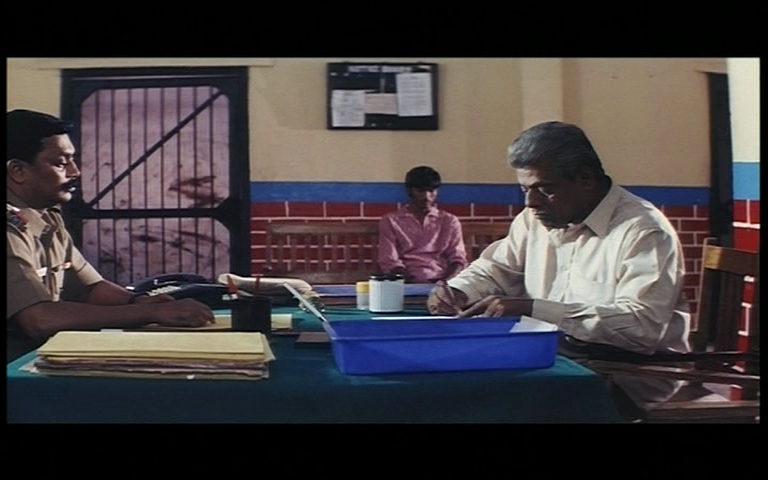
When Ganeshan decides to teach his son a lesson and leave him in jail overnight his plans go badly wrong as Cheenu kills another prisoner and consequently receives a prison sentence for murder. I like the fact that although the prison term is obviously a plot point to keep the lovers separated, there is a strong emphasis on the consequence of violent behaviour. Despite the death being an accident, Cheenu has to acknowledge the result of his action and although unapologetic, he accepts that he has to pay for his mistake.
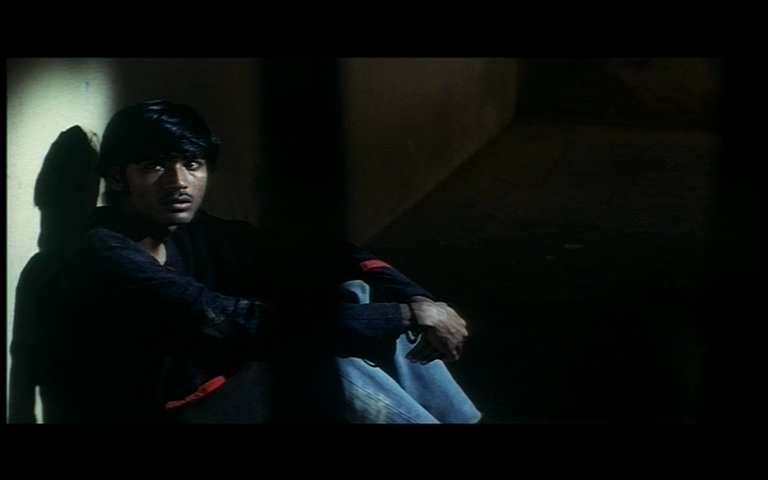
From such a promising beginning, the second half of the film loses the realism that kept the story interesting. The director starts to rely on prison clichés with brutal film guards, sympathetic fellow prisoners and a fairly ridiculous fight scene. Naturally there is an opportunity for Cheenu to escape just when he has found out that Thulasi is in dire straits and he absolutely has to go to her. Another problem is that Thulasi’s role is greatly reduced and she only appears on screen to cry and plead with various policemen and prison guards. Priyamani is wasted in these scenes and although she does her best there is very little she can do to make her character less of a caricature. The end is particularly disappointing as the film seems to be building up to a dramatic conclusion that never actually happens.

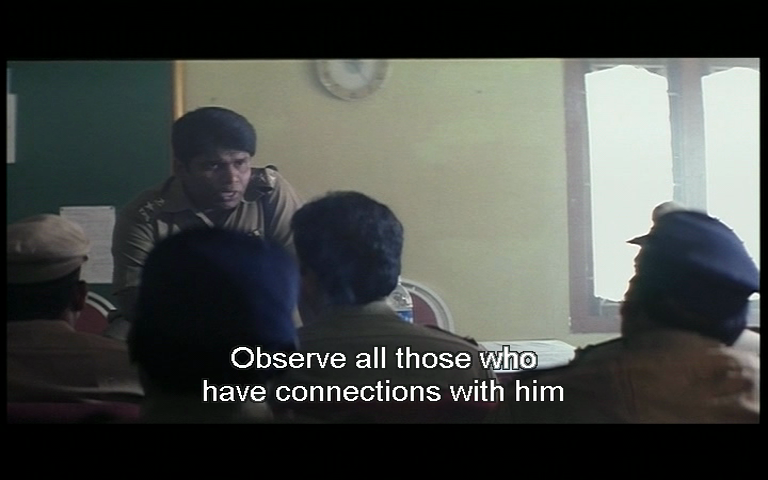
Despite the issues I have with the second half of the film, there are some good points. Dhanush does an excellent job of conveying the fear and trepidation of a young naïve man sent to prison. Cheenu’s interactions with the other prisoners are an interesting contrast to his relationship with his father and despite the clichés the prison scenes never descend into farce. There are quite a few jokes referring to the skinniness of Dhanush throughout the film, and most of the humour has a light touch. It is also good to see intelligent police officers who don’t search aimlessly for an escaped prisoner but actually investigate and have a reasonable plan to capture Cheenu.

The music by Ilayaraja is beautiful and haunting but is used mainly as a way to show some of the story: the childhood friendship between Thulasi and Cheenu, their romance and Cheenu’s relationship with his mother. One exception is the first song which is a bizarre item number with nothing to do with the story. It is purely an excuse for a skin show from Tejashree with some rather lewd lyrics (even in subtitles) and the film would have been improved by its absence.

I was disappointed in this film. While it kept my interest and was perfectly watchable, mainly due to the lead actors performances, it should have been so much better. I enjoyed seeing two of my favourite actors together and they did have an onscreen chemistry which helped make the romance more believable. While the film succeeds in the most part to be realistic it would have benefitted from a tighter second half and a more exciting climax – but perhaps that wouldn’t have been as true to life. Then again, it may just be that I’m not used to a Tamil drama actually having a (nearly) happy ending!  3 ½ stars

Aaradhana (1987)


Film romances are often full of stupid people doing stupid things, trying my patience to the point that I hope one or all of them will hurry up and die so the movie can end. Thankfully this is not the case with Aaradhana which I found intelligent and lyrical. It is hard to avoid spoilers, although I have tried, so be warned…

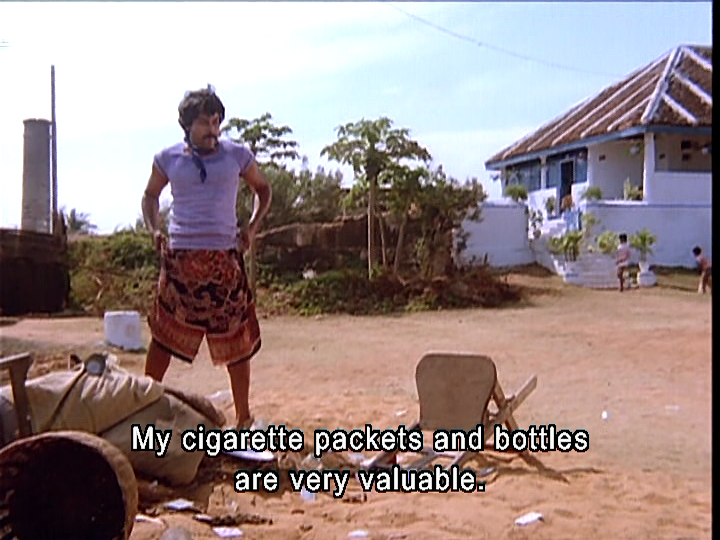
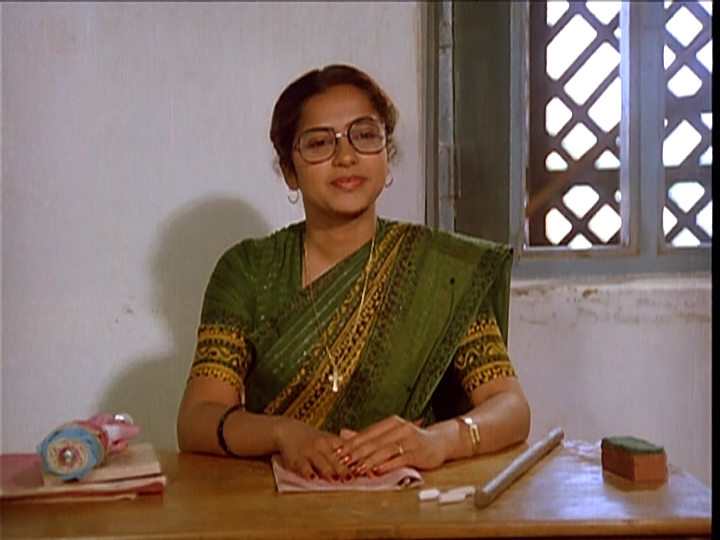
The basic story is simple enough. Puliraju (Chiranjeevi) is a no-good drunk who falls for Jenny, (Suhasini) a Christian schoolteacher. Jenny’s family rely on her for financial support and her father Danial plans for her to marry wealthy cousin Lawrance (Dr Rajasekhar). Gangamma (Radhika) believes she has been engaged to Raju since childhood and is determined to marry him.

It could have been a farce but for excellent writing and beautiful performances, ably steered by writer-director Bharathi Raja and dialogue writer Jandhyala. There are consequences to every choice and these characters know what they want, see the obstacles and understand what the results will be, both for themselves and for others. This thoughtful writing adds a note of tragedy to balance the sweetness of the love story. The cast are uniformly good and make the most of the material, with Chiranjeevi, Suhasini and Radhika outstanding. I am a Chiru fan, but I really was seeing Raju on screen most of the time, not the Megastar. I will add, there is not a shred of lycra nor a metallic go-go boot in sight – his performance succeeds purely on acting ability. And those eyes.

The film opens with a slow pan around a seaside village before Puliraju chases a man through the market and lops his arm off as punishment for teasing a girl. He is a destructive force of misguided and alcohol-fuelled energy; childishly impulsive and self centred, full of aggression yet backs away from emotional confrontations. His name is a sign of the character’s dual nature – is he a beast or a prince? His mother and the villagers see only his worst side.

Jenny is worlds away from the likes of Raju. After a confrontation where she slaps him and he backs down, Jenny talks to Raju’s mother and reassures her that he has a good heart under the crude exterior.

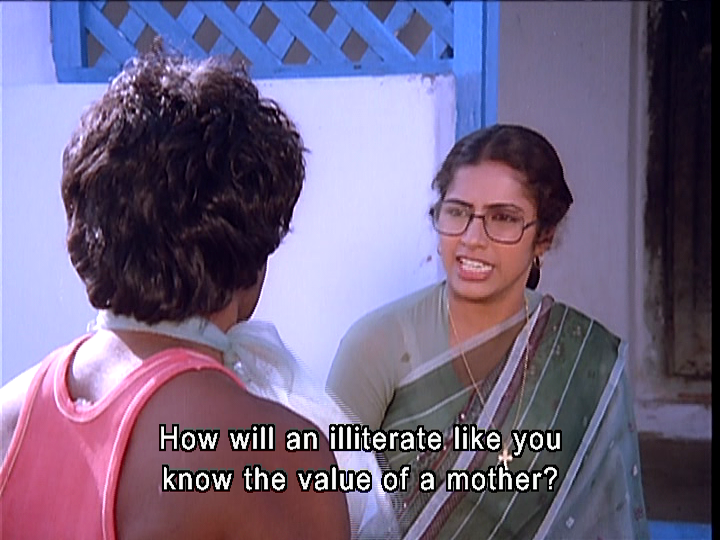
Raju overhears this and is touched by Jenny’s faith in him which, along with his attraction to her, compels him to try to become a better man. Jenny isn’t afraid of Raju, and her values demand that she tries to see the best in him. She acquiesces to his plea for lessons and over the time spent together, an attraction and warmth develops. His childish streak is allowed to manifest as a sense of fun and silly stunts to impress Teacher Jenny, and his fearsome reputation diminishes.

I found it unusual to see a hero make himself so vulnerable to a woman, and to be in the position of mutely hoping she picks him. Raju knows he isn’t the right man for Jenny in so many ways, but he loves her and feels helpless. He changes his hairstyle (with varying degrees of success but a ruler straight side part always seems to indicate Good Boy), learns to read, swaps his colourful lungis for pants and generally cuts back on his drinking and hell-raising.

More significant, he learns about empathy and demonstrates his affectionate side. He hits a few bumps in the road, but he never fully relapses into the aggressive brute Puliraju. This change is more than superficial grooming to appeal to Jenny, and later scenes with Gangamma show the extent of his self-awareness. Chiranjeevi subtly alters his posture, facial expressions and diction to show the changes in Raju.

Gangamma is Raju’s cousin and fiancée since childhood. Raju initially rejects her just because he doesn’t want a wife, and later Jenny is the unwitting obstacle between them.

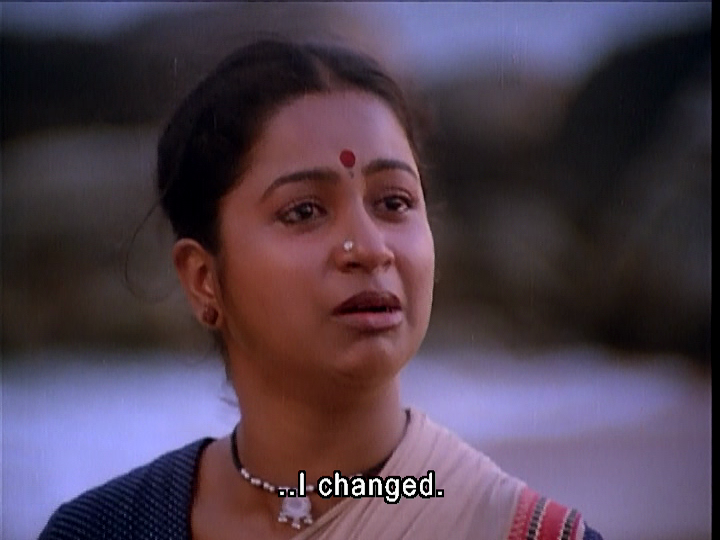
Gangamma tries to see off her rival but once she realises Raju will never return her love, she reassesses. Rather than force the marriage, she colludes with him to avoid the unwanted wedding. She would rather nothing than a one-sided marriage to him and asks for a place in his household, but not as his wife. Radhika was stunning. Gangamma was a cheeky and sly girl to start with and her expressions transformed completely by the end of the film to a saddened but spirited woman

Lawrance is nice, wealthy, likes Jenny and is ready to marry. Lawrance and Raju are often shot in mirror poses or facing opposite directions and as heavy handed as it may sound, it does add to the tension as Lawrance seems to have no idea he has a rival for Jenny’s love.

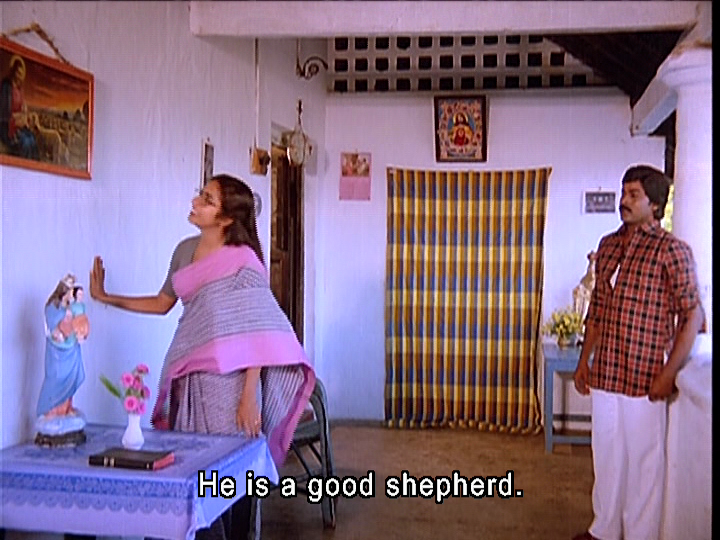
Religion doesn’t appear to be a strong division in this fishing village which possesses an unusually large church. Religious imagery abounds through the film and serves to illuminate the character’s qualities rather than promote any one practice or belief. When Raju gives his teacher a seashell, he proudly announces it is special, the same shell Lord Shiva touched. He calls Jenny a goddess; not just out of love but because he sees her as beautiful, educated and an inspiration.

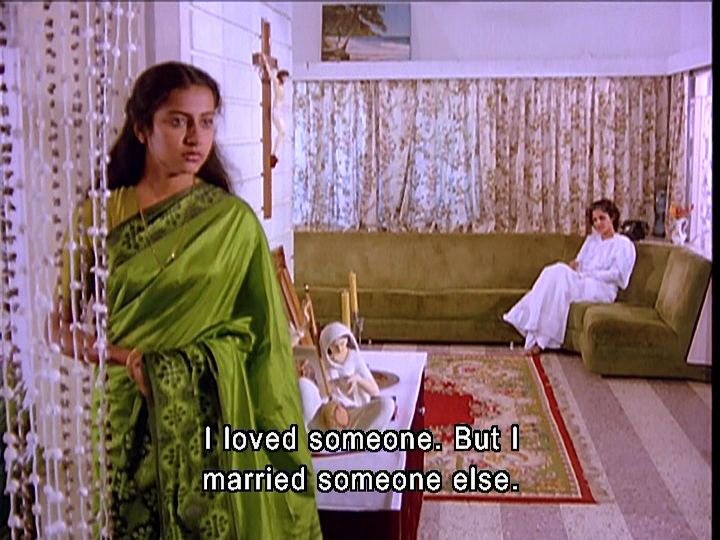
The Christian iconography in Jenny’s home resonates with Raju and her explanations seem aimed straight at his heart. I wondered whether the poor lost goat was really necessary in so many scenes, but seeing Chiru in tears on the railway platform with that goat, I melted too.

Lawrance’s aunt (Anuradha Vasudev)  is the catalyst for some most interesting conversations. She challenges Jenny to make a decision about following her sense of duty or her heart and she is frank and explicit on this subject. This is not a film where women are completely passive. Jenny is expected to make a decision, tell the men what she has chosen, and live her life accordingly in full knowledge of the consequences.

Everyone seems to know what is going on (except maybe Lawrance) and there is no protective bubble of invisibility around the lovers. Jenny is assaulted by a villager who assumes he can have her as she spends so much time with Raju that she surely can’t be virtuous. I found that scene fascinating as it wasn’t a drunken leery groping type of assault but a calculated move by a man who thought he had the situation and the woman under control. It was very well written and felt horribly real. Gangamma also has to bear the brunt of village gossip as unsuccessful Romeos turn to slander and threats. They all know Raju isn’t the tough Puli anymore and some seek to take advantage of his rehabilitation.

When Jenny and family leave to stay with Lawrance, Raju sees them off.  After publicly exhorting Raju to come and visit, Danial privately and tearfully begs at Raju’s feet that he never come near them again lest it jeopardise his family’s prospects. The tragedy is not in witless people acting selfishly, but in likeable, practical people trying to do what they think is right and being aware of the pain they cause.

The opening titles introduce the ocean as a key player in the story, and the sound of the sea is a constant rhythm. The landscape and ocean are filmed with as much care as the actors. The music by Illayaraja is lovely, and the theme from ‘Are Emaindi’ is used to superb effect. The reprise at the end of the film is wonderful, and the changed lyrics help create the mood of anguish. I wish I could find clips with subtitles for the songs as they add so much meaning.

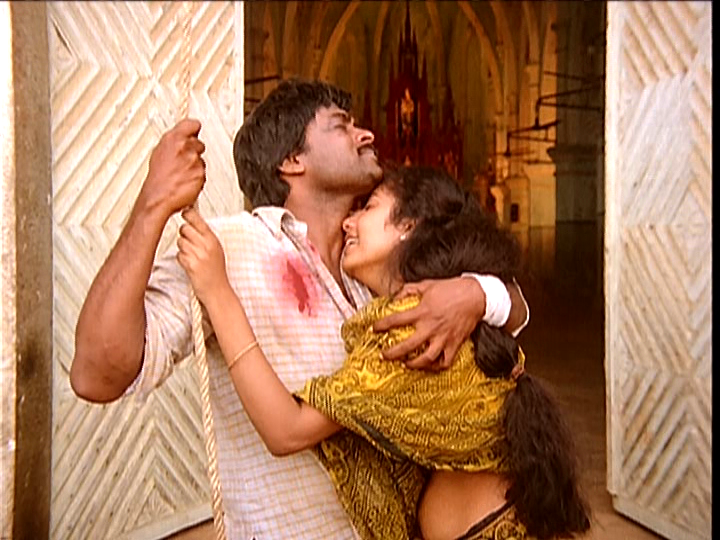
There are some flaws in the film but they didn’t really diminish the experience. I found some of the edits really clumsy and I wonder if maybe there were scenes missing from the DVD – it certainly felt like there was a lead up to a missing song in one section and a couple of scenes jumped quite suddenly. The climax is over the top; it relies on divine intervention, suffers from geographic inconsistencies as the village seems to change size, and Chiru is quite the ham in his cross village marathon. The actors had all given so much to make these characters come alive that I really cared what happened. And let’s be honest – I’ve seen much more unbelievable stuff than this (SRK in Kal Ho Naa Ho staggers to mind!). I didn’t need the voiceover at the end either; I’d already made up my version of ever after.

I admit to some tears, and Chiranjeevi’s Raju broke my heart. I give Aaradhana 4 and ½ stars (and three handkerchiefs).