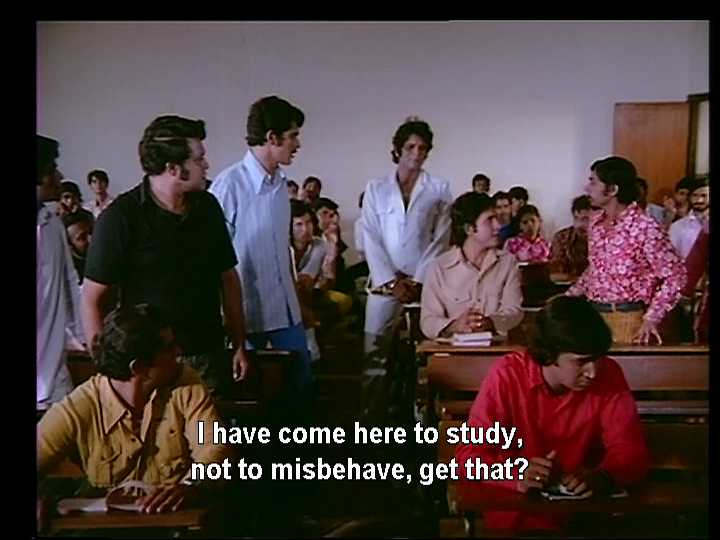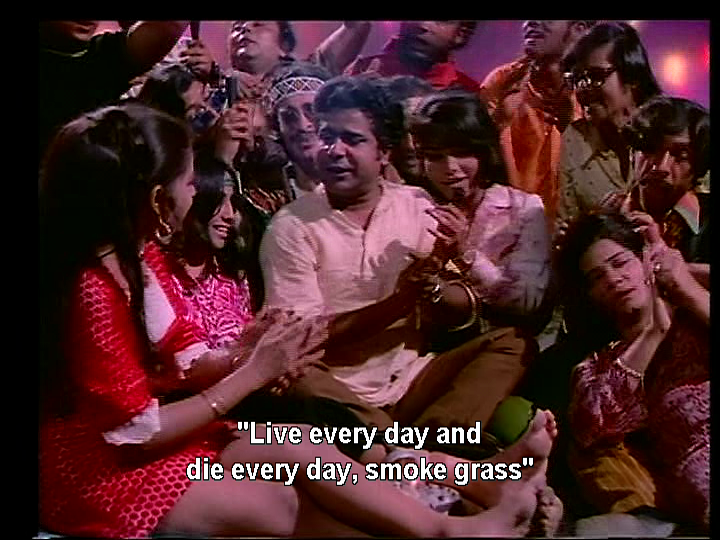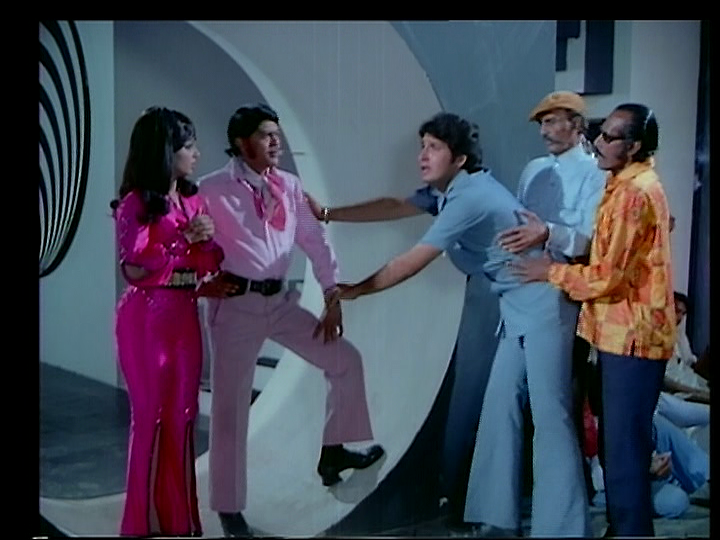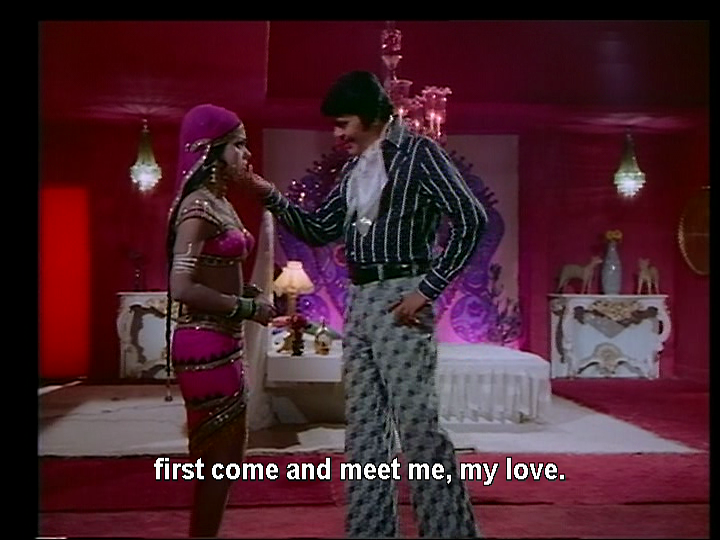
Trip to Moon (1967)


trip-to-moon_1967
Chand Par Chadayee
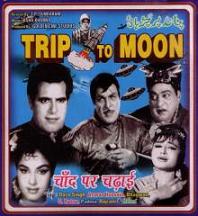
or Trip to Moon is a 1967 space opera featuring Dara Singh and Anwar Hussain along with a bevy of lovelies (Ratna, Padma Khanna, Helen, Kanchanamala to name a few). Director T.P Sundaram didn’t let lack of technology or the laws of science stop him. On those rare occasions when Dara Singh takes a break from wrestling, there are loads of fab songs by Usha Khanna.
It’s a long but engaging interplanetary caper complete with super special effects. Well done to Neo Filmo Crafts (credited with the set properties) and the design team! And yes, there will be lots of screencaps.

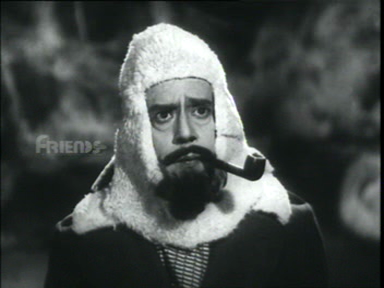
I saw this on an unsubtitled VCD so I have made up a lot of the story but I do not feel a void where the details were missed. I wish there had been a void where the ‘Friends’ logo obscured much of the picture.
Trip to Moon_eminent scientistTrip to Moon_Padma

Eminent scientist fellow (S Nazir I think) leaves the top secret research tent to follow a bright light – clearly a torch in someone’s hand as they run behind the papier mache rocks. He is taken aback when a vampy lady appears and sings a typical filmi nightclub song, and also surprised when she transforms into Padma Khanna as a moon girl with a ray gun. There is a nice touch of Marvin the Martian at Christmas about her outfit. He is abducted in a cardboard spaceship and never seen again.
In response, the government calls on their best agent – Captain Anand (Dara Singh). You know he is the best man for the job because he wanders around the office wearing this:

Trip to Moon_Anand at the office
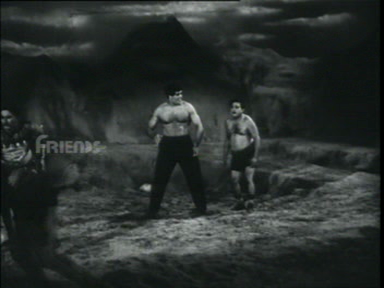
After thoughtfully going home to tell his Ma he is off to space on a mission, he and unfortunate comic sidekick Bhagu (Master Bhagwan) arrive at their own cardboard spaceship only to find moon men trying to sabotage it – by pushing it over. The fight begins like this:

Trip to Moon_at the rocket site
And ends like this:

Trip to Moon_after the fight
And that establishes an enduring costuming theme.
Anand and Bhagu are taken to the Moon (where they were going anyway) as prisoners.

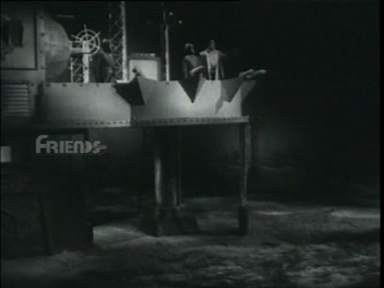
Trip to Moon_its a trapTrip to Moon_Barahatu and the balcony of destruction

They pass by another planetary base (maybe Mars) where Barahatu (Anwar Hussain) fires missiles from his balcony. Fancy flying – hard when you’re piloting something as aerodynamic as a cupcake- sees the ship safely to the moon where Anand meets Shimoga (Ratna).

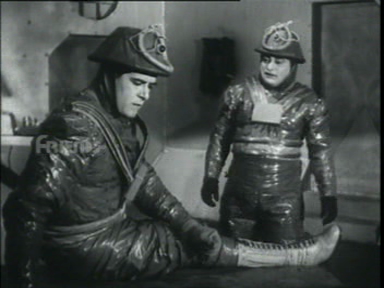
Trip to Moon_Ratna and balloon treesTrip to Moon_matching outfits 1

The moon has balloon trees! After a bit of slow motion moonwalk (the Neil Armstrong kind), the locals put special anti-comedy soles on the Earthmen’s boots and they can walk normally.
Anand and Bhagu are jailed and forced to wear matching romper suits.

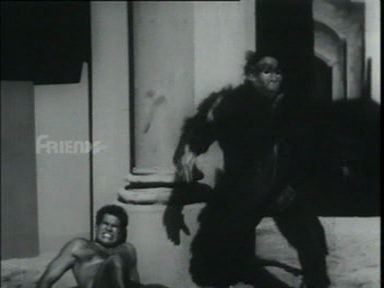
Trip to Moon_Shimoga visits the prisonersTrip to Moon_Space gorilla

Shimoga visits Anand in jail but he refuses to cooperate. After a tribunal hearing of some sort, Anand is sentenced to trial by Space Gorilla Wrestling, followed by being dragged by (space) horses. Of course Anand wins, and Princess Shimoga is delighted.
It turns out Barahatu wants to marry Shimoga and is at war with the Moon people. Space becomes just a backdrop for a standard two guys fighting over a girl story. There is also a fair amount of moon lady interest in Captain Anand and they are not shy about showing their mettle.

Trip to Moon_Dance offTrip to Moon_dance off 2

Dance offs including that thing where they make a portrait with their feet!

Trip to Moon_Duel

DUELS!

There is double crossing, slapstick, jetpacks, kidnapping, guys in animal suits, more kidnapping, robots and fights galore. People casually hop in and out of rockets and nip across space with no more effort than catching a taxi. It all plays out as you would expect although not always exactly as logic might dictate.
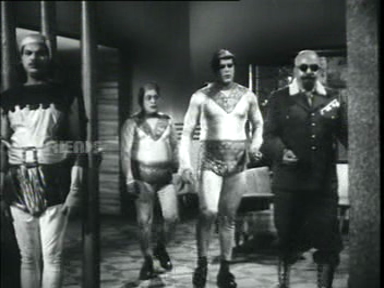
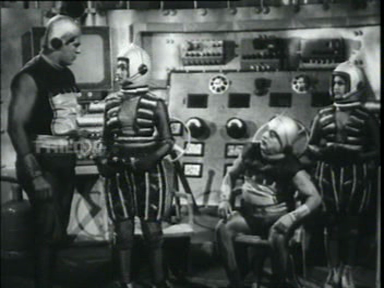
Trip to Moon_matching outfits 2Trip to Moon_Dara and Padma
Among many highlights, Dara wears some fetching outfits. He has many many many wrestling scenes.
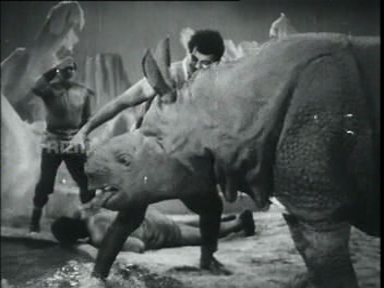
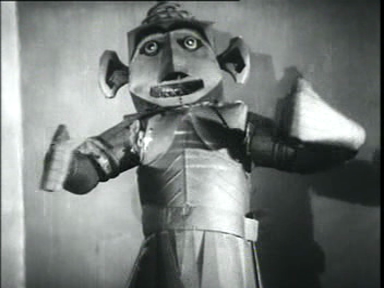
Trip to Moon_space rhinoTrip to Moon_robot
Some are more surprising than others.

Trip to Moon_Barahatu and Shimoga
Barahatu is not totally evil. He seems to want Shimoga to like him, or at least accept marriage (I think). Unfortunately he takes advice from Master Bhagwan( in a duplicate role as Barahatu’s comedy sidekick) so success is not likely. He gets Helen in to do the twist, in a mistaken belief that what gets him in the mood will work on her.
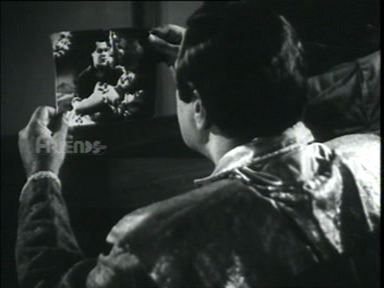
Trip to Moon_photo1Trip to Moon_photo2
And I enjoyed this photoshop effort when Barahatu was having a tantrum over Anand and Shimoga getting cosy.

Trip to Moon_Shimoga and AnandTrip to Moon_space dance

The lovely Shimoga (Ratna) also has lots of fetching outfits and makes the most of the fab Usha Khanna soundtrack. Shimoga is a determined young lady so she doesn’t just sit around waiting to be rescued. She goes after Anand and I think points out that if he marries her he can ensure peace between worlds, but whatever.

Trip to Moon_SimiTrip to Moon_bad girl
Padma Khanna is lots of fun as Simi, the scheming sidekick to Barahatu. She seems keen on Anand and wants to help Barahatu get Shimoga so she can swoop on the lone earth man. I may have made that up but she did seem to take extra care when drugging him unconscious. She kidnapped Anand’s mother and sister so that may have hurt her prospects. But really – her ‘disguise’ screamed bad girl so Ma should have been suspicious.
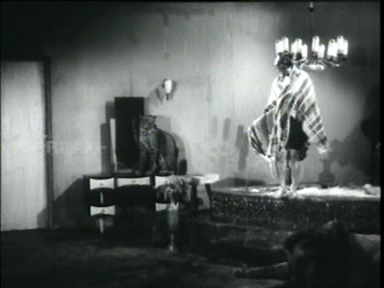
Trip to Moon_Palki and her menagerie

She shares a lot of scenes with Palki (Kanchanamala). Poor Palki ends up married to Bhagu and is instrumental in saving the world. It’s tough being a female sidekick in space, even if you do get to keep a zoo in your bathroom (or at least a lion and a leopard). She and Simi have a knock down drag out scrag fight in a pivotal scene. They really tried to get wrestling in as much as possible.
Trip to Moon_Master BhagwanTrip to Moon_Bhagu
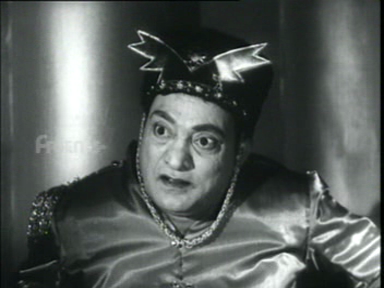
Bhagu gets silly hats and a comedy song with excellent outfits. Master Bhagwan is fairly amusing but the slapstick was repetitive and the film is already a bit too long. But I liked that he and Anand depended on each other and he helped more than he hindered.
The Moon King gets some great outfits too.
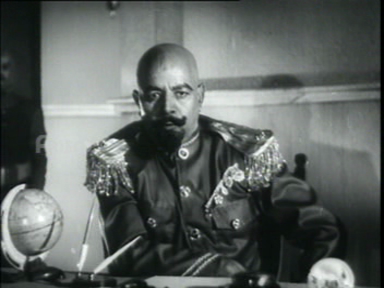
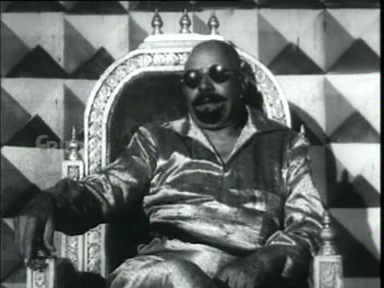
Trip to Moon_KingTrip to Moon_King in his club clothes


The set design is charming in that almost everything looks like it was designed to be in another film –a nightclub, a grand house, a castle dungeon, an office chair – but they tried very hard to ‘space’ it up. I really loved Anand’s secret space hideout.
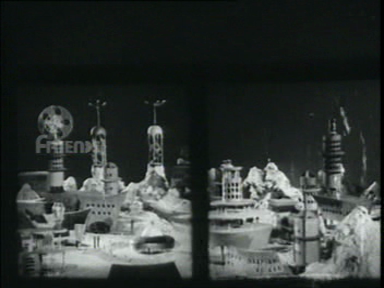
Trip to Moon_Moon rocket baseTrip to Moon_control roomTrip to Moon_the ships controlsTrip to Moon_technology 2Trip to Moon_technologyTrip to Moon_secret hideout


Trip to Moon is highly entertaining even if the fights are repetitive. T.P Sundaram gave Dara Singh a range of wrestling scenarios and wasn’t stingy with the song and dance either. If you enjoy films with likeable characters, good music, a dedicated hat department and lots of miniature spaceships and buildings, this is for you! 3 stars!

Trip to Moon_happy ending

Jalte Badan

jalte_badan-Cover

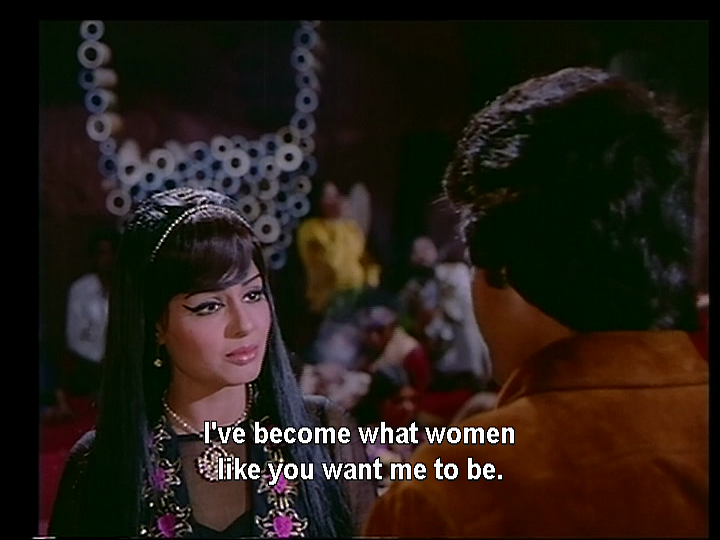
Once again, I was sucked in to buying a DVD based on the cover. This time it was the bold quote above the title that said “Picture has a moral…” But I was finally motivated to watch it by Memsaab Story’s excellent and very funny review. What a delight – Jalte Badan is so wrong it has to be right. Ramanand Sagar subscribes to the ‘more is more’ style of direction, and he is not stingy with the sequins, drama, emotion and ridiculous consequences.

Kiran (Kiran Kumar) is an innocent country lad sent to study in Mumbai. Easily drawn to alcohol, drugs, loose women and hideous décor, Jalte Badan traces his journey into degradation, blindness and woe-is-me-ness.

Jalte Badan_KumKumJalte Badan_crisis of conscience

Kiran and Ganga (Kum Kum) meet when he shoots a bird and she tells him off, waving the poor red paint splattered pigeon in his face for emphasis. Stunned by her compassion or maybe her tiny outfits, he falls in love. She is swept off her feet by…um. I don’t really know. His forlorn puppy face. Or something.

Jalte Badan_Ganga and GaneshJalte Badan_Ganga and her brother

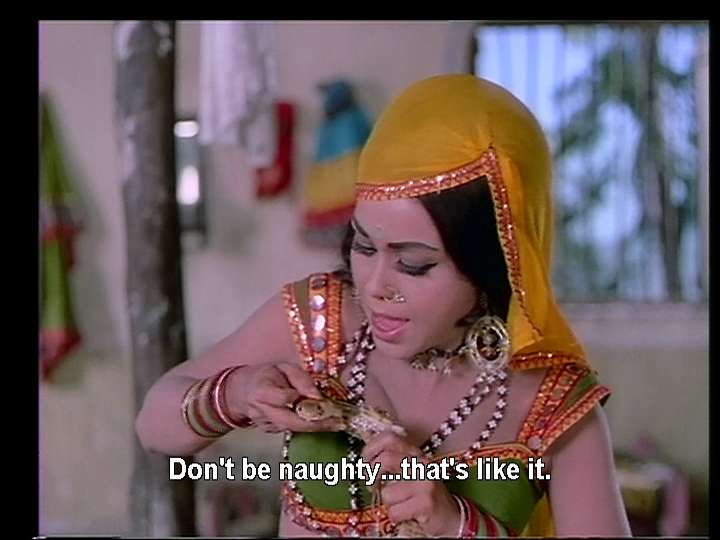
Ganga lives with her father and an assortment of snakes, including her brother and favourite accessory, Ganesh.

Jalte Badan_troubleJalte Badan_trial by fire

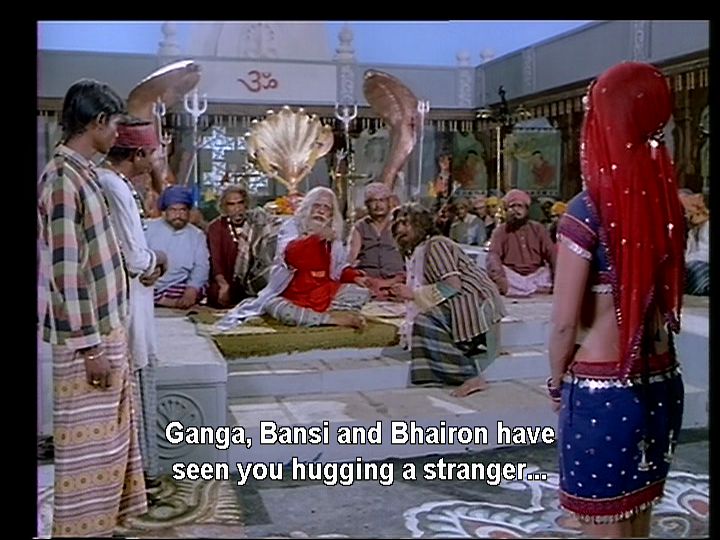
But the youngsters cannot get married and live happily ever after just yet. Ganga endures a trial by fire to prove her purity and to save her father’s reputation. Her dad didn’t actually want her to do that which I found pleasing. But the Snake God and propriety must be appeased so she prances about on hot coals, waving some very synthetic and flammable looking scarves.

Kiran goes to college and attracts the ire of the groovy students who don’t want to be shown up by a tall skinny nerd. He was already headed for trouble though – Malti (Padma Khanna), local nautch girl also relocating to Mumbai to pursue business opportunities, had her fabulously made up eyes on him.

Jalte Badan_the in setJalte Badan_nerds

All the women seem to resent his declared love for Ganga and set out to prove that he cannot be in love, as men never really are (they say). It’s silly and a bit unpleasant as the girls are quite strident and pretend feminism is doing what a man would do. But mostly it’s ridiculous. Malti is outwardly a cynic but she respects Kiran’s steadfast love for Ganga even as she tries to prove it is false. She is a softy under all the bling, spare hair and eyeliner. Despite his goody goody intentions, Kiran takes to iniquity like a duck to water.

Jalte Badan_drug cultureJalte Badan_the cure

Kuljeet (Kuljeet) is a sleazy sidekick to the Boss (Manmohan), Malti’s employer and owner of a club designed to get the kids drugged, fleeced and blackmailed.

Jalte Badan_off the railsJalte Badan_blind

They take advantage of Kiran’s complete inability to say no to anyone or anything. From then on the film is a parade of Kiran’s drug faces and poor decision making.

Jalte Badan_drug faces

Ganga and Malti are feisty and foxy B movie ladies, much more fun than any simpering good girl heroines. Both love Kiran and in their own ways do what they can to free him. Ganga comes to town to find him and is also lead to Boss’s lair.

Jalte Badan_Ganga and her dadJalte Badan_control your snake

Jalte Badan_Ganga and the BossJalte Badan_feisty

Where her snake clears the dancefloor, and she kicks the bejesus out of the boss. Her snake bhai Ganesh gives his life to save her which made me sad. A note on Kum Kum and the snakes – she is fearless! I know the snakes were probably defanged, but Ganesh (lead snake) often lunges at her and she never flinches, often making it seem like part of the scene. I would not have maintained my sangfroid in such circumstances.

Jalte Badan_Malti and KiranJalte Badan_always someone elses fault

Malti also takes things into her own hands and decides the Boss and the Boss’s Boss are not her kind of people after all. It is Ganga and Malti that eventually save the day and save the gormless Kiran.

Jalte Badan_you go girl

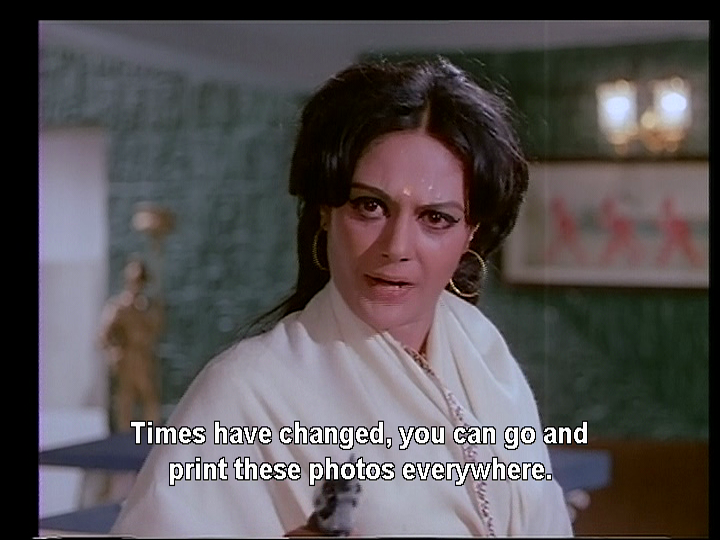
Girija (Alka) is a peripheral character but awesome. She is sold to the Boss by her addict brother and finds herself in the Pink Rape Room, the unwilling star in the Boss’s latest film production. She escapes after turning the tables on her ‘co-star’, and is then threatened with blackmail. Girija coolly tells the Boss that she doesn’t give a rats and he can publish the mildly indecent pictures of her if he wishes.

Jalte Badan_mummy and son at the shooting gallery

Almost no one in the film possesses any common sense. Kiran’s own mother (Sumati Gupta) takes him back to the club for an ‘injection’ as she can’t stand to see her son cry. He needs help because he has gone blind from the drugs so I do question the thinking. The ‘only in films’ medicine is quite remarkable.

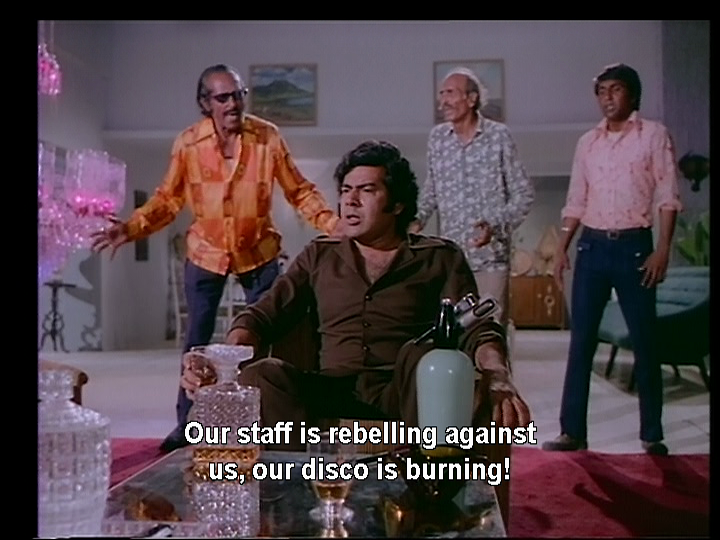
Jalte Badan_fire in the discoRaza Murad plays student leader Shashikant and looks like he should be sensible. So I was slightly surprised to see him leading a mob complete with flaming torches as that seemed a tad dramatic for a dancefloor invasion. And I was not expecting a speedboat chase.

The Laxmikant Pyarelal soundtrack is groovy and melodic, although I never remember much about the songs. But they add a bit of unwarranted quality and I appreciated the drug freak out item interspersed with Ganga pining away in her (miniscule) virginal white outfit.

Will Jalte Badan change the mind of The Youth about recreational drugs? I don’t know but after looking at the interior design for a couple of hours, I needed a drink! 3 stars!
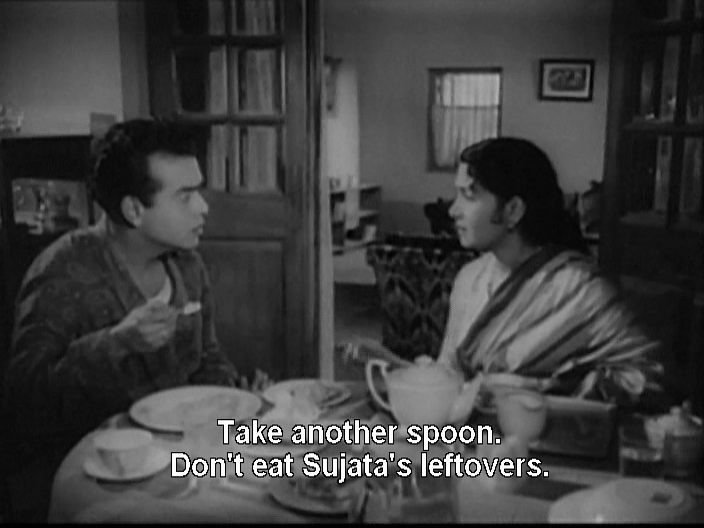
Sujata

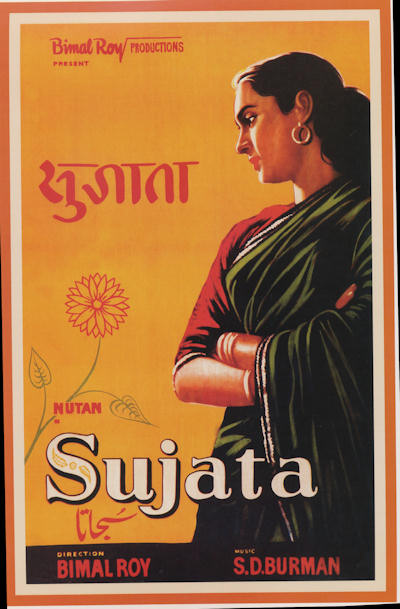
Bimal Roy’s 1959 Sujata is both a romance and a condemnation of the caste system, questioning what makes a family, and how we judge a person. Nutan and Sunil Dutt star, supported by Sulochana Latkar, Tarun Bose, Shashikala, and Lalita Pawar.

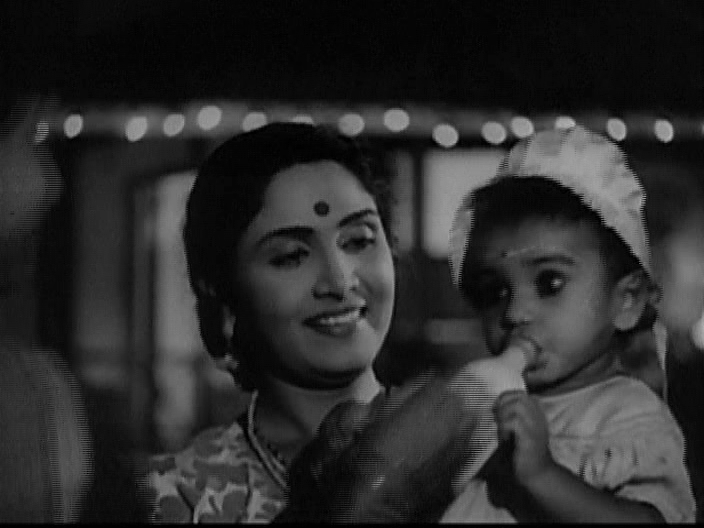
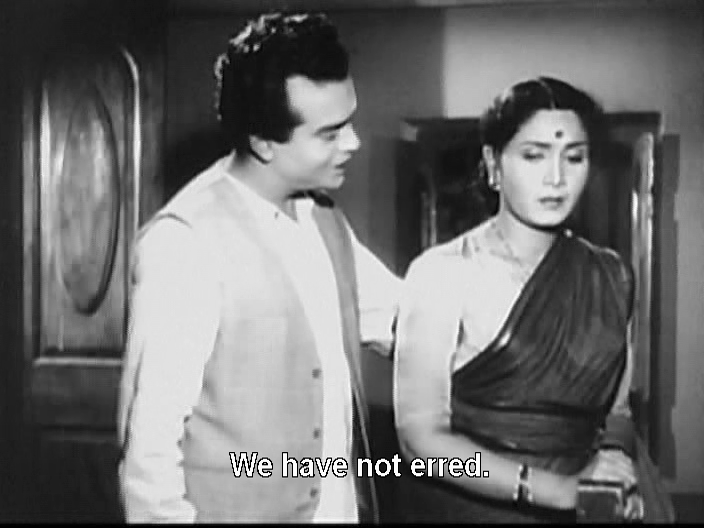
An orphaned baby girl is adopted by, or rather given to, a Brahmin couple on the same day as their baby daughter Rama’s first birthday party. The contrast could not be more marked. Rama is pampered and given the finest that her parents can afford while the baby is put in the maid’s room. The father, Upen (Tarun Bose), names the baby Sujata, a high caste name for an untouchable child. Charu (Sulochana) and Upen have their own struggles as caste rules clash with their growing affection for the little girl. They keep talking about sending her away to someone in her own community, and yet it never happens. Lalita Pawar as their Aunt Giridala is completely against keeping an untouchable in the household and demands they get rid of her.

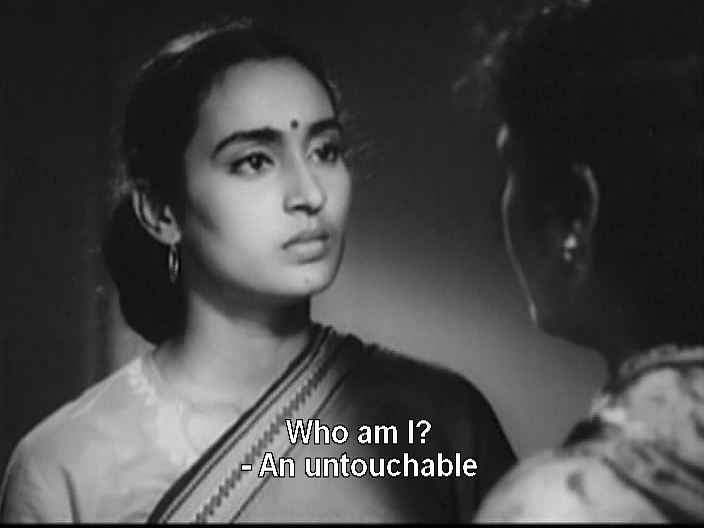
Upen and Charu relocate several times for his work, so are able to avoid the hard conversations for a while. Even so, Charu is ambivalent and often pushes Sujata away, never letting her forget that she is adopted. One day, she tells Sujata the truth – not only is she adopted, she is an untouchable. Predictably, Sujata is devastated.

While the caste issue is a focus, it is not what resonated most strongly with me. Perhaps it is that caste seems like such a backward social division to me.  Sujata’s relationship with her adoptive family was fascinating.  Regardless of the reasons for the emotional distance apparent at times, it had a strong effect on the young girl. Rama was educated and given pretty new things, had a big birthday party every year and was raised in an atmosphere of love and privilege. Sujata had to fight to learn to read and had no known birthday to celebrate, filling the role of housekeeper to be useful and a good daughter. Sujata yearns for her parents to love her but she is all too aware that she is not ‘good enough’.

Sulochana is very good at showing the conflict Charu feels between doing what her Aunt says and following her instincts. Upen simply ignores any restrictions he doesn’t like, and little Sujata idolises him. Tarun Bose’s characterisation is sweet but Upen is a little weak or ineffectual when it counts. It tugged at my heart just a bit to see Sujata being kept at a distance and not understanding why. My parents gave short shrift to anyone who questioned whether I was really part of the family (yes, I had relatives who voiced reservations about adopting children).  Mum made it very clear I was theirs and anyone who said different was wrong. I can’t imagine growing up without that fierce maternal love as my foundation.

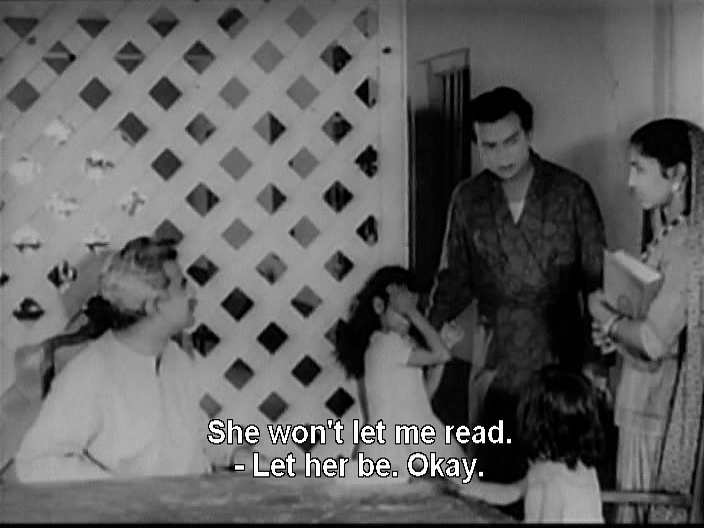
Meanwhile Sujata and Rama have grown up as sisters, fighting, squabbling and playing together. The little girls are played by Baby Farida as Rama and Baby Shobha as Sujata. Baby Shobha is excellent as the fiery little girl who adores her parents and can’t stand the idea of being separated from them. She keeps asking why she isn’t allowed to learn, why Charu won’t feed her with her own hands. It’s sad.  As Sujata grows up, now played by the radiant Nutan, a further complication emerges as she threatens to outshine Rama. Aunt Giridala keeps getting in Charu’s ear about how she needs to get rid of Sujata.

Grown up Rama (Shashikala) has modern attitudes and doesn’t care about Sujata’s origins. Rama sees all the good qualities in her big sister and includes her in all family events.

Rama seems to be blind to the gulf between Sujata and the rest of the family and I’m not sure whether that was naiveté or determination to ignore the discrimination. She knows her aunt wants her to marry Adhir (Sunil Dutt) but she sees he is interested in Sujata and gives their love room to develop. Shashikala is bubbly and fun, and makes Rama very likeable.

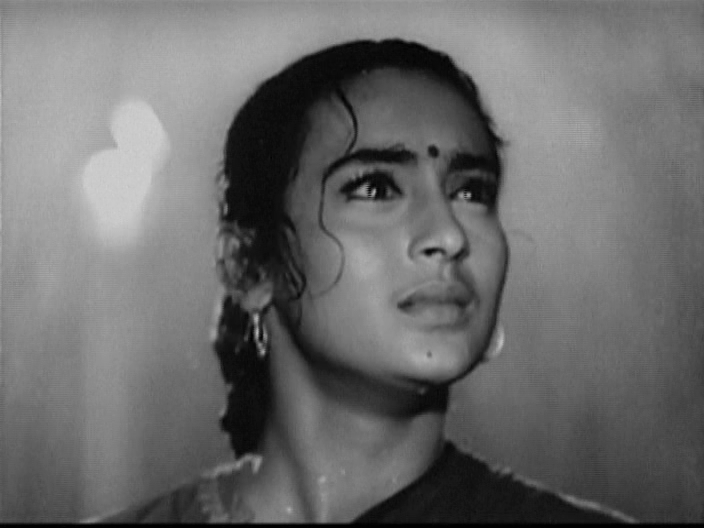
Nutan is just lovely. Because Sujata is often on the fringe of scenes, she has little dialogue and Nutan uses her beautifully expressive face and posture to show her feelings.

The thing Sujata wants to hear 1000 times is not Adhir saying “I love you” but Upen and Charu declaring “you are our daughter”. But having Adhir express a love that is just for her must have been amazing and intoxicating after craving acknowledgement and affection for so long. When he touches her, she shudders not in affront or with desire but with the sheer shock of being touched by another person. She does spend a huge amount of time crying, but her sadness is evident and I’d cry too if I had felt that my parents really didn’t love me and I didn’t belong. Sujata doesn’t expect anyone to fix things for her. She has some crises and chooses her next steps even as she knows her loyalty may not be rewarded.

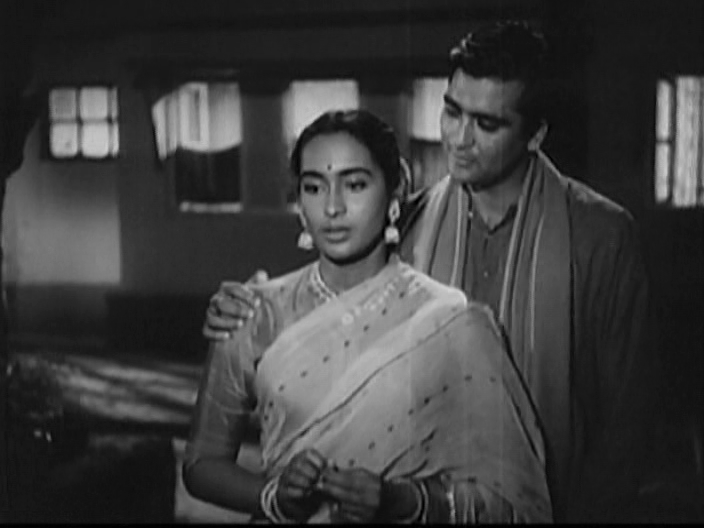
Sunil Dutt is perfect as the charming and well bred Adhir, his clean cut good looks suited to the romantic ideal. His feelings develop slowly and he is deliberate yet not pushy. Adhir respects Sujata’s reticence although he doesn’t understand why she resists. Once he discovers her origins, he is clear that it makes no difference to him. The scenes between Sunil and Nutan have a delicate and intimate feeling, and they seem to act with each other rather than for the camera.

Adhir woos her over the phone in the lovely Jalte Hain Jiske Liye, trying to reassure Sujata that they can be together. I can see why she would be smitten!

S.D Burman’s music is used sparingly and the songs are tailored to the characters. Rama’s songs are jaunty upbeat Western infused, while Sujata tends towards the more lyrical. Often there is no background music or sound at all, sometimes just the sounds of birds or rain. Adding to that understated use of sound, emotions are mirrored in simple visual devices. When Sujata is overwhelmed, she switches off the light so she can hide herself in the shadows. When love strikes, Bimal Roy shows rain, leaves blowing in a gust – maybe showing that emotions are natural and not subject to man made rules. There are some charming visual effects when the child Sujata is told that she is going to visit a magical land (an orphanage) but by and large the characters speak for themselves.

I was moved by Sujata and found myself engrossed in the family drama. The resolution is so textbook filmi and yet profoundly satisfying as it destroys a few obstacles and hammers home the message. See it if you appreciate a melodrama with a social message and for the beautiful and restrained performance by Nutan. 4 ½ stars!