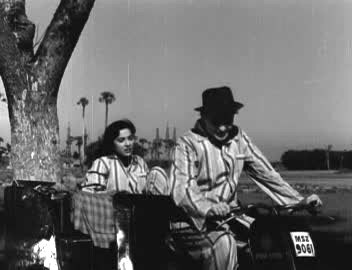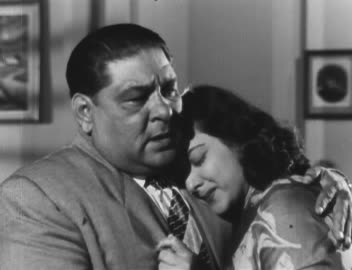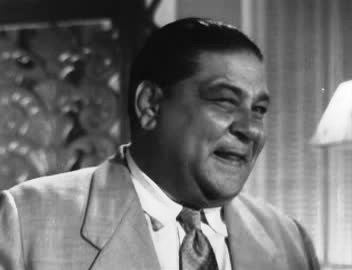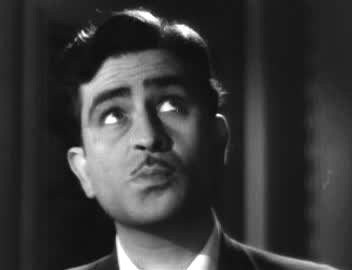
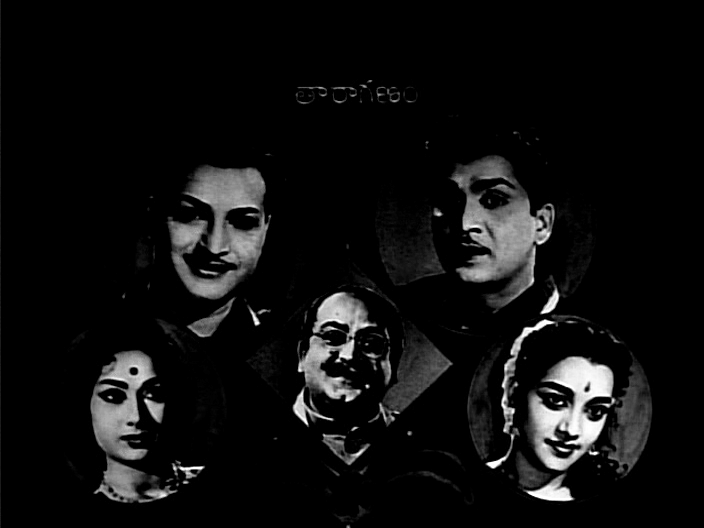
Gundamma Katha


Gundamma Katha is a classic film from 1962 and is considered to be one of the last great films to be produced by B. Nagi Reddy and Chakrapani under the Vijaya Studios banner, which also gave us Mayabazar. It features an all-star cast, lovely production design and  a lyrical score by Ghantasala.  Sadly the Shalimar DVD has really ordinary subtitles which detract from what is supposedly a well written story.
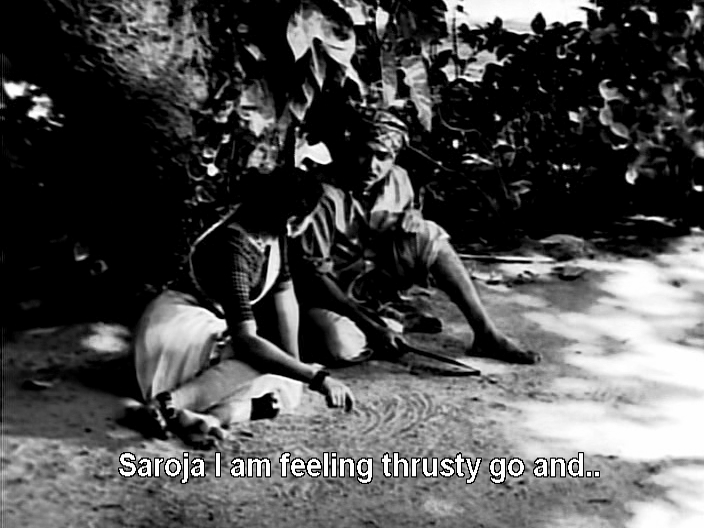
Perhaps they meant thirsty? Who knows.

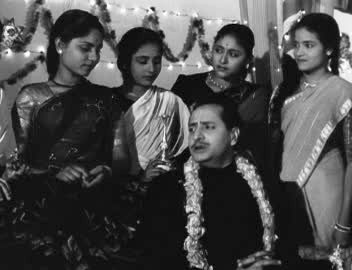
The story revolves around Gundamma, a wealthy widow who has one spoilt and indulged daughter, one Cinderella like step-daughter from her husband’s first marriage and one largely absent son. Gundamma rules the household with an iron fist and her reputation as a termagant is well known in the village. She wants to make an advantageous match for her daughter Saroja but her wastrel brother Gantayya throws a spanner into the works every time. As Gundamma casts her matrimonial nets wider she contacts wealthy Ram Bhadrayya, a friend of her deceased husband, who has two eligible sons. While Ram Bhadrayya wants to help his former friend’s family, he is concerned about the values and character of the girls and decides to put them to the test.
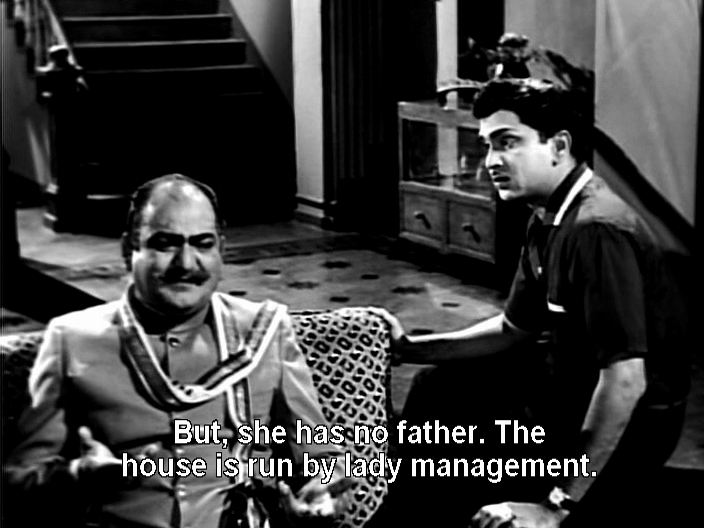
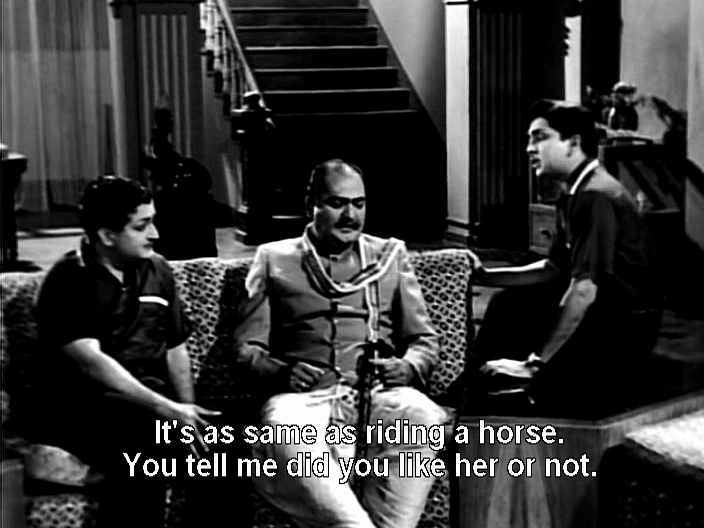
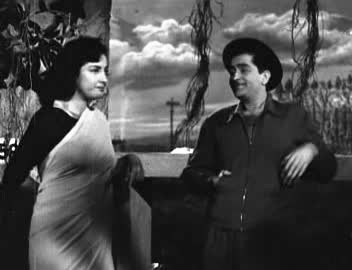
NTR plays Anjaneya or Anji and it is decided that Laxmi (Savitri) is the best match for him. Since Laxmi is effectively a servant in the household, he poses as a labourer in order to get closer to her, and to appear to Gundamma as an appropriate suitor.  This part of the deception seems very typically filmi and almost justified, since Laxmi does deserve better than the life she has. NTR is charismatic as the exuberant Anji, and Savitri is beautiful as Laxmi. Their relationship develops over conversations and teasing, and they develop a true appreciation for each other. With a jaunty song Anji points out to Laxmi that women can do whatever they want to do in the world, and she should have no fear in letting herself be more than an unpaid servant to her step-mother. Sadly this enlightened attitude turns out to be lip service as the story progresses, but the partnership of Laxmi and Anji does seem to be a happy and balanced one.

Ram Bhadrayya’s second son Raja (ANR) woos the privileged and spoiled Saroja (Jamuna) and finally marries her. Playing out a drama concocted by his father and Anji, Raja tells Saroja that everything was a lie and that he is not even Ram Bhadrayya’s son.  After some more drama Saroja is forced to choose between her home and comforts or leaving to an unknown future with her drunk and possibly criminal husband. This deception is all to ensure that Saroja has a proper wifely attitude and will look after her husband in the manner he feels appropriate. Saroja doesn’t seem to deserve all of the heartache she is put through, as her attitude already appears quite appropriate for the wife of a wealthy man. It doesn’t seem likely that she will have to clean pots and pans, plough fields and cook once she is established in her new household but she is forced to learn as she lives in near poverty with her husband. Why her father-in-law feels this trickery is necessary for her to become a better wife is not apparent to us. She actually seemed to be mellowing and becoming more empathetic as her romance blossomed with Raja. It certainly wasn’t a palatable part of the plot and made the second half of the film much less enjoyable.

Throughout all of the drama, ANR manages to instil the character of Raja with enough charisma that Saroja’s devotion to him is understandable to some degree, although her behaviour is clearly driven as much by wifely duty and the expectations of society as anything else. Jamuna is excellent in her early scenes as the lazy daughter and also as the bewildered wife whose world rapidly falls apart. Despite this couple’s rather dubious story there are some lovely duets which are beautifully depicted and in these scenes the two actors have great  rapport with each other.  The growing closeness is illustrated by the proximity of their sleeping mats – initially on opposite sides of the room, by the time ANR decides to reveal the truth they are happily snuggled up next to each other.

The cinematographer Marcus Bartley has a reputation for creating beautiful moonlit lighting effects, shown to great effect here and in Mayabazar.  The costumes are lovely, and very much serve to illustrate the status of each character. A simple change in clothing is all it takes to make a prince a pauper and back again. Initially Laxmi wears cotton saris and simple blouses while Saroja gleams in silk and jewels. As the sisters’ fortunes change, so do their wardrobes.

The film excels in the story of Gundamma, played by Suryakantham (who apparently made her career out of playing wicked stepmother type characters).  Gundamma’s scenes with the argumentative and shifty Durgamma (Chayadevi) are well written and enough to make anyone duck for cover when the two start fighting. Her clashes with the various members of her family are realistic and energetic.  Her final humiliation, which eventually results in her reconciliation with Laxmi, is a nice twist to the story and a suitably sentimental resolution to the melodrama.
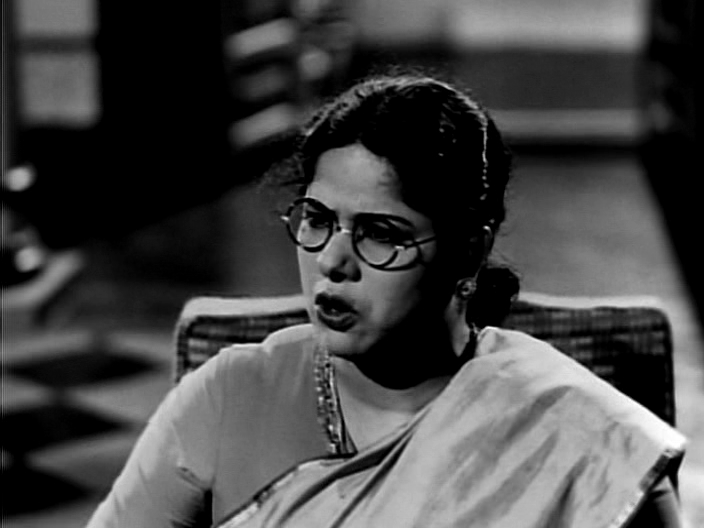
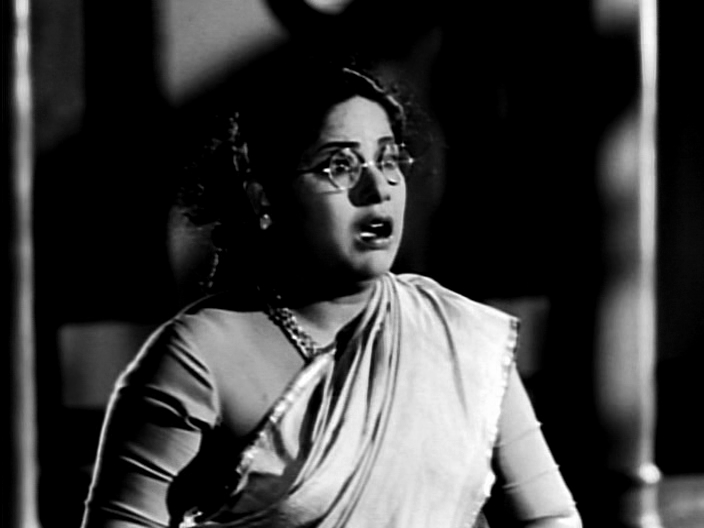
The lead actors were all at their peak when Gundamma Katha was made and they seem to share an easy rapport. In particular the many wordless exchanges between the two brothers are great to watch as they convey so much through their posture and gestures alone. Savithri and Jamuna are beautiful and show distinct personalities without ever falling into caricature. The sisters’ relationship is not as friendly as the boys’, but they exhibit familial love and loyalty regardless of their difference in status. Once again, the comedy track is hit and miss and we have different opinions as to what succeeded.

The film does end in a rushed few scenes of everyone reconciling. We were disappointed by this as it seemed a bit under-written and hasty, and also because there was never any sense of owing the ladies any explanation for what had been done to them. Granted, Gundamma, Laxmi and Saroja were none the worse off in a material sense at the end of the story, but they had been lied to and manipulated and that was hard to swallow. Certainly we expected more anger or argument between the couples. Setting up three strong and intelligent women and having them turn into doormats by the end of the film was a major let down.

We haven’t really mentioned the lovely L Vijayalakshmi who played the boys’ cousin Padma.  She was actually the sensible and sane one who married the man she wanted (Gundamma’s son) and stood up for what she wanted. Apart from looking lovely and putting Gundamma back in her box, she also performed a very pretty classical dance which was a highlight in this largely non-dancing film.

The music is very melodic and the songs seem to suit the characters and the situation. We were amused to recognise the opening titles music, also used in that L Vijayalakshmi dance, as the riff from recent Hindi hit Pe Pe Pepein from Chance Pe Dance!

Temple says: I liked a lot about this film – the cast, the production design, the music and the cinematography. I strongly disliked the story. The message seems to be ‘be strong, intelligent, independent…until your husband tells you to stop’. In addition to my issues with that, the character of Saroja just wasn’t written as someone eligible for Taming of the Shrew type behaviour modification and so the treatment meted out to her seems harsh, unnecessary and not in keeping with her actions in the film. The acting style has really dated, especially that of the male cast members. ANR and NTR do have oodles of charisma, which makes the stomping and scenery chewing much more entertaining than it might have been. But the acting honours go to all the ladies – which is ironic in a film that certainly isn’t about girl power – with Savitri the stand-out performer. She is beautifully expressive without ever being over the top. The minor supporting cast didn’t make much of a contribution other than to add the alleged comedy (regular readers will know I suffer from Comic Sideplot Intolerance). It seemed a waste to have Allu Ramalingaiah as the hotel owner as he had so little to do. I really found Ramana Reddy as Gantayya (Gundamma’s dodgy brother) annoying and hammy and I fast-forwarded through many of his scenes just so I could get through the film.  Actually, I think the fast forward button was essential to me getting through this – I was bored by the over-acting and repelled by the story so this wasn’t the pleasure to watch I had hoped for. Time hasn’t been kind to this classic. I give it 3 and 1/2 stars, just for the stars.

Heather says: This is a film which both looks and sounds very beautiful and from this point of view is an absolute winner. The story of Gundamma and her two daughters had a lot of potential, and it’s a shame that the writer D.V.Narasa Raju decided to turn the two sisters such perfect and therefore perfectly dull wives by the end. Both Laxmi and Saroja had plenty of personality at the start of the film and eradicating this in the quest to make them the ideal wives just made them rather less interesting to watch. The lack of a reaction from Saroja when she discovers the deception was particularly irritating considering she had just been put through absolute misery by the man proclaiming to love her. It was also a little odd that the start of the film featured a song all about women’s rights and then proceeded to firmly walk all over them. I suppose that in 1962 it was more important to adhere to conventional principles rather than allow a strong-minded woman to succeed. However, despite these issues with the storyline, I did enjoy the romance between Anji and Laxmi. Their songs, as well as the duets between Saroja and Raja, were really lovely.

The characters of Gundamma, her perpetually scheming and whining brother and the very shady Durgamma were much more entertaining. The interactions between them all were much more believable and seemed to be better written, although this could just be due to the subtitles. I found the comedy scenes with Ramana Reddy and Allu Ramalingaiah in the restaurant to be really funny, as were his scenes with NTR. What can I say? I’m Irish and it reminded me so much of similar scenes I’ve seen at home! The comedy track here worked well for me, and was much more enjoyable than the unsettling story of Saroja and Raja. ANR and NTR were excellent together and their relationship as brothers was very well portrayed. I also liked the minor characters and the way their individual stories were worked into the plot. The standout performance though was that of Gundamma, and for that alone this film deserves to be a classic. Without the Raja and Saroja storyline it would have been even better, but overall I enjoyed this film and it gets 3 ½ stars from me.
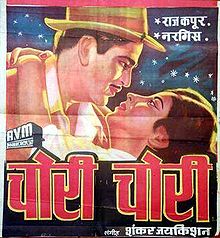
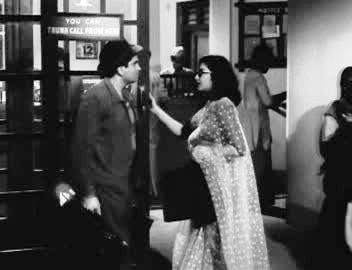
Chori Chori (1956)

I grew up watching RKO and MGM musicals, and have always loved that kind of film with snappy dialogue, lush soundtracks, stylised visuals and excellent casting. I am a bit resistant to the remake in general – I tend to think that if a film was great first time around, why mess with it. So I was surprised by how much I like Chori Chori. It is ‘inspired’ by the 1934 Frank Capra film ‘It Happened One Night’ starring Clark Gable and Claudette Colbert, and has the legendary jodi of Nargis and Raj Kapoor at the fore, directed by Anant Thakur. Chori Chori seems to me to be the perfect balance between slick Hollywood and heart on sleeve Bollywood.

One of my great friends often says ‘Raj Kapoor was sleazy…and not in a good way’ which never fails to crack me up and is the thing that pops into my head when I see him.  I didn’t ‘get’ Raj Kapoor til I saw this film and drew the connection to the Gable style of Hollywood hero that used equal measures of smarm and strong-arm to win the day. I’m still not a huge fan, but I can at least glimpse what it was that makes him such a significant figure in the Hindi film industry.

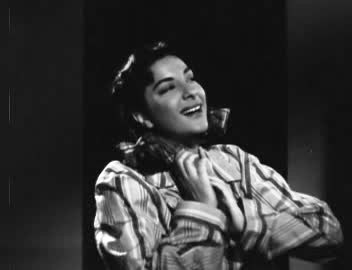
Nargis is Kammo – spoilt daughter of the super wealthy Ghirdarilal (Gope). She is determined to marry the dashing pilot Suman (Pran!) but her father is sure Suman is only after the dollars not his daughter. She jumps ship and swims to shore, determined to make her way to Bangalore and Suman’s arms. I have to say she showed some moxy in pawning a diamond ring to fund her travels, but the white net sari she bought with the proceeds struck me as wildly impractical for a long bus trip.

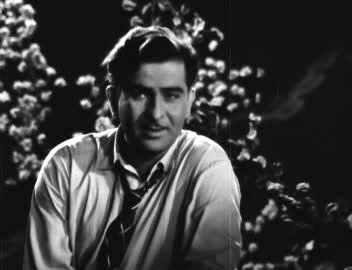
Also bound for Bangalore is struggling journalist Sagar (Raj Kapoor). The two loathe each other on sight and of course we know that can only mean true love is round the corner. Sagar is reluctantly drawn into helping Kammo, caught by his chivalrous nature, curiosity and later by his attraction to her. He wears a western suit and hat, slightly the worse for age, and his look could have been lifted straight from Hollywood Central Casting. He represents the heroic battler, trying to make a decent living while keeping his morals intact. He cuts a deal with Kammo – he will help her get to Bangalore and Suman, and he will reap a financial reward when he sells his story.

Ghirdarilal places adverts offering a reward for anyone who returns Kammo to him. Thus there is ample opportunity for a host of minor characters (including Johnny Walker) to join the treasure hunt, and a catalyst for throwing the sparky leads together.

As they travel incognito, scenes cut away to Suman who is shown to be a gold-digger with an eye for dancers. This is not bad for the viewer as we get to enjoy a very nice classically inspired dance, but we already know which man Kammo should marry.

Kammo and Sagar miss their bus, and continue to travel together under the pretence of being married. Raj is only carrying a small valise and yet I lost count of how many pairs of stripy pyjamas he seemed to have packed. Mind you, Nargis seems to amass a decent collection of saris along the way so it’s probably only fair that Sagar has an extensive range of sleepwear. The pyjamas were quite significant in ‘It Happened One Night’, but rather than share a single pair of pjs this couple get matching his n hers. Lots of them. Perhaps the wardrobe team had the day off when someone came up with Kammo’s alluring night attire.

They encounter suspicion and adversity and their own growing feelings. Sagar wanted the story and maybe the money, and Kammo wanted Suman – neither of them wants to acknowledge what is changing between them. They offer each other small kindnesses – the loan of the ubiquitous pyjamas, a blanket thrown towards a sleeping Raj – and lots of snark. The dialogue by Agha Jani Kashmiri is sharp and delivered with perfect timing. These two really are a match for each other and the chemistry is sizzling.

It’s all quite predictable down to the last twist and turn but it is still compelling. Nargis is stunning in her portrayal of the feisty Kammo. She isn’t afraid to articulate her feelings for Sagar, whether in song or dialogue, and challenges his reticence. In one scene, heartbroken Kammo walks through a storm and Nargis exudes grief so profound it outshines all the environmental theatrics. It is a bit irritating, although perfectly in tune with the era, after such an independent start Kammo appears to realise she should never have defied her father or left her home, although that may be her own idea of a necessary penance.

Kammo’s relationship with her father was perplexing. Kammo was spoilt rotten and certainly lacked for nothing in the material sense. He locked her up to stop her marrying Suman and really did not believe that anyone would marry ‘baby’ for anything other than his money. He was devastated when she disappeared but trusted Kammo to tell him as much as she wanted to on her tearful return. So I kind of blame Ghirdarilal for making Kammo susceptible to Suman’s flattery as she was seeking approval she didn’t get at home. But he also made her the kind of brat that needed a reality check. Oh these filmi parents!

Raj Kapoor seems content to mostly allow his leading lady to dominate, and is fairly low key. Until the puppet song which I think was designed to allow him to release all the repressed over-acting. He spouts a lot of philosophy about the joys of the simple life, which seems to impress Nargis. I’d have more faith in that if Sagar had ever lived anything other than a simple life and so could make a valid comparison, but I’m a cynical viewer not a filmi heroine.

A disquieting note throughout is the equation drawn between marital status and the individuals’ threshold level for physical violence. One scene has a landlord test whether Sagar and Kammo are married by smacking Sagar around. The fact that he doesn’t flinch is accepted as proof he must be married to her! Slaps fly in this film, and while they are generally shown as a symptom of passion, it’s still a bit disconcerting and causes me to remind myself this is the 50s. For those wondering, Nargis lands some excellent shots, which I enjoyed, but on the downside the women in Chori Chori are generally portrayed as the aggressors in domestic violence.

The music is used to perfection in this film. Each song acts to illuminate the innermost thoughts of the characters singing or those observing the performance. Shankar-Jaikishan have the perfect big band sound for the romantic duets, and the orchestration is lush as befits this story. The songs show a range of musical influences and are very well integrated into the narrative. And who doesn’t swoon just a bit on seeing Asha Bhosle, Lata Mangeshkar, Manna Dey and Mohammad Rafi all on a soundtrack?

The classic visual devices from ‘It Happened One Night’ appear throughout Chori Chori – particularly the wall Sagar creates in their shared rooms by draping a blanket over a rope, those stripy pyjamas, and the cramped bus trip. It’s a fairly faithful remake, adapted to suit its audience’s sensibilities, and the changes don’t weaken the story.

Raj and Nargis are stunning and deliver beautifully nuanced performances. With the frisson of their legendary affair in mind, the romance on screen seemed that much more compelling as I wondered what was acting and what was revelation. The film has style, beautiful cinematography, lovely songs and strong performances. I give it 4 stars! Temple


Teesri Manzil

Teesri  Manzil (1966) is a stylish, slick Hitchcock influenced musical romance with a little murder mystery thrown in.

The film opens with a film noir style scene of a woman (Rupa) rushing up to the third floor of a hotel before falling to her death.  A crowd of onlookers gathers, and we see that Rupa is clutching something in her hand – later revealed to be a button from an assailant’s clothing.  Suspicion falls on Shammi Kapoor as Anil, the western style playboy musician with an eye for the ladies and extremely emotive hair.  But the button was not investigated at the time, as otherwise there would have been a speedy resolution, fewer incidental deaths, and no film.

In the next scene, we find that almost a year has passed from the time of Rupa’s death.  The jazz feet of Shammi trip nimbly across the railway station floor, only to meet the elegantly shod feet of Asha Parekh and we have our love interest! Both of these young fashionistas exude a western influenced hip and funky style, with Asha’s tailored salwar kameez leaving Shammi in no doubt about her femininity.

They speak a blend of Hindi and English, quote couplets and are smooth as silk. Asha’s Sunita  is opinionated, feisty and likes her independence and comforts. She can be a brat, as shown in the unfortunate picking-on-the-fat-guy scene on the train. But she also has excellent Filmi Heroine characteristics, fainting with fear at the idea that she had killed the Fat Guy with her umbrella.

Sunita travels to Mussoorie to confront the man she believes ruined her sister, Rupa, thus causing her to commit suicide. Being alert viewers, we know Shammi’s Anil is her man and before long, he knows it too. The interior of the hotel is full of niches, doorways, drapes and balconies and invites skulking, spying and eavesdropping.  Many shots are framed by archways, window apertures and drapery, giving a sense of spying on the hotel occupants. Sunita had planned ahead and brought a women’s hockey team to Mussoorie to ensure Rocky is taught a lesson (perhaps an inspiration for the eve-teasing scene in Chak De?).

Anil aka Rocky aka Sona is the drummer and singer in a hotel band, which is an excellent plot device as it allows for some fabulous RD Burman songs to be centre of attention. It also allows for Helen!  Helen not only minxes her way through showtunes, she has a small but significant role as femme fatale Ruby, the band’s singer and a woman in love with Rocky.

Anil and Sunita play cat-and-mouse culminating in a contrived car expedition which turns into an unplanned overnight stay in the forest. Back at the hotel, we resume the noir-ish atmospherics and the mysterious Cigar Man makes his presence felt, stalking Anil/Rocky/Sona. Ruby makes enigmatic statements; even Rocky’s friends assume there is some guilt regarding Rupa’s suicide. What really happened that night?

During the snappy fairground fight song we can’t help noticing an extra wearing the outfit Asha Parekh wore in the train scene. What’s going on, wardrobe team???

As the romance between the two leads hots up, we are treated to a series of flashbacks which go some way to explaining the sequence of events leading to Rupa’s death, and leave us with an impressive array of possible suspects and motives.  To further murk the waters, Anil tries to confess to Sunita that he is Rocky, but due to yet more intrigue she only discovers this as she watches him sing his heart out to her.  Sunita rejects Anil/Rocky with true Filmi Heroine style in front of an appreciative audience – score 1 for team Helen!

The Enigmatic Cigar Man turns out to be a police  inspector (Iftekhar!) and we have another flashback episode explaining Rupa’s death – after which Shammi decides maybe he does know more than he thinks he knows. Yes, only in films. Shammi confronts Helen about her lies and there is a scuffle during which an unseen assailant fires a gun and Helen expires gracefully, with beautiful eyeliner. Her dying declaration is that her only crime was to love Rocky and so that obstacle to his marrying Sunita is neatly sidestepped.  Shammi starts acting like a Hammer Horror Heroine and does exactly as he is told by a strange woman who breaks into his room. Some minutes of sweaty overacting later, Shammi catches up with the audience, confronts the real killer and gets to the truth. The bad guys get their comeuppance, the heroic couple get a first class train ticket home and everyone is happy. Even the Fat Guy.

There are some beautiful moments in the editing – for example when Sunita realises that the man she has given her heart to is also the man she thinks is responsible for her sister’s death, there is a beautiful shot of wax running down the candle, followed by the tears running down Sunita’s face. Or later, when the police inspector shows Anil the flashy button that was found in Rupa’s hand after her death, the next shot is of more fancy buttons, this time on the jacket of Ramesh, her fiancée (played by Prem Chopra – who among us would not suspect him of being the bad guy?).

The film relies on flashbacks to fill in the missing facts, and this does tend to slow the pace down. The Hitchcock vibe dissipates somewhat under the weight of the ludicrous decision making by Shammi and Sunita at various points, but the mystery aspect remains well integrated into the romance in this interesting  screenplay by Nasir Hussain.  The direction by Vijay Anand does create an undertone of unease and mistrust throughout the film. The visuals are western, stylish, slick and glossy, and convey the sense of intrigue brewing in the hotel.  The music by RD Burman is fabulous, and Asha Bosle and Mohammad Rafi are in fine voice.

We had trouble selecting screencaps for this post, so here is an assortment just for your viewing pleasure:

This slideshow requires JavaScript.

Heather says: I watched this film initially for Shammi and Helen, being a fan of both.  It was lovely to see Helen in a more realised role, and she was just fabulous as the jealous Ruby.  Shammi is his wonderful self with plenty of dancing, that too with Helen, to keep me happy.  The music is one of the best points of this film, and the dance numbers are infectious and energetic with enough rock n roll to keep Shammi’s hair choreographer busy!  I defy anyone to remain still while watching Oh Haseena or Aaja Aaja.  I love the contrast in the editing, with the suspense built up using shots through windows and in gloomy passageways in the hotel, in contrast to the romance scenes played out in the ballroom, or outside in the open air. The dance sets in the ballroom are totally over the top, and my optometrist self gets very excited at the use of a gigantic eye as a prop !  The fashions are another high point and I tend to find that I don’t really care who killed Rupa or why, as the whole film is such a visual feast – and it fact it does seem as if the rest of the cast is of the same opinion by the end.  I deduct stars for the ridiculous plot contrivances in the latter part of the film, but add on another half for Helen, Asha and Shammi who really make this movie.   After which complicated mathematics I give this movie 4 stars.

Temple says: I think Teesri Manzil is an excellent example of how style can triumph over substance…to an extent. This isn’t my favourite Shammi film by a long chalk, but it has so much flair that the really stupid plot contrivances cease to be too annoying. I love the soundtrack, and the song picturisations are fabulous. This is the film that convinced us all that Shammi’s hair had it’s own choreographer! The added joy of seeing Helen in a pivotal character role almost compensates for the ridiculous under-use of Laxmi Chhaya. I will never understand the decision to cast her in this film, with this gorgeous soundtrack and NOT HAVE HER DANCE!!!!! I love the visual devices in Teesri Manzil – the cutout arches and windows framing shots, the lurking behind doors and draperies and the amazing fashions.  The real focus in this film remains the romance between Sunita and Rocky which Asha Parekh and Shammi Kapoor invested with such lively intensity and feeling. The whodunnit aspect of who killed poor Rupa is diluted by the time we get to all the frantic action in the last 30 minutes or so and the sense of unease and fear that gave this a noir flavour just fizzled out. The only reason anyone seems to be interested in Rupa is that her death is a major obstacle to True Love for Sunita and Rocky. It leaves me feeling quite dissatisfied with the denouement as the romance overwhelms the mystery and pushes the film into silly territory. For me, this rates 3 1/2 stars.