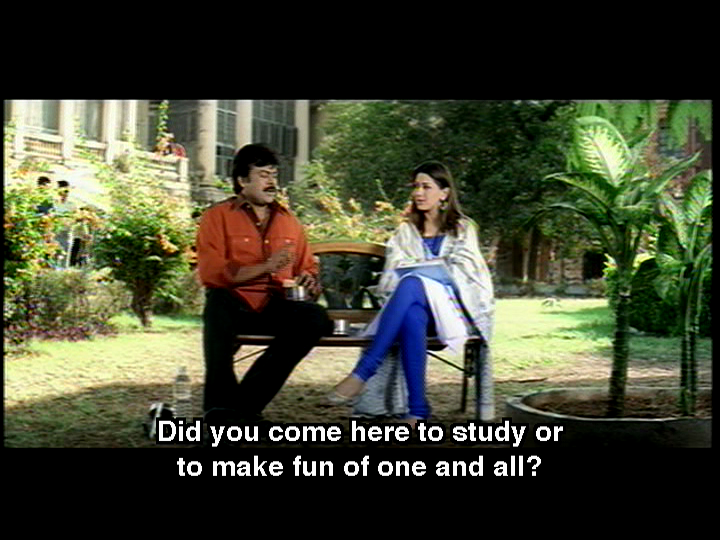
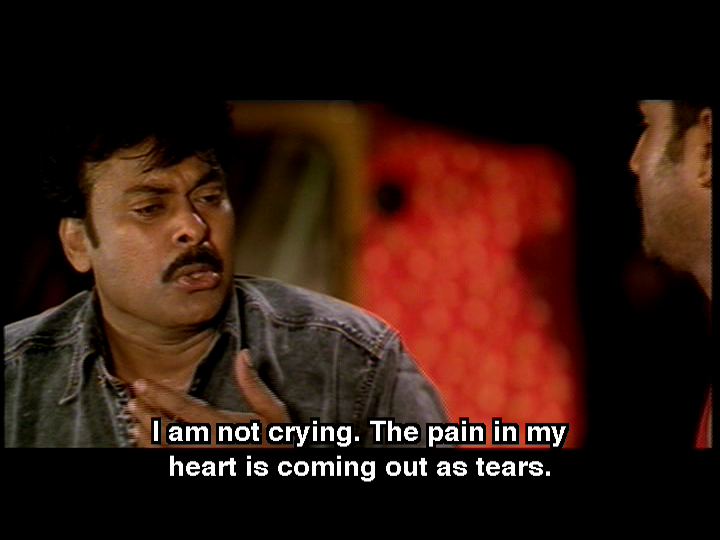
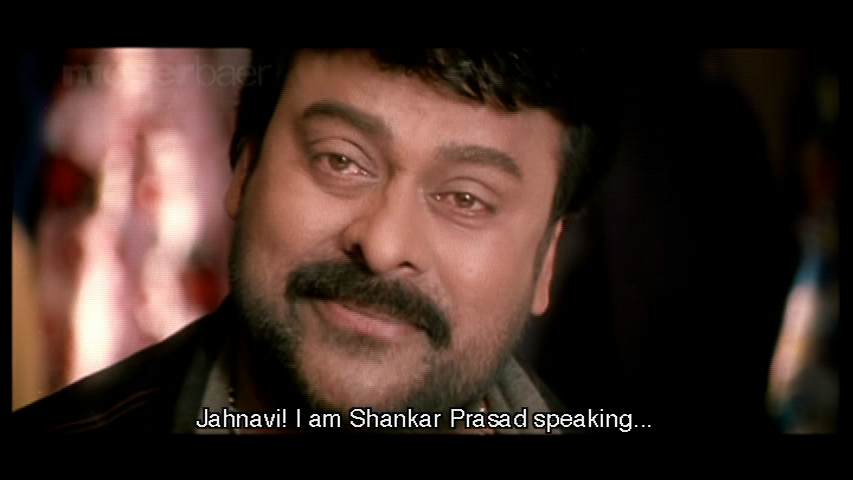
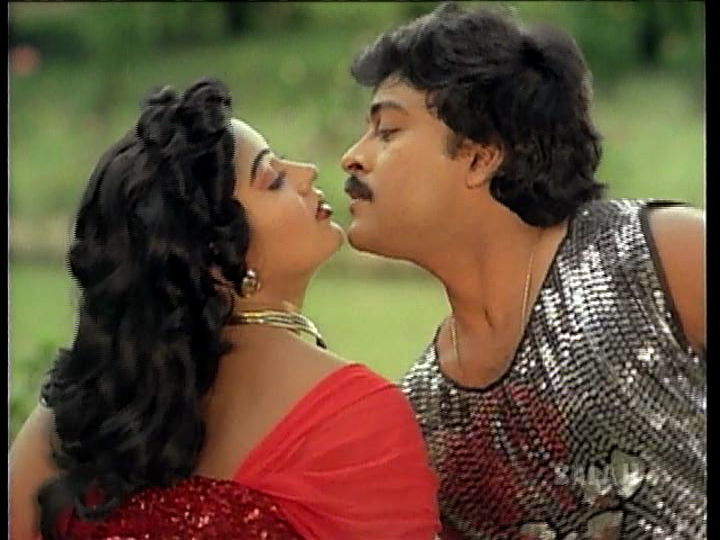
Aaradhana (1987)


Film romances are often full of stupid people doing stupid things, trying my patience to the point that I hope one or all of them will hurry up and die so the movie can end. Thankfully this is not the case with Aaradhana which I found intelligent and lyrical. It is hard to avoid spoilers, although I have tried, so be warned…

The basic story is simple enough. Puliraju (Chiranjeevi) is a no-good drunk who falls for Jenny, (Suhasini) a Christian schoolteacher. Jenny’s family rely on her for financial support and her father Danial plans for her to marry wealthy cousin Lawrance (Dr Rajasekhar). Gangamma (Radhika) believes she has been engaged to Raju since childhood and is determined to marry him.

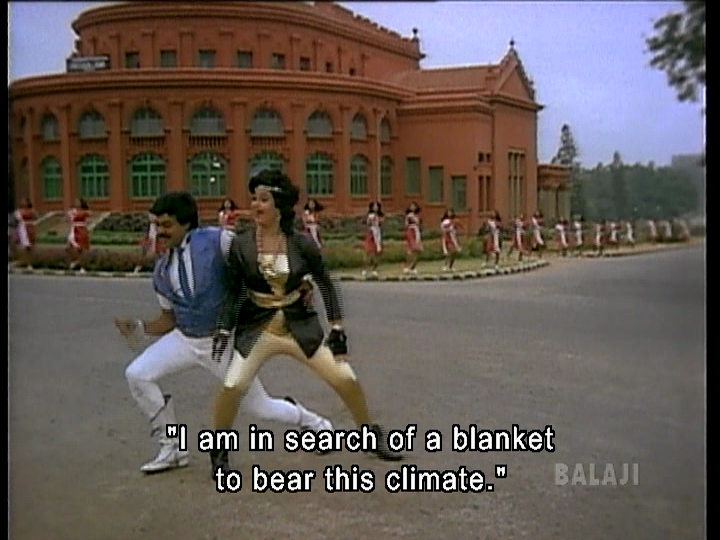
It could have been a farce but for excellent writing and beautiful performances, ably steered by writer-director Bharathi Raja and dialogue writer Jandhyala. There are consequences to every choice and these characters know what they want, see the obstacles and understand what the results will be, both for themselves and for others. This thoughtful writing adds a note of tragedy to balance the sweetness of the love story. The cast are uniformly good and make the most of the material, with Chiranjeevi, Suhasini and Radhika outstanding. I am a Chiru fan, but I really was seeing Raju on screen most of the time, not the Megastar. I will add, there is not a shred of lycra nor a metallic go-go boot in sight – his performance succeeds purely on acting ability. And those eyes.

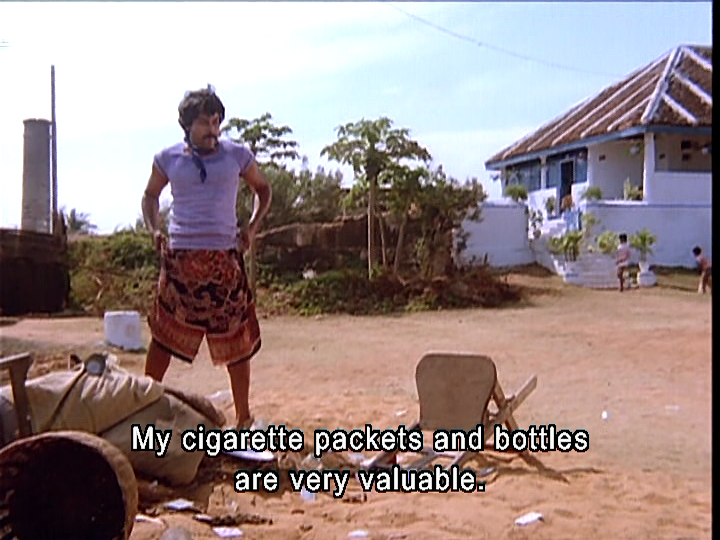
The film opens with a slow pan around a seaside village before Puliraju chases a man through the market and lops his arm off as punishment for teasing a girl. He is a destructive force of misguided and alcohol-fuelled energy; childishly impulsive and self centred, full of aggression yet backs away from emotional confrontations. His name is a sign of the character’s dual nature – is he a beast or a prince? His mother and the villagers see only his worst side.

Jenny is worlds away from the likes of Raju. After a confrontation where she slaps him and he backs down, Jenny talks to Raju’s mother and reassures her that he has a good heart under the crude exterior.
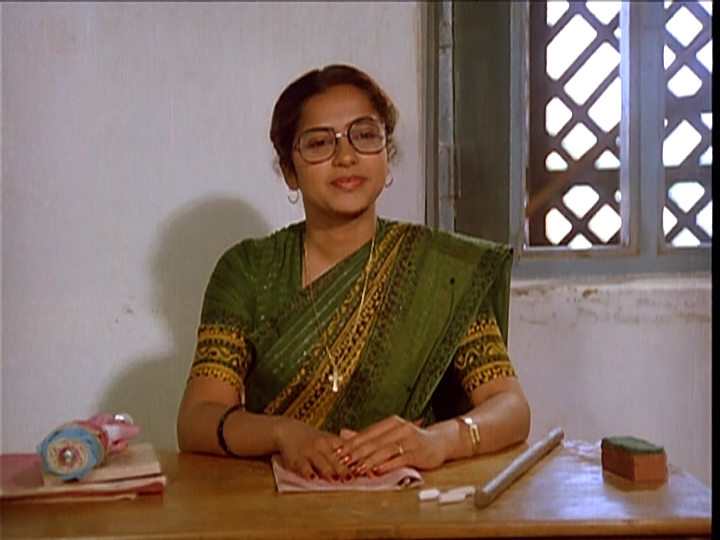
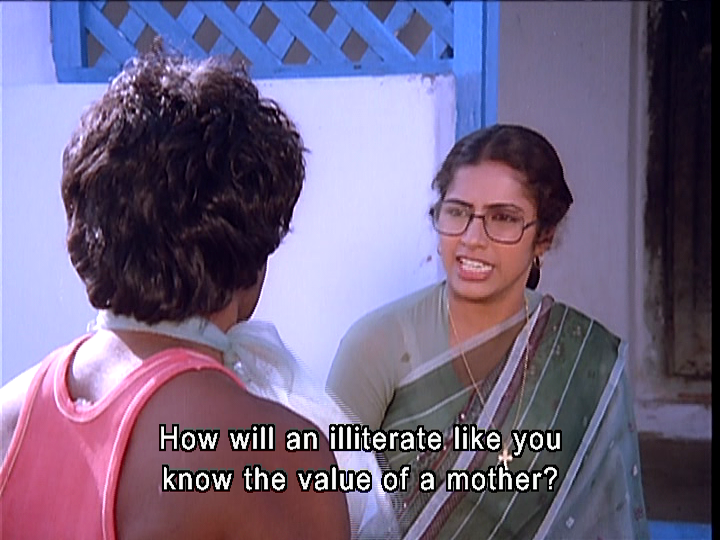
Raju overhears this and is touched by Jenny’s faith in him which, along with his attraction to her, compels him to try to become a better man. Jenny isn’t afraid of Raju, and her values demand that she tries to see the best in him. She acquiesces to his plea for lessons and over the time spent together, an attraction and warmth develops. His childish streak is allowed to manifest as a sense of fun and silly stunts to impress Teacher Jenny, and his fearsome reputation diminishes.

I found it unusual to see a hero make himself so vulnerable to a woman, and to be in the position of mutely hoping she picks him. Raju knows he isn’t the right man for Jenny in so many ways, but he loves her and feels helpless. He changes his hairstyle (with varying degrees of success but a ruler straight side part always seems to indicate Good Boy), learns to read, swaps his colourful lungis for pants and generally cuts back on his drinking and hell-raising.

More significant, he learns about empathy and demonstrates his affectionate side. He hits a few bumps in the road, but he never fully relapses into the aggressive brute Puliraju. This change is more than superficial grooming to appeal to Jenny, and later scenes with Gangamma show the extent of his self-awareness. Chiranjeevi subtly alters his posture, facial expressions and diction to show the changes in Raju.

Gangamma is Raju’s cousin and fiancée since childhood. Raju initially rejects her just because he doesn’t want a wife, and later Jenny is the unwitting obstacle between them.

Gangamma tries to see off her rival but once she realises Raju will never return her love, she reassesses. Rather than force the marriage, she colludes with him to avoid the unwanted wedding. She would rather nothing than a one-sided marriage to him and asks for a place in his household, but not as his wife. Radhika was stunning. Gangamma was a cheeky and sly girl to start with and her expressions transformed completely by the end of the film to a saddened but spirited woman

Lawrance is nice, wealthy, likes Jenny and is ready to marry. Lawrance and Raju are often shot in mirror poses or facing opposite directions and as heavy handed as it may sound, it does add to the tension as Lawrance seems to have no idea he has a rival for Jenny’s love.

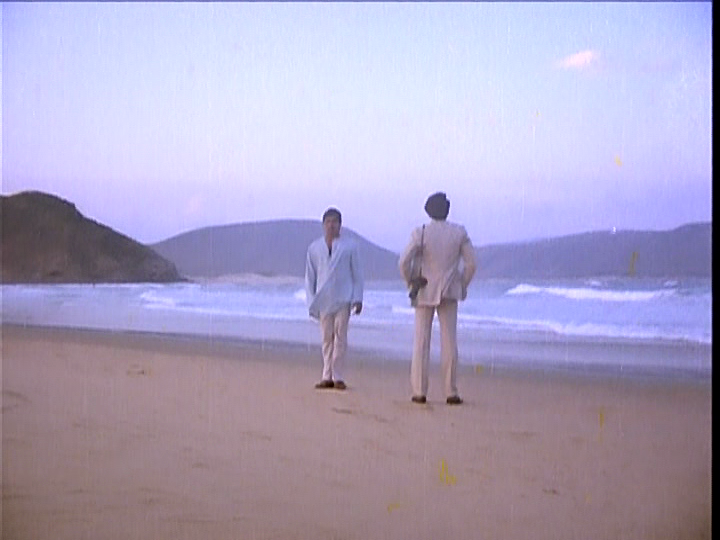
Religion doesn’t appear to be a strong division in this fishing village which possesses an unusually large church. Religious imagery abounds through the film and serves to illuminate the character’s qualities rather than promote any one practice or belief. When Raju gives his teacher a seashell, he proudly announces it is special, the same shell Lord Shiva touched. He calls Jenny a goddess; not just out of love but because he sees her as beautiful, educated and an inspiration.

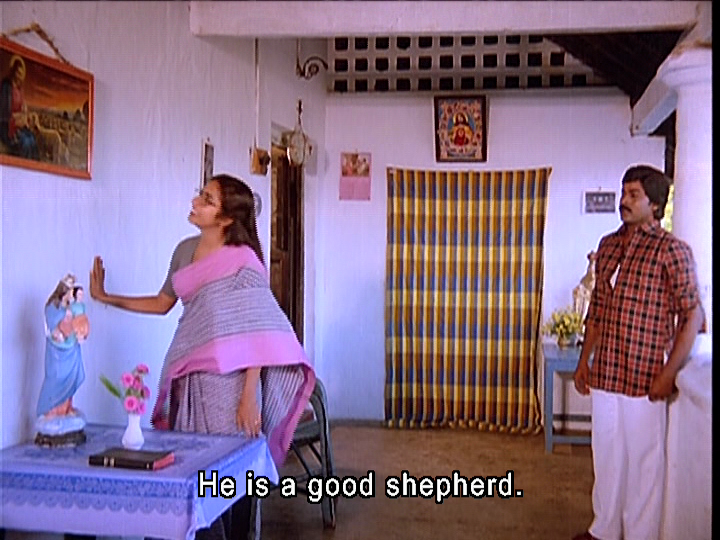
The Christian iconography in Jenny’s home resonates with Raju and her explanations seem aimed straight at his heart. I wondered whether the poor lost goat was really necessary in so many scenes, but seeing Chiru in tears on the railway platform with that goat, I melted too.

Lawrance’s aunt (Anuradha Vasudev)  is the catalyst for some most interesting conversations. She challenges Jenny to make a decision about following her sense of duty or her heart and she is frank and explicit on this subject. This is not a film where women are completely passive. Jenny is expected to make a decision, tell the men what she has chosen, and live her life accordingly in full knowledge of the consequences.
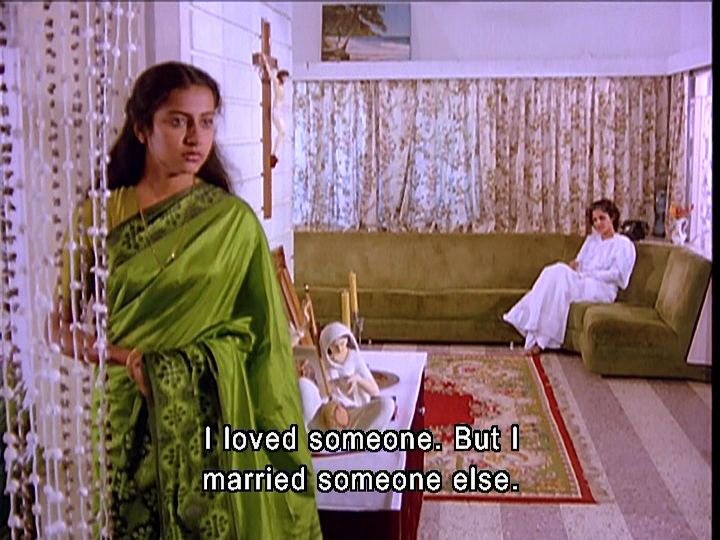
Everyone seems to know what is going on (except maybe Lawrance) and there is no protective bubble of invisibility around the lovers. Jenny is assaulted by a villager who assumes he can have her as she spends so much time with Raju that she surely can’t be virtuous. I found that scene fascinating as it wasn’t a drunken leery groping type of assault but a calculated move by a man who thought he had the situation and the woman under control. It was very well written and felt horribly real. Gangamma also has to bear the brunt of village gossip as unsuccessful Romeos turn to slander and threats. They all know Raju isn’t the tough Puli anymore and some seek to take advantage of his rehabilitation.

When Jenny and family leave to stay with Lawrance, Raju sees them off.  After publicly exhorting Raju to come and visit, Danial privately and tearfully begs at Raju’s feet that he never come near them again lest it jeopardise his family’s prospects. The tragedy is not in witless people acting selfishly, but in likeable, practical people trying to do what they think is right and being aware of the pain they cause.
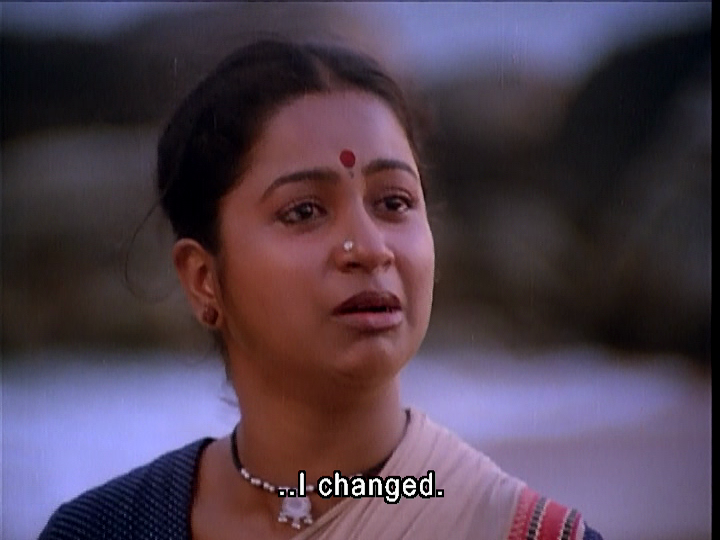
The opening titles introduce the ocean as a key player in the story, and the sound of the sea is a constant rhythm. The landscape and ocean are filmed with as much care as the actors. The music by Illayaraja is lovely, and the theme from ‘Are Emaindi’ is used to superb effect. The reprise at the end of the film is wonderful, and the changed lyrics help create the mood of anguish. I wish I could find clips with subtitles for the songs as they add so much meaning.

There are some flaws in the film but they didn’t really diminish the experience. I found some of the edits really clumsy and I wonder if maybe there were scenes missing from the DVD – it certainly felt like there was a lead up to a missing song in one section and a couple of scenes jumped quite suddenly. The climax is over the top; it relies on divine intervention, suffers from geographic inconsistencies as the village seems to change size, and Chiru is quite the ham in his cross village marathon. The actors had all given so much to make these characters come alive that I really cared what happened. And let’s be honest – I’ve seen much more unbelievable stuff than this (SRK in Kal Ho Naa Ho staggers to mind!). I didn’t need the voiceover at the end either; I’d already made up my version of ever after.
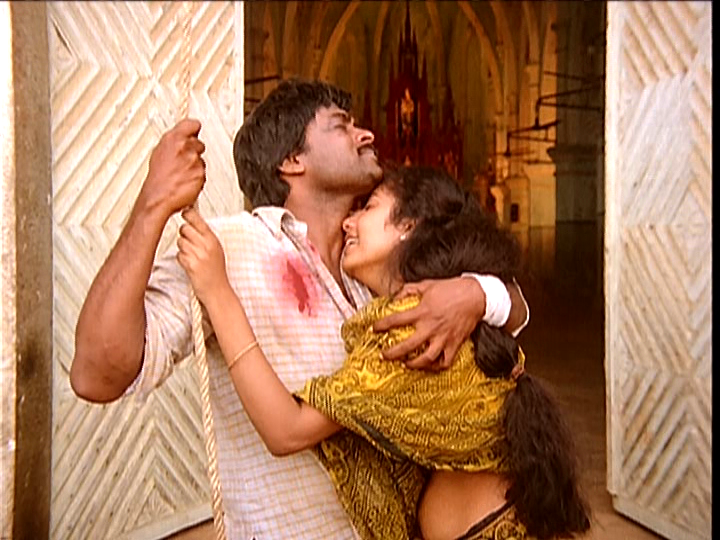
I admit to some tears, and Chiranjeevi’s Raju broke my heart. I give Aaradhana 4 and ½ stars (and three handkerchiefs).

Shankar Dada MBBS and Shankar Dada Zindabad

It’s Christmas. And we’ve been very good all year. Yes, really! So Santa brought us not one, but two Chiranjeevi movies for the festive season.

Shankar Dada MBBS and Shankar Dada Zindabad are remakes of the hit Munna Bhai Hindi film series.  Having seen both versions we have to say we like the Telugu versions much more. 

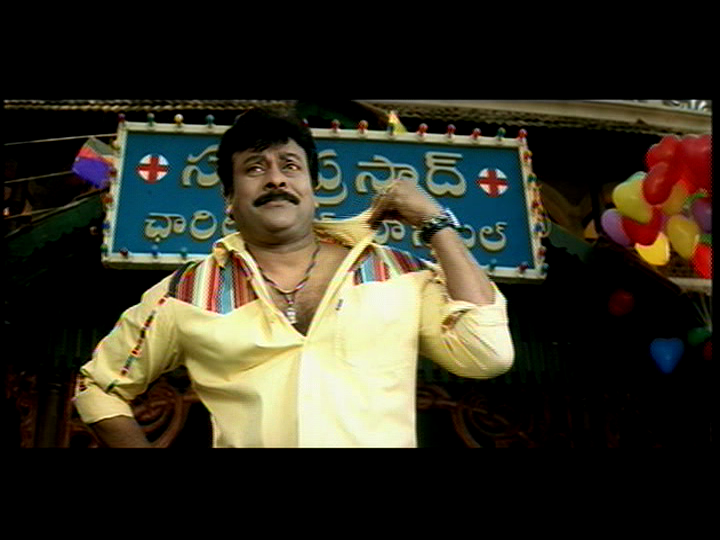
In Shankar Dada MBBS Chiranjeevi takes on the lead role as Shankar, the rowdy who has been pretending to his parents that he is a doctor who runs a charitable hospital in Hyderabad.  A series of mischances during his parents’ visit leads to Shankar vowing to become a real doctor to win back his father’s respect.

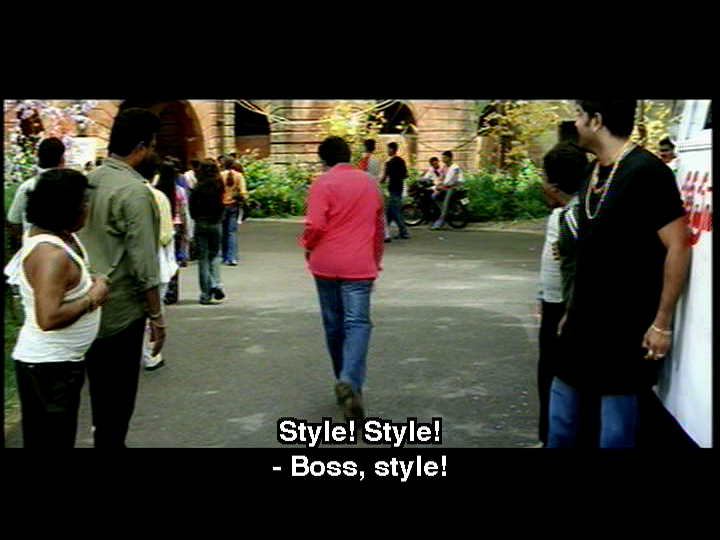
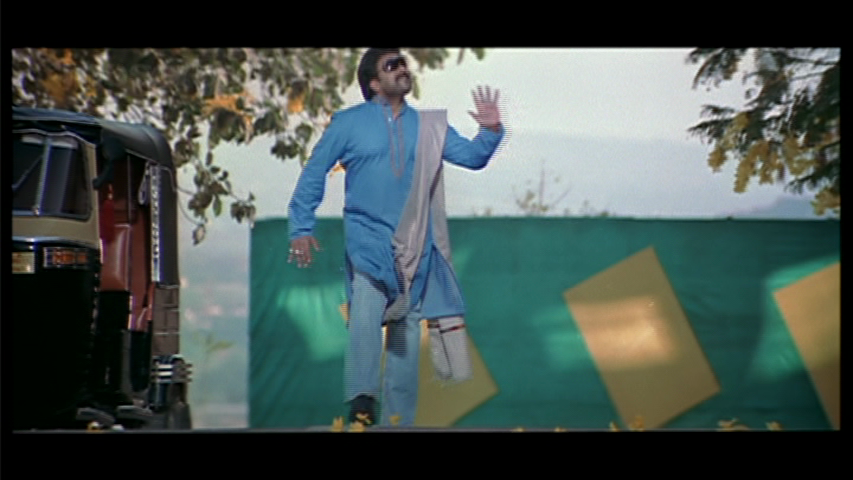
There is plenty of scope for comedy as Shankar, whose very name is enough to strike terror into the local community, heads back to school with the assorted nerds and geeks.  But this is THE Shankar Dada who may be a thug, but still has a heart of gold and some very cool ishtyle. As a student he just has to have a stylish walk, as pointed out to him by his trusty assistant ATM (Any Time Murder – a much more graphic moniker than Circuit).

And then of course there is the dancing. An area in which Sanjay Dutt cannot compete! Only Chiru could possibly pull off some of these ridiculous moves with such panache and style.


Shankar objects to the injustice he sees in the hospital and infuriates his teachers by his stand on social justice and medical treatment for all.  It is a bit of a worry, but possibly not surprising given the usual standard of filmi medicine, that he is more effective than the other doctors at the hospital with his outlandish cures. These rely heavily on the therapeutic benefit of hugs and spreading love to all with a big Chiru grin, which quite frankly would probably cure us of any ailments as well.  There is a lot of byplay on Shankar’s use of English, while although funny to us is likely much funnier within the context of the Telugu dialogue. 

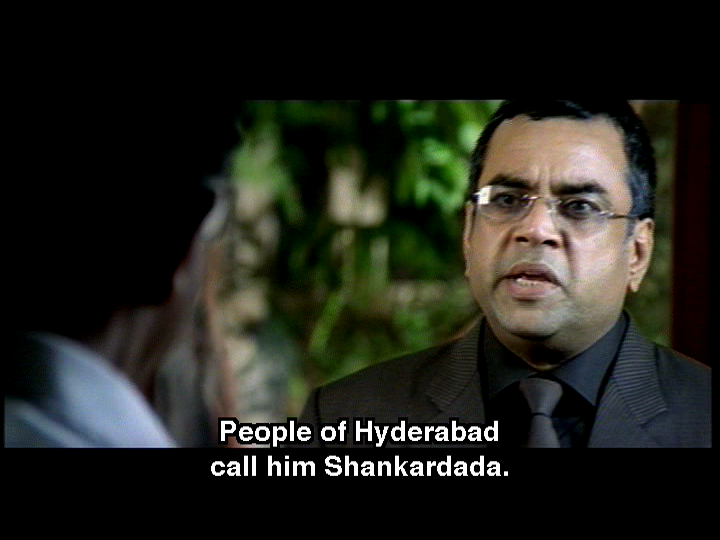
The dean, Dr Ramalingeshwara Rao, is a proponent of laughter therapy which he has to rely on heavily as term progresses and Shankar makes his presence felt in the classes. This is used to good effect and Paresh Rawal is convincing in this role. His gradual breakdown into more manic behaviour as his carefully controlled world is invaded by Shankar is very funny. The beautiful Sunitha; daughter of the dean, Shankar’s childhood friend and a doctor herself, is the romantic interest.  This also causes her father some stress, and extra giggling therapy is required.

As a goon Chiranjeevi uses his physicality to good effect when threatening local business men who are tardy with their loan payments. As well as the capable ATM (Srikanth) his gang includes comedy stalwart and permanent scapegoat Venu Madhav. For a change the alternate comedy track is kept to a minimum and is amusing enough without distracting from the main story.

One difference from the Hindi film is that the Shankar Dada role has been expanded, but the character development for the other gang members has been reduced to accommodate this. ATM is a much less realised role than Circuit and the rest of the gang never really make an impression as individuals.  The scenes with Munna Bhai and Circuit having late night conversations in the laundry troughs are almost totally cut and this removes some of the more poignant moments we recalled from the original film. However the scenes with Thomas, a terminally ill patient, work much better in this version as Chiru shows much more empathy and concern, and his ‘treatment’ is all the more amusing and touching as a result

Sonali Bendre as Sunitha has very little to do other than keep her lip gloss shiny but at least makes a more age appropriate heroine for her mature aged student hero.

Like the original Hindi version, the film suffers from a really thin and basically implausible storyline.  And the sequel, Shankar Dada Zindabad falls even shorter in this regard. 

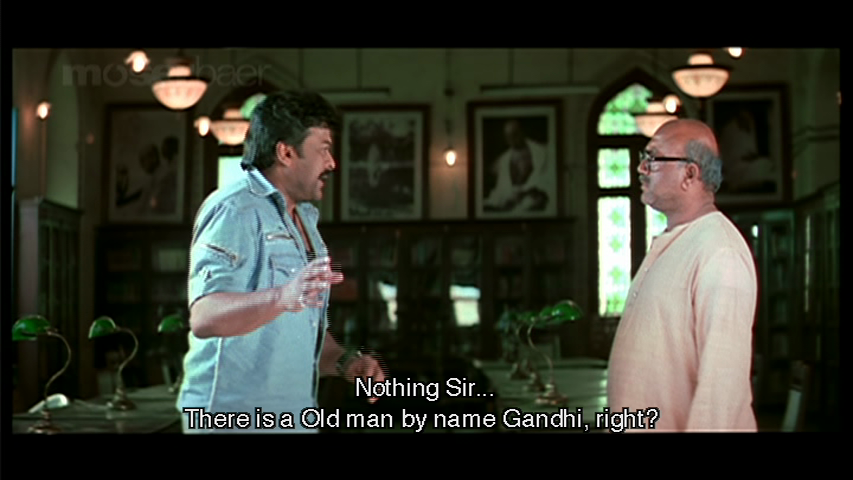
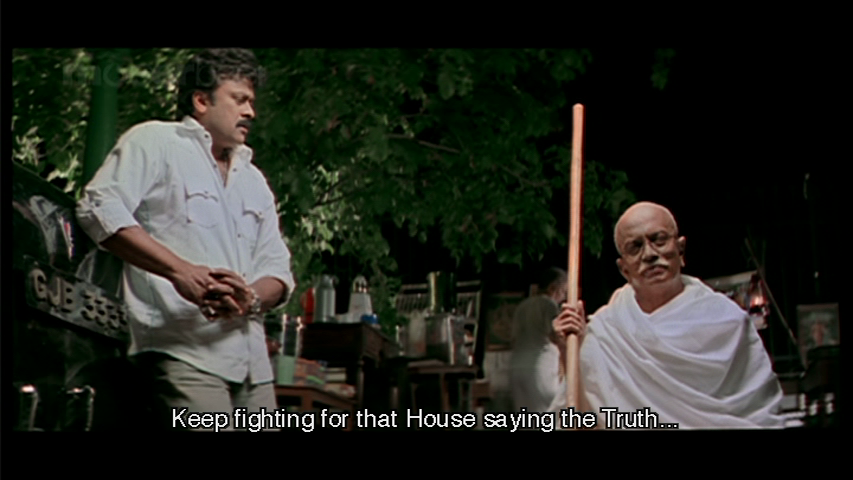
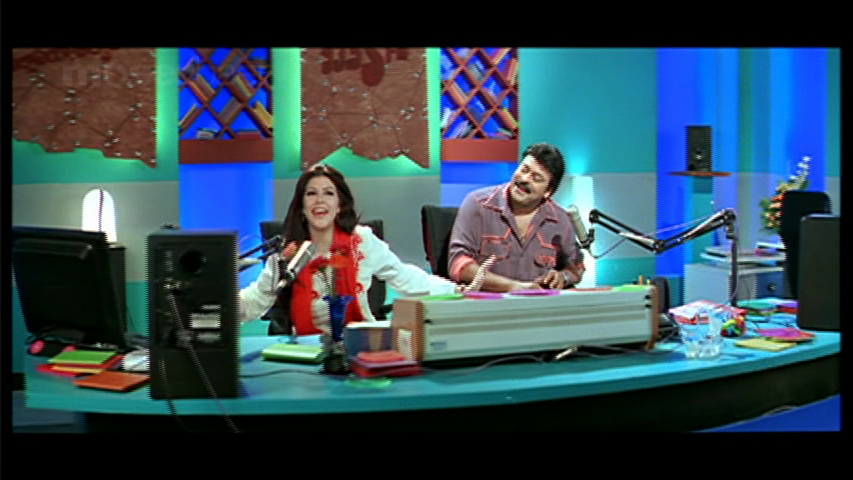
Shankar Dada Zindabad revisits the same characters as previous, but this time Shankar is in love with RJ Jahnavi (Karishma Kotak) and there is no reference to any of the previous MBBS story. He pretends to be knowledgeable about Gandhi in order to win the prize of  meeting Jahnavi and begins to hallucinate (or ‘haloginate’ as the subtitles would have it) that the great leader appears to talk to him and give him advice.

The story starts off well, but is a standard tale about a rich man’s greed versus the common man so stays in well travelled territory.  Shankar does his best to put the world to rights with a hug and snippets of Gandhian philosophy aka Gandhigiri.  As with the earlier film, the emphasis is on Shankar achieving a good result, regardless of his initial motivation.  The story unravels as Jhanavi feels betrayed, then neatly re-knits itself into happy ever after endings for all.

Although this is a light entertainment piece, it does still include some thoughtful dialogues and ideas. There are some interesting questions raised along the way about respect for culture, obeying your conscience (which may appear to you as a small man in a dhoti), being truthful and being proud of who you are.

As with the first film, the message is about love, respect and truth. The disparate characters that Shankar has helped throughout the film all cross paths in the last scenes to hit us over the head with the message one final time. Pawan Kalyan shows up in a small but pivotal appearance to give his support to the message and prove that the men in that family have very nice eyes.

Srikanth is again present as the reliable ATM, as are the other gang members. Despite the presence of Prabhu Deva as director this film also disappoints a little in the dancing.  There is one exception: a fantastic number featuring hippies, people in animal costumes, clowns and also to our great delight a guest appearance by our favourite, Allu Arjun. The rest of the dance numbers are OK but not quite up to the standard of the first film.

Karishma Kotak stands around looking pretty while waiting for Shankar to save the day, and does well enough at this. There are some sweet moments with the group of elderly men who make their home with her, and this part of the story does work reasonably well. The gang run around doing their thing but the plot here is so worn and predictable that it’s hard to pay any attention to their antics. There is the obligatory comedy side plot involving Brahmi as an astrologer and the various supporting actors all do their best to keep the story, such as it is, moving along.

Both these films rely heavily on the performance and star power of the hero and really entertain best when Chiru is on screen. Chiranjeevi switches effortlessly between the hardened gang leader and the affable humanist. In this he does a much better job than Sanjay Dutt who excelled as the don, but his smile never quite reached his eyes so he lacked the warmth and humanity of Shankar. The comedy is funny the first time round but doesn’t stand up to repeated viewings and we are bombarded so much with the ‘love is all you need’ message that it totally loses all effectiveness.  ATM suffers in comparison with the Hindi character of Circuit but Srikanth does as best he can with his reduced role.   However, the films still entertain more than the Munna Bhai versions, thanks mainly to Chiranjeevi, the soundtrack and dances, and the ability of most of the cast to look as if they are enjoying themselves.

Heather says: Both these films are enjoyable to watch because of Chiranjeevi and his great screen presence. I have to confess that I did originally get Shankar Dada Zindabad for the Jagadeka Veerudiki song, and the first film was just a bonus, However MBBS is the better of the two films and having enjoyed the original Hindi version I was a little surprised at how much better this version is. While I thought that Sanjay Dutt was excellent as the gangster, when he smiled at the children he really did look more like a tiger eyeing its prey rather than a cheery doctor. Chiru on the other hand while excellent as the rowdy, was much less scary in these later scenes and his genuine and real-life humanitarianism shone through. Although I did miss Boman Irani’s terrible bald wig, that was more than made up for by the supporting actors who were all very capable. I did prefer Arshad Warsi to Srikanth, but this was also partly due to the difference in the characters of Circuit and ATM.  The story is thin and rather tired, but Chiru manages to instil enough life to make it a fun watch. This one gets 3 ½ stars from me.

Shankar Dada Zindabad is just an excuse to watch more Chiranjeevi, and a little Allu Arjun. The cast all do their best, but the film really never excites, not even when they are on the Gold Coast in Australia for a song. I do really like the appearance of Prabhu Deva, Ravi Teja and Allu Arjun in Jagadeka Veerudiki and it was also a nice surprise to see Pawan Kalyan pop up at the end. The idea behind the story was interesting but there were too many clichés in the delivery to make it hold my attention. This film gets 3 stars from me which is just because of a couple of the songs that I really do love and the brief appearance of Allu Arjun – worth ½ a star alone.

Temple says: I’m not a fan of the Munna Bhai films, primarily because I don’t really like Sanjay Dutt, so found them a bit of a chore to sit through despite Arshad Warsi doing his best. So it was a pleasant surprise to find myself  enjoying the films in Telugu, and only partly because of Chiru. Although, I do think that if you don’t appreciate Chiranjeevi there isn’t a whole lot else going on.  I think both films are a little better written and better paced than their Hindi counterparts so make for better story-telling. The hero centric style does mean the peripheral performances are diminished but not reduced to the point of not mattering. The casting is pretty good in both – Paresh Rawal and Sonali Bendre were very good in MBBS, and it was fun to see the majority of the ensemble back for Zindabad.

One point of interest for me was looking at these films in light of Chiranjeevi’s political career. There are resoundingly clear messages around respect for culture and history, respect for people despite caste barriers, truth and love. So in my ignorance of AP politics, I was pondering what this said about the politician as well as the character in the film, and did this role have some synergy with his political persona. I’m sure I will be enlightened in due course. My DVD of MBBS also had a very interesting little addition at intermission:  a plea from Chiranjeevi to the audience to consider donating their eyes after death and encouraging people to talk about it with their families, which I think was a great use of celebrity and sort of appropriate to the film.

Like Heather, I found Zindabad less engaging than MBBS, but will always be grateful to our fabulous DVD guy Sunil for finding me subtitled copies at a bargain price! Both films get 3 stars from me – they’re a good timepass and the songs are really fun.

Yamudiki Mogudu

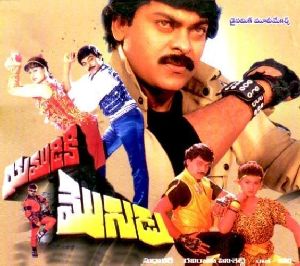
Yamudiki Mogudu was made in 1988 which may explain some of the costume choices or, then again, maybe not! Whatever the reason the wardrobe guys seem to have had the time of their lives and the costumes used in the songs here are fabulous. Our DVD came with a breezy alert stating  “Regret Poor Quality”. It turns out that was not useful life advice or a comment on the film, but a warning that the picture quality was a bit dodgy so we regret the poor screencaps.

But what about the movie … Well this is another Chiru film which manages to fit in plenty of action, drama, fight scenes, obligatory machetes, preposterous moustaches and hairstyles, romances with two heroines, a double role of sorts and plenty of singing and dancing.  And at 147 minutes  the pace is cracking, with never a dull moment.

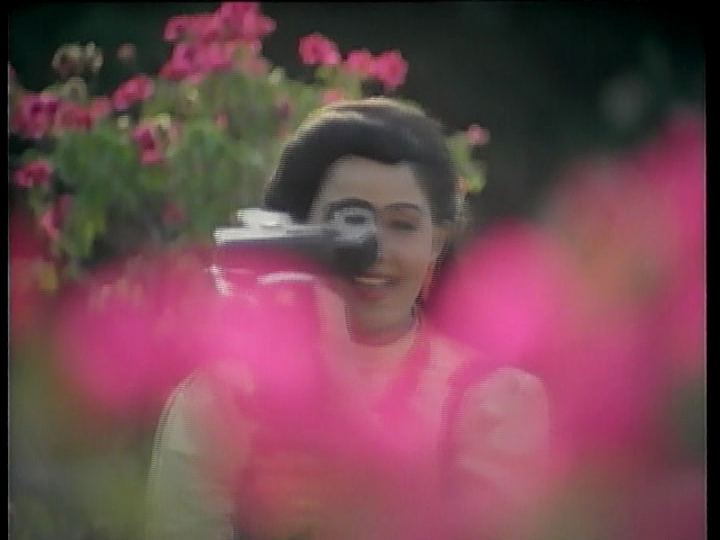
We meet Chiru first as Kali, a thief with a heart of gold who robs, steals and works as a mercenary in order to help fund his brothers education, support his family and generally look after the inhabitantsof the slum area where he lives.  On one occasion he is called to the mansion of Kailasham, to be punished for daring to steal from the magnate, when his daughter looks out of a window and spies Kali fighting off her father’s goons in true hero style. Of course, like us, Radha falls instantly in love with the dashing Kali and grabs her video camera to rush down and immortalise the action.

Her love is reciprocated and Radha’s  father is appalled when he sees photographs of the two of them together.  These photographs are from a dream sequence song so we’re not quite sure about the science that made this possible.

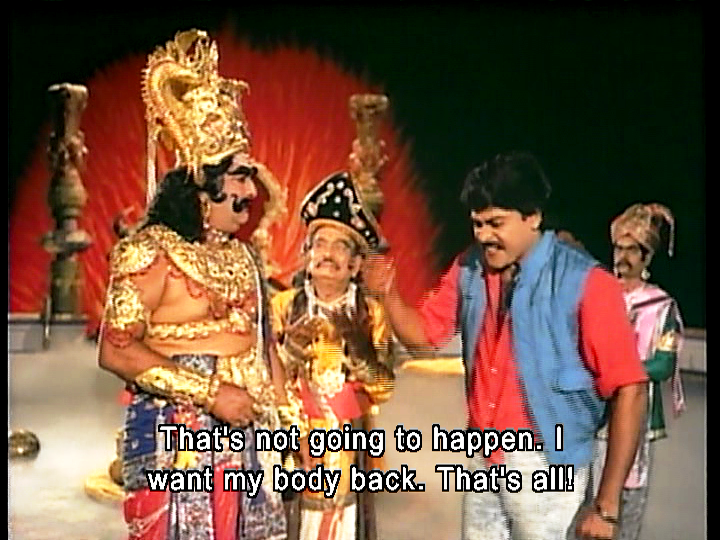
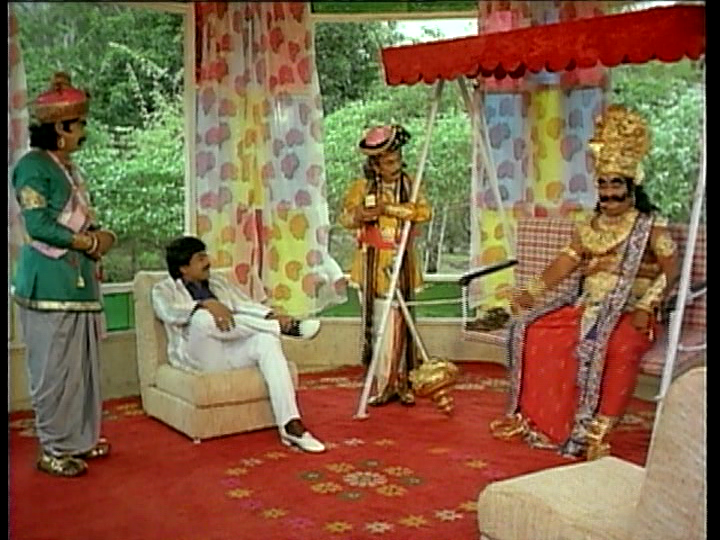
Kailasham conspires with his onetime enemy Kota Kondappa (Kota Srinivasa Rao with a flamboyant moustache), and his repulsive son Chantibabu  to destroy Kali. This will allow Chantibabu to marry Radha and put a stop to the depredations Kali is making into the business of the two conspirators.  They have been the ones employing him to steal, but logic doesn’t play a big role here.  They assassinate Kali on his wedding day, at which point Kali is taken to hell.  Kali argues with Lord Yama (Satyanarayana) about his early demise, and gains the assistance of Vichitra Gupta (Velu) who points out the rather serious error made by Chitra Gupta (Allu Ramalingaiah). Lord Yama does some quick thinking to get rid of this loud and irritating human who has dared to tap dance, rock and roll and even disco (yes, really)  in a range of amazing costumes with the heavenly apsara played by Ambika.

Kali’s body has been cremated meaning he cannot simply return to his old life. Lord Yama  shows Kali three other men who look identical to him, and who are each about to die. Kali can choose to inhabit one of their bodies once they are dead, and in this way return to Earth.

Since he has no other options he takes on the body and thus the life of Balu, a rather pitiful man who has been beaten down into the life of a servant by his free-loading uncle.

Although Kali isn’t supposed to remember his former life, he does know that he is no servant and proceeds to turn his new family upside down. Balu assumes control of the family fortune, frees his mother from kitchen drudgery and spends time with his girlfriend Gauri (Vijayasanthi).  His uncle really should have known as soon as that steely eyed stare fell on him that his easy living days were well and truly over!

Of course we know this can’t last, and events conspire so that Kali does regain memory of his former life.

We finally get to a resolution where the bad guys lose, the good guys win and Kali/Balu has to somehow reconcile his relationships with both women.  Kali appeals to Lord Yama to help sort out his marital problem.  Surely he should have realised that Lord Yama was perhaps a bit unreliable in his decision making?

Chiru is his usual wonderfully athletic and energetic self as Kali and the songs were obviously choreographed to show off his dancing style.  While the inspiration for the costumes is anyone’s guess, the backdrop in the many songs is equally bizarre and colourful and we love it!  Radha initially plays it straight as the spoilt and indulged daughter, but once she falls in love she is vivacious and energised and does a really good job of keeping up with Chiru in their songs together.  She even manages to look comfortable in all the ruches and ruffles of her costumes.  Vijayasanthi is beautiful as the feisty Gauri and we thought she had made it through the costume department almost unscathed until she emerged, draped in pearls, from a clam shell. Then we saw Chiru had also been clam shelled. The design department on this film really made it their own!

The film was written by Satyanand and directed by Ravi Raja Pinisetty. The fight scenes are well choreographed and flow nicely with the action sequences.  The best comedy is in the scenes with Chiru, Lord Yama,Chitragupta and Vichitragupta.  The character of Chantibabu initially is fairly repulsive as he tries to rape Radha to ensure that she will have no choice other than to marry him, but he very quickly becomes a figure of ridicule.  Most of the remaining comedy subplot revolves around the relationship between Kota and Kailasham and is not particularly funny, although Kota’s untameable hair is.  The real reason to watch it is Chiranjeevi, of course, and the fabulous song picturisations based on the compositions by Raj-Koti and lyricist Veturi.

Heather says: This is one of my favourite Chiru films and I think one of his best performances. The fight scenes are well choreographed, and the dancing is superb, when you can take your eye off the costumes that it! Any film that includes Lord Yama will appeal to me, as I like the opportunity it gives to make the impossible happen, and it usually means plenty of mayhem. I also like the bumbling conspirators and their vacillating between being enemies and friends. Both Radha and Vijayasanthi are lovely in this and do well to hold their own against Chiru in his energetic performance. Its such a shame the set and costume designers don’t get credited as their work in this film is truly outstanding. I did also like the glowing skull eyes in hell and horns on the demons that were very floppy when they danced! But of course Chiru is the reason to watch this film, and the Megastar really delivers. 4 1/2 stars from me.

Temple says: This is so very entertaining, and if you haven’t seen a Chiranjeevi film before I think this is a great place to start. The songs and costumes are brilliant and completely over the top, while still being linked in to the story. I liked that there was some sort of discussion about the whole taking over someone else’s body idea. Kali not only had his self-preservation instinct but felt protective towards the displaced soul and wanted to somehow repair things for Balu. All the performances are good, with Vijayasanthi and Radha being both decorative and memorable. But it really is Chiru’s film, and the film succeeds in keeping my attention through all the plot permutations because he gives it his all. He is fun as Kali and quite pathetic as Balu, and gets to show some dramatic range even while pummelling the bad guys. Like Heather, I always enjoy an appearance by Yama in a film as it usually means lots of sparkly gold and a dance number. My expectations were met, and then some! I’m an unashamed Chiru fan, and I really loved this film. 4 and 1/2 stars from me.