Happy

So what do you select to watch next when your eyes have just been opened to the world of Telugu cinema by MAGADHEERA? I decided to stick with the Chiranjeevi extended family and, after seeing a few clips of Allu Arjun dancing on Youtube, picked Happy as my first foray into his films. Now if you’re like me and have watched a lot of song clips and then subsequently the film you will understand why I didn’t have high hopes for Happy. Allu Arjun looks great and is an amazing dancer, so I have to confess I was fairly sure that he wouldn’t be able to act – after all, no-one is perfect. Boy was I wrong!

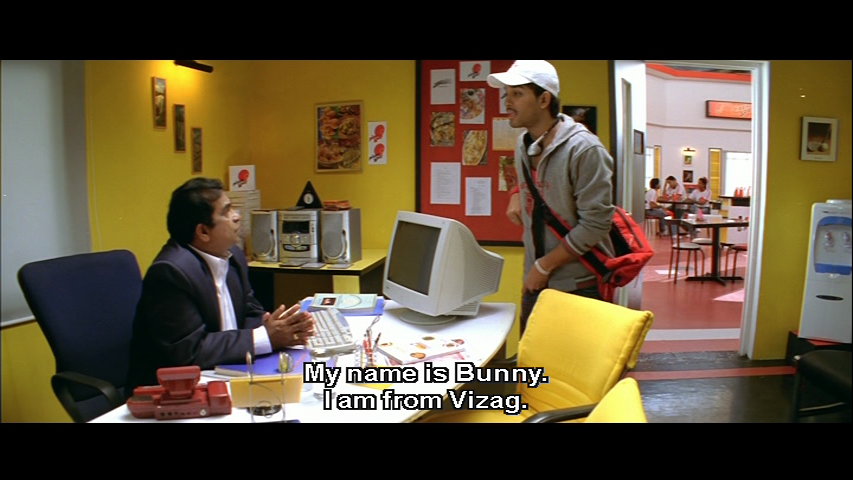
Happy stars Allu Arjun as Bunny, a happy-go-lucky orphan from Vizag, who comes to Hyderabad to study. He lands a job and digs at a pizza restaurant when he singlehandedly defeats a gang of students intent on causing trouble. This was early in my current Telugu film watching obsession, but I was still able to recognise Brahmi as the pizza joint manager, and was starting to realise that he has a contract to appear in every single Telugu film ever released. The restaurant also features a DJ, music system and a drum kit, making it possibly the first cross over night club/restaurant in Hyderabad. These do all come in useful however when Bunny announces that he can only fight to music. This ploy also gives us Venu Madhav in a brief comedic cameo role. (note the Chiru T-shirt!)
I think this first song was really commissioned by the Hyderabad tourist agency as it showcases the highlights of the city. It works for me and I would visit if they could assure me that I would get to see Bunny dancing at all the local sightseeing spots just like in this clip.

Bunny’s nemesis is the quiet and dedicated medical student Madhu, played by Genelia in a much less shrill role than usual. This is the film where I realised that Genelia is a very good actress when she doesn’t have to jump around squealing excitedly. I really wish directors would use this quieter and yet much more expressive side to Genelia more. Madhu’s father is a caste leader with political ambitions and holds the view that as women have no place in the workforce, there is no need for his daughter to study. Faced with this opposition, Madhu keeps her head down and tries to be as inconspicuous as possible in the hope that her father will continue to ignore both her and her marriage arrangements until she has finished her degree.

Bunny and Madhu clash from their very first meeting, and a series of misunderstandings makes sure that they each think the worst of each other.   When Madhu’s father decides that her studying is bringing her into too much contact with others outside her caste, he arranges her marriage to DCP Arvind  – Manoj Bajpay in a rather more comedic role than usual. In a dramatic meeting Madhu accuses Bunny of ruining her life, so he decides to try to prevent her marriage. Yes, it does all sound very familiar, but the twist here is that Arvind supports Bunny’s plan and the two erstwhile enemies end up married and sharing a flat together.

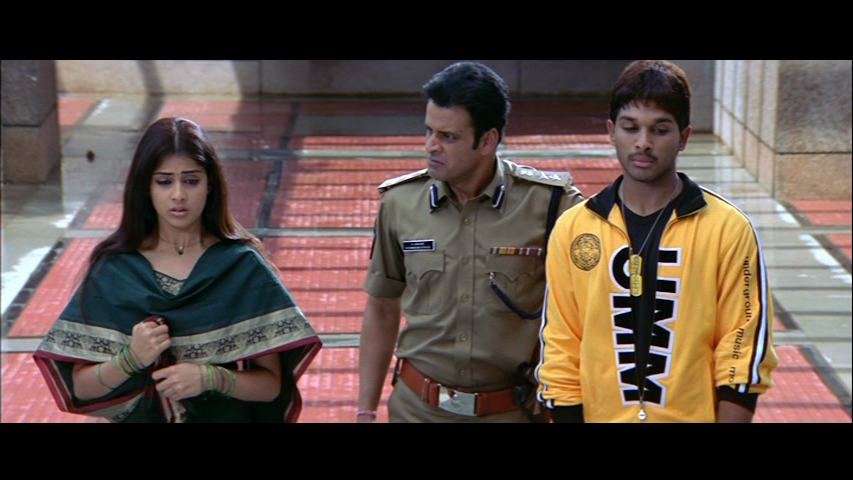
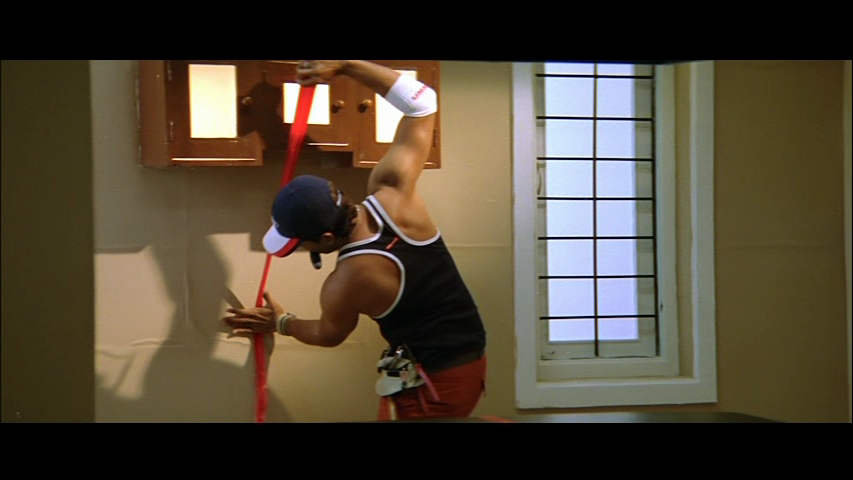
Despite their marriage, Bunny and Madhu are still sworn enemies and they draw a line down the middle of the apartment to demarcate each other’s territory. They continue to harass and annoy each other and Bunny delights in stepping over the line both literally and figuratively to annoy Madhu. This part of the film will be very familiar to anyone who has a younger sibling as the pranks the two play on each other are very juvenile and reminded me of living with my brother. It is also extremely funny and the two actors are excellent at keeping the sparks flying without ever becoming too ridiculous.
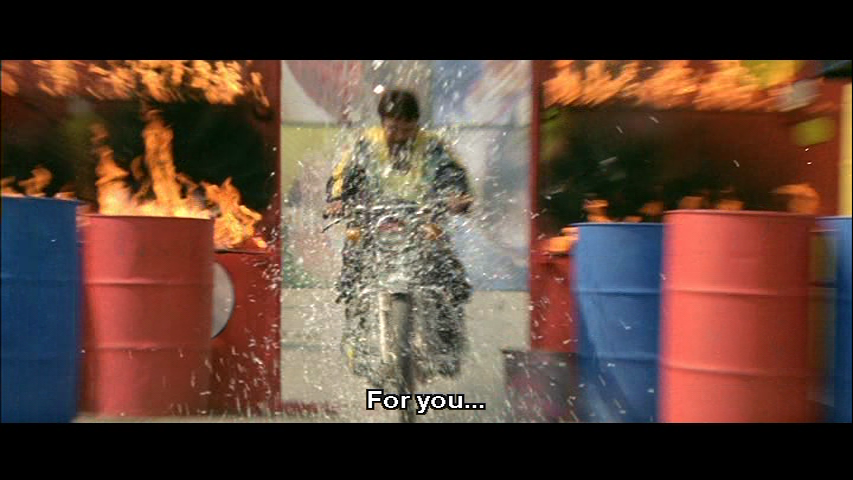
 Over time the inevitable happens and Bunny falls in love with Madhu. In typical filmi–style devotion he will do absolutely anything for her except to tell her his feelings. Due to his apparently amazing bike skills, Bunny gets a job as a stuntman in the movies and manages to juggle his pizza delivery with leaping over cars and through explosions in order to have money to pay for Madhu’s studies. He slowly acquires more bandages and bruises as the stunts get more and more dangerous although the bike seems to come through everything unscathed. Just when it looks as if the film is building up to a final romantic and ‘happy’ conclusion there is a real chance of pace. My theory is that the director Karunakaran realised that he has only a day left to film but plenty of money left in the fight and make-up budgets. So instead of the expected fluffiness, there is almost a full movie’s worth of drama, action and fisticuffs in the last few minutes of the film, along with buckets and buckets of blood. It was a little unexpected after all the comedy and romance of the preceding two and a half hours, but it certainly makes the end memorable.
After watching a number of his  interviews I am quite sure that a lot of this character is Bunny’s real extrovert persona. His performance seems totally natural and spontaneous throughout the film and he excels at conveying his character as much through his posture and mannerisms as through the dialogue and actions. I didn’t even find the coloured contact lenses as distracting as usual and, being an optometrist, contact lenses are often the first thing I notice. Despite the masking quality of coloured plastic, Allu Arjun can deliver every emotion using his eyes. It seems to be another family trait as the entire clan appear to have the most expressive eyes in the industry. The fight scenes are reasonably well choreographed, although they don’t have the slickness of Bunny’s more recent films. But where Allu Arjun really rules is on the dancing stage. He really is an amazing dancer and although there are only a couple of dance tracks in this film, he is totally mesmerising.   The music by Yuvan Shankar Raja is catchy and overall works well for the young characters and the happy feel of the film.

Genelia was a revelation to me in this. Previously I’d seen her in a couple of Hindi films and one other Telugu film, where she was generally hyperactive with piercing dialogue delivery. Here she has great chemistry with Allu Arjun in their scenes together and deliveres an excellent performance as the struggling student. She makes the most of her emotional family scenes and is believable as the daughter trying to live up to her father’s expectations while vowing to fulfil her mother’s dreams. Really a good decision by Karunakaran to allow her to be more subtle and showcase her acting talent in this way. Manoj Bajpay indulges in the most scenery chewing I have seen from him, but as always carries his role off with flair. The other support actors all do well enough and a couple of Bunny’s friends make an impression with their roles.

Happy is still one of my favourite films and I re-watch it if I need a pick me up after a bad day. It has comedy, action, drama, great dancing and fantastic performances from the leads. It doesn’t try to be anything other than a masala entertainer and as such it works very well. It would be a five-star movie if it wasn’t for that ending which is just a bit too over the top and ridiculous, even for me.  4 ½ stars.

Anaganaga O Dheerudu

There has been so much hype about this film; the Disney involvement, the special effects, the budget. Warning: there are lots of spoilers ahead, but this IS a Disney film so you should know what to expect.

The story is simple – an evil queen lays waste to an idyllic kingdom and the only hope for survival lies in the hands of a child mystic and her blind bodyguard.

The film opens with very Disney style animated credits, and then we immediately see a warrior pursued through a spooky forest before being made into a sort of zombie, his mind controlled by Irendri the evil queen with the Medusa hair. So there was already a question of whether this was aimed at being a kids film or a high fantasy epic. And that is the problem – this film doesn’t know what it is and as a result, is a bit unsatisfying in either genre.

The screenplay relies heavily on flashbacks. There’s a flashback about Moksha (the mystic child played by Baby Harshita). Shortly after we meet Yodha (Sid) he pauses for a flashback about his lost love (Priya, played by Shruti Haasan). Then when he and Moksha leave on their journey, Yodha stops for a really long flashback that explains his history, more about his lost love and how he became blind. Then towards the end of the film we get more long flashbacks explaining Irendri. It halted the momentum of the story and these could have been condensed or the information conveyed by other means.

While on the subject of how Yodha was blinded. If your eyes are poked out with a metallic pointy thing, they do not grow back changing their iris colour to blue. They would be white sightless orbs covered in scar tissue, or all the fluid drains out and they shrivel up like raisins. It does have to be said that Sid was good at playing blind but the contact lenses were a bit distracting, as were the constant close ups of his ears.

Some scenes were shot on location and the natural light was particularly unforgiving on the set constructions at the beach camp. Things looked too new and perfect; there was no wear and tear or mends on the snail shaped structures, the lighting was too obvious and modern. It sometimes looked cheap and fake, and more suitable to a kids tv show than a high fantasy epic. The wonky papier mache buildings at the village looked like they should be inhabited by Munchkins. When scenes shifted to interiors, things worked much better as the diffuse lighting was kinder to all the painted polystyrene and fibreglass props. The peacock theme, started as a beautiful costume worn by Shruti was well worked into the colour and decor of her room. Irendri’s palace fortress looked great – there was a commitment to the snake theme and it looked substantial and daunting. The scenes in the spooky forest with the bird demons were quite effective and  helped build some tension. Moksha’s special gift was shown by her ability to create magical butterflies. Oh so many butterflies. We were grateful she wasn’t obsessed with My Little Pony or unicorns.

The costumes would have looked great as sketches but some of them didn’t work as something an actor had to be able to move freely in. Poor Lakshmi Manchu must have developed thighs of steel as she had to power up the steps to Irendri’s throne dragging metres of fabric that we could see was catching or getting stuck.  Some of her outfits were just insane, particularly the shoulder details which were of epic proportions.

Sid’s outfits seemed to be a cross between leftovers from Mu Lan, a bit of D’Artagnan and a dash of Joseph’s Amazing Technicolour Dreamcoat. And while some costumes were really beautiful, some of the outfits Sid and Shruti had to wear were just plain fugly. There were too many fabrics cobbled together, too many ruffles and frills, and again the feeling the costume was wearing them.

The final confrontation between good and evil occurs during a lunar eclipse and culminates in a fight between Yodha and Irendri – who morphs into a giant medusa squid. Well actually she seems to be multiple snakes joined together but the effect is squid like. Sid performs some amazing stunts and acrobatics, the lighting is moody and effective, and then we have to wait for ages as the CGI team show off their monster before the fight starts up again. It was strangely boring despite Sid clearly giving it his all. We both thought of the scene in Magadheera where Bhairava has to kill 100 men – We knew already how his character would die, we knew it was riddled with special effects (not all of them great) and we knew it was just plain impossible and yet that was edge of the seat stuff because of the editing, the music and the implacable pace. In contrast, this was unexpectedly pedestrian and didn’t get any emotional response from us. We did have ample time to notice that the medusa squid was frequently shot from what can only described as an upskirting angle (albeit there was no skirt).

So what were the successes?

Good performances by a charismatic cast (although we don’t really get all the fuss about Baby Harshita) who did all they could with a script that was lacking. Sid was charming and easily handled the comedy skits, the romance and the action sequences. Lakshmi Manchu made Irendri evil and despicable – a proper cartoon villain and a near relative of the evil queen in Snow White. Shruti was decorative and enigmatic, and had great chemistry with Sid.

The hair snake. Irendri would occasionally take a (fully clothed) bath in blood or venom or something and consult an entity called Sarpini who happened to manifest as a snake made of Irendri’s hair. This magical snake also created its own tiara and other accessories as it spouted prophecies of doom. It worked well as a piece of animation and suited the medusa theme. Irendri’s designers really used the snake imagery well, and added lots of serpentine detail to her lair and her costumes.

Ali in drag. Who knew? Well he did a very good Carmen Miranda fruit bowl hat, and fetching nipple enhancing propellers that picked up speed when he was near Sid (you can catch a glimpse in the theatrical trailer). We liked his mermaid ensemble a lot.

The soundtrack worked well as a soundtrack, and the few songs are not really outstanding. Yodha has his own heroic theme, and that generally works although the 80s power guitar version was a bit incongruous.

Fabric. This film is one for the textile fanciers. And there is lots of sparkle.

With a lot more editing of the screenplay, a little restructuring of some scenes, and a decision as to whether they are aiming at kids or adults, this could be great. As it is, it’s a bit too dark to be a kids film, not substantial enough to be a grown up epic and just ends up being a bit wishy washy. The audience jeered at the songs, laughed at some of the dialogues, and as always Brahmi got the biggest cheer.

Shankar Dada MBBS and Shankar Dada Zindabad

It’s Christmas. And we’ve been very good all year. Yes, really! So Santa brought us not one, but two Chiranjeevi movies for the festive season.

Shankar Dada MBBS and Shankar Dada Zindabad are remakes of the hit Munna Bhai Hindi film series.  Having seen both versions we have to say we like the Telugu versions much more. 

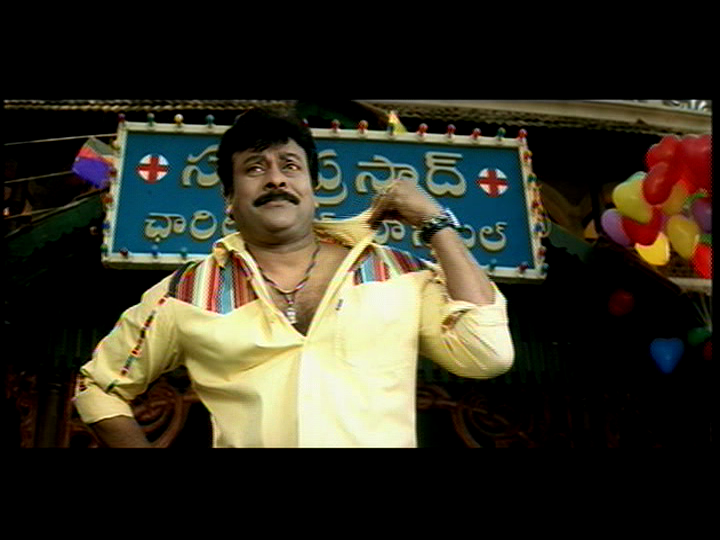
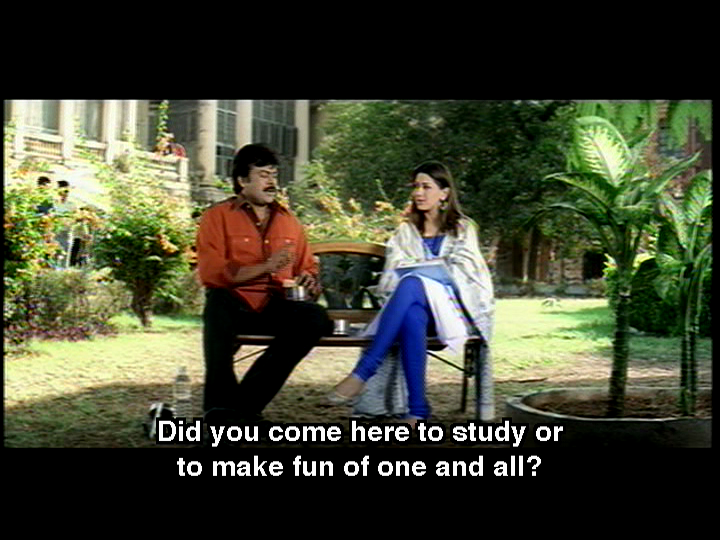
In Shankar Dada MBBS Chiranjeevi takes on the lead role as Shankar, the rowdy who has been pretending to his parents that he is a doctor who runs a charitable hospital in Hyderabad.  A series of mischances during his parents’ visit leads to Shankar vowing to become a real doctor to win back his father’s respect.

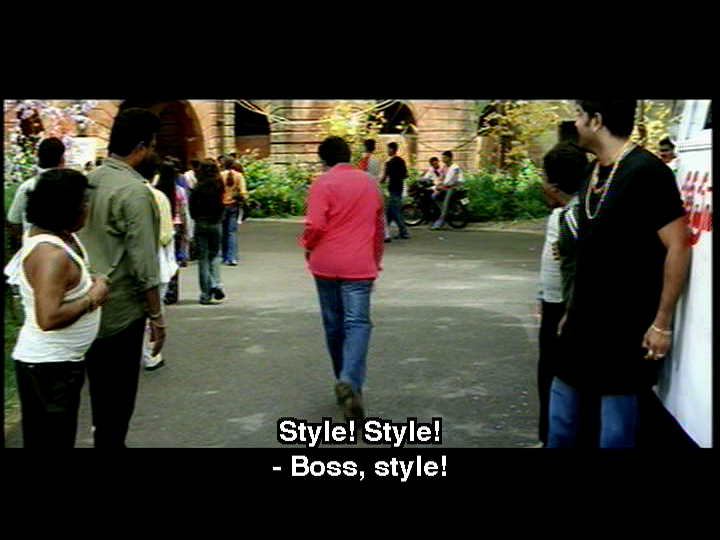
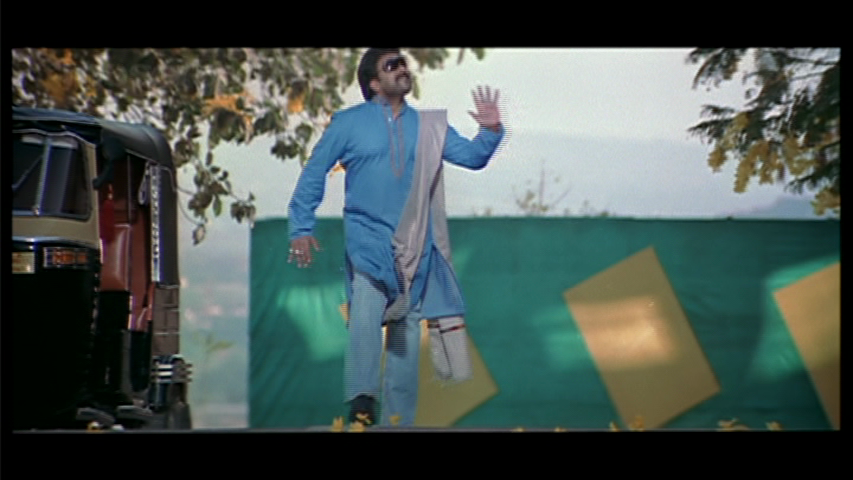
There is plenty of scope for comedy as Shankar, whose very name is enough to strike terror into the local community, heads back to school with the assorted nerds and geeks.  But this is THE Shankar Dada who may be a thug, but still has a heart of gold and some very cool ishtyle. As a student he just has to have a stylish walk, as pointed out to him by his trusty assistant ATM (Any Time Murder – a much more graphic moniker than Circuit).

And then of course there is the dancing. An area in which Sanjay Dutt cannot compete! Only Chiru could possibly pull off some of these ridiculous moves with such panache and style.


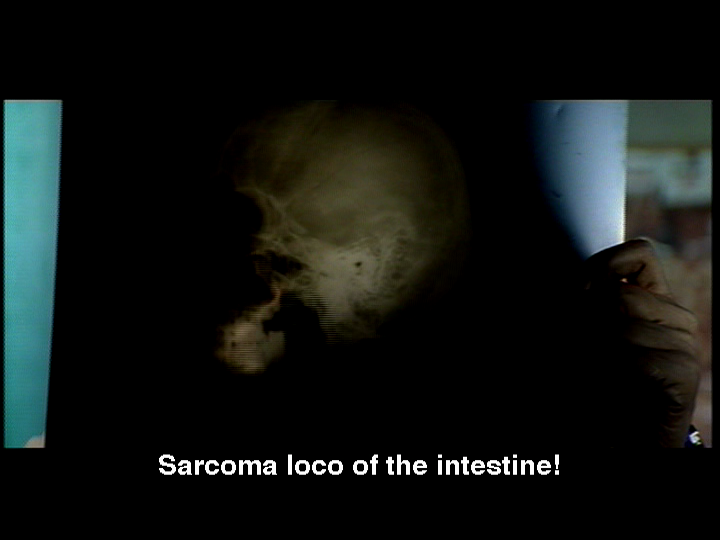
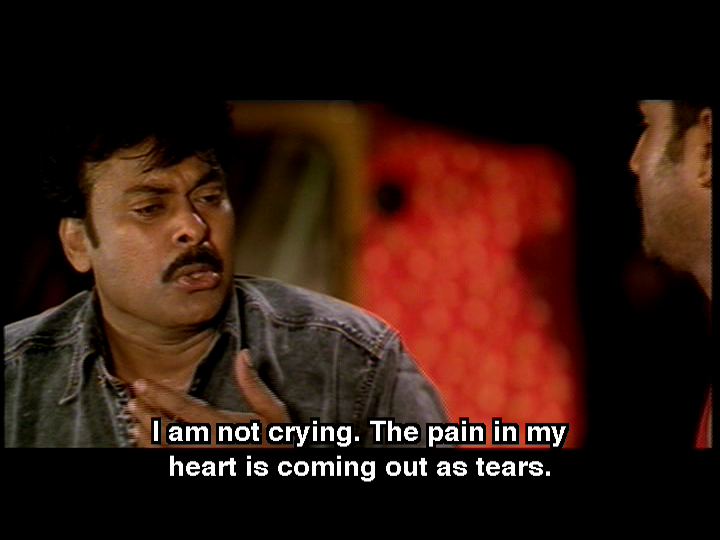
Shankar objects to the injustice he sees in the hospital and infuriates his teachers by his stand on social justice and medical treatment for all.  It is a bit of a worry, but possibly not surprising given the usual standard of filmi medicine, that he is more effective than the other doctors at the hospital with his outlandish cures. These rely heavily on the therapeutic benefit of hugs and spreading love to all with a big Chiru grin, which quite frankly would probably cure us of any ailments as well.  There is a lot of byplay on Shankar’s use of English, while although funny to us is likely much funnier within the context of the Telugu dialogue. 

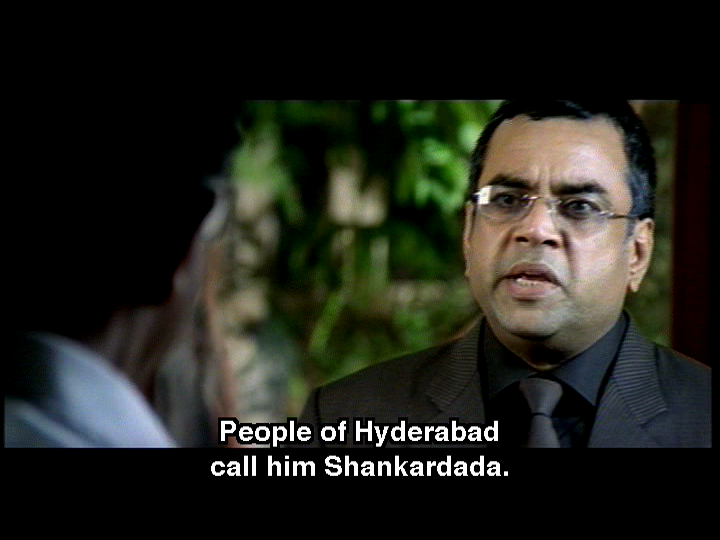
The dean, Dr Ramalingeshwara Rao, is a proponent of laughter therapy which he has to rely on heavily as term progresses and Shankar makes his presence felt in the classes. This is used to good effect and Paresh Rawal is convincing in this role. His gradual breakdown into more manic behaviour as his carefully controlled world is invaded by Shankar is very funny. The beautiful Sunitha; daughter of the dean, Shankar’s childhood friend and a doctor herself, is the romantic interest.  This also causes her father some stress, and extra giggling therapy is required.

As a goon Chiranjeevi uses his physicality to good effect when threatening local business men who are tardy with their loan payments. As well as the capable ATM (Srikanth) his gang includes comedy stalwart and permanent scapegoat Venu Madhav. For a change the alternate comedy track is kept to a minimum and is amusing enough without distracting from the main story.

One difference from the Hindi film is that the Shankar Dada role has been expanded, but the character development for the other gang members has been reduced to accommodate this. ATM is a much less realised role than Circuit and the rest of the gang never really make an impression as individuals.  The scenes with Munna Bhai and Circuit having late night conversations in the laundry troughs are almost totally cut and this removes some of the more poignant moments we recalled from the original film. However the scenes with Thomas, a terminally ill patient, work much better in this version as Chiru shows much more empathy and concern, and his ‘treatment’ is all the more amusing and touching as a result

Sonali Bendre as Sunitha has very little to do other than keep her lip gloss shiny but at least makes a more age appropriate heroine for her mature aged student hero.

Like the original Hindi version, the film suffers from a really thin and basically implausible storyline.  And the sequel, Shankar Dada Zindabad falls even shorter in this regard. 

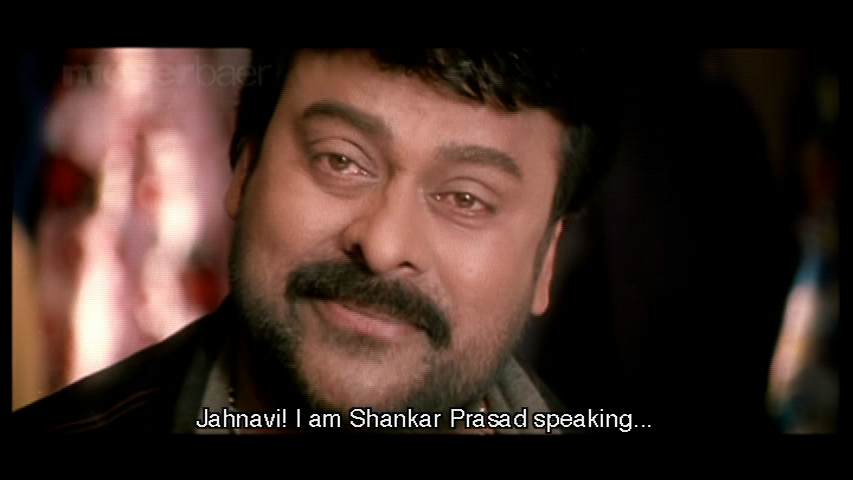
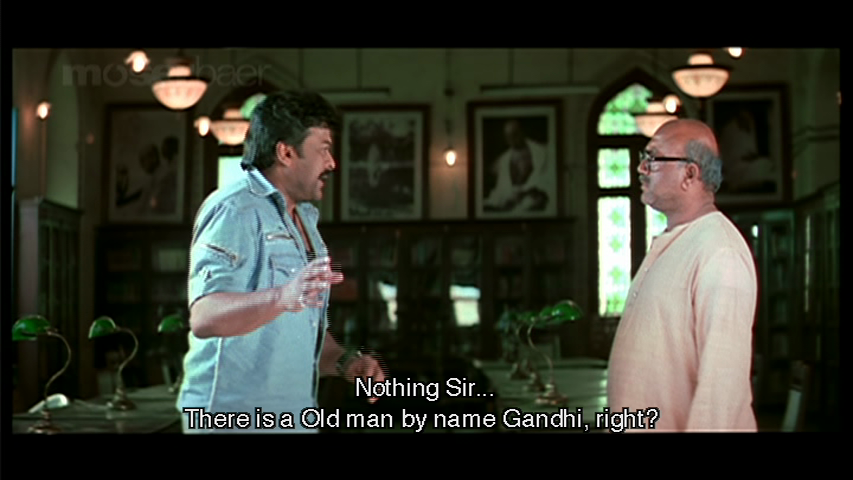
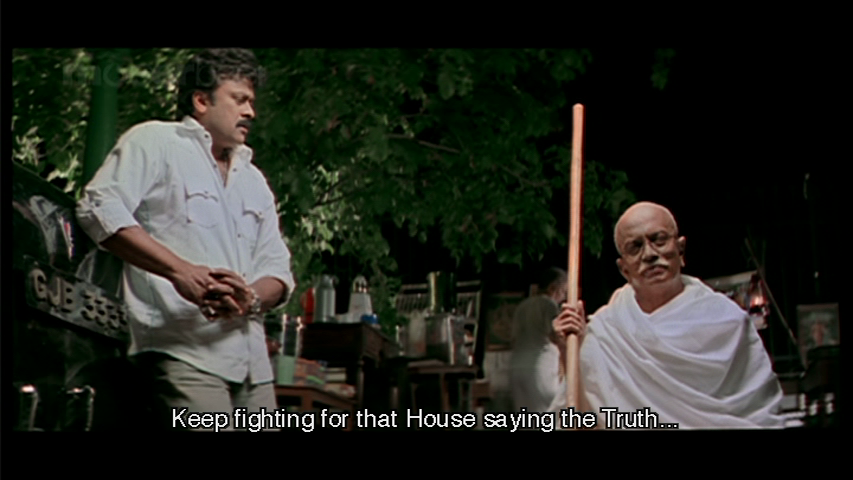
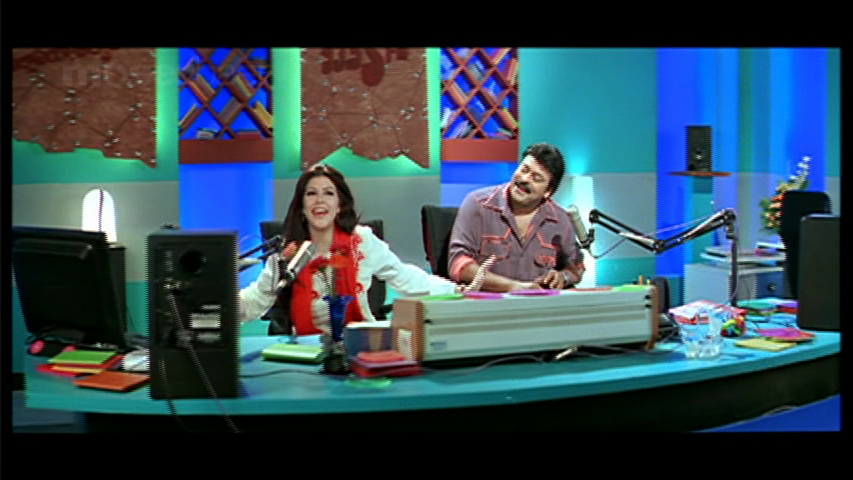
Shankar Dada Zindabad revisits the same characters as previous, but this time Shankar is in love with RJ Jahnavi (Karishma Kotak) and there is no reference to any of the previous MBBS story. He pretends to be knowledgeable about Gandhi in order to win the prize of  meeting Jahnavi and begins to hallucinate (or ‘haloginate’ as the subtitles would have it) that the great leader appears to talk to him and give him advice.

The story starts off well, but is a standard tale about a rich man’s greed versus the common man so stays in well travelled territory.  Shankar does his best to put the world to rights with a hug and snippets of Gandhian philosophy aka Gandhigiri.  As with the earlier film, the emphasis is on Shankar achieving a good result, regardless of his initial motivation.  The story unravels as Jhanavi feels betrayed, then neatly re-knits itself into happy ever after endings for all.

Although this is a light entertainment piece, it does still include some thoughtful dialogues and ideas. There are some interesting questions raised along the way about respect for culture, obeying your conscience (which may appear to you as a small man in a dhoti), being truthful and being proud of who you are.

As with the first film, the message is about love, respect and truth. The disparate characters that Shankar has helped throughout the film all cross paths in the last scenes to hit us over the head with the message one final time. Pawan Kalyan shows up in a small but pivotal appearance to give his support to the message and prove that the men in that family have very nice eyes.

Srikanth is again present as the reliable ATM, as are the other gang members. Despite the presence of Prabhu Deva as director this film also disappoints a little in the dancing.  There is one exception: a fantastic number featuring hippies, people in animal costumes, clowns and also to our great delight a guest appearance by our favourite, Allu Arjun. The rest of the dance numbers are OK but not quite up to the standard of the first film.

Karishma Kotak stands around looking pretty while waiting for Shankar to save the day, and does well enough at this. There are some sweet moments with the group of elderly men who make their home with her, and this part of the story does work reasonably well. The gang run around doing their thing but the plot here is so worn and predictable that it’s hard to pay any attention to their antics. There is the obligatory comedy side plot involving Brahmi as an astrologer and the various supporting actors all do their best to keep the story, such as it is, moving along.

Both these films rely heavily on the performance and star power of the hero and really entertain best when Chiru is on screen. Chiranjeevi switches effortlessly between the hardened gang leader and the affable humanist. In this he does a much better job than Sanjay Dutt who excelled as the don, but his smile never quite reached his eyes so he lacked the warmth and humanity of Shankar. The comedy is funny the first time round but doesn’t stand up to repeated viewings and we are bombarded so much with the ‘love is all you need’ message that it totally loses all effectiveness.  ATM suffers in comparison with the Hindi character of Circuit but Srikanth does as best he can with his reduced role.   However, the films still entertain more than the Munna Bhai versions, thanks mainly to Chiranjeevi, the soundtrack and dances, and the ability of most of the cast to look as if they are enjoying themselves.

Heather says: Both these films are enjoyable to watch because of Chiranjeevi and his great screen presence. I have to confess that I did originally get Shankar Dada Zindabad for the Jagadeka Veerudiki song, and the first film was just a bonus, However MBBS is the better of the two films and having enjoyed the original Hindi version I was a little surprised at how much better this version is. While I thought that Sanjay Dutt was excellent as the gangster, when he smiled at the children he really did look more like a tiger eyeing its prey rather than a cheery doctor. Chiru on the other hand while excellent as the rowdy, was much less scary in these later scenes and his genuine and real-life humanitarianism shone through. Although I did miss Boman Irani’s terrible bald wig, that was more than made up for by the supporting actors who were all very capable. I did prefer Arshad Warsi to Srikanth, but this was also partly due to the difference in the characters of Circuit and ATM.  The story is thin and rather tired, but Chiru manages to instil enough life to make it a fun watch. This one gets 3 ½ stars from me.

Shankar Dada Zindabad is just an excuse to watch more Chiranjeevi, and a little Allu Arjun. The cast all do their best, but the film really never excites, not even when they are on the Gold Coast in Australia for a song. I do really like the appearance of Prabhu Deva, Ravi Teja and Allu Arjun in Jagadeka Veerudiki and it was also a nice surprise to see Pawan Kalyan pop up at the end. The idea behind the story was interesting but there were too many clichés in the delivery to make it hold my attention. This film gets 3 stars from me which is just because of a couple of the songs that I really do love and the brief appearance of Allu Arjun – worth ½ a star alone.

Temple says: I’m not a fan of the Munna Bhai films, primarily because I don’t really like Sanjay Dutt, so found them a bit of a chore to sit through despite Arshad Warsi doing his best. So it was a pleasant surprise to find myself  enjoying the films in Telugu, and only partly because of Chiru. Although, I do think that if you don’t appreciate Chiranjeevi there isn’t a whole lot else going on.  I think both films are a little better written and better paced than their Hindi counterparts so make for better story-telling. The hero centric style does mean the peripheral performances are diminished but not reduced to the point of not mattering. The casting is pretty good in both – Paresh Rawal and Sonali Bendre were very good in MBBS, and it was fun to see the majority of the ensemble back for Zindabad.

One point of interest for me was looking at these films in light of Chiranjeevi’s political career. There are resoundingly clear messages around respect for culture and history, respect for people despite caste barriers, truth and love. So in my ignorance of AP politics, I was pondering what this said about the politician as well as the character in the film, and did this role have some synergy with his political persona. I’m sure I will be enlightened in due course. My DVD of MBBS also had a very interesting little addition at intermission:  a plea from Chiranjeevi to the audience to consider donating their eyes after death and encouraging people to talk about it with their families, which I think was a great use of celebrity and sort of appropriate to the film.

Like Heather, I found Zindabad less engaging than MBBS, but will always be grateful to our fabulous DVD guy Sunil for finding me subtitled copies at a bargain price! Both films get 3 stars from me – they’re a good timepass and the songs are really fun.