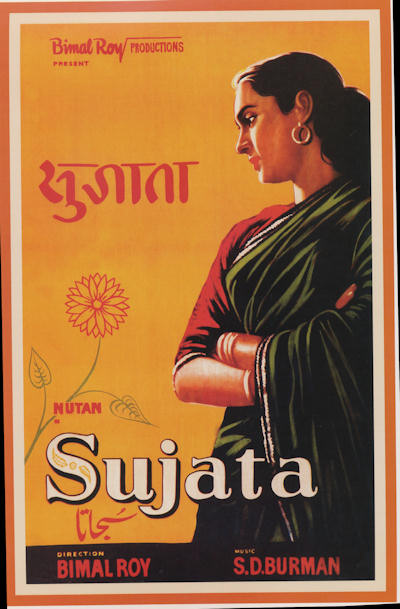
Sujata

Bimal Roy’s 1959 Sujata is both a romance and a condemnation of the caste system, questioning what makes a family, and how we judge a person. Nutan and Sunil Dutt star, supported by Sulochana Latkar, Tarun Bose, Shashikala, and Lalita Pawar.
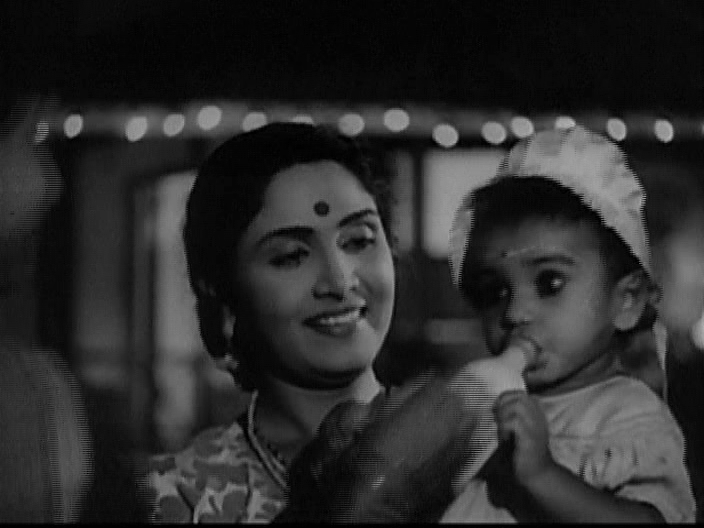
An orphaned baby girl is adopted by, or rather given to, a Brahmin couple on the same day as their baby daughter Rama’s first birthday party. The contrast could not be more marked. Rama is pampered and given the finest that her parents can afford while the baby is put in the maid’s room. The father, Upen (Tarun Bose), names the baby Sujata, a high caste name for an untouchable child. Charu (Sulochana) and Upen have their own struggles as caste rules clash with their growing affection for the little girl. They keep talking about sending her away to someone in her own community, and yet it never happens. Lalita Pawar as their Aunt Giridala is completely against keeping an untouchable in the household and demands they get rid of her.
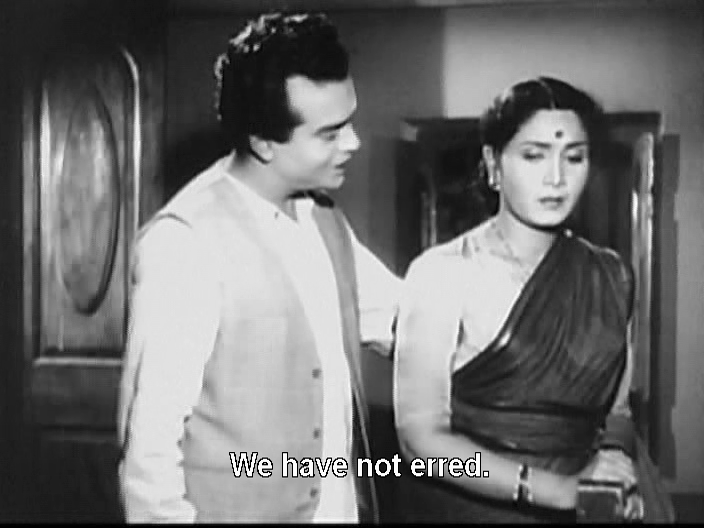
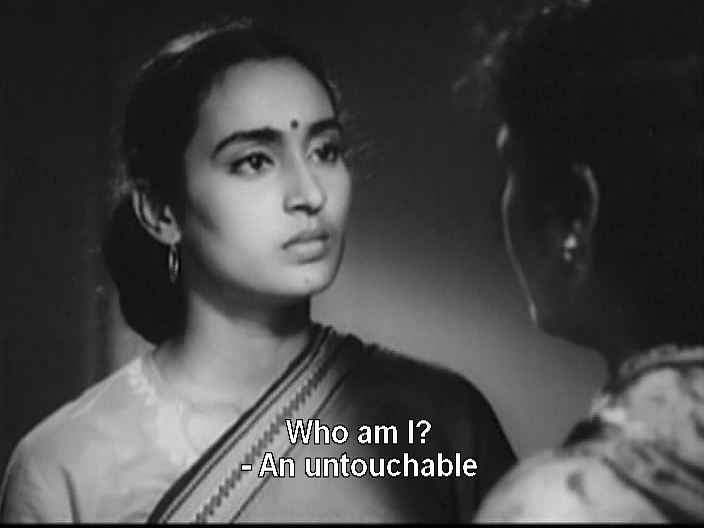
Upen and Charu relocate several times for his work, so are able to avoid the hard conversations for a while. Even so, Charu is ambivalent and often pushes Sujata away, never letting her forget that she is adopted. One day, she tells Sujata the truth – not only is she adopted, she is an untouchable. Predictably, Sujata is devastated.

While the caste issue is a focus, it is not what resonated most strongly with me. Perhaps it is that caste seems like such a backward social division to me.  Sujata’s relationship with her adoptive family was fascinating.  Regardless of the reasons for the emotional distance apparent at times, it had a strong effect on the young girl. Rama was educated and given pretty new things, had a big birthday party every year and was raised in an atmosphere of love and privilege. Sujata had to fight to learn to read and had no known birthday to celebrate, filling the role of housekeeper to be useful and a good daughter. Sujata yearns for her parents to love her but she is all too aware that she is not ‘good enough’.
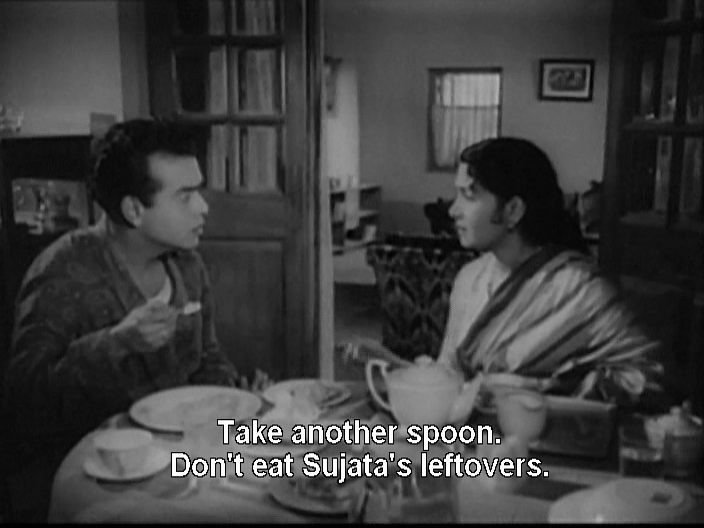
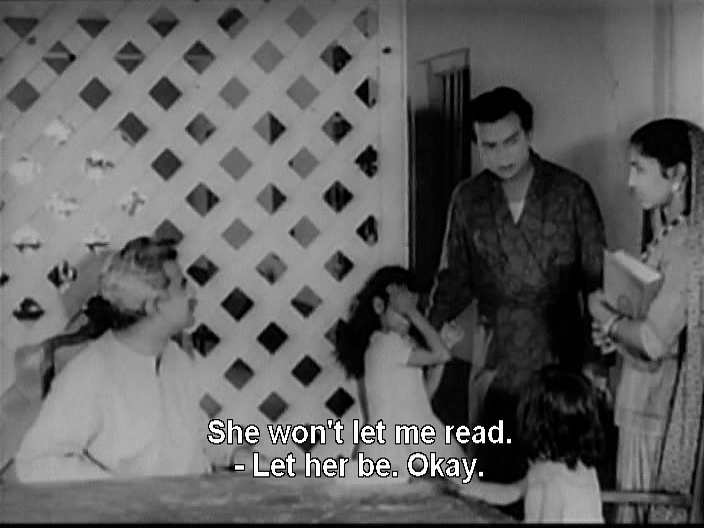
Sulochana is very good at showing the conflict Charu feels between doing what her Aunt says and following her instincts. Upen simply ignores any restrictions he doesn’t like, and little Sujata idolises him. Tarun Bose’s characterisation is sweet but Upen is a little weak or ineffectual when it counts. It tugged at my heart just a bit to see Sujata being kept at a distance and not understanding why. My parents gave short shrift to anyone who questioned whether I was really part of the family (yes, I had relatives who voiced reservations about adopting children).  Mum made it very clear I was theirs and anyone who said different was wrong. I can’t imagine growing up without that fierce maternal love as my foundation.

Meanwhile Sujata and Rama have grown up as sisters, fighting, squabbling and playing together. The little girls are played by Baby Farida as Rama and Baby Shobha as Sujata. Baby Shobha is excellent as the fiery little girl who adores her parents and can’t stand the idea of being separated from them. She keeps asking why she isn’t allowed to learn, why Charu won’t feed her with her own hands. It’s sad.  As Sujata grows up, now played by the radiant Nutan, a further complication emerges as she threatens to outshine Rama. Aunt Giridala keeps getting in Charu’s ear about how she needs to get rid of Sujata.

Grown up Rama (Shashikala) has modern attitudes and doesn’t care about Sujata’s origins. Rama sees all the good qualities in her big sister and includes her in all family events.

Rama seems to be blind to the gulf between Sujata and the rest of the family and I’m not sure whether that was naiveté or determination to ignore the discrimination. She knows her aunt wants her to marry Adhir (Sunil Dutt) but she sees he is interested in Sujata and gives their love room to develop. Shashikala is bubbly and fun, and makes Rama very likeable.
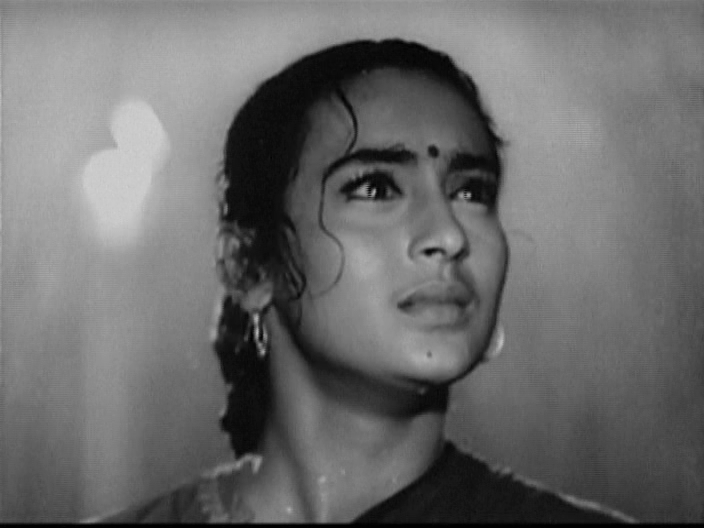
Nutan is just lovely. Because Sujata is often on the fringe of scenes, she has little dialogue and Nutan uses her beautifully expressive face and posture to show her feelings.

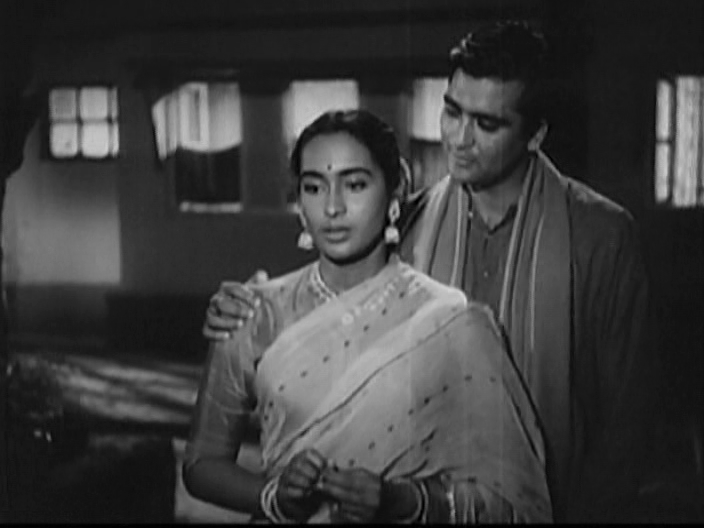
The thing Sujata wants to hear 1000 times is not Adhir saying “I love you” but Upen and Charu declaring “you are our daughter”. But having Adhir express a love that is just for her must have been amazing and intoxicating after craving acknowledgement and affection for so long. When he touches her, she shudders not in affront or with desire but with the sheer shock of being touched by another person. She does spend a huge amount of time crying, but her sadness is evident and I’d cry too if I had felt that my parents really didn’t love me and I didn’t belong. Sujata doesn’t expect anyone to fix things for her. She has some crises and chooses her next steps even as she knows her loyalty may not be rewarded.

Sunil Dutt is perfect as the charming and well bred Adhir, his clean cut good looks suited to the romantic ideal. His feelings develop slowly and he is deliberate yet not pushy. Adhir respects Sujata’s reticence although he doesn’t understand why she resists. Once he discovers her origins, he is clear that it makes no difference to him. The scenes between Sunil and Nutan have a delicate and intimate feeling, and they seem to act with each other rather than for the camera.

Adhir woos her over the phone in the lovely Jalte Hain Jiske Liye, trying to reassure Sujata that they can be together. I can see why she would be smitten!

S.D Burman’s music is used sparingly and the songs are tailored to the characters. Rama’s songs are jaunty upbeat Western infused, while Sujata tends towards the more lyrical. Often there is no background music or sound at all, sometimes just the sounds of birds or rain. Adding to that understated use of sound, emotions are mirrored in simple visual devices. When Sujata is overwhelmed, she switches off the light so she can hide herself in the shadows. When love strikes, Bimal Roy shows rain, leaves blowing in a gust – maybe showing that emotions are natural and not subject to man made rules. There are some charming visual effects when the child Sujata is told that she is going to visit a magical land (an orphanage) but by and large the characters speak for themselves.

I was moved by Sujata and found myself engrossed in the family drama. The resolution is so textbook filmi and yet profoundly satisfying as it destroys a few obstacles and hammers home the message. See it if you appreciate a melodrama with a social message and for the beautiful and restrained performance by Nutan. 4 ½ stars!

English Vinglish

Finally Sridevi returns to films! A low key and female centric family drama, English Vinglish allows ample opportunity to show off her great range and perfect timing. Gauri Shinde has written a nice story with a whiff of “Shirley Valentine” about it, and directs with assurance.

Shashi (Sridevi) is a wife and mother, taken for granted by her family – husband Satish (Adil Hussain), bitchy teenage daughter Sapna (a very convincing Navika Kotia) and son Sagar (the endearingly cheeky Shivansh Kotia). She is a good cook and keeps a lovely home as well as running a business making and selling ladoos, barely having a moment to herself. Shashi is accomplished and loving, but that is what is expected of her so she gets no credit for that. The family mock her for her lack of polish and poor English. The cheap shots are also a way of father and daughter bonding and excluding Shashi. Shashi is gracious and rarely retaliates, instead letting her beautifully expressive eyes show the pain.

When Shashi’s New York based niece Meera is about to be married, Shashi is sent ahead of her family to help with the preparations. Nervous at leaving her kids and husband, she is forced to go where she can be useful. Again, her feelings are ignored for the sake of convenience.

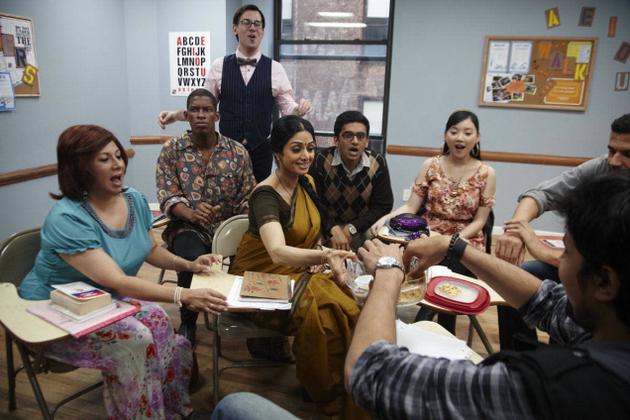
Shashi stays with her sister and niece Radha (the sparky Priya Anand) and spends her days missing her family at home. Daunted by America and feeling left out, Shashi secretly enrols in a dodgy “Learn English in 4 Weeks” class.


This is where the film detours into “Mind Your Language” territory. Taught by David (played by one of the worst actors I have ever seen, and I am including Mimoh in that list) and along with her fellow students, Shashi begins to come out of her shell. One of the students keen to get her right out of her shell is the dishy French chef, Laurent (Mehdi Nebbou). The tentative stirrings of romance between Laurent and Shashi are very well played even if his lines are cheesy.

The rest of the class start off as a collection of broad stereotypes, but the actors develop their characters really nicely. Sumeet Vyas, Rajeev Ravindranathan and Maria Romano are particularly good fun. I also liked the way food played a role in communication and relationships.

The story isn’t really about learning English as a road to happiness, but it is about getting your mojo back and gaining the respect of your loved ones. There is a theme of English language undermining Hindi and excluding people in their own country, but really she could have taken a pottery class or something else.


Much as I cheered when Shashi managed to navigate her way into the city or order a coffee, and I loved seeing her grow in self esteem and happiness, I have a slight problem with the character. She was so passive aggressive, even considering of her lack of confidence. Why make Radha cover for her so she could sneak to class? Why not just ask her sister to keep it quiet as a surprise for the family or at least not ask Radha to be an accomplice. Telling Laurent about her family in Hindi seemed at least partly a lie by omission rather than purely an outpouring of the heart given their level of conversational skills. Her final speech was two-thirds guilt-trip inducing perfect filmi Ma (and the opposite of the real situation) and finally one-third honesty about what she believed was needed for happiness. It made me like her less than I wanted to and I felt heavily manipulated at times as she is clearly meant to be the morally good person in the frame.


Shashi lost me at times, but Sridevi never did. Her performance was beautifully nuanced. As her self-confidence grew, Shashi’s expressions became less guarded and her eyes lit up. When Sridevi smiled she was radiant. I really wanted Shashi to be happy, despite my reservations. I think this was more about Sridevi than Shashi though – I am so happy to see her working in films again.

The music by Amit Trivedi mostly ranges from bland to twee. I’ve never been a big fan of his and the tweedly emo guitar thing is not my style. The songs are mostly in the background or used in montages of Shashi looking sad. It was all appropriate to the tone of the film but I won’t be listening to the soundtrack anytime soon.

Whether it was Gauri Shinde or former co-star Sridevi who won him over, Amitabh Bachchan makes a fun appearance. He plays a rambunctious man of the world and gave Shashi some much needed confidence and sensible advice. Priya Anand is a standout. I liked her sassy style in her debut (Leader) and she was very natural as the lively college student Radha. Adil Hussain is also excellent as the thoughtless Satish, and the children are perfect for their roles. Maybe too perfect – that girl is a right little cow. The random extras at the wedding were energetic and got into the dances.

The visual design is excellent. Shashi’s house in Pune looked lived in and real, even if her saris were a bit too fabulous. I drooled over some of her outfits; all of them in fact, except the dark pink one (I don’t like pink) and the mauve (it was a bit too shiny). The NRIs lived in a very American suburban house with Indian touches in the decor. It was a nice representation of their life abroad and the connection to home.

I saw this with four friends and at least three of them cried several times during the movie and we all laughed a lot. It’s a film I would have loved to see with my mother and then go out with her for coffee. It’s a well crafted film, with a good story and some fine performances. Despite some issues, I highly recommend it. Welcome back Sridevi!

Duplicate (1998)

If not for the presence of Shah Rukh Khan I probably would have avoided Duplicate, since I’m not a fan of slapstick comedy and usually detest buffoonish characters. But despite all the farce I totally loved it, although even though I’ve now watched it multiple times, I’m still not entirely sure why it appeals to me so much. Of course Shah Rukh in a double role is enough to explain at least some of the attraction, but no matter how many times I watch Duplicate I still find it funny even though I know the plot is preposterous and the end completely ridiculous. It all comes down to the charm of the lead couple and an excellent supporting cast who manage to hold the film together, keeping it genuinely entertaining the whole way through. Plus there isn’t even a whiff of Johnny Lever which is always a win in any Hindi comedy as far as I’m concerned!

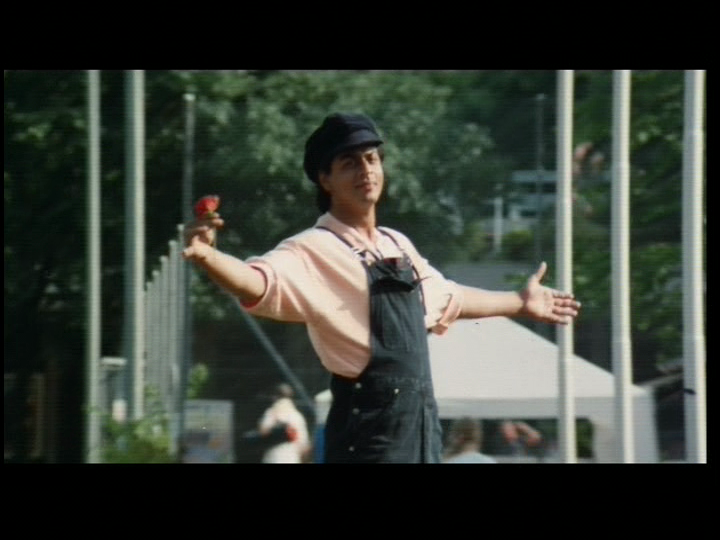
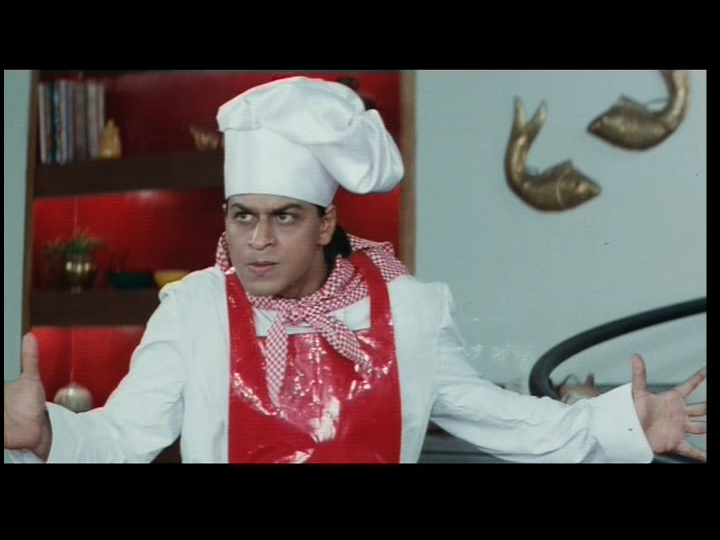
Shah Rukh plays the dual roles of Bablu Chaudary – a rather gormless and naïve chef, and his duplicate in appearance Manu Dada – a vicious gangster out for revenge on his former partners in crime. He keeps the two characters totally separate and it’s always very clear who he is at any time in the film.

Bablu is the son of a Punjabi wrestler and since he has no desire to follow in his father’s footsteps he is a severe disappointment to his mother (Farida Jalal). Bablu comes across as the lovechild of Frank Spencer and Norman Wisdom as he indulges in pratfalls and causes general mayhem when he goes for a job interview at a posh hotel. Despite all the face-pulling and foolish grins, Bablu isn’t quite as stupid as he looks and gets the job after proving he can whip up a rather un-Japanese looking Japanese meal in 20 minutes while dancing with various vegetables and duly impressing the banquet manager Sonia Kapoor (Juhi Chawla) with his multi-tasking skills. It’s quite silly but rather engaging at the same time.

This initial attraction between Bablu and Sonia develops into a romance that isn’t quite as creepy as it might have been given Bablu’s essentially child-like nature and Sonia’s more mature outlook on life. Although she is appalled when his secret fantasy is to feed his bride potato dumplings on their wedding night, they do seem to reach an understanding during the songs. Sadly Juhi’s character seems to have been cursed with the worst shoe costume designer ever as she appears in a number of terrible ankle boots throughout most of this, but otherwise it’s a very cute song and there are some good shots of Prague in the background.

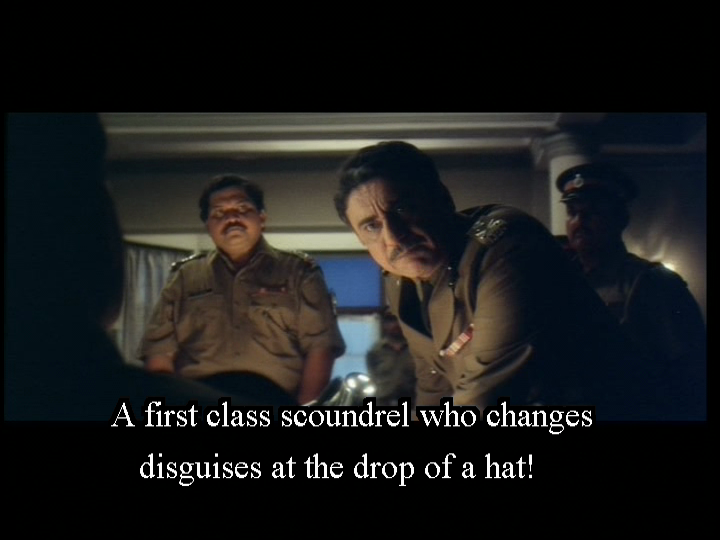
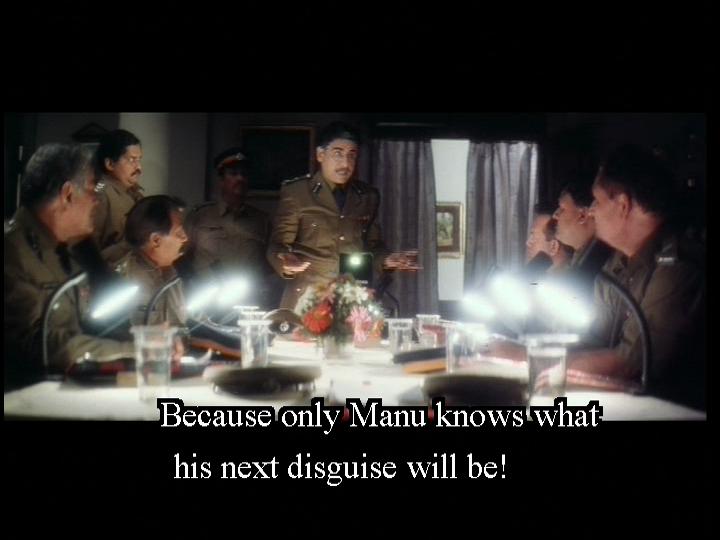
While Bablu is getting to know his boss, Manu escapes from jail although why he is wearing nifty pleather pants accessorised with circa 80’s Madonna-style jewellery for his jail-break is a total mystery. Manu is on the trail of his previous accomplices who set him up for his jail time and then absconded with all the loot from their criminal activities. The gang includes Dhingra (Sharat Saxena), Gappa (Rana Jung Bahadur) and Gulshan Grover as Shalaku – the man who rather significantly does not have a death line on his hand. They are an incredibly inept gang of criminals and seem totally unable to recognise Manu when he turns up to kill each of them. Of course he is a man of mystery and a master of disguise, at least according to the equally inept police team who are out to catch Manu and send him back to jail.

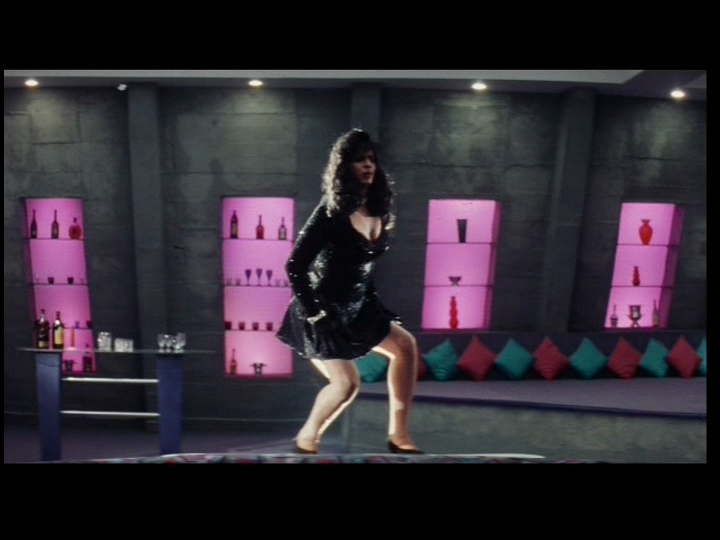
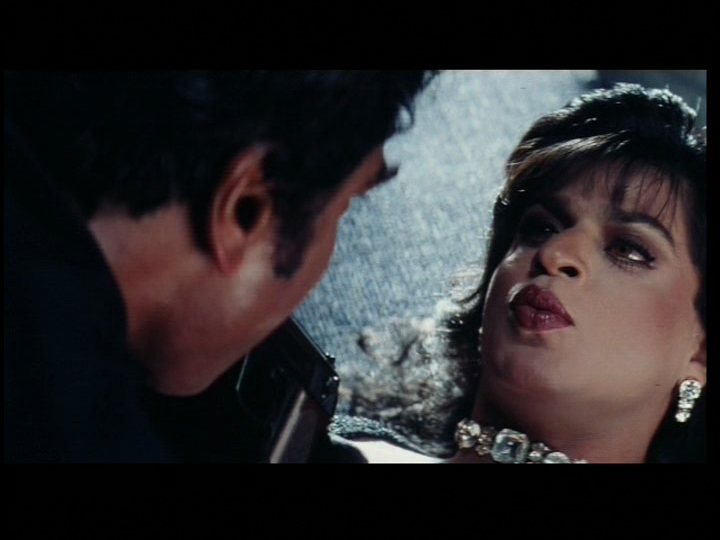
Manu dresses in drag as part of his plan to get past security and eliminate Dhingra. I have to say that although Shah Rukh does make a particularly ugly woman, he is disturbingly convincing as he dances provocatively before whipping off his wig and revealing his true persona. It’s a classic scene and it’s made even better by the wonderful decor in the background.

It’s inevitable that the police find Bablu and mistake him for Manu which starts off a chain of mistaken identity that Manu uses to his advantage. But Manu makes a mistake when he captures Bablu’s mother as this forces Bablu to take action. Bablu decides to impersonate Manu to get his mother back from the gangster’s clutches and while his attempts to mimic Manu’s menacing persona fall far short of the real thing, he does manage to convince Mnau’s girlfriend Lily (Sonali Bendre) and Manu’s gang. This leads to a totally crazy song where Sonia is out with Manu, thinking he is Bablu, while Bablu does his best to avoid Lily’s attentions. I’ll just point out that Karan Johar was responsible for Shah Rukh’s costumes and leave it at that since I think that explains it all.

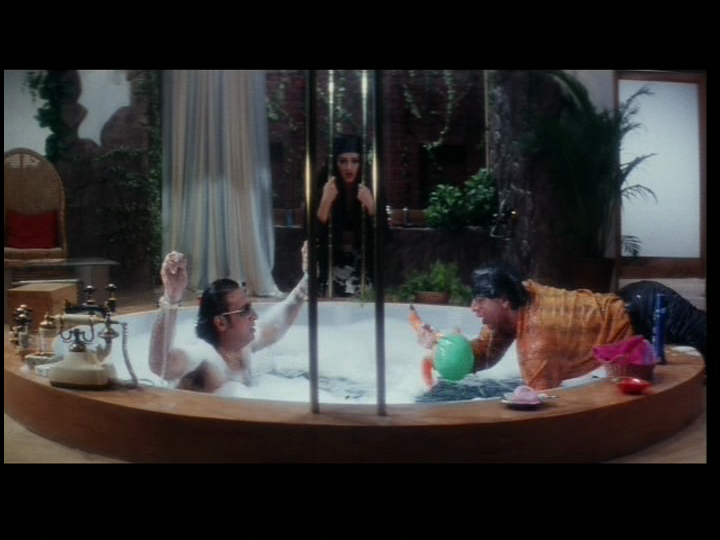
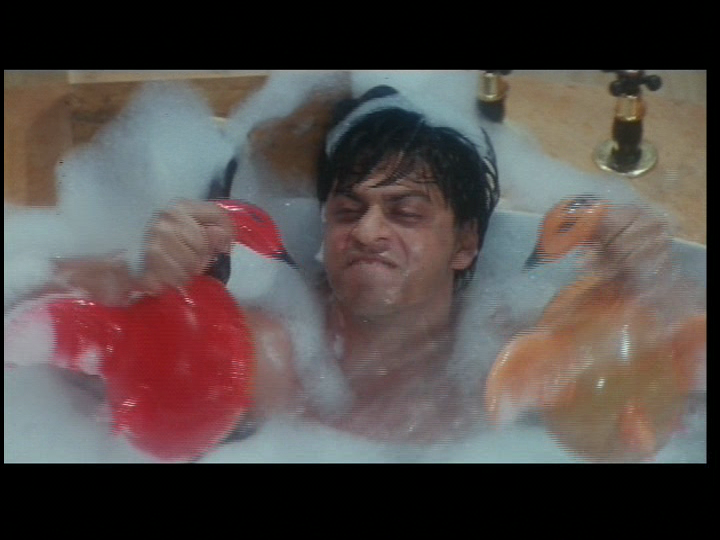
The confusion gets more and more ridiculous but Shah Rukh keeps it easy to decipher whether we’re watching Bablu pretending to be Manu or Manu pretending to be Bablu, even if the police, Shalaku and his cronies, Sonia and Lily can’t manage to work it out. Although Shah Rukh overplays both characters it works in the film since it’s all totally over the top and silly. Watching Bablu (pretending to be Manu) and Shalaku battle it out in a bathtub (thankfully) full of bubbles and squeaky toys should have been absurd but instead it’s hilarious.

The supporting cast are all excellent and Farida Jalal is perfect as Bablu’s mother. Her loud and overbearing personality make it seem quite understandable that she would have a son as foolish as Bablu and her rapport with her son comes across clearly. Sonali Bendre is also well cast as the sexy girlfriend Lily, and ably portrays her obvious attraction to bad boy Manu warring with her common sense. Lily is quite aware that Manu takes her for granted and only wants her for one thing, but she still can’t help herself and is irrestibly drawn towards him. Shah Rukh also manages to convey an aura of dangerous desire even though Manu really is quite repulsive with his repetitive tongue flicks and strange sneers.  There is so much detail in Shah Rukh’s performance that it does take a few viewings to fully appreciate every nuance. I love the way that Manu uses a burning TV set to light his cigarette as he leaves the scene of one of his crimes, and also snags some chicken from the table on the way out while Bablu lets every emotion show in his expression, exactly like a small child.

Juhi Chawla is one of my favourite actresses and she is simply wonderful here. I’m not sure how she manages to keep a straight face through some of Shah Rukh’s more insane moments, but she plays Sonia as quite a serious career woman with a tendency to lecture in English. Although I do prefer her romance with Shah Rukh in Yes Boss they still make a sweet couple here. This is my favourite song from the film and I love the way Bablu changes his expression as he looks from Lily to Sonia and also manages to totally change his posture and body language – brilliant!

Apart from the great performances, there are plenty of small touches that make this film appealing. Bablu lives in a very colourful house with a wonderfully brightly painted bathroom and some very groovy pictures on the walls while Manu’s garage has lots of cheery graffiti. The songs by Anu Malik are memorable and the picturisations are all well done with Farah Khan being responsible for the excellent choreography which of course suits Shah Rukh perfectly. Monish Bahl pops up in a small but important role as the hotel manager Ravi Lamba, and Tiku Talsania is very funny in his brief appearance as the bumbling Inspector Thakur. Kajol also appears briefly in a blink and you’ll miss it guest appearance which I didn’t even notice amongst all the other craziness the first time I watched the film. Although there is plenty of slapstick it is used well and there is plenty of comedy in the dialogue and the situations to help stop the film from becoming too farcical – at least until the end. But really, I think it’s Shah Rukh’s performance and his ability to make his characters so appealing despite their flaws that really make this such a watchable film. I can’t say that it’s good because it does have a nonsensical plot and everyone is overacting like crazy. But it is entertaining, it does make me laugh and it’s a film I can watch over and over again without having to resort to the FF button. 4 stars.