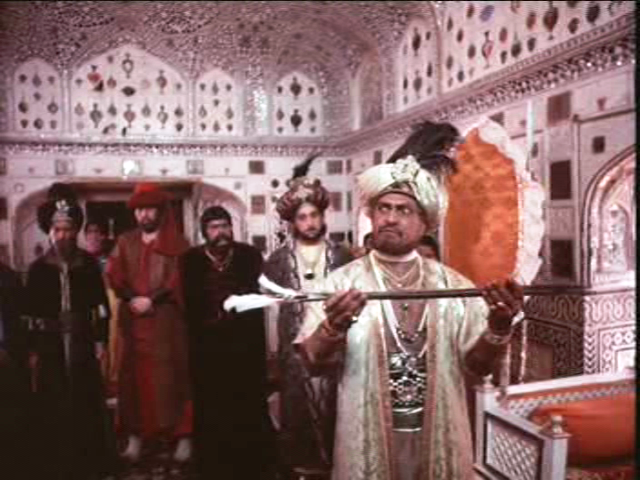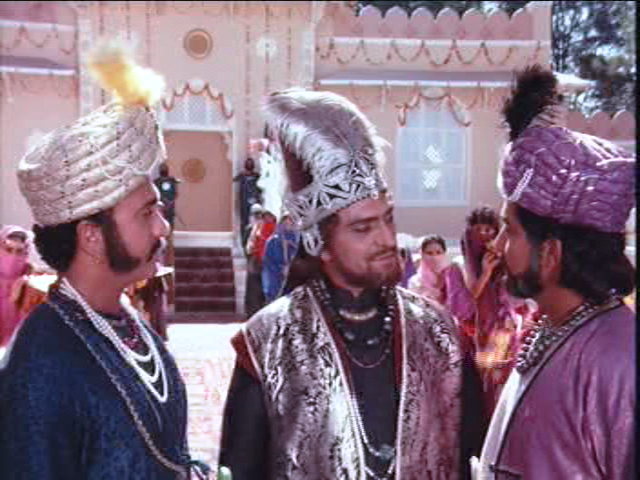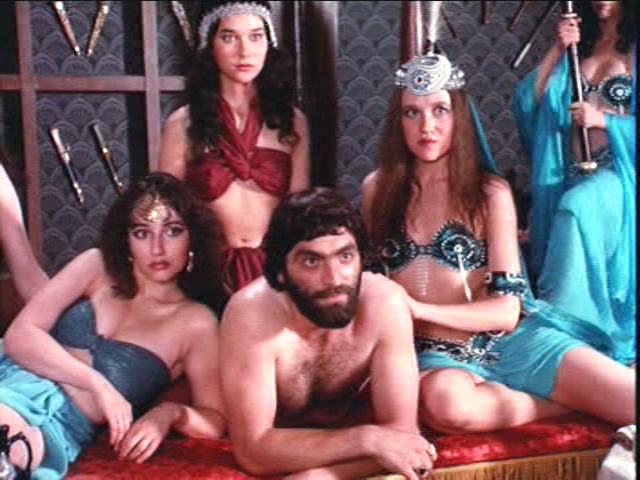
Hum (1991)

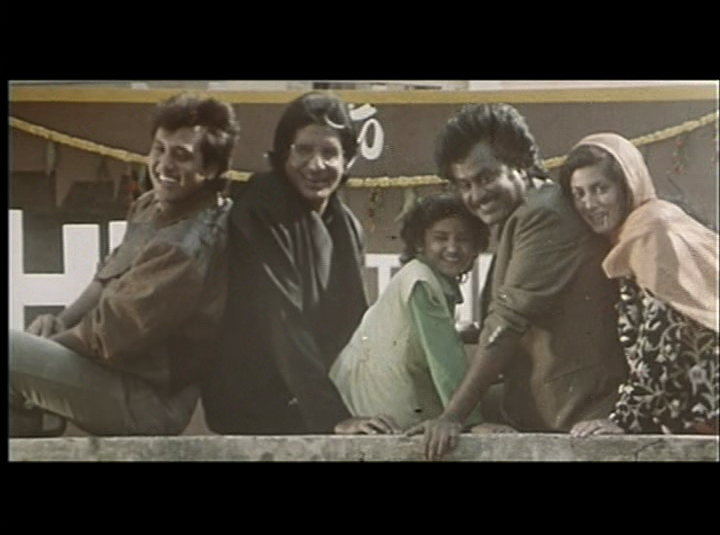
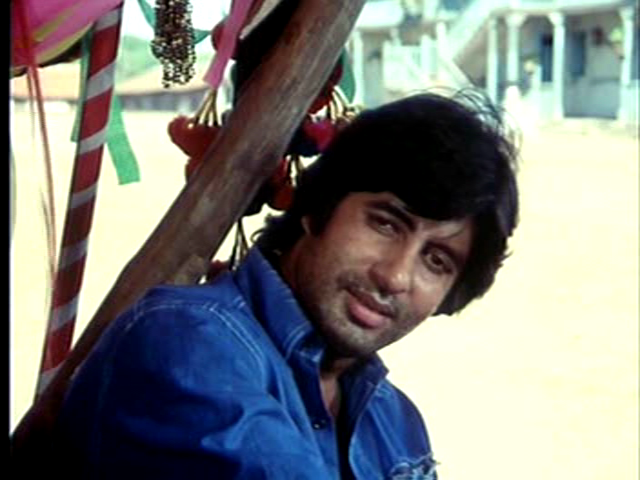
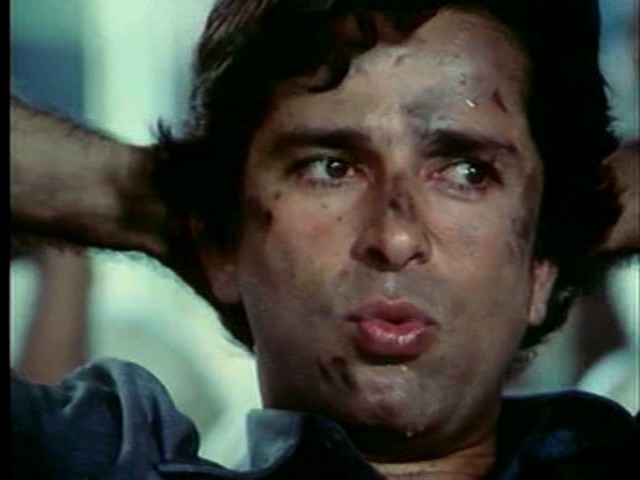
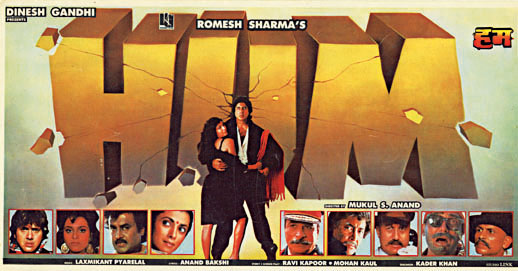
The late director Mukul S. Anand made 3 films with Amitabh Bachchan in the early nineties; Agneepath, Khuda Gawah and Hum. Although my favourite is Khuda Gawah I do have a soft spot for Hum which has a veritable who’s who of actors from the time including Rajnikanth, Govinda, Kimi Katkar, Anupam Kher and Danny Dengzongpa. The story combines the angry young man from Amitabh’s heyday with the sensible and authoritarian father figure he went on to portray in his later movies  and he does a good job of transitioning between the two personas. The film was a big hit at the time, and although it does drag a little in the middle, it’s still a great performance by Amitabh as the man whose past comes back to haunt him.

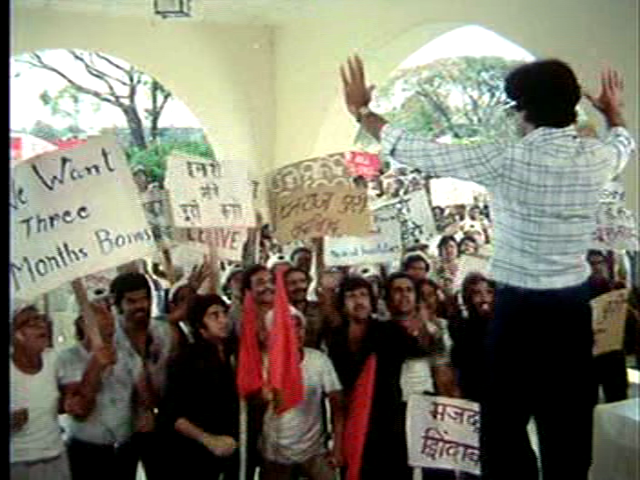
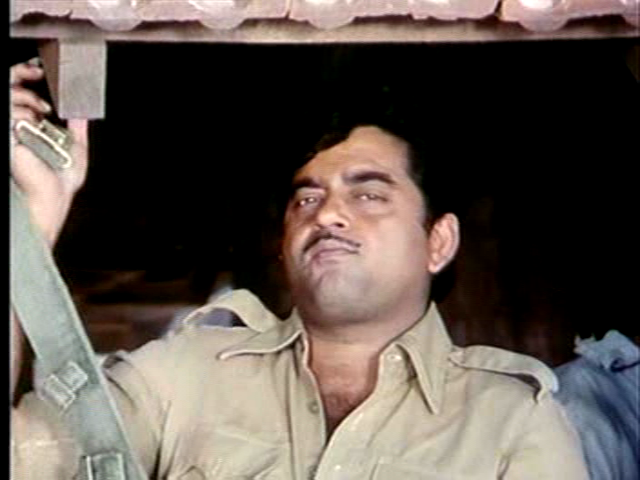
The movie starts as fairly typical masala fare. All round bad guy Bakhtawar (Danny Denzongpa) rules over the docks in Mumbai, treating his workers as slaves and killing anyone who dares to go against his despotic will. Despite his general dissatisfaction with this regime, Tiger (Amitabh Bachchan) extorts money from the workers for his father Pratap (Deepak Shirke), who in turn works as an enforcer for Bakhtawar and struggles to keep the peace between his son and his employer.

Tiger is in love with Jumma (Kimi Katkar) and the two have a rather stormy relationship, although we don’t get to see very much of them on-screen together. During one rebellion Tiger’s best friend Gonsalves (Romesh Sharma) is killed by Bakhtawar and in the subsequent fall-out Tiger’s father and step-mother also die, leaving two young step-brothers in Tiger’s charge.
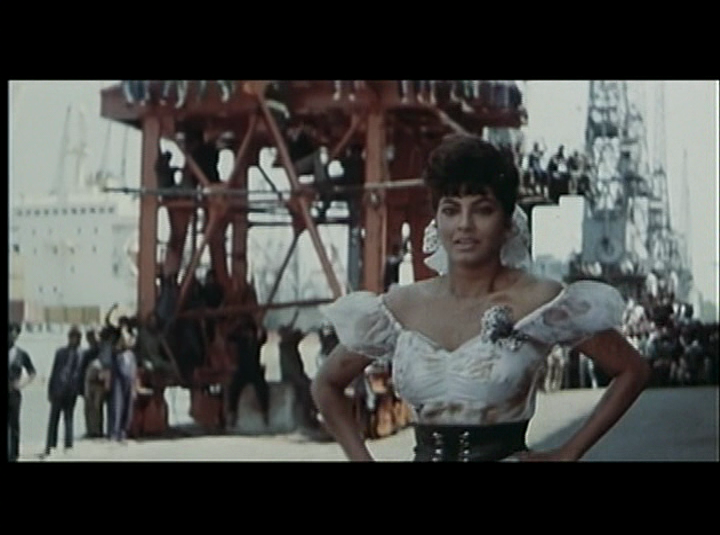
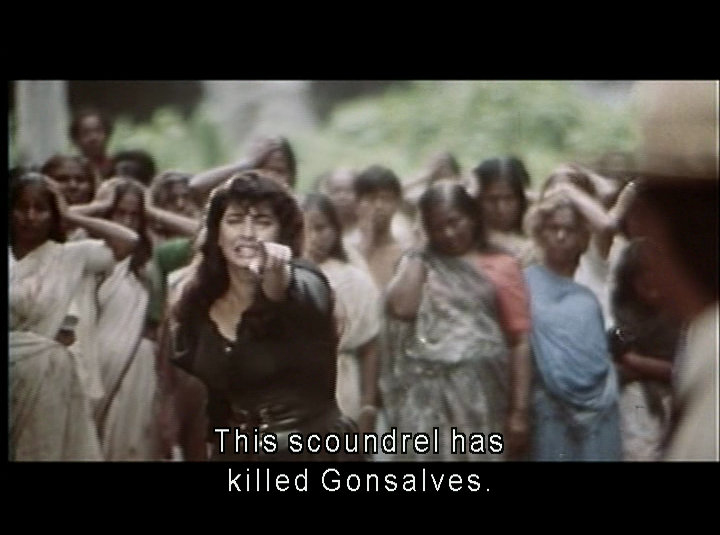
Tiger immediately sets out to kill Bakhtawar in revenge but is stopped by Inspector Girdhar (Anupam Kher) who has his own agenda, and has set up the whole situation by playing Gonsalves and his revolutionaries against Bakhtawar and his gang of thugs. Girdhar intercepts Tiger and convinces him to fulfil his dying step-mother’s wish and take care of his young brothers while leaving the police to deal with Bakhtawar. In the confusion Girdhar and his faithful sidekick Havaldar Arjun Singh break into Bakhtawar’s safe and steal everything. To cover up their crime they set fire to Bakhtawar’s house, killing his wife and children in the process. At the same time they arrest Bakhtawar and send him to jail, while finally Girdhar blows up the train carrying Tiger and his brothers to eliminate any possible witnesses of his crime.
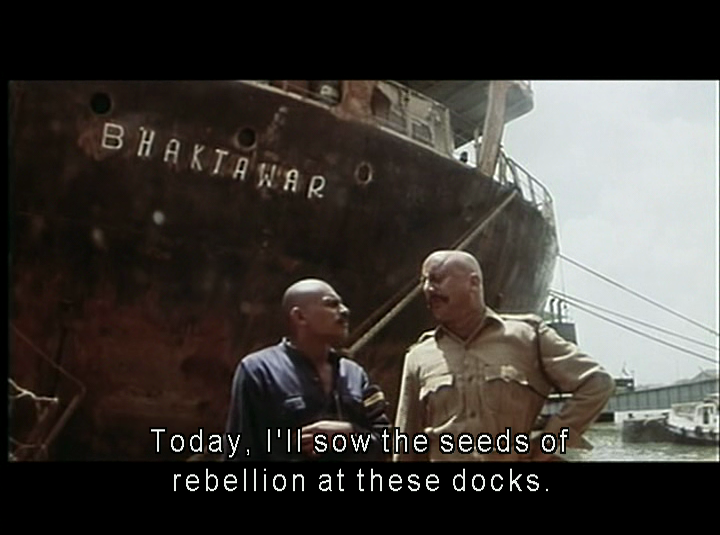
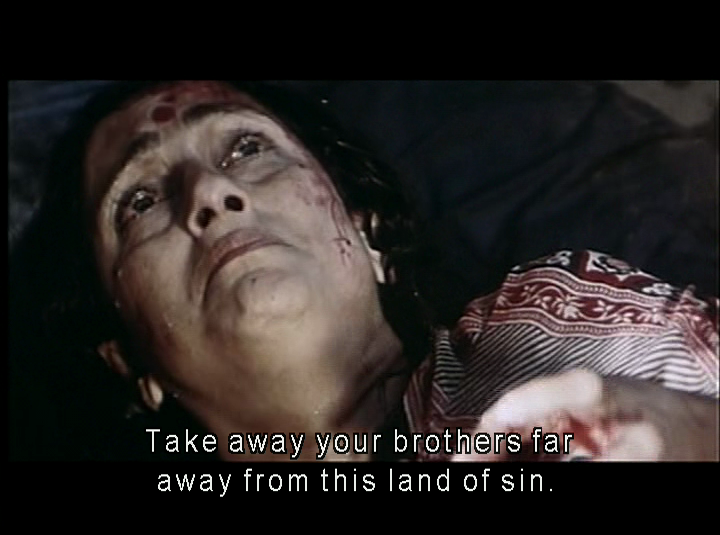
It’s all action in the first half of the film! Amitabh plays his classic role of the angry young man as only he can, even though he looks his age here and actually looks older than his supposed father and step-mother. But there is so much emotion and energy behind the character that apart from moments where the angled lighting shows up the wrinkles, it easy to put aside disbelief and accept Tiger as the slightly tarnished but still heroic saviour of the poor.

The first half of the film also features Laxmikant-Pyarelal’s classic song Jumma Chumma De De. Chinni Prakash won the Filmfare award for best choreographer in 1992 for his work on this. I’m not sure why the men have mugs of foam, although I presume it’s meant to represent beer and the water hose does seem a little excessive, but do enjoy what is actually a good song.

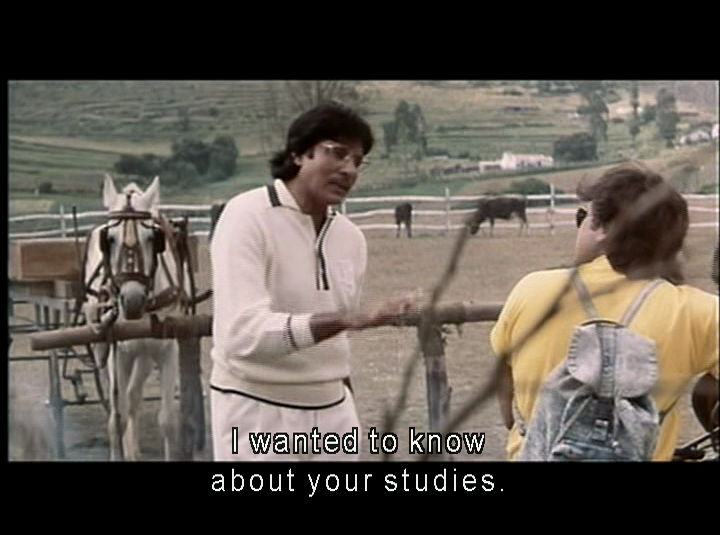
The second half of the film shows an older Tiger (we can tell because he now wears spectacles) who goes by the name of Shekhar and is a respectable farmer and timber merchant in Ooty. Kumar (Rajnikanth) is a police officer and is married to Aarti (Deepa Sahi) with a young daughter Jyoti. The youngest brother Vijay (Govinda) is a student pursuing Anita (Shilpa Shirodkar), the beautiful daughter of General Rana Pratap Singh (Kader Khan). Neither of the two brothers seems to have any memory of their time in Mumbai and both regard their step-brother as a rather staid and authoritarian figure, whose rules they generally ignore.
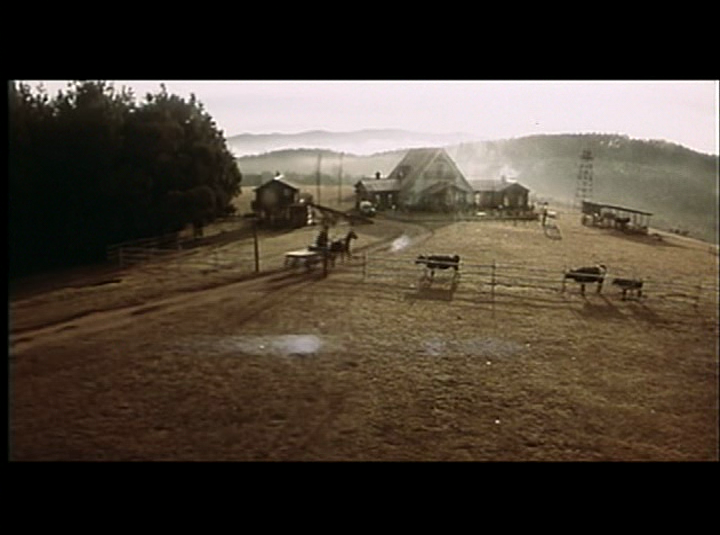
Meanwhile, Jumma has managed to overcome her early life and is now a successful actress while Girdhar and Havaldar are living well on their stolen riches and selling tanks from their base in Bombay.

The middle part of the film tends to drag as it concentrates on the unity of the family and a rather involved romance track with Vijay and Anita slows the pace considerably. There is an unconvincing and unnecessary thread where Girdhar finds a duplicate General as the original has refused to buy his tanks and the whole character of the renegade Captain Attack would have been best avoided.. But things pick up when Bakhtawar is released from jail, still wearing his now rather grimy white suit, desperate for revenge on Tiger for the death of his family. As Shekhar’s past catches up with him, everyone ends up in Bangalore together before somehow managing to get back to the Bombay docks in record time for an exciting and action packed showdown.

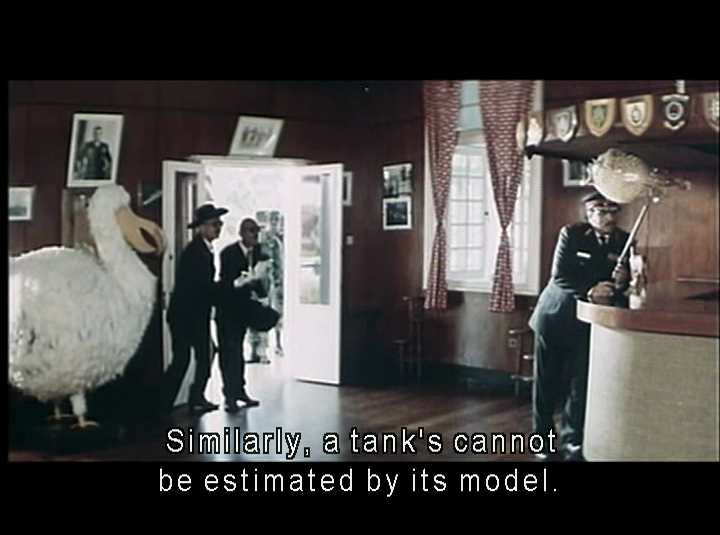
There are some things that are just never explained. Why there is a giant stuffed dodo in the army officers’ lounge, or a type of puffer fish above the bar we will never know.
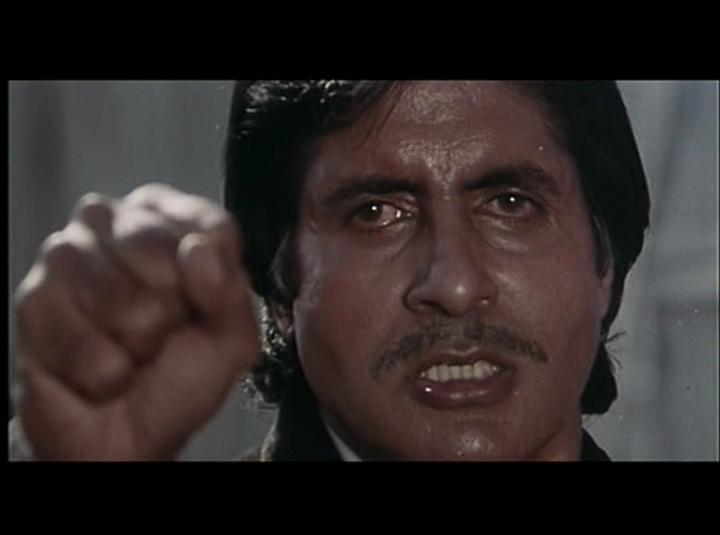
Amitabh suits the role of the older Shekhar much better as he finally looks the correct age. His realisation that his somewhat shady past has finally caught up to Shekhar is brilliantly portrayed and the re-emergence of his Tiger character is excellent. Who knew that all it takes to become an efficient and competent fighter again is a shake of the head and a tiger’s roar! While Rajnikanth has a limited role as Kumar, the scenes where he faces off with Shekhar are excellent and the two actors are very natural together. Govinda is good as the more innocent Vijay, but as his character is there more to add comedy and some light-hearted romance he makes less of an impact. However he does have the best ever disco dance/fight scene and I do like his Crocodile Dundee inspired outfit.

Danny Denzongpa can always be relied on as a villain and here he brings depth and character to the role of Bakhtawar. He contrasts the money obsessed businessman with scenes of the family man, although even here his basic nastiness is still clear. As the revenge obsessed ex-prisoner his conviction that Tiger is still alive somewhere is perfectly shown as the driving force behind his increasingly agitated behaviour. The whole character of Bakhtawar is very well written and I like the way flashbacks to his family’s deaths help humanise him and make Bakhtawar more three-dimensional than the typical Hindi film villain.
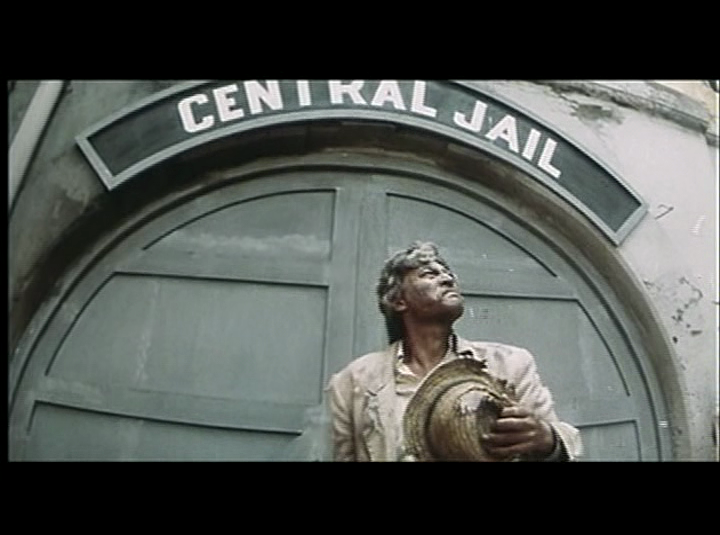
Anupam Kher’s Girdhar is a much more buffoonish character and although his initial scenes as the police inspector are good and at times almost menacing, he becomes more irritating and cartoonish as the film progresses.  Deepa Sahi is the best of the actresses and also has the most convincing role as Kumar’s wife. Her attempts to look after the entire family struck a chord, although I wouldn’t have been as happy as she is to be fobbed off with the very annoying song that the family sing together at opportune moments. The music by Laxmikant-Pyarelal is generally good, although apart from Jumma Chumma De De none of it is particularly memorable.
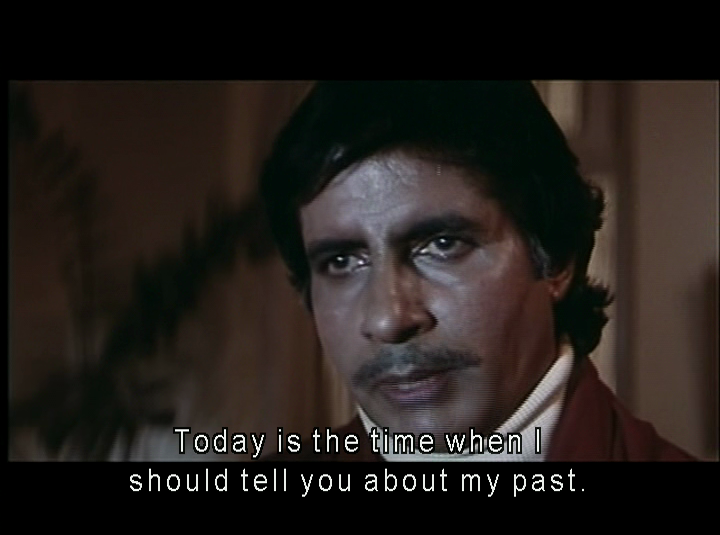
This is a masala film that reaches back to some of the classic Amitabh films of the early eighties and he delivers a great performance throughout. Although there are some flaws in the film, particularly in the middle section, there are plenty of great action scenes and excellent performances from the rest of the cast. Worth watching for Amitabh and Danny Denzongpa who steal the show. 3 ½ stars.

Temple says:

On paper, this looks like it should be really good. It has a great cast and many of the required masala elements. And I really like a good socialist masala. Sadly, it fails to live up to that promise on almost every count. Mukul S Anand directs with a leaden hand and what little zest resides in the story is overwhelmed by clunky plotting and some poor casting.

Amitabh didn’t really convince me as Tiger – not just on his physical appearance, but his performance. He had some great moments, especially when Tiger was just hanging around shooting the breeze or drunkenly trying to warn Jumma’s brother, but he sometimes looked like he was just going through the motions of his patented Angry Young Man. Shekhar suited Amitabh’s air of authority, but was so relentlessly dour. Rajnikanth is cast as an airhead policeman, too dumb to know if the gun he lets his daughter play with is loaded. He just isn’t frivolous enough, and Kumar doesn’t get much to do. Rajnikanth and Amitabh share a nice rapport, but what a waste of a fine actor. Govinda’s role was totally unnecessary and I wondered if Vijay was added in just to have a dancer in the cast. Kimi Katkar is introduced by having her chest heave into view and that is all you need to know about Jumma. The only thing I recall about Deepa Sahi is a scene where she apologises for her inability to cope with the brothers’ demands and they basically reassure her that she’ll get better at housework with practice. There is a terrible family song, and many trite ‘together we five fingers make a fist’ speeches. I’d rather be an orphan! Danny Denzongpa is excellent but Bakhtawar is sidelined for the middle of the film so the best bad guy is largely missing. Anupam Kher is both comic relief and villain, and does neither well. The comedy track is hammy and misguided, and he doesn’t portray Girdhar with enough menace. The plot goes off the rails a bit when Girdhar carries the story and Anupam Kher’s performance does nothing to help the situation.

Hum is tedious and ponderous where it needed to be a fizzy blend of melodrama, action and humour. It’s a sad misuse of some excellent talent and resources. 2 stars.

Ajooba (1991)

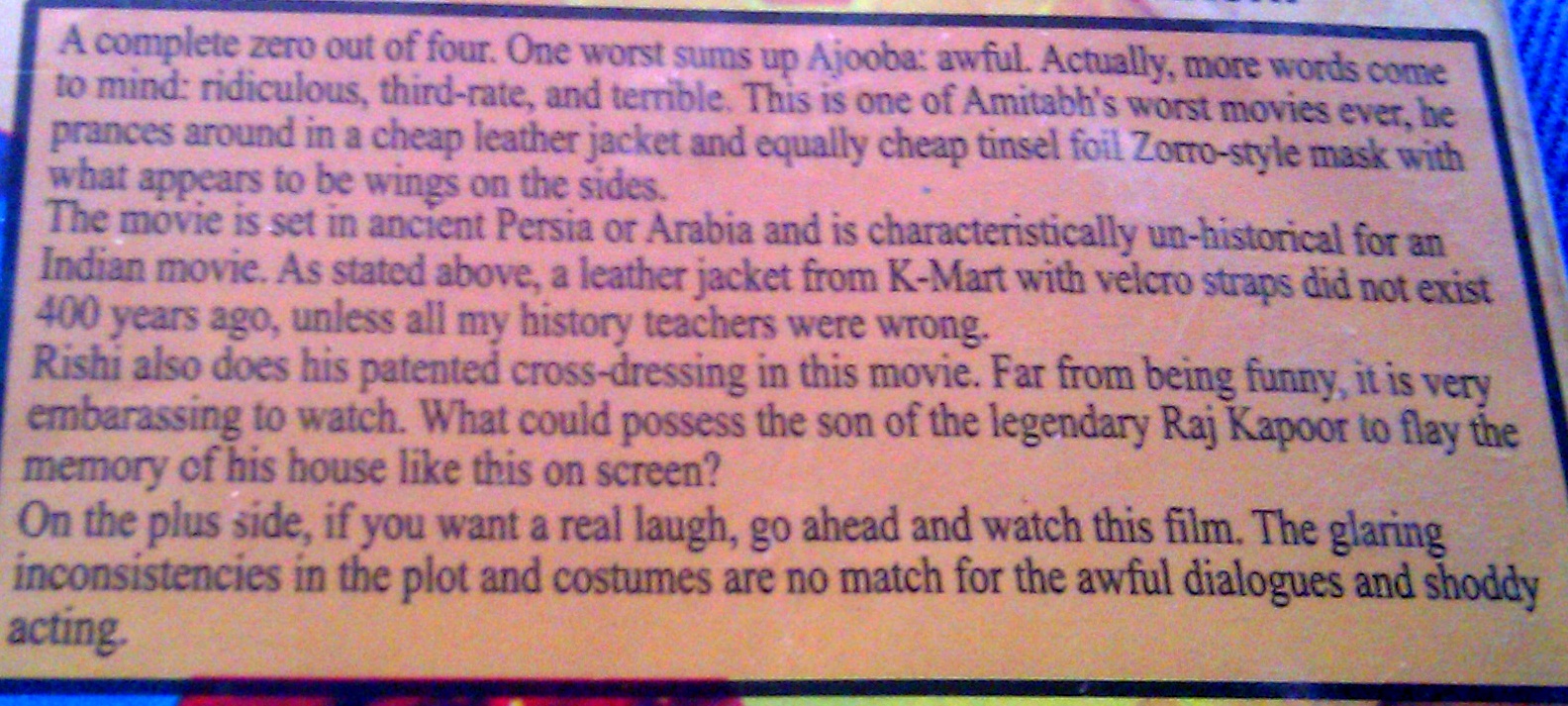
Ajooba is always near the top of my list of favourite So Bad It’s Good films. Before we get started, I must share with you the very enticing blurb from the back of my DVD (click on it to enlarge the image):

Irresistible!

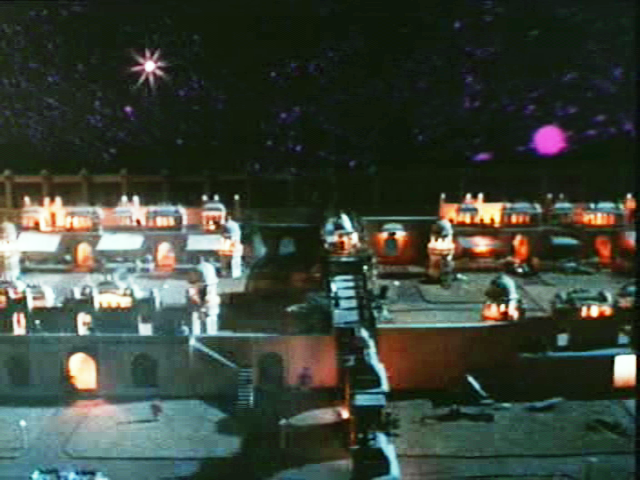
What better way to start some Christmas entertainment than with a mysterious star in the East?

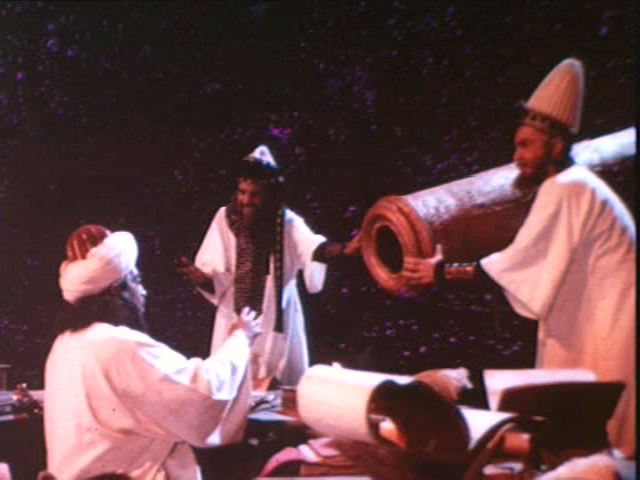
And some wise men.

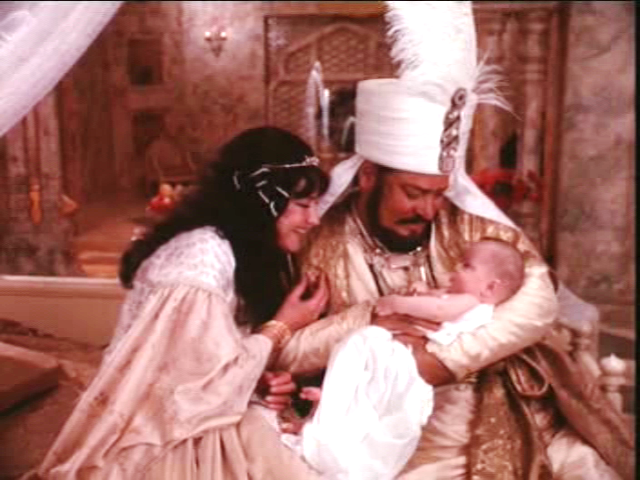
And a baby boy.

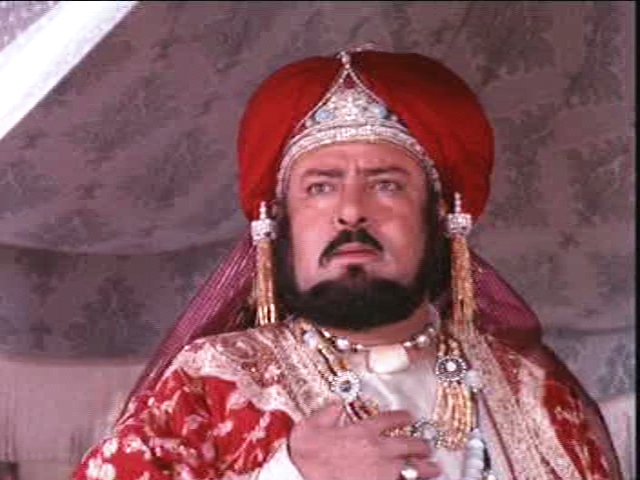
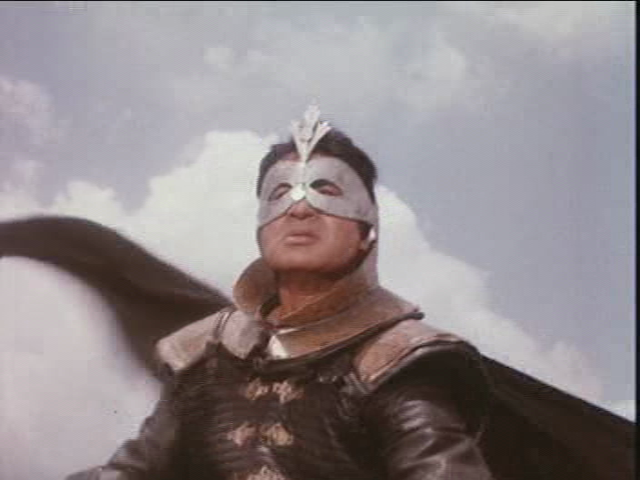
Surely this outfit just screams ‘Christmas Bauble’ (or according to Beth, ‘Mughal beach ball’).

Ajooba is a masala film masquerading as a magical sword and sandal romp. It is replete with a masked hero, a devil worshipping usurper, a good magician and his feisty daughter, sea monsters and so much more, made with enthusiasm rather than skill. While it may not be the story of Christmas, it is a miracle that Amitabh Bachchan and Rishi Kapoor agreed to grace this film by Shashi Kapoor. I think it shows how much they loved him. Ajooba was quite a venture; expensive and a Russian co-production, so it seems like something Shashi felt strongly about making.

Once upon a time in Baharistan, the Sultan (Shammi Kapoor) and his wife (Ariadna Shengelaya) had everything they could want … except a son. Finally, after some magical intervention to protect the unborn child, an heir was born. Hurrah! The people rejoiced with a fun Laxmikant-Pyarelal number. There’s lots of colour and movement including a display of dazzling (ahem) magic, and a dance-off between a kind of skanky snakey dance and some Kathak-ish guys.

Amir Khan (Saeed Jaffrey) is a good magician. I use ‘good’ in the sense of not using his powers for evil, not as an endorsement of his skills.

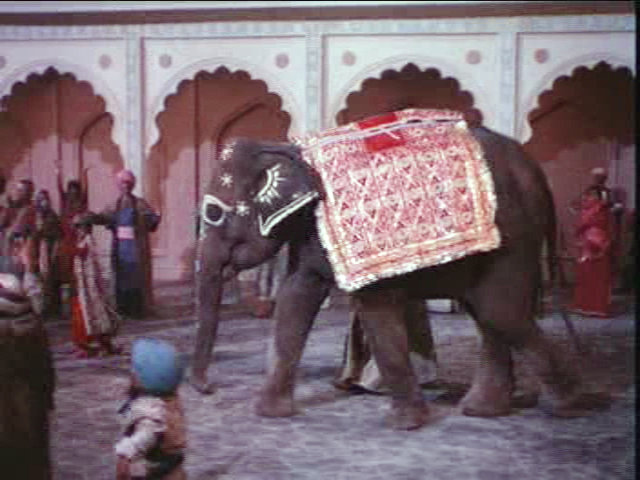
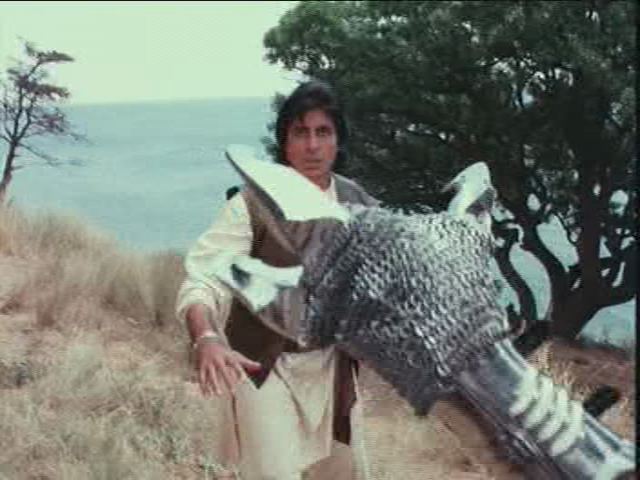
The most impressive thing about his elephant trick is that the elephant looks like it is wearing dark glasses (perhaps it knew this film was not a great career move and was in disguise).

The evil Vizier (Amrish Puri) attacks the toy boat of the Sultan and Malika. The royal family is scattered, each believing they are alone in the world. Malika is blind, the Sultan loses his memory, and their baby is presumed drowned.

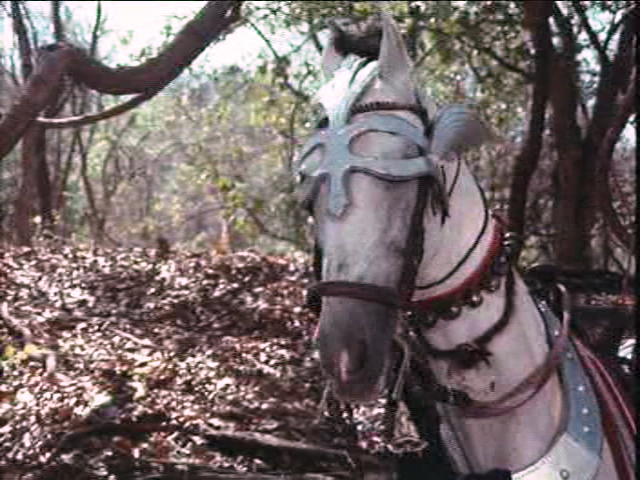
Rescued by a dolphin, raised by a kindly blacksmith, unaware of his real parentage, Ali (Amitabh Bachchan) undergoes years and years and years of training to become the hero who can free his people. Well, those people who are still left after 30 odd years of brutal oppression. Maybe it was the costume that held him up, especially creating a cunning disguise for both Ajooba and horse.

Why something as silly as a tin mask will be so detailed and finished with little flourishes when so much else is left half-baked is part of the charm. It doesn’t save the idea from being daft, but it is fun to look at. There is a serious design flaw. Did you spot it?

With the Vizier in power, life is tough for the simple folk of Baharistan. They still have their picturesque outfits but Amrish Puri and his brother-in-law Shah Rukh (Dalip Tahil) pillage and plunder as the mood seizes them.

With all of his evil deeds to draw on I expected the Vizier to have better material for his catch phrase, but he sticks to ‘Shaitan Zindabad!’. It is clear that he is bad and so are all his associates.

The evil shtick gets a little monotonous despite Amrish Puri’s eyeballs giving it their all.

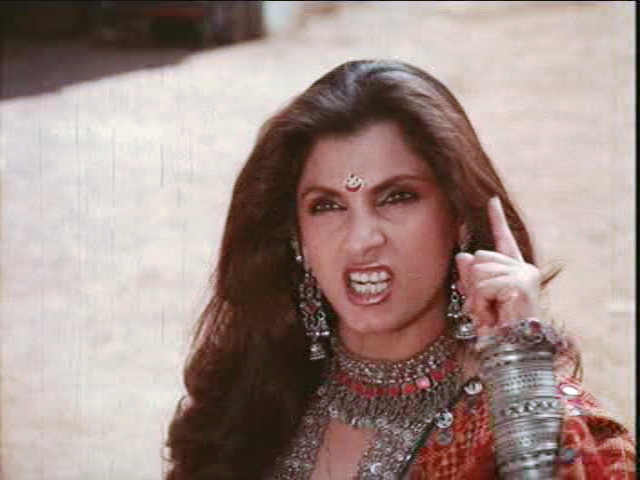
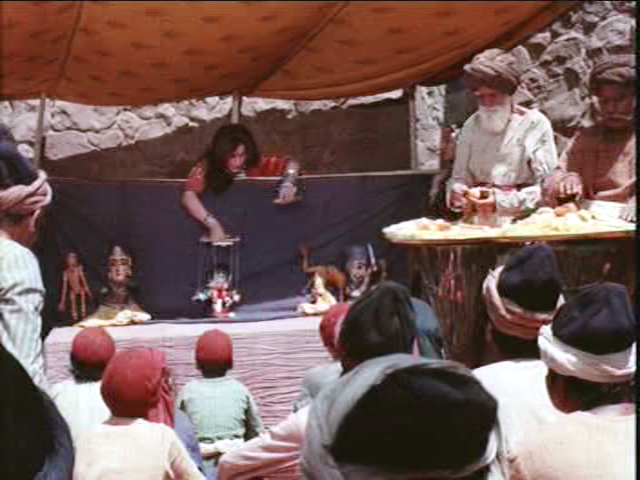
When Amir Khan is imprisoned, he sends messages back to his family in Hind by talking to birds. Luckily his daughter Rukhsana (Dimple Kapadia) can communicate with animals so she sets off on a rescue mission, leaving her mother (Sushma Seth) behind. Rukhsana works as a puppeteer in the bazaar and I liked that she had a plan to both support herself and give a cover story as she was searching for her dad.

Baharistan is not the place for a single lady, and it doesn’t take long before she needs rescuing. Repeated rescuing. Ajooba becomes somewhat tired of this damsel in distress, but she sees through his flimsy disguise (amazing!) and of course that means true love.

Rishi Kapoor is Hassan, the local Romeo who falls for the Princess Henna (Sonam). That’s about as much character development as you get. I liked Rishi and Amitabh together, and they have a fun song as the romantic Hassan tries to get repressed Ali to talk about love.

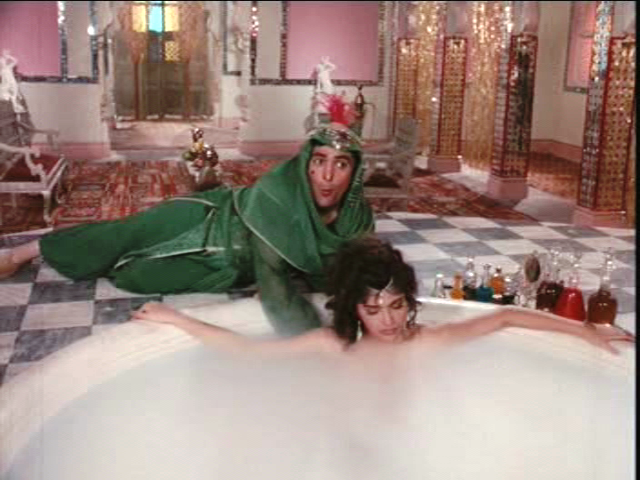
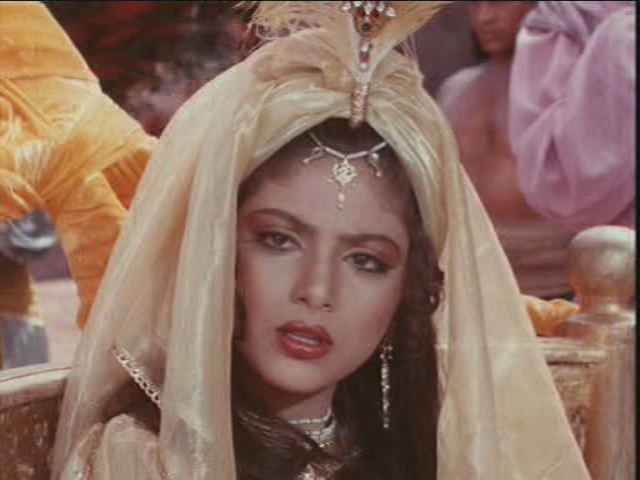
But I lost interest as Rishi detours into drag and sleazy antics and Sonam does little more than this:

The romances play out as you would expect, and Dimple and Amitabh make the more interesting couple (though that is not saying much). Ali does wrestle a tiger to rescue Rukhsana and Amir Khan from the dungeons so that added a level of commitment.

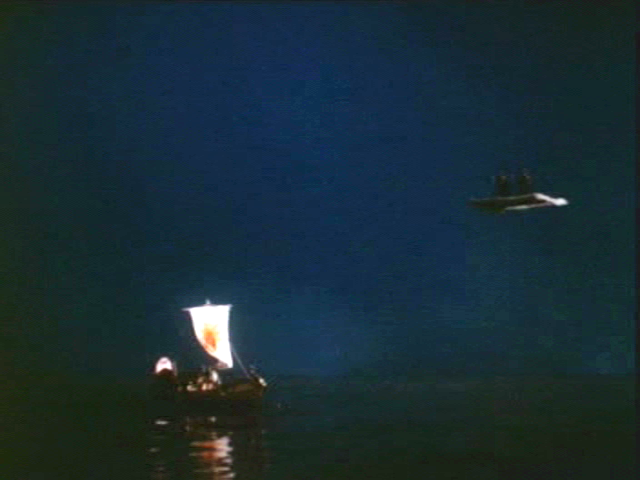
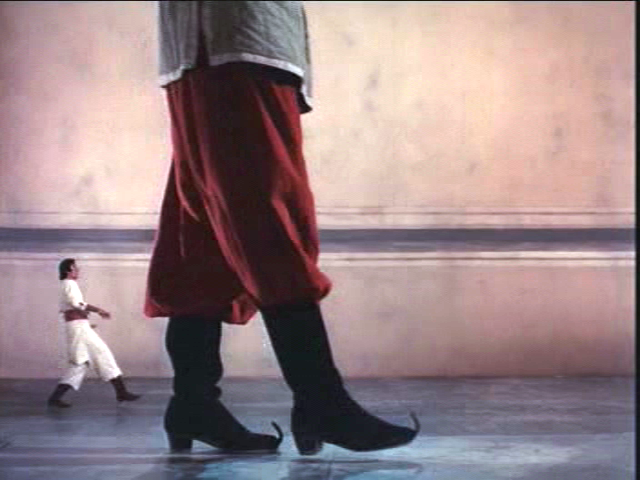
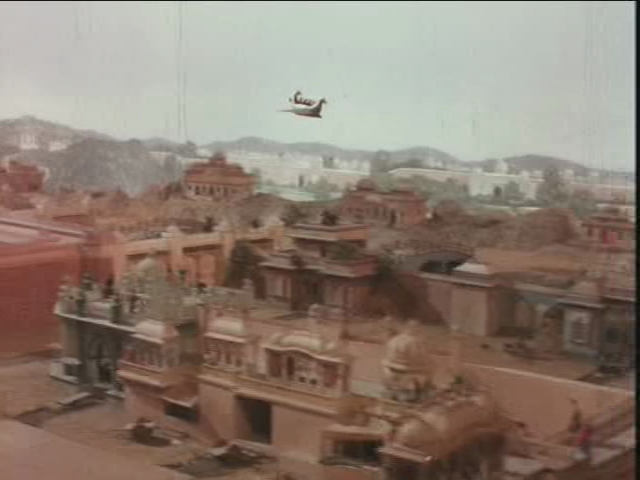
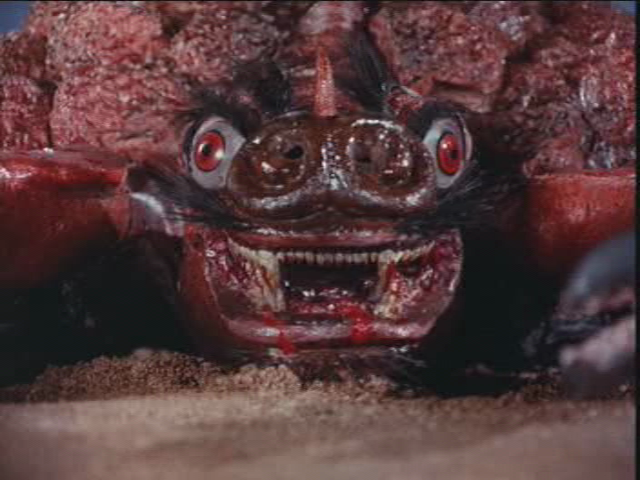
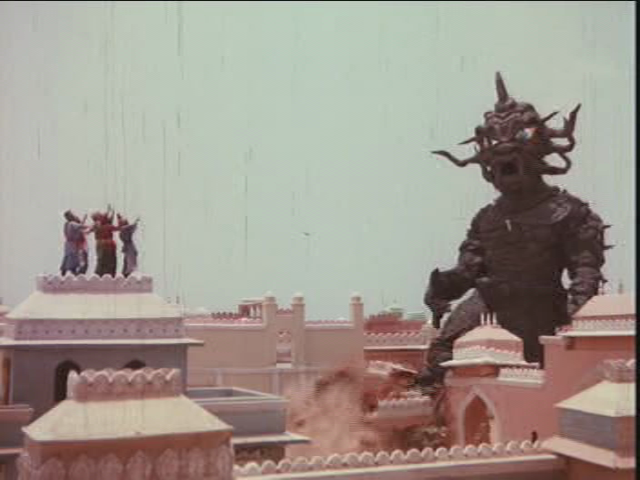
Of course in a fairytale there are trials and tribulations before good can triumph and that means special effects! If only someone had told Shashi Kapoor. The visual effects are quite poor and while it is part of the cheesy fun, I do wish they had done a little better. Beth did ask why a flying gondola was employed in one scene and I think it is because the maximum passenger load for a flying carpet would have been exceeded.


And there are some odd lapses and inconsistencies. When Ali’s sister needs to give him an urgent message, she wends her way through dim corridors and finally  a concealed passage which opens into Ali’s secret training ground. It’s an open field next door that anyone could see. And when Ali and Hassan are chained up with Malika and the blacksmith awaiting Certain Death they are rescued by a sea monster…or are they? Four people in chains, three sets of chains are cut. What about your foster dad Ali????

I recognised so many faces in the background. Memsaab as usual provides a more rigorous acknowledgement of the supporting artists so you should go read her post. But just think – Dara Singh, Sushma Seth, Rajendranath, Narendranath, Tej Sapru, Bob Christo just to name a few!  The locations and sets are delightful, and enhance the fantasy and poetic flavour. The art direction is batty at times, but this is a pleasure to watch.

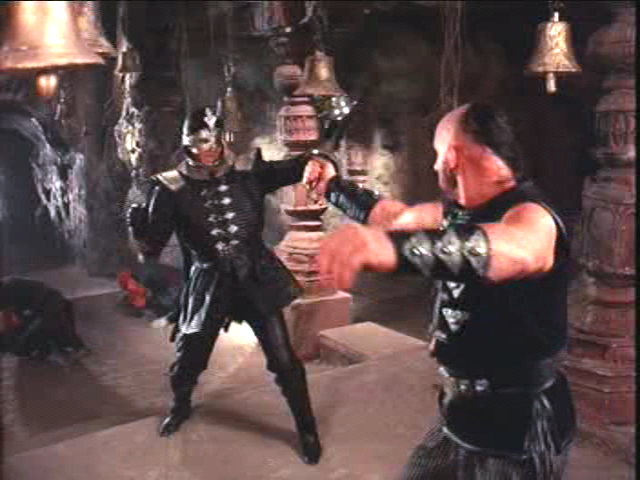
The streets of Baharistan are always full of colourful locals ready for a backflip or bellydance. The fight scenes are OK without being amazing, flying carpets or no. But there is a brilliant episode in a temple with Amitabh swinging from bell to bell to dishoom Bob Christo and rescue Shammi – it is epic and silly and I love it. The final battle gets everyone to Baharistan and there are reunions and expositions all over the place.

I absolutely love that in the climax fight, once people realise Ajooba is Ali is the long lost prince, everything pauses briefly so the onlookers can have a chat amongst themselves about how he is related to everyone and what his title is. Never mind the big glowing sword, or the evil sorcerer – is he your cousin? And is he married?

Ajooba’s heart is pure masala gold and I have enormous affection for it. 4 stars for entertainment alone!

Merry Christmas!

Kaala Patthar

Kaala Patthar is a total masala package that has something for everyone, plus a dollop of social justice. The essential characters are present – heroes, anti-heroes, spirited heroines, eye candy, villains. The main players are outsiders who find themselves caught in the conflict between profit and humanity played out in a privately owned coal mine. There are no surprises in the plot, but some excellent performances give the drama added substance. And director Yash Chopra also provides fights, songs, romance, bromance and dodgy science to complete the masala formula.

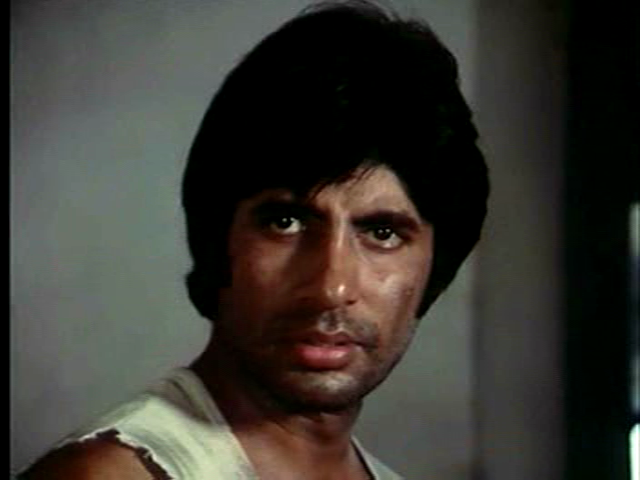
Amitabh is recognisable from the first glimpse of his tall figure and loping stride. Vijay is an enigma, full of smouldering anger and despair as the man trying to escape his past and perhaps make his future a short one. He is educated, and has an uncanny ability to wear white trousers in a coal mine without getting too grubby. The mines were a place to hide as he served his largely self-imposed punishment. A former ship’s captain, he made the wrong decision in a moment of stress and paid the price, although how a private shipping line captain could be court-martialled is never explained. Vijay was with the workers but didn’t consider himself one of them, constantly speaking of their struggle and their lives. He was friendly enough, and is seen to have a smile and a laugh in several scenes, but it is clear this is his own personal purgatory. Time and time again he risks his own safety to prove to himself that he is not a coward. Amitabh’s performance is outstanding, convincing even as he utters the most pompous dialogues. He plays Vijay with compelling restraint and brooding energy.

Sudha (Rakhee), the company doctor, is drawn to the educated, articulate miner and he is attracted to her integrity and dedication. They have strong chemistry in their understated scenes alone together even though at times she looks more like his Ma – but perhaps that’s just the caretaker in her character coming through. And Rakhee does look like a mature woman, not a fluffy girly heroine. Sudha and Vijay appear as adults weighing up a future relationship, not kids chasing each other around a park. Sudha seems to have a greater capacity for forgiveness, or at least the understanding that we need to let ourselves off the hook sometimes.

Ravi Malhotra (Shashi Kapoor), the new engineer, is all shiny and action oriented, a stark contrast to the weary and bitter Vijay. Ravi is concerned about the miners but doesn’t seek to be one of the masses, just to manage them in a more humane way. He isn’t all talk – he buys new machinery and makes changes to try and improve worker safety, and forces management to pay a promised bonus. The people rejoice!

I like that the ladies dance neatly in lines and are mostly segregated from Mac Mohan and the rest of the miners who seem to prefer a freestyle approach.

Ravi’s popularity and success irks money hungry boss Puri Dhanraj (Prem Chopra). Ravi is charismatic and the role is a good fit for the charming and articulate Shashi. He has a light but not frivolous energy that helps keep the moralising from bogging the story down.

Anita (Parveen Babi) is supposedly an investigative reporter, but if she ever investigated anything more complex than choosing a lipgloss I will be very surprised. She is very pretty but it’s not always enough. Anita writes an article that is highly critical of the privatised mine, and while this annoys Dhanraj, it pleases Ravi which might be Anita’s priority. Although Anita’s character was interesting, Parveen’s screechy acting in the more dramatic exchanges was painful so I was relieved when she reverted to flouncing around the countryside with Shashi.

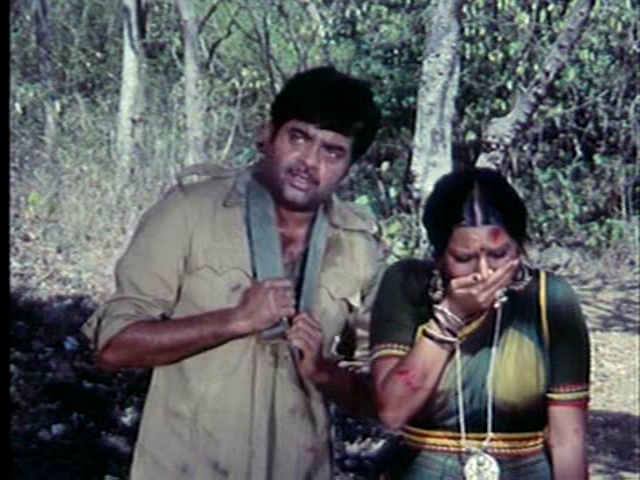
Mangal (Shatrughan Sinha) is an escaped criminal who has taken refuge in the anonymity of the mining camp. I don’t think of Shotgun as a particularly subtle actor and this performance didn’t change that perception, although it is very enjoyable. Mangal swaggers around camp, stirring up trouble and trying to be the top dog. He is bad through and through, until he comes good when it counts. His final scene is totally unbelievable, he overacts wildly, and I don’t think his decision could really have been that helpful, yet it is a perfect masala redemption.

Channo (a radiant Neetu Singh) makes a living selling ornaments and trinkets to the miners and their wives. She is boisterous and bright, and even Vijay responds to her warm personality. She and Mangal have an unconvincing romance and I got the impression that Channo picked him more because he was new blood rather than any real attraction in the first instance. Channo has a couple of significant scenes, and one decision is pivotal. There is a very suspenseful scene where Channo is pursued and almost raped by some ne’er-do-wells from the camp, saved in the nick of time by Mangal. It seemed odd that a girl who knew the area so well would take a lonely path she was clearly a little nervous about, no matter how big her hurry. So while it was dramatic and Neetu was very convincing, it jarred and I wondered if there was a better way for the plot to turn.

Neetu is more than capable of handling the emotional range Channo requires. And her presence means at least one of the female cast can dance!

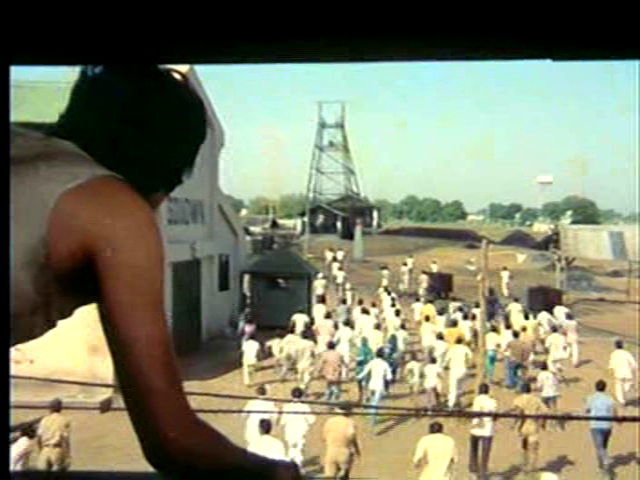
The supporting actors are excellent. Well, Prem Chopra played the usual Prem Chopra type sleazy villain with no redeeming qualities but he does it so well and he is pretty much the yardstick for that kind of role.  Mac Mohan as card sharp Rana and Parikshat Sahni as Jagga stood out, and it was nice to see Iftekhar in a fleeting appearance. While there is an impressive cast of supporting artists, most of the extras are an anonymous backdrop of the unacknowledged masses. There are some moving scenes of miners waiting in silent vigil outside the house of a dying colleague, or waiting for Vijay as he has treatment. They bide patiently, watching everything and waiting their turn.

The music by Rajesh Roshan is excellent and while there are only a couple of big song and dance moments, the songs are all integrated into the story and do reveal much about the characters and the environment. Shashi’s entrance to Ek Rasta Hai Zindagi perfectly expresses his nature and the different world he is coming from. Ishq aur Mushq has a bittersweet tone that matches Sudha and Vijay’s burgeoning relationship.

Yash Chopra is a talented story teller, and Salim-Javed’s script is excellent especially the dialogues. The mine is a bleak non-glamorous backdrop that allows the people to dominate. It’s a visually dark film, with lots of scenes in the tunnels or at night, so the performances draw the eye rather than fancy sets or costumes.

I have some issues with the decision making in the final scenes (I suspect that in real life, it would not have been a happy ending if people did what they did but you know, filmi physics and all that), and the set construction team relied a little too much on papier mache but these are small quibbles. You can’t beat Kaala Patthar for excellent character focussed vintage masala,  with the bonus of a fabulous cast. 5 stars!

Heather says: Kaala Pathar is vintage Yash Chopra from the days before he got tied up in NRI romance stories and when he was still producing films that were both novel and entertaining. It’s a great story full of action, melodrama and issues of social justice which speeds along to an exciting conclusion. The characters are compelling, and the female actors make up for their limited time onscreen by their impact on the story – softening their male counterpoints enough to allow more insight into their personalities.

I love the way the two leads Vijay and Ravi are introduced, and that their respective characters can be deduced after just a few moments in their opening scenes. Instantly the coal begrimed Vijay is established as anti-authority with heroic tendencies as he ignores the company line and charges into the mine to rescue some trapped workers. It’s Amitabh in his ‘angry young man persona’ and it’s no surprise to learn later on that he harbours a dark secret or that he believes pain is his destiny.  Ravi on the other hand, is immediately recognisable as a ladies man when he first appears via a song, wearing a jaunty cap and sporting a rather fabulous scarf with a motif of large white daisies. Happy and with a more relaxed attitude to life Ravi is idealistic with more socialist views and really not my view of a ‘typical’ engineer. But then again I’m rather prejudiced since I know so many engineers. Ravi’s drawing which demonstrates exactly why mine shaft number 4 is so dangerous is classic Bollywood engineering at work, and his skills in this area may explain why Ravi is working in such an undesirable job.  Shatrughan Sinha turns in a great performance as the escaped prisoner Mangal and allows yet more melodrama to be added to the story.
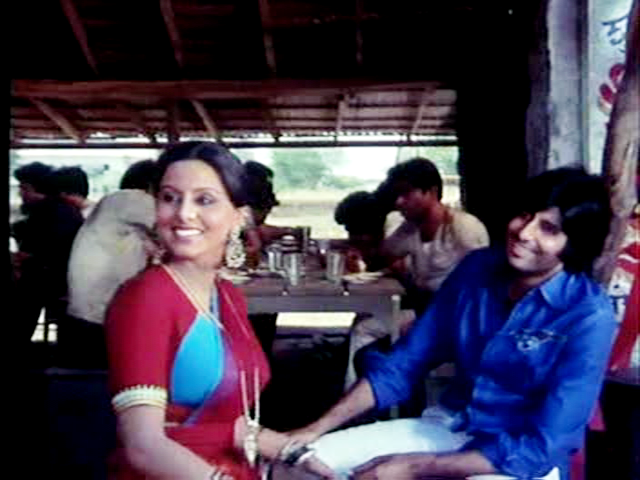
The various romances are handled in a subtle and subdued way which works well within the disaster movie format and I appreciate the restraint shown here. Rakhee Gulzar is beautiful as the doctor working under such difficult conditions while Parveen Babi gets a chance to show some teeth as the more feisty Anita, and Neetu Singh gets the best moves.  I even like Prem Chopra’s unrealistic and totally villainous mine owner who has no redeeming features whatsoever. It’s all very Dickensian and melodramatic, but so much fun. The story is generally well paced, although rather long, and I felt that the scenes of the inevitable disaster at the end did drag on a little. The mine walls were also a little shaky and I’m sure everyone could escape more easily, if not as spectacularly, if they’d just push the walls aside. Despite the occasional dodgy effects and rickety sets, the disaster theme is well depicted and I was interested to learn that the mine disaster portrayed here was based on real life events at Chasnala. A must see film for sure – 4 ½ stars.