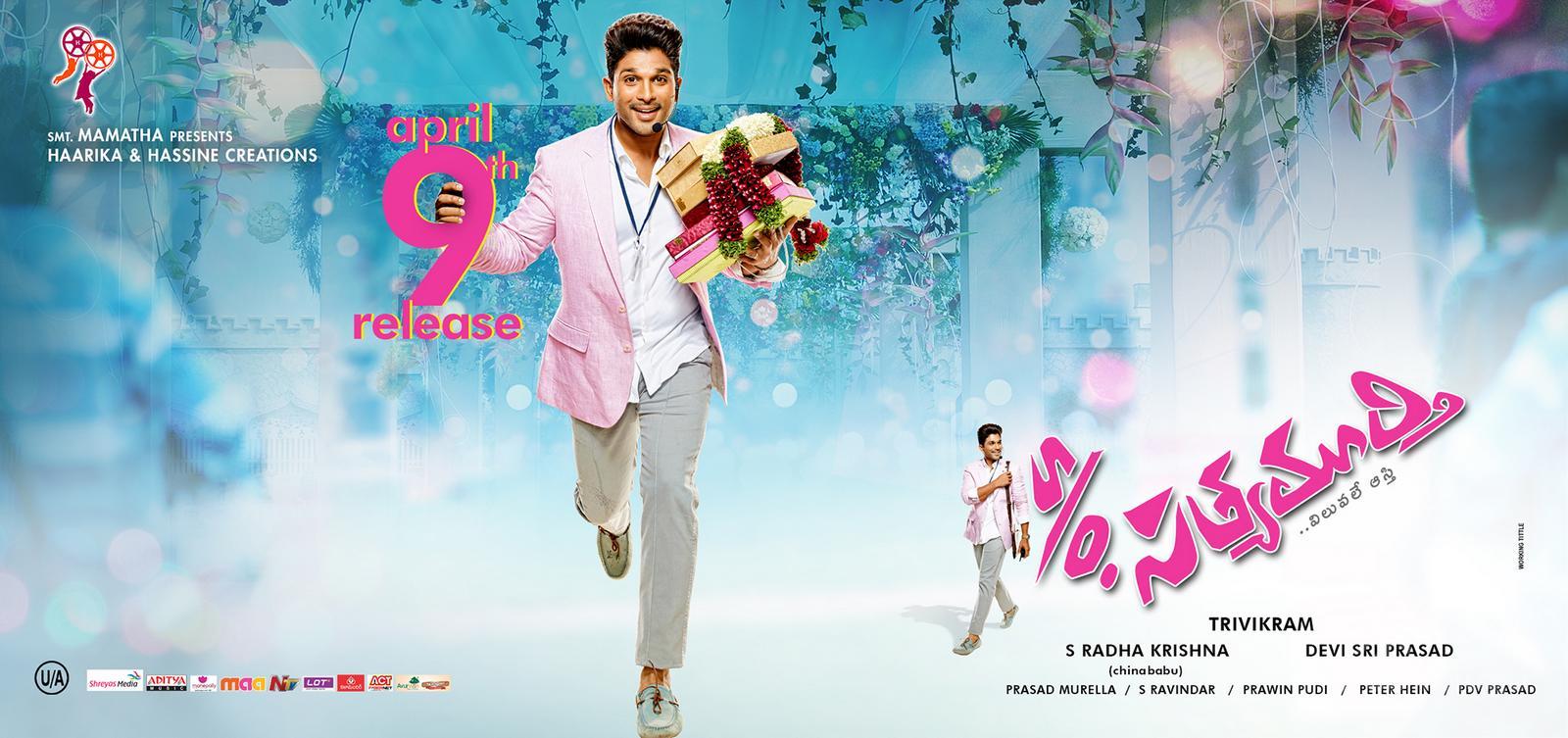
Son of Satyamurthy

Son of Satyamurthy

After their previous success with Julayi, Allu Arjun and Trivikram are back together again with Son of Satyamurthy. The film features appearances from Ali, Brahmi and most of the Telugu film industry stalwarts, but despite the plethora of comedy uncles, it strives for a more serious tone and is a more traditional family drama. Bunny puts in a restrained performance compared to his earlier films, and it appears that Trivikram has concentrated on character development rather than glitzy glamour and full-on action of most Telugu cinema. The storyline has plenty of potential and I loved the inclusion of villains who are not wholly evil but have the capacity for reformation, but there are a few misses. The film is undermined by the inclusion of a few unnecessary characters that reduce the overall impact and at times the sheer number of protagonists threatens to drown the main storyline. However the central theme of a young man determined to stick to his father’s principles stands strong and Bunny does a fantastic job in a more serious role than usual.
S/o Satyamurthy

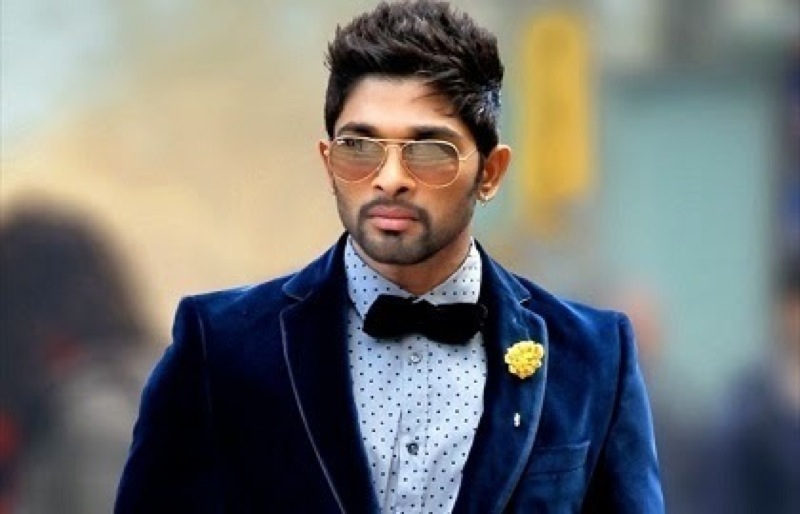
Prakash Raj is Satyamurthy; a rich man who is happy to lend money to all and sundry without judgement or seemingly any expectation of repayment. He has strong principles and his values have been absorbed by his family even if they don’t always agree with his open-handed policies. And perhaps they had a point, since Satyamurthy’s sudden death reveals a large amount of debt. The family lose their affluent lifestyle and downsize their house, possessions and expectations when Satyamurthy’s son, Viraj Anand (Allu Arjun), refuses to default on the loans and insists on doing the right thing – as his father would have wanted.

In an odd addition, Vennela Kishore plays Viraj’s older brother who is incapacitated by his father’s death, but as his character is played mainly for laughs (which are never very funny and don’t add anything to the story), there doesn’t seem to be any real need for his inclusion. Similarly, Ali appears as Parandhamayya, some sort of assistant to Viraj in his new job, who is another character who could have been omitted without losing too much from the story. I rarely find Ali’s brand of comedy funny but here he is less slapstick than usual and generally rather muted, so while I can’t see much point to his character at least he is tolerable and occasionally amusing.

Although businessman Sambasiva Rao (Rajendra Prasad) blackballs Viraj, a friend helps by giving Viraj a job as a wedding event manager. Viraj is dumped by his own fiancée when loss of his fortune makes him less desirable as a husband, and naturally his first event is the marriage of his ex, Pallavi (Adah Sharma). This makes Viraj deal with his loss of wealth and prestige fairly early on in the film and also reinforces the contrast between his own morals and those of Pallavi’s rich but dishonest father (Rao Ramesh). In classic filmi style, Viraj manages to reconcile the various family members and in the course of events falls in love with one of the wedding guests. M.S. Narayana appears in his final film appearance here, and it is bitter-sweet to see him in one of his classic drunken uncle roles, especially when his role fits well into the storyline.

Bunny’s Viraj is a sensible and responsible young man and he does a great job of making his character principled without becoming preachy or overly moralistic. The only misstep is his tendency to invoke stories of Hindu Gods that sounds a little odd coming from someone who hadn’t previously demonstrated any evidence of a virtuous attitude. It would have made more sense to me if he’d quoted his father instead, but perhaps that is due to my lack of Telugu and reliance on the subtitles which may not have been too accurate – going by the atrocious spelling as a general guide to overall quality!

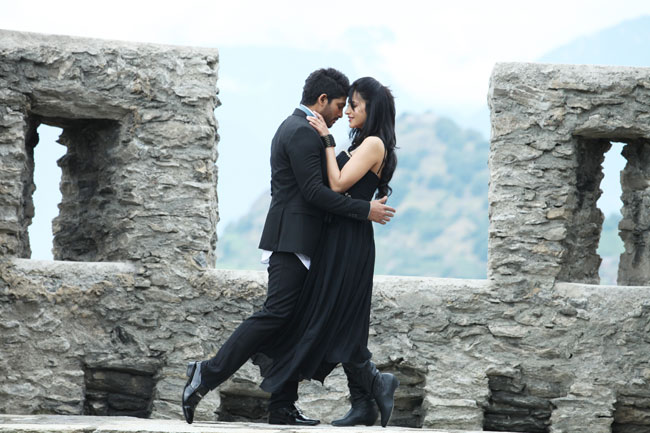
Subbalakshmi, aka Sameera (Samantha) is the wedding guest that Viraj takes a fancy to, and to her credit she immediately realises that Viraj is a keeper. In a move away from standard filmi heroines, Sameera is introduced holding a drink and a cigarette, and for some reason she is also a diabetic, although there didn’t seem to be any particular point to this other than as a brief comedy scene. I generally like Trivikram’s approach to his heroines, but he seems to lose interest once he moves on to the action and sadly Samantha disappears for much of the second half. However she is excellent in her role and has great onscreen chemistry with Arjun.  The couple look good together in the songs too, which pepper the first half and allow Bunny to demonstrate why he truly is the ‘stylish star’. There is some annoying hair discontinuity, but since the worst bouffy hair only appears in the songs it’s actually no bad thing that Bunny’s hair length is shorter for the rest of the film.

Rajendra Prasad and Upendra are the other standout performers and they both help bring the film to life. Much of the comedy is between Rajendra and Bunny, and is much funnier than the specific comedy threads with Brahmi and Ali. The two bounce lines off each other to good effect and are really much better than any of the assorted comedy uncles who fall flat in comparison. Upendra appears as the villain of the piece, and is as vicious and violent as required (per Telugu standard bad guy guidelines) but shows a different side when dealing with his wife and sister. He’s an interesting character and Upendra is excellent in the role, switching from demonic goggle-eyed evil one moment to concerned husband the next, but with so much else going on his role isn’t developed as much as I would like. Sneha is also very good as his sweet and serene wife, but Nithya Menen seems a little wasted in her role as a rival for Viraj’s affections. That’s a shame too as her character starts off well with an interesting plan of attack but it’s lost in the hodge-podge of action and Brahmi comedy that makes up the rest of the film.

There is a lot going on in Son of Satyamurthy and it does evoke films of yesteryear with the convoluted storyline, sheer number of characters and focus on honour, values and moral principles. The songs from Devi Sri Prasad aren’t too memorable, but they are well choreographed and smoothly flow into the storyline. Bunny dances better than ever and also looks amazing with Peter Hein’s fight choreography. Interestingly the fights aren’t as brutal and violent as usual (there is a hose as a weapon for instance), but the wirework and acrobatics are outstanding and very effective. I really enjoyed Son of Satyamurthy and although it would have benefitted from fewer characters and less formulaic comedy it’s an entertaining story with some excellent performances. Well worth seeing on the big screen to really appreciate Bunny’s dancing if you can.

Yevadu (2014)

Yevadu

It’s unfortunate that Yevadu didn’t get a cinema release in Melbourne earlier this year, as I think it would be a better watch on the big screen with a fan audience. Vamsi Paidipally’s film takes the central concept from John Woo’s Face Off as a basis for his story, but other than that it’s a fairly standard mass revenge saga with plenty of associated mayhem. Charan plays the wronged Sathya, initially out for his own revenge, but then drawn into a different battle. The ideas are good, but the execution is flawed and Yevadu is no place for any rational thought. However if mindless entertainment with plenty of fights and some great dancing is what you are after, then it could definitely fit the bill.

Yevadu starts off well with Allu Arjun in the role of Sathya and Kajal Aggarwal as his fiancée Deepthi, although it’s rather a long set-up for the main story. Deepthi has been chosen by local Vizag Don Veeru Bhai (Rahul Dev) as the latest object of his desire, and saying no is apparently not a viable option. Veeru relies on intimidation and kidnapping his victims rather than natural charm, and while Sathya is happy to take on Veeru Bhai and his gang, Deepthi is rather more sensible and persuades her fiancé that it would be safer to leave Vizag. However Veeru Bhai’s brother (an enthusiastically vicious Ajay) and his merry band of gangsters catch up with the couple and Satya is left to die on the burning bus after Deepthi is murdered in front of his eyes. It’s a fairly brutal beginning but it neatly establishes the character of Satya as an angry and potentially violent man, but also one who is passionate and prepared to do anything for Deepthi.

Miraculously, Satya manages to survive, but is so badly burned that the only hope for his survival is some rather drastic surgery. Fast forward a few months and Sathya is heavily bandaged but recovering in a hospital. The big reveal is that he has been given a new face – amazingly without any scars, and has also managed to acquire a new body and a different voice to go with his altered look. Sathya (now Ram Charan) hasn’t become any more rational or any less angry however, and he runs away from miracle worker/ surgeon Dr Sharada to find Veeru Bhai and make him pay for Deepthi’s murder.

This part of the film almost makes sense, if you ignore the dodgy medicine and coloured contact lenses.  Charan portrays the part of a driven killer with plenty of maniacal determination that naturally follows on from the perpetually angry Sathya of the opening scenes. Sathya has lost everything he ever cared about and the only thing that matters is killing the men who murdered Deepthi, so a certain amount of focused aggression works well. However no amount of cleverly constructed vengeful violence can disguise the massive plot holes or complete lack of plausibility in much of the story.  Sathya somehow finds a change of clothes after leaving the hospital, as well as his motorbike and a camera, long before he goes back to his old flat where he might conceivably have picked such things up. That is, if they were still there after his months of recovery in hospital –  rather a stretch since everyone thought Sathya was dead. Thankfully there is plenty of great dancing to distract from the flimsy story.

Sathya does what any self-respecting Telugu hero would do and goes about taking his systematic revenge. Along the way there is some comedy with Brahmi and a very out of place looking Amy Jackson, but neither of these makes much impression and both serve mainly as a distraction for Veeru Bhai and his gang. Rahul Dev does plenty of sneering and lusting after various women, but after his initial introduction he’s not particularly impressive as a gangster. His gang aren’t ever shown indulging in any typical gang-like activities either, and there is no particular menace associated with any of the heavies. Ajay even sheds his violent persona and becomes part of the comedy, which suits him just as well but also dilutes any sense of threat from the villains.

Everything follows a straightforward and suitably vengeful path until the interval, when Vamsi Paidipally attempts to justify the face transplant idea and Sathya suddenly comes under attack from a different gang of thugs. It’s a change in direction, but that’s all as the film doesn’t become any more plausible or less over-dramatic, and there are just as many plot holes and inconsistencies.

While the disjointedness of the film is  odd, the problem I have with Yevadu lies more in the characterisation of Sathya. The story would be more convincing if there was a greater difference between the personalities of Charan (the original owner of the face) and Sathya, and additionally if each stayed true to those personalities throughout.  Sathya’s cold, controlled fury and drive to eliminate Deepthi killers to the exclusion of all else  suits the initial story, but much of that drive and anger vanish in the second half. While a certain loss of focus can be explained by the lack of a personal connection, Sathya becomes softer and too much like the character portrayed by Charan in flashback. Equally, although the character of Charan starts off as possibly a more intellectual character, as the story unfolds and he gets involved in fighting against the takeover of an area by a gang of thugs, Charan becomes just as cold and angry as Sathya. Keeping the two personalities more separate could have enhanced the idea of a changed face while the personality was still the same, but as it is Charan and Sathya are so similar that the change in face is almost irrelevant.

The second storyline is even more predictable and clichéd than the revenge story of the first half, although Vamsi Paidipally tries to compensate by increasing the volume of the background music and by repeating every significant shot at least three times. Subbaraju, Shashank and Kota Srinivasa Rao bring their usual competence to the roles of the villains but there isn’t anything novel about either their plans to bring a community to its knees or Charan/Satha’s attempts to foil their plans. The second half also suffers from a clunky romance with Shruti Haasan, which feels shallow and contrived after the intensity and passion of the earlier romance between Sathya and Deepthi.

In spite of my reservations about the characterisation and the relatively predictable second half, Yevadu is still a film that entertains. It’s all much larger than life, but the action scenes are well done and Sathya’s inventive methods of revenge are excellent. The various villains are mainly comical rather than particularly intimidating, although some of the minions are nicely evil, while the excessive over dramatisation is just fun! If you can leave logic behind, embrace the absurdity, and revel in revenge then Yevadu could be the perfect masala watch. 3 stars.

Race Gurram (2014)

Race Gurram

Race Gurram was very nearly a non-starter in Melbourne, but at the 11th hour the distributors managed to find a venue and the race was on!  Better still, there were English subtitles – even for the songs – a first for Telugu cinema here in Melbourne, but hopefully not the last.  So, with a small but luxurious cinema, subtitles and the promise of Allu Arjun for just over 2 ½ hours, was the experience worth all the effort to get the film onscreen? Definitely!  Race Gurram is a mass entertainer that doesn’t break away from standard masala fare, but still manages to leave you laughing at the end.  That’s thanks mainly to strong performances from Bunny and Brahmi, while the usual suspects who make up the rest of the cast are a bit more hit and miss.

Apart from Allu Arjun’s introduction with a herd of horses and a few brief dialogues between our hero and the main villain, I’m not entirely sure why the film is called Race Gurram.  It has nothing whatsoever to do with the race track, and instead is a tale of acrimony between two brothers, Ram (Shaam) and Lakshman (Allu Arjun).

Race GurramRace Gurram


Ram is the elder and more sensible brother. He’s an ACP and is the standard morally upright policeman that Telugu films like to use as a sacrificial lamb.  Lakshman prefers to be called Lucky, because apparently it sounds ‘cooler’, which is probably enough of a clue to his feckless and irresponsible character.  The interactions between the two brothers are one of the strengths of the film and Shaam and Bunny make their exchanges seem natural and realistic.  Their arguments are just petty and immature enough to ring true, and when the situation escalates after a few more personal jibes, Lucky’s response is also in keeping with his personality. The way their relationship develops later in the film is also well handled, even if Lucky’s revelations before the interval do seem a little forced.   The tables are turned when Lucky finds out that someone else is targeting his brother and while it’s OK for Lucky to humiliate and fight with his brother, it’s not on if someone else tries to do the same.  It’s typical boy logic, but at least it gets Lucky on to the right side in the war against goon turned politician Shiva Reddy (Ravi Kishan).

Race Gurram

Shruti Haasan appears as Spandana, Lucky’s love interest, and at first seems to have an interesting role as a devotee of yoga who only shows her emotions on the inside.  But once she hooks up with Lucky, her usefulness to the plot seems to evaporate as her ability to emote increases, and she’s relegated to mainly appearing in the songs.  At least Shruti gets to actually dance rather than just pose and gyrate like Debi Dutta in the unimpressive opening number, and she does look great even if she doesn’t get to say much in the second half.

Another disappointment is Shiva Reddy and the whole plot against Ram and Lucky.  Although there are some good moments, overall Shiva Reddy is too much of a caricature villain to be properly offensive, and his machinations to become a minister are laughably inept. Ravi Krishnan never seems to get his teeth into the role, and mostly plays it for laughs with plenty of grimacing and sneering rather than any real maliciousness.  The knock-on effect is that the fight sequences don’t work as well as they should against such an ineffectual hoodlum and even throwing Mukesh Rishi in as Shiva Reddy’s somewhat nastier father doesn’t improve the situation. However, the usual suspects including Kota Srinivasa Rao, Posani Krishna Murali, Sayaji Shinde and even Prakash Raj as Spandana’s father all add enough to the mix to keep the action moving along well.

The second half introduces Brahmi as Kill-Bill Pandey, a name which does infer the usual dire slap-stick that Brahmi often relies on for comedy.  But such is not the case – Kill-Bill Pandey has great lines and an actual proper role in the story. And he’s really funny!  Seriously! Bunny and Brahmi work well together too, as Lucky comes to realise just what he has done by releasing Kill-Bill Pandey as head of a special police force on the unsuspecting Hyderabad public.  It makes for a much better ending than expected and has to be one of the best performances I’ve seen from Brahmi in recent times.

Race Gurram

I was expecting great things from the songs despite the fact that the soundtrack didn’t sound too special on first listen, and overall I wasn’t disappointed.  Apart from the first number which appeared out of nowhere without any particular point and had very little actual dancing by Bunny, the choreography was excellent.  Placement was generally odd and mostly there was no effort to place the songs within the storyline, but who really cares when it’s Bunny dancing? The stylish star looked, well, stylish, and as always his dancing was superb, particularly with Shruti Hassan in the larger group routines. Bunny always looks to be having such a good time when he’s dancing and his energy is incredibly infectious, so no matter how ridiculous the sudden appearance of Spandana and Lucky in the snow-covered fjords of Norway seemed, it was impossible not to enjoy the show.

Race GurramRace Gurram

Race Gurram does suffer from a rather rambling screenplay, and at times the film gets bogged down with irrelevant odds and ends that taper off into nothing.  Apart from the feuding brothers, the family moments are a tad cloying and overdone, and a heavier hand with the editing wouldn’t have gone amiss.  However, Bunny and Brahmi together make for a surprisingly entertaining finale that was certainly well appreciated by the Melbourne crowd.   Well worth a watch for their combined antics

Race Gurram