Lingaa

Lingaa

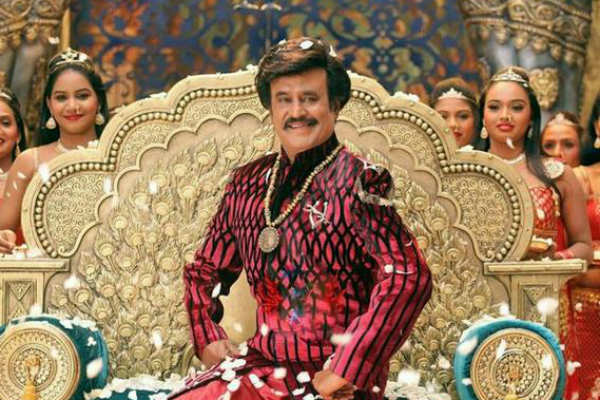
Finally it’s here! Friday was not only the Superstar’s birthday but marked the release of his latest film with director K.S. Ravikumar. There has been plenty of hype and expectation for this film, so did the team who gave us the hits Padayappa and Muthu deliver another blockbuster? Well….. mostly. This is a Rajinikanth film so we all know what to expect, and it goes without saying that the outfits will be stupendous, the songs lavish and attention firmly focused on the star in every scene.There is nothing much new about the story, but that’s not really the point, since it’s the entire spectacle and the heroism that’s important and there is plenty of that to be getting on with. Lingaa delivers most of the Rajni ‘formula’ characteristics we’ve come to expect, and with good performances from Anushka Shetty and Sonakshi Sinha there is plenty to enjoy in full masala style.
Lingaa

The film starts with the exploits of Lingaa (Rajinikanth), a thief and con-artist who, along with his merry band of Santhanam and Karunakaran, attempts a major heist at a jewelry exhibition. His outfits are classy and his concept equally sophisticated but Lingaa is foiled in his attempt to sell the jewels on by journalist Lakshmi (Anushka Shetty). Lakshmi is in search of the grandson of Raja Lingeswaran, the only one who can re-open a temple in her village and who just happens to be our jewel thief Lingaa.  Using tricks and flattery, Laksmi manages to get Lingaa to go to the village but not before she indulges in a full blown fantasy song with Rajnikanth as the pirate king come to recue her and her backing dancers, who perpetrate crimes on the high seas against the ruffle shirt amongst other fashion crimes.

Once in the village, Lingaa is taken aback by the respect shown to his grandfather, but since he himself feels no obligation to the man who lost all the family money, he is content to use the situation purely for gain. However in the course of events, Lingaa learns the full story of Raja Lingeswaran and exactly how he lost his money but won the respect of the people for his life-saving dam. We see all this in flashback mode with Rajinikanth also playing the role of his grandfather, in a beautifully drawn flashback to the 1930’s with period furniture and apparently CGI elephants. No mention though if all the horses, mules and buffalos were CGI too. Back in the thirties Rajni’s love interest this time is village girl Bharathi (Sonakshi Sinha) who has just as epic an imagination as Lakshmi, although she favours a more regal theme in her fantasy.

The thirties track starts with a superb fight scene on a train that features Dev Gill as a freedom fighter and touches on the Independence movement, the corruption and cruelty of the British Collectors, and the blind neglect of the Governors, the inequities of the caste system and the struggles of rural India as the farmers battle drought and flood. It’s a bit of a mish mash of ideas, but through it all Rajnikanth walks tall in some wonderfully spiffy costumes and what must surely be the best collection of sunglasses onscreen ever.

The film looks amazing with obviously no effort spared on the sets and outstanding costuming for Rajinikanth.  There aren’t all that many fight scenes, but they are all well choreographed and fit into the main narrative. The train fight scene is undoubtably the best with Rajni stylishly eliminating a train full of bandits with effortless ease, including a one on one with Rahul Dev on top of the train. The action scenes set in and around the building of the dam are also well filmed and the effects well integrated to give the impression of a truly massive construction.  The songs by A.R. Rahman are a little less successful, but since the dance numbers are mainly dream sequences, the total switch from the story is a little less disruptive. The songs which move the story forward such as the stirring Indiane Vaa more successful and the background music, also by A.R Rahman, is suitably evocative for each era. I do like the songs and actually like them more after seeing the visual to match, even with those ridiculous costumes in Mona Gasoline!

Sonakshi Sinha and Anushka Shetty don’t have a huge amount to do other than as the romance interest for the two Lingeswaran’s, but K.S. Ravikumar does give both of them a few important scenes in their relevant story lines. Santhanam and Karunakaran are also kept mainly in the background and when Brahmi makes a brief appearance early in the film it’s over almost before you realise it’s Brahmi. Still this means the focus is firmly on Rajinikanth and he makes the best use of every moment on screen with one liners, epic speeches and that twinkling smile.

Perhaps the only problem I have with Lingaa is the relative ineffectiveness of the villains, although I did appreciate the very normality of their respected self-interest. In the present day Jagapathi Babu does the honours while in the flash-back the actor playing the British collector is suitably sneery but a little too much of a caricature for me to completely believe in the character. The finale also seems a little rushed, especially since the computer graphics don’t work quite so well here as in the rest of the film. However it’s still Rajni doing several impossible things at once while saving the day and the girl (yet again) so for me it’s fine to accept the glaring unfeasibility of it all and just enjoy the spectacle.

I really enjoyed Lingaa, and loved watching Rajinikanth in the two separate incarnations of Lingeswaran. The comedy and action in the first half is interspersed with the insanely OTT songs while the second half is more sedate in keeping with the thirties backdrop. I am a big Rajinikanth fan which undoubtably colours my opinion, but this was fun and entertaining. Definitely well worth watching for the Superstar and those wonderful sunglasses!

Just as an aside, Lingaa was showing at The Astor here in Melbourne and when I left the cinema I was confronted by a sea of Jake and Elwood Blues lookalikes who were there for the 7pm showing of The Blues Brothers. From one iconic sunglass wearing movie superstar to an iconic  movie – it made my day!


Kaaviya Thalaivan (2014)

Kaaviya Thalaivan

Kaaviya Thalaivan sounded promising. A character driven drama set in the world of Tamil theatre in the 1920’s should have been exactly my kind of film, but despite excellent performances from all the  actors and A.R.Rahman’s expressive  soundtrack, the story is frustratingly predictable with little of the expected melodrama. The beautiful costumes and period sets cannot compensate for a very pedestrian telling of the rivalry between two actors and the ups and downs of a theatre company in the years before Indian Independence.  However, at least there are great costumes and stunning sets, and even if the story is disappointingly flat there are plenty of moments of brilliance from the individual actors which do make Kaaviya Thalaivan worth a watch.

The film is semi-narrated by Gomathi Nayagam Pillai (Prithviraj) who is sent as a young boy to train as an actor with Thavathiru Sivadas Swamigal (Nasser). During their travels, Sivadas Swamigal takes in a young orphan beggar called Kaali – later to rejoice in the name of Thalaivankottai Kaliappa Bhagavathar (Siddharth). Gomathi and Kaali become friends in a fairly standard ‘protecting from bullies, blah blah blah heard a million times before’ storyline. Now that familiar track wouldn’t matter if their developing relationship was told with any supporting emotion, but Gomathi runs through the story as if it’s a reading exercise in class and the identity of the protagonists is a matter of great indifference to him. Naturally then, it doesn’t matter to the audience, and Gomathi’s attitude appears more as boastful self-importance rather than genuine compassion for a young orphan.

From children to young men in the theatre company is a matter of a few moments and the two seem to be at least notionally friends at this point. Their different personalities are defined by a moment in the wings as they watch the hero Bhairavan (Ponvannan). Gomathi voices his desire to be just like Bhairavan while Kaali recognises the flaw’s in both the performance and the man, and instead aspires to be like their guru – Sivadas Swamigal.  It’s not unexpected then when Sivadas Swamigal chooses Kaali to be the hero for the company’s next production, or that this sews the seeds of resentment in Gomathi for his ‘humiliation’ which is really all in his own mind.

Gomathi  seems to take it as inevitable that he should resent Kaali for his success, without having any better reason to do so  than his own sense of self-importance. That could have worked as motivation if it had been developed in any way, but instead the rivalry is treated as a given and no further explanation is necessary. While Gomathi is silently angry, Kaali is blithely oblivious and embarks on a ridiculously straightforward romance with Rangamma (Anaika Soti), the local lord’s daughter. Kaali has little difficulty accessing Rangamma’s rooms, which should realistically been a little more heavily guarded, and no-one other than Gomathi seems to suspect anything, despite the heavy-handed flirting that goes on between the two during stage performances.  At least finally there is some passion and vitality to the characters, although not so much between Kaali and Rangamma but rather in an excellent scene where Sivadas Swamigal confronts Kaali about his love affair. Both Nasser and Siddharth are over-emotional and sufficiently melodramatic to suit the story at this point, while Prithviraj gets a chance to be nastily spiteful. However it’s a small oasis of theatricality, and the story quickly reverts back to a more plodding pace once Rangamma is out of the picture. That’s actually a shame since Anaika Soti does well with the limited role and looks beautiful in the songs. I would have liked to see more of her, but Kaali needs to have a reason for his life to turn pear-shaped and losing Rangamma works relatively well.

The final character in the drama is Ganakokilam Vadivambal, aka Vadivu (Vedika), a dancer and singer who joins the company and replaces the more traditional male actors in the female roles. Vadivu is in love with Kaali, but he only has eyes for Rangamma, while Gomathi pines in the wings for Vadivu who barely seems to notice him. It’s a situation that should be full of jealousy and passion but is instead treated clinically without any of the emotional drama that would have made the characters more effective. Again there is no justification for Vadivu’s ever more extreme devotion to Kaali, and although there is a little more substance behind Gomathi unrequited love, it doesn’t seem realistically likely to survive in the face of Vadivu’s determined rejection. However both Vedika and Prithviraj are good enough actors to generate some plausibility in their relationship and the tension between the two does become somewhat more palpable as the story develops. Without Prithviraj this really wouldn’t have had anything like the same impact, but he really does do a good job with very limited dialogue and little opportunity to demonstrate exactly why he feels the way he does.

Vasanthabalan also adds in a Nationalist thread to the plot which seems to be an unnecessary complication when more detailed development of the story and more in-depth characterisations of the three protagonists would have worked just as well, if not better. Once Kaali becomes a Nationalist, that too in a matter of moments while in prison, his fate is sealed and the ending is as predictable as expected. As Kaali, Siddharth comes away looking the best of the cast, partly because his character has more scope and inherent drama, but mainly because he really does an excellent job with the role. His performance is flawless and particularly in his scenes with Nasser there is a definite sense of the arrogance and self-confidence that underlies Kaali. Siddharth also nails the hurt and despair when Kaali is let alone in the world and his scenes with Nasser are superb. More of these and less of the bland romance would have been much better. Prithviraj and Vedika do as best as they can  within their limited roles and there are times in the second half where both get more of an opportunity to show more depth, but they are hampered by a lack of motivation for their characters actions which makes them too one-dimensional to be truly effective.

It’s perplexing that a film set in and all about theatre could end up so lifeless and devoid of melodrama, but that is exactly the problem with Kaaviya Thalaivan. I really wanted to like this film as I appreciate the attempt by Vasanthabalan to tackle something different,  but I just couldn’t engage with the characters and was completely frustrated by the lack of any reasonable justification for their actions. I know that’s my usual rant but it is so very noticeable here in a film where the motivation really should be key to developing the drama. However, the film looks amazing, Siddharth is fantastic and the music and songs are excellent. It’s a visual feast even if there is no substance to the spectacle and for that alone the film deserves to be seen and at least once.

Kochadaiiyaan

Kochadaiiyaan Taking Superstar Rajni and turning him into an animated action hero is certainly novel and Soundarya deserves praise for breaching the boundaries of Tamil cinema and attempting something as different as motion capture animation. With Deepika Padukone as the heroine and experienced actors such as Jackie Shroff and Nasser in supporting roles, the potential is certainly there for something amazing but despite all the innovation and obvious hard work, Kochadaiiyaan doesn’t quite deliver.  K.S. Ravikumar’s story isn’t the problem. It’s a swashbuckling period adventure with enough substance to fill a couple of hours comfortably with a few credible twists in the tale.  The dialogue also seems fine, even when subtitled, and the characters are reasonably convincing within the storyline.  It’s more basic than that – the real issue here is that animation is just not as good as the real thing. Kochadaiiyaan The film tells the story of Rana (Rajinikanth), who left the kingdom of Kottaipatinam as a child and ended up as the army commander of rival nation Kalingpuri.  A flashback in the second half explains Rana’s background as the son of legendary warrior Kochadaiiyaan (also Rajinikanth) who was himself betrayed by the King of Kottaipatinam.  In between there are battles, betrayals, social justice as Rana frees slaves, and of course some romance with Princess Vadhana (Deepika Padukone).  Rana is a rather more subdued character for Rajnikanth, despite his heroic looks and charismatic style with Princess Vadhana and the swash and buckling only really starts to take off when Kochadaiiyaan appears in the second half.  Maybe it’s a case of getting more used to the style, but the film is livelier after the interval, and Kochadaiiyaan appears more splendidly heroic than his son. Kochadaiiyaan I have to admit I’m not a fan of this ‘almost life-like’ animation.  I found Polar Express creepy and much prefer my motion capture as a dash of CGI in films such as Lord Of The Rings and Transformers, or as complete fantasy like Shrek and Despicable Me.  While motion capture gives characters a relatively life-like appearance, it’s not real enough to be able to convey emotion convincingly and the lack of facial expression is disturbing, as nothing looks quite ‘right’.  It’s hard to generate any empathy with the characters despite the attempts at laughter and tears, especially when some of the smiles look more like grimaces.  It also doesn’t help that the animation here is variable, with some characters, such as the young Rana and his brother Sena appearing almost unfinished with strangely elongated limbs and disjointed necks, while the horses and elephants appear very clunky when in motion. Kochadaiiyaan Another casualty of the animation process is the dancing, which ends up appearing jerky and awkward much of the time.   It also looks a little odd to have large numbers of dancers completely in sync in the background – rather than looking impressive it just looks strange and almost sinister.   However, on the plus side, the costumes by Neeta Lulla are stunning with amazing attention to detail, which likely would not have been possible in real life.  That also applies to most of the action scenes which just wouldn’t have been possible with real actors and animals.  Peter Hein is credited as the action co-ordinator but his talent with co-ordinating fight scenes doesn’t translate well to animation.  The  scenery is generally spectacular though with  plenty of grand palaces and surreal gardens, although there are a few times when the background just looks  rather bland and unfinished.  I hadn’t heard the film soundtrack before watching the film, but the music by A.R.Rahman, is  one of the highlights and suits the rather grandiose and somewhat sweeping scale of the story.

Kochadaiiyaan

I would have preferred Kochadaiiyaan if the CGI had been limited to the background, enhancing the fight  scenes and sprucing up the scenery, while the actors played their roles instead of  using motion capture animations.  Although the downside would be that quite a number of the scenes would have to be less extravagant, it could have made for a more engaging film. However, setting aside the animation issues  I still did mostly enjoy the film, mainly due to the tale of Kochadaiiyaan and the music. The end of the film leaves a sequel likely and I hope that does happen, although the animation  issues do need to be addressed in any follow-up film.  Kochadaiiyaan is probably best watched by Rajinikanth fans but if you can cope with the animation it may be worth a watch, even if only to see the first complete motion capture Indian animation film.